The Tennessee premiere of The Hiding Place, based on Corrie ten Boom’s inspirational work, and adapted for the stage by A.S. Peterson, not only marks the debut production of the newly formed Rabbit Room Theatre, but also the first presentation of Matt Logan Productions whose founder and namesake is one of our area’s most creative individuals. Both the playwright and producer Logan, who also serves as the show’s director, are well-known to Nashville area theaterati, having collaborated previously on a local production of the historical musical, The Battle of Franklin, as well as a visually stunning adaptation of Frankenstein—both for Studio Tenn, the Franklin-based theatre company Logan co-founded alongside Jake Speck. Speaking of Speck, it was during his time with A.D. Players in Houston that The Hiding Place made its world premiere just a couple years ago. But back to the current presentation…For their debut, Rabbit Room Theatre has taken residence in the beautiful Soli Dio Center on the campus of Christ Presbyterian Academy, as the show continues through July 23. It’s a full-circle mention that not only did Logan attend CPA, but he was also a member of the team who designed the gorgeous venue of Soli Did Center. Heck, he even created the initial sketches for the design of the theatre’s beautifully intricate proscenium.
As I revealed in the intro to my recent Rapid Fire 20 Q with cast members of A.S. Peterson’s adaptation of Corrie ten Boom’s The Hiding Place, other than my own childhood memory of somehow being aware of a mid-70s movie version, starring Julie Harris, Jeanette Clift and Arthur O’Connell, my knowledge of ten Boom’s book was strangely limited. I say strangely limited because virtually everyone I mentioned the show to, either they had read ten Boom’s work, or their parents and grandparents were devotees of her inspiring story.
While I may have only known the basics of ten Boom’s story—that of her Dutch Christian family aiding in the hiding and relocating of Jewish citizens during Germany’s Nazi invasion of Holland during the 1940s—I was indeed very familiar with many members of the creative team Logan assembled for this beautiful retelling.
As she had done in the above-mentioned World Premiere in Houston, Nan Gurley, a venerable presence of the Nashville theatre community leads the cast as Corrie ten Boom. Due to a brief illness, Gurley was unable to perform the role during the show’s opening weekend, so her understudy, Rona Carter, stepped in and stepped up. Having seen Carter in a number of shows over the years, most recently as Anne Marie in Nashville Repertory Theatre’s A Dolls House Part 2, I knew she would turn in a brilliant performance. I was not disappointed. As Logan said in his opening night speech when noting the cast change, “the theatre community could not work if we didn’t have understudies who are dynamite and are ready to go”. He was right. Carter’s portrayal of Corrie ten Boom as written by playwright Peterson, breathes a breathe of beautifully balanced confidence, faith, unconditional caring for her fellow man, and yes, even a touch of humor in times so desperately in need of all. Not being the biggest history buff myself, I have to admit I was apprehensive about reviewing this show because I don’t feel qualified to speak on things of which I’ve paid only the minimal attention, but Carter’s, and I’m certain, Gurley’s portrayal of ten Boom made me want to know more. From the opening scene, I was invested. It should be noted that Gurley returned to the production, assuming the lead role from the second weekend and will continue through the final performance, thus allowing Carter to assume a trio of supporting roles, covered opening weekend by swing cast member, Wesley Paine.
Even though the story takes place in the distant past, a past many would rather forget, there’s no denying recent events indicate we might not be so removed from the horrors as we’d like to be.
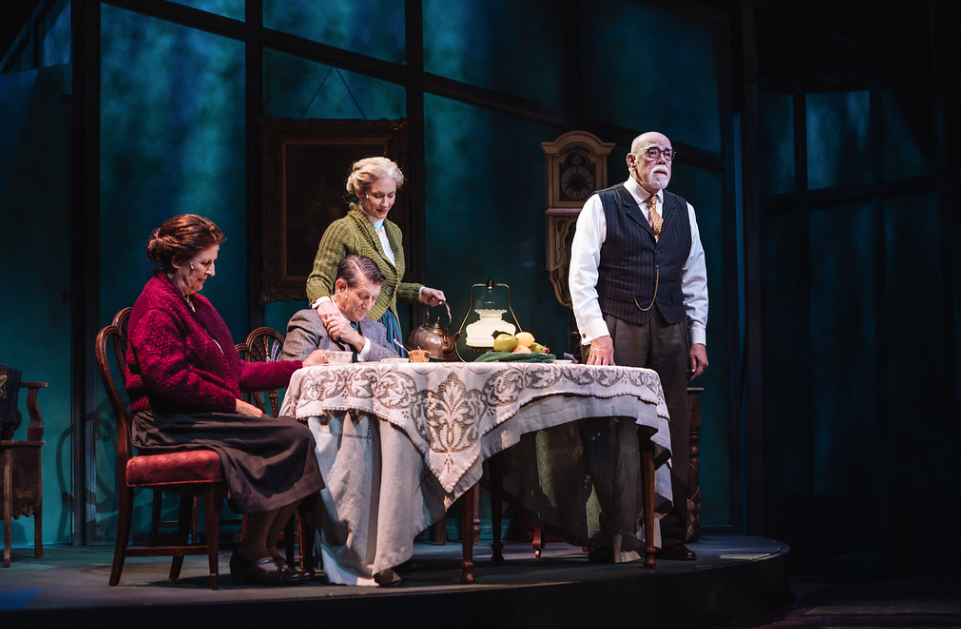
Lending magnificent support to the lead actress as the other members of the ten Boom family are Carrie Tillis as younger sister, Betsie ten Boom, John Schuck as the family patriarch, Casper ten Boom and Garris Wimmer as brother, Willem ten Boom.
Tillis’ Betsie is a constant reminder of something my parents used to tell me. No matter what you’re dealing with, there are others dealing with much worse. As Betsie, Tillis not only finds the light in even the darkest of situations, she radiates it. Some of that is acting, some of that is the actress herself. A joy to watch on stage and a joy to know in real life.
John Schuck was last seen onstage in Love Letters earlier this year. With an acting resume that ranges from film, TV and the stage with projects equally as varied, from a memorable role in Robert Altman’s award-winning film, M*A*S*H and appearing alongside Reba on Broadway in Annie Get Your Gun,(side note: Reba was there opening night supporting her former Broadway co-star) to equally versatile roles in TV classics like McMillan and Wife, The Golden Girls, and even a wonderfully fun, tongue-in-cheek turn as Herman Munster in a late 80s-early 90s The Munsters Today, rebooting the 60s horror/comedy family sitcom, The Munsters, John Schuck is, in every sense of the word, an actor’s actor. His presence, his voice, his experience all influence and illuminate his performance whether starring in musical theatre, like my favorite, White Christmas, or, in this case, a heart-wrenching serious drama. In early scenes with real-life young sisters, Annabelle and Caroline Wolfe, playing pre-teen versions of Corrie and Betsie, Schuck is jovial but stern, caring, but authoritative. Once the sisters become adults, Schuck’s Casper grows with them, positioning and encouraging them to take their rightful places as the new generation of ten Booms.
Garris Wimmer, rounding out the ten Boom family as brother Willam, has more limited stage time, but makes the most of his portrayal as their kindhearted male sibling. He also appears later on in the production in a couple of minor roles including a jewish prisoner and a Red Cross worker.
The remaining members of the ensemble cast are a great mix of familiar faces to the Nashville theatre community, as well as some impressive newcomers. Familiar faces in The Hiding Place include Chip Arnold, Ross Bolen and Matthew Carlton. With decades of stage experience between them, as always, all three actors a joy to watch. Then there’s Christi Dortch. Dortch falls somewhere between familiar and newcomer, only because since her return to Nashville a couple decades ago, she’s become more familiar behind the scenes, at TPAC, no less. This production marks a bit of a return to performing onstage. I’m here to tell you, her performance as The Beast, a female guard in the Nazi concentration camps, is eerily entertaining. Yes, I know how that sounds, given the subject matter, but she’s just so good at being bad.
Nathaniel McIntyre as Pickwick, one of the key figures in the underground network offering aide and solace to the jews, finds a wonderful balance between dedication to the cause and a much-needed occasional lightheartedness regarding Betsie. Also of note is Jonah M. Jackson as Otto, a seemingly stalwart young man who, early on, works closely with the ten Booms at their watch shop, but who later figures prominently in an altogether different manner. It’s his late interaction with Corrie that brings the primary theme of the show—the idea of unwavering forgiveness—home.
Quite different from the story structure of ten Boom’s original book, or the aforementioned 70s film, this stage iteration begins in the time just before the Nazi occupation of The Netherlands. As time passes, and Germany’s occupation of the Dutch countryside grows, the ten Booms learn of—and make the decision to become part of—the Dutch underground.

Thanks largely to require reading of The Diary of a Young Girl by Anne Frank, this overall subject matter isn’t completely unfamiliar to even the less studious like myself. What makes the ten Booms story their own is their religious beliefs. As Christians, they felt it their faith, their fortune, their privilege and duty to help those in need, in spite of their religious differences.
On the subject of religion, given the fact that the production is about a Christian family, coupled with this presentation taking place on the campus of a Christian school, it should be no surprise that the spiritual overtones are plenty. In act two of the 2 1/2 hour-long production, there’s even a clever, if ever-so-mildly heavy-handed visual reference likening a restrained Jewish prisoner to Jesus on the Cross. In the more than capable hands of director, Logan, that scene actually works, for it is, after all, a story of faith and the basic practice of human kindness that ten Boom lived by example.
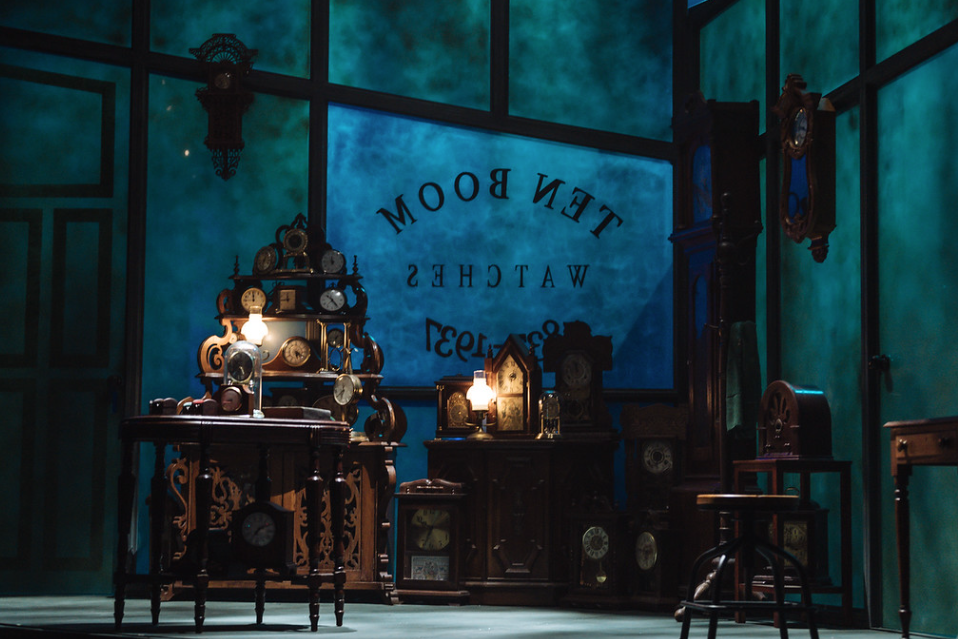
I’ve said for years that Logan is a master of his craft. Whether designing the perfect set, complete with the smallest of almost unnoticeable, but key, details, or directing with a keen eye, unmatched by most, Logan leaves nothing undone. A creative assist from Mitchell White, another of Logan’s longtime collaborators, working herein as Associate Scenic Designer and Scenic Construction, brings Logan’s vision of the ten Boom watch shop (on an impressive rotating stage designed by White). Later in the show, when the action turns to the more devastating locale of the Nazi camps, Logan proves he’s just as adept at creating a more somber environment outfitted by the sparseness of prison bunks of drab grey. Throughout the show, there’s a creative usage of translucent panels for the hint of walls, with the shadows on the other side simply amplifying the drama. Moss Lighting’s Stephen Moss is also key in focusing the audience’s eye on all the action with his keen expertise and astute attention to Logan’s vision as both set designer and director.
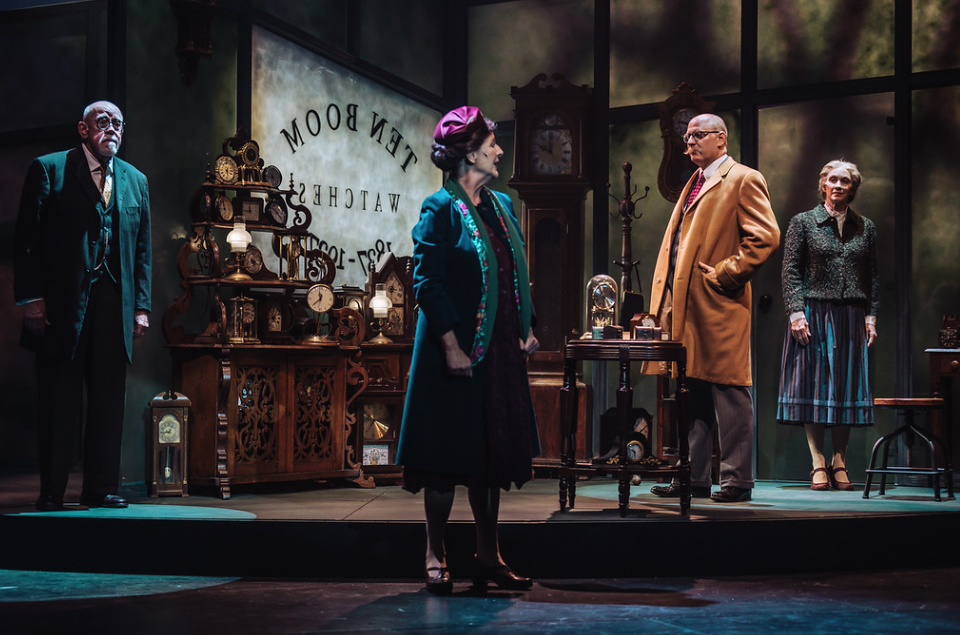
Mention should also be made of the show’s wig and makeup supervisor, Allison Hearn, and wardrobe supervisor, Lauren Terry for further manifesting both the playwright’s and the director’s visions. Adding to the realism, drama, intensity of the piece, Don Chaffer’s music score is precise and poignant. Light and joyful when needed, and dark and thoughtful during the more serious and intense moments. The musical score is purposefully and effectively underproduced, lending believability that it might have actually been composed during the time in which the play takes place and is the perfect companion to the story of faith, forgiveness and kindness.
The Hiding Place continues its run through July 23 at Christ Presbyterian Academy‘s The Soli Deo Center, with performances Thursday, July 14 thru Sunday, July 17 this week and Friday & Saturday, July 22 and 23, next week. For specific date and times or to purchase tickets, CLICK HERE. Check out The Rabbit Room online or follow them on Facebook and Instagram.
As always, if you wanna follow JHPEntertainment to find out who I’m chatting with for my next Rapid Fire Q&A, or for my take on the latest local and national theatre, music and movie offerings, find us at JHPEntertainment on Facebook, JHPEntertainment on Instagram and JHPEntertainment on Twitter.
Got an event or show we should know about, drop us a line at the Contact tab. Till then, #GoSeeTheShow!


 RAPID FIRE Q&A WITH NAN GURLEY CORRIE TEN BOOM IN THE HIDING PLACE
 RAPID FIRE Q&A WITH JOHN SCHUCK, CASPER TEN BOOM IN THE HIDING PLACE
 RAPID FIRE Q&A WITH CARRIE TILLIS, BETSIE TEN BOOM IN THE HIDING PLACE
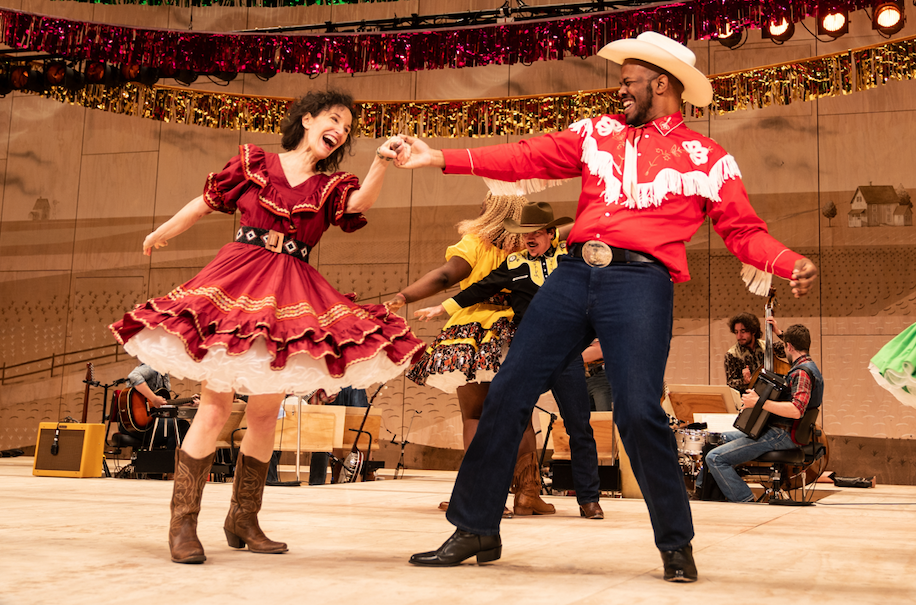
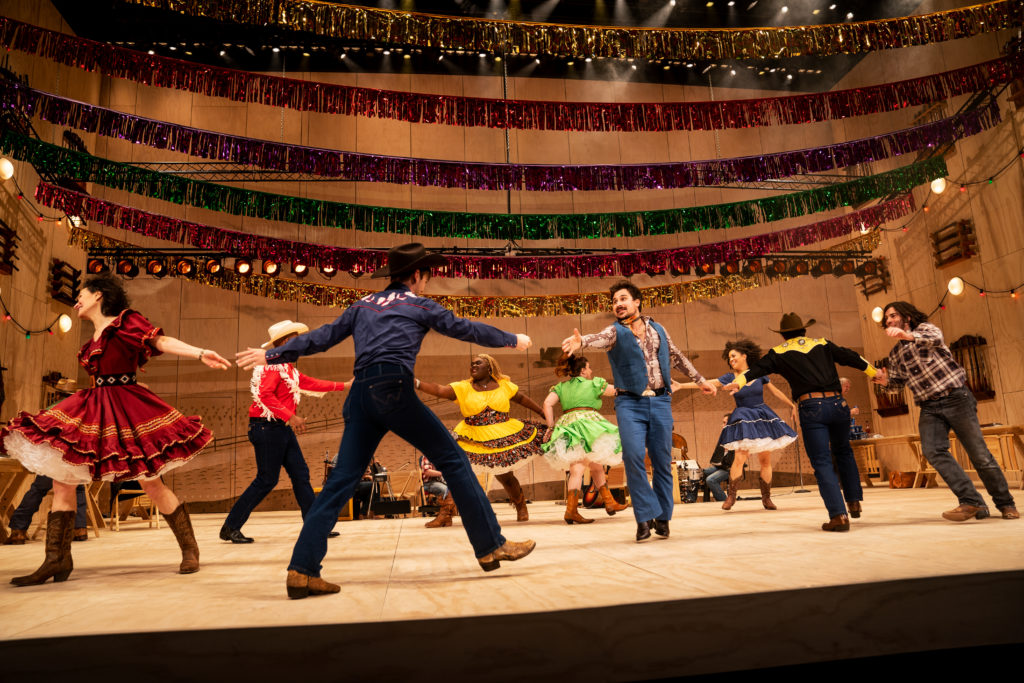
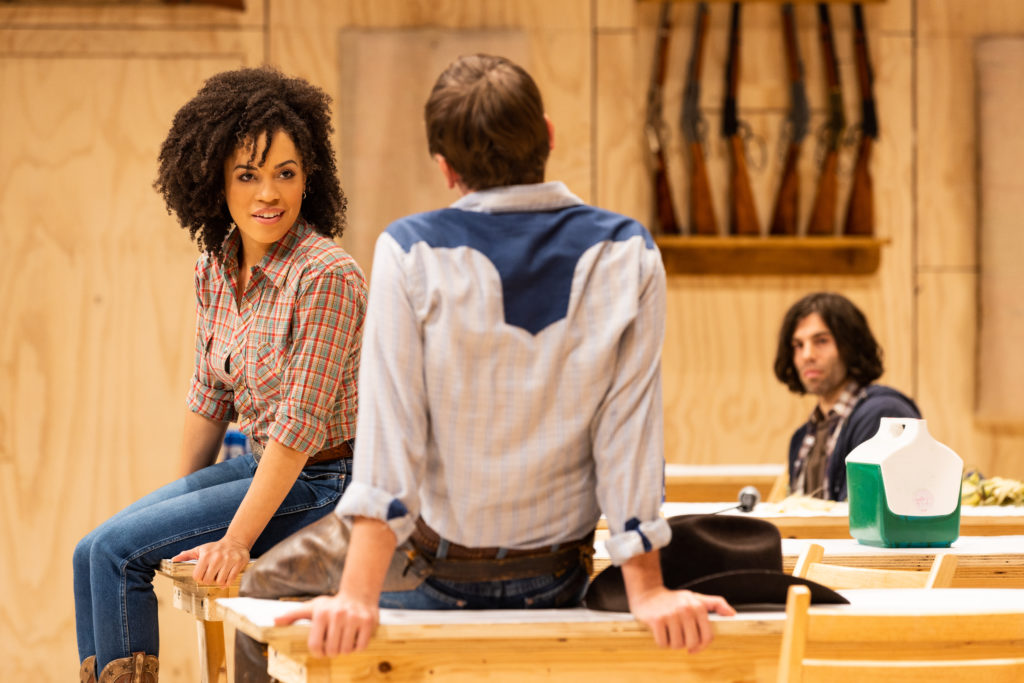
 Another genius aspect of this incarnation is that while the tempo of the tunes and the emotion and intonation of the delivery may have changed, the lyrics, and for that matter, the dialogue is the exact same as it has always been. A prime example of how this affects the mood and meaning of the show is seen when Curly attempts to woo Laurey (Sasha Hutchings) as he describes the fancy horse-drawn surrey he intends to take her to the comping social in. With no change at all in the lyrics, but a slower, more seductive delivery, he describes taking her on a date, keeping her out all night and waking up still in the surrey together. The tune’s lyrics “whoa! You team, and just keep a-creepin’ at a slow clip clop. Don’t you worry with the surrey with the fringe on the top” suddenly take on a new meaning. Is Curley telling Laurey not to worry if anyone see’s their surrey ride of shame the next morning as the top of the carriage will keep their secret? Maybe. Maybe not.
 Speaking of camp, enter Ado Annie played by trans actress and activist, Sis. Here’s the deal, I myself am a member of a couple of less-than-equally-represented demographics, one being I was born with a neuromuscular disorder that now requires I use forearm crutches to walk, so when Fish debuted his Oklahoma! on Broadway coinciding with the show’s 75th anniversary and he cast wheelchair-using actress/singer Ali Stoker as Ado Annie, who subsequently won the Tony, I was all for it. Now, when the tour was announced and Stoker’s star was on the rise, I figured she wouldn’t join the tour, but I had kinda thought they might cast another wheelchair’d actress. Nope. Sis won the role. Again preconceived notions and my own thoughts of the powers that be overcompensating for decades of Broadway literally and figuratively being the great white way, by checking all the boxes was my initial reaction. But the minute Sis breaks into Ado Annie’s signature song, I Cain’t Say No, I was done…in the best way possible. Sis, who is the very definition of a big, Black, beautiful woman, owns that song, the stage and everything that comes with it. As if the first few verses aren’t enough, she goes to the rear of the stage, grabs the mic from the stand by the band, comes back to the edge of the stage and breaks out into a rollicking reprise. Plus, the juxtaposition of Winkler’s Will Parker and Sis’ Ado Annie, is a perfect comedic role reversal in every sense of the word. Yes, it’s ok to laugh, ‘cause guess what, they’re totally in on it.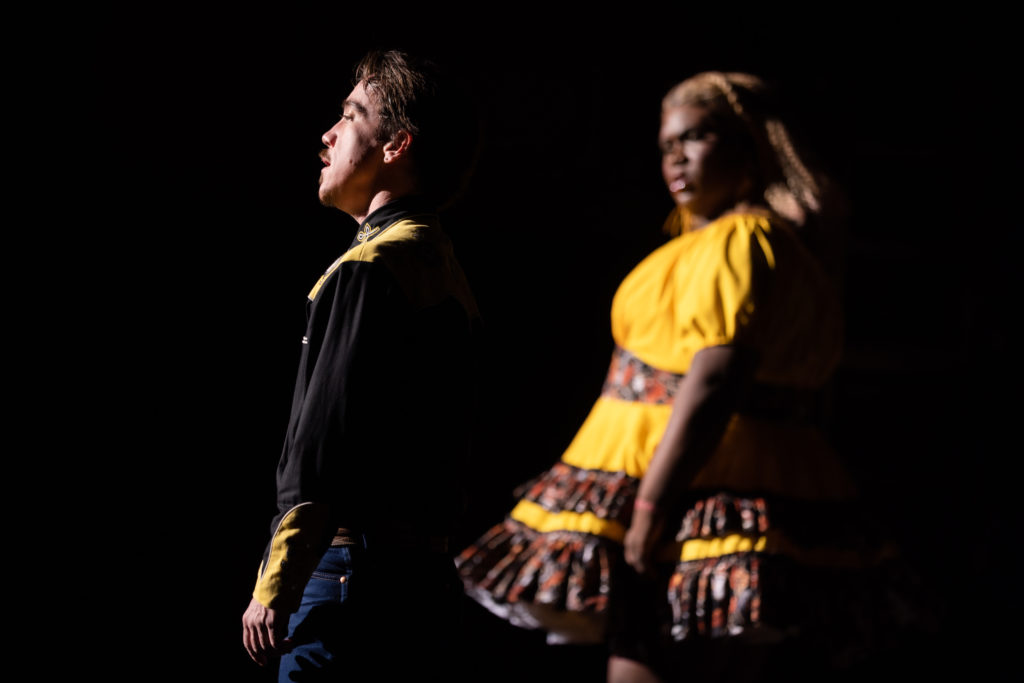
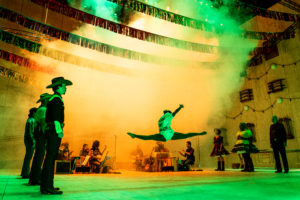 Another major difference between traditional mountings of the show and the current version is the fact that the Dream Ballet, originally choreographed by Agnes de Mille, and the stuff of which legends are made, has shifted from the end of Act 1 just after Laurey solo’s on Out of My Dreams, to the top of Act 2. Not only that, gone are the stunningly ethereal movements of most of the cast members and they bring to life Laurey’s dream/nightmare of being torn between two men. Instead, a single barefoot dancer emerges wearing an iridescent white t-shirt emblazoned with the message “Dream Baby Dream”. This might be my one biggest disappointment with the update. I get that it’s modern dance, but scooting across the stage like a puppy with a clogged gland, that’s not dance, that’s just bizarre. Now, I’m no dancer, though I did win the dance contest at homecoming in high school one year, but let’s face it, it was a popularity vote, but I digress. Again, my companion for the evening had a little to say about this particular moment. She is a trained dancer, so there’s some merit in her reaction. She too felt as if we were watching the equivalent of a young child performing for the family in the living room after Sunday dinner, noting the lack of proper extensions and a pointless pointe. That said, we both appreciated the final seconds of the Dream Ballet, when an ensemble member joined the soloist onstage and they embrace whilst the lighting shifts, casting their shadow large across the wall. Another beautiful nod to the original and the film version.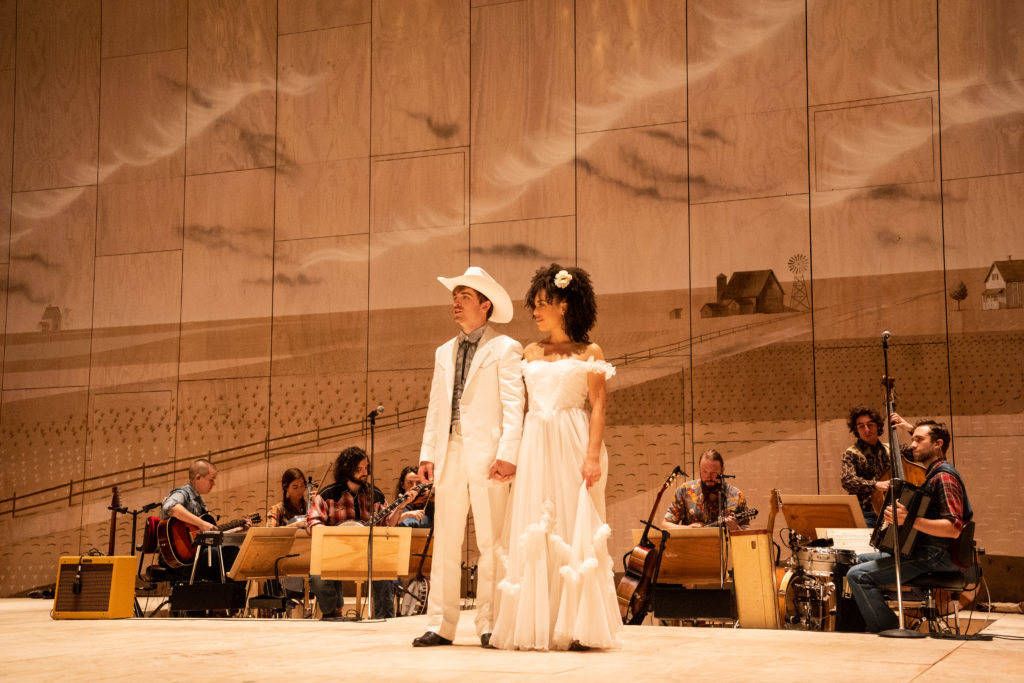
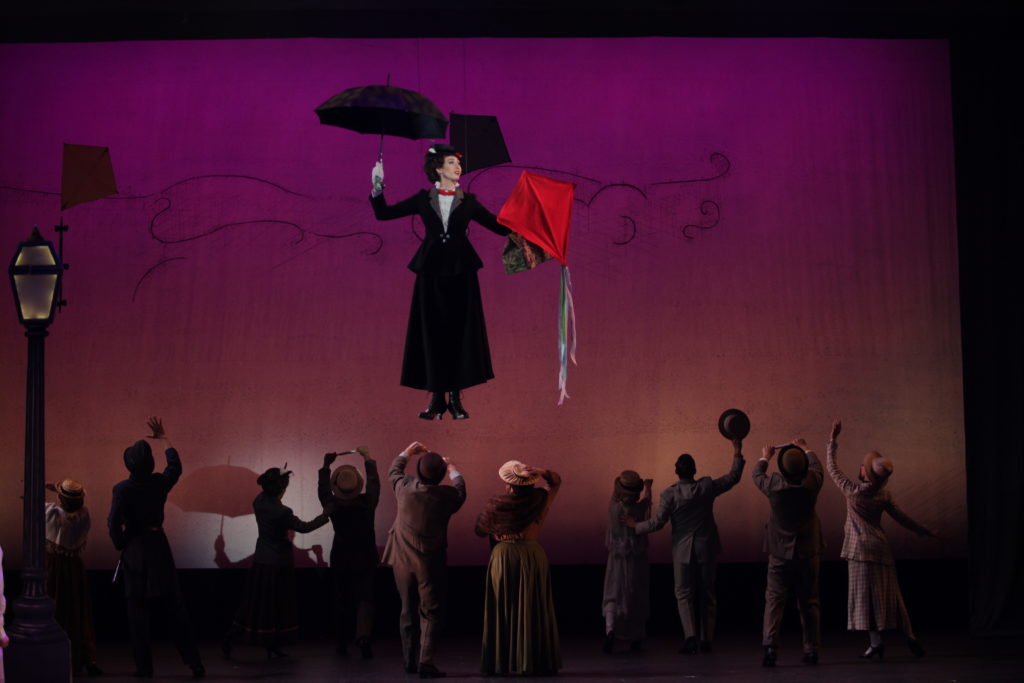
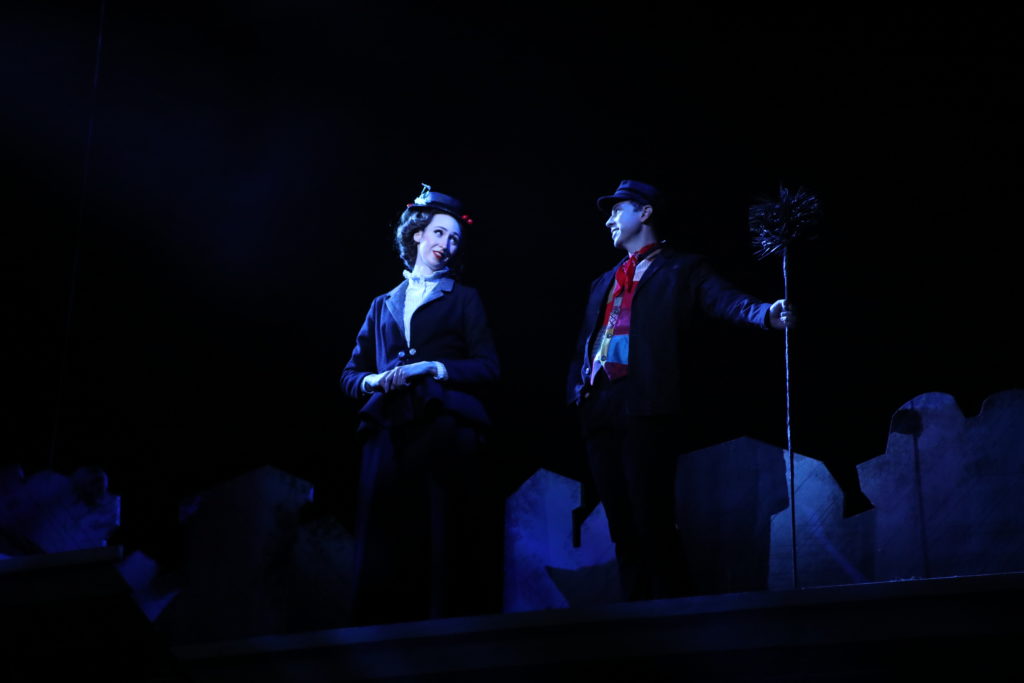
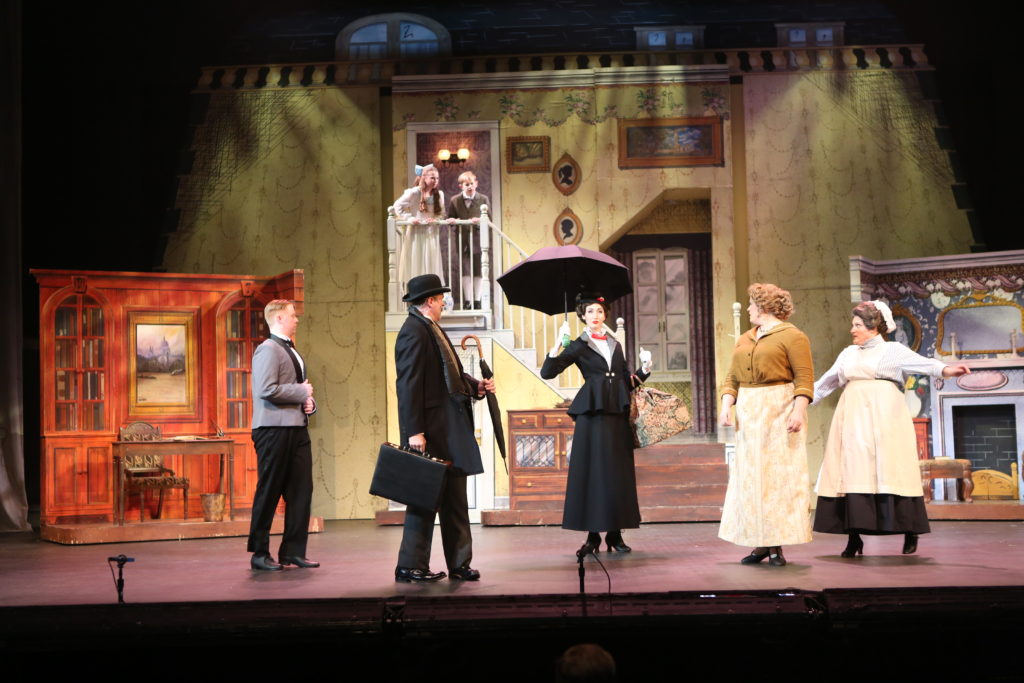
 As Jane and Michael, Benfield and Campbell light up every scene they’re in, as I’m sure their cohorts do during their alternate appearances. Their interaction with McNeal’s Mary Poppins and the rest of the cast is truly blissful. I particularly enjoyed Benfield and Campbell’s mischievousness regarding their behavior around Gavin’s Mr. Banks. They also seem to genuinely be having a blast as Michael and Jane during many of the show’s familiar moments with Mary and Bert.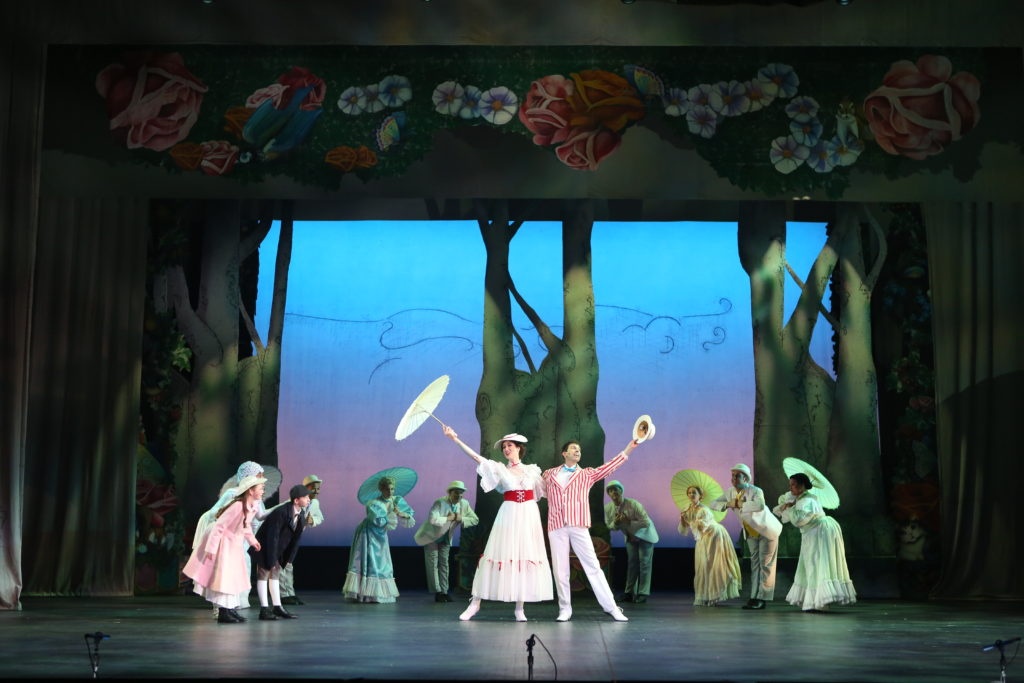
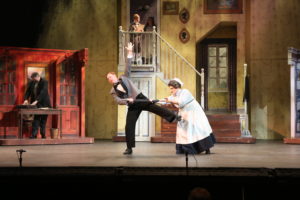 Special mention has to be made of Katie Bruno, Jonah M. Jackson and Dennis R. Elkins. Bruno and Jackson play The Banks Family’s house staff, Mrs. Brill and Robertson Ay, respectively. These two obviously feed off each other perfectly giving the audience some of the show’s best snark and silliest slapstick physical comedy moments. I always think of character actresses like Mary Wickes and Hermione Baddeley when I see Bruno in a supporting comedic role. Interestingly, both Wickes and Baddeley themselves have ties to Poppins. Wickes played the lead in a 1949 TV adaptation, while Baddeley played the maid in the Disney film. Jackson goes all in for laughs, pratfalls and all leading into and out of one of the show’s most popular numbers, A Spoonful of Sugar.
 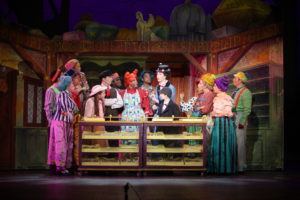 Then there’s the magical unicorn of a talent, Jennifer Whitcomb-Oliva. Whitcomb-Oliva pulls triple-duty in Mary Poppins appearing first near the end of Act 1 as Mrs. Corry, then briefly as the Statue of Queen Victoria, and finally as Miss Andrew, George Banks’ own Nanny, three characters created and expended when the musical was adapted for the stage. When Mary takes the children on a walk in the park, they encounter Mrs. Corry, who runs the Talking Shop, a place to buy conversations and gingerbread stars. What? What else pairs well with letters of the alphabet for sale? Come on, it’s Mary Poppins, just go with it. That leads to an all-in moment and another familiar tune, Supercalifragilisticexpialidocious. With a brightly colored costume and wonderfully whacky wig for Whitcomb-Oliva it’s another moment in the show I dare anyone who sees it to try not to sing and clap along. On that note, as my friend, Bryce and I were walking into the lobby, I ran into Nashville Rep’s Executive Director, Drew Ogle. As we chatted, he mentioned that opening night he, and the cast were surprised when the audience randomly, unanimously erupted into syncopated applause during a couple of the numbers. I guess they’re used to it by now, because the same spontaneous magic happened the night I attended.
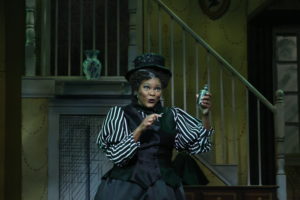 While Whitcomb-Oliva’s Mrs. Corry is a hand-clapping delight, it’s her more playfully sinister turn as the strict Miss Andrew that’s simply marvelous. As the darkly-dressed villainous Miss Andrew, complete with a Jane Russell-esque swirl of gray among her severely styled raven-colored wig, Whitcomb-Oliva revels in the role during the lyrically frightful Brimstone and Treacle near the top of Act 2 and again during a good vs. evil mashup of Brimstone and Spoonful with McNeal’s Mary Poppins towards the end of the show.
 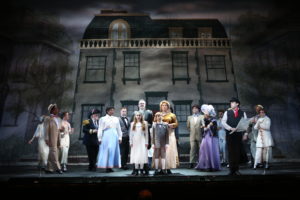 I can’t review Nashville Rep’s Mary Poppins without special mention of Denise Hicks. Hicks, a legend among the Nashville theatre community, plays not only Miss Lark, the puppy-carrying neighbor to the Banks family, but she’s also featured as the Bird Woman, the elderly lady who sells bird seed for “tuppence a bag”. Knowing Hicks was cast in the role, as Bryce and I settled into our seats, I leaned over and told him to avert his glance away from me during the heart-wrenching moment when Hicks’ Bird Woman sings Feed the Birds, and as certain as Mary Poppins comes in on the east wind, when Feed the Birds happened, I was once again thankful that masks are still being required in the theatre because my eyes began to sweat as I sobbed uncontrollably.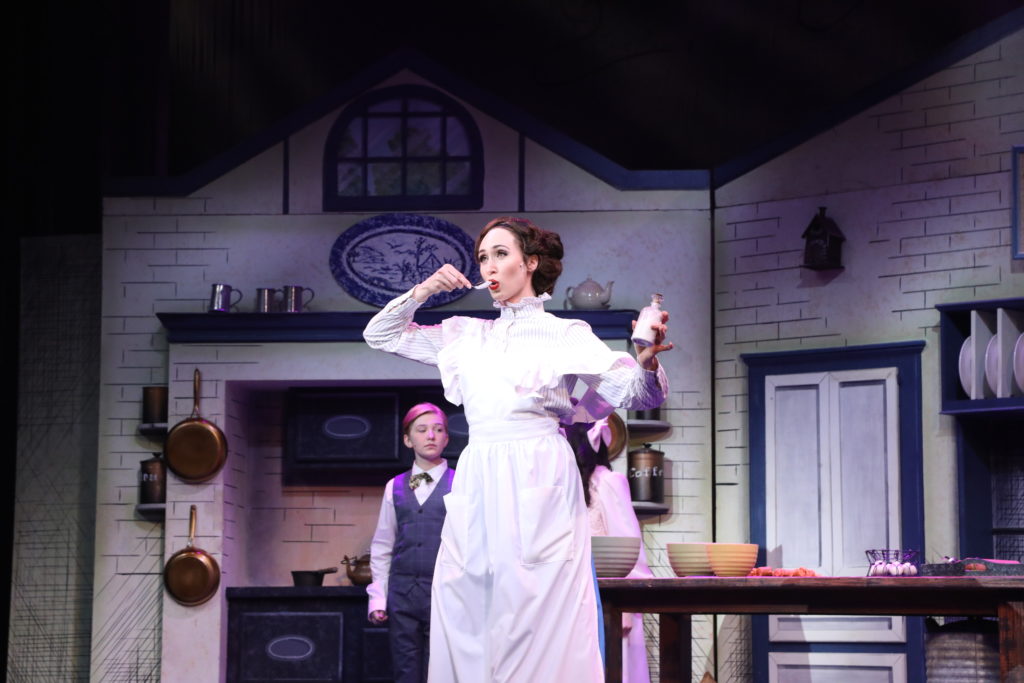
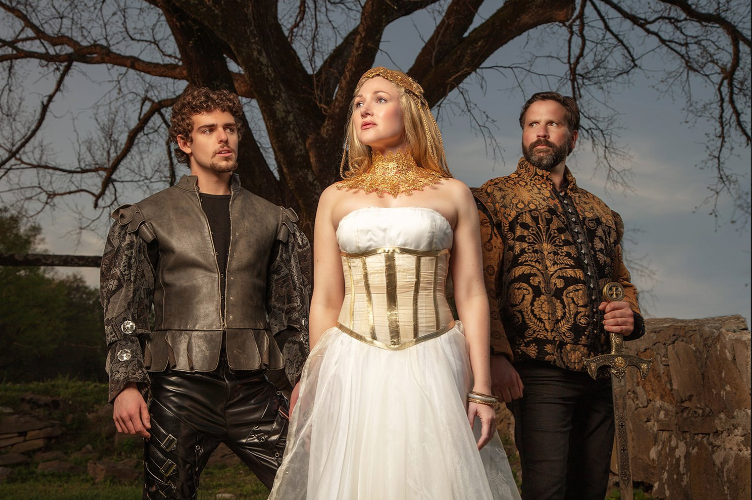
 RAPID FIRE Q&A WITH BRIAN GLIGOR, KING ARTHUR IN STUDO TENN’s CAMELOT
 RAPID FIRE Q&A WITH STEFFANIE LEIGH, GUENEVERE IN STUDIO TENN’s CAMELOT
 RAPID FIRE Q&A WITH BRYCE DUNN, LANCELOT IN STUDIO TENN’S CAMELOT
 RAPID FIRE Q&A WITH ABRAM GUICE, MORDRED IN STUDIO TENN’s CAMELOT
 RAPID FIRE Q&A WITH BENJ MIRMAN, ALI HAKIM IN OKLAHOMA
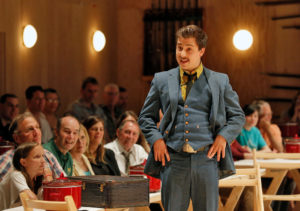 JHPENTERTAINMENT: Speaking of Ali’s proposed pending intended, who much fun are you having sharing scenes with Sis as Ado Annie Carnes?
 RAPID FIRE Q&A WITH CHRISTOPHER BANNOW, JUD FRY IN OKLAHOMA
  JHPENTERTAINMENT: Jud’s main musical moment comes with Lonely Room. The revival’s musical arranger, Daniel Kluger’s work during this number is among my favorite in the show as it seamlessly transitions from melancholy to angst-ridden determination. Is there a particular musical moment—your’s or someone else’s—that you truly love hearing each performance?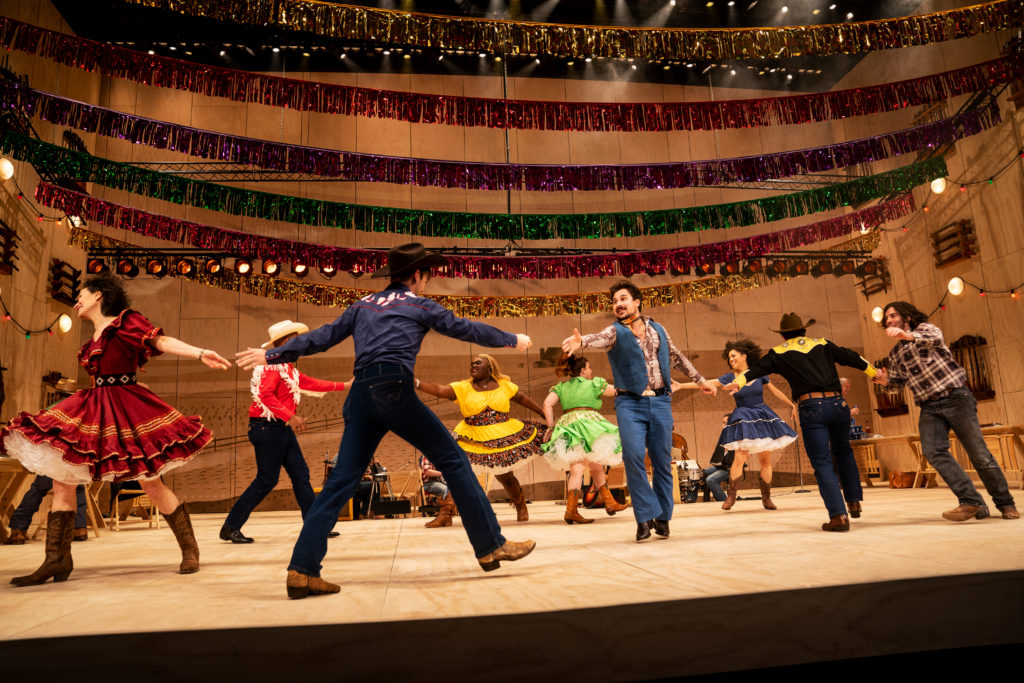
 RAPID FIRE Q&A WITH MARY POPPINS STAR, CHRISTINE MCNEAL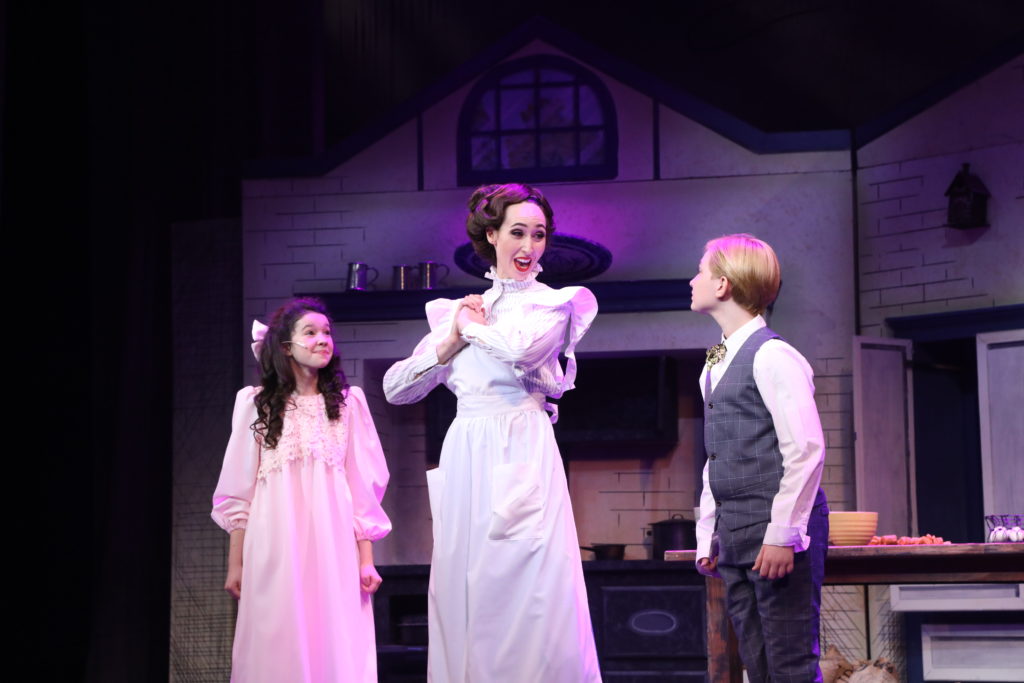
 RAPID FIRE Q&A WITH JEREMY BENTON, BERT IN MARY POPPINS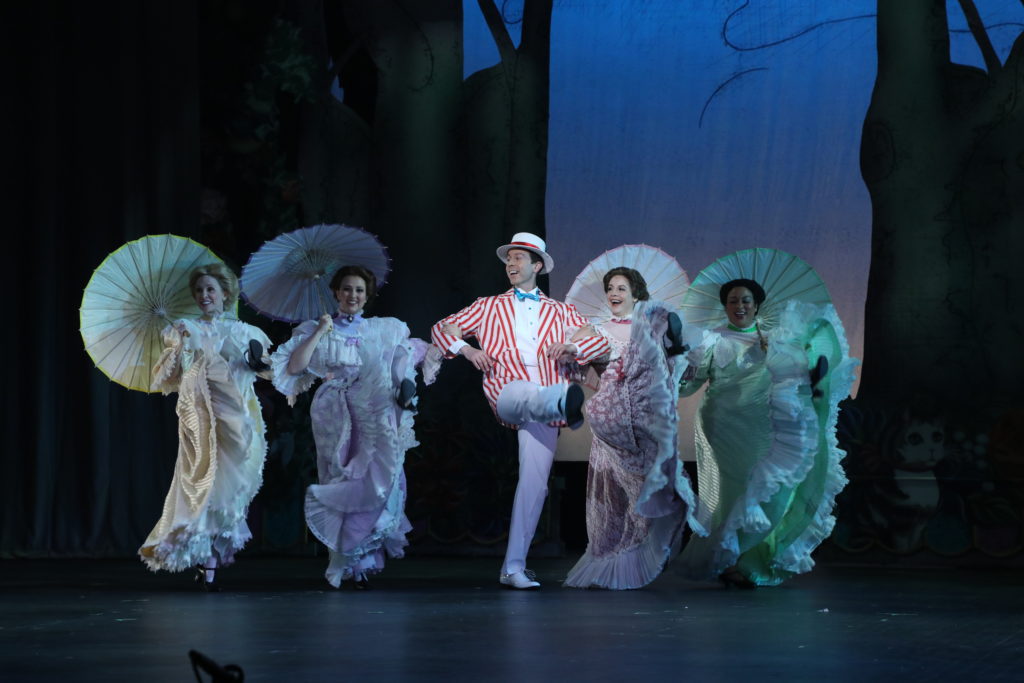
 RAPID FIRE Q&A WITH GEOFFREY DAVIN, MR. BANKS IN MARY POPPINS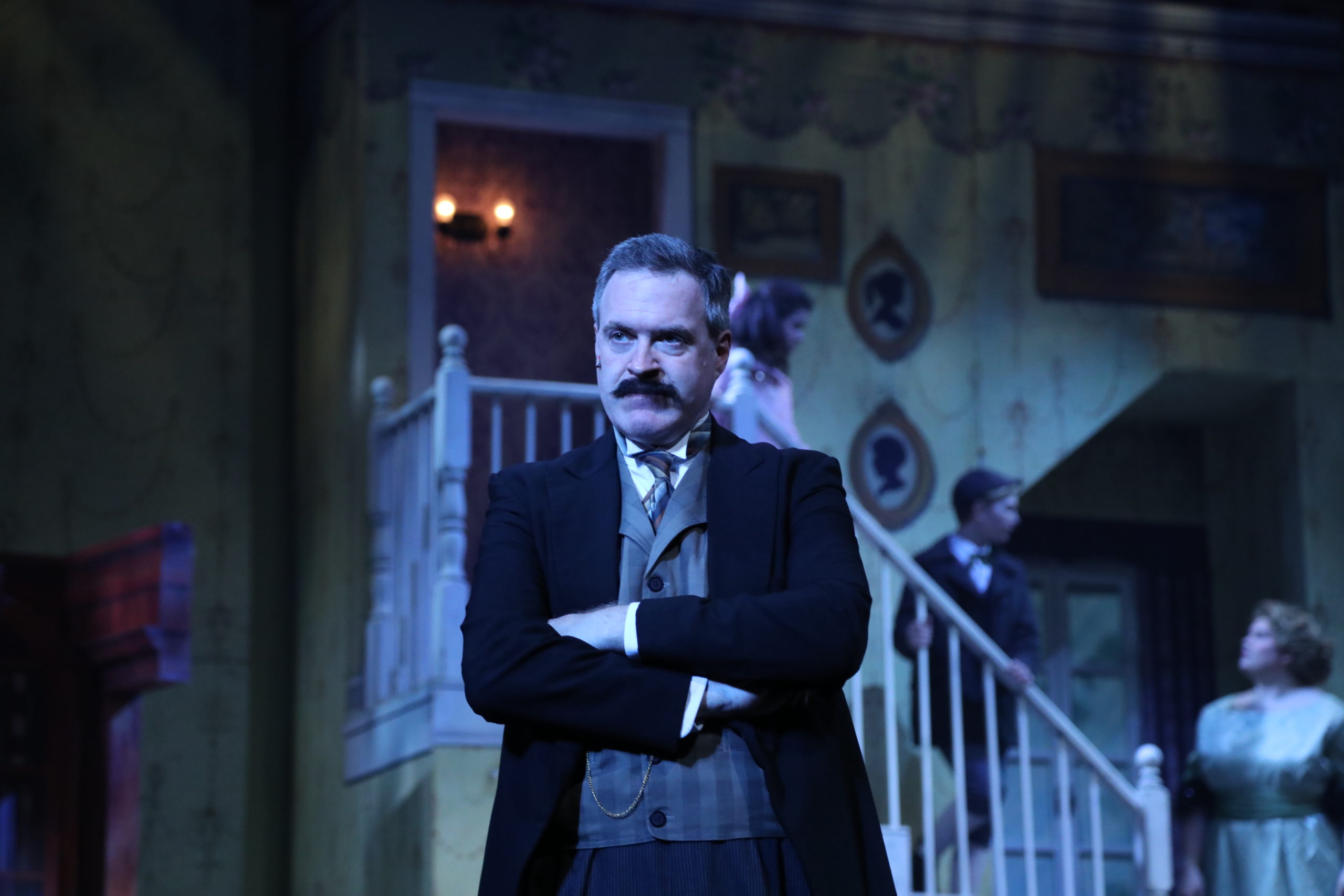
 RAPID FIRE Q&A WITH NATALIE RANKIN, MRS. BANKS IN MARY POPPINS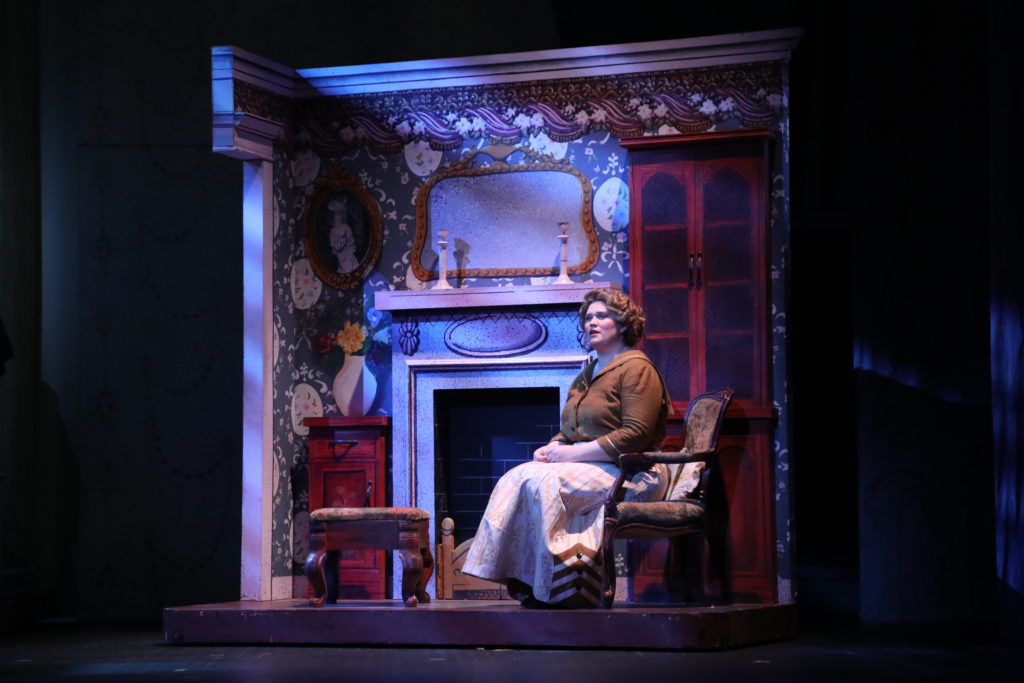
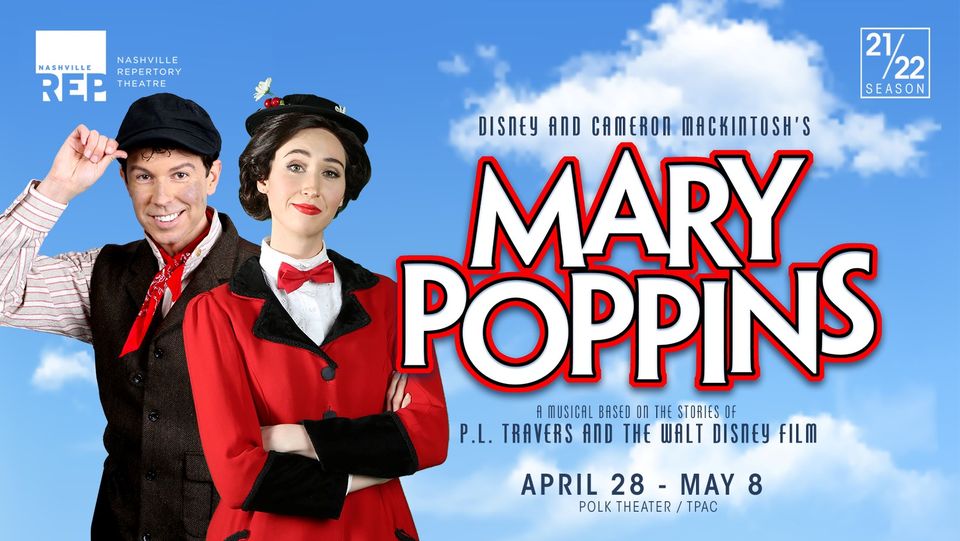 Mary Poppins runs April 28-May 8 at TPAC‘s Polk Theatre.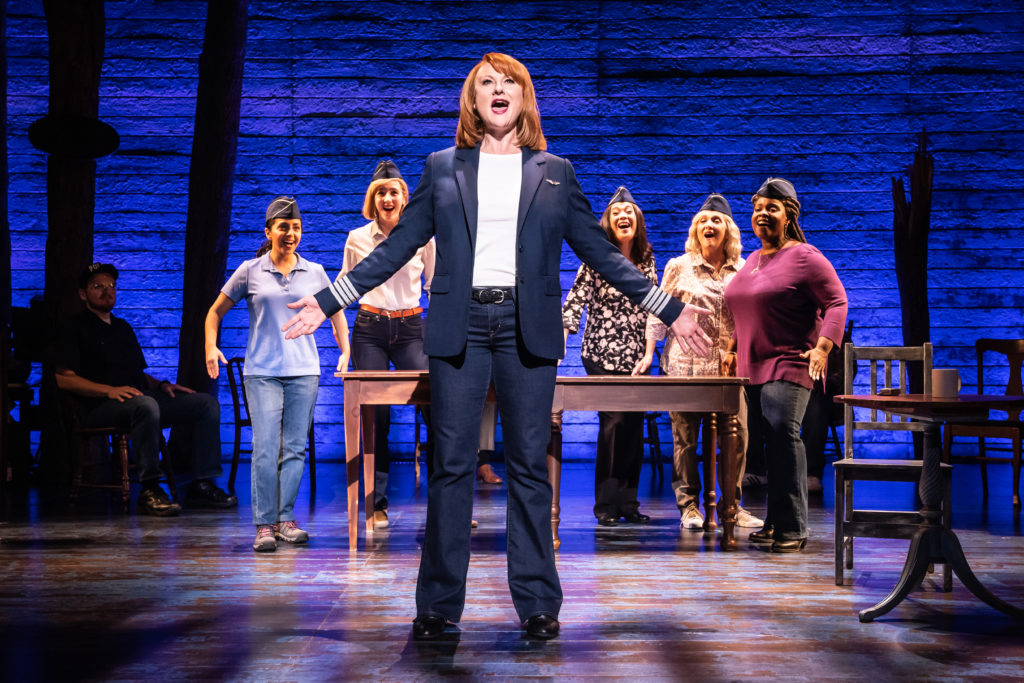
 JHPENTERTAINMENT: Captain Beverly Bass, one of the many characters you portray in the show, wasn’t just one of the pilots of planes diverted to Newfoundland on 9/11, she’s also the first female captain to ever fly a commercial plane for American Airlines. How did you research playing her?
 JHPENTERTAINMENT: What’s your personal favorite message conveyed within Come From Away?