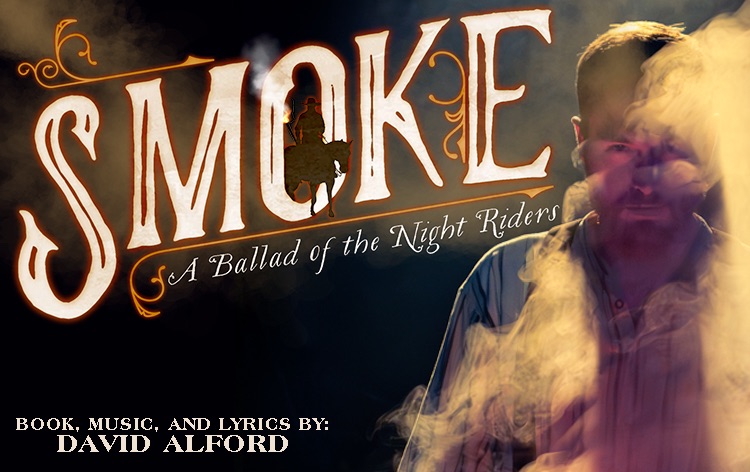
Rolling fields, winding country roads and the unmistakable, spicy scent of dark-fired tobacco set the stage in Adams, Tennessee, home to the legendary Bell Witch and the Bell Witch Fall Festival. For two decades, the festival has brought local history and legend to life, and among its signature productions is SMOKE: A Ballad of the Night Riders, David Alford’s fiery bluegrass musical about the Black Patch Tobacco Wars of the early 1900s. First presented at the festival in 2010, SMOKE explores the corporate greed, desperation and moral compromises that turned farmer against farmer and ultimately gave rise to the masked Night Riders—all performed beneath the stars and surrounded by the very tobacco country that inspired the story.
For this year’s production, longtime SMOKE performer Galen Fott, who has appeared in six of the festival’s previous productions, steps behind the curtain as director. To get a little BTS take on this year’s production, Fott, along with retuning cast members Bradley Gale and Cassandra Donegan and SMOKE newcomer Payton Justice agreed to a little Rapid Fire 20Q to chat with JHPEntertainment about history, family, bluegrass, outdoor theatre, complicated characters—and, yes, even the Bell Witch.
RAPID FIRE 20Q WITH DIRECTOR AND CAST MEMBERS OF SMOKE: A BALLAD OF THE NIGHT RIDERS
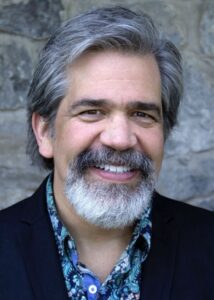 RAPID FIRE WITH SMOKE DIRECTOR GALEN FOTT
JHPENTERTAINMENT: Having appeared in six of the local productions of SMOKE presented during previous Bell Witch Fall Festivals, what prompted you to move from being onstage to taking on the behind-the-scenes role of director for this year’s production?
GALEN FOTT: Because it’s something I’ve never done before! I’ve directed more than two dozen animated films for Scholastic, and I directed actors in dozens of scenes when Pipeline-Collective’s playwriting workshop Salon was in operation a few years ago. But I had never directed a full-length play or musical before. And why not start with a show you know so well, and love so much?
JHPENTERTAINMENT: SMOKE takes audiences back to 1904–1908, when dark-fired tobacco farmers found themselves caught in a violent economic struggle with powerful corporations attempting to control market prices. Is there a particular scene or line of dialogue crafted by the playwright, David Alford that feels immediate and personal to you in the telling of this history-based story?
GALEN FOTT: One of the main issues SMOKE wrestles with is the idea that destruction and violence are justifiable if they contribute to a greater good. David wrote two short scenes that dramatize this concept in microcosmic form, one in each act. These parallel scenes involve the central character of Owen Hartley, his son Owen Jr., and the lowly tobacco worm. On one level, the scope of the entire play is encapsulated in those two scenes.
JHPENTERTAINMENT: As a native of nearby Clarksville, Tennessee, you have a personal connection to the region in which the events of SMOKE unfolded. What has it meant to you as a director to bring your touch to this particular—and sometimes overlooked—piece of local history?
GALEN FOTT: There’s a narrative passage of the play that contains multiple quotes from the Clarksville Leaf-Chronicle, the newspaper I grew up reading. (Remember newspapers?) But I knew absolutely nothing about the Black Patch Tobacco Wars until I read the play 11 years ago. I’m so glad I know about it now — it’s a remarkable, if troubling, story. Of course, it’s not uncommon for natives of a particular place to be unaware of — or uninterested in — the history that unfolded right outside their door. During the five years I lived in New York City, I met many native New Yorkers who had never been to the Empire State Building or visited the Statue of Liberty. And plenty of Nashvillians have never been to the Grand Ole Opry!
JHPENTERTAINMENT: David Alford’s original bluegrass score is filled with songs that help tell the story of the Black Patch Tobacco Wars. Do you have a particular favorite among the musical numbers penned by Alford—AND what makes that one stand out for you?
GALEN FOTT: I’d have to go with the title song, “Smoke”. David does an ingenious thing in that song. Owen is remembering his time serving in the brutal Philippine-American War, and in the song he experiences a sudden, visceral return to that experience. Suddenly he’s “there” in the Philippines, on unfamiliar ground, and David switches the time signature from 6/4 to 5/4, pushing it way out of typical bluegrass fare. It feels like there’s either a beat missing or one beat too many, and it perfectly evokes Owen’s unease in such unfamiliar territory. It’s a masterstroke.
JHPENTERTAINMENT: SMOKE debuted in 2010 as a bit of a companion piece to SPIRIT: The Authentic Story of the Bell Witch and has its roots in the Bell Witch Festival. One hundred years after the events that inspired it and more than a decade after the musical’s debut, it seems to me if you swap out tobacco for essential farmed produce, the core message of the story still rings true today. Would you agree with that?
GALEN FOTT: Certainly the difficulties of farming, the existence of monopolies, and collective bargaining remain issues today. But what makes the Black Patch Tobacco Wars different — and what makes SMOKE particularly compelling — is the vigilante justice used to force farmers into that collective action. And even if your moral compass can encompass those violent acts, what toll does that ultimately take on your humanity? David asks us to contemplate all of this in SMOKE. And did I mention? It’s a musical! I’ve heard David say he doesn’t really like musicals, but he wrote a damned good one. SMOKE is an amazing piece of theatre that deserves a wide audience. I hope everyone reading this will be a part of that audience!
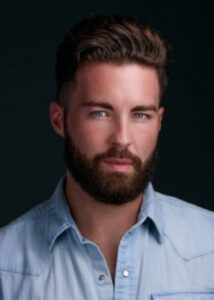
RAPID FIRE WITH BRADLEY GALE, OWEN HARTLEY IN SMOKE
JHPENTERTAINMENT: Owen Hartley is a 30-year-old farmer, husband and father trying to protect his family and livelihood during an extraordinarily volatile period. What was the key to finding the man underneath the historical circumstances surrounding him?
BRADLEY GALE: Owen Hartley is integrity to his core; harnessing that sort of selflessness causes me to reflect a lot on my life and the examples Ive had. A specific man often pops into my mind during certain scenes; he has since passed and was a father to me. Larry Copeland. I often think of him when I look at my ‘son’ and ‘wife’. It’s my “What Would Larry Do” hack.
JHPENTERTAINMENT: Owen isn’t just dealing with the price of tobacco—he’s watching the world around his family become increasingly dangerous. What do you think scares Owen the most: losing his livelihood, losing control of his family’s future, or what the Night Riders might bring to his doorstep?
BRADLEY GALE: I would say that Owen is mostly concerned with protecting the innocence of his family. He has seen the horrors that humans can invoke upon other humans and wants to protect them from ever having to experience the same.
JHPENTERTAINMENT: Owen gets his Act One solo musical moment with “Little Man.” What does that song reveal about Owen that perhaps the dialogue alone doesn’t—and what was it like getting inside that particular musical moment?
BRADLEY GALE: The song “Little Man” reveals how deeply he wants his son to be protected from the evils of this world. It shows just how tender and sensitive Owen actually is. Owen does not make a single decision without thinking about his wife and his son. Getting inside that moment is more about making sure my co-star can sit still for three minutes. Gunner, I hope you’re reading this! (Im teasing; the actor playing my son is a blast to work with; he definitely keeps us all on our toes).
JHPENTERTAINMENT: I gotta ask…what’s it like working with your co-star? NO, I’m not talking about Cassie as your on-stage wife, Callie, I’m taking about Kat, the horse featured on stage during the show, billed simply as, well, Horse, and her wrangler, Mandie Neblett?
BRADLEY GALE: Oh that’s one of the best parts. Kat and Mandie are actually the longest running cast members of Smoke. They are an institution. And in fact we have an extra three horses this year who are training to become Kat’s understudy. Aside from the fact that they don’t give us the courtesy of using the public bathrooms…. (Im just talking about the horses)
JHPENTERTAINMENT: There are plenty of larger-than-life figures and historical forces swirling around SMOKE, but Owen’s world ultimately comes down to one very simple thing: a little patch of dirt and the people he loves. I love that in the script, the playwright’s dedication reads: “For Ben Robert Who saved me a little patch of dirt”. In that vein, Who—or what—represents your own “little patch of dirt” in your real life these days?
BRADLEY GALE: Simply put, home has never been a place for me. It’s always been the people. And frankly, coming back to Adams (Springfield, Nashville, etc) it reminds me just how much ‘home’ this little patch of dirt is to me.

RAPID FIRE WITH CASSIE DONEGAN, CALLIE HARTLEY IN SMOKE
JHPENTERTAINMENT: Callie Hartley is a farmer’s wife living in a world where the economic struggle over tobacco is anything but an abstract political issue—it directly affects her family. What did you discover about Callie by looking at the story through her eyes rather than simply through the larger historical events surrounding her?
CASSIE DONEGAN: This story has always felt incredibly personal to me because my own family were tobacco farmers. The first time I played Callie seven years ago, I saw so much of my great-grandmother in her. That particular kind of Southern woman who could carry an enormous amount for her family and still somehow make sure the rest of the world never quite knew how heavy it was. A complete spitfire and slightly ahead of her time.
Coming back seven years later, there is a lot more of myself I now see in her. Seven years later, I understand resilience differently. I understand the instinct to protect the people you love differently. And I understand much more deeply that strange dance of carrying very real struggles within your family and home while presenting a completely different version of life to the outside world.
I always say Callie is far gutsier than I could ever wish to be, but I recognize so much of myself in her now. Callie isn’t thinking about how this moment will someday be written about. She’s thinking about her husband, her home, their livelihood, and the life they’ve worked to build together. She’s strong without needing to announce that she’s strong, and there is a quiet resilience underneath all of that fire that I understand far more deeply now.
JHPENTERTAINMENT: Callie and Owen have built a life together on their farm, but the events unfolding around them increasingly threaten that life. What do you think keeps Callie grounded when everything around her begins to feel increasingly uncertain? Let’s make this one a two-parter…same question, but for Cassie?
CASSIE DONEGAN: For Callie, I think it’s Owen. It’s love, home and this deep sense of responsibility to the life they have built together. She loves him fiercely, and even when she doesn’t necessarily agree with him, he is still her person. When everything else becomes uncertain, Owen is still where she belongs.
For Cassie, the answer is actually pretty similar. My family, my faith, the people I love and remembering who I am when you strip away every title, accomplishment and expectation are what bring me back to center. For a long time, I thought strength meant carrying difficult things gracefully enough that no one else ever had to see how heavy they were. I’ve learned that sometimes strength is admitting they’re heavy. Life can change incredibly quickly, but when I come back to my faith, my family and the people who know Cassie rather than any title or role attached to her name, I remember that the most important parts of my life were never the loudest ones. That’s where I find my footing again.
JHPENTERTAINMENT: Adding visually to the show’s authentic early 20th Century visuals, Denese Evans is on-hand as the show’s costumer. Does donning Callie’s wardrobe help you become her?
CASSIE DONEGAN: Absolutely. Costuming is one of those things that can immediately change the way you inhabit your body as an actor. The silhouette, the layers, the shoes, the weight of the clothing, even the way you naturally stand, sit or move changes. With Callie, it’s another layer of information about who she is, the work she does, the life she lives and even how she wants the world to see her. And working with Denese is just so much fun. She is genuinely such a joy, and what I appreciate most is that she understands me not only as an actor, but as a human being. I think that is incredibly important in a costumer. She obviously cares tremendously about her creation and about making sure everything is historically and visually right for the world of the show, but she cares just as much about how I feel inside that creation. There’s never a sense that I simply have to fit myself into her vision; it feels like we’re discovering the character together each time we do this.
That kind of trust actually gives you more freedom as an actor. Denese has created something that feels lived-in and specific to her rather than simply “period,” and that distinction matters. There’s always this wonderful final moment for me when the hair is done, the shoes are on and I’m completely dressed. I look in the mirror and I think “Callie has arrived.”
JHPENTERTAINMENT: What does presenting this show outdoors add to the overall feel of the piece?
CASSIE DONEGAN: There’s something incredibly special about telling this particular story outdoors because suddenly the environment becomes part of the production. You feel the temperature change as the evening goes on, you hear the sounds around you, you feel the ground beneath your feet. You’re telling the story of people whose lives and livelihoods were quite literally tied to this land while standing on that land yourself.
And I think what makes it even more extraordinary is that we aren’t just performing Smoke outdoors. We’re performing it in Adams, Tennessee, where so much of this history actually happened. There are people in this community whose families have been connected to tobacco farming for generations, and there are many people here working in that profession today. This isn’t simply a piece of Tennessee history. It’s family history. It makes you feel a real responsibility to tell it honestly.
There are also things nature gives you that no lighting or sound designer could ever perfectly recreate. The sky gets darker around you as the story gets darker. You hear insects and wind and all of those sounds that belong to rural Tennessee. And, occasionally, you get a pack of coyotes howling somewhere in the distance in the middle of a scene which is always a particularly exciting reminder that we are, in fact, doing outdoor theatre! There’s a rawness and unpredictability to it. In a piece like Smoke, where land, livelihood, community and survival are so intertwined, I can’t imagine a more fitting way to experience it.
JHPENTERTAINMENT: Ok, in the spirit of your pageant career—you did, after all, just end your reign as Miss America 2026—let’s indulge in a little Final Question focusing on the pageant system’s mission of empowering women… Do you think things might have turned out differently during the Black Patch Tobacco Wars if the women had been the ones calling the shots?
CASSIE DONEGAN: Well, I think the question is more what might have been different if the women living with the consequences had also been given equal power in determining the choices. Women may have approached some of those decisions with a different calculation of what was actually at stake. When you are thinking not only about winning the fight in front of you, but about what happens to the family, the home and the community after that fight is over, it can change what victory even means. Would there still have been anger? Absolutely. Would women have agreed on everything? Certainly not. But perhaps there would have been more voices asking, “What happens after this? What does this decision cost us? And who will still be carrying that cost when the men making it have left the room?”
I think we sometimes do women a disservice when we suggest that if women were in charge, everything would automatically become peaceful and perfect. Women are human. We disagree. We make mistakes. We can be stubborn, ambitious, angry and complicated. I actually think acknowledging that is part of equality, too. Empowerment isn’t putting women on a pedestal and expecting them to save everyone. It’s giving women the same freedom to be fully human and still trusting them with a seat at the table. I don’t believe leadership has to be the loudest voice in the room. In fact, it is often quite the opposite. Sometimes it is asking the question no one else thought to ask. Sometimes, yes, it means being gutsy enough to plant your feet and say, “No. We’re going to do this differently.” Callie certainly has that last one down!
I think that is one of the great lessons of women’s empowerment for me: women don’t need power because we will always make the right decisions. Women deserve power because decisions are better when the people affected by them have an equal hand in making them. No society makes its best decisions when half of the people living with the consequences are missing from the conversation.
And after spending a year with the privilege of carrying a title built around scholarship, service and the empowerment of women, I believe that more strongly than ever. Give women the education, the opportunity, the microphone and, most importantly, an actual seat at the table with listening ears and then don’t be surprised when they change the conversation.

RAPID FIRE WITH PAYTON JUSTICE, NED MUNROE IN SMOKE
JHPENTERTAINMENT: Ned Munroe is Callie’s twenty-something brother, making him one of the younger members of a family caught up in a conflict much bigger than himself. How does Ned’s youth and relationship to the Hartley family influence the way you play him?
PAYTON JUSTICE: I think Ned has a lot of confidence in what he believes and doesn’t really hesitate once he decides something is right. His youth gives him a kind of certainty about what needs to change, maybe to the point of being slightly naive, but he only becomes more committed as the story goes on. He truly cares about the Hartley family, and I think watching what they go through makes the fight very personal for him very quickly.
JHPENTERTAINMENT: JHPENTERTAINMENT: As I familiarized myself with the script in preparation of chatting with you all, I noticed David Alford includes a quote from Robert Penn Warren’s Night Rider within the opening pages of the script: “The good Lord never got a thousand or so men together for any purpose without a liberal assortment of sons-or-bitchen thrown in.” Has your understanding of that quote—or what it says about Ned and the world he’s living in—changed as you’ve gotten to know Ned through the rehearsal process?
PAYTON JUSTICE: I think that quote really speaks to how complicated people can be once they’re united around the same cause. Everyone may agree that something needs to change, but that doesn’t mean they agree on how to get there or how far they should go, you know? And the cool thing about SMOKE is that every character walks away completely changed. Finding that contrast between Ned in the first scene and his last is something I’ve loved playing around with and finding with Galen and the cast. Cassie, who plays my sister, offered some wonderful insight on how our dynamic potentially shifts through the show. And I think that will really come through.
JHPENTERTAINMENT: With the Night Riders, raids and escalating violence surrounding the Hartley family, Ned’s world is hardly the idyllic family-farm existence it might initially appear to be. How do you balance his youth with the increasingly serious circumstances he’s facing?
PAYTON JUSTICE: I don’t really approach Ned as innocent just because he’s young. He’s outspoken and sure of himself from the beginning, and even decides to put law school on hold to fight for what he thinks is right. He really only becomes more committed as things get more and more consequential.
JHPENTERTAINMENT: This production is being presented in the Kay Bagby Outdoor Theatre on the grounds of the Bell School—the same grounds where David Alford’s SPIRIT: The Authentic Story of the Bell Witch is performed, and, of course, the very place associated with the actual Bell Witch hauntings. So, during rehearsals, has “Kate”—the infamous spirit herself—made her presence known to you?
PAYTON JUSTICE: She has not yet. Thankfully. And I’m totally fine with keeping it that way!
JHPENTERTAINMENT: If SMOKE gives audiences a window into a piece of Tennessee and Kentucky history that many may not know, what do you hope they take away about the people who actually lived through the Black Patch Tobacco Wars?
PAYTON JUSTICE: I hope people leave understanding why these farmers felt like they had to do something, while also seeing how complicated what came after that became. There is a very relevant conversation about what happens when people feel powerless long enough and finally decide to fight back. I don’t think the show necessarily gives you an easy answer to the moral conundrum the characters are all facing. And that is something I actually really like about it.
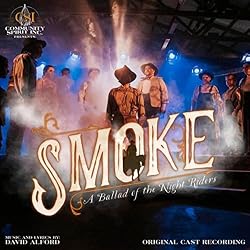 SMOKE: A Ballad of the Night Riders signifies the opening of this year’s annual installment of Bell Witch Festival with performances weekends Thursday October 1 thru Saturday, October 10. Specific show dates are October 1, 2, 3, 8, 9 & 10. Each evening the grounds at the Bell School Community Complex (7517 US-41 Adams, TN 37010) open at 6pm giving attendees the time and opportunity to peruse the grounds, the gift shop and vendors, including food trucks for a delicious meal before the at Kay Bagby Theatre and Brooksher Outdoor Pavilion seating opens at 7pm for the 7:30pm showtime. Grass Lawn tickets are $22.13 to 27.38. Seating at the covered pavilion range in price from $37.89 to $27.35 (prices include fees). CLICK HERE to purchase SMOKE tickets. For a preview of the music from SMOKE, give the original 2010 cast recording a listen on Spotify or Amazon.
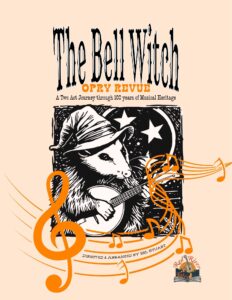 Following SMOKE, the Bell Witch Fall Festival continues October 17 with Red River Tales & The Bell Witch Opry Revue. The afternoon celebration begins from 3:00–6:00 p.m. and features local blacksmiths, tobacco twisters, chandlers, broom makers and more, along with clogging, storytelling and music—all free to enjoy. Food will also be available for purchase from vendors on the Bell School grounds.
Then at 6:30 p.m., The Bell Witch Opry Revue makes its festival debut. Directed and arranged by Bel Stuart, the revue transports audiences into the world of a live radio program from days gone by. Tickets are $5 for Grass Lawn seating or $15-$20 for pavilion seating. CLICK HERE to reserve your FREE tickets for the afternoon fun and to purchase tickets to Red River Tales & The Bell Witch Opry Revue. Please Note: On the ticket grid, the red area can be selected for the FREE aspects of October 17 events, to purchase tickets for the Revue, please select either green (lawn ticket option) or reserved seating under the pavilion.
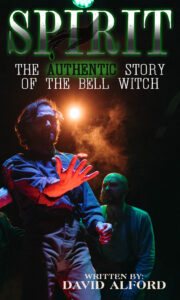 The Bell Witch Fall Festival then culminates October 22–31 with the annual presentation of David Alford’s spellbinding SPIRIT: The Authentic Story of the Bell Witch, presented on the hallowed grounds where the legendary Bell Witch is said to have roamed. Festival grounds open nightly at 6pm, with seating at 7pm and the show at 7:30pm, giving visitors time to explore vendors, grab dinner and settle in for an evening of history, entertainment and a little supernatural intrigue. SPIRIT tickets range in price from $27.38 to $43.14. CLICK HERE for tickets. For more information, call 615.696.1300 or visit bellwitchfallfestival.com. To keep up with all things Bell Witch Fall Festival, check them out on Facebook and Insta.
As always, if you wanna follow JHPEntertainment to find out who I’m chatting with for my next Rapid Fire Q&A, or for my take on the latest local and national theatre, music, arts and more, visit JHPENTERTAINMENT.com or find us on Facebook, Insta, Threads and X. Till then #GoSeeTheShow!