• Skip to primary navigation
  • Skip to main content
  • Home
  • About
  • Features
  • Contact

JHP Entertainment

Entertainment News, Reviews and Interviews

  • Home
  • About
  • Features
  • Contact

Rapid Fire 20 Q

Rapid Fire 20Q with Opry Star Mandy Barnett: Celebrating 30 Years of Timeless Music at 3rd & Lindsley June 11

June 10, 2026 by Jonathan

Few voices in country music possess the timeless elegance, emotional depth, and pure vocal artistry of Mandy Barnett. Thirty years after the release of her acclaimed self-titled major label debut album, the Grand Ole Opry member returns to those songs (and more) for a special anniversary concert at 3rd & Lindsley on Thursday, June 11. Ahead of the celebration, Barnett sat down with JHPEntertainment for a candid Rapid Fire 20Q covering everything from Patsy Cline and the Opry to family, loss, perseverance, and the music that continues to inspire her.


JHPENTERTAINMENT: Thirty years after your debut album, what emotions hit you hardest revisiting those songs for this upcoming show?

MANDY BARNETT:  There have been a lot of changes since I was 19 years old. In some ways, it feels like yesterday, and in other ways, it feels like another lifetime. I still love these songs and I’m very proud of that album, which Bill Schnee and Kyle Lehning produced . One of the funniest and honestly one of the best things ever written about me came from The Village Voice. They said I had surprisingly great taste for the secretary of the FFA from Tennessee. I think that quote says something important, even at 19, I knew exactly what kind of music I loved and these songs are still a reflection of that.  

JHPENTERTAINMENT: Your voice has always sounded timeless rather than trendy. Was there ever pressure to chase whatever country radio was doing at the moment?

MANDY BARNETT: I’ve never considered doing anything other than trying to be the best version of myself. I think collaboration works best when there’s common ground and mutual respect. I’m always open to ideas and growth, but if someone wants you to completely abandon who you are as an artist, it usually only creates confusion and despair. I have to do what feels right to me, or it just isn’t worth it. Music is supposed to be fun. 

Of course, I’d love to be rewarded for what I do, but I’ve learned that can’t be the reason for doing it. When I get discouraged, I think about some of the people who believed in me. Ahmet Ertegun once grabbed me, kissed me on the lips, and told me I was the best singer he’d heard in 25 years. Owen Bradley came out of retirement to make an album with me. Those are the kinds of things that remind me to trust my instincts.

JHPENTERTAINMENT: You’ve said you care more about singing than celebrity. What still excites you most about the craft itself after all these years?

MANDY BARNETT: I think you become different versions of yourself as you move through life, and that’s true as a singer, too. Even after all these years, I’m still learning. I’ve learned from great producers, fellow artists, and sometimes even from people I didn’t particularly enjoy working with. The most important thing can’t really be taught. It’s the willingness to be vulnerable and tell the truth in a song.

JHPENTERTAINMENT: You’ve performed more than 500 times on the Grand Ole Opry stage. Does stepping into that circle still feel magical, or has it become home at this point?

MANDY BARNETT: It feels like both home and magic. The Grand Ole Opry has been such a big part of my life for so many years that there’s a comfort and familiarity when I walk out on that stage. At the same time, I never lose sight of what an honor it is. Every time I step into that circle, I’m reminded of the people who stood there before me and the incredible history that surrounds it.

JHPENTERTAINMENT: In 2021, Connie Smith surprising you with your Opry invitation on your birthday sounds like something out of a movie. What do you remember most about that moment?

MANDY BARNETT: After more than 500 appearances on the Grand Ole Opry, I’d spent plenty of birthdays there, so while the thought may have crossed my mind over the years, I certainly didn’t think, “Well, it’s my birthday, so they’re going to make me a member tonight.” I knew it didn’t really work that way, and I wasn’t expecting anything. What I remember most is being genuinely surprised and overwhelmed. Becoming a member was something I’d wanted for a very long time.

 I’m especially glad it was Connie Smith who invited me. Connie has always been a good friend and such a sweetheart. She’s someone I’ve admired for years, and having her be the one to deliver that invitation made the moment even more meaningful. 

And of course, I’m grateful that my parents were able to see it happen. That means more to me now than ever. It meant a lot to my mother. She believed in me from the very beginning, and I think she needed to see that validation almost as much as I did.

JHPENTERTAINMENT: You became synonymous with Always… Patsy Cline having won out the coveted role in the jukebox musical of the iconic singer’s life when you were only 18. Looking back now, how much did Patsy’s music shape the artist you became?

MANDY BARNETT: Patsy shaped me in a profound way. I fell in love with everything about her records, her voice, her emotions, the songs, the production. I was about 8 years old when my mom brought home a Patsy Cline greatest hits cassette she’d picked up in a Kmart Blue Light Special. 

From the moment I heard it, I was hooked.I’ve always been drawn to emotion in music. My mamaw used to sing “You Are My Sunshine” to me when I was little, and I’d bawl my eyes out. Most people think of it as a sweet song, but I heard the sadness in it. I was always attracted to that tenderness and vulnerability.

That’s what Patsy had. She could break your heart when she sang, She wasn’t just singing notes, she was telling the truth. More than any vocal trick or technique, she taught me that the real power of singing comes from making people feel something.

JHPENTERTAINMENT: You channeled Patsy so perfectly that early on there were some detractors who tried to label you a “one-trick pony” because of that, but your catalog jumps from country to jazz to R&B to pop standards. Did proving your versatility become personal for you?

MANDY BARNETT: Well, it’s a pretty good trick. That show was so successful that I think when you’re portraying someone as iconic as Patsy Cline, it’s easy for people to put you in a box. 

But I’ve always been versatile. I had one of the first karaoke machines when I was a kid. It was so old it played 8-tracks. I’d sing all the songs I didn’t particularly want to sing just to get to the one I did, so I ended up trying everything—country, pop, R&B, gospel, whatever was on there. 

 Patsy herself was incredibly versatile. She could sing just about anything. And before Always… Patsy Cline ever came along, Jimmy Bowen signed me to Universal Records at 12 years old.  When he went to Capitol Records, he took me with him. I was recording with musicians from James Taylor’s band years before I ever moved to Nashville. We didn’t release any of the music but what an education that gave me. There was a change in A&R and I lost my record deal. That’s how I ended up auditioning for Always…Patsy Cline. Patsy was certainly one of my heroes, but so were Reba McEntire, Wynonna Judd, Tammy Wynette, Linda Ronstadt, and many others. When I got the role, I had one assignment: sound like Patsy Cline. I did the best I could. 

JHPENTERTAINMENT: Among your discography, I think my personal favorite is Every Star Above which you recorded using arrangements by the late Sammy Nestico (his final project). The inclusion of a 60-piece orchestra on the recordings feels incredibly cinematic. What did recording that project teach you about your own voice?

MANDY BARNETT:  Standing in front of a 60-piece orchestra is an amazing feeling. Talk about being inspired. Making Every Star Above was truly a dream come true. The album was produced by Fred Mollin and released through Melody Place, and Variety named it one of the best albums of 2021. 

Most importantly, it gave me the opportunity to work with the legendary Sammy Nestico on what would become his final recording project. Sammy wasn’t in the best health at the time, but I watched him rally around the music. It was as if the work itself energized him.

 One of the last conversations we had was about what we might do next, and I loved that. He never stopped dreaming and creating.

JHPENTERTAINMENT: Throughout your career, you’ve worked with legends like Owen Bradley, Harold Bradley, Gene Chrisman, and the Memphis Boys. What’s something younger artists today could learn from that generation of musicians?

MANDY BARNETT: What I loved about that generation was how generous they were. I’ve heard so many musicians say, “Harold gave me my first session,” or “Gene helped me with this or that.” Owen Bradley was incredibly generous to me, and so was Seymour Stein. Seymour signed Madonna, Talking Heads, and the Ramones. He was one of the great visionaries in the music business because he genuinely loved music and cared about the artists. I was the first artist he signed when he relaunched Sire Records, and that album was with Owen Bradley. I would also tell young artists that careers have peaks and valleys. People will tell you you’re the best and the worst, sometimes in the same week. There will be people who believe in you and others who don’t get you at all. You can’t let the ones who don’t get you define your worth. And finally, don’t become so competitive that you forget how to be a decent person. The people I admired most weren’t just great musicians, they were good people.

JHPENTERTAINMENT: Having known you as long as I have, I know there’s been more than one occasion when you’ve gone into the studio and recorded tracks for albums that for one reason or another never saw the light of day. Is there one project that you worked on that you still wish had been released?

MANDY BARNETT: That’s just the way the music business works sometimes. Not every project makes it across the finish line. So focus on the next one!

JHPENTERTAINMENT: Over the years you’ve shared that your earliest memories of singing took place alongside your Aunt Linda at the church founded by your grandfather. What do you recall most about those memories of family and music? 

MANDY BARNETT: I didn’t know it at the time, but those were some of the best days of my life. The love and support my family gave me was extraordinary, and I’d give just about anything to go back and spend one more day with them.

JHPENTERTAINMENT: Speaking of family, these last couple of years have been hard on you, having lost both your sweet Mama, Betty and your Dad. Was it difficult to get back out on stage, or did music play a role in picking up the pieces after such devastating loss?

MANDY BARNETT:  They were both the kind of people who would tell you to get on with it, so I do the best I can. They would want me to work, keep singing, and keep moving forward.But the truth is, I’ve struggled with those losses. Nothing has ever broken my heart more.What makes it especially emotional is that we had such an extraordinary last chapter together. My parents had been divorced for 30 years, and then suddenly life threw us all back together. There I was taking them to doctor’s appointments, helping them through illnesses and challenges neither of us saw coming. It was healing in some ways, brutal in others, and often very sweet. For a period of time, the three of us were together again, and I’m so grateful for that. It wasn’t always easy, but it gave us an opportunity to reconnect and understand each other in a deeper way. Music has certainly helped me cope, but grief doesn’t follow a schedule. Some days are easier than others. I just know how fortunate I was to have had the parents I did, and how grateful I am that I got that time with both of them before they were gone.

JHPENTERTAINMENT: Not long after your church performing debut, you won a singing competition at Dollywood and began performing in Archie Campbell’s Hee Haw Village in Pigeon Forge. What do those opportunities mean to you as you look back on that time?

MANDY BARNETT: They were golden opportunities, and I’m grateful for every one of them.It was the first year Dollywood was open, and I was just a kid getting the chance to be around some incredible people. I got to work with Dolly and her family, perform with a live band, and learn things that you simply can’t learn anywhere else.I met Archie Campbell while opening a show that also featured Chet Atkins and Wilma Burgess. Afterward, Archie told me, “Come up anytime. You’re always welcome.” And he meant it. He gave a young singer the opportunity to come perform at his show whenever I wanted, with a real band and a real audience.Looking back, that was an extraordinary gift. Archie didn’t have to do that, but he did. Those experiences gave me confidence, stage time, and memories I’ll always treasure.

JHPENTERTAINMENT: Another connection to a legend…when your friend and Opry sister Miss Jeannie Seely passed away, you were chosen to take on hosting duties of Sundays with Seely on SiriusXM’s Willie’s Roadhouse channel. Rechristened Sundays with Mandy, you spin classic country records and share conversations with legends and up-and-coming country artists. What’s it been like to add radio host to your resume? 

MANDY BARNETT:  I’m enjoying it a lot. I’ve always been a fan of country music, so getting to put together a different show every week is a lot of fun for me. I’ve always been a bit of a music nerd. There are certainly people who know more than I do, but I was fortunate enough to know many of these artists and work with them at the Grand Ole Opry, so I have stories and a personal perspective to share. I also loved Jeannie Seely and miss her very much. We all do at the Opry. In a lot of ways, I think we’re all trying to carry on in a way that would make her proud. I still find myself wondering, “How would Jeannie handle this?” more often than you’d think.

JHPENTERTAINMENT: Hosting duties aside, your brilliant vocal skills have always been the focus of your performing career, but in recent years you’ve expanded your talents a bit by picking up the ukulele, even strumming it a time or two in concert. What is it about the instrument that intrigues you?

MANDY BARNETT:I think it’s the instant gratification. It’s easier than a guitar, it’s smaller, and for whatever reason I seem to have a knack for it. I do wish I’d grown up playing an instrument. 

 I was so focused on singing that I never really developed that side of my musicianship. When I was coming up, being a great singer was enough. You didn’t necessarily have to play an instrument or write your own songs. So it’s been fun to learn something new and challenge myself a little. It’s given me a whole new appreciation for the people who accompany themselves. . And I’ve also started doing more songwriting and have found that to be an exciting and fulfilling creative outlet.

JHPENTERTAINMENT: You grew up around gospel music, bluegrass, country, jazz, and classic pop standards. Which genre still feels the most like “home” emotionally?

MANDY BARNETT:  Honestly, all of them. I’ve never really felt the need to choose just one.I grew up around gospel, bluegrass, country, rock and classic pop, and I’ve spent my career singing a little bit of everything. Each genre speaks to a different part of me. Country music is certainly my foundation, but I love the storytelling of country, the emotion of gospel, the musicianship of jazz, and the timeless melodies of the great pop standards.

JHPENTERTAINMENT: In 2024, you and your friend, jazz songstress Monica Ramey co-hosted Variety on Main, a monthly performance night at Franklin Theatre. During these shows you showcased a variety of entertainers from all genres and of all ages. What was most gratifying about that experience? AND…are there any plans for your and Monica to team up again professionally, either in a redo of Variety on Main, or perhaps in the studio?

MANDY BARNETT:What was most gratifying was seeing it all come together. We had amazing guests, wonderful audiences, and a really good mix of performers from different generations and musical backgrounds. Monica and I produced the shows ourselves, so we were involved in everything from booking talent to planning the format and making sure the details were covered. We had different strengths that complemented each other well. I focused a lot on booking the artists, and Monica was terrific at keeping everything organized and running smoothly. I’d love to do something like that again at some point. We had a lot of fun with it, and I think the audience did too.

JHPENTERTAINMENT: Having known you as a friend and also being an ardent fan of your music, I love that you’ll occasionally show an unexpected deep cut from any number of artists into the mix when you’re live in concert. Beyond the track-by-track from your first major label debut album and a few Patsy Cline songs, can you give us a hint of what else we might expect to hear during your upcoming 3rd & Lindsley show?

MANDY BARNETT: I will say that we’re playing the debut album in sequence, and beyond that, there will be a few surprises. I’ve never been very good at giving everything away ahead of time. Part of the fun is being in the room and experiencing it as it unfolds.

JHPENTERTAINMENT: Following this anniversary show, you’ve got another special performance planned as you return to your high school alma mater, Cumberland County High School for a one-night-only concert benefitting the high school’s football program. Why is it important to you to be part of this particular event?

MANDY BARNETT:I want to help the kids in Crossville. The more time I spend there, the more I appreciate what a special place it is and how much it shaped me.I believe young people need their talents to be encouraged and cultivated, whether that’s music, sports, academics, or anything else. And they need the right tools to succeed. When I was growing up, I had a little karaoke machine that played 8-tracks, and that helped spark my love of singing. It was the right equipment for me at the time. These young athletes deserve the equipment they need to compete at a high level and have every opportunity to succeed. If I can help in some small way, I’m happy to do it. It’s a chance to give something back to the community that gave so much to me.

JHPENTERTAINMENT: Last one — when the lights go down after this 30th anniversary celebration, what do you hope people remember most about Mandy Barnett as an artist?

MANDY BARNETT: I hope people remember that I stayed true to myself.I’ve never been very good at chasing trends. I’ve always followed my instincts, trusted my taste, and sung the music I love, whether it was popular at the time or not.I’ve been fortunate to have a long career, and I’ve learned that the right audience eventually finds you. There have been ups and downs, disappointments and wonderful surprises, but I’ve always found a way to keep going. At the end of the day, I hope people remember me as someone who cared deeply about the music, respected the artists who came before me, and never stopped trying to grow.


Thirty years after introducing herself to the world on her major label debut, Mandy Barnett remains exactly what she has always been: an artist guided by instinct, integrity, and an unwavering love of great songs. Whether revisiting the album that launched her career, honoring the legacy of Patsy Cline, stepping into the Grand Ole Opry circle, or sharing stories behind the music, Barnett continues to prove that authenticity never goes out of style.

Mandy Barnett’s concert celebrating the 30th anniversary of her debut album takes place Thursday, June 11 at 3rd & Lindsley in Nashville. General Admission tickets are $26.46 (fees included). For longtime fans and first-time listeners alike, it promises to be a special evening celebrating one of Music City’s most enduring voices. CLICK HERE for tickets. To see Mandy at her high school alma mater, Cumberland County High School on July 18, CLICK HERE for tickets.  To keep up with Mandy and to see where she’s performing next, follow her on Instagram and Facebook. 

For the latest music events at 3rd & Lindsley, follow them on Facebook, X and Instagram.

Interested in coverage for your latest entertaining endeavor? Click the contact page and drop me a note. You can also follow JHP Entertainment on Instagram and Facebook. In the meantime, #GoSeeTheShow!


Filed Under: Entertainment, Rapid Fire 20 Q Tagged With: 2026, 3rd & Lindsley, Celebrity Interview, Grand Ole Opry, Mandy Barnett, Music CIty, Nashville, Singer

Blue Ribbons, Romance & Rodgers and Hammerstein: A Rapid Fire 20Q with the Young Stars of The Keeton’s ‘State Fair’

June 9, 2026 by Jonathan

Rodgers & Hammerstein’s State Fair occupies a unique place in musical theatre history. Originally created for the silver screen in 1945—the legendary duo’s only musical written directly for film—it later found new life on the stage in a successful 1996 Broadway adaptation. Now, audiences have the chance to experience this warm-hearted slice of Americana at The Keeton Dinner Theatre, where the Frake family’s annual trip to the Iowa State Fair brings romance, blue ribbons, heartbreak, and plenty of unforgettable music. Before the curtain rises, JHPENTERTAINMENT caught up with four of the production’s young leads—Andrew Hutton (Wayne Frake), Caylin Maguire Gray (Emily Arden), Laura Walker (Margy Frake), and Robert Hatter (Pat Gilbert)—for a Rapid Fire 20Q conversation about their characters, favorite musical moments, fairground fun, and what makes State Fair such a timeless Rodgers & Hammerstein classic. 


RAPID FIRE 20Q WITH THE KEETON DINNER THEATRE’s STATE FAIR YOUNG COUPLES

RAPID FIRE WITH STATE FAIR‘s PAT GILBERT, ROBERT HATTER

JHPENTERTAINMENT: Pat Gilbert has that classic smooth-talking leading man energy, but there’s also a sincerity underneath it all. What’s been the key to finding the balance between Pat’s charm and vulnerability?

ROBERT HATTER: I think the key is understanding who he is with at any given moment, especially because he isn’t sure who he can trust yet. At the beginning of the show, he used to get the big stories as a reporter. But now, he’s a little washed up, so he doesn’t know who he can trust with that information. When he’s with a group of people that he may not know very well, he tries to be more charming. But with someone he’s closer to, Margy and Charlie for example, he feels that he can open up a little more.

JHPENTERTAINMENT: Pat represents excitement, possibility, and a world outside Margy’s everyday life. What do you think ultimately makes him such an appealing character in her story?

ROBERT HATTER: Ultimately, Pat is someone who has had a taste of what it’s like to leave home and explore the world. I think that’s what Margy finds most appealing about Pat. It’s his experience and knowledge of life outside of Iowa that makes Margy very curious about his character. It seems like Margy’s life has already been laid out for her, especially when we meet Harry, who everyone else around her has paired her off with. She finally has a glimpse at something outside of her small world in Pat.

JHPENTERTAINMENT: Your scenes opposite Laura Walker’s Margy are such an important part of the show’s emotional core. What’s been your favorite moment developing that chemistry together in rehearsals?

ROBERT HATTER: Laura Walker is incredibly talented, and it’s such an honor to get to work with her in this show. She inspires me to push myself to be a better performer. To pin down one favorite moment of developing chemistry together is difficult because I think that all the time spent running scenes, as well as the time in between, has helped incredibly in developing our chemistry. If I had to pick one, I would say our very first dance rehearsal for our song, “Isn’t It Kinda Fun.” I’ve always felt like dancing is my weakest point when it comes to performing. Having her there to help me has really boosted my confidence, and pushed me to work hard. Laura has studied dance and has so much expertise in this field, and she has encouraged me so much throughout the process.

JHPENTERTAINMENT: Between Dylan Kim’s direction, Royce Phillips’ music direction, Kimberly Wolff’s choreography, and Alexandra Anglim keeping the entire production moving backstage, what has stood out to you most about this creative team’s approach to bringing State Fair to life?

ROBERT HATTER: I think what’s stood out to me the most about this creative team is the level of professionalism and care they’ve shown throughout the entire process. It’s also been their willingness to help out whenever someone has a question that’s really stuck out to me. There have been many times when I’ve needed to ask Kimberly a question about a dance move, or Royce about a certain bar of a song. They’ve always been very quick and happy to help, and I’ve really appreciated that through this process.

JHPENTERTAINMENT: Rodgers & Hammerstein’s only movie-first musical still feels timeless all these years later. Why do you think audiences continue to fall in love with State Fair and its characters generation after generation?

ROBERT HATTER: I think there are two reasons. First, the comedic elements in this show are incredible. There have been moments every night where I find myself cracking up at a line or movement somebody does. This show is just filled with great humor. Second, I think the theme of debating between settling down vs. pursuing opportunities outside of your comfort zone is prevalent throughout the show. It’s a decision that I think everyone faces at some point in their lives, and State Fair does a great job of making the audience member face these decisions and see how things play out.

RAPID FIRE WITH STATE FAIR‘s MARGY FRANKE, LAURA WALKER

JHPENTERTAINMENT: Margy Frake is, in my estimation, one of Rodgers & Hammerstein’s most relatable young heroines. The story itself is wonderfully simple and heartfelt. While many modern musicals incorporate mind-boggling stage effects and cutting-edge technology, what is it about the simplicity of State Fair that makes it so enduring?

LAURA WALKER: I think that the simplicity of State Fair is crucial to being able to tell the story well – we see the Frake family both in their natural habitat, as well as in their yearly excursion to the fair. We see a glimpse into their everyday, so similar to many of our own lives, even 80 years apart. While the tech and effects used in so many musicals are wonderful to watch, State Fair is a show that benefits from being given the space to breathe: it is all-around heartwarming, earnest and fun. With such strengths as the breathtaking score, the relatable family dynamics, and the sweetness of the character relationships, one doesn’t need a live hog onstage, or an operable tilt-a-whirl.

JHPENTERTAINMENT: “It Might As Well Be Spring” has such an incredible legacy — from the 1945 film where Jeanne Crain portrayed Margy while Louanne Hogan provided the singing voice, to Broadway favorite Andrea McArdle taking on the role in the 1996 stage revival. What does it mean to you to step into that musical lineage?

LAURA WALKER: Being able to put my own twist on such a gorgeous song has been a really wonderful treat. The melancholic hope described in this song does a beautiful job of setting the stage for the world this show is set in, and is so much fun to sing! It has become very near and dear to my heart throughout the rehearsal process, and being able to put my own spin on it is an opportunity I’m very grateful to have!

JHPENTERTAINMENT: Margy dreams about a bigger world beyond the farm and the familiar rhythms of everyday life. What parts of that longing and restlessness do you personally connect with?

LAURA WALKER: All of it! Growing up in a smaller community, I always felt tired of doing the same routines day after day. One thing I appreciate about Margy, though, is that while sheknows she wants to experience more, she still appreciates the life she has grown up in. I feel the same way in this regard- thankful for what I’ve been given already, while still being ready to leap into new and exciting adventures when they come along.

JHPENTERTAINMENT: Margy has two very different suitors in the story — Robert Hatter as Pat and Connor Olen as Harry. What has it been like building those relationships and romantic dynamics with both actors?

LAURA WALKER: The first step that I always find helps in building any sort of onstage relationship is by simply making a new friend. Luckily, both Robert and Connor are easy people to be friends with! Connor is a hoot to be around, and his joy is infectious both on and offstage. Robert has also been both a great friend and onstage partner. Both of us have been passionate about putting forward the best performance we can, while still infusing the joy and fun from our friendship into our characters’ relationship.

JHPENTERTAINMENT: Since State Fair was originally created as a film before becoming a stage musical decades later, do you feel there’s a cinematic quality to the storytelling or score that makes this show unique among Rodgers & Hammerstein classics?

LAURA WALKER: I’ve always loved Rodgers & Hammerstein musicals because of their knack for beautiful storytelling, and State Fair isn’t any different in this regard. I would say the biggest difference between the original film and other musicals of theirs is that State Fair was originally written to be shown to everyday Americans across the country, rather than being written mainly for Broadway audiences. I think this gives State Fair an even stronger connection to the world that it finds itself set in. The same mothers who were entering mincemeat competitions and fathers who were raising prize-winning hogs were the intended audience for the film, requiring precision in telling both the story of the Frake family, as well as the stories of families across the country that had been through a particularly rough few years, and were trying to get back to “normal” everyday life. 

RAPID FIRE WITH STATE FAIR‘s WAYNE FRAKE, ANDREW HUTTON JHPENTERTAINMENT: Rodgers & Hammerstein’s State Fair has such a warm, nostalgic charm to it. What first drew you to Wayne Frake as a character, and where do you personally connect with him the most?

ANDREW HUTTON: Wayne is a strong-headed and focused young man. He has his own goals set in mind, but plans change so quickly around him. I love how he is easily taken in by the magic of the Fair & by Emily. I think I connect with this. Since I graduated college, I found out real quick that the plans you make will quickly be derailed. And I learned soon after that that it’s probably for the better.

JHPENTERTAINMENT: Wayne spends much of the story balancing family expectations, romance, and figuring out who he really wants to be. What’s been the most interesting part of unpacking his emotional journey?

ANDREW HUTTON: Wayne is an interesting case, emotionally. Early 20s, ready for love, yet doesn’t prioritize his family as he should. It’s very interesting to see where he lacks maturity, then springs into a passionate and honest man.

JHPENTERTAINMENT: You already alluded to Wayne’s fascination with Emily, who he meets at the fair. To that end, Wayne finds himself caught between two very different romantic dynamics in the show. What has it been like sharing the stage with your two leading ladies, Caylin Maguire Gray as Emily and Julia Mowry as Eleanor?

ANDREW HUTTON: Both Caylin and Julia are so talented and professional. I’ve had the honor to work with Julia Mowry while we both attended Trevecca Nazarene University in several productions – my personal favorite, Little Women (Julia as Jo March, myself as Laurie). But this is the first time I’ve gotten to work with Caylin. She’s been a wonderful scene partner and such fun to play off of. In our various scenes together, I love that she challenges me to react based on her honest delivery. It’s something every actor wants in a partner.

JHPENTERTAINMENT: Since the whole show revolves around fair competitions and blue ribbons, if Andrew Hutton entered the State Fair himself, what hidden talent would most likely earn you the Blue Ribbon?

ANDREW HUTTON: Oh boy! This one is tough. If I had a Blue Ribbon for a hidden talent, I’d say it was for Musical Composition. I sometimes play around with writing music for orchestras or small ensembles. Nothing published or performed, but still a fun hobby.

JHPENTERTAINMENT: Is there a specific moment, lyric, or musical sequence in the show where you feel Wayne’s heart the clearest — the point where you really feel connected to him as a character?

ANDREW HUTTON: I LOVE a short little scene between Wayne and his sister Margy. Both of them, separately, waiting to meet up with their significant other. They bump into each other and have a silly sibling side-eye moment. But right before Wayne leaves, he asks her if he needs to wait with her – as a brother, I really connect with the desire to see the wellbeing of a sister–love you, Abby.

RAPID FIRE WITH STATE FAIR‘s EMILY ARDEN, CAYLIN MAGUIRE GRAY

JHPENTERTAINMENT: Emily Arden brings so much sparkle and energy to the midway scenes. What’s been your favorite part of discovering her personality throughout rehearsals?

CAYLIN MAGUIRE GRAY: Emily is such a dynamic character. It has been fun finding how she contrasts with the farm folk of the fair as she has her eyes set on stardom. This role has brought a lot of confidence out of me as I have explored her confidence in herself. I have also loved exploring the depths and inner conflict that she feels throughout her scenes with Wayne as she gives herself over to the fleeting romance.

JHPENTERTAINMENT: Since your parents, Donna Driver and Kevin Driver are playing Margy’s parents in the show, was there ever any thought about auditioning for Margy yourself, or did that feel just a little too close to home?  

CAYLIN MAGUIRE GRAY: I auditioned for the show with an open mind for roles! I put myself out there for both Margy and Emily and am thrilled with the way the casting went. Laura is beautiful as Margy and I have had so much fun as Emily. We have also joked that Wayne’s character must have “mommy issues” because I look so much like his “mom.”

JHPENTERTAINMENT: Emily has a confidence and charm that immediately catches Wayne’s attention. What qualities do you admire most about her?

CAYLIN MAGUIRE GRAY: I admire her confidence to chase her dreams no matter what. She prioritizes her goals of stardom over romance and staying put. I personally prioritize family in my own life, but I have loved exploring a character so driven. In terms of her romance with Wayne, she also exudes confidence and control over what she wants and how to get it, but she also lets herself fall into some vulnerability with him.

JHPENTERTAINMENT: Emily feels a little more polished and worldly compared to the rural wholesomeness of the Frake family. How much have the costumes, the sets and overall look of the show helped you step into that mindset and define who Emily is?

CAYLIN MAGUIRE GRAY: The contrast between her and the Frake family has been a fun dynamic to explore. Emily’s costumes are elevated and glitzy, juxtaposed with the simple outfits of the fair crowd. She sticks out like a sore thumb, in a good way, and that is why Wayne and others become so enamored with her. This has really added to the confidence I was talking about: she draws attention in every space she walks into.

JHPENTERTAINMENT: Even though the story takes place in another era, what part of Emily or her relationships do you think modern audiences will still instantly recognize or relate to today? AND What do you hope audiences take with them long after the last tent is down at Keeton’s State Fair?

CAYLIN MAGUIRE GRAY: Emily is a motivated, driven character who is hesitant to let herself succumb to a romance because of her past and aspirations. She slowly allows herself to fall into the vulnerability of love with Wayne despite her better judgment. I think people can relate to the feeling of a fleeting weekend of passion with a stranger before going back to real life. I hope audiences take with them the feeling of endless possibilities that can come from a weekend at a state fair. It is a fun and exciting show that I hope has the audience smiling ear to ear. I hope it provides the audience with a good memory of a fun night at the theatre.


From Ferris wheel romances and blue-ribbon dreams to one of the most beloved scores Rodgers & Hammerstein ever penned, State Fair continues to remind audiences that sometimes life’s biggest adventures happen when we step away from the familiar. Be sure to catch State Fair on stage at The Keeton Dinner Theatre (108 Donelson Pike) Friday, June 12 thru Sunday, June 28 and discover why this charming musical has been winning hearts for generations. CLICK HERE for tickets.

State Fair marks the final show of The Keeton‘s current season, but their 2026/2027 season is right around the corner kicking off with Come From Away on stage August 14-30. CLICK HERE to take advantage of their upcoming season subscription. So you don’t miss out on upcoming shows at The Keeton Dinner Theatre, follow them on Facebook, X and Instagram.

Interested in coverage for your latest entertaining endeavor? Click the contact page and drop me a note. You can also follow JHP Entertainment on Instagram and Facebook. In the meantime, #GoSeeTheShow!

Filed Under: Entertainment, Rapid Fire 20 Q, Theare Tagged With: 2026, Interview, rapid fire 20q, Rodgers and Hammerstein, State Fair, The Keeton, The Keeton Dinner Theatre

Rapid Fire 20Q: Cast and Creatives of Playhouse 615’s ‘Ain’t Misbehavin’ Talk Fats Waller, Jazz, and Bringing a Beloved Broadway Classic to Life; On Stage June 5 thru 21

June 5, 2026 by Jonathan

When Ain’t Misbehavin’ opened on Broadway in 1978, it introduced audiences to a joyous celebration of the music, humor, and spirit of jazz legend Thomas Wright “Fats” Waller. Now, Playhouse 615 brings the Tony-winning musical revue to Middle Tennessee audiences June 5-21 with a talented cast, live onstage musicians, and plenty of swing.

Before the curtain rises, JHPENTERTAINMENT caught up with director Mitchell Vantrease and cast members Elliott Robinson, Lisa Graham, Isiah Rankin, Raven Buntyn, and Yolanda Treece for another installment of our Rapid Fire 20Q feature. 


RAPID FIRE 20Q WITH THE CAST AND DIRECTOR OF PLAYHOUSE 615’s AIN’T MISBEHAVIN’

RAPID FIRE WITH AIN’T MISBEHAVIN’’s ISIAH RANKIN

JHPENTERTAINMENT: Ain’t Misbehavin’ celebrates the music and spirit of Fats Waller without being a traditional biography. What do you think makes that approach so timeless?

ISIAH RANKIN: Traditionally, I’ve seen that these stories focus around the person’s upbringing and what drew them to do what they did. This show, on the other hand, takes a different approach in telling various stories of each character through the music while also incorporating some important information about the musical style itself, such as the introduction to “Your Feet’s Too Big”. As many say, music is a universal language that will continue to defy the confines of time and trends. I think these stories and the music will continue to connect to individuals in the years to come. 

JHPENTERTAINMENT: You’re pulling double duty as both performer and music director. I understand for this production, Playhouse 615 has opted to have three musicians on stage with the cast instead of the usual spot behind the audience. As music director and performer, how does that enhance your energy and performance?

ISIAH RANKIN: Funny enough, this is my first community theater opportunity to music direct a show on my own which has been a great honor and privilege. I previously music directed a high school show that ran on tracks, which was a unique experience. Having a live band for this experience, from both sides (MD & performer), creates an immersive experience that really creates new moments each performance. Though the music is there and learned, as you continue to connect with one another along with each audience, you begin to create new moments in each show. So, I believe it creates this organic experience that tracks and some other shows with live musicians don’t always allow. 

JHPENTERTAINMENT: What’s been the biggest challenge musically in bringing these iconic songs to life?

ISIAH RANKIN: The biggest challenge in this process has been staying true to the style and character of the music. Not being as familiar with this style of music, I was very intentional about listening to the various aspects of different versions of the show and songs to ensure I maintained the integrity (to the best of mine and each singer’s abilities) of each song and story. I believe that each rehearsal has brought more and more connection to the messages weaved throughout this show and will cause the show to continue to evolve in each performance. 

JHPENTERTAINMENT: If Fats Waller himself were seated in the audience, at which aspect of this show do you think he’d flash his notoriously joyful smile?

ISIAH RANKIN: I think he would be very proud of our presentation of “Black and Blue” because of all of the recent events over the last few years. I think that it is a timely song and our connection to the material feels highly authentic because of our understanding and close proximity to a lot of the concepts in the song, so I think he would be very pleased with our performance and presentation of this song.

RAPID FIRE WITH AIN’T MISBEHAVIN’’s YOLANDA TREECE.

JHPENTERTAINMENT: The original 1978 Broadway production won a Tony Award for Best Featured Actress for Nell Carter. Years later, I was fortunate enough to see the mid-90s revival starring R&B and Pop legends The Pointer Sisters, in which Anita Pointer took on the role Carter had originated. In Playhouse 615’s production, that honor falls to you. Does knowing the legacy attached influence you in any way as you step into this world?

YOLANDA TREECE: Nell Carter? Yes! I have definitely been influenced. With her larger -than-life persona and this role, I have  big shoes to fill! Paying homage to her in this iconic role while trying to bring my own flavor to this role has challenged me beyond measure. But I hope I’ve made her proud and I do her justice!

JHPENTERTAINMENT:  With just over two dozen songs featured in Ain’t Misbehavin’, do you have favorites, or does that vary each time you and your cast mates perform them?

YOLANDA TREECE: Yes. Two of my favorites are “Black and Blue” and “Mean to Me”. “Black and Blue” is the soul stirring cry of truth to explain how it was, how it has been and how  it will continue to be Black in this world while dealing with the inner struggle and repercussions of being Black. This song speaks volumes and ehen we as a people can’t say a word. This song is so relevant in today’s divided, messed up world and I am so thankful that Fats Waller gave this sing life. I am honored.

My other favorite song from the show is “Mean to Me”. Everyone at some point in life has or will experience heartbreak. It is especially difficult if it’s someone we shouldn’t have been attached to to begin with. Just because the heart wants what the heart wants doesn’t mean that person is meant for us. That is a difficult lesson to learn and heal from. But you can heal.

JHPENTERTAINMENT: On your off-time, what song on your personal music playlist gets your ‘joint jumpin’?

YOLANDA TREECE: I have an eclectic mix of music and it just depends on what I’m feeling or what is stuck in my head. My list includes contemporary gospel like Tye Tribbett, Kirk Franklin, Pastor Mike to Stevie Wonder, Earth, Wind and Fire, Queen, Prince, Ms. Aretha Franklin, Patti LaBelle, to name a few…I am all over the place. I love music!

RAPID FIRE WITH AIN’T MISBEHAVIN’’s ELLIOTT ROBINSON

JHPENTERTAINMENT: Ain’t Misbehavin’ serves as a reunion of sorts for you and director Mitchell Vantrease, having appeared in his 2025 production of Ragtime at The Keeton. So a two-part question for you…What do you most enjoy about Vantrease’s directing style? AND…Did his involvement in the show sway your interest in auditioning?

ELLIOTT ROBINSON: Like most great directors, I love the way Mitchell trusts his actors to make choices. No actor wants to be instructed how to do every little thing about their character, because we want to bring in our own interpretation of who that character is, to integrate whatever research and work we’ve done in developing and eventually embodying it. If I were to get too far afield from where he wanted his vision of the show to land, I’m sure he would let me know (LOL)! I’m a big fan of the selections he chooses to direct, too; stories with great cultural and/or historical significance, or featuring depictions of societal issues that still linger with us from days gone by. Ragtime, Memphis, Guess Who’s Coming to Dinner?, The Piano Lesson, and Master Harold and the Boys all fit that template. I surely would have auditioned for this great piece no matter who was directing it, because stuff like this doesn’t come around a lot. I’ll admit I was super happy to see that it was my baby brother at the helm!

JHPENTERTAINMENT: By day you work in Nashville Library’s Civil Rights Room sharing important history with visitors. Considering your day job, does performing a show rooted in such iconic Black artistry carry extra meaning for you?

ELLIOTT ROBINSON: Yes, at work I get to share our great local Civil Rights history with people from all over this planet; you need to come down for a tour! Fats Waller represents the history of the Harlem Renaissance, and we know how influential that era was in the growth and development of Black artistic expression in America, in music, as well as in literature, dance and visual art. Between that and the very true phrase, “they just don’t write songs like they used to,” I am very excited to bring these songs to life! Extra significance is layered on by this being Black Music Month, a time dedicated to the celebration and remembrance of the greatness and influence of artists from back in the day. Then, to stack more historical significance on top of all that, we even get to do a show on the night of Juneteenth!

 JHPENTERTAINMENT: In your show bio, you promise audiences a “rip-roaring, jumpin-jammin-jivin good time.” Is there a particular section of the score that you feel embodies that sentiment or is it simply a culmination of the entire vibe of the piece?

ELLIOTT ROBINSON: “It’s gonna be a whole vibe, man!” I can’t wait to see how it feels in there with a sold-out house! The good time comes first from the audience enjoying the songs, whether they be comical, romantic, or social commentary. We are accompanied by a great live trio, which is special, too. More than anything, though, folks will also get to be more than spectators. I had not initially imagined how much of an interactive experience it would be! We just might break the fourth wall sometime, and we might need you to help us, in a kind of call-and-response way. It’s not gonna be your quiet, reserved night at the theatre, I tell you that! Get ready for some hand clappin’ & toe tappin’! I envision it as a kind of a speakeasy feel: small, intimate setting, maybe a few beverages flowing. Maybe we should have a code word for the door! LOL! 

RAPID FIRE WITH AIN’T MISBEHAVIN’’s RAVEN BUNTYN

JHPENTERTAINMENT: Your journey from a career in STEM recently took what could be considered a full 180 when you decided to pursue a full-time career in the arts. As one of Ain’t Misbehavin’’s songs suggests, it ‘Tain’t Nobody’s Biz-ness’, but I gotta ask, When was your “Yep…this is exactly where I’m supposed to be” moment?

RAVEN BUNTYN: I wouldn’t say there was a singular moment. It was a culmination of multiple moments that, over time, added up to me knowing this was for me. No matter what I did, I couldn’t stay away from the stage. But when I started acting classes last November, it cemented in me that being on stage was my calling. No matter how anxious I became or how many limiting beliefs I had to battle, it didn’t matter because I was allowing myself to be vulnerable in a way that I’d always craved before. Being secure enough within myself to open myself up to an audience and allow them to hopefully feel what I feel, is an honor I’m grateful to live. 

JHPENTERTAINMENT: I’ve heard that the staging for this show is a little different for most shows at Playhouse 615, in that there’s a few cocktail tables in the front row of the audience area, giving this production more of a club feel. As a performer, what challenges/advantages does this setup present?

RAVEN BUNTYN: Being able to interact with the audience for a show is always somewhat a blessing and a curse depending on how you look at it. Sometimes, depending on the material, it’s easier to perform in front of an audience because you’re essentially pretending they aren’t there. But with this show, the audience is a part of the club and the show itself, which can be intimidating, but also very freeing. There’s no 4th wall, so we’re all in this universe together and that makes it fun and exciting. 

JHPENTERTAINMENT: What advice would you give someone sitting in the audience who has a creative dream they’ve been too nervous to chase?

RAVEN BUNTYN: The advice I would give is to trust. When you take a leap of faith, the thing that gets you through moments of doubt is trusting— trusting yourself, trusting your own timing, trusting your gut, and trusting that what you feel drawn to is right and true. Learn to trust your inner voice above anyone else’s. After all, it’s your life, and you deserve to live it exactly as you see it. 

RAPID FIRE WITH AIN’T MISBEHAVIN’’s LISA GRAHAM

JHPENTERTAINMENT: What excites you most about stepping into this jazz-infused world?

LISA GRAHAM: What excites me the most is the music itself! It is challenging, funny, haunting, gorgeous- all the things. I love singing harmonies, so it was thrilling to work on the jazzy four and five part harmony and bring it all together. The lyrics, too, are so much fun.

JHPENTERTAINMENT: When not performing, in your day-to-day life, you work as a school librarian where you’re surrounded by stories every day. As the son of a retired high school librarian, and a former longtime bookstore employee myself, I love knowing this about you. What story does this production tell audiences beyond the music itself?

LISA GRAHAM: Yes! That’s so cool Jonathan- I love meeting other bibliophiles. Well, it’s definitely telling stories of Black culture- ways that we celebrate ourselves, express ourselves, and process the discrimination we experience. When you hear the song “Black and Blue” late in Act Two, it really frames the entire show. But for me, this production more than anything else tells the story of love, from first meetings, to falling in love, to dealing with issues in relationships. That’s what makes it so universal.

JHPENTERTAINMENT: This cast is stacked. What’s your favorite part of performing with this talented group of people?

LISA GRAHAM: This cast is very kind and very supportive. Everyone works so hard- we are all invested in this show and want it to be great. It really is a joy to go rehearse with these folks! 

RAPID FIRE WITH AIN’T MISBEHAVIN’ DIRECTOR MITCHELL VANTREASE

JHP ENTERTAINMENT: After the success of directing The Keeton’s Ragtime last year, what attracted you to taking on helming Ain’t Misbehavin’ at Playhouse 615?

MITCHELL VANTREASE: Ain’t Misbehavin’ has always been on my bucket list, whether as a performer or a director. So when the opportunity came up to take the helm of this production, there was no doubt in my mind that I was saying yes. I’ve always known the show as the production that really put Nell Carter on the map. There would be no Gimme a Break! without this show and her Tony Award-winning performance.

I also love jazz, and it doesn’t get much better than Fats Waller. He created and performed some of the greatest standards of all time, and this show puts that music fully on display.

JHP ENTERTAINMENT: This show is more revue than traditional book musical. How does that shift your approach as a director?

MITCHELL VANTREASE: It definitely shifts my approach a little, but I’m no stranger to musical revues. I actually crafted and co-created a revue in Arizona called The Soul of Broadway, which celebrated the music of African American musicals and characters. That production won an AriZoni Award, which is basically the state’s version of the Tony Awards, for Best Musical.

One of the biggest differences with this production is that I not only directed it, but I also choreographed most of the revue myself. Usually, I direct and have a choreographer working alongside me the entire time, but with this show I wanted to challenge myself and level up as an artist. Growth is important, and I wanted to push myself creatively.

I was definitely nervous at first, but I studied dances from that era and found a lot of inspiration there. I ended up creating choreography that feels clean, simple, and authentic while complementing both the actors and their incredible voices.

For me, the key to directing a musical revue is making sure every song tells a story. These numbers aren’t just performances — they’re mini stories. The cast isn’t only singing; they’re acting through every lyric and every moment. But make no mistake, it’s all about the music. 

JHP ENTERTAINMENT: Having the musicians on stage changes the entire visual energy of the production. What excites you most about that choice?

MITCHELL VANTREASE: There’s nothing like having live music onstage. Since the show is set in a club, I wanted the audience to truly feel that atmosphere the second they walk in. Putting the band onstage immediately elevates the energy and creates a more authentic nightclub experience. It brings the production to life in a completely different way.

JHP ENTERTAINMENT: What do you hope Nashville audiences feel walking out of the theater after this production?

MITCHELL VANTREASE: I hope audiences walk away with a deeper appreciation for Fats Waller, his music, and the legacy he left on the music industry. It’s especially meaningful that we’re presenting this show in June during National Black Music Month and around Juneteenth celebrations. There really couldn’t be a more perfect time to celebrate this history, this music, and such a phenomenal artist.


Whether you’re already a fan of Fats Waller’s music or discovering these timeless songs for the first time, Ain’t Misbehavin’ audiences at Playhouse 615 can expect an evening filled with laughter, incredible vocals, unforgettable musicianship, and the infectious energy that has made this show a favorite for nearly five decades. , settle in, and get ready for a jumpin’, jammin’, swingin’ celebration of one of Broadway’s most beloved musical revues.

Ain’t Misbehavin’ runs June 5-21 at Playhouse 615 (11920 Lebanon Rd, Mt. Juliet, TN 37122) with Friday and Saturday evening performances at 7:30pm and Sunday matinees at 2:30pm. General Admission tickets are $22 for Seniors/Military and $25 for Adults. As mentioned above, there are a limited number of cocktails tables near the front of the stage adding to the nightclub atmosphere of the show. Those VIP seats are available for $35. CLICK HEREto grab your tickets. 

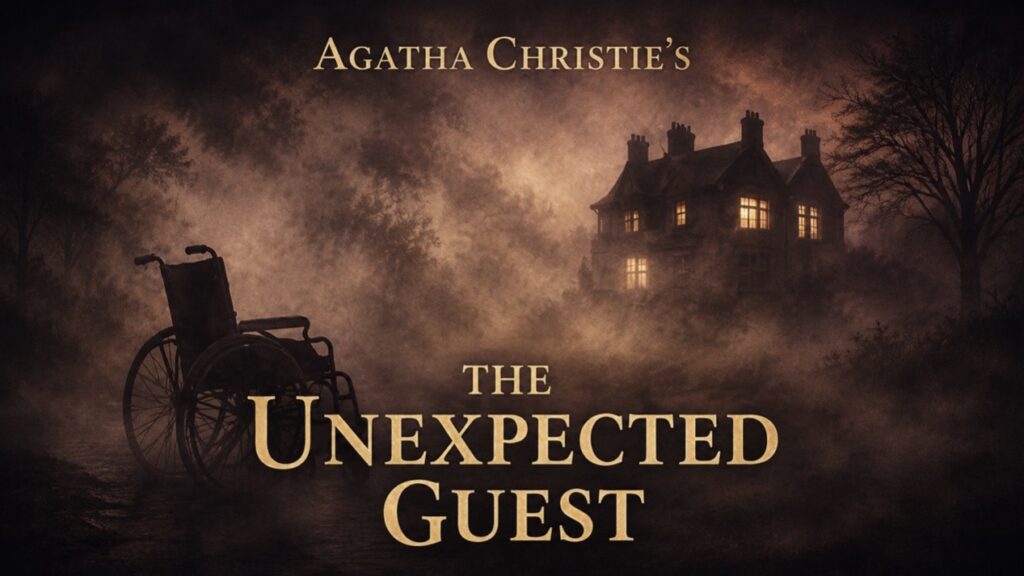
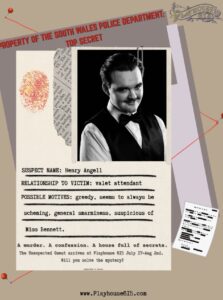
Following Ain’t Misbehavin’, Playhouse 615‘s season continues with Agatha Christie’s The Unexpected Guest on stage July 17-August 2. CLICK HERE for ticket. For more from Playhouse 615, check out their website or follow them on Instagram and Facebook.

As always, if you wanna follow JHPEntertainment to find out who I’m chatting with for my next Rapid Fire Q&A, or for my take on the latest local and national theatre, music, arts and more, visit JHPENTERTAINMENT.com or find us on Facebook, Insta, Threads and X. Till then #GoSeeTheShow!

Filed Under: Entertainment, Rapid Fire 20 Q, Theare Tagged With: 2026, Interview, Live Performance, live theatre, Musical, Musical Theatre, Playhouse 615, Rapid Fire 20 Q

Shadows and Storytelling: Rapid Fire Q&A With Sarah Fornace & Julia Miller; Manual Cinema’s The 4th Witch at Oz Arts June 4-6

June 4, 2026 by Jonathan

Manual Cinema’s The 4th Witch at Oz Arts June 4-6

For more than 15 years, Manual Cinema has been redefining the boundaries of live performance, blending shadow puppetry, filmmaking, music, animation, and theatrical storytelling into an experience unlike anything else on stage. The Emmy Award-winning collective’s latest production, The 4th Witch, offers a bold new perspective on Shakespeare‘s Macbeth, transforming one of literature’s most enduring tales into an imaginative coming-of-age story filled with the company’s signature artistry and innovation.

Ahead of Manual Cinema’s June 4-6 engagement at OZ Arts Nashville, JHPENTERTAINMENT caught up with Julia Miller and Sarah Fornace, two of the collective’s five Co-Artistic Directors, to discuss the origins of the company, the challenges of touring such a technically ambitious production, the collaborative process behind their work, and what’s next for one of the most inventive theatrical collectives working today.


RAPID FIRE Q&A WITH MANUAL CINEMA’s JULIA MILLER AND SARAH FORNACE

RAPID FIRE WITH MANUAL CINEMA CO ARTISTIC DIRECTOR JULIA MILLER

JHPENTERTAINMENT: Manual Cinema’s audiences range from young children and families to theater lovers, film buffs, and aspiring artists. What do you think allows the work to connect with such a wide variety of people?

JULIA MILLER: I think puppetry as a medium can be profoundly impactful. There is something about bringing the inanimate to life that feels like magic. Something special happens through the work of the puppeteer and the audience, these objects are imbued with so much life and emotion, you feel it in a different way than watching a human perform. I think the handmade quality is also meaningful. Seeing the hands (sometimes literally) of the makers feels special in a time where so much of what we consume is digitally rendered. There is something about the humanness of the objects and the performance that seems to affect people.

JHPENTERTAINMENT: You’ve worn many hats within Manual Cinema as a director, puppeteer, puppet designer, and performer. Which part of the creative process feels most rewarding to you?

JULIA MILLER: My background/training is in performances, so I love being in rehearsal and performing in the shows. Working with so many amazing performers to create what eventually becomes a very intricate, tightly coordinated dance, is a special experience. I love developing new types of cinematic puppetry shots and techniques, but I also love designing puppets, directing, and devising stories with the other Co-Artistic Directors. I have so many interests I feel lucky to work in an environment that incorporates so many of them.

JHPENTERTAINMENT: Before co-founding Manual Cinema, you trained in devised theater, clown, and mask work in a variety of settings, including Italy. How do those disciplines continue to influence your storytelling today?

JULIA MILLER: The physical theatre training I did in mask, clown, and commedia dell’arte is all about specificity of action and gesture, how fast or slow you do something can tell the audience something different. So much of puppetry is that. Both share the same foundational principles, breath, focus, and weight. When I started working in puppetry I just began translating that work through an object instead of my body. I’ve always loved to work collaboratively, devising work in an ensemble is challenging in that there is a lot of give and take and negotiation between different ideas, but work made by many hands has so much more depth and personality to me. You can feel the many brains that worked together to make it, and I’ve always been drawn to that.

JHPENTERTAINMENT: Audiences see the finished production, but what would surprise them most about the amount of preparation and coordination required behind the scenes?

JULIA MILLER: Something unique to Manual Cinema performances is that you get to see the ensemble create all of the images of the movie in real time, on stage, below the projection screen. It takes a lot of work to coordinate all of that specific blocking, to make the transitions seamless and to the music, everything in sync. The puppeteers don’t get a break once the show starts. They play multiple characters, manipulate puppets, act as editors and lighting designers, track so many small props and costume changes, all tightly choreographed between five puppeteers. It’s like learning a dance by heart or memorizing a piece of music, you want to get to the point where you don’t have to think about what is next, your body just knows, and that takes repetition and doing the show over and over again. But when it’s there it really is like NASCAR, everyone moving in a tight little dance around each other, each move you make direct, efficient, and in relationship to someone else. It is amazing when it all comes together.

JHPENTERTAINMENT: Every Manual Cinema performance contains live, in-the-moment elements. Even with the film and projection components, is every performance of The 4th Witch a little different from the one before it?

JULIA MILLER: Absolutely. The container of the show is fixed in that we are all executing a series of repeatable actions. The choreography is set and does not change, even the timing is set exactly to sound design and music so there is no room for improvisation. That being said, it’s live theatre, props get left on the wrong side of the stage, puppets go missing, someone forgets a piece of blocking, but we just have to keep moving. There isn’t time to stop or feel bad because then you’ll be late for your next thing. The audience never notices, but the puppeteers always feel it, you just have to let go and move on. It’s a hard lesson I’m still learning. The audiences also really impact the performance. Sometimes we have a very rowdy house that isn’t afraid to laugh or audibly react. Those are always energizing because we get more feedback from the audience and play off of each other. Other times we get very focused but quiet houses and that changes the dynamic as well. Each audience is unique and reacts differently so that keeps us on our toes and changes the mood slightly night to night.


RAPID FIRE WITH MANUAL CINEMA CO ARTISTIC DIRECTOR JULIA MILLER

JHPENTERTAINMENT: For readers who may be discovering Manual Cinema for the first time, how do you describe what the company does in one or two sentences?

SARAH FORNACE: Manual Cinema is an Emmy Award-winning performance collective, design studio, and film/video production company. We combine handmade shadow puppetry, cinematic techniques, and innovative sound and music to create immersive stories for stage and screen that feel human, handmade, and urgent. We try to combine the sweeping storytelling of cinema with the deep human connection of live theatre.

JHPENTERTAINMENT: Manual Cinema was founded in 2010 by you, Julia Miller, Drew Dir, Ben Kauffman, and Kyle Vegter. Looking back 15-plus years later, did you have any idea the collective would grow into what it is today?

SARAH FORNACE: No! We started working together to create a short piece called “The Ballad of Lula del Ray.” We performed it in DIY spaces and small festivals in Chicago. People started to ask us what we would make next, and we came up with ideas for more shows. We had no idea that we would tour the world (every continent except Antartica) and still be working together 15 years later!

JHPENTERTAINMENT: One of the things that makes Manual Cinema unique is its deeply collaborative nature. What does the creative process look like when five co-artistic directors are helping shape a project?

SARAH FORNACE: It depends on the project! Some start with a story idea, some start with literary or biographical material that we are adapting, and some start with music! Some parts of the shows start with storyboards or animatics, and some are music-first. Generally, we will have at least one artistic director in the puppetry ensemble who helps shape the choreography and the story from the inside of the show. And usually we will have a director or an outside eye who is shaping it from the outside.

JHPENTERTAINMENT: You’ve worked with the same founding team since 2010. What’s the secret to maintaining a creative partnership for that long?

SARAH FORNACE: Good question! Fifteen years in, I think that we are still figuring out how to make work that is artistically exciting to us and financially lucrative enough to keep our doors open! The industry is always shifting, and I think that all the Manual Cinema artistic directors are incredibly smart and uniquely talented at telling stories that address the highs and lows of what it means to be human and how we try (and sometimes fail) to connect with each other. There is no one else I would rather tell stories and make work with!

JHPENTERTAINMENT: Outside of Manual Cinema, you’ve worked in theater, choreography, filmmaking, and even video game storytelling. How do those experiences influence the work you bring back to the company?

SARAH FORNACE: The great thing about being a deviser/director or a performer with Manual Cinema is that you get to do a bit of everything and bring all of your skills, interests, and problem-solving abilities to the project! As a performer in The 4th Witch, I get to not only act in silhouette and puppeteer but also control the shots and pacing of the show in the same way that a film editor and director of photography would in an actual film. I also get to work in super close collaboration with four of the most incredible puppeteers working today. They bring insights and skills from their various other backgrounds in filmmaking, animation, ballet, musical theatre, and clown. It feels like being in a Nascar pit crew of storytelling!

JHPENTERTAINMENT: The 4th Witch turns Shakespeare’s Macbeth on its head. Where did the initial spark for this reimagining come from?

SARAH FORNACE: We knew that we wanted to take a sideways approach akin to Tom Stoppard’s Rosencrantz and Guildenstern are Dead. Adapting the show in this day and age, we were struck by how the play is suffused with an undercurrent of war. We thought that we would follow a young character whose village is destroyed in the first battle in the play. In Shakespeare’s text, we only hear about Macbeth’s conquest, but we wanted to show the human cost. It is also a coming of age story and a story about how we are all caught up in cycles of violence and capitalism even when we try to escape them. Ultimately, it is about how we can take all of the parts of ourselves and our past, the good and the bad, and move forward and create good in the world.

JHPENTERTAINMENT: Touring a production that combines film, live animation, puppetry, music, and performance seems like a massive logistical undertaking. What’s the biggest challenge in taking The 4th Witch from city to city?

SARAH FORNACE: We travel with a team of ten: 8 performers and 2 backstage positions (a sound engineer and a stage manager/technical director). Everyone in the cast is very good at their jobs. We not only perform and execute the show, but we also set it up in collaboration with the venue technicians and staff! There are so many moving parts in the show: hundreds of puppets, 4 old school overhead projectors, over a dozen sound looping pedals, several musical instruments both acoustic and electric, a camera, an array of video monitors…. All of that gets set up and calibrated to each venue before we welcome in the audience!

JHPENTERTAINMENT: Manual Cinema earned an Emmy Award in 2017 for The Forger. How did receiving that recognition impact the company and its future ambitions?

SARAH FORNACE: It was an honor to be on that project and tell the story of someone who helped so many hundreds of people (many children) escape Nazi France with the incredible journalists and filmmakers at the NYTimes (shout out to Samantha Stark and Alexandra Garcia) . I think that the success of that project opened the door to more documentary work. The shadow animation and rich sound/music scoring we do is actually a great fit for bringing historical material to life onscreen.

JHPENTERTAINMENT: Looking ahead, what’s next for you personally and what’s next for Manual Cinema as The 4th Witch continues its tour?

SARAH FORNACE: We are working on a new show inspired by A.I. and the way that we interact with technology in our daily lives. I am calling it a humanist show, and the tagline is “save your mind, save the world!”


Manual Cinema‘s work exists at the intersection of innovation and imagination, where centuries-old storytelling techniques meet cutting-edge theatrical craftsmanship. As The 4th Witch continues its journey across the country, audiences have an opportunity to witness firsthand why the company’s distinctive blend of puppetry, cinema, music, and live performance has captivated theatergoers around the world. For Nashville audiences, OZ Arts provides the perfect setting to experience a production that challenges expectations while reminding us of the enduring power of storytelling.

The 4th Witch takes to the stage at OZ Arts Nashville (6172 Cockrill Bend Circle) from Thursday, June 4 thru Saturday, June 6 with performances each night at 8pm and a Saturday matinee at 2pm. The venue opens an hour before each performance and offers a bar menu featuring a variety of alcoholic and nonalcoholic beverages for purchase. Youth and Artists/Creative tickets are $25, General Admission tickets are $35 and Generous tickets are $45. CLICK HERE to purchase tickets. As an extra bit of fun, following the June 5 performance, Oz Arts will host a post-show Friday Night Talkback featuring Sarah Fornace and Julia Miller moderated by Nashville Shakespeare Festival‘s Artistic Director Jason Spelbring. (this event is free to Friday night’s audience).

This three-day, four performance presentation of Manual Cinema’s The 4th Witch marks the close of Oz Arts‘  current season, so be sure and CLICK HERE to stay in the know as Oz Arts reveals their coming 2026/2027 Season soon. To keep up with all things Oz Arts, follow them on Facebook, YouTube and Insta.

For more about Manual Cinema, and their current multi-city tour schedule, CLICK HERE or follow them on Facebook, Insta, Vimeo and Bandcamp.

As always, If you want to read our latest on Music, Movies, Performing or Visual Arts, please check out JHPEntertainment online or socials at Facebook, Insta, X and Threads. Till then…. #GoSeeTheShow!

Filed Under: Entertainment, Live Performance, nashville, Rapid Fire 20 Q, Rapid Fire Q&A, Theare Tagged With: 2026, Cinema, Interview, Manual Cinema, Oz Arts, Oz Arts Nashville, Rapid Fire, Rapid Fire Q&A, The 4th Witch, Visual Arts

Ringing Doorbells & Raising Eyebrows: A Rapid Fire Q&A with The Book of Mormon’s Craig Franke,  Charity Arianna & Safiq Hicks; National Tour returns to TPAC June 2-7

May 29, 2026 by Jonathan

Having played TPAC in 2015 and again in 2019, Book of Mormon, Broadway’s riotous musical is returning to Music City for a third time! Created by South Park’s Trey Parker and Matt Stone (collaborating with Avenue Q co-creator Robert Lopez) the hit musical returns to Tennessee Performing Arts Center June 2 thru 7. Before the missionaries arrive,  JHPEntertainment.com turns the spotlight on Elder McKinley, Nabulungi and The General as cast members Craig Franke, Charity Arianna and Shafiq Hicks take part in our latest Rapid Fire Q&A quick-hit conversation to chat about the outrageous comedy, life on the road, dream doorbell visits and what keeps this wildly irreverent musical connecting with audiences night after night.


RAPID FIRE Q&A WITH BOOK OF MORMON’s ELDER McKINLEY, NABULUNGI & THE GENERAL

RAPID FIRE WITH BOOK OF MORMON’s ELDER McKINLEY, CRAIG FRANKE

JHPENTERTAINMENT: This is now your fourth year with the tour. What keeps you coming back to ring those doorbells?

CRAIG FRANKE: The travel keeps me coming back! It’s so fun to travel North America and see so many parts of the continent I may never have seen otherwise. It’s a privilege to feel like you’re in a hit Broadway musical touring to some of the most famous cities in the world. 

JHPENTERTAINMENT: You originally joined the company in the ensemble while covering both Elder McKinley and Elder Price. What’s the evolution been like from understudying those tracks to now playing Elder McKinley full-time for nearly two years?

CRAIG FRANKE: It’s been nice to live in Elder McKinley full time. When I was an understudy it’s hard to really feel the rhythm of the character and show, and then you never know when you’ll get to do it again to try and improve and tinker. So it would be frustrating if I felt I had made a mistake and would have to wait two months to correct it. Conversely I really miss the rush of adrenaline when you go on for your understudy track. That’s always an exciting night. 

JHPENTERTAINMENT: You’re still understudying Elder Price as well. Does keeping that role performance-ready while playing McKinley add an extra layer of adrenaline to tour life?

CRAIG FRANKE: Yes! It does. Keeping Price fresh, whether it’s for a put in, a rehearsal, or the once in a blue moon performance does add some spice and variety. It’s also fun watching all of the different Prices up close and personal. I think it’s inspiring to see another take, and you get to steal their best bits, while also evaluating your own haha. 

JHPENTERTAINMENT: Book of Mormon walks this razor-thin line between shocking, ridiculous and oddly heartfelt — which feels very on-brand considering the minds behind South Park created it. What’s your favorite moment where you can practically feel the audience collectively realizing, “Oh wow…they really just said that”?

CRAIG FRANKE: Well, I think I’m offstage for the biggest, “Oh they’re going there,” Moment. But I’d say Price has some dreams where I am involved, and some of those moments can be really fun when you hear the audience react to who might appear in that dream, and what they might do romantically with some other characters…. just come see the show haha. 

JHPENTERTAINMENT: Since your character spends plenty of time ringing doorbells…if you could knock on absolutely anyone’s front door — celebrity, historical figure, fictional character, whoever — just to see what happened, whose bell are you ringing?

CRAIG FRANKE: I’m boring, but I’m in theatre, so I’d love to ring Sondheim’s doorbell. He went to New York Military Academy as a boy, which is right down the street from where I went to Middle School, so I always felt maybe that would be something to talk about, my in with the big guy, who knows though. I’m also a sports fan, so I’d say Roger Federer or Dan Campbell to encourage him to help get the Lions their Super Bowl.

RAPID FIRE WITH BOOK OF MORMON’s NABULUNGI, CHARITY ARIANNA

JHPENTERTAINMENT: This is your first professional theatre gig, which honestly feels like getting tossed directly into the deep end considering the scale and popularity of Book of Mormon. Was joining this tour a little bit of a baptism by fire?

CHARITY ARIANNA: Before getting to play Nabalungi, I was hired as a swing; I didn’t feel intimidated by the of Book of Mormon and its popularity, I actually felt more pressure about learning to become a swing which is like an emergency cover for all of the female tracks. I felt fueled by my passion to be onstage, and I felt honored when they asked me to play Nabalungi full time. Most of my positive experience had to do with the love and support of my castmates and directors. So, you could say I used that “baptism by fire” to fuel me instead of intimidating me! 

JHPENTERTAINMENT: As you mention, you initially joined the company as a swing covering the female tracks before stepping into Nabulungi full-time. What do you remember most about learning you’d officially be taking on Nabulungi full-time every night?

CHARITY ARIANNA: I got the offer for Naba while actually in the Motown Museum Tour in Detroit. Getting to learn about so many African American artists and their breakthroughs and then experiencing one of my own felt so full circle. What I remember most was being around the girls (in the cast) and them encouraging me and lifting me up, for that I am forever grateful.

JHPENTERTAINMENT: As Nabulungi, you share scenes with Jarius Miquel Cliett, who plays Ugandan village leader, Mafala, who also happens to be Nabulungi’s father. What’s been most rewarding about building that relationship onstage with Jarius?

CHARITY ARIANNA: The most rewarding thing about working with Jarius is knowing that we have built a relationship that will withstand past what you see onstage. He has always been so supportive and caring, and I love getting to work with him and learn from him in so many ways.  Our synergy onstage mimics the true form of our bond offstage. 

JHPENTERTAINMENT: As a singer-songwriter, coming to Music City has to hit a little differently. Any chance you’ll be sneaking off to explore Nashville’s recording studio scene while you’re here?

CHARITY ARIANNA: I’m so excited to come to Nashville! The best thing about tour is getting to explore each city, and so this specific city seems right up my ally.  I have 2 songs out right now and one of my core memories is watching my music transform in the studio, and so I can’t wait to see what Nashville has to offer in that regard. I can’t wait to work on some more stuff in Nashville to keep the ball rolling! 

JHPENTERTAINMENT: Between the outrageous humor, the eyebrow-raising jokes and the fact Book of Mormon came from the creators of South Park, does it surprise you that there are still some audience members who walk in not knowing what they’re about to experience?  AND…What’s your favorite scene to perform in anticipation of the audience reaction?

CHARITY ARIANNA: It doesn’t surprise me that some people don’t know about what the Book of Mormon has to offer. Truth be told, when I first auditioned, I didn’t know anything about the musical. It’s unlike anything I have ever seen. My jaw was constantly on the floor. My experience of going in blind gives me some appreciation and an inside scoop about knowing exactly how the audience feels seeing it for the first time because my first time was only about 2 years ago. My absolute favorite scene to perform is in Act 2 with Cunningham! I don’t want to give too much away, you’ll have to watch it and find out, but It’s one of the few scenes we see my character really get to be herself and let go with Cunningham, plus any scene with Jake Aune is always my favorite! 

RAPID FIRE WITH BOOK OF MORMON’s GENERAL, SAFIQ HICKS

JHPENTERTAINMENT: Your one-year anniversary as Book of Mormon’s General is coming up next month. After spending all this time with The General, what have you learned from him — for better or worse?

SHAFIQ HICKS: I’ve learned stamina for sure. Coming up on a year in this role, definitely stands for something. I’ve also learned even the more not to judge my characters but to play them as honest as I know how.

JHPENTERTAINMENT: “Hasa Diga Eebowai” is just one example of Book of Mormon musical numbers where audiences seem simultaneously horrified and unable to stop laughing. What’s it like feeling the crowd react to these hilariously shocking earworms in real time?

SHAFIQ HICKS: I must say, that’s my favorite song of the show. For its hilarity yes, but the SONG itself is a bop. The beat is infectious. Even though I’m not in that number, I sometimes watch from the wings and watch as the audience reacts to the revelation in the song and how up until then they’ve been tapping along.

JHPENTERTAINMENT: Okay, I can’t chat with you and not ask about Saturday Night Live and your experience collaborating with Sam Smith, Aretha Franklin and others. What stands out most when you think back on that experience?

SHAFIQ HICKS: Being on SNL singing in a choir behind the one and only SAM SMITH…was a WILD experience…I just remember existing in the moment but also watching myself exist in the moment altogether. And with Ms. Aretha Franklin…I simply remember her bringing that infamous purse and fur coat, setting both on the piano…and rehearsal BEGAN. She was a tour de force vocalist, and an absolute blueprint for authenticity and soul.

JHPENTERTAINMENT: The General may not exactly be known for warm welcomes…but if you personally could go ring anybody’s doorbell just for the story it would create, who’s answering that door?

SHAFIQ HICKS: I’d pray it’d be a current or past Broadway composer for them to write a hit musical role for me, and cease this baritone erasure from the stages of Broadway and beyond. A certain Robert Lopez comes to mind *wink wink*.


The Book of Mormon returns to TPAC Tuesday, June 2 with shows continuing through Sunday, June 7. If this Rapid Fire Q&A is any indication, expect big laughs, wildly catchy songs, a few moments that may leave audiences clutching their pearls — yet, somehow, there’s a surprising amount of heart underneath all the chaos. CLICK HERE for tickets and more info. Not in Music City, but want to know more about Book of Mormon, CLICK HERE for tickets to upcoming tour stops including Miami, FL Erie, PA, Buffalo, NY, Willmington, NC and Chicago, IL and more as the tour continues. You can also follow the tour on Facebook, X, YouTube, TikTok and Instagram.

Following Book of Mormon, it’s the return of another audience favorite as Hamilton plays TPAC’s Jackson Hall June 17-28. While these two shows close out the current Broadway at TPAC season, there’s always something happening at Nashville’s beloved three-theatre venue. CLICK HERE for the full calendar of events. TPAC’s 2026/2027 Season is just around the corner with its official kickoff September 16-20 celebrated by the return of yet another fan favorite, Jersey Boys. You can also follow TPAC on Instagram, X, YouTube and Facebook.

As always, if you wanna follow JHPEntertainment to find out who I’m chatting with for my next Rapid Fire Q&A, or for my take on the latest local and national theatre, music and movie offerings, find us on Facebook, Instagram  and X.

Filed Under: Entertainment, Rapid Fire 20 Q Tagged With: 2026, Book of Mormon, Broadway at TPAC, National Tour, TPAC

Rapid Fire 20Q with Cast and Director of ‘Merrily We Roll Along’; Sondheim musical opening at Hendersonvillle Performing Arts Company May 28

May 27, 2026 by Jonathan

Hendersonville Performing Arts Company is getting ready to bring audiences along for a journey backward through friendship, ambition, heartbreak, and the price of success as they present Merrily We Roll Along May 28-June 14. Featuring a score by the legendary Stephen Sondheim and a story told in reverse chronological order, the musical has become one of theater’s most emotionally resonant explorations of friendship and the choices that shape our lives.

Just days before HPAC’s May 28 opening, we caught up with director Jacob Waid along with stars Gray Miller, McKenzie Bryan, and Elijah Wallace to talk Sondheim, old friends, artistic ambition, iconic songs, and what audiences can expect from this deeply human production for the latest installment of our recurring interview feature, Rapid Fire 20Q.


RAPID FIRE 20Q WITH CAST AND DIRECTOR OF HPAC’s MERRILY WE ROLL ALONG

RAPID FIRE WITH MERRILY WE ROLL ALONG‘s FRANKLIN SHEPHARD, GRAY MILLER

JHPENTERTAINMENT: What initially drew you to Franklin Shephard and Merrily We Roll Along?

GRAY MILLER: I was initially introduced to this show by a friend of mine from back home and I was addicted from the jump (thanks Jon)! We even got to see the final performance of the Tony winning production together in 2024 in what was an incredibly special moment for us old friends from Virginia. What drew me to Frank are the struggles he faces trying to maintain the balance between relationships, success, and choices he makes along the way which all hit very personal notes for me and I believe make him incredibly compelling as a flawed protagonist.

JHPENTERTAINMENT: Franklin is charismatic, ambitious, complicated, and at times frustrating. What’s been the trickiest part of finding your way into him emotionally?

GRAY MILLER: For me the trickiest part of this process has been finding Frank’s compromising coldness towards the people who truly care about him as it is such a departure from how I operate in my relationships. Those moments where he shirks his obligations or promises to his loved ones always frustrates me and sometimes I just want to pull him out of the script and shake him.

JHPENTERTAINMENT: One of the joys of community theater is the close-knit atmosphere. What do you enjoy most about performing with smaller theater companies like Hendersonville Performing Arts Company?

GRAY MILLER: It’s right there in the name: community. There is a special energy that runs through these theaters that is nearly impossible to replicate because it takes a community to put the show together. While it ultimately is the director’s executed vision, there is a level of collaboration between actors, crew, and production team that is unmatched. When it is all assembled, the finished product is a shining example of teamwork and true care from all involved. 

JHPENTERTAINMENT: “Old Friends” has become one of the defining musical moments of Merrily We Roll Along. What’s it been like performing that number and exploring the history and emotional weight behind those friendships?

GRAY MILLER: The majority of my closest, best friends in all the world are those that I grew up with back in Virginia. Some even go all the way back to the cradle days. Outside of family, these are the relationships that mean the most as they form the structure of who I am as a person. To me, performing “Old Friends” is the truest expression of those relationships that I hold so dear to my heart and that through joys, fights, distance or time, my friends and I are still (and will forever be) “damn few”.

JHPENTERTAINMENT: Looking back at younger versions of ourselves is a major theme of this musical. If present-day Gray could give his younger self one piece of advice, what would it be?

GRAY MILLER: Don’t let opportunities go by without at least taking a swing. Even if you don’t think you’ll come out on top, it’s better to go for it and miss out than to never trust yourself with the possibility of being great. 

RAPID FIRE WITH MERRILY WE ROLL ALONG‘s CHARLEY KRINGAS, ELIJAH WALLACE

JHPENTERTAINMENT: Charley Kringas is fiercely loyal, deeply passionate, and often the emotional truth-teller of the story. What’s been your favorite part of stepping into his shoes?

ELIJAH WALLACE: Charley has been very interesting to characterize for me especially with how passionate he is. He wants to make the art that matters to him and Frank and he is hesitant to compromise his morals to do so. I really feel like his keen eye for knowing where his artistic boundary is resonates with me a great deal. He loves creating, and he wants to do it under his terms with Frank. I respect and admire that tenacity in his core being.

JHPENTERTAINMENT: Jacob Waid is directing this production. What’s his rehearsal room been like, and what kind of director is he for actors to collaborate with?

ELIJAH WALLACE: From before I even had the part he had expectations set to a high bar, and that continued in the room with each new challenge. He is very kind and open minded with any choice you might want to try, and yet he has a clear vision that he shared with us as the show took on more shape. I felt supported to try things, but also confident that if something we tried needed to be adjusted that it would be seen and shifted. He likes to paint a picture with his shows and I love that!

JHPENTERTAINMENT: “Franklin Shepard, Inc.” is one of the most intense and exhilarating numbers in the show. How demanding has that sequence been vocally and emotionally?

ELIJAH WALLACE: Oh my gosh it has been incredibly challenging from the first rehearsal we had. I approached it with an open mind knowing that trying it while just singing as opposed to on its feet would be a dynamic difference. The first time I did it it was pretty rough as expected, but I have found as I keep at it I find a new thing that gets better each time. That being said, it is tough to start the show on and I have really had to pace myself to make sure I don’t overextend. I hope it comes out as a rewarding and truly heartbreaking moment for the audience.

JHPENTERTAINMENT: Charley and Franklin share years of friendship, conflict, and creative partnership. Have you and Gray built any offstage chemistry or rituals that help strengthen that connection onstage?

ELIJAH WALLACE: No real rituals other than we have gotten along really fast. We found we like a lot of the same things outside of theater, and we bonded quickly both in and outside of the rehearsal space. He and I joke a lot offstage and it has given a lovely camaraderie that I feel lives in the performance we give. With the unique nature of the chronology of the show we start at our worst and get to our best by the end. I bring the joy he and I have shared as well as the blossoming friendship to how I act and react with him. He is a great guy and I’m lucky to have him as a scene partner.

JHPENTERTAINMENT: Merrily We Roll Along asks some big questions about success, fulfillment, and the roads we choose. What’s one personal goal — artistic or otherwise — that you hope never loses its spark for you?

ELIJAH WALLACE: I have always been a part of the theater since I was very small. It gave me some of the best and sometimes painful experiences that I have ever had. I would bot trade it for anything because it has shaped me into the man I am today. I always want to bring the light of storytelling to anyone who wants to hear, any person who might need to watch something to take their cares away for a while. I never want to stop telling the stories that mean something not just to me, but to the people who might need that story to get through the day, or who need to hear one specific line that helps them so deeply. That is so important to me and at one point in my life I almost walked away from it for good. Merrily reaffirms that importance to me of holding tight to what drives you, and I really appreciate that.

RAPID FIRE WITH MERRILY WE ROLL ALONG‘s MARY FLYNN, McKENZIE BRYAN

JHPENTERTAINMENT: Mary Flynn has some of the sharpest wit and deepest emotional insight in the entire show. What’s your favorite thing about getting to play her?

MCKENZIE BRYAN: Mary has been a dream role of mine for a while now so everything about getting to play her is my favorite thing! But if I had to narrow it down, it would be getting to tackle the challenge of telling a story that spans 20 years in 2 hours. Everything about my characters speech patterns, to the way she holds herself, to her mannerisms, all adjusts in different ways over the course of the show as we travel backwards in time and that has been such a treat to dive into as an actor. 

JHPENTERTAINMENT: The show travels through several distinct eras and styles. How much fun has it been working with the production’s costumer to bring those iconic fashions and changing time periods to life?

MCKENZIE BRYAN: So much fun!! My style in real life is greatly influenced by the decades that this show lives in so I have been lucky to incorporate a lot of my own personal articles of clothing from my closet into Mary’s wardrobe. That makes playing her feel even more special and makes me feel that much more connected to her. 

JHPENTERTAINMENT: Sondheim lyrics are legendary for a reason. Do you have a favorite lyric or line in the show that hits differently for you now that you’re performing it?

MCKENZIE BRYAN: The entirety of “Our Time”, the closing number, is a favorite of mine. The first time we blocked the number I just cried & cried. It was so sweet & sad and that number still impacts me deeply every single time we perform it. Even though we’ve seen these people’s stories play out in front of us it almost feels like for a second they just might have a chance at something better, a different ending and I try to cling to that hope as an anchor emotionally during this number every night. 

JHPENTERTAINMENT: Mary spends much of the musical watching old friendships shift and evolve. What’s something you’ve learned in your own life about holding onto meaningful friendships?

MCKENZIE BRYAN: I am a really lucky lady who has a lot of meaningful friendships in her life that I take great pride & joy in maintaining, so I have to say, Mary has actually taught me more about what not to do than what to do. Bless her sweet heart, she obviously has great intentions but I do think a little more honesty and a lot less self abandonment would have taken her a long way. Because at the end of the day, real friendship thrives on openness, vulnerability, & communication. And in the wise words of Taylor Swift “my advice is always ruin the friendship, better that than regret it for all time.” Take that and run with it Mary, speak your truth girl! 

JHPENTERTAINMENT: In a show that wrestles so heavily with ambition and happiness, what does happiness currently look like for you outside the theater?

MCKENZIE BRYAN: Theatre is definitely a huge source of happiness for me that seeps into every other part of my life so it is difficult to actually separate the two. Performing is such an integral piece of who I am that my happiness & theatre are just kind of naturally woven together. I am happiest in a show! That being said I of course find joy in so many things, including but not limited to, spending time with my sweet family, cutie friends, & perfect angel pets, my day job that is such a gift (shoutout to my students!), any time i get to be at Walt Disney World, talking about Stars Wars (specifically the prequels), laughing with my sister, eating cheese of any and all kinds, sitting outside with the sun on my face, listening to Mamma Mia on a loop, and just the fact that it’s gemini season which means we are on the brink of my birthday. 

RAPID FIRE WITH MERRILY WE ROLL ALONG DIRECTOR JACOB WAID

JHPENTERTAINMENT: Merrily We Roll Along famously tells its story in reverse chronological order. What’s been the most exciting part of unpacking that unique narrative structure in rehearsal?

JACOB WAID: Honestly, the most exciting part has been watching the cast slowly discover that the “villains” of the story are not really villains at all. When you experience someone at the worst point in their life first, it is very easy to judge them. Then the show keeps peeling back layers and suddenly you understand the heartbreak, the compromises, the ambition, the fear, and the moments that shaped them into who they became.

That has been fascinating in rehearsal because every scene changes meaning once you know what comes later…or technically earlier. We have spent a lot of time discussing subtext and history. A line that feels cold or selfish in the opening scenes suddenly feels devastating once you understand the friendship and hope these people once had.

I also think the structure mirrors life in a strange way. So often we meet people at a single moment and assume that moment defines them. Merrily forces us to ask how they got there -“how did you get to be here? What was the moment?.”  It asks us to reconsider people over and over again and to look at what or who made them the person they are today. 

JHPENTERTAINMENT: This production spans roughly two decades of these characters’ lives. What are some of the biggest challenges — and rewards — of directing a story that evolves so dramatically over 20 years?

JACOB WAID: The biggest challenge is making sure the evolution feels truthful and not “performed.” I did not want actors simply putting on an older voice or changing posture and calling it a day. We have really focused on emotional evolution instead. How does disappointment reshape someone? How does success inflate or isolate them? How does grief harden them or soften them?

One thing that was very important to me from the beginning is that we are not really “aging up” or “aging down” the actors in a theatrical or exaggerated way. The story speaks for itself. The audience is intelligent, and the writing does so much of the work already. There are subtle physical shifts and changes in energy as the characters move backward and become younger, but for the most part, the emphasis is on the emotional storytelling and the relationships. I did not want distraction from the humanity of the piece.

What makes Merrily so special is that you are watching dreams form and then watching what life does to those dreams over time. That requires an incredible amount of detail work from the actors because every scene has to carry the weight of what the audience already knows is coming.

The reward has been watching the cast build entire lifetimes for these characters. By the end of rehearsal, they are not just playing scenes anymore. They know the history between every glance, every joke, every uncomfortable silence. It starts to feel less like actors performing and more like real people with decades of shared experiences.

JHPENTERTAINMENT: Sondheim shows often demand emotional precision and razor-sharp pacing. What has this cast brought to the table that’s surprised you the most?

JACOB WAID: Their honesty. This cast has been willing to live in the uncomfortable spaces of the show. Merrily is funny, sharp, and entertaining, but underneath it there is loneliness, regret, insecurity, longing, heartbreak, and love woven throughout every relationship. The actors have not shied away from that.

What has surprised and impressed me most is their willingness to examine themselves as human beings, not just actors. Watching them lean into these complicated emotional moments with such clarity and connection has been stunning.

Some of my favorite moments in this production are not the loud emotional explosions. They are the fleeting glances, the pauses, the moments where someone almost says something but chooses not to. Someone once told me that great acting is not just crying on stage when you are sad, it is doing everything possible not to cry while the audience watches the battle happening across your face. I think there is tremendous truth in that.

The real beauty of Merrily lives in the things left unsaid. Sometimes an entire relationship shifts because of a single glance across the stage. This cast has understood that in a really profound way, and I think audiences are going to feel those quiet moments just as deeply as the big ones.

Vocally, they are phenomenal. The score may not be Sondheim’s most harmonically dense work, but I actually think that simplicity is intentional. It keeps your focus on the relationships and storytelling. The cast has understood that beautifully. They are not just singing the music. They are using it to expose the emotional fractures underneath these friendships.

JHPENTERTAINMENT: Theater is full of stories about ambition, friendship, and the cost of success. How personally relatable does this show feel to you at this stage in your life and career?

JACOB WAID: I think anyone who has spent a long time in the arts eventually wrestles with some version of the questions this show asks. What are you willing to sacrifice for success? At what point does ambition become destructive? How do you hold onto friendships and authenticity in industries/life styles that constantly encourage reinvention and competition?

What hits me the hardest now is not necessarily the fame or success aspect of the show, but rather the loss of simplicity. The older I get, the more emotional those final scenes become because you see these characters before the damage, before the ego, before disappointment complicated everything. There is something deeply moving about watching people at the beginning of their dreams when everything still feels possible.

I also think the show is incredibly relatable because all of us have experienced loss in relationships and friendships in some way. That is just part of life. Sometimes friendships drift apart because of ambition, timing, pride, distance, or simply becoming different versions of ourselves over time. Sometimes those relationships find their way back, and sometimes they are lost for good. I think part of the beauty and heartbreak of life is learning how to process that loss, understand it, grow from it, and carry those memories with you anyway. Merrily captures that feeling in an incredibly honest and human way.

This show also holds a mirror up to the performance industry in a very truthful way. Sometimes people are celebrated only as long as they are useful, profitable, successful, or helping move someone else forward. The moment they stop being viewed as valuable in that way, they can suddenly find themselves pushed aside for the next rising star or new opportunity. That sounds harsh, but I think there is a real honesty to it, and Merrily is brave enough to explore that reality without losing compassion for the people inside of it.

JHPENTERTAINMENT: After audiences leave Hendersonville Performing Arts Company’s production of Merrily We Roll Along, what do you hope they carry with them?

JACOB WAID: I hope they leave thinking about the people in their own lives. I hope they think about old friendships, old dreams, the moments where life took unexpected turns, and the ways success and failure shape us over time. I hope the show encourages people to have a little more empathy for one another because none of us are just one moment in time.

More than anything, I hope audiences feel connected to these characters. Even when they make frustrating or painful choices, I want people to recognize themselves somewhere in them. We all have moments we regret. We all have moments where we have lost sight of who we wanted to be. I want the focus to stay on the people, the relationships, and the story itself.

To me, that honors what Sondheim does so brilliantly in this piece. Even musically, Merrily is surprisingly simple compared to some of his other scores. I think that simplicity is intentional. It creates space for the emotional complexity underneath it all. I wanted to create a world where the humanity of these characters could breathe without anything getting in the way of it. 


From favorite lyrics and emotionally demanding musical numbers to reflections on friendship, happiness, and chasing creative dreams, the cast and creative team behind Merrily We Roll Along offered an honest and heartfelt glimpse into the work happening behind the scenes at Hendersonville Performing Arts Company (260 W Main Street, Hendersonville, TN 37075).

Whether you’re a longtime Sondheim fan or experiencing Merrily for the very first time, this production promises an evening full of humor, heartache, nostalgia, and plenty to think about long after the final curtain falls. HPAC‘s Merrily We Roll Along opens Thursday, May 28 and runs weekends through Sunday, June 14. Performances are at 7:30pm Thursdays-Saturdays with 2pm matinees on Sundays. Tickets are $25/Adults and $22/Students and Seniors. All tickets are reserved seating. CLICK HERE to purchase tickets. For ADA accommodations, please call the box office at 615.826.6037.

Merrily We Roll Along may signify the end of HPAC‘s 2025/2026 show season, but they’re just getting started with their summer classes. CLICK HERE to learn more about their acting classes, theatre day camps, tap dance classes and more for kids of all ages.

To keep up with HPAC, CLICK HERE to receive info on upcoming shows, auditions and everything Hendersonville Performing Arts Company. You can also find them on Facebook and Instagram.

As always, if you wanna follow JHPEntertainment to find out who I’m chatting with for my next Rapid Fire Q&A, or for my take on the latest local and national theatre, music and movie offerings, find us at on Facebook, Instagram & X.

Filed Under: Entertainment, Rapid Fire 20 Q, Theare Tagged With: 2026, HPAC, Interview, Merrily We Roll Along, Rapid Fire 20 Q, Sondheim

Rapid Fire 20Q with ‘Water for Elephants’ Kinker & Roust Cast Members Chris Marth, Bradley Parrish, Carl Robinett, Ella Huestis & John Neurohr; at TPAC thru May 17 as National Tour Continues

May 15, 2026 by Jonathan

The circus has rolled into Music City, well, Broadway’s recent fan-favorite circus-centric show, that is.  On stage now through Sunday, May 17, the National Tour of Water for Elephants has quickly become one of the most visually inventive and emotionally stirring productions currently touring the country. Based on the bestselling 2006 novel by Sara Gruen, adapted for the big screen in 2011, the Broadway extravaganza—with a book by Rick Elice and music and lyrics by PigPen Theatre Co.—features jaw-dropping physicality, striking puppetry, soaring folk-inspired music, and an ensemble that quite literally keeps the circus running, the production transforms TPAC‘s Jackson Hall into a living, breathing spectacle each night as the Nashville tour stop continues.

With five shows of the eight-show Music City run remaining, JHP Entertainment caught up with cast members Chris Marth, Bradley Parrish, Carl Robinett, Ella Huestis, and John Neurohr to talk about life on the road, special skills, backstage friendships, fight choreography, Rosie the elephant, and the organized chaos that comes with bringing the circus to life eight shows a week. So, step right up for this latest edition of Rapid Fire 20Q.

———-

RAPID FIRE 20Q WITH WATER FOR ELEPHANTS‘ KINKERS & ROUSTS

RAPID FIRE WITH WATER FOR ELEPHANTS‘ BRADLEY PARRISH

JHPENTERTAINMENT: Bradley, the music and lyrics for Water for Elephants were created by the collaborative collective PigPen Theatre Co.. In a way, does that collaborative spirit mirror the way the ensemble members work together to quite literally help bring Rosie and the circus world to life every night?

BRADLEY PARRISH: I think it absolutely does. PigPen’s work on this show, in tandem with our director Jessica Stone, choreographers Jesse Robb & Shana Carroll, and music supervisor Benedict Braxton Smith, was all about collaboration and creating a culture of unity, excellence, and love. In every aspect of this show it has been our desire and intent to flourish on and off the stage, and that’s been a beautiful thing to be a part of. 

JHPENTERTAINMENT: This marks your National Tour debut. What’s been the biggest adjustment from regional theatre life to living out of a suitcase and performing in a different city every week?

BRADLEY PARRISH: One of the biggest adjustments has been exactly that – being in a new city every week. To be able to see the country, explore the beautiful cities we’re in, and meet the locals has been a sweet privilege. 

JHPENTERTAINMENT: Speaking of different cities…You’re a Belmont University alum, so getting to return to Nashville with a major national tour has to feel a little full circle. While it’s only been a couple years since graduation, what memories immediately come rushing back whenever you’re in Music City?

BRADLEY PARRISH: Being back in Nashville is definitely full circle – very much feels like coming home. The best part of being here is certainly going down memory lane a bit (coming to TPAC to see shows, hanging at Crema and Sevier Park) and getting to share this show with my community that’s here in Nashville. 

JHPENTERTAINMENT: I’m about to chat with some of your fellow Kinkers & Rousts ensemble cohorts, so a two-part question for you…What exactly ARE Kinkers & Rousts…AND…What are some of the talents or tricks audiences will get to see from you as part of the Kinkers & Rousts ensemble?

BRADLEY PARRISH: Great question. A Kinker is a circus performer, and a roust is just another name for a worker! Our whole ensemble has some beautiful acts and performances for you, personally I’ll be singing, dancing, and doing puppeteering work with our many puppets. One of my absolute favorite acts in the show is a silks performance by Yves Artiéres during the song “Easy.” 

RAPID FIRE WITH WATER FOR ELEPHANTS‘ CARL ROBINETT

JHPENTERTAINMENT: Carl, you were a 2022 Rising Star Jimmy Award recipient. How important are the Jimmy Awards and programs like that in helping young performers realize a professional career in theatre is actually possible?

CARL ROBINETT: The Jimmy Awards were one of the most life-changing and incredible experiences of my life. The fact that, year after year, the Jimmy’s are able to give kids from around the country the opportunity to work with Broadway legends, be a part of the creation of a new piece, and perform on a Broadway stage—all while making it completely free—is simply unlike any other opportunity out there for a kid interested in pursuing musical theatre. I made some lifelong friendships there and met some of the most talented people I have ever come across, and moreover I just felt like I was able to learn and absorb so much because of how immersed I was, showing up to rehearsal in a fast, furious and fun process. Programs like these are vital to helping kids realize a career in the world of theatre is possible, and surely for me it solidified that, all the while giving me an unforgettable experience that I will always be grateful for.

JHPENTERTAINMENT: There was a time when it wasn’t uncommon for a kid to daydream of running away with the circus and you’re basically doing that every night…What has been the most surreal “I can’t believe this is my job now” moment for you so far?

CARL ROBINETT: I think honestly that moment came the first time I performed the show with my parents in the audience. My dad was able to come see the show in Baltimore (where we teched) and my mom a bit later in Greenville, and I just remember standing on the scaffold during the finale, looking out into the audience towards my parents each time and thinking back to the first touring show I saw. It just felt so full circle because I remember seeing the first national of Young Frankenstein at the Orpheum (my local touring house in San Francisco) with my parents and sisters, and now looking out into the audience all I could think about was how happy young me would be. I left that theater grinning from ear to ear and singing “Together Again”, and my parents continued to bring me to so many shows after that furthering my love for this art form. I have always been so supported by my them, and so having them in the audience always reminds me of how lucky I am to have the parents I do. I love you, Mom and Dad, and thank you for supporting my dreams and letting me run away with the circus.

JHPENTERTAINMENT: What has it been like collaborating with tour director Ryan Emmons and helping maintain the scale and emotional intimacy of a production this massive while traveling city to city?

CARL ROBINETT: It’s been such an incredible experience. Ryan is the best. He is such a kind person and just such an insightful resource when it comes to the world of this show. We have been so lucky to spend so much time as understudies diving into the text and doing table work to craft these characters, and a lot of the time that has been put aside for that has been because of Ryan. He’s made numerous trips out to visit us on the road and check in, and we’ve had so many fun rehearsals just walking through the show, the text, and the world building surrounding it all. He has been so supportive and really helped to maintain the show while we’ve been on the road, and I don’t know what we’d do without him. Thank you, Ryan!

JHPENTERTAINMENT: Résumé special skills can sometimes feel random until you land a show like this one. Which of your own skills or physical abilities have unexpectedly become most useful as one of the Kinkers & Rousts?

CARL ROBINETT: Honestly, I would say my Jennifer Coolidge impression has been the most useful. No, but in all seriousness, I feel as though some of the very basic acrobatics that I could do have helped me tremendously in learning new skills for the show. One new skill is a macacowhich I have to do in the big number where we are setting up the tent. It is like a cross between a back walkover and a one-handed cartwheel, and just being able to do some basic acrobatics such as cartwheels and kip-ups helped me tremendously with learning that. Although I’m not one of the acrobats I have definitely learned a lot of acrobatics from this show that will be making the resume moving forward, and I honestly thought I would be doing no acrobatics when I booked this, so I would say truthfully that has been the most unexpectedly useful special skill.

Also, a little fun fact is that the ensemble character name I crafted is a cross between the actor who portrayed my track on Broadway, Sean Stack, and this acrobatic trick that I do in the show, a macaco, so I named my character Stack Macack!

RAPID FIRE WITH WATER FOR ELEPHANTS‘ ELLA HUESTIS

JHPENTERTAINMENT: Ella, Water for Elephants has some truly stunning costumes. What has it been like stepping into the world created by costume designer David I. Reynoso, and do you have a favorite costume piece in the show?

ELLA HUESTIS: I love all of the “Grand Spec” costumes I get to wear in all the tracks I perform and cover! My Roust design is this gorgeous turquoise, green, and pink number with stars and sequins galore. My Marlena outfit is a stunning red, sequin, beaded leotard with the most fabulous red and gold custom boots. My Barbara costume is a hot pink, long sleeve, sequined leotard with a spectacular cape, complete with a custom teal LaDuca boot. All three make me feel like the prettiest showgirl in the world and it is an absolute honor to wear David I. Reynoso’s Tony Award-nominated designs every single night!

JHPENTERTAINMENT: Your show bio mentions getting to make your National Tour debut alongside your best friend, Summer Severin. How special has it been sharing this entire experience — the travel, the rehearsals, the chaos, all of it — together?

ELLA HUESTIS: It has been the biggest dream come true, it’s hard to adequately put into words how special it is. Summer and I have been best friends/roommates/sisters for the past five years and have seen each other through thick and thin. We did the entire audition process together, danced the last combo in the final callback as a duet, and got the calls with our offers five minutes apart! Being able to see each other grow and evolve over the years and continuing the adventure with this incredible show, has been the gift of a lifetime! She’s my ride or die and I could not be prouder of her!

JHPENTERTAINMENT: Actors spend years collecting special skills for their résumés, but this show may actually require all of them. What’s one skill you get to show off in Water for Elephants that audiences might not expect?

ELLA HUESTIS: Honestly, this show has only added more special skills to my resume that I’m really proud of! I was lucky enough to get to learn the art of puppetry from Joshua Holden and trapeze/acro from Shana Carroll and our spectacular circus cast and it has been the most fulfilling experience to dip my feet into other specialties. I’m so excited to continue exploring these parts of theatre and performance and build upon the knowledge I’ve gained by running away with the circus!

JHPENTERTAINMENT: Water for Elephants is such an ensemble-driven piece where everyone seems essential to creating magic. To that end, as part of the team bringing Rosie to life night after night, do you have a particular scene between Rosie and Helen Krushinski’s Marlena that you love being on stage for each night?

ELLA HUESTIS: I have so many, it’s hard to choose! Getting to build all the little moments with Helen as a scene partner has been such a gift. She is seriously the best. I think my favorite one has to be the first time I interact with her using the trunk puppet. It’s such a cute, mischievous sequence and I love all the ways we’ve gotten to play around and find new gestures and interactions over the months of performances. It’s the highlight of my Act One and something I look forward to every night! 

RAPID FIRE WITH WATER FOR ELEPHANTS’ JOHN NEUROHR

JHPENTERTAINMENT: John, Rosie has become one of the most talked-about elements of the production. From a performer’s perspective onstage every night, what’s your favorite aspect of Rosie’s design and the way audiences react when she appears?

JOHN NEUROHR: What I think is so beautiful about Rosie, and all of the puppets in our show is that they are seen through the eyes of Jacob’s memory. The audience sees fragments of Rosie throughout the first act, but it isn’t until there’s a breakthrough that we see her in her full form. It’s such an amazing moment to witness every night.

JHPENTERTAINMENT: The show’s puppetry work by Ray Wetmore, JR Goodman, Camille Labarre, and puppetry director Joshua Holden is unlike anything audiences typically see on tour. What was the learning curve like in rehearsal for that style of storytelling?

JOHN NEUROHR: I’ve never studied or had puppetry experience before this show, and so there was a massive learning curve with stepping into the shoes of Rosie. The puppeteers and I studied, in great detail with Joshua, exactly how an elephant moves, how they breathe, and even small shifts of focus. At first, we used dowel rods walking around our rehearsal space, probably looking very silly, and slowly moved into Rosie. We get strapped into the puppet, like a hiking backpack, and use mechanisms in the legs to control her ear flapping, blinking, and tail movement. She’s a beast, but it’s so rewarding hearing and seeing the reaction from the audience and company when she comes to life.

JHPENTERTAINMENT: In addition to your role as a member of the Kinkers & Rousts, you also step into the Caretaker role. What can you tell me about the Caretaker?

JOHN NEUROHR: Being the extremely humble person that I am, I would say the Caretaker is the single most important character of the show. Without him, the Benzini Brothers would have never been able to buy Rosie and bring her into their circus. Of course, I kid, but the caretaker is a bit of a grouch and does not treat Rosie properly while she’s at the rival circus. It’s a good thing she got away from him. 

JHPENTERTAINMENT: For you personally, which ‘special skill’—nearly every theatre actor’s resume mentions them— has proven most valuable in surviving the organized circus chaos of being a Kinker & Roust in this production?

JOHN NEUROHR: Well, thankfully I’m not doing any of the real circus elements in this show. Our acrobats are truly incredible, and I watch in awe every night at the incredible feats they perform. For myself, I do give a pretty good cartwheel, that makes an appearance. More than anything I’ve learned so many new ‘special skills’ because of this show, from knife throwing, learning to crack a whip, juggling, and more. 

RAPID FIRE WITH WATER FOR ELEPHANTS‘ CHRIS MARTH

JHPENTERTAINMENT: Chris, you officially joined the national tour in April. What has the whirlwind of stepping into Water for Elephants been like for you so far, and what has surprised you most about joining an already tightly-knit company?

CHRIS MARTH: Whirlwind is a great way to put it, but it’s been a very rewarding challenge so far! Learning a show by yourself in a studio, especially a show of this magnitude, is not for the faint of heart.  There are so many moving pieces that trying to “imagine” them in a rehearsal studio can be really difficult. Luckily our incredible dance captain, stage management, and music direction team led me through it every step of the way! It’s definitely nerve–wracking to step into a show with an established rhythm and a group of people who have been living this for the past 8 months, but luckily this is such a welcoming group of people, I was able to slip right into the fold. 

JHPENTERTAINMENT: Wade initially comes into the story with a pretty serious chip on his shoulder when it comes to Jacob Jankowski. How have you approached Wade’s evolving dynamic with Jacob, and what do you enjoy most about that story arc opposite Zachary Keller?

CHRIS MARTH: Wade is really tough on Jacob in the beginning of this story. It’s the Great Depression and there are countless people out of work and looking for a job. Then this seemingly well–off kid jumps our train car and Wade does not have the reason or resources to give him a chance, he is another mouth to feed and we are already scraping by as it is.

He believes that Jacob has not earned his position. But as the story progresses, Wade absolutely begins to soften towards Jacob, as he sees the value that he is bringing to the circus. However, his developing relationship with Marlena certainly does not go unnoticed. 

So, I think I approach their evolving relationship with trepidation. Even when things begin to go well for the entire gang, I’m trying to keep Jacob at arm’s length, knowing that when push comes to shove, I’ll likely be the one that has todeal with it.  My favorite part where this manifests itself in the show, are small moments between Zack and I during “Zostan” where you see those initial moments of firm intimidation at the start of the show have now softened into a kind of brotherly annoyance. 

JHPENTERTAINMENT: This production is incredibly physical. What has it been like working with fight director Cha Ramos to build the intensity and realism of those moments onstage?

CHRIS MARTH: Cha is simply incredible at her job. The detail and specificity that she brings to the fight choreography in this show is truly unmatched. Every moment is so meticulously thought out to keep the actors safe and comfortable, while still delivering a result that looks so real to audiences. There’s one moment in particular (I won’t spoil), that I love hearing audiences gasp at every night. I also have to shoutout Andrew, our incredible fight captain and swing. He guides Zack and me through the fights every night preshow and keeps them looking tight, while making sure we are safe and maintaining Cha’s brilliant choreography. 

JHPENTERTAINMENT: Water for Elephants balances spectacle with emotional storytelling in such a unique way. From your perspective playing Wade, what do you think audiences connect with most by the final curtain?

CHRIS MARTH: It’s easy to look at Wade as the villain of this story, but as you peel back the layers, you start to realize that he is a victim of his circumstances. That the decisions that he makes are fueled out of, to him, what feels like necessity. And I think that rings true for every character in this play, they all chose to join this circus out of necessity. So, my hope is that audiences walk away with deep empathy for these characters and the understanding that while they may not have all made the perfect or even right decisions over the course of our story. They made the decisions that felt right for them in their given circumstances, at that given moment. 

———-

JHPEntertainment thanks Chris Marth, Bradley Parrish, Carl Robinett, Ella Huestis, and John Neurohr for stepping into the Rapid Fire spotlight midway through the tour’s Nashville stop — and for giving audiences a behind-the-scenes glimpse at the magic under the big top.

With its stunning visual storytelling, emotionally rich performances, and extraordinary ensemble work, Water for Elephants continues to prove why audiences across the country are falling in love with this theatrical spectacle. From the breathtaking puppetry of Rosie to the athleticism and heart poured into every moment by the Kinkers & Rousts, the production captures both the wonder and humanity at the center of the story.

Water for Elephants continues it’s tour-stop in Nashville at TPAC’s Jackson Hall with performances thru Sunday, May 17. CLICK HERE for tickets or more information. After its Nashville dates, Water for Elephants continues its National Tour with stops in Hartford, CT June 2-7, Columbus, OH June 9-14, Madison, WI June 16-21, Chicago, IL June 23-July 5 and many more cities across North America through May of next year! CLICK HERE for the full schedule of remaining tour dates. Check out Water for Elephants online HERE and on Insta, Facebook, X, TikTok and YouTube for more.

Following Water for Elephants, the current Broadway at TPAC season continues with the return of two favorites. First Book of Mormon  returns to Music City with performances June 2-7 followed by Hamilton June 17-28. You can also follow TPAC on socials: TPAC on Instagram, X, YouTube and Facebook.

As always, if you wanna follow JHPEntertainment to find out who I’m chatting with for my next Rapid Fire Q&A, or for my take on the latest local and national theatre, music and movie offerings, find us at JHPEntertainment on Facebook, JHPEntertainment on Instagram  and JHPEntertainment on Twitter.

———-

In case you missed it, check out our review of Water For Elephants‘ Opening Night performance in Nashville.

Theatre Review: Step Right Up as ‘Water for Elephants’ National Tour turns TPAC into Broadway’s Most Breathtaking Spectacle; onstage thru Sunday, May 17


Filed Under: Entertainment, Rapid Fire 20 Q, Theare Tagged With: 2026, Broadway, Broadway at TPAC, Broadway Tour, Interview, Rapid Fire 20 Q, TPAC, Water for Elephants

Rapid Fire 20Q: Playhouse 615’s ‘God of Carnage’ Cast and Director Break Down Politeness, Power Plays, and Emotional Freefall; On Stage May 1- 17

April 30, 2026 by Jonathan

Polite conversation. Civilized adults. What could possibly go wrong? Plenty, as it turns out. God of Carnage is the kind of play that starts with a handshake and spirals into something far messier—and far more revealing. As Playhouse 615 gears up for this razor-sharp dark comedy’s May 1 opening, director Diane Bearden-Enright and her powerhouse four-person cast–Wanderson Rezende, Beth Henderson, Ben Gregory and Abby Waddoups–are diving headfirst into the tension between who we think we are and who we become when the filter slips. We caught up with the cast and director for our signature Rapid Fire 20Q to talk civility, chaos, marriage, morality—and why this deceptively simple setup leaves absolutely nowhere to hide. 

——-

RAPID FIRE 20Q WITH CAST AND DIRECTOR OF GOD OF CARNAGE

RAPID FIRE WITH GOD OF CARNAGE’s ALAN, WANDERSON REZENDE

JHPENTERTAINMENT: Alan often feels like he’s operating in a completely different moral universe—how do you ground that in truth rather than caricature?

WANDERSON REZENDE: I think Alan’s morality (or lack of it, sometimes) is inside all of us. That is true for every character in this play, and that is part of Reza’s brilliance. To me, Alan is the voice of chaos that whispers “do it” when morality and social norms are screaming “don’t.” Brutal honesty and unfiltered rationalization. We all go through that in our thoughts, and that is how Alan becomes real: you have to look in the mirror and acknowledge the part of your soul that wants to set the room on fire. The part that, when given the opportunity, will stir the pot just to see what happens. I don’t play him as a villain. I play him as the part of yourself you were taught to keep quiet, which is sometimes villainous.

JHPENTERTAINMENT: How do you interpret the play’s critique of Western ideas of civility and “good behavior”?

WANDERSON REZENDE: Oh, this question made me laugh! A good kind of chuckle, I mean. This play is like the animated movie Inside Out but for adults. All those characters live within us, and we can agree or disagree with them, but it is impossible to remain indifferent. I think Reza was clever in making us question our values as a society without slipping into a lecture or wrapping up the play in a pretty bow. All those characters live within us, and we can agree or disagree with them, but it is impossible to remain indifferent. These are four educated, well-meaning adults who, within 90 minutes, are drinking and screaming at each other. To me, the critique isn’t aimed at bad people; it’s aimed at good ones. The “good behavior” dissolves so fast it makes me wonder whether it was ever real or just an agreement we made with each other. Reza seems to be saying that civility can simply evaporate if you turn up the heat in the room.

JHPENTERTAINMENT: Alan’s constant connection to his phone feels symbolic—what do you think he’s avoiding, and what does that say about power and detachment?

WANDERSON REZENDE: I find Alan’s relationship with his phone fascinating. It is a safety blanket, an escape valve, a weapon, an exit strategy. But also, I see his phone as a simple tool, an extension of his arm, almost a part of his body. This play premiered in the early 2000s when cell phones had a very different place in the social context than they do now, but what I don’t think Alan is doing is avoiding. He’s not hiding behind the phone. He’s operating. The phone shows where Alan has power, clarity, and purpose. He’s present in the only way that feels natural to him. Which is exactly why the moment the phone is taken away is so revealing: you suddenly see what’s underneath when the tool is gone. And what you see is just another vulnerable man who needs to pick himself up from the floor.

JHPENTERTAINMENT: Do you see Alan as the most honest person in the room—or simply the least interested in pretending?

WANDERSON REZENDE: I don’t think Alan is pretending. I think he does everything but pretend. And yes, I do think he’s the most honest person in the room. I had conversations with our director Diane Bearden and with Ben, Abby, and Beth about this. Alan understands that children and adults have fundamentally different tools for solving conflicts. He’s interested in the adult dimension of what happened between their sons: the dentist, the insurance, and giving the kids space to work it out themselves. What he refuses to do is inject adult morality into a children’s fight. He knows that life and time will already do that job. Alan is the kind of parent who wouldn’t stop his kid from sticking a fork in an outlet. He’d say, “Go ahead, then let’s talk about what happens next.” There’s actually a twisted kind of respect in that.

RAPID FIRE WITH GOD OF CARNAGE’s ANNETTE, BETH HENDERSON

JHPENTERTAINMENT: Annette’s journey from composed to completely unfiltered is one of the play’s most striking arcs—how do you map that descent each night?

BETH HENDERSON: That’s what makes this role so fun. I love getting to play such different aspects of one character. There are definite points in the script that help those transitions along, but it’s also important to make sure that the slide from point A to point B is gradual so that it feels like a natural progression. 

JHPENTERTAINMENT: How do you balance the play’s farcical comedy with its darker, more unsettling undertones?

BETH HENDERSON: I think what creates the balance is playing up the realness and believability of the characters, rather than asking for laughs. Like real life often is, the script itself is dark and funny at the same time. If we, as the actors, can successfully portray people who genuinely believe in what they’re saying and doing, the playwright’s words will automatically strike the balance.

JHPENTERTAINMENT: How do you interpret the dynamic between Annette and Alan—united front or already fractured?


BETH HENDERSON:
Wanderson and I have actually talked about this quite a bit. Annette and Alan have a lot of issues between the two of them, but the intensity they share is part of what makes them work. It may not be a loving relationship, but it’s a partnership that I think works for them and withstands the course of the afternoon covered by the play. I also think their takes on Veronica and Michael, their disdain, ultimately unite them on the actual situation at hand (the situation between the sons).

JHPENTERTAINMENT: By the end of the play, who holds the most power in the room—and does Annette ever truly lose hers?
BETH HENDERSON:
That’s a tough one. I think to a certain extent, they’ve all lost at least an aspect of their power. If you look at the power dynamics within the marriages, I think Annette comes out on top. I believe she holds a good bit of power in her marriage coming in to the play, but she claims even more during it. I don’t think anyone else really does that. But, if looking at who holds the most power among the four of them, I don’t think I could decide. There’s an argument to be made for each of them and none of them.

RAPID FIRE WITH GOD OF CARNAGE’s MICHAEL, BEN GREGORY

JHPENTERTAINMENT: Michael uses humor as both a weapon and a shield – how do you navigate when the audience should laugh versus when they should feel uncomfortable?

BEN GREGORY: The author of the play pontificates about the dichotomy between how we present ourselves and how we actually feel. Society has drawn too many rules about when we should laugh or cry. When we are uncomfortable, sometimes we laugh. It’s a way to relieve tension. This show is full of tension and awkward silence. Our audiences will avail themselves of the opportunities to laugh at the absurdity of moments of human interaction with which they identify, either in themselves or in people they have known. God of Carnage directs the players to shift between restraint, lightheartedness, and complete lack of self-control. Those shifts will resonate differently with different audiences. We just follow the map laid out by the author and by our brilliant director, Diane.

JHPENTERTAINMENT: The play exposes cracks in marriage-what do you think Michael truly wants from Veronica beneath all the bluster?


BEN GREGORY: Michael wants to be respected by Veronica. He wants to be valued and cared for in the same way that she cares about the outside world. He doesn’t feel seen or heard by Veronica because he spends too much time trying to echo her thoughts, to appear to be who she wants him to be. He’s terrified of being exposed for his own fears, or to be revealed as less sophisticated than she is. He is stuck in a loop of putting on an act for her benefit (which doesn’t benefit anyone, really). Michael is a man who wants to work hard, and enjoy his nights and weekends without having to worry about the heaviness of the world. He wants love without conflict.  

JHPENTERTAINMENT: There’s a casual cruelty that emerges in Michael – how do you build to that without tipping your hand too early?

BEN GREGORY: To avoid letting the degree of his resentment reveal itself too quickly, I focus on his attempts to make light of things, his efforts to be a peacemaker. He wants so badly to avoid conflict. Though the tension eventually breaks, he tries to restrain it as much as possible, often with offhand remarks intended to make light of things.

JHPENTERTAINMENT: What makes Playhouse 615 the right space for a play that strips everything down to raw human behavior?

BEN GREGORY: Working on this production in an intimate space such as Playhouse 615 makes it imperative to be as raw and real as possible. Every expression and motion is visible to the audience. It’s as intimate as a theater gets in Nashville. More than the space itself, though, is that the people who work and play here are willing to be vulnerable. It is a safe space and a loving space. We’re allowed to be human: ambitious, fallible, and full of love for our art.

RAPID FIRE WITH GOD OF CARNAGE’s VERONICA, ABBY WADDOUPS

JHPENTERTAINMENT: What’s your entry point into Veronica’s need to control the evening—and where do you let that control slip?

ABBY WADDOUPS: Veronica’s need to control is pretty much set from the start of the show. She is cordial on the surface with appropriate small talk, but very no-nonsense and clearly has an agenda for the evening to run smoothly. It is an uncomfortable meeting to have to have, so she has a plan to get through it. When the truth of the other character types starts becoming clear, and even her own husband acts in a way she disapproves of, it is impossible to maintain any control over these people.

JHPENTERTAINMENT: Veronica clings to ideals of culture and morality—do you see those as authentic beliefs or part of a carefully constructed identity?

ABBY WADDOUPS: Veronica is flawed, despite trying desperately not to show it. In doing so it becomes harder to hide it. But she comes by it naturally and does not understand how others perceive her. Veronica is one of the worst at being congenial on the surface, but then really drilling into people with her supposed higher moral ground and expectations. She doesn’t know any better, it’s just the type of person she is. She does love culture and has traveled to many places. She takes great pride in being worldly, but she doesn’t strike me as ever having immersed herself in another culture, staying in a place for too long, or really spending much time away from NY or the US. She’s ultimately a scholar and has read most of what she knows, not necessarily through her own lived personal experiences. Veronica is a mama bear and very condescending to her peers.

JHPENTERTAINMENT: How has working again with Diane shaped your understanding of the play’s central question—are we ever truly civilized?

ABBY WADDOUPS: It has been wonderful working with Diane again, and the whole cast. I trust her completely and am honored she saw me in this role. Diane has skillfully pitted characters against each other physically onstage when the dialogue suggests. She has defined the peaks and valleys, where conflicts arc and go back down to formality. This production shows how quickly adults, in all their experiences and worldly knowledge, can revert back to their childhood. It has been good to dig into these characters in a masterfully written dark comedy. The language is rich, the characters are a reflection of the best and worst of people. The tension is high and rehearsing is exhausting, draining, but fun. I feel like I’m in college again, doing an intensive character study in a cutting edge drama. Shows like this, roles like Veronica and working with these wonderful people – are all what I love most about acting. We are always in good hands with Diane and her expertise.

JHPENTERTAINMENT: By the end of God of Carnage, do you think Veronica is more disillusioned—or more revealed?

ABBY WADDOUPS: Veronica is incredibly disillusioned. “If we stick with the strict definition of the word, it’s use is far from inaccurate” (that’s a show quote), “Disillusioned- having lost faith or trust in something formerly regarded as good or valuable.” She is bitter and disappointed that this meeting, including her husband’s actions, failed to live up to her expectations. It is a harsh truth being discovered close to the end, “losing belief or trust in something once admired, resulting in a loss of idealism” and makes her examine herself and her relationships closer.

RAPID FIRE WITH GOD OF CARNAGE DIRECTOR, DIANE BEARDEN-ENRIGHT

JHPENTERTAINMENT: When you and I spoke recently about God of Carnage, you mentioned approaching rehearsals almost like a scene study class—can you elaborate on that process?

DIANE BEARDEN:  Being Adjunct Faculty at MTSU, I think I approach just about everything as a teaching moment!  The most interesting thing about this project is I’ve worked with each of these actors in the past.  I’ve gotten to know them and have learned a lot about how they approach a role, their rehearsal process, etc.  We dug into the rhythm and intention of the script.  We got on our feet and “played”; investigating different ideas and tactics.  It has been a joy delving into the material and having in depth discussions about character and relationships.  I tried to create a safe space for experimentation.  In turn, the actors have let go, relaxed and created remarkable ensemble.

JHPENTERTAINMENT: What are the unique challenges—and advantages—of directing a four-person cast on a single set where there’s nowhere to hide?

DIANE BEARDEN:  Four people on stage for the entirety of the play (with no escape) can be daunting at first but ultimately is an important obstacle for the actors.  These four characters are quite literally “stuck” in a room together, expecting to hash out the problem at hand.  That confinement becomes a powerful catalyst for tension.  Another  challenge is the logistical aspect of moving the actors about the room, to keep it visually interesting and relevant while helping the actors create tension moving about the  physical space.  Every cross, pause and shift has to mean something.

JHPENTERTAINMENT: This play lives in the tension between civility and chaos—how do you guide actors in navigating that razor-thin line?

DIANE BEARDEN:  That tension is exactly what makes this script so thrilling and challenging.  My job is to create an environment where the actors feel completely secure in their choices, so they are free to walk that fine line between control and chaos.    I’m lucky to have incredibly flexible actors, willing to really “play”.   Always willing to try new tactics and push through the uncomfortable moments.  That’s when the truth reveals itself.

JHPENTERTAINMENT: What do you hope audiences walk away questioning about themselves after spending an evening with these characters?

DIANE BEARDEN:  I hope audiences recognize themselves in these characters.  How we react as adults is rooted in our childhood instincts and those impulses are just below the surface.  When provoked and the right pressure is applied, all those impulses can rise up and pour out.   Suddenly fears, insecurities, hopes and prejudices are on display.   God of Carnage is funny, messy, uncomfortable and deeply human.  I hope audiences leave not only asking “Who are these people?” but also “Where do I recognize that in myself?.

——-

Come for the polite conversation. Stay for the unraveling. By the end of the night, the question isn’t who’s right—it’s who’s left pretending. Playhouse 615’s production of God of Carnage opens May 1 and runs weekends through May 17. Performances are Fridays and Saturdays at 7:30 PM with Sunday matinees at 2:30 PM. All seating is general admission, with tickets ranging from $17–$20. at 11920 Lebanon Rd, Mt. Juliet, TN 37122. CLICK HERE to purchase tickets. 

Following God of Carnage, Playhouse 615 presents Ain’t Misbehavin’ June 5-21 and Agatha Christie‘s The Unexpected Guest on-stage July 17-August 2. For more from Playhouse 615, check out their website or follow them on Instagram and Facebook.

As always, if you wanna follow JHPEntertainment to find out who I’m chatting with for my next Rapid Fire Q&A, or for my take on the latest local and national theatre, music, arts and more, visit JHPENTERTAINMENT.com or find us on Facebook, Insta, Threads and X. Till then #GoSeeTheShow!

Filed Under: Entertainment, Rapid Fire 20 Q, Theare Tagged With: 2026, God of Carnage, Interview, Playhouse 615, Rapid Fire 20 Q

Rapid Fire 20Q: Cast Members and Director of New Bern Civic Theatre’s ‘Jagged Little Pill’ Reveal Everything You Oughta Know; North Carolina Regional Premiere Opens Friday, May 8

April 29, 2026 by Jonathan

There are shows that entertain—and then there are shows that hit you square in the chest and dare you to sit with it. Jagged Little Pill , on stage at New Bern Civic Theatre May 8-23, is both. As NBCT (414 Pollock Street, New Bern, NC) prepares to launch the North Carolina regional premiere of the musical tale of a perfectly imperfect family set to the tunes of Alanis Morissette, we caught up with cast members Lee Chaix McDonough, Shalia Fuentes-Matthews, Anna Marshburn and director Bradley Moore for our signature Rapid Fire 20Q. From emotional deep dives to behind-the-scenes revelations, they’re telling it like it is… no sugarcoating, no holding back, so brace yourself and get ready to swallow it down.

—–

RAPID FIRE 20Q WITH CAST AND DIRECTOR OF NBCT’s JAGGED LITTLE PILL

RAPID FIRE WITH JAGGED LITTLE PILL‘s MARY JANE, LEE CHAIX MCDONOUGH

JHPENTERTAINMENT: Mary Jane is the center of a “perfect” family that is anything but. Who is she to you when the illusion drops?
LEE CHAIX MCDONOUGH: Mary Jane spends much of the show trying to be the perfect version of what others want from her, but every now and then, the mask slips. We see this for the first time during the song “Smiling,” where she acknowledges her desperate attempts to keep it together all while her life falls apart around her. I have a great deal of compassion for MJ, and though I wouldn’t describe her as a particularly likeable character, I do think she serves as a mirror, reflecting back the parts of ourselves we don’t want to see. I can certainly relate to the pressure of trying to do it all – and do it all perfectly – while being terrified of failing and being humiliated.

JHPENTERTAINMENT: This role carries some of the show’s most emotionally demanding material. How do you prepare to go there—and then leave it there?
LEE CHAIX MCDONOUGH: This is one area where my training and experience as a mental health therapist is a huge asset, because I had to learn how to create a safe container for intense emotional experiences, and that required me to develop strong boundaries. I wasn’t great at that when I was a novice therapist, and I learned the hard way that I couldn’t take my clients’ trauma home with me or I’d burn out. I think the same is true for actors – if you don’t treat the stage as a container, and if you carry your character’s pain with you at all times, you’re going to be miserable.
Journaling, meditation, and moving my body (walking and yoga in particular) help me process my thoughts and feelings, which then allows me to draw on my own personal experiences to inform Mary Jane’s inner world and emotional life. I also take a few moments right before each show to ground myself and welcome my character in, and then when the show is done, I say a silent “thank you” and let her go.

JHPENTERTAINMENT: What moment in Mary Jane’s arc challenges you most as a performer?
LEE CHAIX MCDONOUGH: My most challenging moment comes in Act Two, when Mary Jane has a fleeting but powerful conversation with Bella, a young woman dealing with the aftermath of her sexual assault. This interaction with Bella forces MJ to come to terms with her own demons, and she’s not emotionally or psychologically prepared for that. As an actor, my job is to convey MJ’s pain, despair, and regret, and while I’m grateful for Diablo Cody’s extraordinary dialogue, what I’m not saying is just as important. That’s when I really have to rely on my physical presence (body language, facial expressions, posture, etc.) and on the energy I bring to the scene.

JHPENTERTAINMENT: It’s no secret your director is a tad obsessed with this show and the original source material. Did anything in rehearsal reshape your understanding of who Mary Jane really is?
LEE CHAIX MCDONOUGH: Bradley and I share that in common – I literally wore out my cassette tape of Jagged Little Pill just driving to and from high school!
There’s a song on the album called “Forgiven” that Mary Jane sings in the show, and that song (in conjunction with “Smiling”) helped me understand both what drives her and what she’s running from. MJ longs to be loved for who she is, but she doesn’t believe she’s worthy of the very acceptance she craves. Her deepest fear is that she is uniquely and irreversibly flawed, and therefore irredeemable in the eyes of her family, her community, and ultimately, God. Everything she does is a bid for acceptance, and nothing seems to work… until she finally realizes the secret is that she has to first love herself unconditionally. Once she gives herself the love and approval she always craved from others, she needs it less from others, and then receives it even more from them. Isn’t it ironic, don’t you think? 😉

JHPENTERTAINMENT: Using only one word for each: Mary Jane at the start of the show… vs. Mary Jane at the end?
LEE CHAIX MCDONOUGH:  Start: Drowning.    End: Grounded.

RAPID FIRE WITH JAGGED LITTLE PILL‘s FRANKIE, SHALIA FUENTES-MATTHEWS

JHPENTERTAINMENT: Frankie lives in a world full of pressure and collision. What does she represent to you inside this story?
SHALIA FUENTES-MATTHEWS: For me, Frankie represents the frustration of being misunderstood, especially as a black girl in white-dominated spaces. Whether the misunderstandings are intentional or not, they happen and sometimes leave me frustrated. I relate to a lot of things that get said to or about Frankie in the show that I experienced in my teens, and even now as a young adult.

JHPENTERTAINMENT: You’re performing iconic Alanis Morissette material in a brand-new narrative frame. What’s that like emotionally and vocally?
SHALIA FUENTES-MATTHEWS: Vocally it’s so freeing. Alanis is known for her raw and powerful voice, and that’s exactly how I feel – raw, vulnerable, and powerful. One song in particular, “That I Would Be Good” makes me emotional every time I sing it. The lyrics hit so deep as I relate to Frankie’s worries and fears in that song.

JHPENTERTAINMENT: This show doesn’t exactly tiptoe through trauma. When taking on such demanding material, what helps you reset after maneuvering Frankie’s journey?
SHALIA FUENTES-MATTHEWS: It doesn’t tiptoe for sure. It’s right in your face. Sometimes it can be hard because of how much I’ve experienced what Frankie goes through, but the support I have from the cast and crew makes resetting afterwards easier. Taking a breath and winding down with activities and people I enjoy helps.

JHPENTERTAINMENT: What has this production revealed to you about Frankie that surprised you early on?
SHALIA FUENTES-MATTHEWS: I love that no matter the hardships, Frankie stays true to herself and what she believes in.

JHPENTERTAINMENT: If you could adapt an aspect of Frankie’s personality in your own life, what would it be?
SHALIA FUENTES-MATTHEWS: How impulsive Frankie is. She is unafraid to say what’s on her mind and make choices without regrets, although that gets her in trouble. I am always thinking about how the choices I make will affect people – a little too much sometimes.

RAPID FIRE WITH JAGGED LITTLE PILL‘s  JO, ANNA MARSHBURN

JHPENTERTAINMENT: Jo often feels like the character saying the thing everyone else is avoiding. Who is she to you in this world?
ANNA MARSHBURN: To me, Jo is a reality check personified in this world. Jo is the friend who will do anything for the people they care about, but refuses to sugarcoat difficult conversations for others’ comfort. Jo’s honesty in every interaction is purposeful and necessary for her and for those she interacts with. She feels intensely and connects with her true emotions in ways other characters may struggle with throughout their journeys in the show. Jo has learned early on that, for her voice to be heard, she must demand it. She is deeply observant of others and deeply caring, even if she may seem nonchalant through her use of humor and sarcasm.

JHPENTERTAINMENT: What part of Jo’s journey feels the most uncomfortably real in today’s world?
ANNA MARSHBURN: Jo does not fit the societal mold of the community around her, which has caused hurt that extends into every area of Jo’s life. She seems to accept her role as an outsider in the community and has learned to compartmentalize her pain and use humor to cope in everyday life. Still, there is a part of her that so badly wants to be accepted and seen for who she is, regardless of how that may not meet the status quo. There is an underlying dissonance between her shameless authenticity and her desire to find someone who will love her wholly. I honestly think that we witness a grieving process in Jo’s journey related to her want for acceptance and unconditional love that is extremely uncomfortable, but authentic to today’s world. Through her journey, Jo understands that, at the end of the day, she is the only person who will have her back 100% of the time through life’s difficulties. That truth is difficult to grapple with, especially at such a young age.

JHPENTERTAINMENT: Alanis Morissette has always been a truth-teller through music—does Jo feel like a continuation of that voice?
ANNA MARSHBURN: Absolutely. There’s something about Jo’s authentic and unfiltered personality that I think really channels the rawness of Alanis Morissette’s lyricism. Jo is not afraid to say what is on her mind in the slightest, and if she does choose to hold back, there is a reason for it. She is vulnerable in a way that refuses to be swept under the rug or misconstrued, as Alanis does in her music, and I find that particularly powerful.

JHPENTERTAINMENT: What’s been your biggest discovery once Jo moved from page to stage?
ANNA MARSHBURN: My biggest discovery has been the sheer depth behind Jo’s humor and personality. Jo can definitely come across as brash and even a bit careless. Beneath that, though, is a ton of emotion–hurt, confusion, and longing to be understood. I realized very quickly that the confidence Jo portrays is really a form of protection. Jo has a slight hypervigilance in every situation. Although it is heavily veiled, I think Jo is almost always seeking reassurance in her relationships. There’s a silent cautiousness that is there, like she is waiting for the shoe to drop. Gaining a deeper understanding of Jo, behind her hard exterior, has really transformed how I approach her.

JHPENTERTAINMENT: Jo isn’t exactly built for staying quiet. What’s one moment where she surprised you in rehearsal or performance?
ANNA MARSHBURN: Actually, Jo surprised me most in her emotional maturity. One moment comes to mind in particular, where she could have very understandably become emotionally reactive toward someone who wrongs her, but instead chooses to walk away from the situation. I think this moment shows just how deeply Jo cares for the people in her life, enough to withhold her emotions and spare those she cares for, and further proves that every statement she makes is said with purpose.

RAPID FIRE WITH JAGGED LITTLE PILL DIRECTOR, BRADLEY MOORE

JHPENTERTAINMENT: Having known you for several years now, I oughta know you just might be the biggest Alanis Morissette and Jagged Little Pill fan around. How excited are you to be directing the regional premiere for New Been Civic Theatre?
BRADLEY MOORE: I mean, we have known each other since 1948, so, you got me! Ha. I’m not sure there are words big enough to capture what this opportunity means or the connection I feel to this show and this music. Jagged Little Pill has been my favorite album since the moment it came out, and over the past few years I’ve been lucky enough to see Alanis live a handful of times. Somewhere along the way, especially after the musical was born, I stopped hearing her songs as just songs. Now, they live in my brain as theatre.
I remember watching her in Charlotte in 2024 and, without even trying, I was already directing the show in my head. That’s when I knew: this wasn’t just a dream project, it was the dream project. Saying it’s been at the top of my directing bucket list from day one doesn’t even begin to cover it.
The rights happened to become available on my very first day as Executive Director at New Bern Civic Theatre. I think you can guess what the very first thing I did was.

JHPENTERTAINMENT: Alanis Morissette and Diablo Cody made it clear this is not a traditional jukebox musical. So, what are we calling this genre in polite rehearsal room conversation?
BRADLEY MOORE: Jukebox musicals tend to get a bad rap! The truth is, some of them are genuinely extraordinary. Having directed a couple myself—Mamma Mia! and American Idiot—I can say firsthand that they are absolutely not all created equal. There was a stretch when Broadway felt oversaturated with bio-jukebox musicals, and audiences started to blur them all together. But this piece is something entirely different.
From the beginning, Alanis Morissette had no interest in telling her own life story onstage. Instead, she set out to build an original, contemporary narrative where her songs function as emotional punctuation, amplifying the story rather than dictating it. Bringing in Academy Award winner Diablo Cody—who also earned a Tony for her work on Jagged Little Pill—was the turning point. Her voice and perspective gave the show its depth and authenticity.
What makes this musical so compelling is how seamlessly the music lives within the world of the play. Not a single song feels forced or out of place; they all land exactly where they should. That said, it’s a deceptively challenging piece from every angle, but insanely beautiful when it all comes together.

JHPENTERTAINMENT: This show doesn’t ease into its subject matter—in true form it swallows it down as the title tune says, like a jagged little pill. How are you guiding your cast through that level of emotional intensity for this production’s run?
BRADLEY MOORE: It’s a lot! I remember when the show was first performed pre-Broadway in Massachusetts, some critics noted that every character seemed to be going through so much. But honestly—aren’t we all? That’s exactly what makes this piece feel so urgent and so necessary.
Yes, it’s filled with so much humor and heart, but it also takes on addiction, racism, sexual assault, identity, religion—all the complicated, messy realities of everyday life. And it doesn’t shy away from any of it; it meets those truths head-on.
Our cast understands the weight and responsibility of telling this story. They’ve approached it with incredible respect and honesty, navigating the emotional depth of the piece with a level of professionalism that’s been truly remarkable.

JHPENTERTAINMENT: Doing a little social media deep-dive in preparation of our chat, I ran across more than a few of your posts about JLP. In particular, your favorite tune, “Not the Doctor”. I saw an older post where you noted that the musical uses the song in an unexpected way. Did that or any other Alanis songs hit differently for you once you were tasked with fully staging them in context rather than just listening to the Broadway cast recording or having seen it on stage on Broadway and the tour?
BRADLEY MOORE: I definitely think the songs reveal so many more layers in this context. Most are presented exactly as they were originally written, which is part of what makes them land so truthfully within the story. “Not the Doctor,” which opens Act Two, undergoes the most lyrical adaptation of any song in the show—but even with those changes, its original intention remains completely intact.
At its heart, it’s still about setting firm personal boundaries: refusing to be someone’s emotional crutch, resisting the pull to play savior or parent in a relationship, and choosing independence and authenticity instead. It’s a powerful reminder that you can care about someone deeply without taking on the responsibility of fixing them. And man, sometimes we all need to heed that advice.

JHPENTERTAINMENT: What do you hope audiences leave thinking about—after the dust settles and they’ve emotionally regrouped in the parking lot?
BRADLEY MOORE: Like any piece of theatre, our hope is simple: that the audience feels something—whatever that may be. This show offers so many points of connection that ten people could walk out with ten completely different takeaways, and all of them would be valid.
We’re not trying to present a polished, perfect picture—we’re aiming for something honest. And if even one person leaves the theatre feeling a little less alone or more seen because of what they experienced on that stage, then we’ve done something that truly matters.

—–

From raw vulnerability to razor-sharp honesty, Jagged Little Pill isn’t just a night at the theatre—it’s an experience. And if this Rapid Fire 20Q is any indication, New Bern Civic Theatre’s cast and creative team are ready to deliver something that cuts deep, heals a little, and lingers long after the final note. Jagged Little Pill will take to the stage at NBCT (414 Pollock Street, New Bern, NC 28560) with performances Fridays-Sundays May 8-23, with Friday and Saturday evening shows at 7:30pm and Sunday matinees at 2pm. There will also be a special sing-a-long performance on Thursday, May 21 at 7:30pm. Tickets range in price from $19 to $29 (Thursday, May 21 tickets are only $10). CLICK HERE to purchase tickets, or call the box office at 252-633-0567.

For information about Jagged Little Pill and more, visit NBCT or follow them on Facebook, Instagram and TikTok.

If you want to follow JHPEntertainment to find out who I’m chatting with for my next Rapid Fire 20Q, or for my take on the latest local and national theatre, music, movies and more, find us on Facebook, Instagram and Twitter. Got an event or show we should know about? Drop us a line via the contact tab. Until then, #GoSeeTheShow!

Filed Under: Entertainment, Rapid Fire 20 Q, Theare Tagged With: 2026, Jagged Little Pill, New Bern Civic Theatre, Rapid Fire 20 Q, Regional Premiere

    Rapid Fire 20Q: On the Run and On the Record with ‘Some Like It Hot’ National Tour Cast; at TPAC April 21-26

April 21, 2026 by Jonathan

When the national tour of Some Like It Hot taps its way into Tennessee Performing Arts Center April 21–26, audiences can expect a high-octane blend of classic Hollywood glamour, sharp-edged comedy, and full-throttle musical theatre spectacle. Set against the backdrop of Prohibition-era Chicago and a cross-country escape to California, the show follows two musicians on the run who find themselves embedded in an all-female band—leading to mistaken identities, romantic entanglements, and plenty of tap-dancing chaos.

At the center of it all is a company of performers tasked with balancing farce, heart, and precision night after night. With the Music City dates marking the final stop on the show’s current tour schedule, JHPEntertainment caught up with cast members Edward Juvier (Osgood), DeQuina Moore (Sweet Sue), Matt Allen (Mulligan), Devon Goffman (Spats), and Devon Hadsell (Minnie) for a Rapid Fire 20Q—covering everything from character approach to the mechanics of keeping a show this fast-moving fresh on tour.

⸻

 RAPID FIRE 20Q WITH CAST OF SOME LIKE IT HOT NATIONAL TOUR

RAPID FIRE WITH SOME LIKE IT HOT‘s SWEET SUE, DEQUINA MOORE

 JHPENTERTAINMENT: As Sweet Sue, you’re front and center during the show’s opening number, “What Are You Thirsty For?” How exhilarating is it to kick off the show with this number each night? 

DEQUINA MOORE: It’s BEYOND exhilarating, honestly! My heart is pounding, my excitement is through the roof, and I get chills sometimes once the audience is moved to scream!  To be able to tell the story with such large belly notes and humungous presence and such power and control are all traits of a number that most artists can only dream of. Sweet Sue gets to set the tone and the pace of the show, and also the energy! She holds it all in the palm of her hands from the very beginning, and as much fun as it is, it’s also a lot of responsibility–one that can never ever be taken for granted. So every single show, I try to take the bull by the horns, no matter how I’m feeling personally, and get the show started with a BANG! The music of the speakeasy and the life of Prohibition struggles and fights for survival all have to be prevalent themes from the very top!

JHPENTERTAINMENT: What are YOU thirsty for? 

DEQUINA MOORE: Whew, that’s a great question! I, as Sweet Sue, am “thirsty” for a life that is not scared of the day-to-day. Just to live without going to jail for the selfish gangsters that she works for is what she’s really working hard towards. Selling booze under the table for them and then always having to take the heat for them is EXHAUSTING! She would much rather make her music, lead her band, teach some life lessons, and rest without stressing for a change. The sweet and simple life is within her grasp, but trying to make sure she makes enough money for the night, all while being Black and female, is the never-ending trial she has to face and eventually conquer as the story unfolds.

As, DeQuina Moore, the artist and dreamer, I am “thirsty” for more time with my new baby boy, Kevin Montrel!  He’smy dream these days, only 1 year old, and he holds my entire heart and soul in the palm of his little hands. I cannot wait to sing to him more and dance with him, and play with him and have our little chats, and go outside and play, and keep him from putting everything in his mouth, and teach him all the life lessons like how to share and how to be friendly, and how to maintain his humility all while remaining confident…and so on and so forth! I am extremely “thirsty” for these moments with Baby Kevin, and I simply cannot wait! 

 JHPENTERTAINMENT: What’s the key to keeping Sue grounded in such a heightened world? 

DEQUINA MOORE: I think the key to keeping Sweet Sue grounded in such a heightened world is constantly remembering what she needs and what she wants. She is so hyper-focused on reaching her dreams that it makes her also a true lifesaver, literally and figuratively.  Not only is she working hard so that she can help provide for her own family and herself back home, but she is also keeping in mind the life and the dreams of all of her band members.

Every single lady that is a part of Sue’s lineup has a family and aspirations of their own, and it’s extremely important throughout the arc of the story that Sue never loses site of that. Therefore, her stakes remain very high, to the point where she can’t ever stray too far from her goals. Music and ultimately succeeding with the band is actually life or death for her!  So, any and all distractions/noise of any kind that’s all around her must be put on the backburner or be completely ignored in order for her to be the hero she is in this extraordinary story.

JHPENTERTAINMENT: What part of Sue’s journey resonates most with you personally?

DEQUINA MOORE: The part of Sue’s journey that resonates with me the most is most certainly the surprise that she is hit with suddenly and subliminally as she grows and matures in her bandleading position.  As it all unfolds, she’s not just a director and a manager, but she’s also a huge maternal figure to every single lady. She’s a mother figure to so many, and this is a role that is very unexpected for the character. So in the moments where Sue would rather remain hard and stern and disciplinary, she actually, at times, has to find her soft side and rely on her femininity and her truth as not just a woman, but a mother in order to get her through some of the toughest moments in the story.

This particular character trait is crucial for the story to work. It’s part of the heart of the journey. It’s what makes not only the ladies fall in love with Sue, but also is what makes them want to remain in her band. They not only feel protected physically, but also emotionally, and this is what makes all their relationships even more relatable and interesting to the audience. It adds a level of complication that makes sense, which is never easy to play, but very easyand thrilling to spot and witness!  

⸻

RAPID FIRE WITH SOME LIKE IT HOT‘s MULLIGAN, MATT ALLEN 

JHPENTERTAINMENT: As Milligan, you’re the show’s “straight man”. What is the challenge of playing it straight in a farce like Some Like It Hot? 

MATT ALLEN: Hello Jonathan, and thanks for these amazing questions! With a cast of gifted actors/comedians, playing the “straight man” is an honor and a breeze.  And with a finely crafted script like this one, it also becomes acutely necessary for there to be a “straight man” in the beginning of the show to give the pertinent information that tells the story to allow the characters to make their drastic decisions that sparks the basis for this zany, off the wall, and touching story.

 JHPENTERTAINMENT: Alright, I can’t waste this opportunity…Putting Some Like It Hot aside for just a second…What’s your favorite memory of your time in Once Upon a One More Time, the 2023 all-Britney Spears jukebox feminist fairytale? 

MATT ALLEN: Wow, I didn’t see this one coming!! And thanks for doing your research.  There were so many incredible moments with Once Upon a One More Time, but the one that immediately pops up when you asked the question was the moment I received the “Legacy Robe” on Opening Night.  That ceremony is so rich in tradition, and such and honor.  The first time I witnessed a Legacy Robe ceremony many years ago, I wondered if I would ever be so lucky to be a recipient.  And then to receive not only one, but two Legacy Robes kind of blew my mind.  And funny enough, both robes I received were on the exact same stage at the exact same theatre, The Marriott Marquis, [the first being 2018] with Escape to Margaritaville!

JHPENTERTAINMENT: Back to Some Like It Hot…Without giving too much away concerning a bit of…‘undercover work’ during a particular chase scene, how much fun are you having each night when it’s time to trap Spats in a Josephine-esque honeypot?  

MATT ALLEN: Well, as you put it, with being the “straight man,” this is my first opportunity to really jump in on the fun that has been happening on stage all night.  However, none of this fun could truly happen without the brilliant writing of this show.  Watching and feeling the journey of this show finally coming down to this moment of truth is a real thrill each and every night. Everyone is onstage at this moment, and all the storylines have merged to form a very dramatic and comedic pinnacle.  Needless to say, it’s about as much fun as you can possibly have in a classic musical theatre setting…DREAMY!

JHPENTERTAINMENT: The audience quickly learn what/who Milligan is pursuing. What’s Matt after? 

MATT ALLEN: Well Jonathan, I’m “after” the constant search for happiness, I guess.  I am lucky to be blessed with an abundance of it, but it takes work and effort to keep it. My wife, Paula, and my dog, Vixen, provide a tremendous amount of happiness for me. But I haven’t seen them very often while on tour. I am lucky to be able to say my work provides me with happiness, and especially with this show because of its gifted cast and incredible script. So sometimes work, which makes me happy,  takes me away from family, which also makes me happy. It requires work to balance all of that out. So in the pursuit of happiness, I guess I am also after “balance.”  Wow, thanks Jonathan for that question!  It helped me work this all out…I guess I am really after balance!

 ⸻

RAPID FIRE WITH SOME LIKE IT HOT‘s SPATS, DEVON GOFFMAN

JHPENTERTAINMENT: As someone who worked alongside Simon Cowell during the original first two seasons of American Idol, I gotta admit, I literally LOL’d when I ran across a clip of you comparing Spats Colombo to a “Simon Cowell of the 1930s”…care to expand on that a bit? 

DEVON GOFFMAN: Aw, yes! I’m a huge fan of Simon, and I loved watching him on those original seasons of American Idol. He was always tough on the exterior… but had a heart of gold that would just melt from the right performance. Watching Simon be soothed by the best performance was what the audience waited for– soothing the “savage” beast. I feel like Spats Colombo may be a tough, and “literally savage” mobster from Chicago. But everything he does in the show is driven by him searching for the best talent for his club. It was Prohibition, and no matter what, Spats wants the top-notch entertainers working at HIS club. He’sproud of it. He respects it, and he forgets about his dark motives when watching Sugar Kane sing a ballad. (Leandra Ellis-Gaston melts Spats, me, and the crowd every night with her vocals & gutsy performance). If you notice, a lot of the “mob” bosses in organized crime in the 30’s wore the best suits with the best fabrics, ate the finest meals, and drank the finest liquor and wines. They wanted only the best singers & dancers in their club.  Fortunately, that’s what the audiences get when they watch our company of Some Like it Hot. And the finest suits/threads–Gregg Barnes won a Tony for the costumes. And my three piece suit & tux… when I put those on, I’m catapulted into 1933.

JHPENTERTAINMENT: What makes Spats more than a traditional gangster antagonist and so fun to play?

DEVON GOFFMAN: Spats is so much fun. He gets to bring the frightening truth of the 30’s organized crime to a show with fun songs, tap dancing, and great laughs. Slowing down the show a bit with a sense of humor, combined with a sense of ominous fear. That where good theatre starts: having that opposing energy. Spats loves to crack jokes, and he loves to crack craniums as well. 

The St. Valentine’s Day massacre in Chicago is what the “moment” of this show is based on. That’s scary real stuff. Bringing a bit of that reality into a very fun comedy really makes for an interesting story. I love that I get to join in on Casey Nicholaw’shistoric and genius choreography in the show. I like to call some of it Door-E-Ography…he won the Tony Award for the genius Choreography in the show. I’m lucky Spats gets to join in on it!  What a thrill.

JHPENTERTAINMENT: With half a dozen tours from Jersey Boys to Grease to your credit, What’s been the most rewarding aspect of playing this role on this tour?

DEVON GOFFMAN: I’m fortunate to have done a hand full of really great musicals on the road. Great music, and some great scripts. Some Like It Hot MAY be one of the funniest scripts I’ve gotten to do. It’s got the sit-com laughs, and hearing the realaudience every night (for 580+ shows) on the road laughing throughout… it’s encouraging. I think theatre is heading into a great Renaissance period of time. People are starved for connection, and genuine entertainment that isn’t on a screen.

Especially the young people. They seem to be reallyinspired by this show. It is nice to see people put down their phones for 2.5 hours and laugh, smile, cheer, and maybe even tear up a bit! Live theatre at its best. But the laughs are the secret weapon of this show–audiences walk out feeling GOOD!

JHPENTERTAINMENT: When I chatted with Matt, I mentioned the scene when Mulligan goes…“undercover” to trap Spats. How do you keep it together and in-character during the hilarity of this particular situation opposite Matt?

DEVON GOFFMAN: Yeah, the first time I saw Matt Allen “undercover” was tough not to break on stage. That goofball dressed up like that drove me to the brink! He’s a hilarious actor with such great energy on and off stage. Our company is led by some veteran performers who have really been doing this all our lives. Edward Juvier is a comic genius who makes every Osgood moment shine bright with honesty and kindness. Matt Loehr as Joe/Josephine is one of those unicorn performers who can do EVERYTHING well, and always has a huge smile and a hug waiting for you offstage! Having leadership like them in the building since day one on this tour truly set the tone. Tavis Kordell is an extraordinary talent with a huge heart that shines as Jerry/Daphne! DeQuina Moore & Devon Hadsell bring so much good energy, and endless experience to their roles. Kindness + Work Ethic +  Joy = a Show that Radiates! We are a family. Every theatre show doesn’t have to become a family… but this tour has become the best kind of one. One that cares for each other and keeps the love of the show, and experience for the audience as our number one objective.

⸻

RAPID FIRE WITH SOME LIKE IT HOT‘s MINNIE, DEVON HADSELL

JHPENTERTAINMENT: Having understudied the role of Minnie during the show’s Broadway run and now taking on the role for the touring company, How do you feel you’ve made Minnie your own? AND…what do you love most about her? 

DEVON HADSELL: First of all, I feel so grateful to have understudied Minnie on Broadway and to then originate this role for tour. The way I’ve made this character my own is I tried to deepen Minnie’s connection with Sweet Sue and her need to make Sweet Sue happy. I also leaned into Minnie’s ditziness and her bad memory when it comes to knowing the correct apartment she’s supposed to grab things from. I LOVE that Minnie is always down for a good time and a good gimmick. She’s got major talent on the drums and never goes anywhere without her cigarettes.

JHPENTERTAINMENT: Minnie seems like the kind of character with an interesting backstory. In your own mind, as you’ve developed your portrayal, what’s something you’ve imagine in Minnie’s past that led her to where she is? 

DEVON HADSELL: Something I always imagined in Minnie’s past was a divorce from a guy she got married to when she was very young. I imagine it was a messy one, and she’s decided she’s through with men for the time being and is excited to devote her life to empowering women through this girl band with Sue. I think she’d be open to finding love in the future, but for now, she’s having a blast living life on her own terms and being a little wild.

JHPENTERTAINMENT: Minnie has a penchant for having sticky fingers. IF you could get away with it, what’ssomething you might ‘lift’ from the show—a set piece, a prop, a bit of wardrobe—after the tour is over? 

DEVON HADSELL: Oh my gosh! If I could take my deep purple Mexico dress with the orange flowers and sparkling pendant in the front, I’d be sooooo happy. The shawl I wear with it is gorgeous too. It’s my favorite costume I wear in the entire show, and it’s for the number, “Let’s Be Bad”.

JHPENTERTAINMENT: As Sweet Sue’s right-hand-woman, Minnie manages the all-girl band, The Syncopators. If you were to start a band, what would you call it AND what role would you play in it?

DEVON HADSELL: If I were to start a band I’d name it “Velvet Vixens” and I’d be the Manager and Conductor and also play the keys!

⸻

RAPID FIRE WITH SOME LIKE IT HOT‘s OSGOOD, EDWARD JUVIER

JHPENTERTAINMENT: What drew you to the role of Osgood in this production?

EDWARD JUVIER: I was drawn to Osgood immediately. He leads with curiosity instead of judgment, and the chance to play someone who is wildly funny and grounded in love and acceptance is something any actor would jump at. As a Cuban American, it’s rare to find a role that feels so specifically Latin in its roots while still living fully in the world of American musical theater.

JHPENTERTAINMENT: In the source material, writer/director Billy Wilder’s 1959 blockbuster film, Osgood is played mostly for laughs and the brunt of jokes, especially in his pursuit of Daphne. In the stage musical, he’s still funny, but more the comedic hero. What’s your favorite aspect of this change in the character? 

EDWARD JUVIER: I love that he’s in on the joke now. He’s not the punchline, he’s part of the storytelling in a real way. More than that, his love is taken seriously. He sees Daphne clearly and chooses her without hesitation, and that gives him a kind of quiet strength that makes the comedy land in a much more joyful way.

JHPENTERTAINMENT: Of Osgood’s featured musical numbers, Do you have a favorite, or does that change night-to-night, venue-to-venue, audience-to-audience?

EDWARD JUVIER: It honestly changes. Marc and Scott wrote such a rich score for Osgood, and what I love most is how much the audience shapes each moment. You can feel when they’re leaning in, when they’re surprised, when they’re rooting for him. So my favorite tends to be whatever moment feels most alive in that particular room. That said, “Fly, Mariposa, Fly” is a gorgeous song that I love singing and sharing every night.

JHPENTERTAINMENT: What do you hope audiences take with them long after seeing Some Like It Hot?

EDWARD JUVIER: I hope they leave feeling a little lighter and a little more open. At its heart, the show is about seeing people for who they truly are, and choosing love anyway. If someone walks out laughing, humming a tune, and maybe thinking a little differently about how they show up for others, then we’ve done our job.

⸻

With a show that thrives on timing, chemistry, and sheer momentum, it’s clear this company has found its rhythm on the road. Whether navigating the demands of farce, anchoring the story’s emotional beats, or keeping pace with some of the most intricate staging currently touring, each performer brings a distinct perspective to a production that refuses to slow down.

Some Like It Hot plays TPAC‘s Jackson Hall April 21 thru 26—delivering a fast, funny, and thoroughly modern take on a classic story, with just the right amount of old-school showbiz shine. CLICK HERE for tickets. To follow Some Like It Hot, check out their official site or find them on Facebook, X, Insta and TikTok. 

While this may be the end of the road for Some Like It Hot‘s current national tour schedule, TPAC‘s Broadway season continues next with Water for Elephants on stage May 12-17. Then it’s the return of two favorites with Book of Mormon June 2-17 followed by Hamilton June 17-28. You can also follow TPAC on socials: TPAC on Instagram, X, YouTube and Facebook.

As always, if you wanna follow JHPEntertainment to find out who I’m chatting with for my next Rapid Fire Q&A, or for my take on the latest local and national theatre, music and movie offerings, find us at JHPEntertainment on Facebook, JHPEntertainment on Instagram  and JHPEntertainment on Twitter.

Got an event or show we should know about, drop us a line at the Contact tab. Till then, #GoSeeTheShow!

 

Filed Under: Entertainment, Rapid Fire 20 Q, Theare Tagged With: 2026, Broadway, Broadway at TPAC, Broadway Tour, Celebrity Interview, Interview, Live Performance, live theatre, Rapid Fire 20 Q, Some Like It Hot, Tony Winner, TPAC

  • Page 1
  • Page 2
  • Page 3
  • Interim pages omitted …
  • Page 14
  • Go to Next Page »

Copyright © 2026 · News Pro on Genesis Framework · WordPress · Log in