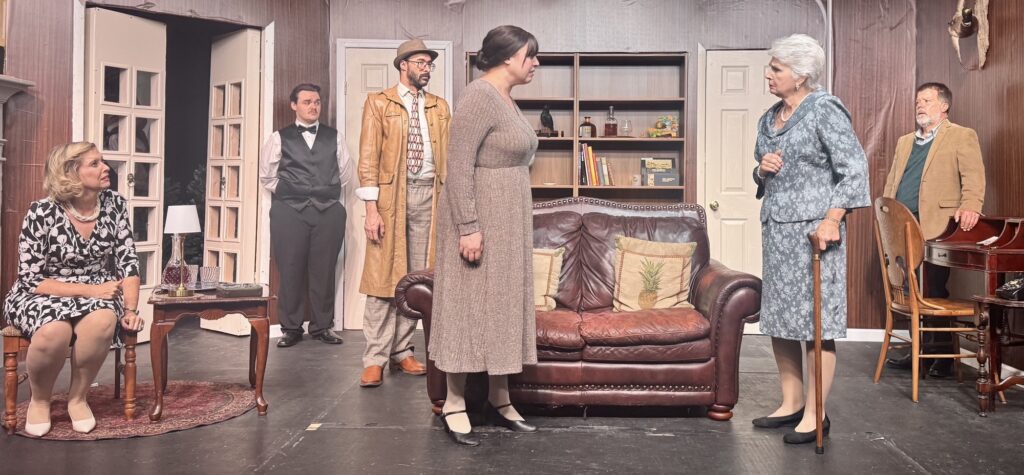
Agatha Christie has long held the title of the undisputed Queen of Crime, crafting mysteries that have kept audiences guessing for generations. While The Mousetrap may be her most famous stage work, The Unexpected Guest deserves a place alongside it. Premiering in 1958, the play is classic Christie—a secluded country manor, a shocking murder, a house full of people harboring secrets, and enough twists to make even the most seasoned armchair detective second-guess every theory.
Co-directed by Ann Street-Kavanagh and Craig Hartline, Playhouse 615 wisely leans into those strengths, allowing the script’s carefully constructed puzzle to take center stage. Rather than revealing too much about who did what—and to whom—it’s far more enjoyable to examine the people under suspicion. With that in mind, there’s be no plot summary herein. Suffice it to say, in true Christie form, there’s a murder, and there’s a manor house full of suspects. After all, every detective knows the truth is found not in the crime itself, but in the behavior of those who knew the victim best.
Matt Smith’s Michael Starkwedder is immediately established as a man who is almost too smooth for his own good. Arriving unexpectedly at exactly the wrong place and exactly the right time, Smith gives the character an easy confidence that constantly keeps audiences wondering whether he’s genuinely trying to help or quietly manipulating everyone around him. His charmingly smarmy portrayal walks that wonderfully uncomfortable line where every reassuring smile somehow feels just suspicious enough. Smith never tips his hand, making Starkwedder exactly the kind of Christie protagonist audiences love trying—and failing—to figure out.
We next meet Katie Delaune’s Laura Warwick. Delaune brings warmth and vulnerability to the young mistress of the manor, making her plight immediately sympathetic while wisely never eliminating the possibility that she could be hiding something. Her performance allows audiences to continually question whether Laura is simply a victim of circumstance or someone carefully concealing the truth. Delaune’s sincerity gives the emotional stakes of the story a much-needed anchor amid the ever-growing list of suspects.
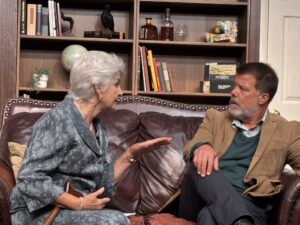 It seems only fitting that one of the grande dames of Nashville community theatre should portray the grande dame of this troubled estate. Linda Speir is perfectly cast as Mrs. Warwick, carrying herself with the unmistakable air of someone who has spent decades believing everyone else exists merely to disappoint her. Speir expertly mixes aristocratic self-importance with dismissive disdain for nearly everyone she encounters, yet wisely avoids making the character simply cold or cruel. In fleeting moments—a softened glance, a quieter line delivery, the slightest crack in an otherwise rigid exterior—she reveals the forgotten gentler woman buried beneath years of grief, pride and disappointment. Those subtle glimpses make Mrs. Warwick far more interesting than the stereotypical overbearing matriarch she could have easily become.
Connor Olen provides one of the production’s most quietly delightful performances as Jan. His childlike excitability gives the character an innocent unpredictability that continually leaves audiences questioning exactly how much Jan understands. Olen fills the role with nervous energy and wonderfully specific character choices that never call attention to themselves but enrich every scene. One particularly inspired moment occurs during an interrogation as Jan absentmindedly fidgets with the peel from an apple slice. It’s such a seemingly insignificant detail, yet it speaks volumes about the character’s restless, distracted mind while simultaneously adding another layer to his delightfully peculiar personality. It’s the kind of understated acting choice that often goes unnoticed consciously but subconsciously makes a performance feel remarkably authentic.
 Rounding out the cast Emma Reinbold is, on the surface, a steady, reassuring presence as the devoted Ms. Bennett, grounding many of the play’s more emotionally charged moments with quiet sincerity. But of course there’s more to her long-tenured devoted presence. Rich Moses lends Julian an affable confidence that keeps audiences guessing exactly where his loyalties lie. Andrea Coleman’s police Sergeant provides some of the nights’ more comical moments. She and her on-stage superior, Rezende’s Inspector, trade eye-rolls and seemingly unscripted, adlibed barbs, giving the Sergeant more range of character than the calm professionalism with which the role is typically presented. Kamron Smith rounds out the ensemble as Angell, offering up the tried and true embodiment of the age-old mystery trope that raises the question, did indeed the butler do it? OK, so Angell isn’t a butler, but he is a male attendant to the murder victim, but you get the gist.
The evening, however, belongs to Wanderson Rezende. As Inspector Thomas, Rezende delivers a performance that feels refreshingly original while remaining completely faithful to Christie’s world. Every mystery needs the brilliant detective capable of seeing what everyone else misses, but Rezende refuses to settle for merely playing another stoic inspector.
During his interrogations—particularly opposite Linda Speir, Connor Olen and the other increasingly uncomfortable suspects—he demonstrates remarkable control over every aspect of his performance. With brilliant shifts in vocal inflection, posture, facial expression and physicality, Rezende effortlessly transitions from the stern seriousness audiences expect from a Christie detective to flashes of quirky, almost childlike playfulness reminiscent of Pee-Wee Herman or Mr. Bean. Never broad enough to become caricature, but just enough to make the Inspector endlessly fascinating.
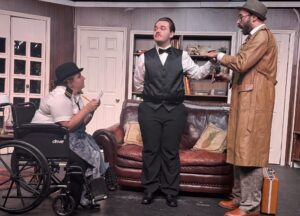 His investigative process becomes theatrical in all the best ways. Whether employing the murder weapon as a visual aid, incorporating a fruit snack into his deductions, or somehow turning a bit of knitting into investigative tool, Rezende constantly finds inventive bits of business that not only earn laughs but reinforce the notion that this Inspector’s mind is always several clues ahead of everyone else. A prime example come in the aforementioned investigation of Speir’s Mrs. Warwick. As the Inspector invites the elder matriarch to join him on the sofa for a little chat, he nonchalantly takes out his knitting needs, and yarn. He nonchalantly tosses the yarn into Mrs. Warwick’s lap, which she quickly and calmly removes from her lap a sets the yarn between them. It’s a simple but effective scene. The Inspector is either trying to equate the humdrum hobby of knitting with the senior suspect, or he’s establishing dominance by assuming she’ll hold the yarn as he coaxes her to weave her tale of the events of the murderous night. Either way, in the hands of Rezende–with an able assist from Speir–it’s one of the most inventive Christie moments you’re likely to encounter on a local stage.
 As is the case with most mysteries, there’s that uncomfortable moment when difficult facts are presented. It is in that spirit that the usual suspects of technical issues within Playhouse 615’s production need be addressed. While the majority of the Welsh accents were certainly serviceable, several wandered throughout the evening, occasionally drifting toward a more generic British sound before finding their way back again.
Prior to interviewing members of the cast, I had reached out to one of the co-directors for a bit of behind-the-scenes intelligence. Knowing Playhouse 615 occasionally enjoys modernizing or relocating classic works, I specifically asked whether The Unexpected Guest would remain the mid-century Welsh affair Christie originally envisioned. I was told the production would still take place in the Welsh countryside but had been moved forward to the 1980s.
As an 80s kid myself, naturally, that raised expectations. A wealthy family living in the 1980s immediately conjures images of bold colors, oversized silhouettes and the sort of nouveau riche excess that would make the Carringtons from Dynasty feel right at home. Instead, the costumes and scenic design lack any definitive aesthetic. With no shoulder pads to be found among the female cast wardrobe choices and what appears to be peel and stick shelf and drawer paper doubling as paneled walls (resplendent with air bubbles, I might add), and without a director’s note explaining the conceptual shift, there is little visual evidence that the story has moved to the 80s—although I did catch one of the actors reply with “Cool” at one point— making the timeline adjustment feel more puzzling than purposeful. It would, perhaps, have made more sense to shift the action to present-day America if budget, time and resources wouldn’t allow the production to remain in the period Christie originally intended.
Those minor critiques, however, are ultimately overshadowed by the strength of the performances. Wanderson Rezende crafts an Inspector Thomas unlike any you’re likely to see, blending razor-sharp deduction with unexpected whimsy and becoming the production’s undeniable standout. Linda Speir reminds audiences why she continues to be one of Nashville theatre’s most respected leading ladies, Connor Olen quietly steals scene after scene with wonderfully specific character work, and Matt Smith and Katie Lelaune’s combined effortless charm keep suspicion hanging over them both until Christie’s final revelation. Together, alongside the entire cast, they elevate an already clever script into an evening of thoroughly engaging theatre.
Like every great Agatha Christie mystery, The Unexpected Guest isn’t simply about discovering the murderer—it’s about savoring every cleverly planted clue, every suspicious glance and every delicious red herring along the way. Playhouse 615 has assembled a cast that clearly relishes that challenge, inviting audiences to play detective right alongside them as performances continue weekends through Sunday, August 2. Whether you’re a lifelong Christie devotee or making your first trip into her wonderfully deceptive world, this is one case well worth investigating. Just don’t expect to solve it before the Inspector does.
CLICK HERE for tickets. For more from Playhouse 615, check out their website or follow them on Instagram and Facebook.
As always, if you wanna follow JHPEntertainment to find out who I’m chatting with for my next Rapid Fire Q&A, or for my take on the latest local and national theatre, music, arts and more, visit JHPENTERTAINMENT.com or find us on Facebook, Insta, Threads and X. Till then #GoSeeTheShow!
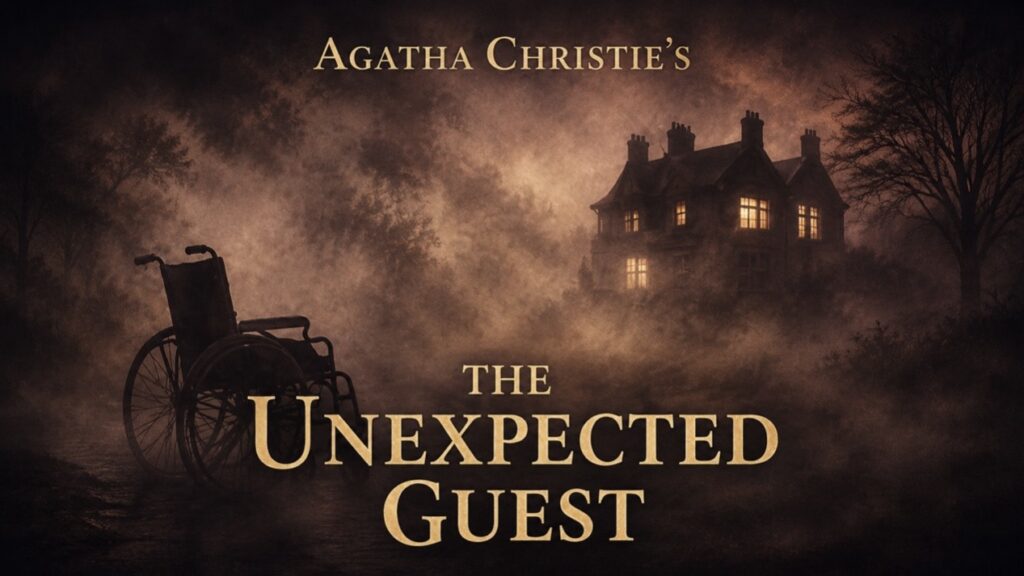
 RAPID FIRE WITH THE UNEXPECTED GUEST CO-DIRECTOR CRAIG HARTLINE
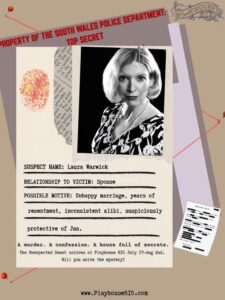 RAPID FIRE WITH KATIE DELAUNE THE UNEXPECTED GUEST‘s LAURA WARWICK
 RAPID FIRE WITH EMMA REINBOLD, THE UNEXPECTED GUEST’s MISS BENNETT
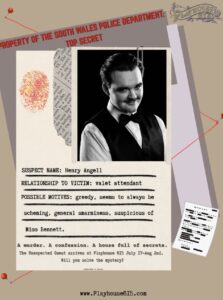

 RAPID FIRE WITH THE TIDE‘s PLAYWRIGHT/DIRECTOR CATHY STREET
 RAPID FIRE WITH THE TIDE‘s MARCUS, ACTOR CHRIS LEE
 THE TIDE: A New Musical

 RAPID FIRE 20Q WITH HAMILTON‘s ELIZA, LILY SOTO
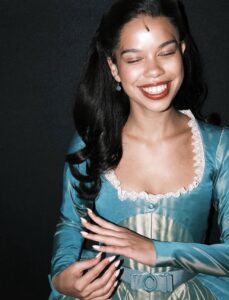
 RAPID FIRE WITH HAMILTON‘s ANGELICA, MARJA HARMON
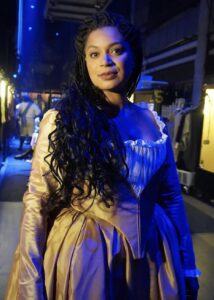
 RAPID FIRE WITH HAMILTON PRINCIPAL STANDBY, CHIBUEZE IHUOMA
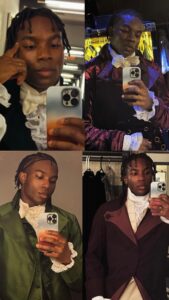
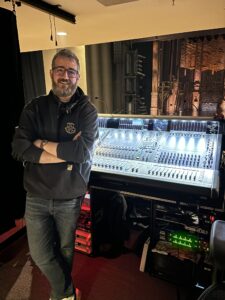 RAPID FIRE WITH HAMILTON ASSISTANT SOUND ENGINEER, JOSHUA BOATMAN
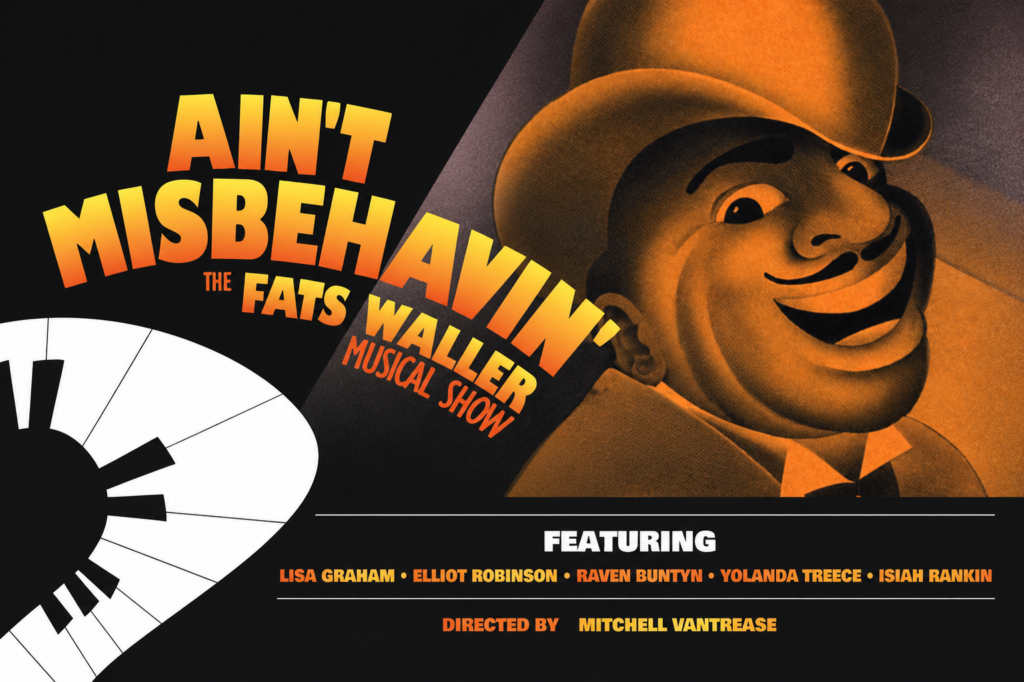
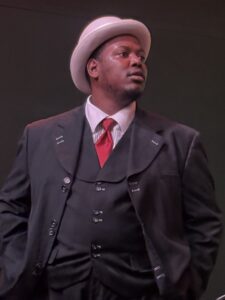 Isiah Rankin, pulling double duty behind the scenes as the show’s music director helps shape a score that feels authentic, alive and wonderfully spontaneous. Performing as Andre, Rankin brings an easygoing best-friend, wing-man energy to nearly every scene he inhabits. Whether leading the slyly playful “T Ain’t Nobody’s Biz-ness If I Do,” joining the delightfully flirtatious “How Ya Baby,” or bringing swagger to “The Viper’s Drag,” he consistently demonstrates both vocal confidence and magnetic stage presence.
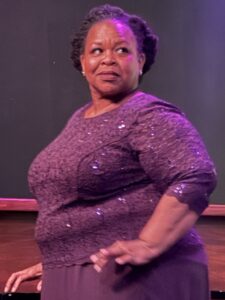 Yolanda Treece, performing as Nell, emerges as one of the production’s most engaging personalities. Possessing a remarkable ability to connect with the audience through nothing more than a wink, an eye-roll or a flirtatious grin, Treece makes every moment feel personal. Her spirited rendition of “Cash for Your Trash” earns plenty of laughs, while “Mean to Me” reveals a deeper emotional vulnerability. By evening’s end, it becomes clear she knows exactly how to work a room…and we’re all better for it.
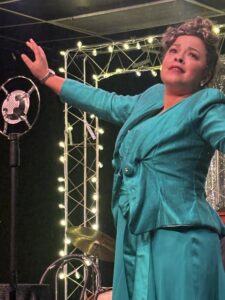 Lisa Graham’s Armelia is powered by boundless energy and a voice capable of effortlessly navigating Waller’s jazz-infused melodies. Her playful “Squeeze Me” is an Act 1 standou, while later numbers such as “Find Out What They Like”, alongside Treece showcase both her comic timing and vocal precision. Graham consistently finds fresh colors within each song, making every appearance memorable.
 Raven Buntyn proves herself the show’s most versatile performer. One moment she’s the provocative, self-assured Charlaine commanding attention during “Yacht Club Swing.” The next she’s leaning into a more innocent, delightfully ditzy persona. Buntyn handles every shift seamlessly, while her heartfelt “Keepin’ Out of Mischief Now” offers one of the evening’s loveliest vocal moments.
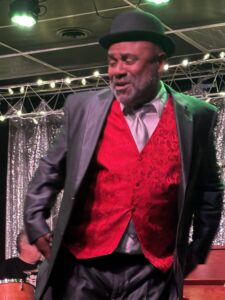 As Ken, Elliott Robinson demonstrates remarkable ease navigating both sides of Waller’s catalog. He is equally comfortable delivering laugh-out-loud comedic lyrics as he is tackling material with deeper emotional resonance. His charming performance of “Honeysuckle Rose” helps establish the production’s playful tone early on, while “I’m Gonna Sit Right Down and Write Myself a Letter” becomes one of Act Two’s most satisfying highlights.
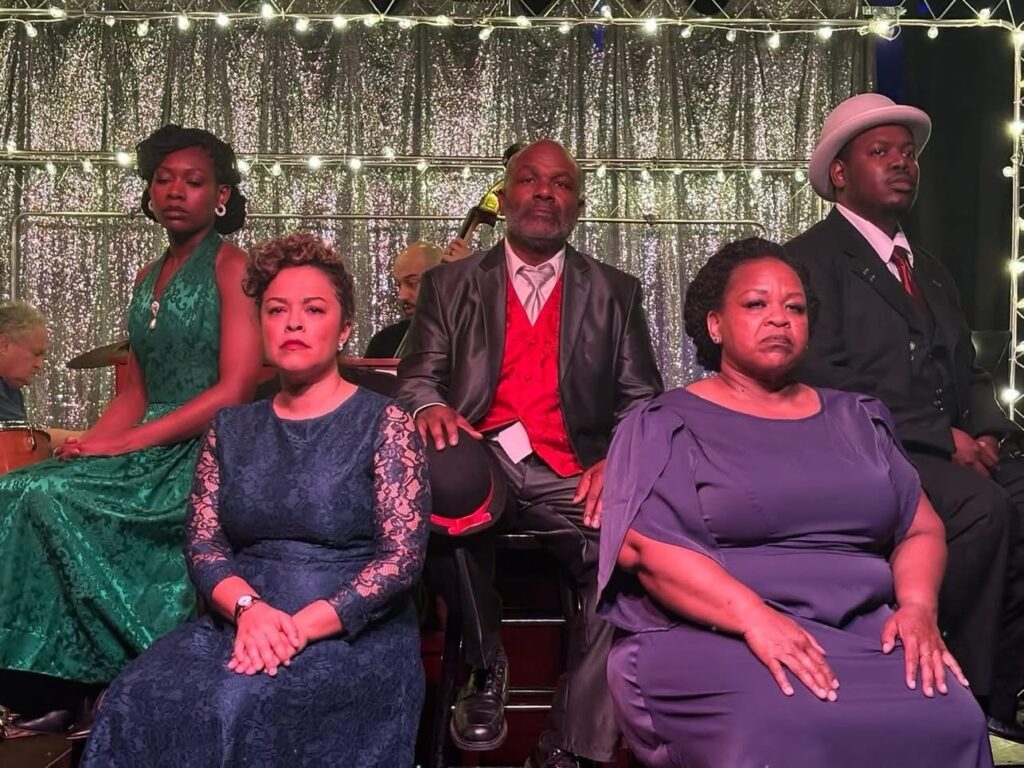
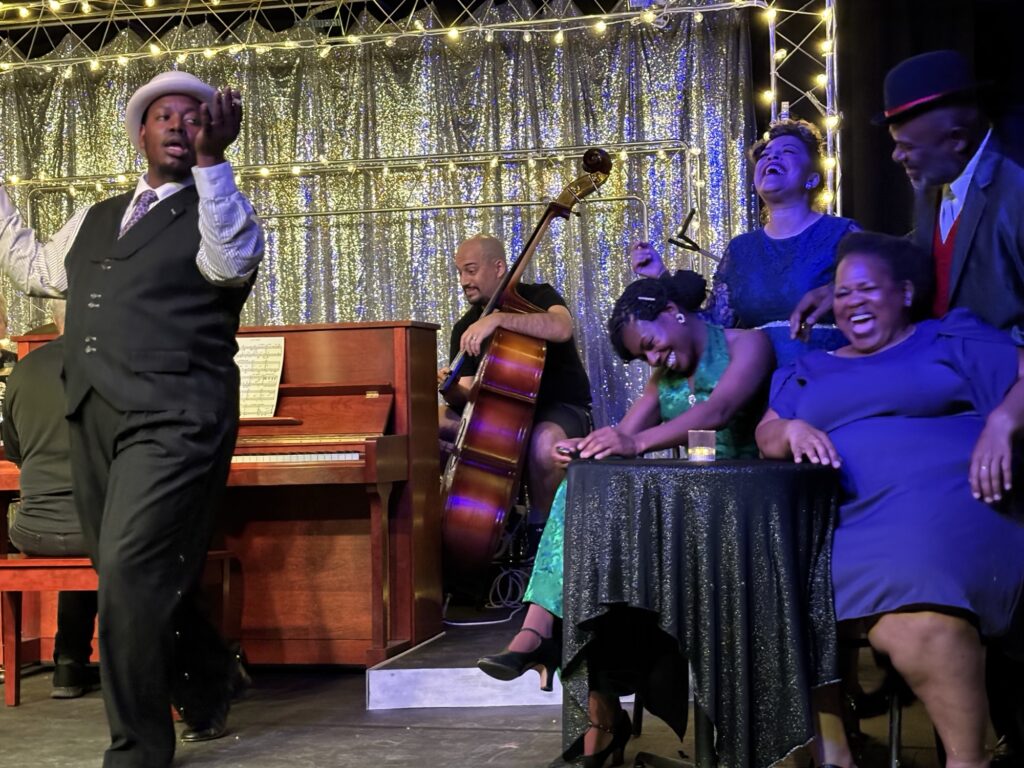
 The decision to position the musicians directly onstage pays immediate dividends.

 JHPENTERTAINMENT:
 JHPENTERTAINMENT:
 JHPENTERTAINMENT:
 JHPENTERTAINMENT:
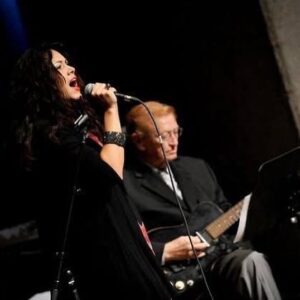 JHPENTERTAINMENT:
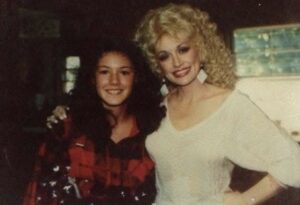 JHPENTERTAINMENT:
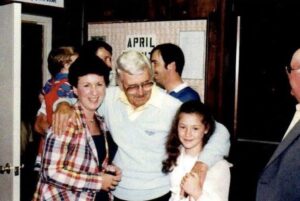 MANDY BARNETT: They were golden opportunities, and I’m grateful for every one of them.It was the first year Dollywood was open, and I was just a kid getting the chance to be around some incredible people. I got to work with Dolly and her family, perform with a live band, and learn things that you simply can’t learn anywhere else.I met Archie Campbell while opening a show that also featured Chet Atkins and Wilma Burgess. Afterward, Archie told me, “Come up anytime. You’re always welcome.” And he meant it. He gave a young singer the opportunity to come perform at his show whenever I wanted, with a real band and a real audience.Looking back, that was an extraordinary gift. Archie didn’t have to do that, but he did. Those experiences gave me confidence, stage time, and memories I’ll always treasure.
 JHPENTERTAINMENT:
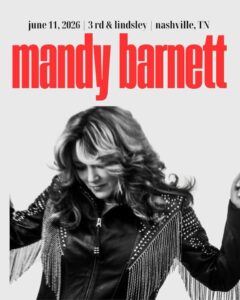 JHPENTERTAINMENT:
 JHPENTERTAINMENT:




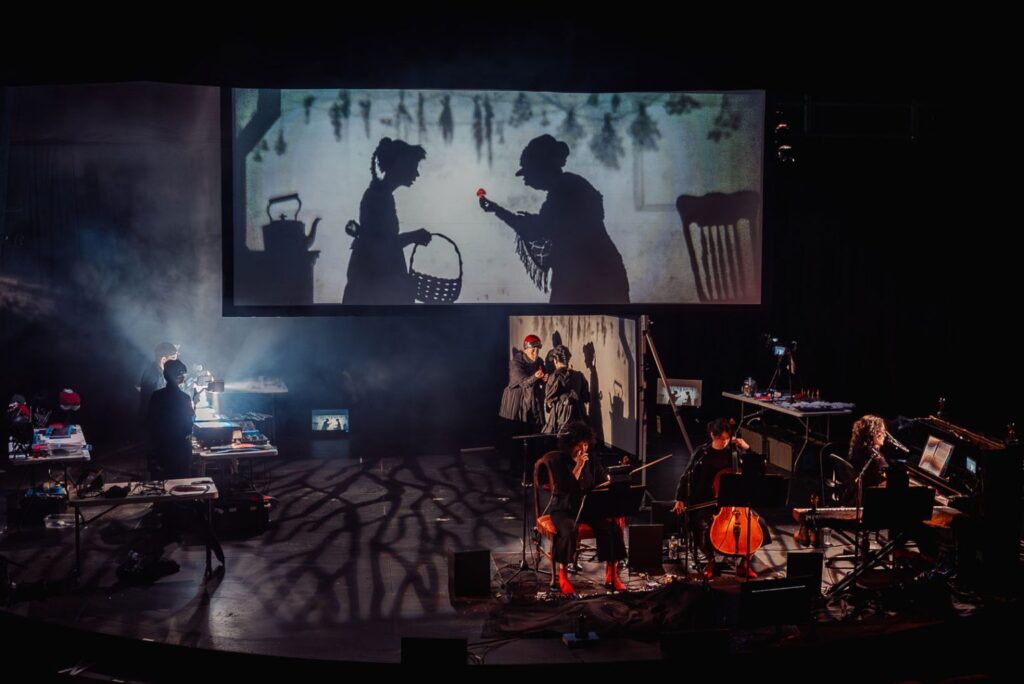
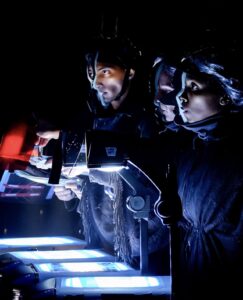
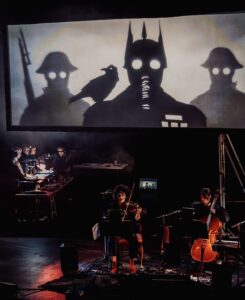
 Founded in 2010 by Drew Dir, Sarah Fornace, Julia Miller, Ben Kauffman, and Kyle Vegter–all five share co-artistic director credits–Manual Cinema has built an international reputation for pushing the boundaries of storytelling. The 4th Witch may be their most ambitious creation yet. Rather than simply retelling Macbeth from the perspective of kings, warriors, or even Shakespeare’s famous trio of witches, the production introduces audiences to a young girl whose life is forever altered by the violence occurring around her. What begins as a story unfolding in the shadows of Shakespeare’s tragedy gradually becomes a deeply human exploration of loss, survival, identity, and the choices we make when confronted with cycles of violence.
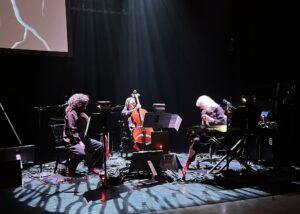 Equally deserving of recognition is the magical yet anything but witchy trio of musicians positioned in full view of the audience throughout the performance. Alicia Walter‘s vocals and keyboard work, joined by Lucy Little‘s violin and vocals and Erica Kremer‘s cello and vocals, create a lush, cinematic score that frequently serves as the emotional engine of the story. Their contributions elevate the production beyond a technical marvel into something genuinely moving, underscoring moments of wonder, danger, grief, and hope with remarkable sensitivity.
 RAPID FIRE WITH AIN’T MISBEHAVIN’’s ISIAH RANKIN
 RAPID FIRE WITH AIN’T MISBEHAVIN’’s YOLANDA TREECE.

 RAPID FIRE WITH AIN’T MISBEHAVIN’’s RAVEN BUNTYN