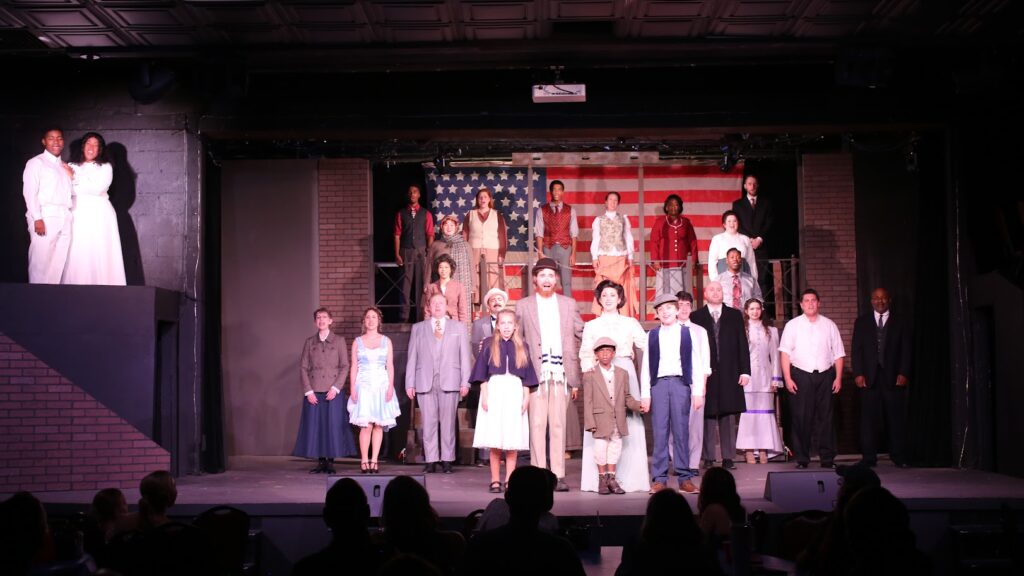
There’s a certain something about heading into The Keeton-this area’s oldest continuing dinner theatre-on a summer night. You’re greeted with good food, friendly faces, and a buzz of anticipation. This certainly held true as I attended opening night of RAGTIME, their current production helmed by director Mitchell Vantrease. Under Vantrease’s sure-handed direction, with Roger Hutson conducting a lush, heart-pounding score, this powerful production doesn’t just entertain—it moves you.
Before I delve into my thoughts on this production, let me just get one thing out of the way—Jayden Murphy is a revelation. At only 18, this recent Jimmy Awards semi-finalist steps into the role of Coalhouse Walker, Jr. with the kind of intensity and nuance you usually see from actors twice his age. His booming vocals, his emotional honesty, his laser-focused presence—Murphy’s Coalhouse is equal parts inspiring and heartbreaking. If you read his segment of my recent Rapid Fire 20Q, you already know he understands the depth and power of this role. On stage? He proves it. His voice, rich and smooth, possesses the perfect combination of strength, heartache and comfort. Act I’s Justice…just fabulous.
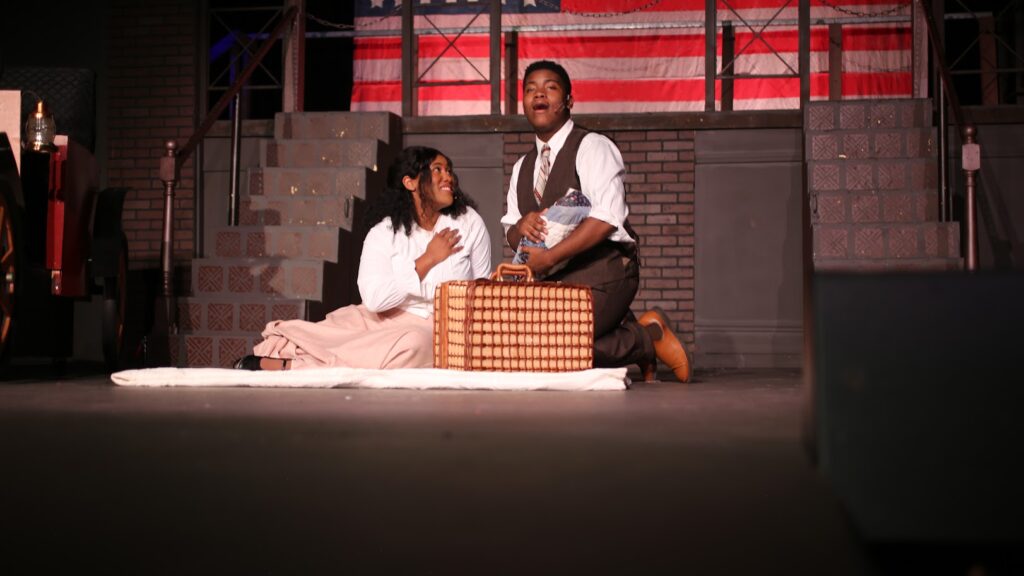
Matching him note for note is Miya Nichole Burt as Sarah. From her tender take on Your Daddy’s Son to each of her gut-wrenching ballads, Burt makes Sarah’s journey deeply personal. The chemistry between Burt and Murphy shines through, making Sarah’s fate hit all the harder.
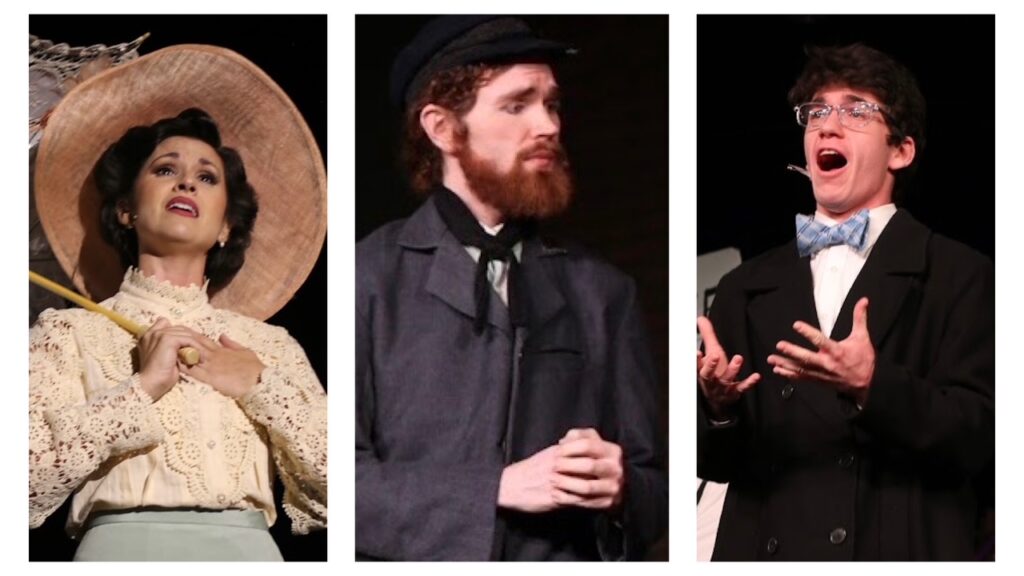
Then there’s Holli Trisler as Mother. She’s the heart of this production—warm, grounded, and quietly commanding. Her Back to Before brought the house to much deserved applause, and judging from the audience around me, more than a few tears.
Nicholas Branson brings grit and grace as Tateh. His Gliding was staged with such simple beauty that it practically shimmered. You believe him when he sings of the American Dream, because he sings it like he’s living it. A gorgeous reminder that we’re ALL hoping to live it.
Meanwhile, Matthew Marcus gives us a restless, fiery Mother’s Younger Brother. His energy in every scene makes you sit up straighter, as if you’re being pulled into the whirlwind of his convictions. Like many of the cast, RAGTIME marks Marcus’ Keeton debut, but something tells me we’ll be seeing a lot more of this scene-snagging actor.
On the subject of noteworthy ensemble performances, The Keeton’s RAGTIME is brimming with them, chocked-full with moments you likely won’t be able to stop talking about on the drive home. For me? LaToya Gardner—one of my longtime “theatre crush”—absolutely slayed the Act I closer Till We Reach That Day. Her voice soared, her presence commanded the stage, and suddenly the entire room was with her, united in that raw cry for justice.
If Act I’s wow moment belonged to Gardner, Act II belonged to another of my longtime “theatre crushes”, Elliott Robinson as his Booker T. Washington pleads with Murphy’s Coalhouse Walker, Jr to Look What You’ve Done. Commanding yet full of quiet dignity, this monologue/song is the kind of performance that makes you lean in and take note.
Let’s not forget yet another veteran scene-stealer Danny Proctor as Grandfather. Only Proctor could toss out a couple perfectly timed quip that had the audience roaring, and then turn around and remind us why Grandfather’s cantankerous spirit has always been a fan-favorite.

Others whose performances added to this production include Joshua Mertz as Houdini, Brenda Brannon as Emma Goldman Brian Best as Willie Conklin and young actors Ryman Stanton and Ayla Carlock, who play Little Boy and Little Girl. Oh, and perhaps the biggest little scene-stealer of them all, Lawson Dowlen, who, with one eleventh hour walk-on, serves as another beautiful reminder that with each new generation, there’s hope for the future of us all.
Kudos also to the technical crew, including: Denese Rene Evans, for her work on some pleasing period-perfect wardrobe choices, choreographer McKenna Driver, who keeps the cast literally moving (though there was a bit of a modern take included in a few of the Harlem Ensemble scenes). Tech director Kevin Driver’s stripped-down set, basically a catwalk, two rolling stairs and a 45-star flag, seemed initially a tad lackluster, but when you realize the music, the voices and the talent are the focus, the industrial set design makes perfect sense. Then, when Murphy’s Coalhouse Walker, Jr. rolls up in stage-created Model T, complete with working headlamps, it’s evident that Driver was indeed in the driver’s seat as far as set design was concerned.
Lastly, I’m not sure if it was director Vantrease’s suggestion, or that of the costumer, or someone else, but I can’t tell you how much I appreciated the small, but noticeable detail of the hairstyles. The majority of the female cast elegantly sported either high pompadours or figure 8s while the majority of the male cast were sleek and sophisticated with deep side parts and a little hair grease.
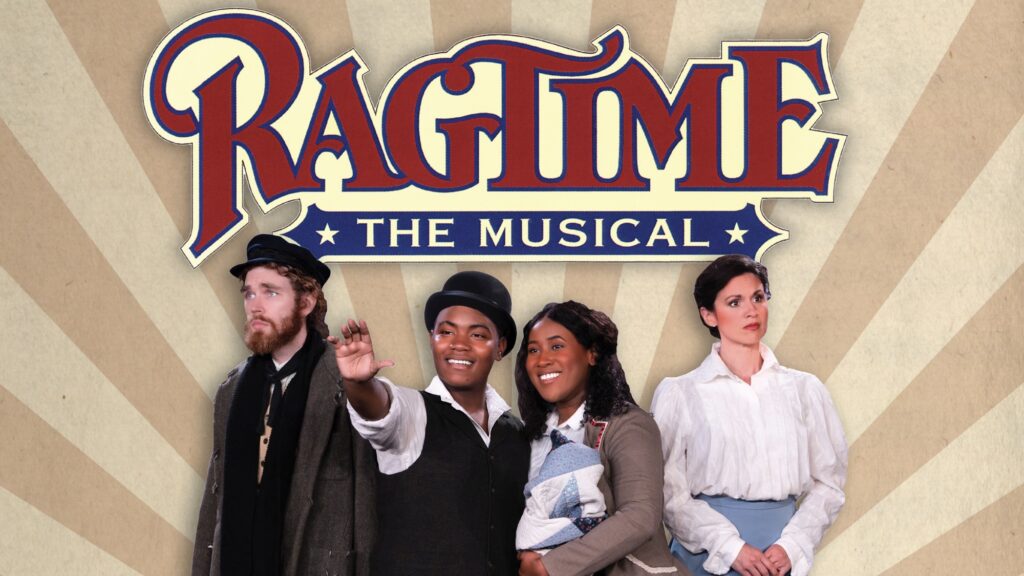
With vocals rich and commanding to emotional performances from Murphy, Burt, Trisler, Branson, and Marcus, alongside unforgettable turns by Gardner, Robinson, & Proctor and all-‘round, this RAGTIME doesn’t just tell a story—it demands you listen to it. Mitchell Vantrease and his team have crafted a production that honors the show’s sweeping history while keeping it intimate and immediate. It’s safe to say RAGTIME at the Keeton Dinner Theatre is one of the must-see productions of the summer.
What makes this RAGTIME so impactful isn’t just the talent on stage, but the truth of its themes. More than 25 years after its Broadway debut—and over a century after the events it dramatizes—the struggles against racism, class divides, and injustice are, heartbreakingly, still with us. Yet, in the midst of that sobering reality, RAGTIME reminds us that unity, compassion, and resilience can light the way forward.
It’s that blend of hard truth and enduring hope that makes this production so necessary—and so moving—right now. At the Keeton Dinner Theatre, RAGTIME isn’t just a night of great music and performance. It’s a call to remember where we’ve been, reflect on where we are, and hopefully, to believe in where we can still go.
But don’t just take my word for it. CLICK HERE to reserve your seats now and head to Donelson to experience RAGTIME for yourself. The show runs through August 31, and if the energy on opening weekend was any indication, you’ll want to snag tickets before they’re gone.
To keep up with the latest from The Keeton Dinner Theatre, follow them on Facebook, Twitter and Instagram.
Interested in coverage for your latest entertaining endeavor? Click the contact page and drop me a note. You can also follow JHP Entertainment on Instagram and Facebook. In the meantime, #GoSeeTheShow!
 At the center of the action is Philip David Black as the suave, gambling man Sky Masterson. Black brings the expected effortless charisma mixed with the perfect blend of uncertainty that only unforseen love can cause. His Luck Be A Lady is smooth and sweet, showcasing his ability to walk the line between rogue and romantic with ease. His chemistry with Rebekah Howell’s Sarah Brown is electric, especially in the Havana sequence where sparks (and drinks) fly. Howell, ever the vocal powerhouse, lends depth and sincerity to the morally upright mission worker. Her rendition of If I Were a Bell, a charm-filled Act 1 highlight.
 It comes as no surprise that Brian Charles Rooney’s Nicely-Nicely Johnson is a true showstopper. With impeccable comic timing and a dynamite voice–gotta love that sopranista range–Rooney brings down the house in the rollicking Sit Down, You’re Rockin’ the Boat—arguably the night’s most rousing number. He’s well matched by Jahi Emaud’s Benny Southstreet, whose swagger and harmony work are equally sharp. If you’re reading this, Studio Tenn, I’ve got your Wallace and Davis cast for your upcoming holiday production of White Christmas right here with these two!
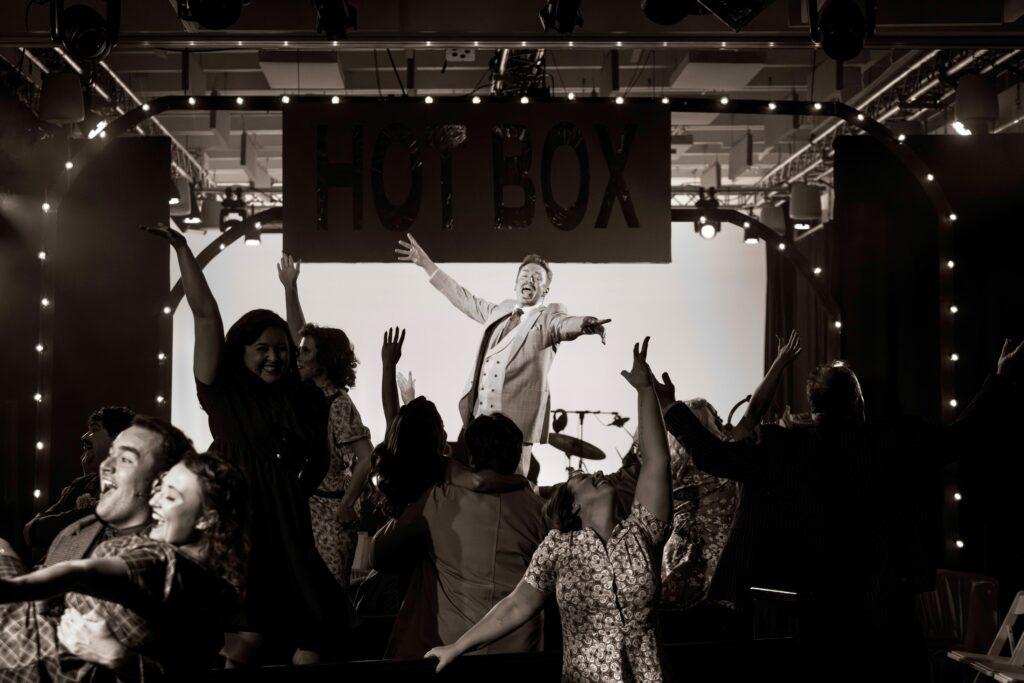
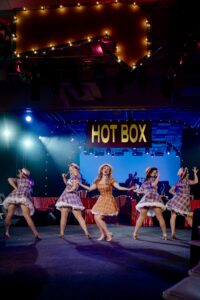 The Hot Box numbers are just plain fun, led with style and precision by Kelsey Brodeur (also serving as dance captain), alongside the effervescent Madison Crosby, Emily Stephens, and Allie Spengler. Their ensemble work perfectly sizzles thanks to playful choreography courtesy Allison Little, who keeps the movement crisp and era-appropriate while still leaving room for individual character. With Stein’s Adelaide, the Hot Box Girls’ performance of A Bushel and a Peck (one of my personal favorite Doris Day tunes, recorded the year the Broadway musical debuted) wonderfully presents the flitatious innocence of such numbers from that era.

 Where character portrayal is concerned, Clue could be considered a bit of a theatrical anomaly. Typically actors stepping into roles made famous by others are charged with making the character their own, but Clue, a true farce, almost demands that the company present the characters pretty much as those who portrayed the roles in the film had done. That’s not to discredit the actors in any way, but to thank them for brilliantly recreating moments and actions of the film to glorious life live on stage.
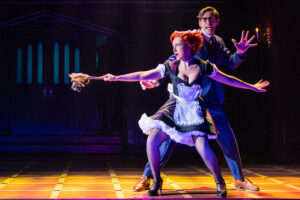 John Shartzer’s Mr. Green (the Michael McKean role in the film) is the scene stealer of the show. With precise comedic timing, hilariously deadpan reactions and borderline acrobatic slapstick movement, Shartzer is suspect Number 1 is so many ways.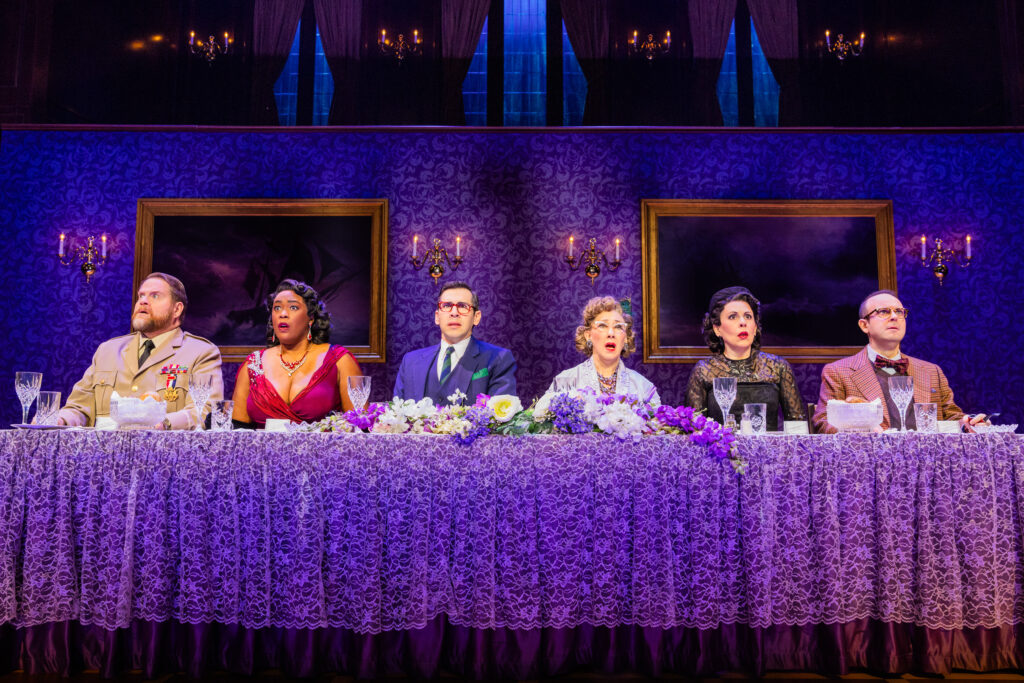
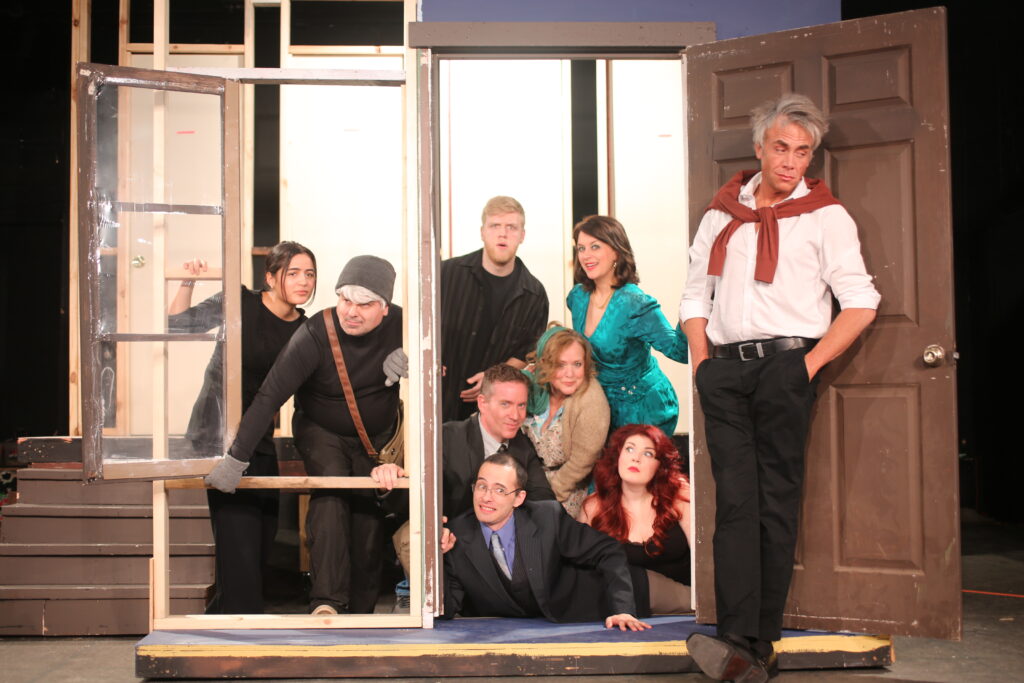
 For The Keeton’s presentation, co-directors Maguire and Gray have enlisted a great mix of newcomers and seasoned performers including
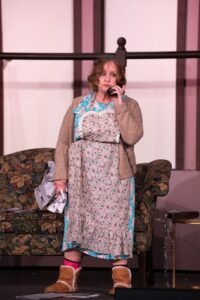 Now, back to the show…From the character’s initial entrance, Lloyd offers the first broken fourth wall as he stops the action on stage when one of the actors misses a prop cue. Carmichael’s Lloyd bellows from the audience and the fun begins. The actress Lloyd chastises for missing her cue is none other than Ann Street-Kavanagh, as middle-aged actress Dotty Otley, who’s playing the housekeeper in the show-within-a show. Street-Kavanagh is perfect for the role of Dotty as she’s never better than when she’s playing it a bit confused and daft. Like Lloyd, Dotty is also embroiled in a love triangle. All Dotty’s Nothing On character wants to do is put her feet up and enjoy the the telly. Oh, and did I mention she enjoys a snack of sardines? Worth noting, since a plate of the fishy snacks result in much of the show’s hilarity when left about, or taken off, cluing the other visitors in Nothing On that they’re not alone in the house.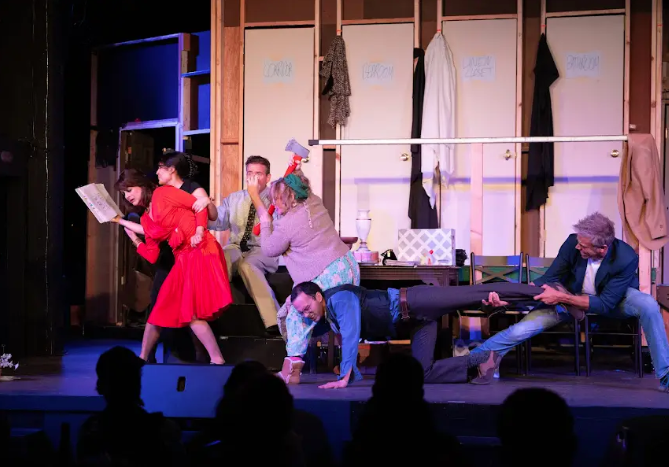
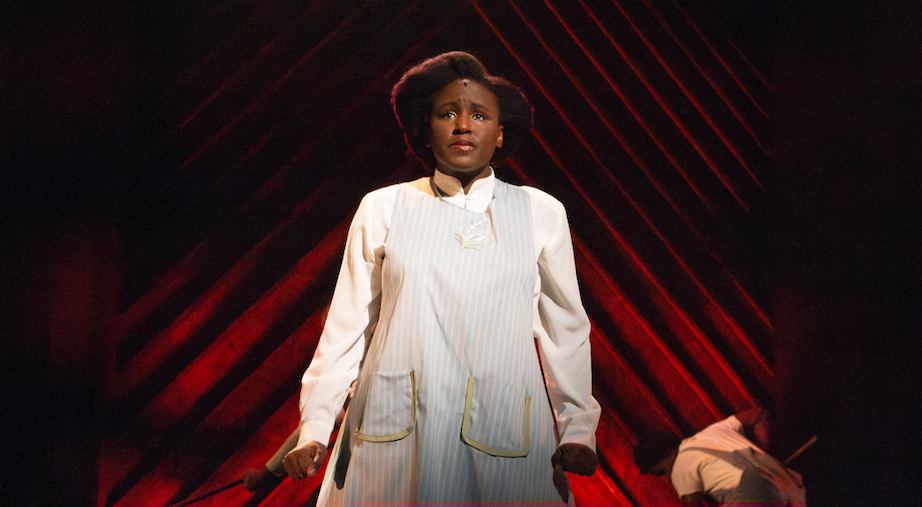
 Then comes the entire company for Mysterious Ways, a hymn of a song, set in the local church (effectively indicated as such by a singular light source casting the shape of a illuminated cross onto the wall behind the action) where the entire community sings of God watching over them no matter. Nia Safari Banks’ costumes are a highlight of this number, for if you’ve ever had the great fortune to attend a Black Church, you KNOW the way you present yourself before the Lord IN the Lord’s House is of utmost importance! Which leads me to the Church Ladies, Darlene, Doris and Jarene, a snooping, truth-tellin’ trio who pop up now and again throughout the show to fill the audience in on the latest happening. Lindsay Kay Pace, Yolanda Treece and Meggan Utech a divine trio indeed as the Church Ladies. Characters I know all too well, for you see, growing up, there were two ladies in the church my family attended who I lovingly referred to as my very own ‘Church Ladies’. They were always there to stick their noses in and offer advice, unsolicited though it may have been. I can’t be the only one who kind of wishes Pace, Treece and Utech would develop their own show around these three characters. Not only do they provide intel, but plenty of smiles as the absurdity of their insertion into every situation.
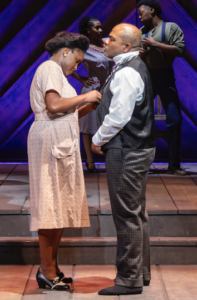 Giving the Church Ladies something to talk about…enter Mister, as played by Elliott Winston Robinson. As Robinson alluded in my
 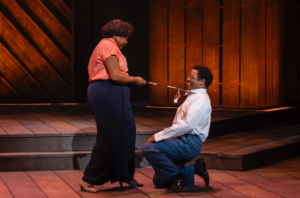 Speaking of memorable men, Gerold Oliver is just sooooo good as Harpo, Mister’s ne’er do well son. He get’s his moment to really shine alongside the men during Brown Betty, a song praising the beauty of Black women, Raven Buntyn’s Squeak, in particular. Speaking of Squeak, thank goodness Buntyn vocally pays homage to the character’s name by occasionally hitting a pitch so high that she actually squeaks when she talks, something the recent film adaptation opted not the do. I also loved the quick pop-in appearances by some of the female ensemble during this one, too. Oliver’s Harpo offers not only comedic levity from time to time, but also becomes the first man in the story to break the cycle of violence towards women.
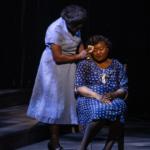 Of course Harpo has a bit of assistance in breaking that cycle in the form of his no-bullshit-taking wife, Sofia, played to the absolute hilt by the gloriously talented Shinnerie Jackson. It was everything I could do to remain in my seat at the end of her anthemic Hell No number. The thunderous applause that followed was evidence I was not alone in my appreciation of the number and Jackson’s performance. Cause here the thing, Jackson’s portrayal of Sofia hits all the notes, not just musically, but emotionally. When she’s strong and defiant, the audience feels that defiance and empowering presence. When Sofia is temporarily defeated, we feel that too. An exemplary performance all ‘round!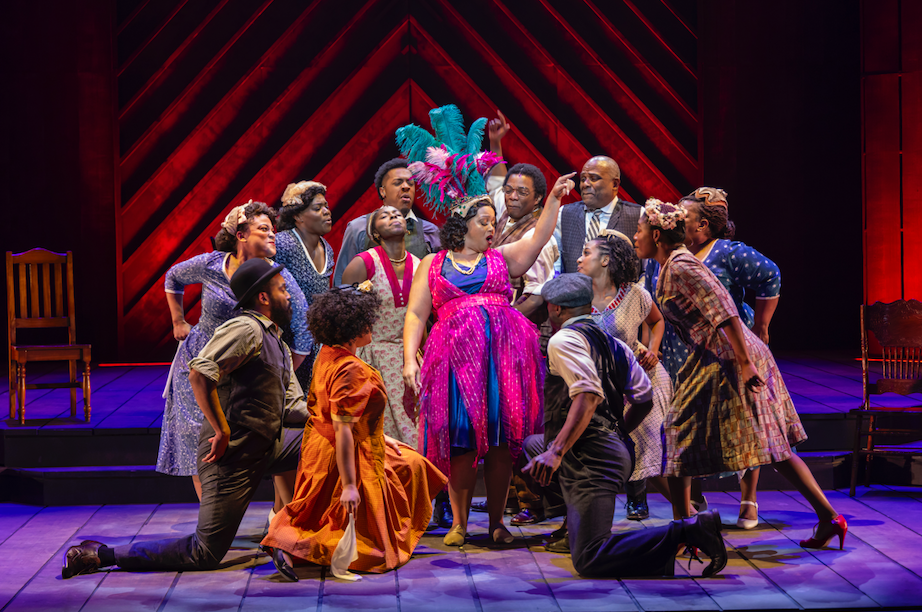
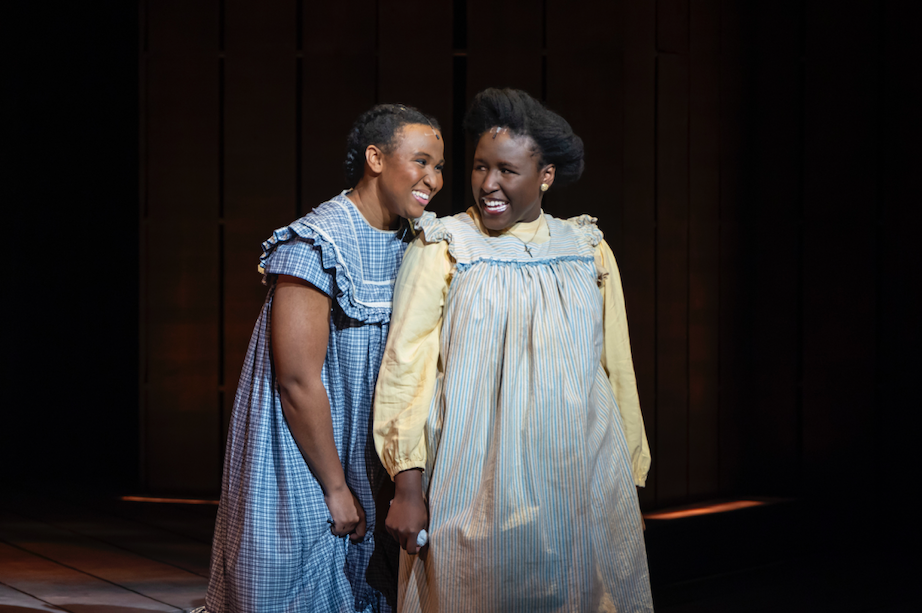
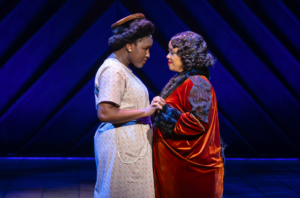 The chemistry between Nicole’s Shug and Hardon’s Celie is simply magical. You truly believe these two women have discovered a love and bond like never before.The progression of this relationship is perfidy paced and played out not doubt by way of the director’s precise instruction, but also these two actors’ understanding a care for the characters.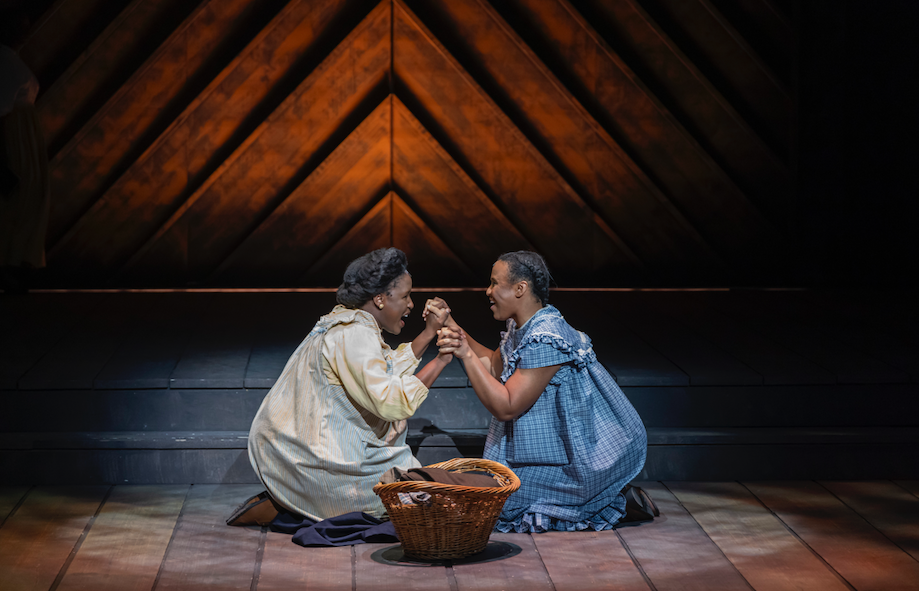
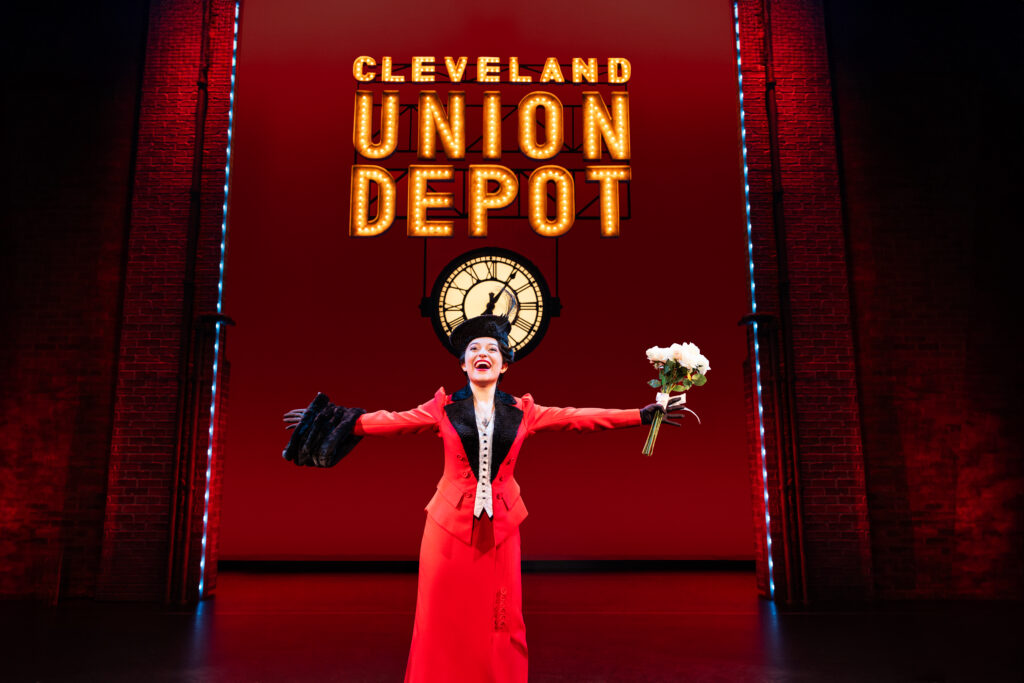
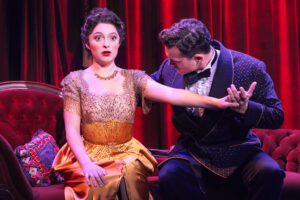 From the moment Katerina McCrimmon takes the stage, she IS Fanny Brice. She’s got the period-authentic New York dialect, the exaggerated facial expressions, but most of all, she’s got the voice. Ok, so the voice might be more what audiences expect thanks to the aforementioned Streisand portrayal, but I’m here to tell you McCrimmon makes the character her own while carefully maneuvering through, and well beyond what could easily be brushed off as an impression. Throughout the show, including more familiar territory of musical moments like I’m the Greatest Star, Don’t Rain on My Parade and People, and my personal favorite, His Love Makes Me Beautiful, McCrimmon vocal range, strength and ability prove time and time again she’s the perfect powerhouse to introduce Fanny Brice to a whole new generation of musical theatre fans.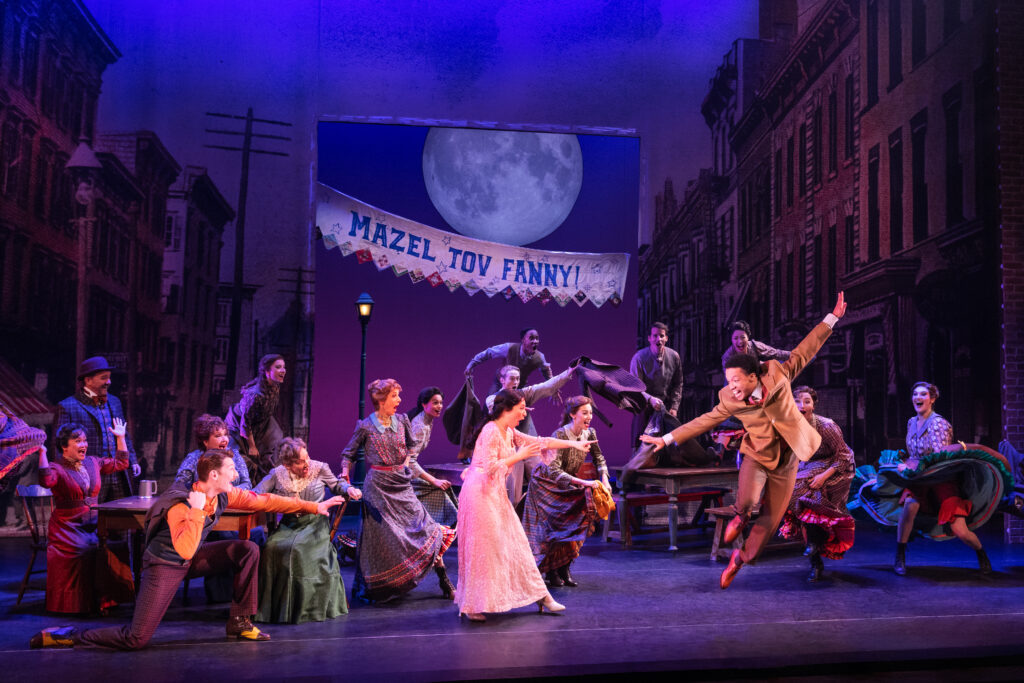
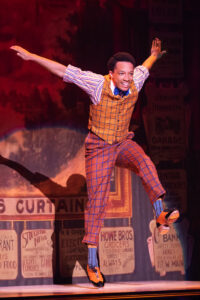 Izaiah Montague Harris plays the always in-step and dependable Eddie Ryan, a dancer/choreographer friend of Fanny’s who’s always there to help her with her career and pick up the pieces when Nicky is out of step. When I say Harris’ Eddie is in-step, I mean it. One of the best non-Fanny-centric moments of the show features Harris in a tap-tactic dance sequence. Which reminds me, kudos to the show’s costume designer, Susan Hilferty. Yes, all of Fanny’s period-perfect costumes are fabulous, but it was during Harris’ tap number that I notice a wonderfully clever costuming detail. Hiferty has sewn the occasional rhinestone throughout the pant legs of Harris costume, which catch the light of his fancy footwork and draw the eye throughout the dancer’s entire body, allowing those of us who picked up on this seemingly random detail the joy of watching the full mechanics, precision and skill of the dance.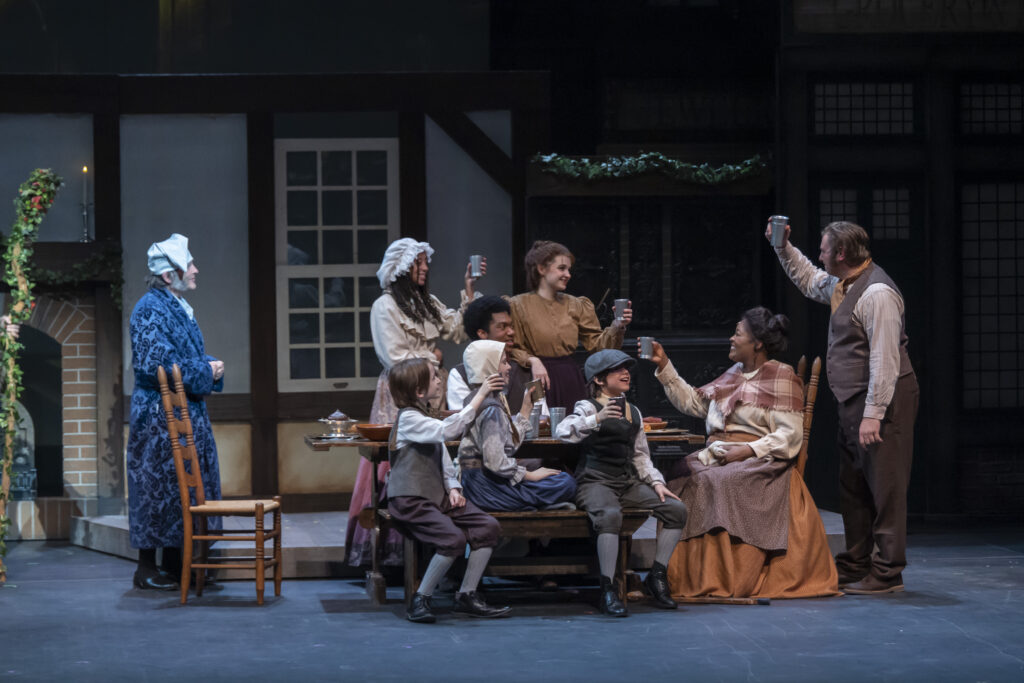
 Speaking of Scrooge, Matthew Carlton is simply brilliant in the role, and it’s a bit of a full-circle moment! His bio reveals his first foray into A Christmas Carol at The Rep came in 1990 when he was cast as Scrooge’s young nephew, Fred. Over the years, Carlton says he’s played a dozen or more characters in eleven different production. I’m here to tell you though, he better free up his winter calendar going forward because it’s official, Matthew Carlton now ranks among my favorites to have ever taken on the role. He’s in good company, too, considering Sir Michael Caine’s Scrooge from The Muppet Christmas Carol tops the list! What’s interesting about Carlton’s performance is, it’s all-encompassing. Yes, he can mean-mug with the best of them, but the scene that struck me most, and may or may not have made my eyes sweat takes place during a party when Scrooge is transported back in time by Kris Sidberry’s beautiful Ghost of Christmas Past. In the scene, Carlton’s Scrooge sees his beloved Belle (Ivory Bodnar) enjoying the merriment of a dance with fellow holiday revelers. Caught up in the moment, but forgetting that he’s only a shadow presence, Scrooge attempts to join in the fun, getting caught at one point in the center of a quartet of dancers. Of course unseen because he isn’t actually there in his present form, he’s ignored as the dancers continue moving about without him. Within just a few minutes as this scene plays out, Carlton, under the keen direction of Brewer, runs the gamut of emotion from excitement to regret and sadness. Being a self-confessed Scrooge myself, I was a puddle.
 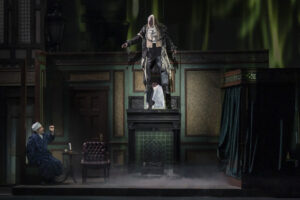 You know you’re a great actor when just a projection of your face can elicit an internal squee. That’s the exact reaction when another longtime Nashville favorite, Brian Webb Russell’s face appeared on Scrooge’s door as the “dead to begin with” Jacob Marley. In an early scene, when Marley visits Scrooge to warn him of the coming visitors, Russell’s Marley rattles his chains as he floats about the room. More fanciful than frightening, a joy to watch. He’s equally enjoyable when paired with Deb Meeks (making her Rep debut) as a rather boisterous party-goer who’s husband (Russell) is partaking of a few too many Christmas ‘spirits’ of his own. These two need to be paired together more!
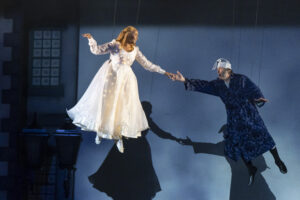 Can’t talk about A Christmas Carol without talking about the Spirits. Mentioned above, Kris Sidberry, making her Nashville Rep debut, is simply magical as Ghost of Christmas Past. Delightful, sweet and fun…all the things we think of most when we remember the past are personified in Sidberry’s performance. She doesn’t just shine in her performance, she sparkles. In part, thanks to Costumer Designer, Melissa Durmon’s literally and figuratively glowing gown!
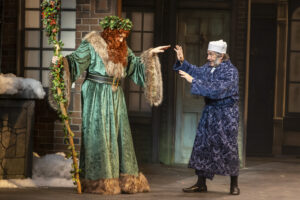 Brian Charles Rooney, seen last holiday season as Buddy the Elf in Nashville Rep’s Elf, is larger than life as Ghost of Christmas Present, and what a present his performance is. Towering above Carlton’s Scrooge (did I see light-up disco platforms under Rooney’s velvet robe?) Rooney’s Ghost of Christmas Present is cheeky, loud and bossy. Everything you could wish for in a ghost guide. Again, kudos to Durmon, and added kudos to her and her wig department team for transforming Rooney into an almost unrecognizable bacchanalian party god with flowing ginger locks and beard. Didn’t think I was into scruffy gingers, but you never know. As mentioned previously, Rooney is among those featured throughout the action as a caroler. I have it on good authority he had been dealing with a bit of laryngitis during the opening days of the show. All I know is, if that’s Rooney with laryngitis, belting out and hitting those unfathomable soprano-high notes, the rest of the run the audiences were in for a treat.
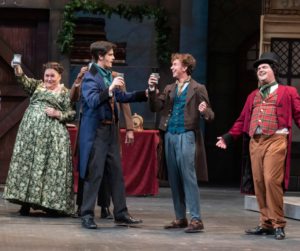 Round out the ghostly trio is Ben Friesen as Ghost of Christmas Future. Even though the show is about to enter its final week at the time of this review being posted, I’m a staunch believer that spoilers do just that…they spoil aspects of shows that are meant to surprise and entertain. To that end, Friesen’s Ghost of Christmas Future definitely delivers. Visually hauntingly brilliant and looming large, Friesen’s appearance is definitely a powerful one. Suffice it to say, his performances a Ghost of Christmas Future would no doubt make Jim Henson proud..and that’s as much of a spoiler as you’ll get from me. Not to fret though, he’s also featured throughout the show, most notably as Dick Wilkins, a friend and colleague of younger Scrooge.
 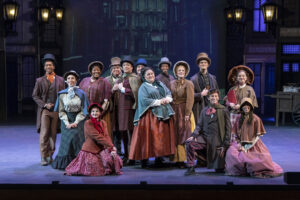 The entire cast is filled with great supporting performances. Mention should be made of Max Fleischhacker as Scrooge’s Nephew Fred, Ethan H. Jones as Mr. Blakeley, Abby Hopper as Alice Cratchit, Alex Hillaker as Henry Cratchit, David Long III as Peter Cratchit, Shelby Talbert as Martha Cratchit, Elle Wesley as Belinda Cratchit, Caroline Henry as Alice Cratchit and Emily Hooper and David Matthew Clark (on alternate nights) each sharing the role as Tiny Tim.
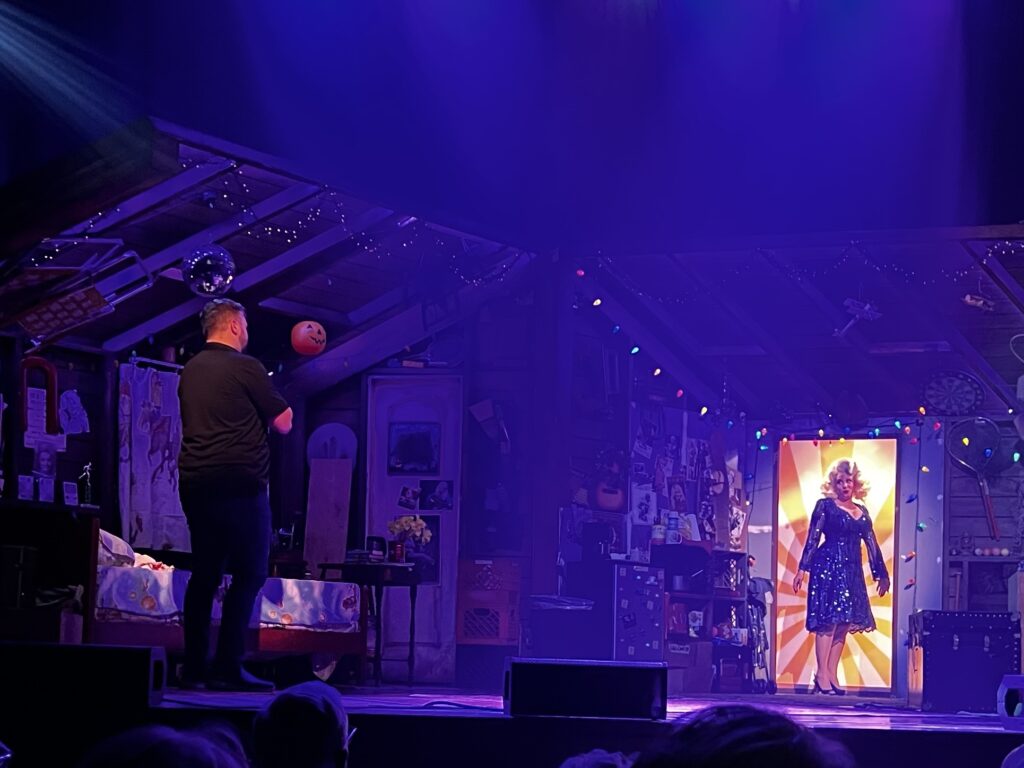
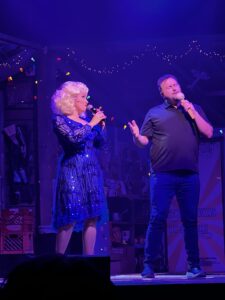 Further isolating Kevin, his parents are never seen in the play, and only his Mom’s voice is heard from off-stage from time to time. As the play begins, the audience gets their first glimpse at the show’s only set, the attic. Brilliantly created by Scenic Designer Anna Louizos with assistance from D. Craig M Napoliello, with lighting by Alessandra Docherty and assistant Isabella Gill-Gomez, the attic is easily recognized as both the family’s preferred storage area for seasonal decoration and Kevin’s former childhood playroom/teenage hangout. With pop culture relics from the far-distance 1980s, the attic set design is cleverly littered with things like a discarded GameBoy, an old Chineses Checkers boardgames and what appeared to be a single right Nike Air. But it’s the shrine to everyone’s favorite Country Music Songbird, Dolly Parton that’s most impressive…and I must admit relatable. I mean, switch all the Dolly posters, magazine pictures and photographs covering the walls for, say The Bionic Woman’s Lindsay Wagner, and you’d have my childhood bedroom.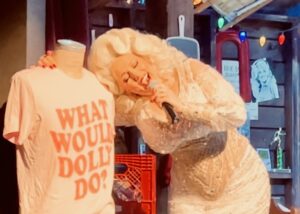
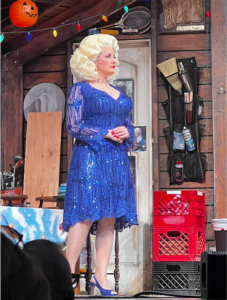 While most of the songs featured were written by Dolly, even the prolific singer/songwriter occasionally records tunes penned by others. Why’d You Come in Here Lookin Like That, Sing For the Common Man and the Dolly Parton/Kenny Rogers megahit, Islands in the Stream are all prefect placed and wonderfully sung. Interestingly, Islands, written by the Bee Gees, is followed by a funny, but very un-Dolly bit of snark courtesy Vilanch’s script.