Having worked in the book industry for nearly a decade back in my early post-college days, I had the great fortune of not only meeting Stephen King when my local bookstore (remember those?) hosted the celebrated author during a signing. I also saw him and fellow authors Amy Tan, Mitch Albom, Dave Barry, Matt Groening, Scott Turow and others perform their unique music talents under the band name Rock Bottom Remainders during that same time. Plus, who doesn’t love a good Stephen King story, so when I heard Playhouse 615 was presenting the Tennessee premiere of William Goldman’s stage adaptation of Misery, based on King’s 1987 bestseller that then became a hugely successful 1990 film, I was intrigued to say the least. Having opened earlier this month, the show wraps its run this weekend with performances Friday and Saturday evenings June 17 and 18 at 7:30p.m. and a final matinee at 2:30p.m. on Sunday, June 19.
I dare say if you’ve not read Misery, chances are you may have seen the movie. Full disclosure: while I absolutely devoured the book when it was release in ’87, I somehow never saw Kathy Bates’ Oscar-winning turn as Annie Wilkes opposite James Caan’s Paul Sheldon. I also had sort of forgotten that the stage version even existed, even though the 2015 Broadway run starred Bruce Willis and Laurie Metcalf. The latter of which received a Tony nomination for her performance.
Considering it has been thirty something years since I read the source material, when my friends and I attended a Playhouse 615’s Sunday matinee, I pretty much entered the theatre not knowing what to expect. I gotta admit, I was pleasantly surprised. Playhouse 615, located in a tiny strip of shops at 11920 Lebanon Road in Mt Juliet, TN, is a hidden jewel among the area’s theatre community. From its nondescript exterior, you’d never even know it’s theatre space, and once inside, you just have to marvel that artist director, Joel Meriwether and company are able to achieve what they do in this intimate space.
That’s the thing though, the intimacy of venue is absolutely perfect for this particular work, for all of the action of Misery takes place within the confines of a small farmhouse nestled in the western slope of the Rocky Mountains. As in the book and the film that preceded this adaptation, the story centers ‘round a famous writer, Paul Sheldon who’s known to retreat to Silver Creek, Colorado whenever he’s working on his next novel. Among those who know Sheldon’s penchant for getting away from it all to concentrate on his writing, is his self-professed biggest fan, the seemingly unassuming owner of said farmhouse. The set-up of how these two meet happens before the curtain rises, when Paul’s vehicle careens off the road and crashes near Annie’s farm. As the action begins Paul (played by Harry Marsh) is heard writhing and moaning in pain as he wakes in a strange bed. I’m just gonna say it, when I saw the show, at first I thought the painful cries a tad overdone, but luckily as the action continued, the wailing subsided, but I digress. We soon learn that Annie (played by Ann Street-Kavanagh) happened upon Paul, managed to get him out of the wreckage and brought him to her farmhouse to recover.
We also soon learn the reason she didn’t seek medical attention is that the roads are blocked from a snowstorm and the phone lines dead…or are they? Now, unless you’ve been living under a rock for the past three decades, you likely know a little more of the plot. Turns out Annie may or may not be completely obsessed with Paul, to the point of psychotic episodes as he regains his strength and begins to question their extended solitude.
Marsh’s Paul Sheldon is entertaining to watch, a looming presence of a man, confined and captive. But it’s Street-Cavanagh’s Annie that makes the show a truly sinisterly thrill-ride. She manages to find a perfect off-balance between meek, good-natured, christian woman literally and figuratively becoming the good samaritan to helpless Paul to vindictive, abusive captor. One note of concern, whenever Annie is headed into a fit of rage, Mitchell Miller, who’s credited in the show’s playbill as ‘lighting execution’ chooses to flash a strobe erratically. When this first occurred during the performance I attended, I initially thought there was some technical glitch and the lights were malfunctioning. This effect might be better served to begin when Annie starts to rage and the strobe continue throughout her fit, ending when she seemingly returns to her more calm self. Just an observation.
Speaking of technical aspects of the show, kudos to Meriwether, who also serves as the show’s ‘sound execution’….I guess that makes him ‘sound executioner’, befitting the gruesomeness of the piece. Throughout the show I noted time and time again the perfect accompanying interstitial music, from haunting versions of such known tunes as Amazing Grace, Every Breath You Take, I Will Always Love You, Hurt and more, plus a little Liberace for good measure (there’s motion of Lee in the script). These musical interludes quickly became another character for me.
In popular culture, there’s a term called ‘Easter eggs’. It refers to the inclusion of images, sight gags, jokes or other references that fans might recognize. King frequently includes Easter eggs in his work and Misery is no exception. It may contain the ultimate Easter egg. I mean, let’s face it, Paul Sheldon IS basically a fictionalized version of Stephen King, what with retreating to write, being the author of multiple bestsellers and all. So to further wink towards King, Meriwether and the show’s prop and set departments have peppered the set with winks to the author and his other works. At one point, when the local sherif (Joe Russell) pays a visit, he sips coffee from a mug emblazoned with a graphic from IT, King’s ’86 horror classic that in recent years has become a hugely successful film franchise. There’s also a floor runner in the hallway, the pattern of which will conjure images of creepy twins for anyone who’s seen King’s 1980 masterpiece, The Shining, for it’s the same pattern as the hallways of the Overlook Hotel. Even the religious iconography throughout Annie’s farmhouse is a nod to King’s Carrie. Heck, I may be reaching, but you could even say there’s a bonus nod to Carrie coupled with Firestarter when things between Annie and Paul get a little…shall we say…heated. These little extras, while perhaps unnoticed by some casual audience members, were indeed appreciated by this King fan.
Street-Kavanagh and Marsh also deserve praise for the physicality of the show. From Marsh’s Sheldon attempts to escape while bound to a wheelchair to the height of the action when Street-Kavanagh renders Sheldon immobile by way of the now-classic mallet and woodblock scene, these two performers approach the physical aspects of their respective roles with gusto and visceral emotion. With only two performances left, if you’re looking for something to do this weekend, check out Playhouse 615’s Misery. Tickets are $18 and may be purchased online CLICK HERE or at the door. For details on upcoming shows at Playhouse 615, check out their website or find them on Facebook.
As always, if you wanna follow JHPEntertainment to find out who I’m chatting with for my next Rapid Fire Q&A, or for my take on the latest local and national theatre, music and movie offerings, find us at JHPEntertainment on Facebook, JHPEntertainment on Instagram and JHPEntertainment on Twitter.
Got an event or show we should know about, drop us a line at the Contact tab. Till then, #GoSeeTheShow!
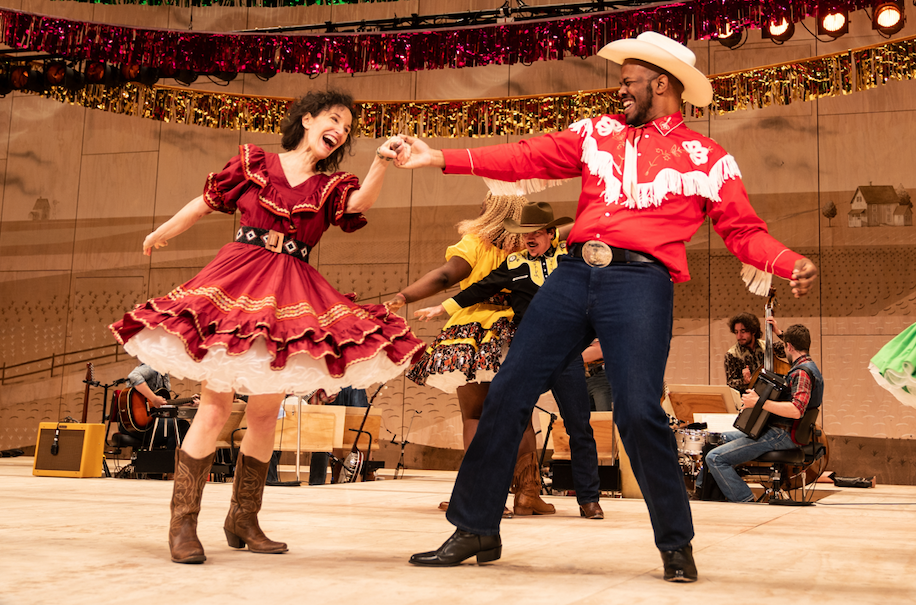
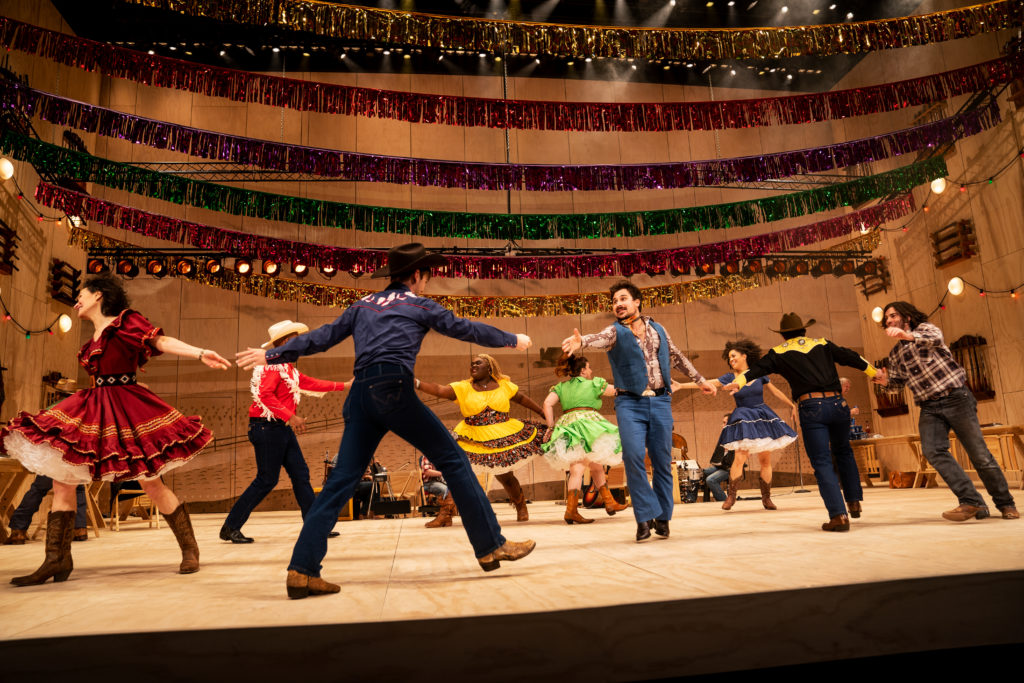
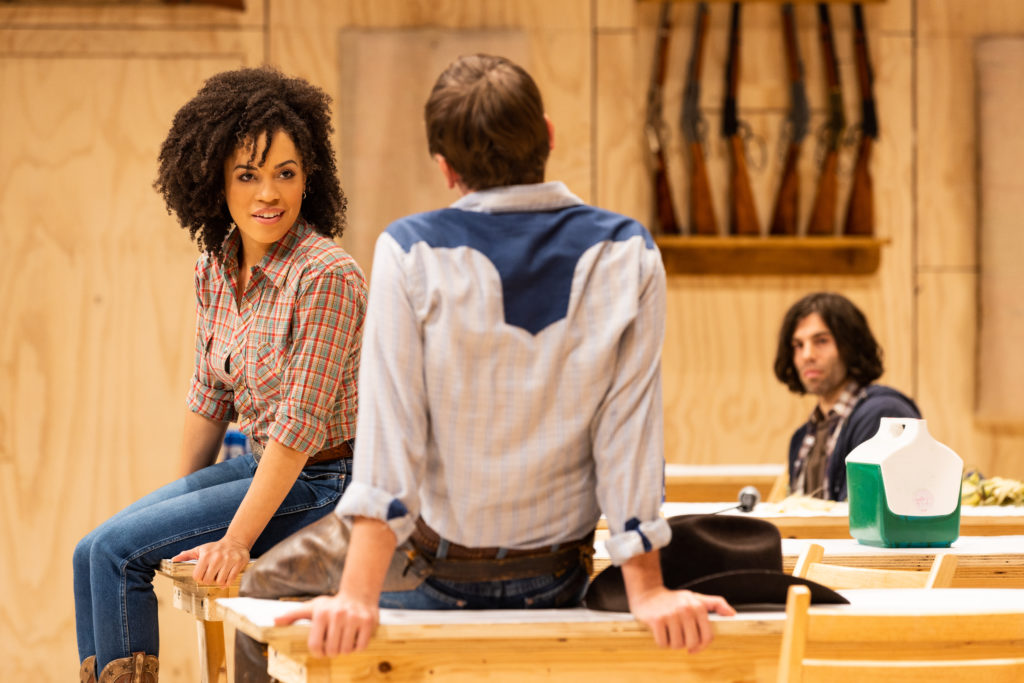
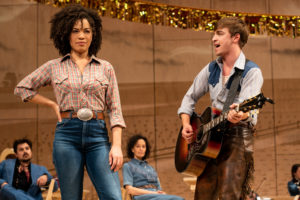 Another genius aspect of this incarnation is that while the tempo of the tunes and the emotion and intonation of the delivery may have changed, the lyrics, and for that matter, the dialogue is the exact same as it has always been. A prime example of how this affects the mood and meaning of the show is seen when Curly attempts to woo Laurey (Sasha Hutchings) as he describes the fancy horse-drawn surrey he intends to take her to the comping social in. With no change at all in the lyrics, but a slower, more seductive delivery, he describes taking her on a date, keeping her out all night and waking up still in the surrey together. The tune’s lyrics “whoa! You team, and just keep a-creepin’ at a slow clip clop. Don’t you worry with the surrey with the fringe on the top” suddenly take on a new meaning. Is Curley telling Laurey not to worry if anyone see’s their surrey ride of shame the next morning as the top of the carriage will keep their secret? Maybe. Maybe not.
 Speaking of camp, enter Ado Annie played by trans actress and activist, Sis. Here’s the deal, I myself am a member of a couple of less-than-equally-represented demographics, one being I was born with a neuromuscular disorder that now requires I use forearm crutches to walk, so when Fish debuted his Oklahoma! on Broadway coinciding with the show’s 75th anniversary and he cast wheelchair-using actress/singer Ali Stoker as Ado Annie, who subsequently won the Tony, I was all for it. Now, when the tour was announced and Stoker’s star was on the rise, I figured she wouldn’t join the tour, but I had kinda thought they might cast another wheelchair’d actress. Nope. Sis won the role. Again preconceived notions and my own thoughts of the powers that be overcompensating for decades of Broadway literally and figuratively being the great white way, by checking all the boxes was my initial reaction. But the minute Sis breaks into Ado Annie’s signature song, I Cain’t Say No, I was done…in the best way possible. Sis, who is the very definition of a big, Black, beautiful woman, owns that song, the stage and everything that comes with it. As if the first few verses aren’t enough, she goes to the rear of the stage, grabs the mic from the stand by the band, comes back to the edge of the stage and breaks out into a rollicking reprise. Plus, the juxtaposition of Winkler’s Will Parker and Sis’ Ado Annie, is a perfect comedic role reversal in every sense of the word. Yes, it’s ok to laugh, ‘cause guess what, they’re totally in on it.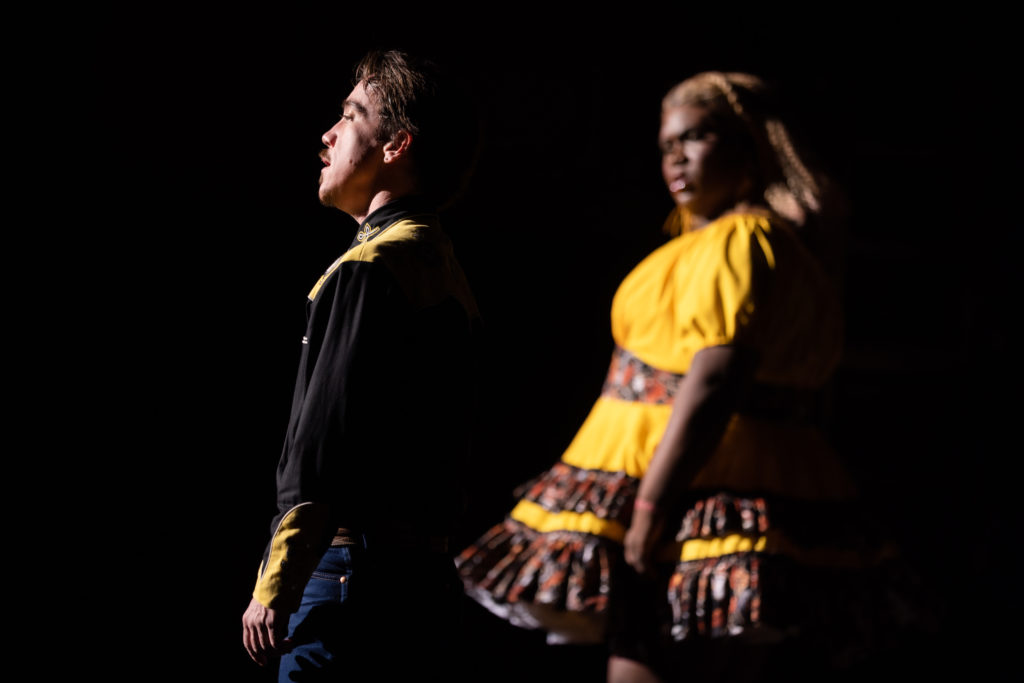
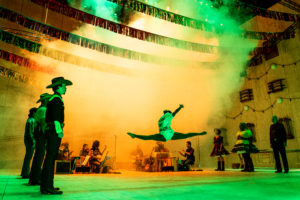 Another major difference between traditional mountings of the show and the current version is the fact that the Dream Ballet, originally choreographed by Agnes de Mille, and the stuff of which legends are made, has shifted from the end of Act 1 just after Laurey solo’s on Out of My Dreams, to the top of Act 2. Not only that, gone are the stunningly ethereal movements of most of the cast members and they bring to life Laurey’s dream/nightmare of being torn between two men. Instead, a single barefoot dancer emerges wearing an iridescent white t-shirt emblazoned with the message “Dream Baby Dream”. This might be my one biggest disappointment with the update. I get that it’s modern dance, but scooting across the stage like a puppy with a clogged gland, that’s not dance, that’s just bizarre. Now, I’m no dancer, though I did win the dance contest at homecoming in high school one year, but let’s face it, it was a popularity vote, but I digress. Again, my companion for the evening had a little to say about this particular moment. She is a trained dancer, so there’s some merit in her reaction. She too felt as if we were watching the equivalent of a young child performing for the family in the living room after Sunday dinner, noting the lack of proper extensions and a pointless pointe. That said, we both appreciated the final seconds of the Dream Ballet, when an ensemble member joined the soloist onstage and they embrace whilst the lighting shifts, casting their shadow large across the wall. Another beautiful nod to the original and the film version.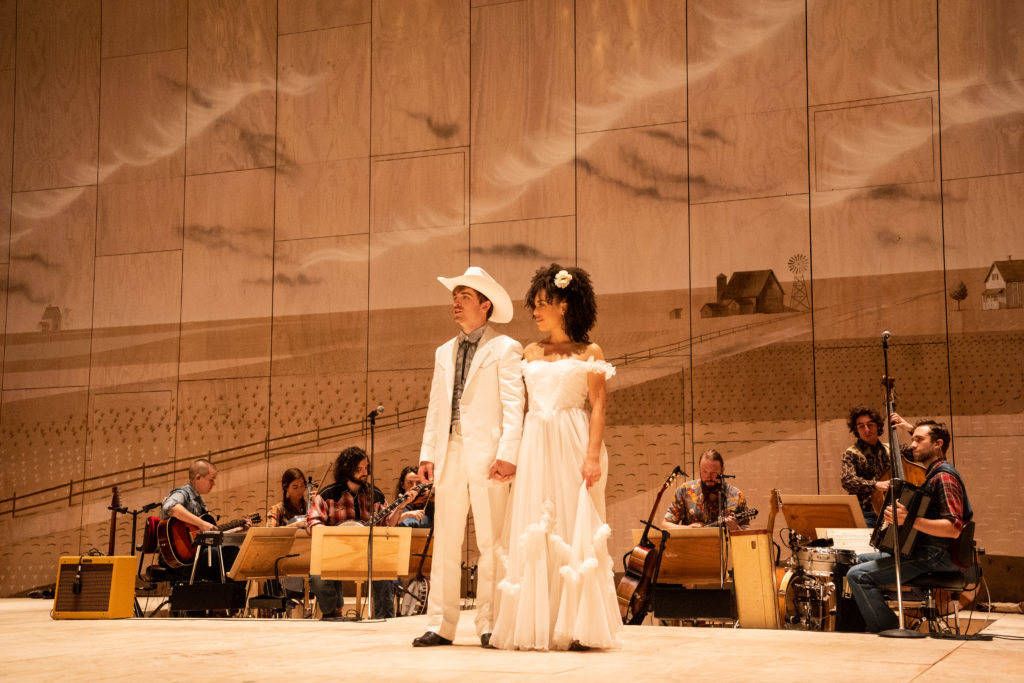
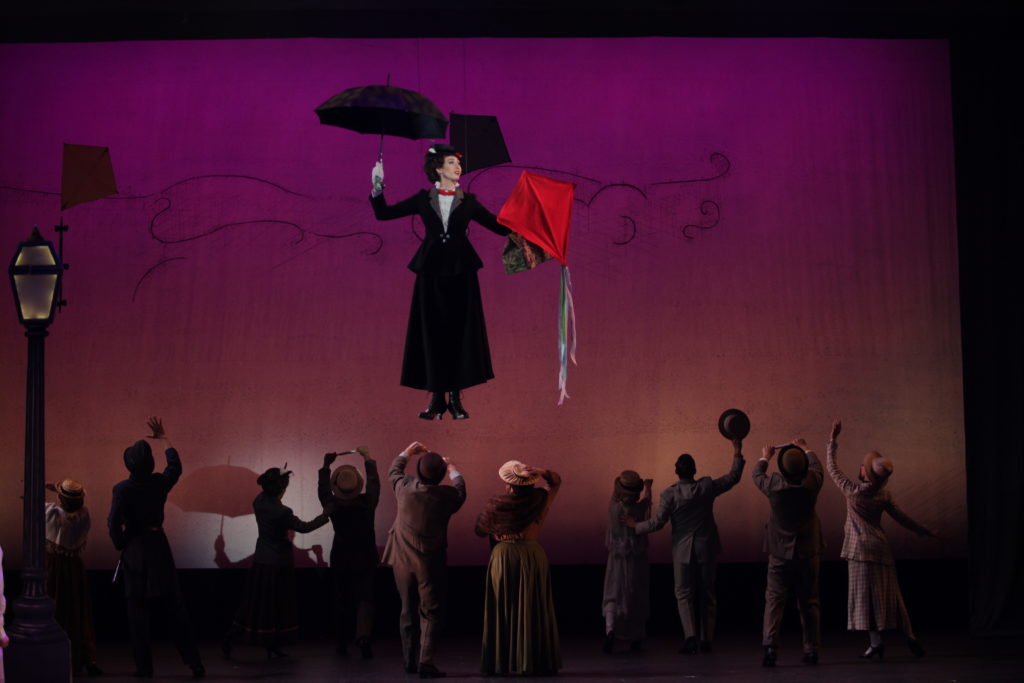
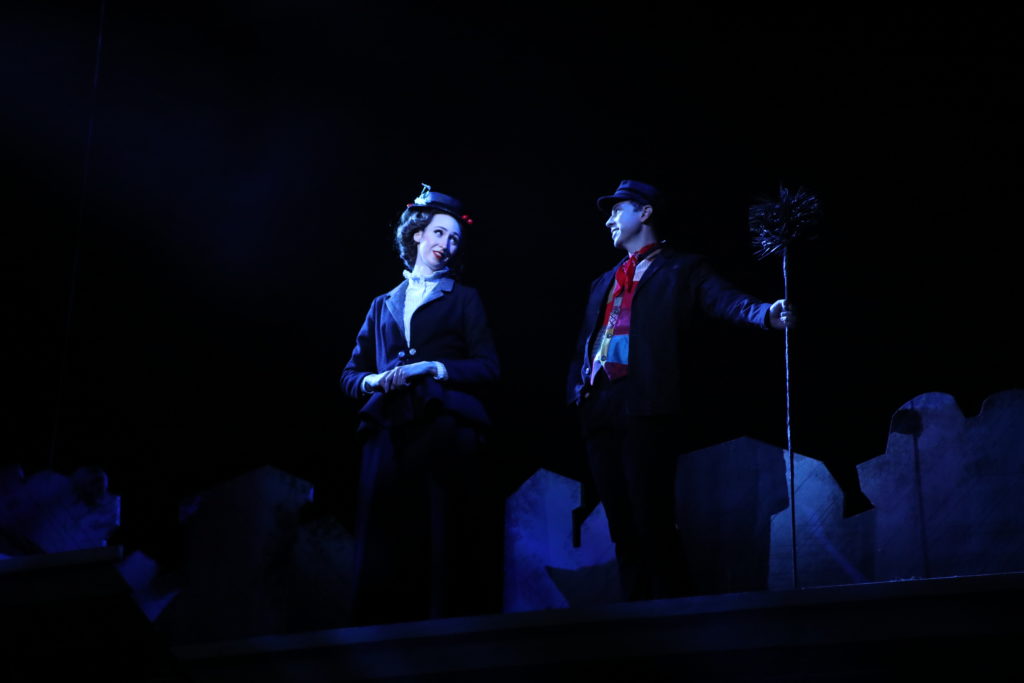
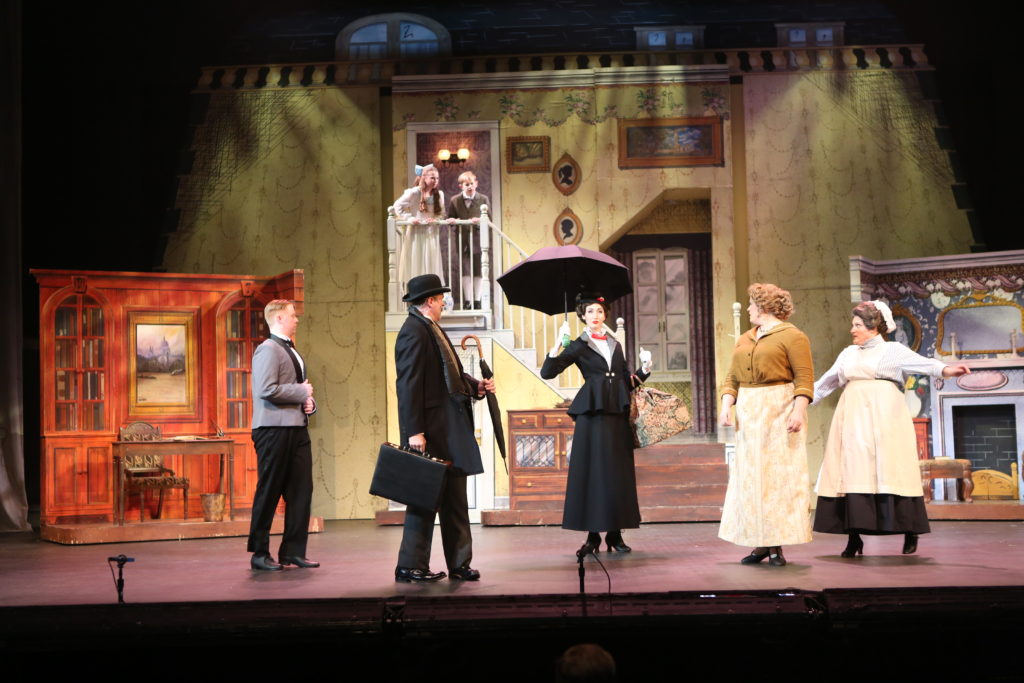
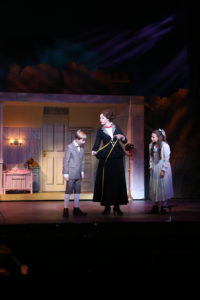 As Jane and Michael, Benfield and Campbell light up every scene they’re in, as I’m sure their cohorts do during their alternate appearances. Their interaction with McNeal’s Mary Poppins and the rest of the cast is truly blissful. I particularly enjoyed Benfield and Campbell’s mischievousness regarding their behavior around Gavin’s Mr. Banks. They also seem to genuinely be having a blast as Michael and Jane during many of the show’s familiar moments with Mary and Bert.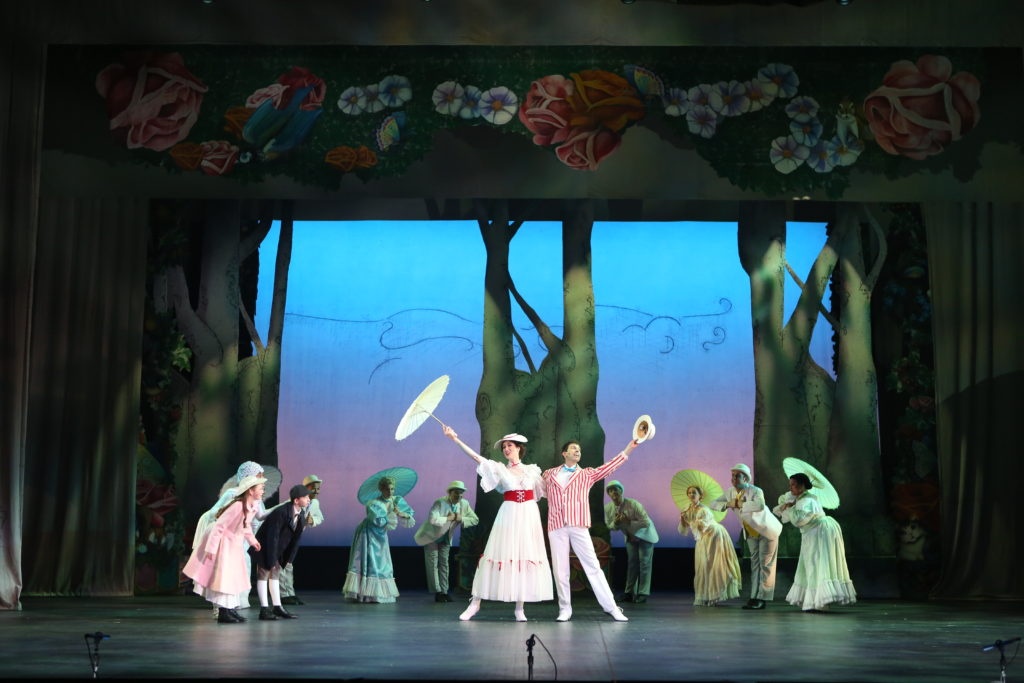
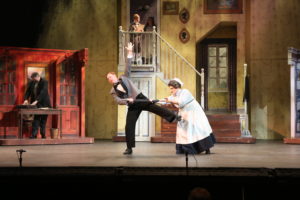 Special mention has to be made of Katie Bruno, Jonah M. Jackson and Dennis R. Elkins. Bruno and Jackson play The Banks Family’s house staff, Mrs. Brill and Robertson Ay, respectively. These two obviously feed off each other perfectly giving the audience some of the show’s best snark and silliest slapstick physical comedy moments. I always think of character actresses like Mary Wickes and Hermione Baddeley when I see Bruno in a supporting comedic role. Interestingly, both Wickes and Baddeley themselves have ties to Poppins. Wickes played the lead in a 1949 TV adaptation, while Baddeley played the maid in the Disney film. Jackson goes all in for laughs, pratfalls and all leading into and out of one of the show’s most popular numbers, A Spoonful of Sugar.
 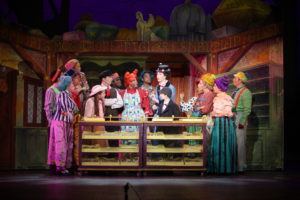 Then there’s the magical unicorn of a talent, Jennifer Whitcomb-Oliva. Whitcomb-Oliva pulls triple-duty in Mary Poppins appearing first near the end of Act 1 as Mrs. Corry, then briefly as the Statue of Queen Victoria, and finally as Miss Andrew, George Banks’ own Nanny, three characters created and expended when the musical was adapted for the stage. When Mary takes the children on a walk in the park, they encounter Mrs. Corry, who runs the Talking Shop, a place to buy conversations and gingerbread stars. What? What else pairs well with letters of the alphabet for sale? Come on, it’s Mary Poppins, just go with it. That leads to an all-in moment and another familiar tune, Supercalifragilisticexpialidocious. With a brightly colored costume and wonderfully whacky wig for Whitcomb-Oliva it’s another moment in the show I dare anyone who sees it to try not to sing and clap along. On that note, as my friend, Bryce and I were walking into the lobby, I ran into Nashville Rep’s Executive Director, Drew Ogle. As we chatted, he mentioned that opening night he, and the cast were surprised when the audience randomly, unanimously erupted into syncopated applause during a couple of the numbers. I guess they’re used to it by now, because the same spontaneous magic happened the night I attended.
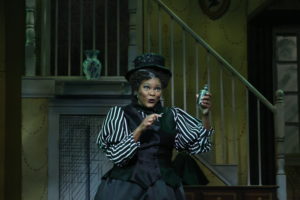 While Whitcomb-Oliva’s Mrs. Corry is a hand-clapping delight, it’s her more playfully sinister turn as the strict Miss Andrew that’s simply marvelous. As the darkly-dressed villainous Miss Andrew, complete with a Jane Russell-esque swirl of gray among her severely styled raven-colored wig, Whitcomb-Oliva revels in the role during the lyrically frightful Brimstone and Treacle near the top of Act 2 and again during a good vs. evil mashup of Brimstone and Spoonful with McNeal’s Mary Poppins towards the end of the show.
 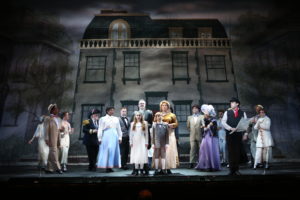 I can’t review Nashville Rep’s Mary Poppins without special mention of Denise Hicks. Hicks, a legend among the Nashville theatre community, plays not only Miss Lark, the puppy-carrying neighbor to the Banks family, but she’s also featured as the Bird Woman, the elderly lady who sells bird seed for “tuppence a bag”. Knowing Hicks was cast in the role, as Bryce and I settled into our seats, I leaned over and told him to avert his glance away from me during the heart-wrenching moment when Hicks’ Bird Woman sings Feed the Birds, and as certain as Mary Poppins comes in on the east wind, when Feed the Birds happened, I was once again thankful that masks are still being required in the theatre because my eyes began to sweat as I sobbed uncontrollably.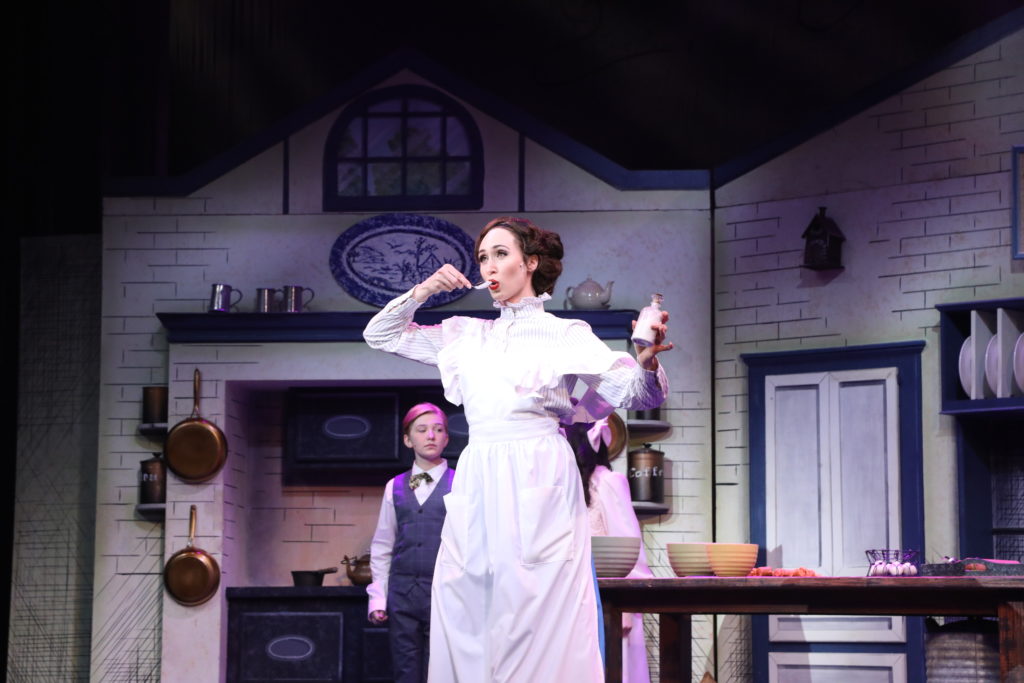
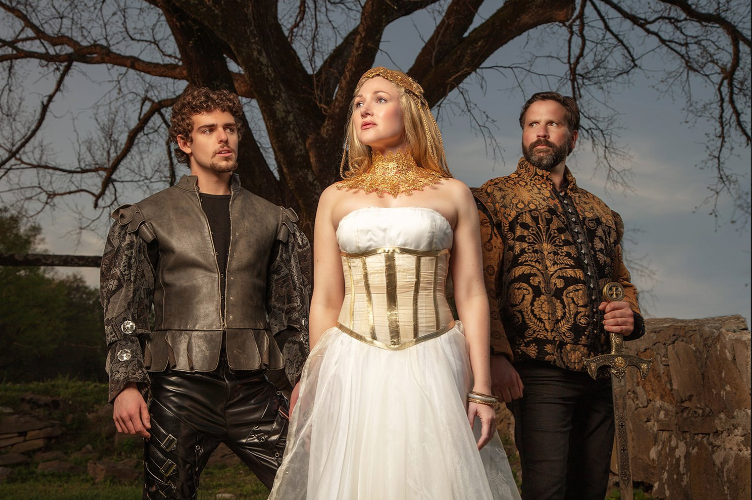
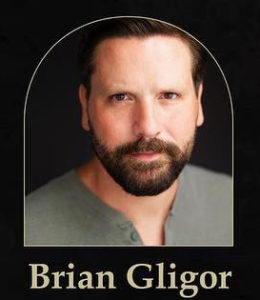 RAPID FIRE Q&A WITH BRIAN GLIGOR, KING ARTHUR IN STUDO TENN’s CAMELOT
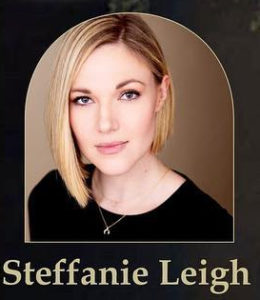 RAPID FIRE Q&A WITH STEFFANIE LEIGH, GUENEVERE IN STUDIO TENN’s CAMELOT
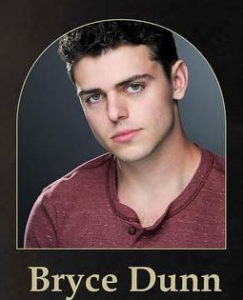 RAPID FIRE Q&A WITH BRYCE DUNN, LANCELOT IN STUDIO TENN’S CAMELOT
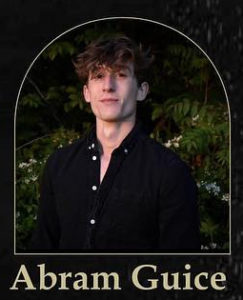 RAPID FIRE Q&A WITH ABRAM GUICE, MORDRED IN STUDIO TENN’s CAMELOT
 RAPID FIRE Q&A WITH BENJ MIRMAN, ALI HAKIM IN OKLAHOMA
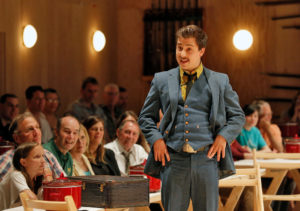 JHPENTERTAINMENT: Speaking of Ali’s proposed pending intended, who much fun are you having sharing scenes with Sis as Ado Annie Carnes?
 RAPID FIRE Q&A WITH CHRISTOPHER BANNOW, JUD FRY IN OKLAHOMA
 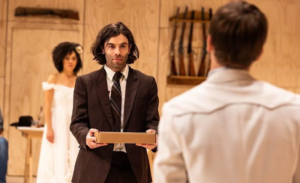 JHPENTERTAINMENT: Jud’s main musical moment comes with Lonely Room. The revival’s musical arranger, Daniel Kluger’s work during this number is among my favorite in the show as it seamlessly transitions from melancholy to angst-ridden determination. Is there a particular musical moment—your’s or someone else’s—that you truly love hearing each performance?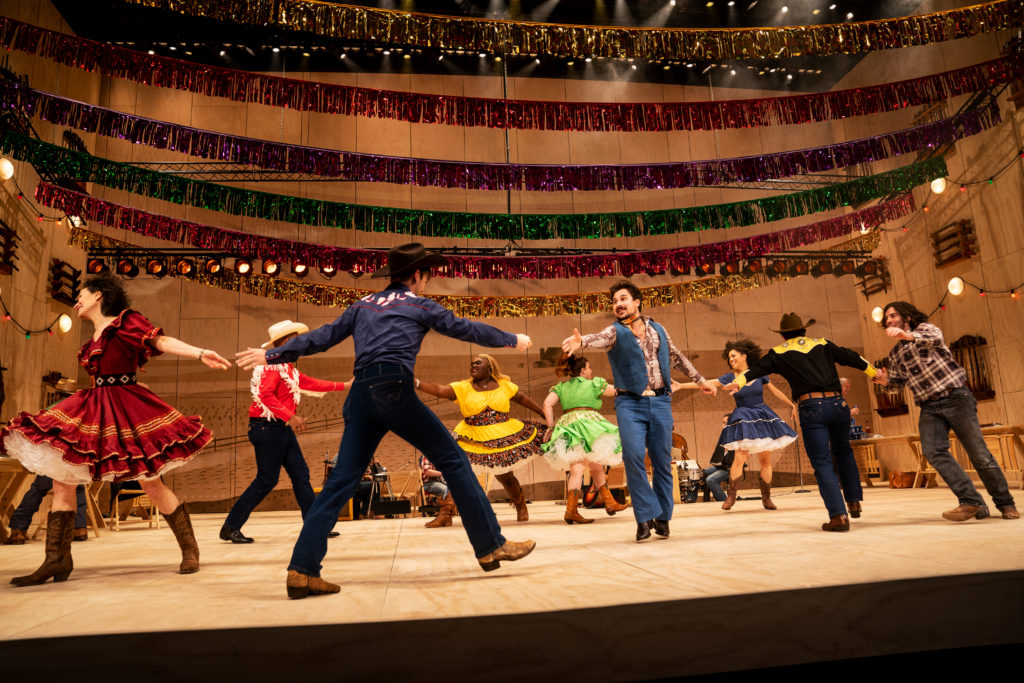
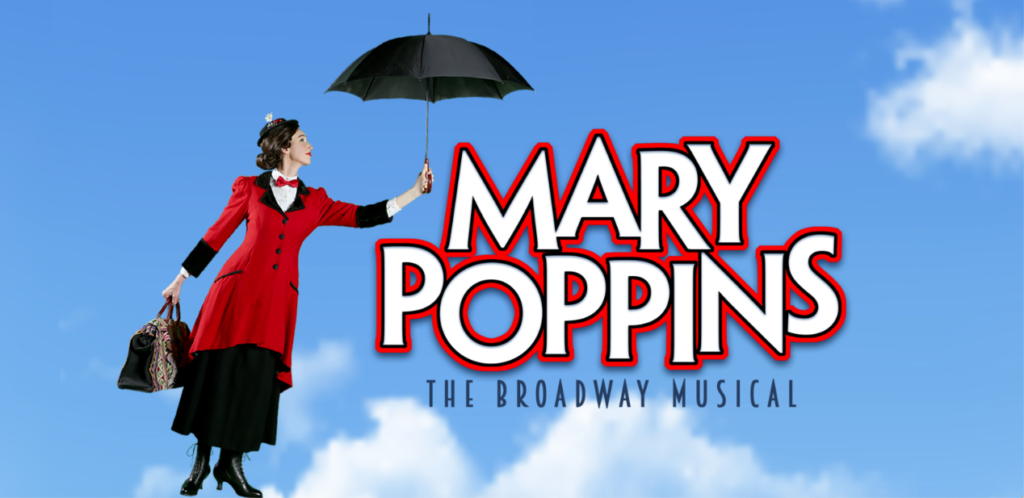
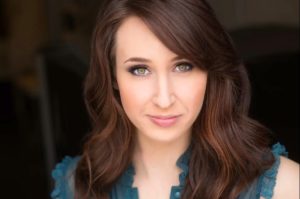 RAPID FIRE Q&A WITH MARY POPPINS STAR, CHRISTINE MCNEAL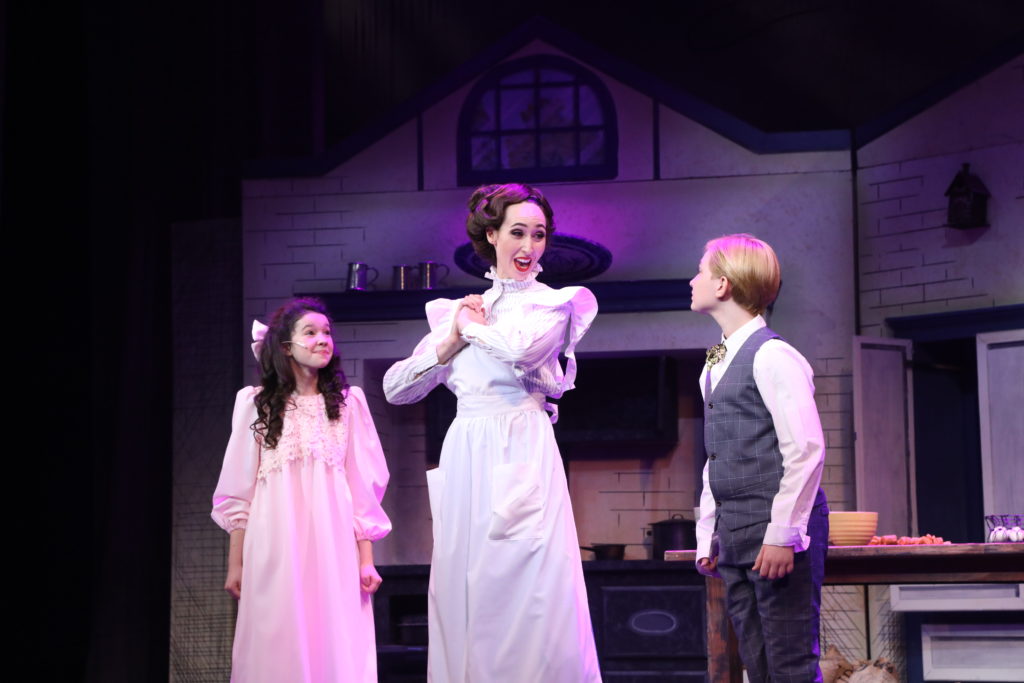
 RAPID FIRE Q&A WITH JEREMY BENTON, BERT IN MARY POPPINS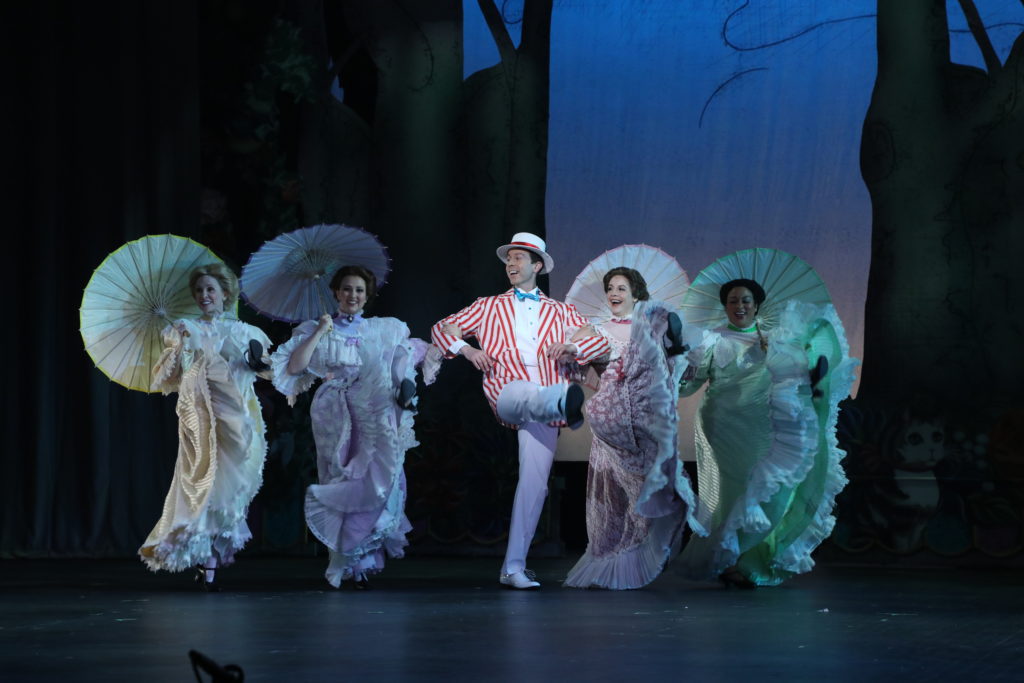
 RAPID FIRE Q&A WITH GEOFFREY DAVIN, MR. BANKS IN MARY POPPINS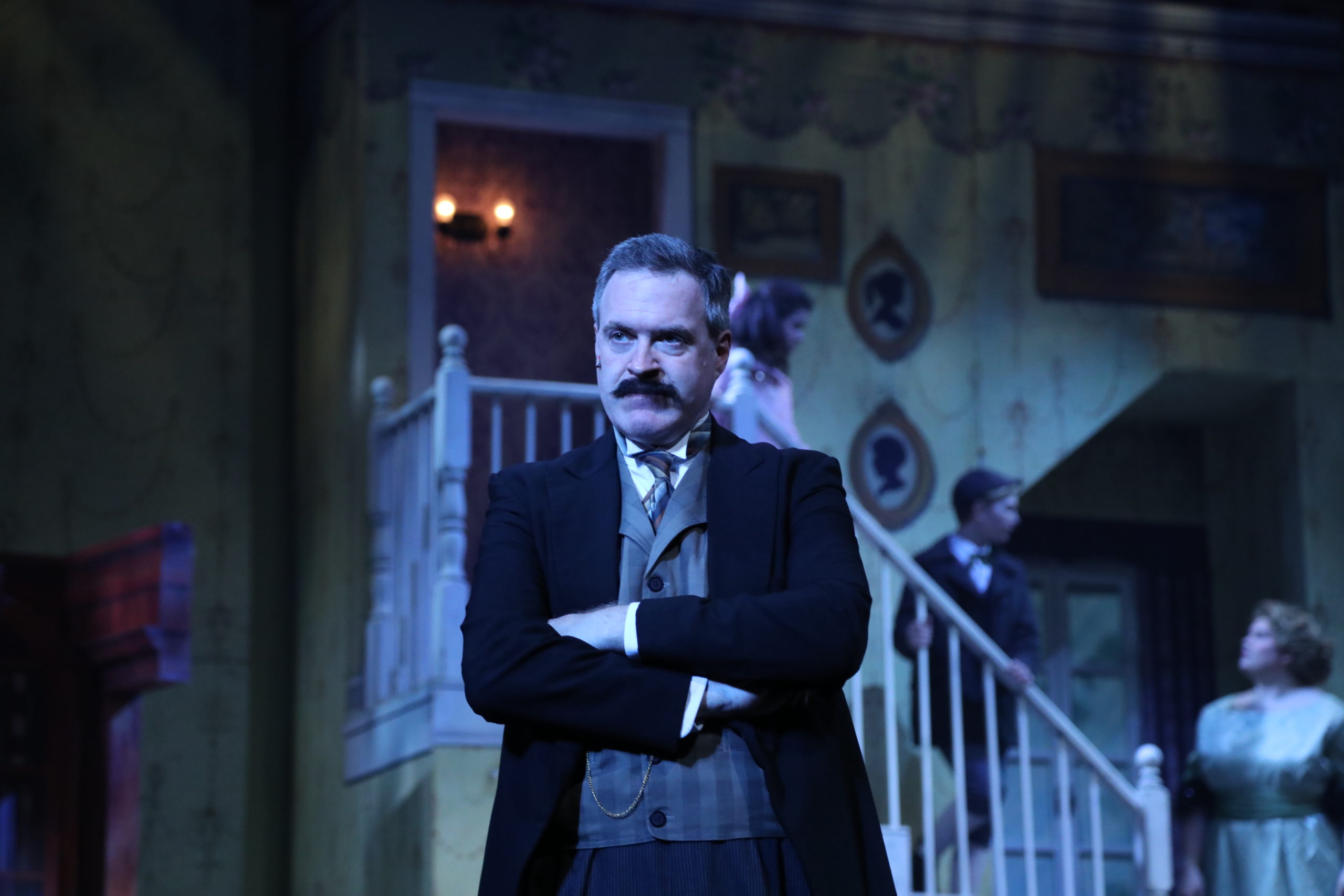
 RAPID FIRE Q&A WITH NATALIE RANKIN, MRS. BANKS IN MARY POPPINS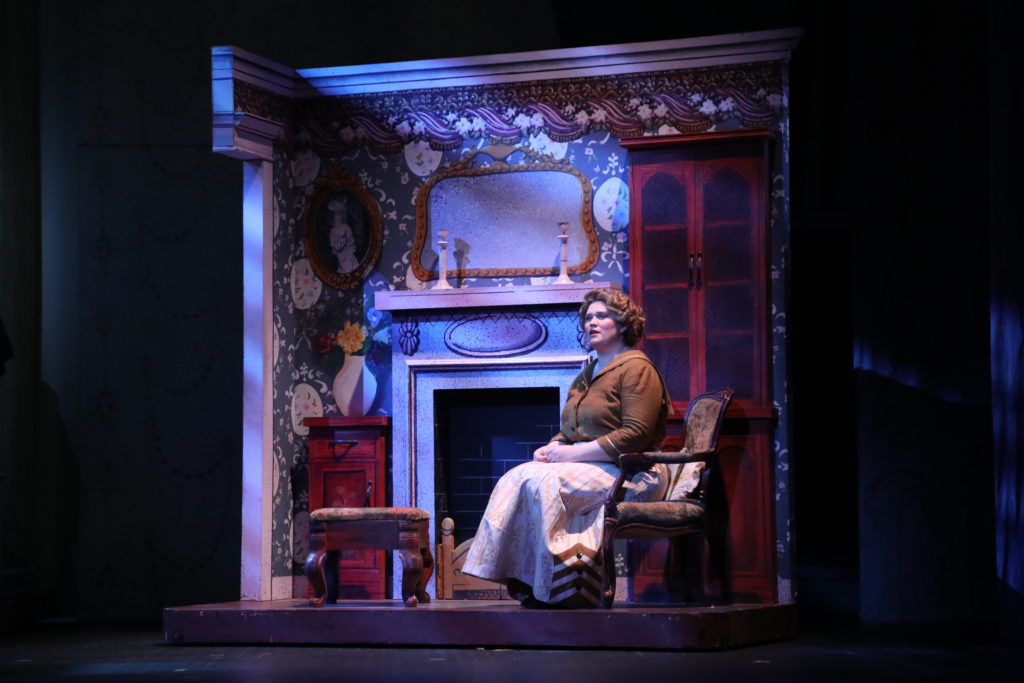
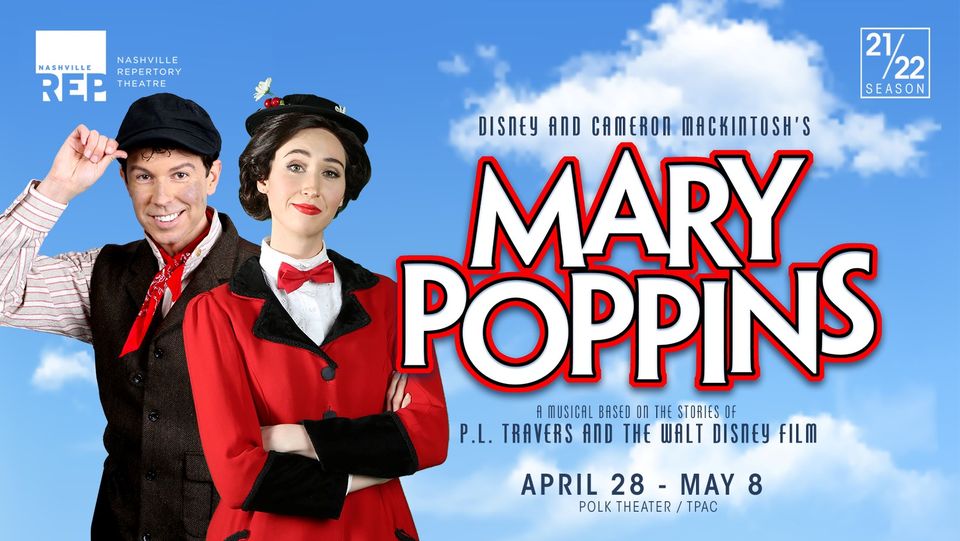 Mary Poppins runs April 28-May 8 at TPAC‘s Polk Theatre.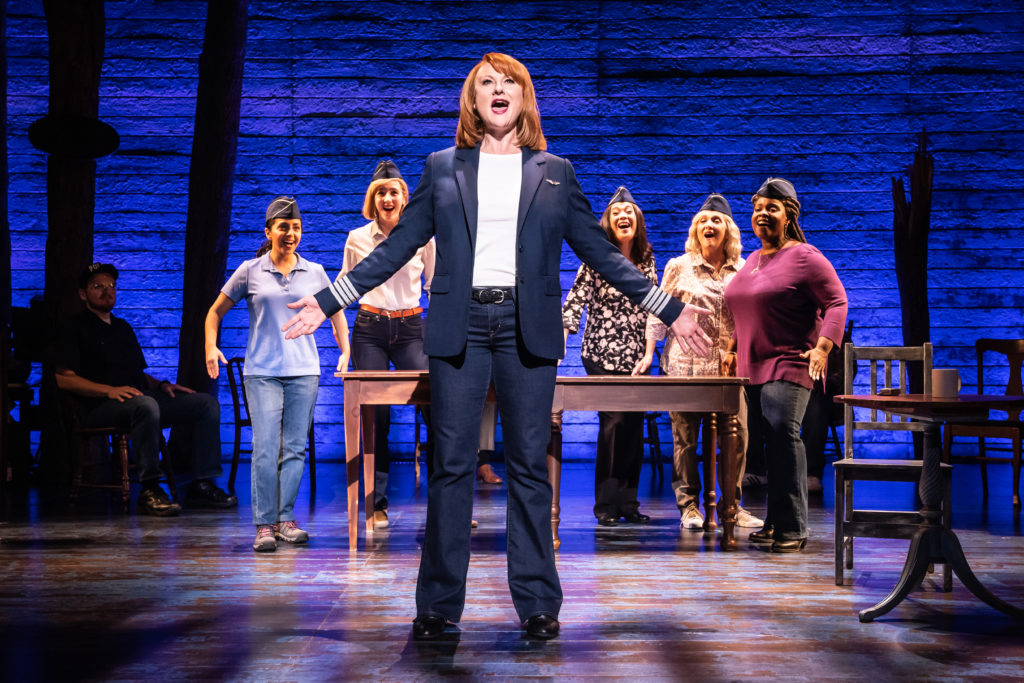
 JHPENTERTAINMENT: Captain Beverly Bass, one of the many characters you portray in the show, wasn’t just one of the pilots of planes diverted to Newfoundland on 9/11, she’s also the first female captain to ever fly a commercial plane for American Airlines. How did you research playing her?
 JHPENTERTAINMENT: What’s your personal favorite message conveyed within Come From Away?

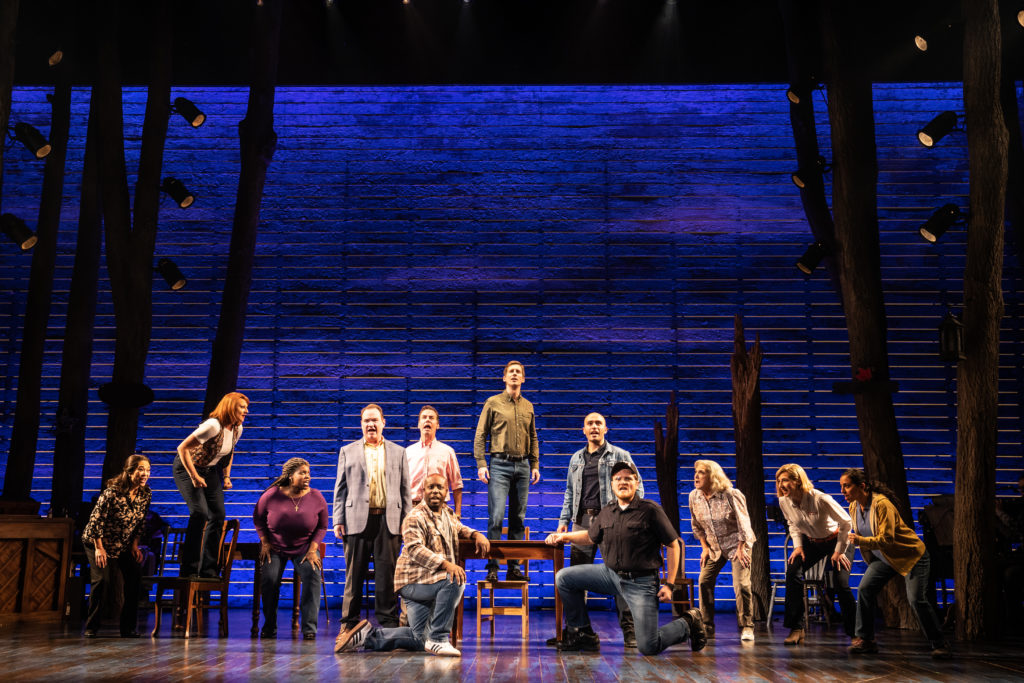


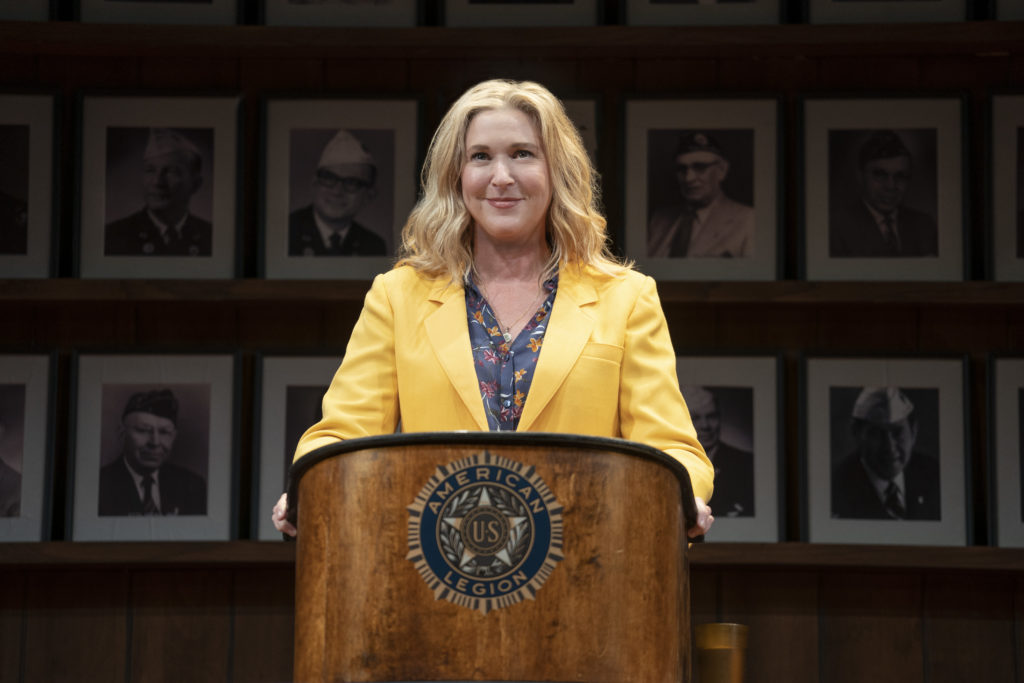
 At the top of the play, Beck introduces herself as Heidi. With Shreck having originally performed the role during its Broadway 2019 debut in the days before the pandemic darkened theatre for nearly two years and also starring in the aforementioned Amazon Prime film version, Beck has her work cut out for her. Not only is she playing the woman who created the though-provoking piece, she also plays her as a young teenager. Worry not though, as Beck more than rises to the challenge, perfectly embodying both versions of Schreck with ease and conviction.
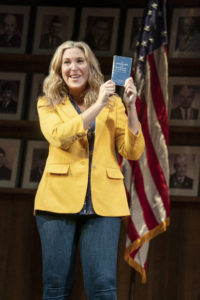 Y’all. The fact that I retained this bit of info is further proof that the playwright, director and star have brilliantly come together to present the subject matter in such a way that even the least history/politically-minded audience member can and will take something away from this unique theatrical experience.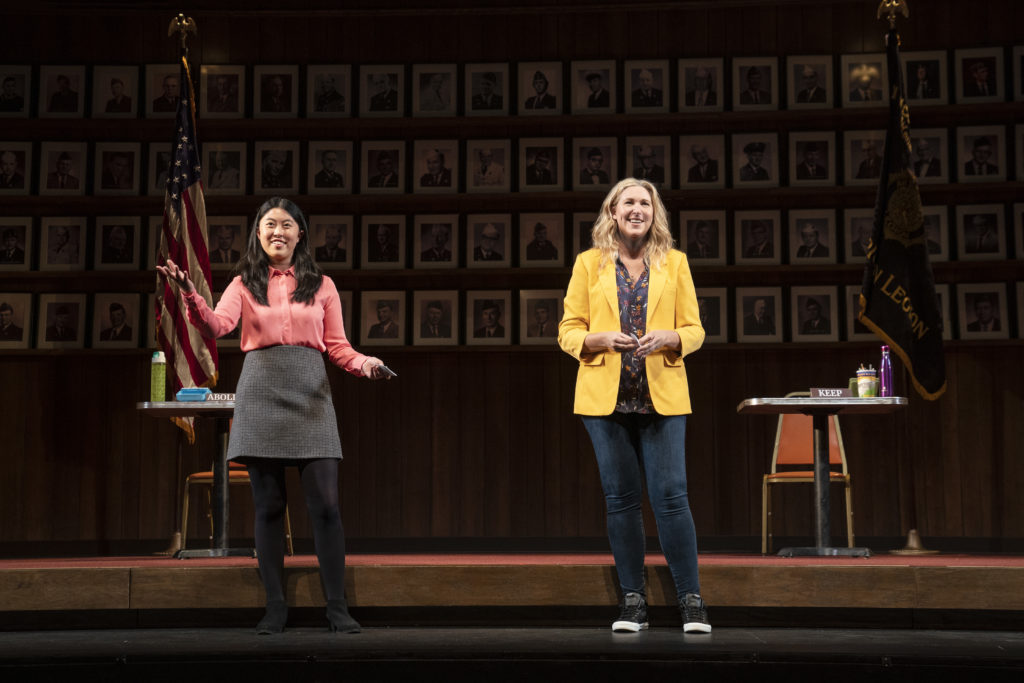
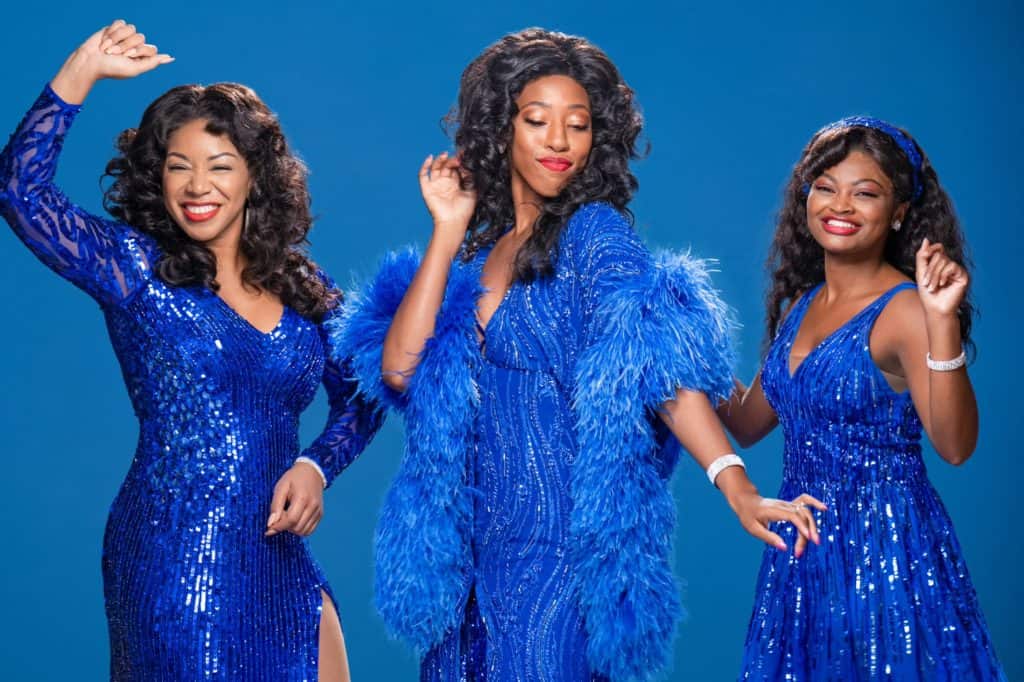
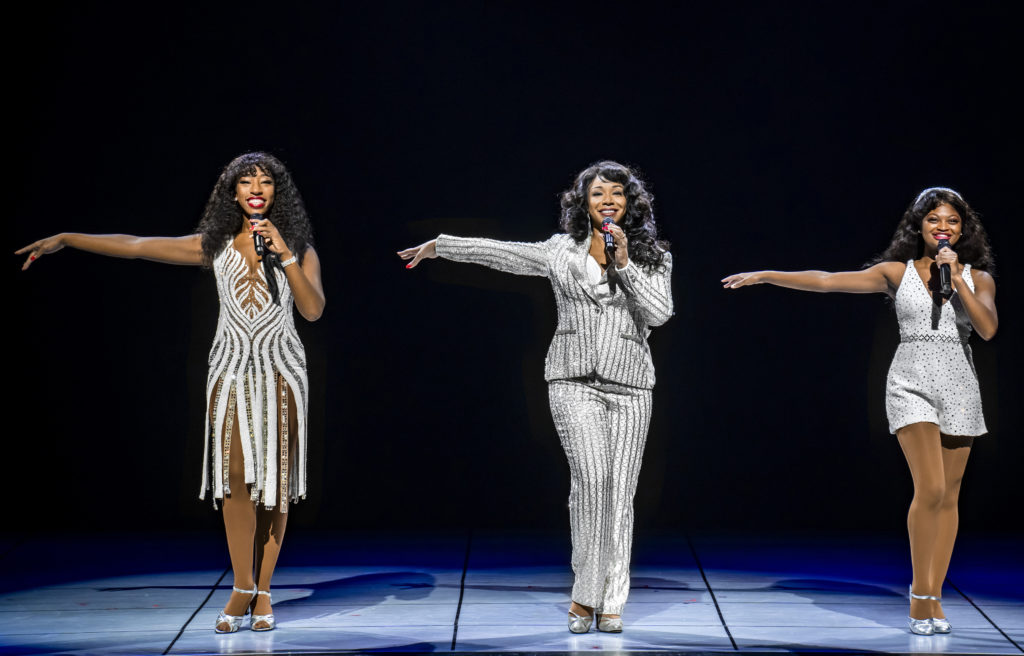
 RAPID FIRE Q&A WITH AMAHRI EDWARDS-JONES, DUCKLING DONNA IN SUMMER: THE DONNA SUMMER MUSICAL
  JHPENTERTAINMENT: While you’re not as young as the Donna you portray, you’re still relatively young, so I gotta ask. How familiar were you with Donna Summer and her music before landing this gig?
 RAPID FIRE Q&A WITH CHARIS GULLAGE, DISCO DONNA IN SUMMER: THE DONNA SUMMER MUSICAL
  CHARIS GULLAGE: Yes! I am originally born and raised in New Orleans, Louisiana. New Orleans is where I also received a lot of my professional training. I went to the New Orleans Center for Creative Arts and received my Certificate in Artistry and my high school diploma. Then I received my B.A. at Loyola University New Orleans. During that time, I had the opportunity to play Dorothy in The Wiz at another theatre in the city, and I won a Big Easy Award for Best Actress in a Musical. That show was one of the most memorable theatre experiences I have had thus far. It was amazing to perform with so many talented black artists, and to be unapologetically ourselves. I was definitely in shock when I won the award because there were so many wonderfully talented artists that were nominated that had been in the industry much longer than I had. After graduating I performed at the Broadway Palm in Florida in 2020 (during the pandemic), and I had the opportunity to understudy Pinky Tuscadero and perform the role a few times. It was definitely memorable to be done in face shields, but we still were having the times of our lives in both Fort Myers and Lancaster, PA because it was a transfer show.
 RAPID FIRE Q&A WITH
 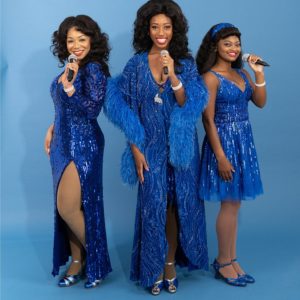 JHPENTERTAINMENT: When I chatted with your fellow-Donna, Amahri, we talked about her actually playing two roles, first as Duckling Donna, and later as Donna’s daughter, Mimi. You also have double-duty during the show. In addition to portraying Diva Donna, you also appear onstage as Mary Gaines, Donna’s mother. How do you approach these two roles differently? Is there something in your movement or physicality that differentiates them in your mind?