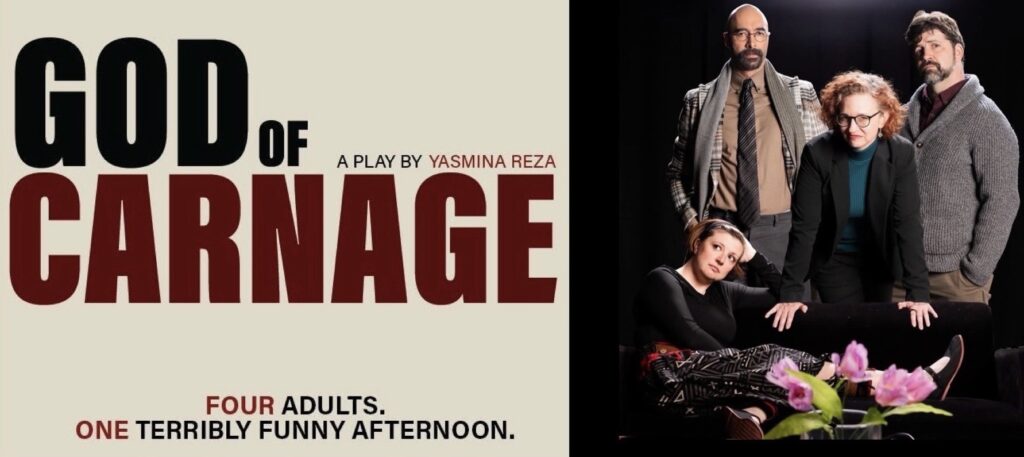
Polite conversation. Civilized adults. What could possibly go wrong? Plenty, as it turns out. God of Carnage is the kind of play that starts with a handshake and spirals into something far messier—and far more revealing. As Playhouse 615 gears up for this razor-sharp dark comedy’s May 1 opening, director Diane Bearden-Enright and her powerhouse four-person cast–Wanderson Rezende, Beth Henderson, Ben Gregory and Abby Waddoups–are diving headfirst into the tension between who we think we are and who we become when the filter slips. We caught up with the cast and director for our signature Rapid Fire 20Q to talk civility, chaos, marriage, morality—and why this deceptively simple setup leaves absolutely nowhere to hide.
——-
RAPID FIRE 20Q WITH CAST AND DIRECTOR OF GOD OF CARNAGE
 RAPID FIRE WITH GOD OF CARNAGE’s ALAN, WANDERSON REZENDE
JHPENTERTAINMENT: Alan often feels like he’s operating in a completely different moral universe—how do you ground that in truth rather than caricature?
WANDERSON REZENDE: I think Alan’s morality (or lack of it, sometimes) is inside all of us. That is true for every character in this play, and that is part of Reza’s brilliance. To me, Alan is the voice of chaos that whispers “do it” when morality and social norms are screaming “don’t.” Brutal honesty and unfiltered rationalization. We all go through that in our thoughts, and that is how Alan becomes real: you have to look in the mirror and acknowledge the part of your soul that wants to set the room on fire. The part that, when given the opportunity, will stir the pot just to see what happens. I don’t play him as a villain. I play him as the part of yourself you were taught to keep quiet, which is sometimes villainous.
JHPENTERTAINMENT: How do you interpret the play’s critique of Western ideas of civility and “good behavior”?
WANDERSON REZENDE: Oh, this question made me laugh! A good kind of chuckle, I mean. This play is like the animated movie Inside Out but for adults. All those characters live within us, and we can agree or disagree with them, but it is impossible to remain indifferent. I think Reza was clever in making us question our values as a society without slipping into a lecture or wrapping up the play in a pretty bow. All those characters live within us, and we can agree or disagree with them, but it is impossible to remain indifferent. These are four educated, well-meaning adults who, within 90 minutes, are drinking and screaming at each other. To me, the critique isn’t aimed at bad people; it’s aimed at good ones. The “good behavior” dissolves so fast it makes me wonder whether it was ever real or just an agreement we made with each other. Reza seems to be saying that civility can simply evaporate if you turn up the heat in the room.
JHPENTERTAINMENT: Alan’s constant connection to his phone feels symbolic—what do you think he’s avoiding, and what does that say about power and detachment?
WANDERSON REZENDE: I find Alan’s relationship with his phone fascinating. It is a safety blanket, an escape valve, a weapon, an exit strategy. But also, I see his phone as a simple tool, an extension of his arm, almost a part of his body. This play premiered in the early 2000s when cell phones had a very different place in the social context than they do now, but what I don’t think Alan is doing is avoiding. He’s not hiding behind the phone. He’s operating. The phone shows where Alan has power, clarity, and purpose. He’s present in the only way that feels natural to him. Which is exactly why the moment the phone is taken away is so revealing: you suddenly see what’s underneath when the tool is gone. And what you see is just another vulnerable man who needs to pick himself up from the floor.
JHPENTERTAINMENT: Do you see Alan as the most honest person in the room—or simply the least interested in pretending?
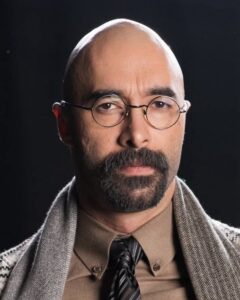 WANDERSON REZENDE: I don’t think Alan is pretending. I think he does everything but pretend. And yes, I do think he’s the most honest person in the room. I had conversations with our director Diane Bearden and with Ben, Abby, and Beth about this. Alan understands that children and adults have fundamentally different tools for solving conflicts. He’s interested in the adult dimension of what happened between their sons: the dentist, the insurance, and giving the kids space to work it out themselves. What he refuses to do is inject adult morality into a children’s fight. He knows that life and time will already do that job. Alan is the kind of parent who wouldn’t stop his kid from sticking a fork in an outlet. He’d say, “Go ahead, then let’s talk about what happens next.” There’s actually a twisted kind of respect in that.
 RAPID FIRE WITH GOD OF CARNAGE’s ANNETTE, BETH HENDERSON
JHPENTERTAINMENT: Annette’s journey from composed to completely unfiltered is one of the play’s most striking arcs—how do you map that descent each night?
BETH HENDERSON: That’s what makes this role so fun. I love getting to play such different aspects of one character. There are definite points in the script that help those transitions along, but it’s also important to make sure that the slide from point A to point B is gradual so that it feels like a natural progression.
JHPENTERTAINMENT: How do you balance the play’s farcical comedy with its darker, more unsettling undertones?
BETH HENDERSON: I think what creates the balance is playing up the realness and believability of the characters, rather than asking for laughs. Like real life often is, the script itself is dark and funny at the same time. If we, as the actors, can successfully portray people who genuinely believe in what they’re saying and doing, the playwright’s words will automatically strike the balance.
JHPENTERTAINMENT: How do you interpret the dynamic between Annette and Alan—united front or already fractured?
BETH HENDERSON: Wanderson and I have actually talked about this quite a bit. Annette and Alan have a lot of issues between the two of them, but the intensity they share is part of what makes them work. It may not be a loving relationship, but it’s a partnership that I think works for them and withstands the course of the afternoon covered by the play. I also think their takes on Veronica and Michael, their disdain, ultimately unite them on the actual situation at hand (the situation between the sons).
 JHPENTERTAINMENT: By the end of the play, who holds the most power in the room—and does Annette ever truly lose hers?
BETH HENDERSON: That’s a tough one. I think to a certain extent, they’ve all lost at least an aspect of their power. If you look at the power dynamics within the marriages, I think Annette comes out on top. I believe she holds a good bit of power in her marriage coming in to the play, but she claims even more during it. I don’t think anyone else really does that. But, if looking at who holds the most power among the four of them, I don’t think I could decide. There’s an argument to be made for each of them and none of them.
 RAPID FIRE WITH GOD OF CARNAGE’s MICHAEL, BEN GREGORY
JHPENTERTAINMENT: Michael uses humor as both a weapon and a shield – how do you navigate when the audience should laugh versus when they should feel uncomfortable?
BEN GREGORY: The author of the play pontificates about the dichotomy between how we present ourselves and how we actually feel. Society has drawn too many rules about when we should laugh or cry. When we are uncomfortable, sometimes we laugh. It’s a way to relieve tension. This show is full of tension and awkward silence. Our audiences will avail themselves of the opportunities to laugh at the absurdity of moments of human interaction with which they identify, either in themselves or in people they have known. God of Carnage directs the players to shift between restraint, lightheartedness, and complete lack of self-control. Those shifts will resonate differently with different audiences. We just follow the map laid out by the author and by our brilliant director, Diane.
JHPENTERTAINMENT: The play exposes cracks in marriage-what do you think Michael truly wants from Veronica beneath all the bluster?
BEN GREGORY: Michael wants to be respected by Veronica. He wants to be valued and cared for in the same way that she cares about the outside world. He doesn’t feel seen or heard by Veronica because he spends too much time trying to echo her thoughts, to appear to be who she wants him to be. He’s terrified of being exposed for his own fears, or to be revealed as less sophisticated than she is. He is stuck in a loop of putting on an act for her benefit (which doesn’t benefit anyone, really). Michael is a man who wants to work hard, and enjoy his nights and weekends without having to worry about the heaviness of the world. He wants love without conflict.
JHPENTERTAINMENT: There’s a casual cruelty that emerges in Michael – how do you build to that without tipping your hand too early?
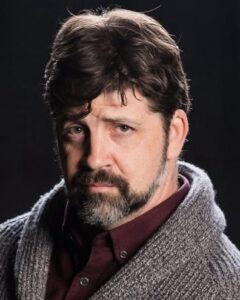 BEN GREGORY: To avoid letting the degree of his resentment reveal itself too quickly, I focus on his attempts to make light of things, his efforts to be a peacemaker. He wants so badly to avoid conflict. Though the tension eventually breaks, he tries to restrain it as much as possible, often with offhand remarks intended to make light of things.
JHPENTERTAINMENT: What makes Playhouse 615 the right space for a play that strips everything down to raw human behavior?
BEN GREGORY: Working on this production in an intimate space such as Playhouse 615 makes it imperative to be as raw and real as possible. Every expression and motion is visible to the audience. It’s as intimate as a theater gets in Nashville. More than the space itself, though, is that the people who work and play here are willing to be vulnerable. It is a safe space and a loving space. We’re allowed to be human: ambitious, fallible, and full of love for our art.
 RAPID FIRE WITH GOD OF CARNAGE’s VERONICA, ABBY WADDOUPS
JHPENTERTAINMENT: What’s your entry point into Veronica’s need to control the evening—and where do you let that control slip?
ABBY WADDOUPS: Veronica’s need to control is pretty much set from the start of the show. She is cordial on the surface with appropriate small talk, but very no-nonsense and clearly has an agenda for the evening to run smoothly. It is an uncomfortable meeting to have to have, so she has a plan to get through it. When the truth of the other character types starts becoming clear, and even her own husband acts in a way she disapproves of, it is impossible to maintain any control over these people.
JHPENTERTAINMENT: Veronica clings to ideals of culture and morality—do you see those as authentic beliefs or part of a carefully constructed identity?
ABBY WADDOUPS: Veronica is flawed, despite trying desperately not to show it. In doing so it becomes harder to hide it. But she comes by it naturally and does not understand how others perceive her. Veronica is one of the worst at being congenial on the surface, but then really drilling into people with her supposed higher moral ground and expectations. She doesn’t know any better, it’s just the type of person she is. She does love culture and has traveled to many places. She takes great pride in being worldly, but she doesn’t strike me as ever having immersed herself in another culture, staying in a place for too long, or really spending much time away from NY or the US. She’s ultimately a scholar and has read most of what she knows, not necessarily through her own lived personal experiences. Veronica is a mama bear and very condescending to her peers.
JHPENTERTAINMENT: How has working again with Diane shaped your understanding of the play’s central question—are we ever truly civilized?
ABBY WADDOUPS: It has been wonderful working with Diane again, and the whole cast. I trust her completely and am honored she saw me in this role. Diane has skillfully pitted characters against each other physically onstage when the dialogue suggests. She has defined the peaks and valleys, where conflicts arc and go back down to formality. This production shows how quickly adults, in all their experiences and worldly knowledge, can revert back to their childhood. It has been good to dig into these characters in a masterfully written dark comedy. The language is rich, the characters are a reflection of the best and worst of people.  The tension is high and rehearsing is exhausting, draining, but fun. I feel like I’m in college again, doing an intensive character study in a cutting edge drama. Shows like this, roles like Veronica and working with these wonderful people – are all what I love most about acting. We are always in good hands with Diane and her expertise.
JHPENTERTAINMENT: By the end of God of Carnage, do you think Veronica is more disillusioned—or more revealed?
ABBY WADDOUPS: Veronica is incredibly disillusioned. “If we stick with the strict definition of the word, it’s use is far from inaccurate” (that’s a show quote), “Disillusioned- having lost faith or trust in something formerly regarded as good or valuable.” She is bitter and disappointed that this meeting, including her husband’s actions, failed to live up to her expectations. It is a harsh truth being discovered close to the end, “losing belief or trust in something once admired, resulting in a loss of idealism” and makes her examine herself and her relationships closer.
 RAPID FIRE WITH GOD OF CARNAGE DIRECTOR, DIANE BEARDEN-ENRIGHT
JHPENTERTAINMENT: When you and I spoke recently about God of Carnage, you mentioned approaching rehearsals almost like a scene study class—can you elaborate on that process?
DIANE BEARDEN: Being Adjunct Faculty at MTSU, I think I approach just about everything as a teaching moment! The most interesting thing about this project is I’ve worked with each of these actors in the past. I’ve gotten to know them and have learned a lot about how they approach a role, their rehearsal process, etc. We dug into the rhythm and intention of the script. We got on our feet and “played”; investigating different ideas and tactics. It has been a joy delving into the material and having in depth discussions about character and relationships. I tried to create a safe space for experimentation. In turn, the actors have let go, relaxed and created remarkable ensemble.
JHPENTERTAINMENT: What are the unique challenges—and advantages—of directing a four-person cast on a single set where there’s nowhere to hide?
DIANE BEARDEN: Four people on stage for the entirety of the play (with no escape) can be daunting at first but ultimately is an important obstacle for the actors. These four characters are quite literally “stuck” in a room together, expecting to hash out the problem at hand. That confinement becomes a powerful catalyst for tension. Another challenge is the logistical aspect of moving the actors about the room, to keep it visually interesting and relevant while helping the actors create tension moving about the physical space. Every cross, pause and shift has to mean something.
JHPENTERTAINMENT: This play lives in the tension between civility and chaos—how do you guide actors in navigating that razor-thin line?
DIANE BEARDEN: That tension is exactly what makes this script so thrilling and challenging. My job is to create an environment where the actors feel completely secure in their choices, so they are free to walk that fine line between control and chaos. I’m lucky to have incredibly flexible actors, willing to really “play”. Always willing to try new tactics and push through the uncomfortable moments. That’s when the truth reveals itself.
JHPENTERTAINMENT: What do you hope audiences walk away questioning about themselves after spending an evening with these characters?
DIANE BEARDEN: I hope audiences recognize themselves in these characters. How we react as adults is rooted in our childhood instincts and those impulses are just below the surface. When provoked and the right pressure is applied, all those impulses can rise up and pour out. Suddenly fears, insecurities, hopes and prejudices are on display. God of Carnage is funny, messy, uncomfortable and deeply human. I hope audiences leave not only asking “Who are these people?” but also “Where do I recognize that in myself?.
——-
Come for the polite conversation. Stay for the unraveling. By the end of the night, the question isn’t who’s right—it’s who’s left pretending. Playhouse 615’s production of God of Carnage opens May 1 and runs weekends through May 17. Performances are Fridays and Saturdays at 7:30 PM with Sunday matinees at 2:30 PM. All seating is general admission, with tickets ranging from $17–$20. at 11920 Lebanon Rd, Mt. Juliet, TN 37122. CLICK HERE to purchase tickets.
Following God of Carnage, Playhouse 615 presents Ain’t Misbehavin’ June 5-21 and Agatha Christie‘s The Unexpected Guest on-stage July 17-August 2. For more from Playhouse 615, check out their website or follow them on Instagram and Facebook.
As always, if you wanna follow JHPEntertainment to find out who I’m chatting with for my next Rapid Fire Q&A, or for my take on the latest local and national theatre, music, arts and more, visit JHPENTERTAINMENT.com or find us on Facebook, Insta, Threads and X. Till then #GoSeeTheShow!