• Skip to primary navigation
  • Skip to main content
  • Home
  • About
  • Features
  • Contact

JHP Entertainment

Entertainment News, Reviews and Interviews

  • Home
  • About
  • Features
  • Contact

Review

Theatre Review: Studio Tenn’s ‘White Christmas’ Delivers a Sleighful of Charm, Tap and Holiday Glow

December 6, 2025 by Jonathan

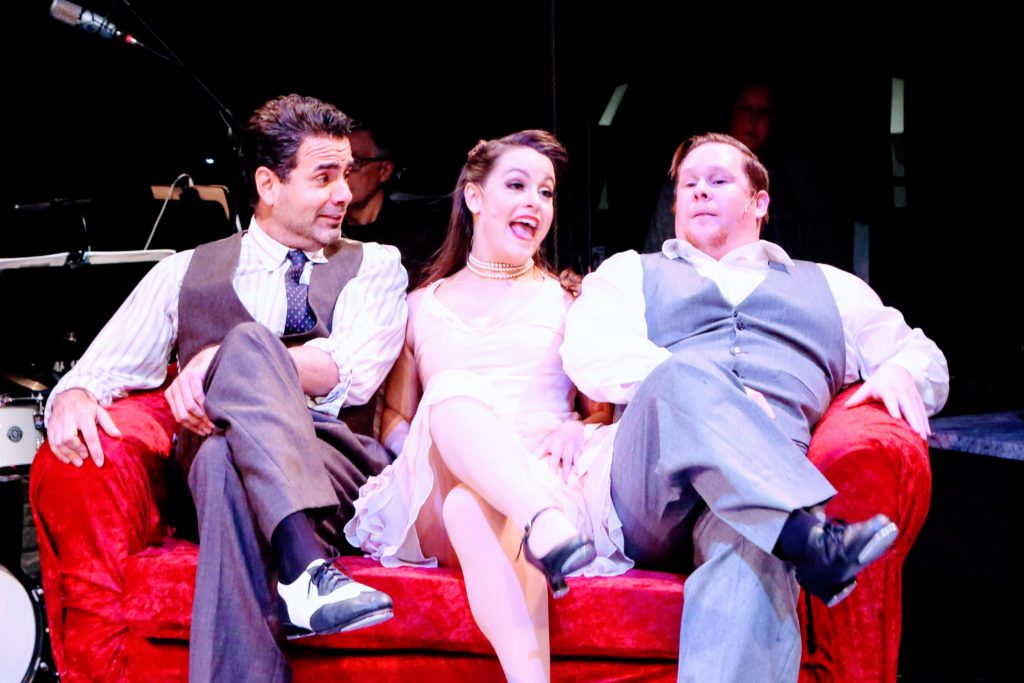
There are holiday shows that entertain, and then there are holiday shows that wrap you up—the kind that feel like stepping inside a snow globe of music, memory, and pure theatrical joy. Studio Tenn’s production of Irving Berlin’s White Christmas, now dazzling audiences at Turner Theater at The Factory at Franklin, is very much the latter. Under the direction of Patrick Cassidy, with a warm nod to the story’s cinematic origin, and powered by a starry, tap-happy cast, this beloved classic arrives with all the shimmer and heart audiences expect, plus a few luminous surprises. With opening night snow, showstopping choreography, and voices that echo the golden age of movie musicals, this White Christmas may well be Studio Tenn’s most enchanting holiday offering yet.

Cassidy’s interpretation of the fan favorite feels like exactly what a holiday musical should be—a big-hearted confection wrapped in nostalgia, polished to a glossy Broadway shine, and delivered by a cast who understand that style, sincerity, and spectacular dance numbers are the holy trinity of this beloved classic.

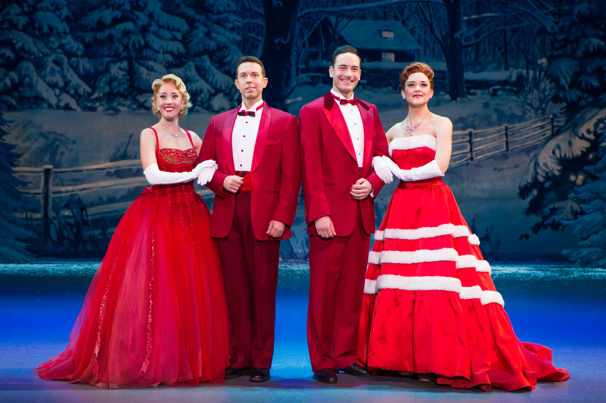
While White Christmas traditionally seems best suited for a larger venue, Andrew Cohen’s picture postcard scenic design works perfectly with Turner Theatre’s more intimate space. By presenting the inn and other key sets with a more minimalist approach, ie smaller set pieces on casters, while focusing the heft of his set design on the barn, which serves as backdrop to most of the larger all-in cast numbers, Cohen adds to the action, rather than drawing too much attention from it. Devon Renee Spencer’s sumptuous costumes, from those pink and green holiday costumes early in Act 1 and her take on Betty’s solo gown to the iconic finale garb are a wardrobe wonderland themselves. Darren Levin’s painterly lighting brilliantly coveys mood scene by scene. These craftspeople combined with Scott Brons’ lush musical direction, and the production glows from first tableau to that highly-anticipated, but much-loved final snowfall.

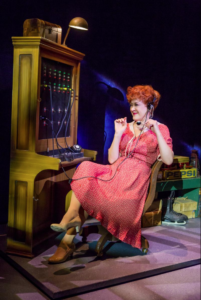
But the secret to White Christmas has always been its quartet at the center: two entertainers, two sisters, four hearts that collide, resist, and inevitably soften under falling snowflakes and Irving Berlin’s irresistible melodies. Studio Tenn’s leads deliver beautifully.
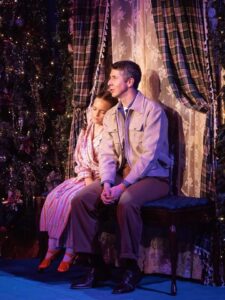
Ben Laxton, as the steady, dry-witted Bob Wallace, anchors the show with clean vocals and a grounded charm that never attempts to mimic Bing Crosby, but instead finds a sincerity and warmth all his own. His rendition of Count Your Blessings Instead of Sheep lands with a quiet power—simple, heartfelt, and beautifully sung.
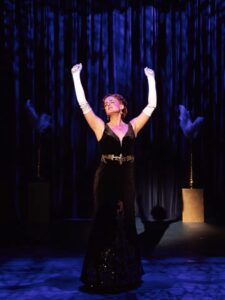
Laxton pairs especially well with Lisa Karlin’s Betty Haynes, whose rich, velvety alto brings a classic, old-Hollywood elegance to every number she touches. Her Love, You Didn’t Do Right By Me—a personal favorite moment of mine—was delivered with haunting restraint, channeling Rosemary Clooney without imitation and earning one of the night’s strongest responses.
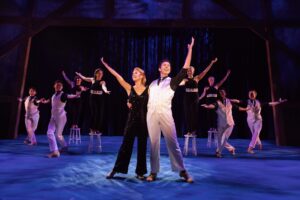
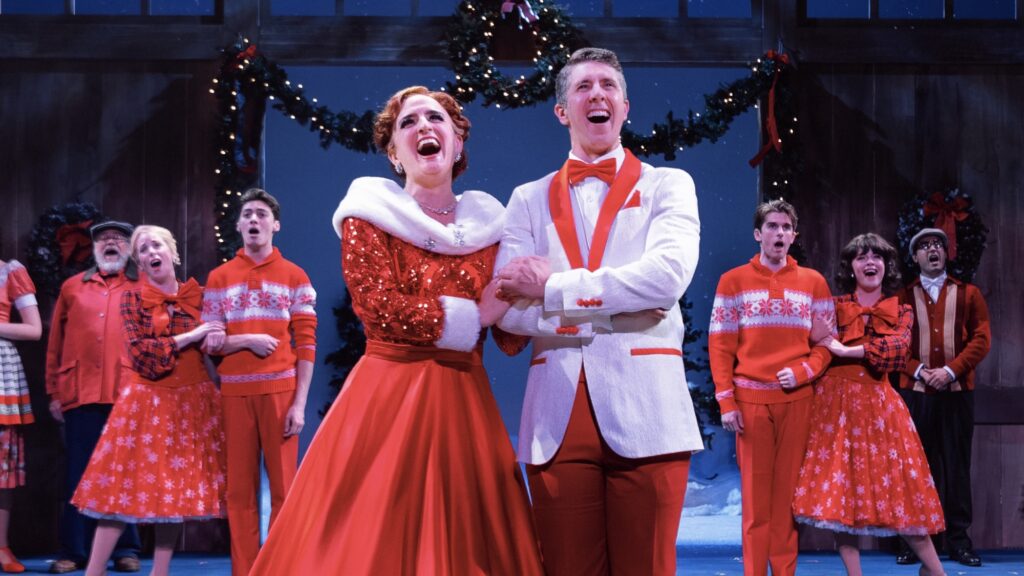
On the other side of the romantic coin, Jeremy Benton and Elizabeth McGuire ignite the stage as Phil Davis and Judy Haynes. Benton, not stranger to area theatre audiences, was last seen in Nashville as Bert in Nashville Rep‘s 2022 production of Mary Poppins, is also no stranger to the role, having performed in the National Tour of  White Christmas and incredible 7 seasons. Speaking of previous connections to the show, Benton’s on-stage love interest McGuire, who’s making her Studio Tenn debut in the show, has previously appeared in two regional productions of White Christmas. Not only do they match the flirtatious comedic energy required of the roles, they also jointly co-choreographed the production—an ambitious undertaking given the show’s dance vocabulary is steeped in the iconic work of Randy Skinner. The result? Pure joy. Their The Best Things Happen While You’re Dancing is dreamlike and precise, but it’s the Act II taptastic extravaganza I Love a Piano that stops the show cold…or should I say Hot! Benton’s dancerly ease and McGuire’s crisp, buoyant tapping create the kind of musical-theatre electricity audiences hope for in December. They honor Skinner’s lineage while injecting fresh life into every step.

And speaking of ensemble numbers, Snow—another of my personal from the film—receives a full-throated, all-in treatment here. The boxcar becomes a bustling world of anticipation and winter wonder, and the cast–in particular Richard Daniel as The Snoring Man–leans into every comedic beat and harmonic swell. It’s impossible not to smile.
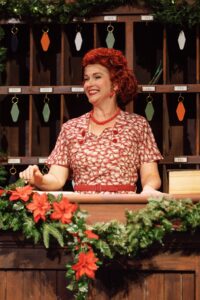
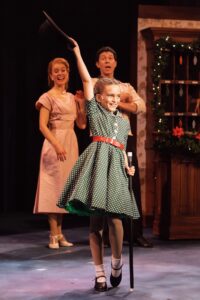
In comedic and heartwarming supporting turns, Megan Murphy Chambers (Martha) once again proves she can steal an act with one number. Her Let Me Sing and I’m Happy blends powerhouse vocals with effortless comedic bite—she lands every quip, every side-eye, and every belted high note with the precision of a seasoned pro. Belting lyrics like “if my song can start you laughin’/can start you cryin'”with humor and heart, rest assured MMC can and does! Chambers is a jewel in the crown of area theatre folk. She’s an entertainer’s entertainer. Equally at ease whether tasked with comedy or sincerity. Her scenes with Curtis Denham‘s General Waverly check all the marks perfectly hitting the highs of broad comedy and the more subtle genuine moments between two longtime friends. Speaking of, Curtis Denham brings a grounded gravitas to General Waverly, avoiding caricature and instead offering a touching portrait of a leader rediscovering purpose. Rounding out the primary cast is young Frankie Lou Lauderdale, who simply charms instantly as Susan (Preslee Siebert also plays Susan at some performances). Lauderdale delivers the pint-sized earnestness gives the storyline its heart. I’ve always found it interesting that in the original film, Susan is General Waverly’s adult granddaughter, but for the stage adaptation, Susan is presented as a young girl. I does indeed add a more family-oriented dynamic and Lauderdale’s Susan provides the right amount of youthful sweetness combined with moxie, as proven in her cheer-inducing ambitious rendition of Let Me Sing and I’m Happy.
As for the rest of the cast, the bench is equally deep: the aforementioned Richard Daniel’s more prominent role, Ezekiel will surely cause audience members to mimic his “AyYup” response throughout the holiday season. Douglas Waterbury-Tieman doubling as Mike McNulty and Ralph Sheldrake showcase his ease with frenzy and calm, respectively. Rita and Rhoda, the zesty pair of chorus girls continually vying for attention from Benton’s Phil, are played to the coquettish hilt courtesy of Anna Claire Perry and Maria Logan–charmed, I’m sure, INDEED!
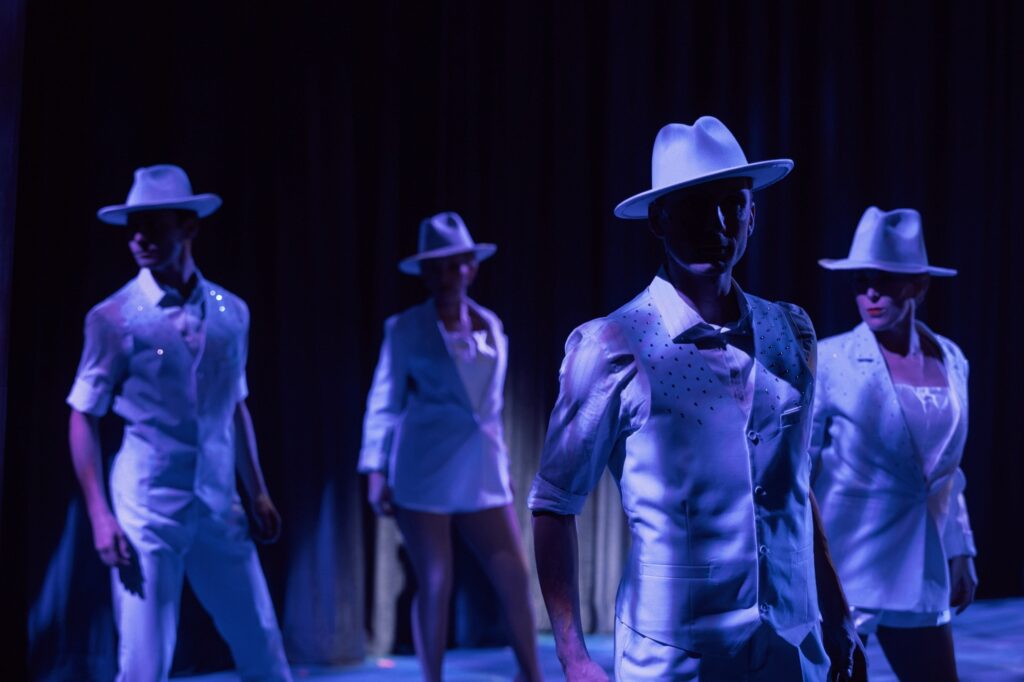
The ensemble—Kelsey Brodeur, Allison Little, Christine Toole, Alex Dee, Jordan Long, Isaiah Mayhew, and David Benjamin Perry—executes Benton’s and McGuire’s choreography with dazzling precision, tapping, swirling, and harmonizing through the show’s most technicolor moments.

Of the 2018 national tour, which featured Benton, in my review I once wrote of the show’s “glistening, gleaming, smiling, singing, happy, tapping, merry-making” energy, Studio Tenn’s White Christmas delivers all of that and more—scaled for intimacy but performed with unabashed Broadway ambition. Director Cassidy tips his hat to the timeless film, but never becomes trapped by reverence; this is a production that understands nostalgia is most magical when it feels freshly lived, not simply recreated.

By the final chorus of White Christmas, as snow drifts across Turner Theater and voices swell in perfect harmony, Studio Tenn captures the exact blend of warmth and spectacle that has made this musical a December tradition for generations.

A radiant, tap-happy holiday spectacular anchored by four outstanding leads, scene-stealing supporting turns, and choreography that honors the classic while blazing its own bright trail. As the final notes fade and the snow gently settles across the stage, Studio Tenn’s White Christmas leaves its audience warmed, smiling, and perhaps even humming an Irving Berlin tune on the walk back to the parking lot. It’s the rare production that satisfies longtime devotees of the film while welcoming newcomers into its cozy embrace—proof that nostalgia, when handled with artistry and heart, can still feel brand new. With exceptional performances, lovingly rendered design, and choreography that taps straight into holiday magic, this production is more than a seasonal outing—it’s a gift. And like all the best gifts, it lingers long after the curtain falls. As Laxton and Karlin‘s Bob and Betty suggest by song in Act 1, Count Your Blessings, and this year those blessings certainly include Studio Tenn‘s White Christmas.

Even before Opening Night I learned that the entire run of Studio Tenn‘s White Christmas is SOLD OUT, but here’s a holiday tip, CLICK HERE to purchase tickets to be part of the audience when Studio Tenn produces Broadway’s most cunning thriller, Deathtrap February 5-22 at The Factory at Franklin.

Wanna keep up with the latest from Studio Tenn? Be sure to check out Studio Tenn online at StudioTenn.com or on social media at Facebook, Instagram and X.

Interested in coverage for your latest entertaining endeavor? Click the contact page and drop me a note. You can also follow JHP Entertainment on Instagram and Facebook. Until then, #GoSeeTheShow!

Filed Under: Entertainment, Theare, Theatre Review Tagged With: 2025, Christmas, Irving Berlin, Irving Berlin's White Christmas, Jeremy Benton, Patrick Cassidy, Review, Studio Tenn, Theatre, Theatre Review, White Christmas

Theatre Review: ‘Dracula’ at Studio Tenn Sinks its Teeth into Gothic Perfection for the Halloween Season

October 10, 2025 by Jonathan

From the moment the lights dim at Turner Theatre at The Factory in Franklin and shadowed members of the ensemble began their hypnotic whispered “the blood is the life” mantra, Studio Tenn’s production of DRACULA (on stage through Sunday, October 26) takes a firm hold of its audience with a smart and tight grip. Under former Nashville Ballet artistic director Paul Vasterling’s direction, expertly aided by costume genius and set design phenom, Matt Logan, this staging of William McNulty’s adaptation (first made available in 2008) strides confidently between classic Gothic terror and gorgeous modern theatrical immediacy.

McNulty’s version—while drawing on the legacy of Deane & Balderstone’s earlier stage dramatizations of Bram Stoker’s 1897 novel—makes clear that DRACULA is not meant to be the one-dimensional romantic antihero so often seen in television and film adaptations, but equally a predatory force. In the playwright’s own notes, the Count is emphatically a predator, not a lover.  That conception is borne out vividly here. From start to finish, this is a show that relies equally on precision, mood, and theatrical craft.

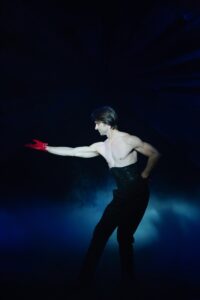
Jay Sullivan is chilling as Count Dracula. He doesn’t simply linger in darkness or seduce with tropes and languid charm; he strikes, unsettles, and stalks. Director Vasterling’s background in artistic movement are ever-present in Sullivan’s Dracula. Not only does he  enrapture the beautiful Mina (Savannah Stein) in a spell-binding dance early on, but with every jump-scare stage entrance, Sullivan’s Dracula moves with purpose. And yes, just for fun, there’s even a fully cloaked cape-tossing moment or two mixed in. Throughout, Sullivan’s Dracula’s presence is truly commanding. While he could easily fit the bill of the stereotypical matinee idol fanged icon, Sullivan is never merely handsome—remaining always horrifying.

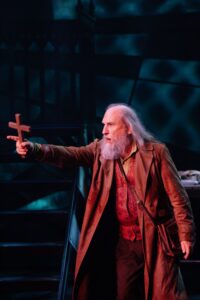
Opposite him, Sullivan’s performances is beautifully balanced by Brian Webb Russell who gives a gravely controlled performance as Abram Van Helsing, anchoring the heroic opposition with clarity of intent and moral weight. Russell’s Van Helsing offers the perfect amount of sharp intellect and righteous urgency. His verbal sparring with Sullivan’s Dracula are electric—two forces circling each other in a battle of will and belief.

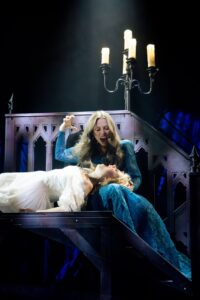
Morgan-Ellene Davis (Lucy Westphal) delivers one of the show’s most affecting arcs: her descent from bright innocence into vampiric torment is staged with heartbreaking clarity. Davis’ Lucy, once bitten, switches from demure to demonic with ease and believability.

As previously mentioned Stein’s Mina is simply breathtaking. As the Count’s earlier victim before the action of the play, Stein’s Mina is as enchanting as she is enchanted. A later scene involving Mina and The Child (Emily Stephens) is chillingly portrayed, evoking terror and tenderness as the undead Mina and The Child form a undead maternal bond that equally heartbreaking and horror.

Andrew Johnson (Dr. Thomas Seward) and Nathan Quay Thomas (Jonathan Harker) each ground the story in human urgency; their moments of fear, confusion, and resolve feel earned.

The trio of Lane Adam Williamson’s Renfield, DéYonté Jenkins’ Norbert Briggs and Catherine Gray’s Margaret Sullivan are tasked with carrying a bit of dark humor that helps temper the heavy suspense.

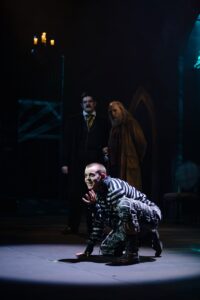
Williamson’s Renfield is the right mix of mania and pathos. Adding much-needed and unexpected light moments to the piece, Williamson’s Renfield is an absolute delight as he bounds around the stage in some sort of manic merriment. Truly a tour de force making the most of a role that is often portrayed simply as a fly-ingesting whack job, Williamson’s Renfield doesn’t just steal every scene he’s in, he steals it, strips it down for parts, rebuilds it and sells it to you again! 

Jenkins and Gray also shine as employees of Dr. Seward, offering a bit of fun and frivolity in their relationship. When (Spoiler Alert) Margaret falls under the Count’s spell, her maniacal side takes over and Gray plays it like that one bipolar friend who’s off her meds. Additionally, Jenkins’ Briggs, when interacting with the bothersome Renfield is quite fun to watch. 

On the subject of trios, the trio of brides—Savannah Stein, Jordan Tudor, and Emily Stephens—are ghostly and intoxicating. Their choreography, shifting entrances, and chilling harmonious wailings lend the production a spectral elegance.

Jonah M. Jackson as The Monster (the manifestation of Dracula’s cursed power) makes an audacious and visceral impression. His physicality in the climactic confrontation is bone-chilling, indeed.

Even the stagehands, cloaked in hood black, add to the seasonal spooktacular vibe.

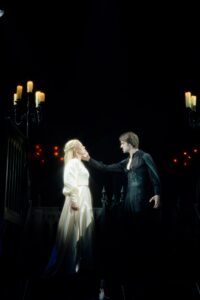
From a design aspect, Matt Logan is simply a wunderkind. As mentioned above, Logan wears dual hats as scenic and costume designer, and his aesthetic is one of controlled Gothic minimalism. Rather than busying the stage with heavy, ornate wooden furniture, Logan has chosen to present a relatively stripped-down set design. Throughout the action, a pair of rolling stair units are easily moved for each scene change by the aforementioned cloaked stagehands, each with a lighted candelabra for effects. More candle-esque lighting is seen hanging high above the stage. Upstage is draped with a velvety fabric that reflects the light and seems to change color as the action (and Stephen Moss’ lighting cues) intensifies. Immediately in front of the drape Logan has designed a seemingly simple but effective stained glass backdrop reminiscent of oversized windows often seen atop a grand staircase in gothic castles of days gone by. Rather than present it as a typical pattern of multicolored glass, Logan’s stained glass appears to be translucent and iridescent shards in a circular pattern, not unlike a spider’s web. Perhaps yours truly is just too into the vampire lore, but I fancied Logan’s backdrop symbolic on many levels. The shards of glass represent the broken lives affected by the Count’s reign. The spiderweb-like pattern, a nod to the web of deceit the Count inflicts upon his victims. The iridescent glass, perhaps a call-back to the age-old notion that vampires cast no reflection.

Then there’s Logan’s costumes. Every costume a work of art. The female cast members regal and radiant in finery fitting the period of the action. Van Helsing’s leather wardrobe, perfectly fitting for battle. Renfield’s asylum attire tattered and torn, but with a hit of glamour by way of some blinged-out blood spots. But it’s Dracula’s wardrobe that is truly glamorous and entrancing. From his first appearance bare-chested, but corseted in black to a black jacket accented with blood-red beaded erratic epaulets when he returns from a mysterious night right. (Gotta love that this particular look gets no mention within the context of the play, but is a jarring visual clue to the most astute audience member). The beauty of that costume not without merit, my personal favorite is yet another black jacket and pants combination. The jacket, from one side appears nothing special as the hem hits just below the actor’s waist, but from front view, its asymmetrical as the other side is more the length of a morning coat. Perhaps another visual clue of the duality of the wearer? Just when you think Logan’s used up his bag of costume tricks, in the final scene Dracula appears the most sparkly transfixing figure yet, but I’ll let you experience that on your own.

Elsewhere among the creatives behind the scenes, Stephen Moss’ lighting (with contributions from Rylee Hickey) is a constant revelation: pools of cold moonlight, abrupt slashes of red, deep shadows that swallow actors whole. Danny Northup’s sound design magnifies the small — a footstep, the soft drawn breath, the low hum in a crypt, mysterious howls in the night — and turns them into moments of tension. Eric Pasto-Crosby’s fight choreography delivers fight sequences that are not merely stagey but grounded: scrambles in dim light, body’s crashing violently (and realistically) against walls and tables, accentuating both subtle and substantial power shifts. Nettie Mae Craft’s work as dialect coach ensures an authenticity to the time the action takes place. Meredith Schieltz and the wig and makeup team and dressers intensify the look without theater-of-the-grotesque excess, sustaining consistency even through blood and transformation. Props by Charlie Webb, scenic artistry by Lauren Walters, and the carpentry under Brandon Penry all contribute quietly but indispensably—when a creature of the night beckons, a window smashes, or the coffin appears, you believe it.

What impresses most about this DRACULA is how it leans into its horror while refusing sentimentality. McNulty’s choice to portray Dracula as predator (not tortured romantic) is honored here. That clarity gives other elements room to breathe: the trauma of Lucy’s affliction, Mina’s struggle with memory and agency, Van Helsing’s moral burden, Seward’s scientific disbelief challenged by the impossible.

The play’s structure (multiple fast scene changes, eerie transitions, raising stakes) is handled deftly. The pacing is smart: you never lose tension, but you’re given moments to breathe, to register dread, before it ratchets upward again. The final confrontation is, yes, wild and shocking — and fully satisfying.

Studio Tenn has earned a reputation for ambitious, emotionally rooted theater, and this DRACULA fits right in. It reminds me of their earlier presentations of Frankenstein and The Elephant Man. The earlier pieces ask “how do we see others?” While DRACULA  asks “what does it mean to be unseen, to prey and be preyed upon?” Each, done exceptionally well, move past spectacle into something more haunting. In DRACULA, they pivot to horror, but retain that same appetite for theatrical integrity.

The fact that The Elephant Man and Frankenstein focused on what it means to be seen, to be judged by appearances—and DRACULA similarly addresses what is hidden, what preys beneath the surface—makes them complementary bookends in Studio Tenn’s always forward-moving trajectory.

Studio Tenn’s DRACULA is a production about control—control of terror, of space, of silence, and finally, of life and death. Its success lies in restraint and focus: the cast, led by Sullivan and Russell, deliver committed and precise performances; Logan’s design and the entire technical team generates atmosphere that lives in your spine; and Vasterling’s direction always keeps more in shadow than in full reveal. After all, it’s what we don’t see that scares us the most.

If you’re looking for a Halloween theater experience that is both smart and visceral, Studio Tenn’s DRACULA is more than just a seasonal thrill—it’s a dark, disciplined piece of art. CLICK HERE for tickets and showtimes.

Following the drama of DRACULA, Studio Tenn lightens the mood with a PINK GOES GOOD WITH GREEN: A Cabaret Fundraiser for Studio Tenn at TPAC on November 8. Broadway stars Carrie St. Louis and Teal Wick, who both spent time on The Great White Way in the mega-hit WICKED, as Glinda and Elphaba, respectively, will headline this one-night-only event. CLICK HERE for tickets or more info. Then, it’s a decidedly different holiday offering when Studio Tenn‘s Season 16 resumes as they present IRVING BERLIN’s WHITE CHRISTMAS, which happens to be my personal favorite musical…not just holiday musical, but my favorite musical of any genre and any era! CLICK HERE for tickets or more information.

Wanna keep up with the latest from Studio Tenn? Be sure to check out Studio Tenn online at StudioTenn.com or on social media at Facebook, Instagram and X.

Interested in coverage for your latest entertaining endeavor? Click the contact page and drop me a note. You can also follow JHP Entertainment on Instagram and Facebook. Until then, #GoSeeTheShow!
Filed Under: Entertainment, Theare, Theatre Review Tagged With: 2025, Dracula, Franklin, Halloween, Holiday, Live Performance, live theatre, Nashville, Review, Studio Tenn, Theatre, Theatre Review

Theatre Review: Franklin Theatrical Fellowship’s ‘Guys and Dolls’ Isn’t Just a Lucky Roll—It’s a Winning Hand; On Stage at Studio 615 thru July 20

July 16, 2025 by Jonathan

Franklin Theatrical Fellowship ups the ante with its high-energy, high-stakes production of GUYS AND DOLLS: AN IMMERSIVE THEATRICAL EXPERIENCE at Studio 615 as they transform the space into the hustle and bustle of 1950’s Biltmore Garage, lighting up the stage with a vivid blend of Broadway polish, classic charm, and heartfelt performances. Under the direction of Melanie Sutton, this beloved musical comedy overflows like a collection plate…or a bookie’s IOUs…with style, sincerity, and a whole lot of dicey fun.

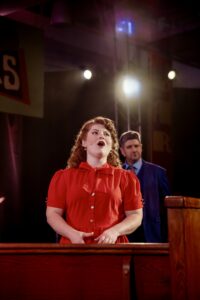
At the center of the action is Philip David Black as the suave, gambling man Sky Masterson. Black brings the expected effortless charisma mixed with the perfect blend of uncertainty that only unforseen love can cause. His Luck Be A Lady is smooth and sweet, showcasing his ability to walk the line between rogue and romantic with ease. His chemistry with Rebekah Howell’s Sarah Brown is electric, especially in the Havana sequence where sparks (and drinks) fly. Howell, ever the vocal powerhouse, lends depth and sincerity to the morally upright mission worker. Her rendition of If I Were a Bell, a charm-filled Act 1 highlight.
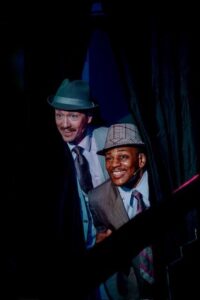
As Nathan Detroit, Austin Correll brings an easy likability, capturing both the desperation and devotion of a man balancing his floating crap game with a 14-year-long engagement. Savannah Stein as the object of Nathan’s affections/objections, Miss Adelaide, is a true comedic standout, leaning brilliantly into the always-crowd-pleasing nasal New York twang and physical comedy with glorious abandon. Her performance of Adelaide’s Lament earns big laughs and even bigger sympathy for the much-delayed future Mrs. Detroit.

It comes as no surprise that Brian Charles Rooney’s Nicely-Nicely Johnson is a true showstopper. With impeccable comic timing and a dynamite voice–gotta love that sopranista range–Rooney brings down the house in the rollicking Sit Down, You’re Rockin’ the Boat—arguably the night’s most rousing number. He’s well matched by Jahi Emaud’s Benny Southstreet, whose swagger and harmony work are equally sharp. If you’re reading this, Studio Tenn, I’ve got your Wallace and Davis cast for your upcoming holiday production of White Christmas right here with these two!
Max Fleischhacker (Harry the Horse), James Wier (Scranton Slim), Matthew Hunter Hayes (Rusty Charlie) and especially the flask-sneaking Trayton Kaminski (Brandy Bottle Bates) round out the gang of gamblers with gusto, each adding unique flair to this criminally fun ensemble.

As for this productions  uptight citizens brigade, Brian Best offers a warm, paternal Arvide Abernathy, particularly touching in More I Cannot Wish You, while Jordan Tudor delivers authority and compassion, with a nice dose of humor for good measure, as General Cartwright. Katie Webb as Agatha and James Weir (doing double duty on the side of good as Calvin) round out the God squad of Salvation Army-esque Bible-thumpin’, cymbal-bangin’ do-gooders.

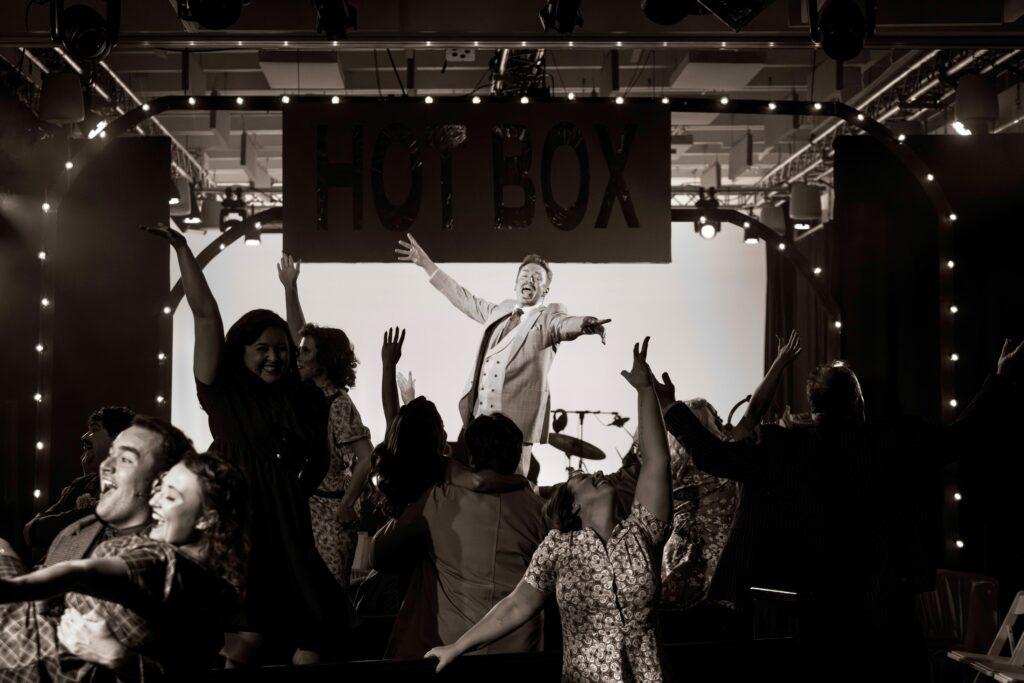
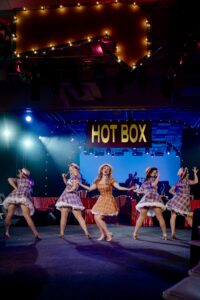
The Hot Box numbers are just plain fun, led with style and precision by Kelsey Brodeur (also serving as dance captain), alongside the effervescent Madison Crosby, Emily Stephens, and Allie Spengler. Their ensemble work perfectly sizzles thanks to playful choreography courtesy Allison Little, who keeps the movement crisp and era-appropriate while still leaving room for individual character. With Stein’s Adelaide, the Hot Box Girls’ performance of A Bushel and a Peck (one of my personal favorite Doris Day tunes, recorded the year the Broadway musical debuted) wonderfully presents the flitatious innocence of such numbers from that era.
Rounding out the cast, the towering Josh Kiev makes for a delightfully menacing notorious gambler, Big Jule, and Sawyer Latham’s by-the-book police Lt. Brannigan provides a nice comedic contrast.

Visually, the show pops with Jim Manning’s versatile, Old Hollywood-style set design. You know those big mid-centry musical movies…1955’s GUYS AND DOLLS being one of them, where between scenes there’s a montage of neon signs and marquees? Well, to my estimation, Manning pays perfect homage with areas of the immersive stage lit with such signage. With minimal set pieces…literally a few church pews, a newspaper box and the occasional chair, Manning’s set design seemlessly transforms from mission hall to Havana nightclub to big city alleyways with fluid ingenuity. Enhancing the show’s visual bliss, Melissa Durmon’s vibrant, mid-century-perfect costumes are a feast of pinstripes, sequins, and Salvation Army dress blues…well, reds. Kelly Scheuman’s lighting design and Jonah Burch‘s sound design ensure that every peak, from solo moments to ensemble showstoppers, hits just right.

With Scott Brons providing skillful musical direction, the band (Brons on keyboard, Max Dvorin and Gus Arnold on reeds, trumpeter Sam Merrill, trombonist Desmond Ng, Dan Kozlowski on drums and bassist Andy Byrd) keeps the tempo swinging and the harmonies lush throughout.

As FTF’s production’s full title suggests, GUYS AND DOLLS: AN IMMERSIVE THEATRICAL EXPERIENCE is being touted as an immersive night of theatre. To that end, patrons are encouraged to arrive an hour before curtain to take part in a little pre-show antics that include a backstage peek where the Hot Box girls ready themselves, a couple of casino tables for a quick roll of the dice and a chance for luck and some in-character interaction with the cast. As for the immersive aspect of the show itself, translation: think in-the-round or blackbox, as the creative team has cleverly included VIP seating (two pink velveteen banquettes and cocktail tables), as well as a Velvet Rope seating option and a Saints section (church pews) in addition to their general admission seating to up the ante for audience members, and to bring them close to the action. Big laughs, big voices, and a whole lot of Broadway-worthy brass make this a sure bet for summer theatergoers.

Franklin Theatrical Fellowship‘s GUYS AND DOLLS: AN IMMERSIVE THEATRICAL EXPERIENCE continues at Studio 615 (272 Broadmoor Drive) through Sunday, July 20. To witness part of the pre-show immersive aspect, plan on arriving at 6:30pm for the Thursday, Friday and Saturday evening shows and at 1:30pm for the Saturday and Sunday matinee performances. Further adding to the immersive vibe of secretive gambling night, ticket prices are as follows: High Rollers Velvet Booth Section: $90.62, High Rollers Velvet Rope Section: $85.42, Holy Rollers Velvet Pew Section $80.22 and General Admission: $64.62. All ticket prices mentioned include fees. CLICK HERE for tickets or more information.
Following GUYS AND DOLLS, FTF will present THE DIARY OF ANNE FRANK, onstage at FSD PERFORMING ARTS CENTER in Franklin, TN from November 29-December 7. 2025. To keep up with what’s next for FTF, CLICK HERE or follow them on Facebook and Instagram.
As always, if you wanna follow JHPEntertainment to find out who I’m chatting with for my next Rapid Fire Q&A, or for my take on the latest local and national theatre, music and movie offerings, follow us on Facebook, Insta and X.


Filed Under: Theare, Theatre Review Tagged With: 2025, Brian Charles Rooney, Franklin Theater Fellowship, FTF, Guys and Dolls, Jim Manning, Live Performance, Musical Theatre, Rebekah Howell, Review, Theatre, Theatre Review

Theatre Review: It’s Laughs On at The Keeton Dinner Theatre as their production of ‘Noises Off’ continues thru April 28; Special Show Only tickets available April 25

April 25, 2024 by Jonathan

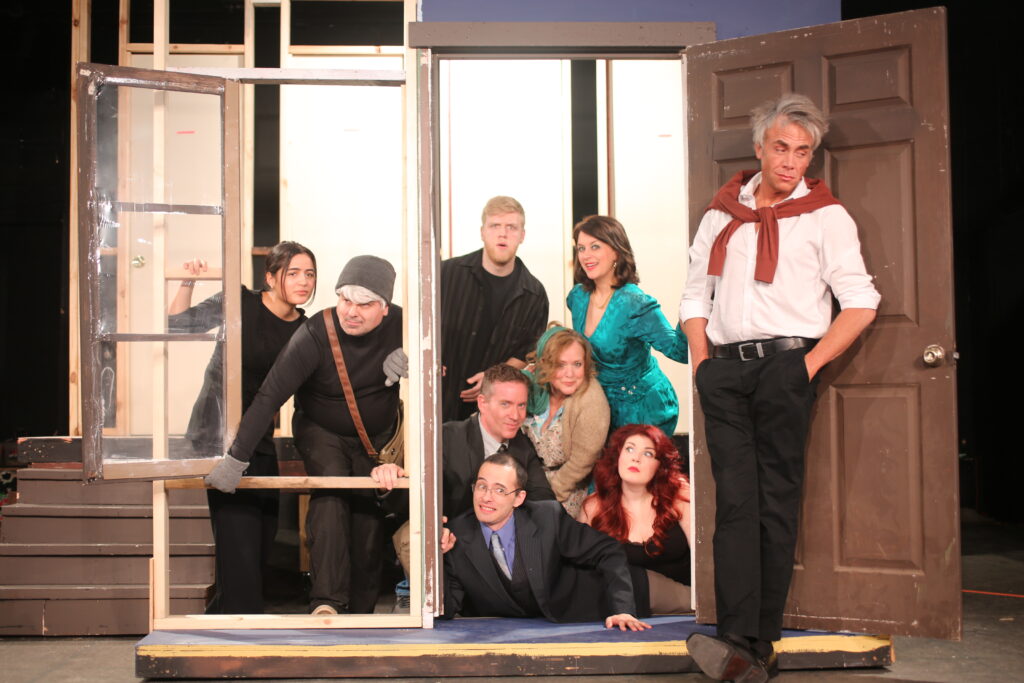
The cast of The Keeton’s Noise Off (photos by Charles A. Clay III/courtesy The Keeton Dinner Theatre)

A hilarious comedic farce, Noises Off, on stage at The Keeton Dinner Theatre (108 Donelson Pike, Nashville, TN) thru Sunday, April 28, is offering a specially discounted show only performance Thursday, April 25 to usher in the final weekend of shows thru Sunday, April 28. More about that after my review.

The Keeton Theatre’s current offering gets its title from the backstage theatre direction equivalent to a movie soundstage’s “quiet on the set”. Noises Off employs the clever twist of going behind the scenes of a theatrical production to reveal the interpersonal relationships of the actors of a fictional play called Nothing On. Of course theatrical comedy farces predate the now-classic 70s sitcom Three’s Company by decades, but in my mind, and because that series was among my introductions to slapstick comedy, that’s what I think of whenever I see Noises Off.

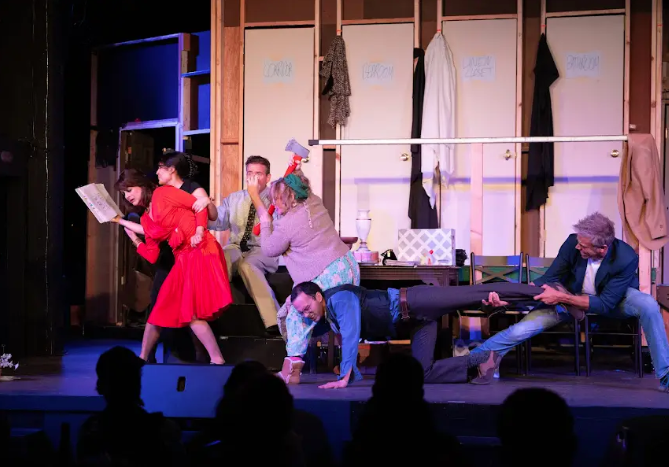
Considering a two-story set that revolves between acts to reveal the antics backstage is integral to the show’s comedic appeal, I gotta admit, I had misgivings when I heard that The Keeton was including Noises Off in their current season. Misgivings because the venue itself doesn’t allow for a full two-story set. Of course when Noises Off was announced, The Keeton was under previous administrative and creative guidance and the current managing administrator, Donna Driver simply inherited the season. That said, upon arrival at The Keeton, I was pleasantly surprised with how set designer, Kevin Driver had adapted the usual two story set to a workable split-level, with only a few steps leading to the upstairs rooms.

Presented in three acts–all actually being various performances of the first act of Nothing On , the show within the show, the audience is first invited to a bird’s eye view of a late-night final-dress rehearsal of Nothing On.

The premise of the show within the show finds half a dozen characters unknowingly ending up at the same supposed vacant house for what they think will be a quiet, uneventful weekend. The rest of the plot of the show-within-the-show doesn’t really matter as the audience never gets to see what happens beyond the first act.

The Keeton’s Noises Off is co-directed by Aaron Gray and Caylin Maguire. Not sure why this show requires co-directors as it’s a pretty straight-forward comedy and much of the action is clearly laid out within the mishaps as written in the script. Nonetheless, it’ll be a cute story at their upcoming wedding as the co-directors are indeed engaged, as revealed in the directors’ note in the program.

During the first of two intermissions, crew rotates the ‘house’ to reveal the backstage wooden facade of the set, a visual hint of the next Act One’s behind-the-scenes action, in which the audience is privy to backstage antics as relationships between the actors begin to unravel during a matinee performance about a month into the show’s run. I love that during the set change intermission, the audience is handed out a second playbill, this one for Nothing On, which includes character headshots and bios of the fictional actors who make up the troupe performing Nothing On. Confused? You won’t be once you see the show.

Another intermission, and the set switches back to the front view of the house as we once again see the Act One action of Nothing On. It’s even more of a jumbled mess as the actors have had just about as much as they can stand of their fellow cast mates antics and ever-changing love-triangles and everything comes to a hilarious head during the final leg of the tour.

From British playwright Michael Frayn, the show was originally mounted in the early 80s (so, yes, my earlier Three’s Company comparison actually tracks). The show’s 1984 Broadway debut garnered four Tony-nominations. Its 2001 revival received two noms, star Katie Finneran taking home the award for Best Featured Actress. The show’s 2016 revival snagged another four nominations, including a mention for Best Revival.   

Of course wider audiences might be more familiar with the film adaptation. In 1992, a movie version of Noises Off was released. The star-studded romp featuring Carol Burnett, Michael Caine, Christopher Reeve, John Ritter (again, my Three’s Company reference makes even more sense), Marilu Henner and others.

For The Keeton’s presentation, co-directors Maguire and Gray have enlisted a great mix of newcomers and seasoned performers including  Jeremy James Carmichael, Ann Street-Kavanagh, Cameron Kendrick, Aleah Christian, Dylan Kim, Grace Gaddy, Nathan Basner, Emmerson Masenheimer and Kevin Waker.
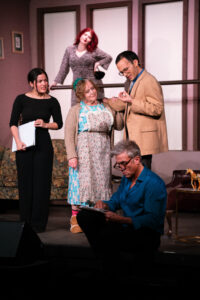
Carmichael plays Nothing On’s director, Lloyd Dallas, and therefore the only cast member of Noises Off who doesn’t tackle a dual role in the show within a show. Carmichael’s Dallas is played with the splendid mix of a disenchanted task-master who’s also a bit of a lothario. To that latter end, and complicating things a bit, Lloyd is currently romancing his assistant stage manager, Poppy Norton-Taylor (enjoyably nervously played by Emmerson Masenheimer) as well as his ingenue, Brooke Ashton (vapidly, but vixenly personified by Grace Gaddy) while also throwing a occasional ego-stroking flirtatious bone to his aging star (Ann Street-Kavanagh). Kudos to the co-directors for the choice of having Carmichael’s Lloyd move from place to place among The Keeton’s Dinner Theatre patrons, especially during the first act, as it truly adds to the illusion that we’re sitting in on a dress rehearsal.

Oh, and speaking of the dinner aspect…prior to the show’s start, patrons are served salad and an entree of Chicken Alfredo with a side of Broccoli, Bread and Chocolate Cake. While the meal is enjoyable, as always The Keeton’s food is a tad on the bland side. I chalk that up to The Keeton being housed in same building as Donelson’s Fifty Forward facility at Donelson Station, a large majority of their patrons do skew slightly more mature, so the food is often prepared without the advantage of seasonings. Not to worry, a dash of pepper from the shaker and it’s a perfectly delicious meal. Heck, being Nashville’s only remaining dinner theatre, I’ll take it.

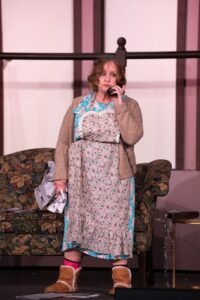
Now, back to the show…From the character’s initial entrance, Lloyd offers the first broken fourth wall as he stops the action on stage when one of the actors misses a prop cue. Carmichael’s Lloyd bellows from the audience and the fun begins. The actress Lloyd chastises for missing her cue is none other than Ann Street-Kavanagh, as middle-aged actress Dotty Otley, who’s playing the housekeeper in the show-within-a show. Street-Kavanagh is perfect for the role of Dotty as she’s never better than when she’s playing it a bit confused and daft. Like Lloyd, Dotty is also embroiled in a love triangle. All Dotty’s Nothing On character wants to do is put her feet up and enjoy the the telly. Oh, and did I mention she enjoys a snack of sardines? Worth noting, since a plate of the fishy snacks result in much of the show’s hilarity when left about, or taken off, cluing the other visitors in Nothing On that they’re not alone in the house.
Cameron Kendrick’s Frederick Felllows, an actor with a bit of a pious attitude, makes up the second-third of Dotty’s aforementioned love triangle. Given to nosebleeds and dropped trousers, Kendrick’s Freddy provides the audience with still more laughter.

Nathan Basner as Nothing On‘s overworked, frazzled Stage Manager, Tim Allgood proves quite entertaining as he holds his own in spite of the character’s limited stage time. A newcomer to The Keeton, Basner is a familiar face to patrons of nearby Pull-Tight Players. It’s enjoyable to see that instead of becoming completely flustered when the entire play goes awry, Basner’s Tim just seems to roll with the punches.

Another Keeton newcomer, Dylan Kim plays Garry Lejeune, the final third in Dotty’s love triangle. Kim’s physicality as Garry provides some of the show’s most slapstick moments.

Next is Aleah Christian as Belinda Blair, an actress who’s cheery disposition serves her well, as she becomes the company’s shoulder to lean on while simultaneously learning everyone’s secrets, including who’s romancing whom…and sharing them when it seems to serve her best. There’s something about Christian that reminded me of Leslie Ann Warren’s portrayal of Miss Scarlett in the movie Clue. Christian, if you’re reading this, Nashville Rep’s doing Clue in September, just saying.

Rounding out the cast is Kevin Walker as Selsdon Mowbray, a seasoned actor with a bit of a drinking problem whom director Lloyd has hired as a favor. Typically the role of Selsdon, as written, is played by a much older actor. The unfortunate eyebrow pencil lines attempting to show wrinkles a bit of a misstep. Nonetheless, Walker’s Selsdon, with overly dramatic deliver, provides many laughs thanks to him absent-mindedly missing his cue or is simply missing from set altogether, leading the remainder of the cast to search for him. The character’s penchant for booze also leads to more laughs. In an effort to keep him sober, his fellow cast mates find his hidden booze stashes, and re-hide them, then various members find them, take a nip or two, and get a bit tipsy in the process.

Filled with enough mistaken identities, pratfalls, near-misses, misplaced sardines and plenty slamming doors to keep the audience laughing for the duration, The Keeton‘s Noises Off wraps its run with shows now through Sunday, April 28. Performances Thursday-Saturday begin at 7p.m. with dinner seating begging at 6p.m. Friday and Saturday. Sunday’s final performance begins at 2p.m. with a 1p.m. lunch served. Dinner and Show tickets are $35/Adults, $25/Children. The Keeton does offer an entree upgrade of Salmon for $42/Adults or $32/Children. CLICK HERE for tickets.

The Keeton has announced a special SHOW ONLY TICKET DISCOUNT for Thursday, April 25. For tickets to Thursday’s Show Only performance, call the box office at 615.231.1231.

Next up at The Keeton is The Music Man, with performances June 14-30. CLICK HERE for tickets or more information.

To keep up with the latest from The Keeton Dinner Theatre, follow them on Facebook, Twitter and Instagram.

Interested in coverage for your latest entertaining endeavor? Click the contact page and drop me a note. You can also follow JHP Entertainment on Instagram and Facebook. In the meantime, #GoSeeTheShow!


Filed Under: Entertainment, Theare, Theatre Review Tagged With: . Jeremy James Carmichael, Ann Street-Cavanagh, live theatre, Nashville, Nashville Theatre, Noises Off, Review, The Keeton, The Keeton Dinner Theatre, Theatre, Theatre Review

Theatre Review: National Tour of ‘Funny Girl’ playing Jackson Hall now thru January 7 as TPAC says “Hello Gorgeous” to second half of their 23/24 Broadway Season

January 4, 2024 by Jonathan

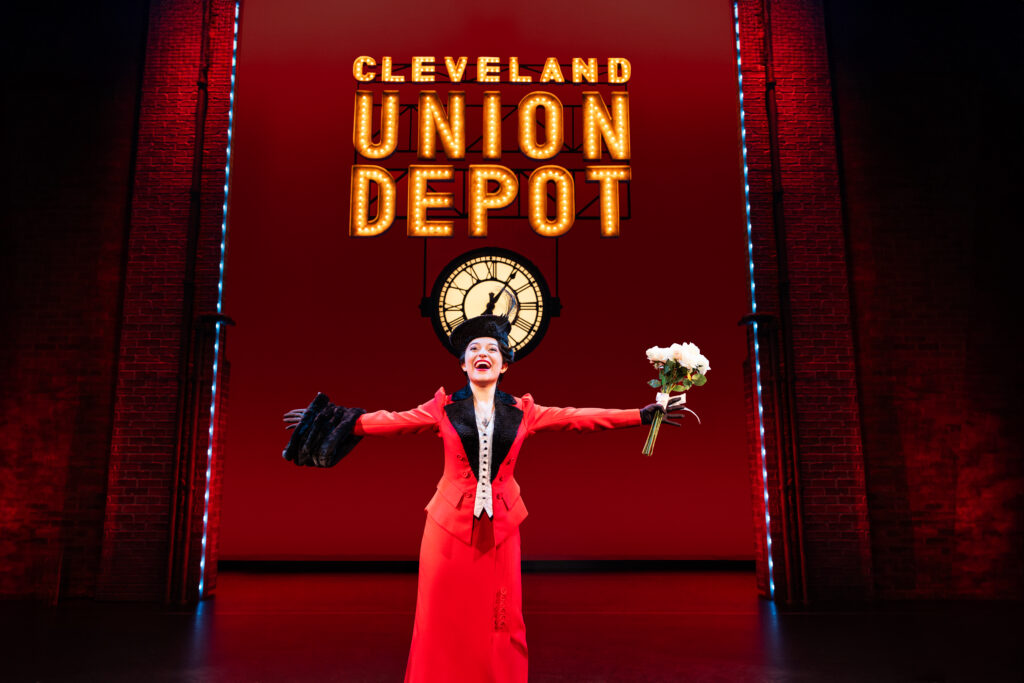
Telling the highly fictionalized story of vaudeville queen Fanny Brice, the National Tour of recent Broadway revival musical Funny Girl opened the Nashville tour stop Tuesday night at Tennessee Performing Art Center’s Jackson Hall, not only kicking off the new year, but also the second half of TPAC’s 23/24 HCA/TriStar Broadway at TPAC season.

While there’s definitely a percentage of the audience who are no-doubt devotees of the original 1964 Broadway debut of Funny Girl, it’s subsequent 1968 film and Barbara Streisand, who starred in both, it’s been more than half a century since Streisand laid claim to Fanny Brice. There’s likely just as many who are experiencing this show for the very first time, thanks to 2022’s Broadway revival that features a reworking by Harvey Fierstein of Isobel Lennart’s original book of the musical. I count myself among the latter. At the risk of having certain ‘memberships’ revoked, I’m just gonna admit it from the get…I’ve never been the biggest Streisand fan. There. I said it. Heck, I wasn’t even 100% sure I’d ever seen the film adaptation of Funny Girl and I’d certainly never seen Funny Girl on stage. Being a fan of Brice’s era of vaudeville, in particular Ziegfeld and his follies—mostly because of my obsession with Lucille Ball and the comedic similarities between Ball and Brice—I have fallen down more than one internet rabbit hole searching out the few rare clips of Brice, so I was familiar with her story and  I knew the songs from Funny Girl. I mean how can you be a theatre nerd and not know the music of Jule Styne and lyrics of Bob Merrill featured in one of the most beloved musicals of all time, right? Here’s the thing though. None of that mattered once the familiar notes of the Overture began to swell from the orchestra pit as conducted by Elaine Davidson. With each note, my anticipation grew and I somehow instinctively knew I was in for a grand night of musical theatre.

From the moment Katerina McCrimmon takes the stage, she IS Fanny Brice. She’s got the period-authentic New York dialect, the exaggerated facial expressions, but most of all, she’s got the voice. Ok, so the voice might be more what audiences expect thanks to the aforementioned Streisand portrayal, but I’m here to tell you McCrimmon makes the character her own while carefully maneuvering through, and well beyond what could easily be brushed off as an impression. Throughout the show, including more familiar territory of musical moments like I’m the Greatest Star, Don’t Rain on My Parade and People, and my personal favorite, His Love Makes Me Beautiful, McCrimmon vocal range, strength and ability prove time and time again she’s the perfect powerhouse to introduce Fanny Brice to a whole new generation of musical theatre fans.
It’s not just McCrimmon’s talents as a singer that reels you in, as she equally adept showcasing the funny and the girl. When scenes call for McCrimmon to honor Brice’s physicality as a comedic entertainer, her facial expressions and body language rival those of greats of the craft like Ball and Carol Burnett. When the plot goes deeper, McCrimmon steps it up and evokes emotion, not only in her performance, but in the audience reaction. Case in point, at the end of Act 1, when McCrimmon exquisitely belts out the show-stopping Don’t Rain on My Parade, I was frankly surprised the entire audience didn’t bound to their feet for a pre-intermission Standing O.

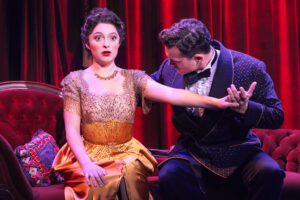
While I would be satisfied to sit in a theatre and just witness McCrimmon in a solo performance and be completely satisfied, of course she isn’t alone. Guess what? The entire company is quite brilliant. While the real Fanny Brice was thrice married (I told you I’ve been down my share of Fanny Brice rabbit holes) Funny Girl takes place after husband number one and focuses on Brice’s life and tumultuous relationship and ultimate marriage to husband number two, Nicky Arnstein, played handsomely by Stephen Mark Lukas. I say handsomely because…have you seen his social media? Thanks largely to the way Funny Girl is written, and the ‘character’ of Nicky, in particular, we are to believe that Arnstein was matinee-idol good-looking, giving dual meaning to the infamous line, “Hello, Gorgeous”. In reality, Arnstein was tall, lanky and not what you’d call traditionally handsome. But back to Lukas and his matinee looks. Like his leading lady, he’s also go talent to back it up. Under the show’s director, Michael Mayer’s watchful eye, I thoroughly enjoyed every aspect of Lukas’ portrayal of Arnstein. Not only does he look like an Old Hollywood movie star, he even sounds like one. His vocal delivery, in speaking and in song, sound as though you’re hearing him through a megaphone, with a deep, pure and enchanting vibrato.

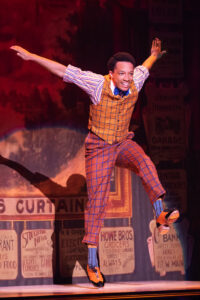
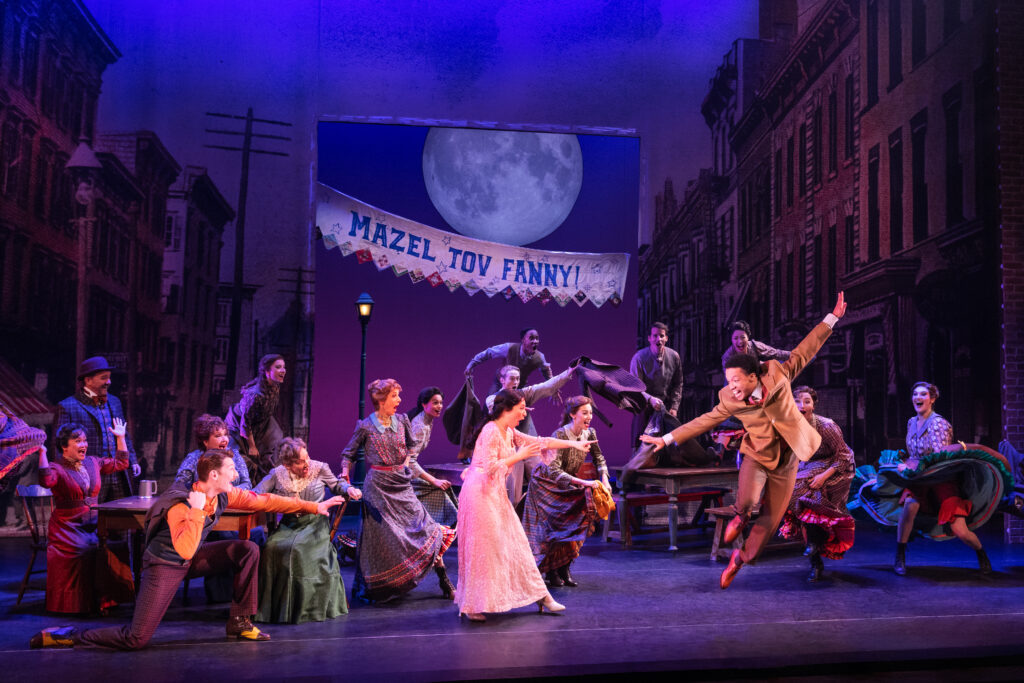
Izaiah Montague Harris plays the always in-step and dependable Eddie Ryan, a dancer/choreographer friend of Fanny’s who’s always there to help her with her career and pick up the pieces when Nicky is out of step. When I say Harris’ Eddie is in-step, I mean it. One of the best non-Fanny-centric moments of the show features Harris in a tap-tactic dance sequence. Which reminds me, kudos to the show’s costume designer, Susan Hilferty. Yes, all of Fanny’s period-perfect costumes are fabulous, but it was during Harris’ tap number that I notice a wonderfully clever costuming detail. Hiferty has sewn the occasional rhinestone throughout the pant legs of Harris costume, which catch the light of his fancy footwork and draw the eye throughout the dancer’s entire body, allowing those of us who picked up on this seemingly random detail the joy of watching the full mechanics, precision and skill of the dance.
While the entire ensemble is simply marvelous, other stand-out performances come courtesy a trio playing slightly older characters: Mrs. Brice, Mrs. Strakosh and Mrs. Meeker, played respectively by Barbara Tirrell, Eileen T’Kaye and Christine Bunuan. Tirrell, (who’s stepped into the role of Mrs. Brice while original tour cast member Melissa Manchester recuperates from recent surgery) is the perfect mensch of a mom to McCrimmon’s Fanny. She gets her comedic time to shine in scenes with T’Kaye’s Mrs. Strakosh and Bunuan’s Mrs. Meeker as three old-neighborhood friends who spend their time playing cards, gossiping and bragging about their children’s accomplishments. In their memorable stage-time, T’Kaye and Bunuan charm the audience with their relatable portrayals of ladies everyone grew up knowing. The trio get their own musical moment early on with the mother-knows-best, albeit antiquated tune, If A Girl Isn’t Pretty.

Walter Coopage as Florenz Ziegfeld and David Foley, Jr. as Tom Keeney, two men instrumental in Fanny’s stage success each show different sides of men in power, Foley’s Kenney presented as a bit hard-nosed and doubting Fanny’s appeal, while Coopage’s Ziegfeld is seen as the nurturing father figure Fanny seemed to be missing. More potentially useless/useful rabbit hole info…Fanny’s father was a good provider, they didn’t live on seemingly downtrodden Henry Street as one tune suggests, but he was a bit of a drunk and her mother ran the family saloon businesses. What’s more…the notoriously hilarious Follies scene in which Fanny’s bride apparently got the marriage and family order confused…never happened. As I previously admitted being a Lucille Ball fan, something tells me that sequence was created more for laughs a la the I Love Lucy ‘showgirl’ sequence, than based in reality, but I digress.

In addition to the showgirl bridal number, the ensemble proves their mettle as they tap their way to thunderous applause, with another comedic turn by McCrimmon in yet another tap number, the all-in Rat-Tat-Tat-Tat midway through Act 2. Who are You Now and You’re a Funny Girl see Lukas’s Nicky in a more mature light than the devil-may-care flamboyant gambler he’s playing earlier on, and his voice is up to the challenge.

McCrimmon also gets the chance to show her character’s maturity in the show’s closing number, The Music That Makes Me Dance, during which we get another chance to witness McCrimmon’s vocal goddessness. That lasting final note! Wow…just wow!

Sorry to end my review with a bit of a Spoiler Alert, but during the curtain call, the whole company breaks out into one last chorus of People, and as they gesture towards themselves and then the audience during the lyrics “People who need people are the luckiest people in the world”, they reveal an all new meaning to those words…as performers, they need the audience, and therefore feel lucky to have us there. Guess what, Funny Girl? We, the audience are the lucky ones.

The National Tour of  Funny Girl at TPAC’s Jackson Hall continues with shows through Sunday, January 7. CLICK HERE for tickets or more information. You can also follow Funny Girl on Instagram, X (Twitter) and Facebook or visit The Official Funny Girl site for more info on the show or future tour stop details.

Following Funny Girl’s January 2-7 Nashville tour stop, next up for Broadway at TPAC is a limited two-night engagement of the National Tour of The Cher Show with performances January 19 and 20. CLICK HERE for tickets or more info. Be sure to check out TPAC online and on socials by clicking any of the following:  TPAC.org,  TPAC on Instagram,  TPAC on Facebook, TPAC on Twitter and TPAC on YouTube.

As always, if you wanna follow JHPEntertainment to find out who I’m chatting with for my next Rapid Fire Q&A, or for my take on the latest local and national theatre, music and movie offerings, find us at JHPEntertainment on Facebook, JHPEntertainment on Instagram  and JHPEntertainment on Twitter.

Got an event or show we should know about, drop us a line at the Contact tab. Till then, #GoSeeTheShow!


Filed Under: Entertainment, Theare, Theatre Review Tagged With: Broadway at TPAC, Broadway in Nashville, Musical, Musical Theatre, National Tour, Review, Tennessee Performing Arts Center, Theatre, Theatre Review, TPAC

Theatre Review: There’s no such thing as too much hype to describe the theatrical experience that is ‘HAMILTON’; on stage in Nashville at TPAC’s Jackson Hall thru January 19

January 3, 2020 by Jonathan

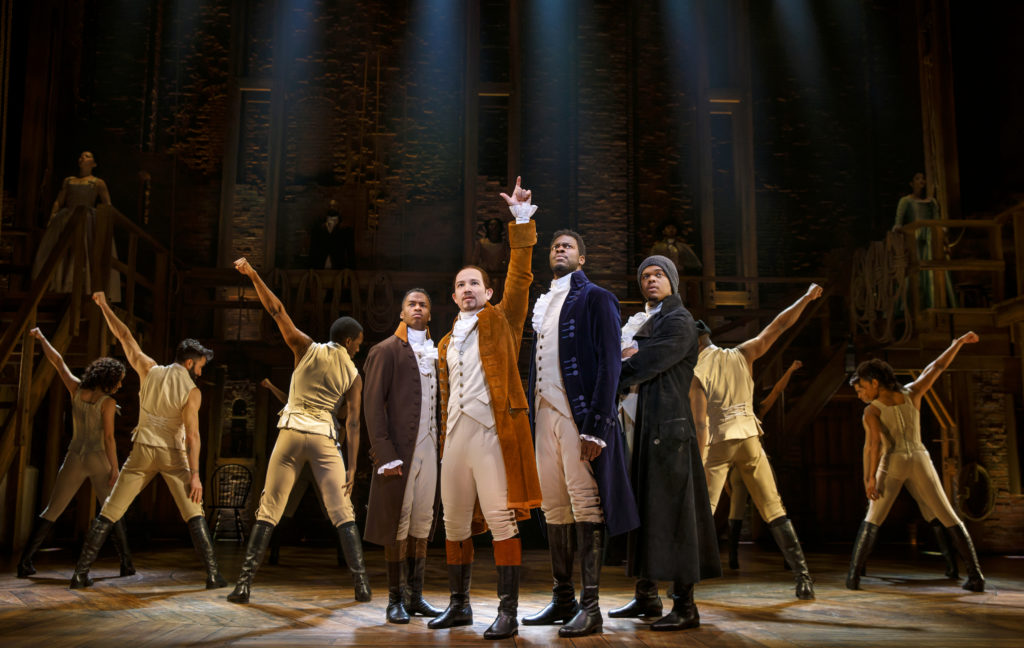
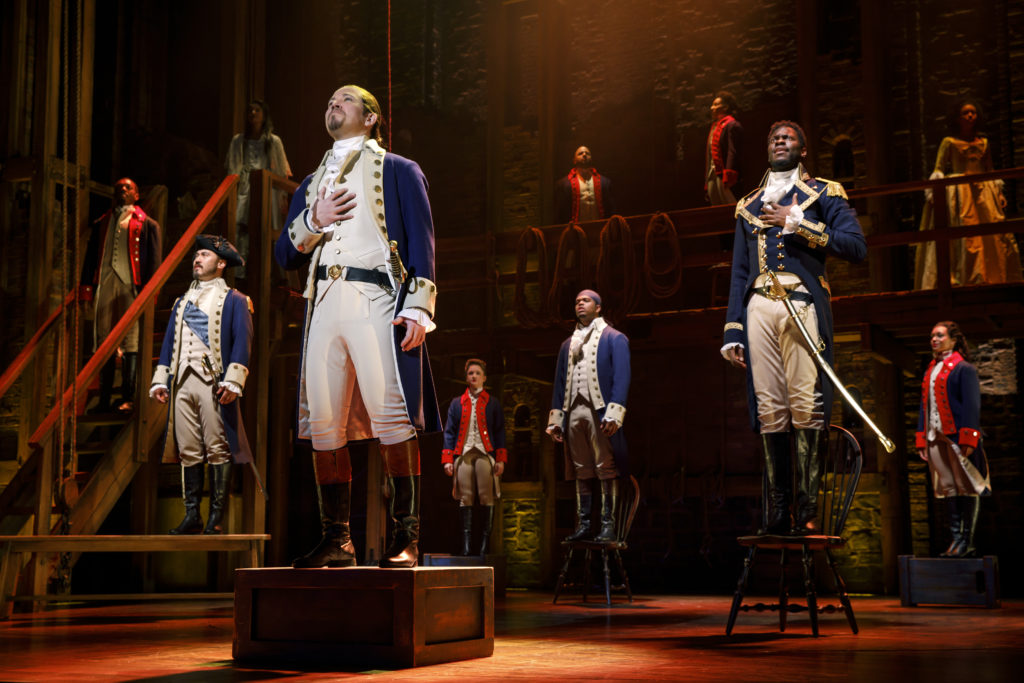
Joseph Morales and members of the cast of ‘Hamilton’/all photos by Joan Marcus, courtesy Hamilton National Tour

Nashville theatre audiences have anxiously awaiting the arrival of Lin-Manuel Miranda’s Broadway blockbuster, Hamilton, right here in Music City since Tennessee Performing Arts Center first announced its eventual 2020 arrival during the season announcement party back in April of 2018. Well, the wait is over! Hamilton has ascended upon TPAC’s Jackson Theatre.

Before attending the show Tuesday night, I had honestly never listened to the soundtrack, other than catching occasional televised performances on the Tonys, the Grammys, the Olivier Awards and the like. Partly because I initially hoped to see it on Broadway or Chicago, where I had friends in both companies, but mostly because I kept hearing Hamilton described as a hip-hop musical. While I consider myself musically well-rounded, I’m not exactly a hip-hop aficionado, or a history buff, for that matter. I just didn’t know if I wanted to sit through a two and a half hour musical that tells the tale of Alexander Hamilton through rap and hip-hop. Damn. I’m here to tell you, after experiencing it live, on stage, in a packed house. I was foolish to deny myself this long.

When I say there was a packed house, I’m not exaggerating. My best friend and I arrived to the theatre Tuesday night an hour and a half before curtain (normally, I breeze in as the house opens half and hour before the show begins). When we arrived, valet was surprisingly quick, which reassured me we were simply early. Nope. Once inside TPAC’s lobby, we walked into the biggest crowd of folks I’ve ever seen at the venue and you could feel the buzz of excitement. Hamilton had arrived and Nashville was ready.

As time ticked away, the hour wait flew by. Some passed the time waiting in line for a photo op at the Hamilton selfie wall, while many visited the merch booth for the usual t-shirts and mugs, or Hamilton-centric items like golden quill pens. I myself managed to thankfully find a spot on a bench near the theatre entrance and struck up a conversation with a lady and her daughter who were excited to be there. What’s more, they were there because they had entered TPAC’s ticket lottery and had won the chance to purchase two prime seating tickets for $10 each! CLICK HERE for more about the Hamilton/TPAC ticket lottery.

Once inside the theatre, more selfies were taken as patrons flooded the room. There it was. The set. The first glimpse of what some have described as the most important theatrical experience of our generation. Set Designer, David Korins–whose work includes everything from Pee Wee Herman’s playhouse for its recent stage run to Beetlejuice’s frighteningly fanciful Broadway set–created the Hamilton set. Upon first glance, it appears nautical in nature, with ropes, pulleys and wooden platforms invoking ideas of a ship. Perfect, as we soon discover through the lyrics of the show’s first tune, Alexander Hamilton that the founding father was not only an immigrant orphan, but that he also worked on a trade charter as a young teen.

To the casual viewer, the set seem to remain the same throughout the show. But with the added technical craft of lighting designer Howell Binkley, the set, at times represents everything from a courtroom to the physical representation of the growing age of enlightenment that was New York in the early 18th century. Such a seemingly simplistic set, but so cleverly utilized and smart. While many current shows seem to be following the trend to feature completely realistic projections, Korin’s wooden scaffolding set, complete with a surprise dual…or should I say duel (see the show, you’ll get the reference)…turntable floor feature, enhances the action of the show and the music, but doesn’t distract from it.

On the subject of the music of Hamilton, as mentioned above, yes, hip-hop is predominant, and not just in style, but in reverence to the genre itself. It can’t be coincidence that the show’s second musical number, My Shot, begins with Hamilton spelling out his name in a rhythmic patter, “A-L-E-X/A-N/D/ER”. That’s surely a nod to legendary rapper Notorious B.I.G., who rapped, “N-O/T-O/R-I/O/U-S” within the lyrics of his iconic 1997 cross-over hit, Going Back to Cali. That’s not the only Biggie nod, as midway through act one’s Ten Dueling Commandments commands memories of B.I.G.’s The Ten Crack Commandments, a track from the performer’s final studio recording. Notorious B.I.G. isn’t the only hip-hop artist Miranda pays homage to. The opening of Cabinet Battle #1 has a Jay-Z Izzo intro vibe. Heck, the cabinet battles themselves are even staged like classic rap battles, mic-drop and all., There’s also a similarity between Hamilton’s Meet Me Inside to DMX’s Party Up in Here. 

It’s not just hip-hop that’s references in Miranda’s brilliant soundtrack. There’s also more than a few winks to the art of showtunes themselves. The most obvious, nods to Gilbert and Sullivan, Jason Robert Brown and Rodgers and Hammerstein. For Gilbert and Sullivan, it’s the hilarious inclusion of a direct lyrical lift from Pirates of Penzance, featured during Hamilton’s Right Hand Man when General George Washington refers to himself as “the very model of a modern major general”. Jason Robert Brown’s The Last Five Years’ Nobody Needs to Know, pops into Hamilton during Say No To This. My favorite of these three…during My Shot, Hamilton references South Pacific’s Carefully Taught.

Other lyrical nods may or may not be intentional, but rather, perhaps only coincidental, but I doubt it. Miranda has proven himself a true lover of musical theatre by including lyrical taps to things like 1776: The Musical’s Sit Down, John. While it covers the same subject matter as Hamilton’s The Adams Administration, it’s given a decidedly edgier and hilarious feel when accompanied by an unexpected expletive. There are literally a couple dozen theatre references, intentional or not, throughout the show, but I digress.

Rap and Showtunes are just two of the musical genres Miranda includes within Hamilton. Perfectly setting the scene with acknowledgement to the factual time during which the action is set, Hamilton also includes period-authentic instrumentation. During King George’s Act 1 jewel, You’ll Be Back, a harpsichord is featured. What’s the significance? A harpsichord perfectly repersents the time period as many composers of the day included parts for the now oft-forgotten instrument in their arrangements. Then there’s an actual piece originally composed by composer Wilhelm Richard Wagner included in Hamilton during Helpless, when Alexander proposes to Eliza. The classic piece in question…commonly known as Here Comes the Bride, is actually titled Bridal Chorus and was first presented by Wagner during his 1850 opera, Lohengrin.

OK, enough…probably too much…about the trivial musical winks, but I had to mention, as listening for them and recognizing them became one of my favorite aspect of seeing the show for the first time.

Because of its continued success and popularity, Hamilton is still on Broadway, while simultaneously embarking on their National Tour…there are two current US tours in fact,—The Philip Tour and the Angelica Tour. Nashville’s TPAC is playing host to The Philip Tour.

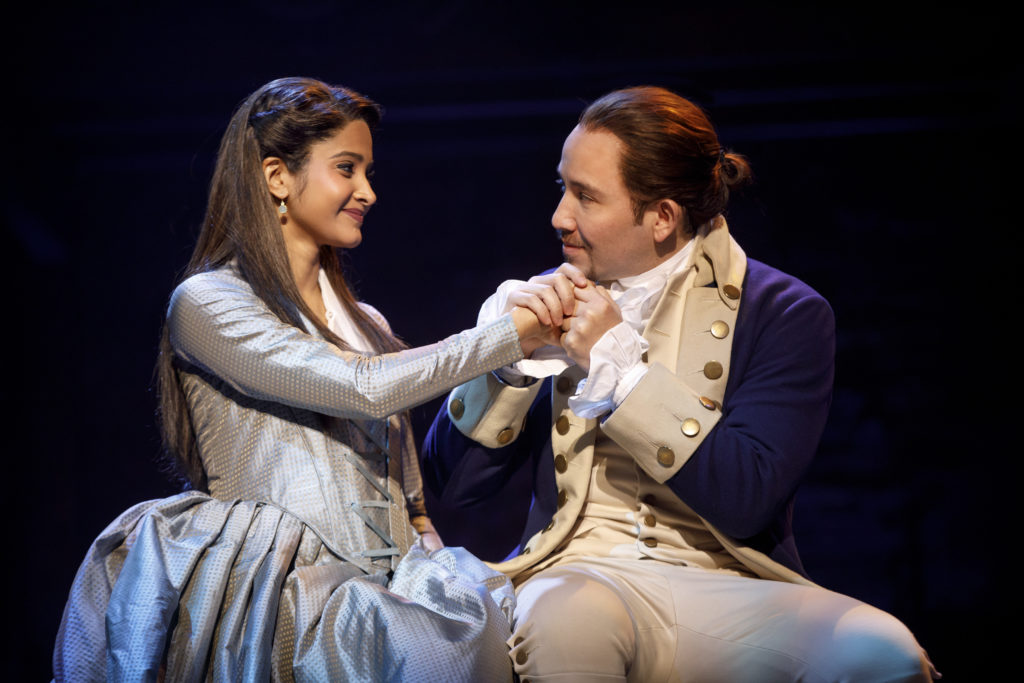
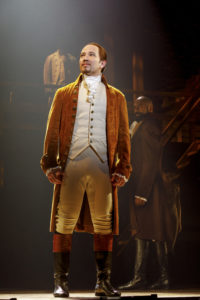
Starring as Alexander Hamilton is Joseph Morales, who was previously part of Hamilton’s Chicago company. As Hamilton, Morales plays the founding father , whom we first meet at age 19 when he arrives in New York in 1776. For those droves of Hamilton fans, Morales, and anyone who ever plays Hamilton, has the unenviable task of stepping into the role orignated by Miranda himself, daunting, indeed. To his absolute credit, Morales approaches young Hamilton during Act 1 with a convincing naïveté paired perfectly with an excitement to make his mark on the new world. I’m not gonna lie. From his first notes of the eponymous Alexander Hamilton to the finale, Morales evoked chills as I learned more about Hamilton than I ever realized I needed to know. Morales portrays Hamilton from enthusiastic young man with a vision through the pain of losing his son, jeopardizing his marriage and his ultimate untimely death, running the gamut of emotion in a believable, but unforced way

Cast as Hamilton’s counterpoint and eventual assassin–Come on…that’s no Spoiler..even I knew that–is Jared Dixon as Aaron Burr. Alright, I have to admit it, the only reason I know Aaron Burr killed Alexander Hamilton is thanks to an early 90s Got Milk? commercial (directed by Michael Bay, btw) in which a Hamilton historian misses out on a radio trivia contest while eating peanut butter sandwich with not enough milk to wash it down…again….I digress. 

Dixon as Burr, the OG frienemy, is not only the perfect foil for Morales’ Hamilton, but also the perfect scene partner, their lyrical sparring make for some of the show’s most enjoyable moments. Plus there’s the running gag of the way everyone lingers on then pronunciation of Burr’s surname, which begins with the tune Aaron Burr, Sir and continues throughout the show.

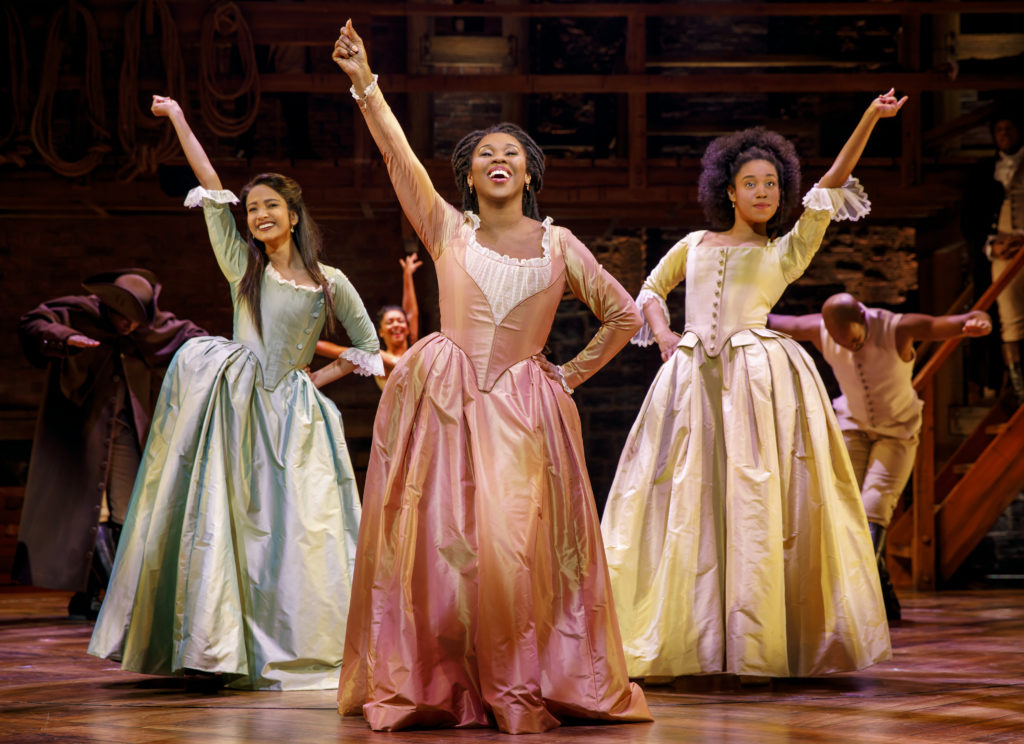
The Schuyler Sisters

As well-known to Hamilfans as Hamilton and Burr there’s also The Schuyler Sisters, Angelica, Eliza…and Peggy (see the show, you’ll get the reference). Cast as Hamilton’s love interest and eventual wife, Eliza is Erin Clemons. Her physical beauty, and that of the actresses playing her sisters, only accentuated by the glorious costumes courtesy costume designer Paul Tazewell, Clemons is the perfect scene partner for Morales’ Hamilton, not only vocally holding her own, but wowing the audience during numbers like the gorgeous Helpless, an r&b ballad with a healthy dose of the romanticism of a Cole Porter standard. 

As Angelica, Ta’Rea Campell is mesmerizing. Presented not only as Eliza’s selfless sister, but also as Hamilton’s unrequited love, Campbell’s performance presents a subtle depth to the character, especially during her featured turn alongside Clemons and Morales during the gorgeous Satisfied.

Nyla Sostra’s Peggy is memorable, mostly because the character herself is played as forgettable. That said, Sostra snags the spotlight in the dual role of Maria Reynolds, with whom Hamilton had an ill-fated illicit affair that would prove a potential thorn in his political side. In a wardrobe move straight out of Bette Davis’ Jezebel, when Sostra takes to the stage in a red dress as Reynolds, the heat is on.

As expected, other historical figures present in Miranda’s Hamilton include the aforementioned King George III, George Washington and Thomas Jefferson.

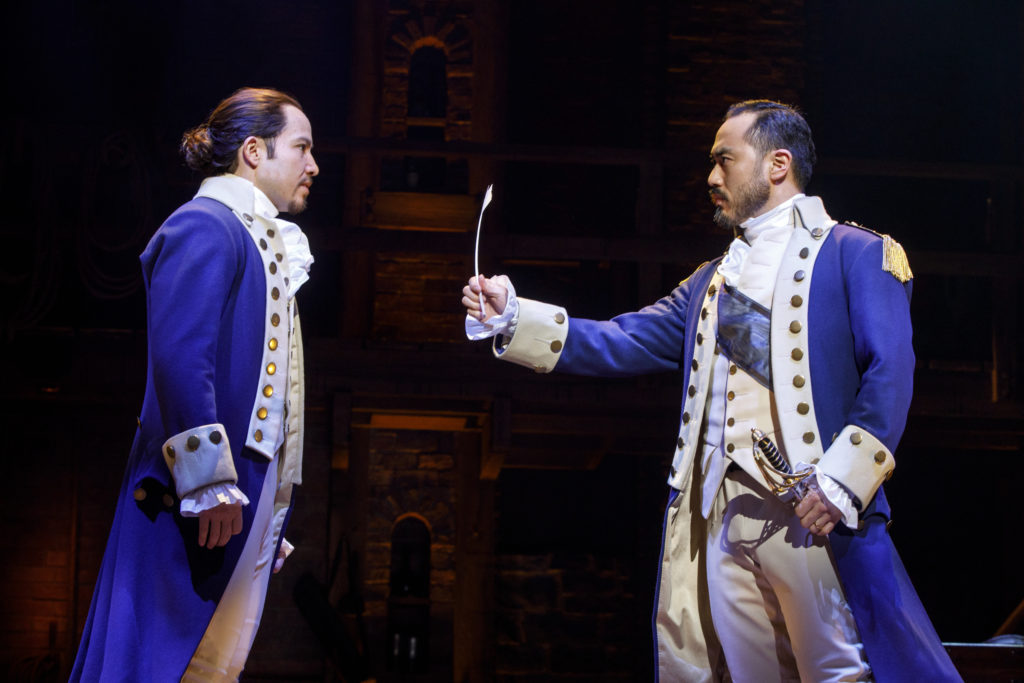
Joseph Morales and Marcus Choi in ‘Hamilton’

As George Washington, Marcus Choi plays our first president with a bit of wit and wisdom, making me personally long for a leader with those same qualities. Songs like Right Hand Man, Stay Alive and One Last Time showcase Choi’s talents perfectly.

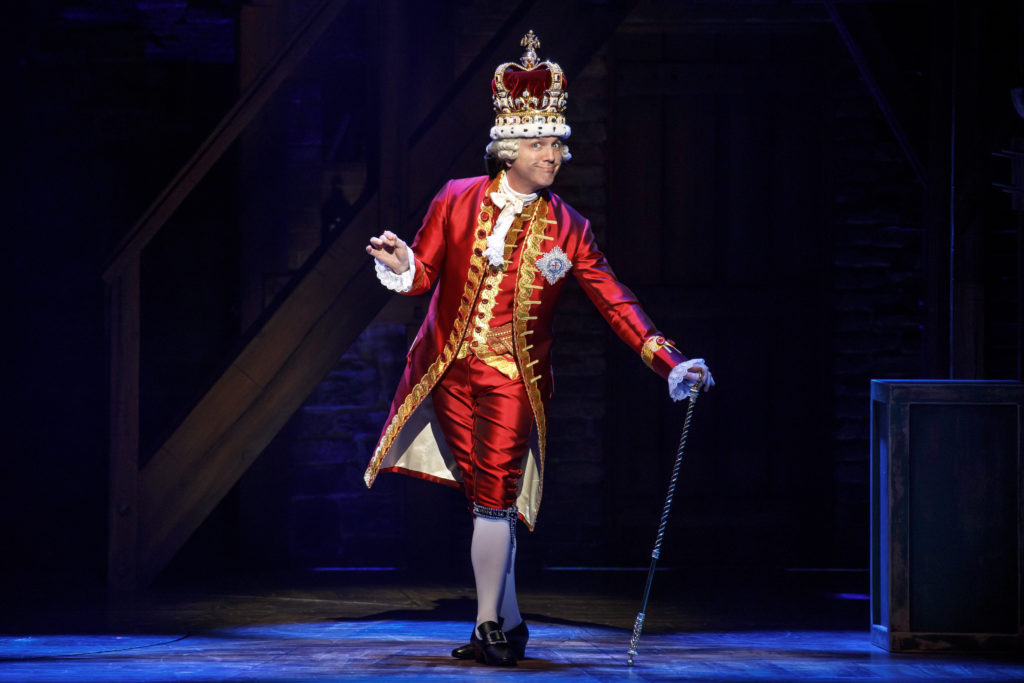
Neil Haskell as King George III is everything you’d hope a self-centered royal would be…and then some. With equal parts Sir Elton John at his campiest mixed with your anything-but-average spoiled monarch, Haskell steals every scene he’s in…and interestingly, he interjects himself throughout the action of the play, even though it all takes place stateside.Haskell’s King George puts the ham in Hamilton in the best way possible during You’ll Be Back, What Comes Next and I Know Him…all containing a happy sing-song 60s Brit-pop melody. A nice contrast the the soundtrack predominately heavier rap aesthetic.

King George III

Warren Egypt Franklin’s Thomas Jefferson—clad in a purple topcoat that rivals anything rock royalty Prince ever wore and strutting like a banty rooster with a cockiness that’s reminiscent of another Jefferson…TV’s George Jefferson as played in the 70s by Sherman Hemsley—he too holds his own and steals the limelight whenever he’s on stage. What’d I Miss, Cabinet Battle #1 and Election of 1800, among his musical highlights. Franklin also does double duty appearing as Marquis de Lafayette, changing it up a bit donning a humorously heavy accent and a less flashy topcoat for the role.

Also doing double duty in two supporting roles Desmond Sean Ellington as Hercules Mulligan and James Madison, Elijah Malcomb as John Laurens and Philip Hamilton, the aforementioned Nyla Sostre and Nick Sanchez who plays three roles: Philip Schuyler, James Reynolds and Doctor. 

These actors, along with the rest of the ensemble and the leads, bring the story of Hamilton to glorious life. 

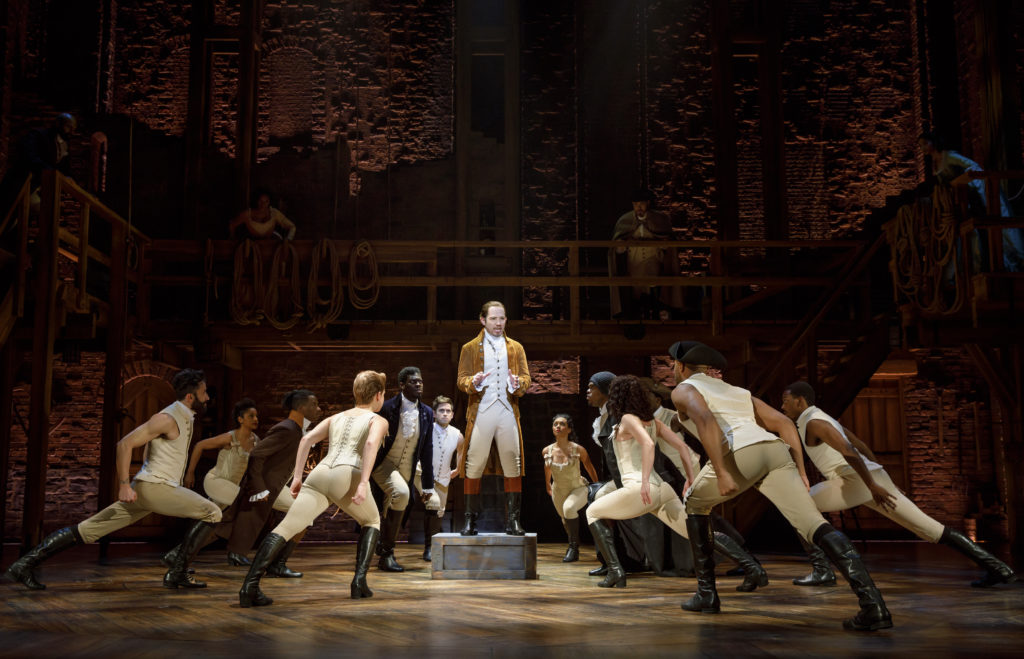
In addition to Lin-Manuel Miranda’s inventive book, music and lyrics, Hamilton also boasts an electrifying array of movement as choreographed by Andy Blankenbuehler. To that end, the visual presentation of the ensemble dancers, whether dressed in full military garb, or stripped down to petticoats and form-fitting pants and sleeveless undershirts, as dressed by Tazewell, perfectly accentuates the movement. At times, while the leads perform vocally, the ensemble beautifully accentuates their words with movement. Much like the genre-crossing inclusion of music, many dance forms are presented in Hamilton, from ballet, to jazz, hip-hop and even touches of traditional tribal dance. Proving once again, Miranda and company deserve every bit of hype, but more importantly, praise for THE musical of our time.

Hamilton continues its extended run at TPAC’s Jackson Hall with performance through January 19. To follow Hamilton, check them out on Facebook, Instagram and Twitter.

You can discover all the latest from TPAC by checking them out online or on Facebook, Instagram and Twitter.

As always, if you are interested in coverage for your latest entertaining endeavor, simply click the contact page and drop me a note. You can also follow JHP Entertainment on Instagram and Facebook.

Filed Under: Entertainment, Theatre Review Tagged With: Broadway, Broadway to Nashville, Broadway Tour, HAMILTON, Hamilton Musical, Lin-Manuel Miranda, Musical, Musical Theatre, National Tour, Review, TPAC

Theatre Review: With ‘Singin’ in the Rain’ on stage at Chaffin’s Barn thru November 30, forecast for the magic stage is all-singin’, all-dancin’ with a deluge of talent

November 15, 2019 by Jonathan

If you read my column with any regularity, you know in addition to my love of musical theatre, I also have a penchant for classic Hollywood musical movies, so you can imagine my excitement when I learned Chaffin’s Barn Dinner Theatre was presenting their take on the stage adaptation of Singin’ in the Rain. That’s right…two of my obsessions…1950s musical movies and and all-out tune-filled stage extravaganza rolled into one.

Having seen a simply lovely production of the show in nearby Cannon County at the beginning of this year, and even though Singin’ in the Rain is one of my all-time favorite musicals, second only to the stage adaptation of the seasonal favorite, White Christmas, I honestly wasn’t sure what to expect of Chaffin’s take, but from the first notes of the show’s familar Arthur Freed/Nocio Herb Brown-penned overture, as skillfully executed by Chaffin’s musical director and keyboardist, Rollie Mains, woodwinds by Raymond Ridley, Neal Johnson on bass and drummer Dan Kozlowski, any slight trepidations were quickly laid to rest.

The stage version, like the original 1952 feature film, with screenplay by Betty Comden and Adolph Green tells the story of late-1920s silent film superstars Don Lockwood and Lina Lamont, who have been built up in the press, and by their studio, as romantic leads on…and off…the screen. Truth be told, they ‘caaaaan’t stan’ each other. There’s also Lockwood’s best bud, and frequent piano accompanist who plays the silent films musical soundtracks for the studio recordings, Cosmo Brown. He’s less than enchanted by Lamont and her diva-like ways and seems to always be looking out for his buddy’s romantic future. Further complications ensue with the advent of talking pictures. Not so much a problem for smooth and swarthy Lockwood, but for Betty Boop-voiced Lamont, that’s another story altogether. Enter young, inexperienced chorine, Kathy Selden, having just arrived in Hollywood from the legitimate stage, Selden is biding her time in the chorus until her big break. After a dismal preview of Lockwood and Lamont’s first talkie, The Dueling Cavalier, during which the audience laughs at Lamont’s fingernails on a chalkboard voice, Selden’s big break comes when Lockwood and Brown cook up a scheme to have Selden record her voice and dub it over Lina’s screech.

Fans of the film know it featured an all-star cast of Gene Kelly, Donald O’Connor, Jean Hagen and Debbie Reynolds, so you can image those being some pretty big dancing shoes to fill. To her credit, director Jenny Norris has packed Chaffin’s Singin’ with quite the who’s who of actors, most of whom are familiar to Chaffin’s patrons.

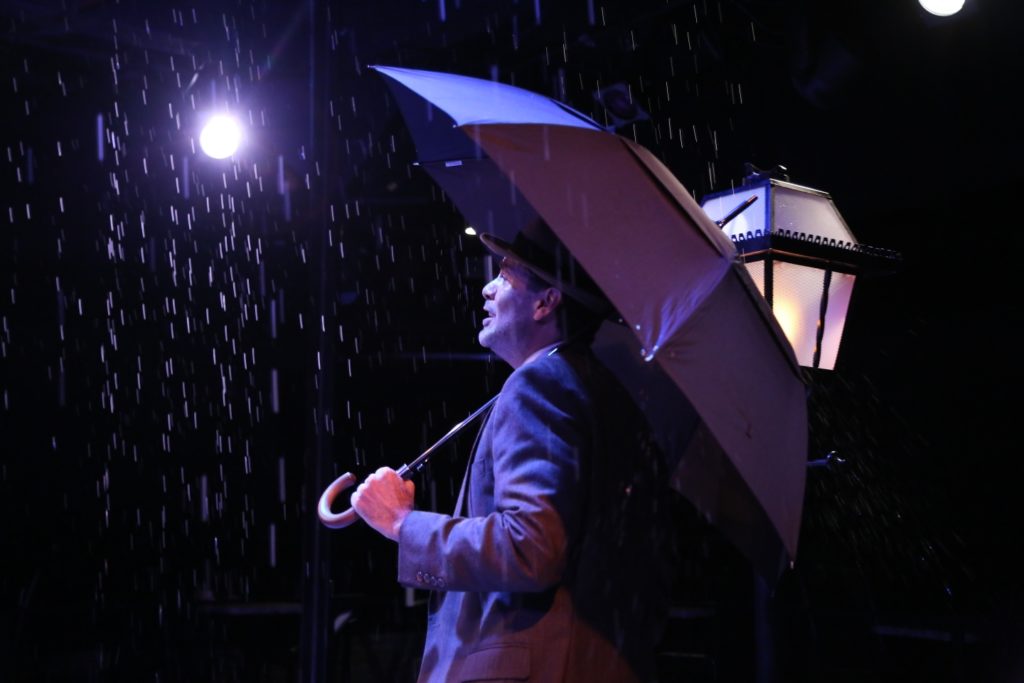
Matt Moran as Don Lockwood in Chaffin’s “Singin’ in the Rain”
(all photos by Michael Scott Evans/Courtesy Chaffin’s Barn Dinner Theatre)

Starring as Don Lockwood, the Gene Kelly role, for those familiar, is Matt Moran, most recently seen on Chaffin’s stage as the less-than-charming Glenn Gulia in The Wedding Singer. While I absolutely love Gene Kelly, especially in Singin’ in the Rain, I have to tell you, from Moran’s first entrance as Don Lockwood, I couldn’t help but notice, his matinee-idol looks and his overall command of the stage. Sorry, Gene, but Matt just might be my new favorite Don Lockwood. With a show full of wonderful tunes and numerous Lockwood-centric moments, Moran constantly shines like the star he’s play. While Moran’s bio indicates he made his stage debut at age eight, I’ve only recently come to know his work, so I knew holding his own against Curtis Reed as Cosmo Brown, Don’s best friend and former performing partner…the Donald O’Connor role in the film…would be a challenge. Spoiler Alert: Moran keeps up the pace and is the perfect compliment to his talented second-banana.

Speaking of Reed, not only is he a great comedic sidekick, and a uber-talented hoofer, he’s also the show’s choreographer. When I first saw the stage adaptation not long after its Broadway debut in the mid-80s, iconic choreographer Twyla Tharp had lovingly crafted dance sequences that paid homage to the original film moves by Kelly himself. Reed, as talented a choreographer as he is a dancer has done what might otherwise seem impossible, finding his own moves nestled smartly between the two, and I applaud that. 

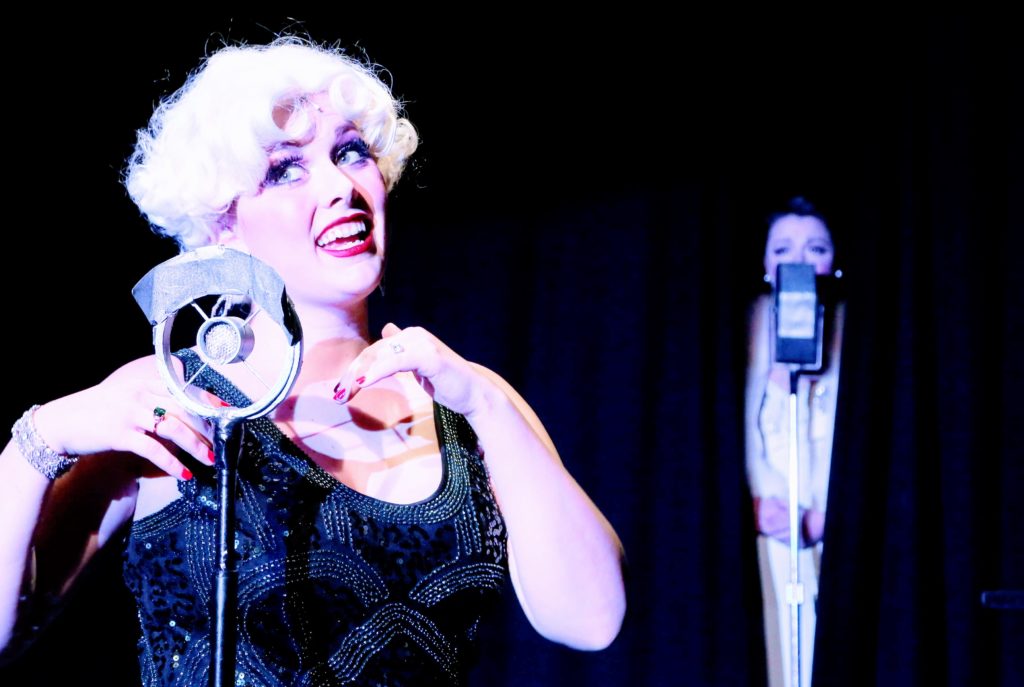
Jenna Pryor as Lina Lamont With Kelsey Brodeur as Kathy Selden) in Chaffin’s “Singin’ in the Rain”

Cast as Lina Lamont is Jenna Pryor, one of my theatre crushes, having starred in a variety of local theatre productions ranging from Disney princess, Belle in Beauty and The Beast, to Leslie in American Idiot. Heck, on Chaffin’s stage alone, she’s been seen in a couple of Southern Fried productions, as well as Freaky Friday and Mamma Mia. Sporting a platinum blonde Harlow-eque wig and some form-fitting dangerous curves ahead costumes, courtesy the show’s costumer, Tammie Whited, Pryor perfectly transforms herself into the quintessential not-so-dumb-blonde and I’m here for it. I’m just gonna be honest, I couldn’t stop grinning from ear to ear from her first line on.

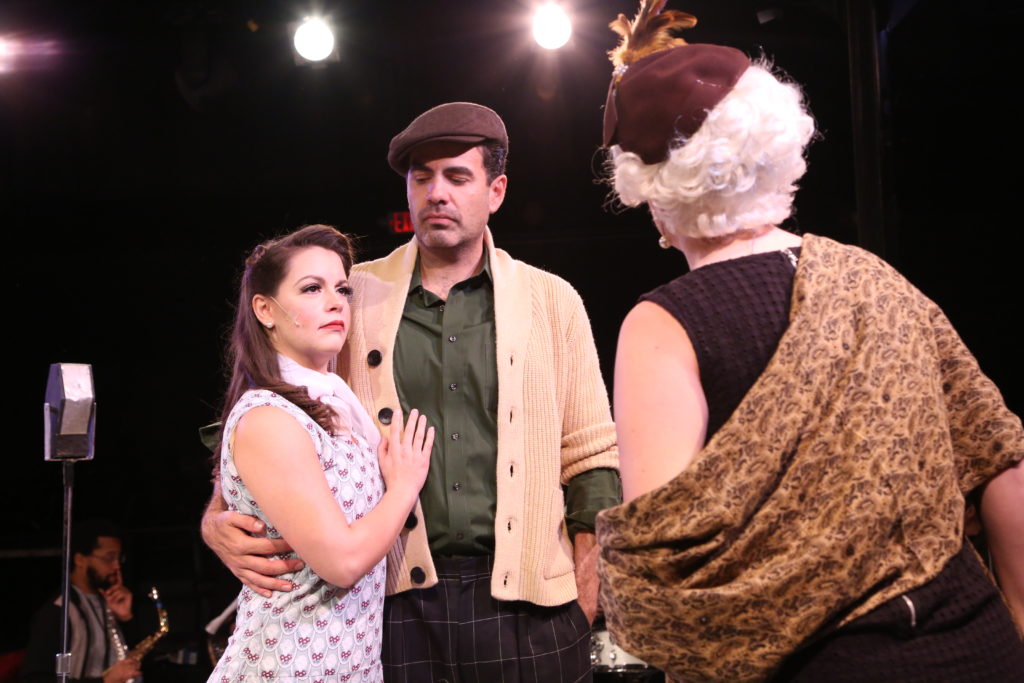
Rounding out the major players is Kelsey Brodeur as Kathy Selden. The native Atlantan, former New Yorker and recent Music City resident might be a relative newcomer to Chaffin’s, having appropriately made her Barn Dinner Theatre debut as Star to Be in their recent spectacular production of Annie, but Brodeur has appeared in a number of regional productions in and around the Syracuse area where she studied musical theatre and I’m here to tell you, she’s definitely one to watch. As Kathy, Brodeur finds the sweetness of Reynold’s girl-next-door, coupled with just enough sass and smarts to find what she wants and go for it.

From the show’s opening sequence, Fit as a Fiddle, which establishes the longterm friendship of Lockwood and Brown by way of ‘home movies’ projected on screens the roll down from the two corners of the stage to the mid-show literal show-stopping title tune and on to its all-in reprise at the final, Singin’ in the Rain is jam-packed with marvelous musical moments. 

Among my personal favorites in Chaffin’s production, first there’s You Stepped Out of a Dream, performed by Moran’s Don Lockwood, complete with beautiful harmonies courtesy an ‘only in a musical’ seemingly impromptu street chorus of passers by. Let’s be honest. Who wouldn’t swoon to a croon from this guy?

Kelsey Brodeur, Matt Moran (and Jenna Pryor) in Chaffin’s “Singin’ in the Rain”

Then there’s my absolute favorite number in the entire show…no, not THAT one…I’m talking about Kathy’s infectious musical entrance, All I Do is Dream of You. It’s sweet, it’s cute, it’s ironic, since she and Don aren’t exactly chummy at this point and with Brodeur’s lovely voice, a kick line of gorgeous ensemble members and Reed’s dynamic choreography, it’s perfect. 

Next on the highlight reel is Reed’s guffaw-inducing comic song and dance, Make ‘Em Laugh. Due to the confines of the space, Reed accepts the challenges and reigns victorious in a number filled with slapstick pratfalls, a great tune and some fancy footwork.

With a first act that’s nearly 90-minutes in length (as my sweet mother can attest, it flies by thanks to the fabulousness of the music, the saccharine storyline and the dedication and talent of the cast) there’s one great sequence after another. Beautiful Girls, features Daniel Bissell surrounded by…well…beautiful girls, including ensemble members, and three of my theatre crushes, Christina Candilora, Jenny Norris and Christen Heilman, in an homage to Busby Berkeley and Florenz Ziegfeld.

You Are My Lucky Star, another fan favorite, which ironically wasn’t written for the film, but rather first appeared in Broadway Melody of 1936, is among Brodeur’s most glorious vocal moments. I love that the stage musical restores the intro to the song and Brodeur’s sweet intonations fit it perfectly.

Speaking of perfect, You Were Meant For Me, in which Moran’s Don takes Brodeur’s Kathy behind-the-scenes of the movie studio, is just that…prefect. During this number, our romantic leads trip the light fantastic to more of choreographer Reed’s fancy footwork. With the aide of a large fan, fog machine, some mood-enhancing lighting, a ladder and some movie magic imagination, the relatively empty lot transforms into a balcony scene of love to rival that or Romeo and Juliet…at their happiest. Of course this scene, nor any other could come off as perfectly were it not for the real behind-the-scenes work of properties manager, Joy Tilley Perryman, technical director, Robin Lawshe, lighting designer, Daniel DeVault, audio engineer, Kaitlin Barnett and video courtesy Russ Sturgeon Productions/RSVP. On that subject, in addition to the aforementioned ‘home movies’ seen at the top of the show, RSVP’s handiwork is also seen throughout the production as the audience is treated to several Lockwood and Lamont moving pictures of both the silent and talking varieties, to much delight.

Back to the musical highlights…Reed and Moran team up for Moses Supposes, with Bissell as their straight man during a tongue-twisting, toe-tapping, tap-tastic musical delight, then Reed and Moran are joined by Brodeur for yet another of my favorite musical moments from the piece as they do a little spectacular couchography whilst singing Good Morning. Yes, it’s still my go-to wake-up alarm song.

Matt Moran, Kelsey Brodeur and Curtis Reed in Chaffin’s “Singin’ in the Rain’

This brings us to THE legendary, iconic, stupendous moment of the show…That’s right…Act 1 concludes with the title tune, Singin in the Rain. When I posted on social media that I was attending the show last weekend, a friend, who had seen the original touring production with me back in the late-80s/early 90s, who also just so happens to be a theatre professor/actor and talented director in his own right, commented asking “Does it Rain?” to which I responded, “Does it EVER”. 

As if Chaffin’s magic stage weren’t awe-inspiring enough, during the pinnacle moment of this number, thanks to some creative handiwork from Chaffn’s beloved former owner, John Chaffin himself, it not only rains it pours! As Moran’s Lockwood sings the show’s most familiar tune, it rains along all four sides of the square stage. Shoot, director Norris, during her welcoming remarks gave a little warning to audience members seated along the four sides of the magic stage that they might get a little damp, giving a whole new meaning to immersive theatre. Moran amps up the vibe even more by playfully kicking and dancing in the rain, causing it to splash towards those seated nearby, but just like a kid stomping in puddles, no one minded getting a little damp, especially considering the shower of talents they were witnessing. As the song’s lyrics say, “Come on with the rain, I’ve a smile on my face!” True Confession: I was so moved by the spectacle of it all that my eyes might have rained a little too. When the lights came up, my Mom looked at me and asked if my allergies were bothering me. A little embarrassed at just how much I love a great live musical that moves me to tears, I simply nodded yes. 

Following intermission, the music continues, but it’s plot that takes center stage as Lina finally clues in to Don, Cosmo and Kathy’s plan to dub her voice. While the second half of the show has it’s share of pleasing musical moments, Kathy’s Would You, Don’s Would You response and Don, Cosmo and company’s Broadway Melody (including the aforementioned mod dance sequence), it’s Pryor as Lina for What’s Wrong with Me that pretty much steals the second act. While Lina is predominately played strictly for laughs with her helium voice, couple with a decidedly east coast, street-wise vernacular, What’s Wrong With Me actually makes the audience feel just a little compassion for the show’s blonde baddie. Just when you’re feeling sorry for Lina, it’s back to laughing at her, thanks to the inclusion of a bit of what I’m naming skip-ography. Again….when Pryor’s Lina is on stage, I can’t stop laughing.

As is the case with any Hollywood musical worth its salt, by play’s end, everything’s tied up in a nice package just in time for the boy to get the girl as they reprise You Are My Lucky Star and the entire ensemble descends upon the stage for one final encore of the title tune.

Kudos to director Norris, choreographer Reed and everyone at Chaffin’s. Time after time, show after show I marvel at how the company seamlessly navigates what is a relatively small, albeit magic stage—yes, it still descends from the ceiling and I’ll never get over the awe of that feat alone.

The fantastic leads, with noteworthy assists from the entire cast—including Greg Frey as movie mogul RF Simpson, Nick Spencer as Rosco Dexter, Daniel Bissell as Production Tenor, Gabe Atchley as Rod, the always brilliant Katie Bruno doing double-duty as both Dora Baileyand Miss Dinsmore, Gabe Atchley as Rod and ensemble members: Seth Brown, Christina Candilora, Christen Heilman, Josh Innocalla, Benny Jones, Bethanie Lyon, Brooke Mihalek and Emmy Peurta—coupled with Reed’s double-duty as choreographer and co-star, all helmed by Norris, who not only director, but also appears on-stage as Zelda Zanders, it’s all a marvel.

Just before curtain on the night I attended, Norris, a veteran of the stage and a favorite at Chaffin’s, informed me that this show marked her directorial debut. With her winks to the gorgeousness of the original film and Reed’s choreo that includes everything from nods to the lush hyper-produced spectacles of the aforementioned Berkley and Ziegfeld, to the inevitable modern dance sequence that’s included in just about every mid-century musical, Chaffin’s Barn’s Singin’ in the Rain is just about as perfect a stage musical extravaganza as you’re likely to see outside of Broadway itself. 

Oh, and don’t forget…while I mostly refer to the venue as Chaffin’s Barn, their full name is Chaffin’s Barn Dinner Theatre! Ever since the change in ownership, the dinner aspect has vastly improved, offering patrons who choose the dinner and show tix the choice of either a huge variety of buffet items, or the option to order from their equally delicious ‘a la carte menu.

Chaffin’s Barn Dinner Theatre’s Singin’ in the Rain continues on the mainstage with shows through November 30. CLICK HERE or call 615.646.9977 for reservations. 

Thursday matinees begin at 12 noon (doors at 11a.m.), while Thursday, Friday and Saturday evening performances begin at 7:30p.m. (doors at 5:30). Sunday matinees begin at 2 p.m. (with doors at noon for lunch service.

Thursday matinee tickets are $19 for show only or $27.50 for show and a Box Lunch. (Wednesday matinee will also offer the Box Lunch option). Evening show tickets are $13 for children 12 and under, $20 for youth/students and $35 for adults. Living up to their Barn Dinner Theatre name, Chaffin’s also offers a full buffet option or a la carte menu items for their evening and Sunday lunch matinee performances. Chaffin’s delicious buffet, featuring a choice of entrees (including a veggie option), and a number of side items is available for an additional (but completely worth it) $15.95, while the ‘a la carte menu items (also quite tastily) range in price from $6.95 to $10.95, plus there’s a wide array of desert options to choose from $2.50 to $5.00. CLICK HERE to check out the menu. 

While Singin’ in the Rain continues through November 30, A Tuna Christmas begins at Chaffin’s Backstage with shows November 29-December 21, CLICK HERE for tickets or more info. Following Singin’ in the Rain, Chaffin’s will present Sanders Family Christmas on the Mainstage from December 5-21. CLICK HERE for tickets or more information. As they always do during the holidays, Chaffin’s will also present a show specifically aimed towards the younger audience as they present Jingle All The Way with Friday and Saturday shows from December 6-21. This special holiday treat is only $10 a person with kiddies two and under admitted FREE. Call the box office at the number above for details or to purchase tickets.

To keep up with the latest from Chaffin’s Barn Dinner Theatre, find them online at ChaffinsBarnTheatre.com, ’like’ them on Facebook and follow them on Instagram and Twitter.

Interested in coverage for your latest entertaining endeavor? Click the contact page and drop me a note. You can also follow JHP Entertainment on Instagram and Facebook.

Filed Under: Uncategorized Tagged With: CHAFFIN'S BARN, CURTIS REED, Dinner Theatre, Jenna Pryor, JENNY NORRIS, Kelsey Brodeu, Matt Moran, Musical, Musical Theatre, Nashville, Nashville Theatre, Review

Theatre Review: ‘A Bronx Tale: The Musical’; at TPAC’s Jackson Hall through Sunday, February 17

February 13, 2019 by Jonathan

Joe Barbara as Sonny and Frankie Leoni as Young Calogero in “A Bronx Tale” (All Photos: Joan Marcus)

The Broadway musical, A Bronx Tale continues its first National Tour as it stops in  Music City this week with shows at TPAC’s Andrew Jackson Hall through Sunday, February 17.

Based on the 1993 Robert De Niro-directed film of the same name, A Bronx Tale’s origins go back a few years prior to the film, having its genesis as a one-man stage play created and performed by actor/writer Chazz Palminteri, based on his own childhood memories of growing up in a predominantly Italian neighborhood in the famed NY borough.

In addition to Palminteri’s book, A Bronx Tale boasts music by modern musical theatre icon Alan Menken with lyrics by his frequent partner, Glenn Slater (the duo behind Disney’s Tangled and Broadway’s The Little Mermaid). The technical spectacle doesn’t end with the spoken words and tunes of A Bronx Tale, for scenic designer Beowulf Boritt has created a gorgeous set perfectly transporting the action to an Italian-American neighborhood in 1950s New York. Also aiding in the step back in time are William Ivey Long’s costumes and Paul Huntley’s wig and makeup styling. Coupled with Howell Binkley’s lighting design, A Bronx Tale is a visually any audibly stunning recreation of a mid-century New York brownstone neighborhood.

Even before the curtain rises, a decidedly authoritarian voice cracks wise warning audience members that the use of recording devises of the taking of pictures might result in a bat over the head, giving a not-so-subtle clue of the heavy-handed, but humorous story to come.

From the beginning, A Bronx Tale evokes familiarity as it presents a classic doo-wop opening number, Belmont Avenue, reminiscent of everything from Jersey Boys and Memphis to Hairspray and Little Shop Of Horrors. Positioned under a lamppost (aren’t they always?) the Doo-Wop Guys (Sean Bell, Joshua Michael Burrage, Giovanni DiGabriele and Alex Dorf) offer up some smooth postmodern harmonies while Joey Barreiro, who’s starring as Calogero (Palminteri’s birth name, in case you’re curious) joins the guys for a  tune-filled plot exposition. During the tune we learn through lyrics that Calogero was only nine years old when he first laid eyes on neighborhood mobster, Sonny, sneeringly played to perfection by Joe Barbara. Being a soap opera aficionado, I immediately recognized Barbara for his mid-90s work as Joseph Carlino on the now defunct sudser, Another World. On stage, Barbara was a member of the Broadway company of A Bronx Tale and he also appeared in the Las Vegas mounting of Jersey Boys. Seeming destined to play mobster Sonny, Barbara also shares his name with legendary real-life mobster, Joseph Barbara but that’s probably all I should say about that.

Giovanni DiGabriele, Sean Bell, Joseph Sammour, Frankie Leoni and Joshua Michael Burrage

The opening also introduces us to nine-year-old Calogero (played at alternate performances by Frankie Leoni and Shane Pry). Opening night in Nashville featured Leoni in the role and I have to say, he absolutely stole the show. The young actor’s stage presence, timing, delivery and his ability to belt a tune and keep up with the rest of the cast as they perform Sergio Trujillo’s blissful choreography was mind-blowingly entertaining.

Richard H. Blake as Lorenzo, Frankie Leoni as Young Calogero and Michelle Aravena as Rosina

Barreiro’s teenage Calogero, nicknamed simply “C” by Sonny, narrates the action as young Calogero is joined on stage by Richard H. Blake and Michelle Araveno as his parents, Lorenzo and Rosina after Calogero witnesses Sonny shoot a man near the boy’s front stoop. In spite of his dad’s musical warning with Look to Your Heart, young Calogero decides not to rat Sonny out when the cops question the young witness, setting up a truly unique friendship between the boy and the boss that weaves together the rest of the tale.

One of my favorite scenes comes when Sonny introduces C to Sonny’s familia, as he introduces each member of his crew, he calls their names like a class roll-call. There’s Rudy the Voice (John Gardiner), then Eddie Mush (Mike Backes), JoJo the Whale (Michael Barra), Frankie Coffeecake (Robert Pieranunzi) and finally Tony 10 to 2 (Paul Salvatoreillo). When each name is called, that associate steps forward facing font, with a click of the spotlight, they then turn to profile with another click of the spotlight, a visual wink mimicking every mug-shot sequence from every gangster movie ever made. Well played, lighting designer Binkley, well played.

Joe Barbara, Frankie Leoni and the Company of “A Bronx Tale”

Young Calogero becomes integrated into Sonny’s outlet (that’s mob-speak for Mafia family), initially throwing dice for Sonny in a craps game during the musical number, Roll Em, garnering more and more trust from Sonny and the organization, and reaping their financial gratitude, C stows away handfuls of money while further driving a wedge between himself and his family.

Joey Barreiro and Frankie Leoni

I Like It, another stellar moment midway through Act 1 features both Calogero, his younger self, Sonny and members of the ensemble. Then Giving Back the Money fully illustrates the growing divide between father and son as well as a bit of unspoken history between Sonny and Lorenzo.

Focus then shifts to teenage Calogero for the remainder of the show. I have to admit, I kept waiting for the full switch and inevitable exit of Leoni as young Calogero, but was pleasantly surprised the talented young actor remained a central part of the story as long as he did.

That said, once Barreiro’s late-teen Calogero becomes the primary focus, we are also introduced to Calogero’s wannabe gang, Handsome Nick and Crazy Mario, played by previously mentioned Doo-Wop Guys DiGabriele and Dorf. Both DiGabrielle and Dorf play up their character’s names to the fullest, DiGabrielle strutting around the stage like a banty rooster while Dorf twitches and jerks like a teenage tweeker. They once again show off their harmonizing skills during the finger-poppin’,  Ain’t it the Truth, a shoo-wop lesson in street life.

Then there’s Brianna-Marie Bell as Jane, the black high school girl with whom Calogero becomes smitten. Having made her Broadway debut as Jane during the show’s recent NY run, it’s obvious she’s found her comfort zone with the sweet but forthright Jane. While they only live a few blocks away, Calogero on Belmont Ave, Jane on Webster, their relationship seems a bit of a modern nod to Shakespeare’s Romeo and Juliet. Bell’s vocal skills and perfectly executed dance moves quickly shift the mood to that of hope and vitality.

Brianna-Marie Bell (center) with Brandi Porter and Ashley McManus

With Jane’s appearance comes the arrival of her friends Denise (Ashley McManus) and Frieda (Brandi Porter) providing some much-needed female presence to this oft-male dominated piece. Much like the guys playing Calogero’s crew, McManus and Porter also make the most of their limited time on stage with expected, but thoroughly enjoyed  moments of sass and disdain.

Out of Your Head features Calogero, Jane and company as the young lovers contemplate the pursuit of love in spite of what their backgrounds warn against. Trite as it may be, at the capable hands of Barreiro and Bell, it’s truly one of the show’s best moments.

Then it’s Barbara’s time to shine with the hilarious Nicky Machiavelli as Sonny Rudy and Eddie explain the Italian philosopher’s views in a musical number that’s firmly seated between Mac the Knife and The Rat Pack.

Act 1 wraps with another all-in for the thoughtfully poignant These Streets which features Blake’s Lorenzo reminiscing about Calogero’s youth and Lorenzo’s promise as a father to assure his son won’t be a victim of the street.

The remainder of the piece kicks off on a literal high note with Bell leading Webster Avenue, a cultural flip of the show’s opening tune showcasing Bell’s Jane, Antonio Beverly as Tyrone, Jane’s brother, her aforementioned girlfriends and Barreiro’s Calogero.

When the plot touches on tensions, both racial and cultural, Act 2 offers reprisals of Out of Your Head, this time from Jane’s perspective; Ain’t It the Truth, featuring Tyrone and his friend Jesse (Jason Williams), offering a Webster Ave version of the tune’s original take and Look to Your Heart, as performed by Calogero’s Mom, Rosina in what is easily one of the show’s best vocal performances.

Brianna-Marie Bell and Joey Barreiro

Other musical moments during the second act include One of the Great Ones, in which Sonny advises Calogero to go for it with Jane, so as not to miss out on what could be one of the great loves of his life. Later, we’re treated to a reprise of One of the Great Ones.

As the action mounts and decisions must be made regarding Calogero’s romance, his potential future with the organization and the actions of his friends regarding protecting their territory from their fellow man, Hurt Someone gets at the crux of the piece…fear and misguided perceptions of power and violence have the ability to empower/destroy us all.

After the drama of Hurt Someone, interestingly, A Bronx Tale ends, at least musically speaking, not terribly far from where it began with the uplifting doo-wopish In a World Like This and the anthemic The Choices We Make.

A Bronx Tale may present Palminteri’s story, swayed perhaps by his years in Hollywood, with its amped up tried-and-true cinematic clichés, from forbidden love to a plethora of wise-crackin/bone-crackin wiseguys. That said, if a few modern mafia stereotypes would keep you from seeing this show…fuggedaboutit and go see it anyway. At its best, A Bronx Tale is a surprisingly sweet tale, not just of a young boy who finds favor with a neighborhood heavy, but of unlikely friendship, an understanding between father and son that is only possible with growth and maturity and knowing when to follow your heart, not your head.

A Bronx Tale continues this leg of its first National Tour in Nashville at TPAC’s Andrew Jackson Hall with performances through Sunday, February 17. CLICK HERE for showtimes and tickets. Following the show’s Nashville dates, the tour continues through the summer with dates in Minneapolis, Fayetteville, Oklahoma City, Chicago, D.C., Boston, Charlotte, Cleveland, Madision, Fort Lauderdale, New Haven, Fort Worth and Kansas City. For more information about the show, CLICK HERE or check out A Bronx Tale on Facebook, Instagram and Twitter.

The Company of “A Bronx Tale”

Next up at TPAC, as their Broadway series continues is the national tour of The Book of Mormon on stage at Jackson Hall, March 12-17. CLICK HERE for tickets or more information. You can also discover all the latest from TPAC by checking them out online on Facebook, Instagram and Twitter.

As always, if you are interested in coverage for your latest entertaining endeavor, simply click the contact page and drop me a note. You can also follow JHP Entertainment on Instagram and Facebook.

Filed Under: Theatre Review Tagged With: A Bronx Tale, Broadway, Musical, Musical Theatre, Nashville, National Tour, Review, Touring Company, TPAC

Theatre Review: Dreaming of a White Christmas? Look no further than the high-energy stage version of Irving Berlin’s ‘White Christmas’ tapping its way across the country and into audiences’ hearts this holiday season

November 16, 2018 by Jonathan

Irving Berlin’s ‘White Christmas’ stars Kelly Sheehan, Jeremy Benton, Sean Montgomery and Kerry Conte, onstage in Nashville at TPAC’s Jackson Hall as holiday tour continues

With it’s lavish sets, gorgeous costumes and top-drawer cast, the 1954 film Irving Berlin’s White Christmas, which starred Danny Kaye, Bing Crosby, Vera-Ellen and Rosemary Clooney, has been a holiday tradition for…well…64 years. Moving the magic from screen to stage more than a decade ago, playwrights David Ives and Paul Blake adapted the story into an equally resplendent stage musical. The show is currently in Nashville at TPAC’s Jackson Hall through Sunday, November 18 as the national tour makes its way across the country guaranteeing audiences everywhere a glistening, gleaming, smiling, singing, happy, tapping, merry-making White Christmas.

While I wasn’t around in 1954 for the initial release of the film, an annual viewing has become somewhat of a holiday tradition since first discovering it by way of a late-night TV broadcast some forty years ago on Christmas Eve while staying up late to help my mom wrap those last few gifts. Fast forward to a few years back when the national tour of the stage musical played TPAC. I was in heaven, after all, what could be better than a glorious new musical featuring a soundtrack jam-packed with Irving Berlin tunes, lovingly based on a classic movie? Mind Blown.

So, how do you replicate the on-screen chemistry of Crosby and Kaye playing ‘odd couple’ best pals, let alone Clooney and Ellen as squabbling sisters? The simple answer, you cast Sean Montgomery, Nashville’s own Jeremy Benton (back for his fifth time with the tour), Kerry Conte and Kelly Sheehan. Montgomery smoothy fills the Crosby bill while Benton eases into the goofiness of Kaye while elevating the role with some of the most impressive dance moves I’ve ever seen onstage. As for the ladies, Sheehan’s Judy might look more like Clooney than Vera-Ellen, but her dance moves rival those of her character’s creator. At times Conte’s singing voice is blissfully similar to that of Rosemary Clooney, but there’s also times, especially in her line delivery, that she possesses a more regal intonation reminiscent the equally talented chanteuse, Peggy Lee. Just another interesting fun fact…when the film was released, Clooney was under contract with Columbia Records and was therefore prohibited from appearing on the film’s official soundtrack record album release. Instead, Decca Records brought in Lee to record vocals for the vinyl. (I warned you it’s my favorite).
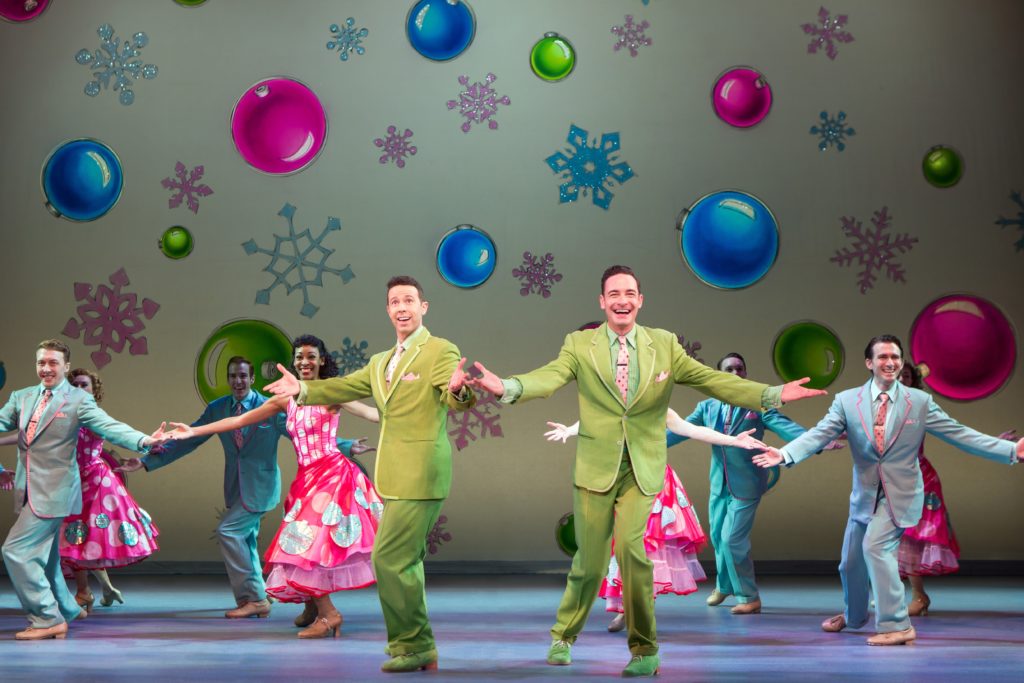
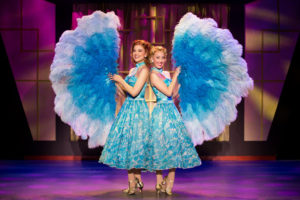
Just as the film, White Christmas begins in 1944 near the action of a WWII battlefront at a drab army camp as besties Phil Davis (Benton) and Bob Wallace (Montgomery) attempt to bring holiday cheer to their fellow soldiers. Amidst the wartime setting, Benton and Montgomery perform heartwarming versions of composer Berlin’s classics, Happy Holiday and the title tune, White Christmas.

Conrad John Schuck and Karen Ziembra as General Waverly and Martha Watson in Irving Berlin’s ‘White Christmas’

As the boys wrap their battlefront performance, their gruff commanding officer, General Henry Waverly (Conrad John Schuck) emerges initially seeming to break up the fun, when in truth, he thanks them for their little Christmas show and wishes his men well with a speech about his hopes for them ten years in the future. Shuck, who now calls nearby Franklin, TN home, has enjoyed a prolific career in TV, film and on stage. Among his many memorable roles, he appeared in several Robert Altman films including M*A*S*H, played Sergeant Enright on TV’s McMillan & Wife, brought Herman Munster back to life in the 90s starring as the bolt-necked patriarch in the updated series Musters Today, played a comedic robot cop in one of my cherished childhood favorites, Holmes and Yoyo. Oh, and did I mention he costarred as Col. Wm F. Cody alongside Reba in her Broadway debut as Annie Oakley in Annie Get Your Gun? But I digress.

Ten years in the future it is, as action then fast-forwards to Christmastime1954. This finds Wallace and Davis, now a hugely successful performing duo, about to appear on The Ed Sullivan Show. The stark contrast from the show’s more somber setting to the vivid set and costumes of the reprise of Happy Holiday and the toe-tapping, mood-lifting Let Yourself Go put me in mind of Dorothy’s arrival in Oz as she emerges from the black and white emotionless Kansas to the vibrant wide-eyed extravaganza that is Munchkinland. This also reminded me of a bit of useless trivia. White Christmas, the film, wasn’t just shot in spectacular Technicolor. It was also the first Paramount Pictures movie to be released in VistaVision, a then-new wide-screen format that enhanced the projection area of standard 35-mm film. Think of it as mid-50s version of 4K.

Benton and Montgomery bring 50s technicolor to life onstage in ‘White Christmas’

That said, the musical’s scenic designer, Anna Louizos and costumer, Carrie Robbins brilliantly pay homage to the beautifully dreamlike, overly saturated full spectrum of colors presented in the original as they dip their respective pallets into nearly every color in the rainbow helping to create a living technicolor spectacular.

Colors aren’t the only thing saturating White Christmas. It’s also full of Berlin tunes, so much so that even the incidental musical will have Berlin-philes beaming as they hear bits and bars from several of the legendary composer other notable tunes. While the show is indeed tune-full, it’s also satiated with patented boy-meet-girl (with complications) saccharine plots. As mentioned above, this time we’ve got army buddies Bob Wallace (Montgomery) and Davis (Benton) and their chance/fateful meeting with Betty and Judy Haynes (Conte and Sheehan, respectively).

From the beginning there’s not just sparks, there’s fireworks as Montgomery’s Wallace and Conte’s Betty lock horns while Benton’s Davis and Sheehan’s Judy see through the resistance and set their sights on matchmaking. This leads to a clever duet between Montgomery and Conte. Clever because they’re each in their own dressing rooms, he, backstage at The Ed Sullivan Show and she, in her dressing room at a local nightspot while both contemplate the shared unpredictability of  Love and the Weather (one of many Irving Berlin tunes not originally featured in the film, but added for the stage musical adaptation).

Conte and Sheehan recreate the iconic ‘Sisters’

Next up is a spot-on recreation of one of the film’s most iconic scenes, Sisters in which Sheehan and Conte, twinning in gorgeous heaven-blue dresses with matching feather fans wax lovingly on the bond of sisterhood, a bond so strong that only one thing can come between the two…when one sister attempts to even think of going after the other sister’s man. Bravo to Randy Skinner, the show’s director and choreographer, for finding the perfect balance between honoring the iconic moments like this, while breathing revived life into other segments of the show. Not gonna lie. I may or may not have teared-up during this number…and a few others throughout the show.

The Best Things Happen While You’re Dancing offers Benton and Sheehan a chance to sway lovingly across the floor. The staging of this number is beautiful as the set and ensemble disappear while Benton and Sheehan’s Phil and Judy escape their surrounding in a dreamlike stage induced by the peacefulness of dancing cheek to cheek.

Any time I talk about White Christmas—you’d be surprised how often that is—I inevitably mention my hands-down favorite moment in the film in which Phil has hoodwinked Bob into a train trip to Vermont to unknowingly join the Haynes Sisters as they perform a Christmas Eve show at an inn (which just so happens to be owned by their former General). In the film, clever cinematography transforms a table napkin, an advert and pine needles into a snow-scene all atop a table in a boxcar as the quartet ride the rails. The scene is sweet as they sing of Snow, but the whole sequence only lasts about two minutes. For the stage musical, it’s an all-in as the ensemble packs the boxcar for an expanded version of the song. It’s as if Skinner is giving me my own special holiday gift every time I see this show.

On the subject of gifts to the audience, enter Tony-winner Karen Ziembra as Martha Watson. Played by Mary Wickes in the film, Martha is The General’s right-hand-woman as she oversees the day to day running of the lodge and, at least for the holidays, helps him care for his visiting granddaughter, Susan (a role shared during the tour by Emma Grace Berardelli and Kayla Carter). Ziembra, like her film-version predecessor, lights up the stage and steals the spotlight with every snide remark, every double-take and every movement, but when she belts out the opening note of her sole solo Let Me Sing and I’m Happy…DAMN! That’s how you do it, folks. Not to be too outdone by a Tony-winner, later in the show, young Susan gets her chance at the tune, to audience-cheering results.
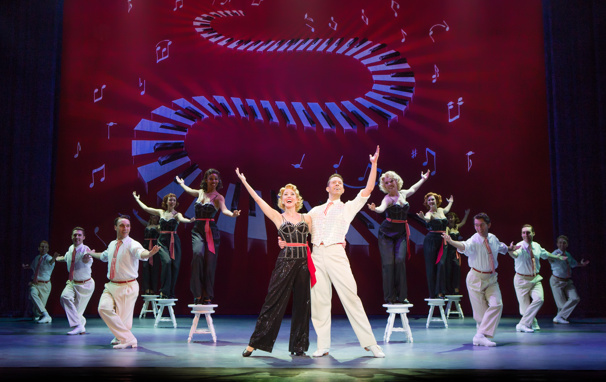
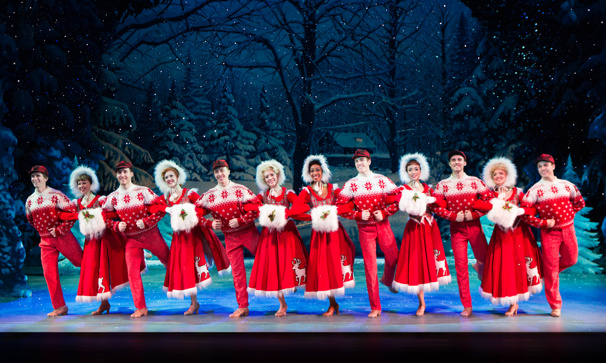
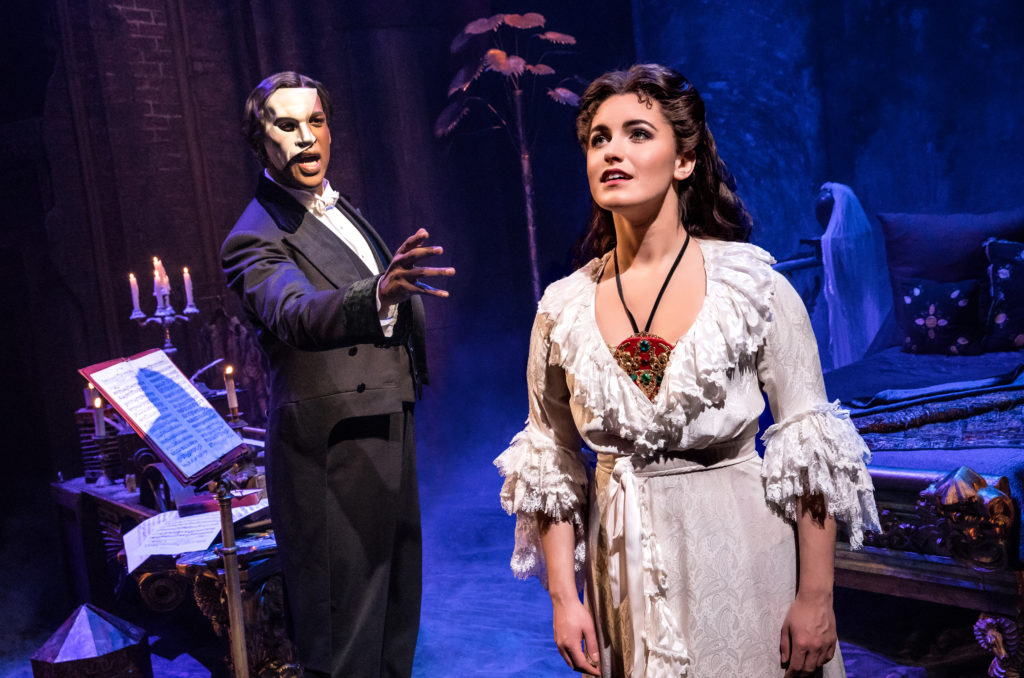
Act 1 ends with what is easily the moral of the show, Count Your Blessings Instead of Sheep and the optimistic and gorgeous Blue Skies.

While Act 1 contains enough punch to be a show all its own, Act 2 somehow amps up the thrill of it all as it opens with a no-holds-barred I Love a Piano. A mind-boggling number than clocks in somewhere around a full nine minutes of tap triumph featuring Benton, Sheehan and a dozen ensemble members in perfect step. And YES, on opening night of the Nashville leg of the tour, several audience members leapt to their feet for a spontaneous mid-show ovation in appreciation.

Other Act 2 highlights include a hilarious gender-bending Sisters reprise courtesy Montgomery and Benton, Sheehan’s breathy, bluesy ballad, Love You Didn’t do Right By Me that morphs into a duet with Montgomery on How Deep is the Ocean, and of course the magnificent film-tactic finale. Spoiler Alert…YES, it snows on stage!

Irving Berlin’s White Christmas continues in Music City at TPAC’s Jackson Hall with five more performances thru Sunday, November 18, with a Friday evening performance at 8p.m., Saturday matinee at 2p.m. and a Saturday evening performance at 8p.m., a Sunday matinee at 1p.m. and a final Sunday evening performance at 6:30p.m.. For more information, CLICK HERE. TPAC is offering two ticketing specials for the remainder of the run. Rush Tickets are available for $30. Simply visit the box office 90 minutes prior to curtain and inquire about availability. There’s also a special on groups of four tickets, just give the promo code JOLLY.

Following the Nashville leg of the tour, White Christmas heads to Tulsa, OK from November 20-25, Atlanta, GA from November 27-December 2, Denver, CO from December 5-15, Orlando, FL from December 18-23 and finishes out the holiday season in Miami, FL, December 20-30. CLICK HERE for ticket links to all remaining cities. To keep up with all things White Christmas, CLICK HERE or follow the tour on Facebook, Twitter and Instagram.

In addition to White Christmas, TPAC’s holidays are in full swing as they host a wide variety of Christmas-themed shows including: Broadway Princess Party, Nashville Rep’s 10th and final year of A Christmas Story, The Hip Hop Nutcracker, A Drag Queen Christmas, Nashville Ballet’s annual presentation of Nashville’s Nutcracker and Peter Pan and Tinkerbell: A Pirate Christmas. CLICK HERE for the full calendar, dates and ticketing information. Follow TPAC on Facebook, Instagram and Twitter.

As always, if you are interested in coverage for your latest entertaining endeavor, simply click the contact page and drop me a note. You can also follow JHP Entertainment on Instagram and Facebook.


Filed Under: Theatre Review Tagged With: Christmas, Holiday Movies, Irving Berlin, Irving Berlin's White Christmas, Jeremy Benton, John Schuck, Karen Ziembra, Kelly Sheehan, Kerry Conte, live theatre, Movies, Musical, Musical Theatre, National Tour, Review, Sean Montgomery, Theatre, Theatre Review, White Christmas

Review: Three decades later, ‘The Phantom of the Opera’ still mesmerizing audiences as latest national tour plays TPAC thru November 4

November 2, 2018 by Jonathan

Quentin Oliver Lee and Eva Tavares starring in “The Phantom of The Opera” (photo by Matthew Murphy)

When I attended opening weekend of the Nashville leg of the current national tour of The Phantom of the Opera at TPAC’s Jackson Hall, it marked the half-dozen mark for me, having originally seen the show nearly thirty years ago during its original Broadway run, as well as a handful of touring productions over the years, including at least two previous tours in the very theatre in which I sat last week. In spite of my familiarity with the story, and dare I say it, my own phandom, even before the drapery fell to reveal THAT chandelier, something was different—special even—about this show. Perhaps it was because my companion for the evening, in spite of growing up with a father who worked in New York’s theatre district, had never seen the show. That’s right, a Phantom virgin.

As we settled into our seats and the all-too-familiar prelude began to swell from the orchestra pit, I found myself surprisingly being overcome with chills. At first waving it off to me admittedly being a bit neurotic and simply loving the art of live theatre, I soon realized it was much more than that. Here I was, sitting in a near-sold-out theatre about to watch a show I’d seen time and time again, a show I knew was somewhat weak on book and character development, but a show that is simply gorgeous. Gorgeous in fantasy-inducing score, gorgeous in breathtakingly iconic costume, gorgeous in opulent set design, and thanks to Quentin Oliver Lee, Eva Tavares, Jordan Craig et al, gorgeous in breathing new life into characters as recognizable and beloved as any to have ever grace the theatrical stage.

While the beginning of the musical sets up the story, we still have to wait three scenes in before the action truly starts when the Phantom first appears…and yes, even after seeing it as many times as I have, I sill gasp a little when he first shows up.From his first appearance, Lee’s Phantom is menacing, commanding and powerful, his voice in fine condition to assume the titular role. From a physical standpoint, he’s also perfect for the role, towering above most of the cast. When he solos on Music of the Night, it is indeed enchanting.

While Richard Stilgoe and Sir Andrew Lloyd Webber have endured three decades of critics lamenting the lack of a believable story, character development and reasoning behind the tale of a masked man who lurks in the shadows of a Parisian Opera House in the early 20th century, Webber certainly knew what he was doing when he composed the accompanying score with lyrical help from Charles Hart, for it’s the show’s soundtrack that outshines even the regal opera house setting.

To that end, more gooseflesh moments occur when Lee’s Phantom is joined onstage by his Christine, Eva Tavares. Diminutive in stature, raven-haired, porcelain-skinned, Tavares is the polar opposite to her Phantom. While this could easily detract from their shared scenes, instead, it enhances the idea of why she would fall under his spell, for you have to admit, as un-PC as it is to say, a woman of her slight physical presence would have no choice but to succumb to the Phantom’s domineering ways. Here’s the thing though, what Tavares’ Christine lacks in assertive physicality, she more than makes up for in voice. Whether duetting with Emily Ramirez’s Meg near the top of the show with Angel of Music, with Lee on the show’s majestic title tune, or solo in Act 2’s hauntingly beautiful Wishing You Were Somehow Here Again, Tavares IS Christine, as beautiful as she is talented. No wonder the Phantom would be obsessed.

With a cast and orchestra totaling more than 50 company members, there’s plenty of stand-out performers. Among them, the aforementioned Craig as Raoul. Possessing perhaps the most skilled voice in the company, the night I saw him, he was perfection. It should be noted that the playbill indicates that Herb Porter and Constantine Pappas also step into the role during certain performances.

Having recently seen the national tour of Love Never Dies, at TPAC just a few months ago, I had forgotten that Madame Giry is actually likable in the original story, considering the character is a bit of a baddie in the redo. Kristie Dale Sanders is delightful as Madame Giry in this production of Phantom, especially in one of the show’s rare comedic moments in which she and several members of the Opera House’s staff have been receiving notes from the Phantom.

Also turning in fine comedic performances are David Benoit and Rob Lindley as Monsieurs Firmin and Andre, the opera house’s business associates and Trista Moldovan as Carlotta Giudicelli, the opera diva Christine is about to replace if the Phantom has any say in the matter.

Speaking of, perhaps realizing the story is less-than-believable, this current incarnation seems to have added a bit more humor. A welcomed change indeed.

Billed as producer Cameron Mackintosh’s New Production, there are other differences between this and previous incarnations. The slowly revolving tower that ascends to the Phantom’s underground lair is spell-binding. When the stairs seemingly magically appear from the flat surface of the tower as the Phantom descends them, accompanied by lighting designer Paule Constable’s perfectly-timed lighting effects illuminating each emerging step, I couldn’t help but feel anxious at the thought of a technical glitch. On the subject of the lighting, throughout the show, I found my eye wandering from the actors to their shadows cast along the walls of the set, adding yet another spooky layer to the story.

Perhaps my favorite change from the original version is the top of Act 2 with Masquerade. While the grand staircase from the original was indeed a powerful visual, the newly added mirrored ceiling piece that allows the audience a true bird’s eye view of the ballroom choreography is quite enjoyable.

Thirty years after its Broadway debut, The Phantom of the Opera— story missteps aside–is still as majestic and hypnotic a spectacle as ever.

The Phantom of the Opera continues at TPAC’s Jackson Hall with performances Friday, November 2 at 8p.m., Saturday, November 3 at 2p.m. and 8p.m. and Sunday, November 4 at 1p.m. and 6:30p.m. Tickets range in price from $55 to $105. Earlier this week, TPAC announced the limited availability of special $40 rush tickets to each remaining performance. To take advantage of that, show up 90 minutes prior to showtime and inquire at the box office. CLICK HERE for tickets or more information.

Not in Nashville, but hoping to see Phantom on tour? Following its Music City engagement, Phantom continues through Fall of 2019 with performances in Houston, November 7-18, Omaha, November 21-December 2, San Antonio, December 7-17, Dallas, December 18-January 6, Oklahoma City, January 9-20, Detroit, January 24-February 3, Kalamazoo, February 6-17, Pittsburgh, February 20-March 3, Milwaukee, March 6-17, Providence, March 21-31, Cleveland, April 3-20, Schenectady, April 24-May 5, Los Angeles, June 6-July 7, Costa Mesa, July 10-21 and Honolulu, August 7-September 1. CLICK HERE for tickets. Follow Phantom on Tour at the show’s official site HERE, on Facebook, Instagram and Twitter.

Next up at TPAC, the national tour of Irving Berlin’s White Christmas returns to the stage. CLICK HERE for tickets or more information. You can also discover all the latest from TPAC by checking them out online or on Facebook, Instagram and Twitter.

As always, if you are interested in coverage for your latest entertaining endeavor, simply click the contact page and drop me a note. You can also follow JHP Entertainment on Instagram and Facebook.

Filed Under: Theare, Theatre Review Tagged With: Musical, Musical Theatre, National Tour, Phantom, Phantom of the Opera, Review, Sir Andrew Lloyd Webber, Theatre Review, TPAC

  • Page 1
  • Page 2
  • Go to Next Page »

Copyright © 2026 · News Pro on Genesis Framework · WordPress · Log in