• Skip to primary navigation
  • Skip to main content
  • Home
  • About
  • Features
  • Contact

JHP Entertainment

Entertainment News, Reviews and Interviews

  • Home
  • About
  • Features
  • Contact

Celebrity Interview

Rapid Fire 20 Q with cast and crew of Studio Tenn’s ‘Always…Patsy Cline’; at The Factory at Franklin’s Jamison Theatre February 8-24

February 7, 2019 by Jonathan

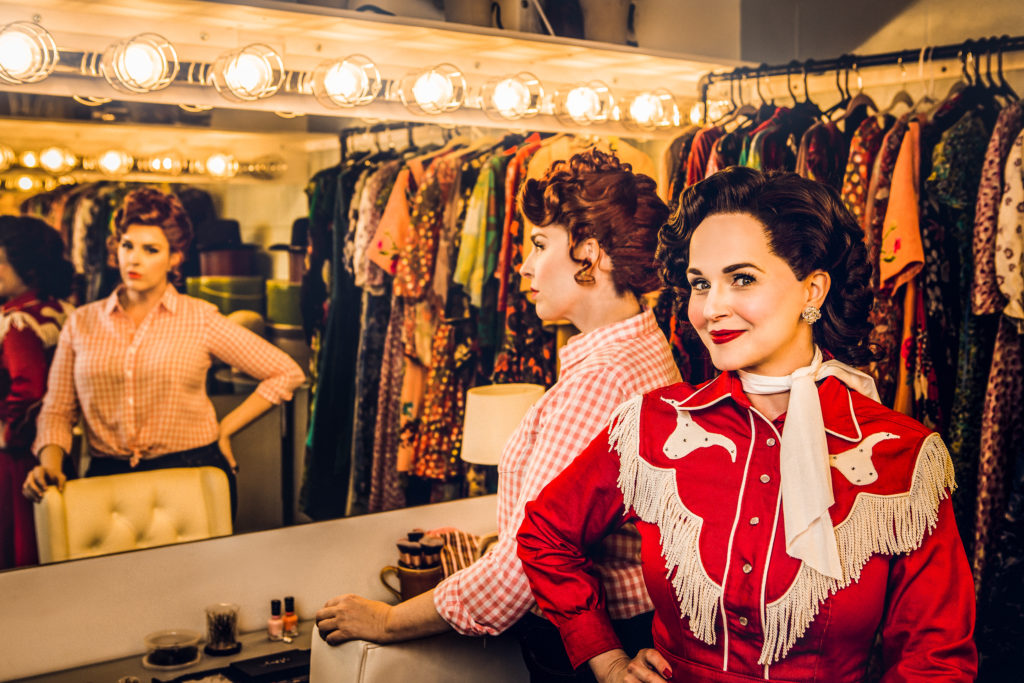
Megan Murphy Chambers and Melodie Adams star in Studio Tenn’s “Always…Patsy Cline” (all photos by MA2LA courtesy Studio Tenn)

For their current production, Studio Tenn is tackling one of Music City’s favorite jukebox musicals about one of Nashville’s favorite legends as they present Always…Patsy Cline onstage at Jamison Theatre at the Factory in Franklin from Friday, February 8 thru Sunday, February 24. Created and originally directed by Ted Swindley, Always…Patsy Cline weaves together a unique story of friendship between Patsy Cline, the iconic country singer and a fan, Louise Seger, who continued their bond by way of a series of letters written between the two after meeting in Texas honky tonk after one of Cline’s shows. As Studio Tenn prepped for opening night, I recently had the chance to chat with the show’s director, Benji Kern, costumer, Blake Danford and stars Megan Murphy Chambers and Melodie Madden Adams for the latest edition of my recurring interview feature, Rapid Fire 20 Q.

———————————————

RAPID FIRE WITH STUDIO TENN’S ALWAYS…PATSY CLINE STAR, MEGAN MURPHY CHAMBERS

JHP: Was playing Patsy a role that was on your radar prior to Studio Tenn announcing their production?

MEGAN MURPHY CHAMBERS: Honestly, no. Since the show’s never been done in Nashville outside of the productions at the Ryman, I didn’t anticipate getting to take a crack at it.  And I’m absolutely delighted to have been wrong about that! Patsy is proving to be a stretch and a challenge in all the best ways.

JHP: Alright, I gotta ask. You may or may not know, but Mandy Barnett is a good friend of mine. Of course she is known for her portrayal of Patsy in playwright Ted Swindley’s legendary mountings of the show here in Nashville at the historic Ryman Auditorium. That said, what’s it feel like not only taking on this role, but doing it here, where you’ll no-doubt not only play to fans of Patsy, but also fans of Mandy and her portrayal?

MEGAN MURPHY CHAMBERS: I’m doing my best not to approach it from a place of comparison – it would be foolish indeed to use either of those ladies as a yardstick against myself, so I’m doing my best to go after it the same way I do any other role. Both Patsy and Mandy are Nashville icons, so I’m paying homage, looking at it with fresh eyes, and trusting Benji and Jason Tucker, the show’s musical director, to help me wring every bit of joy and musicality from the material that I can!

JHP: Speaking of friends, opposite your Patsy, you’ve got Melodie Madden Adams as Louise. I first became familiar with you both at Boiler Room Theatre several years ago. Is that when you two met?

MEGAN MURPHY CHAMBERS: It was! We met after getting cast in Guys and Dolls in (I think?) 2003 and clicked instantly.  Melodie is so hilarious, generous and talented, and we are laughing our asses off every day during rehearsal. I feel unbelievably secure on stage with her, and it’s such a boon to the show to get to skip the “getting to know you” portion of the process. Our friendship let us get right to the good stuff!

JHP: As far as Patsy’s stage clothes, you could say she had two distinctive looks, cowgirl and country queen. From what I’ve seen in promo pics, costumer Blake Danford has recreated some of Patsy’s iconic looks. What’s your favorite?

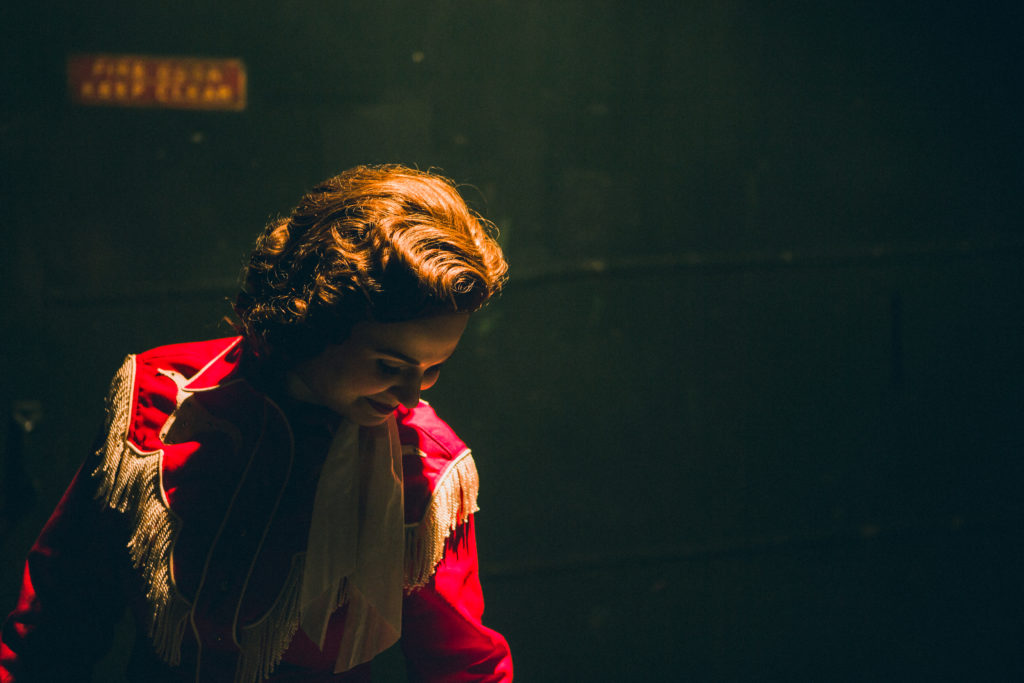
MEGAN MURPHY CHAMBERS: Way to give me a Sophie’s Choice question, Jonathan All of my costumes are being designed and built for me by Blake Danford and Allison Hearn (wardrobe supervisor), which [swoooooooon] and they’re all going to be spectacular. That said, that red cowgirl getup is beyond dreamy, and I have a feeling my little black number will be one that I want to sneak into my purse on closing night.

JHP: Had Patsy not met her untimely death at what was still the height of her career and popularity, do you think her star would have continued to burn bright, or would her fame have faded?

MEGAN MURPHY CHAMBERS: THE BRIGHTEST. Patsy’s talent was too massive for her to have faded into the background. I imagine her being a Dolly, Loretta, or Cher type; she was already a bit of a shape-shifter, and knew how to ride the wave of popular interest. I can see her enduring and evolving stylistically, and mentoring and collaborating with future generations of performers. She sang with such depth and feeling in her twenties – it haunts me to think what kind of intensity she could have served us with another 30 years under her belt.

RAPID FIRE WITH STUDIO TENN’S ALWAYS…PATSY CLINE STAR, MELODIE MADDEN ADAMS

JHP: I mentioned when I spoke to Megan that you two have a long history of sharing the stage, both in theatrical and music endeavors. How has your off-stage friendship enhanced your portrayal of the friendship between Louise and Patsy?

MELODIE MADDEN ADAMS: Honestly it really felt like such a head start on the process. Megan and I joke that we can almost speak to each other onstage telepathically and so it’s helpful with a show that is so centered around such an established relationship.

JHP: Of course the two of you also frequently share the stage as part of MAS Nashville. So you know I gotta ask…when are we getting more from MAS?

MELODIE MADDEN ADAMS: I hope really soon, but for now it’s really fun to support each other with all of our other projects we have going on!

JHP: Were you a fan of Patsy Cline’s music prior to being cast in Studio Tenn’s Always…Patsy Cline?

MELODIE MADDEN ADAMS: I was familiar with her songs for sure, but I wouldn’t call myself a fan. Even in the short time we have been rehearsing I see why her music touched so many people.

JHP: The play was inspired by Louise and Patsy’s friendship and correspondences. When’s the last time you wrote someone an actual letter?

MELODIE MADDEN ADAMS: Does a thank you note count? If not, it’s been awhile, but I’m lucky to have friends who still enjoy writing actual letters. One being Megan!

JHP: While the show is predominately about the music, by the nature of Patsy’s real-life story, there’s plenty of emotional moments. I’ve seen Always…Patsy Cline more times than I can remember, and it never fails. During key scenes, my eyes always ‘sweat’. How do you play those emotional moments night after night?

MELODIE MADDEN ADAMS: I approach those key scenes by channeling my own life experiences that relate to what’s going on onstage. For me, I really connect with the moments when you see Patsy as a mother and when she talks about her baby boy. It always makes me think of my little boy back home.
RAPID FIRE WITH STUDIO TENN’S ALWAYS…PATSY CLINE COSTUMER, BLAKE DANFORD

JHP: Having created the costumes for Studio Tenn’s Beauty and the Beast, as well as assisting on consuming for last year’s breathtaking debut of Frankenstein, you’re back for Always…Patsy Cline. How many costumes have you created for this jukebox musical?

BLAKE DANFORD: Patsy has about seven costumes, Louise stays mostly in the same look, and the band members each have one look! So about fifteen total.

JHP: What went into researching wardrobe options for Always… Patsy Cline?

BLAKE DANFORD: The great thing about creating costumes based on something someone wore so “recently”, historically speaking, is that there are a plethora of photos of the original looks, and many of them are still in existence! That definitely makes research easier, as all of that information is quite readily available. In addition to just specifically researching Patsy’s clothes, a lot of care was done to understand the era as well to influence Louise and the band.

JHP: I’ve seen promo pics of Megan in the iconic red and white cowgirl outfit. While it’s instantly recognizable, there are some subtle differences from Patsy’s actual outfit. As a designer, how do you decide when to not simply duplicate an iconic look, but rather honor the original while adding your own touches?

BLAKE DANFORD: Thank you for noticing the differences! Something I hold dear to my heart in every project I do is honoring expectation. So, I kept all the key points, (red, cream, fringe) and took the opportunity to “crisp” it up a little bit. The original was just a shirt tucked into a skirt, whereas ours is built as a jacket. The material in the original is a light cotton, where ours is a denim. It’s details like these that I feel lends a sense of gravity to the character, and convey the “character” of Patsy.

JHP: I saw on Studio Tenn’s social media that some of those involved in the show recently visited the Patsy Cline museum. From what I understand, this was after you had already designed much of the wardrobe for the show. Are you glad you waited until after you created your own versions of the iconic wardrobe?

BLAKE DANFORD: As I said previously, in the era we are in, photos of these pieces are quite readily available online, so I was able to get most of the information I needed ahead of time. It was, however, such a thrill to see those pieces in person and see the things that I got correct in my research!

JHP: In keeping with the letter writing theme that was the springboard for the creation of Always…Patsy Cline, if you could write Patsy a letter, what would you ask?

BLAKE DANFORD: Oh goodness, that’s a tough question! I don’t know that I would necessarily have one specific question, but I would love to be able to exchange letters with Patsy, herself. It would be an absolute treat to get to chat with her and hear the stories that she accumulated in her life.

RAPID FIRE WITH STUDIO TENN’S ALWAYS…PATSY CLINE DIRECTOR, BENJI KERN

JHP: Always…Patsy Cline is kind of unique in that it’s a two-person musical (plus a small band). For Studio Tenn’s production you’ve cast two of Nashville’s favorites, Megan Murphy Chambers and Melodie Madden Adams. You’ve worked with both actresses in the past. Tell me what it is about each of them that embodies the characters of Patsy and Louise?

BENJI KERN: The friendship between Patsy and Louise was really important to me coming into the production. Not only are Megan and Mel both insanely talented, but they have an offstage friendship that has created a wonderful chemistry between the figures they are portraying. Megan has a natural ear which is key to shows where you are embodying an icon. She also has the smarts to pay tribute and honor Patsy which is important as trying to do impersonations will always fall short. Mel is a fantastic story teller, inviting, and captivating. So it just made sense that these intrepid women would take on these roles.

JHP: In addition to the leading ladies, Always…Patsy Cline features a six-person band. Seeing as how the songs are nearly as vital to the story as the dialogue, and again, because Nashville is Music City, who’s musical director and who’ve you got in the band?

BENJI KERN: We are excited to be working with Jason Tucker as the music director for this show. It’s an honor to have him join the Studio Tenn family. In addition to being music director, Jason will be conducting and playing piano. Joining him are steel guitarist Michael McElravy, guitarist Lindsey Miller, bass player Luke Easterling, drummer Ben Andrews and fiddler Cassie Shudak.

JHP: Several people connected to Patsy Cline, including family members, still live in the area. Since Studio Tenn is just minutes from Music City, any chance you’ve reached out to any of them to extend an invite during the run of the show?

BENJI KERN: Yes!  We have had the great fortune to work with The Patsy Cline Museum.  In addition, one of our Board of Directors, Larry Westbrook’s father did Patsy Cline’s taxes.  He has been in contact with the family on Studio Tenn’s behalf.

JHP: The story of Always…Patsy Cline is told through the eyes of Louise Seger, a fan who randomly struck up a friendship with the star and continued that relationship via a series of handwritten correspondences. Have you ever written a fan letter, or, I guess in today’s terms…a fan email?

BENJI KERN: I have not written a fan letter in the Louise terms, but I have reached out to people via my Instagram handle.  Let me tell you, I’ve freaked out when they have responded.

JHP: Just last year, Always…Patsy Cline celebrated its 30th anniversary, Ted Swindley having debut the work back in 1988. What is it about Patsy’s music and this play that endures?

BENJI KERN: Patsy was the entire package. She was a star, captivating audiences with her earthy and authentic energy and incredible voice. She was a trail blazer, paving the way for female artists, making her way into the boys club in the music industry and holding her own.  We all know Crazy which is the number one played Juke Box song of all time. Her music continues to speak to audiences not only because of her iconic voice but most importantly, the way she told a story with each song.

———————————————
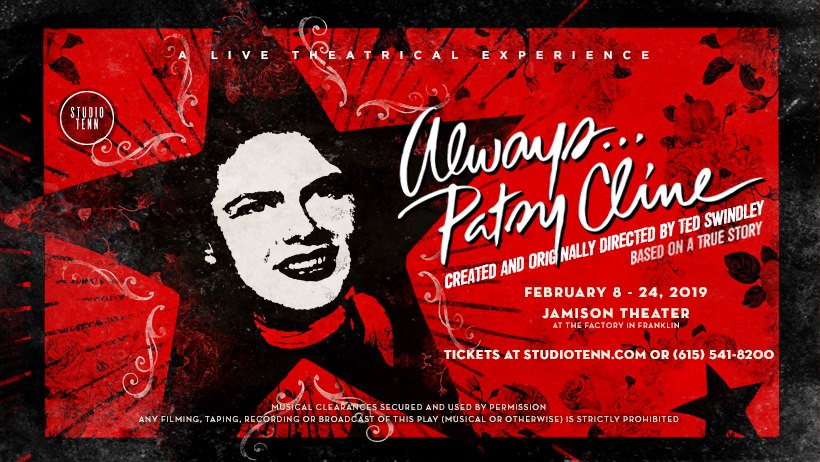
Audiences will have a chance to see exactly what Benji meant by saying, “the way Patsy Cline told a story with each song” when Studio Tenn’s Always…Patsy Cline plays Jamison Theatre at The Factory at Franklin (230 Franklin Road, Franklin, TN) from February 8-24. Shows are 7 p.m. Thursday-Saturday with Saturday and Sunday matinees at 2 p.m. Tickets range in price from $30 to $87.50. CLICK HERE for more information or CLICK HERE to purchase tickets.

Following Always…Patsy Cline, Studio Tenn will continue their 2018-2019 season with The Sinatra Legacy: A Musical Tribute to Ol’ Blue Eyes onstage at the historic Franklin Theatre in Downtown Franklin March 13-17. CLICK HERE for tickets or more information.

In the meantime, be sure to check out Studio Tenn online at StudioTenn.com or on social media at Facebook, Instagram and Twitter.

Interested in coverage for your latest entertaining endeavor? Click the contact page and drop me a note. You can also follow JHP Entertainment on Instagram and Facebook.
Filed Under: Entertainment, Rapid Fire 20 Q, Theare, Uncategorized Tagged With: Always Patsy Cline, Benji Kern, Blake Danford, Celebrity Interview, Franklin, Interview, Megan Murphy Chambers, Melodie Madden Adams, Nashville, Patsy Cline, Rapid Fire, Studio Tenn

Rapid Fire 20 Q with ‘Jumpin’ Johnny’ director Cameron McCasland, documentary on life of Harlem Globetrotter Dr. John Kline premiering at Belcourt Thursday, January 24

January 24, 2019 by Jonathan

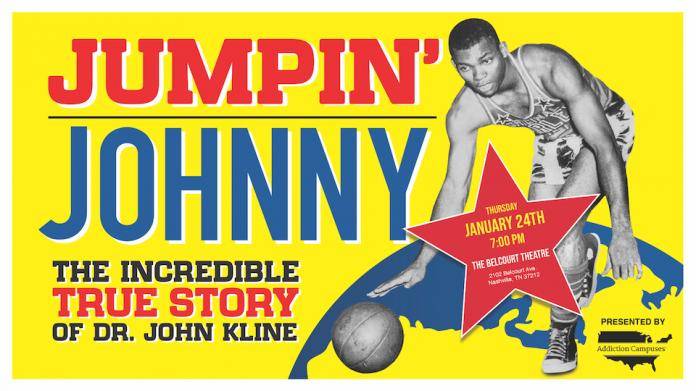
With a history fast-approaching a full century, you’d be hard-pressed to find anyone who isn’t at least somewhat familiar with the famed Harlem Globetrotters. While his name may not be initially as recognizable as some of the more famous former Globetrotters like Wilt Chamberlain, Marques Haynes or Meadowlark Lemon, Dr. John “Jumpin’ Johnny” Kline’s legacy on and off the court is indeed the stuff of legends. To that end, earlier this week, as local filmmaker Cameron McCasland and Addiction Campuses prepared for their SOLD OUT January 24th debut screening of Jumpin’ Johnny: The Incredible True Story of Dr. John Kline at Belcourt Theatre, I had the opportunity to speak with the filmmaker for my latest Rapid Fire 20 Q.

———————————————

RAPID FIRE 20 Q WITH FILMMAKER CAMERON McCASLAND

JHP: Before we get into talking about your documentary, Jumpin’ Johnny, I just have to admit…in my youth, I remember the Harlem Globetrotters being everywhere from occasional local exhibition games and being animated for their own Saturday Morning cartoon (as well as a few episodes of Scooby-Doo) and starring in their own live-action variety series and the third and final Gilligan’s Island reunion movie, The Harlem Globetrotters on Gilligan’s Island. (I may or may not own that iconic film on DVD) What’s your first memory of the basketball legends and why have they endured for nearly 100 years?

CAMERON McCASLAND: I think I’m in the same boat as you on that. Scooby Doo and Gilligan are among my first memories. And I remember they used to air at least a game a year on television that would come on right after Saturday morning cartoons. I think the Globetrotters endure because of tradition at this point. My good memories as a kid turn into me wanting to take my own children to a game, and in turn I’m certain they will do the same when the time comes.

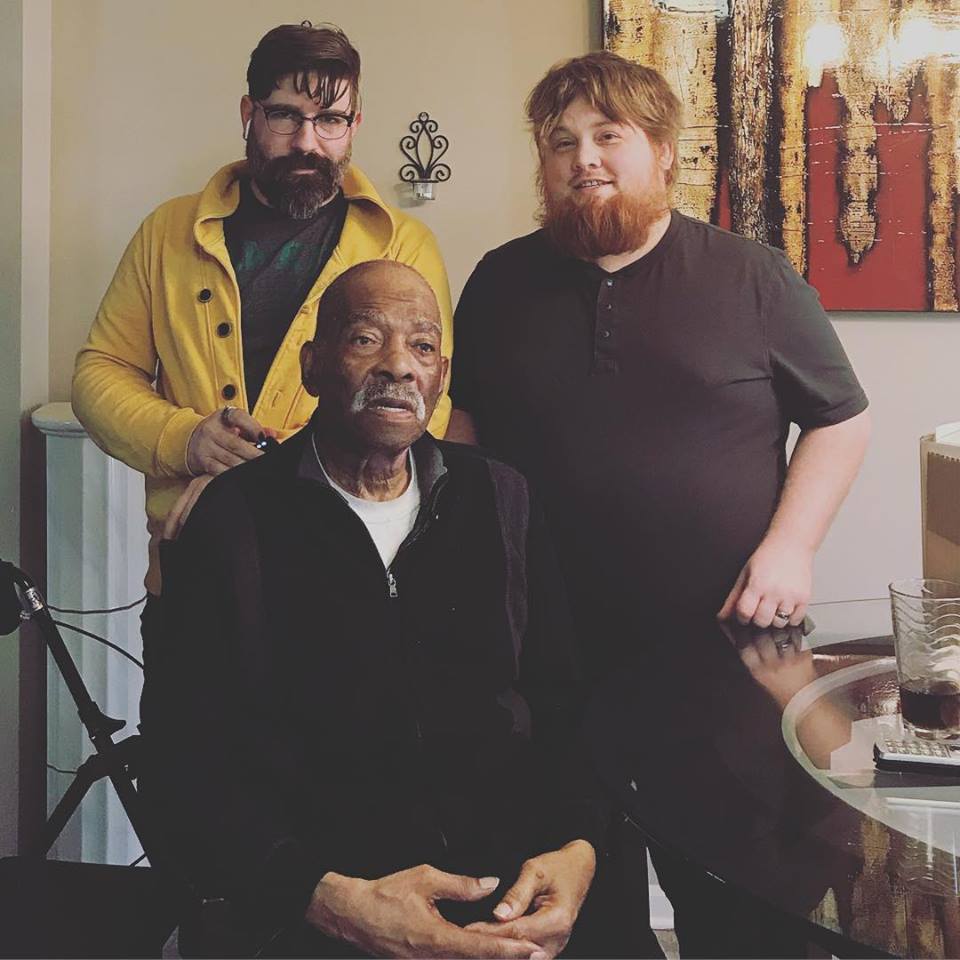
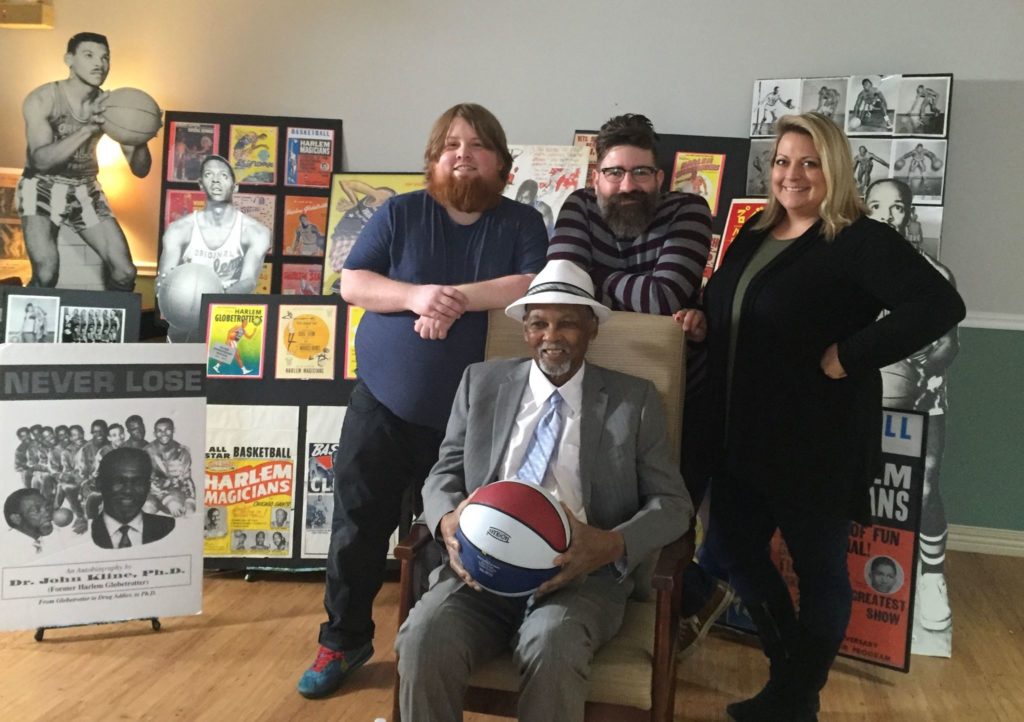
Dr. John “Jumpin’ Johnny” Kline (front and center) with documentary filmmaker Cameron McCasland and producing partners Josh Ickes and Addiction Campuses Erin Dineen (all photos/graphics courtesy McCasland and/or Addiction Campuses)

JHP: How did doing a documentary about former Harlem Globetrotter, Dr. John “Jumpin’ Johnny” Kline come about?

CAMERON McCASLAND: I went to work for Addiction Campuses in January of 2018. Erin Dineen the creative director wanted to try new things, and she thought I was a good fit for that. The Globetrotters were coming to town at the end of the month (as they do every January in Nashville). So I was looking for a way to talk to one of those guys. Doing a little research online led me to Dr. Kline’s story. He was staying just north of town, and I did a little detective work to track him down and get him on the phone.

JHP: Was the project always intended as a full-length documentary, or did that evolve over time?

CAMERON McCASLAND: Well, yes and no. I knew I wanted to make something long form at Addiction Campuses. We had already put in motion a few docu-series that we made monthly last year. I didn’t know if this would fit into that, but I knew I wanted to talk to Dr. Kline. We did an almost five hour interview, which was quiet exhaustive for a man of 86 years old. Afterwards, I read his book, and started reaching out to people. It took on a life of its own. It was just the three of us, Myself, Erin and Josh Ickes, who I have collaborated with on several previous projects. We just kind of went all in.

JHP: How does Dr. Kline’s story connect to Addiction Campuses and their mission?

CAMERON McCASLAND: Addiction Campuses’ ultimate goal is to see people lead healthy lives and break the chains of addiction from drugs and alcohol. Dr. Kline had already been doing this both personally and professionally for longer than I have even been alive. It just seemed like a good fit. He saw this as a opportunity to educate, and we were willing students.

JHP: I can’t imagine it was too easy to connect with a former sports star who had long-since been retired. How did you track him down?

CAMERON McCASLAND: Dr. Kline has a long paper trail in terms of newspaper articles and was still somewhat active on the web. He had done a commercial for a rehab facility in Madison Tennessee. I reached out to them, but he had left months before. I was able to sweet talk one of the care givers to pass my information on to one of his family members, as they couldn’t give me his info due to privacy. From there it was a matter of a few phone calls with his family that gained us an audience.

JHP: When you finally did find him, what was that initial phone call like?

CAMERON McCASLAND: He was very humbled that I knew about his basketball career. He expressed to me that he had always hoped he could make a movie of his life, but had been disappointed with some false starts over the years. He wanted to tell the whole story, and I tried to find a balance between getting to know some initial details while at the same time wanting to hold off some of that story until we could put it on camera. When we met face to face I was impressed with how dapper he was. He was ailing from some foot surgery, but really pushed through that day to tell us all he could. Over the next six months I would visit him and we talked on the phone weekly. I’m thankful to have made him a friend, and I think by the end he trusted me to help tell his story.

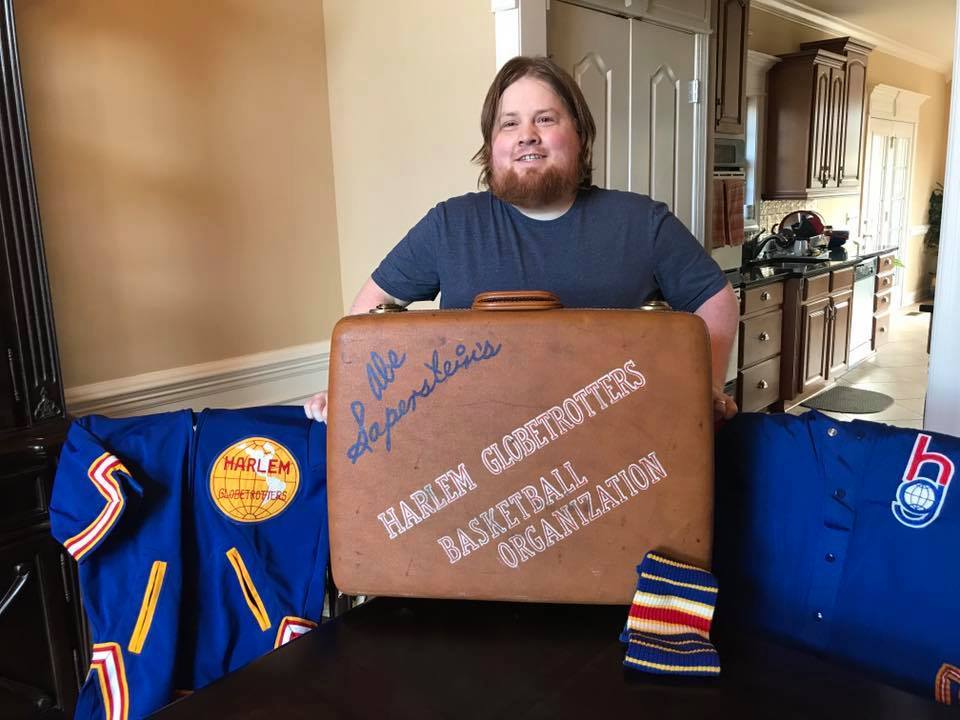
Documentary filmmaker, McCasland pictured with some of Dr. Kline’s Harlem Globetrotter memorabilia

JHP: Was it difficult to pursued Dr. Kline to agree to take part in the project?

CAMERON McCASLAND: No, not really. I think having a organization like Addiction Campuses backing this project helped with that. It was easy for him to look at what they were doing, and seeing that they had the same hope he had for people who are suffering from addiction. He was just anxious for us to get it right.

JHP: You mentioned that lengthy first interview earlier. Tell me a little more about that?

CAMERON McCASLAND: Once we talked on the phone, I went to where he was staying and interviewed him on camera for almost 5 hours. Like I said before, you don’t ever know what something is until you start when it comes to documentary work. You just have to follow the story. So I just let him tell me what he wanted, and I’d chase him down the rabbit holes with follow ups. I honestly feel like it never stopped, as even when we were done he was in constant contact. I’d find an old article on him and read it to him, and he’d tell me he had not thought of that in 50 or 60 years. Then he’d fill in the gaps. His memory was excellent.

JHP: What was it like to sit down with someone who’d lived such a remarkable life?

CAMERON McCASLAND: A bit surreal. I see a lot of myself in Dr. Kline in that I worry about things like legacy, and I try to save everything that I think someone might care about later. It became very personal to me in that way. And it is a bit strange to hear about him talking about other basketball legends like Meadowlark Lemon, Goose Tatum, or Marques Haynes. Guys I had seen on Scooby-Doo as a kid. They were just his old friends. It’s like having breakfast with Superman in that way.

JHP: Were you surprised by how forthcoming he was about his past, or did you expect that, considering he had become an advocate for drug addiction recovery?

CAMERON McCASLAND: That really developed over the course of the interview. He has a few go-to stories that are in his books (he authored sixteen books). He told us those, and then I’d follow up. I think he was surprised at some of the details I had already uncovered. That brought a certain trust to the situation. I had a lot of respect for him, and he re-payed that by being very candid. So many of his team mates had already passed on, he was ready to tell it all, and trusted us to do right by him. I feel like we have honored that.

JHP: Speaking of his past, Dr. Kline has been honored with several sports-related accolades, including being inducted into his alma mater, Wayne State University’s Hall of Fame, the African American Sports Hall of Fame, the Globetrotter Legend Award. What was his reaction when asked about his own accomplishments on the court?

CAMERON McCASLAND: It’s funny because there was a duality in Dr. Kline. When you talked to him about basketball, he would tell you that was great. He was very matter of fact about that. But when it came to his work in the recovery community he was very humble and always would talk about the strength of other individuals to battle their addictions. He was very proud of his accomplishments on the court, but even more of the things he did afterwards.

JHP: Other than the first person interview, what other resources filled in the blanks during your research?

CAMERON McCASLAND: I read his books of course, and I went to the web and newspaper archives. I spent some time in the microfiche in the library which is a skill I think that has been lost to researchers and documentary film makers because the web is so much simpler. I also had access to his personal writings and digitally archived hours of old VHS tapes of things he had done over the past 30 years. I watched, read, and researched it all. I really lived in this mans journals and papers for the last year. And its funny because I have been able to share things with his family that they didn’t know.

JHP: In addition to Dr. Kline, who else did you interview for the project?

CAMERONN McCASLAND: We talked with Sharon Hill. Dr. Klines daughter who had a lot of insight to him. We also talked to Ernie Wagner who grew up with Johnny and played with him at both Wayne State and with the Globetrotters. We also talked to sports writers Chris Dortch and Ron Wynn. And Michael “Memphis” Douglas who is a former Harlem Globetrotter that currently tours the country with his organization the Harlem Legends. He gave us a lot of perspective on the pressures athletes face, and the impact they can have when using their voice.

Ickes & McCasland with Dr. Kline’s lifelong friend, Ernest “Ernie” Wagner, Jr.

JHP: Without divulging details, was there anything that was off limits during any of your interviews?

CAMERON McCASLAND: No not at all. It was kind of funny because their were some things Ernie would say out loud and then would say “I probably should’t tell that, but he’s dead anyways now.” I think both Johnny and Ernie knew that they were the last guys who could tell the tale from a first person point of view. I could make an entire other film just chronicling Ernies later life.

JHP: I understand Dr. Kline was nearly blind by the time you first met him and you mentioned earlier that as you began digging through old newspaper archives, you’d read them to him during subsequent phone conversations. Did those conversations spark further memories?

CAMERON McCASLAND: Yes, they did. Johnny’s mind was very sharp all the way to the end, but his eyes had started to go. He could read if you held something very close to his face, but he got a lot of joy when I would call him with an article that talked about his basketball days. A lot of that stuff he had not seen before as they globetrotters played nightly so by the time the game was over they were on the bus and didn’t see the newspapers that came the next morning. And for every name mentioned he had a story about those guys. It was truly fascinating.

JHP: How often did you speak with him during the course of preparing for the documentary?

CAMERON McCASLAND: It was at least weekly. I’d call him to ask questions, and he would call me to check on how things were moving along. He talked Ernie into speaking with me. Ernie had been cautious over the years as his life had been filled with criminal activity and he wanted to protect his family. I’d go visit Johnny in his daughter’s home and we would have long conversations.

JHP: Sadly, as you referenced above when quoting his friend, Ernie, Dr. Kline passed away summer of last year. How far into the process of the documentary were you at the time of his death?

CAMERON McCASLAND: We had been making the movie for about six months. He knew it had grown into a full length feature film which excited him. We all wanted him to see it, but I think he was pretty content just knowing that it was happening. He’s the one person who didn’t need to see it, as he had already lived it. And it’s hard to squeeze 86 years of life into a 90 minute movie. I feel like it’s an honest portrait, but he was so much bigger than this movie ever could be.

JHP: I  guess you could say you’ve had your own Tuesday’s With Morrie with Dr. Kline. Is there one thing he said to you, or one idea he expressed during your conversations that you keep going back to and thinking about?

CAMERON McCASLAND: His life long mantra was “Never lose.” To me, that means that when things don’t go the way you wanted, you use it as a learning experience and try again. When I saw Dr. Kline for the last time, he was asking me to bring him books about cooking for health. Even on his death-bed he was anxious to learn. I think that’s what I’ll always admire about him most. He was a student until the end.

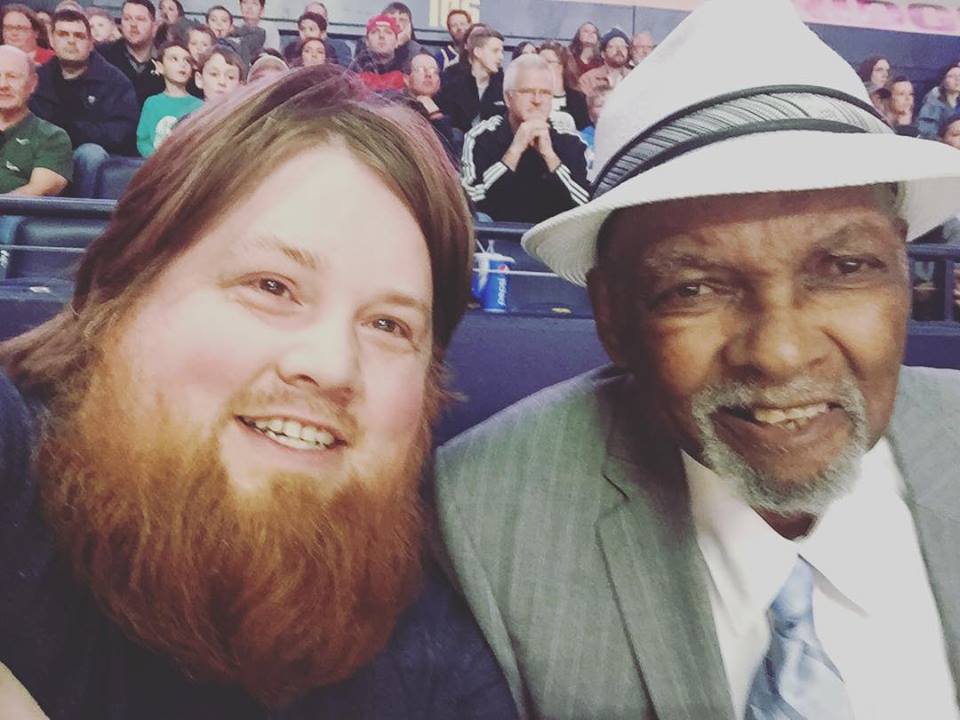
A selfie of the filmmaker and the legend in the audience for the 2018 Harlem Globetrotter’s exhibition game in Nashville.

JHP: What all do you have in-store for Thursday’s screening at Belcourt?

CAMERON McCASLAND: I think this premiere at Belcourt is going to be a living send off for Johnny as well as introducing him to a whole new generation of people. Addiction Campuses really has pulled out all the stop for this one. The movie is already sold out, and those that were lucky enough to get a ticket are going to go home with posters and trading cards and a few lucky people will get some other cool stuff including tickets to the upcoming Globetrotters game. Additionally I think the Q&A will be eye opening.

JHP: Following Thursday night’s World Premiere Screening of Jumpin’ Johnny, what’s next for the film?

CAMERON McCASLAND: The plan is for the film to go out on the film festival circuit for 2019. We want to put it in front of as many eyes as possible with the hope it will inspire people to find healthy paths to recovery. I think this movie has the power to do that.

———————————————

To learn more about Jumpin’ Johnny: The Incredible True Story of Dr. John Kline, CLICK HERE. For details about Addition Campuses, their mission and services, CLICK HERE or follow them on Facebook, Twitter and Instagram. For more about filmmaker Cameron McCasland, CLICK HERE or follow him on Twitter and Instagram.

As always, if you are interested in coverage for your latest entertaining endeavor, simply click the contact page and drop me a note. You can also follow JHP Entertainment on Instagram and Facebook.
Filed Under: Entertainment, Movies, Rapid Fire 20 Q Tagged With: Addiction, Addiction Campuses, Belcourt Theatre, Celebrity Interview, documentary, Dr. John Kline, film, Harlem Globetrotters, Interview, Jumpin' Johnny Kline, movie, movie premiere, Nashville, Rapid Fire 20 Q

Rapid Fire Q&A with bon vivant, revered theatre critic and all-round theatrical legend, Jeffrey Ellis, directing ‘The Boys in the Band’ at The Barbershop Theatre September 27-October 1

September 20, 2018 by Jonathan

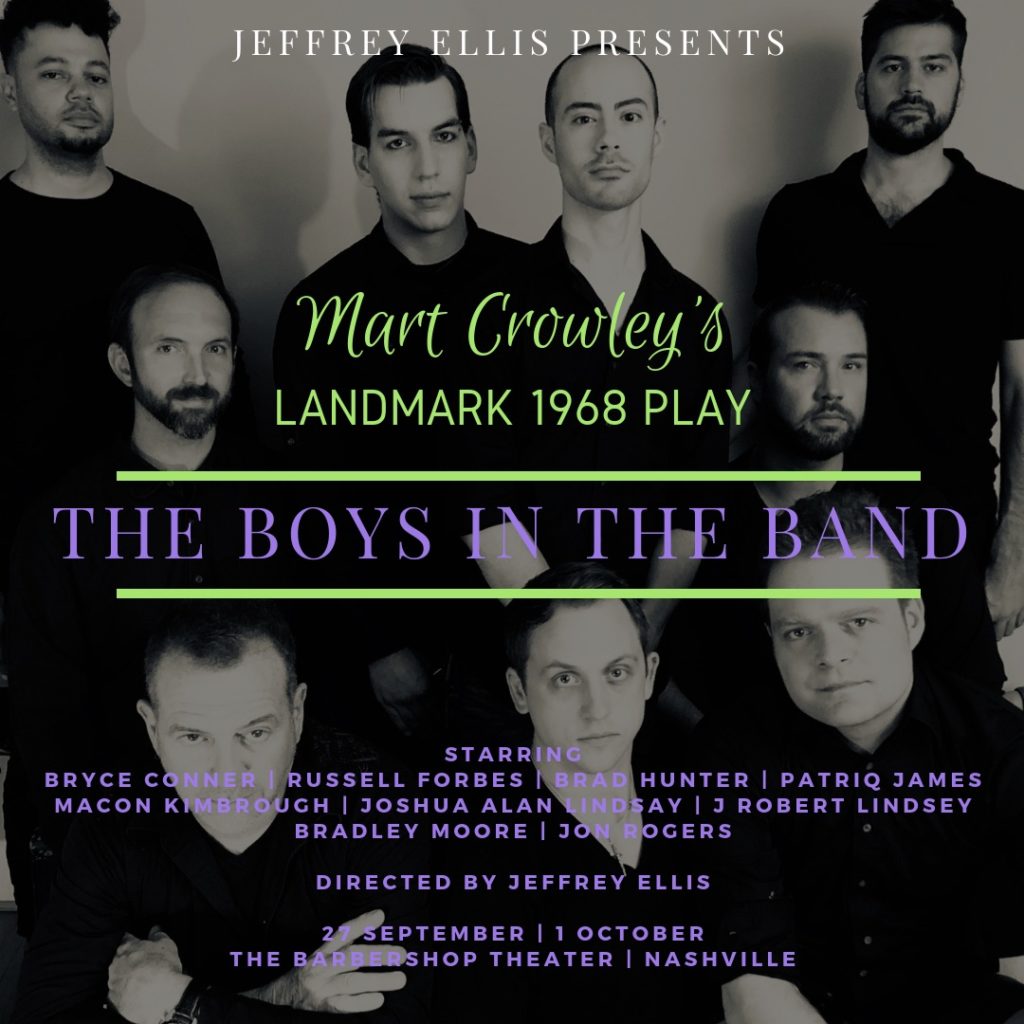
When I heard Jeffrey Ellis was tackling playwright Mart Crowley’s iconic 1968 masterwork, The Boys in the Band for the show’s long-overdue Nashville premiere production at Barbershop Theatre  September 27-October 1, I knew it was going to be epic. You see, Jeffrey isn’t just one of Nashville…and the world’s…most respected and admired theatre critics (he is Senior Contributing Editor of Broadwayworld.com, after all), but he’s also a talented director, who, because of his love to theatre, as well as cinema and all things entertainment, always provides a keen and thoughtful version of any show he helms that inevitably leaves his audiences satisfied, engaged and with a new interest in discovering more about what they’ve witnessed.

That said, imagine my disappointment when I realized I wouldn’t be in Nashville for the upcoming run of Ellis’ take on Crowley’s groundbreaking play. Coming to terms with the devastation caused by my ill-timed travels, I reached out to Jeffrey for my latest Rapid Fire interview just hours before time to board my flight. Lucky for me, in addition to all the aforementioned well-deserved and true accolades referenced above, Jeffrey is also a skilled and gifted writer, so basically this interview wrote itself. Enough intro…below is our conversation.

Rapid Fire 10 Q&A with Jef Ellis, directing The Barbershop Theatre’s The Boys in the Band 

Jeffrey Ellis

JONATHAN PINKERTON: I’m shocked to learn this will be the Nashville debut for The Boys in the Band. Why do you think it’s never been mounted here before?

JEFFREY ELLIS: I think initially producers were skeptical of how it would be received by a Nashville audience. The first show I directed – 1999’s La Cage Aux Folles for Circle Players – was sort of regarded in that way and, as the script was written, the two lead characters didn’t embrace or kiss throughout the show and I wanted to change that. My thought process was that if audiences had stayed with us to the end, they wouldn’t be offended by the sight of two men kissing. Instead, they would welcome it as the natural progression of their relationship.

And after that initial reluctance, the play became mired in a lot of controversy: was it too stereotypical, was it too flamboyant and queeny – the typical things gay men have always asked about their own behaviors, to be quite honest – and so it fell into disfavor.

JONATHAN PINKERTON: First produced Off Broadway in 1968 , the play recently enjoyed its first-ever Broadway run in celebration of its 50th anniversary. It’s about time, huh?

JEFFREY ELLIS: Without question! Now, with the 50th anniversary of its first New York production, set against the backdrop of all the advances made for GLBTQIA civil rights in the past ten years, looking back at an earlier era is very timely and prescient. The Boys in the Band shows us that the more things change, the more they stay the same and it’s important – to me, at least – to pay homage to Mart Crowley’s play which has proven to be a watershed moment in theater, gay, straight or otherwise.

JONATHAN PINKERTON: What makes The Boys in the Band as relevant now as when it premiered?

JEFFREY ELLIS: The characters are so sharply defined, so indelibly written, that their stories are universal. The issues they dealt with at a time when virtually everything they did that designated them as homosexual could have led to arrest and conviction. It’s vital that we remember our history, to learn from it and to refuse to ever go back to being treated as second-class citizens. GLBTQIA people in the 21st century stand on the shoulders of every man and woman who came before them, who sacrificed themselves to ensure a greater sense of community and belonging. We should always be grateful.

JONATHAN PINKERTON: Why do you think The Boys in the Band is a good fit for The Barbershop Theatre?

JEFFREY ELLIS: The very first time I was at The Barbershop Theater, to see Verge Theater’s production of Kimberly Akimbo, I was taken by the intimate nature of the venue and I recognized instantly that a play like The Boys in the Band could be presented there in the way I’ve always envisioned it: Like the story being told, with a gathering of friends who don’t always like one another very much, but who will always defend one other. The audience becomes active participants in the play’s action in such an intimate space and the actors will feed off their energy during every performance.

JONATHAN PINKERTON: For those who might label this a ‘gay play’, how would your respond?

JEFFREY ELLIS:It isn’t just “a gay play,” it is THE gay play that changed the course of American theater, a play in which the characters are presented honestly and authentically, allowing audiences for the very first time to see how a group of gay men would interact with one another. It’s a very brave play, the original cast were a courageous group of men who dared to play these flawed, but all too real, characters as they existed in real life. I have never been prouder of any theater project in my life than I am of this production.

JONATHAN PINKERTON: How much are you loving your cast?

JEFFREY ELLIS: They are remarkable. I cannot say enough about their ability to breathe life into these characters – characters who have lived in my heart and my brain since I read the play when I was 12 years old. The nine men in my cast have willingly come on board and they have given me their trust to craft a production of a play that changed my life, that proved to me I was not alone in the world when I was in sixth grade and gave me hope that I would someday find my own people just like this rag-tag group of characters created by Mart Crowley did.

The nine actors in The Boys in the Band give so much of themselves in every rehearsal and will give so much more during the show’s six-performance run – they lay bare their souls. And as they do that, they honor every gay man who has ever been bold enough to admit who he is and to live an authentic life.

These nine men have become my family – they are my brothers and my sons. They have listened to my stories about my own life as a gay man and they have shared the details of their own lives in the process. We are inextricably bonded now – and I will be hard-pressed to have such an experience ever again.

JONATHAN PINKERTON: When I saw you at TPAC recently, you shared a story of the precise moment you saw your cast bonding. Do you mind sharing that with my readers?

JEFFREY ELLIS: We had a photo call before rehearsal one night and the cast seemed surprised that I would be taking the pictures, so I explained that I came from the place and time where to get a journalism degree meant studying photography. And I treated them like so much cattle, ordering them around and telling them exactly how to stand, where to put their hands, what angle to tilt their face – that kind of stuff – and while we did it, we had fun and we laughed a lot, I told off-color stories and we had fun.

That carried over into our rehearsal and I realized that night they my cast had bonded, we had indeed become a family and I knew in that particular moment that the show would be the same show I’ve always seen in my mind, even after all these years.

At the end of rehearsal that night, I asked each actor with which character did they most identify and each man chose the character he is playing, which was extremely gratifying because it proved I had made the right casting choices. But more important, it meant that we were all on the same page, creatively, and that we anything is possible.

JONATHAN PINKERTON: What can you tell me about your technical/creative team?

JEFFREY ELLIS: Sara Kistner is my production stage manager and we’ve worked together on several shows, including South Pacific and The Little Foxes – we yell and scream at each other and move on because we trust each other and believe in each other. Emily Daigneault, who designed props for The Little Foxes is back on the team, providing our time period-senstive props for The Boys. Dan Hayes, whom I’ve known since he was fresh out of college and acting at Actors Playhouse of Nashville, is my costume designer and previously he did that for my production Picnic a few years ago. Daniel DeVault is lighting designer; it’s our first time to work together, but obviously we’ve known each other for several years and I’ve always been impressed by his work.

JONATHAN PINKERTON: How would you describe the look and feel of the show, as you’ve envisioned it?

JEFFREY ELLIS: Initially, I planned to give it a real mid-century look and feel, but as I’ve delved more deeply into the literature of the play and become even more acutely aware of who Michael, the protagonist of the play at whose apartment the birthday party takes place, is and what his sense of style is – which is, remarkably, quite similar to my taste. Michael’s apartment is timeless and, hopefully, kind of elegant in the way some small-town Southern queen would see himself living in Manhattan when he escaped the clutches of his mama and them.

JONATHAN PINKERTON: What’s been the most gratifying aspect of directing this cast in this particular play?

JEFFREY ELLIS: I discovered early on that in my own life, I’ve never been completely honest about who I am and what I believe. Directing The Boys in the Band with this band of remarkable brothers I have assembled has forced me to take a look at myself and how I’ve lived my life and to make me want, more than anything, to be honest and authentic in my sexual orientation. These wonderful actors have taken everything I’ve thrown at them, assimilated it into their own performances to craft characters who are endearingly human and straightforward. And, truth be told, that’s who I’ve always wanted to be, even if I haven’t always been as successful as I may have hoped.

JONATHAN PINKERTON:What do you hope audience take away from The Boys In The Band?

JEFFREY ELLIS: An understanding of what we’ve all been through, how our lives have changed since 1968, to gain knowledge about how far we’ve come, while recognizing how far we still have to go in the never-ending struggle for acceptance. I hope they will love these men as much as I always have and to see the universality of their stories and how they relate to their own personal stories.

The Barbershop Theatre‘s production of The Boys in the Band directed by Jeffrey Ellis runs September 27-October 1 with shows nightly at 7:30 p.m. and a Saturday Matinee on September 29 at 2:30 .m. Tickets are $15. Click Here to purchase or for more information.  Stay informed about upcoming events at The Barbershop Theatre by liking them on Facebook and following them on Instagram. For the latest on Jeffrey Ellis find him on Facebook, Instagram and Twitter.

Interested in coverage for your latest entertaining endeavor? Click the contact page and drop me a note. You can also follow JHP Entertainment on Instagram and Facebook.
 

Filed Under: Entertainment, Rapid Fire 20 Q, Theare Tagged With: Celebrity Interview, Debut, Director, Interview, Jeffrey Ellis, LGBTQ, LGBTQIA, Mart Crowley, Nashville, Nashville Debut, Nashville Theatre, Rapid Fire, Rapid Fire Q&A, The Barbershop Theatre, The Boys in the Band, Theatre Interview

  • « Go to Previous Page
  • Page 1
  • Page 2

Copyright © 2026 · News Pro on Genesis Framework · WordPress · Log in