• Skip to primary navigation
  • Skip to main content
  • Home
  • About
  • Features
  • Contact

JHP Entertainment

Entertainment News, Reviews and Interviews

  • Home
  • About
  • Features
  • Contact

Nashville Theatre

Rapid Fire Confessional with ‘Sister Act’ Cast and Director; Nashville Rep’s Production Continuing at TPAC Through April 19

April 15, 2026 by Jonathan

There’s joy, there’s gospel, there’s glittering habits, powerhouse vocals and a nun on the run—basically everything you want from Nashville Repertory Theatre’s production of Sister Act–continuing at TPAC‘s Polk Theatre thru Sunday, April 19. As the cast and crew prepared for the show’s run, Sister Act stars Deloris Van Cartier herself, Meggan Utech, Mother Superior (Megan Murphy Chambers), and Sister Mary Robert (Shelby Talbert) –along with director Jason Spelbring, spilled a little holy tea with JHPEntertainment in our latest Rapid Fire 20Q.

—–

RAPID FIRE Q&A WITH NASHVILLE REP’s SISTER ACT CAST MEMBERS AND DIRECTOR

RAPID FIRE WITH SISTER ACT‘s DELORIS VAN CARTIER, MEGGAN UTECH

JHPENTERTAINMENT: As I was researching to chat with you, your cast mates and your director, I remembered, this isn’t your first time in the role of Sister Act’s Deloris.  Back in 2018 you starred in the iconic role at the now-defunct, but fondly remembered Chaffin’s Barn —in the time since, has your perspective on Deloris evolved, and are you approaching her differently this time around, or is it simply a case of getting “back in the habit”? 

MEGGAN UTECH: It’s a double edged sword to replay any role. I LOVE Deloris and to have her in my bones and memorized made it easier to play and learn new things (and thanks to Jason’s incredible direction I got to dive SO DEEP into Deloris’ brain) but I also had to forget all of the bad habits (pun intended) that I had learned…weird notes (Sorry Sarah!)* old choreo (Sorry Joi) *[Sarah Michele Bailey and Joi Ware being this production’s music director and choreographer], rote ways I delivered lines that no longer apply, Etc. Fresh eyes is always best, but thank god I didn’t have to relearn these lines and songs completely. My brain is not as elastic as it was in 2018. Who’s is!?

JHPENTERTAINMENT: over the years you’ve appeared in a number of shows with Nashville Rep. How does stepping back into this role, this time with one of Nashville’s most respected and accomplished companies, feel at this point in your journey as a performer? 

MEGGAN UTECH: I worked really hard to be here. But harshest part of theatre is, just because you’ve done the work and put in the time does not mean you get to just HAVE a role. You have to earn every single casting, from Deloris to Featured Third Christmas Tree From the Right. I had a very wild journey to get here both professionally and, in this last year, personally. It was hard not to see this as a conclusion to a long journey, no matter which way the chips fell. I’m so SO filled with gratitude that this how it turned out. 

JHPENTERTAINMENT: Deloris is such a force of personality—what’s been the most rewarding (or surprising) part of rediscovering her in this production? 

MEGGAN UTECH: It was working with Jason. He is truly one of the most brilliant directors I’ve worked with. I could come to him and ask the most minute detailed  questions (“do we think this is the first time Deloris has ever gotten a present from Curtis?”) and he would fire off an answer that made me rethink an entire scene (“I think it’s  the first time he’s done it in front of his boys”).

He was never annoyed or impatient, was always curious about my opinions, and trusted that when I had them, it was for good reason.

This is a long story but…One of the most validating moments I’ve ever had as a black actress was when working on a scene where Deloris is sleeping. Bare hair on pillowcase. Jason had fostered an environment where I could say to him “a black woman would almost NEVER sleep without a bonnet on with all this glorious hair”(shout out to Melissa Drumon for her incredible design across the board and Meredith Schieltz for their excellent execution. I look like a god). He immediately said “ok how do we fix it?”. Not five minutes later, I had to jump up on my bed in my slippers/house shoes. Once again I trepidatiously had to say black folks would never stand on their bed with house shoes on, most black folks won’t even allow outside clothes in their bed. I expected pushback or excuses or to feel like I was just making a big deal out of nothing. Not only did he immediately take it all in, solve the problem, and then THANK ME for bringing him this new knowledge. He did not want to have the black members of the audience taken out of the production by missing this small but significant cultural thing. 

So many things have to be in place to have a team of actors, tech, costumes, music, choreo pitch in to fix this, and everyone did it happily. And that’s because we are under the great umbrella of Jason’s direction. 

JHPENTERTAINMENT: Deloris’ “Take Me to Heaven” not only starts Sister Act, but quickly sets the bar for the caliber of  music featured throughout. From a technical standpoint, how has working with Music Director Sarah Michele Bailey helped shape your vocal approach to Deloris’ iconic numbers?

MEGGAN UTECH: Music is always the scariest part of any process to me, and to have Sarah’s gentile but constant force emanating from the pit is the only reason I get through this show. When I’m unsure she looks up at me, and I am reinvigorated. I also MUST mention that she worked her ass of to provide every single cast member with individual vocal tracks THAT SHE CREATED for every single song so they could learn and review without having to listen to horrible voice memos of themselves struggling through new harmonies. That kind of preparation is invaluable to an actor, and being led by someone that cares enough to ensure that preparation is the only way I can get through my insecurities as a singer. 

JHPENTERTAINMENT: Is there an attitude or attribute of Deloris’ that you might incorporate into your own life going forward?

MEGGAN UTECH: I firmly believe that I’ve gotten to play this role more than once because Deloris comes into my life when I need her most. She busts in and forces me sing out loud “Look at me, can’t you see, I’m fabulous, baby”, over and over until I can’t help but believe it. Everything else falls away, and I am standing there, and I feel truly TRULY fabulous. I will take that feeling with me forever. 


RAPID FIRE WITH SISTER ACT‘s MOTHER SUPERIOR, MEGAN MURPHY CHAMBERS

JHPENTERTAINMENT: You recently directed Boeing Boeing for another local company and now step into the role of Sister Act’s Mother Superior for Nashville Rep—how does shifting from director back to performer influence your process and enhance your performance?

MEGAN MURPHY CHAMBERS: I loved every second of my Boeing experience, and I truly hope to direct again soon, and it’s positively luxurious to downshift from directing to performing, especially in hands as capable as Jason’s. It’s wonderful to have a directing experience fresh on my mind as I step into the rehearsal process. It’s always useful to remember that everything an individual performer is doing has to be in service at the bigger picture, so I feel like I came into day one of rehearsal for Sister Act feeling very sharp, very ready, and very happy to not be the one answering all the questions.

JHPENTERTAINMENT: Mother Superior walks a delicate line between authority and warmth—what’s your key to finding that balance?

MEGAN MURPHY CHAMBERS: I feel really lucky to be working opposite some of my favorite performers in town, who also happened to be close friends of mine (and some fabulous new friends as well – welcome additions to our family, one and all!) So it’s felt really easy to snap in and out of Mother Superior’s distinct speeds. Her stiffness and directness feel totally justified, and then it’s the easiest thing in the world to melt when I’m looking in the faces of these ladies. They’re all just magical, and you can’t help but soften when the moment calls for it.

JHPENTERTAINMENT: You’ve had several memorable turns on The Rep stage—what makes this role feel unique or particularly meaningful?

MEGAN MURPHY CHAMBERS: I don’t take a single second of any of this work for granted, so each show and rehearsal process feel like a fresh challenge and gift. But this one has ended up being special for me in a way I didn’t expect. Since Mother Superior doesn’t join in the fun, if you will, for a good part of the show, the payoff at the end once I finally come around makes me feel like my heart will burst. It’s a really earned moment for the character, and a really joyful moment for me as a human. I finally get to shake my tailfeather and cut up with my friends! Well worth the wait!

JHPENTERTAINMENT: Your one-woman show Broad was a fan favorite, as were your MAS collabs—does that type of cabaret-style storytelling experience inform how you connect within an ensemble in a more traditional musical like Sister Act? AND…any plans for more solo shows or another MAS reunion?

MEGAN MURPHY CHAMBERS: I have loved my one woman show experiences, and hope to have many more of them. But, there’s no substitute for the collaborative process of being on stage with other people, and it’s always so fantastic to sing and laugh and act as a group. What could be better than feeling all that energy around you and getting yourself plugged into that feedback loop? I’ve never felt more accomplished than when I’ve wrapped up one of my one woman shows, but I never feel more at home than when I’m surrounded by other actors. And I’m ALWAYS cooking on another show – stay tuned.

JHPENTERTAINMENT: You recently shared a post previewing a blinged-out habit courtesy of The Rep’s resident design wizard Melissa K. Durmon—how do her creations help you physically and emotionally step into Mother Superior’s world?

MEGAN MURPHY CHAMBERS: Melissa is a master of her craft, and her attention to detail is beyond inspiring. She doesn’t miss a single opportunity to amplify a character or moment with the wardrobe, so I take every opportunity to display her work with an equal level of finesse. She nails it every time, and our Sister Act audiences are not ready for the 70s bonanza she’s serving up. It’s going to look sensational!!!

RAPID FIRE WITH SISTER ACT‘s SISTER MARY ROBERT, SHELBY TALBERT

JHPENTERTAINMENT: You’re returning to Nashville Rep after having played young Martha Cratchit in A Christmas Carol in 2023—what does it feel like to be back with the company, and how has that previous experience shaped your work?

SHELBY TALBERT: It feels amazing to come back to The Rep. It’s very exciting to see familiar faces and get to continue those relationships, while also getting to know new faces! My previous work with The Rep taught me so much about working with a big ensemble, something that came in handy with this show. It’s so important to work as a team in such a big cast and luckily everyone in this show is wonderful!

JHPENTERTAINMENT: Sister Mary Robert has some of the show’s most heartfelt—and funniest—moments. How are you leaning into the comedic side of the role?

SHELBY TALBERT: There can be a fear as an actor to feel embarrassed or scared to make a wrong choice. Our director Jason has had this saying throughout rehearsal about “failing forward,” which has given me a lot of freedom in the room to try things and lean into the comedic/awkward side of Mary Robert. That fear of making a mistake in the rehearsal process was completely wiped away which just left room to play and explore!

JHPENTERTAINMENT: This role is also a bit of a coming-of-age journey—what resonates most with you personally about Mary Robert’s arc?

SHELBY TALBERT: A lot of what Mary Robert has to overcome in this story is less about the people around her and more about her struggling with her own sense of bravery. While the influence of the convent has been a major factor in her life, it’s really her own fear that has been the thing stopping her from living the life she wants. The theme of being confident enough to take real authority of your life is something that has really resonated with me.

JHPENTERTAINMENT: Choreography plays such a huge role in this show—what has the collaboration with Joi Ware been like in shaping your physical storytelling? AND…do you have a favorite choreo moment in the show?

SHELBY TALBERT: Getting to work with Joi is always such an honor. She is the kind of choreographer who takes the time to understand each character’s motives through the choreography and why they move the way they do. At the beginning of the show Mary Robert is constantly hiding behind people and trying to make herself less noticeable. As we move through Joi’s choreography Mary Robert slowly becomes more and more sure of herself and you can see that in the later dance numbers. My favorite choreo moment in the show has got to be our trio of ladies in “Fabulous, Baby!” at the top of the show. They open the show with such power and it really sets the tone!

JHPENTERTAINMENT: Already in your stage work, you’ve tackled everything from Anne Frank to Romeo & Juliet—how does a high-energy musical comedy like Sister Act challenge you in new ways?

SHELBY TALBERT: I have never been a part of a show that has challenged me so much vocally as Sister Act does! Mary Robert goes through this incredible journey and it all culminates in “The Life I Never Led.” I wanted to make sure that I did everything I could to make that moment as beautiful and satisfying as possible. It has really pushed me to be a more confident and consistent vocalist. Luckily our show is music directed by Sarah-Michelle Bailey, who is one of the most encouraging and helpful people I have ever worked with. All the creatives and cast have put so much work and positive energy into this piece of art and I’m excited.

RAPID FIRE WITH SISTER ACT DIRECTOR, JASON SPELBRING

JHPENTERTAINMENT: Following last month’s Fat Ham, a collaboration between Nashville Shakespeare Festival and Nashvilke Repertory Theatre, you’re now directing The Rep‘s Sister Act. As Nashville Shakes‘ Artistic Director and as Director of The Rep‘s Sister Act, What do these continued partnerships between the two theatre companies mean to you?

JASON SPELBRING: This collaboration means a great deal to me both personally and for the broader theatre community here in Nashville. I do want to clarify that Sister Act is not an official co-production in the same way that Fat Ham was between Nashville Shakespeare Festival and Nashville Repertory Theatre. Rather, Sister Act represents a meaningful cross-pollination of artists, ideas, and shared values between our sister organizations. There is a natural overlap in our creative communities, and this production is a great example of that collaboration in action. What excites me most is that this kind of collaboration reflects a growing sense of alignment across our theatre community. Fat Ham was a true co-production and a strong step in that direction, and I’m incredibly proud of what we built together there. 

So while Sister Act is a different kind of partnership, it still speaks to a deepening relationship, one that I believe is setting the stage for future, fully realized co-productions. I’m genuinely excited about what’s next, and I see this as part of a broader, ongoing conversation about how our institutions can work together to better serve artists and audiences in Nashville.

JHPENTERTAINMENT: You’ve worked across a wide range of classical and contemporary pieces—what drew you specifically to Sister Act at this moment?

JASON SPELBRING: What drew me to Sister Act at this moment is its core story of transformation. As I shared in my director’s notes, we begin in a world of fear and uncertainty, and through music, community, and courage, everything shifts. What starts as muted becommes vibrant, joyful, and fully alive.  That journey—from isolation to connection, from restraint to radiance—felt especially resonant right now. I’m also continually interested in stories where a singular voice ignites change in a larger community. Deloris doesn’t lose herself in the process; she discovers herself and, in doing so, helps others do the same. That idea, that when you find your voice, you help others find theirs, is something I find both theatrically compelling and deeply human. At this moment, it feels like exactly the kind of story worth telling.

JHPENTERTAINMENT: Nashville Rep’s in-house scenic designer Gary C. Hoff never fails to wow—I frequently say I could live on his sets. What’s your favorite aspect of the set you’ve collaborated with Hoff to bring to life in Sister Act?

JASON SPELBRING: Gary is extraordinary, truly. His artistry is matched by his generosity, his kindness, and the genuine joy he brings into the room. Gary is the kind of collaborator who elevates not just the work, but everyone around him. What I love most about the set he’s designed is its sense of transformation. It holds both worlds. The grit and urgency of Deloris’s life at the start of the musical, and the warmth, structure and surprising vibrancy of the convent. Gary’s design allows them to shift seamlessly. There’s a theatrical magic to it—it feels expansive, dynamic, and deeply supportive of the storytelling. And yes, I could absolutely live in one of Gary’s sets.

I also want to express my respect for the entire design and production tea at Nashville Repertory Theatre. They are consummate professionals, skilled, collaborative, and a true dream to work with. It’s a department that operates with precision, and pride, and that makes all the difference. 

JHPENTERTAINMENT: With such a strong ensemble and creative team, how do you foster collaboration in the rehearsal room?

JASON SPELBRING: For me, collaboration isn’t just a value—it’s a necessity. I simply cannot do my job without it. I don’t have, nor should I have, all the answers. We bring the full cast and creative team into the room because each person has something to contribute. My goal as a director is to create a space where people feel empowered to share ideas, ask question, problem-solve together and ultimately shine. When that happens, the work becomes richer, more dynamic, and more truthful. It stops being about any one perspective and becomes about collective investment in telling the story as well as possible.

I really believe that to thrive in this industry, you have to collaborate openly, generously, and wit respect. That’s where the best work lives. 

JHPENTERTAINMENT: What do you hope audiences take with them long after hearing those last heavenly intonacions of Sister Act?

JASON SPELBRING: I hope audiences leave the theatre with a smile on their face and a bounce in their step. My hope is that audiences feel the journey themselves and are reminded of the power of finding their own voice and the impact it can have on the people and community around them. If anything lingers, I hope it’s that sense of possibility. That is when we show up authentically, we can connect, when we allow ourselves to be seen and heard, we don’t just transform our own lives, we help transform a community. And that’s something worth holding onto long after the final note.

—–

Whether you’re coming for the music, the comedy or the choreography, one thing’s for sure–the cast of Nashville Rep’s Sister Act is definitely in the habit of delivering and as the show moves into its second and finals week of performances, the sisters of are ready to raise the roof—and your spirits—one heavenly note at a time.

Nashville Rep‘s Sister Act continues its two-week run with five show remaining Thursday, April 16 at 7:30pm, Friday, April 17 at 7:30pm, Saturday, April 18 at 2pm and 7:30pm and a final matinee Sunday, April 19 at 2pm. CLICK HERE for tickets. Following Sister Act, Nashville Rep closes out their current season with Amy Tofte‘s BLOOD SUCKING LEECH, as part of Nashville Rep‘s New Works: Next Stage, after having presented a staged reading of Tofte’s work just last season. CLICK HERE to purchase tickets. As always, check out Nashville Rep online and follow them on Facebook, X, YouTube and Instagram.

If you wanna follow JHPEntertainment to find out who I’m chatting with for my next Rapid Fire Q&A, or for my take on the latest local and national theatre, music and movie offerings, find us at JHPEntertainment on Facebook, JHPEntertainment onInstagram and JHPEntertainment on Twitter. Got an event or show we should know about, drop us a line at the Contact tab. Till then, #GoSeeTheShow!


Filed Under: Entertainment, Rapid Fire 20 Q, Rapid Fire Q&A, Theare Tagged With: 2026, Nashville Repertory Theatre, Nashville Theatre, Rapid Fire 20 Q, Rapid Fire Q&A, Siser Act

An Accidental (On Purpose) Rapid Fire 20Q with The Keeton’s ‘The Play That Goes Wrong’

April 7, 2026 by Jonathan

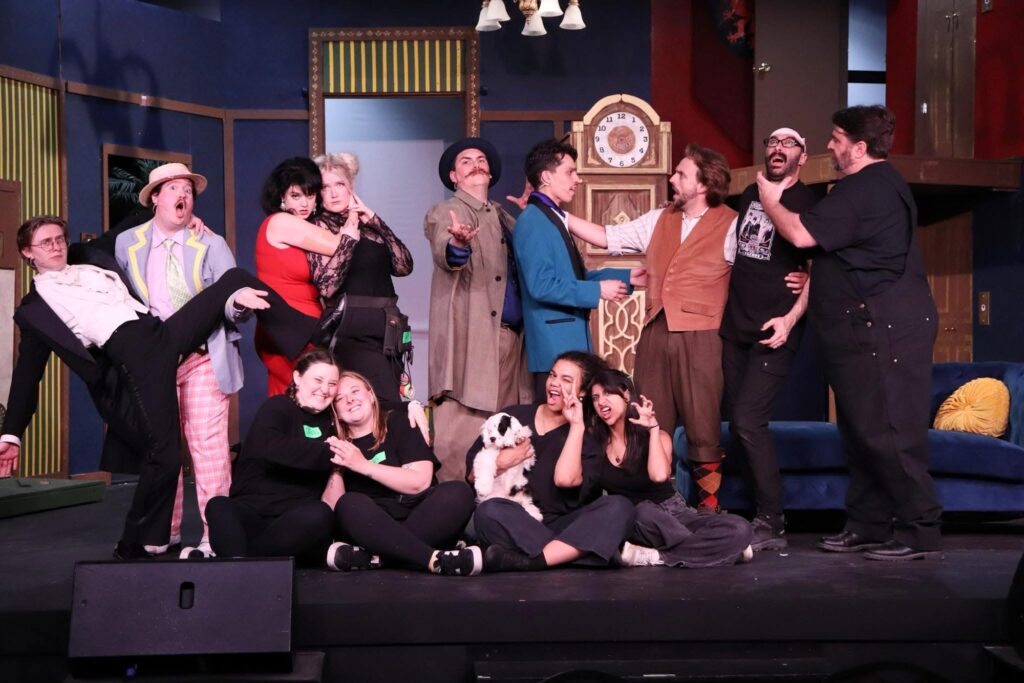
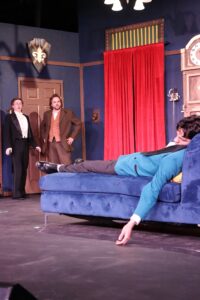
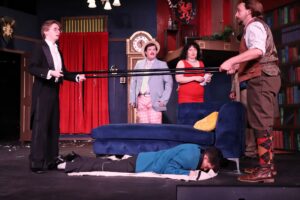
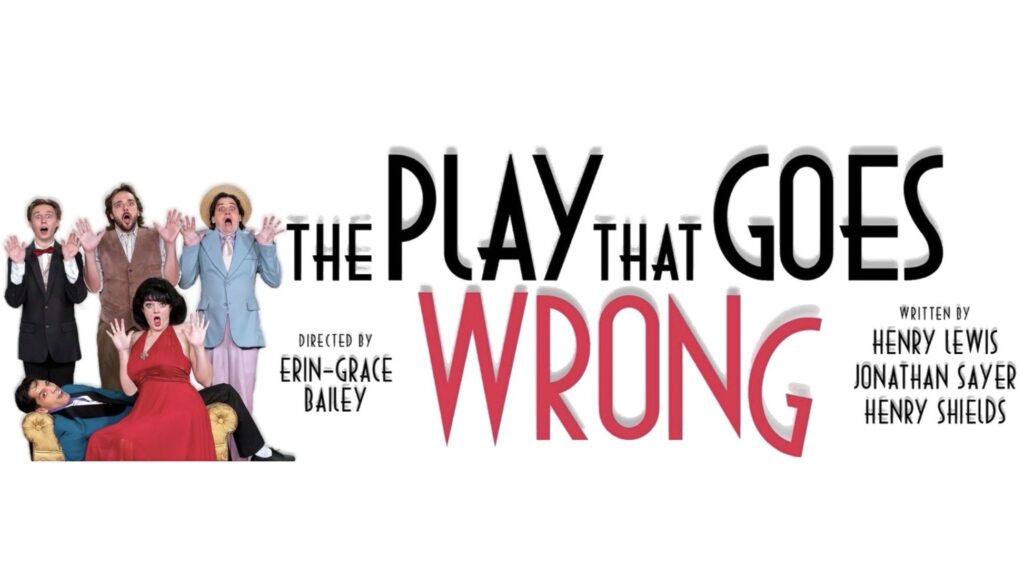
Frequently described as Sherlock Holmes meets Monty Python, The Play That Goes Wrong began as a spirited production created by the UK-based Mischief Theatre Company. What started as a fringe production quickly snowballed into a West End hit and Broadway favorite, delighting audiences with its perfectly timed mishaps, collapsing sets, and characters determined to press on no matter how disastrous things become. 

Now, that same brand of orchestrated mayhem takes center stage at The Keeton Theatre from April 10–26, bringing Nashville audiences a whirlwind of laughter where every missed cue, falling prop, and “accidental” blunder must be carefully executed in order to keep the illusion of screw-up believable.

As the cast and crew prepared for their opening night, we caught up with cast members Josh Mertz (Chris), Leslie King (Sandra), Hazen Lawson (Dennis), and director Erin-Grace Bailey to talk about the art of controlled chaos, the technical precision behind the comedy, and exactly what it takes to make everything go so hilariously wrong.

—–

RAPID FIRE 20Q WITH THE KEETON’s THE PLAY THAT GOES WRONG

RAPID FIRE WITH THE PLAY THAT GOES WRONG’s JOSH MERTZ

JHPENTERTAINMENT:As a Nashville native and frequent Keeton performer, what makes coming back for this show feel special?

JOSH MERTZ: The Keeton is my theatre home. I absolutely love performing here! Kevin and Donna Driver are amazing, and they run this space with such care- which is one of the many reasons I keep coming back. The reason I auditioned for this particular show in the first place is the absolute dream production team of Erin-Grace Bailey, Allison Gaddy, and Fiona Barrett. I love getting to work with them so much!  I think they bring fun energy and passion for this craft into the rehearsal space. I appreciate the production team’s ability to create nuanced performances and challenge us to be the best actors we can be. Allison is an unsung hero as our stage manager because without her calm presence backstage running the show, there simply wouldn’t be one. Fun fact – during the audition, I told the team I would play “Tree number 1” just to work with them again, and the trust they had in me to play Chris is just an added bonus, as it is a dream role for me to portray.

JHPENTERTAINMENT: Chris takes himself very seriously—how fun is it to play someone completely unaware of how wrong things are going?

JOSH MERTZ: Chris has been such a fun character to build. In my interpretation of Chris, he is your typical over the top, overbearing director with a “the show must go on” mentality. I do believe he’s more oblivious to how wrong things are going earlier on in the show but … Chris certainly has a breaking point! This show is fun as an actor because while we know all the things that will “go wrong,” our characters do not always see what’s coming. And hopefully, neither does the audience!

JHPENTERTAINMENT: You’ve done everything from Ragtime to Footloose—how does comedy like this challenge you differently?

JOSH MERTZ: I consider myself as primarily a character actor, so this show was right in my wheelhouse. I think what challenges me the most as a performer is how fast-paced and high energy the show is. This has been the most challenging show I’ve ever done in my life. Between the running, jumping and falling, by the end 0f the night Chris is so exhausted. The play goes by so fast, and I hope the audience is ready to buckle up for this rollercoaster of a show.

JHPENTERTAINMENT: What’s the most difficult accidental moment you have to execute on purpose each night?

JOSH MERTZ: The most difficult moment for me personally is having to fall off of a high platform. Erin-Grace prioritizes actor safety in all of the choreographed chaos of this show, so it has been incredible to know that I would never be asked to do anything that was going to put me at risk of injury. I won’t give away the stage magic, but it was definitely something I had to mentally ease my way into. 

JHPENTERTAINMENT: What’s your personal favorite moment of chaos in the show? 

JOSH MERTZ: My favorite moment of utter chaos is the ending of Act 2. The entire cast is on stage, and it is so fun to all be there together for the culmination of the show. I cannot give too much away, so you will just have to get your tickets to see how it ALL falls apart.

RAPID FIRE WITH THE PLAY THAT GOES WRONG’s LESLIE KING

JHPENTERTAINMENT: Sandra has to juggle performance and disaster at the same time—what’s the trick to balancing both?

LESLIE KING: I’ve found that being able to trust my fellow cast mates is super important. All of our disasters are carefully constructed and executed and if I’m focusing on what everyone else is doing it doesn’t leave much bandwidth to focus on myself and my character. Because I trust my cast mates to be where they’re supposed to be and do what they need to do, it makes it easy to balance both. 

JHPENTERTAINMENT: Sandra’s claim to fame is that her aunt is Dame Diana Rigg. In your real life, who’s your favorite name drop?

LESLIE KING: I have a connection to Gabe Gibbs (played Elder Price in The Book of Mormon on Broadway 2015-2017) and his family. He probably wouldn’t have any idea who I am but his parents would. We went to church with them for about a decade, and I went to high school with his brother. 

JHPENTERTAINMENT: You’ve previously appeared in area productions as varied as Cabaret and Puffs. Where does a physical comedy like The Play That Goes Wrong fall in the mix?

LESLIE KING: It has been so much fun to work on. While I’ve done comedies before, the physicality of this show is unlike anything I’ve done before. It adds an extra element of challenge, but I’ve absolutely loved it. 

JHPENTERTAINMENT: What’s the hardest moment to keep a straight face when everything is going wrong? AND Who among your fellow cast mates breaks easiest? 

LESLIE KING:  I’d have to say watching David Fonville inch his way off stage after the gurney fails is high on the list of moments I struggle to keep a straight face. Either that, or the ring around the rosey scene at the end of act one where they get stuck going in circles on the same scene. Luckily I’m offstage for that so I can laugh as much as I like. 

Honestly we’ve all worked pretty hard to stay composed but occasionally I’ll still get Josh Mertz to break. 

JHPENTERTAINMENT: The Keeton’s resident scenic designer Kevin Driver has his work cut out for him with this show. What’s your favorite set element that Goes Wrong?

LESLIE KING: I think the walls or the platform are both great elements. They’re both completely unexpected if you haven’t seen the show before and I love the moment we really catch people off guard with elements like those. 

RAPID FIRE WITH THE PLAY THAT GOES WRONG’s HAZEN LAWSON

JHPENTERTAINMENT: Even though he is a bit of a novice on the stage, Dennis quickly realizes even his flubs get a memorable reaction from the audience. How much fun are you having leaning into that aspect of the character?

HAZEN LAWSON: It’s been a lot of fun digging into how Dennis sees himself on and off the stage. His biggest dream is to be in “the big leagues” with actors like Robert, Chris, and Sandra, and I think he just can’t even believe he gets to be on stage with these talented actors. Dennis strives so hard to do everything right, but every time he messes up – to fanfare from the audience – it’s another reminder that he’s not as polished as his fellow actors. Playing off the juxtaposition of Max has also been a lot of fun; where Max pushes for attention from the audience, Dennis is absolutely mortified by it. 

 JHPENTERTAINMENT: This show is very physical—what’s the most demanding part for you?

HAZEN LAWSON: The ending scene of Act I is a bit of a gauntlet for me when Dennis can’t quite seem to get his lines right. It’s a full-on mental circus act keeping track of the script and blocking while everything loops over and over again to make sure that everything runs exactly as it should every time. And then by the end of the scene, I’ve been thrown on the floor, drenched with several glasses of scotch, and Dennis is having a full-blown panic attack. It’s a big push, but it’s absolutely worth it for the utter catharsis those ending lines bring. 

JHPENTERTAINMENT: Your show bio reveals a love of reading, knitting, and hiking—all seemingly tranquil—How do you mentally shift into the fast-paced chaos of The Play That Goes Wrong?

HAZEN LAWSON: Funnily enough, I think my love for my grandma activities as I call them has been crucial to helping me keep up with the show. Every single joke, line, and practical effect has been knit into this intricate story that will start to unravel the second a thread gets dropped. Tranquility, and especially attention to detail, is the name of the game when you need to keep a level head and stay in complete control while the show seemingly falls apart around you. To the audience it should look like total chaos, but for those of us up on stage it should be running like clockwork.

JHPENTERTAINMENT: What’s one moment where timing is absolutely everything for the joke to land?

HAZEN LAWSON: Is saying the entire show an option?? If I had to choose just one moment, it would probably be at the beginning of Act II where Dennis’ lines are cut off by Trevor having fun with some sound cues. It’s a moment where I really have to be in sync with Wanderson Rezende – who’s playing Trevor up in the fake sound booth – and with Steve Love – our actual sound designer/operator in the real sound booth – to make sure everything lines up.

JHPENTERTAINMENT: Have you had any almost mishaps that felt a little too real?

HAZEN LAWSON: During one of our rehearsals, the set may have fallen apart just a little too early. Thankfully everyone was where they needed to be and no one was in any danger – but I will say I have a newfound perspective on Dennis’ reaction to almost being crushed by a flat.

RAPID FIRE WITH THE PLAY THAT GOES WRONG’s DIRECTOR, ERIN-GRACE BAILEY 
JHPENTERTAINMENT: You’ve directed a wide range of work, from the Bell Witch Fall Festival‘s Smoke and Women In Theatre‘s Tiny Beautiful Things to The Keeton‘s 2024 production of William Inge‘s Bus Stop—what drew you to The Play That Goes Wrong?

ERIN-GRACE BAILEY: This was kind of a dream show for me. I’m a big fan of a lot of British work and grew up on a lot of that classic slapstick comedy. I was that weird teenager that would rather re-watchI Love Lucy and Downton Abbey than keep up with the latest fad. That interest grew in high school when I discovered Oscar Wilde and then even more in college when I started studying Noel Coward. I got to see the National Tour of The Play That Goes Wrong my sophomore year for free after a friend gave up some tickets. I had no idea what I was walking into but immediately fell in love with it. I felt like it combined all of my favorite things. I’ve been an avid follower of Mischief Theatre Company who created the play ever since. The work they’re doing is not only incredibly creative and entertaining but extremely impressive. It’s an honor to bring a little piece of that to middle Tennessee.

JHPENTERTAINMENT: You had me at I Love Lucy, but I digress…How do you begin to direct something that’s supposed to look completely chaotic?

ERIN-GRACE BAILEY: Well, Step One is to swallow your anxiety and pray, haha. Step Two is a lot of research. We spent a lot of time on YouTube looking at other production, reading and then re-reading the script, and talking to people we knew who had done the show before. 

A lot goes into this show. Our technical director Kevin Driver has outdone himself. The set for this show is no easy feat, and we’ve had it for a while for the actors to practice on. Everyone in this show has spent a lot of time learning stage combat and stunts, memorizing their lines early on, and fine tuning little things so they’re shocking to the audience but predictable for the people they’re on stage with. 

Above all, I want to recognize that while every show takes a village, this one especially does. Everyone apart of this has put in a lot of work, contributed ideas, and collaborated to bring out the best in one another. Nothing about this show is possible without an amazing team. 

JHPENTERTAINMENT: What’s the biggest challenge in balancing technical precision with comedic freedom?

ERIN-GRACE BAILEY: Time. We could have probably rehearsed this show for the rest of the year and continued to have made discoveries, but in a rehearsal period, there has to be sort of a cut off for new things. I still encourage the actors to play so it’s fresh every night, but there are some pieces of the show that have to happen the exact same way every time so all of the elements can work together. It’s a fine line, but this cast and crew has mastered it with professionalism.

JHPENTERTAINMENT: You touched on it a bit earlier, but let’s delve into it a tad more…What has this show’s technical team done particularly well in bringing your vision of “controlled chaos” to life?

ERIN-GRACE BAILEY: Their dedication and communication has been nothing short of phenomenal. There’s a lot of bouncing ideas off one another. I think Kevin and I have had a phone call almost daily for the past two weeks talking about magnets and measurements. Ironically, for something to look so chaotic, it all has to be extremely precise. We’ve used the script as a formula, and then I think just about every designer has added little things of their own, too. It’s also a lot of fun to be directing a show where the designers get to bring out their comedic side as well. They’re so creative and lovely. I can’t thank them enough for the hours they’ve put in on this show.

JHPENTERTAINMENT: What do you hope audiences leave with after seeing The Keeton‘s production of The Play That Goes Wrong?

ERIN-GRACE BAILEY: As Dolly Parton says, “If you see someone without a smile, give them yours!” We’re living in some dark times. Even the day-to-day struggles just feel a little bit extra heavy lately. I hope folks get to come in to the theatre, have a nice meal, and just leave those struggles at the door for a little while. I hope they’re entertained, that they laugh, and they get to have an evening of no internet – just a bunch of strangers in a crowded room enjoying some weird, hilarious, impressive art.

—–

 The Play That Goes Wrong runs April 10–26 at The Keeton Theatre, located at 108 Donelson Pike, Nashville, TN 37214. Friday & Saturday Doors at 5:45pm/Dinner at 6pm and Show at 7pm. Sunday matinee Doors at 12:45pm/Meal at 1pm and Show at 2pm. Please note that the two Thursday evening performances during the run are show-only with Doors at 6:30pm and Show at 7pm. Show Only Tickets: $32.00 (Thursday performances), Adult Dinner and Show: $42.00, Child Dinner and Show: $37.00. For a slight upcharge, Salmon can be chosen as the dinner entree. Group tickets receive a discount. Please call the Box Office at 615.883.8375 or CLICK HERE for tickets.

During the run of The Play That Goes Wrong, The Keeton will present The Keeton Community Wind Ensemble’s Spring Concert An Evening at the Theatre, directed by Dillon Wright and featuring a selection of music from the movies. Door open for this one-night-only event at 6:30pm with the performances beginning at 7pm on Tuesday, April 14. Tickets are $15. CLICK HERE to purchase.  Following The Play That Goes Wrong, on Tuesday, May 2 at 7pm, it’s time for The Keeton’s Annual Gala directed by The Keeton‘s own Donna Driver with musical direction by Jane Kelley. This year’s annual fundraiser for the theatre is themed: Role Reversal. Tickets to the gala are $60. Gala tickets include dinner, a chance to win some great prizes donated by supporters of the theatre and the opportunity to be among the first to purchase Season Tickets for The Keeton’s upcoming 2026-2027 Season. CLICK HERE to purchase gala tickets. So you don’t miss out on upcoming shows at The Keeton Dinner Theatre, follow them on Facebook, X and Instagram.

Interested in coverage for your latest entertaining endeavor? Click the contact page and drop me a note. You can also follow JHP Entertainment on Instagram and Facebook. In the meantime, #GoSeeTheShow!

Filed Under: 2026, The Play That Goes Wrong Tagged With: 2026, Interview, Nashville Theatre, Rapid Fire 20 Q, Rapid Fire Q&A, The Keeton, The Larry Keeton Dinner Theatre

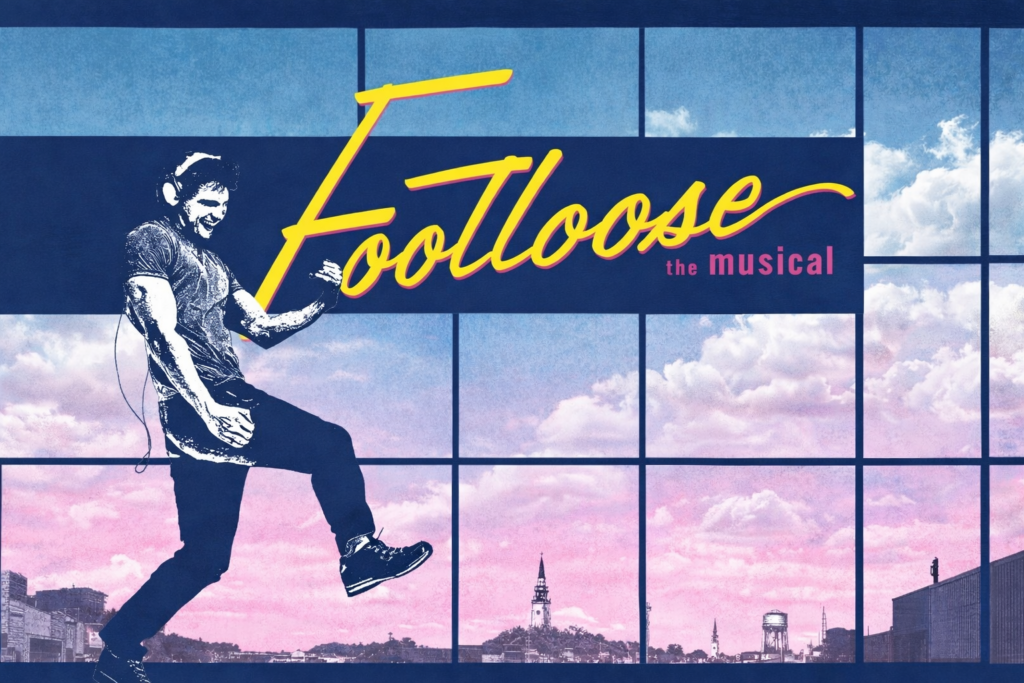
Rapid Fire 20 Q with Director and Cast of The Gift of Song’s ‘Footloose: The Musical’; onstage March 19-22

March 17, 2026 by Jonathan

High-energy, heartfelt, and packed with ‘80s nostalgia, The Gift of Song ‘s  Footloose: the Musical is ready to cut loose with performances Thursday, March 19 thru Sunday, March 22. With a dynamic cast led by Jonny Child & Claire Billingsley, with Steven Kraski and more, under the direction of the youth-oriented company’s longtime creative force Leslie Berra, this production promises to bring the beloved story of rebellion, healing, and the power of music to life in a fresh and electrifying way at Shelby Theatre at Freedom Middle School (1000 Excellence Way, Franklin, TN 37064). For my latest Rapid Fire 20Q, I recent posed questions to the aforementioned cast and director, diving into everything from iconic roles and behind-the-scenes insights to the nostalgia inherent in a show like Footloose.

———-

RAPID FIRE WITH FOOTLOOSE‘s REN, JONNY CHILD

JHPENTERTAINMENT: Ren McCormack arrives in Bomont as the ultimate outsider. What was your way into understanding this character and the frustration he feels walking into a town with a ban on dancing?

JONNY CHILD: I believe dancing serves as Ren’s escape from the emotional pain he experiences after his father leaves him and his mother. When he arrives in a place where dancing is banned, he realizes that the one outlet he has for coping with that trauma is suddenly taken away. Because of this, it makes sense that he would strongly speak out against the rule. I connected with this idea through music. Music is my own escape from reality, so if I were told that I was not allowed to sing, play, or even listen to music, it would be very difficult for me to simply accept that.

JHPENTERTAINMENT: At 18, you’ve been involved in theatre for more than half your life and have already stepped into directing and composing. How have those behind-the-scenes interests and experiences influenced the way you approach a role like Ren?

JONNY CHILD: Through my experience working both on stage and behind the scenes, I have developed a process for approaching characters. I begin by looking at the character from a broad perspective, considering their backstory and the events that may have shaped them before the story begins, as well as what their life might look like after the events of the show. This helps me understand why they behave and react the way they do. Next, I try to connect the character’s experiences with moments or emotions from my own life. Finding those personal connections allows me to step into the character’s perspective and better understand what they might be thinking or feeling with each line they deliver. Finally, I bring all of these elements together to build a character that feels complete and fully understood from my point of view.

JHPENTERTAINMENT: is there a trait that Ren possesses that you might adapt in your own life after the show closes?

JONNY CHILD: Yes, Ren is a very observant character. Personally, I am not always as observant as he is. I tend to focus on one thing at a time rather than allowing my attention to wander and simply observe what is happening around me. However, I think being observant is a very valuable trait. It allows someone to better understand the people and situations around them, which ultimately leads to a deeper awareness of others.

JHPENTERTAINMENT: Footloose is famous for its electrifying dance numbers. What’s the most physically demanding moment in the show for you?

JONNY CHILD: The most physically demanding moment in the show for me is the song “I Can’t Stand Still.” As the title suggests, I am moving for nearly the entire number. In addition to the constant movement, the vocals are also quite challenging. Because the choreography includes breakdancing and I still have to deliver several longer vocal lines, it requires a lot of stamina. By the end of the song, I am pretty out of breath.

JHPENTERTAINMENT: Of course the 80s feature prominently in the Footloose score. If Ren McCormack could pick one modern song——to blast in his Walkman headphones while dancing around  Bomont, what would it be?

JONNY CHILD: I’ve got to say, I think “Uptown Funk” by Mark Ronson (featuring Bruno Mars) is a song Ren would have a blast dancing to. 

RAPID FIRE WITH FOOTLOOSE‘s ARIEL, CLAIRE BILLINGSLEY

JHPENTERTAINMENT: Ariel Moore is bold, rebellious, and fiercely independent. What do you find most compelling about stepping into her shoes?CLAIRE BILLINGSLEY: I find her confident nature and sense of self extremely compelling. I love her determination to achieve more that what others expect of her, and it feels great to be able to perform the role of an independent and intelligent woman.

JHPENTERTAINMENT: How has exploring Ariel inspired you outside the show?

CLAIRE BILLINGSLEY: Exploring Ariel has inspired me to look into what we do for ourselves and what we are really only doing for others. Ariel has many moments throughout the show where she is pretending to be something she is not just to gain recognition from another person. After taking a deeper look into my own habits, I have found myself being more genuine in day to day life.

JHPENTERTAINMENT: Ariel and Ren share a spark that pushes the story forward. What’s been the most fun part of building that onstage chemistry with Jonny Child?

CLAIRE BILLINGSLEY: Being love interests with someone in a musical can be both awkward and really fun. It means that even in the more intense one on one scenes, there is someone else who is feeling exactly what you are, which creates more genuine connections offstage as well. The whole cast has become very close over the past few weeks and I am definitely going to miss being in this show.

JHPENTERTAINMENT: Ariel has some unforgettable musical moments. Which song in the show do you think will be part of your playlist long after the final curtain?

CLAIRE BILLINGSLEY: “Holding Out for a Hero” will forever me part of my playlist. It is just a fun song with an all too familiar storyline and deeper meaning. Not to mention that both the broadway and Bonnie Tyler versions are fantastically done.

JHPENTERTAINMENT: You’re a senior planning to study musical theatre and law after graduation—quite the combination! Is there a lesson within Footloose that might shaped those ambitions?

CLAIRE BILLINGSLEY: In Footloose, the teens of the town realize that it is their responsibility to invoke the change they would like to see. This has contributed to my ambitions by confirming the fact that I want to be one of those change makers in the world. Whether it is through storytelling or new bill proposals, I want to help those around me and make the world a better place.

RAPID FIRE WITH FOOTLOOSE‘s REVEREND MOORE, STEPHEN KRASKI

JHPENTERTAINMENT: You actually played Ren in your high school production of Footloose over 20 years ago. What was your reaction when you realized you’d now be stepping into the role of Reverend Shaw Moore?

STEVEN KRASKI: It has definitely been a full circle kind of moment for me, that’s for sure. I had a lot of fun channeling my inner Kevin Bacon in my senior year, and I have so many great memories from it. Now having the opportunity, two decades later, to be this group’s Shaw for their go around feels pretty cool. There may have also been a part of me that got a little bit too excited about the character’s baked-in lack of choreography.

JHPENTERTAINMENT: Reverend Moore is often seen as the antagonist, but he’s also a grieving father trying to protect his community. How do you humanize him for the audience?

STEVEN KRASKI: Some of the best antagonists are ones who believe they’re doing the right thing. Shaw, motivated by grief-driven fear to protect his child, very much fits that mold so that alone humanizes him in a tragic way for me. His actions, particularly against his family, will make it hard for the audience to like him throughout but the shame he feels by the end is what finally lets us see him for what he is…lost.

JHPENTERTAINMENT: Where does Reverend Moore fall on the spectrum of roles you’ve played?

STEVEN KRASKI: This role falls into a very unique category for me. I haven’t had many opportunities to play the antagonist before, let alone one with such a sad arc tucked into an otherwise light-hearted romp. It’s been an interesting journey and one I will cherish as I do my previous run with this show.

JHPENTERTAINMENT: The relationship between Reverend Moore and Ariel sits at the emotional heart of the story. What has it been like building that dynamic with Claire Billingsley?

STEVEN KRASKI: I think one of the hardest things I have ever had to do in all my years on stage is to be so mean to Claire Billingsley! She’s such a sweet and talented person, an amazing singer, and so easy to work with, but when I have to raise my voice (or hand) to her, it breaks my heart every time. Otherwise, it has been an absolute joy! 

JHPENTERTAINMENT: Having once been the rebellious teen at the center of the story and now portraying the authority figure—has your perspective on Footloose changed? AND…What do you hope audiences take with them after experiencing The Gift of Song’s Footloose?

STEVEN KRASKI: Oh most certainly! I must admit, as a teenager I don’t feel like I had quite the respect for the depth of Shaw’s arc and the greater story it tells about unhealed trauma and the pain it can cause the ones we love. So that is absolutely something I will personally be taking home with me. As for the audience, deeper themes aside, I just hope everyone has as much fun watching it as we have had putting it on! 

RAPID FIRE WITH FOOTLOOSE DIRECTOR, LESLIE BERRA

JHPENTERTAINMENT: Before we get into talking about your current production of Footloose, what can you tell me about The Gift of Song, the youth-oriented theater company you found it in 2007?

LESLIE BERRA: The Gift of Song began as a way to reward kids who, when they were unable to land a role at our local community theater in Santa Clarita, would often serve as crew instead. The original vision was to provide one night where these kids could perform whatever they wanted, without having to fit a role, without any restrictions as to content, and without any cost involved. After gifting these kids that one night, my husband and I realized we could keep the group going, offering more kids a chance to shine. We continued with the Santa Clarita group through 2013 (and I still fly back to do two projects a year there, even now).

Fast forward to 2015, about 18 months after I moved here, and the group was resurrected to provide the same opportunities to youth here, with one change: all ticket proceeds would benefit the non-profit theater company where we were performing (we spent two years helping Towne Centre Theatre, and in 2019 we worked closely with Street Theatre Company) . 

Fast forward again, and we are now an official non-profit, enabling us to receive grants and fundraise. I returned to my first love: producing and directing full-length musicals, initially just for teens. Starting in 2024, we expanded our programming to include two adult/mixed generation musicals, three youth musicals and two teen musicals. And the group has always had a focus on community service, conducting a minimum of three charity drives a year to help the homeless, kids in foster care and house-bound, low-income seniors.

JHPENTERTAINMENT: What is it about Footloose that makes it a perfect fit as The Gift of Song‘s latest offering?

LESLIE BERRA: The Gift of Song’s mission is to provide performance opportunities, especially where they are few and far between. Surprisingly, Williamson County doesn’t offer a lot of mixed-generation community theater, it’s mostly all-adult or all-youth casts . Footloose is a perfect fit because we have some incredibly seasoned adult actors performing alongside a dozen enthusiastic teens with varying degrees of experience. I’m a firm believer that we can all learn from each other, old (er) and young, and that we need more theater that includes all generations working side-by-side.

JHPENTERTAINMENT: For a show that tells the story of a town that outlaws dancing there there’s a lot of dancing in Footloose. To that end, you’ve enlisted choreographer Schuyler Phoenix. What’s it been like collaborating on this project with Schuyler?

LESLIE BERRA: This is my eighth collaboration with Schuyler in less than three years. We first worked together on Cabaret at Pull-Tight in 2023 and discovered that we really clicked creatively, often finishing each other’s sentences as our vision of a production number naturally aligns. Schuyler is so good at always incorporating the characters and their storylines into the dance, and has a way of bringing out the best in each performer, ensuring that everyone looks good and is comfortable with what they are doing. She’s also not afraid to take risks creatively, which is something I greatly value in a production team member.

JHPENTERTAINMENT: On the subject of collaborators, in addition to directing you’re also divvying up the vocal direction tasks with Lauren Case. How had sharing this responsibility affected rehearsals?

LESLIE BERRA: I’ve almost always handled the vocals for the shows I’ve directed, so I’ve come up with a pretty smooth process to handle both that and the direction of the show (as the founder of this organization, I’ve worn many, many hats over the years). 

I’ve been working with Lauren for 11 years now.  She was one of the first young performers I worked with here in Tennessee after moving here from Santa Clarita. I’ve had the privilege of directing her in countless musical variety shows and A Taffetas Christmas. I’ve watched her grow up, go off to college, and return with several degrees from Eastman School of Music. Lauren truly “gets me,” knowing how to help out wherever I might need it.  For Footloose, having Lauren co-vocal direct meant we were able to accomplish everything in half the time, as we would divide and conquer the parts to each song. It’s a deceptively difficult score, so Lauren’s expertise brought tremendous value to Footloose, and her assistance freed me up to focus on other things.

JHPENTERTAINMENT: With an ‘80s score packed with recognizable hits, what moment in this production do you think audiences will be talking about most on the drive home?

LESLIE BERRA: I’m pretty sure it will be “Holding Out for a Hero”, it’s an out-of-this-world experience, and unlike the traditional staging people are accustomed to seeing.

———-

Ready to cut loose? Whether you’re an ‘80s superfan or just looking for an evening of high-energy entertainment with heart, you won’t want to miss The Gift of Song’s production of Footloose: the Musical, running Thursday through Saturday, March 19–21 at 7:30 PM, with matinee performances on Saturday and Sunday, March 21 and 22 at 2:00 PM at the Shelby Theater inside Freedom Middle School. CLICK HERE for tickets. To keep up with the latest from The Gift of Song, CLICK HERE or check them out on Facebook.

As always, if you wanna follow JHPEntertainment to find out who I’m chatting with for my next Rapid Fire Q&A, or for my take on the latest local and national theatre, music and movie offerings, visit JHPENTERTAINMENT.com or find us on Facebook, Insta and Twitter. In the meantime… #GoSeeTheShow!


Filed Under: Entertainment, Rapid Fire 20 Q, Theare Tagged With: 2026, Footloose, Franklin TN, Interview, Nashville, Nashville Theatre, rapid fire 20q, The Gift of Song, Youth Theatre

Rapid Fire 20Q with the Storytellers of ‘Big Fish’; on stage at The Keeton February 6-22

February 5, 2026 by Jonathan

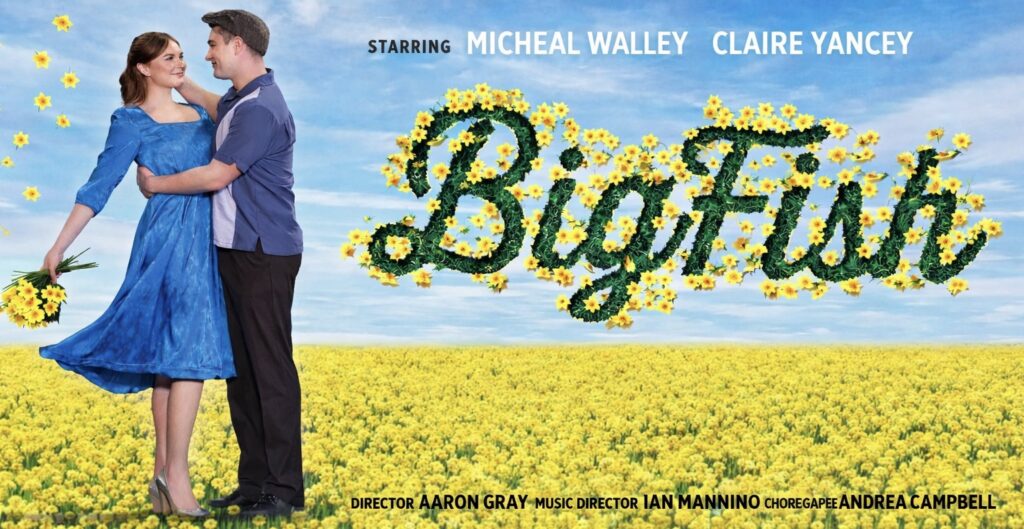
Few musicals capture the space between truth and imagination quite like BIG FISH, the 2014 Drama Desk–nominated musical by Andrew Lippa with a book by John August. Based on Daniel Wallace’s novel Big Fish: A Novel of Mythic Proportions and the 2003 film written by John August and directed by Tim Burton, the story explores the myths we create, the legacies we leave behind, and the love that binds families together.

Now swimming onto the stage at The Keeton beginning Friday, February 6, Big Fish blends soaring music, theatrical spectacle, and deeply human storytelling as it follows Edward Bloom — a man whose life is told through towering tales — and his son Will, who must learn how to listen beyond facts to understand the heart of his father’s stories. JHPENTERTAINMENT sat down with the artists bringing this mythic journey to life for a Rapid Fire 20Q conversation about imagination, family, and the power of storytelling.

RAPID FIRE 20Q WITH CAST AND DIRECTOR OF THE KEETON’s BIG FISH

RAPID FIRE WITH MICHAEL WALLEY, EDWARD BLOOM IN BIG FISH

JHPENTERTAINMENT: Edward Bloom is a man of myth, magic, and tall tales—what excited you most about stepping into his larger-than-life shoes?

MICHEAL WALLEY: The music of BIG FISH is absolutely gorgeous. This past fall, I was driving when Fight the Dragons came on the SiriusXM Broadway channel, and it completely stopped me in my tracks. I already knew BIG FISH was in The Keeton’s season, and I made plans to audition immediately. I’d describe myself as more of an “actor who sings” than a traditional vocalist, and Edward’s music stretches across haunting ballads, twangy pop, and everything in between. Bringing his character to life through that musical range has been both thrilling and demanding. Truthfully, I feel like I’ve been training for a marathon. My hope is that through every note, Edward’s larger-than-life heart and spirit come through loud and clear.

JHPENTERTAINMENT: A quick perusal of your theatre credits reveals your previous Keeton roles as Singin’ in the Rain’s Cosmo Brown and White Christmas’ Phil Davis share the common thread of being the comic foil to those show’s leading men—what sets Edward apart from roles you’ve played before?

MICHEAL WALLEY: At the end of our run of Singin’ in the Rain, my good friend Matthew Roberts, who played Don Lockwood, said something like, “I think you need the chance to play a leading man with some substance.” While I absolutely loved playing comic sidekicks like Phil and Cosmo (and I’d happily play either role again! Hint hint to any theatre company who needs a comic-dancer-goofball), Edward’s journey is overflowing with depth and meaning. I still get the chance to make ’em laugh, but this time I also get to take The Keeton audience on a much deeper emotional journey. Truly, I’ve never played a character anything like Edward.

JHPENTERTAINMENT: Edward’s stories often say more about love than facts. What do you think Edward is really trying to pass on?

MICHEAL WALLEY: Without giving too much away, a character near the end of the show realizes that Edward’s tall tales were always meant to inspire. I grew up in a small town in Mississippi, much like Edward’s Alabama hometown, and I always had this sense that there was something bigger out there. I wasn’t satisfied unless I was chasing it, and even now, in my 30s, that feeling hasn’t gone away. Edward is the same because he’s always chasing the next big dream, and his stories become a way to invite others into that sense of possibility. Facts may fade (and we live in 2026, does anyone really care about facts?), but inspiration is what lasts.

JHPENTERTAINMENT: As a writer, puppeteer, and voiceover artist, how have your many creative hats informed your approach to this role?

MICHEAL WALLEY: This role has flexed creative muscles I didn’t even know I had. I get to play Edward at multiple stages of his life, moving from wide-eyed teenage heartthrob to cranky old man. Jumping between different voices, physicality, and energy levels is something all my creative side-quests have really prepared me for. It also helped me better understand what John August was trying to convey. Edward evolves throughout his life, but his spirit stays consistent even as his body and circumstances change.

JHPENTERTAINMENT: If Edward Bloom were telling your life story, what detail would he absolutely exaggerate?

MICHEAL WALLEY: First of all, I’m 100% positive Edward would describe me as six-foot tall, wildly muscular, rich enough to buy a tall-and-skinny in 12 South, and effortlessly hitting every high note in Andrew Lippa’s score. But for real, I like to think he’d tell the story of a small-town Mississippi boy who loved theatre, set it aside during college and early adulthood to focus on what mattered, and then realized in his late 20s that his dreams and passions really mattered too. He’d talk about Micheal jumping into the Nashville theatre scene, making meaningful art, building lasting relationships, and getting to tell stories that truly matter, like Edward Bloom’s.

RAPID FIRE WITH CLAIRE YANCEY, SANDRA BLOOM IN BIG FISH

JHPENTERTAINMENT: This marks your Keeton debut—what made Big Fish the perfect first dive into this community?

CLAIRE YANCEY: The Keeton has been such a positive space from day one. Even at auditions, I felt immediately welcomed and comfortable, and it was clear how much heart and dedication everyone brings to make this not only a great production but a great experience for everyone involved. I feel deeply connected to this cast and genuinely look forward to coming to the Keeton for every rehearsal. This community has welcomed me with open arms, and I could not have asked for a better first show at this theatre.

JHPENTERTAINMENT: With a background in classical piano and voice, how does Lippa’s score speak to you as a musician?

CLAIRE YANCEY: As a musician, learning Lippa’s score has been one of my favorite parts of this process. There is something really special about working through the more intricate and challenging moments of the music together as a cast and watching it all click. Hearing songs you have listened to countless times come to life in the room with the people around you is incredibly satisfying. I love the rich harmonies and the wide range of musical styles throughout the show, which makes the score both exciting and deeply rewarding to perform.

JHPENTERTAINMENT: What’s one moment in the show where you feel Sandra’s heart most clearly?

CLAIRE YANCEY: This may feel like an obvious answer, but it is definitely during I Don’t Need a Roof. This is the moment where Sandra is seen most clearly and vulnerably. Throughout the show, she works hard to be strong for Edward and their family, often hiding how deeply his illness is affecting her.

JHPENTERTAINMENT: Sandra’s love story spans a lifetime—what do you find most beautiful about her journey?

CLAIRE YANCEY: From the very first moment they see each other, there is something magical about the way Sandra and Edward recognize something special in one another. Throughout the show, you can see that their relationship never loses its youthful spirit, even as the magic and adventure settle into the reality of growing old together. They remain deeply in love, still carrying that sense of playfulness and joy with each other.

JHPENTERTAINMENT: Sandra is the emotional anchor of Edward’s wild imagination. How do you ground her while still letting the magic exist?

CLAIRE YANCEY: I think Sandra is grounded because she is fully present and deeply attentive to the people she loves. She allows Edward, with his wild imagination, and Will, who is more grounded, to be fully themselves. Sandra has a beautiful ability to meet people exactly where they are and offer them steady love and support. While she still carries that same sense of wonder and adventure that connects her to Edward, she is also able to see the world clearly and hold space for both perspectives.

RAPID FIRE WITH JACOB HINNEN, WILL BLOOM IN BIG FISH

JHPENTERTAINMENT: Will Bloom is caught between frustration and wonder—what’s been the biggest challenge in telling his story?

JACOB HINNEN: The biggest challenge has been living in the tension between frustration and hope, especially as Will wrestles with what it means to be a father himself. He’s demanding truth from Edward, but underneath that is a deep need to understand the man behind the stories before he becomes a father himself. That tension drives every interaction. Hope is always present, but it’s tested, stretched, and reshaped as Will tries to reconcile who his father is with who he needs to be.

JHPENTERTAINMENT: You’ve played romantic leads and comedic roles—how does Will stretch you differently as a performer?

JACOB HINNEN: Playing Will stretches me differently because his confidence is paired with constant questioning. Unlike roles where the character’s path is clear or emotions are outwardly expressed, Will is always wrestling with what it means to be a son and a future father. I’ve had to channel that drive, balancing certainty with curiosity, so the audience can feel both his boldness and the weight of his internal journey.

JHPENTERTAINMENT: The father–son relationship is the emotional spine of BIG FISH. What has portraying Will taught you about listening?

JACOB HINNEN: Will has taught me that listening isn’t just about extracting answers and simply responding; it’s about recognizing intention. Edward is telling the truth in his own way, and Will has to learn that fatherhood isn’t always taught through facts, but through meaning. Playing this role has reminded me that listening sometimes means setting aside your expectations long enough to hear what someone is really trying to convey.

JHPENTERTAINMENT: This performance is dedicated to your dad. How does that personal connection shape the way you step onstage each night?

JACOB HINNEN: My dad always believed in me, even when we didn’t fully understand each other. I carry his presence with me onstage, feeling the push and pull of tension, hope, and love in every moment. It’s shaped how I tell this story: a story of love conquering death, of listening to understand rather than listening to simply respond, and of never giving up hope. Every night, stepping into Will’s shoes feels like honoring him while exploring what it truly means to be a son and eventually, a father.

JHPENTERTAINMENT: If Will could rewrite one of Edward’s stories, which moment would he finally see differently?

JACOB HINNEN: Will wouldn’t change the events themselves; he’d change the way he sees them. He’d recognize that Edward’s stories weren’t just embellishments, but expressions of love, courage, adventure and guidance. They were a father’s way of teaching him how to live fully, love boldly, and carry hope even in uncertainty. 

RAPID FIRE WITH AARON GRAY, DIRECTOR OF BIG FISH
JHPENTERTAINMENT: What was the very first image or moment from BIG FISH that made you say, “I have to direct this show”?

AARON GRAY: The first time I saw BIG FISH, there were several moments that brought me to that realization, but they all came back to the father–son relationship at the heart of the show. As a father of a six year old son, that dynamic hit me in a very immediate way, especially the moment when Will realizes he’s about to become a father himself, and suddenly his relationship with his own dad begins to change. That felt incredibly honest and personal to me.
 
I was also deeply moved by the love story. The way Edward loves Sandra, with imagination, devotion, and unwavering certainty, is something I think every romantic partnership should strive for. It’s romantic, but it’s also rooted in commitment and choice.
What ultimately made me say I had to direct this show is that it truly has everything! Romance, comedy, drama, and moments of theatrical magic, but at its core, it’s just a beautifully told story about family, love, and how we come to understand one another.
 
JHPENTERTAINMENT: BIG FISH lives in the space between reality and imagination—how did you approach balancing spectacle with emotional truth onstage?
 
AARON GRAY: The magic in BIG FISH only works if it’s grounded in emotional truth. We always let the relationships lead, and allowed the spectacle to grow out of what the characters are feeling, rather than the other way around.
 
JHPENTERTAINMENT: What can you tell me about your creative discussions with Ian Mannino, this production’s musical director, in regard to bringing Andrew Lippa’s whimsical score to life?
 
AARON GRAY: John August includes a note to the director in the script that points to a video Andrew Lippa created, where he dives deeply into the score,  showing how the songs function dramatically and emotionally. Having that level of insight directly from the composer was an incredible resource, and it became a foundational tool in my conversations with Ian. 
 
From there, our discussions were really grounded in respect for Andrew Lippa’s writing. Our shared goal was to keep the music true and honest to what he wrote. The score already contains so much whimsy, warmth, and emotional clarity that we never felt the need to overcomplicate it. Instead, Ian focused on letting the music breathe and supporting the storytelling, while I concentrated on how the songs live inside the characters and the moment.
 
What emerged from that collaboration is a score that feels both playful and deeply sincere. When the music is treated with that kind of care, its beauty really speaks for itself, and it becomes a powerful emotional guide for the audience throughout the show.
 
JHPENTERTAINMENT: In your show bio you describe this as a dream project. What part of your own storytelling sensibility feels most at home in BIG FISH?
 
AARON GRAY: At its heart, BIG FISH asks two questions that feel very personal to me: “What makes a good father?” and “How do heroes live on?” As a father, I connect deeply to the first question. The show shows us that being a good father isn’t about perfection, it’s about listening, showing up, and creating a space where your children can grow into themselves. Watching Will navigate his relationship with Edward while stepping into fatherhood himself felt incredibly real to me, and it’s a story I wanted to bring to life onstage.
 
The second theme, how heroes live on, is really about memory and storytelling. Edward becomes a hero not because he’s flawless, but because of the way his stories shape Will’s understanding of him and, in turn, the person Will becomes. That idea, that our loved ones live on through the stories we carry, is central to the show, and it resonates deeply with my own sense of storytelling. I’ve always been drawn to stories that exist somewhere between reality and imagination, where emotion comes first and spectacle serves the heart of the story.
 
For me, BIG FISH perfectly blends those elements: family, love, myth, and imagination. It allows wonder and sincerity to coexist, and that balance is exactly why it feels like a dream project, it’s a story that is both fantastical and deeply human, and it’s a story I truly love. 
 
JHPENTERTAINMENT: What do you hope audiences carry with them long after they leave The Keeton and the curtain comes down on BIG FISH?
 
AARON GRAY: I hope audiences leave remembering the power of storytelling and the people they love. Big Fish reminds us that family and connection aren’t perfect, but they’re profound, and that our stories keep those we care about alive. I want them to feel the magic, the wonder, and the joy in seeing life, and love, through a lens of imagination, and to carry that feeling with them long after they leave the theatre. 

BIG FISH opens at The Keeton on Friday, February 6 and continues through Sunday, February 22. Thursday performances are show only with Doors at 6:30pm and Show at 7pm. Friday & Saturday Doors at 5:45pm/Dinner at 6pm and Show at 7pm. Sunday matinee Doors at 12:45pm/Meal at 1pm and Show at 2pm. Show Only Tickets: $30.00 (Thursday performances), Adult Dinner and Show: $40.00, Child Dinner and Show: $35.00. CLICK HERE for tickets. 

Following BIG FISH, The Keeton will present The Play That Goes Wrong with performances April 10-26. So you don’t miss out on upcoming shows at The Keeton Dinner Theatre, follow them on Facebook, X and Instagram.

Interested in coverage for your latest entertaining endeavor? Click the contact page and drop me a note. You can also follow JHP Entertainment on Instagram and Facebook. In the meantime, #GoSeeTheShow!


Filed Under: Entertainment, Rapid Fire 20 Q, Theare Tagged With: Big Fish, Interview, Live Performance, live theatre, Music CIty, Musical, Musical Theatre, Nashville, Nashville Theatre, Rapid Fire, Rapid Fire 20 Q, The Keeton, The Larry Keeton Dinner Theatre

Theatre Review: Nashville Rep’s It’s A Wonderful Life’ Delivers A Heartfelt triumph for the Holiday Season

December 10, 2025 by Jonathan

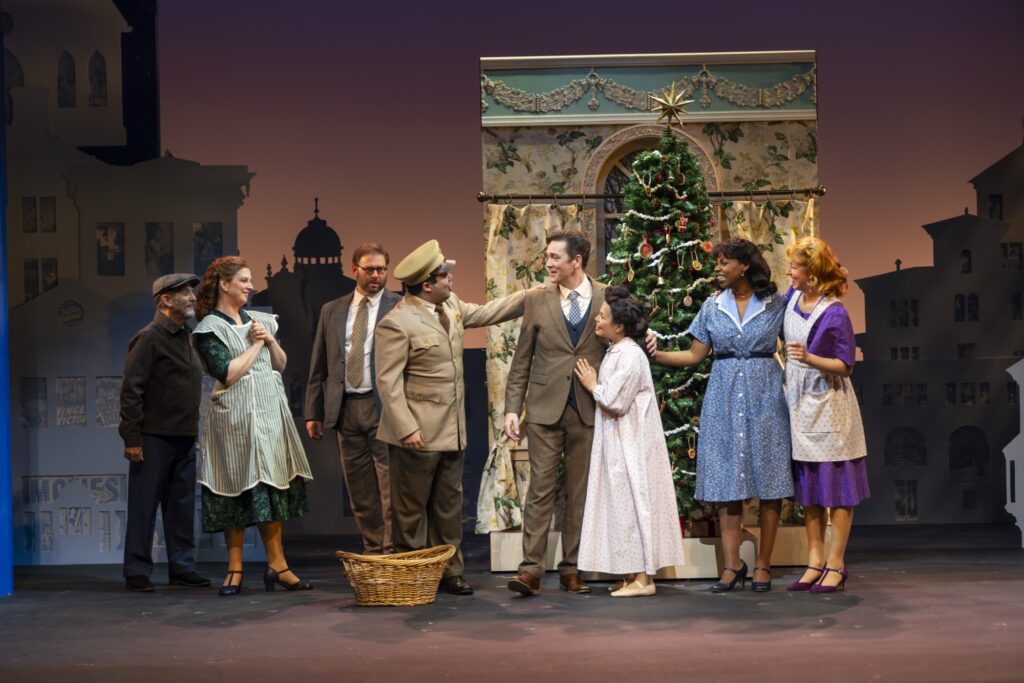
Nashville Repertory Theatre rings in the season with a warmly nostalgic, creatively staged production of It’s A Wonderful Life, directed by Alicia Lark Fuss and running now through December 22 at TPAC’s Polk Theater. With a stellar cast led by Brian Charles Rooney as George Bailey, Tamiko Robinson Steele as Mary Hatch Bailey, Jennifer Whitcomb-Oliva as Clarence and Matthew Carlton doing double duty as both Joseph, the supervising angel and as Potter, the beloved Frank Capra holiday classic, adapted for the stage by playwright Catherine Bush, is reimagined with theatrical magic.

This production leans into nostalgia while embracing a distinctly theatrical vocabulary with inventive movement, actors portraying multiple roles throughout and a visually stunning pop-up vintage Christmas card aesthetic —resulting in a version of Bedford Falls that feels both timeless and newly alive, all adding fresh dimension to a story generations know by heart.

Before a single line is spoken, the audience is transported by Gary C. Hoff’s breathtaking set design: a larger-than-life, die-cut, layered pop-up tableau rendered like a mid-century Christmas card cut from heavy white cardstock. It’s whimsical without being precious—an intricate snowy sculpture of Bedford Falls, with tiny cut-out doorways and windows glowing from within. Peer closely and you’ll catch vintage cyanotype portrait photos, representing the “everyday people” of the town, those whose quiet lives shape George Bailey’s world in ways he often forgets to see. It’s the perfect conceptual anchor for a story about taking note of what truly matters.

Playwright Bush seems to have taken inspiration from such classic theatre pieces as Our Town, in employing the above-mentioned practice of having actors portray multiple roles. Another of this production’s most enchanting elements is its use of movement. Thanks to movement coordinator Megan Castleberry, the ensemble shifts with a near-balletic grace—actors gracefully glide set pieces to and fro, and when called for, they physically personify snow gusts, swirling wind and fateful cracks across an icy pond. They mime-like movements echo emotional beats, and embody natural forces, adding a magical, abstract layer to the storytelling. It’s a bold directorial choice that works beautifully, enhancing the narrative without ever distracting from it. Especially effective in the more dramatic scenes, offering them up in an almost dreamlike vision.

At the center is Brian Charles Rooney, who’s made quite a name for himself, not only on the local level, but for his work in New York on Broadway, is well-known for his vocal prowess as a musical theatre powerhouse. Rooney captures the full breadth of George’s life journey—from mischievous boy to wide-eyed dreamer to the exhausted, cornered adult wondering where everything went wrong. Remarkably, he accomplishes this not through drastic physical transformation but through subtle, sharply observed choices: a shift in vocal pitch, a slight change in posture, the weight of responsibility settling into the shoulders. These gradations make his downward spiral heartbreaking and his redemption cathartic. As George Bailey, it’s his sincere believability as the multi-faceted depth he brings to the stage that holds the audience’s attention from that first appearance of a man defeated to the much-loved ringing of that angelic bell signifying all is well with the world. His performance as George Bailey is nothing short of revelatory. And YES…though this production is not a musical, the audiences is indeed treated to just a bit of Rooney’s pitch-perfect multi-octave voice for a quick little verse of Buffalo Gals, the beloved tune featured in the 1946 film classic.
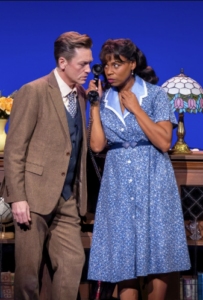
As Mary Hatch Bailey, Tamiko Robinson Steele radiates warmth, quiet confidence, and fierce devotion. Her Mary is not simply the supportive spouse—she’s the emotional compass of the story, grounding George even when he’s flailing hardest. Steele’s effortless sincerity elevates every scene she touches. From their scenes depicting George and Mary’s childhood friendship to their teenage flirtation, Steele’s sweet embodiment of Mary is palpable. The scene at the drugstore soda fountain when Mary leans over to George and whispers in his bad ear her devotion, I couldn’t help but have a little eye sweat. With Steele in the role, it’s no wonder George offers Mary the moon.
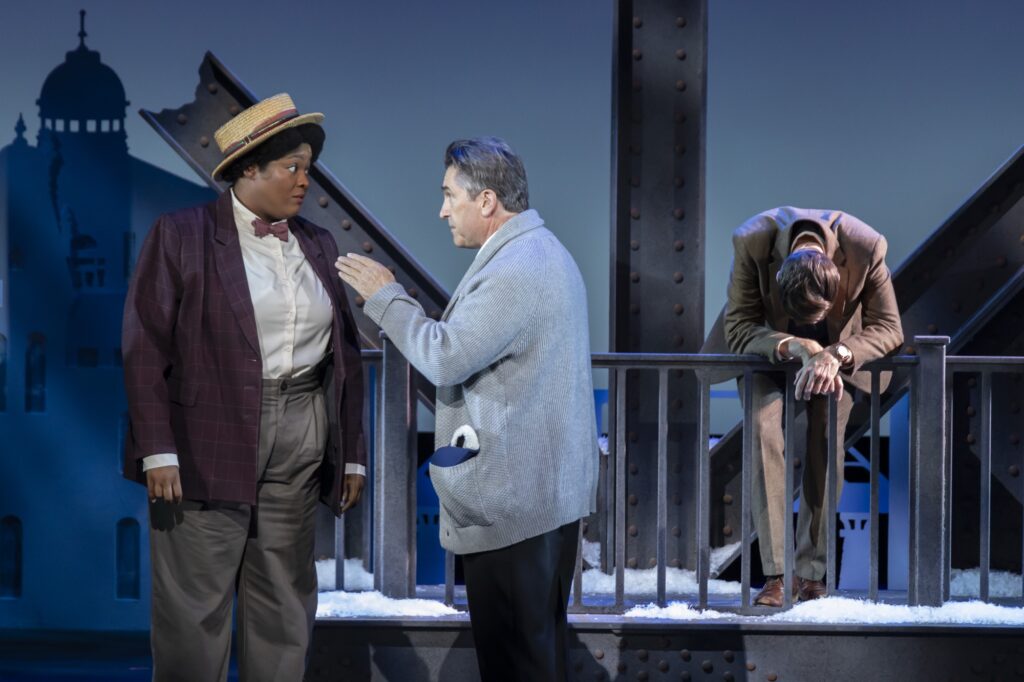
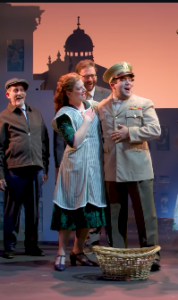
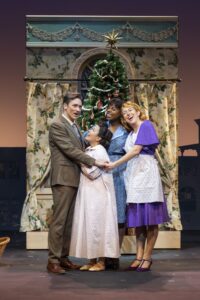
A standout among the ensemble, Matthew Carlton impressively toggles between two primary characters, the compassionate, celestial Joseph and the acerbic, conniving Mr. Potter. The contrasts are stark yet fully realized. Particularly striking is a small but brilliant acting detail: Carlton’s decision to have the wheelchair-bound Potter occasionally rub his leg, as if easing a persistent ache. As someone with mobility and neuromuscular pain myself, that gesture resonated deeply—an understated physical cue that hints at the discomfort and bitterness fueling Potter’s worldview. Carlton’s scenes with apprentice angel, Clarence are equally as lovely.

To that end, Jennifer Whitcomb-Oliva, who I readily admit is one of my longtime theatre crushes, shines brilliantly as the eager-to-earn-his-wings Clarence. Ever-hopeful and constantly assuming its his time to get to work helping George as Carlton’s Joseph guides him through George’s journey thus far, Witcomb-Oliva is simply joyous to behold. Also tasked with also presenting the bumbling but big-hearted Uncle Billy, Witcomb-Oliva os equally at ease. Where physical choices and minute nuances in characterization are concerned, Witcomb-Oliva is astutely adept. From Clarence’s nervous excitement to not only help George, but to also earn is wings–to Uncle Billy’s blissful befuddlement, Witcomb-Oliva delivers performances indeed worthy the presentation of angel wings.

Among the remaining company members, Matthew Benenson Cruz offers charm and humor as Harry Bailey, Burt the Cop, and more. Garris Wimmer deftly give the ole “Hee-haw!” to his Sam Wainwright, offers a bit kindness with his Mr. Gower and is the perfect companion to Cruz’s Burt as Ernie the cabbie. (Side Note: As I do every time I have the chance to review It’s A Wonderful Life, YES, I will point out the fact that Jim Henson and Company got the names for two of Sesame Street’s best pals from the characters of Bert and Ernie in the Capra classic), but I digress. Back to the ensemble, as expected, Eve Petty gives a spirited turn as Violet Bick, injecting just the right note of vulnerability beneath the flirtation. She’s also ridiculously fun in her role as one of the Bailey children.

Among  the remaining ensemble are Eric D. Pasto Crosby, who is first seen in a brief appearance as Mr. Bailey and a little more stage time as Nick the barkeep (question…did they really have Sports Bars called as such in the 1940s? It’s rhetorical. Sports Bars weren’t a thing until the 1960s, thus my only complaint about the set, for when Clarences shows George what life would have been like had he not been born, they visit the bar formerly owned by Martini, now emblazoned with a mirror-etched sign reading Nick’s Sports Bar). Aleia Eagleton and Darci Nalepa Elam appear throughout portraying various townspeople. Among their standout turns, Elam’s Ma Bailey is motherly perfection while her Tilley is flirty and fun. Then there’s the small in stature, but big in energetic presence of Eagleton as she is fabulously convincing and utterly enjoyable in the tiny, but pivotal role of Zuzu.


Each member of the company, whether featured on ensemble beautifully adding texture, warmth, and an essential presence throughout, rounding out the world of Bedford Falls with the perfect blend of authenticity, heart and the occasional wink to cleverness of the minimal approach to the piece.

Behind the scenes, the talent runs as deep. Melisa K. Durmon’s costumes, hair, and makeup perfectly capture the era while allowing each actor to glide seamlessly between roles and meet those quick change cues in time for their next character’s appearance. Dalton Hamilton’s lighting design bathes the stage in comforting holiday hues one moment and stark emotional shadows the next, guiding the audience through George’s shifting state of mind, but never over-dramatizing it. Kevin O’Donnell’s sound design subtly enhances the production’s magical realism—gentle chimes, rustling winds, and atmospheric underscoring that support without overwhelming.

Nashville Rep’s It’s A Wonderful Life is more than a nostalgic retelling; it’s a reminder—tender, inventive, and beautifully crafted—of the impact one life can have on an entire community. With its inventive staging, standout performances, and thoughtful direction, this production radiates the very heart of the holidays. Whether you’re revisiting Bedford Falls or discovering it for the first time, this beautifully crafted production is a heartfelt story of community, compassion, gratitude, connection, and the timeless belief that no one is a failure who has friends and the reminder of the difference one life can make.

The Rep‘s It’s A Wonderful Life continues its run through December 21, with performances at 7:30pm Thursday, December 18 and Fridays and Saturdays, and 2pm matinees Saturdays and Sundays. Truly a heartfelt, artfully realized gift to Nashville theatergoers, so grab your tickets, your Bevin Silver Bell, and maybe a tissue or two and get ready to head to TPAC‘s Polk Theatre to celebrate this Wonderful piece of American holiday history. CLICK HERE to purchase tickets.

Before you go, in case you missed it, CLICK HERE to check out my recent Rapid Fire 20Q with the director and cast members of the show.

Following It’s A Wonderful Life, Nashville Rep’s season continues in the new year with FAT HAM, James Ijames‘ Pulitzer Prize-winning reinvention of Hamlet, a co-production alongside Nashville Shakespeare Festival, onstage February 13-22, followed by the audience favorite SISTER ACT April 10-19. Closing out the season will be Amy Tofte‘s BLOOD SUCKING LEECH, as part of Nashville Rep‘s New Works: Next Stage, after having presented a staged reading of Tofte’s work just last season. CLICK HERE to purchase Season Tickets.

As always, check out Nashville Rep online and follow them on Facebook, X, YouTube and Instagram.

If you wanna follow JHPEntertainment to find out who I’m chatting with for my next Rapid Fire Q&A, or for my take on the latest local and national theatre, music and movie offerings, find us at JHPEntertainment on Facebook JHPEntertainment on Instagram  and JHPEntertainment on Twitter. Got an event or show we should know about, drop us a line at the Contact tab. Till then, #GoSeeTheShow!

Filed Under: Entertainment, Theare, Theatre Review Tagged With: 2025, Brian Charles Rooney, Christmas, It's A Wonderful Life, Jennifer Whitcomb-Oliva, Live Performance, live theatre, Music CIty, Nashville, Nashville Rep, Nashville Repertory Theatre, Nashville Theatre, Tamiko Robinson Steele, Theatre Review

Rapid Fire 20Q With Director and Cast of Nashville Rep’s ‘It’s a Wonderful Life’; at TPAC’s Polk Theatre December 5-21

December 6, 2025 by Jonathan

To celebrate the holiday season, Nashville Repertory Theatre brings the cherished American classic, It’s a Wonderful Life, back to the stage at TPAC‘s Polk Theatre. For this special holiday edition of Rapid Fire 20Q, JHPEntertainment.com sat down with members of the extraordinary cast and creative team — Brian Charles Rooney, Tamiko Robinson Steele,  Jennifer Whitcomb-Oliva & Eve Petty, as well as the show’s director Alicia Lark Fuss — to talk character discoveries, backstage magic, family traditions, and why this timeless story still resonates so deeply. Ready for a visit to Bedford Falls? Let’s go.

_____

RAPID FIRE 20Q WITH CAST AND DIRECTOR OF NASHVILLE REP’s IT’S A WONDERFUL LIFE


RAPID FIRE WITH BRIAN CHARLES ROONEY, GEORGE BAILEY IN NASHVILLE REP’s IT’S A WONDERFUL LIFE

JHPENTERTAINMENT: George Bailey is one of the most enduring characters in American storytelling — how did you begin finding your version of him?
BRIAN CHARLES ROONEY: The film version of this story is such a legendary piece of the cultural fabric; so it’s impossible to ignore it, and I would never want to do that in the first place. However, I have tried to stay focused on the script that we have in hand, as this is a staged/theatrical version, and even though it is obviously based upon the film, it is definitely its own artistic entity. So I wanted to try to create my own version of this character based on how that version could best serve the story, and this interpretation of that story.  I faced a similar challenge when playing Buddy the Elf in Elf, a few years ago for the Rep. In that case, the movie is also quite iconic, but the stage musical made enough changes and incorporated such a fun musical score, that it stood on its own. However, in both cases, I have attempted to pay homage, to what has come before!  
JHPENTERTAINMENT: That leads perfectly to my next question…as you mentioned, in recent years you’ve entertained Nashville audiences by  played roles as varied as Buddy the Elf, Nicely Nicely in Guys and Dolls and The Emcee in Cabaret — how does George Bailey compare in tone and emotional range?
BRIAN CHARLES ROONEY: This is a very different role for me, especially if we compare it to what audiences have seen me play in Nashville…  but at heart, George is a fighter, and he’s incredibly sensitive… when he is at his lowest, he still has a lot of faith in the people he loves… even though he loses faith in himself.  He is unafraid to feel deeply, and I think that’s a common trait amongst most of the characters I’ve played throughout my career… even here in Nashville! Is it a stretch? I think most people with whom I’ve worked and who support the theater in Nashville might think so; but I am an actor, and it is my joyful responsibility to be a storyteller and execute the vision of the playwright and the director. I’m very much looking forward to doing that with this show!!  
JHPENTERTAINMENT: You know I can’t chat with you without mentioning your incredible vocal range and skills as a singer. To that end, is Mariah’s All I Want for Christmas THE holiday song? Or do you have another unlikely favorite that you keep on your most-played Christmas playlist?
BRIAN CHARLES ROONEY: I quite like Mariah’s annual Christmas anthem, and I’m always amazed by how shrewd a business woman she has always been… That song makes her about $3 million in royalties every year. Not too shabby, right?!   I have a few other holiday favorites, including When Christmas Comes to Town, from the film The Polar Express, as well as the Kelly Clarkson/Ariana Grande duet Santa, Can’t You Hear Me?  I love both of their voices, and I think they sound wonderful together!!!  I am always obliged to sing O Holy Night, each year by my family, many friends, church, and other events. I like it because I can live in my classical voice for a moment or two during that song. That’s always fun!
JHPENTERTAINMENT: What’s something about It’s A Wonderful Life that resonates with you personally, especially in today’s world??
BRIAN CHARLES ROONEY: There are a number of reasons this show feels timely and relevant right now… During the show, George Bailey finds himself at odds with Henry Potter, who has all the money in the world, but very little heart. Matt Carlton plays Potter beautifully, and I feel very fortunate to work with him.  I’ve had the chance to work with him in The Sound of Music and Cabaret for Studio Tenn, and in A Christmas Carol, the last two years at TPAC for Nashville Rep. He feels like family to me, and I admire him greatly, so one might think it would be difficult seeing him as a villain and interacting with him as such… But it works so well! And I think the audience will particularly love those scenes!  I bring those scenes up because the theme of empathy, or rather the lack of empathy, is richly present in those scenes, and despite the fact that some people find empathy a liability, I cons consider it a strength. I think people might agree with me after seeing this show, assuming they may have thought differently beforehand. 
Another theme that is undeniably present in this story is that of love… Now that’s certainly a loaded statement, but George struggles with whether or not he matters… And I believe that if you have the capacity for love, you matter. If you are loved by other people, it is difficult to deny the fact that your existence is important. I think that idea, which is present in our play, can remind the audience that it’s never a waste of time to show love to others… it can be, in fact, quite a healing experience for everyone.
RAPID FIRE WITH TAMIKO ROBINSON STEELE, MARY HATCH BAILEY IN IT’S A WONDERFUL LIFE

JHPENTERTAINMENT: What is it about Mary Hatch-Bailey that drew you to the role?
TAMIKO ROBINSON STEELE: Mary is grounding. She is that quiet but powerful force that keeps everything steady. I love women like that because they are often the glue in real life. She listens, she leads with love, and she stands firm even when the world shakes a little. Playing her felt like stepping into the heart of a home.
JHPENTERTAINMENT: What do you think gives this classic tale such lasting emotional power?
TAMIKO ROBINSON STEELE: Honestly, it is the community. The story reminds us that we are never doing life alone, even when it feels like it. People show up for you in big and small ways, and that is what makes the world feel warm. I actually grew up knowing about the movie more than watching it, but the story has lived around me my whole life. You can feel why. Even without all the details, the heart of it is unmistakable. People lean toward it because it celebrates community. It reminds us that we matter to each other, that we lift one another up, and that our impact on the people around us is often bigger than we realize. Anything that centers hope and connection lasts because we need it.
JHPENTERTAINMENT: What is one of your personal favorite holiday traditions?
TAMIKO ROBINSON STEELE: Family time. My family is big and loud and wild in the best way. We cook way too much food, eat until our stomachs and hearts are full, laugh until we cry, and just soak up that joy. It is chaos and comfort all at once. That is Christmas for me.
JHPENTERTAINMENT: How does performing live on stage feed you differently than film and TV?
TAMIKO ROBINSON STEELE: The stage gives me an immediate spark. The audience breathes with you and you all experience the story at the same time. There is nothing like that. Film and TV feed me in a different way because those stories live longer and reach into more homes. I love the intimacy of the camera, but theater is magic you share in the moment, and that is a gift every single time.
RAPID FIRE WITH JENNIFER WHITCOMB-OLIVA, CLARENCE & OTHERS IN IT’S A WONDERFUL LIFE

JHPENTERTAINMENT: When I heard you were playing Clarence, Uncle Billy et al, I may have let out an uncontrollable squee of delight! What’s been the biggest joy (and challenge) in shifting between these unlikely roles for you?
JENNIFER WHITCOMB-OLIVA: It’s A Wonderful Life is such a beloved classic, the opportunity to portray any of its characters brings a special sense of nostalgic wonder. One of the biggest challenges in this production/adaptation, is the quick costume changes/focus and timing. While most of the costume changes are very minimal, some of them are within seconds. Moments. This piece calls for intense mental focus. These ensemble tracks move quickly and precisely. It’s kind of dance like. The way scenes flow into the next, swriling around. A bit of a Christmas trance, if you will. 
JHPENTERTAINMENT: Your theatre credits are as varied as your roles in this show, but over the years you do seem to always include a seasonal show in the mix. What keeps you coming back to holiday storytelling?
JENNIFER WHITCOMB-OLIVA: I don’t think it would come as a surprise when I tell you it’s because I want glitter on everything! I love anything that is larger than life. Holiday shows are filled with spectacular visuals. Lush costumes, imaginative sets, twinkling lights, snowy effects. Illusion. Miracles even.  I love magical things, and that “Anything Can Happen” feeling that comes with these types of shows. Also, there alway seems to be a deeper connection between the audience and the performers. There’s this instant connection and warmth from emotions, and cherished memories. I might be a bit of a romantic, but don’t go telling anyone! Stay cool. Be calm.
JHPENTERTAINMENT: You touched on this a bit already, but Clarence is such a whimsical and heartwarming figure — how are you approaching this guardian angel role in your own style?
JENNIFER WHITCOMB-OLIVA: Iconic roles are always tricky. I want nothing more than to honor the iconic nature of this beautiful character. My goal with this and any character I approach, is to play it with sincerity and emotinal truth. Something grounded and real, rather than a replication or imitation. Clarence is a goofy guy. Or in this sense, a young man. He has a good heart, and an exuberant love for life. He has a sense of adventure, and a taste for excitement. He might not be the brightest crayon in the box, but has the potential to light up the world. I want him to feel like you know him, or really want to. Maybe he bags your groceries at the grocery store. He’s the guy who throws your newspaper to your door, and breaks your flower pot every Wednesday. Maybe he’s the one that gets his bowl of cereal every morning, and when he takes the cap off the milk, he never screws it back on properly. He floods the kitchen floor every time. He’s messy, but he means well. I want audiences to genuinely roll their eyes a his silliness. But we know deep down, that one of these times he’s going to do the right thing, and all will be well.
JHPENTERTAINMENT: Speaking of heartwarming, what warms your heart during the holidays?
JENNIFER WHITCOMB-OLIVA: I love spending time with my family. Gathering around the table for a delicious meal. I love waking up in loud Christmas pajamas, and spending a whole day in them. It’s cozying up on the couch with treats and silly movies. Doing absolutely nothing, but doing it together. It’s the quiet moments of stillness and reflection. Swimming in a cup of hot coca with enough whipped cream in it to float an elephant. Daydreaming of things I want to do. It’s my endless love for the Nutcracker Ballet, and the Tchaikovsky score. And naps. So many naps. It’s sitting by the window with my fur babies, festively ticking down the days until Halloween. 

RAPID FIRE WITH EVE PETTY, VIOLET IN IT’S A WONDERFUL LIFE

JHPENTERTAINMENT: After several years working behind the scenes with Nashville Rep, how does it feel to step into the spotlight for your onstage debut — and in such a beloved holiday classic?
EVE PETTY: Nashville Repertory has been one of my favorite companies to work with behind the scenes over the years. I’ve loved watching the shows I’ve worked on from the wings, and now it feels amazing to step onto that same stage and be a part of the show in a new way. 
JHPENTERTAINMENT: Not only are you making your on-stage Nashville Rep debut, you’re also juggling several characters in this production — among them, the always entertaining Violet Bick— not gonna lie, Violet is one of my favorite characters in the show. What’s your favorite aspect of Violet, as you see her?
EVE PETTY: The other actors and I  have talked about how Violet has been seen as almost a villain in the way that she comes between Mary and George. But the way I  see her, she’s a girl going after a boy that she has liked all her life, just like Mary. I’ve liked discovering the similarities and differences between Violet and Mary’s characters and finding the depth within this flirty and forward character. Plus, who wouldn’t want people to say “Wow” when they walk across a stage 😉
JHPENTERTAINMENT: Since you’ve seen the Rep from both sides — backstage and onstage — what has surprised you most about the process this time around?
EVE PETTY: My brain still thinks very much in the way of how backstage runs and how to make the show smooth and efficient. It’s been a nice surprise to find that with this show, those skills are very much valued with how quickly the transitions come and go, taking us from scene to scene. 
JHPENTERTAINMENT: Just for fun…NOT counting It’s a Wonderful Life, what one movie or tv special truly signifies the start of the holiday season for you?
EVE PETTY: As a puppeteer, I  love watching The Muppets Christmas Carol and imagining how fun it must have been to perform in that movie. 
RAPID FIRE WITH IT’S A WONDERFUL LIFE DIRECTOR, ALICIA LARK FUSS


JHPENTERTAINMENT: It’s A Wonderful Life has such a cherished place in American culture — what inspired your vision for bringing this story to Nashville Rep’s stage?
ALICIA LARK FUSS: My husband and I watch the movie every year on New Year’s, so I am very familiar with it! As a cast and design team, we focused on the importance of community at the center of the story– it’s really about the way we take care of each other and  how important that is. Focusing on the heart of the story gave us all a lens to create this beautiful adaptation.
JHPENTERTAINMENT: You have a background in theatre for young audiences — how does that perspective influence your approach to this family-centered holiday production?
ALICIA LARK FUSS: My approach to directing doesn’t change much based on the audience; I find I ask really similar questions when investigating a new script and thinking about how to approach it. However, TYA has given me lots of practice in scripts that move at a brisk pace with actors playing multiple roles, and that is VERY true of this play. There are many sequences where we jump time and place every page or so, and our ensemble cast plays something like 47 people between 9 actors.
JHPENTERTAINMENT: This adaptation by Catherine Bush is theatrical and imaginative — what moments in this version most surprised or delighted you in rehearsal?
ALICIA LARK FUSS: Watching our incredible actors create so many distinct characters has been a DELIGHT. We also worked with a fabulous movement coordinator, Megan Castleberry. She guided us through creating moments like the kids falling through the ice and George jumping from the bridge, and it was incredible to watch her build these sequences, representing the action in a highly theatrical way that leans into physical storytelling. 
JHPENTERTAINMENT: What do you hope audiences take with them as they leave after seeing Nashville Rep’s It’s A Wonderful Lifethis holiday season?
ALICIA LARK FUSS: In rehearsals, I’ve seen the end of the show many, many times and I still get misty. My dream would be that audiences feel a deeper sense of connection to their loved ones, and a renewed hope for communities that lift up and take care of each other. 
_____
Nashville Rep’s It’s A Wonderful Life brightens the holidays at TPAC‘s Polk Theatre December 5–21, with performances at 7:30pm Fridays and Saturdays and 2pm matinees Saturdays and Sundays. As this uplifting classic fills the theatre with heart, hope, and a reminder that every life touches countless others, there’s no better way to celebrate the season. Gather your loved ones, step into Bedford Falls, and experience the magic live onstage. CLICK HERE to secure your seats now.

Following It’s A Wonderful Life, Nashville Rep’s season continues in the new year with FAT HAM, James Ijames‘ Pulitzer Prize-winning reinvention of Hamlet, a co-production alongside Nashville Shakespeare Festival, onstage February 13-22, followed by the audience favorite SISTER ACT April 10-19. Closing out the season will be Amy Tofte‘s BLOOD SUCKING LEECH, as part of Nashville Rep‘s New Works: Next Stage, after having presented a staged reading of Tofte’s work just last season. CLICK HERE to purchase Season Tickets.

As always, check out Nashville Rep online and follow them on Facebook, X, YouTube and Instagram.

If you wanna follow JHPEntertainment to find out who I’m chatting with for my next Rapid Fire Q&A, or for my take on the latest local and national theatre, music and movie offerings, find us at JHPEntertainment on Facebook JHPEntertainment on Instagram  and JHPEntertainment on Twitter. Got an event or show we should know about, drop us a line at the Contact tab. Till then, #GoSeeTheShow!

Filed Under: Entertainment, Rapid Fire 20 Q, Theare Tagged With: 2025, Christmas, It's A Wonderful Life, Live Performance, live theatre, Nashville, Nashville Rep, Nashville Repertory Theatre, Nashville Theatre, Q&A, Rapid Fire, Rapid Fire 20 Q

RAPID FIRE 20Q WITH CAST OF WOMEN IN THEATRE NASHVILLE’s ‘MS HOLMES + MS WATSON-APT 2B‘

October 21, 2025 by Jonathan

RAPID FIRE 20Q WITH CAST OF WOMEN IN THEATRE NASHVILLE’s MS HOLMES + MS WATSON-APT 2B

Get ready for quick wit, sharp minds, and a touch of mystery! With Women in Theatre Nashville’s (WIT Nashville)’s upcoming production of playwright Kate Hamill’s clever reimagining of Sir Arthur Conan Doyle’s world, Ms Holmes + Ms Watson – Apt 2B, directed by Diane Bearden Enright, brings the famous detective duo into the modern age — where friendship, intellect, and a few absurd surprises are the ultimate clues. Ahead of the show’s opening at Darkhorse Theatre (Friday, October 24 through, November 1), we sat down for a round of Rapid Fire 20Q with the production’s scene-stealing cast — Elyse Dawson (Sherlock Holmes), Beth Henderson (Ms Watson), Skyler Cole (Lestrade, Elliott Monk & others), and Nashville newcomer Jen Houghton (Irene Adler, Mrs. Hudson & others) — to talk character quirks, comedic chaos, and why this twisty mystery is one you’ll want to solve for yourself.

Let’s dive in — no magnifying glass required! 

—————

RAPID FIRE 20Q WITH THE CAST OF WIT NASHVILLE’s MS HOLMES + MS WATSON – APT 2B

RAPID FIRE WITH BETH HENDERSON, JOAN WATSON IN MS HOLMES + MS WATSON

JHPENTERTAINMENT: When I began researching in preparation of chatting with you and your co-stars, I found it interesting that the playwright, Kate Hamill played Watson, not Holmes in the world premiere production of this piece. Does knowing the playwright in essence created this role for herself inspire you to approach the role any differently than other roles you’ve played?

BETH HENDERSON: I know! When I found that out, I was pretty intimidated. But, I haven’t really approached it any differently than I have any other roles. I honestly just try not to think about it. Ha!

JHPENTERTAINMENT: In this adaptation of the classic, Watson—an American now living in London post pandemic and post-divorce—seems eager for a fresh start. If you were to relocate and start anew, where might you end up and what career path might you choose?

BETH HENDERSON: Oooohhh, good question! I think about that a lot, because I plan to retire out of the country one day. But, whereas I’ll retire somewhere warm and sunny, my answer for relocation and starting over in a career sense would be different. If I was younger and had the funds and actually permitted to move there, I would move to Scotland and own my own little bookstore.

JHPENTERTAINMENT: Sir Arthur Conan Doyle published his first Holmes and Watson story more than 130 years ago. What is it about this unique pairing that still holds an audience’s attention?

BETH HENDERSON: I think it’s the whole opposites attract, odd couple, yin and yang idea. People like to see two very different personalities work together to create balanced solutions. 

JHPENTERTAINMENT: When Holmes and Watson first “re-boot” their detective partnership post-pandemic, what is the one gesture or moment you think defines their new status quo?

BETH HENDERSON: Well, in this production, Watson is new to the crime solving business. She is brought into it simply because she’s there. But, I think Sherlock brings Watson into the biz to form this duo because Watson provides an emotional element that Sherlock lacks. 

JHPENTERTAINMENT: What trait of Watson’s do you find most relatable—and what about her do you admire most?

BETH HENDERSON: I can definitely be a bit neurotic and all over the place like Watson is, and I really understand her emotional struggles. I think the thing I admire most about her is what you referred to earlier, her courage to move somewhere new and just start all over without a safety net. 

RAPID FIRE WITH SKYLER COLE, LESTRADE, ELLIOTT MONK & OTHERS IN MS HOLMES + MS WATSON

JHPENTERTAINMENT: What’s the trickiest part of stepping into Lestrade’s shoes?

SKYLER COLE: The balance of competence to incompetence. He is a cop and knows protocol, but his imagination can lead him down a wild goose chase for sure.

JHPENTERTAINMENT: As Lestrade, you often stumble or say the “wrong thing.” Which particular gag or line do you relish most, and what slight twist will you put on it in performance?

SKYLER COLE: I have a certain moment with a bug where I very quickly go from joy to fear. Love any moment some physical comedy can be added in.

JHPENTERTAINMENT: Who in the cast would Lestrade secretly admire (or envy) and why?

SKYLER COLE: Character? Watson for sure. You may even see some of that admiration on stage…

Cast? Elyse (Holmes) because she loves Lady Gaga and Lestrade also has a thing for pop music.

JHPENTERTAINMENT: As Elliot Monk (the tech billionaire villain), you mask ambitions with slick confidence. In the moment you reveal (or hint) your vendetta, how do you calibrate that betrayal moment?

SKYLER COLE: A character can only beat around the bush for so long before they have to address the problem head on. Monk would probably want to live in the bush if he could, but sometimes ambitions speak louder than a scary bush.

JHPENTERTAINMENT: In the dance of masks (Lestrade vs. Monk vs. public persona), which of your roles is your “default” internally, and how do you switch physically or vocally among them?

SKYLER COLE: I would say Lestrade is my default as I play him most of the show. All my characters have different dialects and physicality with how they walk/carry themselves. I actually worked with a dialect coach to make sure my British dialects sound different enough for the different characters so as not to confuse any of the audience (hopefully). Switching physically is all about knowing where the energy of the character lies. Lestrade is mostly near his chest, Monk is wide taking up space, and others…well you will just have to come and see for yourself!

RAPID FIRE WITH JEN HOUGHTON, IRENE ADLER, MRS HUDSON & OTHERS IN MS HOLMES + MS WATSON

JHPENTERTAINMENT: How do you shift between characters like Irene Adler and Mrs. Hudson—what’s your internal “switch”?

JEN HOUGHTON: Because I go back and forth between several characters so many times, and each one has a completely different dialect, age and physicality, I go through a little multi-step ritual before I enter each time. 

1. I set my feet in a specific stance, which triggers my brain-body-memory into that character’s center of gravity

2. I adjust my shoulders & posture, which helps me remember each character’s age and physicality

3. I quietly say a silly tongue-twister so I remember which dialect to use. 

It all probably looks quite ridiculous, but it helps!

JHPENTERTAINMENT: Which role gives you the greatest freedom to play, and which challenges you most?

JEN HOUGHTON: All three roles leave room for a lot of play, which is what makes this project so much fun. Mrs. Hudson is a lot closer to roles I’ve played before, so I probably found the quickest freedom to play with that character. Irene Adler is a VERY different “type” than I’m used to playing, and she really challenges me to face some major insecurities, so that feels like quite a gift of an experience.

JHPENTERTAINMENT: If Mrs. Hudson had a hidden past, what would you imagine it to be?

JEN HOUGHTON: I think Mrs. Hudson was a bit of a wild-child in her younger years. Maybe she spent a bit of time performing as a lounge singer on a cruise ship where she loved the life of travel & trysts. While that chapter of her life may be over, she’ll always remember her days of frivolity with fondness.

JHPENTERTAINMENT: In a fictional “Adler + Hudson crossover moment” (not in script), what would you imagine Mrs. Hudson saying to Irene about Holmes and Watson—and how might that line reveal a hidden relationship?

JEN HOUGHTON: I think Mrs. Hudson fancies herself a bit of a matchmaker, and we know she loves American cinema, so I think she would tell Irene to go for it with Holmes, because “The heart wants what the heart wants, and sometimes ya just have to carry the watermelon, dear.”

JHPENTERTAINMENT: Which of your characters would you want to “hang out” with for a day, and what would you do together?

JEN HOUGHTON:  Haha, well, since my choices are a narcissist, a sociopath and a sweet sassy landlady; for my own safety, I’m gonna have to go with Mrs. Hudson. I think we would probably sing & dance while baking some delicious sweets.

RAPID FIRE WITH ELYSE DAWSON, SHERLOCK HOLMES IN MS HOLMES + MS WATSON

JHPENTERTAINMENT: What can you tell me about your Sherlock Holmes, as conceived by the playwright Kate Hamill and now under the direction of Diane Bearden-Enright as you’re playing her?

ELYSE DAWSON: This is a version of Sherlock that allows her to be messy and flawed. When we meet her she’s having a bit of an identity crisis as she feels unmoored without a case to entertain her busy brain. Then, throughout the show Sherlock gets to prove her prowess repeatedly but we also see her struggle in the face of some difficult mysteries and characters that throw her off balance. 

JHPENTERTAINMENT: What’s one non-logical, emotional thing your version of Holmes secretly does when no one’s watching?

ELYSE DAWSON: Sherlock most definitely shares her most intimate thoughts and feelings with Mr. Bones (the skeleton that resides in Apartment 2B). 

JHPENTERTAINMENT: Do you have a favorite detective in TV, film, or literature (besides Holmes herself)?

ELYSE DAWSON: I grew up an avid reader of The Boxcar Children and the Bailey School Kids series. I think reading them as a kid, I found something really empowering about children who have such little control over their circumstances taking matters into their own hands to make sense of the world around them. I see that reflected a lot in Sherlock. She gets her sense of security from organizing and understanding facts very deeply. Oh and of course the Mystery Gang from Scooby Doo. I love how each member brings their own strengths and weaknesses together to solve the case.  

JHPENTERTAINMENT: In the “process is the point” monologue , which phrase do you lean most into in performance, and why?

ELYSE DAWSON: In that monologue, I lean into her explanation of the process being the point. She describes it as “The joy of the chase, not control of the hunt”. This particular monologue really resonates with me as an actor. It’s easy to get fixated on a final product: the show that’s presented to the audience; but I find the most joy and freedom comes from the exploratory rehearsal process. Sherlock is the most in her element when she’s on the case. 

JHPENTERTAINMENT: What do you hope audiences take with them after having seen WIT’s production of MS HOLMES + MS WATSON-Apt 2B?

ELYSE DAWSON: I hope that audiences leave with a renewed sense of wonder and curiosity. One of the big themes in this show is the marvel of the human mind. Isn’t it incredible that we have the capacity not just for extraordinary reasoning and logic but also infinite access to imagination without having to rely on technology or externals? I hope they are also reminded of our shared necessity for human connection and vulnerability. Holmes and Watson both start this play with the idea that they are on their own individual journeys but by the end, it’s made very clear that much more can be accomplished when they connect, shortcomings and all. 

__________

This Rapid Fire 20Q  might have concluded, but rest assured the game is afoot! Don’t miss WIT Nashville’s production of Ms Holmes + Ms Watson – Apt 2B, directed by Diane Bearden-Enright, running October 24 – November 1 at Darkhorse Theatre. Tickets are $25 and on sale now — CLICK HERE to get yours before they vanish faster than a clue at a crime scene!

Be sure and check out WIT’s Official Site and follow them on Facebook, Instagram and YouTube.

As always, if you wanna follow JHPEntertainment to find out who I’m chatting with for my next Rapid Fire Q&A, or for my take on the latest local and national theatre, music and movie offerings, follow us on Facebook, Insta and Twitter.


Filed Under: Entertainment, Rapid Fire 20 Q, Theare Tagged With: 2025, Darkhorse Theatre, Diane Bearden-Enright, Interview, Live Performance, Ms Holmes + Ms Watson, Nashville, Nashville Theatre, Q&A, Rapid Fire, Rapid Fire 20 Q, WIT, Women in Theatre

Rapid Fire 20Q with cast of Franklin Theatrical Fellowship’s ‘Guys and Dolls’; onstage July 11 thru July 20

July 10, 2025 by Jonathan

Having presented TWELVE ANGRY JURORS, around this time last year, Franklin Theatrical Fellowship under the watchful eye of founder Melanie Sutton, quickly proved themselves as the latest addition to the Middle Tennessee theatre community. With the added immersive element of their current show, GUYS AND DOLLS, on stage July 11-20 at Studio 615 (272 Broadmoor Drive, Nashville, TN 37207), FTF is definitely upping the ante (thematic gambling reference fully intended).
As the cast and crew put the finishing touches on turning Studio 615 into New York’s Biltmore Garage, I had the chance to chat with four members of the cast for the latest installment in my recurring interview feature, Rapid Fire 20Q. What follows are those conversations.
—–
Rapid Fire 20Q with cast of Franklin Theatrical Fellowship’s GUYS AND DOLLS
Rapid Fire With Brian Charles Rooney, Nicely Nicely Johnson in GUYS AND DOLLS
JHPENTERTAINMENT: To get things rolling, I gotta admit, Nicely Nicely has always been my absolute favorite musical theatre character name! What can you tell me about Nicely Nicely and what drew you to audition.
BRIAN CHARLES ROONEY: The name is a lot of fun! There’s a lot of room in this show for really great character work; which is one of the reasons I wanted to do the show in the first place!  It’s a classic, and there are so many songs in the show that have become part of the fabric of our culture. However, one of the main reasons I wanted to be in GUYS AND DOLLS was because of a speech that the artistic director of Franklin Theatre Fellowship, Melanie Sutton, made after a performance of their last production, GOOD NIGHT, OSCAR, I was thoroughly impressed by the production, the acting, the direction, the design… and that made me feel excited, but it was Melanie’s speech afterwards that really sealed the deal for me. I had just done the last production of A CHRISTMAS CAROL, for Nashville Rep; and some of us had participated in a talk back after the show. Someone asked us what we found valuable about being in the show. I took the opportunity to point out that live theater offers the community a chance to come together, regardless of so many variables that make people different. In the 2 hours, or so, that an audience has with the cast and crew of a show, they participate in a community experience.  Melanie talked about wanting to create a theater company that fosters the opportunity for people to come together, to take risks, to create art, and to be available to the community, regardless of their background.
I knew that I needed to get to know this person, and to try to work with her.  So when I saw that FTF would be producing GUYS AND DOLLS this summer, I reached out to Melanie, and to Allison Little, our choreographer, with whom I had performed in ELF for the Rep and CABARET for Studio Tenn. 
JHPENTERTAINMENT: You know I can’t do one of these Rapid Fire chat with you without mentioning your Broadway debut, having played Lucy Brown in Roundabout Theatre Company’s  2006 revival of THREEPENNY OPERA. From Lucy Brown to Nicely Nicely Johnson is quite a leap—are there any similarities you’ve found between these two?
BRIAN CHARLES ROONEY: Yes quite a leap visually, for sure! However… Both characters are absolute opportunists. They will do or say whatever they need to do to achieve a goal.  Nicely Nicely is often portrayed as rather vapid. Melanie has been wonderful about letting me experiment with this character, to make it my own… and I’m excited for people to get to know this version of the character!
JHPENTERTAINMENT: GUYS AND DOLLS is a classic American musical, having debuted in 1950. Do you view it as strictly nostalgic? Or are there themes and ideas that are still as relevant today?
BRIAN CHARLES ROONEY: I do think there is a huge amount of nostalgia attached to this show, and I think that’s a good thing! But the theme of honesty is one that really resonates with me. Taking the time to get to know someone, being honest about how you feel, creating healthy communication… All of those things are so important for functional, healthy relationships.  Now, of course, all of that is wrapped in delightful melodies and dance numbers, the visual feast of our set and costume designs, and the comedy that is so richly embedded in the story. But it really is about people learning how to communicate!  I think humanity really does need to revisit in-person communication on a more regular basis… we’ve been so obsessed with digital shortcuts, social media, and the ease of access that technology provides; but we lose out on a deeper connection. Even though this show is funny, and fantastical, it really is about the connection between friends and people in love.
JHPENTERTAINMENT: Nicely Nicely is known for bringing down the house with the 11th hour number, Sit Down, You’re Rockin’ the Boat. Has FTF’s GUYS AND DOLLS musical director Scott Brons taken advantage of your incredible multi-octave range during this number?
BRIAN CHARLES ROONEY: Mayyyybeee… my range is certainly unusual… a and it is often exploited, in the best way, no matter what show I’m doing. However, as an artist, I’m always looking for ways to utilize my range in order to tell the story in an honest and resonant way.  We’ve done some creative things with this character, and I’m excited for people to see that.  I’m also excited for them to HEAR that!
JHPENTERTAINMENT: What keeps you excited about musical theatre today, and what’s next for you creatively?
BRIAN CHARLES ROONEY: I think what keeps me most excited about musical theater is the constant evolution of the art form, and the new work that I encounter. I have dedicated most of my career to working on new works. It hasn’t always been lucrative, but it has always been artistically fulfilling. I was just in New York City again, working on a new musical called CHRISTMAS EVE IN DIKANKA, based on a fable by Gogol… think the classic stop motion Rudolph the Red-Nosed Reindeer meets Dr Zhivago meets Baba Yaga. I know that sounds crazy, but it’s actually quite a wonderful show!  It is in the development of something new where I always feel the most free to take the biggest risks artistically.  That kind of creative freedom is a privilege and a joy. Along with the fun of creating a new character with a new story, comes the chance to work with writers who are finding their voices. It’s such a thrill! And I hope there is more new work developed this coming season in Nashville… after all, any chance for the community to come together to see a piece of theater, is a good one!!! 

Rapid Fire With Rebekah Howell, Sarah Brown in GUYS AND DOLLS

JHPENTERTAINMENT: What aspect of Sarah Brown are you enjoying bringing to life most?
REBEKAH HOWELL: It’s so rewarding to portray a character who has such a dramatic arc. Sarah Brown undergoes a complete mindset shift, and she’s so different at the end of the story from when we first meet her in her opening monologue. She experiences a massive amount of personal growth when her ideas and preconceived notions are challenged. As an actress, it’s very fun to inhabit a character as they undergo this process of change and growth. 
JHPENTERTAINMENT: “This would be a wonderful way to get children to drink milk!” isn’t just my favorite Sarah Brown line, but a line I quote quite often while out and about with friends. Do you have a personal favorite line or scene as Sarah?
REBEKAH HOWELL: That’s such a great line – it’s so quotable! Haha! Some of my personal favorite lines are actually in the I’ll Know duet with Sky Masterson. Sarah says “I won’t take a chance; my love will be just what I need – not some fly-by-night broadway romance!” The irony is that she and Sky Masterson literally fly – by night, in fact – to Cuba, and they do have a whirlwind romance! I love the foreshadowing of this moment, even if it is a little “on the nose!”
JHPENTERTAINMENT: While I haven’t seen GUYS AND DOLLS on stage in quite a while, in preparing to chat with you and your fellow cast mates, I revisited the 1955 film adaptation.  My above-referenced favorite line is from the Havana scene between Sarah and Sky Masterson. That scene also features my favorite GUYS AND DOLLS dance sequence in the film. For FTF’s production, Allison Little serves as choreographer & Philip David Black plays opposite you as Sky. How much have you enjoyed working with Allison and Philip for this scene in particular?
REBEKAH HOWELL: Our version of the Havana scene is a little different from other productions and certainly from the 1955 film adaptation. I won’t give away any spoilers, but what I love most about our production is how skillfully Allison plays to each performer’s strengths and incorporates them into the storytelling. Her choreography is so detailed, clear, and comedic. Philip is a fantastic stage partner, and it’s been so much fun to prepare to tell this story with him.
JHPENTERTAINMENT: I love that your bio starts with, “From bel canto to “can belt-o” and everything in between”, a nod to your many versatile roles from opera to traditional musical theatre. For those who might feel they’d be out of place attending an opera performance, what advice would you give?
REBEKAH HOWELL: It’s funny, but I find opera and musical theatre to be more alike than they are different. They’re both storytelling art forms that use singing, and often they both require dialogue and dancing! The main difference is that opera singers are often stylistically required to perform without microphones or amplification while singing over a full orchestra; composers often choose to write in a vocal range that can accommodate this Herculean feat. What most people don’t know about older operas is that they WERE the modern musical theatre shows of their day, and they often addressed political and controversial topics that were current – and many times continue to be current today. If you want to enjoy your first opera, my best advice is to read the synopsis before you go, and maybe look into what was going on in the world at the time when it was written.
JHPENTERTAINMENT: Do you have a pre-show ritual, whether it’s as you’re preparing for an opera or a role in musical theatre?
REBEKAH HOWELL: This might be a surprising answer, but no – I don’t really have a “pre-show ritual” per se. The best pre-show prep is done in the daily choices that I make in regards to eating healthy foods, moving my body, getting good sleep the night before, and staying hydrated. I actively try to keep any pre-show vocal warmup to a minimum so that I can avoid fatigue beforehand and bring my best to the stage.
Rapid Fire With Austin Correll, Nathan Detroit in GUYS AND DOLLS
JHPENTERTAINMENT: Who is Nathan Detroit to you?
AUSTIN CORRELL: Nathan Detroit is a criminal, a gaslighter, and a ne’er do well. Beyond that, however, he is a true romantic. He loves his doll and his fellas (mafiosos) and wants nothing short of the best for them all. 
JHPENTERTAINMENT: You were part of Franklin Theatrical Fellowship’s inaugural production, TWELVE ANGRY JURORS last year, and now you’re back onstage with the company in GUYS AND DOLLS. What growth have you seen in FTF in that time as they establish themselves as a viable part of the Nashville area theatre community?
AUSTIN CORRELL: First and foremost, its range. TWELVE ANGRY JURORS is a poignant and intense look into American prejudice. GUYS AND DOLLS is anything but intense. This deviation isn’t a shift away from intensity but an exhibition of the range FTF can provide. Each show provided different entertainment sources for an audience, and I think we have taken an approach with each show to evoke that entertainment and sensations in a uniquely and incisively. 
JHPENTERTAINMENT: As she did with TWELVE ANGRY JURORS, FTF’s founder and artistic director, Melanie Sutton, is helming GUYS AND DOLLS. What is your favorite aspect of working with Melanie as a director?
AUSTIN CORRELL: She has visions and executes them. It’s one thing to imagine something but she finds a way to make those imaginations happen. Which is hard to do in any form of artistic expression. From an actors standpoint the process is refreshingly collaborative. She helps fine tune your ideas for moments or will provide you with an idea and let you fine tune it to match your vision for the character. It’s the perfect amount of freedom. 
JHPENTERTAINMENT: GUYS AND DOLLS is being presented as an immersive theatrical experience. Can you elaborate a bit on that?
AUSTIN CORRELL: We’re kinda coming at you from all angles. Both figuratively and literally. Guys and Dolls is typically a traditional big stage play with big sets and an audience admiring from afar. With this production we are right in your face. In your chairs. Handing you props. I’d say the fourth wall is built with newspapers. On top of that the pre-show element has us taking Damon Runyon’s world to new heights. Audiences will get to interact with the characters and get a sense of the unique elements of “Runyonland” New York
JHPENTERTAINMENT: Can’t talk about Nathan Detroit without mentioning some of the greats who’ve stepped into the role in the past, including Sam Levine, Alan King, Frank Sinatra (in the 1955 film adaptation), Robert Guillaume & Nathan Lane, to name a few. With such a pedigreed past, how are you making Nathan Detroit your own?
AUSTIN CORRELL: It’s impossible to take on this role without paying attention to those greats. I see taking on a classic role like this as more of creating an amalgamation of those elements that worked for the preceding artists. The coolness of Sinatra. The manic physical comedy of Lane. The traditional Jewish cadence in line delivery of Levene. I’ve tried to package all of these together. At the end of the day, my Nathan is going to be exasperated and sweaty and in love with his darling Adelaide. 

Rapid Fire With Philip David Black, Sky Masterson in GUYS AND DOLLS

JHPENTERTAINMENT: Sky Masterson seems the epitome of golden era musical male characters. Is there anything surprising that you’ve discovered about the character as you’ve delved into the role?
PHILIP DAVID BLACK: Sky’s cool guy persona is a mask for his roots, which are less worldly, as shown by his real first name, Obediah. Falling in love with the missionary, Sarah, fuses his past with his present. That is a great dynamic to play, and it hits a little different every time.  
JHPENTERTAINMENT:Earlier this year you appeared in Studio Tenn’s THE PLAY THAT GOES WRONG. From the chaos of comedic farce to the cool confidence of Sky Masterson—what’s your favorite aspect of shifting gears from comedy to classic musical theatre?
PHILIP DAVID BLACK: The huge lift you get from a musical is that well-written music does so much work for you. You just learn your notes and take the ride. Comedy plays are great fun, too, but you have to work much harder for every little moment. With a band backing you up, even a madcap comic dunce like me can make the switch to suave, or close enough. 
JHPENTERTAINMENT: Sky’s big number is Luck Be a Lady. Marlon Brando performed the song as Sky Masterson in the 1955 film adaptation. What’s your favorite aspect of performing this song?
PHILIP DAVID BLACK: An audience leaves a show with Act 2 on their minds, so I love that Sky’s biggest song is almost the last thing he does in the show. It’s a treat to leave on such a high note. 
JHPENTERTAINMENT: I’ve always found it interesting that it was Frank Sinatra, who had played Nathan Detroit in the film, who later made Luck Be a Lady one of his signature tunes. In that vein…if you were to choose a signature song, or your own personal theme song, of any musical genre, what would it be and why?
PHILIP DAVID BLACK: Make ‘Em Laugh from SINGIN’ IN THE RAIN comes to mind first. Life is hard enough. I much prefer well-rehearsed laughs to hard-rung tears.  
JHPENTERTAINMENT: You kind of touched on this earlier, but I typically end these interviews by asking some variation on the following…What do you hope audiences take with them after having experienced FTF’s GUYS AND DOLLS?
PHILIP DAVID BLACK: I hope they leave humming a good tune, floating on the kind of cloud that only comes from shared moments. We are all God’s children, and I believe the theater is our playhouse. We dream better together. 
—–
Franklin Theatrical Fellowship‘s GUYS AND DOLLS: AN IMMERSIVE THEATRICAL EXPERIENCE opens at Studio 615 (272 Broadmoor Drive) on Friday, July 10 and continues through Sunday, July 20. To witness part of the pre-show immersive aspect, plan on arriving at 6:30pm for the Thursday, Friday and Saturday evening shows and at 1:30pm for the Saturday and Sunday matinee performances. Further adding to the immersive vibe of secretive gambling night, ticket prices are as follows: High Rollers Velvet Booth Section: $90.62, High Rollers Velvet Rope Section: $85.42, Holy Rollers Velvet Pew Section $80.22 and General Admission: $64.62. All ticket prices mentioned include fees. CLICK HERE for tickets or more information.
Following GUYS AND DOLLS, FTF will present THE DIARY OF ANNE FRANK, onstage at FSD PERFORMING ARTS CENTER in Franklin, TN from November 29-December 7. 2025. To keep up with what’s next for FTF, CLICK HERE or follow them on Facebook and Instagram.
As always, if you wanna follow JHPEntertainment to find out who I’m chatting with for my next Rapid Fire Q&A, or for my take on the latest local and national theatre, music and movie offerings, follow us on Facebook, Insta and X.

Filed Under: Entertainment, Rapid Fire 20 Q, Rapid Fire Q&A, Theare Tagged With: Austin Correll, Brian Charles Rooney, Franklin Theatrical Fellowship, Guys and Dolls, Interview, Melanie Sutton, Musical, Musical Theatre, Nashville, Nashville Theatre, Philip David Black, Rapid Fire, rapid fire 20q, Rebekah Howell

Rapid Fire 20Q with cast of Playhouse 615’s ‘Run For Your Wife’; onstage June 13 thru June 29

June 13, 2025 by Jonathan

Since Ray Cooney’s RUN FOR YOUR WIFE debuted on the London stage back in 1982, it’s become a staple of theatre companies worldwide thanks to its outlandish farcical plot, slapstick physicality and side-splitting laughs, so it should come as no surprise that Playhouse 615 is including it in their current season. Earlier this week, while the cast and crew prepped for their Friday the 13th opening night, I had a chance to chat with four of the show’s cast members for my latest Rapid Fire 20Q. What follows are those conversations.

—————

RAPID FIRE 20Q WITH CAST OF PLAYHOUSE 615’s RUN FOR YOU WIFE; ON STAGE JUNE 13-29

RAPID FIRE WITH BEN GREGORY, JOHN SMITH IN PLAYHOUSE 615’s RUN FOR YOUR WIFE

JHPENTERTAINMENT: For those unaware, what’s the basic plot of Ray Cooney’s RUN FOR YOUR WIFE?

BEN GREGORY: It’s no spoiler to say that John Smith has been living a double life. As the play opens, the audience will know that John Smith is married to two different women and lives in two different, though nearly identical, flats. He spends the rest of the play trying to avoid getting discovered with the reluctant help of his upstairs neighbor, Stanley (played by Artis Elrod). It’s essentially a maelstrom of confusion and misdirection with John at the eye of the storm and Stanley swirling nearby, while two police officers attempt (with varying degrees of competence) to uncover the truth; caring Mary and sweet Barbara try to make sense of things, and Bobby (played delightfully over-the-top by the fabulous Daniel Vincent) just does his merry best to keep things from getting too messy.

JHPENTERTAINMENT: While you’ve been a staple of the Nashville Theatre scene for years, RUN FOR YOUR WIFE marks your Playhouse 615 debut. What’s been the most memorable part of the experience so far?

BEN GREGORY: It’s a fantastically challenging show for a number of reasons, which is a joy for growth as an actor. We have a small, fun, hard-working cast who all partake in the production of the show in some aspect beyond performing, and feeling that devotion and collaboration, along with working under the tutelage of Joel, who has directed a great number of comedies and yet remains open to suggestions, feedback, adjustments, etc…it’s a dream to feel so welcome, respected, and included at Playhouse 615.

JHPENTERTAINMENT: One recurring trope in many of playwright Ray Cooney’s shows is the physicality of the comedy. Is there a particular moment in the show that’s both physically demanding and hilariously fun to perform?

BEN GREGORY:  I don’t want to isolate any particular moment, lest I give away too much. As much as happens within the blocking, I imagine that there will be moments that change and evolve in unexpected ways based on audience reactions. Suffice it to say, there are several bits that we will rehearse at fight call prior to each performance. Audiences will just have to see it live! 

JHPENTERTAINMENT: What’s it been like to share the stage with John’s two wives played by Abby Waddoups and Tiffany Vinson?

BEN GREGORY: They are both excellent at their craft and their grasp of the dialect is fantastic. I feel, as John Smith, truly cared for by Mary and desired by Barbara throughout the play. Both are quite lovable and make it clear how stupid a man would have to be to carry on as John has. 

JHPENTERTAINMENT: So much of British farce finds some laughs in the comings and goings of the characters in near-miss situations. To that end, what can you tell me about the set as conceived by Joel Meriwether and Wanderson Rezende?

BEN GREGORY: They have designed a set which has scenes taking place in two different flats at the same time, but both flats, on stage, exist in the same space. The key differences are that each apartment has a separate front door and a separate phone. The challenge for the cast: not to acknowledge what is happening in a scene which is happening in the same space as the scene in which they are participating, which is in a different imaginary space, though on stage at the same. There is, undoubtedly, a better way to say that. The overlap of the apartments intentionally creates opportunity for some extra laughs, and extra challenges for the actors.

RAPID FIRE WITH TIFFANY VINSON, BARBARA SMITH IN PLAYHOUSE 615’s RUN FOR YOUR WIFE

JHPENTERTAINMENT: What can you tell me about Barbara, your role in RUN FOR YOUR WIFE?

TIFFANY VINSON: Barbara is a feisty, confident and vibrant woman who is self-possessed and passionate about life.

JHPENTERTAINMENT: Playhouse 615 audiences will no doubt recognize you from recent role in Sordid Lives. To your estimation, what’s something that sets British farce apart from Southern comedy?

TIFFANY VINSON: Being from the south, I have a heart for Southern comedy b/c I have lived with various versions of these characters. I find it comforting and sometimes painfully familiar which helps inform my acting choices. That said, I grew up watching British comedies on tv with my dad and have always enjoyed some good English humor. Both Southern and British comedies can be savvy and witty but the British farce moves at a breakneck pace. In my experience, British farce is more physically demanding. I love both.

JHPENTERTAINMENT: This is also a return to this show for you, having played Mary, John Smith’s other wife in a production some years back. What’s your favorite aspect of taking on the role of Barbara for Playhouse 615’s take on the classic British farce?

TIFFANY VINSON: Playing Barbara has really taken me out of my comfort zone. I don’t think I’ve ever played a character so comfortable and confident in their sexuality. I am usually the quirky sidekick. It’s hard to take myself seriously enough to play the physical aspects of her but it’s also been fun. I was super comfortable playing Mary and found it challenging to channel Barbara at first.  That said, the point of art is to challenge you and to shake things up. I appreciate Joel believing in me that I could make this role my own and for helping me grow as an actor.

JHPENTERTAINMENT: Potential Spoiler Alert. At one point in the show, Barbara typically appears on stage in a rather compromising state of undress. So, just between us…did RUN FOR YOUR WIFE director, Joel Meriwether have to talk you into it?

TIFFANY VINSON: I should have remembered that Barbara was a very physical character but it didn’t dawn on me until a few weeks in that I’d need to be in various states of undress. This is a first for me.  Joel can be very  persuasive but he was also respectful of my personal boundaries. I feel like we made a great compromise that feels  true to character while not causing me personal distress.  

JHPENTERTAINMENT: if there were a song to describe Barbara, what would it be?

TIFFANY VINSON: Pour Some Sugar on Me?….Hmmm…I might need to get back to you on this one.

RAPID FIRE WITH ART ELROD, STANLEY GARDNER IN PLAYHOUSE 615’s RUN FOR YOUR WIFE

JHPENTERTAINMENT: Since you were part of Playhouse 615’s 2021 production of RUN FOR YOUR WIFE (cut short due to the pandemic), what’s it been like to return to the role of John and Mary Smith’s upstairs neighbor, Stanley Gardner?
ART ELROD: It’s been a joy to join fellow cast mates Abby Whaddoups and Rich Moses for this revival. Four years have passed since the first production and that has allowed my character to be fresh and new, so it’s like a whole different role.

JHPENTERTAINMENT: Having the gift of time since you first took on the role, are you approaching Stanley any differently now?
ART ELROD: Yes. Working with a different cast obviously makes the experience different. I’ve had the chance to create a new character and that is always enjoyable, and as an actor I would not want to simply repeat what I did before. I believe this time around, I’ve made Stanley more lovable, even though he’s a curmudgeon!

JHPENTERTAINMENT: Who among the cast has had the hardest time keeping it together during the chaos while rehearsing?
ART ELROD: I don’t think any one cast member has had a harder time keeping it together. Farce is not easy. We’ve all had our moments.

JHPENTERTAINMENT: If you could switch roles with any other cast member, regardless of whether you fit the type or not, what role would it be and why?
ART ELROD: Porterhouse, the role played by Rich Moses. That role is just plain fun, and would be a blast to play. He’s totally clueless. There’s so much you could do with that, not just with the lines but with the character as a whole.

JHPENTERTAINMENT: From his first scene, it seems evident that Stanley Gardner, the role you play in RUN FOR YOUR WIFE is…shall we say…excitable and panicked. What’s the most fun—or exhausting—aspect playing Stanley?
ART ELROD: Honestly the lines are the most fun. I believe Stanley has many of the best lines in the show. He requires a lot of energy so I have to kick it into high gear and that in turn kicks the adrenaline into high gear. Stanley has a good deal of time onstage, so running at double speed for nearly two hours is in itself exhausting- but it’s what makes Stanley such a great character. And that’s what I love about farce.

RAPID FIRE WITH DANIEL VINCENT, BOBBY FRANKLYN IN PLAYHOUSE 615’s RUN FOR YOUR WIFE

JHPENTERTAINMENT: You play Bobby Franklyn, the flamboyant upstairs neighbor to John and Barbara Smith. What attracted you to the role and this show?

DANIEL VINCENT: The show is so much fun. It’s really hilarious. I knew some of the original cast was coming back and they always bring their A-game. It seemed like a good time and if you’re going to be in a show this fun, why not play the most outrageous character? The experience has surpassed my expectations.

 JHPENTERTAINMENT: RUN FOR YOU WIFE debuted on the London stage back in 1983, where, after clocking in nine years, it became London’s longest-running comedy. In the years since, it’s pretty much been performed somewhere in the world each theatre season. What is it about this show that keeps audiences laughing all these decades later?

DANIEL VINCENT: There are lots of shows that don’t hold up. They eventually become dated. Especially with comedies, some of that comedy doesn’t age well. Lots of things that were “funny” 40 years ago are just offensive now. This show has aged beautifully. There’s a reason there’s always a production of it somewhere in the world.

 JHPENTERTAINMENT: Alright, I’m just gonna ask…since the show’s first reviews back in the 80s, some critics occasionally labeled RUN FOR YOU WIFE as homophobic and misogynistic. Are gay stereotypes still funny, or is it just comedic low-hanging fruit? AND…Was there any discussion between director Joel Meriwether and the cast about the audience perceiving the stereotypes as offensive, given the current state of things?

DANIEL VINCENT: I don’t think there is anything inherently homophobic about the script, but I’m sure it’s been played that way over the years. Being gay myself, I’m not just putting on a stereotype and calling it a day. I’m pulling from people I know in my life that really do behave this way. I know people like Bobby. They are lots of fun and sometimes they’re just a lot, period. LOL It is a British sex farce and that can come with a small dose of misogyny, but again, it’s all in how you play it. The lead character is a bigamist which is misogynistic itself, but he’s the one who loses in the end. I had some initial discussions with Joel about not just going stereotypical. It’s very important to me that Bobby is a fully realized person and not just a stereotypical, two-dimensional ridiculous gay neighbor. That would be lazy as well as offensive.

JHPENTERTAINMENT: In addition to being in the show, you’ve also been part of the set construction team, something you do quite often with Playhouse 615. As is the case with many British farces, the set, with the quick succession of exits and entrances, becomes a character itself. Because of the way the set is typically constructed for RUN FOR YOU WIFE, I’d imagine it had to be pared down to fit the confines of Playhouse 615’s intimate space. What’s been the most challenging aspect of the set and utilizing the space for this show?

DANIEL VINCENT: To be honest, the last time Playhouse 615 did this show, the stage was even smaller, so we feel like we have all the room in the world. It’s usually done with 6 doors, but we decided to just use 4 as a design choice, not for lack of space. I think we had as many as 8 doors on stage in a previous British farce.

JHPENTERTAINMENT: What do you hope audiences come away with after having seen Playhouse 615’s RUN FOR YOU WIFE?

DANIEL VINCENT: I hope they can’t remember the last time they have laughed that much and that hard, so better abs? A good core workout?

—————

RUN FOR YOU WIFE opens at Playhouse 615 (11920 Lebanon Road, Mt. Juliet, TN) on Friday, June 13 and continues through Sunday, June 29. Tickets are $20/Adults or $17 for Seniors/Military. All seating is General Admission. Friday and Saturday performances are at 7:30pm, with Sunday matinees at 2:30pm. CLICK HERE to purchase tickets, or call the Box Office at 615-319-7031.

Following RUN FOR YOU WIFE, it’s RUTHLESS: THE MUSICAL, onstage at Playhouse 615 July 25-August 10. CLICK HERE for ticket info when it becomes available. For more on the show and to keep up with what’s next at Playhouse 615, check out their website or follow them on Facebook.

As always, if you wanna follow JHPEntertainment to find out who I’m chatting with for my next Rapid Fire Q&A, or for my take on the latest local and national theatre, music and movie offerings, follow us on Facebook, Insta and X.

Filed Under: Entertainment, Rapid Fire 20 Q, Rapid Fire Q&A, Theare Tagged With: 2025, Interview, Live Performance, live theatre, Music CIty, Nashville, Nashville Theatre, Playhouse 615, Rapid Fire 20 Q

Rapid Fire 20Q with Music Director and Cast of Stephen Sondheim’s ‘Company’; Opening at The Keeton Friday, June 13

June 12, 2025 by Jonathan

With a string of beloved Broadway classics to his name, Stephen Sondheim’s COMPANY remains a standout for its wit, insight, and unmistakable score. Featuring a talented cast of Nashville-area performers, the upcoming Keeton Dinner Theatre staging of the Tony-winning musical opens Friday, June 13 and continues through Sunday, June 29. With a production that promises to bring Sondheim’s complex characters and timeless themes to vibrant life, in anticipation of opening night, I recently caught up with the show’s music director and members of the cast for the latest installment of my recurring interview feature, Rapid Fire 20Q. What follows are our conversations.

—————

RAPID FIRE 20Q WITH MUSIC DIRECTOR AND CAST OF THE KEETON’s COMPANY

RAPID FIRE WITH COMPANY MUSIC DIRECTOR, ROGER HUTSON

JHPENTERTAINMENT: When I spoke with The Keeton’s Donna Driver about setting up these interviews, she noted that the score of Company is quite complex. What have been the biggest musical challenges in bringing Company to life at The Keeton Theatre?

ROGER HUTSON:  Donna is right!  When I signed on to music-direct this show, I was a bit intimidated. Stephen Sondheim’s musicals are legendary for their unexpected chordal intervals, heavy use of dissonance to create tension for resolution, harmonic chromaticism, varying meters in atypical patterns and several other unique elements that can make his music challenging to teach and perform.  And these nuances apply to both vocals and pit orchestration. The beauty of Sondheim musicals is WITHIN the complexity, not because of it. So, I made sure that our cast learned each part as written. Some numbers were more challenging than others. I recorded our own rehearsal tracks on especially tricky, layered vocal segments with a glockenspiel to play each of their notes, line by line, so they could rehearse and hear where their part hit in relation to everyone else’s descants and harmonies. And a simple process, too…repetition! Some parts just require muscle memory vs. trying to find a diatonic reference point.

JHPENTERTAINMENT: The Keeton’s musical productions always feature a stellar group of musicians in the pit. Who do you have working alongside you providing the live music for COMPANY?

ROGER HUTSON:  I am honored to have a great group of musicians to call on for each show I music direct.  For this production, we have Matt Love (drums, aux perc), Jimmy Ownby (trumpet, bass trombone), Dillon Wright (piccolo, flute, alto flute, clarinet, alto saxophone), Mike Capadais (electric and upright bass), Brandon Salaway (acoustic & electric guitar, banjitar) and me on piano.  These guys are brilliantly intuitive and adaptive players and cover multiple instruments like crazy!  We also have Steven Love, our amazing Sound Director, insuring a proper balanced sound for not only the audience, but for the cast for full instrumental support for peak vocal performance.   I have also created some backing and click tracks to add strings and a few other instruments that we don’t have live.  They kind of “sit in the middle” of the overall mix to accent and add texture to certain numbers.

JHPENTERTAINMENT: As musical director, how do you approach balancing the demands of Sondheim’s intricate score with the vocal strengths of a community theater cast?

ROGER HUTSON: Our fantastic director, Clay Hillwig, acknowledged with me before auditions were even held that one of the biggest casting factors would be vocal range, vocal ability and musical prowess. We had an extremely talented group of actors come out for COMPANY auditions. For certain roles, I had to really dial-in to their vocal ranges, where their registers transitioned, tone, etc. to ensure the music would be performed accurately and with proper tonality. And I’m very pleased to say that this cast exceeded all my expectations on the vocal demands of this production. Their perseverance to get it right was and is non-stop. 

JHPENTERTAINMENT: During the rehearsal process, was there a moment the the cast truly clicked with the music—when you felt the spirit of the show truly come alive?

ROGER HUTSON:  Oh gosh.  This cast bonded right out of the gate and was near-instantly cohesive. But in the beginning, we teach in segments; music first, then layer in choreography, followed by blocking. It was either our first or second stumble-through, I had recorded a scratch piano track on the backing/click track of the big opener, Company.  So instead of having to play piano for them to sing/dance, I was able to be on stage with them, with my handy iPad, listening and coaching the cast through the entire song, and the many changes in meter and multiple descants.  And they were off book already with the music! I was blown away with their obvious self-rehearsal time they had each put in to start the show with such an explosive number. Clay had told them that this opener sets the tone for the entire show….and it does! And man, did they show up and show out!  Yes, it was still a stumble through with little things to fix. But that’s when I knew they understood the assignment and would deliver in a great way!  I am humbled and honored to work with this entire cast, crew and production team. 

RAPID FIRE WITH COMPANY’s JOANNE, DONNA DRIVER

JHPENTERTAINMENT: You indicate in your bio that Joanne is a bucket list role. Played by many legendary actress in COMPANY’s storied history, Joanne is certainly a crowd favorite. What’s it been like to bring your own style to the iconic character?

DONNA DRIVER: I feel like most musical theatre actresses of a certain age have their hearts set on this juicy role. I have to admit that all the ladies in the callback room with me were all formidable talents, and each had their own take on the character. Joanne is a complicated lady. She’s friends with this young man, Bobby, but she’s also so guarded, bitter and judgmental toward everyone else. She’s been wounded somewhere along the way and wears it like armor. However, I wanted to steer away from making her too depressed or angry and focus more on why she and Bobby get along. What do they have in common? Why DOES she only drink like this with him? And how does she think she can help him not turn out full of regrets like her?

 JHPENTERTAINMENT:Sondheim’s material can be both vocally and emotionally demanding. What’s been your biggest challenge performing his work for this production?

DONNA DRIVER: The speed of these songs and getting my aging brain to remember what I need to sing at the tempo it needs to come out. And all those “Bobby”, “Robby”, “Robby love” lines that are never the same. I’m in awe of Kelsey Keny who gets all those lyrics for Getting Marred Today out with such ease. I don’t know how she does it.

JHPENTERTAINMENT: How has working with director Clay Hillwig and music director Roger Hutson shaped your interpretation of Joanne for The Keeton’s Company?

DONNA DRIVER: Clay is so wonderful at encouraging us to try things and cheering us on when they work. He’s offered great bits for me to add here and there that I love. Most of all, though, he’s allowed me to bring a more playful, sassy side to Joanne and not keep her dark and edgy the whole time. Roger has been great at keeping me on track with my rhythms (not my strongest point) and working with me on getting my two songs at tempos that serve the score and my acting choices. Both men are so kind.

JHPENTERTAINMENT: The title of the show is COMPANY, so I gotta ask…does this company of COMPANY stand up to the task at hand?

DONNA DRIVER: The company I’m keeping is astonishing. I’m honored to be among them. We have a couple familiar Keeton faces, but most of the cast members are new to us, or haven’t been on our stage in a while. They each bring so much to their characters. Tommy Anglim, as Bobby, is so talented and believable, with this incredible voice, and he’s as humble as could be. I’ve loved getting to work opposite Elliott Winston Robinson who has been a friend of mine for over 15 years. We’re having a blast. Our production team is also terrific, and the set by Kevin, my real life husband, is pretty cool.

RAPID FIRE WITH COMPANY’s LARRY, ELLIOTT WINSTON ROBINSON

JHPENTERTAINMENT: Larry is often thought of as the calm, steady presence in COMPANY, especially in contrast to his wife, Joanne, played in The Keeton’s production by Donna Driver. Meanwhile you are one of the Nashville Theatre communities most beloved actors. How did you approach bringing depth and nuance to a role that can often be overshadowed by his on-stage counterparts?

ELLIOTT WINSTON ROBINSON: Larry is quite the calming presence, the older (definitely) and wiser (maybe?) friend that you can lean on sometimes; the one that might not give you the greatest advice, but will always be straight and honest with you. I often feel that way in the dressing room, being so often one of the oldest cast members; ever encouraging to my cast mates, there is some real life Larry in me. As far as being overshadowed on stage, I believe that every role in a story is important, so I don’t feel diminished in any way. Besides, Larry has the perfect demeanor, the calming presence, to deal with Joanne, who overshadows everybody on stage when she’s having her moments! LOL

JHPENTERTAINMENT: As is often the case with supporting roles, especially when crafted by the legend himself, Sondheim, there’s frequently more going on below the surface. To that end, what did you discover about Larry during the rehearsal process that you decided to incorporate (even if only mentally) to your portrayal?

ELLIOTT WINSTON ROBINSON: I think Larry has fallen quite well into his role of “trophy husband.” Opposites attract, they say; Joanne needs Larry to offset her directness, her lack of filter, even if sometime she says things he wishes he could say. Larry is the one who buoys her up, because she doesn’t have the greatest level of self-esteem (he even mentions that the one time you really get to hear Larry speak). They complement each other very well. There are some similarities between them and my grandparents (though my grandmother was not a drunk): the outspoken lady, out front as the face of the relationship, while hubby stays steady, stoic, and smoothly makes things happen behind the scenes.

JHPENTERTAINMENT: One of Sondheim’s most iconic works, What does being part of COMPANY mean to you, and how does this production feel uniquely Nashville?

ELLIOTT WINSTON ROBINSON: This is my first Sondheim show, and his musical genius is reflected throughout. It has been a good challenge to learn his music, for example, dealing with some of the time signature/tempo/key changes he likes to make, but overall there is some really beautiful stuff in here. I think being able to put on shows like this reflects well on the level of talent in our city, and the willingness of spaces like The Keeton to sometimes stretch themselves away from the usual classics people would expect to see there.

JHPENTERTAINMENT: Is there a musical moment in COMPANY, whether yours or that of one of your co-stars, that you truly enjoy night after. night?

ELLIOTT WINSTON ROBINSON: Plenty of them! For my character, it has to be Sorry-Grateful, the brief trio part with my fellow husbands, played by Zach Williams and Barrett Thomas. Have I Got a Girl for You is simply hilarious with all the guys. I absolutely love Getting Married Today; I have great admiration for the physical feat of saying all those words; I can’t even read along fast enough to keep up with Kelsey! The girlfriends are awesome on You Could Drive a Person Crazy, and the group numbers are all fun because we have a bunch of great singers up there. The Ladies Who Lunch, of course (Donna is killing it); and don’t forget Bobby’s songs, especially Being Alive. That’s been a theatre fave of mine long before I ever imagined I’d have an opportunity to do this show, and I think Tommy is doing a really fantastic job with it. I could say something about just about every moment; I love the variety of styles Sondheim plays with!

RAPID FIRE WITH COMPANY’s APRIL, SYDNEY ROGERS

JHPENTERTAINMENT: Keeton audience will remember you for your emotionally charged portrayal of The Mistress in their production of EVITA. Now you’re playing the comedic and quirky April in The Keeton’s COMPANY. How much fun are you having navigating that shift in tone and character for this show?

SYDNEY ROGERS: Oh, it has been an enjoyably challenging experience!  Shifting out of that fragile and vulnerable state, into the quirkiness of April’s character, I’ve had the opportunity to grow outside of my comfort zone a bit.  April is such a fun role to play!  She’s an odd and ditzy New York-based flight attendant who really falls for Bobby, but, not unlike the Mistress, has a naivety and innocence about her as well.

JHPENTERTAINMENT: When I interviewed Elliott about playing Larry, I noted that Sondheim’s characters are often multi-layered. April is a prime example. On the surface she comes across as lighthearted, but she’s also one of Bobby’s most memorable and layered relationships. What do you find most compelling about her, and how have you made the role your own?

SYDNEY ROGERS:  I’ll be honest – it took some time for me to feel like I fully understood April. She appears and claims to be “dumb”, but she’s actually quite smart in her own reality. What I love most about her is that she’s a dreamer. April may have her head in the clouds at times, but she appreciates the small things and always means well. I hope to bring a sweetness to April that makes the audience root for her and Bobby.

JHPENTERTAINMENT: Your bio reveals that your ‘day job’ involves working as a royalties analyst at Warner Music Group. A former WB Nashville creative drone myself, I gotta ask. What’s the biggest misconception when people hear your ‘in the music business’? AND…just for fun, do you think April could do your job?

SYDNEY ROGERS:  What a fun question!  I think a lot of people believe that the music industry is all glitz and glamour, and forget that there are so many cogs in the machine that make it function the way it does.  Analytical and administrative sectors of the business may not be glamorous, but they are critical.  Do I think that April could do it?  Whew.  I think that April would be enamored with the idea of working in the music industry, but I don’t think anyone would want her handling the finances!

JHPENTERTAINMENT: What has it meant to be back onstage at The Keeton and how has this stretch from the seriousness of EVITA to the comedic fun of COMPANY helped you grow as a performer in the Nashville theatre community?

SYDNEY ROGERS:  I’m thrilled to be back on the Keeton stage and working with this wonderful community. Usually, I tend to gravitate toward shows with a dramatic storyline or some sort of heaviness. It’s rare that I’m a part of something so upbeat.  But that’s the beauty of COMPANY – in between all of the lightheartedness and hilarious moments, there is a deeper theme and message found in Bobby’s journey.  

RAPID FIRE WITH COMPANY’s BOBBY, TOMMY ANGLIM

JHPENTERTAINMENT: How would you describe Bobby and how have you personally connected with him?

TOMMY ANGLIM: I think Bobby is the kind of person everyone has either been, is currently, or knows well. He’s single and simultaneously craves and fears intimacy. At the start of the show, he’s settled into a comfortable, almost passive existence. He is surrounded by his married friends but unable (or subconsciously unwilling) to pursue a deeper connection of his own. He’s getting pressure to settle down, but he also starts to see the cracks in his friends’ relationships, realizing that none of them embody the ideal he’s been chasing.

Personally, I’ve found a lot of parallels between Bobby’s journey and moments in my own life when I’ve observed others’ relationships and used that lens to evaluate my own. Stepping into Bobby’s shoes has helped me reflect more deeply on my own patterns and what connection really means to me.

JHPENTERTAINMENT: What’s been most challenging about stepping into Bobby’s shoes?

TOMMY ANGLIM: With Bobby, the old cliché “acting is reacting” is especially true. He’s the central figure of the show and appears in every scene, yet he’s more of an observer than an active participant. Much of the challenge lies in conveying his inner life while he’s quietly processing what others are saying and doing around him. Because of this, I’ve worked to focus on balancing subtle shifts (how he hears his friends, how he interprets their relationships, and how that reflects on his own beliefs about connection and commitment) with the larger caricature style acting that exists naturally in staged comedies such as this one. On the flip side, it’s easy to get lost in his passivity and start to feel the same isolation he does—even while surrounded by people who love him. 

JHPENTERTAINMENT: As Bobby, you take on one of Sondheim’s most beloved and iconic numbers, Being Alive. How did you approach preparing for the number and what has the rehearsal process taught you about Bobby’s journey?

TOMMY ANGLIM: Being Alive was one of the first songs I ever heard from COMPANY, so I have been singing it to myself for years. I’ve always admired it, but now getting to bring it to life on stage, I’ve come to appreciate it on a much deeper level. The number is both a culmination of everything Bobby has learned and a turning point where he finally confesses and confronts his own loneliness. He’s spent the show analyzing his friends, but in this moment, he finally turns the mirror on himself. Our director, Clay Hillwig, has been instrumental in guiding me to that emotional breaking point—helping me find the vulnerability and urgency the song demands. It’s a huge emotional lift, and we spent a lot of time working to make that arc as raw and honest as possible.

JHPENTERTAINMENT: First presented on Broadway in 1970’s the themes of COMPANY include thoughts on commitment, loneliness and connection…still so relevant today. How do you think audiences will relate to Bobby’s story in 2025 and what do you hope audiences take with them after having seen The Keeton’s production?

TOMMY ANGLIM: Each scene in COMPANY is a deceptively simple vignette (i.e. a dinner party, a walk in the park, a night out), but within those everyday moments are deep, emotional truths about how we connect and conflict with each other. Our Keeton production places this story in the present day, and I think that’s a powerful reminder that these themes haven’t changed. I believe that audience members’ takeaways will vary depending on where they are in their own lives. We’ve talked about Being Alive, and I think what’s so impactful about the end of the show is that it doesn’t tie everything up in a bow. I know that some audiences have historically found this ending unsatisfying, but I think it ends with a challenge for audiences to reflect. The final moment of residual tension comes from a hopeful uncertainty. I hope audiences leave feeling seen and inspired to be more present in their own relationships. Ultimately, I hope some audience members find this show to be a little vignette in their journey of growth, as it has been in mine.

—————

The Keeton’s COMPANY opens Friday, June 13 and continues through Sunday, June 29 with with 7pm shows Thursday through Saturday and a 2pm matinee on Sunday. Thursdays are Show Only nights (Show Only tickets are $30). As always, The Keeton’s dinner offering is a perfect compliment to their current show. Dinner and Show tickets are $40 (plus a $2 fee) For Adults and $35 (plus $2 fee) for Children. For a slight upcharge, Salmon can be substituted as the main entree. For groups of 15 or more, The Keeton offers a group rate of $38 (plus $2 fee) per person. CLICK HERE for tickets.

COMPANY closes The Keeton’s 2024-2025 Season, but not to worry, The Keeton’s 2025-2026 Season kicks off almost immediately with RAGTIME: THE MUSICAL on stage August 15-31. The Keeton’s new season also includes the regional premiere of LUCY LOVES DESI: A FUNNY THING HAPPENED ON THE WAY TO THE SITCOM, SHE LOVES ME, BIG FISH, THE PLAY THAT GOES WRONG and STATE FAIR! Season Tickets are available now. CLICK HERE for details.

So you don’t miss out on upcoming shows at The Keeton Dinner Theatre, follow them on Facebook, Twitter and Instagram.

Interested in coverage for your latest entertaining endeavor? Click the contact page and drop me a note. You can also follow JHP Entertainment on Instagram and Facebook. In the meantime, #GoSeeTheShow!

Filed Under: Entertainment, Rapid Fire 20 Q, Theare Tagged With: 2025, Dinner Theatre, Interview, Live Performance, live theatre, Musical, Musical Theatre, Nashville, Nashville Theatre, Q&A, Rapid Fire, Rapid Fire 20 Q, rapid fire 20q, The Keeton, The Larry Keeton Dinner Theatre

  • Page 1
  • Page 2
  • Page 3
  • Interim pages omitted …
  • Page 8
  • Go to Next Page »

Copyright © 2026 · News Pro on Genesis Framework · WordPress · Log in