
The Keeton’s upcoming production of Come From Away (on stage August 14-30) brings the extraordinary true story of the 7,000 passengers who found themselves stranded in Gander, Newfoundland, following the events of September 11, 2001, to the stage in a celebration of compassion, community, resilience and kindness. For this JHPEntertainment Rapid Fire 20Q, we go behind the scenes with director Susan Walsworth and three members of the cast,–Melissa Silengo, Justin Tinker and Jason Scott–as they talk about returning to The Keeton, bringing real-life people to the stage, the unique challenges of Come From Away, aviation, friendship, finding the heart of a character and, ultimately, why this story continues to resonate.
———-
RAPID FIRE 20Q WITH CAST MEMBERS AND DIRECTOR OF THE KEETON’s COME FROM AWAY
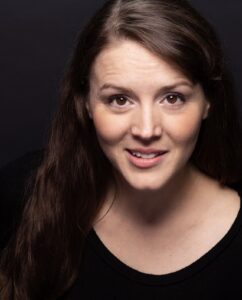
RAPID FIRE WITH COME FROM AWAY‘s BEVERLY, MELISSA SILENGO
JHPENTERTAINMENT: You’ve played everything from Maria in The Sound of Music to Sister Mary Amnesia in Nunsense. What excited you most about taking on Beverly, Annette, and your other roles in Come From Away?
MELISSA SILENGO: I generally enjoy playing characters who are based on real-life people, so I was especially excited to take on multiple real-life people in this show. Beverly Bass is an inspiring woman who made her way in a man’s world with dedication and her love of flying. Annette is an amalgamation of multiple real-life people, so I have enjoyed the freedom to make her my own and lean into the character description of her as “a school teacher… with an active fantasy life.” The range of characters that each actor plays is one of the things that makes this show such a joy to interpret and to watch.
JHPENTERTAINMENT: After taking a few years away from the stage, what made this the perfect production to return with?
MELISSA SILENGO: The beautiful story and characters made this a great come-back production for me. The way the show is written makes it a challenge for everyone involved, and I have truly enjoyed dusting off many old skills and tricks of the trade to find my way through this process. The ensemble nature of the production and the people in our amazing cast and team have made this a very meaningful experience for me, and I am so thankful to be back in theatre.
JHPENTERTAINMENT: As you mentioned, Beverly is based on a real person. Her story is both inspiring and heartbreaking. What has it meant to step into her shoes?
MELISSA SILENGO: Stepping into the shoes of Beverly Bass is a huge honor and responsibility. I hope she would agree that her role in the events surrounding September 11th in Gander, Newfoundland was to provide some reassurance for her passengers in a time of complete uncertainty. Her strength, clarity of purpose, passion for aviation, communication skills, and earnest concern for her passengers made her the perfect pilot to handle this type of emergency situation. I hope I can convey at least some of those qualities and give her story the respect it deserves.
JHPENTERTAINMENT: You’ve performed at several theaters across Middle Tennessee. What keeps bringing you back to The Keeton?
MELISSA SILENGO: The Keeton feels like my home theater, partly because it is close to my house, so that keeps me coming back. I am glad that people I have worked with over the years, like Donna and Kevin Driver, are still there continuing to keep the theater going. And one perk of doing shows at the Keeton is rehearsing on the same stage where you will perform. I have learned a lot performing at the Keeton over the years, and it feels nice to be back.
JHPENTERTAINMENT: If someone has never seen Come From Away, what’s the one thing you’d tell them before the lights go down?
MELISSA SILENGO: Can I say two things? Come From Away is a telling of multiple stories at once, so be prepared for the actors to change characters quickly and frequently. But more importantly, be prepared to remember your own experience of 9/11 and connect it with the story of a small town community caring for people from around the world in a show of true human spirit.
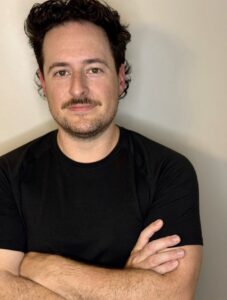
RAPID FIRE WITH COME FROM AWAY‘s KEVIN T., JASON SCOTT
JHPENTERTAINMENT: I understand that since your last Keeton production, you’ve become a flight instructor. Has that unique perspective made working on this show even more personal?
JASON SCOTT: Absolutely! This show is a perfect marriage of two of my biggest passions, and I couldn’t have asked for a better production to bring me back to the stage.
JHPENTERTAINMENT: Kevin T. experiences one of the musical’s most moving emotional journeys. What have you discovered about him (and yourself) during rehearsals?
JASON SCOTT: It has been so interesting to play with the relative joy that Kevin tries to maintain even in the midst of such a tragic event. He refused to let the sadness consume him, and I’ve definitely found inspiration for myself in his story.
JHPENTERTAINMENT: Between theater and aviation, storytelling and flying both require trust. Have you found any other surprising similarities between the two?
JASON SCOTT: I have long felt that my theatrical background was so useful in learning how to fly. There’s a lot of memorization involved, the ability to “improv” and react to things quickly, the ability to do the same sequence of “steps” on repeat, and so much more.
JHPENTERTAINMENT: Is there a particular musical number or scene that really resonates with you, whether your’s or one you witness by way of your fellow cast mates?
JASON SCOTT: Well I think the obvious answer is “Me and the Sky”, so I’m going to add a second one. I truly think one of the moments that will resonates with me, and with most people who were around when it happened, is seeing all the plane people witness the footage for the first time. I can’t help but imagine my own experience on that day and seeing and hearing about what happened for the first time myself.
JHPENTERTAINMENT: I’m about to chat with Justin Tinker who plays your Kevin’s other half. Describe sharing the stage with Justin in three words…
JASON SCOTT: Safe, Emotional, FUN
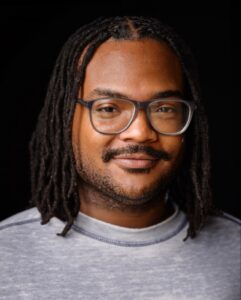 RAPID FIRE WITH COME FROM AWAY’s KEVIN J., JUSTIN TINKER
JHPENTERTAINMENT: You’re portraying both Kevin J. and Ali, two characters whose stories couldn’t be more different. What has been the biggest challenge of bringing both of them to life?
JUSTIN TINKER: This is a great question. Of the two characters, I feel more personally connected to Kevin J. I think we share a similar sense of humor and sass, but my biggest challenge has been finding his heart. At first glance, many of his lines can come across as snappy or arrogant. But I keep reminding myself that Kevin T wouldn’t have been with Kevin J for five years if that was all there was to him. That has led me to ask, “What made Kevin T fall in love with Kevin J?” Finding the answer to that question has helped me approach him with more empathy and complexity.
Ali has been a very different experience because, in many ways, he is nothing like me. My goal has been to honor his culture while still bringing my own truth to the role. Since I’m not Egyptian, I was initially most concerned about getting the accent right. But beyond that, I realized I could connect to Ali through my own experiences. As a Black man in America, I’ve experienced moments where I’ve felt judged or treated as an outsider, and that emotional truth has helped me better understand Ali’s journey.
JHPENTERTAINMENT: Aside from the multiple roles, How has this show challenged you in new ways?
JUSTIN TINKER: Being born on September 12, 2001, I don’t have any personal memories of 9/11, so I couldn’t draw from my own experience. That made finding an emotional connection to the story a challenge at first. Instead, I leaned on the real stories of the people who lived through it (my parents and most of my cast mate)and connected to the show’s universal themes of compassion, resilience, and community. This production has also been a vocal beast for me. Once we started doing full runs, it became a mental challenge to stay present in each moment while also thinking five steps ahead because of all the moving parts. Throughout the process, though, I’ve continued to surprise myself. I’ve always felt most confident in my dancing and acting, but this show has challenged me to grow as a vocalist. It’s helped me realize that singing is a strength of mine as well. I’m especially grateful to our director, Susan Walsworth, and our music director, Trey Lundquist, for believing in me and giving me the confidence to grow. Thanks to their guidance, I’ve discovered a new level of confidence in my voice, and I’m incredibly thankful for the opportunity.
JHPENTERTAINMENT: Come From Away is known for its demanding dialects and lightning-fast character changes. Which aspect has required the most preparation?
JUSTIN TINKER: Oh it’s definitely the lighting fast character changes. I’m constantly checking the script to make sure I know where I am and who I’m playing at every moment. For the first time, I even created a track sheet (a spreadsheet that maps out every character I play, along with my costume changes and scene transitions). Because I switch between multiple characters, sometimes only a few lines apart, staying organized has become essential to keeping up with the pace of the show.
JHPENTERTAINMENT: Has there been a rehearsal moment that reminded you why this musical has resonated with audiences around the world?
JUSTIN TINKER: One moment that really stands out to me was our first full read-through after learning all of the music. I remember Trey telling us that even though the show wasn’t on its feet yet and our faces would probably be buried in our scripts, we should still be able to hear the emotion in the storytelling. As we performed the entire show for the first time, it felt like a light bulb went off. I remember thinking, “Oh yeah, we have the right people to tell this story.” Even without the staging, costumes, or choreography, the heart of the show was already there, and that was a really special moment to witness.
JHPENTERTAINMENT: Finish this sentence: Audiences will leave Come From Away feeling __________.
JUSTIN TINKER: how important community is.
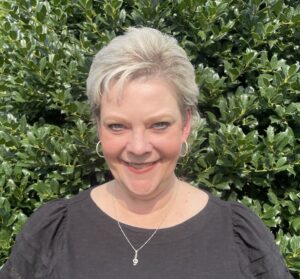 RAPID FIRE WITH COME FROM AWAY DIRECTOR SUSAN WALSWORTH
JHPENTERTAINMENT: Come From Away has become one of the most beloved musicals of the last decade. How did you come to be directing it for The Keeton?
SUSAN WALSWORTH: It is an amazing story and Donna knew that my son Sevon was in it last summer and that I was very familiar with the show so when she asked me, I jumped at the chance.
JHPENTERTAINMENT: You’ve both directed and performed on The Keeton stage over the years. How has your experience as an actor shaped the way you approach directing?
SUSAN WALSWORTH: I believe that being an actor before becoming a director gives me a better perspective of things that work, and also things that don’t; That includes using the uniqueness of the Keeton stage, my rehearsal process, and communication with my cast.
JHPENTERTAINMENT: The creators of Come From Away often say the show isn’t a 9/11 musical, but rather a 9/12 musical Do you agree with that assessment? If so, why (or why not)?
SUSAN WALSWORTH: I both agree and disagree, yes it is about the stories of the people of Gander and the plane people the days following 9/11 but we wouldn’t have these stories to tell if the horrible attacks hadn’t happened that day.
JHPENTERTAINMENT: Come From Away relies on a seamless blend of storytelling and music. What’s it been like collaborating with music director Trey Lundquist to bring this incredible score to life?
SUSAN WALSWORTH: I met Trey during our first production meeting for the show and quickly realized that we both had the same vision for bringing this show to the stage. The vocals in the show are dynamic and have to tell the story and Trey has done an amazing job making this stellar cast sound absolutely incredible! Trey and I have developed a great working relationship and will remain friends once this process is complete. I hope I get to work with him again in the future.
JHPENTERTAINMENT: What do you hope audiences are still thinking about on the drive home after experiencing this production?
SUSAN WALSWORTH: I hope audiences walk away with the kindness in their hearts and feeling uplifted that there is hope for a brighter future even during a time of darkness.
———-
Alongside Melissa Silengo, Jason Scott and Justin Tinker, the cast of The Keeton‘s Come From Away is made of a who’s who of area talent including Brian Best, Leslie King, Stephanie Jackson, Jack Joiner, Ben Gregory, Ashlie Welte-Lopez, Clair Yancey, Jayden Murphy, Yolanda Treece and Tyler Samuel. The Show’s production team, helmed by director Susan Walsworth, includes music director Trey Lundquist, choreographer McKenna Driver and stage manager Kaleigh Ruiz.
The Keeton being the area’s only dinner theatre, there’s always a dinner option accompanying the show. For Come From Away, the pre-show in-flight meal will feature a dinner salad, pulled pork barbecue sandwich (a pre-0rdered substitute of grilled salmon is available for a slight up-charge), red skin potato salad, a side of mixed veggies and lemon bar for dessert.
The Keeton‘s Come From Away marks the opening of the company’s 2026/2027 season with performances Friday, August 17 thru Sunday, August 30. CLICK HERE for tickets. For Friday and Saturday performances, doors are at 5:45pm with dinner service until 6:45 and show beginning at 7pm. Thursdays are show only with doors at 6:30pm and show at 7pm. For Sunday matinees, doors open at 12:45pm with meal service until 1:45pm and showtime at 2pm.
The Keeton‘s Come From Away is ultimately a story about what can happen when strangers choose to care for one another in the face of unimaginable circumstances. With a director and cast who have clearly connected deeply with that message, The Keeton’s production promises to offer Nashville audiences not only an unforgettable musical experience, but also a timely reminder of the power of community. That sounds like a pretty perfect reason to let Come From Away take you on its journey.
Next up following Come From Away, The Keeton presents John Patrick‘s wickedly funny mid-century comedy The Curious Savage on stage October 9-25. So you don’t miss out on upcoming shows at The Keeton Dinner Theatre, follow them on Facebook, X and Instagram.
Interested in coverage for your latest entertaining endeavor? Click the contact page and drop me a note. You can also follow JHP Entertainment on Instagram and Facebook. In the meantime, #GoSeeTheShow!
 RAPID FIRE WITH THE TIDE‘s PLAYWRIGHT/DIRECTOR CATHY STREET
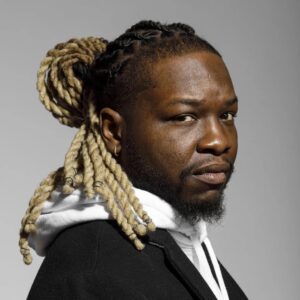 RAPID FIRE WITH THE TIDE‘s MARCUS, ACTOR CHRIS LEE
 THE TIDE: A New Musical
 RAPID FIRE 20Q WITH HAMILTON‘s ELIZA, LILY SOTO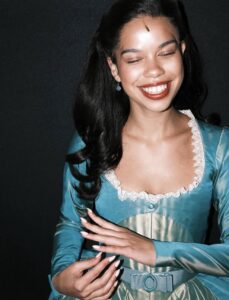
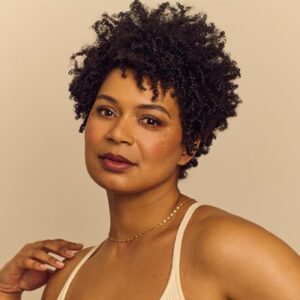 RAPID FIRE WITH HAMILTON‘s ANGELICA, MARJA HARMON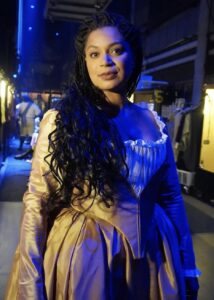
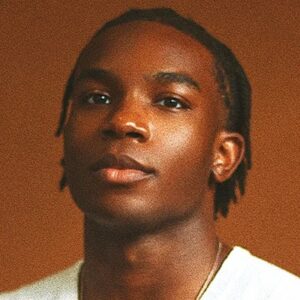 RAPID FIRE WITH HAMILTON PRINCIPAL STANDBY, CHIBUEZE IHUOMA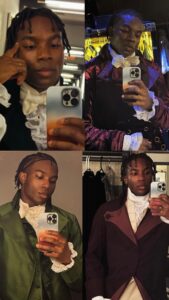
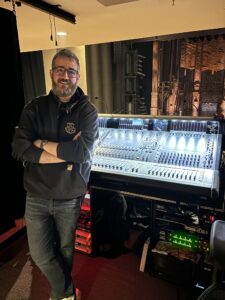 RAPID FIRE WITH HAMILTON ASSISTANT SOUND ENGINEER, JOSHUA BOATMAN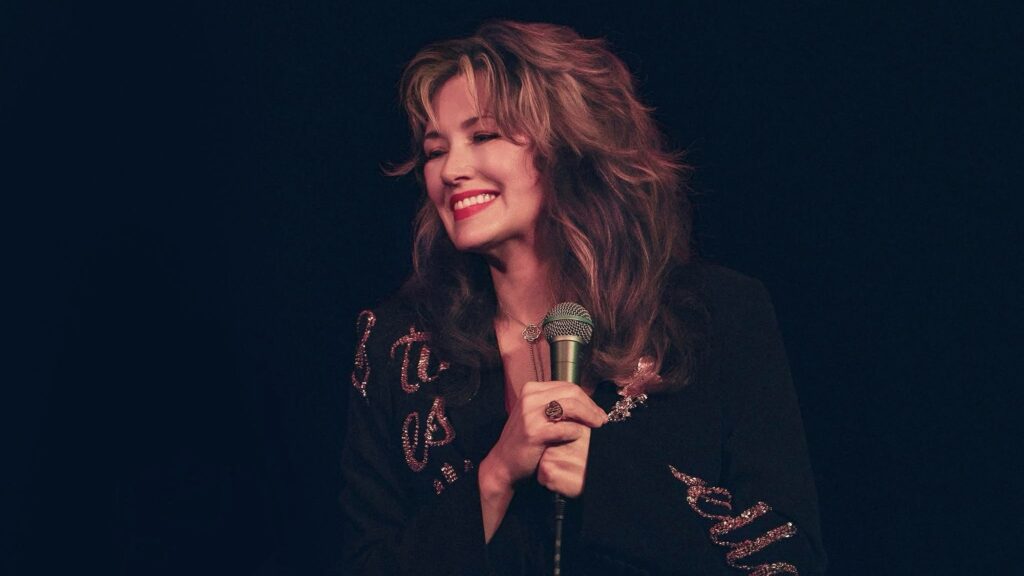
 JHPENTERTAINMENT:
 JHPENTERTAINMENT:
 JHPENTERTAINMENT:
 JHPENTERTAINMENT:
 JHPENTERTAINMENT:
 JHPENTERTAINMENT:
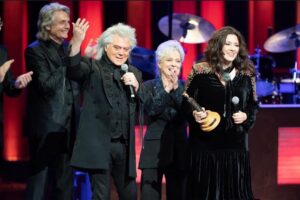
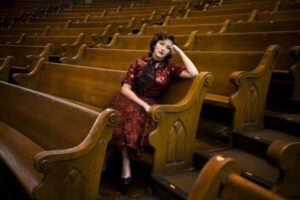
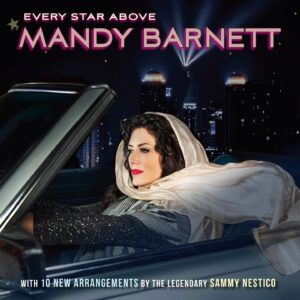
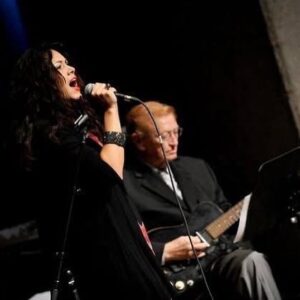
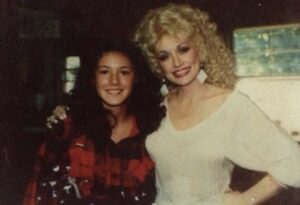
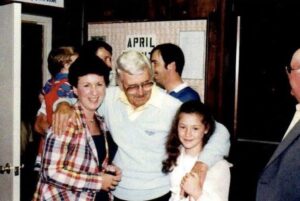 MANDY BARNETT: They were golden opportunities, and I’m grateful for every one of them.It was the first year Dollywood was open, and I was just a kid getting the chance to be around some incredible people. I got to work with Dolly and her family, perform with a live band, and learn things that you simply can’t learn anywhere else.I met Archie Campbell while opening a show that also featured Chet Atkins and Wilma Burgess. Afterward, Archie told me, “Come up anytime. You’re always welcome.” And he meant it. He gave a young singer the opportunity to come perform at his show whenever I wanted, with a real band and a real audience.Looking back, that was an extraordinary gift. Archie didn’t have to do that, but he did. Those experiences gave me confidence, stage time, and memories I’ll always treasure.
 JHPENTERTAINMENT:
 JHPENTERTAINMENT:
 JHPENTERTAINMENT: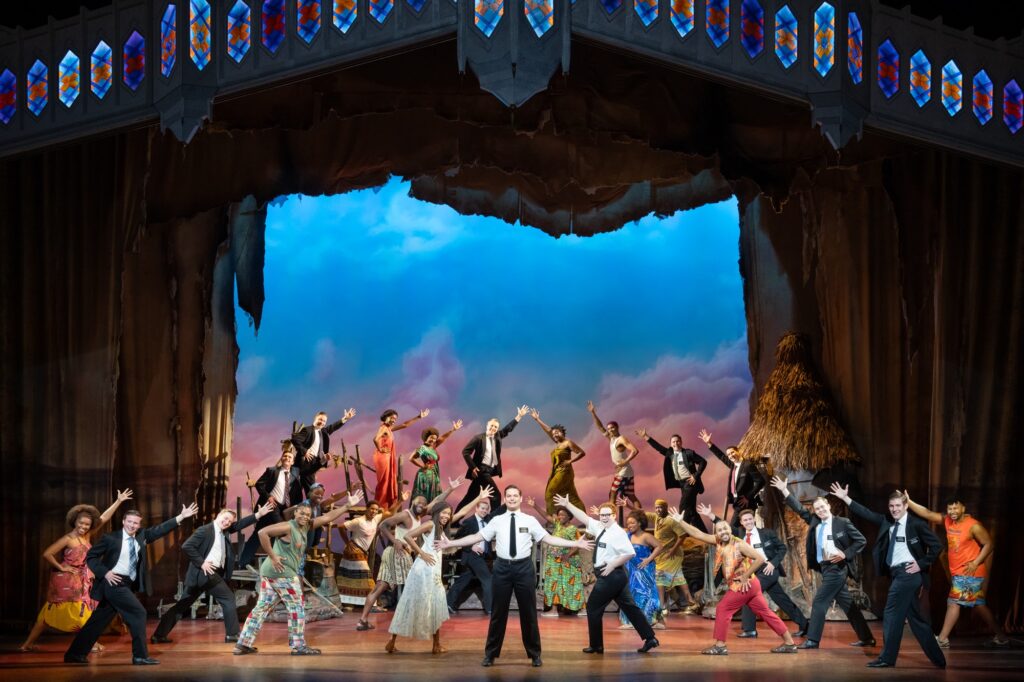
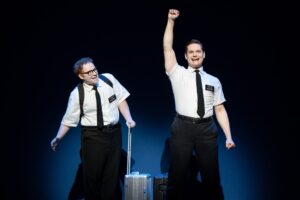 Leading the charge is Ethan Davenport, who takes on the pivotal role of Elder Price in this engagement. As Elder Price, Davenport embodies the character’s confidence, ambition and occasional arrogance with effortless charm. Blessed with a powerful Broadway tenor and an all-American leading man presence, he delivers “You and Me (But Mostly Me)” and the Act Two anthem “I Believe” with the kind of vocal confidence that anchors the entire production.
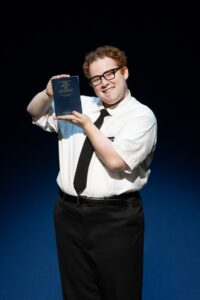 Opposite him, Jacob Aune’s Elder Cunningham is everything the role demands—awkward, lovable, wildly inappropriate and impossible not to root for. Cunningham is essentially a walking collection of half-remembered science fiction plots, social anxiety and misguided optimism & a bit of a walking, talking South Park character in human form, and Aune embraces every glorious second of it.
 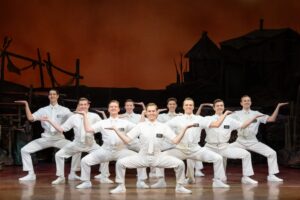 Yet it’s Craige Franke as Elder McKinley where Franke truly steals scenes. His performance of “Turn It Off” is a masterclass in comic timing, complete with dazzling choreography, impeccable facial expressions and enough jazz hands to illuminate Broadway itself. Heck, the featured ensemble during “Turn It Off” is simply tap-tactic. Having spent years with the company in multiple capacities, Franke understands this material inside and out, and it shows. His cheeky, campy cameo in “Scary Mormon Hell Dream”, helps make it a
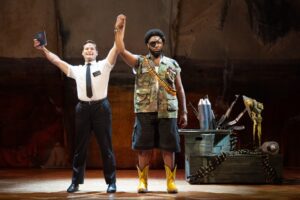 As The General, Shafiq Hicks delivers one of the production’s most commanding performances. Possessing a booming stage presence and undeniable authority, Hicks makes an immediate impression from the moment he appears. His performance of “Hasa Diga Eebowai” earns exactly the reaction one hopes for from first-time audiences: gasps, nervous laughter and a collective realization that The Book of Mormon intends to push every button it can find. Yet Hicks doesn’t just play the role as a caricature. Instead, he grounds the character in a reality that gives the surrounding comedy greater impact.
 What continues to impress most about The Book of Mormon, however, is how successfully it balances satire with sincerity.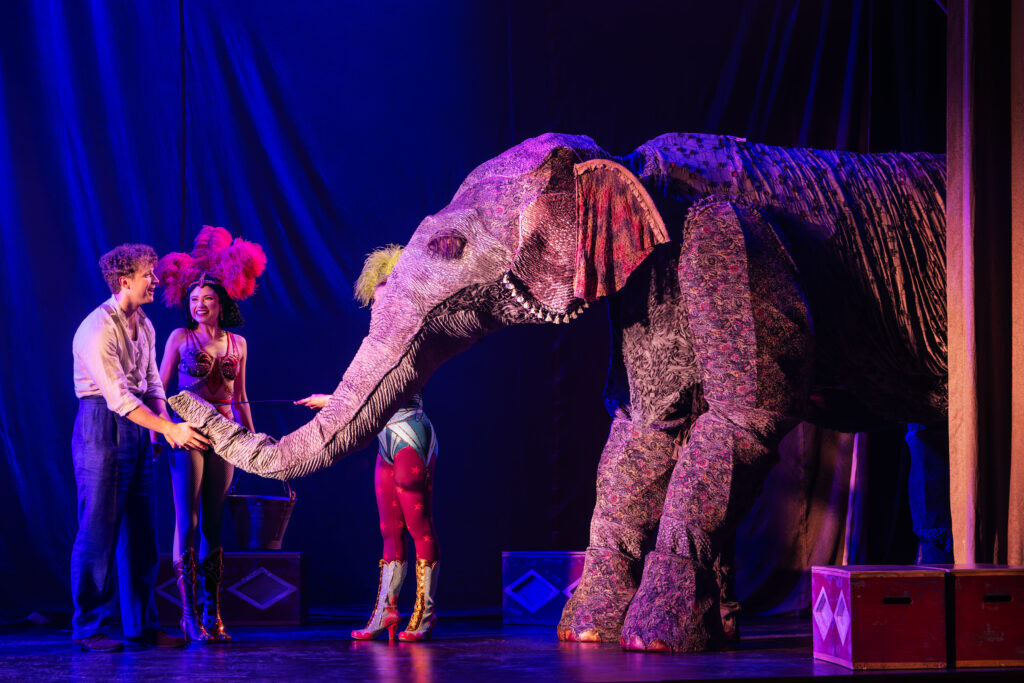
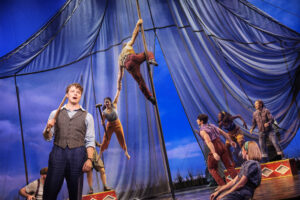 At the center of the production is Zachary Keller as Jacob Jankowski, the grieving veterinary student who impulsively abandons his former life and jumps aboard the Benzini train. Keller anchors the production with a grounded sincerity and a soaring vocal performance that gives emotional weight to Jacob’s internal struggle between safety and risk, logic and passion. His voice carries a warm ache throughout the evening, particularly in moments when Jacob wrestles with the moral compromises surrounding the circus and his growing connection to Marlena. There are moments within Keller’s performance that the entire audience falls in love with his Jacob. Heck, there are moments his near-perfect pitch vocals fill the venue so melodically that you even wonder if he needs a mic. A true testament to his skills and those of the show’s sound designer Walter Trarbach and the entire technical team.
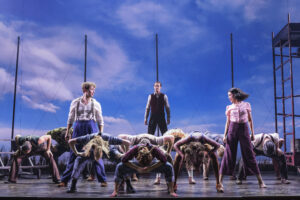 Opposite Keller (and Tully), Helen Krushinski delivers a luminous performance as Marlena, the circus star trapped inside an increasingly dangerous marriage. Krushinski possesses the kind of voice that cuts cleanly through the orchestrations without ever losing emotional nuance. She brings both fragility and fierce determination to Marlena, avoiding cliché and instead presenting a woman desperately searching for dignity and freedom amid chaos. Like so many of her ensemble cast mates, Krushinski also demonstrates a bit of impressive arial skills, adding a literal and figurative extra layer to her performance.
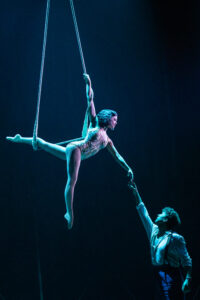 And yes — the aerial and acrobatic work is extraordinary. This production understands that circus artistry should not simply interrupt the narrative; it should become the narrative. Silks, balancing acts, lifts, and gravity-defying choreography emerge organically from the emotional life of the story. The transitions feel seamless rather than showy for the sake of applause. From the jump, as the circus ‘crew’ is setting up shop at their latest stop, even the pounding of the tent-stakes into the ground and the raising of the tent becomes a cadenced ballet of movement, acrobatics and mind-boggling balance and strength. This elegance of motion and bodily discipline becomes another character throughout.
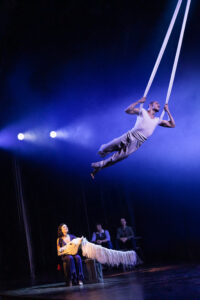 Particular praise belongs to Yves Artières, whose physical performance as Silver Star, Marlena’s beloved show horse, becomes one of the evening’s unexpected emotional centerpieces. Through movement alone, Artières creates personality, loyalty, exhaustion, and tenderness in a way that feels almost impossibly expressive. In a key scene when Silver Star reaches his untimely end, the visual of his spirit leaving his body, by way of Artières ascending silks hanging from the rafters above the stage, then dramatically unfurling the silks as he descends to return to the earth–simply breathtakingly beautiful. The puppetry/animal work throughout the production is remarkably inventive, but Silver Star’s presence lingers long after curtain call.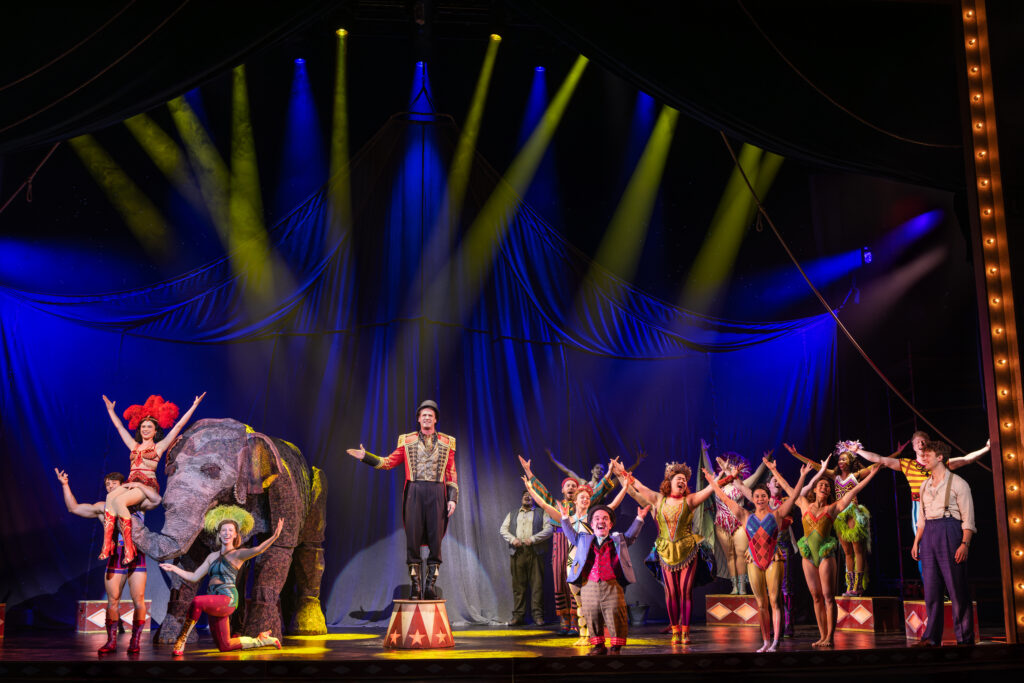
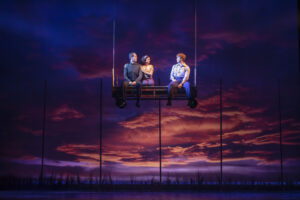 The lighting design deserves enormous credit for shaping the show’s emotional landscape. Warm ambers, smoky blues, and stark silhouettes constantly shift the atmosphere from romance to danger to wonder. Combined with a richly textured sound design that captures both the intimacy of whispered confessions and the thunder of circus chaos, the technical package immerses the audience completely without ever feeling excessive.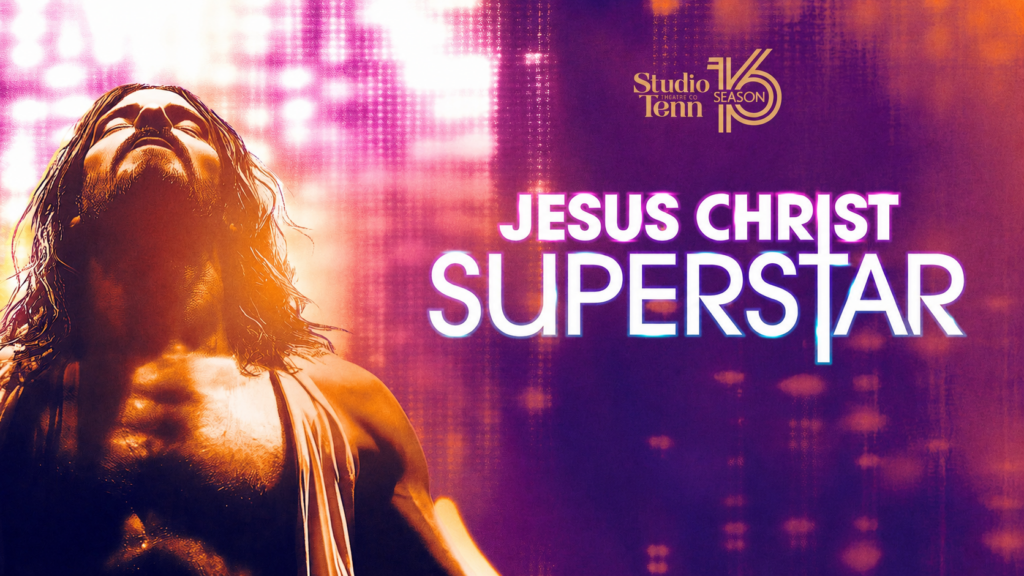
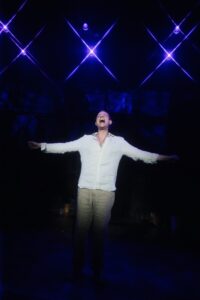
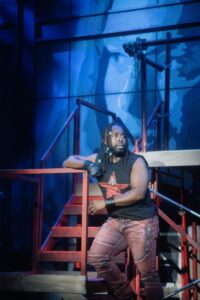 Opposite him, Grammy nominee Mykal Kilgore delivers a mesmerizing Judas. From the opening notes of “Heaven on Their Minds,” Kilgore refuses to portray Judas as a simple villain. Instead, his Judas feels conflicted, frightened, frustrated, and heartbreakingly human as he watches events spiral beyond anyone’s control. His powerhouse vocals soar effortlessly through the score, but it is the emotional vulnerability beneath the performance that lingers longest.
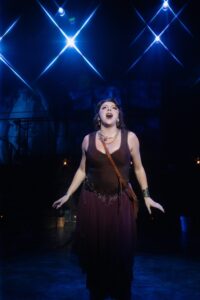 As Mary Magdalene, powerhouse vocalist Olivia Valli comes by her talents naturally. Granddaughter of The Four Season‘s founding member Fankie Valli, she’s a legacy entertainer. As Mary Magdalene, Valli brings warmth and aching sincerity to the role. Early on During “Everything’s Alright,” Valli’s calming presence provides a needed emotional balance amid the increasingly chaotic atmosphere surrounding Jesus. Soon after, her rendition of “I Don’t Know How to Love Him” avoids unnecessary theatrics in favor of emotional honesty, allowing the heartbreak within the song to quietly unfold. Under Cassidy’s direction, Valli explores the often-avoided attraction between Mary the woman and Jesus the man, once again offering yet another layer to the humanity of the piece.
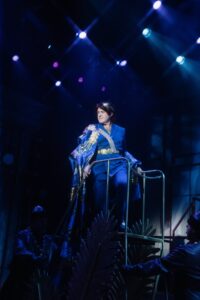 As Pontius Pilate, Geoffrey Davin offers one of the evening’s smartest tonal shifts . Presented as a gaudy, self-important joke of a man sporting an intentionally terrible hairpiece (kudos to the show’s wig designer Meredith Schieltz for just simply going for it), Davin leans fully into the absurdity of performative power. The portrayal initially earns plenty of laughs, but underneath the comedy lies another sharp reflection of the production’s larger themes—people desperate to appear more important than they truly are. His “Pilate’s Dream” balances nervous humor with growing dread, while sinisterly daunting presence during “Trial Before Pilate/39 Lashes” becomes genuinely unsettling.
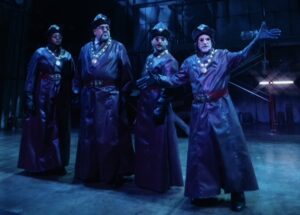 W. Scott Stewart’s thunderous bass vocals as Caiaphas roll in like a deep fog, brilliantly setting the stage for the dread and darkness to come. Robert Parker Jenkins‘ Annas perfectly snarky glances peering over those disturbingly small, dark glasses, brings an unspoken self-righteousness to his role as a high priest. As other members of Caiaphas’ doom squad, Garris Wimmer‘s sinister voice and Jennifer Whitcomb-Oliva‘s snide presence all come together perfectly to present a united and terrifying quartet who initiate the plot to end Jesus.
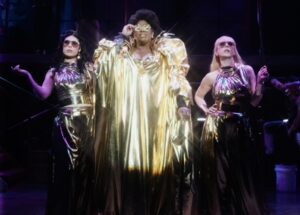 Then there’s the most intriguing of Whitcomb-Oliva’s multiple roles, her dazzlingly, gloriously commanding presence as King Herod. Landing somewhere firmly between Tina Turner’s Auntie Entity from Mad Max: Beyond the Thunderdome and Elton John’s Pinball Wizard from yet another rock opera, Tommy, Whitcomb-Oliva’s Herod is the true definition of the villainous character we know we’re not supposed to love, but we just can’t help ourselves. Combine the stage presence and spectacular wardrobe with Whitcomb-Oliva’s undeniable talents and you’ve got yourself a show-stopping performance and another of Studio Tenn‘s Jesus Christ Superstar‘s truly magical cast members. There is no role this mega-watt talented performer can’t handle and she proves it show after show after show.
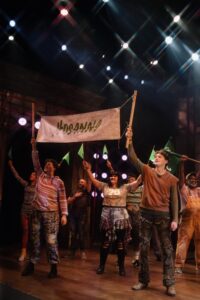 Other ensemble members like Bakari King, Garris Wimmer, Maya Antoinette Riley, Matthew Hayes Hunter, Savannah Stein, Lane Adam Williamson, Victoria Griffin, Emma Rose Williamson, Connor Adair, Nikki Berra, Christina Ledbetter and Patrick Jones each contribute to the overall energy, emotion and beauty of the piece. From the full ensemble Act 1 favorite, “What’s the Buzz’ to a shining, glittering all-in late-hour moment, the entire cast brings everything they’ve got, resulting in a feast for the eyes, the mind, the heart and soul.
 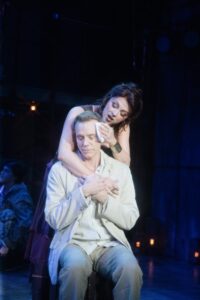 Likewise, Joi Ware’s choreography injects continuous movement and urgency into the production. There are moments where subtle Bob Fosse-inspired isolations seem to collide with flashes of Michael Jackson-inspired movement during larger ensemble sequences, creating choreography that feels simultaneously nostalgic and contemporary. Even those ensemble moments reinforce the power-in-numbers juxtaposed to the isolation of one theme found throughout the piece. Coupled with Cassidy’s direction, Ware’s choreography fills the stage with passionate movement, whether the entire company is on stage for a group number, or the action slows for a solitary moment from Pascal, Kilgore or Valli.
 One notable change is the role of Sweet Sue, bandleader of the all-girl band that serves as the perfect hiding in plain site destination for our two unintentional leading men, or should I say leading ladies? Little more than a brief appearance in the source material, Ruffin and Lopez wisely fleshed out Sweet Sue and as played by DeQuina Moore, we’re glad they did. Moore’s Sweet Sue doesn’t just open the show—she detonates it. Her “What Are You Thirsty For?” lands with the kind of electrifying force she herself described in our recent
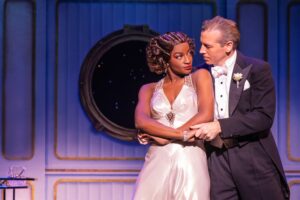 Leandra Ellis-Gaston’s Sugar Kane arguably comes with the steepest climb. Not because of the technical demands—though those are certainly present—but because Marilyn Monroe’s original Sugar remains so indelibly iconic. Wisely, the creators of the stage adaptation “understood the assignment,” sidestepping imitation entirely. By reimagining Sugar as a strong-willed, career-driven woman of color, the role becomes instantly unshackled from direct comparison—and Ellis-Gaston runs with it. With a speaking voice that lands somewhere between The Color Purple’s Squeak and legendary chanteuse Lena Horne, her Sugar is equal parts vulnerability and resolve. Sweet? Absolutely. But never simple.
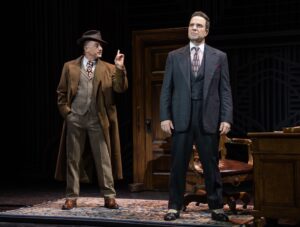 As G-man Mulligan, Matt Allen plays the essential “straight man” with surgical precision, anchoring the show’s more outlandish antics while quietly setting up some of its biggest payoffs. As he said in our recent Rapid Fire 20Q, that role is not only necessary but foundational in launching the show’s farcical momentum. And when he finally gets to dip into the madness—particularly in that delightfully ridiculous undercover sequence—it’s a payoff worth the wait.
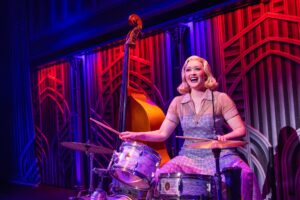 Minnie, Sweet Sue’s right-hand woman is revealed throughout as a bit of a sticky-fingered gal. One of the show’s running gags is her revelations of accidentally entering the wrong apartments thinking they were Sue’s and taking things that weren’t hers. To that end it makes perfect sense that Devon Hadsell’s Minnie is a scene-stealing delight, leaning fully into the character’s charming chaos and absconding with laughs each time she’s on the stage. There’s a lived-in sense of loyalty and mischief here, making Minnie far more than just comic relief. She’s an essential part of the heartbeat of the band. And that ever-present cigarette dangling from her ruby red lips, the kind of subtle sight gag that again perfectly pays homage to that 1930 prohibition-era Hollywood spirit. Side Note: When that Gregg Oppenheimer I Love Lucy play makes its way to Broadway, Hadsell has my vote for the Vivian Vance/Ethel Mertz role!
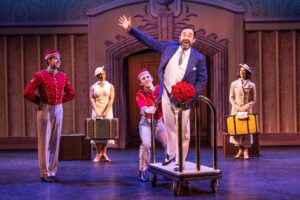 And then there’s Edward Juvier’s Osgood, who may just be the show’s most quietly radical reinvention. As he shared in our recent Rapid Fire 20Q, what drew him to the role was Osgood’s ability to lead with curiosity rather than judgment—and that ethos radiates throughout his performance. Where the film played him as the punchline, this version is in on the joke and, more importantly, in on the love. That shift—from caricature to fully realized romantic—becomes one of the production’s most meaningful evolutions.
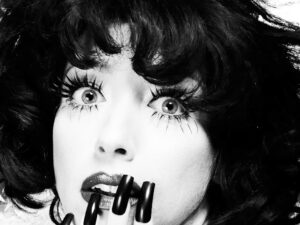 RAPID FIRE Q&A WITH MEOW MEOW; AT OZ ARTS NASHVILLE APRIL 11
 MEOW MEOW: SO many. I have to love all of them or I can’t sing them ! I love Patty Griffin’s poetry in her songs – one of my favourites that is like a prayer
 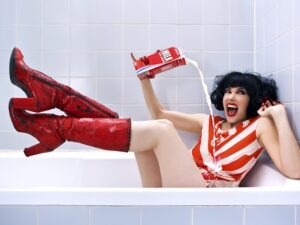 JHP ENTERTAINMENT: Looking back on the 2007 High Line Festival, curated by David Bowie—where you took your place among fellow featured artists Arcade Fire, Laurie Anderson, Ricky Gervaiis, The Legendary Stardust Cowboy and more—sounds almost surreal—How did you feel in that moment?
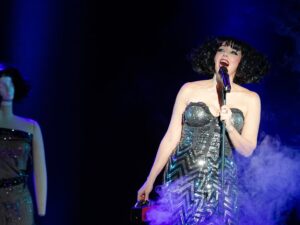 JHP ENTERTAINMENT: On the subject of unpredictability—How do you handle it when an audience “volunteer” just isn’t matching the vibe?
 Then there’s Doc. David Josefsberg’s take on the eccentric inventor is where the show truly locks into place. Wonderfully unhinged in the best way, his Doc balances manic comedy with genuine heart. His early numbers are the turning point where the audience collectively leans in and says, “Okay, I’m in.” Josefsberg doesn’t imitate—he reinvents, while still honoring what makes Doc such an iconic character.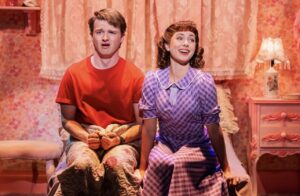
 And then there’s Cartreze Tucker as Goldie Wilson (and Marvin Berry), who nearly steals the entire show. From the moment he steps onstage, Tucker commands attention. His big number earns one of the largest audience responses of the night, and for good reason—his vocals are powerhouse-level, and his charisma is off the charts. It’s a star-making turn that injects an extra jolt of electricity into an already high-energy production.
 Visually, the production is stunning. The use of projections, layered with practical effects and good old-fashioned stage magic and some mind-blowing state-of-the-art new theatrical tricks, the effects become a character in its own right. Whether it’s the clock tower sequence or the time-travel effects, the technical execution is nothing short of jaw-dropping. It’s the kind of design work that reminds you how thrilling live theatre can be when all the elements are firing.
 Act Two does bring one of the more head-scratching moments in the show—a neon-soaked, new wave-inspired “21st Century” opening number featuring Doc and a troupe of backup dancers. It’s flashy and fun, but also feels a bit unnecessary and tonally out of sync with the rest of the piece. And on opening night in Nashville, it was followed by a rare hiccup: the hoverboard didn’t quite cooperate. Still, the moment was handled with total professionalism, and honestly, it was quickly forgiven given the sheer volume of technical wizardry the show gets right. Because when it works—and it mostly does—it really works.