• Skip to primary navigation
  • Skip to main content
  • Home
  • About
  • Features
  • Contact

JHP Entertainment

Entertainment News, Reviews and Interviews

  • Home
  • About
  • Features
  • Contact

Oz Arts Nashville

RAPID FIRE 10Q: Reisa Shimojima on Dancing Outside the Lines and Challenging Expectations; Shimojima’s KEDAGORO Dance Troupe at OZ Arts Nashville This Weekend

November 11, 2026 by Jonathan Pinkerton

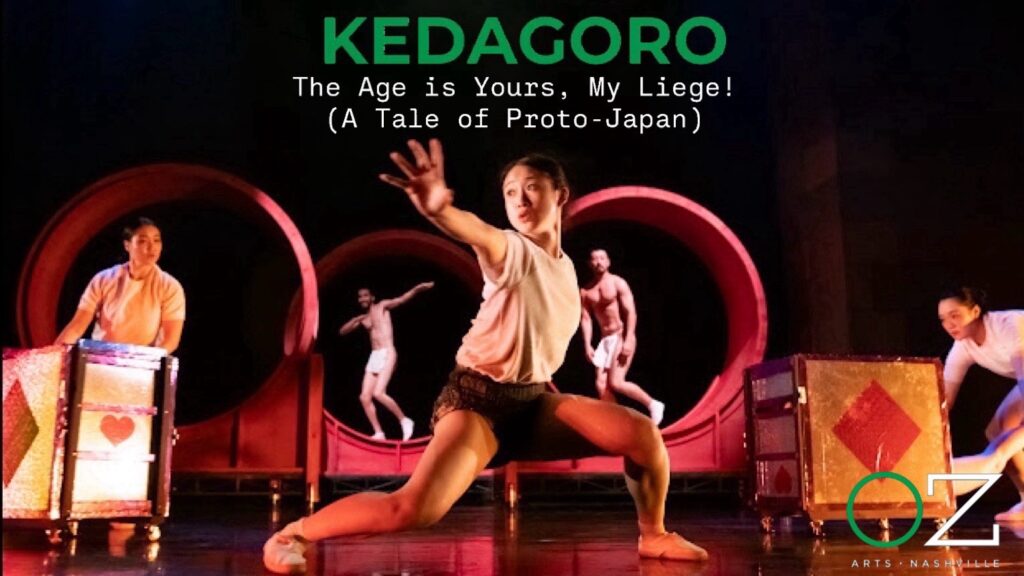
KEDAGORO, a Japan-based contemporary dance company makes its highly anticipated Music City debut at OZ Arts Nashville on Saturday, November 14, at 8 p.m. and Sunday, November 15, at 5 p.m. These performances not only launch OZ Arts Nashville’s 14th season but also mark part of KEDAGORO’s first-ever U.S. performances, with the company’s three-city American tour traveling from New York to Greenville, South Carolina, before concluding in Nashville.

Founded by Reisa Shimojima, KEDAGORO has developed a reputation for fearless, thought-provoking work that explores the complexities of human behavior, historical memory, cultural identity and the often uncomfortable questions that shape our understanding of the world. As we discovered during our recent conversation with Shimojma for our latest Rapid Fire 10Q, KEDAGORO’s latest work, The Age is Yours, My Liege! (A Tale of Proto-Japan), ventures into the surreal territory of ancient Japanese culture, imperial mythology, power and national identity.
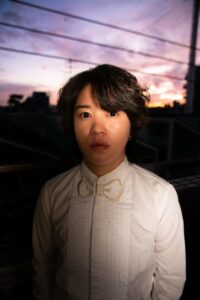

RAPID FIRE 10Q WITH KEDAGORO’s REISA SHIMOJIMA

JHPENTERTAINMENT: You were born in Kagoshima, Japan, and began dancing at just seven years old, studying everything from jazz to traditional Yosakoi. What first sparked your passion for dance, and did you always envision it becoming your life’s work?

REISA SHIMOJIMA: When I was seven years old, a friend from elementary school invited me to join her at a jazz dance class. At the time, I had absolutely no interest in dance. To be honest, I really didn’t want to take lessons at all. Ever since I was little, I had been fascinated by history. At home, I loved playing games like pretending to be prehistoric humans or acting out wars. However, Kagoshima, where I grew up, is a rural part of Japan with very small, close-knit communities. If you turned down an invitation from a friend, you could suddenly become a target for bullying or even be ostracized by the community. So, reluctantly, I started attending the jazz dance classes.

Then, one day, something rather unexpected happened. My jazz dance teacher started having an affair with the chairman of the Kagoshima Chamber of Commerce and Industry. Around that time, the chairman wanted to make Kagoshima a more vibrant place and came up with the idea of bringing YOSAKOI, a Japanese festival dance tradition that wasn’t particularly popular in Kagoshima at the time, to the region. And my dance teacher, wanting to win the chairman’s heart, decided to turn the entire jazz dance school into a YOSAKOI dance school! From then on, we spent almost every weekend traveling to YOSAKOI festivals in different parts of Japan, performing to promote Kagoshima. YOSAKOI festivals bring together all kinds of teams from across the country. But what I found fascinating wasn’t just the dancing. There were middle-aged men and women dancing while enjoying alcohol and cigarettes, complicated romantic affairs between members of different teams, and all sorts of messy, very human dramas. It was a world full of raw human behavior, desires, and tangled relationships. I became fascinated by all of it.

And eventually, I started to enjoy dancing. But to be precise, it wasn’t really dancing itself that I fell in love with. I loved using dance as an excuse to observe human behavior and the way people live their lives. Somehow, almost 30 years have passed, and I’ve kept dancing all this time. I never imagined that dance would actually become my profession. Even now, I don’t think dancing itself is my ultimate goal. I suppose I’m still enjoying the many aspects of human life and behavior through dance, using it as my excuse.

JHPENTERTAINMENT: You attended J. F. Oberlin University, where you studied theater and contemporary dance under acclaimed choreographer Kuniko Kisanuki. Your early university work included choreography, composition and directing. While you utilize all three aspects in your creativity, do you primarily consider yourself a choreographer and does your theatrical background influence the way you approach dance today?

REISA SHIMOJIMA: To be honest, I have never really thought of myself as a “choreographer.” What I mean is that I don’t consider myself a choreographer in the conventional sense of the word. My role as a choreographer is not to create choreography, but rather to bring out the errors that already exist within bodies that have been choreographed. What I mean by this is that I believe human beings are naturally choreographed throughout their lives by various environments and cultures. Through this process, our understanding of the body and the ways we use it are gradually shaped. I believe my role is to create various triggers that expose the history embedded in each person’s body, bringing it out into the open and making it visible on stage. I imagine this way of thinking has been influenced by my background in YOSAKOI and theater. But I have also learned a great deal from my dance mentor, Kuniko Kisanuki. She taught me not only about dance, but also about fundamental questions such as what it means to be human and how we should live as human beings.
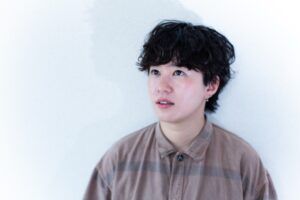
JHPENTERTAINMENT: Originally founded in 2013, KEDAGORO’s official website currently lists six core company members. Tell us a little about the company dynamic. How many performers are traveling with you on this American tour, and what makes this particular group of collaborators click?

REISA SHIMOJIMA: For this American tour, there are four KEDAGORO members, including myself. The other eight dancers were selected through auditions. When I was at university, before founding KEDAGORO, I had formed a dance group with some incredibly skilled dancers. However, relationships between dancers can be extremely complicated. I found myself caught in a dilemma: the higher our ambitions became, the harder it was to keep the group together. Eventually, the group fell apart.

At a time when I was completely at a loss about what to do next, I met the people who are now the core members of KEDAGORO at my university. They were students who didn’t really know what they wanted to do with their lives after graduation. They weren’t particularly enthusiastic about studying performing arts either. They were almost like ghosts, just drifting through university life. So, almost as a last resort, I asked them, “Why don’t we try forming a group and putting on just one performance together?” And somehow, before we knew it, we had been together for 13 years.

We’re a group of people with completely different personalities and interests, but somehow, being together feels very natural. Under the pretext of making work together, we can spend endless hours drinking and talking about all sorts of silly things. That’s the kind of team we are. Of course, that dynamic alone doesn’t always provide the balance we need, and that’s where the dancers selected through auditions come in. They support the group in ways that our core members cannot always provide.

I think dance companies can easily become trapped by certain preconceptions. There’s often an idea that working hard and performing well are the ultimate virtues. But I believe this is one of the most dangerous traps in dance. We also need to embrace the possibility of making mistakes and allow those errors to become fertile ground for creativity. I think the relationship between KEDAGORO’s core members and the audition-selected dancers creates a very delicate and interesting balance. It’s not that one group represents one particular way of thinking and the other represents something completely different. Rather, everyone constantly shifts their positions, changing the direction of the sails as we move forward together.

I also think of it this way: even if we’re all on the same boat, if everyone is looking in the same direction, we won’t notice what’s approaching from behind us. But in this group, although we’re all on the same boat, everyone is looking in a different direction — some looking forward, others backward, and others to the sides. I think that’s what makes KEDAGORO such an interesting team. We move forward together, but we don’t all look at the world from the same perspective.

JHPENTERTAINMENT: A quick Internet search reveals that KEDAGORO is a rather colorful name, reportedly translating to something along the lines of animal droppings on the ground in the Kagoshima dialect. That’s certainly one way to make a memorable first impression! What’s the story behind choosing the name, and have you ever had second thoughts about introducing your company to the world with it?

REISA SHIMOJIMA: As I mentioned earlier, KEDAGORO was originally formed for a one-time performance. So, to be honest, we weren’t particularly attached to the idea of having a company name. We simply wanted something unusual, a name that wouldn’t be used by many other people and would come up at the very top of the search results when someone looked it up online. That’s how we came up with “KEDAGORO.” Well, I suppose it was also a fitting name for a group of people who had been rolling around university like dog shit. We never imagined that we would still be using this name 13 years later. These days, we’ve adopted a slogan that goes something like this: “Even something as dirty and ugly as dog shit can be an essential source of nourishment for flies and other creatures. We want to become something like that for humanity, too.” I’ve never once regretted choosing this company name. If anything, I feel as though the people we were 13 years ago are still encouraging us from behind, saying: “Keep creating work that makes this name something to be proud of. Keep doing things that will never make you regret choosing it!”

JHPENTERTAINMENT: Your work doesn’t exactly shy away from controversial subject matter, tackling everything from the United Red Army incident and the Aum Shinrikyo cult to the Sewol ferry disaster and questions surrounding Japanese national identity. As an artist and choreographer, what excites you most about confronting difficult subjects through dance, and do you see provoking discussion as an essential part of your creative responsibility?

REISA SHIMOJIMA: Because I often deal with social and political themes in my work, people tend to describe my work as journalistic. But actually, I don’t really see it that way myself. I see historical events as important clues that can help us understand human beings. Rather than looking at these events through the information we receive from the media, I want to observe them on a much more cosmic scale through physical expression. I believe that memories dating back hundreds of millions, or even trillions, of years are engraved in our bodies. These memories go far beyond the limits of human thought and emotion. So, in my work, there is no question of taking sides, either for or against something. What exists is simply evidence of the fact that we are human beings.

When I use historical events as the subject of a work, audiences naturally try to find something in it. Depending on their age, gender, and personal life experiences, each person has a different relationship with the event. As a result, a wide range of opinions and reactions emerge. Contemporary dance often deals with abstract themes, but I believe that using specific events that are part of humanity’s collective memory can open up new possibilities for the audience’s imagination. And I myself sometimes discover entirely new interpretations of my own work through the opinions and reactions of the audience. What matters most to me is that the audience creates a world within the work that even the choreographer could never have imagined. I am fully prepared to accept every response from the audience, whether they love my work or absolutely hate it.

JHPENTERTAINMENT: Let’s talk about The Age is Yours, My Liege! (A Tale of Proto-Japan). The production takes audiences into a surreal world of ancient Japanese culture, imperial mythology, power and national identity, complete with some rather unexpected theatrical imagery. In a few words, what can audiences expect when they enter this world, and what was the initial spark that inspired you to create this particular piece?

REISA SHIMOJIMA: I’m very curious to know what kind of experience each audience member will have when they see our work. After all, I imagine that Japanese and American audiences may find very different things in the same piece. In fact, even during our performances in New York, there were moments when the audience reacted in ways I hadn’t expected. For me, this is one of the great joys of performing in another country. It’s fascinating to discover how people from different cultural backgrounds respond to our work. I think there are many things about Japan that we become blind to simply because we live in Japan. Actually, what inspired me to create this piece was my experience over the past few years of creating work in various Asian countries. During that time, I encountered many traces and remnants of the period when Japan colonized other Asian countries. As I came across these histories, I found myself wondering: “What exactly is Japan?” That question became the starting point for this work. I would really love to hear your honest thoughts about what you, as American audiences, experience and feel when you watch it. My hope is that when people leave the theater after seeing our work, they feel that something has shifted, even just a little, in the way they see the world and other human beings.

JHPENTERTAINMENT: I understand this production marks Kedagoro’s North American debut, with a three-city American tour taking you from New York to Greenville, South Carolina, and ultimately to Music City at OZ Arts Nashville. What’s most exciting about bringing your creative vision to American audiences for the very first time, and is there anything in particular you’re curious to discover about how audiences here will respond?

REISA SHIMOJIMA: Japan and the United States have had deep historical ties, and that relationship continues to this day. How does this work look from the perspective of a country that decided to keep the Emperor on the throne after World War II? And how do Americans see the Japanese people? More than anything, I am looking forward to hearing your honest opinions. They don’t have to be positive ones.

My aim is to interpret the world through my work. I hope to hear discussions and discover perspectives that I could never have imagined myself. That, to me, is what makes a work come alive. It’s what gives it blood flowing through its veins. I hope that American audiences will breathe new life into this work and give it a new existence through their own perspectives and responses.
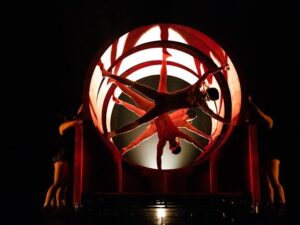
JHPENTERTAINMENT: You’ve remarked that KEDAGORO was built around your belief that “dance is a method for interpreting the world.” Now here you are presenting your latest piece to U.S. audiences. Any hopes of discovering future collaborators while here in the states?

REISA SHIMOJIMA: Yes! So far, I’ve had many opportunities to collaborate with artists from across Asia and Europe, and I would really love to meet potential collaborators here in the United States as well. I don’t necessarily want to focus directly on political issues between Japan and the United States. What I would really like to explore is the kind of chaos that might emerge when bodies from these two countries come into collision with one another. As long as I’m alive, I want to keep exploring the world. So, to everyone here in the United States, I sincerely hope we can connect and create something together. I look forward to meeting you!

JHPENTERTAINMENT: While researching our conversation, I came across a quote from you that I absolutely love: “After I decided to do dance seriously, I ‘bared my fangs’ and adopted an attitude that I would kick my heels up and do things no one expected!” I love that rebellious spirit! For the next generation of dancers and choreographers who might be afraid to take creative risks or march to the beat of their own drum, what advice would you offer?

REISA SHIMOJIMA: Of course, having your own passion and beliefs is important. But if you want to stay true to what you believe in and keep following your own path, you need people by your side. I want you to find people who believe in you and support you, people who will help protect your passion and your convictions. I think the reason I was able to make the decision to pursue dance seriously was because I had people around me. Taking artistic risks is never easy. There will inevitably be times when you get hurt, when you lose faith in yourself, and when you start to doubt everything. So, rather than focusing on creating good or interesting work, I want you to focus on finding your comrades — people who share your vision and are willing to walk alongside you. And work hard to put yourself out there and meet those people. I believe that truly interesting work begins there. The world is vast. There are absolutely people out there who will become your allies. Dancers and choreographers should believe that first and foremost. Don’t worry so much about your own artistic talent.
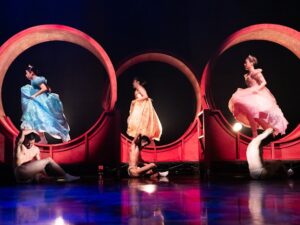
JHPENTERTAINMENT: And finally, after audiences experience The Age is Yours, My Liege! (A Tale of Proto-Japan), what do you hope the production sparks in their minds? What questions, conversations or perhaps even a little controversy would you like them to take with them when they leave the theater?

REISA SHIMOJIMA: I want you to feel both the foolishness of humanity and how deeply lovable we are. This may sound harsh, but I believe that as long as human beings remain human, war will never come to an end. However, I believe that if we can release some of our deepest, hidden human desires within the fictional world of performing arts, we may be able to reduce conflict, even if only a little, in the real world. That is precisely why I believe theaters and works of performing art exist: to bear the weight of the world’s distortions. In other words, I invite you, the audience, to become accomplices in this shared time and space. As accomplices, you have every right to question, challenge, criticize, or debate anything about this work. I sincerely hope you will share your thoughts and reactions with me. A work does not end when it is presented to an audience. In fact, that is where it begins. I look forward to beginning this journey with all of you, together with this work!


Shimojima’s answers offer a fascinating glimpse into an artist who sees dance as far more than movement, technique or choreography. Whether she’s recounting an unconventional introduction to the art form, explaining the rather memorable origins of her company’s name, or inviting audiences to become accomplices in an exploration of humanity’s contradictions, one thing is abundantly clear: KEDAGORO isn’t particularly interested in playing it safe. And perhaps that’s precisely the point. As Shimojima reminds us, a performance doesn’t end when the curtain comes down. That’s where the conversation begins.

Nashville audiences will have their opportunity to join that conversation when KEDAGORO presents The Age is Yours, My Liege! (A Tale of Proto-Japan) at OZ Arts Nashville on Saturday, November 14, at 8 p.m. and Sunday, November 15, at 5 p.m. The performances open OZ Arts Nashville’s 14th season and are part of the dance company’s historic first U.S. tour. Come with an open mind, bring your curiosity and don’t be afraid to have an opinion. Reisa Shimojima and KEDAGORO are ready to hear it.

Ticket options include:

  • Artist & Creative Community (discounted, no code required) $25
  • General Admission $35
  • Generous Admission (I love this one!) $45

CLICK HERE for tickets.

Next up at OZ Arts Nashville as Season 14 continues its New York-based hip hop spoken word artist Dahlak Brathwaite‘s Try/Step/Trip Friday and Saturday, December 4 & 5 at 8pm.  CLICK HERE for more info or to purchase tickets. To keep up with all things OZ Arts, find them HERE or follow them on Facebook, X, YouTube and Insta.

For all things KEDAGORO, CLICK HEREor follow them on Insta, Facebook, X and YouTube.

As always, If you want to read our latest on Music, Movies, Performing or Visual Arts, please check out JHPEntertainment online or socials at Facebook, Insta, X and Threads. Till then…. #GoSeeTheShow!
Filed Under: Entertainment, Rapid Fire 20 Q, Rapid Fire Q&A, Theare Tagged With: 2026, dance, Interview, Japan, Oz Arts, Oz Arts Nashville, Rapid Fire 10 Q, Reisa Shimojima

THEATRE REVIEW: Manual Cinema’s ‘The 4th Witch’ Casts a Spell Over OZ Arts Nashville; Performances Continue thru June 6

June 5, 2026 by Jonathan Pinkerton

There are plenty of productions that ask audiences to suspend disbelief. Then there is Manual Cinema‘s The 4th Witch, which somehow makes you forget disbelief exists in the first place. Presented at OZ Arts Nashville through Saturday, the Emmy Award-winning collective’s latest work transforms Shakespeare‘s Macbeth into something wholly original—a visually stunning coming-of-age story told through shadow puppetry, live performance, music, filmmaking, and sheer theatrical ingenuity. What unfolds over the course of the evening feels less like watching a play and more like witnessing a movie being created before your eyes.

Founded in 2010 by Drew Dir, Sarah Fornace, Julia Miller, Ben Kauffman, and Kyle Vegter–all five share co-artistic director credits–Manual Cinema has built an international reputation for pushing the boundaries of storytelling. The 4th Witch may be their most ambitious creation yet. Rather than simply retelling Macbeth from the perspective of kings, warriors, or even Shakespeare’s famous trio of witches, the production introduces audiences to a young girl whose life is forever altered by the violence occurring around her. What begins as a story unfolding in the shadows of Shakespeare’s tragedy gradually becomes a deeply human exploration of loss, survival, identity, and the choices we make when confronted with cycles of violence.

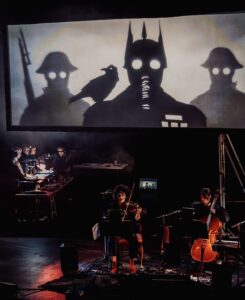
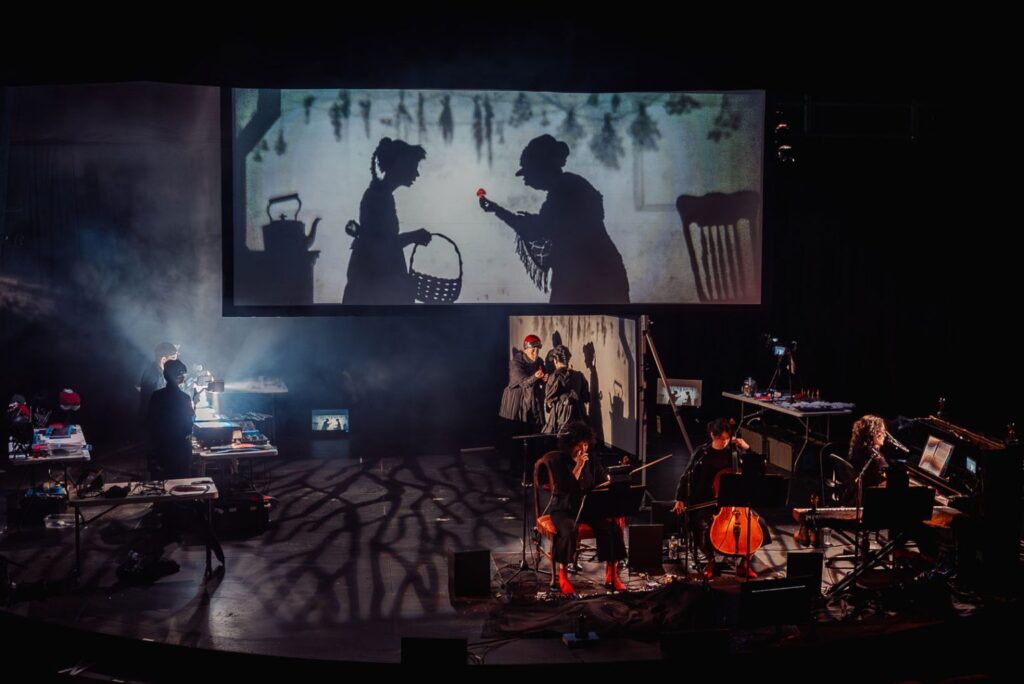
The plot itself is compelling, but it is the method of storytelling that leaves the strongest impression. Using vintage overhead projectors (you know the kind…those of us of a certain age surely recall teachers using them to project transparencies of mathematical equations and the like in high school classes), cameras, handcrafted puppets, live musicians, projected animation, and an astonishing amount of precision shadow-ography, the ensemble simultaneously performs the story while creating the cinematic images projected above them. One thrill of a Manual Cinema experience is that audience members can watch both the finished “film” and the intricate mechanics behind its creation at the same time. Somehow, knowing exactly how the illusion works only makes it more magical.

One of the evening’s most impressive achievements is the seamless collaboration between the performers, musicians, and designers responsible for bringing this world to life. Conceived and directed by Drew Dir and devised alongside Sarah Fornace and Julia Miller, The 4th Witch demonstrates the remarkable creative shorthand that has developed among Manual Cinema’s founding artists over the last fifteen years.

The production’s visual language is particularly striking. Dir’s storyboard and puppet design work provides the foundation for a series of hauntingly beautiful images, while Julia Miller’s silhouette mask designs help create a dreamlike aesthetic that feels simultaneously ancient and contemporary. Combined with David Goodman-Edberg‘s atmospheric lighting and Sully Ratke‘s costume and wig design, the result is a world that exists somewhere between folklore, nightmare, and fairy tale.

Yet for all of the technical wizardry on display, it is the performers who make the impossible seem effortless. The puppeteering ensemble works with the precision of a championship relay team. Lizi Breit, Leah Casey, Sarah Fornace, Julia Miller, and Jeffrey Paschal constantly shift responsibilities, characters, and storytelling functions, often within seconds. One moment they are manipulating puppets, the next they are operating cameras, creating visual effects, changing costumes, transitioning scenery and magically bringing the silhouetted shadow puppets to life. Watching them perform below the screen becomes almost as fascinating as the imagery being projected above it.

Particularly impressive is how seamlessly Fornace and Miller balance their roles as co-creators of the piece while simultaneously serving as performers within it. Miller’s commanding presence as the Lead Witch anchors much of the production’s visual storytelling, while Fornace’s work as the young Girl at the center of the narrative provides much of the show’s emotional heart. Jeffrey Paschal brings physicality and gravitas to multiple roles, including Macbeth himself, while Breit and Casey navigate a variety of characters that help populate the production’s ever-shifting world.

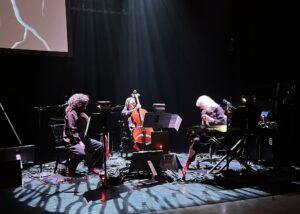
Equally deserving of recognition is the magical yet anything but witchy trio of musicians positioned in full view of the audience throughout the performance. Alicia Walter‘s vocals and keyboard work, joined by Lucy Little‘s violin and vocals and Erica Kremer‘s cello and vocals, create a lush, cinematic score that frequently serves as the emotional engine of the story. Their contributions elevate the production beyond a technical marvel into something genuinely moving, underscoring moments of wonder, danger, grief, and hope with remarkable sensitivity.

What makes The 4th Witch especially memorable is that none of these elements ever feel isolated from one another. The puppetry, music, projections, acting, sound design, and storytelling function as a single living organism, each piece dependent on the others. Kauffman and Vegter’s original score and sound design provide the connective tissue binding everything together, creating a production that feels less like a stage play and more like a handcrafted cinematic experience unfolding in real time.

Visually, The 4th Witch is breathtaking. Drawing inspiration from storybooks, silent cinema, and graphic novels, the imagery is often hauntingly beautiful. Interestingly, there’s no dialogue or narration, no intertitles like you’d see in a traditional silent movie. Moments of darkness and danger are balanced by scenes of wonder and imagination, creating a rich emotional landscape that feels both timeless and urgently contemporary. The story unfolds naturally and fully narratively cohesively through the skill and beauty of this truly groundbreaking cinematic medium.

What ultimately makes The 4th Witch resonate, however, is its heart. Beneath the inventive staging and dazzling visuals lies a story about resilience, empathy, and finding one’s place in a complicated world. It is a reminder that even amid chaos and conflict, there remains the possibility of hope.

In an era where audiences have seemingly endless entertainment options available at the touch of a screen, Manual Cinema offers something increasingly rare: a theatrical experience that can only truly be appreciated in person. For Nashville theatergoers looking for something unlike anything else currently on stage, The 4th Witch is not merely recommended—it is essential viewing.

Manual Cinema’s The 4th Witch continues at OZ Arts Nashville (6172 Cockrill Bend Circle) with an 8pm performance Friday, June 5 and concludes Saturday, June 6 with both a 2pm matinee and a final 8pm evening performance. The venue opens an hour before each performance and offers a bar menu featuring a variety of alcoholic and nonalcoholic beverages for purchase. Youth and Artists/Creative tickets are $25, General Admission tickets are $35 and Generous tickets are $45. CLICK HERE to purchase tickets. As an extra bit of fun, following the June 5 performance, Oz Arts will host a post-show Friday Night Talkback featuring Sarah Fornace and Julia Miller moderated by Nashville Shakespeare Festival‘s Artistic Director Jason Spelbring. (this event is free to Friday night’s audience).

Whether you’re a Shakespeare enthusiast, a theatre lover, a film buff, or simply someone searching for an unforgettable artistic experience, this remarkable production proves that some of the most powerful magic still happens live and right before you eyes. Forget what The Wizard of Oz said…at this Oz Arts Nashville performance, go ahead and pay attention to the men and women behind the curtain!

Manual Cinema’s The 4th Witch marks the close of Oz Arts‘  current season, so be sure and CLICK HERE to stay in the know as Oz Arts reveals their coming 2026/2027 Season soon. To keep up with all things Oz Arts, follow them on Facebook, YouTube and Insta.

For more about Manual Cinema, and their current multi-city tour schedule, CLICK HERE or follow them on Facebook, Insta, Vimeo and Bandcamp.

As always, If you want to read our latest on Music, Movies, Performing or Visual Arts, please check out JHPEntertainment online or socials at Facebook, Insta, X and Threads.


In case you missed it, check out JHPEntertainment.com‘s Rapid Fire 20Q with Manual Cinema’s Julia Miller and Sarah Fornace, then…#GoSeeTheShow!

Shadows and Storytelling: Rapid Fire Q&A With Sarah Fornace & Julia Miller; Manual Cinema’s The 4th Witch at Oz Arts June 4-6


Filed Under: Entertainment, Theare, Theatre Review Tagged With: 2026, Manual Cinema, Oz Arts Nashville, The 4th Witch, Theatre Review

Shadows and Storytelling: Rapid Fire Q&A With Sarah Fornace & Julia Miller; Manual Cinema’s The 4th Witch at Oz Arts June 4-6

June 4, 2026 by Jonathan Pinkerton

Manual Cinema’s The 4th Witch at Oz Arts June 4-6

For more than 15 years, Manual Cinema has been redefining the boundaries of live performance, blending shadow puppetry, filmmaking, music, animation, and theatrical storytelling into an experience unlike anything else on stage. The Emmy Award-winning collective’s latest production, The 4th Witch, offers a bold new perspective on Shakespeare‘s Macbeth, transforming one of literature’s most enduring tales into an imaginative coming-of-age story filled with the company’s signature artistry and innovation.

Ahead of Manual Cinema’s June 4-6 engagement at OZ Arts Nashville, JHPENTERTAINMENT caught up with Julia Miller and Sarah Fornace, two of the collective’s five Co-Artistic Directors, to discuss the origins of the company, the challenges of touring such a technically ambitious production, the collaborative process behind their work, and what’s next for one of the most inventive theatrical collectives working today.


RAPID FIRE Q&A WITH MANUAL CINEMA’s JULIA MILLER AND SARAH FORNACE

RAPID FIRE WITH MANUAL CINEMA CO ARTISTIC DIRECTOR JULIA MILLER

JHPENTERTAINMENT: Manual Cinema’s audiences range from young children and families to theater lovers, film buffs, and aspiring artists. What do you think allows the work to connect with such a wide variety of people?

JULIA MILLER: I think puppetry as a medium can be profoundly impactful. There is something about bringing the inanimate to life that feels like magic. Something special happens through the work of the puppeteer and the audience, these objects are imbued with so much life and emotion, you feel it in a different way than watching a human perform. I think the handmade quality is also meaningful. Seeing the hands (sometimes literally) of the makers feels special in a time where so much of what we consume is digitally rendered. There is something about the humanness of the objects and the performance that seems to affect people.

JHPENTERTAINMENT: You’ve worn many hats within Manual Cinema as a director, puppeteer, puppet designer, and performer. Which part of the creative process feels most rewarding to you?

JULIA MILLER: My background/training is in performances, so I love being in rehearsal and performing in the shows. Working with so many amazing performers to create what eventually becomes a very intricate, tightly coordinated dance, is a special experience. I love developing new types of cinematic puppetry shots and techniques, but I also love designing puppets, directing, and devising stories with the other Co-Artistic Directors. I have so many interests I feel lucky to work in an environment that incorporates so many of them.

JHPENTERTAINMENT: Before co-founding Manual Cinema, you trained in devised theater, clown, and mask work in a variety of settings, including Italy. How do those disciplines continue to influence your storytelling today?

JULIA MILLER: The physical theatre training I did in mask, clown, and commedia dell’arte is all about specificity of action and gesture, how fast or slow you do something can tell the audience something different. So much of puppetry is that. Both share the same foundational principles, breath, focus, and weight. When I started working in puppetry I just began translating that work through an object instead of my body. I’ve always loved to work collaboratively, devising work in an ensemble is challenging in that there is a lot of give and take and negotiation between different ideas, but work made by many hands has so much more depth and personality to me. You can feel the many brains that worked together to make it, and I’ve always been drawn to that.

JHPENTERTAINMENT: Audiences see the finished production, but what would surprise them most about the amount of preparation and coordination required behind the scenes?

JULIA MILLER: Something unique to Manual Cinema performances is that you get to see the ensemble create all of the images of the movie in real time, on stage, below the projection screen. It takes a lot of work to coordinate all of that specific blocking, to make the transitions seamless and to the music, everything in sync. The puppeteers don’t get a break once the show starts. They play multiple characters, manipulate puppets, act as editors and lighting designers, track so many small props and costume changes, all tightly choreographed between five puppeteers. It’s like learning a dance by heart or memorizing a piece of music, you want to get to the point where you don’t have to think about what is next, your body just knows, and that takes repetition and doing the show over and over again. But when it’s there it really is like NASCAR, everyone moving in a tight little dance around each other, each move you make direct, efficient, and in relationship to someone else. It is amazing when it all comes together.

JHPENTERTAINMENT: Every Manual Cinema performance contains live, in-the-moment elements. Even with the film and projection components, is every performance of The 4th Witch a little different from the one before it?

JULIA MILLER: Absolutely. The container of the show is fixed in that we are all executing a series of repeatable actions. The choreography is set and does not change, even the timing is set exactly to sound design and music so there is no room for improvisation. That being said, it’s live theatre, props get left on the wrong side of the stage, puppets go missing, someone forgets a piece of blocking, but we just have to keep moving. There isn’t time to stop or feel bad because then you’ll be late for your next thing. The audience never notices, but the puppeteers always feel it, you just have to let go and move on. It’s a hard lesson I’m still learning. The audiences also really impact the performance. Sometimes we have a very rowdy house that isn’t afraid to laugh or audibly react. Those are always energizing because we get more feedback from the audience and play off of each other. Other times we get very focused but quiet houses and that changes the dynamic as well. Each audience is unique and reacts differently so that keeps us on our toes and changes the mood slightly night to night.


RAPID FIRE WITH MANUAL CINEMA CO ARTISTIC DIRECTOR JULIA MILLER

JHPENTERTAINMENT: For readers who may be discovering Manual Cinema for the first time, how do you describe what the company does in one or two sentences?

SARAH FORNACE: Manual Cinema is an Emmy Award-winning performance collective, design studio, and film/video production company. We combine handmade shadow puppetry, cinematic techniques, and innovative sound and music to create immersive stories for stage and screen that feel human, handmade, and urgent. We try to combine the sweeping storytelling of cinema with the deep human connection of live theatre.

JHPENTERTAINMENT: Manual Cinema was founded in 2010 by you, Julia Miller, Drew Dir, Ben Kauffman, and Kyle Vegter. Looking back 15-plus years later, did you have any idea the collective would grow into what it is today?

SARAH FORNACE: No! We started working together to create a short piece called “The Ballad of Lula del Ray.” We performed it in DIY spaces and small festivals in Chicago. People started to ask us what we would make next, and we came up with ideas for more shows. We had no idea that we would tour the world (every continent except Antartica) and still be working together 15 years later!

JHPENTERTAINMENT: One of the things that makes Manual Cinema unique is its deeply collaborative nature. What does the creative process look like when five co-artistic directors are helping shape a project?

SARAH FORNACE: It depends on the project! Some start with a story idea, some start with literary or biographical material that we are adapting, and some start with music! Some parts of the shows start with storyboards or animatics, and some are music-first. Generally, we will have at least one artistic director in the puppetry ensemble who helps shape the choreography and the story from the inside of the show. And usually we will have a director or an outside eye who is shaping it from the outside.

JHPENTERTAINMENT: You’ve worked with the same founding team since 2010. What’s the secret to maintaining a creative partnership for that long?

SARAH FORNACE: Good question! Fifteen years in, I think that we are still figuring out how to make work that is artistically exciting to us and financially lucrative enough to keep our doors open! The industry is always shifting, and I think that all the Manual Cinema artistic directors are incredibly smart and uniquely talented at telling stories that address the highs and lows of what it means to be human and how we try (and sometimes fail) to connect with each other. There is no one else I would rather tell stories and make work with!

JHPENTERTAINMENT: Outside of Manual Cinema, you’ve worked in theater, choreography, filmmaking, and even video game storytelling. How do those experiences influence the work you bring back to the company?

SARAH FORNACE: The great thing about being a deviser/director or a performer with Manual Cinema is that you get to do a bit of everything and bring all of your skills, interests, and problem-solving abilities to the project! As a performer in The 4th Witch, I get to not only act in silhouette and puppeteer but also control the shots and pacing of the show in the same way that a film editor and director of photography would in an actual film. I also get to work in super close collaboration with four of the most incredible puppeteers working today. They bring insights and skills from their various other backgrounds in filmmaking, animation, ballet, musical theatre, and clown. It feels like being in a Nascar pit crew of storytelling!

JHPENTERTAINMENT: The 4th Witch turns Shakespeare’s Macbeth on its head. Where did the initial spark for this reimagining come from?

SARAH FORNACE: We knew that we wanted to take a sideways approach akin to Tom Stoppard’s Rosencrantz and Guildenstern are Dead. Adapting the show in this day and age, we were struck by how the play is suffused with an undercurrent of war. We thought that we would follow a young character whose village is destroyed in the first battle in the play. In Shakespeare’s text, we only hear about Macbeth’s conquest, but we wanted to show the human cost. It is also a coming of age story and a story about how we are all caught up in cycles of violence and capitalism even when we try to escape them. Ultimately, it is about how we can take all of the parts of ourselves and our past, the good and the bad, and move forward and create good in the world.

JHPENTERTAINMENT: Touring a production that combines film, live animation, puppetry, music, and performance seems like a massive logistical undertaking. What’s the biggest challenge in taking The 4th Witch from city to city?

SARAH FORNACE: We travel with a team of ten: 8 performers and 2 backstage positions (a sound engineer and a stage manager/technical director). Everyone in the cast is very good at their jobs. We not only perform and execute the show, but we also set it up in collaboration with the venue technicians and staff! There are so many moving parts in the show: hundreds of puppets, 4 old school overhead projectors, over a dozen sound looping pedals, several musical instruments both acoustic and electric, a camera, an array of video monitors…. All of that gets set up and calibrated to each venue before we welcome in the audience!

JHPENTERTAINMENT: Manual Cinema earned an Emmy Award in 2017 for The Forger. How did receiving that recognition impact the company and its future ambitions?

SARAH FORNACE: It was an honor to be on that project and tell the story of someone who helped so many hundreds of people (many children) escape Nazi France with the incredible journalists and filmmakers at the NYTimes (shout out to Samantha Stark and Alexandra Garcia) . I think that the success of that project opened the door to more documentary work. The shadow animation and rich sound/music scoring we do is actually a great fit for bringing historical material to life onscreen.

JHPENTERTAINMENT: Looking ahead, what’s next for you personally and what’s next for Manual Cinema as The 4th Witch continues its tour?

SARAH FORNACE: We are working on a new show inspired by A.I. and the way that we interact with technology in our daily lives. I am calling it a humanist show, and the tagline is “save your mind, save the world!”


Manual Cinema‘s work exists at the intersection of innovation and imagination, where centuries-old storytelling techniques meet cutting-edge theatrical craftsmanship. As The 4th Witch continues its journey across the country, audiences have an opportunity to witness firsthand why the company’s distinctive blend of puppetry, cinema, music, and live performance has captivated theatergoers around the world. For Nashville audiences, OZ Arts provides the perfect setting to experience a production that challenges expectations while reminding us of the enduring power of storytelling.

The 4th Witch takes to the stage at OZ Arts Nashville (6172 Cockrill Bend Circle) from Thursday, June 4 thru Saturday, June 6 with performances each night at 8pm and a Saturday matinee at 2pm. The venue opens an hour before each performance and offers a bar menu featuring a variety of alcoholic and nonalcoholic beverages for purchase. Youth and Artists/Creative tickets are $25, General Admission tickets are $35 and Generous tickets are $45. CLICK HERE to purchase tickets. As an extra bit of fun, following the June 5 performance, Oz Arts will host a post-show Friday Night Talkback featuring Sarah Fornace and Julia Miller moderated by Nashville Shakespeare Festival‘s Artistic Director Jason Spelbring. (this event is free to Friday night’s audience).

This three-day, four performance presentation of Manual Cinema’s The 4th Witch marks the close of Oz Arts‘  current season, so be sure and CLICK HERE to stay in the know as Oz Arts reveals their coming 2026/2027 Season soon. To keep up with all things Oz Arts, follow them on Facebook, YouTube and Insta.

For more about Manual Cinema, and their current multi-city tour schedule, CLICK HERE or follow them on Facebook, Insta, Vimeo and Bandcamp.

As always, If you want to read our latest on Music, Movies, Performing or Visual Arts, please check out JHPEntertainment online or socials at Facebook, Insta, X and Threads. Till then…. #GoSeeTheShow!

Filed Under: Entertainment, Live Performance, nashville, Rapid Fire 20 Q, Rapid Fire Q&A, Theare Tagged With: 2026, Cinema, Interview, Manual Cinema, Oz Arts, Oz Arts Nashville, Rapid Fire, Rapid Fire Q&A, The 4th Witch, Visual Arts

Rapid Fire Q&A: Meow Meow Returns to Music City; Kamikaze Cabaret Darling at Oz Arts April 11

April 8, 2026 by Jonathan Pinkerton

As the saying…and lyrics go…“Life is a cabaret, old chum”–and no one embodies that spirit, living life and palling around, quite like the delicious diva Meow Meow. Ahead of her April 11 return to Music City, this time playing Oz Arts Nashville, JHPEntertainment is handing the mic over (carefully…very carefully) for a chat with the one and only exquisite chanteuse for a memorable Rapid Fire Q&A.

———-

RAPID FIRE Q&A WITH MEOW MEOW; AT OZ ARTS NASHVILLE APRIL 11
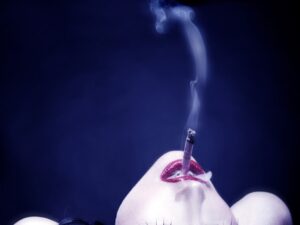
JHP ENTERTAINMENT: Ok, let’s just dive right in…I keep seeing your show described as Kamikaze Cabaret. Is that a fair descriptor of an evening with Meow Meow?

MEOW MEOW: Well, I certainly give everything I’ve got to every show ! I never want to waste a moment on that stage…with a captive audience !

JHP ENTERTAINMENT: As you prepare to take the stage each night, at what point in your dressing room do you feel fully in Meow Meow mode?

MEOW MEOW: I am always in Meow mode. Stage and Life are the same for me…. I think Shakespeare MAY have put it rather better with “all the world’s a stage”…

JHP ENTERTAINMENT: Of your current set list is there a song that challenges you vocally more than others?

MEOW MEOW: NEVER ADMIT DEFEAT. CARRY ON. KAMIKAZE Cabaret, remember ? I think there is a wonderful attitude ascribed by the playwright Terence McNally to the great opera Diva Maria Callas in his play “Masterclass” : “Don’t TRY, DO” !

JHP ENTERTAINMENT: Your April 11 performance at OZ Arts marks a return to Music City, having previously wowed Nashville audiences in 2022. Is there anything you hope to revisit while you are Nashville?

MEOW MEOW: The audience was sensational. I can’t wait to love and hug them (politely) again!

JHP ENTERTAINMENT: Touring internationally, what do you cherish most about each new city you visit?

MEOW MEOW: How audiences change and how wonderful a flexible form like cabaret is to respond to those changes.

JHP ENTERTAINMENT: In previous interviews you mention drawing inspiration from a wide variety of sources…from Germany’s Weimar Era (don’t worry, my readers can Google it) to the glamour of Hedy Lamar with the avante garde unexpectedness of Dadaism (again, my readers can Google it). What is it about the early 1900s and these stylistic examples that speak to you?

MEOW MEOW: It’s particularly the teens into the 1920’s and 30’s where invention and exploration in music, language ideologies, politics are all smashing up against each other.  A fascinating time in the shattered world after the Great War and into the second world war. Everything resonates. There is nihilism and optimism.

JHP ENTERTAINMENT: Let’s be real though…do you think the 1920s could have handled Meow Meow?

MEOW MEOW: Again, I would have said to the 1920’s “don’t try, just DO”.

JHP ENTERTAINMENT: When I learned you were bringing your current show to Nashville, it took me a minute to clue in to why I knew of you…it was your collab with bandleader Thomas Lauderdale on Pink Martini’s 2019 album HOTEL AMOUR, particularly the song “I Lost Myself”. How did your participation in that project come about?

MEOW MEOW: He and I were introduced by a wonderful champion and curator of Arts and Artists – Kristy Edmunds. She just ‘had a feeling’ about the two of together  and it was musical and soul connection from the beginning. It’s a constantly inspiring and precious friendship and I’m so grateful for the adventures we’ve had around the world together – from little bars in Portland  to major orchestras and the Hollywood Bowl. I love the whole Pink Martini family and we get together whenever we can. 

JHP ENTERTAINMENT: More about “I Lost Myself”—with the opening lyric, “I’m hungry, bring me some pills on which to dine”, I was in! Whether campy or classic, teasing or torchy, do you have a lyric in a song that’s in your repertoire that you are absolutely mad about?

MEOW MEOW: SO many. I have to love all of them or I can’t sing them ! I love Patty Griffin’s poetry in her songs – one of my favourites that is like a prayer 

“All the girls you will never see

Forever a Mystery

All the Girls with their secret ways

All the Girls who went… astray.

Be Careful”

I love Thom Yorke’s writing for Radiohead. I love Brecht’s lyrics so much..I love Noel Coward !

JHP ENTERTAINMENT: I read something online describing your fan base as a cult following…that got me to thinking…if Meow Meow were a cult leader, would your music or your bawdiness be the kool-aide everyone would drink that drew them in? Or is there something else just as enticing from an evening with Meow Meow? What would your cult followers be called?

MEOW MEOW: I would hope it was my heart and joy and faith in human connection that shines through the music and the mayhem.

 JHP ENTERTAINMENT: What would the cult of Meow Meow be called?

MEOW MEOW: I have no idea what the lovers would be called…. But they definitely love to go on an adventure with me. And have very good taste, obviously.

JHP ENTERTAINMENT: Your official site meowmeowrevolution.com (love that web addy name, by the way) teases MERMAID, a new album as ‘Coming Soon’. What’s the skinny?

MEOW MEOW: Oh! It’s actually on Spotify now ! As is the gorgeous album HOTEL AMOUR of songs that I wrote with Thomas and Pink Martini and members of Oregon Symphony, with gorgeous duets with Rufus Wainwright, Michel Legrand, Barry Humphries and the Von Trapp Family singers 

JHP ENTERTAINMENT: Looking back on the 2007 High Line Festival, curated by David Bowie—where you took your place among fellow featured artists Arcade Fire, Laurie Anderson, Ricky Gervaiis, The Legendary Stardust Cowboy and more—sounds almost surreal—How did you feel in that moment?
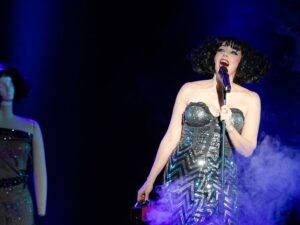
MEOW MEOW: DIVINE

JHP ENTERTAINMENT: From Shakespeare to cabaret to film, your career spans an incredible range—including your role as Griddlebone in the 2019 star-studded film adaptation of CATS (Purrrfectly karmic casting if ever there was). Having gotten to know her a bit myself during her early country music reign, I gotta ask…what was it like working alongside Taylor Swift, in particular, in the “Macavity” number?

MEOW MEOW: Ah yes the hilarious brief moment ! She is heaven. Divine, professional, warm , and there is seriously a ray of something magical that emanates from her. She was like a special shining sun! I loved her.

JHP ENTERTAINMENT: You’ve cited comedy influences from AbFab, Dawn French & Jennifer Saunders and Lucille Ball. Gotta admit it, these mentions are just more reason to adore you as I’ve been an AbFab devotee since getting my hands on bootleg episodes before it ever made it was across the pond officially, and I have an extensive collection of Lucille Ball material. Heck, my dog is even named Lucille Desirée Ball Pinkerton—Desilu for short, but I digress…What is it about those legendary ladies of comedy and their broad style that resonates with you?

MEOW MEOW: They have funny bones, they are all their own singular creatures and they are brilliant observers of humans – and themselves . There is joy in the play of performance and they are part of the ridiculousness. All so different but so special.

JHP ENTERTAINMENT: Your shows are known for pulling audience members into the performance—sometimes as dancers, props, even furniture. What do you love most about that unpredictability?

MEOW MEOW: That’s life isn’t it ? We all need a little help from time to time… let’s see if people jump in or get scared. Im reaching out the metaphorical hand of friendship as it were. I may never even go near the audience in a show, but I like to feel we are all connected. It should be fun and full of LIFE and changeability and we should all celebrate being alive together in the room – it’s always a miracle !

JHP ENTERTAINMENT: On the subject of unpredictability—How do you handle it when an audience “volunteer” just isn’t matching the vibe?

MEOW MEOW: I don’t always ask for volunteers – it depends on the show – and I NEVER want anyone to help me if they would rather just be an onlooker. That’s bullying and I hate that. I just walk on by if people indicate. Everyone should have a great time and just feel good. The show is about the music and the fun !

JHP ENTERTAINMENT: Finally, what do you hope audiences recall long after spending the night with Meow Meow?

MEOW MEOW: I hope they can’t wait for us to visit again !!! 

———-
If there’s one thing abundantly clear after a whirlwind conversation with Meow Meow, it’s this: a night in her presence isn’t just a performance–it’s a shared act of joyful defiance, connection, and beautifully orchestrated chaos. Equal parts heart, humor and unpredictability, her brand of kamikaze cabaret invites audiences not just to watch, but to feel, to laugh and maybe even leap a little into the unknown right alongside her.
When Meow Meow returns to Music City on April 11 at Oz Arts Nashville (6172 Cockrill Bend Circle) for her 8pm show, expect the unexpected…but also expect to leave a little lighter, a little more alive, and already hoping–just as she does–that it won’t be long before she’s back to do it all over again.  At the time of this writing, Premium Table Seating has SOLD OUT, but a few General Admission tickets are still available at $40. As usual, Oz Arts Nashville also offers Artist & Creative Community tickets for $30. CLICK HERE for more info or to purchase tickets.

For the latest on Meow Meow, CLICK HERE or follow her on Insta and Facebook. To check out Meow Meow’s music, check her out on Spotify, Apple Music and Amazon Music. To keep up with all things Oz Arts Nashville, follow them on Facebook, X, YouTube and Insta.

As always, If you want to read our latest on Music, Movies, Performing or Visual Arts, please check out JHPEntertainment online or socials at Facebook, Insta, X and Threads. Till then…. #GoSeeTheShow!

Filed Under: 2026, Entertainment, Rapid Fire 20 Q, Rapid Fire Q&A Tagged With: 2026, Interview, Live Performance, Meow Meow, Nashville, Oz Arts Nashville, Q&A, Rapid Fire, Rapid Fire 20 Q

Copyright © 2026 · News Pro on Genesis Framework · WordPress · Log in