• Skip to primary navigation
  • Skip to main content
  • Home
  • About
  • Features
  • Contact

JHP Entertainment

Entertainment News, Reviews and Interviews

  • Home
  • About
  • Features
  • Contact

Archives for August 2026

RAPID FIRE 20Q: BLAST OFF AS JHPENTERTAINMENT GOES BEHIND THE SCENES WITH ‘ALEX AND THE AFRONAUTS’; Staged Reading Wednesday, September 2 at Darkhorse Theater

August 31, 2026 by Jonathan

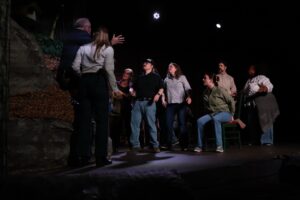
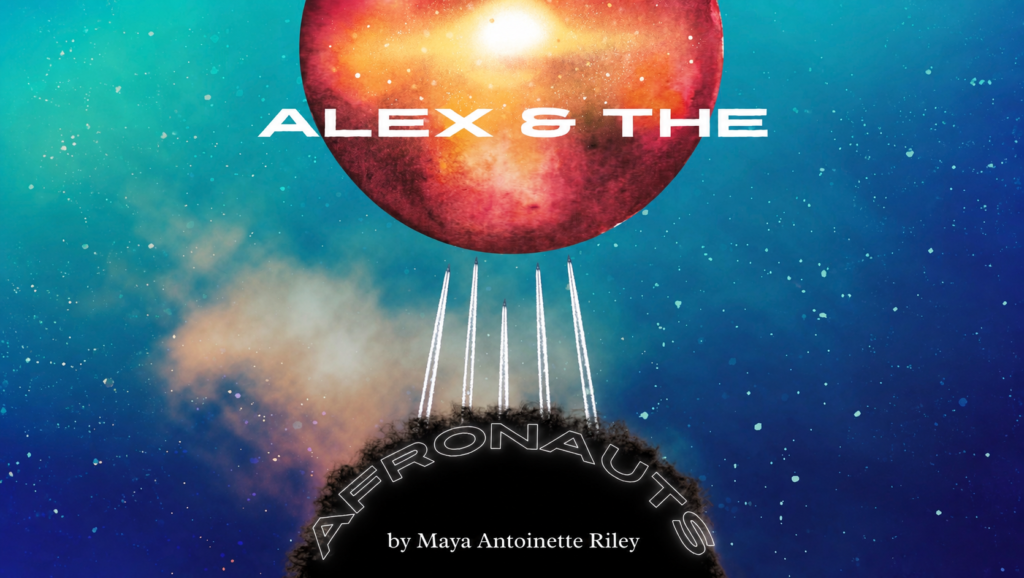
After two decades of covering theatre, one of the things I continue to enjoy most is getting the opportunity to discover and champion brand-new works—especially when they come from the creative mind of someone I’ve gotten to know over the years through Nashville’s theatre community. That makes Maya Riley’s Afrofuturist play, Alex and the Afronauts particularly exciting to follow. Having debuted an excerpt during last month’s 9th annual Kindling Arts Festival’s New Play Platter, it’s now time to hear the full story. At 7:30pm on Wednesday, September 2, playwright Maya Riley and director Jon Royal will present Alex and the Afronauts’s first-ever full staged reading at Darkhorse Theater as part of this year’s Shades of Black Theatre Festival. As the playwright, director and cast readied for the staged reading, JHPEntertainment had a chance to pose a few questions to Riley, Royal and actors Raven Buntyn and Andre Mason for our latest in our recurring interview feature, Rapid Fire 20Q.


RAPID FIRE 20Q WITH ALEX AND THE AFRONAUTS DIRECTOR, CAST MEMBERS & PLAYWRIGHT

RAPID FIRE WITH ALEX AND THE AFRONAUTS DIRECTOR JON ROYAL

JHPENTERTAINMENT: You directed the excerpt of Alex and the Afronauts presented at Kindling Arts Festival. What was it about Maya’s writing and this particular story that made you want to climb aboard and help bring it to life by way of the full staged reading?

JON ROYAL: I told this to the cast, and I’ll tell anyone who’ll listen, if you catch me at any random moment during the day, I’m consistently daydreaming about Black people in space, particularly from a sci-fi lens. I’m down for any story like this like four flat tires.

JHPENTERTAINMENT: Having now worked with Maya on both the festival excerpt and this staged reading, what have you discovered about her as a playwright? What is particularly rewarding about collaborating with her at this early stage in the process?

JON ROYAL: I like vibing with Maya on the sci fi and audio aspects of inspiration for this world. Do you know how long I’ve been waiting for a process where I can geek out with collaborators about stories like The Expanse, Star Trek, Battlestar Galactica [and creatives like] Sun Ra and Octavia Butler. Elements of all of those things are here, and Maya an I enthusiastically discussed a wide range of space interpretations in art, during both processes.

JHPENTERTAINMENT: This story deals with some enormous ideas—race, class disparity, exploitation, power and the question of who gets to decide what happens to a community’s future. The script reveals that both Wallace and Harper face oppression, but their reaction to it and their attitudes of dealing with it and going forward differ greatly. How key to the overall story is this?

JON ROYAL: I think they’re all dealing with Blackness as a continuum, and oppression is only a part of that. If Blackness through time is a cosmic river, then everybody’s boat isn’t going to put in at the same place. As a Black audience member, I’m searching to find the moments when they actually link up, and that’s where the delicious tension comes from.

JHPENTERTAINMENT: Directing a staged reading presents a very different set of challenges from directing a fully realized production. Without the completed sets, costumes, props, blocking and visual world you would ultimately have at your disposal, how do you and the actors bring out enough theatricality for the audience to imagine the world of Alex and the Afronauts?

JON ROYAL: You work with what you have. The focus is on the words, with the expectation that this is only a part of this piece’s journey, as it will hopefully be produced in many more ways. This is an evolutionary step, and it will be fully rendered in the context of honoring these words before we have other elements.

JHPENTERTAINMENT: Since you’ve already had the experience of directing a portion of this piece at Kindling, what are you most excited about getting to do differently—or explore more deeply—now that you’re presenting the full work, and how might this reading help point the way toward a future production?

JON ROYAL: Without a doubt, it’s gotta be that this is the full arc of the story. This is a larger cast that’s adding their unique talents so that we can go deeper into the lives of the characters and this thrilling story!!

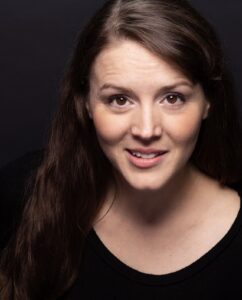
RAPID FIRE WITH RAVEN BUNTYN, HARPER IN ALEX AND THE AFRONAUTS

JHPENTERTAINMENT: Harper is introduced in the middle of an escalating crisis, but it quickly becomes clear that her emotional baggage is every bit as significant as the technical problem facing the crew. What initially drew you to Harper, and what do you find most compelling about her?

RAVEN BUNTYN: I can relate to Harper in a lot of ways. I understand what it is like to be in the throes of grief and how the resulting anger and hurt can cloud your judgement. That’s why I feel so connected to her. She’s authentic, even if she’s wrong in a lot of ways. It’s real and raw and not pretty, but neither is true healing. And sometimes that clouded judgement can lead us to make harmful choices, but with patience and empathy, we always find our way back to ourselves.

JHPENTERTAINMENT: Harper carries the grief of losing her brother Kiante while also wrestling with his final message and the responsibility he seems to have left behind. How did you approach portraying someone whose grief is tangled up with anger, guilt, fear and the need to keep moving?

RAVEN BUNTYN: My approach to Harper is a deeply personal one. It’s not hard to tap into those emotions when I’ve had to sit in them myself. It’s a heavy task to allow yourself the space to have your feelings, without letting it paralyze you from moving forward. Even if that forward movement feels like trekking through quick sand. I’ve had to learn how not to allow my past to hold me back, just like Harper. It can be hard to learn how to move forward with what feels like a hole in your heart. But if we don’t, we stay stuck.

JHPENTERTAINMENT: Harper and Wallace have very different ideas about what survival means and whether returning to the people they left behind is actually an option. What do you think Harper sees that Wallace may not—and what do you think Wallace sees that Harper may be unwilling to confront?

RAVEN BUNTYN: I think Wallace and Harper both have valid points in their approach to the resistance. I think Harper understands the importance of letting the people have a say in what they’re getting themselves into. But Wallace, however, understands that there are always casualties in war, and those casualties don’t mean the war is over. And it would be dishonorable to those lost to give up on the mission. And I think because Harper is grieving her brother, it’s hard for her to see the bigger picture.

JHPENTERTAINMENT: This is a new character in a new play, so you’re essentially helping create Harper from the ground up. What has that process been like, and how much room has Maya given you to discover the character through rehearsal?

RAVEN BUNTYN: The process of discovering Harper has been beautiful and explorative. We often want to play characters who are very likable, and Harper does some things in the story that aren’t very likable. She can be selfish at times and let her fear get in the way of the bigger picture, and I find her so human for these reasons. It’s helped me accept myself and my humanity in deeper ways, which, in turn, makes my portrayal of Harper feel more authentic. Maya has opened the floor for us to really explore who these characters are and it’s such a cool, collaborative environment.

JHPENTERTAINMENT: When (and I’m saying WHEN, because it Will) Alex and the Afronauts eventually becomes a fully mounted production, would you jump at the opportunity to return and continue developing Harper?

RAVEN BUNTYN: Absolutely, I would love to continue developing Harper. I’m honored to even be a part of her journey now. And if it’s meant for me to continue her portrayal, I’ll always be available for it!

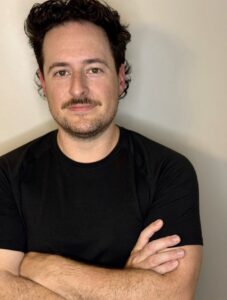
RAPID FIRE WITH ANDRE MASON, WALLACE IN ALEX AND THE AFRONAUTS

JHPENTERTAINMENT: Wallace is carrying the enormous responsibility of leading this group while simultaneously carrying the scars of everything that happened aboard the ship. What was your first reaction to Wallace, and what makes him such an interesting character to play?

ANDRE MASON: Initially, when I was reading for Wallace the first thing that came to mind was: “Man, this brother is a piece of work.” He wants to help his people; however, he has this “It’s my way or the highway” mindset. To be a leader, one has to not just be authoritative, but willing to listen to others, especially when found in the rather precarious position our intrepid afronauts find themselves in. To me, he is the phrase “The road to hell is paved with good intentions” personified. And I think that is partially why I enjoy being given the chance to portray him. Because sure, at times, he can come off as the other antagonist in this show, but at the end of the day, the brother is deeply unhealed, and had things gone his way, to his specific plan, well, the show would have had quite a different outcome. To me from a moral standpoint, when we first meet him, Wallace is neither black nor white, but rather a shade of gray. A shade of gray that got slightly darker with every injustice he encountered aboard that ship. And for me, morally gray characters are always fun to play as.

JHPENTERTAINMENT: Wallace’s anger comes from a very specific history of exploitation. He reminds Harper that they built the ship while others enjoyed the privileges of being aboard it, and that he—a licensed pilot—was reduced to working as a janitor. What do you think Wallace’s experience says about race, class, and who is considered valuable in this world?

ANDRE MASON: Sadly, this experience is all too common for people of color. It’s not a secret that in this country people of color have to work twice as hard to get half as far as non-POCs. Imagine: doing everything he did on Earth, helping not only to build but to maintain that ship, only to be regarded as the guy who empties the trash bins. It’s not exactly an ideal or just situation is it? What happens to him happens to far too many POCs, and of course it can take a toll on one’s view of self, as well as their view of the world around them.

JHPENTERTAINMENT: Wallace is absolutely determined not to turn back, even when Harper questions whether they are on a survival mission or a suicide mission. Do you see his determination as courage, stubbornness, leadership—or some complicated combination of all three?

ANDRE MASON: It’s definitely a sort of stew of the 3. On the one hand, I do not doubt that he truly believes that anywhere has to be better than being under the Armada. To him, death is stagnation, and allowing themselves to be subjugated is another form of death. In the face of what essentially appears to be a space army, Wallace helps to steal one of their ships in order to save the people who are regarded as lesser within the Armada’s main vessel. It takes some degree of courage/confidence in ones own actions to stage what is essentially a mutiny and steal a ship from a larger entity that can most definitely kill them all. On the other hand, he isn’t exactly the most diplomatic or democratic leader. He doesn’t consider his fellow crew mates’ insights, feeling as if he knows what is right for them all and should not be questioned on his strategies. I will also say I think there’s a little bit of ego in that stew I mentioned earlier, just off the interactions Wallace has with his crew mates, especially in his conversations with Harper.

JHPENTERTAINMENT: There can be something wonderfully freeing about a staged reading because you’re not dealing with costumes, elaborate sets, props or all the physical machinery of a full production. Does that more stripped-down environment allow you to concentrate differently on Wallace and the words Maya has written?

ANDRE MASON: Truthfully, this is a new experience for me with regards to a stage reading, but I will say it definitely feels like I can direct all my attention on developing the character within the parameters given by our playwright in this story. I can focus a little more on the story itself and how we can tell the story through our words and emotions in the moment.

JHPENTERTAINMENT: Finally, there’s something especially exciting about audiences getting only one opportunity to experience this particular version of Alex and the Afronauts. What does the exclusivity of a one-night-only staged reading mean to you, and what are you hoping audiences take away from this first full journey with Wallace and the Afronauts?

ANDRE MASON: For me, it’s bittersweet I can’t lie. Because on the one hand, a one-night-only reading makes this whole experience feel like something special. Like, we are about to perform what is basically the proto-version of this show, and I have loved every moment of the process thus far. On the other hand, I am a little bummed out that this is a one-night-only thing because I want as many people as possible to see this show because it is that good, in my opinion. I think the biggest thing I want the people to take away from this show, from my perspective, is trust. Its not likely that any of us will find ourselves in a situation where we are in space dealing with a space army on top of other issues that for the sake of spoilers I will not mention, however, we can find ourselves in a position where we are working with others in a precarious setting or scenario, and the only real way to come out of the scenario stronger is having trust in your fellow man/woman who is currently in the metaphorical trenches with you. Wallace can be so set in his ways, and I feel as if had he been a little more diplomatic, a lot of what happens in the show won’t have to come to pass… but then again, if he weren’t the stubborn semi-egotistical man that he is, well, we wouldn’t have a show would we? Or at least, it’d be a very different story that unfolds.

RAPID FIRE WITH MAYA ANTOINETTE RILEY, PLAYWRIGHT OF ALEX AND THE AFRONAUTS

JHPENTERTAINMENT: Take us back to the beginning. What was the original concept or spark for Alex and the Afronauts, and how has that initial idea evolved into the play we’re seeing today?

MAYA ANTOINETTE RILEY: Well, this play has taken quite a pivot over the course of 12 months. But this latest version was heavily inspired by a lot of Afrofuturist art. Music by Digable Planets and Sun Ra. Poetry by Douglas Kearney and Nikki Giovanni. Paintings and sculptures by Mikel Elam and Wangechi Mutu. So much of the Black experience is defined by the past. All the artists I mentioned are exploring the future. The alternatives to this current path we walk. I wanted to join in that exploration. This play, like many Afrofuturist works, is a daydream. A fantasy, embracing the unknown. Because change begins with dreaming a better life. And then you have to leap, step out on faith, to make the dream reality. That’s the golden nugget of this play.

JHPENTERTAINMENT: What has the writing process looked like from that first concept to this point? How long has Alex and the Afronauts been taking shape, and were there particular moments when you realized the piece had become something substantially different from where you started?

MAYA ANTOINETTE RILEY: It’s actually pretty wild. This play has taken so many different shapes over the course of this year. I started writing it in summer 2025, and it was a sci-fi take on a kitchen play. A story about two lovers trying to reconcile a failing relationship. But the world that I created around these two characters kept nagging at me. It brought up so many questions for me, so I decided to start answering those questions and ended up with an entirely different piece. The joy of writing…haha. But the two lovers who were originally at the center of the play have remained throughout every iteration.

JHPENTERTAINMENT: Audiences first encountered an excerpt of the work at last month’s Kindling Arts Festival as part of the New Play Platter. What was it like to hear and see a portion of this world in front of an audience for the first time, and what did that experience reveal to you about the piece?

MAYA ANTOINETTE RILEY: It’s always exhilarating to have an audience! I was revitalized by the experience. That was the first time any of my written work had been fully staged. A milestone for sure. Getting audience feedback is truly the final piece of any theatrical project/process. I needed to know what people loved, what they were confused about, what they talked about on the car ride home. I learned a lot. The characters and relationships were working, the mystery was working, but there were some world-building things I needed to flesh out. So I worked to tackle that. And I had to write Act II, because everyone was curious to see what happened next. A good place to be for sure.

JHPENTERTAINMENT: Moving from that excerpt to a complete staged reading is a significant next step for a new play. What have you discovered or changed between the Kindling presentation and this reading, and what are you hoping to glean from hearing the full piece in front of an audience?

MAYA ANTOINETTE RILEY: Well, I just wrote basically all of Act II in less than a month, so that was wild. I’m discovering things about the world of the play and the characters in it every single day. I go to bed thinking one thing about them, then wake up the next morning with new ideas. After the first read-thru last week, I gave the cast about 40 pages of rewrites. That’s the gig for new works, I suppose. I’m definitely not done tinkering. Having a full staged reading is just a pit stop on the journey to deepening this work. It’s just part of the process. I’ve looked at the script almost every day for the past 3 months. I can’t keep up with how many versions there have been. So seeing what lands with an audience will be incredibly beneficial. I’ve been zoomed into the piece for so long, I need their help to zoom back out and see it as a whole. I can’t wait to hear what people think!

JHPENTERTAINMENT: Alex and the Afronauts uses a futuristic space journey to examine very recognizable issues of race, class, inequality, exploitation, power and who gets access to resources. After this reading, what do you hope to learn about the play—and what do you hope the next chapter of its journey might be?

MAYA ANTOINETTE RILEY: I’m particularly interested in the paranormal aspect of the play. I won’t spoil it, but I think it’ll get people talking. It asks a very specific question of the audience, one that forces you to interrogate your ideas progress, legacy, and belief. It’s a very meaningful concept for me, and I wonder if others will feel similarly about it. I hope to someday mount a full production. It’s so rare to see Black Sci-fi get produced in any medium — film, television, theater, etc. I want to see Black people in space, having rich and compelling lives, searching for truth and new possibilities. So, I hope this journey can lead me there.


With Alex and the Afronauts, the journey is very much still in progress—and that may be the most exciting part. From a play that began as something entirely different, through months of rewrites, a first glimpse at Kindling Arts Festival and now a complete staged reading as part of Shades of Black Theatre Festival, Maya Antoinette Riley’s work continues to evolve with every step. And as Riley and her collaborators make clear, the audience isn’t simply there to watch that evolution—they’re part of it.

That makes Wednesday, September 2, at Darkhorse Theatre a particularly special opportunity. For one night only, Nashville audiences can experience the full Alex and the Afronauts while it is still in its developmental stage, hear where the story has traveled and help provide the feedback that could influence where it goes next. Because sometimes the most exciting theatre isn’t the show that’s already finished. It’s the one that’s just beginning to find its way.

The 2026 Shades of Black Theatre Festival officially kicks off with an Opening Mixer Monday August 31 thru Sunday, September 27 with nearly a dozen works presented throughout the month. The festival will include  staged readings, full length plays, dance show, films, workshops, and other special events. CLICK HERE for a full list of the festival’s offerings. The Opening Mixer is free and open to the public. Alex and the Afronauts’ staged reading is free as well, but a suggested donation of $10 would be appreciated. Admission varies for the remaining festival events. All events of Shades of Black Theatre Festival will take place at Darkhorse Theater, 4610 Charlotte Avenue, Nashville, TN 37209, unless otherwise specified via the link above.

To keep up with Maya Riley and follow what’s next for her as well as for Alex and the Afronauts, CLICK HERE.

As always, if you wanna follow JHPEntertainment to find out who I’m chatting with for my next Rapid Fire Q&A, or for my take on the latest local and national theatre, music, arts and more, visit JHPENTERTAINMENT.com or find us on Facebook, Insta, Threads and X. Till then #GoSeeTheShow!
Filed Under: Entertainment, Rapid Fire 20 Q, Theare Tagged With: Alex and the Afronauts, Maya Riley, New Theatrical Work, New Work, play, POC, POC Creatives, Shades of Black Theater Festival, Staged Reading

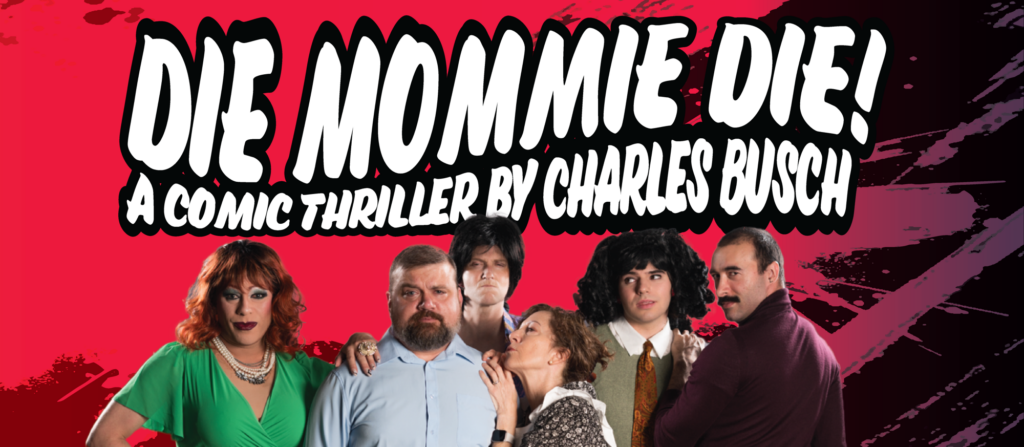
‘Die, Mommie, Die!’: 20 Questions, Four Suspects & One Very Dysfunctional Family

August 27, 2026 by Jonathan

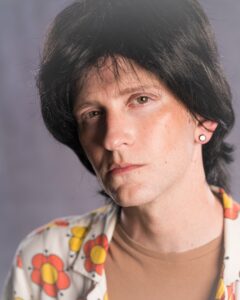
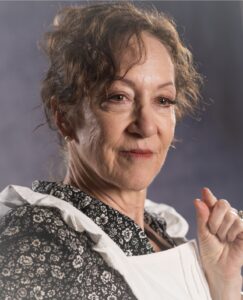
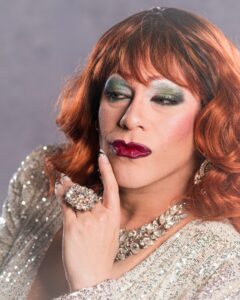
Playhouse 615 is getting ready to serve up a deliciously twisted dose of murder, mayhem, familial dysfunction and theatrical camp as they present Charles Busch’s Die, Mommie, Die! co-directed by Daniel Vincent and Diane Bearden and onstage August 28-September 13. Before the curtain rises, JHPEntertainment put four members of the cast—Christian Swann, Zach McMasters, Deborah Seidel and Veronika Electronika—on the hot seat for a Rapid Fire 20Q covering their characters, their scene partners and the bizarre brilliance that is noir camp theatre.


RAPID FIRE 20Q WITH CAST MEMBERS OF PLAYHOUSE 615’s DIE,MOMMIE, DIE!

RAPID FIRE WITH CHRISTIAN SWANN, DIE, MOMMIE, DIE!’s EDITH SUSSMAN

JHPENTERTAINMENT: Edith Sussman is at the center of a family situation that makes the average dysfunctional household look positively well-adjusted. What was your first reaction when you got your hands on this script?

CHRISTIAN SWANN: I was completely enamored with it. The show’s so “out there” that you can’t help but wonder how people will react. The whole time I was reading through the script, I was thinking, “This line will get a big gasp,” or “The audience will go wild right here, absolutely bonkers.” And I was so excited to be playing Edith. The play is, among other things, a very screwed-up take on an Ancient Greek tragedy, so playing Edith is kind of like playing Electra, only much groovier.

JHPENTERTAINMENT: You’re working with co-directors Diane Bearden and Daniel Vincent, with Daniel also stepping onto the stage as Edith’s father, Sol. What’s it like having one of your directors essentially say, “Okay, now I’m going to get into character and play along with you all”?

CHRISTIAN SWANN: It’s great! It’s a little surreal at times when you turn away from the directors’ table for a second and suddenly one of them is with you on stage, playing with your hair and talking about lepers and toilets and all this crazy stuff. But there’s a camaraderie to it too, like having your commanding officer with you in the trenches. I’ve never been to war, but I imagine it’s pretty much the same as community theater.

JHPENTERTAINMENT: Without giving away any of the deliciously dark details, and using only one word each, how would you describe Edith’s relationship with the other members of the Sussman family?

CHRISTIAN SWANN: Including honorary family members, something like:

Angela – Obliterate

Sol – Yum

Lance – Yuck

Bootsie – Obstacle

Tony – Swampy

JHPENTERTAINMENT: There’s a fine line between camp and schlock. What’s the biggest challenge of playing Edith without overplaying Edith?

CHRISTIAN SWANN: The thing about Edith is she’s completely ridiculous. She’s this screaming, histrionic mess whose dialogue is about fifty percent exclamation marks. But she’s got these big emotions—sorrow, passion, rage—that make her act the way she does. And since Edith’s such a huge source of conflict in the play, if the audience can’t see those emotions then the show loses that sense of tension. So the challenge for me was to find those emotions in a way that gets through to the audience. Edith’s reactions had to be ridiculous, but her feelings had to be real.

JHPENTERTAINMENT: What do you hope audiences take away from watching Edith—and this wonderfully twisted family—unravel?

CHRISTIAN SWANN: I hope they laugh, of course. The show’s a comedy after all. But I love so much about this show’s particular brand of humor is that it offers the audience a break from any notion of “morality” and “good taste,” so I hope the audience is able to put those ideas to the side and enjoy being bad for a couple hours.

RAPID FIRE WITH ZACH McMASTERS, DIE, MOMMIE, DIE!’s LANCE SUSSMAN

JHPENTERTAINMENT: Having made your stage debut last year in Playhouse 615’s The Haunting of Hill House, what drew you back to the company—and to Lance Sussman in particular?
ZACH MCMASTERS: I think anywhere you first try your hand at something creative always holds a special significance in your heart and mind. I also admire how Playhouse isn’t afraid to be a little transgressive with their show selection. When I first saw the 2026 lineup and noticed Die, Mommie, Die!, I knew I had to be involved. I first saw the film adaptation in 2007 and have never forgotten it, so when the opportunity came to audition, I knew I wanted to go for Lance. What I really love about this character is how multi-faceted he is. With Lance, there are many opportunities to take risks and just play. I’ve always been a silly goose, and Lance is a delightfully unhinged part for me to revel in!

JHPENTERTAINMENT: Let’s address the elephant—or perhaps the synthetic hairpiece—in the room. That wig in the promotional photos… was that actually supposed to look convincing, or just another obvious comedic camp moment?
ZACH MCMASTERS: Funny you should ask. What we thought was a 60s-style wig turned out to be an old we crow that must’ve accidentally flown inside the theatre one rainy day, bumped its head, and fell into a box of props. I had no idea until it bit my scalp after filming my promo videos for Lance and few away in a fit of rage. I had to get a rabies shot! Suffice to say, we procured an actual wig that doesn’t bite, doesn’t wash me out like a ghost, and more closely matches his mother Angela’s hair color. 

JHPENTERTAINMENT: Um…Ok…anyway, next question…What have you discovered about Lance that you didn’t necessarily see coming when you first started working on the role?
ZACH MCMASTERS: I feel like I sort of misjudged Lance at first, kind of writing him off as a one-dimensional, soon-to-be-burnout with no future. I had no idea he would emerge as being so dynamic as I got to further explore his character. Even though he is constantly berated for his lack of intelligence throughout the play, Lance is a lot more clever than he seems. He is also a very sensitive young man, and I like to think of him as becoming a successful artist or performer once all the dust settles from the drama of these events. 

JHPENTERTAINMENT: This is only your second production with Playhouse 615. Does returning for a completely different kind of show feel different now that you’ve survived your first theatrical experience?
ZACH MCMASTERS: In many ways, it feels exactly the same, like picking right back up where you left off with a good friend. There’s also that same chaotic energy that makes the whole process feel so worthwhile when it all finally comes together, and I think I enjoy that the most. The major difference for me this go around is the amount of time I get to spend on stage instead of behind it. Lance has a lot more lines than Arthur Parker from Hill House, so it’s been great getting to discover myself more as a performer. It definitely helps that this show is absolutely hilarious, so memorizing a lot more dialogue hasn’t been as challenging as I anticipated.

JHPENTERTAINMENT: Playhouse 615 has built quite the reputation for presenting…let’s say…slightly off-kilter shows from time to time. Is there anything in this uproarious camp classic that made you just shake your head when you first read the script?

ZACH MCMASTERS: Oh, absolutely. After our first read-through of the script, I thought, oh my, the things I have to say and do in this show… My parents can’t see this one! Aside from the outrageous dialogue, a few certain props and their particular uses had me absolutely cackling. Still do every time we rehearse! Oh, and I’ll never look at a Lazy Susan the same way again..

RAPID FIRE WITH DEBORAH SEIDEL, DIE, MOMMIE, DIE!’s BOOTSIE CARP

JHPENTERTAINMENT: As the Sussman’s loyal maid Bootsie Carp certainly knows a few secrets. What one secret you can share?
DEBORAH SEIDEL: Ooh, if I told, then it wouldn’t be a secret anymore, would it?  Hmmm, I think I can safely say that one (or more) characters may be hiding a deep, dark secret.  But that’s for the audience to find out, not for me to tell!

JHPENTERTAINMENT: You’re once again sharing the stage with Veronika Electronika, after previously playing opposite her in Playhouse 615’s Cinderella Christmas Panto. What’s it like coming back together for something that is…shall we say,…considerably less fairy-tale?
DEBORAH SEIDEL: Well, in Cinderella, my role as the evil stepmother actually had very little interaction with Veronika  Fairy Godmother until the end – when she turned my daughters and me into rabbits!  Thankfully, in this play no one becomes another species, though Veronika, this time in the role of Angela Arden, certainly likes to play mind games with me and the other characters in the play. In addition, the Christmas Panto had a lot more opportunities for improv, whereas now Veronika and I get to interact with each other as authentic (though somewhat whacky) characters in a more traditional format.

JHPENTERTAINMENT: What has surprised you most about Bootsie as you’ve gotten deeper into rehearsals?
DEBORAH SEIDEL:  I honestly wasn’t quite sure how to approach Bootsie at first and knew I had to figure out what ultimately makes her tick.  As  rehearsals progressed, I think what surprised me most is how integral the role is to the story line, and how confident Bootsie is in her interactions with the family and Tony, Angela’s lover.  After working for this family for 25 years, she’s not afraid to confront any of them, make strong suggestions regarding their behaviors, and to let her personal (and political!) goals be known – loud and clear!

JHPENTERTAINMENT: This show has a pretty outrageous tone. How do you keep yourself from cracking up when you’re supposed to be completely serious?
DEBORAH SEIDEL: It’s not easy, that’s for sure!  And we’re only in rehearsals, without audience feedback yet, so I imagine it will only become more difficult.  But the same rules apply to acting in any comedy, no matter how outrageous – hold for laughs, stay in character, focus, and if necessary, bite your (or your neighbor’s) lip!

JHPENTERTAINMENT: With Diane Bearden and Daniel Vincent sharing directorial duties, what’s most challenging about their potentially differing approaches?
DEBORAH SEIDEL:  Luckily, they’ve been very much on the same page, so having co-directors has been a positive experience rather than a challenge. Diane handled most of the blocking, welcomed our suggestions, and was careful not to waste anyone’s time. When Diane was out of town for a bit, Daniel stepped in and continued that approach. They both wanted us to have fun in rehearsal while also knowing the basics: our lines, our blocking, and what motivates our characters to do such outrageous things. They encouraged us to make big, bold choices, knowing they could pull us back if needed.

RAPID FIRE WITH VERONIKA ELECTRONIKA, DIE, MOMMIE, DIE!’s ANGELA ARDEN

JHPENTERTAINMENT: Having seen you in a few prominent drag-related roles over the years, as well as many Veronika Electronika gigs, it seems there’s a bit of Veronika that inevitably seeps through, regardless of who you’re playing. What’s the most difficult part of suppressing your usual stage persona to allow Angela Arden to fully emerge?

VERONIKA ELECTRONIKA: I would say that Angela is first and foremost a lady. Always keeping up appearances and trying to maintain a balance of Wife, Mother and Star.  Whereas Veronika is just…a star!  So while portraying Angela I wanted to follow some advice that the playwright gave me himself, “Angela is a lady.”  So I try and remember that while I am delivering my lines, and not tout them out a drag queen might, but as the lady that Angela is would.

JHPENTERTAINMENT: Angela is surrounded by some pretty formidable men in this story. What’s it like playing opposite your leading men, Wanderson Rezende and Daniel Vincent, and what have you discovered about your onstage dynamic?

VERONIKA ELECTRONIKA: Each of my love interests in this show are played by 2 amazing actors, and they each play completely different characters.  I think the casting was spot on! Daniel gives me a grounded, stern and comfortable man to bicker with while Wanderson has the energy and “spice” that one needs to have to play off of for the under the radar lover…I mean tennis coach!

JHPENTERTAINMENT: I noticed there’s no crew credit for wardrobe or costuming in the program information. Does that mean Angela Arden’s wardrobe for the show is courtesy of Veronika Electronika?

VERONIKA ELECTRONIKA: You may see one or two elements from Veronika’s closet on stage, however you will see new fashions as well.  After 24 years in the drag industry my wardrobe is extensive and chuck full of fun and fabulous custom made creations… Why not put them to use in a production that takes place in tinsel town after all!

JHPENTERTAINMENT: And speaking of Veronika Electronika, I saw that your show bio includes your Venmo…. Is this a theatrical program bio or a not-so-subtle request for tips? Have you no shame?

VERONIKA ELECTRONIKA: As one of my muses has said “It takes a lot of money to look this cheap!”  So take it as you will…tips are greatly appreciated, Veronika Electronika Merch is also available!* (*There was more to this answer, including a link, but I’m not running a charity here, so Google Veronika Electronika at your own risk!;-)) 

JHPENTERTAINMENT: Angela Arden is clearly not walking into this family drama without bringing some baggage of her own. What do you think audiences will find most surprising about her—and about Die, Mommie, Die! as a whole?

VERONIKA ELECTRONIKA: Angela, as an identical twin, was literally born with baggage!  Surprises lay around every corner, and just when you think you know what she is up to she may just make you rethink your life choices! The story of Die, Mommie, Die! is so outrageous, so over the top and so full of laughs It will be hard for our guests to not fall in love with any or all of us.  Dash to the front row if you can, it’s a real “splash zone” and where you will get the best “bang” for your buck!  The home of Angela Arden Sussman is a warm, welcoming, and lavish place to get all of your just desserts! 


And there you have it—20 questions, a few lies, a bit of chaos, and just plain campy outrageous fun…it’s the Sussman household way. One thing is certain: when the Sussman clan starts airing its dirty laundry onstage as Die, Mommie, Die! makes its way to Playhouse 615 at 11920 Lebanon Road, Mount Juliet, TN 37112, weekends August 28-September 13, you’ll definitely want to be there to watch it happen. CLICK HERE to purchase tickets (use the drop-down to select specific date/time). For more from Playhouse 615, check out their website or follow them on Instagram and Facebook.

As always, if you wanna follow JHPEntertainment to find out who I’m chatting with for my next Rapid Fire Q&A, or for my take on the latest local and national theatre, music, arts and more, visit JHPENTERTAINMENT.com or find us on Facebook, Insta, Threads and X. Till then #GoSeeTheShow!

Filed Under: Entertainment, Rapid Fire 20 Q, Theare Tagged With: 2026, Charles Busch, Die Mommie Die, Interview, Playhouse 615, Rapid Fire 20 Q, Veronika Electronika

Theatre Review: Keeton’s ‘Come From Away’ Soars as a Powerful Reminder of Human Kindness in Times of Tragedy

August 20, 2026 by Jonathan

In a world that can sometimes feel painfully divided, The Keeton’s Come From Away arrives as a beautifully timed reminder that when everything else falls away, kindness can still bring us together. While Irene Sankoff and David Hein’s Come From Away score is effective in the moment, it’s not exactly one of those musicals filled with earworms audiences are likely to be singing or rushing out to download on their Broadway playlists. That said, there are moments in musical theatre when a production becomes more than the sum of its songs, characters and choreography. The Keeton’s Come From Away is one of those productions.

Set in the immediate aftermath of September 11, 2001, Come From Away tells the remarkable true story of the 38 planes diverted to Gander, Newfoundland, leaving thousands of passengers unexpectedly stranded in a small community. But rather than focusing on the tragedy itself, the musical turns its attention toward what happened next: strangers opening their homes, sharing what little they had, forming unlikely friendships and discovering that compassion can flourish even in the darkest circumstances.

Under the direction of Susan Walsworth, with musical direction by Trey Lundquist, choreography by Mckenna Driver and set design/tech director courtesy Kevin Driver, The Keeton’s production captures that spirit with an ensemble that understands the show’s greatest strength is its collective heartbeat. Each of these creative, and the cast, come together to present a cohesive piece that presents the technical elements in a minimalist way. Effective, but never overpowering or competing with the strengths of the story and those tasked with bringing it to emotionally charged life.

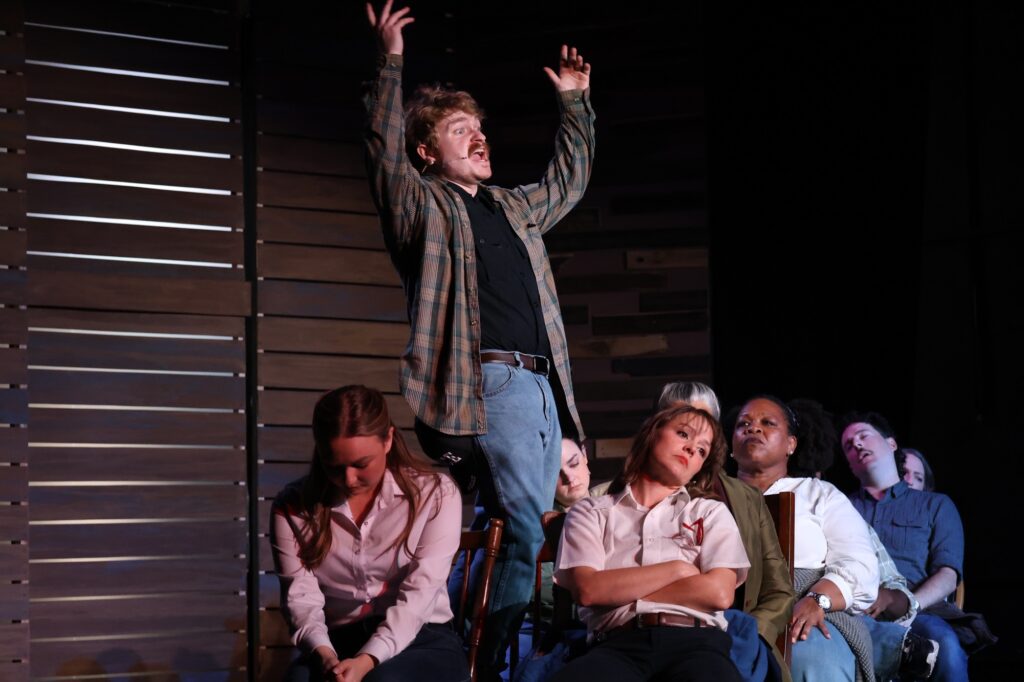
With an obvious nod to the original Broadway run’s scenic design by Beowulf Boritt, for The Keeton’s production, Kevin Driver and his scenic team (Abby Waddoups, Donna Driver, Aras Alexander, Eric Bradley and Crystal Liles) construct a seemingly simple but successful set. The backdrop, a stripped-down horizontal slat wall that beautifully plays with Jesse Watts’ lighting design. Also reminiscent of the original set design, Keeton’s stage is flanked on either side by tall, thin but sturdy trees that extend out of sight above the action. Driver and company nicely represent the play’s locale with the added touch of downstage rock formations, giving just a hint of a rocky-shored island vibe. No need for elaborate set pieces or projections representing the various scene locations. Throughout the action of the piece, a chair can represent a seat on a plane, a place at a table, a passenger waiting for answers or simply another piece of the constantly shifting landscape. To that end, the choreography by Mckenna Driver works hand-in-hand with that concept, keeping the ensemble in perpetual motion and allowing the story to move with the same speed and urgency as the characters’ rapidly changing circumstances. Here, chairs become airplanes one moment, a bus headed to parts unknown the next, and then a crowded airport filled with weary strangers who somehow become fast friends. If you read my column with any regularity, you know I love a bit of chairography (blame Sweet Charity’s Shirley MacLaine or Janet Jackson if you want) and in Come From Away, chairography—a wonderfully inventive use of the simplest theatrical object to create an entire world—is key.
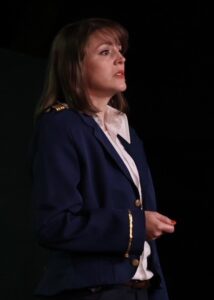
There may be twelve cast members, but the way Come From Away is presented, each cast member plays at least two roles: those of the displaced passengers and crew of the diverted planes and the townspeople of Gander, Newfoundland. At the center of the ensemble is Melissa Silengo, whose performance as Beverly Bass is nothing short of a powerhouse. Silengo brings an impressive combination of authority, vulnerability and warmth to the role of the pioneering female pilot. Her rendition of “Me and the Sky” is one of the production’s defining moments, taking Beverly from a young girl captivated by the possibility of flight through the challenges of becoming a pilot and ultimately into the extraordinary circumstances that put her leadership to the test. Silengo never plays Beverly simply as a heroic figure; she gives her humanity, making the character’s determination all the more affecting.
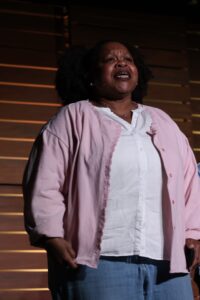
As for the passengers, Yolanda Treece’s Hannah, is equally heartbreaking. Her story, particularly as she waits desperately for word about her son, gives the production some of its most emotionally devastating moments. Treece allows Hannah’s grief to unfold with restraint rather than melodrama, making the quiet moments every bit as powerful as the big ones. When the characters gather in prayer, the scene becomes a poignant reminder that despite differences in religion, nationality and circumstance, there are some fears and hopes that belong to all of us.
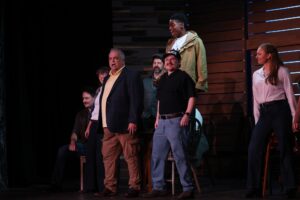
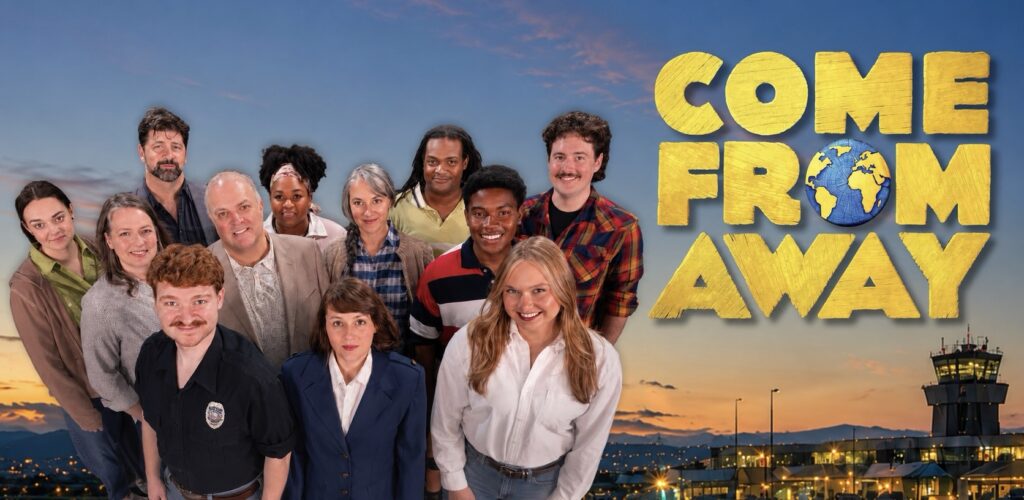
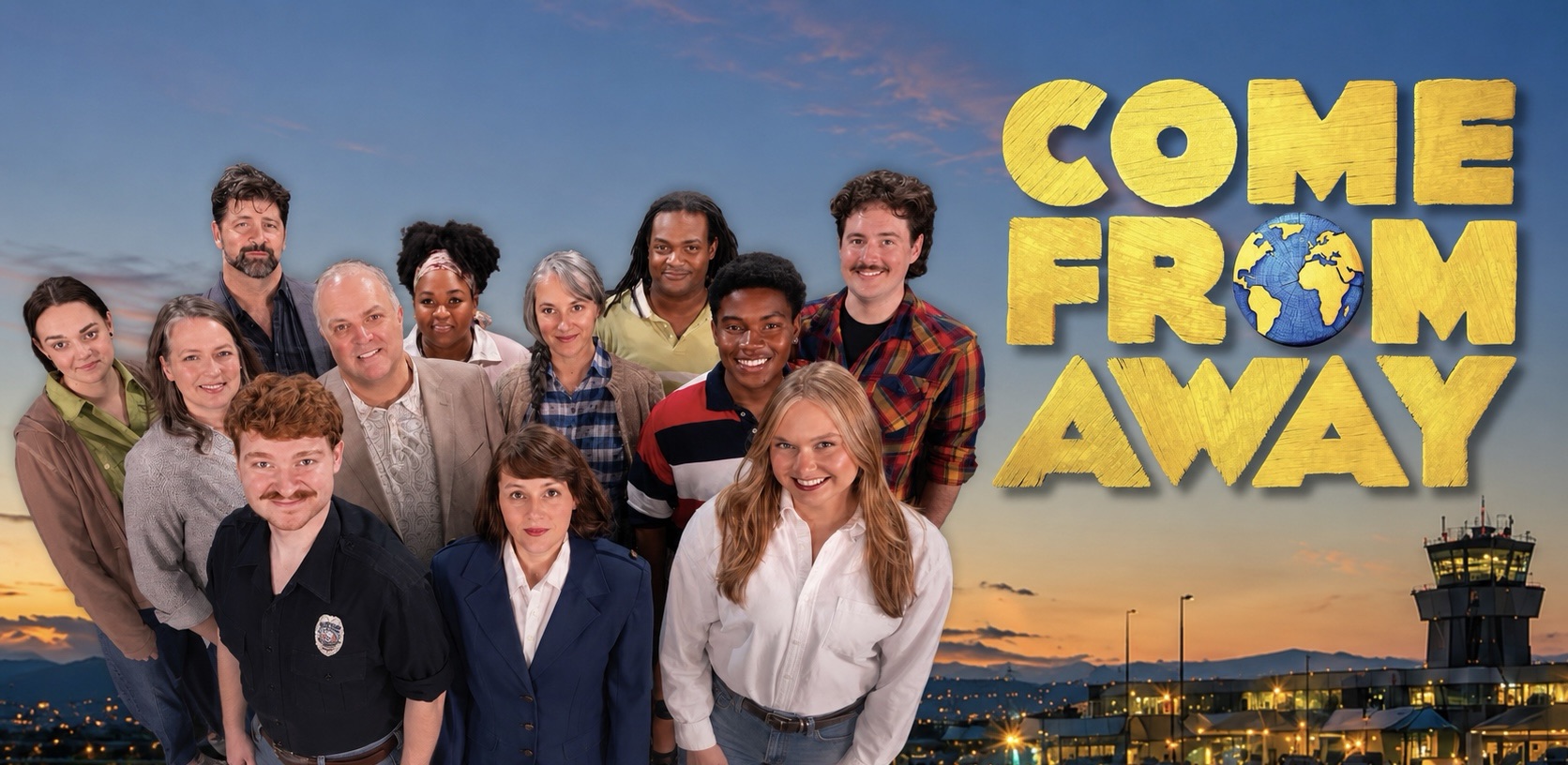
Then there are the Kevins. Justin Tinker as Kevin J. and Jason Scott as Kevin T. provide some of the production’s most welcome humor while never losing sight of the humanity underneath it. Their relationship gives the audience permission to laugh amid the heavier material, and the chemistry between the two actors makes their banter particularly enjoyable. Their scenes are a reminder that even during extraordinary circumstances, people are still people—and sometimes humor is exactly how we survive the unbearable. Tinker gives Kevin J. a wonderfully complicated edge, while Scott brings Kevin T. an appealing warmth. Together, “the Kevins” are one of the production’s comedic bright spots. 

Another unexpected delight is the developing relationship between Ben Gregory’s Nick and Ashlie Welte-Lopez’s Diane. What begins almost as an accidental connection between two people caught in an extraordinary situation gradually becomes something genuinely sweet. Their relationship never feels forced; instead, it grows naturally out of conversation, curiosity and the simple comfort of having someone beside you when you suddenly find yourself very far from home. Gregory and Welte-Lopez find the tenderness in those moments, giving the audience one more reason to smile.

The rest of the ensemble fills Gander with an infectious sense of personality. Brian Best’s Claude, the Mayor of Gander, reveals grace and a bit of befuddlement under pressure (what’s up with those cargo pants though?). Stephanie Jackson’s Beulah is the take charge Gander resident who keeps things moving in a time of crisis, while finding time to slow down and offer friendship, in particular to Treece’s Hanna. Leslie King’s Bonnie shows that empathy extends beyond the people affected by tragedy. Her scene with unseen animals in the cargo holds end up being some of the show’s most emotionally charged moments. Jack Joiner’s Oz, the constable and other minor roles provide more humor and heart. Jayden Murphy’s Bob, a young man who’s uncertain about “collecting bbq grills’ from Gander residents’ yards to help feed the masses provides a bit of humor, but also examines prejudices. Claire Yancey’s Janice, newbie local reporter who’s thrown into the spotlight on her first day on the job, adds another layer of self-doubt were crisis is concerned. Each ensemble member, regardless of their role, contributes distinct—at times humorous and through-provoking pieces—to the community that ultimately becomes the emotional center of the story.

As the story unfolds and the actors switch from townsfolk to displaced temporary Ganderites and back again…multiple times, there comes an unexpected pleasure in watching the ensemble shift from one character to another. One actor may be a passenger in one scene and a Gander resident in the next, with a change of posture, voice, costume piece or simply a new chair position doing the work. It is an enormous theatrical challenge, and this cast embraces it, and carries it out with everything they’ve got.

From the all-in half narrative/half sung-through opening number, “Welcome to The Rock”—to the production’s lighter moments, whether the passengers discovering the peculiarities of Newfoundland life, the infamous “Screech-In”, or the increasingly chaotic attempts to accommodate thousands of unexpected guests, there are genuinely funny moments—without ever making light of the circumstances surrounding them.

And then there are the moments when the laughter suddenly stops. The production’s treatment of the passengers watching the news footage for the first time is devastating precisely because it doesn’t need to overplay the moment. Staged somberly by director Walsworth, the passengers face the audience looking just above them, watching unseen tv screens. The audience doesn’t need to hear audio or see a video loop of the harrowing moments American Airlines Flight 11 and United Airlines 175 crashed into the Twin Towers to know what these characters are seeing. Those of us old enough to remember, know what they don’t yet know. The silence carries the weight and the resulting tears that streamed down my face as I watched this scene during the show’s opening night prove we truly will never forget.

That emotional balance is one of the most difficult things about Come From Away, and The Keeton largely gets it right. The show can move from laughter to tears and back again without feeling manipulative because the characters have been allowed to become real people rather than symbols.

Walsworth’s direction keeps that humanity front and center. Her staging trusts the material, the actors and the audience. Trey Lundquist’s music direction is equally essential, giving the production the vocal drive required by a score that rarely sits still. The music propels the story forward, while the ensemble sound helps create the feeling that this is one giant story being told by many voices.

And ultimately, that is exactly what Come From Away is. It is a story about people. People who were scared. People who were grieving. People who were annoyed, confused, exhausted and occasionally overwhelmed. But also people who opened their doors. People who cooked meals. People who provided beds. People who drove strangers around town. People who listened. People who laughed together. People who, for a brief moment, stopped being strangers.

The Keeton’s Come From Away understands that the show’s greatest spectacle isn’t in constructing a realistic aircraft cabin. It’s not in unnecessarily perfect choreography or even the remarkable feat of telling dozens of stories with a relatively small ensemble. It’s the kindness. In a time when it can be easy to become cynical about humanity, Come From Away offers something refreshingly simple: proof that we still possess the capacity to care for one another.

The Keeton’s Come From Away is an affecting, spirited and beautifully assembled production that takes flight because its talented ensemble never loses sight of the human beings at the heart of this extraordinary story. With Susan Walsworth’s assured direction, Trey Lundquist’s vibrant musical leadership, Mckenna Driver’s understood simple movement and a cast that seamlessly transforms chairs into planes, buses, airports and gathering places as effectively as they bring their characters to life, this is a production that reminds us that even in our darkest moments, there are still reasons to believe in each other. A beautiful reminder that sometimes the most powerful stories aren’t about what happened. They’re about what happened afterward.

The Keeton‘s Come From Away continues thru Sunday, August 30. CLICK HERE for tickets. For Friday and Saturday performances, doors are at 5:45pm with dinner service until 6:45 and show beginning at 7pm. Thursdays are show only with doors at 6:30pm and show at 7pm. For Sunday matinees, doors open at 12:45pm with meal service until 1:45pm and showtime at 2pm.

Next up following Come From Away, The Keeton presents John Patrick‘s wickedly funny mid-century comedy The Curious Savage on stage October 9-25. So you don’t miss out on upcoming shows at The Keeton Dinner Theatre, follow them on Facebook, X and Instagram.

Interested in coverage for your latest entertaining endeavor? Click the contact page and drop me a note. You can also follow JHP Entertainment on Instagram and Facebook. In the meantime, #GoSeeTheShow!

Filed Under: Entertainment, Theare, Theatre Review Tagged With: 2026, Come From Away, The Keeton, The Larry Keeton Dinner Theatre, Theatre Review

BEFORE THE KEETON’S ‘COME FROM AWAY’ TAKES FLIGHT, A PRE-BOARDING RAPID FIRE 20Q

August 13, 2026 by Jonathan

The Keeton’s upcoming production of Come From Away (on stage August 14-30) brings the extraordinary true story of the 7,000 passengers who found themselves stranded in Gander, Newfoundland, following the events of September 11, 2001, to the stage in a celebration of compassion, community, resilience and kindness. For this JHPEntertainment Rapid Fire 20Q, we go behind the scenes with director Susan Walsworth and three members of the cast,–Melissa Silengo, Justin Tinker and Jason Scott–as they talk about returning to The Keeton, bringing real-life people to the stage, the unique challenges of Come From Away, aviation, friendship, finding the heart of a character and, ultimately, why this story continues to resonate.

———-

RAPID FIRE 20Q WITH CAST MEMBERS AND DIRECTOR OF THE KEETON’s COME FROM AWAY

RAPID FIRE WITH COME FROM AWAY‘s BEVERLY, MELISSA SILENGO

JHPENTERTAINMENT: You’ve played everything from Maria in The Sound of Music to Sister Mary Amnesia in Nunsense. What excited you most about taking on Beverly, Annette, and your other roles in Come From Away?

MELISSA SILENGO: I generally enjoy playing characters who are based on real-life people, so I was especially excited to take on multiple real-life people in this show. Beverly Bass is an inspiring woman who made her way in a man’s world with dedication and her love of flying. Annette is an amalgamation of multiple real-life people, so I have enjoyed the freedom to make her my own and lean into the character description of her as “a school teacher… with an active fantasy life.” The range of characters that each actor plays is one of the things that makes this show such a joy to interpret and to watch.

JHPENTERTAINMENT: After taking a few years away from the stage, what made this the perfect production to return with?

MELISSA SILENGO: The beautiful story and characters made this a great come-back production for me. The way the show is written makes it a challenge for everyone involved, and I have truly enjoyed dusting off many old skills and tricks of the trade to find my way through this process. The ensemble nature of the production and the people in our amazing cast and team have made this a very meaningful experience for me, and I am so thankful to be back in theatre.

JHPENTERTAINMENT: As you mentioned, Beverly is based on a real person. Her story is both inspiring and heartbreaking. What has it meant to step into her shoes?

MELISSA SILENGO: Stepping into the shoes of Beverly Bass is a huge honor and responsibility. I hope she would agree that her role in the events surrounding September 11th in Gander, Newfoundland was to provide some reassurance for her passengers in a time of complete uncertainty. Her strength, clarity of purpose, passion for aviation, communication skills, and earnest concern for her passengers made her the perfect pilot to handle this type of emergency situation. I hope I can convey at least some of those qualities and give her story the respect it deserves.

JHPENTERTAINMENT: You’ve performed at several theaters across Middle Tennessee. What keeps bringing you back to The Keeton?

MELISSA SILENGO: The Keeton feels like my home theater, partly because it is close to my house, so that keeps me coming back. I am glad that people I have worked with over the years, like Donna and Kevin Driver, are still there continuing to keep the theater going. And one perk of doing shows at the Keeton is rehearsing on the same stage where you will perform. I have learned a lot performing at the Keeton over the years, and it feels nice to be back.

JHPENTERTAINMENT: If someone has never seen Come From Away, what’s the one thing you’d tell them before the lights go down?

MELISSA SILENGO: Can I say two things? Come From Away is a telling of multiple stories at once, so be prepared for the actors to change characters quickly and frequently. But more importantly, be prepared to remember your own experience of 9/11 and connect it with the story of a small town community caring for people from around the world in a show of true human spirit.

RAPID FIRE WITH COME FROM AWAY‘s KEVIN T., JASON SCOTT

JHPENTERTAINMENT: I understand that since your last Keeton production, you’ve become a flight instructor. Has that unique perspective made working on this show even more personal?

JASON SCOTT: Absolutely! This show is a perfect marriage of two of my biggest passions, and I couldn’t have asked for a better production to bring me back to the stage.

JHPENTERTAINMENT: Kevin T. experiences one of the musical’s most moving emotional journeys. What have you discovered about him (and yourself) during rehearsals?

JASON SCOTT: It has been so interesting to play with the relative joy that Kevin tries to maintain even in the midst of such a tragic event. He refused to let the sadness consume him, and I’ve definitely found inspiration for myself in his story.

JHPENTERTAINMENT: Between theater and aviation, storytelling and flying both require trust. Have you found any other surprising similarities between the two?

JASON SCOTT: I have long felt that my theatrical background was so useful in learning how to fly. There’s a lot of memorization involved, the ability to “improv” and react to things quickly, the ability to do the same sequence of “steps” on repeat, and so much more.

JHPENTERTAINMENT: Is there a particular musical number or scene that really resonates with you, whether your’s or one you witness by way of your fellow cast mates?

JASON SCOTT: Well I think the obvious answer is “Me and the Sky”, so I’m going to add a second one. I truly think one of the moments that will resonates with me, and with most people who were around when it happened, is seeing all the plane people witness the footage for the first time. I can’t help but imagine my own experience on that day and seeing and hearing about what happened for the first time myself.

JHPENTERTAINMENT: I’m about to chat with Justin Tinker who plays your Kevin’s other half. Describe sharing the stage with Justin in three words…

JASON SCOTT: Safe, Emotional, FUN

RAPID FIRE WITH COME FROM AWAY’s KEVIN J., JUSTIN TINKER
JHPENTERTAINMENT: You’re portraying both Kevin J. and Ali, two characters whose stories couldn’t be more different. What has been the biggest challenge of bringing both of them to life?

JUSTIN TINKER:  This is a great question. Of the two characters, I feel more personally connected to Kevin J. I think we share a similar sense of humor and sass, but my biggest challenge has been finding his heart. At first glance, many of his lines can come across as snappy or arrogant. But I keep reminding myself that Kevin T wouldn’t have been with Kevin J for five years if that was all there was to him. That has led me to ask, “What made Kevin T fall in love with Kevin J?” Finding the answer to that question has helped me approach him with more empathy and complexity.

Ali has been a very different experience because, in many ways, he is nothing like me. My goal has been to honor his culture while still bringing my own truth to the role. Since I’m not Egyptian, I was initially most concerned about getting the accent right. But beyond that, I realized I could connect to Ali through my own experiences. As a Black man in America, I’ve experienced moments where I’ve felt judged or treated as an outsider, and that emotional truth has helped me better understand Ali’s journey.

JHPENTERTAINMENT: Aside from the multiple roles, How has this show challenged you in new ways?

JUSTIN TINKER: Being born on September 12, 2001, I don’t have any personal memories of 9/11, so I couldn’t draw from my own experience. That made finding an emotional connection to the story a challenge at first. Instead, I leaned on the real stories of the people who lived through it (my parents and most of my cast mate)and connected to the show’s universal themes of compassion, resilience, and community. This production has also been a vocal beast for me. Once we started doing full runs, it became a mental challenge to stay present in each moment while also thinking five steps ahead because of all the moving parts. Throughout the process, though, I’ve continued to surprise myself. I’ve always felt most confident in my dancing and acting, but this show has challenged me to grow as a vocalist. It’s helped me realize that singing is a strength of mine as well. I’m especially grateful to our director, Susan Walsworth, and our music director, Trey Lundquist, for believing in me and giving me the confidence to grow. Thanks to their guidance, I’ve discovered a new level of confidence in my voice, and I’m incredibly thankful for the opportunity.

JHPENTERTAINMENT: Come From Away is known for its demanding dialects and lightning-fast character changes. Which aspect has required the most preparation?

JUSTIN TINKER: Oh it’s definitely the lighting fast character changes. I’m constantly checking the script to make sure I know where I am and who I’m playing at every moment. For the first time, I even created a track sheet (a spreadsheet that maps out every character I play, along with my costume changes and scene transitions). Because I switch between multiple characters, sometimes only a few lines apart, staying organized has become essential to keeping up with the pace of the show.

JHPENTERTAINMENT: Has there been a rehearsal moment that reminded you why this musical has resonated with audiences around the world?

JUSTIN TINKER: One moment that really stands out to me was our first full read-through after learning all of the music. I remember Trey telling us that even though the show wasn’t on its feet yet and our faces would probably be buried in our scripts, we should still be able to hear the emotion in the storytelling. As we performed the entire show for the first time, it felt like a light bulb went off. I remember thinking, “Oh yeah, we have the right people to tell this story.” Even without the staging, costumes, or choreography, the heart of the show was already there, and that was a really special moment to witness.

JHPENTERTAINMENT: Finish this sentence: Audiences will leave Come From Away feeling __________.

JUSTIN TINKER: how important community is.

RAPID FIRE WITH COME FROM AWAY DIRECTOR SUSAN WALSWORTH

JHPENTERTAINMENT: Come From Away has become one of the most beloved musicals of the last decade. How did you come to be directing it for The Keeton?

SUSAN WALSWORTH: It is an amazing story and Donna knew that my son Sevon was in it last summer and that I was very familiar with the show so when she asked me, I jumped at the chance.

JHPENTERTAINMENT: You’ve both directed and performed on The Keeton stage over the years. How has your experience as an actor shaped the way you approach directing?

SUSAN WALSWORTH: I believe that being an actor before becoming a director gives me a better perspective of things that work, and also things that don’t; That includes using the uniqueness of the Keeton stage, my rehearsal process, and communication with my cast.

JHPENTERTAINMENT: The creators of Come From Away often say the show isn’t a 9/11 musical, but rather a 9/12 musical Do you agree with that assessment? If so, why (or why not)?

SUSAN WALSWORTH: I both agree and disagree, yes it is about the stories of the people of Gander and the plane people the days following 9/11 but we wouldn’t have these stories to tell if the horrible attacks hadn’t happened that day.

JHPENTERTAINMENT: Come From Away relies on a seamless blend of storytelling and music. What’s it been like collaborating with music director Trey Lundquist to bring this incredible score to life?

SUSAN WALSWORTH: I met Trey during our first production meeting for the show and quickly realized that we both had the same vision for bringing this show to the stage. The vocals in the show are dynamic and have to tell the story and Trey has done an amazing job making this stellar cast sound absolutely incredible! Trey and I have developed a great working relationship and will remain friends once this process is complete. I hope I get to work with him again in the future.

JHPENTERTAINMENT: What do you hope audiences are still thinking about on the drive home after experiencing this production?

SUSAN WALSWORTH: I hope audiences walk away with the kindness in their hearts and feeling uplifted that there is hope for a brighter future even during a time of darkness.

———-

Alongside Melissa Silengo, Jason Scott and Justin Tinker, the cast of The Keeton‘s Come From Away is made of a who’s who of area talent including Brian Best, Leslie King, Stephanie Jackson, Jack Joiner, Ben Gregory, Ashlie Welte-Lopez, Clair Yancey, Jayden Murphy, Yolanda Treece and Tyler Samuel. The Show’s production team, helmed by director Susan Walsworth, includes music director Trey Lundquist, choreographer McKenna Driver and stage manager Kaleigh Ruiz.

The Keeton being the area’s only dinner theatre, there’s always a dinner option accompanying the show. For Come From Away, the pre-show in-flight meal will feature a dinner salad, pulled pork barbecue sandwich (a pre-0rdered substitute of grilled salmon is available for a slight up-charge), red skin potato salad, a side of mixed veggies and lemon bar for dessert.

The Keeton‘s Come From Away marks the opening of the company’s 2026/2027 season with performances Friday, August 17 thru Sunday, August 30. CLICK HERE for tickets. For Friday and Saturday performances, doors are at 5:45pm with dinner service until 6:45 and show beginning at 7pm. Thursdays are show only with doors at 6:30pm and show at 7pm. For Sunday matinees, doors open at 12:45pm with meal service until 1:45pm and showtime at 2pm.

The Keeton‘s Come From Away is ultimately a story about what can happen when strangers choose to care for one another in the face of unimaginable circumstances. With a director and cast who have clearly connected deeply with that message, The Keeton’s production promises to offer Nashville audiences not only an unforgettable musical experience, but also a timely reminder of the power of community. That sounds like a pretty perfect reason to let Come From Away take you on its journey.

Next up following Come From Away, The Keeton presents John Patrick‘s wickedly funny mid-century comedy The Curious Savage on stage October 9-25. So you don’t miss out on upcoming shows at The Keeton Dinner Theatre, follow them on Facebook, X and Instagram.

Interested in coverage for your latest entertaining endeavor? Click the contact page and drop me a note. You can also follow JHP Entertainment on Instagram and Facebook. In the meantime, #GoSeeTheShow!


Filed Under: Entertainment, Rapid Fire 20 Q, Theare Tagged With: 2026, Interview, Nashville, Rapid Fire 20 Q, The Keeton, The Keeton Dinner Theatre

Copyright © 2026 · News Pro on Genesis Framework · WordPress · Log in