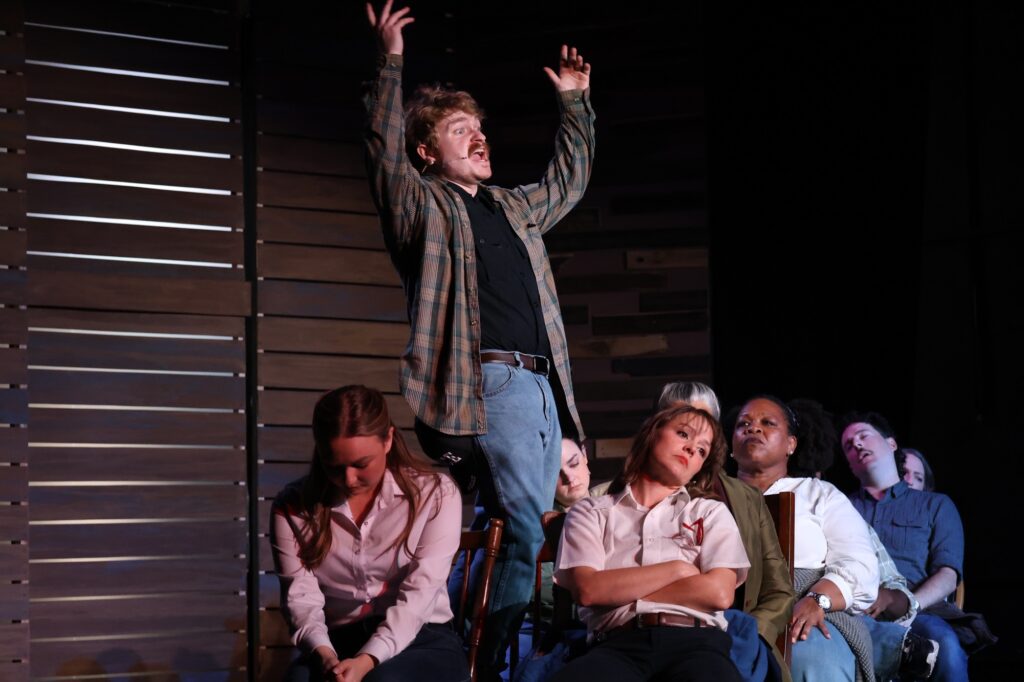
In a world that can sometimes feel painfully divided, The Keeton’s Come From Away arrives as a beautifully timed reminder that when everything else falls away, kindness can still bring us together. While Irene Sankoff and David Hein’s Come From Away score is effective in the moment, it’s not exactly one of those musicals filled with earworms audiences are likely to be singing or rushing out to download on their Broadway playlists. That said, there are moments in musical theatre when a production becomes more than the sum of its songs, characters and choreography. The Keeton’s Come From Away is one of those productions.
Set in the immediate aftermath of September 11, 2001, Come From Away tells the remarkable true story of the 38 planes diverted to Gander, Newfoundland, leaving thousands of passengers unexpectedly stranded in a small community. But rather than focusing on the tragedy itself, the musical turns its attention toward what happened next: strangers opening their homes, sharing what little they had, forming unlikely friendships and discovering that compassion can flourish even in the darkest circumstances.
Under the direction of Susan Walsworth, with musical direction by Trey Lundquist, choreography by Mckenna Driver and set design/tech director courtesy Kevin Driver, The Keeton’s production captures that spirit with an ensemble that understands the show’s greatest strength is its collective heartbeat. Each of these creative, and the cast, come together to present a cohesive piece that presents the technical elements in a minimalist way. Effective, but never overpowering or competing with the strengths of the story and those tasked with bringing it to emotionally charged life.
 With an obvious nod to the original Broadway run’s scenic design by Beowulf Boritt, for The Keeton’s production, Kevin Driver and his scenic team (Abby Waddoups, Donna Driver, Aras Alexander, Eric Bradley and Crystal Liles) construct a seemingly simple but successful set. The backdrop, a stripped-down horizontal slat wall that beautifully plays with Jesse Watts’ lighting design. Also reminiscent of the original set design, Keeton’s stage is flanked on either side by tall, thin but sturdy trees that extend out of sight above the action. Driver and company nicely represent the play’s locale with the added touch of downstage rock formations, giving just a hint of a rocky-shored island vibe. No need for elaborate set pieces or projections representing the various scene locations. Throughout the action of the piece, a chair can represent a seat on a plane, a place at a table, a passenger waiting for answers or simply another piece of the constantly shifting landscape. To that end, the choreography by Mckenna Driver works hand-in-hand with that concept, keeping the ensemble in perpetual motion and allowing the story to move with the same speed and urgency as the characters’ rapidly changing circumstances. Here, chairs become airplanes one moment, a bus headed to parts unknown the next, and then a crowded airport filled with weary strangers who somehow become fast friends. If you read my column with any regularity, you know I love a bit of chairography (blame Sweet Charity’s Shirley MacLaine or Janet Jackson if you want) and in Come From Away, chairography—a wonderfully inventive use of the simplest theatrical object to create an entire world—is key.
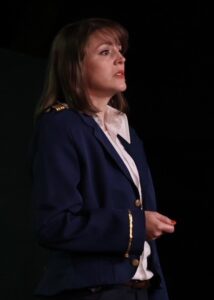 There may be twelve cast members, but the way Come From Away is presented, each cast member plays at least two roles: those of the displaced passengers and crew of the diverted planes and the townspeople of Gander, Newfoundland. At the center of the ensemble is Melissa Silengo, whose performance as Beverly Bass is nothing short of a powerhouse. Silengo brings an impressive combination of authority, vulnerability and warmth to the role of the pioneering female pilot. Her rendition of “Me and the Sky” is one of the production’s defining moments, taking Beverly from a young girl captivated by the possibility of flight through the challenges of becoming a pilot and ultimately into the extraordinary circumstances that put her leadership to the test. Silengo never plays Beverly simply as a heroic figure; she gives her humanity, making the character’s determination all the more affecting.
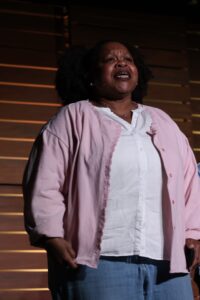 As for the passengers, Yolanda Treece’s Hannah, is equally heartbreaking. Her story, particularly as she waits desperately for word about her son, gives the production some of its most emotionally devastating moments. Treece allows Hannah’s grief to unfold with restraint rather than melodrama, making the quiet moments every bit as powerful as the big ones. When the characters gather in prayer, the scene becomes a poignant reminder that despite differences in religion, nationality and circumstance, there are some fears and hopes that belong to all of us.
Then there are the Kevins. Justin Tinker as Kevin J. and Jason Scott as Kevin T. provide some of the production’s most welcome humor while never losing sight of the humanity underneath it. Their relationship gives the audience permission to laugh amid the heavier material, and the chemistry between the two actors makes their banter particularly enjoyable. Their scenes are a reminder that even during extraordinary circumstances, people are still people—and sometimes humor is exactly how we survive the unbearable. Tinker gives Kevin J. a wonderfully complicated edge, while Scott brings Kevin T. an appealing warmth. Together, “the Kevins” are one of the production’s comedic bright spots.
Another unexpected delight is the developing relationship between Ben Gregory’s Nick and Ashlie Welte-Lopez’s Diane. What begins almost as an accidental connection between two people caught in an extraordinary situation gradually becomes something genuinely sweet. Their relationship never feels forced; instead, it grows naturally out of conversation, curiosity and the simple comfort of having someone beside you when you suddenly find yourself very far from home. Gregory and Welte-Lopez find the tenderness in those moments, giving the audience one more reason to smile.
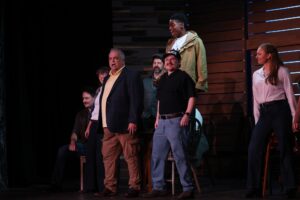
The rest of the ensemble fills Gander with an infectious sense of personality. Brian Best’s Claude, the Mayor of Gander, reveals grace and a bit of befuddlement under pressure (what’s up with those cargo pants though?). Stephanie Jackson’s Beulah is the take charge Gander resident who keeps things moving in a time of crisis, while finding time to slow down and offer friendship, in particular to Treece’s Hanna. Leslie King’s Bonnie shows that empathy extends beyond the people affected by tragedy. Her scene with unseen animals in the cargo holds end up being some of the show’s most emotionally charged moments. Jack Joiner’s Oz, the constable and other minor roles provide more humor and heart. Jayden Murphy’s Bob, a young man who’s uncertain about “collecting bbq grills’ from Gander residents’ yards to help feed the masses provides a bit of humor, but also examines prejudices. Claire Yancey’s Janice, newbie local reporter who’s thrown into the spotlight on her first day on the job, adds another layer of self-doubt were crisis is concerned. Each ensemble member, regardless of their role, contributes distinct—at times humorous and through-provoking pieces—to the community that ultimately becomes the emotional center of the story.
As the story unfolds and the actors switch from townsfolk to displaced temporary Ganderites and back again…multiple times, there comes an unexpected pleasure in watching the ensemble shift from one character to another. One actor may be a passenger in one scene and a Gander resident in the next, with a change of posture, voice, costume piece or simply a new chair position doing the work. It is an enormous theatrical challenge, and this cast embraces it, and carries it out with everything they’ve got.
From the all-in half narrative/half sung-through opening number, “Welcome to The Rock”—to the production’s lighter moments, whether the passengers discovering the peculiarities of Newfoundland life, the infamous “Screech-In”, or the increasingly chaotic attempts to accommodate thousands of unexpected guests, there are genuinely funny moments—without ever making light of the circumstances surrounding them.
And then there are the moments when the laughter suddenly stops. The production’s treatment of the passengers watching the news footage for the first time is devastating precisely because it doesn’t need to overplay the moment. Staged somberly by director Walsworth, the passengers face the audience looking just above them, watching unseen tv screens. The audience doesn’t need to hear audio or see a video loop of the harrowing moments American Airlines Flight 11 and United Airlines 175 crashed into the Twin Towers to know what these characters are seeing. Those of us old enough to remember, know what they don’t yet know. The silence carries the weight and the resulting tears that streamed down my face as I watched this scene during the show’s opening night prove we truly will never forget.
That emotional balance is one of the most difficult things about Come From Away, and The Keeton largely gets it right. The show can move from laughter to tears and back again without feeling manipulative because the characters have been allowed to become real people rather than symbols.
Walsworth’s direction keeps that humanity front and center. Her staging trusts the material, the actors and the audience. Trey Lundquist’s music direction is equally essential, giving the production the vocal drive required by a score that rarely sits still. The music propels the story forward, while the ensemble sound helps create the feeling that this is one giant story being told by many voices.
And ultimately, that is exactly what Come From Away is. It is a story about people. People who were scared. People who were grieving. People who were annoyed, confused, exhausted and occasionally overwhelmed. But also people who opened their doors. People who cooked meals. People who provided beds. People who drove strangers around town. People who listened. People who laughed together. People who, for a brief moment, stopped being strangers.
The Keeton’s Come From Away understands that the show’s greatest spectacle isn’t in constructing a realistic aircraft cabin. It’s not in unnecessarily perfect choreography or even the remarkable feat of telling dozens of stories with a relatively small ensemble. It’s the kindness. In a time when it can be easy to become cynical about humanity, Come From Away offers something refreshingly simple: proof that we still possess the capacity to care for one another.
The Keeton’s Come From Away is an affecting, spirited and beautifully assembled production that takes flight because its talented ensemble never loses sight of the human beings at the heart of this extraordinary story. With Susan Walsworth’s assured direction, Trey Lundquist’s vibrant musical leadership, Mckenna Driver’s understood simple movement and a cast that seamlessly transforms chairs into planes, buses, airports and gathering places as effectively as they bring their characters to life, this is a production that reminds us that even in our darkest moments, there are still reasons to believe in each other. A beautiful reminder that sometimes the most powerful stories aren’t about what happened. They’re about what happened afterward.
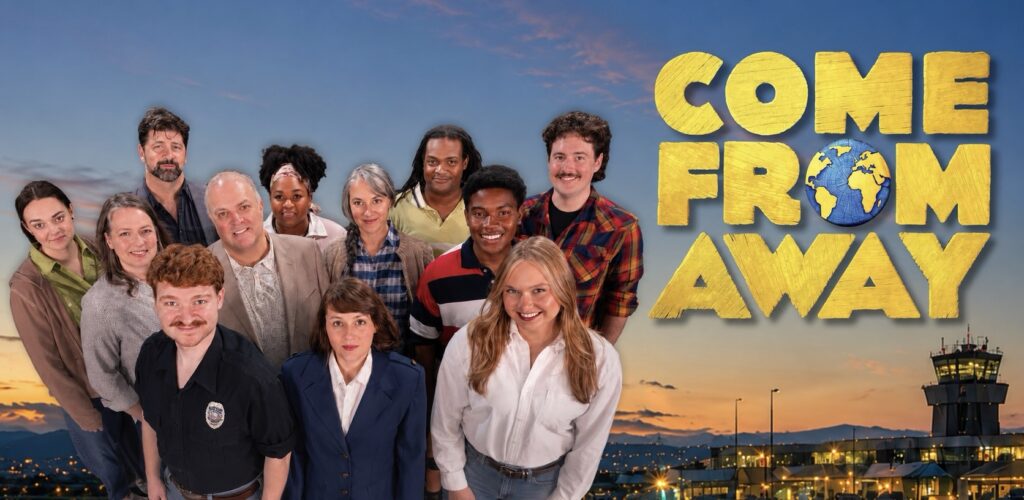
The Keeton‘s Come From Away continues thru Sunday, August 30. CLICK HERE for tickets. For Friday and Saturday performances, doors are at 5:45pm with dinner service until 6:45 and show beginning at 7pm. Thursdays are show only with doors at 6:30pm and show at 7pm. For Sunday matinees, doors open at 12:45pm with meal service until 1:45pm and showtime at 2pm.
Next up following Come From Away, The Keeton presents John Patrick‘s wickedly funny mid-century comedy The Curious Savage on stage October 9-25. So you don’t miss out on upcoming shows at The Keeton Dinner Theatre, follow them on Facebook, X and Instagram.
Interested in coverage for your latest entertaining endeavor? Click the contact page and drop me a note. You can also follow JHP Entertainment on Instagram and Facebook. In the meantime, #GoSeeTheShow!
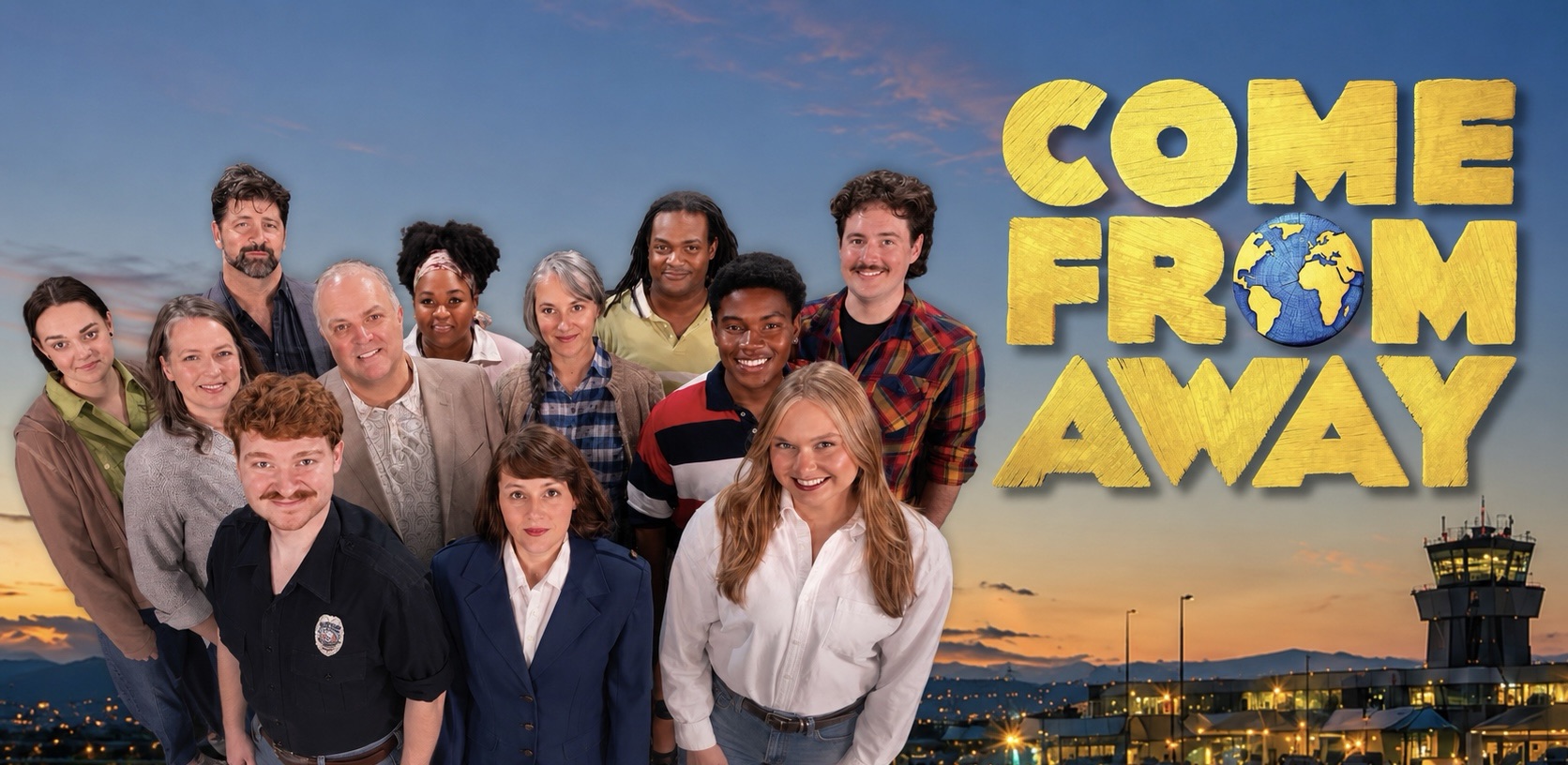
 RAPID FIRE WITH COME FROM AWAY’s KEVIN J., JUSTIN TINKER
 RAPID FIRE WITH COME FROM AWAY DIRECTOR SUSAN WALSWORTH
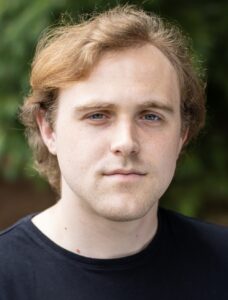
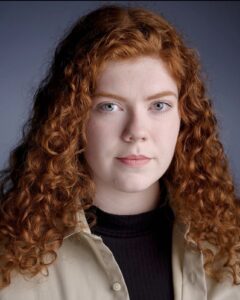
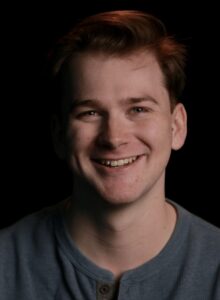

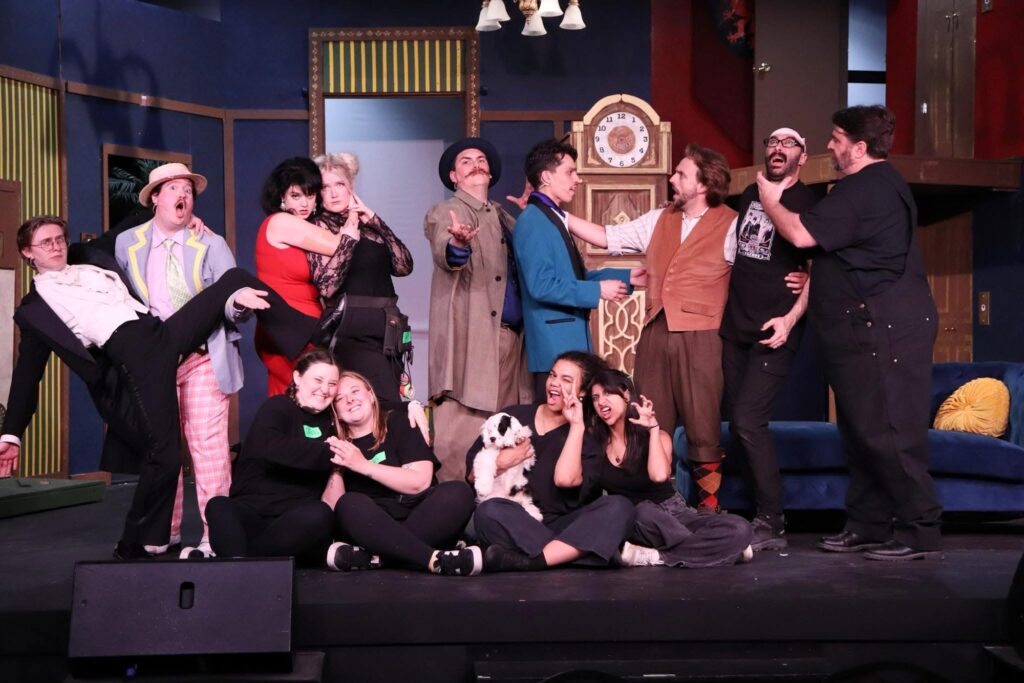
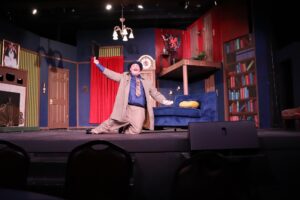 Leading this beautifully doomed endeavor is Joshua Mertz as Chris, the director/star/producer/everything-else of the show-within-the-show. Mertz plays Chris with just the right mix of puffed-up authority and slow-burn panic. As The Inspector within the mystery, watching him try to maintain control as things unravel faster than a cheap sweater is half the fun—and when he finally snaps, it’s worth the wait. Mertz, in his sixth show at The Keeton is proving himself to be a valuable asset the the company.
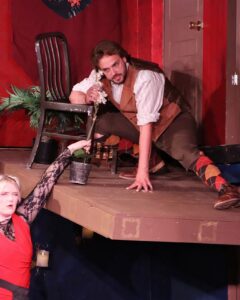 Aaron Gray’s Robert is the kind of community theatre actor who clearly believes he’s performing in Masterpiece Theatre, even as the world collapses around him. The fact that Gray is in or involved with nearly every Keeton production somehow added a if you know you know aspect to his role as Robert. As Thomas Collymoore, his dead-serious commitment in the face of utter nonsense makes every moment land harder, especially as the physical comedy ramps up and refuses to let him off easy. Kudos to his library scene. While the Keeton stage area does limit the intensity of the prospect of the second floor of the set completely collapsing, Gray’s physicality while keeping himself and all the props around his from falling away as the floor beneath him gives way, is gasping, belly-laughing joy to behold.
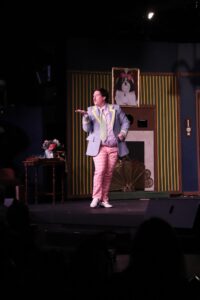 Keeton newcomer, Connor Boggs is tasked with the key role of Max. Initially cast in another role, Boggs stepped into the role of Max after the original actor had to drop out of the show. As Max and his mystery counterpart, Cecil, he figures out very early on that subtlety is overrated. Within the supposed seriousness of the murder mystery, for Cecil, once he gets a taste of audience laughter, it’s game over. He milks every moment for all it’s worth, turning even the smallest slip into a full-blown bit. That said, dressed in wardrobe that can only be described as a technicolor travesty—yes, the character is typically a bit of a dandy, but not quite so…flamboyant. Usually played as an overly confident community theatre actor with at least an initial modicum of subtlety, Bogg’s Cecil starts at 100mph and never slows down doing everything short of cartwheels from his stage entrance right on through to the final curtain. Under the direction of Bailey, Bogg’s Cecil is amped up and definitely played for laughs so much so that it runs the risk on a SNL skit that just doesn’t know when to
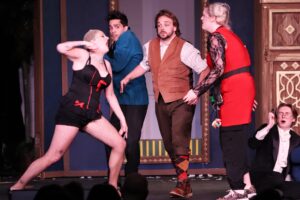 demanding physical comedy without ever dropping character. In one scene in particular, she’s pulled and flopped around by her cast mates as if her joins are made of bendy straws. Her physicality is slapstick at its best.
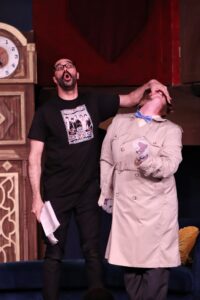 Wanderson Rezende’s Trevor Watson, stationed at the tech booth, proves that sometimes less is more. His distracted, couldn’t-care-less approach to running the show results in some of the night’s most perfectly timed “mistakes,” and when he’s finally dragged into the action, it’s awkward brilliance. And yes, Denese Rene’ Evans (the show’s costumer) I did indeed appreciate that Trevor is sporting a Duran Duran t-shirt!
 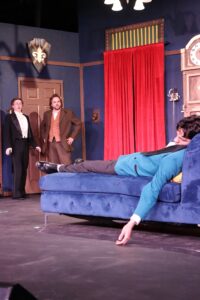 name, by the way), tasked with playing a corpse who…isn’t exactly great at the whole “lying still” thing. Fonville’s physical comedy—mistimed reactions, missed cues, and all—adds an extra layer of delightful absurdity to a role that could just be…well, dead.
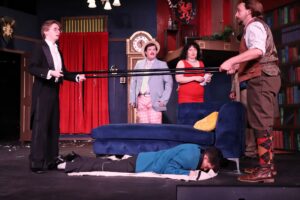 Bottom line, if you like your theatre polished, pristine, and predictable…this ain’t it. But if you’re in the mood to laugh until your face hurts while watching a cast absolutely commit to the bit—even as the set tries to take them out—The Play That Goes Wrong at The Keeton is exactly the kind of beautifully disastrous night out you’re looking for. Just don’t expect anything to go right, because…Where’s the fun in that?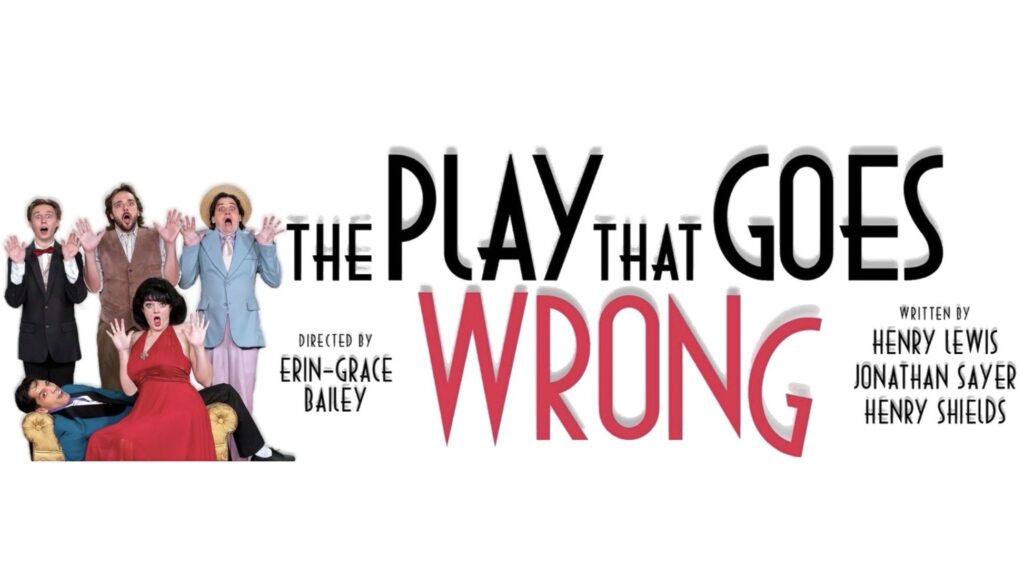
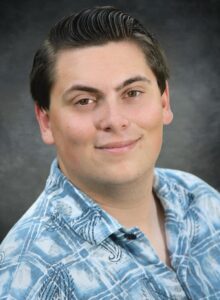 RAPID FIRE WITH THE PLAY THAT GOES WRONG’s JOSH MERTZ
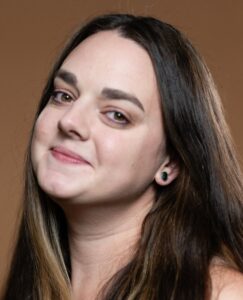 RAPID FIRE WITH THE PLAY THAT GOES WRONG’s LESLIE KING
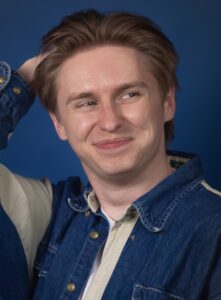 RAPID FIRE WITH THE PLAY THAT GOES WRONG’s HAZEN LAWSON
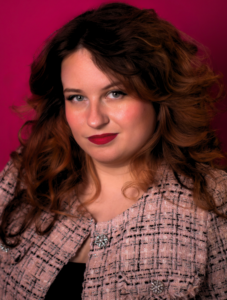 RAPID FIRE WITH THE PLAY THAT GOES WRONG’s DIRECTOR, ERIN-GRACE BAILEY
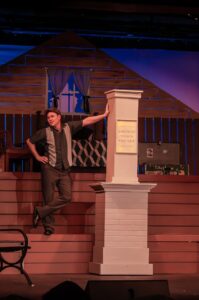 s Edward Bloom, Micheal Walley bursts onto the stage with charisma and conviction. From his first entrance, his speech pattern and delivery lands near Mark Twain’s distinctive Southern storytelling drawl — deliberate, charming, measured — and for some reason put me in mind of French Stewart’s Harry Solomon from “Third Rock from the Sun”, quick with an unexpected sarcastic bite. The blend gives Edward both homespun authenticity and razor-edged comedic timing, a balance that keeps the character from drifting into caricature. The subtle but effective vocal change between younger Edward to his more frail self in later years is quite interesting to take in.
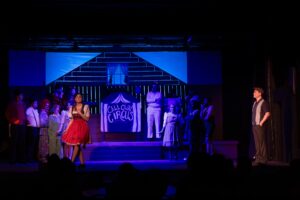 Choreographer Andrea Campbell, working in clear collaboration with director Aaron Gray, makes masterful use of The Keeton’s intimate stage. With a cast of twenty, filling the space without overwhelming it is no small feat, yet the production never once feels crowded. Instead, it feels alive. From kick lines to tap and everything in between, the variety of choreography reflects the musical’s tonal shifts while showcasing the ensemble’s versatility. One can only imagine the rigor of rehearsals required to master such range within spatial constraints, and the ensemble rises to the challenge with precision and enthusiasm. Director Gray deserves equal praise for staging that maximizes every inch of the performance area, creating dynamic stage pictures that feel expansive, an appropriate nod to the story’s 2003 cinematic retelling courtesy Tim Burton‘s film adaptation, despite the venue’s modest footprint.
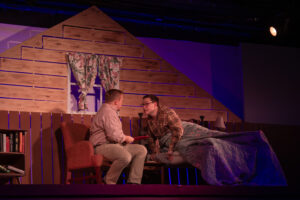 Jacob Hinnen as Edward’s adult son, delivers a fully believable, emotionally grounded portrayal of Will Bloom. Hinnen never pushes for sympathy; instead, he allows Will’s frustration and skepticism to emerge organically. The result is authenticity. As Will prepares to become a father himself, the shift in perspective is subtle yet powerful. You believe him — every step of the way.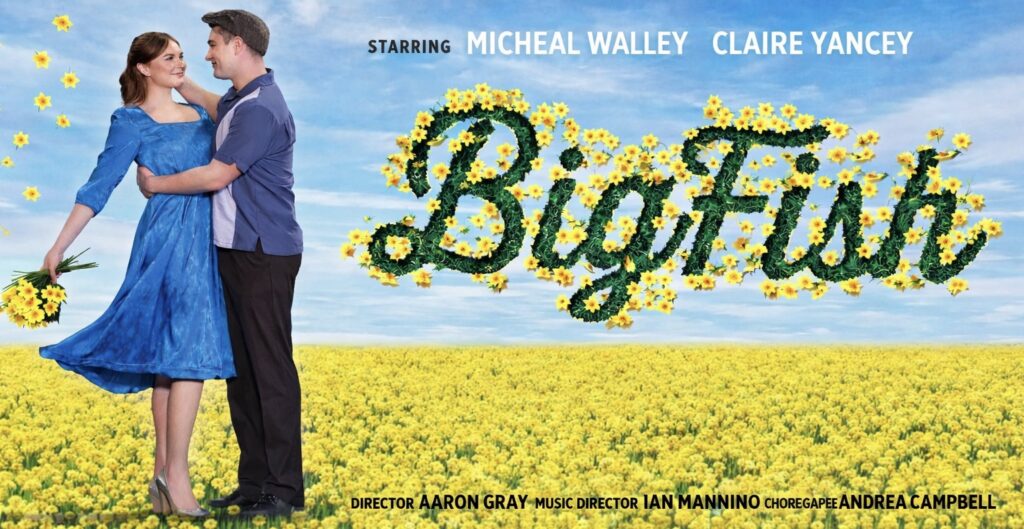
 RAPID FIRE WITH MICHAEL WALLEY, EDWARD BLOOM IN BIG FISH
 RAPID FIRE WITH CLAIRE YANCEY, SANDRA BLOOM IN BIG FISH
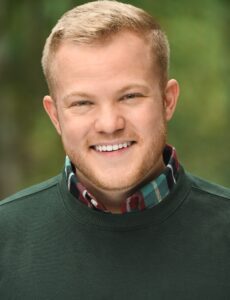 RAPID FIRE WITH JACOB HINNEN, WILL BLOOM IN BIG FISH
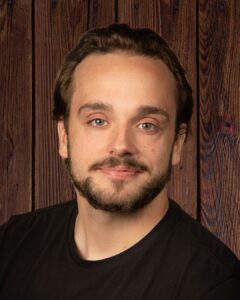 RAPID FIRE WITH AARON GRAY, DIRECTOR OF BIG FISH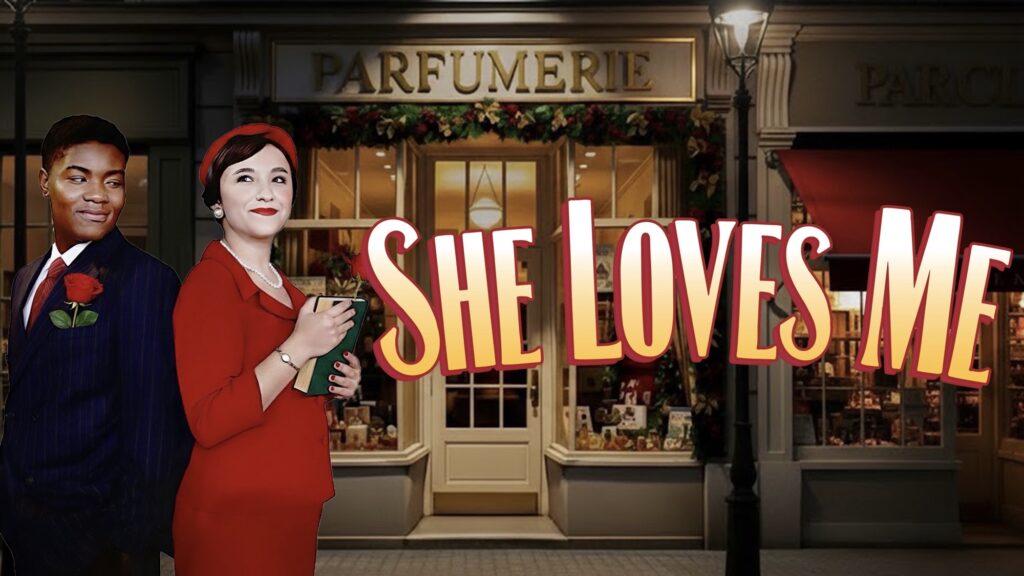
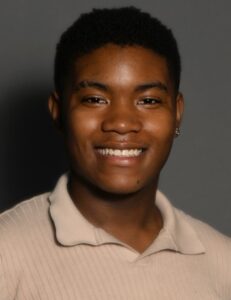
 RAPID FIRE WITH JIANA KEVILUS, AMALIA IN SHE LOVES ME
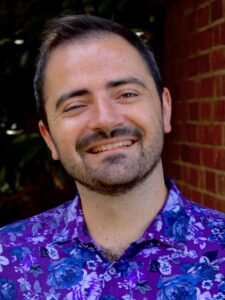 RAPID FIRE WITH TOMMY ANGLIM, KODALY IN SHE LOVES ME
 RAPID FIRE WITH KIMBERLY WOLFF, ILONA IN SHE LOVES ME
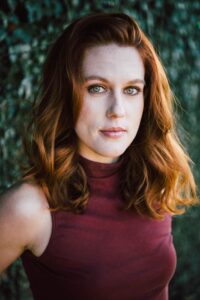 RAPID FIRE WITH SHE LOVES ME DIRECTOR, MORGAN ROBERTSON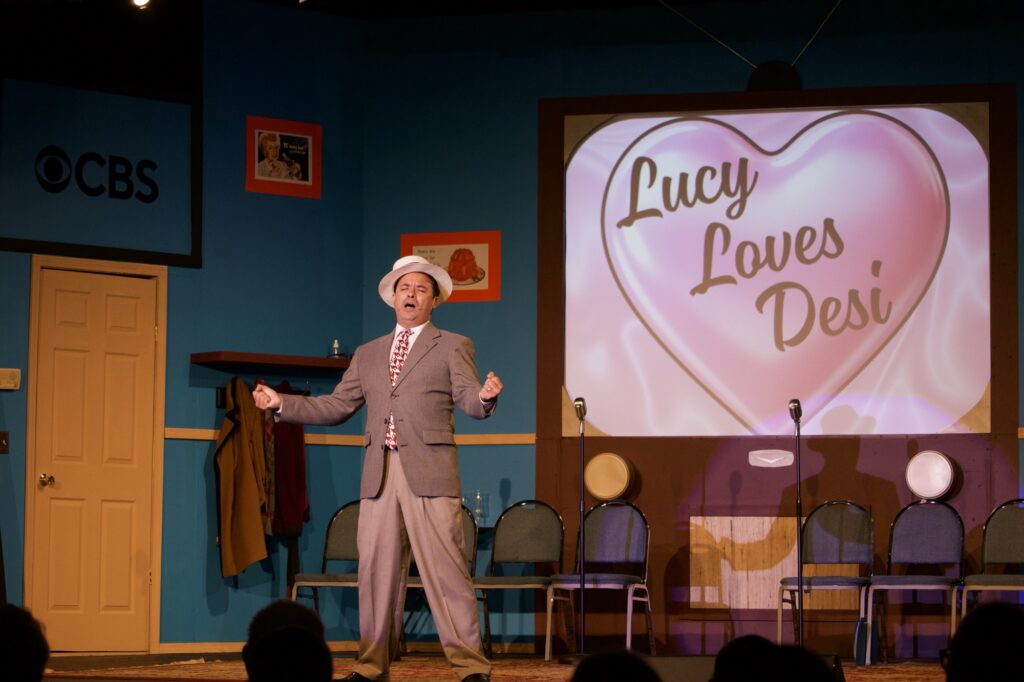
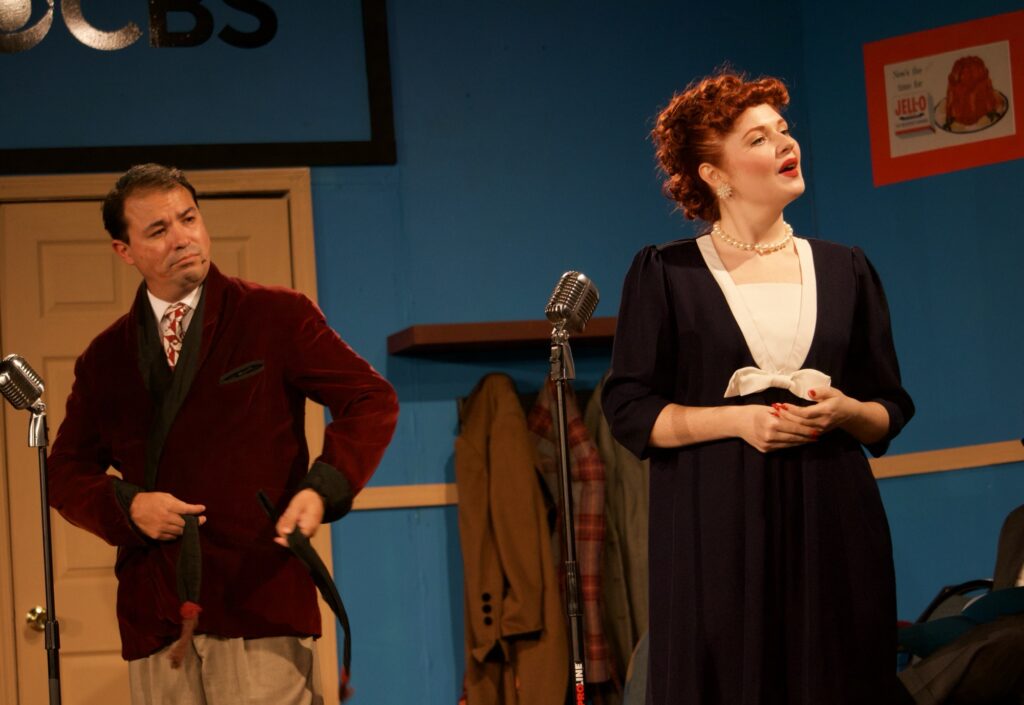
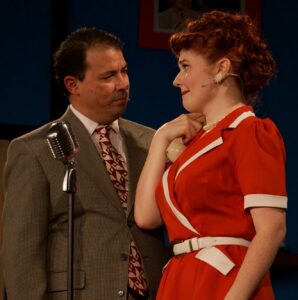
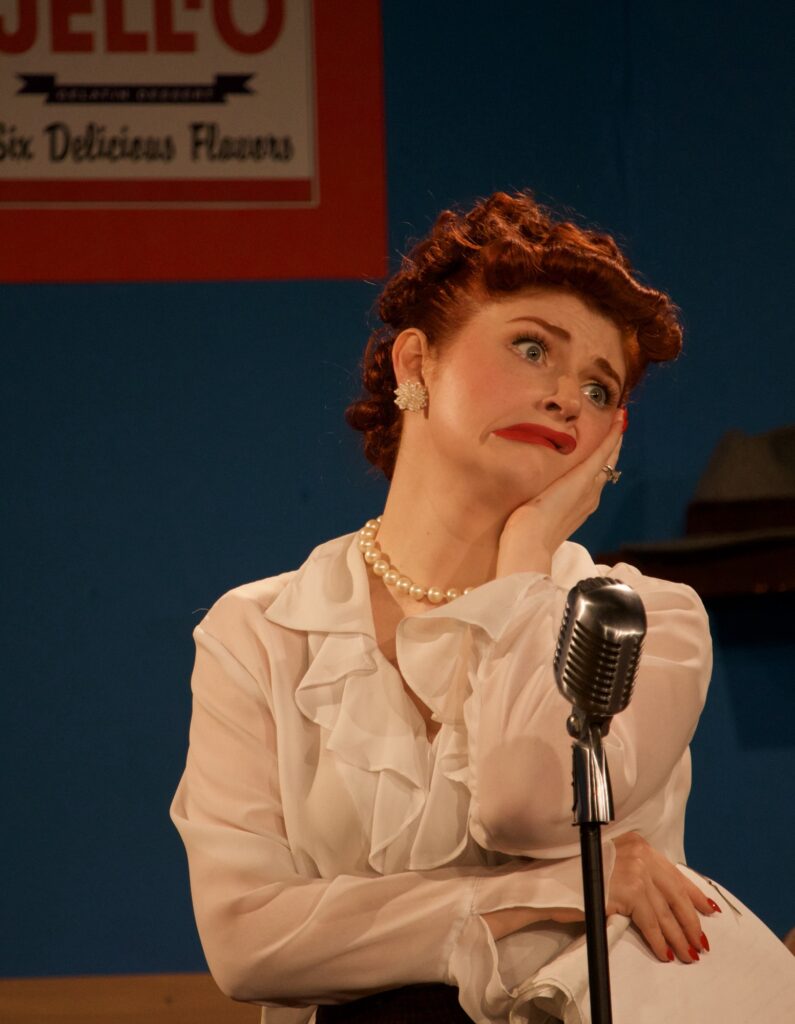 While none of the cast truly look like their real-life counterparts, it’s not an impersonator show in Las Vegas, after all, Grace Gaddy’s Lucille Ball is, when all is said and done, a loving tribute to the iconic comedian. From her expressive eyes and impeccable comic timing to the way she embodies Lucy’s signature blend of glamour and goofiness, Gaddy gives a performance that’s joyously alive. Her physicality and facial expressions elicit hearty laughter while paying true homage to one of television’s greatest icons. My only hesitation in a giving Gaddy’s Lucilly Ball a full five star review rests on the fact that Gaddy’s choice of voice isn’t quite there. Yes, Lucille Ball’s real-life voice was quite different from her quicker, higher-pitched Lucy Ricardo voice, but Gaddy, try as she may, never quite hits the mark vocally. Of course the average Keeton audience member will easily overlook this because of Gaddy’s otherwise full-force embodiment of the iconic comedic actress. It should be noted that Gaddy’s Lucy is at her best not only when recreating a few classic I Love Lucy moments–her lip-smacking, face-pulling expressions during a quick look at Vitameatavegamin is indeed near-perfection–but also during scenes that show the rarer more vulnerable moment of the woman behind the legendary laughs.
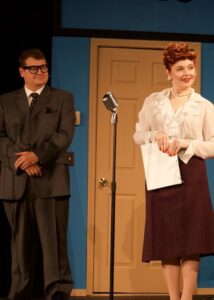 Even though he plays the man upon whose book this play is based, Michael Welch has the benefit of playing someone most people have never seen and whose physical appearance isn’t as easily recognized as the four stars of the groundbreaking sitcom. That anonymity works to Welch’s advantage as he simply shines as Jess Oppenheimer, serving as the grounding force amid the behind-the-scenes chaos. His balance of humor and sincerity keeps the story engaging and human. His scenes between Gaddy’s Lucy and Rainwater’s Desi truly exemplify Oppenheimer’s role as both close friend and trusted collaborator in the creating of one of the world’s most beloved sitcoms.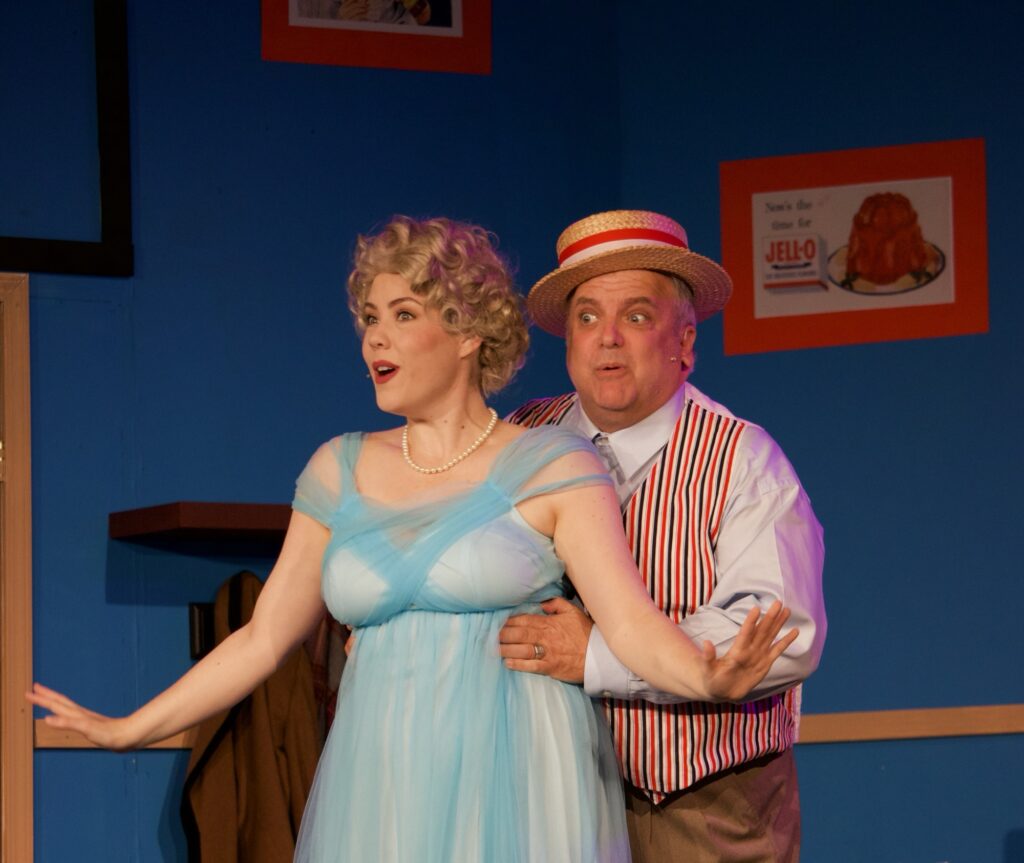
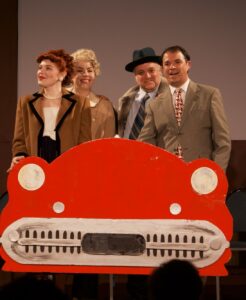 Musically, this expanded version of the show delights with nostalgic selections that evoke memories of classic I Love Lucy episodes, including I’ll See You in C-U-B-A, Friendship, California Here I Come, and the beloved I Love Lucy theme song, complete with a bit of a did you know who wrote it spoiler and Rainwater and Gaddy singing the rarely heard lyrics. Enhancing the musical score throughout, frequent Keeton musical director Roger Hutson’s piano recordings add a lighthearted, era-appropriate touch, while Steve Love’s sound design, Brooke Sanders’ lighting, wig design by Alison Gaddy (loosen up those wigs so they look more natural and like the real-life ladies they’re styled after) and Denese René Evans’ costumes work in harmony to transport the audience straight to midcentury Hollywood. Evans’ costumes throughout are quite fun and seemingly period authentic, I do wish that Lucille’s Emmy dress was accurate, through…again, I’m just being an overzealous Lucy fan.
 In spite of my above-reference initial hesitations and a strangely tepid Opening Night audience (Note: it’s ok to laugh out loud and to applaud after a particularly entertaining scene) and what could probably be chalked up to first night jitters from the cast resulting in the majority of Act 1’s delivery being a tad flat with several lines coming across as monotone with not real inflection and somewhat memorized, rather than convincingly felt and delivered with punch, those initial hesitations faded once the cast found their groove.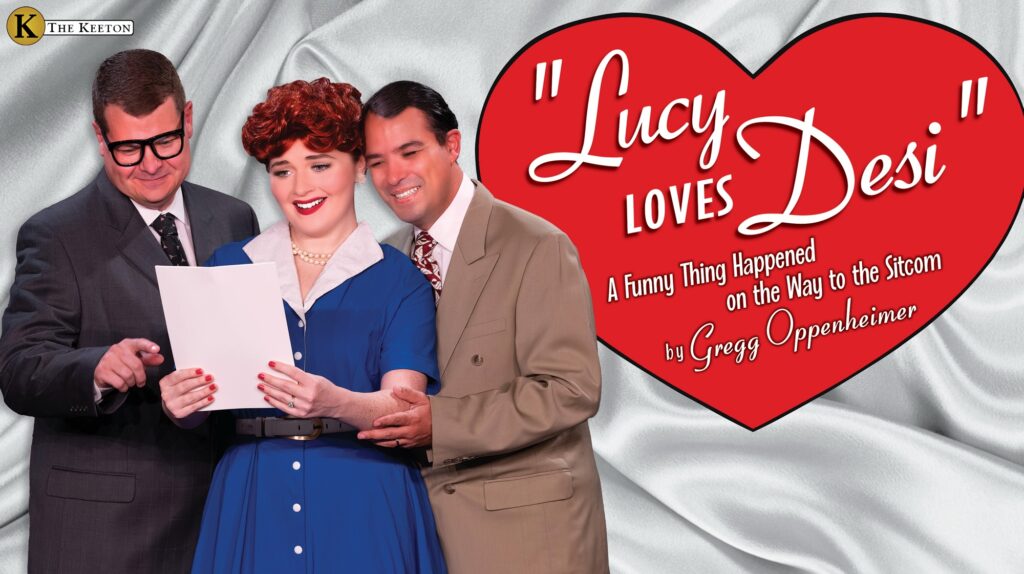
 RAPID FIRE WITH GRACE GADDY, LUCILLE BALL IN LUCY LOVES DESI
  RAPID FIRE WITH JASON RAINWATER, DESI ARNAZ IN LUCY LOVES DESI
  RAPID FIRE WITH CASSIDY DAVIS, VIVIAN VANCE IN LUCY LOVES DESI
  RAPID FIRE WITH BRIAN BEST, WILLIAM FRAWLEY IN LUCY LOVES DESI
  RAPID FIRE WITH MICHAEL WELCH, JESS OPPENHEIMER IN LUCY LOVES DESI