• Skip to primary navigation
  • Skip to main content
  • Home
  • About
  • Features
  • Contact

JHP Entertainment

Entertainment News, Reviews and Interviews

  • Home
  • About
  • Features
  • Contact

Archives for September 2026

Rock Ballads, Romance & The ’80s: Rapid Fire 20Q with the Cast of ‘Rock of Ages’; The Gift of Song production at Mills-Pate Arts Center Beginning October 2

September 29, 2026 by Jonathan Pinkerton

There’s nothing quite like a musical that can deliver power ballads, screaming guitar solos, enormous hair and enough ’80s excess to make a can of Aqua Net rethink its part in the ozone layer crisis. Rock of Ages IS just such a musical. The Gift of Song is bringing the totally awesome jukebox musical resplendent with classic 80s tunes by such arena rock legends as Journey, Styx, Poison, Europe and more to the stage at Mills-Pate Arts Center in Murfreesboro, with Leslie Berra directing and a cast ready to crank up the volume on some of the biggest rock anthems of the era.

Set on Los Angeles’ legendary Sunset Strip, Rock of Ages follows aspiring rocker Drew, wide-eyed newcomer Sherrie, Bourbon Room owner Dennis and Venus Club proprietor Justice as dreams, romance, friendship and the threat of change collide against a soundtrack packed with ’80s rock classics. In this JHPENTERTAINMENT Rapid Fire 20Q, Dylan Ellis, Allee Williams, Clint Randolph and Corrie Maxwell take us behind their characters, their musical moments, their ’80s inspirations and what it’s been like creating this production with Berra and the creative team. So turn up the volume, tease your hair to the max and let’s get ready to rock!


RAPID FIRE 20Q WITH THE CAST OF THE GIFT OF SONG’s ROCK OF AGES

RAPID FIRE WITH DYLAN ELLIS, DREW BOLEY IN ROCK OF AGES

JHPENTERTAINMENT: Drew arrives in Los Angeles determined to become a rock star. What do you think is driving him most at the beginning of the story—his love of music, the dream of fame, or simply the need to prove to himself that he can make it?

DYLAN ELLIS: I think Drew is a wide eyed dreamer who is surrounded by constant inspiration. He loves the music but also the rockstar image and lifestyle his heroes embody, and at the start of the story he’s just trying to carve his place in the legendary rock scene on the sunset strip.

JHPENTERTAINMENT: The world of Rock of Ages is unapologetically late ’80s. Since you’re an 00 baby, What’s been your greatest source of research as you’ve taken on this role?

DYLAN ELLIS: Even though I’m a 2000’s baby I grew up playing in bands and listening to classic rock especially from the 80’s. Much like Drew, my childhood heroes were all rockstars so stepping into this show felt very familiar and close to home. To prepare, I mostly just tapped into what I was like in high school.

JHPENTERTAINMENT: Drew gets some serious musical moments, among them, Twisted Sister’s “I Wanna Rock”, Bryan Adams’ “Heaven,” “Waiting for a Girl Like You” by Foreigner and of course Steve Perry’s “Oh Sherrie”. Is there one number you’re particularly excited—or nervous—to perform?

DYLAN ELLIS: I’m very excited to perform “Heaven” because I get to play guitar during that song, and also the blocking Leslie gave Allie and I for “Waiting For A Girl” has been so fun and hilarious. “High Enough”, one of my duets with Sherrie is very vocally taxing and daunting but nonetheless still very excited to perform it.

JHPENTERTAINMENT: Drew’s relationship with Sherrie goes through quite a roller coaster. What have you discovered about him through that relationship that you didn’t necessarily see when you first approached the character? AND…what’s it been like to develop that relationship on stage with your Sherrie, Allie Williams?

DYLAN ELLIS: Rock of Ages is a very funny and raunchy show but I think Sherrie and Drew’s relationship shows a more sentimental and emotional side of the musical. It helped me get a better idea of his inner thoughts and feelings. Working with Allie has been awesome, she’s such an excellent performer. Doing scenes with her have been great because she’s so into it and it’s easy to get into character with her.

JHPENTERTAINMENT: If there were ever a Rock of Ages sequel musical or update, Where might we find Drew in 2026 AND…What current tune might work well as Drew’s theme?

DYLAN ELLIS: I think Drew and Sherrie would have had more kids and I could see him owning one of those School Of Rock type of businesses that teaches kids music and puts them in bands. As far as current tunes, I think in the 90’s Drew went through a big brit-rock phase and with the Oasis reunion, he’s breaking out all of his old Oasis records again.

RAPID FIRE WITH ALLEE WILLIAMS, SHERRIE CHRISTIAN IN ROCK OF AGES

JHPENTERTAINMENT: Sherrie arrives in Hollywood with stars in her eyes and a dream of becoming an actress. What do you think audiences will find most relatable about her journey from wide-eyed newcomer to the woman she becomes by the end of the show?

ALLEE WILLIAMS: I think the audience will really relate to her zeal for new experiences in her dream city, as well as her tenacity to try new things and not give up. Sherrie goes through so many of the ups and downs we all have felt moving to a new city to pursue our dream careers, but in the end she is reminded that she is always on time, and everything works out exactly how its supposed to.

JHPENTERTAINMENT: If you could magically transport yourself back to one specific moment in the late ’80s, what would you want to experience firsthand?

ALLEE WILLIAMS: Oh my gosh, honestly I wish I could have seen any of the major Michael Jackson events, like the premiere of the “Thriller” music video, attend his Bad World Tour, or even just been there when he debuted his moon walk. His music and dance-style really shaped my passion for dancing since I was a little girl. I can only imagine what it was like to witness those great events during the ’80s. He truly is such a legend!

JHPENTERTAINMENT: Sherrie gets to sing some terrific material, including Night Ranger’s “Sister Christian,” “More Than Words” by Extreme, Quarterflash’s “Harden My Heart mixed with Pat Benatar’s Shadows of the Night” and more. Which musical moment feels most personal to you?

ALLEE WILLIAMS: The song that feels the most personal to me is definitely “Harden My Heart.” I feel I can fully relate to the grief Sherrie is going through after a rough breakup, being so far from home, and feeling like you are failing at everything you do. I went through a similar experience back in the summer of 2022 when I moved back to Nashville. I had gone through a very painful breakup, had to leave all the hard-work I had built at my jobs, leave my friends, and move back in with my parents in Nashville with no clue what I was doing with my life anymore. However, just like Justice is waiting for Sherrie at the end of the song, I had a newer and better life waiting for me at the end of my struggle. Harden My Heart is a sad song about closing yourself off to the world when pain arrives, but once you allow the pain to run its course, you slowly begin to see the light at the end of the tunnel, and see that if it weren’t for the difficulties, you wouldn’t have made it to your new and even better beginning. Sometimes, we must go through tribulations, to be put into even better circumstances. Rejection is just redirection. – On a simpler note, I also love “Don’t Stop Believing!”

JHPENTERTAINMENT: Sherrie’s journey takes her places she certainly never expected when she first steps off that bus in Los Angeles. How do you approach playing the vulnerability, resilience and growing independence underneath all that ’80s glamour?

ALLEE WILLIAMS: First off, the glamour, primarily the hair, is probably heavier than the emotional journey itself. However, I take a lot of my own experience into account when I join Sherrie onstage. I relate to her story, growing up in a more conservative upbringing, taking a chance to move across the country to pursue your unconventional artistic dreams (except I must say that my parents were more supportive than Sherrie’s…hi mom!), and then ultimately facing some of the biggest adversities of your life during it all. I see a lot of myself in her. It’s like tapping back to seventeen-year-old Allee, she’s smart and capable, but inexperienced. I allow Sherrie to be completely excited and full of naivety, and then allow the script to slowly guide her through a hard lesson, that will eventually make her so much stronger.

JHPENTERTAINMENT: Speaking of Sherrie’s unexpected circumstances. One turn find her working at The Venus Club alongside Corrie Maxwell as Justice. How has Corrie been as a scene partner and as a source of support and guidance for Sherrie?

ALLEE WILLIAMS:  Where do I even start with Corrie other than she’s absolutely amazing. Her experience in theatre has really grounded me and helped me grow as a actress. Corrie is always so consistent and reliable, and is above and beyond what I could ask for in a scene partner. As for Sherrie, Justice really helps her find her voice and strength to push-through hardships. You will see that even in Sherrie’s lowest moment, someone was there looking out for her. I believe we can always trust that even in our darkest moments, there is always a light, or, there is always a Justice.

RAPID FIRE WITH CLINT RANDOLPH, DENNIS DUPREE IN ROCK OF AGES

JHPENTERTAINMENT: Dennis is trying to keep the Bourbon Room alive while surrounded by characters who seem determined to make his life increasingly complicated. What is your favorite contradiction about this guy?

CLINT RANDOLPH: Dennis tries to put on a “tough guy” persona, but he’s really just a softy with a huge heart.  He loves all of his employees, and does all he can to take care of them.

JHPENTERTAINMENT: The Bourbon Room is practically a character itself. If Dennis could give a guided tour of his beloved club, what do you think would be the first thing he’d proudly show—and what would he hope you didn’t notice?

CLINT RANDOLPH: You’ve got to notice the moose head plaque above the bar. It’s so Rock’n’roll! The horns are perfect for catching bras that party chicks throw at the band!
Don’t look too closely at the bathroom stalls,  though. The dividers are perfectly placed for some low perspective peeking.

JHPENTERTAINMENT: Dennis gets to be part of some wonderfully over-the-top musical moments, including “We Built This City,” “The Final Countdown,” “I Can’t Fight This Feeling” and others. Which number has been the most fun to attack so far?

CLINT RANDOLPH: “I Can’t Fight This Feeling” is such a campy number that’s as funny as it is touching. It’s been a blast to perform that song every night .

JHPENTERTAINMENT: Rock of Ages takes place in an era when rock clubs, big hair, MTV and power ballads were practically their own cultural universe. My research tells me you are literally and 80s baby, having just made the cut with your ’89 birth. What piece of late-’80s rock culture do you think you would have embraced most enthusiastically?

CLINT RANDOLPH: I would have most likely been more of a Madonna fan than a rocker myself, but I love the glitz, glitter, and style of glam rockers. Long-haired shirtless men in tight pants are A+ in sex appeal.

JHPENTERTAINMENT: How has working with director Leslie Berra influenced the way you’re approaching Dennis as more than just the comic relief behind the bar?

CLINT RANDOLPH: Leslie is a very talented and visionary director. It is so refreshing to be trusted with my role and respected as a performer. Under Leslie‘s guidance and coaching, I have found many creative ways to bring depth, as well as charm, to the role. Leslie is so uplifting, positive, and generous to her actors and she always recognizes and acknowledges the hard work being done. Being a part of this show has inspired me as an actor, and reminded me why I love being a theater artist.

RAPID FIRE WITH CORRIE MAXWELL, JUSTICE CHARLIER IN ROCK OF AGES

JHPENTERTAINMENT: Justice has already lived enough life to recognize the difference between a dream and the reality of chasing one. What do you think she sees in Sherrie that makes her want to take the younger woman under her wing?

CORRIE MAXWELL: Justice sees Sherrie and immediately recognizes her younger self.  She WAS Sherrie. She moved to LA with high aspirations of being a singer (Sherrie, an actress) and I think she got beaten down by the culture that was the music business pre-“me too.”  In my mind, she ended up with nowhere to turn and in a similar situation. She may have had no family, no mother to turn to. I imagine that she bought the club from the previous owner to ensure that she could look out for those lost souls who needed family and a mentor and protector (or “Mama,” if you will), as well as to pave her own way so that no one could ever take advantage of her, or her girls, ever again if she could have anything to say about it. That’s why her motto is, “any way my girls want it,” and NOT any way the customers want it.

JHPENTERTAINMENT: Justice runs the Venus Club, but she’s also something of a protector and maternal figure for the women who work there. How do you balance her tough exterior with the compassion underneath it?

CORRIE MAXWELL: She is a sharp businesswoman and knows that there is a tough balance between running a successful business that makes money, that allows her dancers/staff to make money, while sticking to principles. I imagine those are especially at odds in a business such as hers. I believe while she tries her hardest to protect her employees (i.e. no touching, etc…), she knows that sometimes in order to pay the bills they may have to suck it up and muddle through dancing for someone they despise. But I also think she is closely watching in those instances, like when she keeps an eye on Sherrie dancing for Stacy. The audience may not see her, but she’s watching; standing guard to be sure her family is safe. She’ll take their money but she will be damn sure her “family” comes out ahead.

JHPENTERTAINMENT: One of Justice’s most memorable musical moments comes near the end of act one when she and Sherrie team up for a classic 80s powerhouse musical sequence with “Harden My Heart/Shadows of the Night.” What makes that particular number such an exciting challenge for you as a performer?

CORRIE MAXWELL: Man – that is quite a moment. It’s that gut punch where you know someone is sad and hurting, and you’ve been there – you’ve felt that hurt, and you want to help. You know you can at least offer something to get them back on solid ground, even if it may not be what they ever expected or even wanted. And for me – it’s about somehow making her feel compelled to trust and go with me because she senses I will take care of her. That’s an exciting challenge. And I am a caretaker personality by nature, so I find myself truly experiencing that feeling of, “come on baby, I got you. You are safe with me!”

JHPENTERTAINMENT: If my research serves, you might actually remember the late-80s era at the heart of Rock of Ages. Please tell me as an 80s preteen girl you had a Sony Walkman…or at the very least might have made your own mixtape or two…What late 80s classic tune that’s not in the musical might you include as Justice’s theme?

CORRIE MAXWELL: Oh man. Yeah… for sure. I am part of that micro-generation between Gen X and Millennial that straddled the 80s and 90s. I for sure sat by my radio with my tape-loaded boom box ready to record my favorite songs when they came on. Haha I still have a few mixtapes in my possession. Then I was in middle school when CDs came out (game changer because you could no longer do the recording off the radio thing). My middle school was listening to Bon Jovi, Motley Crue, Warrant, Guns and Roses… but also at the same time I was all into Pop, R&B, and Rap. I think, though, if I could add an anthem for Justice it would be either She Works Hard For the Money, or Control by Janet Jackson.

JHPENTERTAINMENT: What do you hope audiences come away with after attending a performance of Rock of Ages?

CORRIE MAXWELL: I hope they leave smiling, laughing, and having had a great time, but I hope they also receive it’s underlying message. Behind all the camp and nostalgia, at the show’s heart is a theme of loving each other, without judgement, without fear, against the odds, and with all your heart.


Get ready to turn up the volume as The Gift of Song‘s Rock of Ages directed by Leslie Berra hits the stage October 2–4 & 8–10, 2026, at Mills-Pate Arts Center (7120 Old Nashville Highway, Murfreesboro, TN 37129). Tickets are $21.74 for Seniors and Students and $26.91 for Adults, with fees included. So grab your tickets, tease that hair, break out the spandex or parachute pants and prepare for a night of power ballads, big dreams, bigger hair and the kind of unapologetic ’80s rock excess that Rock of Ages was built to deliver. CLICK HERE for tickets. To keep up with the latest from The Gift of Song, CLICK HERE or check them out on Facebook.

As always, if you wanna follow JHPEntertainment to find out who I’m chatting with for my next Rapid Fire Q&A, or for my take on the latest local and national theatre, music and movie offerings, visit JHPENTERTAINMENT.com or find us on Facebook, Insta and Twitter. In the meantime… #GoSeeTheShow!
Filed Under: Entertainment, Rapid Fire 20 Q, Rapid Fire Q&A, Theare Tagged With: 2026, Allee Williams, Corrie Maxwell, Interview, Leslie Berra, rapid fire 20q, Rock of Ages, The Gift of Song

Rapid Fire 20Q with Director and Cast Members of ‘SMOKE: A Ballad of the Night Riders’; Opening Annual Bell Witch Fall Fest This Weekend

September 29, 2026 by Jonathan Pinkerton

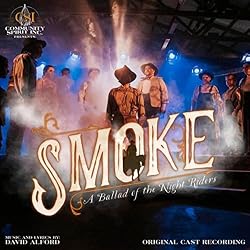
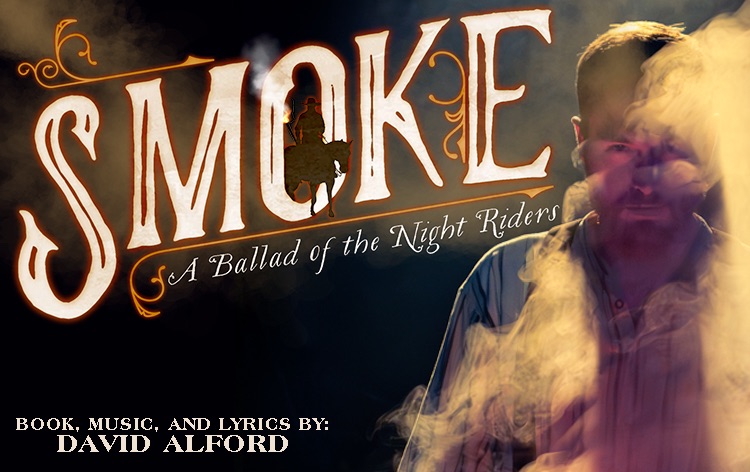
Rolling fields, winding country roads and the unmistakable, spicy scent of dark-fired tobacco set the stage in Adams, Tennessee, home to the legendary Bell Witch and the Bell Witch Fall Festival. For two decades, the festival has brought local history and legend to life, and among its signature productions is SMOKE: A Ballad of the Night Riders, David Alford’s fiery bluegrass musical about the Black Patch Tobacco Wars of the early 1900s. First presented at the festival in 2010, SMOKE explores the corporate greed, desperation and moral compromises that turned farmer against farmer and ultimately gave rise to the masked Night Riders—all performed beneath the stars and surrounded by the very tobacco country that inspired the story.

For this year’s production, longtime SMOKE performer Galen Fott, who has appeared in six of the festival’s previous productions, steps behind the curtain as director. To get a little BTS take on this year’s production, Fott, along with retuning cast members Bradley Gale and Cassandra Donegan and SMOKE newcomer Payton Justice agreed to a little Rapid Fire 20Q to chat with JHPEntertainment about history, family, bluegrass, outdoor theatre, complicated characters—and, yes, even the Bell Witch.


RAPID FIRE 20Q WITH DIRECTOR AND CAST MEMBERS OF SMOKE: A BALLAD OF THE NIGHT RIDERS

RAPID FIRE WITH SMOKE DIRECTOR GALEN FOTT


JHPENTERTAINMENT: Having appeared in six of the local productions of SMOKE presented during previous Bell Witch Fall Festivals, what prompted you to move from being onstage to taking on the behind-the-scenes role of director for this year’s production?

GALEN FOTT: Because it’s something I’ve never done before! I’ve directed more than two dozen animated films for Scholastic, and I directed actors in dozens of scenes when Pipeline-Collective’s playwriting workshop Salon was in operation a few years ago. But I had never directed a full-length play or musical before. And why not start with a show you know so well, and love so much?

JHPENTERTAINMENT: SMOKE takes audiences back to 1904–1908, when dark-fired tobacco farmers found themselves caught in a violent economic struggle with powerful corporations attempting to control market prices. Is there a particular scene or line of dialogue crafted by the playwright, David Alford that feels immediate and personal to you in the telling of this history-based story?

GALEN FOTT: One of the main issues SMOKE wrestles with is the idea that destruction and violence are justifiable if they contribute to a greater good. David wrote two short scenes that dramatize this concept in microcosmic form, one in each act. These parallel scenes involve the central character of Owen Hartley, his son Owen Jr., and the lowly tobacco worm. On one level, the scope of the entire play is encapsulated in those two scenes.

JHPENTERTAINMENT: As a native of nearby Clarksville, Tennessee, you have a personal connection to the region in which the events of SMOKE unfolded. What has it meant to you as a director to bring your touch to this particular—and sometimes overlooked—piece of local history?

GALEN FOTT: There’s a narrative passage of the play that contains multiple quotes from the Clarksville Leaf-Chronicle, the newspaper I grew up reading. (Remember newspapers?) But I knew absolutely nothing about the Black Patch Tobacco Wars until I read the play 11 years ago. I’m so glad I know about it now — it’s a remarkable, if troubling, story. Of course, it’s not uncommon for natives of a particular place to be unaware of — or uninterested in — the history that unfolded right outside their door. During the five years I lived in New York City, I met many native New Yorkers who had never been to the Empire State Building or visited the Statue of Liberty. And plenty of Nashvillians have never been to the Grand Ole Opry!

JHPENTERTAINMENT: David Alford’s original bluegrass score is filled with songs that help tell the story of the Black Patch Tobacco Wars. Do you have a particular favorite among the musical numbers penned by Alford—AND what makes that one stand out for you?

GALEN FOTT: I’d have to go with the title song, “Smoke”. David does an ingenious thing in that song. Owen is remembering his time serving in the brutal Philippine-American War, and in the song he experiences a sudden, visceral return to that experience. Suddenly he’s “there” in the Philippines, on unfamiliar ground, and David switches the time signature from 6/4 to 5/4, pushing it way out of typical bluegrass fare. It feels like there’s either a beat missing or one beat too many, and it perfectly evokes Owen’s unease in such unfamiliar territory. It’s a masterstroke.

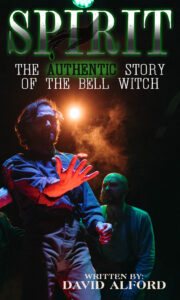
JHPENTERTAINMENT: SMOKE debuted in 2010 as a bit of a companion piece to SPIRIT: The Authentic Story of the Bell Witch and has its roots in the Bell Witch Festival. One hundred years after the events that inspired it and more than a decade after the musical’s debut, it seems to me if you swap out tobacco for essential farmed produce, the core message of the story still rings true today. Would you agree with that?

GALEN FOTT: Certainly the difficulties of farming, the existence of monopolies, and collective bargaining remain issues today. But what makes the Black Patch Tobacco Wars different — and what makes SMOKE particularly compelling — is the vigilante justice used to force farmers into that collective action. And even if your moral compass can encompass those violent acts, what toll does that ultimately take on your humanity? David asks us to contemplate all of this in SMOKE. And did I mention? It’s a musical! I’ve heard David say he doesn’t really like musicals, but he wrote a damned good one. SMOKE is an amazing piece of theatre that deserves a wide audience. I hope everyone reading this will be a part of that audience!

RAPID FIRE WITH BRADLEY GALE, OWEN HARTLEY IN SMOKE

JHPENTERTAINMENT: Owen Hartley is a 30-year-old farmer, husband and father trying to protect his family and livelihood during an extraordinarily volatile period. What was the key to finding the man underneath the historical circumstances surrounding him?

BRADLEY GALE: Owen Hartley is integrity to his core; harnessing that sort of selflessness causes me to reflect a lot on my life and the examples Ive had.  A specific man often pops into my mind during certain scenes; he has since passed and was a father to me.  Larry Copeland.   I often think of him when I look at my ‘son’ and ‘wife’.  It’s my “What Would Larry Do” hack.

JHPENTERTAINMENT: Owen isn’t just dealing with the price of tobacco—he’s watching the world around his family become increasingly dangerous. What do you think scares Owen the most: losing his livelihood, losing control of his family’s future, or what the Night Riders might bring to his doorstep?

BRADLEY GALE: I would say that Owen is mostly concerned with protecting the innocence of his family.  He has seen the horrors that humans can invoke upon other humans and wants to protect them from ever having to experience the same.

JHPENTERTAINMENT: Owen gets his Act One solo musical moment with “Little Man.” What does that song reveal about Owen that perhaps the dialogue alone doesn’t—and what was it like getting inside that particular musical moment?

BRADLEY GALE: The song “Little Man” reveals how deeply he wants his son to be protected from the evils of this world.  It shows just how tender and sensitive Owen actually is.  Owen does not make a single decision without thinking about his wife and his son.  Getting inside that moment is more about making sure my co-star can sit still for three minutes.  Gunner, I hope you’re reading this!  (Im teasing; the actor playing my son is a blast to work with; he definitely keeps us all on our toes).

JHPENTERTAINMENT: I gotta ask…what’s it like working with your co-star? NO, I’m not talking about Cassie as your on-stage wife, Callie, I’m taking about Kat, the horse featured on stage during the show, billed simply as, well, Horse, and her wrangler, Mandie Neblett?

BRADLEY GALE: Oh that’s one of the best parts.  Kat and Mandie are actually the longest running cast members of Smoke.  They are an institution.  And in fact we have an extra three horses this year who are training to become Kat’s understudy.  Aside from the fact that they don’t give us the courtesy of using the public bathrooms…. (Im just talking about the horses)

JHPENTERTAINMENT: There are plenty of larger-than-life figures and historical forces swirling around SMOKE, but Owen’s world ultimately comes down to one very simple thing: a little patch of dirt and the people he loves. I love that in the script, the playwright’s dedication reads: “For Ben Robert Who saved me a little patch of dirt”. In that vein, Who—or what—represents your own “little patch of dirt” in your real life these days?

BRADLEY GALE: Simply put, home has never been a place for me.  It’s always been the people.  And frankly, coming back to Adams (Springfield, Nashville, etc) it reminds me just how much ‘home’ this little patch of dirt is to me.

RAPID FIRE WITH CASSIE DONEGAN, CALLIE HARTLEY IN SMOKE

JHPENTERTAINMENT: Callie Hartley is a farmer’s wife living in a world where the economic struggle over tobacco is anything but an abstract political issue—it directly affects her family. What did you discover about Callie by looking at the story through her eyes rather than simply through the larger historical events surrounding her?
CASSIE DONEGAN: This story has always felt incredibly personal to me because my own family were tobacco farmers. The first time I played Callie seven years ago, I saw so much of my great-grandmother in her. That particular kind of Southern woman who could carry an enormous amount for her family and still somehow make sure the rest of the world never quite knew how heavy it was. A complete spitfire and slightly ahead of her time.

Coming back seven years later, there is a lot more of myself I now see in her. Seven years later, I understand resilience differently. I understand the instinct to protect the people you love differently. And I understand much more deeply that strange dance of carrying very real struggles within your family and home while presenting a completely different version of life to the outside world.

I always say Callie is far gutsier than I could ever wish to be, but I recognize so much of myself in her now. Callie isn’t thinking about how this moment will someday be written about. She’s thinking about her husband, her home, their livelihood, and the life they’ve worked to build together. She’s strong without needing to announce that she’s strong, and there is a quiet resilience underneath all of that fire that I understand far more deeply now.

JHPENTERTAINMENT: Callie and Owen have built a life together on their farm, but the events unfolding around them increasingly threaten that life. What do you think keeps Callie grounded when everything around her begins to feel increasingly uncertain? Let’s make this one a two-parter…same question, but for Cassie?

CASSIE DONEGAN: For Callie, I think it’s Owen. It’s love, home and this deep sense of responsibility to the life they have built together. She loves him fiercely, and even when she doesn’t necessarily agree with him, he is still her person. When everything else becomes uncertain, Owen is still where she belongs.

For Cassie, the answer is actually pretty similar. My family, my faith, the people I love and remembering who I am when you strip away every title, accomplishment and expectation are what bring me back to center. For a long time, I thought strength meant carrying difficult things gracefully enough that no one else ever had to see how heavy they were. I’ve learned that sometimes strength is admitting they’re heavy. Life can change incredibly quickly, but when I come back to my faith, my family and the people who know Cassie rather than any title or role attached to her name, I remember that the most important parts of my life were never the loudest ones. That’s where I find my footing again.

JHPENTERTAINMENT: Adding visually to the show’s authentic early 20th Century visuals, Denese Evans is on-hand as the show’s costumer. Does donning Callie’s wardrobe help you become her?

CASSIE DONEGAN: Absolutely. Costuming is one of those things that can immediately change the way you inhabit your body as an actor. The silhouette, the layers, the shoes, the weight of the clothing, even the way you naturally stand, sit or move changes. With Callie, it’s another layer of information about who she is, the work she does, the life she lives and even how she wants the world to see her. And working with Denese is just so much fun. She is genuinely such a joy, and what I appreciate most is that she understands me not only as an actor, but as a human being. I think that is incredibly important in a costumer. She obviously cares tremendously about her creation and about making sure everything is historically and visually right for the world of the show, but she cares just as much about how I feel inside that creation. There’s never a sense that I simply have to fit myself into her vision; it feels like we’re discovering the character together each time we do this.

That kind of trust actually gives you more freedom as an actor. Denese has created something that feels lived-in and specific to her rather than simply “period,” and that distinction matters. There’s always this wonderful final moment for me when the hair is done, the shoes are on and I’m completely dressed. I look in the mirror and I think “Callie has arrived.”

JHPENTERTAINMENT: What does presenting this show outdoors add to the overall feel of the piece?

CASSIE DONEGAN: There’s something incredibly special about telling this particular story outdoors because suddenly the environment becomes part of the production. You feel the temperature change as the evening goes on, you hear the sounds around you, you feel the ground beneath your feet. You’re telling the story of people whose lives and livelihoods were quite literally tied to this land while standing on that land yourself.
And I think what makes it even more extraordinary is that we aren’t just performing Smoke outdoors. We’re performing it in Adams, Tennessee, where so much of this history actually happened. There are people in this community whose families have been connected to tobacco farming for generations, and there are many people here working in that profession today. This isn’t simply a piece of Tennessee history. It’s family history. It makes you feel a real responsibility to tell it honestly.

There are also things nature gives you that no lighting or sound designer could ever perfectly recreate. The sky gets darker around you as the story gets darker. You hear insects and wind and all of those sounds that belong to rural Tennessee. And, occasionally, you get a pack of coyotes howling somewhere in the distance in the middle of a scene which is always a particularly exciting reminder that we are, in fact, doing outdoor theatre! There’s a rawness and unpredictability to it. In a piece like Smoke, where land, livelihood, community and survival are so intertwined, I can’t imagine a more fitting way to experience it.

JHPENTERTAINMENT: Ok, in the spirit of your pageant career—you did, after all, just end your reign as Miss America 2026—let’s indulge in a little Final Question focusing on the pageant system’s mission of empowering women… Do you think things might have turned out differently during the Black Patch Tobacco Wars if the women had been the ones calling the shots?

CASSIE DONEGAN: Well, I think the question is more what might have been different if the women living with the consequences had also been given equal power in determining the choices. Women may have approached some of those decisions with a different calculation of what was actually at stake. When you are thinking not only about winning the fight in front of you, but about what happens to the family, the home and the community after that fight is over, it can change what victory even means. Would there still have been anger? Absolutely. Would women have agreed on everything? Certainly not. But perhaps there would have been more voices asking, “What happens after this? What does this decision cost us? And who will still be carrying that cost when the men making it have left the room?”

I think we sometimes do women a disservice when we suggest that if women were in charge, everything would automatically become peaceful and perfect. Women are human. We disagree. We make mistakes. We can be stubborn, ambitious, angry and complicated. I actually think acknowledging that is part of equality, too. Empowerment isn’t putting women on a pedestal and expecting them to save everyone. It’s giving women the same freedom to be fully human and still trusting them with a seat at the table. I don’t believe leadership has to be the loudest voice in the room. In fact, it is often quite the opposite. Sometimes it is asking the question no one else thought to ask. Sometimes, yes, it means being gutsy enough to plant your feet and say, “No. We’re going to do this differently.” Callie certainly has that last one down!

I think that is one of the great lessons of women’s empowerment for me: women don’t need power because we will always make the right decisions. Women deserve power because decisions are better when the people affected by them have an equal hand in making them. No society makes its best decisions when half of the people living with the consequences are missing from the conversation.

And after spending a year with the privilege of carrying a title built around scholarship, service and the empowerment of women, I believe that more strongly than ever. Give women the education, the opportunity, the microphone and, most importantly, an actual seat at the table with listening ears and then don’t be surprised when they change the conversation.

RAPID FIRE WITH PAYTON JUSTICE, NED MUNROE IN SMOKE

JHPENTERTAINMENT: Ned Munroe is Callie’s twenty-something brother, making him one of the younger members of a family caught up in a conflict much bigger than himself. How does Ned’s youth and relationship to the Hartley family influence the way you play him?

PAYTON JUSTICE: I think Ned has a lot of confidence in what he believes and doesn’t really hesitate once he decides something is right. His youth gives him a kind of certainty about what needs to change, maybe to the point of being slightly naive, but he only becomes more committed as the story goes on. He truly cares about the Hartley family, and I think watching what they go through makes the fight very personal for him very quickly.

JHPENTERTAINMENT: JHPENTERTAINMENT: As I familiarized myself with the script in preparation of chatting with you all, I noticed David Alford includes a quote from Robert Penn Warren’s Night Rider within the opening pages of the script: “The good Lord never got a thousand or so men together for any purpose without a liberal assortment of sons-or-bitchen thrown in.” Has your understanding of that quote—or what it says about Ned and the world he’s living in—changed as you’ve gotten to know Ned through the rehearsal process?

PAYTON JUSTICE: I think that quote really speaks to how complicated people can be once they’re united around the same cause. Everyone may agree that something needs to change, but that doesn’t mean they agree on how to get there or how far they should go, you know? And the cool thing about SMOKE is that every character walks away completely changed. Finding that contrast between Ned in the first scene and his last is something I’ve loved playing around with and finding with Galen and the cast. Cassie, who plays my sister, offered some wonderful insight on how our dynamic potentially shifts through the show. And I think that will really come through.

JHPENTERTAINMENT: With the Night Riders, raids and escalating violence surrounding the Hartley family, Ned’s world is hardly the idyllic family-farm existence it might initially appear to be. How do you balance his youth with the increasingly serious circumstances he’s facing?

PAYTON JUSTICE: I don’t really approach Ned as innocent just because he’s young. He’s outspoken and sure of himself from the beginning, and even decides to put law school on hold to fight for what he thinks is right. He really only becomes more committed as things get more and more consequential.

JHPENTERTAINMENT: This production is being presented in the Kay Bagby Outdoor Theatre on the grounds of the Bell School—the same grounds where David Alford’s SPIRIT: The Authentic Story of the Bell Witch is performed, and, of course, the very place associated with the actual Bell Witch hauntings. So, during rehearsals, has “Kate”—the infamous spirit herself—made her presence known to you?

PAYTON JUSTICE: She has not yet. Thankfully. And I’m totally fine with keeping it that way!

JHPENTERTAINMENT: If SMOKE gives audiences a window into a piece of Tennessee and Kentucky history that many may not know, what do you hope they take away about the people who actually lived through the Black Patch Tobacco Wars?

PAYTON JUSTICE:  I hope people leave understanding why these farmers felt like they had to do something, while also seeing how complicated what came after that became. There is a very relevant conversation about what happens when people feel powerless long enough and finally decide to fight back. I don’t think the show necessarily gives you an easy answer to the moral conundrum the characters are all facing. And that is something I actually really like about it.


SMOKE: A Ballad of the Night Riders signifies the opening of this year’s annual installment of Bell Witch Festival with performances weekends Thursday October 1 thru Saturday, October 10. Specific show dates are October 1, 2, 3, 8, 9 & 10. Each evening the grounds at the Bell School Community Complex  (7517 US-41 Adams, TN 37010) open at 6pm giving attendees the time and opportunity to peruse the grounds, the gift shop and vendors, including food trucks for a delicious meal before the at Kay Bagby Theatre and Brooksher Outdoor Pavilion seating opens at 7pm for the 7:30pm showtime. Grass Lawn tickets are $22.13 to 27.38. Seating at the covered pavilion range in price from $37.89 to $27.35 (prices include fees). CLICK HERE to purchase SMOKE tickets. For a preview of the music from SMOKE, give the original 2010 cast recording a listen on Spotify or Amazon.
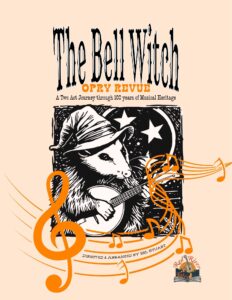
Following SMOKE, the Bell Witch Fall Festival continues October 17 with Red River Tales & The Bell Witch Opry Revue. The afternoon celebration begins from 3:00–6:00 p.m. and features local blacksmiths, tobacco twisters, chandlers, broom makers and more, along with clogging, storytelling and music—all free to enjoy. Food will also be available for purchase from vendors on the Bell School grounds.

Then at 6:30 p.m., The Bell Witch Opry Revue makes its festival debut. Directed and arranged by Bel Stuart, the revue transports audiences into the world of a live radio program from days gone by. Tickets are $5 for Grass Lawn seating or $15-$20 for pavilion seating. CLICK HERE to reserve your FREE tickets for the afternoon fun and to purchase tickets to Red River Tales  & The Bell Witch Opry Revue. Please Note: On the ticket grid, the red area can be selected for the FREE aspects of October 17 events, to purchase tickets for the Revue, please select either green (lawn ticket option) or reserved seating under the pavilion.

The Bell Witch Fall Festival then culminates October 22–31 with the annual presentation of David Alford’s spellbinding SPIRIT: The Authentic Story of the Bell Witch, presented on the hallowed grounds where the legendary Bell Witch is said to have roamed. Festival grounds open nightly at 6pm, with seating at 7pm and the show at 7:30pm, giving visitors time to explore vendors, grab dinner and settle in for an evening of history, entertainment and a little supernatural intrigue. SPIRIT tickets range in price from $27.38 to $43.14. CLICK HERE for tickets. For more information, call 615.696.1300 or visit bellwitchfallfestival.com. To keep up with all things Bell Witch Fall Festival, check them out on Facebook and Insta.
As always, if you wanna follow JHPEntertainment to find out who I’m chatting with for my next Rapid Fire Q&A, or for my take on the latest local and national theatre, music, arts and more, visit JHPENTERTAINMENT.com or find us on Facebook, Insta, Threads and X. Till then #GoSeeTheShow!

Filed Under: Entertainment, Rapid Fire 20 Q, Rapid Fire Q&A, Theare Tagged With: 2026, Adams, Adams Tennessee, Bell Witch, Bell Witch Fall Festival, David Alford, Fall, rapid fire 20q, SMOKE: A Ballad of the Night Riders, Spooky Season, TN

Theatre Review: OH, WHAT A NIGHT! JERSEY BOYS Still Has the Magic 20 Years Later; at TPAC thru Sunday as National Tour continues

September 18, 2026 by Jonathan Pinkerton

There are shows you see once and check off the list. Then there are shows that keep pulling you back, year after year, like some sort of particularly catchy musical siren song. For me, Jersey Boys is definitely the latter. Now onstage at TPAC‘s Jackson Hall thru Sunday, September 20 as the 20th Anniversary National Tour continues, attending the show’s second night in Music City marks the sixth time in 20 years I’ve seen it—and my third time seeing it at Tennessee Performing Arts Center. So, yes, I know when the songs are coming, I know where the laughs are, I know where the story is going…and I still found myself completely caught up in the ride.

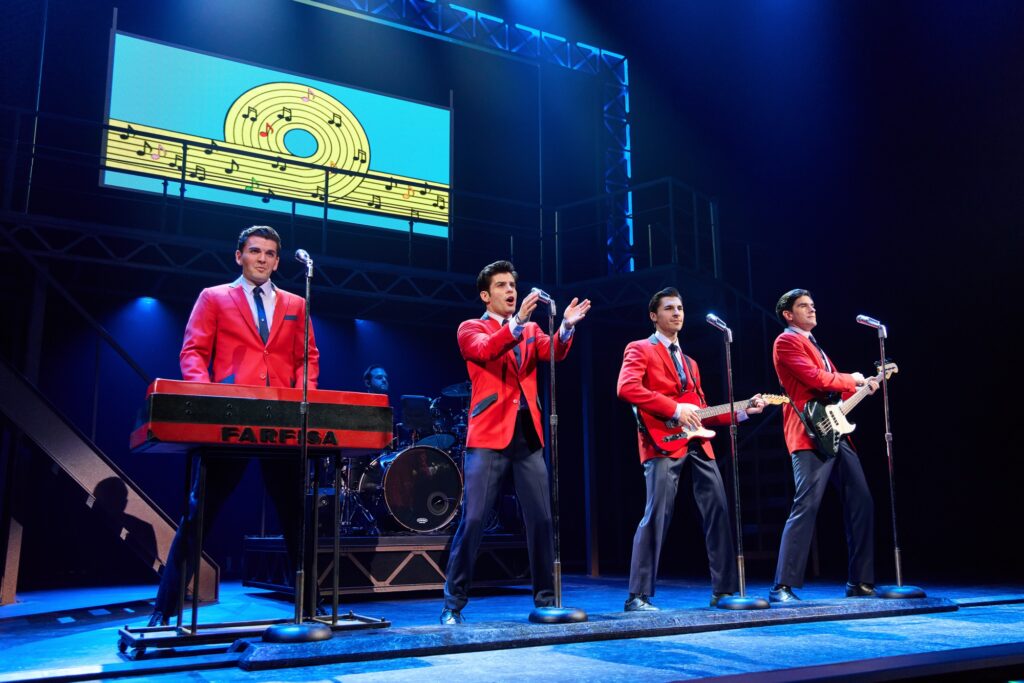
That may be the greatest compliment I can give Jersey Boys: after six times, it still works. Officially kicking off just last week in Syracuse, this national tour arrives with an interesting distinction. While the 20th Anniversary Tour is a non-Equity production, the creative forces behind the original phenomenon remain very much in charge. Des McAnuff, the show’s original director, is back at the helm, while Sergio Trujillo, whose original choreography helped define the production, returns with his original choreography. I mention the non-equity status because a non-equity tour can, occasionally, be scaled-down considerably from a show’s Broadway run. Perhaps, because this tour has been so hands-on with the full cooperation of the original creative forces, this incarnation doesn’t feel like any expenses were spared, no corners were cut and no holds barred for this landmark anniversary tour. For the show’s two and a half hour runtime, I’m confident that the entire audience at TPAC would tell the cast our eyes and ears adored them!
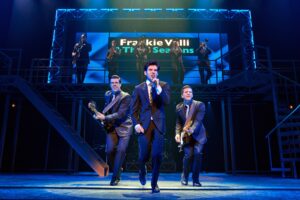
This isn’t just another jukebox musical. This is a show with some serious hardware in its trophy case: the Tony Award for Best Musical, the Laurence Olivier Award for Best New Musical and the Grammy Award for Best Musical Show Album. Twenty years after its Broadway debut, it doesn’t take long to see why.

The genius of Jersey Boys has always been its storytelling structure. The show cheekily divides itself into Spring, Summer, Fall and Winter, giving a knowing wink to the name of the group while providing four distinct chapters in the lives of The Four Seasons.

Spring gives us the genesis—the young men, the dreams and the unlikely beginnings. Summer is the rocket ride, as the group discovers fame, fortune and what happens when those little songs they’ve been working on suddenly become enormous hits. Fall brings the cracks in the foundation: personal conflicts, financial problems, uncertainty and the realization that success can be every bit as complicated as failure. Then comes Winter, with its reflection, loss and the ultimate accolade: The Four Seasons’ 1990 induction into the Rock and Roll Hall of Fame. Not bad for some kids from Jersey.

The cleverness of that four-season structure isn’t merely branding. It gives the show a natural dramatic progression while providing one of those delightful little theatrical winks that Jersey Boys is so good at delivering.

Of course, you can’t talk about Jersey Boys without talking about the music. And in the vernacular of the Jersey Boys, holy f’in jukebox, is there a lot of it. The production packs more than 30 songs, and this cast nails the vocal demands with the kind of precision that makes The Four Seasons’ famously distinctive sound seem effortless.

The Four Seasons’ musical catalog is so deep—they had 40 songs land on the Billboard Top 40—that there simply isn’t enough room in one musical to accommodate all those hits. The Playbill acknowledges that problem in particularly delightful fashion, with a footnote titled “The Ones That Got Away,” recognizing more than a dozen additional Four Seasons and Frankie Valli bangers that didn’t make the final cut.

But it’s not simply the quantity of the songs that makes this production sing. It’s the quality of the vocals. Audiences arrive knowing exactly how these songs are supposed to sound, from Valli’s unmistakable falsetto to those intricate Four Seasons harmonies.

This cast understands that assignment.

As Frankie Valli, Coby Oram delivers the vocal precision you’d expect from a performer stepping into one of pop music’s most distinctive voices, but there’s also a strong emotional dimension beneath the falsetto. Valli isn’t simply the guy who sings the really high notes; we’re watching a young man grow into the person who ultimately has to carry the group forward. Oram is equally adept at hitting the high notes as he is knocking it out of the park during the show’s more tense relationship moments whether exploring his fractured family dynamic or the never-ending allegiance to his fellow hitmakers.

Peyton Schoenhofer brings youthful energy and confidence to Bob Gaudio, the songwriter whose creative contributions helped fuel the group’s remarkable run. His Gaudio possesses just the right combination of ambition, talent and youthful uncertainty. Schoenhofer exemplifies a great balance of Gaudio’s seemingly more sheltered upbringing–compared to the a couple of the other boys, who racked up police records before platinum ones–with an unexpected business savvy that would be a key element in his relationship with Valli.

Harry Sperduto makes Tommy DeVito an entertainingly combustible force, bringing plenty of swagger and humor to a character whose ambitions ultimately come with a steep price. Tommy can be charming, funny, infuriating and reckless—and Sperduto keeps all of those qualities in play without reducing DeVito to a cartoon gangster. You know he’s good when, time after time of screwing over his bandmates, the audience still feels for him and cheers both his misdeeds and his achievements.

Owen McCredie gives Nick Massi the quietest member of the quartet a genuine presence, allowing us to understand the man beneath that reserved exterior. There’s a dry wit and simmering frustration beneath Nick’s reserved exterior,  and McCreedie lets those qualities emerge naturally, making Nick’s eventual departure from the group on of the evening’s more effective moments. McCredie doesn’t let get lost amid all those bigger personalities, he crafts a careful, thoughtful presence. While Valli’s falsetto might have made him the bigger star, McCredie’s booming bass voice as Massi is swoon worthy.

Together, the four are a cohesive, convincing unit—and that’s crucial. The Four Seasons weren’t four soloists who happened to stand next to each other. Their magic was in the blend. This cast gets it.

While the primary focus is of course on the aforementioned quartet, one of the strengths of this production is that Jersey Boys doesn’t treat its four principals as the only people worth watching. Andrew Sattler makes an especially memorable impression as Bob Crewe, bringing a larger-than-life theatricality to the eccentric producer and lyricist who becomes such an important part of the group’s story.

Nicholas Dion Reese gets the evening off to an energetic start with an updated, internationally flavored take on “Ces soirées-là,” better known stateside as “December, 1963 (Oh, What a Night!),” The Four Seasons’ final No. 1 hit from 1975. It’s an attention-grabbing opening that immediately announces that this isn’t going to be a sleepy trip through an oldies playlist.

Among the female members of the ensemble, Eliza Levy makes an impression as Mary Delgado and others, helping bring the women surrounding these four men into sharper focus rather than allowing them to become mere scenery in the boys’ story. While she’s initially written as a stereotypical Jersey girl, Delgado doesn’t rest on that, bringing dimension to what could easily be a throw-away role. Her vocals on the late Act 1 tune “My Eyes Adored You” in an adroit call and response opposite Oram’s Frankie, reveal a welcomed depth to not only her portrayal, but the classic song itself. 

Another highlight in the supporting cast comes in Sarah Coleman‘s turn as Francine Valli particularly as the story begins exploring the one of the show’s more somber elements revealing the personal costs of Frankie Valli’s extraordinary career. It’s a relatively small role with only a couple of minutes on stage, but it’s one of the show’s most impactful. Coleman, like many of the supporting players appears throughout in a multitude of other roles, but it’s her brief time on stage as Valli’s daughter that stays with the audience.

And then there’s Joe Pesci. Yes, THAT Joe Pesci, as the script cheekily reminds us. The real Pesci was friends with the young Four Seasons, and his connection to the group is one of those almost-too-good-to-be-true details from their early history. Here, the role gets an especially fun Nashville twist thanks to Grant Weathington, a 2025 Belmont University graduate. For those in the TPAC audience who know that little bit of local trivia, it’s one more reason to enjoy the character when he pops up.

Speaking of Nashville, the Music City connection doesn’t stop there. One of the original members and creative forces behind The Four Seasons, Bob Gaudio, has been a Nashville resident since the 1990s. So when the show reaches its later “where are they now?” passage and mentions that Gaudio now spends his days on his boat in Nashville, the response from the TPAC audience was noticeably more enthusiastic than your average biographical footnote. There was definitely a little “That’s OUR Bob!” energy in the room. It’s a small moment, but it’s one of those details that makes seeing a touring production in its proper local context so much fun.

The remarkable thing about Jersey Boys after two decades (six decades if you count The Four Seasons’ real-life history) isn’t simply that the songs remain popular. It’s that the story still works. The musical understands that success stories are rarely as simple as the finished record. Behind every No. 1 hit are relationships, egos, debts, bad decisions, sacrifices, arguments and people trying to figure out what comes next.

That’s what keeps Jersey Boys from becoming nothing more than a jukebox with a plot. The music may be the sugar, but the complicated relationships are the substance. And the 20th Anniversary Tour gives audiences the best of both worlds: a production rooted in the staging that originally made the musical a Tony-, Olivier- and Grammy-winning phenomenon, now performed by a fresh cast with its own chemistry and energy.

Twenty years after Jersey Boys first took Broadway by storm, this new generation of Four Seasons proves that the songs still soar, the story still resonates and there are apparently still plenty of audiences willing to sing along. After six trips alongside The Four Seasons myself, I’m apparently still not ready to say goodbye. And really…why would I? Four seasons. More than 30 songs. Forty Top 40 hits. Twenty years. as one of modern theatre’s most beloved musical.Oh, what a night!


Catch the 20th Anniversary National Tour at Nashville’s TPAC September 16-20. CLICK HERE to purchase tickets or for more information. Following Jersey Boys TPAC’s 2026/2027 Season continues with The Sound of Music onstage October 13-18. Follow TPAC on TikTok, Instagram, YouTube and Facebook.

Not in Nashville? It’s likely Jersey Boys will be working their way back to you, so check them out on Facebook, X, Insta, TikTok, YouTube and Threads to see when it rolls into your city and find out why, two decades later, Jersey Boys remains one of Broadway’s most irresistible musical stories.

As always, if you wanna follow JHPEntertainment to find out who I’m chatting with for my next Rapid Fire Q&A, or for my take on the latest local and national theatre, music, arts and more, visit JHPENTERTAINMENT.com or find us on Facebook, Insta, Threads and X. Till then #GoSeeTheShow!

Filed Under: Entertainment, Theare, Theatre Review Tagged With: 2026, 20th Anniversary Tour, Broadway at TPAC, Broadway Tour, Jersey Boys, Live Performance, live theatre, Musical, Musical Theatre, National Tour, Theatre Review, TPAC

Love, Madness & the Monster Within: Rapid Fire 20Q with Director and Cast of HPAC’s ‘Jekyll & Hyde

September 15, 2026 by Jonathan Pinkerton

Good versus Evil. Love versus obsession. Respectability versus temptation. Few musicals offer more delicious opportunities for theatrical duality than Jekyll & Hyde: The Musical, ushering in spooky season at Hendersonville Performing Arts Company (HPAC) September 17-October 4. With just days before audiences witness the transformation, JHPEntertainment had the chance to chat with director Marsalis Turner and cast members DéYonté Jenkins (Henry Jekyll/Edward Hyde), Francesca Noe (Lucy Harris) and Rebekah Joy (Emma Carew) for a revealing Rapid Fire 20Q about the characters, relationships, music, mayhem and just a little personal Hyde behaviour.


RAPID FIRE 20Q WITH DIRECTOR AND CAST OF HPAC’s JEKYLL & HYDE

RAPID FIRE WITH JEKYLL & HYDE‘s DÉYONTÉ JENKINS

JHPENTERTAINMENT: Henry Jekyll creates the experiment believing he can separate the good and evil within himself. What do you think he gets most wrong about human nature?

DÉYONTÉ JENKINS: I think Henry Jekyll believes that men and women have no control over their human nature. That humans have no choice but to succumb to the darker nature of themselves. What he fails to realize is that when we are faced with these moments we have made a choice to go through with them. Even after a night of debauchery and murder, fully aware of what has happened, he CHOOSES to continue taking the formula that turns him into Hyde. Human nature will always be what it is. I think what’s  more important is how we as humans choose to operate within the confines of  good and evil. 

JHPENTERTAINMENT: Marsalis Turner has the director’s-eye view of this production. What advice has he given you about navigating the challenge of playing both Jekyll and Hyde—and has any of it changed the way you approach the character?

DÉYONTÉ JENKINS: Marsalis has done an amazing job directing this production. We have had multiple conversations about this story and the struggle that Henry faces. Everyone comes into this story with the idea of a Good Guy vs. Bad Guy point of view.  For me a big thing was realizing that Henry Jekyll himself is not a “Good Person”. He is a human just like everyone one else. He is flawed, weak to temptation, and has the ability to be just as evil as his counterpart. I believe Edward Hyde has always been inside of Henry lying dormant/suppressed. I love playing the little moments that hint at Hyde rising to the surface of Henry even before he chooses to take the formula. Ultimately Jekyll and Hyde are one in the same. Approaching the character from that point of view brings a real and raw humanity to a character that could easily be portrayed as farcical. 

JHPENTERTAINMENT: Forget murder and mayhem—what tiny, everyday annoyance is most likely to unleash your personal Edward Hyde?

DÉYONTÉ JENKINS: Honestly, being woken up and immediately bombarded with questions! It is the most annoying thing to me. I am definitely a, “Don’t talk to me until I have had my coffee!” person. Haha

JHPENTERTAINMENT: Dr. Jekyll isn’t the only doctor involved in HPAC’s production as Dr. Andrew Armstrong is charged with set design with an assist from Britt Burkey. Without giving too much away, do you have a personal favorite aspect of the set?

DÉYONTÉ JENKINS: This set is truly amazing! The design and creativity that Dr. Andrew and Britt put into this production will definitely not go unnoticed! There are so many little details and Easter Eggs to find built into the set design. I’m for sure a little biased, but Dr. Jekyll’s Lab has to be one of my favorite aspects of the set! Also, there is a slight nod to our great city of Nashville built into the city skyline! If you look close enough, you will find The Caped Crusader himself keeping a watchful eye over the dangerous streets of London.

JHPENTERTAINMENT: Hyde is obviously the darker side of the equation, but what do you think is most seductive about him—for Jekyll and for an audience watching him?

DÉYONTÉ JENKINS: A quote comes to mind that Dr. Jekyll mentions in the original novel by Robert Louis Stevenson. “Men have before hired bravos to transact their crimes, while their own person and reputation sat under shelter. I was the first that ever did so for his pleasures. I was the first that could plod in the public eye with a load of genial respectability, and in a moment, like a schoolboy, strip off these lendings and spring headlong into the sea of liberty.” We all have been tempted by our darker natures and have chosen to not indulge in them due to a myriad of reasons. Whether it’s societal pressures, our morals, or even because we are afraid that we might be punished in the afterlife. What’s seductive about Hyde is that none of those ideas come into his thought processes. Hyde is a truly Free individual and I believe a lot of us long for that feeling of true liberty/freedom without the guilt of shame or fear. 

RAPID FIRE WITH FRANCESCA NOE, JEKYLL & HYDE‘s LUCY

JHP ENTERTAINMENT: Lucy sings about wanting “A New Life.” What do you think that phrase means specifically to Lucy—and what is she willing to risk to get it?

FRANCESCA NOE: Lucy doesn’t yearn after great wealth or fame. Her “New Life” is one where she has dignity, safety, and agency, that’s really the whole of it. There’s a fantastic song from early productions of Jekyll & Hyde called “No One Knows Who I Am,” and it’s our first introduction to her. In it, she asks the audience to tell her who she is, why she is, what she is. Then she points out that because she can’t answer her own question, that must make her a fool, and she owns that. But I don’t think it’s because she doesn’t know who she is. I think it’s because she does know, and she’s simply refusing to tell or show anyone. That song sums up her inner turmoil so beautifully. “A New Life” isn’t about becoming someone new, it’s about Lucy finally gaining the freedom to be who she already is. And she’s willing to risk everything for that, because in truth, she has nothing left to lose. Only herself to save.

JHP ENTERTAINMENT: Lucy finds herself caught in the dangerous orbit of Jekyll and Hyde. What do you think she sees in Henry, and what does she see—or sense—in Hyde?

FRANCESCA NOE: Henry offers Lucy kindness without demanding anything in return, and for a woman who’s been starved of affection and respect, it makes total sense that she’d be drawn to him right away. Her connection to Hyde is dangerously nuanced. Hyde embodies the darker qualities of men that Lucy already knows all too well. She knows how to survive men like him, or maybe more tragically, she just doesn’t care anymore whether she does. But Hyde takes this particular, sustained interest in her, and that gives her a taste of being noticed beyond just one night, maybe even feeling seen. She finds the freedom he has strangely compelling. Henry is so painfully repressed, while Hyde is completely uninhibited, totally unbound by the roles and expectations that trap her and Henry both. There’s something familiar in that contrast between the two men, and even though she’s not fully conscious of it while it’s happening, it stirs up a kind of subconscious recognition in her, one that pulls her toward him like a moth to a flame and spurs her search for humanity in him, even though there’s none to find.

JHP ENTERTAINMENT: Lucy is a woman trying to survive in a world that doesn’t always give women many choices. What do you think is her greatest strength?

FRANCESCA NOE: Lucy’s greatest strength ends up being her most dangerous one: hope. The world has given her every reason to exist in bitterness and cynicism, and yet survival hasn’t hardened her beyond the capacity to imagine goodness in it. It’s what keeps her open when she should probably guard herself, and in this story, that kind of openness always comes at a cost.

JHP ENTERTAINMENT: Every gothic musical needs a look to match its atmosphere. How does costumer Melissa Harris help create the world of Jekyll & Hyde through the costumes, and is there a particular look or costume detail that you’re especially excited for audiences to see?

FRANCESCA NOE: I could sit here and say my favorite pieces are the gorgeous ballgowns Melissa has sourced, or Lucy’s daring Red Rat ensemble, but my favorite costume is the one I wear at the start of Act II. It’s definitely Lucy’s least glamorous look: a simple, aged shift and a tattered old sweater. But there’s something so authentic and vulnerable about her in it.

While we were distressing the sweater with cuts and holes, Melissa suggested it might be something Lucy has had for years, maybe even something that belonged to a family member who’s passed away, but she’s held onto it anyway. I loved that idea. The first time I wore the full costume onstage, I actually felt like I understood Lucy a little better. That’s one of my favorite things about costuming: sometimes putting on a character’s clothes tells you something about them you hadn’t quite found on the page yet.

It’s worn, imperfect, a little sloppy, and it quietly reveals so much about what Lucy really values beneath everything else: comfort, family, safety. In a show full of beautiful costumes, I love that the simplest one tells us the most about who she really is.

JHP ENTERTAINMENT: What’s one tiny backstage, rehearsal-room or everyday annoyance that could have Lucy saying, “I’ve had ENOUGH”—and bring out your own Hyde-like personality in the process?

FRANCESCA NOE: Corset strings. I can painstakingly try to loosen and tie them into perfect little bows, and about two seconds later they’ll look like I dragged them behind my car for a few miles. Don’t even attempt to remove them entirely and restring your corset, because they are guaranteed to get lost in the abyss of the corset-string graveyard, never to be found again. I don’t know where they go. I don’t know how they get there. But after spending far too long backstage untangling, retying, and searching for them, I begin to understand Dr. Jekyll’s decision to simply embrace the darkness. 

RAPID FIRE WITH REBEKAH JOY, JEKYLL & HYDE‘s EMMA

JHPENTERTAINMENT: Emma loves Henry Jekyll, but she’s also forced to watch his obsession with his experiment grow increasingly dangerous. At what point do you think Emma realizes this is no longer simply the man she loves pursuing a scientific breakthrough?

REBEKAH JOY: I believe that Emma realizes Henry’s dedication to his work has turned dangerous when she finds his journal in his study. As she reads, it is not clear to the audience how much she discovers in his pages of journaling, but I believe that Emma learns everything that Henry has been hiding from her in those notes. What is so interesting about this perspective, however, is that if she did in fact discover Henry’s secret in this scene, she chooses to not only keep his secret but also to continue on with the wedding as planned. If the audience does not think she knows he has gone too far, her willingness to still marry Henry loses some of its shock. 

JHPENTERTAINMENT: Emma is often portrayed as the emotional heart of the story. What do you think makes her strong enough to continue loving Henry even as everything around them begins to unravel?

REBEKAH JOY: I believe that Emma is strong enough to continue loving Henry because she doesn’t just hope that he will eventually heal and return to her, she truly believes he will, that he is destined to. As long as she is in his life, she knows that her Henry is still in there. As long as she can look into his eyes, she knows that he will return to her. That kind of faith is not common. Some would call it naive, but I would call it a choice. She is actively choosing to believe that the man she fell in love with is not only a good man, but will prevail once whatever he has gotten himself into is over. 

JHPENTERTAINMENT: Jekyll & Hyde is practically tailor-made for Spooky Season. What’s your favorite Halloween tradition—and what spooky movie, book or TV show is an absolute must for you every October?

REBEKAH JOY: Halloween is my absolute favorite holiday! My favorite halloween tradition is decorating my house in all sorts of fun decor. I have a big affinity for glitter, so my decorations are less scary ghouls and more sparkly bats. I also love to dress up (can you guess why I am drawn to theater?) so I like to go all out with my Halloween costumes. I don’t have a favorite Halloween themed movie/TV show/book, but the weather in autumn always makes me want to watch Twilight, so I associate that with Halloween!

JHPENTERTAINMENT: Of all the musical moments in Jekyll & Hyde, which song or moment is your personal favorite—and what makes it so special to you?

REBEKAH JOY: My favorite musical moment in the show is when Lucy and Emma sing “In His Eyes” together. These two characters have heartbreaking overlap even though they are presented very differently to the audience. Emma is deeply in love with a man who cannot put her first, but does love her back. She finds herself in Henry and will support him as he pursues his dreams, even at the expense of her own. Lucy has never once known true love in her whole life and mistakes a simple act of kindness for love. The love she feels for Dr. Jekyll is based around the idea that she may be worthy of someone else’s love, not just their abuse. Both of these women deserve more than the love they are willing to accept and it is absolutely shattering to hear them express their longing for that love in the same words, even though they are opposing characters.

JHPENTERTAINMENT: If Emma could sit down with Henry before the story begins and have one brutally honest conversation with him, what do you think she would say?

REBEKAH JOY: If Emma could have one conversation with Henry before the story begins, I think it would just be to tell Henry how much she believes in him and supports him. I don’t think Emma would try to do anything to change his future. Part of what makes Emma so endearing is that she never tries to control Henry. She is understanding of his passions and wants to see him succeed in all things. Now, if I were Emma, I do think Henry and I would be having a few words before the whole thing unraveled. I would want Henry to know that his identity does not lie in who he is on the outside, but rather in the choices he makes when no one is watching. Henry struggles to determine if he is a good man or if there is something inside of him that makes him a bad man. The truth is, we have both good and evil inside of us at all times. The only thing we can do is make a choice. Henry’s goal is to take the choice away, but the Emma that I have grown to know and relate to would say if there is no choice, it’s not really a sacrifice. To choose to do the right thing when you want to do the wrong thing is the definition of devotion. 

RAPID FIRE WITH JEKYLL & HYDE DIRECTOR MARSALIS TURNER

JHPENTERTAINMENT: As a director, how do you approach making the transformation from Henry Jekyll to Edward Hyde feel like more than just a physical change—that we’re actually watching one man wrestle with two sides of himself?

MARSALIS TURNER: For us, we wanted to be creative in how the two personalities behave in similar situations—Henry when he’s with Emma and Utterson, or Hyde when he’s with Lucy and Utterson. There will be distinct differences between the interactions while still showing qualities of both personalities. Both Henry Jekyll and Edward Hyde are fighting for dominance while still navigating the world Jekyll built before the serum. In some cases, when DéYonté or Josiah [Josiah Kareck, Kaitlyn Ziebell and Jessica Fonville have been cast as understudies] hits the stage as Jekyll/Hyde, the audience—just like some characters—shouldn’t know if it’s Henry or Edward they’re talking to. Leading to the question: which is the true self? What I want is for that line between the two to blur until the audience feels the same thing the characters do: the fear that they were never really separate at all.

JHPENTERTAINMENT: You’re simultaneously a member of HPAC’s Board and the director of this production. Is there ever a moment when those two sides of your HPAC identity collide—and which one tends to win?

MARSALIS TURNER: I’ve been with HPAC since 2016, with some acting credits and predominantly tech credits, and I’ve been a board member since 2022. This is my second time directing during my tenure. I have a lot of goals as a board member, and luckily directing doesn’t get in the way of them as of now. But I would say if there was an identity collision, it would be directing that wins. There’s so much joy in bringing people together to create art and entertain the community when you genuinely enjoy it. You get to surround yourself with people who want the same thing: to put on the best show possible. Those are the people who motivate my work as a board member—making sure we always provide a place for anyone to come enjoy this experience as entertainers.

JHPENTERTAINMENT: HPAC has a brand-new marquee! How excited are you—and the entire HPAC theatre family—to see that new marquee lighting up the building and helping announce what’s happening onstage inside?

MARSALIS TURNER: Extremely excited—more than anyone could know. Back when I directed my first show, Winter Wonderettes, the tornado came through Sumner County, destroying so much, and our theater was in its path. Having the new marquee in time for our season opening is a beautiful full-circle moment for me, since my first run as a director was cut short by Mother Nature. It’s a bittersweet thing to be in this position again, able to once more share a story with the best group of people I could ask for.

JHPENTERTAINMENT: What has it been like collaborating with Music Director Matthew Marcus on Jekyll & Hyde, and what does he bring to the production that you think audiences will especially notice?

MARSALIS TURNER: This being our first collaboration, I absolutely love this guy. Matthew has been a dream MD for me and the cast. Coming from Vanderbilt’s Blair School of Music, he brings so much knowledge and experience to the room in every way possible. Teaching 28 adults very complex music while also bringing together 12 more to form our live pit orchestra wasn’t easy, but he handled it with so much class and grace. One thing I absolutely loved was his effort to make sure everyone got their moment in the big ensemble numbers when giving out solos. Sharing the love with the cast in a show so heavily focused on one man was an amazing thing to see come together. I think people will love seeing everyone shine and have their moment on our stage. Any production would be lucky and thankful to have Matthew Marcus on their team.

JHPENTERTAINMENT: Jekyll & Hyde is a story about the battle between good and evil, but there’s a lot of gray area in between. What do you most want audiences to understand about that battle when they leave the theatre?

MARSALIS TURNER: I definitely believe this show is way more than a story about good and evil. There is a primitive nature we as humans mask for society’s sake. For some, this mask is genuine and no different from the person behind closed doors, but for others it hides who they truly are and can be terrifying. In this story we witness a man, Dr. Jekyll, whose intentions are good—he wants to cure the evil within mankind—but who ultimately brings about who he truly and always was deep down: Edward Hyde. When people leave, I hope they understand we all have an Edward Hyde within us; it’s just a matter of what we allow to be shown and what we hide behind our facade. But even more, when someone you care about is hiding a terrible secret behind a facade, will you turn away and allow it, or do what’s right before it’s too late?


With its haunting score and classic tale of complicated relationships that explore the darkness lurking just beneath the surface of mankind, Jekyll & Hyde: The Musical promises HPAC patrons a suitably sinister and thoroughly entertaining way to ease into the Halloween season. Jekyll & Hyde opens at Hendersonville Performing Arts Company (260 West Main Street Suite 204, Hendersonville, TN 37075) Thursday, September 17 with performances Thursdays-Sundays through October 4. Performances are at 7:30pm Thursdays-Saturdays with 2pm matinees on Sundays. Tickets are $25/Adults and $22/Students and Seniors. All tickets are reserved seating. CLICK HERE to purchase tickets. For ADA accommodations, please call the box office at 615.826.6037. Please note: Jekyll & Hyde is rated PG-13 for violence, dark themes, sexual content and frightening scenes. 

Jekyll & Hyde marks the start of HPAC‘s 2026/2027 show season. Next up is the beloved classic, The Secret Garden with performances December 3-20. CLICK HERE to secure season tickets, or to purchase individual tickets for upcoming shows.

To keep up with HPAC, CLICK HERE to receive info on upcoming shows, auditions and everything Hendersonville Performing Arts Company. You can also find them on Facebook and Instagram.

As always, if you wanna follow JHPEntertainment to find out who I’m chatting with for my next Rapid Fire Q&A, or for my take on the latest local and national theatre, music and movie offerings, find us at on Facebook, Instagram & X.

Filed Under: Entertainment, Rapid Fire 20 Q, Theare Tagged With: 2026, Hendersonville Performing Arts Center, Interview, Jekyll & Hyde HPAC, Jekyll & Hyde: The Musical, live theatre, rapid fire 20q

Four Seasons, 20 Years & 20 Questions: Rapid Fire 20Q with ‘Jersey Boys’ 20th Anniversary National Tour Stars Coby Oram, Peyton Schoenhofer, Harry Sperduto & Owen McCredie

September 15, 2026 by Jonathan Pinkerton

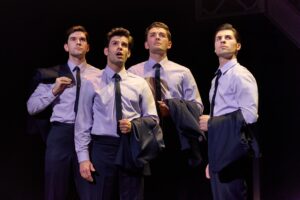
Twenty Years, countless standing ovations and more than a few earworm-inducing harmonies later, Jersey Boys, the Broadway sensation celebrating the music, friendships and struggles of The Four Seasons is making it’s way back across the country with the 20th Anniversary National Tour. Having kicked of the 20th Anniversary Tour just last week in Syracuse, New York, the tour is making it’s way back to Music City. Just days before their return to Nashville’s Tennessee Performing Arts Center for their September 16-20 Music City run, JHPEntertainment caught up with the tour’s leading men. Jersey Boys‘ Coby Oram (Frankie Valli), Peyton Schoenhofer (Bob Gaudio), Harry Sperduto (Tommy DeVito) and Owen McCredie (Nick Massi) answered 20 questions about stepping into those iconic spit-shined shoes and finely tailored suits, finding the chemistry behind one of pop music’s legendary groups, and keeping fans of the 20-year-old Broadway phenom shouting “Oh, What a Night”, night after night.


RAPID FIRE 20Q WITH THE CAST OF JERSEY BOYS 20TH ANNIVERSARY NATIONAL TOUR

RAPID FIRE WITH COBY ORAM STARRING AS FRANKIE VALLI IN JERSEY BOYS

JHPENTERTAINMENT: This is your eighth Jersey Boys contract, and you first came into the show as a swing aboard Norwegian Bliss before ultimately stepping into the role of Frankie Valli on this 20th Anniversary National Tour. What keeps you working your way back?

COBY ORAM: Jersey Boys covers Frankie’s entire professional career from the young age of 16 to about 60 years old. With so much life to live on stage, it’s honestly hard to get bored of it. It’s also challenging enough there’s still plenty to improve, plenty to learn, and plenty to discover.

JHPENTERTAINMENT: Frankie’s journey takes him from a young singer with an unmistakable falsetto to the frontman of one of the biggest musical groups in the world. What part of that evolution has become more fascinating to you as you’ve continued to play him?

COBY ORAM: I think the most fascinating part of Frankie’s story is watching him go from one of the Four Seasons to a solo artist. The part I find interesting is that Frankie had to be convinced it would work, and it wasn’t until after “Can’t Take My Eyes Off of You” succeeded that he believed it.

JHPENTERTAINMENT: You’ve played Frankie alternating the role alongside your identical twin brother, Chris Oram—on both the Bliss and again last year at a dinner theatre in Kansas City. If this tour ever required you to take a day off, how tempting would it be to pull a classic The Parent Trap switcheroo and send your twin onstage in your place?

COBY ORAM: The Parent Trap idea has tempted me more than a few times, but it would be quite the travel for Chris to make it to me wherever I am to perform the one night. Fortunately we do have a Frankie Alternate, Andrew Martin Maguire, who travels with us and also swings the show, and he has already covered for me brilliantly on opening night when I had a mild vocal strain to rest from. 

JHPENTERTAINMENT: Frankie’s voice is obviously one of the most recognizable elements of The Four Seasons’ sound. What has been the biggest challenge—and the most rewarding part—of recreating that unmistakable sound?

COBY ORAM: The biggest challenge in singing Frankie stuff is actually all the care I have to take when I’m not on stage. My associate director Danny Austin says “You have to be monk,” and he’s only half-kidding. I don’t drink with the cast after a show, I don’t go to the club and scream and shout, and I have to be careful how much of my voice I use in my day-to-day life so I still have enough left in the tank for the performance. The most rewarding part is actually doing it, and witnessing the impact it has on audiences. The hit songs are so iconic, they are part of the soundscape of pop culture even today, and when people get to hear them contextualized by the play, it means so much to them I can hear it and see it in them from up on stage.

JHPENTERTAINMENT: After eight trips through Jersey Boys, you’ve undoubtedly experienced countless performances of the show. Is there a particular moment in the current production—whether it’s a song, a scene or even something happening between the Four Seasons—that still gives you that little “Wow, this is why I love this show” feeling?

COBY ORAM: The moment in this production that really gets me is Bob Gaudio’s introduction to the group. Ron Melrose’s brilliant arrangement of this show saves the traditional “Four Seasons” harmonies and sounds specifically for this scene, opting in earlier musical numbers to use other inspirations for the time period that previous iterations of the band (Varietones, Four Lovers, etc.) might have used. The audience subliminally gets to land at the same conclusion at the same time as us on stage – this is the sound we are after. 

RAPID FIRE WITH PEYTON SCHOENHOFER STARRING AS BOB GAUDIO IN JERSEY BOYS

JHPENTERTAINMENT: Bob Gaudio is not only one of the architects of The Four Seasons’ sound, he’s responsible for writing so many of the songs audiences have come to associate with the group. As an actor, how do you approach portraying the man behind those songs while still allowing us to see the young man who is discovering his voice as a songwriter?

PEYTON SCHOENHOFER: I’ve had a lot of help throughout this process from Des McAnuff, Danny Austin, and people who have known Bob for a long time and can help me understand his characteristics. But when it comes to the young man discovering his voice, I can really relate to that as a fellow artist. When we’re younger, there’s so much discovery in finding your voice, regardless of what medium you’re creating in. I try to tap into that feeling from my own experience, those moments when you’re just so excited to be creating and you start to see doors opening for you. I think bringing that sense of wonder and discovery to Bob is a big part of how I approach him.

JHPENTERTAINMENT: You’re making your national tour debut with Jersey Boys, which means you’re experiencing the show—and the country—one city at a time. What has surprised you most about taking Bob Gaudio on the road?

PEYTON SCHOENHOFER: I think what’s surprised me most is how receptive each audience is. You know, obviously, it’s called Jersey Boys, and of course, there’s going to be deeper roots for people from Jersey, but being able to take this show anywhere and see people connect with the music, the story, the characters, it’s incredible. It’s such a specific group of guys and a very specific story, but it’s been really fun to see audiences in all these different cities react in similar ways, to find something in the show that they can connect with.

JHPENTERTAINMENT: Here in Nashville, there’s an especially interesting layer to playing Bob: the real Bob Gaudio lives right here in Music City and will likely have an opportunity to see the show during your Nashville engagement. What goes through your mind knowing that the man whose life you’re portraying may actually be sitting in the audience watching your performance?

PEYTON SCHOENHOFER: Besides being terrifying, it’s extremely exciting! Getting to play the role I’ve portrayed for years, for the man himself, means the world to me. I am extremely grateful for the opportunity he has provided us actors to continue telling this story through multiple generations. And to be able to bring this music that feels timeless to Nashville, to Music City, couldn’t be better!

JHPENTERTAINMENT: You’ve gone from performing in the wildly irreverent Titanique as a member of that show’s Chicago company to stepping into a story rooted in the real lives and music of The Four Seasons. What has that change in tone and style been like for you as a performer?

PEYTON SCHOENHOFER:What do you mean? They’re basically the same show….. All jokes aside, it’s been amazing to experience the two sides of theater I enjoy most. Titanique is a very self-aware comedy that lets me play with the audience, and lean into my improv background. While Jersey Boys is the other side of that coin. It’s extremely grounded and very real. And those are the two types of theater I love most. So the fact I’ve been able to experience both is truly a blessing!

JHPENTERTAINMENT: There’s such a distinctive chemistry among the four men who become The Four Seasons, and Bob’s relationship with Frankie is at the heart of much of that story. What have you and Coby discovered together that has helped make that partnership feel authentic onstage?

PEYTON SCHOENHOFER: To be honest, we’ve only known each other for about a month and a half, so we’re still making discoveries and getting to know each other as the tour goes on. But that’s what makes it exciting! We’ve both played these roles before, but never together, so we each came in with our own interpretations and ideas of what a Bob or a Frankie might be. It’s been really fun to find those differences, learn each other’s interpretations, and bring more and more to the relationship both on and off stage. It also helps that Coby is an incredible performer and individual, so it makes my job really easy!

RAPID FIRE WITH HARRY SPERDUTO STARRING AS TOMMY DeVITO IN JERSEY BOYS
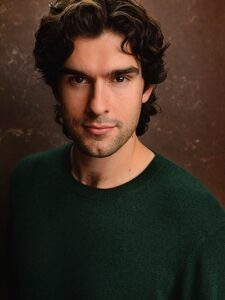
JHPENTERTAINMENT: This is your national tour debut, and you’re making it in a show as iconic as Jersey Boys. What has the reality of that milestone felt like now that you’re actually out there performing Tommy DeVito for audiences across the country?

HARRY SPERDUTO: It has been a dream come true, and then some. I have wanted to be in this show and perform at this level of theatre for as long as I can remember. Getting to step into Tommy’s shoes in the remounted original production of Jersey Boys every night is even more perfect than I could’ve planned for my national tour debut. I thank God every day for this opportunity.

JHPENTERTAINMENT: While this is your first national tour, it’s not your first time in Jersey Boys. That honor happened two years ago when you first played Tommy DeVito in Clear Space Theatre Company’s 2024 summer-stock production of Jersey Boys in Rehoboth Beach, Delaware. What have you learned about Tommy—and how has your portrayal of him changed—since that first production

HARRY SPERDUTO: I am a lot more grounded and knowledgeable this time around. I’ve created a multifaceted version of my character through my deeper understanding of Tommy. That is the glory of getting the chance to work with the original creative team on this piece. The original director Des McAnuff and Associate Danny Austin gave me so much great direction and information about this story, their over 20 year process with the piece, and real life encounters with the original Four Seasons, specifically Tommy DeVito. That first hand knowledge is something I could only get from these directors and it has helped me immensely in my portrayal, especially in bringing the truth of Tommy’s life into my work.

JHPENTERTAINMENT: How do you keep the audience connected to Tommy when his ambition and personality can make him such a difficult guy to root for?

HARRY SPERDUTO: Tommy struggled with his addictions, and I think there is a certain feeling of sympathy seeing him going through the hardships that he did. Playing my objectives every night and leaning into that area creates this level of emotion that I can pull out of people. Making my portrayal of Tommy as human as possible is the best thing you can do to make an audience connect with you. He did what he did because he truly felt he was making the right choices for himself and for the group, despite how rough he could be to the people around him. I hope audiences can leave the theater remembering and respecting all of the things he accomplished in his lifetime. 

JHPENTERTAINMENT: The Four Seasons became known for not only their glorious lamppost harmonies, but also their syncopated moves and classic attire. While these elements—and more—make up the full package that is Jersey Boys, do you have a personal favorite element?

HARRY SPERDUTO: The element of breaking the fourth wall, which, in simpler terms means getting to speak directly to the audience in many of my lines. As a performer, I love getting to do this in Jersey Boys because I can look around and connect with every audience member throughout the show and make them feel like they’re in our show too. It is what makes theatre live, fresh, and exciting every night. It is very fulfilling to me as a performer.

JHPENTERTAINMENT: Tommy has some of the show’s biggest personality moments, but Jersey Boys ultimately asks us to watch four very different men become a family—and then watch that family fracture. What is the most important thing you want audiences to understand about Tommy by the time he walks away from The Four Seasons?

HARRY SPERDUTO: Tommy strived for greatness in his own way. If you got out of the neighborhood in his time, that alone was the highest accomplishment. He started a Hall of Fame rock & roll group and he took Frankie Valli off the streets, which turned him into the icon he now is today. This is undeniable. He might’ve not cared about being a star in the long run, but he took pride in giving back, especially to his community in North Jersey. He cared so much about where he came from, which is right where their whole story begins.

RAPID FIRE WITH OWEN McCREDIE STARRING AS NICK MASSI IN JERSEY BOYS
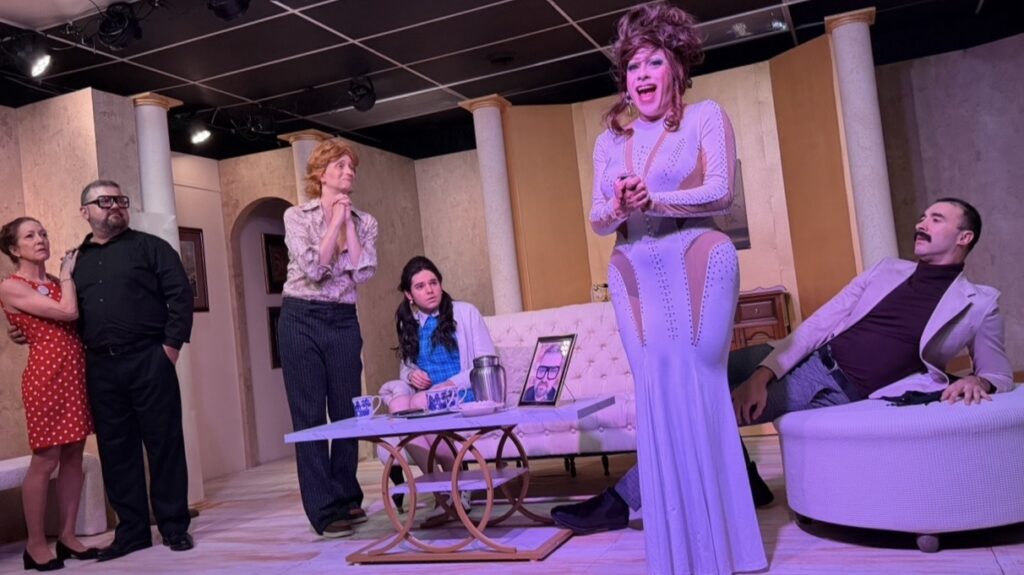

JHPENTERTAINMENT: You first portrayed Nick Massi aboard Norwegian Cruise Lines, and now you’re bringing him to audiences throughout North America. How has your perception of Nick—and your performance of him—evolved between that first experience and this 20th Anniversary National Tour?

OWEN McCREDIE: Nick Massi has always been a character with whom I’ve felt an emotional resonance. He’s a guarded, seemingly aloof guy who has a very tumultuous inner life. What I’ve appreciated most about Nick during this process that perhaps I hadn’t before, is how of all the Four Seasons, he is the one to really admit his mistakes and own up to his shortcomings. I like to think that I’m a little wiser than I was at age 22. I’m much more cognisantof the fact that “success” is accompanied by levels of personal sacrifice. I’ve given up a lot of family time to tour and live in another country. I hope that an awareness of these things translates into a more emotionally honest and grounded performance.

JHPENTERTAINMENT: Nick is the quiet one of the four, often literally standing in the background while the other personalities dominate the room. How do you make sure there’s a fully realized Nick Massi underneath that reserved exterior?

OWEN McCREDIE: I’m trying always to interact with the scene in whatever way I can. Which is not to say that I’m trying to steal attention from the actual scene. But by making creative decisions about what Nick values, what’s driving him and how he’s feeling about the other characters at that particular moment, I find opportunities to be affected by things within the scene. Nick is very meticulous, perhaps to the point of OCD. As Bob Gaudio says, “he irons his shirts twice”. That part of his behaviouris a lot of fun to play with as an actor, particularly in those moments when I’m not at the forefront of a scene.

JHPENTERTAINMENT: You were born and raised in Australia and studied theatre at Melbourne’s Victorian College of the Arts, so Nick’s Newark accent is a pretty significant vocal departure from your own. Did you work with a dialect coach during rehearsals to perfect that sound, and what was the biggest challenge in making it feel natural?

OWEN McCREDIE: Yes, we were incredibly fortunate to work with Charley Layton, who I’d done some dialect coaching with for Norwegian as well. He was able to tell me when I was beginning to stray into Australian vowel sounds, and when I could be committing further to the sounds of a North Jersey accent. I’ve found this time that I’ve been fighting the impulse to add in some of the characteristics of what you’d consider a General American accent — the rhotic R, for instance. I think that my fear as an actor who’s trying to approach this dialect with respect and authenticity, is that I go too far into that cartoonish “New Joisey” accent. In trying to avoid that perhaps I’m making Nick sound too much like a New Jerseyan from 2026. All that to say, it’s forever a work in progress, and I’m sure the audiences of New Brunswick will keep me honest!  

JHPENTERTAINMENT: You and Coby actually have something pretty unique in common: you both began your Jersey Boys journeys on the high seas. Have you two bonded over that shared experience, and does it give you a different perspective on the journey that brought you both to this 20th Anniversary National Tour?

OWEN McCREDIE: Oh yeah, Coby and I have know each other for a long time now. 6 months together aboard a floating vessel is always a unique bonding experience. We both started as swings for the Norwegian Cruise Lines production, so I think there’s a real sense of pride that we’re both standing up front together now, especially for something as momentous as the 20th anniversary tour. A fun fact — I first knew him in the Barry Belson track, as he was our Male Swing and had to cover that track for the first couple of weeks of rehearsals. For those who didn’t get to see it, you missed a real treat.

JHPENTERTAINMENT: Twenty years after Jersey Boys first arrived on Broadway, what do you hope audiences take away with them after seeing this 20th Anniversary National Tour—and what do you think makes the story and music of The Four Seasons continue to resonate with audiences today?

OWEN McCREDIE: This story is proof that generational greatness can come from working class people. Like so many artists from that time, The Four Seasons were self-taught guys who rose to the top through grit, determination and a love of music. I hope that audiences who were lucky enough to grow up with their songs on the charts get a good dose of nostalgia, and that newcomers to the show walk away with an appreciation for why it’s been so successful for so long.


Four guys. Four very different personalities. One legendary sound—and a story that still knows how to make audiences laugh, cheer and, of course, sing along. As Jersey Boys celebrates its 20th anniversary, this latest generation of talented entertainers stepping into the roles of The Four Seasons is proving that Frankie, Bob, Tommy and Nick as played by Coby, Peyton, Harry and Owen still have plenty to say—and plenty of songs left to sing. Catch the 20th Anniversary National Tour at Nashville’s TPAC September 16-20. CLICK HERE to purchase tickets or for more information. Following Jersey Boys TPAC’s 2026/2027 Season continues with The Sound of Music onstage October 13-18. Follow TPAC on TikTok, Instagram, YouTube and Facebook.

Not in Nashville? It’s likely Jersey Boys will be working their way back to you, so check them out on Facebook, X, Insta, TikTok, YouTube and Threads to see when it rolls into your city and find out why, two decades later, Jersey Boys remains one of Broadway’s most irresistible musical stories.

As always, if you wanna follow JHPEntertainment to find out who I’m chatting with for my next Rapid Fire Q&A, or for my take on the latest local and national theatre, music, arts and more, visit JHPENTERTAINMENT.com or find us on Facebook, Insta, Threads and X. Till then #GoSeeTheShow!


Filed Under: Entertainment, Rapid Fire 20 Q, Theare Tagged With: 2026, 20th Anniversary Tour, Broadway, Broadway at TPAC, Broadway Tour, Interview, Jersey Boys, Rapid Fire 20 Q, TPAC

Theatre Review: Playhouse 615’s ‘Die, Mommie, Die!’: Campy Family Affair That’s Dressed To Kill with Caustic Laughs

September 1, 2026 by Jonathan Pinkerton

Charles Busch’s Die, Mommie, Die! , currently onstage thru September 13, as co-directed by Diane Bearden and Daniel Vincent, transforms Playhouse 615 into the lavish Beverly Hills home of Angela Arden Sussman (local drag persona Veronika Electronika), a once-famous Hollywood star whose glamorous life has become considerably less glamorous behind closed doors. Her marriage to film producer Sol (Daniel Vincent) is crumbling, her daughter Edith (Christian Swann) is devoted to Daddy while harboring a serious grudge against Mommie, and son Lance (Zach McMasters) is trying to navigate his own peculiar place within the family. Add Angela’s decidedly complicated relationship with her lover Tony Parker (Wanderson Rezende), Bootsie Carp (Deborah Seidel), a suspicious maid and enough secrets to fill a Hollywood gossip column, and Busch has concocted a comic thriller where murder and mayhem are served right alongside the martinis.

I attended opening night, and before the play even began, I was already impressed by what I saw onstage. The set design (courtesy Eric Bradley & Wanderson Rezende) and construction (Bradley, Rezende, McMasters & Abby Waddoups) perfectly convey the expected opulence of a forgotten star’s late-1960s Beverly Hills mansion. It’s a vast improvement over the company’s previous production’s bubbled-up faux wood wallpaper, giving me hope before the lights even dimmed to start the show.

Thankfully, that optimism wasn’t misplaced. While there were a few occasional fumbled lines and a couple of dropped props along the way, opening night jitters are to be expected, and the cast generally recovered without disrupting the momentum. More importantly, everyone seemed to understand precisely what kind of theatrical playground Busch has created—and they were more than willing to play in it.

Electronika, who, in recent years has appeared in pretty much every drag-related production at Playhouse 615, proves effective as Angela Arden Sussman. Having been a fan favorite amongst Nashville’s drag community for nearly a quarter of a century (she knows I love her, it just reads cattier that way) whether she’s reading to kiddies at drag story hour–literacy…it’s SO controversial–hosting a charity event, lobbying for LGBTQIA+ rights, performing a drag show or appearing in a theatrical production, you know you’re gonna get a bit of the diva that is Veronika Electronika, especially if that’s how she’s credited in the playbill. Such is the case with Veronika as Angela. She’s larger than life, self-indulging, wickedly self-important, and thanks to Veronika’s own wardrobe doubling for Angela’s, dressed to the mother-fuckin’ nines–or at least sixes, because that’s how many wardrobe changes I counted, not including at least two outer layer discardings revealing more fashion underneath–while chewing on every inch of that decadent scenery. Yes, per Busch’s script you’ll find aspects of many a great diva including, but not limited to Bette Davis, Joan Crawford, and even Mama Rose, but make no mistake about it, it’s Music City diva Veronika Electronika who’s most present in this portrayal of Angela Arden Sussman.


It’s difficult to imagine anyone more naturally suited to play a faded screen siren who has absolutely no intention of surrendering her place at center stage. Veronika understands Angela’s theatricality instinctively, but there’s enough calculation beneath the glamour to keep her from becoming merely a caricature. Her exchanges with Daniel Vincent’s Sol crackle with marital venom, while her scenes with Wanderson Rezende bring an entirely different kind of heat.

While Veronika Electronika’s Angela Arden Sussman is the assumed, and self-proclaimed star of the show, she’s got some tough competition for that honor, most notably Wanderson Rezende’s Tony Parker is literally and figuratively Veronica’s stiffest scene-stealing competition. From his hilariously overly-dramatic ‘soap opera stare’ after nearly every line, to the comedic callback of his ongoing flippant chain-smoking habit (He literally puts cigarette after cigarette in his mouth only to carelessly flip them somewhere in the vicinity of the nearest ashtray, only to rinse/repeat this action throughout the show). As if stealing each scene weren’t enough, Rezende’s Tony never simply exits the stage. With every exit comes a last-minute fourth wall-breaking knowing over-the-shoulder glance letting you know he’ll be back for more mayhem. The audience just couldn’t keep their eyes off this production’s licentious lothario. Then there’s the matter of his wardrobe. It’s well-established early on that Rezende’s Tony is, um…above average in certain aspects. Suffice it to say Jimmy Fallon’s “Tight Pants” skit could easily have been written in Rezende’s Tony Parker’s honor. Humor suited for any horned-up 12-year-old, and it plays hilariously in the hands of Rezende.

Oh, and you gotta love one particular scene in which Tony arrives at the mansion to give Angela a tennis lesson. Angela, dressed in a cute green knit tennis ensemble (a reliable source tells me it was procured at a local Goodwill, if you can believe that)  is carrying a matching equipment bag with the words RACKET and BALLS on it. Perfect to decribe both the racket going on within the house and well, Tony, in general. Meanwhile, it also wasn’t lost on me that Wanderson’s Tony is sporting track pants by Everlast©.

Rezende’s portrayal thrives on precision. That ridiculously prolonged stare, the ever-present cigarette and the calculated physicality could easily become tiresome in lesser hands, but he keeps finding new ways to wring another laugh from them. Tony is the kind of character who seems convinced that every room is his personal stage—and Rezende gives him exactly that level of shameless confidence. Having seen Rezende in just under a dozen roles in recent years, I’m continually impressed with his versatility as an actor and his masterclass-level comedic timing.

Daniel Vincent’s Sol Sussman is the butt of many of the show’s jokes. That ASSessment makes more sense if you’ve seen the show. Pulling double-duty as co-director of this production, perhaps Vincent leans a bit too heavily into the stereotypes of the character’s Jewish film producer tropes. Regardless, Vincent is most fun to watch when he’s trading barbs with his on-stage wife, when paired with Christian Swann as his too close for comfort dotting daughter, Edith Sussman. or dodging advances from his mildly obsessive maid.  But it’s the aforementioned nearly-incestuous ick between Sol and Edith as played by Vincent and Swann that’s pure Charles Busch camp.

There’s a particularly entertaining rhythm to Vincent’s scenes with Veronika, as Sol and Angela volley insults with the practiced ease of a couple who have spent far too many years perfecting the art of getting under each other’s skin. His scenes with Swann take that discomfort somewhere considerably stranger, particularly as Edith’s devotion to her father begins veering into decidedly inappropriate territory.

On the subject of Swann’s Edith, when I heard Playhouse 615 had cast a male  in the role of the Daddy-worshiping, Mommie-hating Edith Sussman, I fully expected the joke to be drag queens playing the rivaling mother/daughter duo to the hilt. Much to my absolute camp-loving delight, making his Playhouse 615 debut, Swann’s Edith is played strictly for laughs as a boy in a wig and a short dress. Sure his nails are painted, the wig has potential and he’s donned a bit of makeup, but there’s not even the slightest attempt at a higher-pitched voice, or perceived ultra-feminine gesturing or movement. Yet, somehow Swann simply reads brilliantly as Edith. I suspect the show’s co-director, Diane Bearden had a hand in this. Either way, kudos to Swann for not only making Edith his very own, but also for making her among my personal favorites in the show.

That choice proves particularly effective because Swann never seems to be chasing the joke. He simply inhabits Edith’s bizarre worldview and allows the circumstances around him to generate the comedy. His expressions and reactions do a tremendous amount of work, particularly when Edith is confronting Angela or fawning over her father. For a Playhouse 615 debut, Swann makes a memorable first impression, turning what could have been a one-note gag into a character with a distinct presence of her own.

Cast as Lance, the Sussman’s ne’er do well, oddly twitchy son is Zach McMasters. In my recent Rapid Fire 20Q with cast from this production, I chastised Zach about the raven-colored, poorly groomed wig as seen in the show’s promo shots, so at least they went with something less offensive for the performance. Looking AND sounding like a less-mellow Shaggy Rogers from Scooby-Doo, I half expected McMasters to let out the occasional “ZOINKS!” when action in the play took a surprising turn. Nonetheless, his Lance mugs for the audience, somehow transcending the camp, evoking a bit of sympathy for his familial circumstances. And is it weird that among the on-stage overlapping love interests, couplings, flirtations and strange bedfellows, his scenes with Rezende’s Tony somehow equate to the most chemistry between actors? Nope. It’s not weird. In a production filled with tangled relationships and improbable romantic entanglements, their exchanges have an oddly genuine spark that makes their scenes particularly enjoyable. Lance could easily disappear beneath the eccentricities, but McMasters gives him just enough vulnerability to make us wonder what might have happened if he’d grown up in literally any other family.

Rounding out the cast is yet another scene-stealing, dialogue-devouring member of the cast comes courtesy the Sussman family’s sedulous, albeit frequently soused (was that a Tiffany & Co. flask I spotted?) maid, Bootsie Carp, as played by Deborah Seidel. Part devoted Alice Nelson from The Brady Bunch, with a healthy does of Agnes Moorehead’s loudmouth, back-talking maid Velma Crutcher in Hush, Hush, Sweet Charlotte, Seidel’s Bootsie simultaneously throws verbal punches to Veronika while while whispering often unrequited sweet nothing to Sol. Spoiler Alert: her ‘death scene’ blatantly steals every over-reaching laugh-grab from classic comedians like Carol Burnette, and we’re here for it.

Seidel has the timing to make Bootsie’s every appearance feel like a comic punctuation mark. She knows exactly how long to hold a reaction, when to fire off a retort and when to let the audience enjoy the sheer ridiculousness of what’s unfolding around her. Her rapport with Veronika is especially delicious, with Bootsie seemingly possessing just enough nerve to say what everyone else in the mansion is thinking. And when she turns her attention toward Sol, that flirtation adds yet another wonderfully inappropriate wrinkle to the household. As for that death scene, subtlety clearly never entered the room. And frankly, why would it?

Charles Busch’s particular brand of comedy works best when the performers embrace the outrageousness rather than attempting to sand down its sharper edges. Having assembled a cast that brings distinctly different flavors to the Sussman household Playhouse 615 get it. Veronika Electronika has the glamorous excess of Angela down to a rhinestone-encrusted science, while Wanderson Rezende turns Tony into a walking, talking, smoking, smoldering testosterone laugh-fest. Daniel Vincent finds just enough mileage in Sol’s perpetual discomfort, Christian Swann delivers an unexpectedly terrific Edith in his Playhouse 615 debut, Zach McMasters gives Lance an appealing vulnerability beneath all that neuroses, and Deborah Seidel makes Bootsie the kind of maid you absolutely want around, especially if your’e the black sheep of the family and the rest of your relations start behaving badly. It’s worth mentioning again, this production also benefits enormously from that sumptuous set. It provides exactly the sort of decadent backdrop this story demands and immediately establishes the world in which these characters can indulge their worst impulses. Just remember: in Beverly Hills, the family that schemes together may not stay together—and when Mommie says everything is fine, you might want to check the body count.

If you like your family drama served with murder, marital betrayal, sexual innuendo, extravagant wardrobes and a maid who knows entirely too much, Die, Mommie, Die! is ready to welcome you into the Sussman mansion as Playhouse 615 continues the camplicious hysterical histrionics thru September 13. CLICK HERE to purchase tickets (use the drop-down to select specific date/time). For more from Playhouse 615, check out their website or follow them on Instagram and Facebook.

As always, if you wanna follow JHPEntertainment to find out who I’m chatting with for my next Rapid Fire Q&A, or for my take on the latest local and national theatre, music, arts and more, visit JHPENTERTAINMENT.com or find us on Facebook, Insta, Threads and X. Till then #GoSeeTheShow!

Filed Under: Entertainment, Theare, Theatre Review Tagged With: 2026, Charles Busch, Die, Live Performance, live theatre, Mommie, Playhouse 615, Review, Theatre Review

Copyright © 2026 · News Pro on Genesis Framework · WordPress · Log in