There are shows you see once and check off the list. Then there are shows that keep pulling you back, year after year, like some sort of particularly catchy musical siren song. For me, Jersey Boys is definitely the latter. Now onstage at TPAC‘s Jackson Hall thru Sunday, September 20 as the 20th Anniversary National Tour continues, attending the show’s second night in Music City marks the sixth time in 20 years I’ve seen it—and my third time seeing it at Tennessee Performing Arts Center. So, yes, I know when the songs are coming, I know where the laughs are, I know where the story is going…and I still found myself completely caught up in the ride.
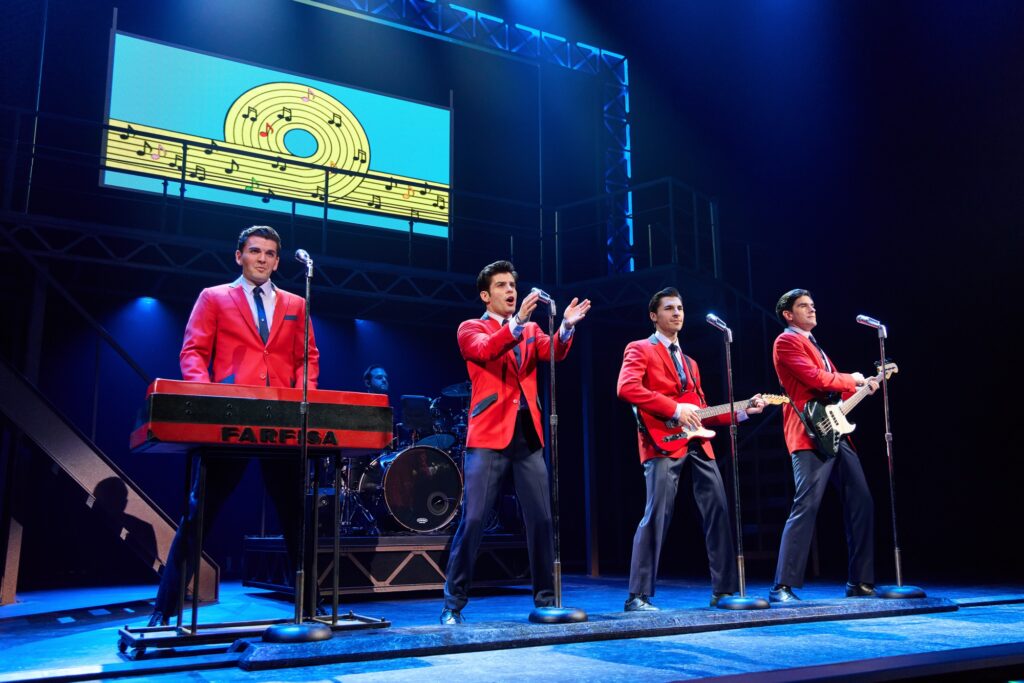
 That may be the greatest compliment I can give Jersey Boys: after six times, it still works. Officially kicking off just last week in Syracuse, this national tour arrives with an interesting distinction. While the 20th Anniversary Tour is a non-Equity production, the creative forces behind the original phenomenon remain very much in charge. Des McAnuff, the show’s original director, is back at the helm, while Sergio Trujillo, whose original choreography helped define the production, returns with his original choreography. I mention the non-equity status because a non-equity tour can, occasionally, be scaled-down considerably from a show’s Broadway run. Perhaps, because this tour has been so hands-on with the full cooperation of the original creative forces, this incarnation doesn’t feel like any expenses were spared, no corners were cut and no holds barred for this landmark anniversary tour. For the show’s two and a half hour runtime, I’m confident that the entire audience at TPAC would tell the cast our eyes and ears adored them!
This isn’t just another jukebox musical. This is a show with some serious hardware in its trophy case: the Tony Award for Best Musical, the Laurence Olivier Award for Best New Musical and the Grammy Award for Best Musical Show Album. Twenty years after its Broadway debut, it doesn’t take long to see why.
The genius of Jersey Boys has always been its storytelling structure. The show cheekily divides itself into Spring, Summer, Fall and Winter, giving a knowing wink to the name of the group while providing four distinct chapters in the lives of The Four Seasons.
Spring gives us the genesis—the young men, the dreams and the unlikely beginnings. Summer is the rocket ride, as the group discovers fame, fortune and what happens when those little songs they’ve been working on suddenly become enormous hits. Fall brings the cracks in the foundation: personal conflicts, financial problems, uncertainty and the realization that success can be every bit as complicated as failure. Then comes Winter, with its reflection, loss and the ultimate accolade: The Four Seasons’ 1990 induction into the Rock and Roll Hall of Fame. Not bad for some kids from Jersey.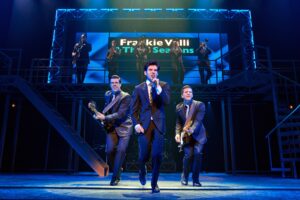
The cleverness of that four-season structure isn’t merely branding. It gives the show a natural dramatic progression while providing one of those delightful little theatrical winks that Jersey Boys is so good at delivering.
Of course, you can’t talk about Jersey Boys without talking about the music. And in the vernacular of the Jersey Boys, holy f’in jukebox, is there a lot of it. The production packs more than 30 songs, and this cast nails the vocal demands with the kind of precision that makes The Four Seasons’ famously distinctive sound seem effortless.
The Four Seasons’ musical catalog is so deep—they had 40 songs land on the Billboard Top 40—that there simply isn’t enough room in one musical to accommodate all those hits. The Playbill acknowledges that problem in particularly delightful fashion, with a footnote titled “The Ones That Got Away,” recognizing more than a dozen additional Four Seasons and Frankie Valli bangers that didn’t make the final cut.
But it’s not simply the quantity of the songs that makes this production sing. It’s the quality of the vocals. Audiences arrive knowing exactly how these songs are supposed to sound, from Valli’s unmistakable falsetto to those intricate Four Seasons harmonies.
This cast understands that assignment.
 As Frankie Valli, Coby Oram delivers the vocal precision you’d expect from a performer stepping into one of pop music’s most distinctive voices, but there’s also a strong emotional dimension beneath the falsetto. Valli isn’t simply the guy who sings the really high notes; we’re watching a young man grow into the person who ultimately has to carry the group forward. Oram is equally adept at hitting the high notes as he is knocking it out of the park during the show’s more tense relationship moments whether exploring his fractured family dynamic or the never-ending allegiance to his fellow hitmakers.
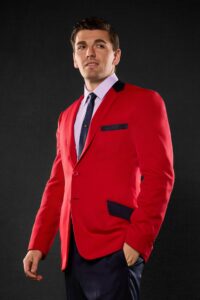 Peyton Schoenhofer brings youthful energy and confidence to Bob Gaudio, the songwriter whose creative contributions helped fuel the group’s remarkable run. His Gaudio possesses just the right combination of ambition, talent and youthful uncertainty. Schoenhofer exemplifies a great balance of Gaudio’s seemingly more sheltered upbringing–compared to the a couple of the other boys, who racked up police records before platinum ones–with an unexpected business savvy that would be a key element in his relationship with Valli.
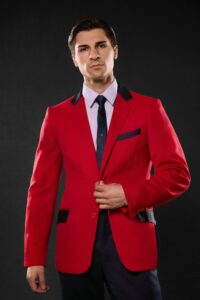 Harry Sperduto makes Tommy DeVito an entertainingly combustible force, bringing plenty of swagger and humor to a character whose ambitions ultimately come with a steep price. Tommy can be charming, funny, infuriating and reckless—and Sperduto keeps all of those qualities in play without reducing DeVito to a cartoon gangster. You know he’s good when, time after time of screwing over his bandmates, the audience still feels for him and cheers both his misdeeds and his achievements.
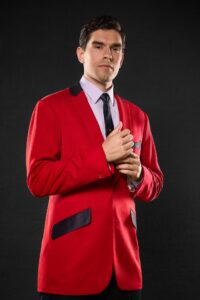 Owen McCredie gives Nick Massi the quietest member of the quartet a genuine presence, allowing us to understand the man beneath that reserved exterior. There’s a dry wit and simmering frustration beneath Nick’s reserved exterior, and McCreedie lets those qualities emerge naturally, making Nick’s eventual departure from the group on of the evening’s more effective moments. McCredie doesn’t let get lost amid all those bigger personalities, he crafts a careful, thoughtful presence. While Valli’s falsetto might have made him the bigger star, McCredie’s booming bass voice as Massi is swoon worthy.
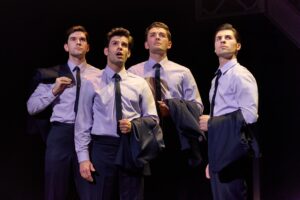
Together, the four are a cohesive, convincing unit—and that’s crucial. The Four Seasons weren’t four soloists who happened to stand next to each other. Their magic was in the blend. This cast gets it.
While the primary focus is of course on the aforementioned quartet, one of the strengths of this production is that Jersey Boys doesn’t treat its four principals as the only people worth watching. Andrew Sattler makes an especially memorable impression as Bob Crewe, bringing a larger-than-life theatricality to the eccentric producer and lyricist who becomes such an important part of the group’s story.
Nicholas Dion Reese gets the evening off to an energetic start with an updated, internationally flavored take on “Ces soirées-là,” better known stateside as “December, 1963 (Oh, What a Night!),” The Four Seasons’ final No. 1 hit from 1975. It’s an attention-grabbing opening that immediately announces that this isn’t going to be a sleepy trip through an oldies playlist.
Among the female members of the ensemble, Eliza Levy makes an impression as Mary Delgado and others, helping bring the women surrounding these four men into sharper focus rather than allowing them to become mere scenery in the boys’ story. While she’s initially written as a stereotypical Jersey girl, Delgado doesn’t rest on that, bringing dimension to what could easily be a throw-away role. Her vocals on the late Act 1 tune “My Eyes Adored You” in an adroit call and response opposite Oram’s Frankie, reveal a welcomed depth to not only her portrayal, but the classic song itself.
Another highlight in the supporting cast comes in Sarah Coleman‘s turn as Francine Valli particularly as the story begins exploring the one of the show’s more somber elements revealing the personal costs of Frankie Valli’s extraordinary career. It’s a relatively small role with only a couple of minutes on stage, but it’s one of the show’s most impactful. Coleman, like many of the supporting players appears throughout in a multitude of other roles, but it’s her brief time on stage as Valli’s daughter that stays with the audience.
And then there’s Joe Pesci. Yes, THAT Joe Pesci, as the script cheekily reminds us. The real Pesci was friends with the young Four Seasons, and his connection to the group is one of those almost-too-good-to-be-true details from their early history. Here, the role gets an especially fun Nashville twist thanks to Grant Weathington, a 2025 Belmont University graduate. For those in the TPAC audience who know that little bit of local trivia, it’s one more reason to enjoy the character when he pops up.
Speaking of Nashville, the Music City connection doesn’t stop there. One of the original members and creative forces behind The Four Seasons, Bob Gaudio, has been a Nashville resident since the 1990s. So when the show reaches its later “where are they now?” passage and mentions that Gaudio now spends his days on his boat in Nashville, the response from the TPAC audience was noticeably more enthusiastic than your average biographical footnote. There was definitely a little “That’s OUR Bob!” energy in the room. It’s a small moment, but it’s one of those details that makes seeing a touring production in its proper local context so much fun.
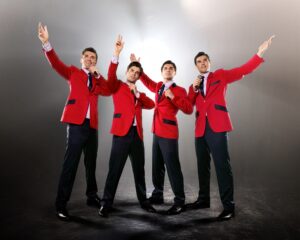 The remarkable thing about Jersey Boys after two decades (six decades if you count The Four Seasons’ real-life history) isn’t simply that the songs remain popular. It’s that the story still works. The musical understands that success stories are rarely as simple as the finished record. Behind every No. 1 hit are relationships, egos, debts, bad decisions, sacrifices, arguments and people trying to figure out what comes next.
That’s what keeps Jersey Boys from becoming nothing more than a jukebox with a plot. The music may be the sugar, but the complicated relationships are the substance. And the 20th Anniversary Tour gives audiences the best of both worlds: a production rooted in the staging that originally made the musical a Tony-, Olivier- and Grammy-winning phenomenon, now performed by a fresh cast with its own chemistry and energy.
Twenty years after Jersey Boys first took Broadway by storm, this new generation of Four Seasons proves that the songs still soar, the story still resonates and there are apparently still plenty of audiences willing to sing along. After six trips alongside The Four Seasons myself, I’m apparently still not ready to say goodbye. And really…why would I? Four seasons. More than 30 songs. Forty Top 40 hits. Twenty years. as one of modern theatre’s most beloved musical.Oh, what a night!
Catch the 20th Anniversary National Tour at Nashville’s TPAC September 16-20. CLICK HERE to purchase tickets or for more information. Following Jersey Boys TPAC’s 2026/2027 Season continues with The Sound of Music onstage October 13-18. Follow TPAC on TikTok, Instagram, YouTube and Facebook.
Not in Nashville? It’s likely Jersey Boys will be working their way back to you, so check them out on Facebook, X, Insta, TikTok, YouTube and Threads to see when it rolls into your city and find out why, two decades later, Jersey Boys remains one of Broadway’s most irresistible musical stories.
As always, if you wanna follow JHPEntertainment to find out who I’m chatting with for my next Rapid Fire Q&A, or for my take on the latest local and national theatre, music, arts and more, visit JHPENTERTAINMENT.com or find us on Facebook, Insta, Threads and X. Till then #GoSeeTheShow!
 RAPID FIRE 20Q WITH HAMILTON‘s ELIZA, LILY SOTO
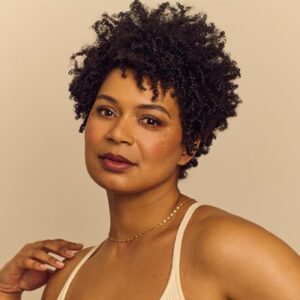 RAPID FIRE WITH HAMILTON‘s ANGELICA, MARJA HARMON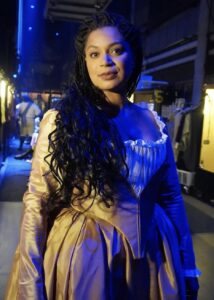
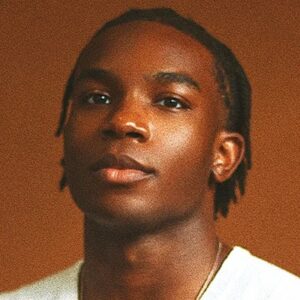 RAPID FIRE WITH HAMILTON PRINCIPAL STANDBY, CHIBUEZE IHUOMA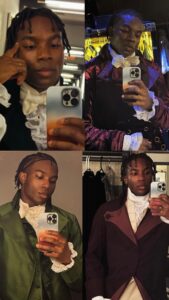
 RAPID FIRE WITH HAMILTON ASSISTANT SOUND ENGINEER, JOSHUA BOATMAN
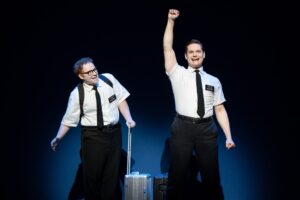 Leading the charge is Ethan Davenport, who takes on the pivotal role of Elder Price in this engagement. As Elder Price, Davenport embodies the character’s confidence, ambition and occasional arrogance with effortless charm. Blessed with a powerful Broadway tenor and an all-American leading man presence, he delivers “You and Me (But Mostly Me)” and the Act Two anthem “I Believe” with the kind of vocal confidence that anchors the entire production.
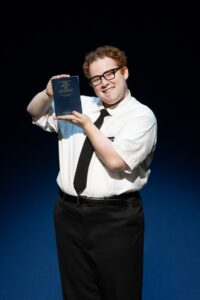 Opposite him, Jacob Aune’s Elder Cunningham is everything the role demands—awkward, lovable, wildly inappropriate and impossible not to root for. Cunningham is essentially a walking collection of half-remembered science fiction plots, social anxiety and misguided optimism & a bit of a walking, talking South Park character in human form, and Aune embraces every glorious second of it.
 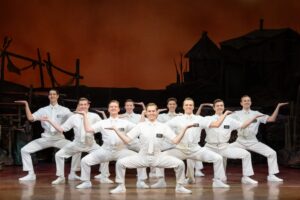 Yet it’s Craige Franke as Elder McKinley where Franke truly steals scenes. His performance of “Turn It Off” is a masterclass in comic timing, complete with dazzling choreography, impeccable facial expressions and enough jazz hands to illuminate Broadway itself. Heck, the featured ensemble during “Turn It Off” is simply tap-tactic. Having spent years with the company in multiple capacities, Franke understands this material inside and out, and it shows. His cheeky, campy cameo in “Scary Mormon Hell Dream”, helps make it a
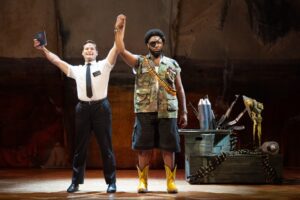 As The General, Shafiq Hicks delivers one of the production’s most commanding performances. Possessing a booming stage presence and undeniable authority, Hicks makes an immediate impression from the moment he appears. His performance of “Hasa Diga Eebowai” earns exactly the reaction one hopes for from first-time audiences: gasps, nervous laughter and a collective realization that The Book of Mormon intends to push every button it can find. Yet Hicks doesn’t just play the role as a caricature. Instead, he grounds the character in a reality that gives the surrounding comedy greater impact.
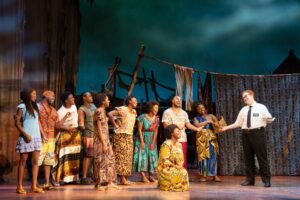 What continues to impress most about The Book of Mormon, however, is how successfully it balances satire with sincerity.
 RAPID FIRE WITH BOOK OF MORMON’s ELDER McKINLEY, CRAIG FRANKE
 RAPID FIRE WITH BOOK OF MORMON’s NABULUNGI, CHARITY ARIANNA
 RAPID FIRE WITH BOOK OF MORMON’s GENERAL, SAFIQ HICKS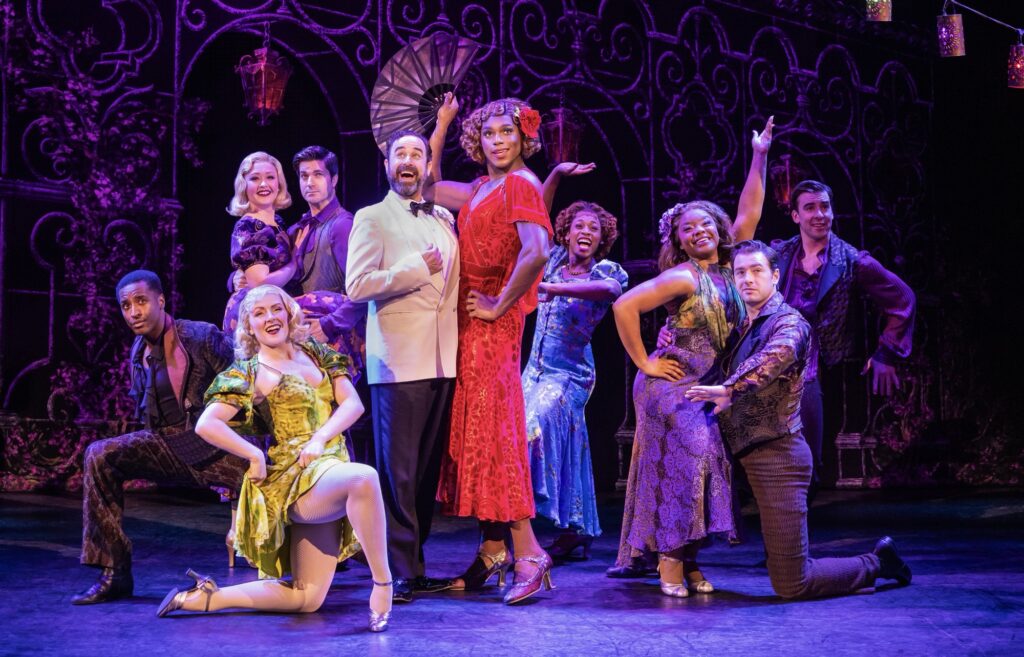
 One notable change is the role of Sweet Sue, bandleader of the all-girl band that serves as the perfect hiding in plain site destination for our two unintentional leading men, or should I say leading ladies? Little more than a brief appearance in the source material, Ruffin and Lopez wisely fleshed out Sweet Sue and as played by DeQuina Moore, we’re glad they did. Moore’s Sweet Sue doesn’t just open the show—she detonates it. Her “What Are You Thirsty For?” lands with the kind of electrifying force she herself described in our recent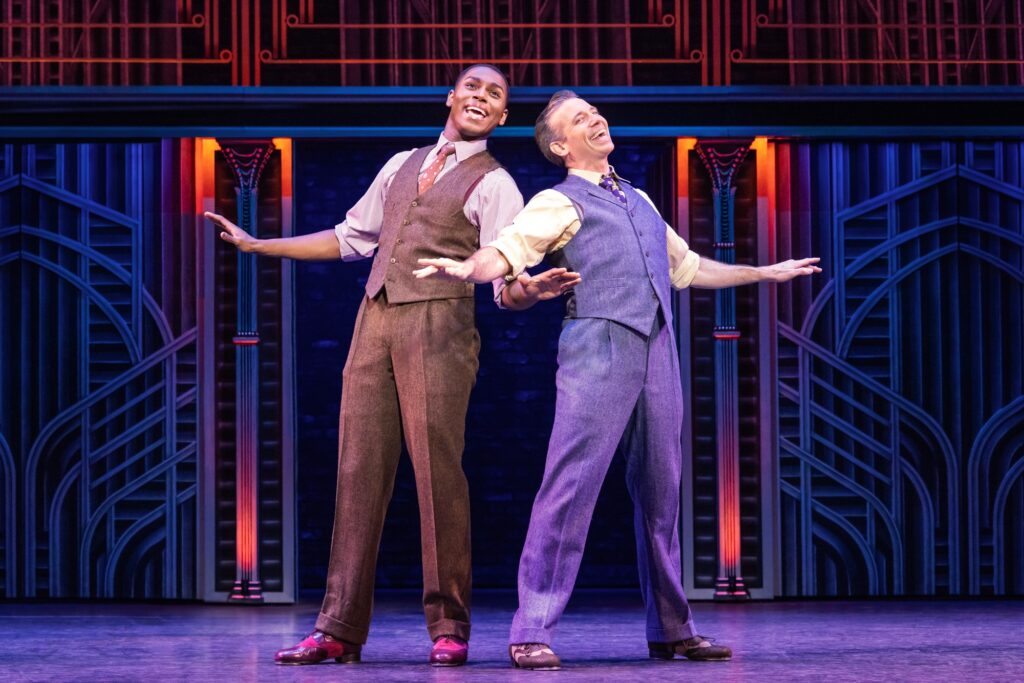
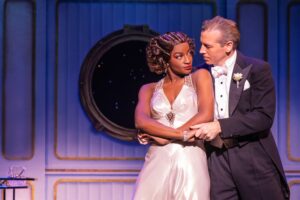 Leandra Ellis-Gaston’s Sugar Kane arguably comes with the steepest climb. Not because of the technical demands—though those are certainly present—but because Marilyn Monroe’s original Sugar remains so indelibly iconic. Wisely, the creators of the stage adaptation “understood the assignment,” sidestepping imitation entirely. By reimagining Sugar as a strong-willed, career-driven woman of color, the role becomes instantly unshackled from direct comparison—and Ellis-Gaston runs with it. With a speaking voice that lands somewhere between The Color Purple’s Squeak and legendary chanteuse Lena Horne, her Sugar is equal parts vulnerability and resolve. Sweet? Absolutely. But never simple.
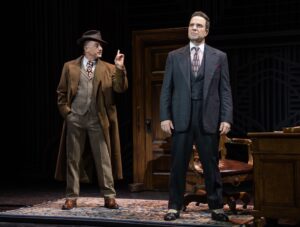 As G-man Mulligan, Matt Allen plays the essential “straight man” with surgical precision, anchoring the show’s more outlandish antics while quietly setting up some of its biggest payoffs. As he said in our recent Rapid Fire 20Q, that role is not only necessary but foundational in launching the show’s farcical momentum. And when he finally gets to dip into the madness—particularly in that delightfully ridiculous undercover sequence—it’s a payoff worth the wait.
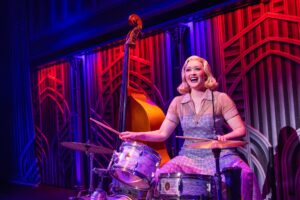 Minnie, Sweet Sue’s right-hand woman is revealed throughout as a bit of a sticky-fingered gal. One of the show’s running gags is her revelations of accidentally entering the wrong apartments thinking they were Sue’s and taking things that weren’t hers. To that end it makes perfect sense that Devon Hadsell’s Minnie is a scene-stealing delight, leaning fully into the character’s charming chaos and absconding with laughs each time she’s on the stage. There’s a lived-in sense of loyalty and mischief here, making Minnie far more than just comic relief. She’s an essential part of the heartbeat of the band. And that ever-present cigarette dangling from her ruby red lips, the kind of subtle sight gag that again perfectly pays homage to that 1930 prohibition-era Hollywood spirit. Side Note: When that Gregg Oppenheimer I Love Lucy play makes its way to Broadway, Hadsell has my vote for the Vivian Vance/Ethel Mertz role!
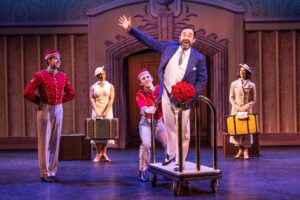 And then there’s Edward Juvier’s Osgood, who may just be the show’s most quietly radical reinvention. As he shared in our recent Rapid Fire 20Q, what drew him to the role was Osgood’s ability to lead with curiosity rather than judgment—and that ethos radiates throughout his performance. Where the film played him as the punchline, this version is in on the joke and, more importantly, in on the love. That shift—from caricature to fully realized romantic—becomes one of the production’s most meaningful evolutions.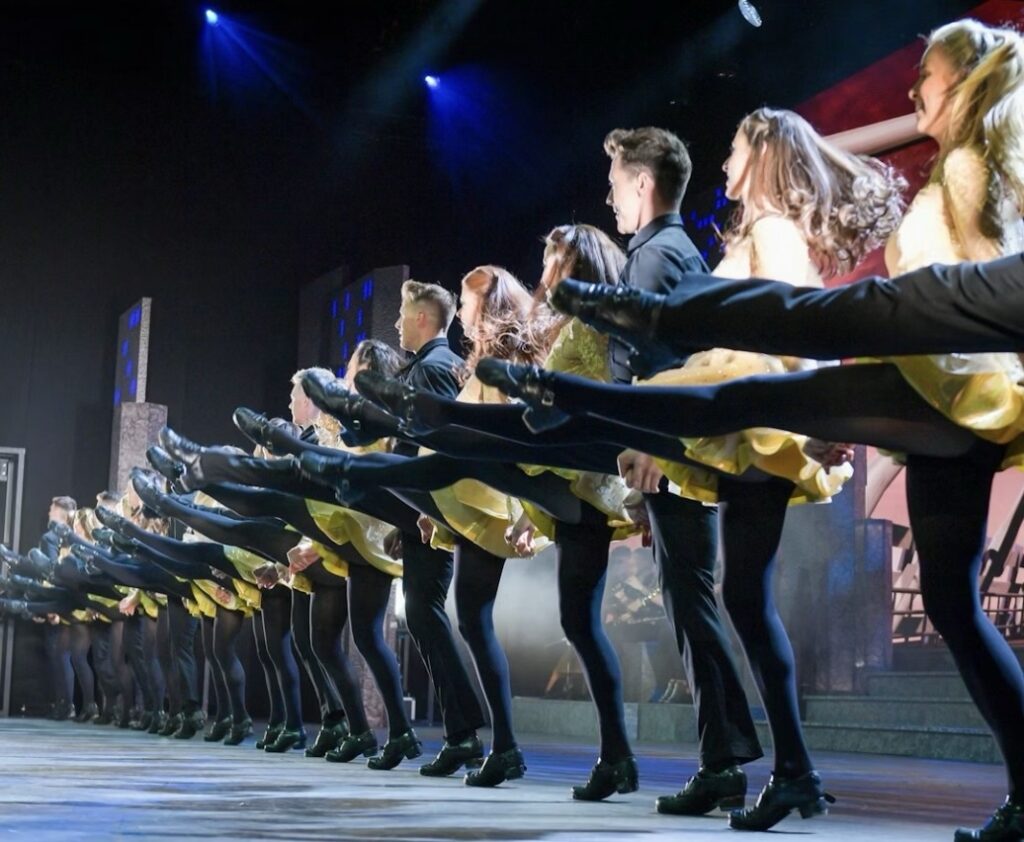
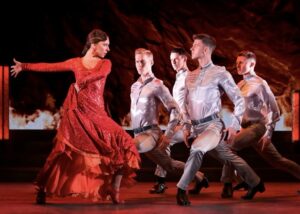 That said, when the show leans into its rhythmic intensity, it’s virtually unstoppable. “Thunderstorm” delivers one of Act I’s most exhilarating sequences, the male troupe unleashing a barrage of percussive footwork that feels both primal and impossibly precise. “Firedance” shifts the energy entirely, with flamenco soloist Rocio Dusmet Orellano commanding the stage in a fiery fusion of Irish and Spanish traditions—an arresting reminder of the show’s global reach.
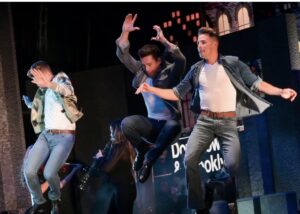 Act II opens with “American Wake,” a vibrant nod to the Irish diaspora, before launching into one of the production’s most visually and culturally compelling segments: “Trading Taps.” Featuring Riverdance Tappers Kenji Igus and Dharmesh Patel, the number unfolds—per state-of-the-art projections—Down Under the Manhattan Bridge Overpass (DUMBO), a detail my date for the evening, a former New Yorker, was quick to appreciate. Here, the show brilliantly illustrates how Irish rhythmic traditions echo through tap and hip-hop, creating a dialogue between styles that feels both historic and strikingly modern.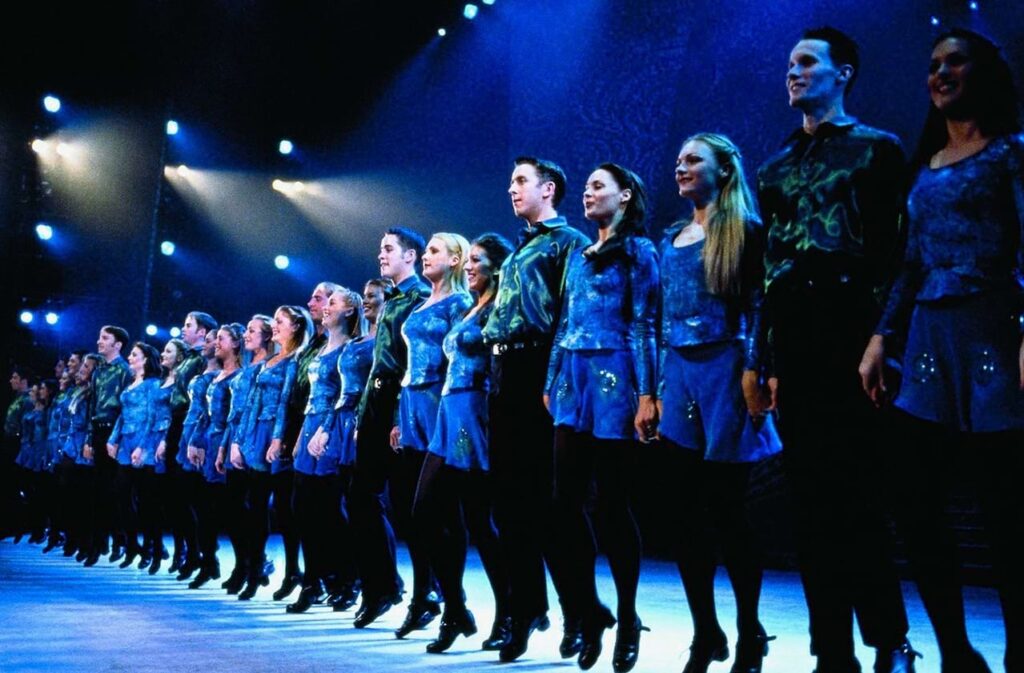
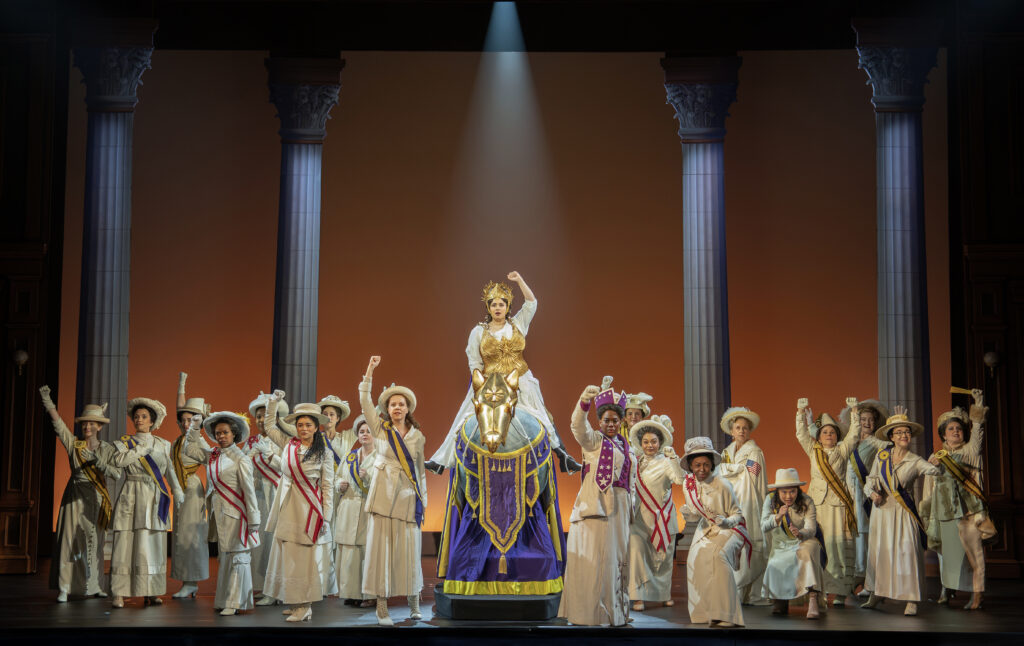
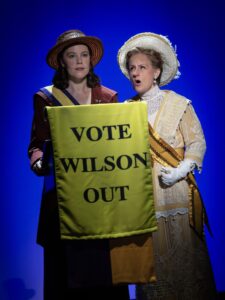 From the opening strains of the period-perfect ragtime-syncopated “Let Mother Vote,” maternally led by Mary Grandy‘s Carrie Chapman Catt and backed by a vocally powerful ensemble, Suffs makes it clear: this isn’t a museum piece. It’s a movement. The storytelling feels urgent, strong, and emotionally immediate—never preachy, always human.
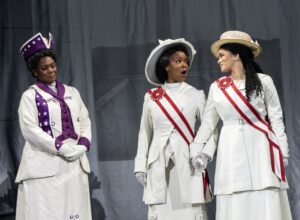 As Ida B. Wells, Danyel Fulton commands attention with moral clarity, emotional precision and powerhouse vocals to rival a certain recent Broadway Gypsy. “Wait My Turn” simmers with justified frustration, and when she returns in “I Was Here,” alongside Mary Church Terrell (Trisha Jeffrey) and Phyllis Terrell (Victoria Pekel), the moment lands as a declaration of presence that resonates well beyond the period setting. Speaking of Fulton’s co-stars, Jeffrey brings elegance and resolve to Mary Church Terrell, particularly in “Hold It Together,” serving as an emotional anchor amid political fractures. Meanwhile, Pekel’s Phyllis as well as a later turn as Robin, reinforce the vitality of youthful exuberance necessary for any movement to continue into the next generation. Whenever any of these three talented performers are on stage, the audience is mesmerized and treated to stunning vocals.
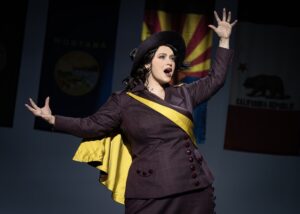 Monica Tulia Ramirez’s Inez Milholland radiates charisma in “The March (We Demand Equality),” which she leads alongside Fulton’s Ida and the ensemble in one of the production’s most visually arresting sequences. Act I’s “Show Them Who You Are” showcases Ramirez’s sass while Act II’s reprise flips the script to haunting results. Milholland’s personal life and sacrifices poignantly reveal the true dedication these powerful, but often unsung heroes of the moment possessed.
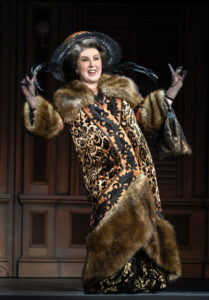 Laura Stracko‘s Alva Belmont is boisterously brilliant. Gotta love a socialist socialite. Act I’s “Alva Belmont” introduces the character in a big way. With another period-nod, “Alva Belmont” is presented as a toe-tappin’ Tin Pan Alley-style ditty complete with playful, yet pointed lyrics: “I divorced my husband for philandering. Now I’ve got his millions for philanthropy.” Flawlessly introducing the character. Interestingly, while not really relevant to the plot, I discovered while researching to interview some of the cast that the real Alva Belmont, a native of Alabama, has ties-by-association to Tennessee. Her maternal grandfather, Robert Desha was a U.S. House of Representatives for the state of Tennessee. In the years before her political activism, she was first married to William Kissam Vanderbilt, the grandson of Commodore Cornelius Vanderbilt (for whom Nashville’s Vanderbilt University was named).
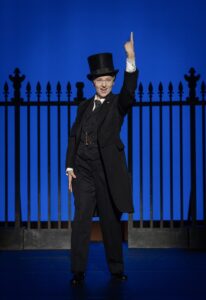 As President Woodrow Wilson, Jenny Ashman offers a sharply drawn portrayal. “Ladies” drips with calculated condescension (and sadly echoes a little too closely our current administration’s views on the arguably stronger sex, but I digress). Later in the show, Ashman’s Wilson attemps to placate with “Let Mother Vote (reprise)”, which lands with pointed irony. On Opening Night in Nashville, Ariana Burks stepped into the role of President Wilson’s Third Assistant Secretary of State Dudley Malone, a role usually played by Brandi Portert. Covering the role, Burks shines in “Respectfully Yours, Dudley Malone,” blending romantic sincerity with political awakening. Her chemistry with Marcus’ Doris in “If We Were Married” and its reprise adds warmth and texture to the broader narrative. Just one of a handful of relationships, while not at the center of the narrative, a wonderful aside. Other notable personal relationships alluded to within Suffs include sorority sisters Ida B. Wells and Mary Church Terrell, friends Alice Paul and Lucy Burns and longtime partners Carrie Chapman Catt and Mollie Hay.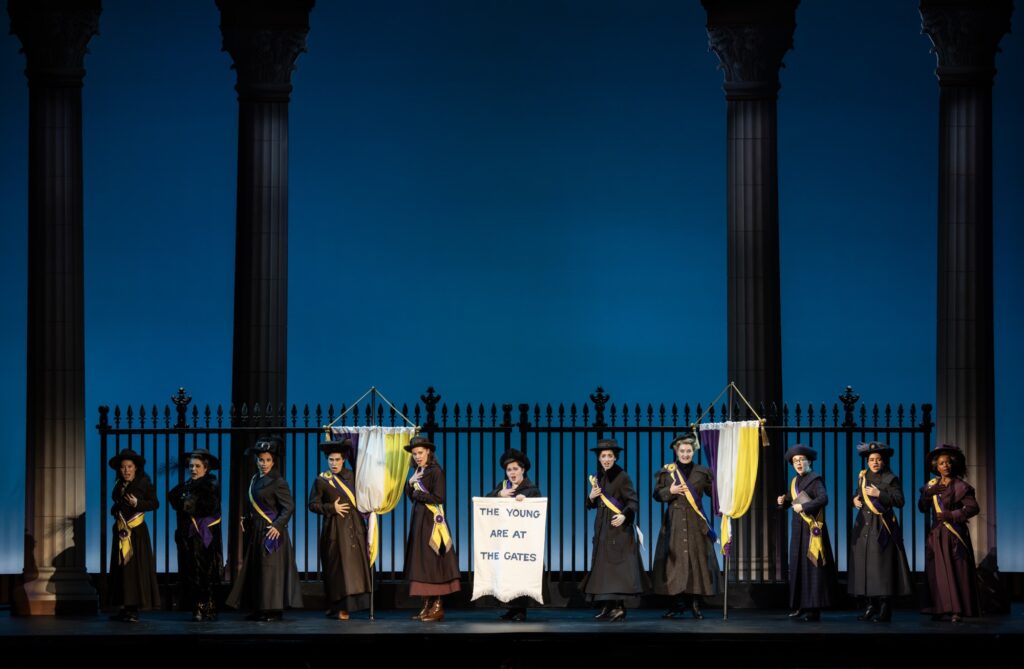
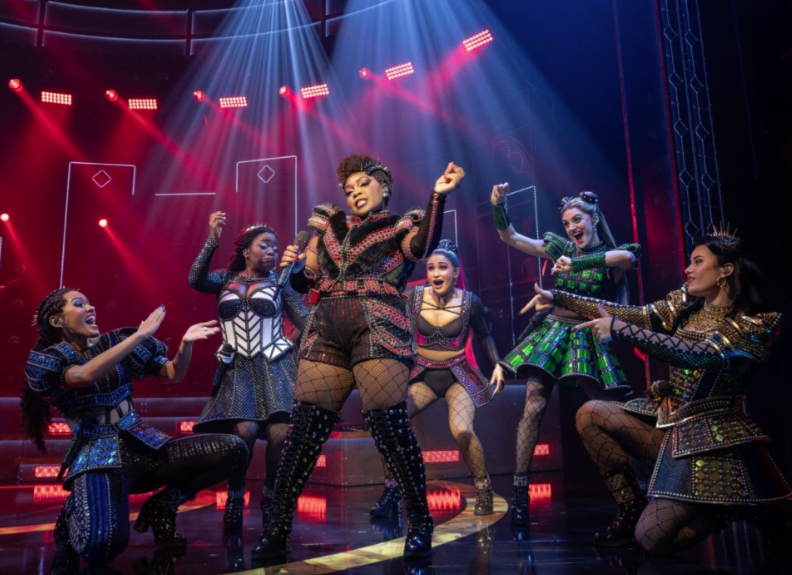
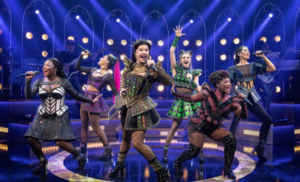 Emma Elizabeth Smith (Catherine of Aragon) steps forward first with “No Way”, clad in commanding yellow and gold with accents of black—a direct references to her Spanish roots, the wealth of the Spanish crown, and the opulence of the Catholic Church. The regal palette reinforces Catherine’s authority as the original Queen, while the structured corset and bold detailing give visual weight to her refusal to be dismissed. As Smith belts “I’m not sorry for my honesty,” the look radiates righteousness and resolve.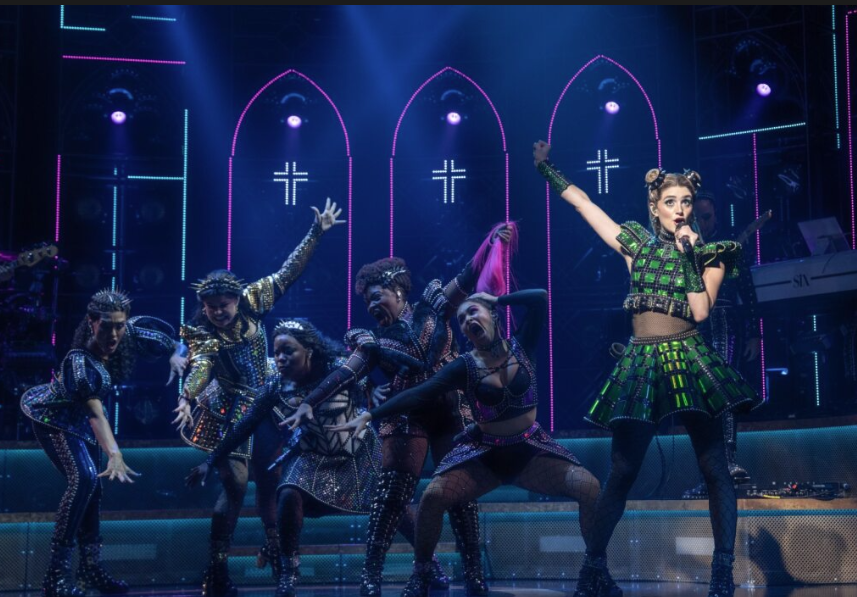
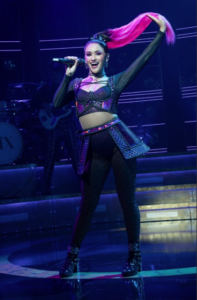 There’s an interesting shift in tone with Alizé Cruz (Katherine Howard) and “All You Wanna Do”. Her pink-and-black costume reflects youthful vitality layered with looming danger—the sweetness of pink undercut (no pun intended) by the severity of black. What begins flirtatious quickly curdles as the repetition of “All you wanna do, baby” exposes the song’s darker truth. As the lighting cools and the meaning sharpens, the visual contrast underscores just how trapped Howard truly is. It’s Britney‘s “Womanizer”, sing-songy and fun, but if the aggressor had access to the guillotine.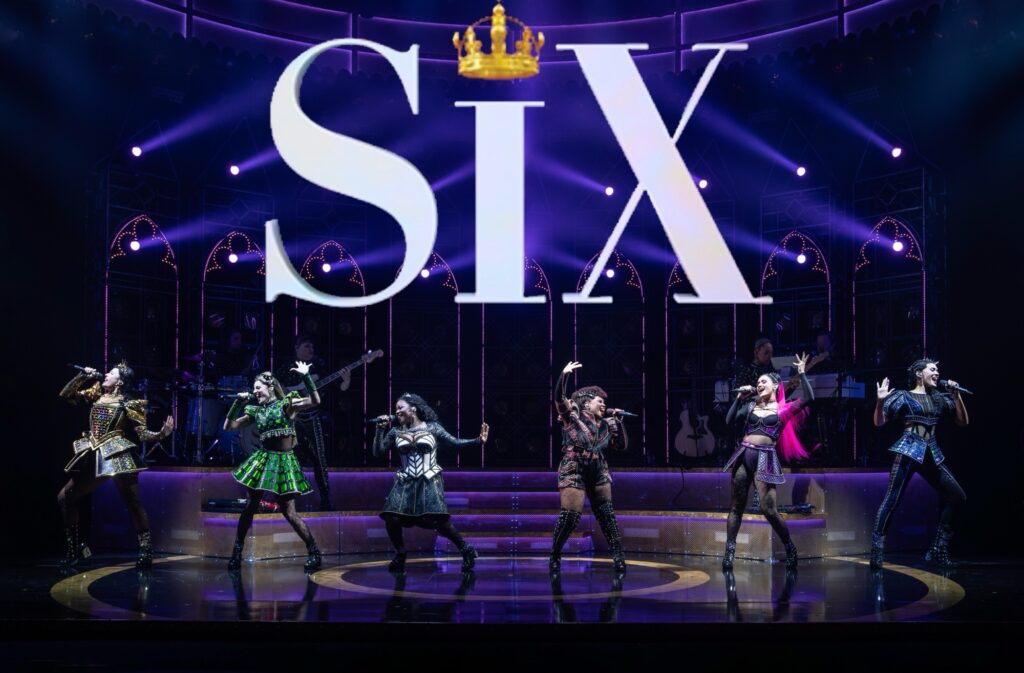
 RAPID FIRE WITH
  RAPID FIRE WITH
  RAPID FIRE WITH
  RAPID FIRE WITH
 RAPID FIRE WITH