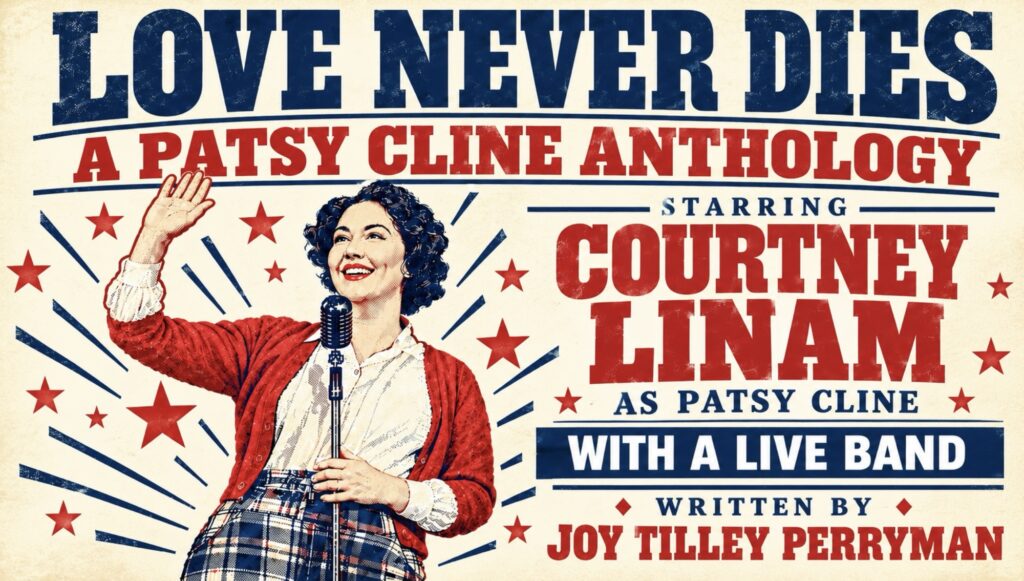
Some voices are simply unforgettable, and more than 60 years after her untimely death at just 30, Patsy Cline’s remains one of them. From the heartbreak of “I Fall to Pieces” and “Crazy” to the timeless appeal of “Walkin’ After Midnight,” her music continues to find new generations of fans, proving that some legacies really are built to last. Enter Love Never Dies: A Patsy Cline Anthology, an original theatrical tribute written by Joy Tilley Perryman and starring Courtney Linam as the legendary country songstress, accompanied by a live band. Rather than simply retracing the familiar milestones of Patsy’s life, Perryman takes a more intimate approach, imagining the singer reflecting on her journey in the moments before her final flight, weaving together memories, music, and the extraordinary story behind that unmistakable voice.
Linam and Perryman are bringing Patsy’s story to The Venue at Coosa Landing in Gadsden for two performances, November 7 and 8. Love Never Dies: A Patsy Cline Anthology is just the latest in a creative partnership has included costarring in both The Ritz’s 2024 presentation of Steel Magnolias and last year’s Queens of Heart at The Local Scene. Having reunited this past summer to present the anthology debut performances in Atlanta in July, then again just last month in nearby Oneonta, Alabama, this week’s presentation marks the show’s Gadsden premiere.
From discovering the woman behind the iconic voice and recreating her signature look to the inspiration behind an original Patsy Cline musical, Perryman and Linam’s latest creative adventure has plenty to dish about. JHPENTERTAINMENT caught up with both women for a Rapid Fire 20Q about the music, the memories, the magic of collaboration, and why, when it comes to Patsy Cline, Love Never Dies.
RAPID FIRE 20Q WITH LOVE NEVER DIES: A PATSY CLINE ANTHOLOGY STAR AND PLAYWRIGHT
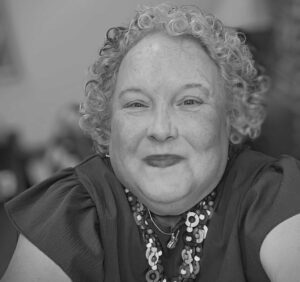 RAPID FIRE WITH LOVE NEVER DIES: A PATSY CLINE ANTHOLOGY PLAYWRIGHT, JOY TILLEY PERRYMAN
JHPENTERTAINMENT: When did the idea of creating Love Never Dies: A Patsy Cline Anthology first begin to take shape?
JOY TILLEY PERRYMAN: Courtney had played Patsy in Theatre of Gadsden’s production of Always…Patsy Cline. I did the costumes for that show and we had a great time working on together and she makes an utterly fantastic Patsy. Then a year later our dear friend, Mike Beecham approached us about bringing a Patsy show to his theatre in Atlanta. But he wanted something different that what was already out there, so I just decided to write a new show!
JHPENTERTAINMENT: For those who might be familiar with other Patsy Cline stage musicals like Always…Patsy Cline and A Closer Walk with Patsy Cline, what makes Love Never Dies: A Patsy Cline Anthology unique?
JOY TILLEY PERRYMAN: To write this show, I wanted to make it more of a memory play. As if Patsy were looking back on her life in those moments before the plane went down. So we start at the end. The last concert where Patsy performed was on March 3, 1963 at Soldiers and Sailors Memorial Hall in Kansas City, Kansas, It was a benefit for DJ “Catcus” Jack Call. The last song she ever sang was “I’ll Sail My Ship Alone”. The lyrics are haunting and that is where we start our show and then back in time to her beginnings at the Grand Ole Opry.
JHPENTERTAINMENT: Beyond the basic biographical details and familiar stories most fans know, were there lesser-known aspects of Patsy’s life, personality, relationships, or career that particularly surprised you or helped shape the anthology?
JOY TILLEY PERRYMAN: Sitting down to decided the songlist and put the songs in some kind of order, made me really see how sad and tragic her life truly was. Besides the tragedy of a far too early death, Patsy overcame many hardships along the way.
JHPENTERTAINMENT: During her all-too-brief career as a recording artist, Patsy recorded more than 100 songs. Aside from the more familiar hits, have you included any deep-cuts to tell this story?
JOY TILLEY PERRYMAN: The very first song is an extremely deep cut and it was quite difficult to find the sheet music. We never found it in Patsy’s key and had to have it transposed. Once you hear it it context of the show it is haunting and beautiful and totally perfect.
JHPENTERTAINMENT: You and Courtney have worked together repeatedly. What makes Courtney someone you keep coming back to as a creative collaborator, and how has your working relationship evolved over the years?
JOY TILLEY PERRYMAN: I cannot really talk about Courtney without getting all gushing and fangirling and being all sentimental. She is one of the most talented people I have ever known. She stepped into my life at a time when I most desperately needed a creative collaborator and a dear friend. She is a superstar in all those regards. I cannot express how much she means to me and how blessed I am to call her friend. We joke and call ourselves the Bad Decision Sisters, but she is right by my side no matter how nutty the plans get or how impossible the project seems. Look out for our next venture! We are opening a booth at an antique mall called Bad Decision Sisters Shop! Coming at the end of November to Kolectic Treasures in Rainbow City, Alabama.
JHPENTERTAINMENT: You’re wearing several hats with this production: playwright, collaborator, and costumer. As costumer, how do you balance historical authenticity with the practical demands of a live theatrical performance?
JOY TILLEY PERRYMAN: I have scoured hundreds of images of Patsy Cline. And I was able to recreate looks with modern fabrics so there is no worry about damaging an historical garment. I think I most proud of her first costume. It is almost an exact replica of the gown Patsy wore in her last concert and it appears onstage for exactly one song!
JHPENTERTAINMENT: Patsy’s songs are famous for their emotional honesty, whether she’s singing about heartbreak, longing, resilience, or love. If Patsy were around today, what recent song might she have covered?
JOY TILLEY PERRYMAN: So, lately we don’t have the girl singers that we used to have (sorry Ella, I do love you) so I think Patsy would have had to take a man’s song and change the perspective so it could be sung by a woman. For my money the best song this year as far as story telling and longing and just good music is Graylan James’ “Water at a Wedding”. I think Patsy would have worked that to suit her.
JHPENTERTAINMENT: Patsy was only 30 when her life ended, but her career was already transforming the sound and reach of country music. As the writer looking at the full arc of her story, where do you imagine her career might have taken her had she lived to continue recording and performing for decades to come?
JOY TILLEY PERRYMAN: I believe she would have continued to make hit records and be at the top of the charts until she decided she was ready to scale it back and enjoy grandkids and retirement.
JHPENTERTAINMENT: The title Love Never Dies feels particularly fitting for an artist whose music continues to connect with people long after her passing. Why was that the right title for this anthology, and what do you hope audiences understand about Patsy’s enduring legacy when they leave the theatre?
JOY TILLEY PERRYMAN: That phrase actually comes from part of the inscription on her tombstone. I hope that people will walk away with a new or deeper appreciation for her music and her legacy and the knowledge that as long as we continue to sing her music, the love never dies.
JHPENTERTAINMENT: Having already presented Love Never Dies in Atlanta and nearby Oneonta and now bringing it to Gadsden for these two performances, have you and Courtney discussed taking the production on the road? Are there any plans for other cities eventually have the opportunity to experience your Patsy Cline anthology? I mean…Nashville is always up for a visit from you…just sayin’.
JOY TILLEY PERRYMAN: Having debuted this show back during the summer in Atlanta with EPIC Productions, this is our third production of the show. We are ready to go any and everywhere that will have us! Just give us a call and you know I am always ready to come back home to Music City!
 RAPID FIRE WITH LOVE NEVER DIES: A PATSY CLINE ANTHOLOGY‘s COURTNEY LINAM
JHPENTERTAINMENT: Patsy Cline remains one of country music’s most beloved and influential voices, more than six decades after her death. What do you think it is about her voice, her music, and her story that continues to resonate with audiences across generations?
COURTNEY LINAM: Honesty. When Patsy sings, you believe every word, because she isn’t performing heartbreak, she’s living it right there in front of you. Her voice had this rare combination of power and tenderness. Her story matters too. She was a small-town girl from Virginia who fought her way into a business that didn’t make much room for women and she did it on her own terms. People still connect to that. Every generation has someone who’s been lonely, or lovesick, or underestimated, and Patsy’s songs meet them right where they are.
JHPENTERTAINMENT: Every actor who portrays a legendary performer faces the challenge of honoring the original while bringing something of themselves to the role. How did you go about finding your Patsy Cline voice, and how do you balance imitation with interpretation?
COURTNEY LINAM: I listened. A lot. In the car, in the kitchen, before bed. I studied her phrasing, those little catches in her voice I refer to them as Patsy-isms, the way she’d lean into a note and then let it fall. Nobody can replace Patsy, and I’d never want to try. So my goal is to honor her style and her signature sound while singing from my own heart. The imitation gets you in the door; the interpretation is what makes people feel something. I want the audience to feel like they’re spending an evening with Patsy, not watching a copy of her.
JHPENTERTAINMENT: Patsy was primarily a country artist, but her music crossed genres, earning her success on the pop charts as well. She was also part of the emerging Nashville Sound and recorded gospel music. How does exploring those different sides of her musical legacy influence your approach to portraying her?
COURTNEY LINAM: It reminds me that she was never just one thing. You’ve got the early honky-tonk Patsy, the cowgirl who could sing a rowdy, up tempo number, and then you’ve got the polished Nashville Sound Patsy with the strings and the smooth backing vocals, singing ballads that made the pop charts. And then the gospel side, which shows you where so much of that feeling came from. Each style asks something different of me vocally, but more than that, each one reveals a different side of who she was.
JHPENTERTAINMENT: Patsy had a distinctive look as well as an unmistakable voice. With Joy Tilley Perryman serving as both the playwright and the show’s costumer, how much collaboration goes into bringing Patsy’s appearance to life? And do you have a favorite Patsy look or era that you especially enjoy recreating?
COURTNEY LINAM: So much! Joy has such an eye for detail, and because she wrote the show, she knows exactly what each moment needs to say, so the costumes are telling the story right along with the songs. We talk through every look, how it fits the era, how it moves on stage, and of course whether I can breathe and sing in it! As for a favorite, I have a real soft spot for the western-style outfits from her early years, the fringe and the boots. There’s something so spunky and fearless about that Patsy.
JHPENTERTAINMENT: In additon to this collaboration, you’ve also costarred alongside Joy in a couple of shows, so you’ve experienced her as a fellow performer as well as a writer. How is working with Joy the playwright different from working with Joy the costar?
COURTNEY LINAM: As a costar, Joy is just so incredible. I’ve loved watching her work and learning from her as a fellow actress. As a playwright, she’s the keeper of the vision. She knows why every line and every song is where it is, and she can tell you exactly what she’s hoping a scene will make the audience feel. What’s the same in both is her heart. Joy wrote this show as a love letter to Patsy, and the fact that she created this role with me in mind means more to me than I can say. And she’s not only beside me on stage or watching from the house. She’s also on the sidelines, because she has been my “dresser” in every production in which I’ve portrayed Patsy Cline, and this will be my fourth time! She stays so calm during those really fast changes, and that allows me to stay in character. We laugh because I’ve become so needy of her being my dresser, although I know one day I’ll have to let her go so she can just relax and enjoy the show. Wherever she is, I always know she’s got my back.
JHPENTERTAINMENT: Love Never Dies is presented with a live band, which brings its own energy and immediacy to Patsy’s music. What can you tell me about the musicians accompanying you?
COURTNEY LINAM: Oh, I am so incredibly lucky! We’ve got Deborah Sarcinelli on piano, Sid Brown on drums, Rob Bruce on guitar, Nick Staff on bass, and Butch Dixon on pedal steel. Every one of them is incredibly talented, and together they bring so many years of musical experience to this stage. The second that band starts playing, you’re transported straight back to 1960s Nashville. Honestly, the music they make is so beautiful that sometimes I get lost in it and almost forget I’m supposed to be singing! A live band changes everything.
JHPENTERTAINMENT: The show features nearly 30 tunes recorded by Cline during her career. Is there a particular song in the anthology that feels especially personal to you, or one that challenges you in a way the others don’t?
COURTNEY LINAM: “Crazy” is the one that challenges me every single time. Everyone knows it, everyone has her version in their head, and it’s deceptively hard. It’s slow, it’s exposed, and the phrasing has to feel effortless even though it’s anything but. As for personal favorites, I love singing “Two Cigarettes in an Ashtray.” It tells such a great story, and it’s so much fun to sing. I also really love “Eyes of a Child.” It’s so hopeful and beautiful, and between the song and the gorgeous dialogue Joy wrote leading into it, I get chills every time. They’re two very different songs, so it’s hard to pick just one!
JHPENTERTAINMENT: Joy’s theatre background covers a lot of bases, having been an actress, costumer, playwright, producer and more. Does having a collaborator who understands the material from so many different angles help you inhabit Patsy and tell her story?
COURTNEY LINAM: Absolutely. Joy understands what it feels like to be the one standing in the light, so when she gives a note, she knows what she’s asking of an actor. But she also sees the whole picture: the costumes, the pacing, the music, what the audience needs and when. That means nothing is an afterthought. When everything around me is so thoughtfully built, I can stop worrying about the details and just be Patsy. That kind of trust is rare, and it frees me up to go deeper every performance.
JHPENTERTAINMENT: Patsy’s life and career were tragically cut short when she died at just 30, yet her influence has only grown. When you think about the years of music and artistic evolution she never got to experience, what do you imagine the next chapter of her career might have looked like?
COURTNEY LINAM: I think about this all the time. She was only just getting started. I imagine she would have kept crossing over. She had the voice for pop, for torch songs, even for jazz standards, and I can picture her on the big Las Vegas stages and on television variety shows. I also think she would have become a mentor. She was already looking out for younger women like Loretta Lynn, and I believe she would’ve been a fierce advocate for women in country music for decades. In true Patsy fashion,she would have kept doing it all her own way.
JHPENTERTAINMENT: After revisiting Patsy’s life and music through this anthology, what do you hope audiences will take away about the woman behind the songs—and what do you hope they carry with them after the final note?
COURTNEY LINAM: I hope they see that behind the legend was a real woman: funny, tough, loving, sometimes stubborn, and deeply devoted to her family and her friends. She wasn’t just a voice on a record; she was a person who fought hard for her dreams and gave everything she had to her music. And after the final note, I hope people carry home the memories of their own loved ones that come rushing back when they hear those Patsy songs. Patsy’s music has always kept me close to the memory of my Meemaw, and I know so many people in that audience have someone they think of when “Crazy” or “Walkin’ After Midnight” comes on. The people we love, and the music that moves us, don’t really leave us. Patsy’s grave marker reads, “Death cannot kill what never dies: Love”. Patsy’s been gone more than 60 years, and she’s still filling rooms with feeling. That’s a legacy worth celebrating.
Love Never Dies: A Patsy Cline Anthology starring Courtney Linam as Patsy Cline, with a live band, in an original production written by Joy Tilley Perryman and presented by Joy’s Jubilations arrives at The Venue at Coosa Landing (201 George Wallace Drive, Gadsden, AL 35903) for two performances, Saturday, November 7 at 7:30pm and a Sunday matinee November 8 at 2:30pm. Tickets are $22.37 (fees included). All seating is General Admission with doors opening half and hour prior to each showtime. Purchase Tickets HERE.
To keep up with Joy’s Jubilations and what’s next, find them on Facebook. And as Perryman mentioned, something tells me a Bad Decision Sisters Facebook page is in the works for this dynamic duo’s non-theatrical endeavors.
As always, if you wanna follow JHPEntertainment to find out who I’m chatting with for my next Rapid Fire Q&A, or for my take on the latest local and national theatre, music, arts and more, visit JHPENTERTAINMENT.com or find us on Facebook, Insta, Threads and X.
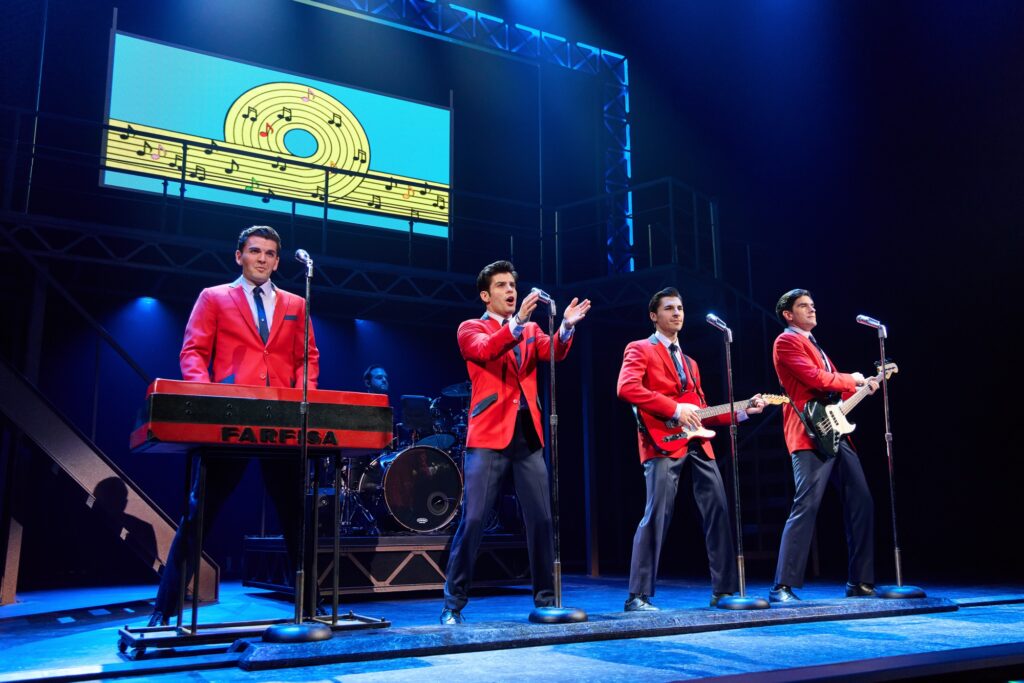
 That may be the greatest compliment I can give
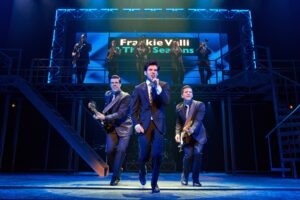
 As Frankie Valli,
 Peyton Schoenhofer
 Harry Sperduto
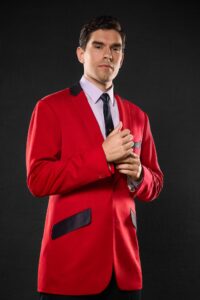 Owen McCredie
 The remarkable thing about
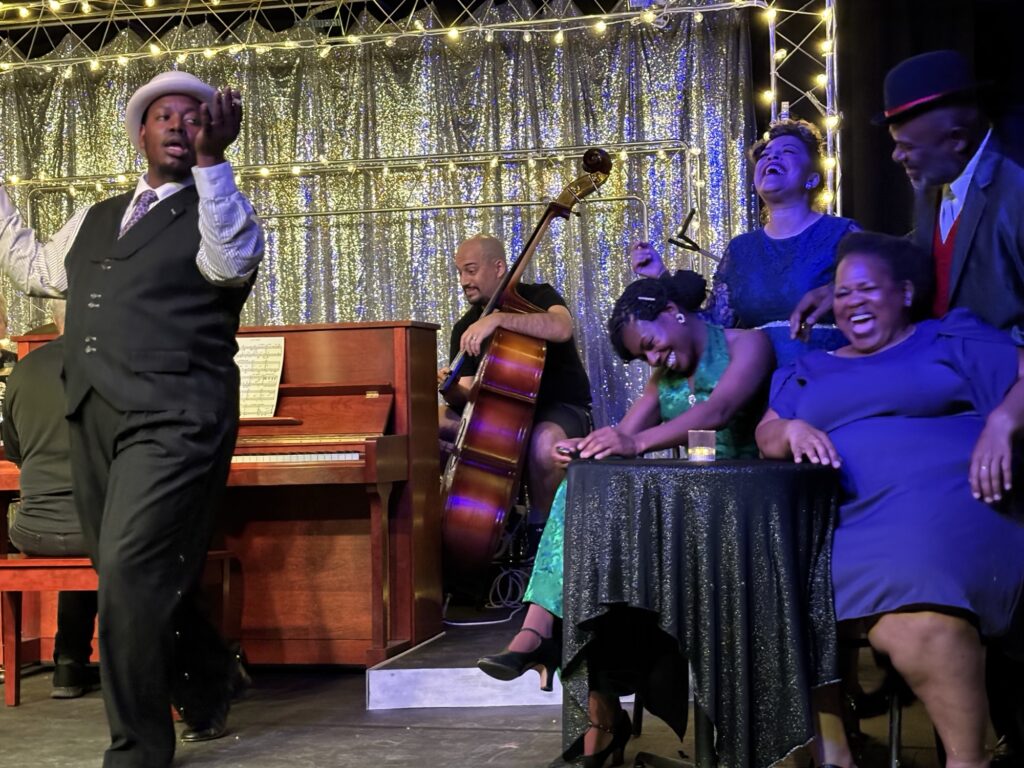
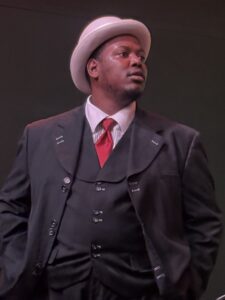 Isiah Rankin, pulling double duty behind the scenes as the show’s music director helps shape a score that feels authentic, alive and wonderfully spontaneous. Performing as Andre, Rankin brings an easygoing best-friend, wing-man energy to nearly every scene he inhabits. Whether leading the slyly playful “T Ain’t Nobody’s Biz-ness If I Do,” joining the delightfully flirtatious “How Ya Baby,” or bringing swagger to “The Viper’s Drag,” he consistently demonstrates both vocal confidence and magnetic stage presence.
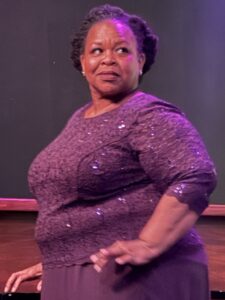 Yolanda Treece, performing as Nell, emerges as one of the production’s most engaging personalities. Possessing a remarkable ability to connect with the audience through nothing more than a wink, an eye-roll or a flirtatious grin, Treece makes every moment feel personal. Her spirited rendition of “Cash for Your Trash” earns plenty of laughs, while “Mean to Me” reveals a deeper emotional vulnerability. By evening’s end, it becomes clear she knows exactly how to work a room…and we’re all better for it.
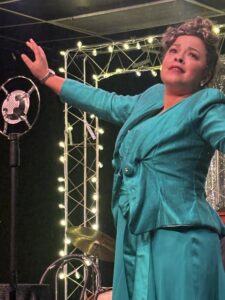 Lisa Graham’s Armelia is powered by boundless energy and a voice capable of effortlessly navigating Waller’s jazz-infused melodies. Her playful “Squeeze Me” is an Act 1 standou, while later numbers such as “Find Out What They Like”, alongside Treece showcase both her comic timing and vocal precision. Graham consistently finds fresh colors within each song, making every appearance memorable.
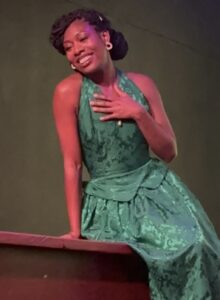 Raven Buntyn proves herself the show’s most versatile performer. One moment she’s the provocative, self-assured Charlaine commanding attention during “Yacht Club Swing.” The next she’s leaning into a more innocent, delightfully ditzy persona. Buntyn handles every shift seamlessly, while her heartfelt “Keepin’ Out of Mischief Now” offers one of the evening’s loveliest vocal moments.
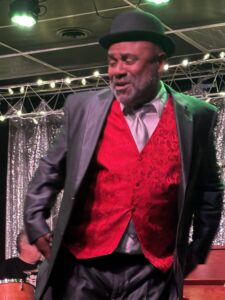 As Ken, Elliott Robinson demonstrates remarkable ease navigating both sides of Waller’s catalog. He is equally comfortable delivering laugh-out-loud comedic lyrics as he is tackling material with deeper emotional resonance. His charming performance of “Honeysuckle Rose” helps establish the production’s playful tone early on, while “I’m Gonna Sit Right Down and Write Myself a Letter” becomes one of Act Two’s most satisfying highlights.
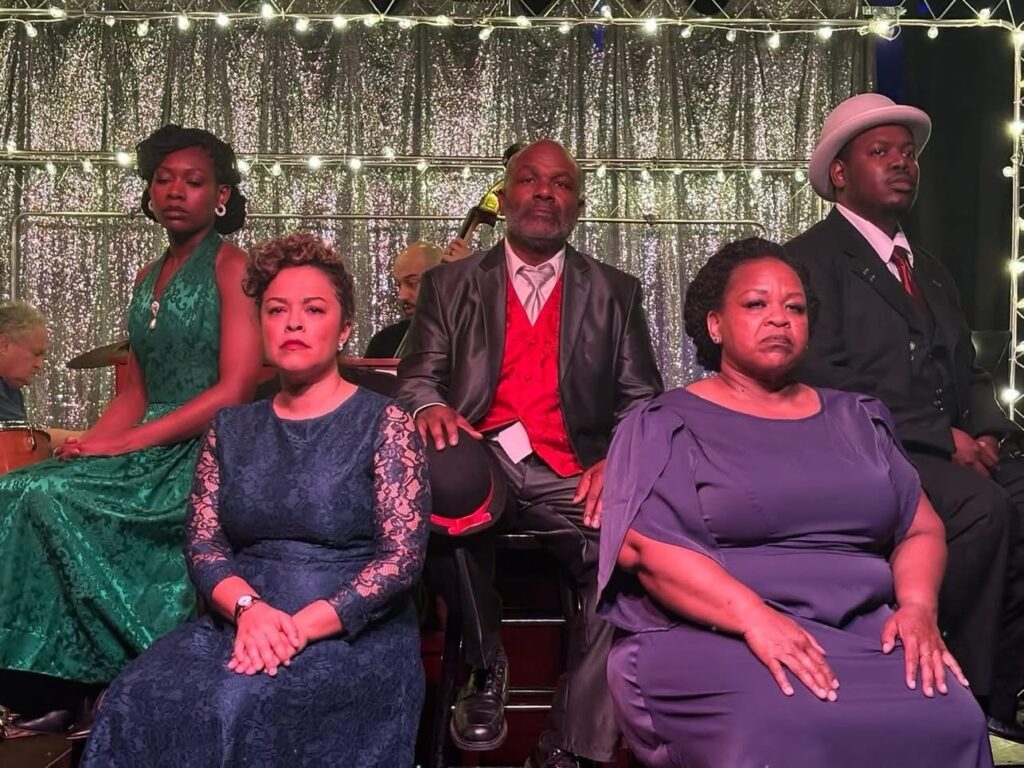
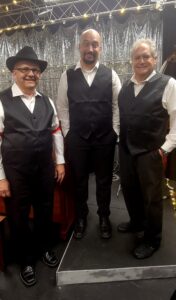 The decision to position the musicians directly onstage pays immediate dividends.
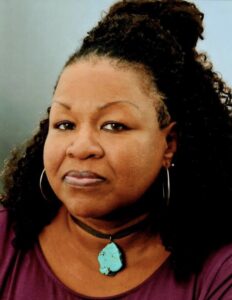
 RAPID FIRE WITH AIN’T MISBEHAVIN’’s ISIAH RANKIN
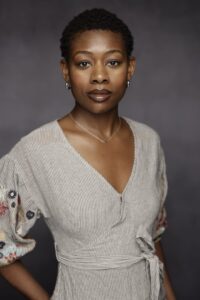
 RAPID FIRE WITH AIN’T MISBEHAVIN’’s YOLANDA TREECE.

 RAPID FIRE WITH AIN’T MISBEHAVIN’’s RAVEN BUNTYN


 At the center of the production is Zachary Keller as Jacob Jankowski, the grieving veterinary student who impulsively abandons his former life and jumps aboard the Benzini train. Keller anchors the production with a grounded sincerity and a soaring vocal performance that gives emotional weight to Jacob’s internal struggle between safety and risk, logic and passion. His voice carries a warm ache throughout the evening, particularly in moments when Jacob wrestles with the moral compromises surrounding the circus and his growing connection to Marlena. There are moments within Keller’s performance that the entire audience falls in love with his Jacob. Heck, there are moments his near-perfect pitch vocals fill the venue so melodically that you even wonder if he needs a mic. A true testament to his skills and those of the show’s sound designer Walter Trarbach and the entire technical team.
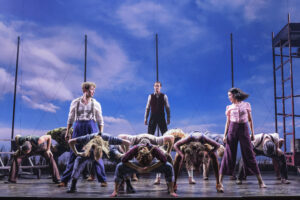 Opposite Keller (and Tully), Helen Krushinski delivers a luminous performance as Marlena, the circus star trapped inside an increasingly dangerous marriage. Krushinski possesses the kind of voice that cuts cleanly through the orchestrations without ever losing emotional nuance. She brings both fragility and fierce determination to Marlena, avoiding cliché and instead presenting a woman desperately searching for dignity and freedom amid chaos. Like so many of her ensemble cast mates, Krushinski also demonstrates a bit of impressive arial skills, adding a literal and figurative extra layer to her performance.
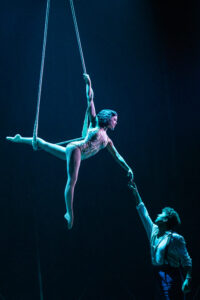 And yes — the aerial and acrobatic work is extraordinary. This production understands that circus artistry should not simply interrupt the narrative; it should become the narrative. Silks, balancing acts, lifts, and gravity-defying choreography emerge organically from the emotional life of the story. The transitions feel seamless rather than showy for the sake of applause. From the jump, as the circus ‘crew’ is setting up shop at their latest stop, even the pounding of the tent-stakes into the ground and the raising of the tent becomes a cadenced ballet of movement, acrobatics and mind-boggling balance and strength. This elegance of motion and bodily discipline becomes another character throughout.
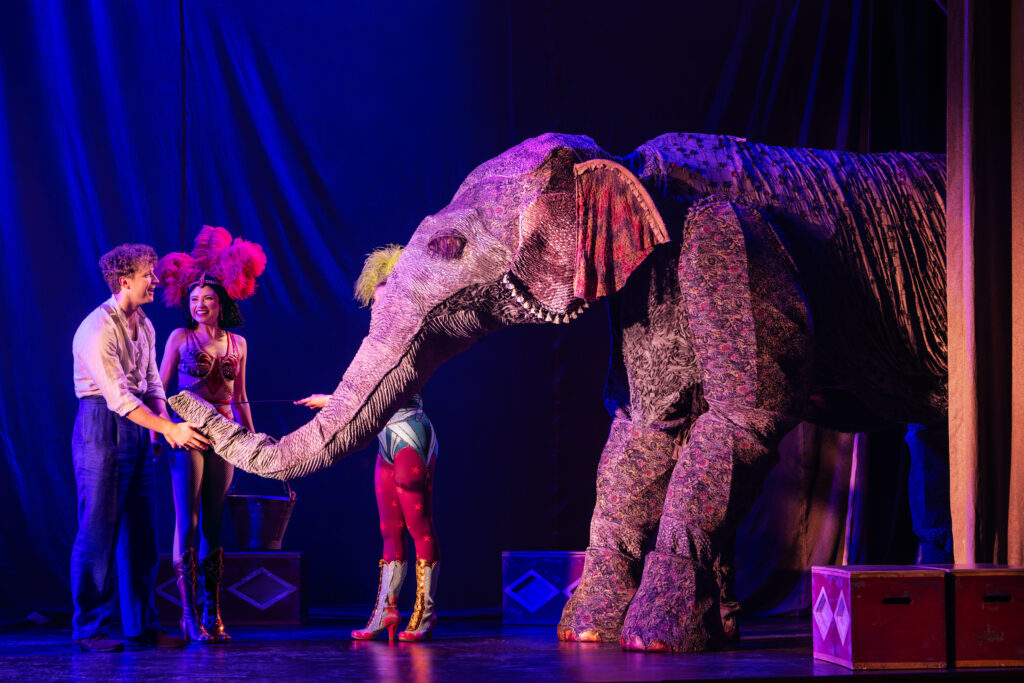
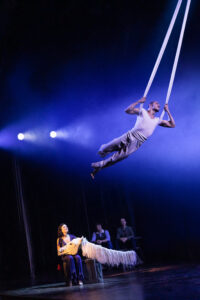 Particular praise belongs to Yves Artières, whose physical performance as Silver Star, Marlena’s beloved show horse, becomes one of the evening’s unexpected emotional centerpieces. Through movement alone, Artières creates personality, loyalty, exhaustion, and tenderness in a way that feels almost impossibly expressive. In a key scene when Silver Star reaches his untimely end, the visual of his spirit leaving his body, by way of Artières ascending silks hanging from the rafters above the stage, then dramatically unfurling the silks as he descends to return to the earth–simply breathtakingly beautiful. The puppetry/animal work throughout the production is remarkably inventive, but Silver Star’s presence lingers long after curtain call.
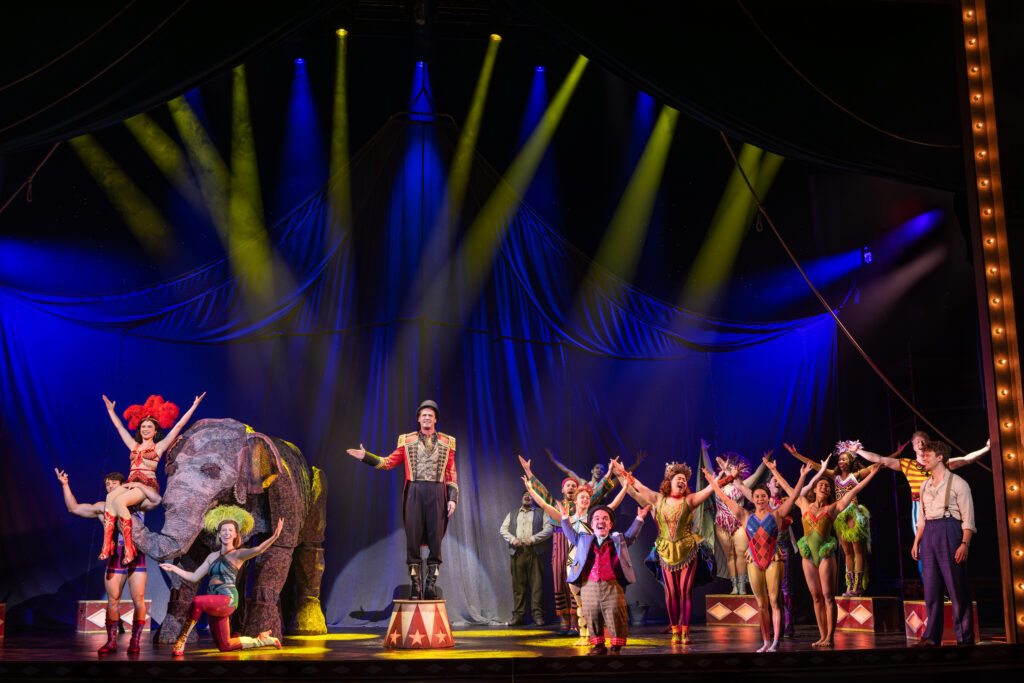
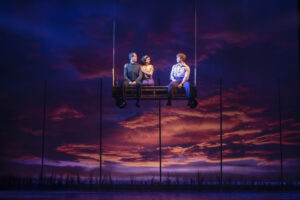 The lighting design deserves enormous credit for shaping the show’s emotional landscape. Warm ambers, smoky blues, and stark silhouettes constantly shift the atmosphere from romance to danger to wonder. Combined with a richly textured sound design that captures both the intimacy of whispered confessions and the thunder of circus chaos, the technical package immerses the audience completely without ever feeling excessive.

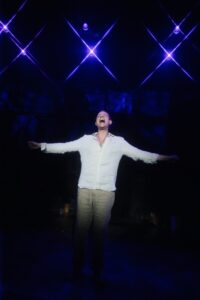
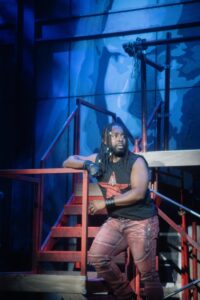 Opposite him, Grammy nominee Mykal Kilgore delivers a mesmerizing Judas. From the opening notes of “Heaven on Their Minds,” Kilgore refuses to portray Judas as a simple villain. Instead, his Judas feels conflicted, frightened, frustrated, and heartbreakingly human as he watches events spiral beyond anyone’s control. His powerhouse vocals soar effortlessly through the score, but it is the emotional vulnerability beneath the performance that lingers longest.
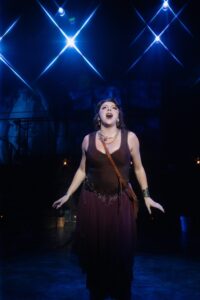 As Mary Magdalene, powerhouse vocalist Olivia Valli comes by her talents naturally. Granddaughter of The Four Season‘s founding member Fankie Valli, she’s a legacy entertainer. As Mary Magdalene, Valli brings warmth and aching sincerity to the role. Early on During “Everything’s Alright,” Valli’s calming presence provides a needed emotional balance amid the increasingly chaotic atmosphere surrounding Jesus. Soon after, her rendition of “I Don’t Know How to Love Him” avoids unnecessary theatrics in favor of emotional honesty, allowing the heartbreak within the song to quietly unfold. Under Cassidy’s direction, Valli explores the often-avoided attraction between Mary the woman and Jesus the man, once again offering yet another layer to the humanity of the piece.
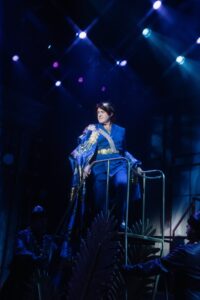 As Pontius Pilate, Geoffrey Davin offers one of the evening’s smartest tonal shifts . Presented as a gaudy, self-important joke of a man sporting an intentionally terrible hairpiece (kudos to the show’s wig designer Meredith Schieltz for just simply going for it), Davin leans fully into the absurdity of performative power. The portrayal initially earns plenty of laughs, but underneath the comedy lies another sharp reflection of the production’s larger themes—people desperate to appear more important than they truly are. His “Pilate’s Dream” balances nervous humor with growing dread, while sinisterly daunting presence during “Trial Before Pilate/39 Lashes” becomes genuinely unsettling.
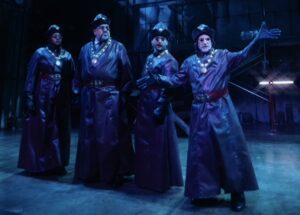 W. Scott Stewart’s thunderous bass vocals as Caiaphas roll in like a deep fog, brilliantly setting the stage for the dread and darkness to come. Robert Parker Jenkins‘ Annas perfectly snarky glances peering over those disturbingly small, dark glasses, brings an unspoken self-righteousness to his role as a high priest. As other members of Caiaphas’ doom squad, Garris Wimmer‘s sinister voice and Jennifer Whitcomb-Oliva‘s snide presence all come together perfectly to present a united and terrifying quartet who initiate the plot to end Jesus.
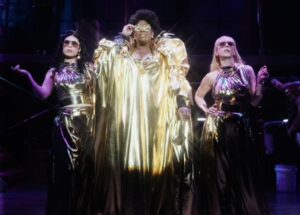 Then there’s the most intriguing of Whitcomb-Oliva’s multiple roles, her dazzlingly, gloriously commanding presence as King Herod. Landing somewhere firmly between Tina Turner’s Auntie Entity from Mad Max: Beyond the Thunderdome and Elton John’s Pinball Wizard from yet another rock opera, Tommy, Whitcomb-Oliva’s Herod is the true definition of the villainous character we know we’re not supposed to love, but we just can’t help ourselves. Combine the stage presence and spectacular wardrobe with Whitcomb-Oliva’s undeniable talents and you’ve got yourself a show-stopping performance and another of Studio Tenn‘s Jesus Christ Superstar‘s truly magical cast members. There is no role this mega-watt talented performer can’t handle and she proves it show after show after show.
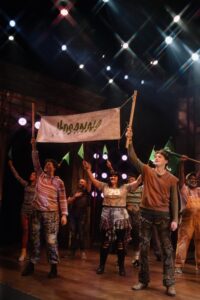 Other ensemble members like Bakari King, Garris Wimmer, Maya Antoinette Riley, Matthew Hayes Hunter, Savannah Stein, Lane Adam Williamson, Victoria Griffin, Emma Rose Williamson, Connor Adair, Nikki Berra, Christina Ledbetter and Patrick Jones each contribute to the overall energy, emotion and beauty of the piece. From the full ensemble Act 1 favorite, “What’s the Buzz’ to a shining, glittering all-in late-hour moment, the entire cast brings everything they’ve got, resulting in a feast for the eyes, the mind, the heart and soul.
 Likewise, Joi Ware’s choreography injects continuous movement and urgency into the production. There are moments where subtle Bob Fosse-inspired isolations seem to collide with flashes of Michael Jackson-inspired movement during larger ensemble sequences, creating choreography that feels simultaneously nostalgic and contemporary. Even those ensemble moments reinforce the power-in-numbers juxtaposed to the isolation of one theme found throughout the piece. Coupled with Cassidy’s direction, Ware’s choreography fills the stage with passionate movement, whether the entire company is on stage for a group number, or the action slows for a solitary moment from Pascal, Kilgore or Valli.
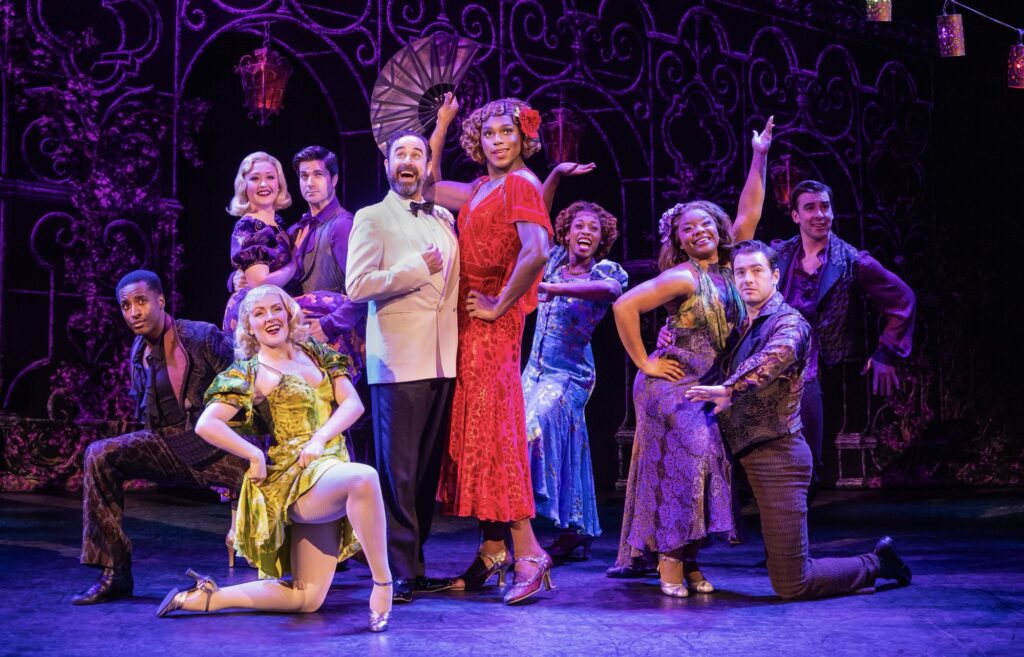
 One notable change is the role of Sweet Sue, bandleader of the all-girl band that serves as the perfect hiding in plain site destination for our two unintentional leading men, or should I say leading ladies? Little more than a brief appearance in the source material, Ruffin and Lopez wisely fleshed out Sweet Sue and as played by DeQuina Moore, we’re glad they did. Moore’s Sweet Sue doesn’t just open the show—she detonates it. Her “What Are You Thirsty For?” lands with the kind of electrifying force she herself described in our recent
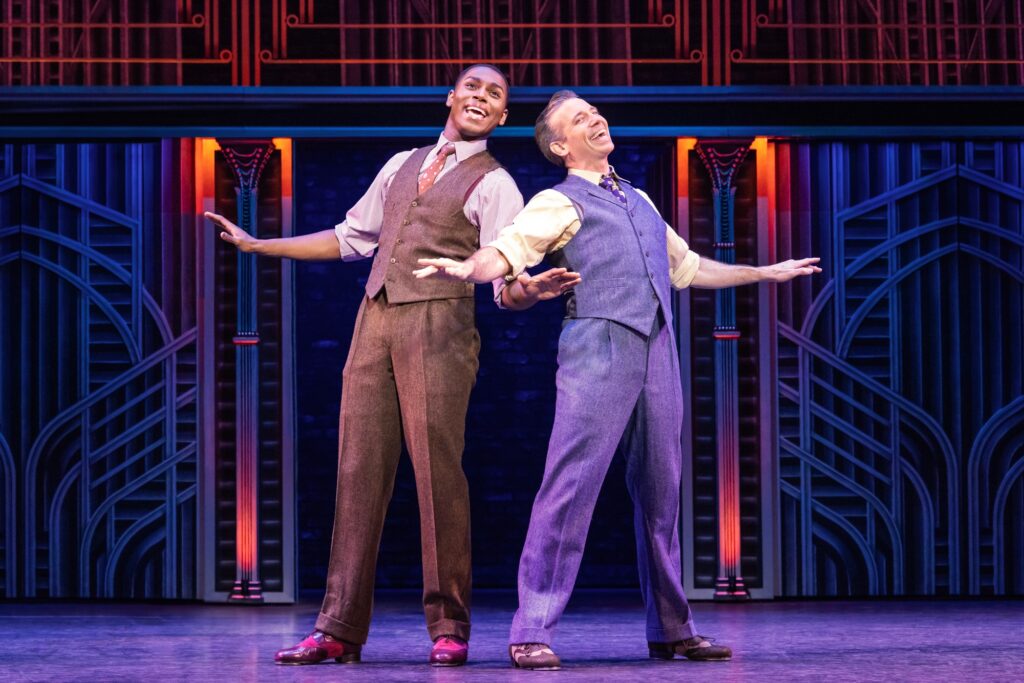
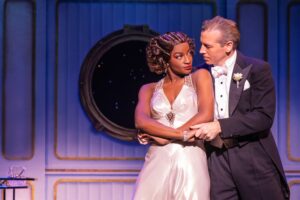 Leandra Ellis-Gaston’s Sugar Kane arguably comes with the steepest climb. Not because of the technical demands—though those are certainly present—but because Marilyn Monroe’s original Sugar remains so indelibly iconic. Wisely, the creators of the stage adaptation “understood the assignment,” sidestepping imitation entirely. By reimagining Sugar as a strong-willed, career-driven woman of color, the role becomes instantly unshackled from direct comparison—and Ellis-Gaston runs with it. With a speaking voice that lands somewhere between The Color Purple’s Squeak and legendary chanteuse Lena Horne, her Sugar is equal parts vulnerability and resolve. Sweet? Absolutely. But never simple.
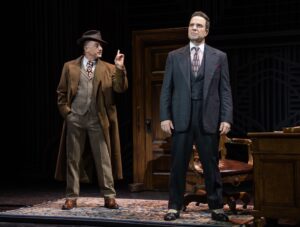 As G-man Mulligan, Matt Allen plays the essential “straight man” with surgical precision, anchoring the show’s more outlandish antics while quietly setting up some of its biggest payoffs. As he said in our recent Rapid Fire 20Q, that role is not only necessary but foundational in launching the show’s farcical momentum. And when he finally gets to dip into the madness—particularly in that delightfully ridiculous undercover sequence—it’s a payoff worth the wait.
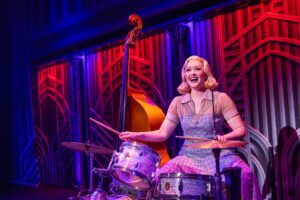 Minnie, Sweet Sue’s right-hand woman is revealed throughout as a bit of a sticky-fingered gal. One of the show’s running gags is her revelations of accidentally entering the wrong apartments thinking they were Sue’s and taking things that weren’t hers. To that end it makes perfect sense that Devon Hadsell’s Minnie is a scene-stealing delight, leaning fully into the character’s charming chaos and absconding with laughs each time she’s on the stage. There’s a lived-in sense of loyalty and mischief here, making Minnie far more than just comic relief. She’s an essential part of the heartbeat of the band. And that ever-present cigarette dangling from her ruby red lips, the kind of subtle sight gag that again perfectly pays homage to that 1930 prohibition-era Hollywood spirit. Side Note: When that Gregg Oppenheimer I Love Lucy play makes its way to Broadway, Hadsell has my vote for the Vivian Vance/Ethel Mertz role!
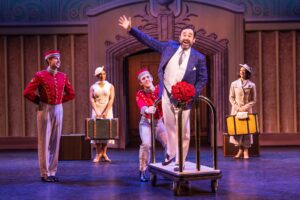 And then there’s Edward Juvier’s Osgood, who may just be the show’s most quietly radical reinvention. As he shared in our recent Rapid Fire 20Q, what drew him to the role was Osgood’s ability to lead with curiosity rather than judgment—and that ethos radiates throughout his performance. Where the film played him as the punchline, this version is in on the joke and, more importantly, in on the love. That shift—from caricature to fully realized romantic—becomes one of the production’s most meaningful evolutions.

 RAPID FIRE 20Q WITH OFF BROADWAY: THAT’s SO HIGH SCHOOL‘s ELLE MCLEMORE


 RAPID FIRE WITH BACK TO THE FUTURE’S MARTY MCFLY, LUCAS HALLAUER
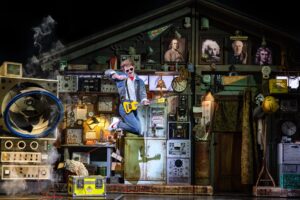 JHPENTERTAINMENT: Marty’s wardrobe—from the puffer vest to the sneakers, perfectly reimagined for the stage by scenic and costume designer Tim Hatley—is instantly recognizable. What’s it like to put on that iconic costume each night and step into such a visually legendary look?
 RAPID FIRE WITH BACK TO THE FUTURE’S LORRAINE BAINES, KATHRYN ADELINE
 JHPENTERTAINMENT: This production marks your national tour debut. What did it feel like the first time you stepped onto the stage knowing you were officially part of the touring company of Back to the Future?
 RAPID FIRE WITH BACK TO THE FUTURE’S BIFF TANNEN, NATHANIEL HACKMANN
 JHPENTERTAINMENT: After originating the role on Broadway, what lured you back to Hill Valley for year two of the National Tour?
 RAPID FIRE WITH BACK TO THE FUTURE’S DOC BROWN, DAVID JOSEFSBERG
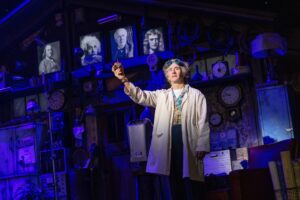 JHPENTERTAINMENT: Speaking of energy, one of the most entertaining elements of Back to the Future on stage is the theatrical magic courtesy the collaborative efforts of the show’s lighting designers Tim Lutkin & Hugh Vanstone, video designer Finn Ross, sound designer Gareth Owen and illusion designer Chris Fisher. Without giving away too much, what can you tell me about your favorite moment in the show where these elements all come together perfectly?
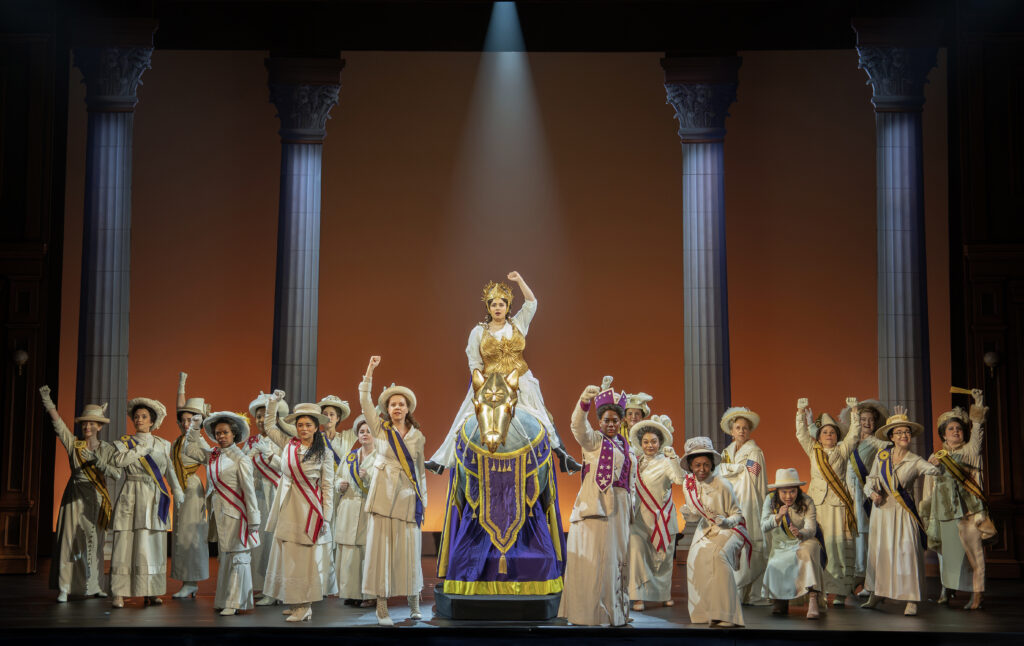
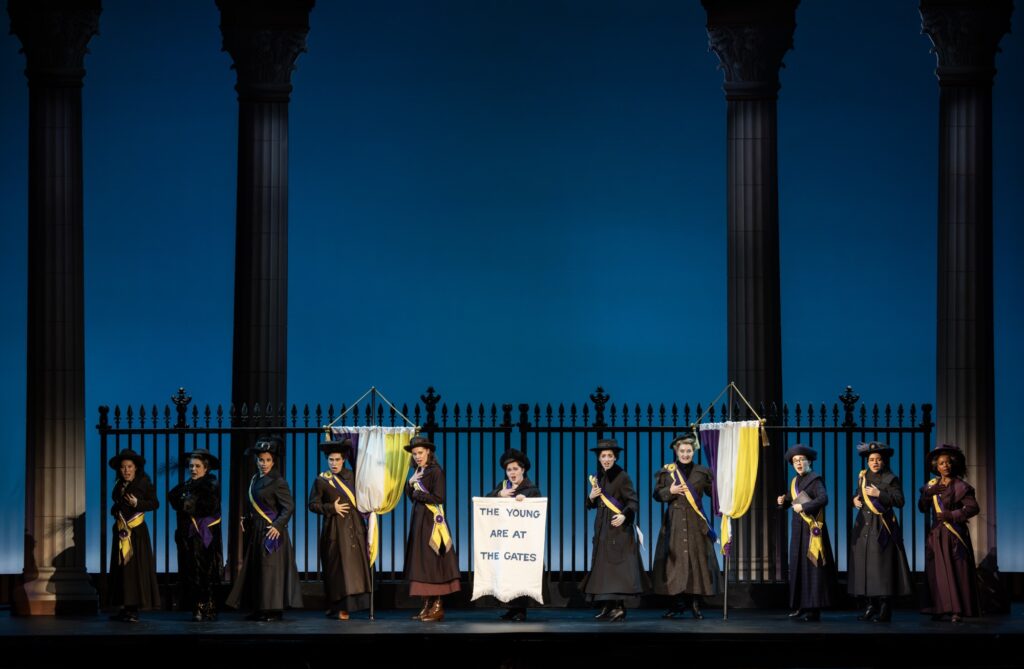
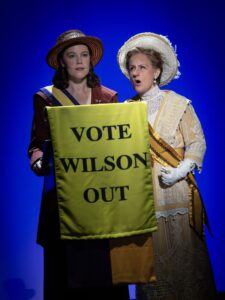 From the opening strains of the period-perfect ragtime-syncopated “Let Mother Vote,” maternally led by Mary Grandy‘s Carrie Chapman Catt and backed by a vocally powerful ensemble, Suffs makes it clear: this isn’t a museum piece. It’s a movement. The storytelling feels urgent, strong, and emotionally immediate—never preachy, always human.
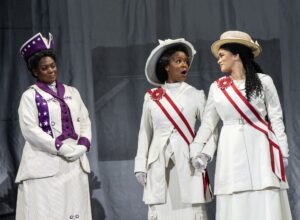 As Ida B. Wells, Danyel Fulton commands attention with moral clarity, emotional precision and powerhouse vocals to rival a certain recent Broadway Gypsy. “Wait My Turn” simmers with justified frustration, and when she returns in “I Was Here,” alongside Mary Church Terrell (Trisha Jeffrey) and Phyllis Terrell (Victoria Pekel), the moment lands as a declaration of presence that resonates well beyond the period setting. Speaking of Fulton’s co-stars, Jeffrey brings elegance and resolve to Mary Church Terrell, particularly in “Hold It Together,” serving as an emotional anchor amid political fractures. Meanwhile, Pekel’s Phyllis as well as a later turn as Robin, reinforce the vitality of youthful exuberance necessary for any movement to continue into the next generation. Whenever any of these three talented performers are on stage, the audience is mesmerized and treated to stunning vocals.
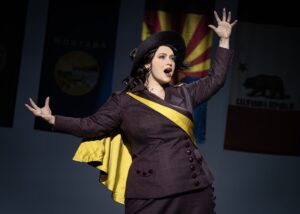 Monica Tulia Ramirez’s Inez Milholland radiates charisma in “The March (We Demand Equality),” which she leads alongside Fulton’s Ida and the ensemble in one of the production’s most visually arresting sequences. Act I’s “Show Them Who You Are” showcases Ramirez’s sass while Act II’s reprise flips the script to haunting results. Milholland’s personal life and sacrifices poignantly reveal the true dedication these powerful, but often unsung heroes of the moment possessed.
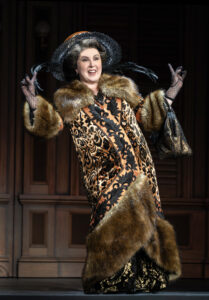 Laura Stracko‘s Alva Belmont is boisterously brilliant. Gotta love a socialist socialite. Act I’s “Alva Belmont” introduces the character in a big way. With another period-nod, “Alva Belmont” is presented as a toe-tappin’ Tin Pan Alley-style ditty complete with playful, yet pointed lyrics: “I divorced my husband for philandering. Now I’ve got his millions for philanthropy.” Flawlessly introducing the character. Interestingly, while not really relevant to the plot, I discovered while researching to interview some of the cast that the real Alva Belmont, a native of Alabama, has ties-by-association to Tennessee. Her maternal grandfather, Robert Desha was a U.S. House of Representatives for the state of Tennessee. In the years before her political activism, she was first married to William Kissam Vanderbilt, the grandson of Commodore Cornelius Vanderbilt (for whom Nashville’s Vanderbilt University was named).
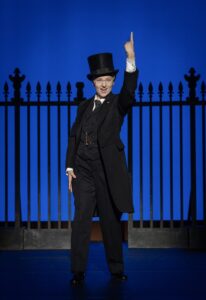 As President Woodrow Wilson, Jenny Ashman offers a sharply drawn portrayal. “Ladies” drips with calculated condescension (and sadly echoes a little too closely our current administration’s views on the arguably stronger sex, but I digress). Later in the show, Ashman’s Wilson attemps to placate with “Let Mother Vote (reprise)”, which lands with pointed irony. On Opening Night in Nashville, Ariana Burks stepped into the role of President Wilson’s Third Assistant Secretary of State Dudley Malone, a role usually played by Brandi Portert. Covering the role, Burks shines in “Respectfully Yours, Dudley Malone,” blending romantic sincerity with political awakening. Her chemistry with Marcus’ Doris in “If We Were Married” and its reprise adds warmth and texture to the broader narrative. Just one of a handful of relationships, while not at the center of the narrative, a wonderful aside. Other notable personal relationships alluded to within Suffs include sorority sisters Ida B. Wells and Mary Church Terrell, friends Alice Paul and Lucy Burns and longtime partners Carrie Chapman Catt and Mollie Hay.