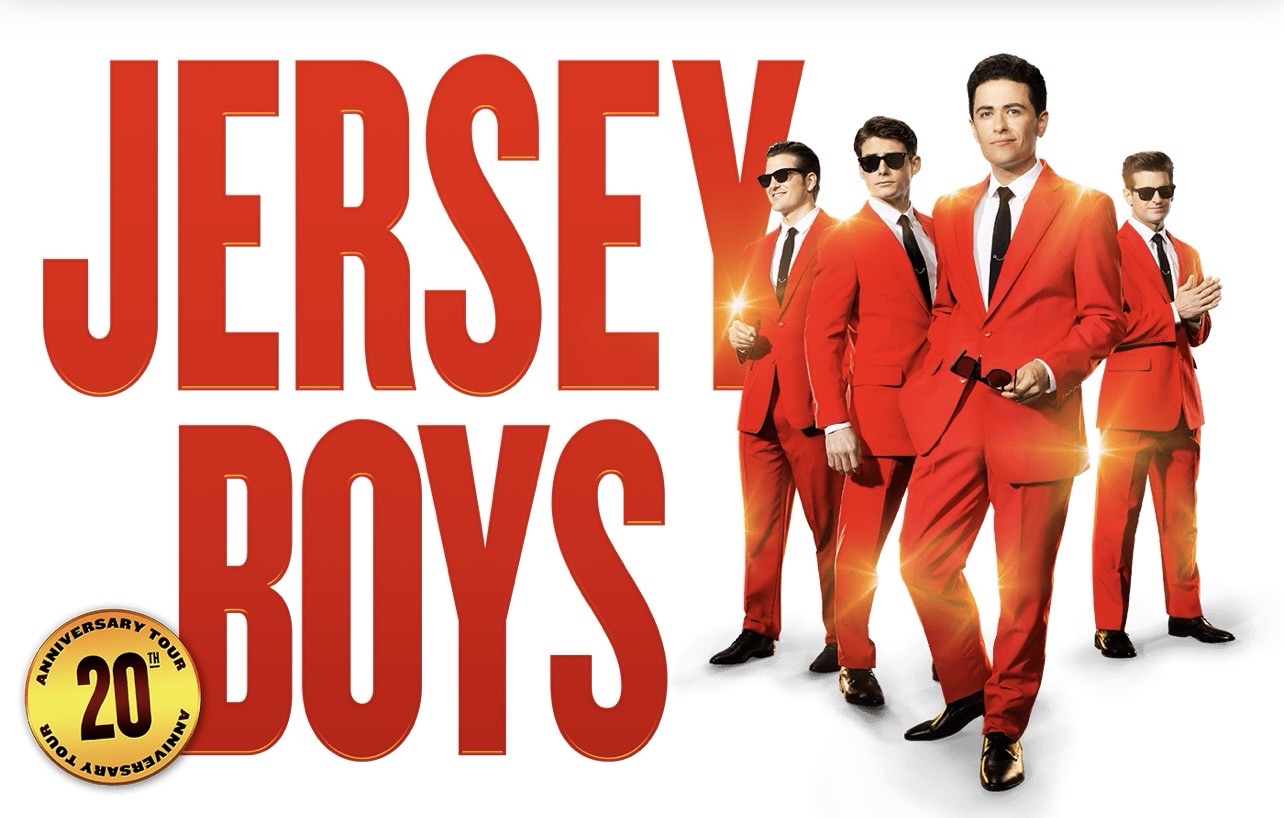
Twenty Years, countless standing ovations and more than a few earworm-inducing harmonies later, Jersey Boys, the Broadway sensation celebrating the music, friendships and struggles of The Four Seasons is making it’s way back across the country with the 20th Anniversary National Tour. Having kicked of the 20th Anniversary Tour just last week in Syracuse, New York, the tour is making it’s way back to Music City. Just days before their return to Nashville’s Tennessee Performing Arts Center for their September 16-20 Music City run, JHPEntertainment caught up with the tour’s leading men. Jersey Boys‘ Coby Oram (Frankie Valli), Peyton Schoenhofer (Bob Gaudio), Harry Sperduto (Tommy DeVito) and Owen McCredie (Nick Massi) answered 20 questions about stepping into those iconic spit-shined shoes and finely tailored suits, finding the chemistry behind one of pop music’s legendary groups, and keeping fans of the 20-year-old Broadway phenom shouting “Oh, What a Night”, night after night.
RAPID FIRE 20Q WITH THE CAST OF JERSEY BOYS 20TH ANNIVERSARY NATIONAL TOUR
 RAPID FIRE WITH COBY ORAM STARRING AS FRANKIE VALLI IN JERSEY BOYS
JHPENTERTAINMENT: This is your eighth Jersey Boys contract, and you first came into the show as a swing aboard Norwegian Bliss before ultimately stepping into the role of Frankie Valli on this 20th Anniversary National Tour. What keeps you working your way back?
COBY ORAM: Jersey Boys covers Frankie’s entire professional career from the young age of 16 to about 60 years old. With so much life to live on stage, it’s honestly hard to get bored of it. It’s also challenging enough there’s still plenty to improve, plenty to learn, and plenty to discover.
JHPENTERTAINMENT: Frankie’s journey takes him from a young singer with an unmistakable falsetto to the frontman of one of the biggest musical groups in the world. What part of that evolution has become more fascinating to you as you’ve continued to play him?
COBY ORAM: I think the most fascinating part of Frankie’s story is watching him go from one of the Four Seasons to a solo artist. The part I find interesting is that Frankie had to be convinced it would work, and it wasn’t until after “Can’t Take My Eyes Off of You” succeeded that he believed it.
JHPENTERTAINMENT: You’ve played Frankie alternating the role alongside your identical twin brother, Chris Oram—on both the Bliss and again last year at a dinner theatre in Kansas City. If this tour ever required you to take a day off, how tempting would it be to pull a classic The Parent Trap switcheroo and send your twin onstage in your place?
COBY ORAM: The Parent Trap idea has tempted me more than a few times, but it would be quite the travel for Chris to make it to me wherever I am to perform the one night. Fortunately we do have a Frankie Alternate, Andrew Martin Maguire, who travels with us and also swings the show, and he has already covered for me brilliantly on opening night when I had a mild vocal strain to rest from.
JHPENTERTAINMENT: Frankie’s voice is obviously one of the most recognizable elements of The Four Seasons’ sound. What has been the biggest challenge—and the most rewarding part—of recreating that unmistakable sound?
COBY ORAM: The biggest challenge in singing Frankie stuff is actually all the care I have to take when I’m not on stage. My associate director Danny Austin says “You have to be monk,” and he’s only half-kidding. I don’t drink with the cast after a show, I don’t go to the club and scream and shout, and I have to be careful how much of my voice I use in my day-to-day life so I still have enough left in the tank for the performance. The most rewarding part is actually doing it, and witnessing the impact it has on audiences. The hit songs are so iconic, they are part of the soundscape of pop culture even today, and when people get to hear them contextualized by the play, it means so much to them I can hear it and see it in them from up on stage.
JHPENTERTAINMENT: After eight trips through Jersey Boys, you’ve undoubtedly experienced countless performances of the show. Is there a particular moment in the current production—whether it’s a song, a scene or even something happening between the Four Seasons—that still gives you that little “Wow, this is why I love this show” feeling?
COBY ORAM: The moment in this production that really gets me is Bob Gaudio’s introduction to the group. Ron Melrose’s brilliant arrangement of this show saves the traditional “Four Seasons” harmonies and sounds specifically for this scene, opting in earlier musical numbers to use other inspirations for the time period that previous iterations of the band (Varietones, Four Lovers, etc.) might have used. The audience subliminally gets to land at the same conclusion at the same time as us on stage – this is the sound we are after.
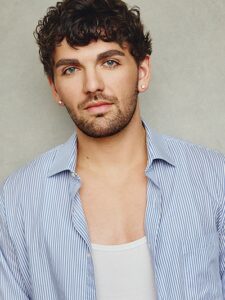 RAPID FIRE WITH PEYTON SCHOENHOFER STARRING AS BOB GAUDIO IN JERSEY BOYS
JHPENTERTAINMENT: Bob Gaudio is not only one of the architects of The Four Seasons’ sound, he’s responsible for writing so many of the songs audiences have come to associate with the group. As an actor, how do you approach portraying the man behind those songs while still allowing us to see the young man who is discovering his voice as a songwriter?
PEYTON SCHOENHOFER: I’ve had a lot of help throughout this process from Des McAnuff, Danny Austin, and people who have known Bob for a long time and can help me understand his characteristics. But when it comes to the young man discovering his voice, I can really relate to that as a fellow artist. When we’re younger, there’s so much discovery in finding your voice, regardless of what medium you’re creating in. I try to tap into that feeling from my own experience, those moments when you’re just so excited to be creating and you start to see doors opening for you. I think bringing that sense of wonder and discovery to Bob is a big part of how I approach him.
JHPENTERTAINMENT: You’re making your national tour debut with Jersey Boys, which means you’re experiencing the show—and the country—one city at a time. What has surprised you most about taking Bob Gaudio on the road?
PEYTON SCHOENHOFER: I think what’s surprised me most is how receptive each audience is. You know, obviously, it’s called Jersey Boys, and of course, there’s going to be deeper roots for people from Jersey, but being able to take this show anywhere and see people connect with the music, the story, the characters, it’s incredible. It’s such a specific group of guys and a very specific story, but it’s been really fun to see audiences in all these different cities react in similar ways, to find something in the show that they can connect with.
JHPENTERTAINMENT: Here in Nashville, there’s an especially interesting layer to playing Bob: the real Bob Gaudio lives right here in Music City and will likely have an opportunity to see the show during your Nashville engagement. What goes through your mind knowing that the man whose life you’re portraying may actually be sitting in the audience watching your performance?
PEYTON SCHOENHOFER: Besides being terrifying, it’s extremely exciting! Getting to play the role I’ve portrayed for years, for the man himself, means the world to me. I am extremely grateful for the opportunity he has provided us actors to continue telling this story through multiple generations. And to be able to bring this music that feels timeless to Nashville, to Music City, couldn’t be better!
JHPENTERTAINMENT: You’ve gone from performing in the wildly irreverent Titanique as a member of that show’s Chicago company to stepping into a story rooted in the real lives and music of The Four Seasons. What has that change in tone and style been like for you as a performer?
PEYTON SCHOENHOFER:What do you mean? They’re basically the same show….. All jokes aside, it’s been amazing to experience the two sides of theater I enjoy most. Titanique is a very self-aware comedy that lets me play with the audience, and lean into my improv background. While Jersey Boys is the other side of that coin. It’s extremely grounded and very real. And those are the two types of theater I love most. So the fact I’ve been able to experience both is truly a blessing!
JHPENTERTAINMENT: There’s such a distinctive chemistry among the four men who become The Four Seasons, and Bob’s relationship with Frankie is at the heart of much of that story. What have you and Coby discovered together that has helped make that partnership feel authentic onstage?
PEYTON SCHOENHOFER: To be honest, we’ve only known each other for about a month and a half, so we’re still making discoveries and getting to know each other as the tour goes on. But that’s what makes it exciting! We’ve both played these roles before, but never together, so we each came in with our own interpretations and ideas of what a Bob or a Frankie might be. It’s been really fun to find those differences, learn each other’s interpretations, and bring more and more to the relationship both on and off stage. It also helps that Coby is an incredible performer and individual, so it makes my job really easy!
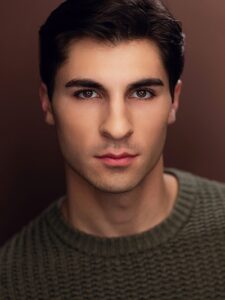 RAPID FIRE WITH HARRY SPERDUTO STARRING AS TOMMY DeVITO IN JERSEY BOYS
JHPENTERTAINMENT: This is your national tour debut, and you’re making it in a show as iconic as Jersey Boys. What has the reality of that milestone felt like now that you’re actually out there performing Tommy DeVito for audiences across the country?
HARRY SPERDUTO: It has been a dream come true, and then some. I have wanted to be in this show and perform at this level of theatre for as long as I can remember. Getting to step into Tommy’s shoes in the remounted original production of Jersey Boys every night is even more perfect than I could’ve planned for my national tour debut. I thank God every day for this opportunity.
JHPENTERTAINMENT: While this is your first national tour, it’s not your first time in Jersey Boys. That honor happened two years ago when you first played Tommy DeVito in Clear Space Theatre Company’s 2024 summer-stock production of Jersey Boys in Rehoboth Beach, Delaware. What have you learned about Tommy—and how has your portrayal of him changed—since that first production
HARRY SPERDUTO: I am a lot more grounded and knowledgeable this time around. I’ve created a multifaceted version of my character through my deeper understanding of Tommy. That is the glory of getting the chance to work with the original creative team on this piece. The original director Des McAnuff and Associate Danny Austin gave me so much great direction and information about this story, their over 20 year process with the piece, and real life encounters with the original Four Seasons, specifically Tommy DeVito. That first hand knowledge is something I could only get from these directors and it has helped me immensely in my portrayal, especially in bringing the truth of Tommy’s life into my work.
JHPENTERTAINMENT: How do you keep the audience connected to Tommy when his ambition and personality can make him such a difficult guy to root for?
HARRY SPERDUTO: Tommy struggled with his addictions, and I think there is a certain feeling of sympathy seeing him going through the hardships that he did. Playing my objectives every night and leaning into that area creates this level of emotion that I can pull out of people. Making my portrayal of Tommy as human as possible is the best thing you can do to make an audience connect with you. He did what he did because he truly felt he was making the right choices for himself and for the group, despite how rough he could be to the people around him. I hope audiences can leave the theater remembering and respecting all of the things he accomplished in his lifetime.
JHPENTERTAINMENT: The Four Seasons became known for not only their glorious lamppost harmonies, but also their syncopated moves and classic attire. While these elements—and more—make up the full package that is Jersey Boys, do you have a personal favorite element?
HARRY SPERDUTO: The element of breaking the fourth wall, which, in simpler terms means getting to speak directly to the audience in many of my lines. As a performer, I love getting to do this in Jersey Boys because I can look around and connect with every audience member throughout the show and make them feel like they’re in our show too. It is what makes theatre live, fresh, and exciting every night. It is very fulfilling to me as a performer.
JHPENTERTAINMENT: Tommy has some of the show’s biggest personality moments, but Jersey Boys ultimately asks us to watch four very different men become a family—and then watch that family fracture. What is the most important thing you want audiences to understand about Tommy by the time he walks away from The Four Seasons?
HARRY SPERDUTO: Tommy strived for greatness in his own way. If you got out of the neighborhood in his time, that alone was the highest accomplishment. He started a Hall of Fame rock & roll group and he took Frankie Valli off the streets, which turned him into the icon he now is today. This is undeniable. He might’ve not cared about being a star in the long run, but he took pride in giving back, especially to his community in North Jersey. He cared so much about where he came from, which is right where their whole story begins.
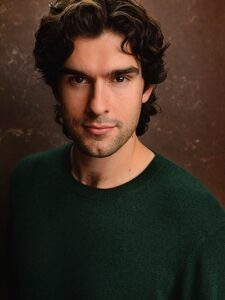 RAPID FIRE WITH OWEN McCREDIE STARRING AS NICK MASSI IN JERSEY BOYS
JHPENTERTAINMENT: You first portrayed Nick Massi aboard Norwegian Cruise Lines, and now you’re bringing him to audiences throughout North America. How has your perception of Nick—and your performance of him—evolved between that first experience and this 20th Anniversary National Tour?
OWEN McCREDIE: Nick Massi has always been a character with whom I’ve felt an emotional resonance. He’s a guarded, seemingly aloof guy who has a very tumultuous inner life. What I’ve appreciated most about Nick during this process that perhaps I hadn’t before, is how of all the Four Seasons, he is the one to really admit his mistakes and own up to his shortcomings. I like to think that I’m a little wiser than I was at age 22. I’m much more cognisantof the fact that “success” is accompanied by levels of personal sacrifice. I’ve given up a lot of family time to tour and live in another country. I hope that an awareness of these things translates into a more emotionally honest and grounded performance.
JHPENTERTAINMENT: Nick is the quiet one of the four, often literally standing in the background while the other personalities dominate the room. How do you make sure there’s a fully realized Nick Massi underneath that reserved exterior?
OWEN McCREDIE: I’m trying always to interact with the scene in whatever way I can. Which is not to say that I’m trying to steal attention from the actual scene. But by making creative decisions about what Nick values, what’s driving him and how he’s feeling about the other characters at that particular moment, I find opportunities to be affected by things within the scene. Nick is very meticulous, perhaps to the point of OCD. As Bob Gaudio says, “he irons his shirts twice”. That part of his behaviouris a lot of fun to play with as an actor, particularly in those moments when I’m not at the forefront of a scene.
JHPENTERTAINMENT: You were born and raised in Australia and studied theatre at Melbourne’s Victorian College of the Arts, so Nick’s Newark accent is a pretty significant vocal departure from your own. Did you work with a dialect coach during rehearsals to perfect that sound, and what was the biggest challenge in making it feel natural?
OWEN McCREDIE: Yes, we were incredibly fortunate to work with Charley Layton, who I’d done some dialect coaching with for Norwegian as well. He was able to tell me when I was beginning to stray into Australian vowel sounds, and when I could be committing further to the sounds of a North Jersey accent. I’ve found this time that I’ve been fighting the impulse to add in some of the characteristics of what you’d consider a General American accent — the rhotic R, for instance. I think that my fear as an actor who’s trying to approach this dialect with respect and authenticity, is that I go too far into that cartoonish “New Joisey” accent. In trying to avoid that perhaps I’m making Nick sound too much like a New Jerseyan from 2026. All that to say, it’s forever a work in progress, and I’m sure the audiences of New Brunswick will keep me honest!
JHPENTERTAINMENT: You and Coby actually have something pretty unique in common: you both began your Jersey Boys journeys on the high seas. Have you two bonded over that shared experience, and does it give you a different perspective on the journey that brought you both to this 20th Anniversary National Tour?
OWEN McCREDIE: Oh yeah, Coby and I have know each other for a long time now. 6 months together aboard a floating vessel is always a unique bonding experience. We both started as swings for the Norwegian Cruise Lines production, so I think there’s a real sense of pride that we’re both standing up front together now, especially for something as momentous as the 20th anniversary tour. A fun fact — I first knew him in the Barry Belson track, as he was our Male Swing and had to cover that track for the first couple of weeks of rehearsals. For those who didn’t get to see it, you missed a real treat.
JHPENTERTAINMENT: Twenty years after Jersey Boys first arrived on Broadway, what do you hope audiences take away with them after seeing this 20th Anniversary National Tour—and what do you think makes the story and music of The Four Seasons continue to resonate with audiences today?
OWEN McCREDIE: This story is proof that generational greatness can come from working class people. Like so many artists from that time, The Four Seasons were self-taught guys who rose to the top through grit, determination and a love of music. I hope that audiences who were lucky enough to grow up with their songs on the charts get a good dose of nostalgia, and that newcomers to the show walk away with an appreciation for why it’s been so successful for so long.
Four guys. Four very different personalities. One legendary sound—and a story that still knows how to make audiences laugh, cheer and, of course, sing along. As Jersey Boys celebrates its 20th anniversary, this latest generation of talented entertainers stepping into the roles of The Four Seasons is proving that Frankie, Bob, Tommy and Nick as played by Coby, Peyton, Harry and Owen still have plenty to say—and plenty of songs left to sing. Catch the 20th Anniversary National Tour at Nashville’s TPAC September 16-20. CLICK HERE to purchase tickets or for more information. Following Jersey Boys TPAC’s 2026/2027 Season continues with The Sound of Music onstage October 13-18. Follow TPAC on TikTok, Instagram, YouTube and Facebook.
Not in Nashville? It’s likely Jersey Boys will be working their way back to you, so check them out on Facebook, X, Insta, TikTok, YouTube and Threads to see when it rolls into your city and find out why, two decades later, Jersey Boys remains one of Broadway’s most irresistible musical stories.
As always, if you wanna follow JHPEntertainment to find out who I’m chatting with for my next Rapid Fire Q&A, or for my take on the latest local and national theatre, music, arts and more, visit JHPENTERTAINMENT.com or find us on Facebook, Insta, Threads and X. Till then #GoSeeTheShow!
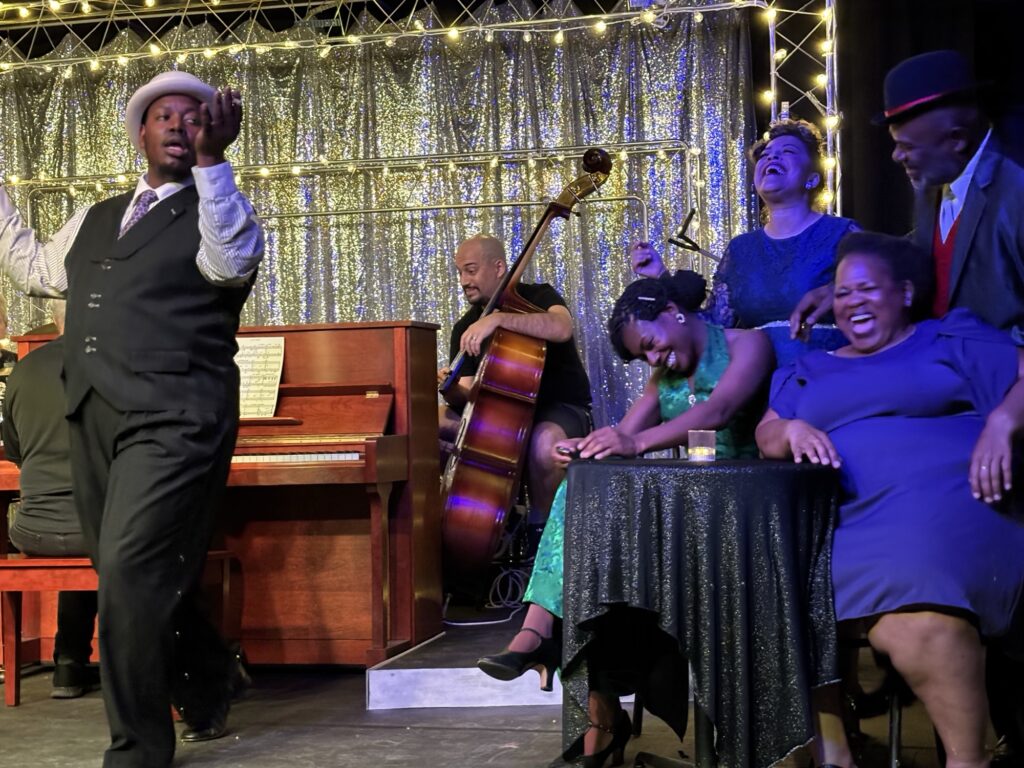
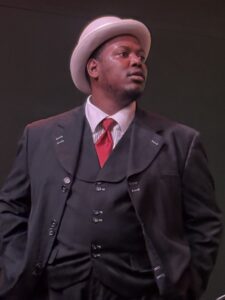 Isiah Rankin, pulling double duty behind the scenes as the show’s music director helps shape a score that feels authentic, alive and wonderfully spontaneous. Performing as Andre, Rankin brings an easygoing best-friend, wing-man energy to nearly every scene he inhabits. Whether leading the slyly playful “T Ain’t Nobody’s Biz-ness If I Do,” joining the delightfully flirtatious “How Ya Baby,” or bringing swagger to “The Viper’s Drag,” he consistently demonstrates both vocal confidence and magnetic stage presence.
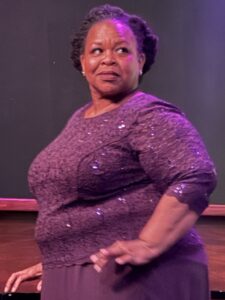 Yolanda Treece, performing as Nell, emerges as one of the production’s most engaging personalities. Possessing a remarkable ability to connect with the audience through nothing more than a wink, an eye-roll or a flirtatious grin, Treece makes every moment feel personal. Her spirited rendition of “Cash for Your Trash” earns plenty of laughs, while “Mean to Me” reveals a deeper emotional vulnerability. By evening’s end, it becomes clear she knows exactly how to work a room…and we’re all better for it.
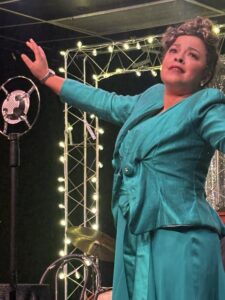 Lisa Graham’s Armelia is powered by boundless energy and a voice capable of effortlessly navigating Waller’s jazz-infused melodies. Her playful “Squeeze Me” is an Act 1 standou, while later numbers such as “Find Out What They Like”, alongside Treece showcase both her comic timing and vocal precision. Graham consistently finds fresh colors within each song, making every appearance memorable.
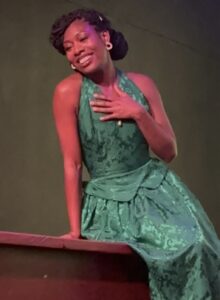 Raven Buntyn proves herself the show’s most versatile performer. One moment she’s the provocative, self-assured Charlaine commanding attention during “Yacht Club Swing.” The next she’s leaning into a more innocent, delightfully ditzy persona. Buntyn handles every shift seamlessly, while her heartfelt “Keepin’ Out of Mischief Now” offers one of the evening’s loveliest vocal moments.
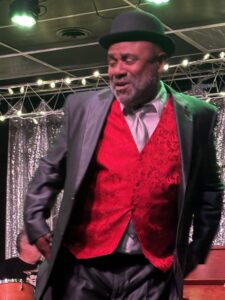 As Ken, Elliott Robinson demonstrates remarkable ease navigating both sides of Waller’s catalog. He is equally comfortable delivering laugh-out-loud comedic lyrics as he is tackling material with deeper emotional resonance. His charming performance of “Honeysuckle Rose” helps establish the production’s playful tone early on, while “I’m Gonna Sit Right Down and Write Myself a Letter” becomes one of Act Two’s most satisfying highlights.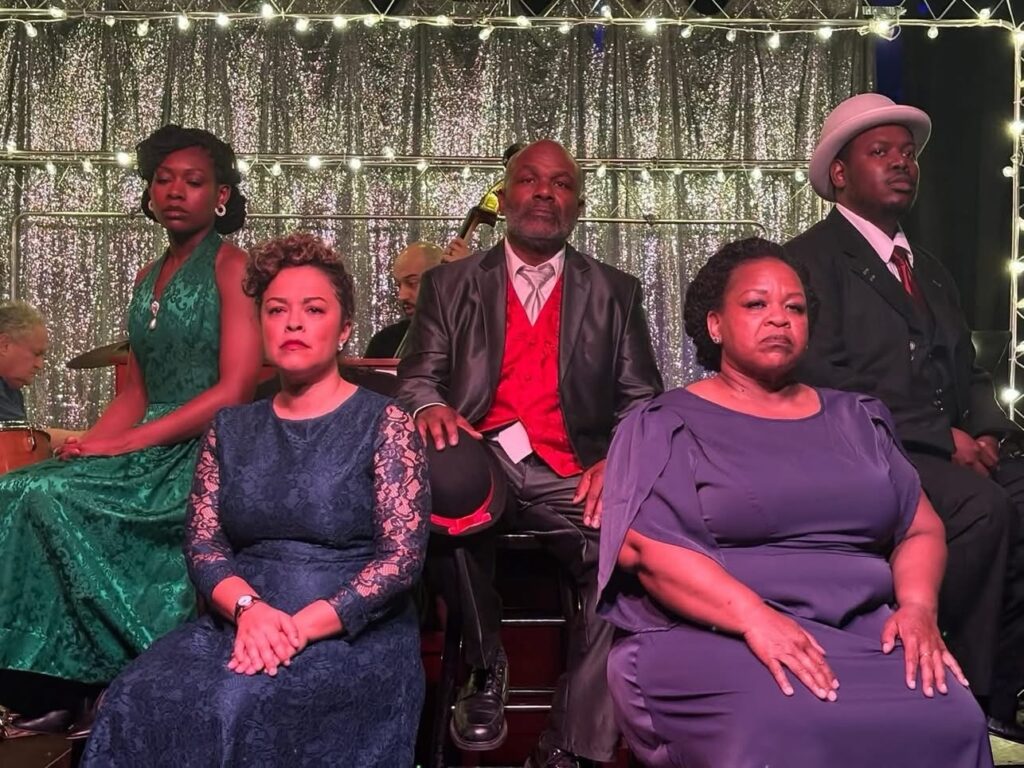
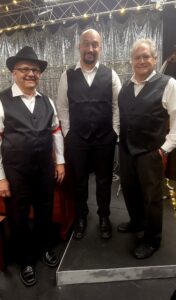 The decision to position the musicians directly onstage pays immediate dividends.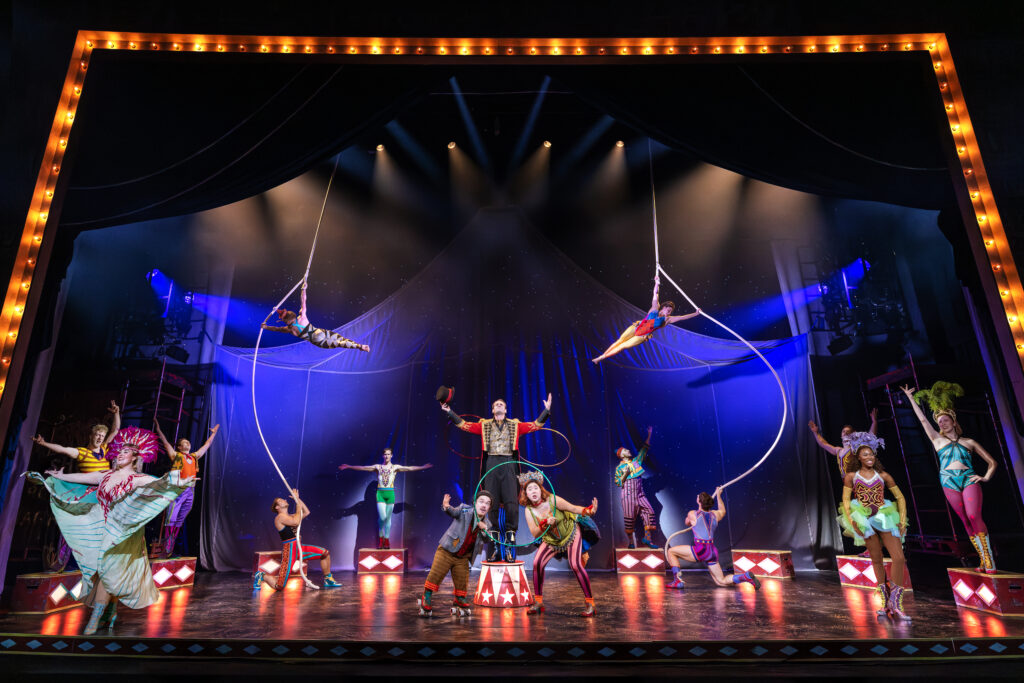
 JHPENTERTAINMENT:
 RAPID FIRE WITH WATER FOR ELEPHANTS‘
  RAPID FIRE WITH WATER FOR ELEPHANTS‘ ELLA HUESTIS
 RAPID FIRE WITH WATER FOR ELEPHANTS’
  RAPID FIRE WITH WATER FOR ELEPHANTS‘ CHRIS MARTH
 Opposite him, Grammy nominee Mykal Kilgore delivers a mesmerizing Judas. From the opening notes of “Heaven on Their Minds,” Kilgore refuses to portray Judas as a simple villain. Instead, his Judas feels conflicted, frightened, frustrated, and heartbreakingly human as he watches events spiral beyond anyone’s control. His powerhouse vocals soar effortlessly through the score, but it is the emotional vulnerability beneath the performance that lingers longest.
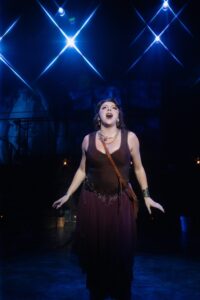 As Mary Magdalene, powerhouse vocalist Olivia Valli comes by her talents naturally. Granddaughter of The Four Season‘s founding member Fankie Valli, she’s a legacy entertainer. As Mary Magdalene, Valli brings warmth and aching sincerity to the role. Early on During “Everything’s Alright,” Valli’s calming presence provides a needed emotional balance amid the increasingly chaotic atmosphere surrounding Jesus. Soon after, her rendition of “I Don’t Know How to Love Him” avoids unnecessary theatrics in favor of emotional honesty, allowing the heartbreak within the song to quietly unfold. Under Cassidy’s direction, Valli explores the often-avoided attraction between Mary the woman and Jesus the man, once again offering yet another layer to the humanity of the piece.
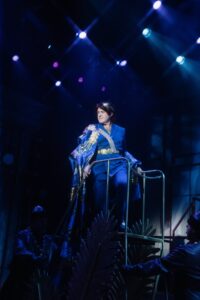 As Pontius Pilate, Geoffrey Davin offers one of the evening’s smartest tonal shifts . Presented as a gaudy, self-important joke of a man sporting an intentionally terrible hairpiece (kudos to the show’s wig designer Meredith Schieltz for just simply going for it), Davin leans fully into the absurdity of performative power. The portrayal initially earns plenty of laughs, but underneath the comedy lies another sharp reflection of the production’s larger themes—people desperate to appear more important than they truly are. His “Pilate’s Dream” balances nervous humor with growing dread, while sinisterly daunting presence during “Trial Before Pilate/39 Lashes” becomes genuinely unsettling.
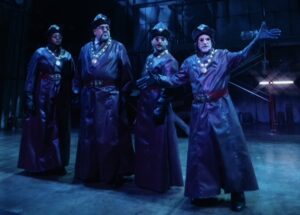 W. Scott Stewart’s thunderous bass vocals as Caiaphas roll in like a deep fog, brilliantly setting the stage for the dread and darkness to come. Robert Parker Jenkins‘ Annas perfectly snarky glances peering over those disturbingly small, dark glasses, brings an unspoken self-righteousness to his role as a high priest. As other members of Caiaphas’ doom squad, Garris Wimmer‘s sinister voice and Jennifer Whitcomb-Oliva‘s snide presence all come together perfectly to present a united and terrifying quartet who initiate the plot to end Jesus.
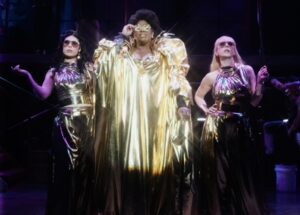 Then there’s the most intriguing of Whitcomb-Oliva’s multiple roles, her dazzlingly, gloriously commanding presence as King Herod. Landing somewhere firmly between Tina Turner’s Auntie Entity from Mad Max: Beyond the Thunderdome and Elton John’s Pinball Wizard from yet another rock opera, Tommy, Whitcomb-Oliva’s Herod is the true definition of the villainous character we know we’re not supposed to love, but we just can’t help ourselves. Combine the stage presence and spectacular wardrobe with Whitcomb-Oliva’s undeniable talents and you’ve got yourself a show-stopping performance and another of Studio Tenn‘s Jesus Christ Superstar‘s truly magical cast members. There is no role this mega-watt talented performer can’t handle and she proves it show after show after show.
 Other ensemble members like Bakari King, Garris Wimmer, Maya Antoinette Riley, Matthew Hayes Hunter, Savannah Stein, Lane Adam Williamson, Victoria Griffin, Emma Rose Williamson, Connor Adair, Nikki Berra, Christina Ledbetter and Patrick Jones each contribute to the overall energy, emotion and beauty of the piece. From the full ensemble Act 1 favorite, “What’s the Buzz’ to a shining, glittering all-in late-hour moment, the entire cast brings everything they’ve got, resulting in a feast for the eyes, the mind, the heart and soul.
 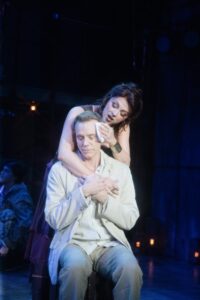 Likewise, Joi Ware’s choreography injects continuous movement and urgency into the production. There are moments where subtle Bob Fosse-inspired isolations seem to collide with flashes of Michael Jackson-inspired movement during larger ensemble sequences, creating choreography that feels simultaneously nostalgic and contemporary. Even those ensemble moments reinforce the power-in-numbers juxtaposed to the isolation of one theme found throughout the piece. Coupled with Cassidy’s direction, Ware’s choreography fills the stage with passionate movement, whether the entire company is on stage for a group number, or the action slows for a solitary moment from Pascal, Kilgore or Valli.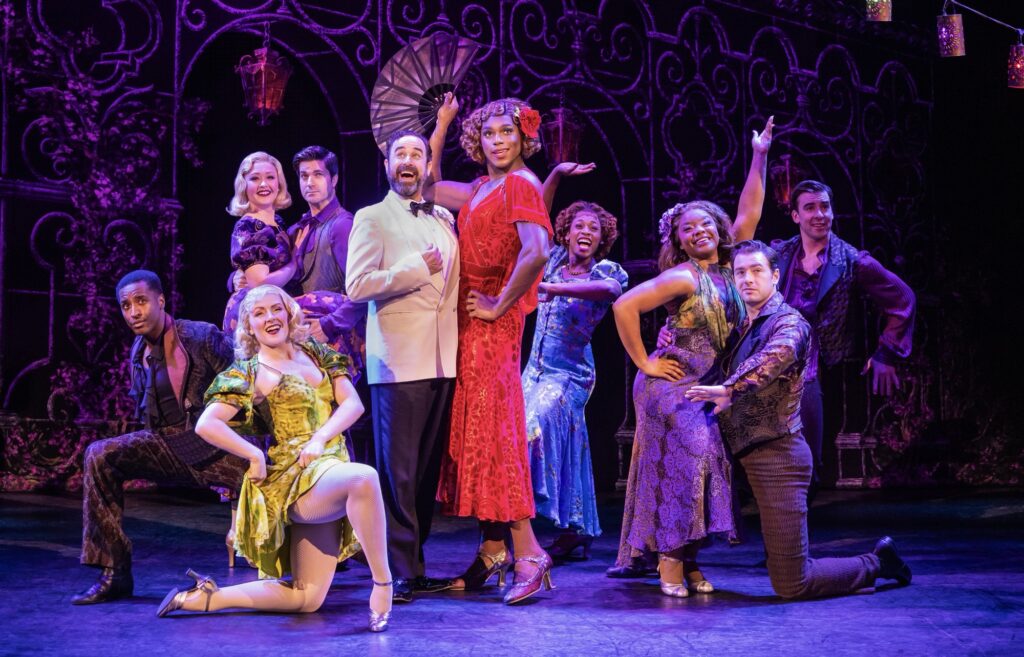
 One notable change is the role of Sweet Sue, bandleader of the all-girl band that serves as the perfect hiding in plain site destination for our two unintentional leading men, or should I say leading ladies? Little more than a brief appearance in the source material, Ruffin and Lopez wisely fleshed out Sweet Sue and as played by DeQuina Moore, we’re glad they did. Moore’s Sweet Sue doesn’t just open the show—she detonates it. Her “What Are You Thirsty For?” lands with the kind of electrifying force she herself described in our recent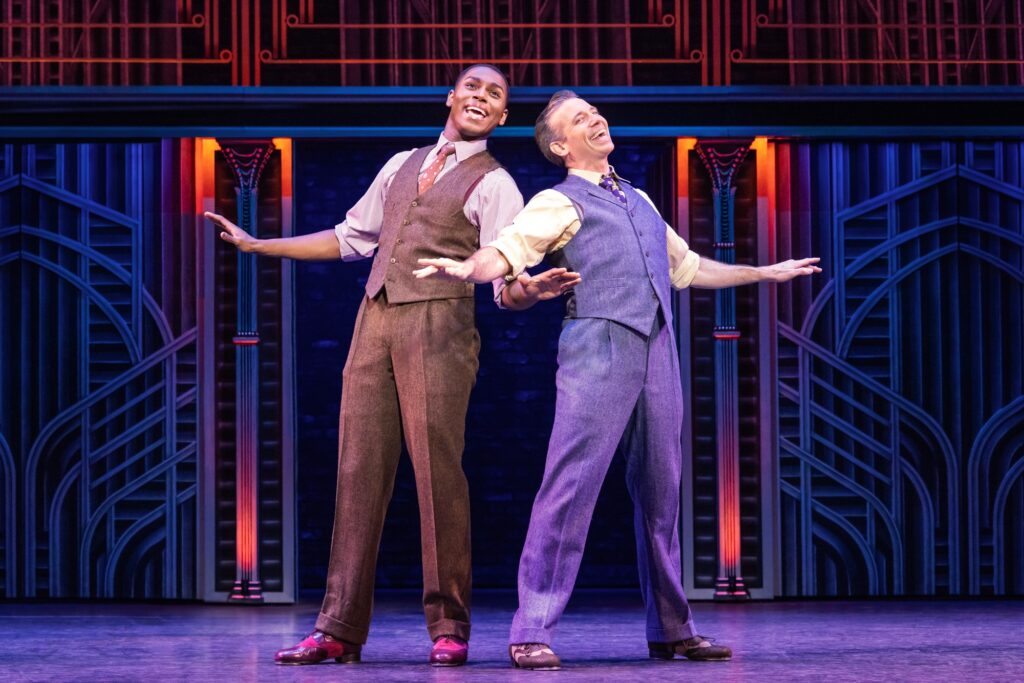
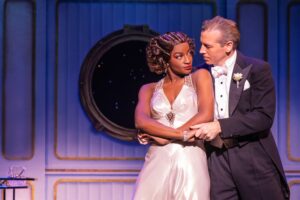 Leandra Ellis-Gaston’s Sugar Kane arguably comes with the steepest climb. Not because of the technical demands—though those are certainly present—but because Marilyn Monroe’s original Sugar remains so indelibly iconic. Wisely, the creators of the stage adaptation “understood the assignment,” sidestepping imitation entirely. By reimagining Sugar as a strong-willed, career-driven woman of color, the role becomes instantly unshackled from direct comparison—and Ellis-Gaston runs with it. With a speaking voice that lands somewhere between The Color Purple’s Squeak and legendary chanteuse Lena Horne, her Sugar is equal parts vulnerability and resolve. Sweet? Absolutely. But never simple.
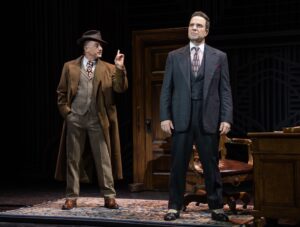 As G-man Mulligan, Matt Allen plays the essential “straight man” with surgical precision, anchoring the show’s more outlandish antics while quietly setting up some of its biggest payoffs. As he said in our recent Rapid Fire 20Q, that role is not only necessary but foundational in launching the show’s farcical momentum. And when he finally gets to dip into the madness—particularly in that delightfully ridiculous undercover sequence—it’s a payoff worth the wait.
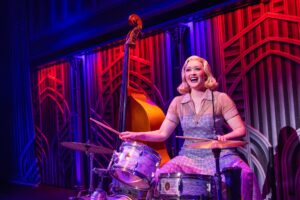 Minnie, Sweet Sue’s right-hand woman is revealed throughout as a bit of a sticky-fingered gal. One of the show’s running gags is her revelations of accidentally entering the wrong apartments thinking they were Sue’s and taking things that weren’t hers. To that end it makes perfect sense that Devon Hadsell’s Minnie is a scene-stealing delight, leaning fully into the character’s charming chaos and absconding with laughs each time she’s on the stage. There’s a lived-in sense of loyalty and mischief here, making Minnie far more than just comic relief. She’s an essential part of the heartbeat of the band. And that ever-present cigarette dangling from her ruby red lips, the kind of subtle sight gag that again perfectly pays homage to that 1930 prohibition-era Hollywood spirit. Side Note: When that Gregg Oppenheimer I Love Lucy play makes its way to Broadway, Hadsell has my vote for the Vivian Vance/Ethel Mertz role!
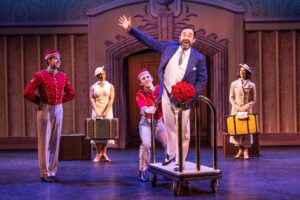 And then there’s Edward Juvier’s Osgood, who may just be the show’s most quietly radical reinvention. As he shared in our recent Rapid Fire 20Q, what drew him to the role was Osgood’s ability to lead with curiosity rather than judgment—and that ethos radiates throughout his performance. Where the film played him as the punchline, this version is in on the joke and, more importantly, in on the love. That shift—from caricature to fully realized romantic—becomes one of the production’s most meaningful evolutions.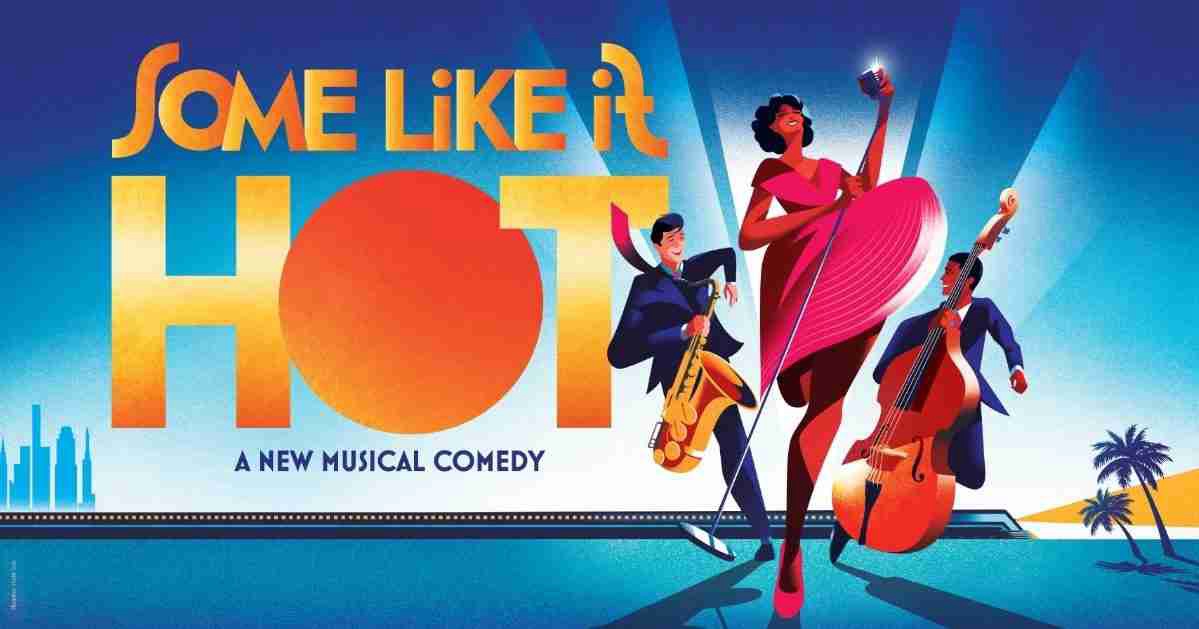


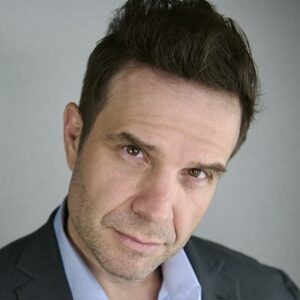


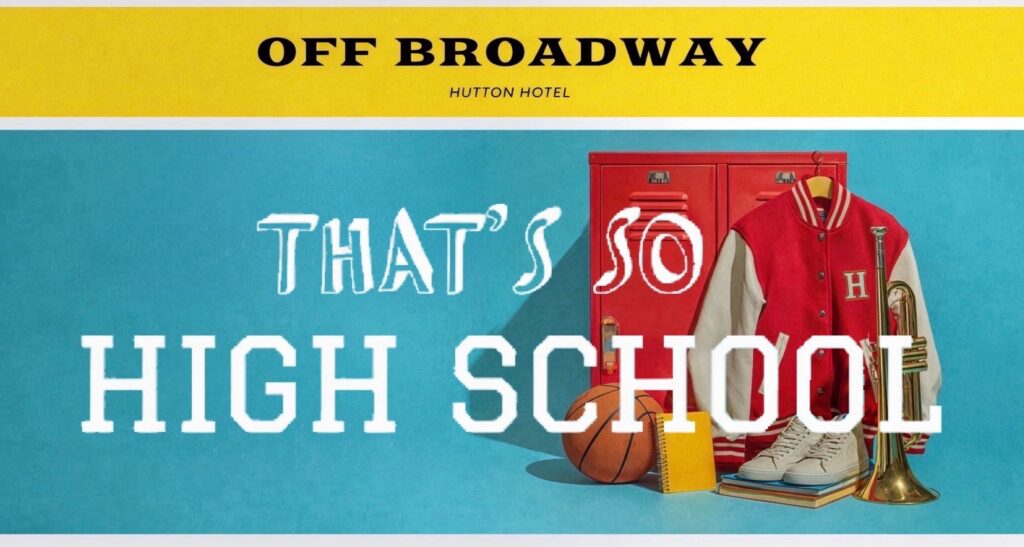
 RAPID FIRE 20Q WITH OFF BROADWAY: THAT’s SO HIGH SCHOOL‘s ELLE MCLEMORE
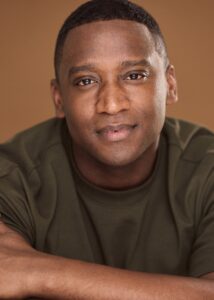


 Then there’s Doc. David Josefsberg’s take on the eccentric inventor is where the show truly locks into place. Wonderfully unhinged in the best way, his Doc balances manic comedy with genuine heart. His early numbers are the turning point where the audience collectively leans in and says, “Okay, I’m in.” Josefsberg doesn’t imitate—he reinvents, while still honoring what makes Doc such an iconic character.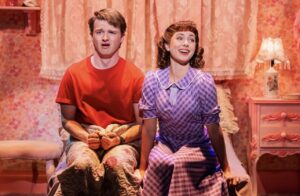
 And then there’s Cartreze Tucker as Goldie Wilson (and Marvin Berry), who nearly steals the entire show. From the moment he steps onstage, Tucker commands attention. His big number earns one of the largest audience responses of the night, and for good reason—his vocals are powerhouse-level, and his charisma is off the charts. It’s a star-making turn that injects an extra jolt of electricity into an already high-energy production.
 Visually, the production is stunning. The use of projections, layered with practical effects and good old-fashioned stage magic and some mind-blowing state-of-the-art new theatrical tricks, the effects become a character in its own right. Whether it’s the clock tower sequence or the time-travel effects, the technical execution is nothing short of jaw-dropping. It’s the kind of design work that reminds you how thrilling live theatre can be when all the elements are firing.
 Act Two does bring one of the more head-scratching moments in the show—a neon-soaked, new wave-inspired “21st Century” opening number featuring Doc and a troupe of backup dancers. It’s flashy and fun, but also feels a bit unnecessary and tonally out of sync with the rest of the piece. And on opening night in Nashville, it was followed by a rare hiccup: the hoverboard didn’t quite cooperate. Still, the moment was handled with total professionalism, and honestly, it was quickly forgiven given the sheer volume of technical wizardry the show gets right. Because when it works—and it mostly does—it really works.
 RAPID FIRE WITH BACK TO THE FUTURE’S MARTY MCFLY, LUCAS HALLAUER
 JHPENTERTAINMENT: Marty’s wardrobe—from the puffer vest to the sneakers, perfectly reimagined for the stage by scenic and costume designer Tim Hatley—is instantly recognizable. What’s it like to put on that iconic costume each night and step into such a visually legendary look?
 RAPID FIRE WITH BACK TO THE FUTURE’S LORRAINE BAINES, KATHRYN ADELINE
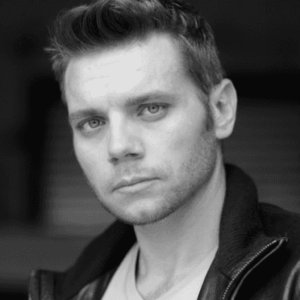 RAPID FIRE WITH BACK TO THE FUTURE’S BIFF TANNEN, NATHANIEL HACKMANN
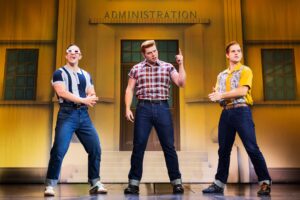 JHPENTERTAINMENT: After originating the role on Broadway, what lured you back to Hill Valley for year two of the National Tour?
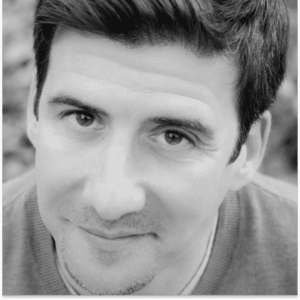 RAPID FIRE WITH BACK TO THE FUTURE’S DOC BROWN, DAVID JOSEFSBERG
 JHPENTERTAINMENT: Speaking of energy, one of the most entertaining elements of Back to the Future on stage is the theatrical magic courtesy the collaborative efforts of the show’s lighting designers Tim Lutkin & Hugh Vanstone, video designer Finn Ross, sound designer Gareth Owen and illusion designer Chris Fisher. Without giving away too much, what can you tell me about your favorite moment in the show where these elements all come together perfectly?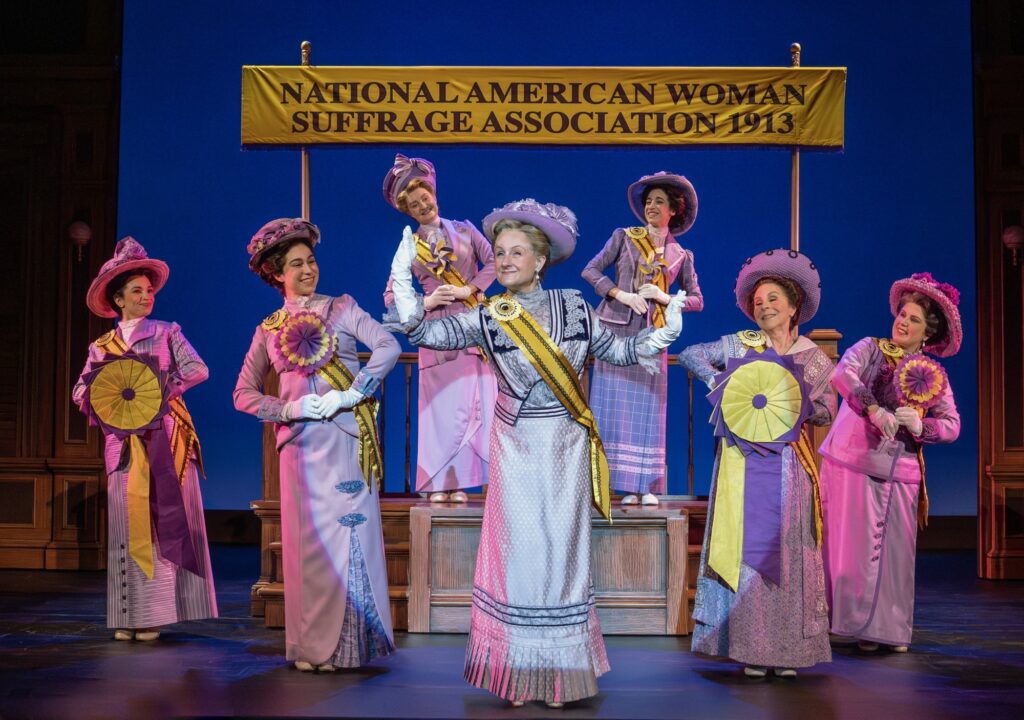
 RAPID FIRE WITH SUFFS‘ Carrie Chapman Catt, ACTRESS MARYA GRANDY
 RAPID FIRE WITH SUFFS‘ Mary Church Terrell, ACTRESS
  RAPID FIRE WITH SUFFS‘ Phyllis Terrell and Robin, ACTRESS VICTORIA PEKEL
 RAPID FIRE WITH SUFFS‘ Mollie Hay, ACTRESS TAMI DAHBURA