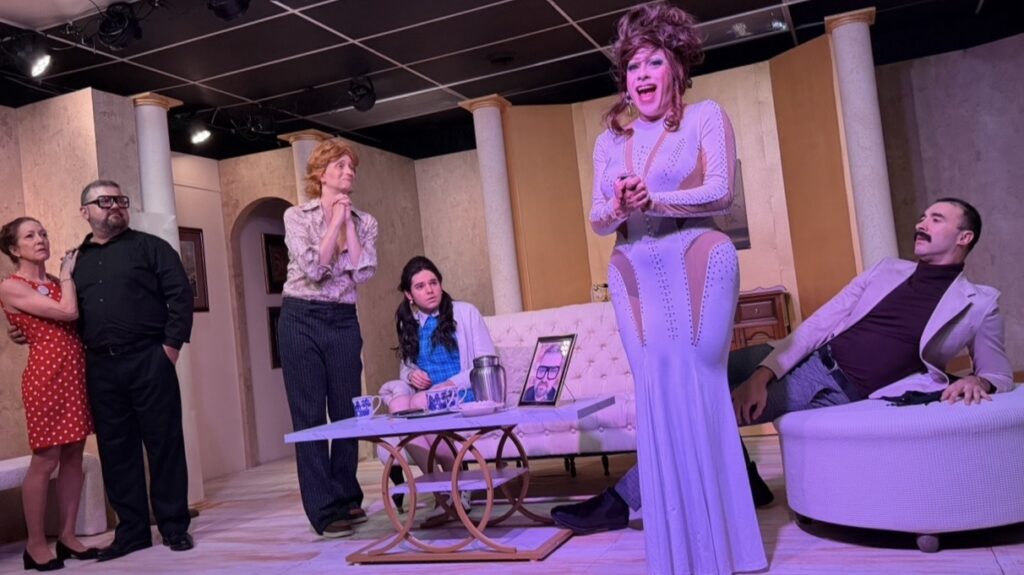
Charles Busch’s Die, Mommie, Die! , currently onstage thru September 13, as co-directed by Diane Bearden and Daniel Vincent, transforms Playhouse 615 into the lavish Beverly Hills home of Angela Arden Sussman (local drag persona Veronika Electronika), a once-famous Hollywood star whose glamorous life has become considerably less glamorous behind closed doors. Her marriage to film producer Sol (Daniel Vincent) is crumbling, her daughter Edith (Christian Swann) is devoted to Daddy while harboring a serious grudge against Mommie, and son Lance (Zach McMasters) is trying to navigate his own peculiar place within the family. Add Angela’s decidedly complicated relationship with her lover Tony Parker (Wanderson Rezende), Bootsie Carp (Deborah Seidel), a suspicious maid and enough secrets to fill a Hollywood gossip column, and Busch has concocted a comic thriller where murder and mayhem are served right alongside the martinis.
I attended opening night, and before the play even began, I was already impressed by what I saw onstage. The set design (courtesy Eric Bradley & Wanderson Rezende) and construction (Bradley, Rezende, McMasters & Abby Waddoups) perfectly convey the expected opulence of a forgotten star’s late-1960s Beverly Hills mansion. It’s a vast improvement over the company’s previous production’s bubbled-up faux wood wallpaper, giving me hope before the lights even dimmed to start the show.
Thankfully, that optimism wasn’t misplaced. While there were a few occasional fumbled lines and a couple of dropped props along the way, opening night jitters are to be expected, and the cast generally recovered without disrupting the momentum. More importantly, everyone seemed to understand precisely what kind of theatrical playground Busch has created—and they were more than willing to play in it.
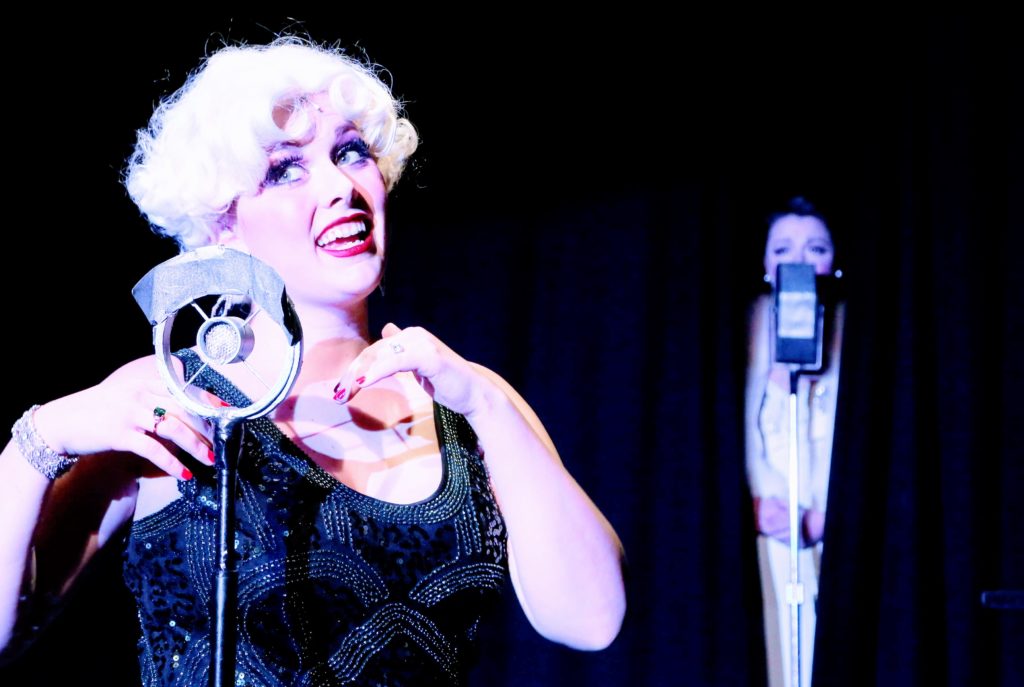
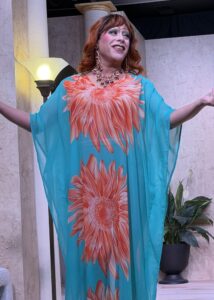 Electronika, who, in recent years has appeared in pretty much every drag-related production at Playhouse 615, proves effective as Angela Arden Sussman. Having been a fan favorite amongst Nashville’s drag community for nearly a quarter of a century (she knows I love her, it just reads cattier that way) whether she’s reading to kiddies at drag story hour–literacy…it’s SO controversial–hosting a charity event, lobbying for LGBTQIA+ rights, performing a drag show or appearing in a theatrical production, you know you’re gonna get a bit of the diva that is Veronika Electronika, especially if that’s how she’s credited in the playbill. Such is the case with Veronika as Angela. She’s larger than life, self-indulging, wickedly self-important, and thanks to Veronika’s own wardrobe doubling for Angela’s, dressed to the mother-fuckin’ nines–or at least sixes, because that’s how many wardrobe changes I counted, not including at least two outer layer discardings revealing more fashion underneath–while chewing on every inch of that decadent scenery. Yes, per Busch’s script you’ll find aspects of many a great diva including, but not limited to Bette Davis, Joan Crawford, and even Mama Rose, but make no mistake about it, it’s Music City diva Veronika Electronika who’s most present in this portrayal of Angela Arden Sussman.
It’s difficult to imagine anyone more naturally suited to play a faded screen siren who has absolutely no intention of surrendering her place at center stage. Veronika understands Angela’s theatricality instinctively, but there’s enough calculation beneath the glamour to keep her from becoming merely a caricature. Her exchanges with Daniel Vincent’s Sol crackle with marital venom, while her scenes with Wanderson Rezende bring an entirely different kind of heat.
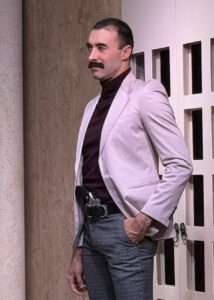
While Veronika Electronika’s Angela Arden Sussman is the assumed, and self-proclaimed star of the show, she’s got some tough competition for that honor, most notably Wanderson Rezende’s Tony Parker is literally and figuratively Veronica’s stiffest scene-stealing competition. From his hilariously overly-dramatic ‘soap opera stare’ after nearly every line, to the comedic callback of his ongoing flippant chain-smoking habit (He literally puts cigarette after cigarette in his mouth only to carelessly flip them somewhere in the vicinity of the nearest ashtray, only to rinse/repeat this action throughout the show). As if stealing each scene weren’t enough, Rezende’s Tony never simply exits the stage. With every exit comes a last-minute fourth wall-breaking knowing over-the-shoulder glance letting you know he’ll be back for more mayhem. The audience just couldn’t keep their eyes off this production’s licentious lothario. Then there’s the matter of his wardrobe. It’s well-established early on that Rezende’s Tony is, um…above average in certain aspects. Suffice it to say Jimmy Fallon’s “Tight Pants” skit could easily have been written in Rezende’s Tony Parker’s honor. Humor suited for any horned-up 12-year-old, and it plays hilariously in the hands of Rezende.
Oh, and you gotta love one particular scene in which Tony arrives at the mansion to give Angela a tennis lesson. Angela, dressed in a cute green knit tennis ensemble (a reliable source tells me it was procured at a local Goodwill, if you can believe that) is carrying a matching equipment bag with the words RACKET and BALLS on it. Perfect to decribe both the racket going on within the house and well, Tony, in general. Meanwhile, it also wasn’t lost on me that Wanderson’s Tony is sporting track pants by Everlast©.
Rezende’s portrayal thrives on precision. That ridiculously prolonged stare, the ever-present cigarette and the calculated physicality could easily become tiresome in lesser hands, but he keeps finding new ways to wring another laugh from them. Tony is the kind of character who seems convinced that every room is his personal stage—and Rezende gives him exactly that level of shameless confidence. Having seen Rezende in just under a dozen roles in recent years, I’m continually impressed with his versatility as an actor and his masterclass-level comedic timing.
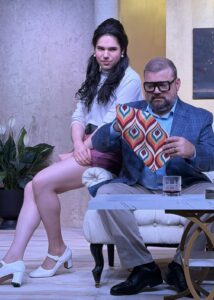
Daniel Vincent’s Sol Sussman is the butt of many of the show’s jokes. That ASSessment makes more sense if you’ve seen the show. Pulling double-duty as co-director of this production, perhaps Vincent leans a bit too heavily into the stereotypes of the character’s Jewish film producer tropes. Regardless, Vincent is most fun to watch when he’s trading barbs with his on-stage wife, when paired with Christian Swann as his too close for comfort dotting daughter, Edith Sussman. or dodging advances from his mildly obsessive maid. But it’s the aforementioned nearly-incestuous ick between Sol and Edith as played by Vincent and Swann that’s pure Charles Busch camp.
There’s a particularly entertaining rhythm to Vincent’s scenes with Veronika, as Sol and Angela volley insults with the practiced ease of a couple who have spent far too many years perfecting the art of getting under each other’s skin. His scenes with Swann take that discomfort somewhere considerably stranger, particularly as Edith’s devotion to her father begins veering into decidedly inappropriate territory.
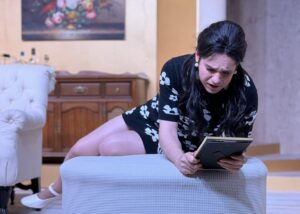
On the subject of Swann’s Edith, when I heard Playhouse 615 had cast a male in the role of the Daddy-worshiping, Mommie-hating Edith Sussman, I fully expected the joke to be drag queens playing the rivaling mother/daughter duo to the hilt. Much to my absolute camp-loving delight, making his Playhouse 615 debut, Swann’s Edith is played strictly for laughs as a boy in a wig and a short dress. Sure his nails are painted, the wig has potential and he’s donned a bit of makeup, but there’s not even the slightest attempt at a higher-pitched voice, or perceived ultra-feminine gesturing or movement. Yet, somehow Swann simply reads brilliantly as Edith. I suspect the show’s co-director, Diane Bearden had a hand in this. Either way, kudos to Swann for not only making Edith his very own, but also for making her among my personal favorites in the show.
That choice proves particularly effective because Swann never seems to be chasing the joke. He simply inhabits Edith’s bizarre worldview and allows the circumstances around him to generate the comedy. His expressions and reactions do a tremendous amount of work, particularly when Edith is confronting Angela or fawning over her father. For a Playhouse 615 debut, Swann makes a memorable first impression, turning what could have been a one-note gag into a character with a distinct presence of her own.
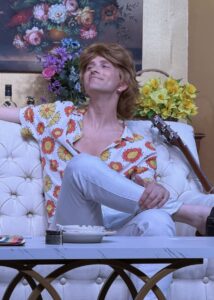
Cast as Lance, the Sussman’s ne’er do well, oddly twitchy son is Zach McMasters. In my recent Rapid Fire 20Q with cast from this production, I chastised Zach about the raven-colored, poorly groomed wig as seen in the show’s promo shots, so at least they went with something less offensive for the performance. Looking AND sounding like a less-mellow Shaggy Rogers from Scooby-Doo, I half expected McMasters to let out the occasional “ZOINKS!” when action in the play took a surprising turn. Nonetheless, his Lance mugs for the audience, somehow transcending the camp, evoking a bit of sympathy for his familial circumstances. And is it weird that among the on-stage overlapping love interests, couplings, flirtations and strange bedfellows, his scenes with Rezende’s Tony somehow equate to the most chemistry between actors? Nope. It’s not weird. In a production filled with tangled relationships and improbable romantic entanglements, their exchanges have an oddly genuine spark that makes their scenes particularly enjoyable. Lance could easily disappear beneath the eccentricities, but McMasters gives him just enough vulnerability to make us wonder what might have happened if he’d grown up in literally any other family.
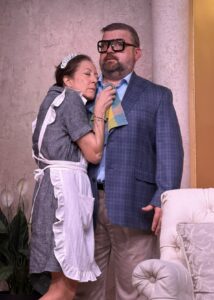
Rounding out the cast is yet another scene-stealing, dialogue-devouring member of the cast comes courtesy the Sussman family’s sedulous, albeit frequently soused (was that a Tiffany & Co. flask I spotted?) maid, Bootsie Carp, as played by Deborah Seidel. Part devoted Alice Nelson from The Brady Bunch, with a healthy does of Agnes Moorehead’s loudmouth, back-talking maid Velma Crutcher in Hush, Hush, Sweet Charlotte, Seidel’s Bootsie simultaneously throws verbal punches to Veronika while while whispering often unrequited sweet nothing to Sol. Spoiler Alert: her ‘death scene’ blatantly steals every over-reaching laugh-grab from classic comedians like Carol Burnette, and we’re here for it.
Seidel has the timing to make Bootsie’s every appearance feel like a comic punctuation mark. She knows exactly how long to hold a reaction, when to fire off a retort and when to let the audience enjoy the sheer ridiculousness of what’s unfolding around her. Her rapport with Veronika is especially delicious, with Bootsie seemingly possessing just enough nerve to say what everyone else in the mansion is thinking. And when she turns her attention toward Sol, that flirtation adds yet another wonderfully inappropriate wrinkle to the household. As for that death scene, subtlety clearly never entered the room. And frankly, why would it?
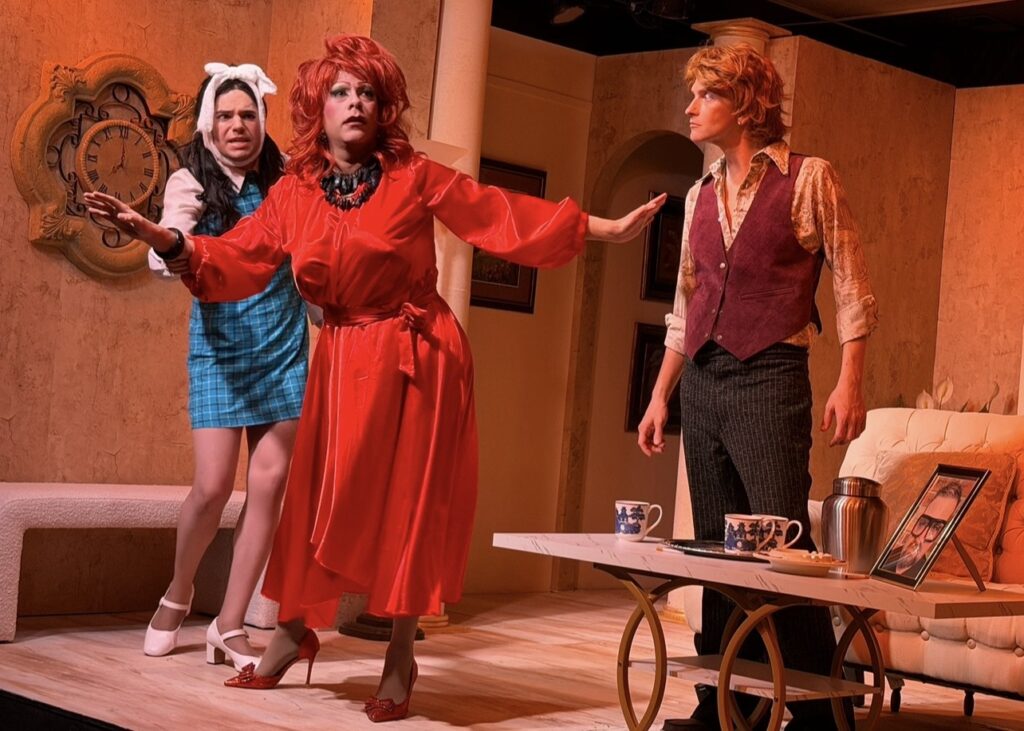
Charles Busch’s particular brand of comedy works best when the performers embrace the outrageousness rather than attempting to sand down its sharper edges. Having assembled a cast that brings distinctly different flavors to the Sussman household Playhouse 615 get it. Veronika Electronika has the glamorous excess of Angela down to a rhinestone-encrusted science, while Wanderson Rezende turns Tony into a walking, talking, smoking, smoldering testosterone laugh-fest. Daniel Vincent finds just enough mileage in Sol’s perpetual discomfort, Christian Swann delivers an unexpectedly terrific Edith in his Playhouse 615 debut, Zach McMasters gives Lance an appealing vulnerability beneath all that neuroses, and Deborah Seidel makes Bootsie the kind of maid you absolutely want around, especially if your’e the black sheep of the family and the rest of your relations start behaving badly. It’s worth mentioning again, this production also benefits enormously from that sumptuous set. It provides exactly the sort of decadent backdrop this story demands and immediately establishes the world in which these characters can indulge their worst impulses. Just remember: in Beverly Hills, the family that schemes together may not stay together—and when Mommie says everything is fine, you might want to check the body count.
If you like your family drama served with murder, marital betrayal, sexual innuendo, extravagant wardrobes and a maid who knows entirely too much, Die, Mommie, Die! is ready to welcome you into the Sussman mansion as Playhouse 615 continues the camplicious hysterical histrionics thru September 13. CLICK HERE to purchase tickets (use the drop-down to select specific date/time). For more from Playhouse 615, check out their website or follow them on Instagram and Facebook.
As always, if you wanna follow JHPEntertainment to find out who I’m chatting with for my next Rapid Fire Q&A, or for my take on the latest local and national theatre, music, arts and more, visit JHPENTERTAINMENT.com or find us on Facebook, Insta, Threads and X. Till then #GoSeeTheShow!
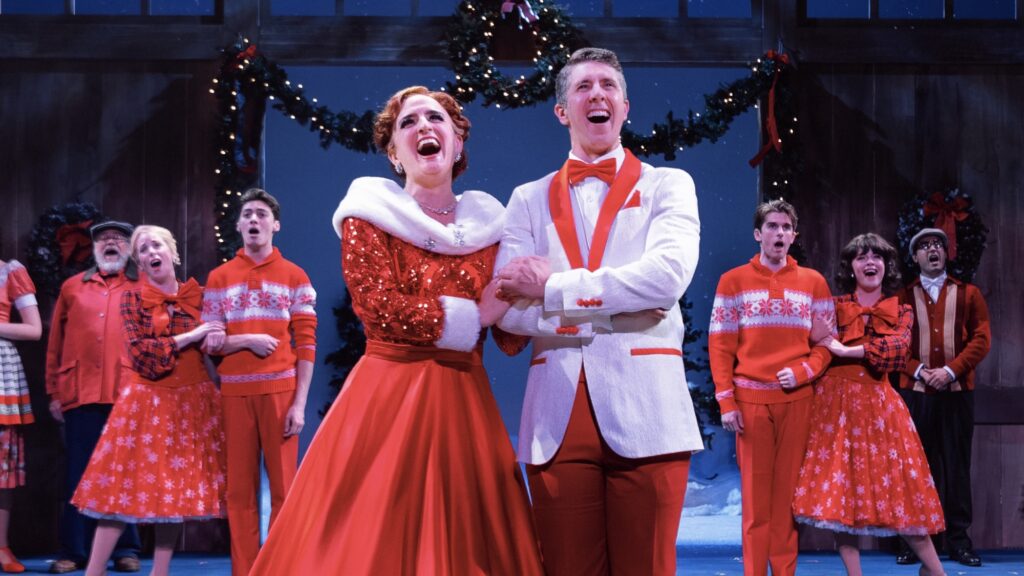
 Ben Laxton, as the steady, dry-witted Bob Wallace, anchors the show with clean vocals and a grounded charm that never attempts to mimic Bing Crosby, but instead finds a sincerity and warmth all his own. His rendition of Count Your Blessings Instead of Sheep lands with a quiet power—simple, heartfelt, and beautifully sung.
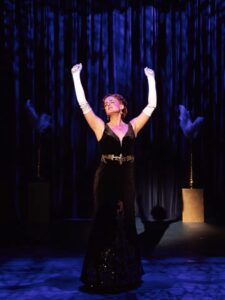 Laxton pairs especially well with Lisa Karlin’s Betty Haynes, whose rich, velvety alto brings a classic, old-Hollywood elegance to every number she touches. Her Love, You Didn’t Do Right By Me—a personal favorite moment of mine—was delivered with haunting restraint, channeling Rosemary Clooney without imitation and earning one of the night’s strongest responses.
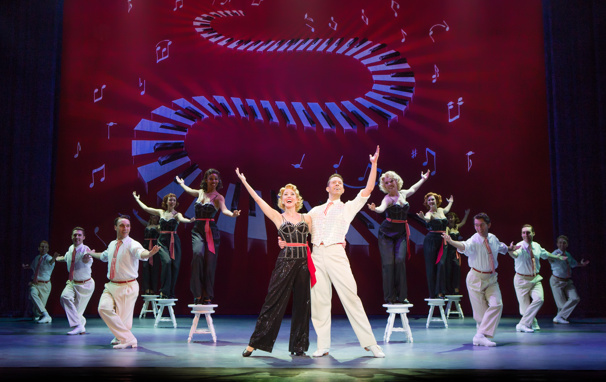
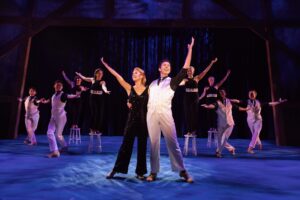 On the other side of the romantic coin, Jeremy Benton and Elizabeth McGuire ignite the stage as Phil Davis and Judy Haynes. Benton, not stranger to area theatre audiences, was last seen in Nashville as Bert in Nashville Rep‘s 2022 production of Mary Poppins, is also no stranger to the role, having performed in the National Tour of White Christmas and incredible 7 seasons. Speaking of previous connections to the show, Benton’s on-stage love interest McGuire, who’s making her Studio Tenn debut in the show, has previously appeared in two regional productions of White Christmas. Not only do they match the flirtatious comedic energy required of the roles, they also jointly co-choreographed the production—an ambitious undertaking given the show’s dance vocabulary is steeped in the iconic work of Randy Skinner. The result? Pure joy. Their The Best Things Happen While You’re Dancing is dreamlike and precise, but it’s the Act II taptastic extravaganza I Love a Piano that stops the show cold…or should I say Hot! Benton’s dancerly ease and McGuire’s crisp, buoyant tapping create the kind of musical-theatre electricity audiences hope for in December. They honor Skinner’s lineage while injecting fresh life into every step.
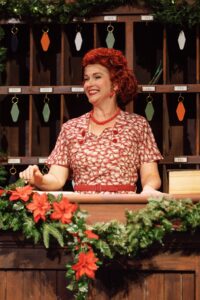 In comedic and heartwarming supporting turns, Megan Murphy Chambers (Martha) once again proves she can steal an act with one number. Her Let Me Sing and I’m Happy blends powerhouse vocals with effortless comedic bite—she lands every quip, every side-eye, and every belted high note with the precision of a seasoned pro. Belting lyrics like “if my song can start you laughin’/can start you cryin'”with humor and heart, rest assured MMC can and does! Chambers is a jewel in the crown of area theatre folk. She’s an entertainer’s entertainer. Equally at ease whether tasked with comedy or sincerity. Her scenes with Curtis Denham‘s General Waverly check all the marks perfectly hitting the highs of broad comedy and the more subtle genuine moments between two longtime friends. Speaking of, Curtis Denham brings a grounded gravitas to General Waverly, avoiding caricature and instead offering a touching
 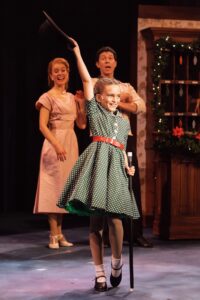 portrait of a leader rediscovering purpose. Rounding out the primary cast is young Frankie Lou Lauderdale, who simply charms instantly as Susan (Preslee Siebert also plays Susan at some performances). Lauderdale delivers the pint-sized earnestness gives the storyline its heart. I’ve always found it interesting that in the original film, Susan is General Waverly’s adult granddaughter, but for the stage adaptation, Susan is presented as a young girl. I does indeed add a more family-oriented dynamic and Lauderdale’s Susan provides the right amount of youthful sweetness combined with moxie, as proven in her cheer-inducing ambitious rendition of Let Me Sing and I’m Happy.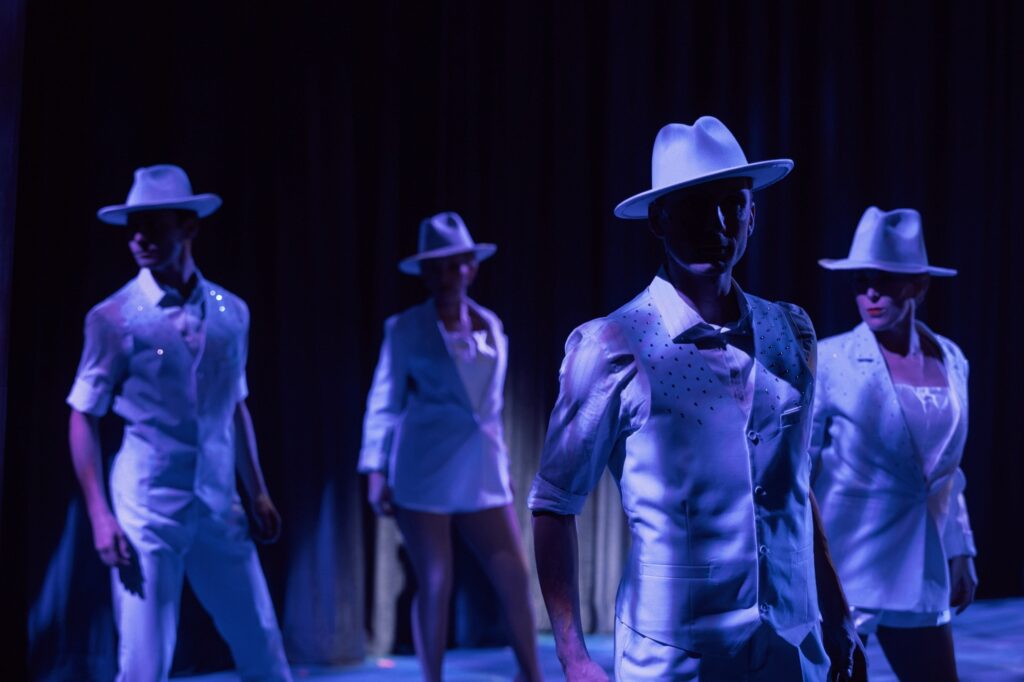

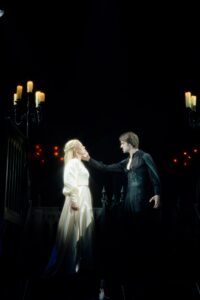 Jay Sullivan is chilling as Count Dracula. He doesn’t simply linger
 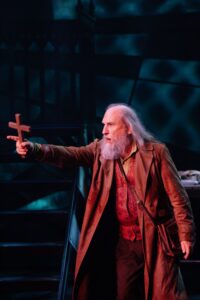 Opposite him, Sullivan’s performances is beautifully balanced by Brian Webb Russell who gives a gravely controlled performance as Abram Van Helsing, anchoring the heroic opposition with clarity of intent and moral weight. Russell’s Van Helsing offers the perfect amount of sharp intellect and righteous urgency. His verbal sparring with Sullivan’s Dracula are electric—two forces circling each other in a battle of will and belief.
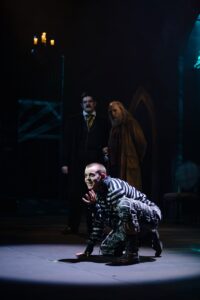 The trio of Lane Adam Williamson’s Renfield, DéYonté Jenkins’ Norbert Briggs and Catherine Gray’s Margaret Sullivan are tasked with carrying a bit of dark humor that helps temper the heavy suspense.
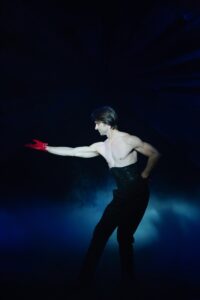 Then there’s Logan’s costumes. Every costume a work of art. The female cast members regal and radiant in finery fitting the period of the action. Van Helsing’s leather wardrobe, perfectly fitting for battle. Renfield’s asylum attire tattered and torn, but with a hit of glamour by way of some blinged-out blood spots. But it’s Dracula’s wardrobe that is truly glamorous and entrancing. From his first appearance bare-chested, but corseted in black to a black jacket accented with blood-red beaded erratic epaulets when he returns from a mysterious night right. (Gotta love that this particular look gets no mention within the context of the play, but is a jarring visual clue to the most astute audience member). The beauty of that costume not without merit, my personal favorite is yet another black jacket and pants combination. The jacket, from one side appears nothing special as the hem hits just below the actor’s waist, but from front view, its asymmetrical as the other side is more the length of a morning coat. Perhaps another visual clue of the duality of the wearer? Just when you think Logan’s used up his bag of costume tricks, in the final scene Dracula appears the most sparkly transfixing figure yet, but I’ll let you experience that on your own.
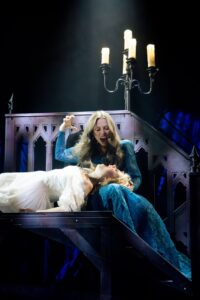 What impresses most about this DRACULA is how it leans into its horror while refusing sentimentality. McNulty’s choice to portray Dracula as predator (not tortured romantic) is honored here. That clarity gives other elements room to breathe: the trauma of Lucy’s affliction, Mina’s struggle with memory and agency, Van Helsing’s moral burden, Seward’s scientific disbelief challenged by the impossible.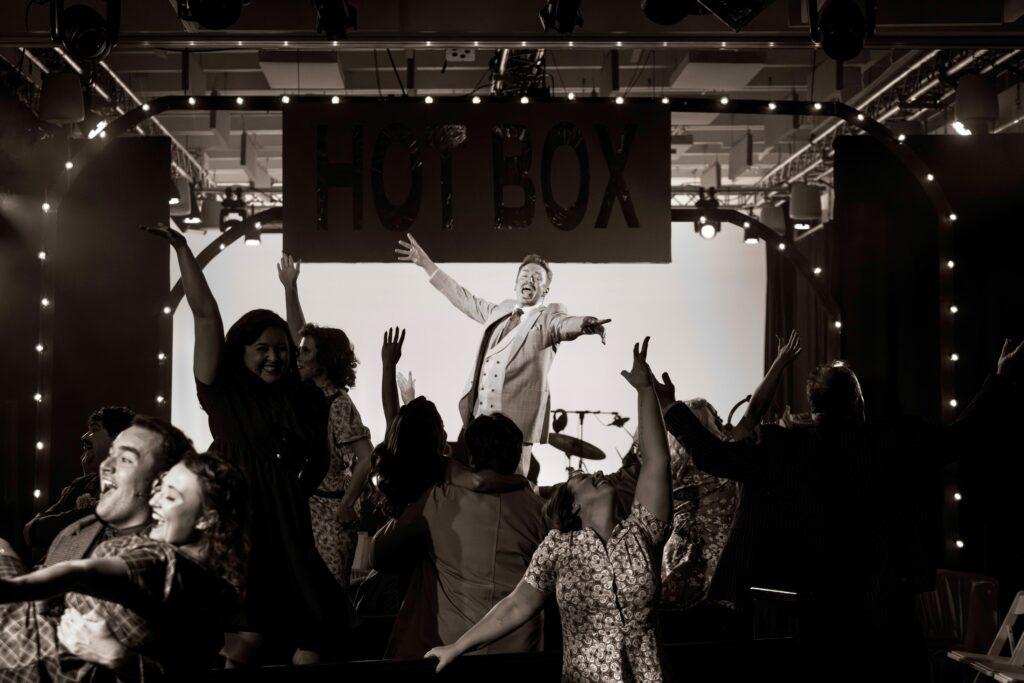
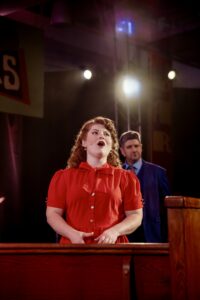 At the center of the action is Philip David Black as the suave, gambling man Sky Masterson. Black brings the expected effortless charisma mixed with the perfect blend of uncertainty that only unforseen love can cause. His Luck Be A Lady is smooth and sweet, showcasing his ability to walk the line between rogue and romantic with ease. His chemistry with Rebekah Howell’s Sarah Brown is electric, especially in the Havana sequence where sparks (and drinks) fly. Howell, ever the vocal powerhouse, lends depth and sincerity to the morally upright mission worker. Her rendition of If I Were a Bell, a charm-filled Act 1 highlight.
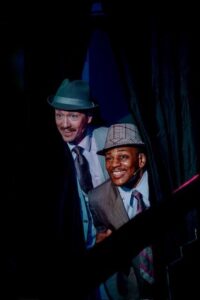 It comes as no surprise that Brian Charles Rooney’s Nicely-Nicely Johnson is a true showstopper. With impeccable comic timing and a dynamite voice–gotta love that sopranista range–Rooney brings down the house in the rollicking Sit Down, You’re Rockin’ the Boat—arguably the night’s most rousing number. He’s well matched by Jahi Emaud’s Benny Southstreet, whose swagger and harmony work are equally sharp. If you’re reading this, Studio Tenn, I’ve got your Wallace and Davis cast for your upcoming holiday production of White Christmas right here with these two!
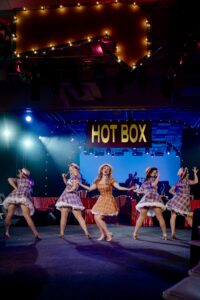 The Hot Box numbers are just plain fun, led with style and precision by Kelsey Brodeur (also serving as dance captain), alongside the effervescent Madison Crosby, Emily Stephens, and Allie Spengler. Their ensemble work perfectly sizzles thanks to playful choreography courtesy Allison Little, who keeps the movement crisp and era-appropriate while still leaving room for individual character. With Stein’s Adelaide, the Hot Box Girls’ performance of A Bushel and a Peck (one of my personal favorite Doris Day tunes, recorded the year the Broadway musical debuted) wonderfully presents the flitatious innocence of such numbers from that era.

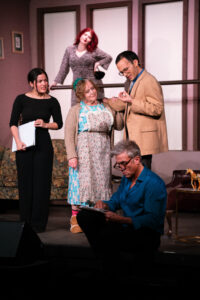 For The Keeton’s presentation, co-directors Maguire and Gray have enlisted a great mix of newcomers and seasoned performers including
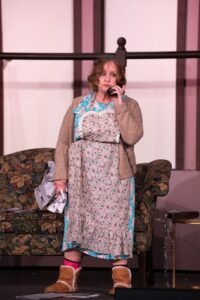 Now, back to the show…From the character’s initial entrance, Lloyd offers the first broken fourth wall as he stops the action on stage when one of the actors misses a prop cue. Carmichael’s Lloyd bellows from the audience and the fun begins. The actress Lloyd chastises for missing her cue is none other than Ann Street-Kavanagh, as middle-aged actress Dotty Otley, who’s playing the housekeeper in the show-within-a show. Street-Kavanagh is perfect for the role of Dotty as she’s never better than when she’s playing it a bit confused and daft. Like Lloyd, Dotty is also embroiled in a love triangle. All Dotty’s Nothing On character wants to do is put her feet up and enjoy the the telly. Oh, and did I mention she enjoys a snack of sardines? Worth noting, since a plate of the fishy snacks result in much of the show’s hilarity when left about, or taken off, cluing the other visitors in Nothing On that they’re not alone in the house.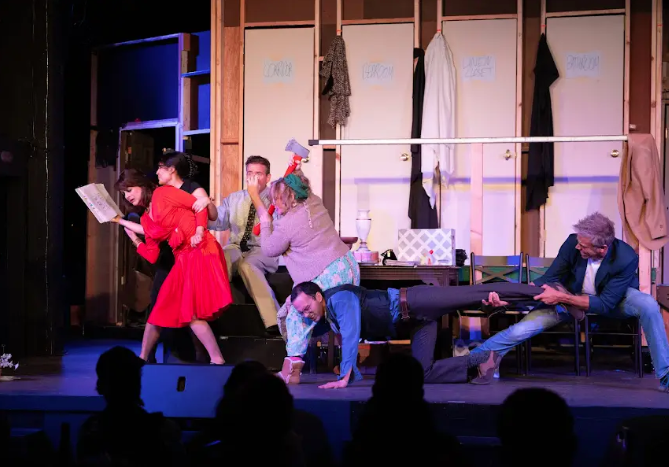
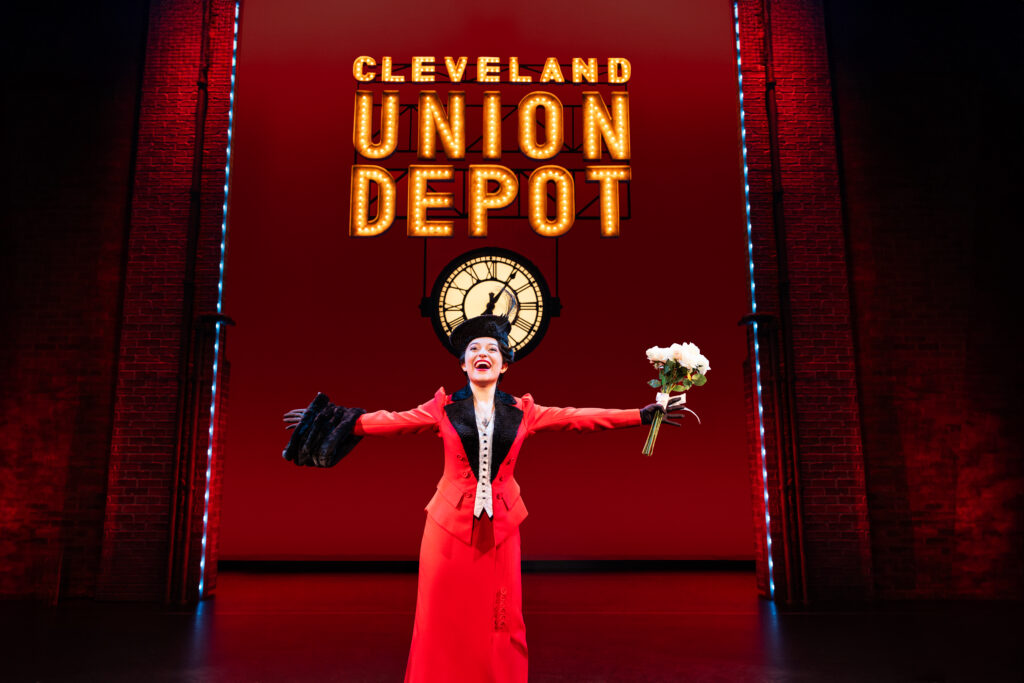
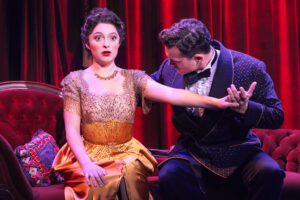 From the moment Katerina McCrimmon takes the stage, she IS Fanny Brice. She’s got the period-authentic New York dialect, the exaggerated facial expressions, but most of all, she’s got the voice. Ok, so the voice might be more what audiences expect thanks to the aforementioned Streisand portrayal, but I’m here to tell you McCrimmon makes the character her own while carefully maneuvering through, and well beyond what could easily be brushed off as an impression. Throughout the show, including more familiar territory of musical moments like I’m the Greatest Star, Don’t Rain on My Parade and People, and my personal favorite, His Love Makes Me Beautiful, McCrimmon vocal range, strength and ability prove time and time again she’s the perfect powerhouse to introduce Fanny Brice to a whole new generation of musical theatre fans.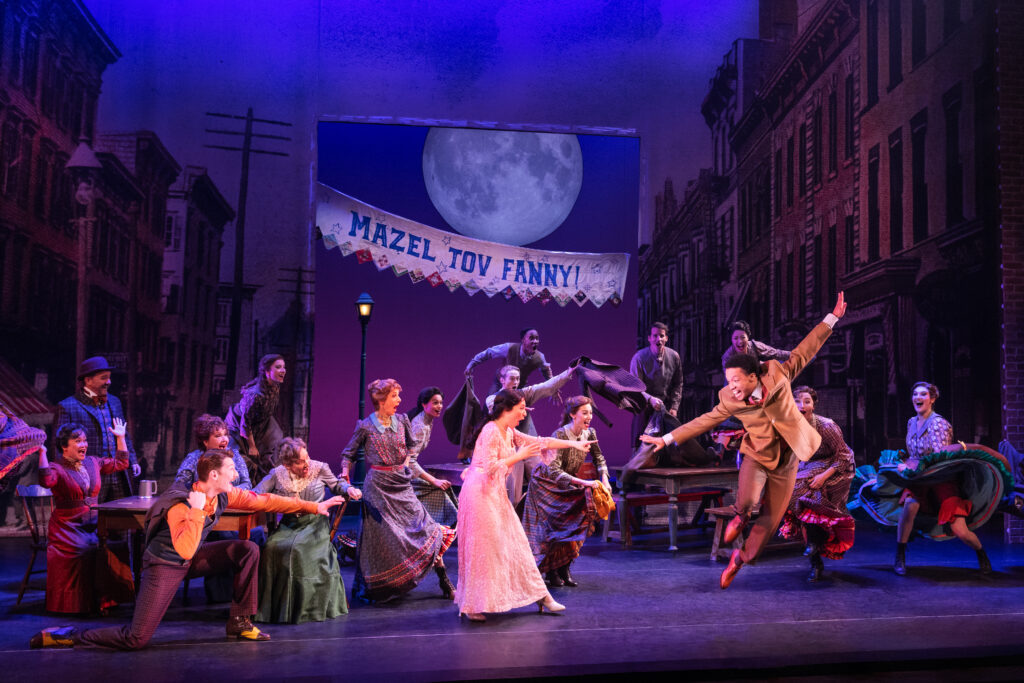
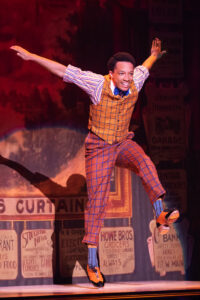 Izaiah Montague Harris plays the always in-step and dependable Eddie Ryan, a dancer/choreographer friend of Fanny’s who’s always there to help her with her career and pick up the pieces when Nicky is out of step. When I say Harris’ Eddie is in-step, I mean it. One of the best non-Fanny-centric moments of the show features Harris in a tap-tactic dance sequence. Which reminds me, kudos to the show’s costume designer, Susan Hilferty. Yes, all of Fanny’s period-perfect costumes are fabulous, but it was during Harris’ tap number that I notice a wonderfully clever costuming detail. Hiferty has sewn the occasional rhinestone throughout the pant legs of Harris costume, which catch the light of his fancy footwork and draw the eye throughout the dancer’s entire body, allowing those of us who picked up on this seemingly random detail the joy of watching the full mechanics, precision and skill of the dance.
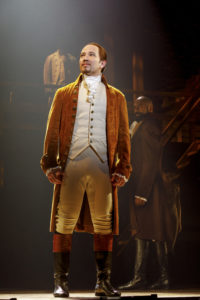
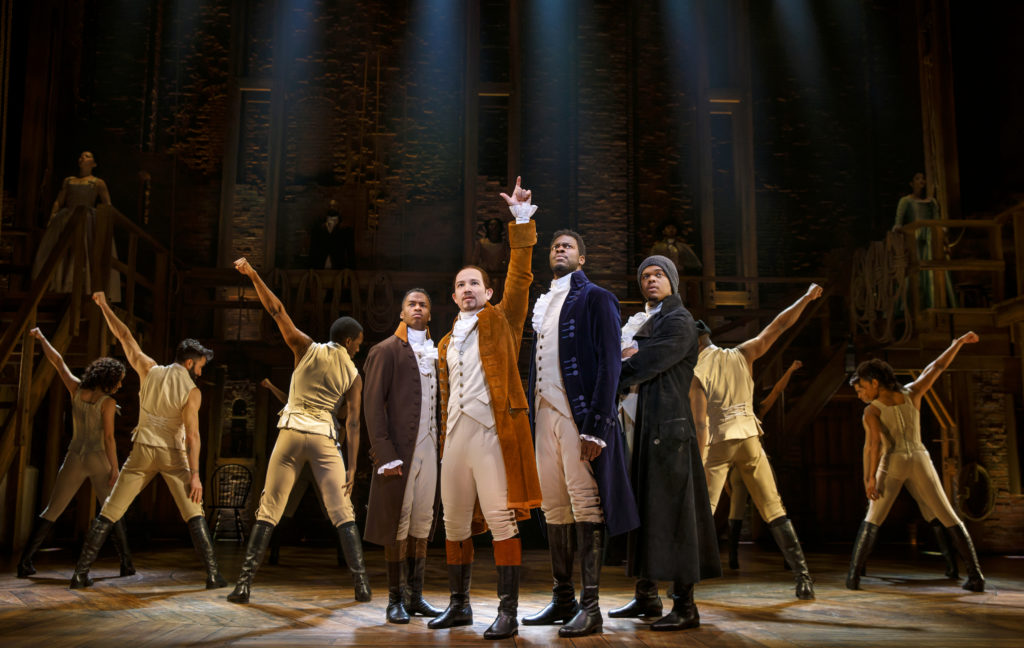
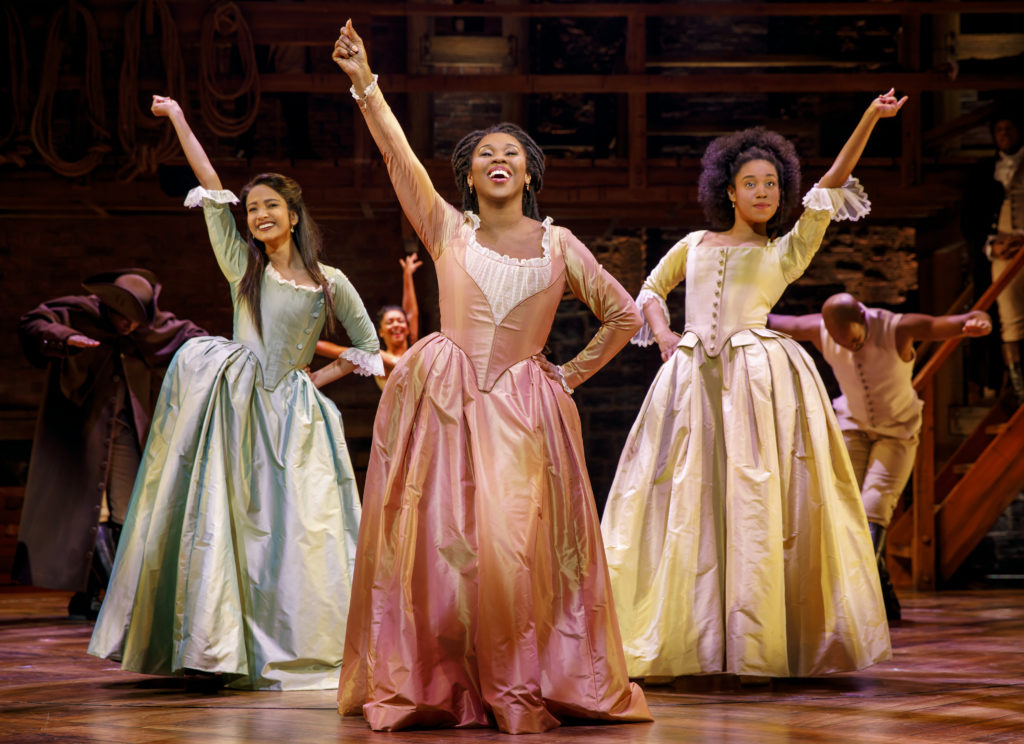
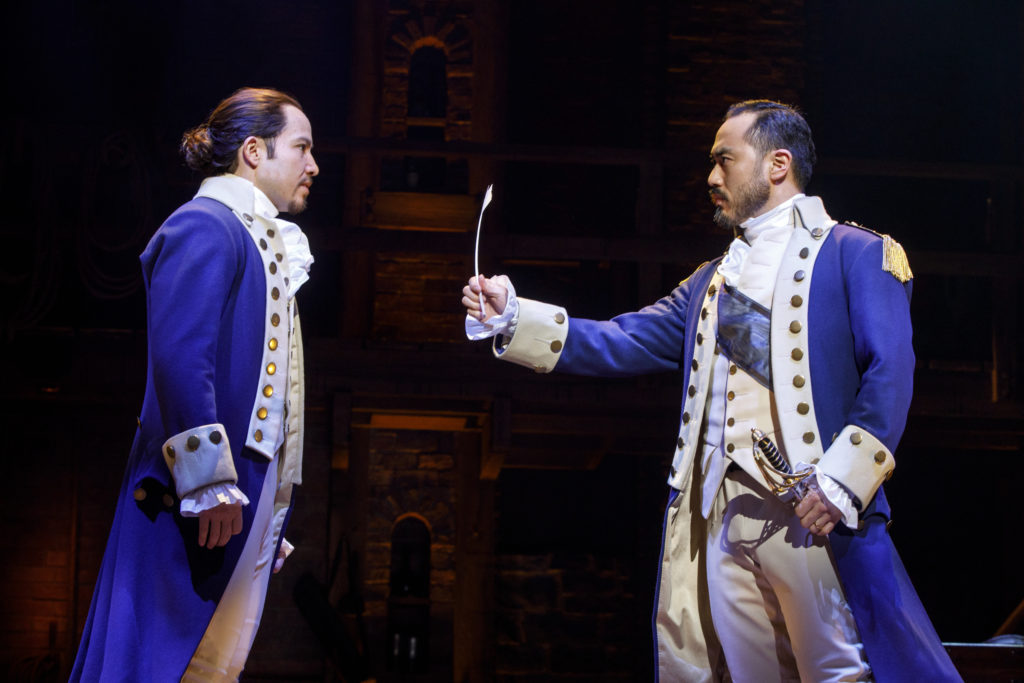
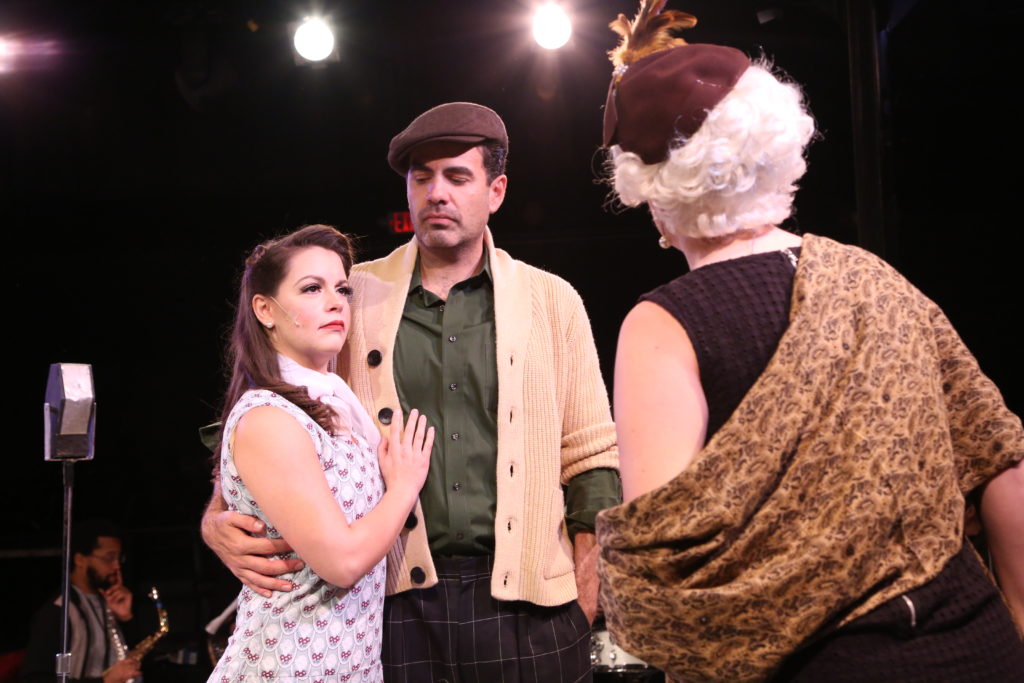
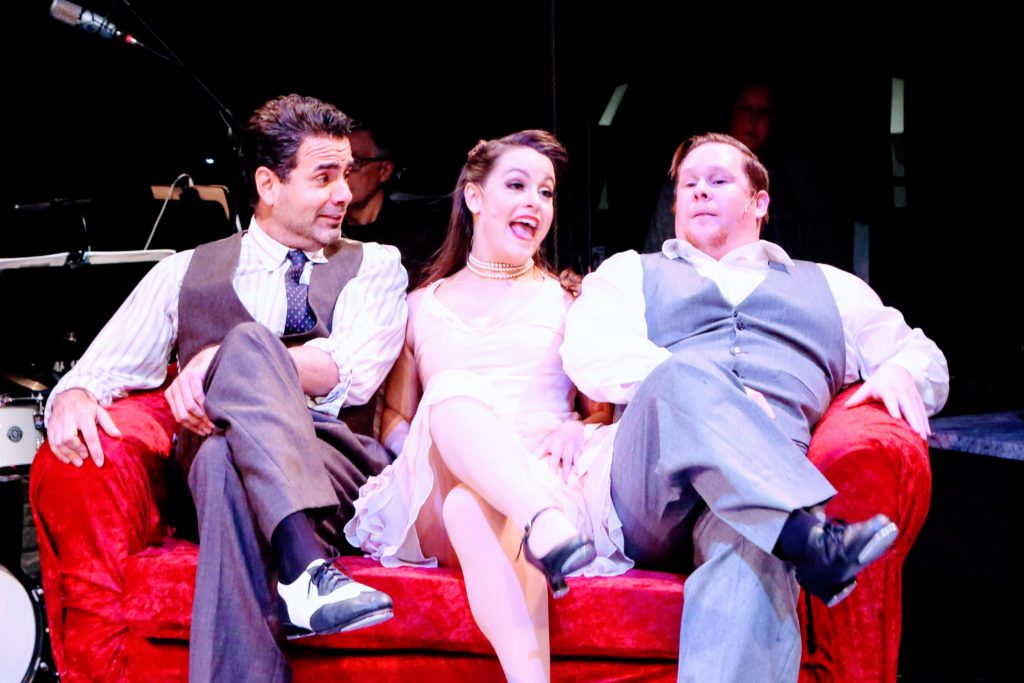
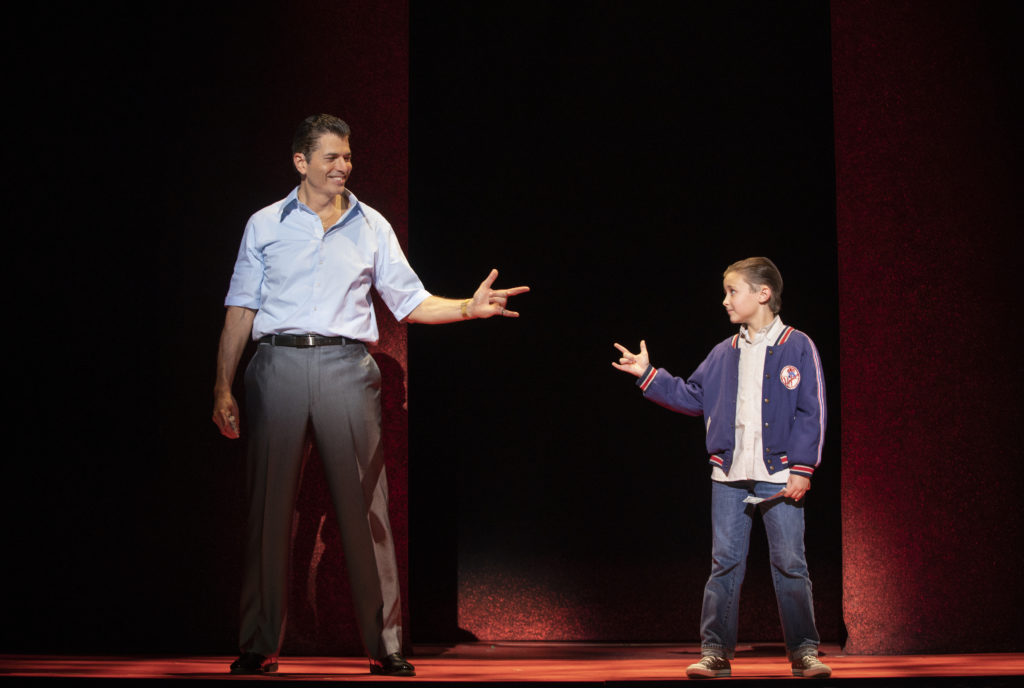
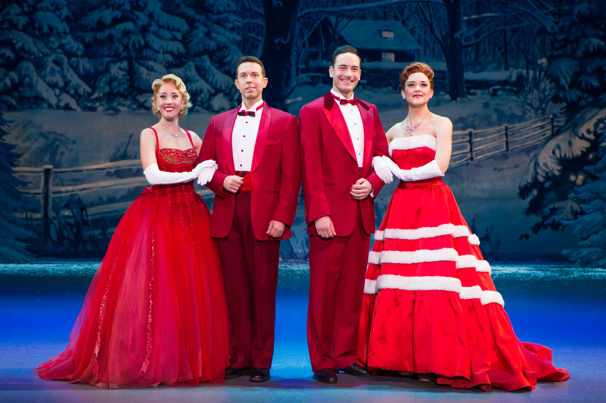
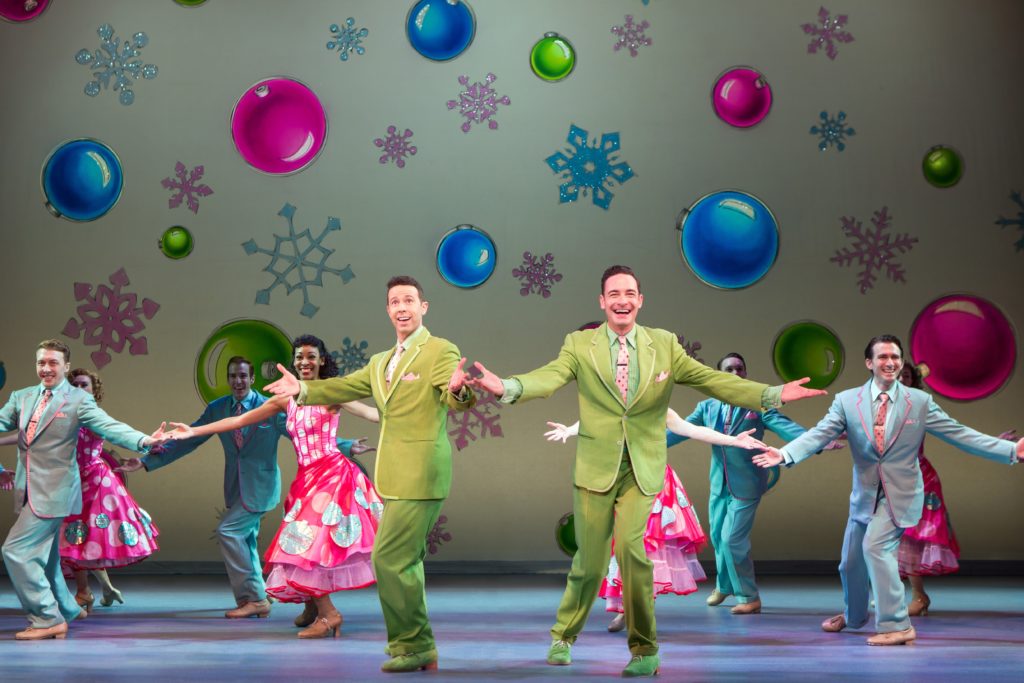
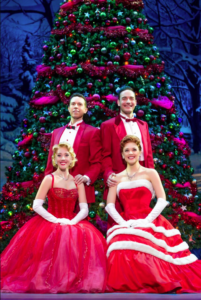 So, how do you replicate the on-screen chemistry of Crosby and Kaye playing ‘odd couple’ best pals, let alone Clooney and Ellen as squabbling sisters? The simple answer, you cast Sean Montgomery, Nashville’s own Jeremy Benton (back for his fifth time with the tour), Kerry Conte and Kelly Sheehan. Montgomery smoothy fills the Crosby bill while Benton eases into the goofiness of Kaye while elevating the role with some of the most impressive dance moves I’ve ever seen onstage. As for the ladies, Sheehan’s Judy might look more like Clooney than Vera-Ellen, but her dance moves rival those of her character’s creator. At times Conte’s singing voice is blissfully similar to that of Rosemary Clooney, but there’s also times, especially in her line delivery, that she possesses a more regal intonation reminiscent the equally talented chanteuse, Peggy Lee. Just another interesting fun fact…when the film was released, Clooney was under contract with Columbia Records and was therefore prohibited from appearing on the film’s official soundtrack record album release. Instead, Decca Records brought in Lee to record vocals for the vinyl. (I warned you it’s my favorite).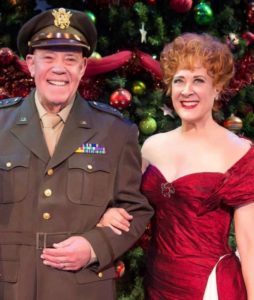
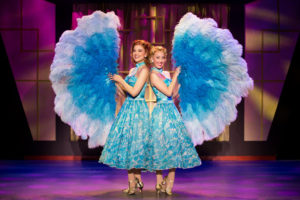
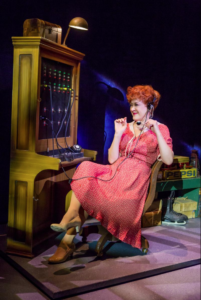 On the subject of gifts to the audience, enter Tony-winner Karen Ziembra as Martha Watson. Played by Mary Wickes in the film, Martha is The General’s right-hand-woman as she oversees the day to day running of the lodge and, at least for the holidays, helps him care for his visiting granddaughter, Susan (a role shared during the tour by Emma Grace Berardelli and Kayla Carter). Ziembra, like her film-version predecessor, lights up the stage and steals the spotlight with every snide remark, every double-take and every movement, but when she belts out the opening note of her sole solo Let Me Sing and I’m Happy…DAMN! That’s how you do it, folks. Not to be too outdone by a Tony-winner, later in the show, young Susan gets her chance at the tune, to audience-cheering results.