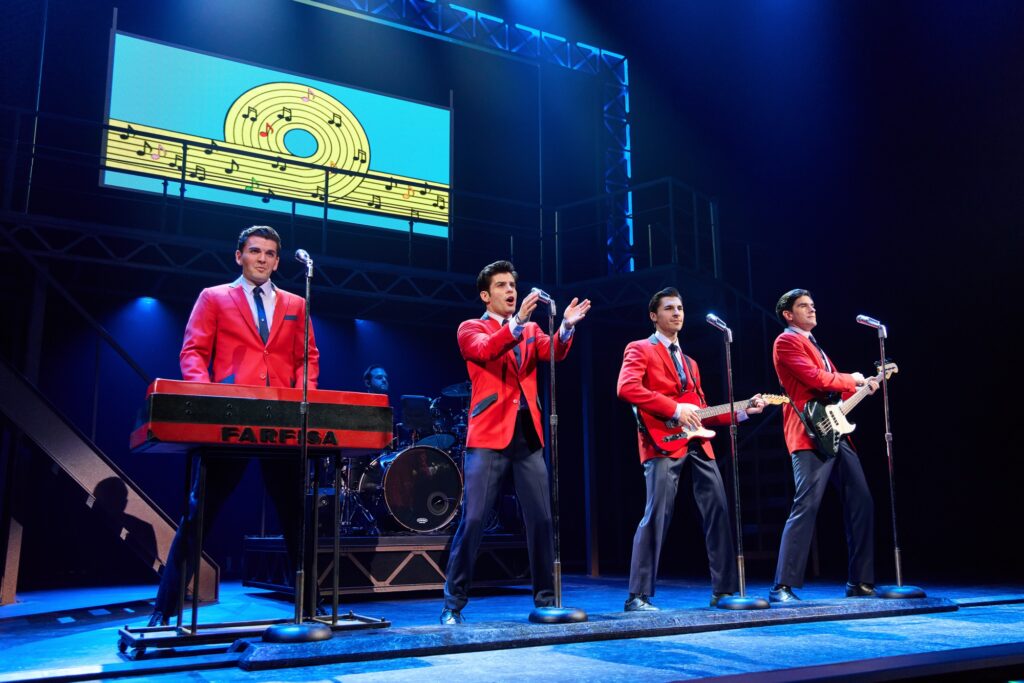
There are shows you see once and check off the list. Then there are shows that keep pulling you back, year after year, like some sort of particularly catchy musical siren song. For me, Jersey Boys is definitely the latter. Now onstage at TPAC‘s Jackson Hall thru Sunday, September 20 as the 20th Anniversary National Tour continues, attending the show’s second night in Music City marks the sixth time in 20 years I’ve seen it—and my third time seeing it at Tennessee Performing Arts Center. So, yes, I know when the songs are coming, I know where the laughs are, I know where the story is going…and I still found myself completely caught up in the ride.
 That may be the greatest compliment I can give Jersey Boys: after six times, it still works. Officially kicking off just last week in Syracuse, this national tour arrives with an interesting distinction. While the 20th Anniversary Tour is a non-Equity production, the creative forces behind the original phenomenon remain very much in charge. Des McAnuff, the show’s original director, is back at the helm, while Sergio Trujillo, whose original choreography helped define the production, returns with his original choreography. I mention the non-equity status because a non-equity tour can, occasionally, be scaled-down considerably from a show’s Broadway run. Perhaps, because this tour has been so hands-on with the full cooperation of the original creative forces, this incarnation doesn’t feel like any expenses were spared, no corners were cut and no holds barred for this landmark anniversary tour. For the show’s two and a half hour runtime, I’m confident that the entire audience at TPAC would tell the cast our eyes and ears adored them!
This isn’t just another jukebox musical. This is a show with some serious hardware in its trophy case: the Tony Award for Best Musical, the Laurence Olivier Award for Best New Musical and the Grammy Award for Best Musical Show Album. Twenty years after its Broadway debut, it doesn’t take long to see why.
The genius of Jersey Boys has always been its storytelling structure. The show cheekily divides itself into Spring, Summer, Fall and Winter, giving a knowing wink to the name of the group while providing four distinct chapters in the lives of The Four Seasons.
Spring gives us the genesis—the young men, the dreams and the unlikely beginnings. Summer is the rocket ride, as the group discovers fame, fortune and what happens when those little songs they’ve been working on suddenly become enormous hits. Fall brings the cracks in the foundation: personal conflicts, financial problems, uncertainty and the realization that success can be every bit as complicated as failure. Then comes Winter, with its reflection, loss and the ultimate accolade: The Four Seasons’ 1990 induction into the Rock and Roll Hall of Fame. Not bad for some kids from Jersey.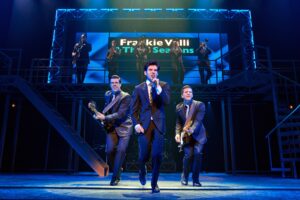
The cleverness of that four-season structure isn’t merely branding. It gives the show a natural dramatic progression while providing one of those delightful little theatrical winks that Jersey Boys is so good at delivering.
Of course, you can’t talk about Jersey Boys without talking about the music. And in the vernacular of the Jersey Boys, holy f’in jukebox, is there a lot of it. The production packs more than 30 songs, and this cast nails the vocal demands with the kind of precision that makes The Four Seasons’ famously distinctive sound seem effortless.
The Four Seasons’ musical catalog is so deep—they had 40 songs land on the Billboard Top 40—that there simply isn’t enough room in one musical to accommodate all those hits. The Playbill acknowledges that problem in particularly delightful fashion, with a footnote titled “The Ones That Got Away,” recognizing more than a dozen additional Four Seasons and Frankie Valli bangers that didn’t make the final cut.
But it’s not simply the quantity of the songs that makes this production sing. It’s the quality of the vocals. Audiences arrive knowing exactly how these songs are supposed to sound, from Valli’s unmistakable falsetto to those intricate Four Seasons harmonies.
This cast understands that assignment.
 As Frankie Valli, Coby Oram delivers the vocal precision you’d expect from a performer stepping into one of pop music’s most distinctive voices, but there’s also a strong emotional dimension beneath the falsetto. Valli isn’t simply the guy who sings the really high notes; we’re watching a young man grow into the person who ultimately has to carry the group forward. Oram is equally adept at hitting the high notes as he is knocking it out of the park during the show’s more tense relationship moments whether exploring his fractured family dynamic or the never-ending allegiance to his fellow hitmakers.
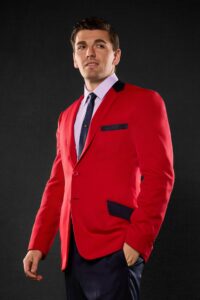 Peyton Schoenhofer brings youthful energy and confidence to Bob Gaudio, the songwriter whose creative contributions helped fuel the group’s remarkable run. His Gaudio possesses just the right combination of ambition, talent and youthful uncertainty. Schoenhofer exemplifies a great balance of Gaudio’s seemingly more sheltered upbringing–compared to the a couple of the other boys, who racked up police records before platinum ones–with an unexpected business savvy that would be a key element in his relationship with Valli.
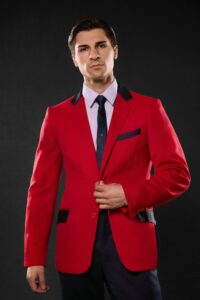 Harry Sperduto makes Tommy DeVito an entertainingly combustible force, bringing plenty of swagger and humor to a character whose ambitions ultimately come with a steep price. Tommy can be charming, funny, infuriating and reckless—and Sperduto keeps all of those qualities in play without reducing DeVito to a cartoon gangster. You know he’s good when, time after time of screwing over his bandmates, the audience still feels for him and cheers both his misdeeds and his achievements.
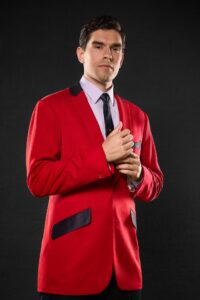 Owen McCredie gives Nick Massi the quietest member of the quartet a genuine presence, allowing us to understand the man beneath that reserved exterior. There’s a dry wit and simmering frustration beneath Nick’s reserved exterior, and McCreedie lets those qualities emerge naturally, making Nick’s eventual departure from the group on of the evening’s more effective moments. McCredie doesn’t let get lost amid all those bigger personalities, he crafts a careful, thoughtful presence. While Valli’s falsetto might have made him the bigger star, McCredie’s booming bass voice as Massi is swoon worthy.
Together, the four are a cohesive, convincing unit—and that’s crucial. The Four Seasons weren’t four soloists who happened to stand next to each other. Their magic was in the blend. This cast gets it.
While the primary focus is of course on the aforementioned quartet, one of the strengths of this production is that Jersey Boys doesn’t treat its four principals as the only people worth watching. Andrew Sattler makes an especially memorable impression as Bob Crewe, bringing a larger-than-life theatricality to the eccentric producer and lyricist who becomes such an important part of the group’s story.
Nicholas Dion Reese gets the evening off to an energetic start with an updated, internationally flavored take on “Ces soirées-là,” better known stateside as “December, 1963 (Oh, What a Night!),” The Four Seasons’ final No. 1 hit from 1975. It’s an attention-grabbing opening that immediately announces that this isn’t going to be a sleepy trip through an oldies playlist.
Among the female members of the ensemble, Eliza Levy makes an impression as Mary Delgado and others, helping bring the women surrounding these four men into sharper focus rather than allowing them to become mere scenery in the boys’ story. While she’s initially written as a stereotypical Jersey girl, Delgado doesn’t rest on that, bringing dimension to what could easily be a throw-away role. Her vocals on the late Act 1 tune “My Eyes Adored You” in an adroit call and response opposite Oram’s Frankie, reveal a welcomed depth to not only her portrayal, but the classic song itself.
Another highlight in the supporting cast comes in Sarah Coleman‘s turn as Francine Valli particularly as the story begins exploring the one of the show’s more somber elements revealing the personal costs of Frankie Valli’s extraordinary career. It’s a relatively small role with only a couple of minutes on stage, but it’s one of the show’s most impactful. Coleman, like many of the supporting players appears throughout in a multitude of other roles, but it’s her brief time on stage as Valli’s daughter that stays with the audience.
And then there’s Joe Pesci. Yes, THAT Joe Pesci, as the script cheekily reminds us. The real Pesci was friends with the young Four Seasons, and his connection to the group is one of those almost-too-good-to-be-true details from their early history. Here, the role gets an especially fun Nashville twist thanks to Grant Weathington, a 2025 Belmont University graduate. For those in the TPAC audience who know that little bit of local trivia, it’s one more reason to enjoy the character when he pops up.
Speaking of Nashville, the Music City connection doesn’t stop there. One of the original members and creative forces behind The Four Seasons, Bob Gaudio, has been a Nashville resident since the 1990s. So when the show reaches its later “where are they now?” passage and mentions that Gaudio now spends his days on his boat in Nashville, the response from the TPAC audience was noticeably more enthusiastic than your average biographical footnote. There was definitely a little “That’s OUR Bob!” energy in the room. It’s a small moment, but it’s one of those details that makes seeing a touring production in its proper local context so much fun.
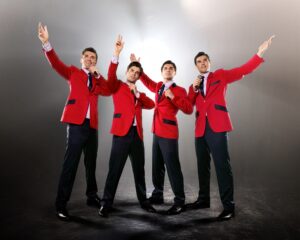 The remarkable thing about Jersey Boys after two decades (six decades if you count The Four Seasons’ real-life history) isn’t simply that the songs remain popular. It’s that the story still works. The musical understands that success stories are rarely as simple as the finished record. Behind every No. 1 hit are relationships, egos, debts, bad decisions, sacrifices, arguments and people trying to figure out what comes next.
That’s what keeps Jersey Boys from becoming nothing more than a jukebox with a plot. The music may be the sugar, but the complicated relationships are the substance. And the 20th Anniversary Tour gives audiences the best of both worlds: a production rooted in the staging that originally made the musical a Tony-, Olivier- and Grammy-winning phenomenon, now performed by a fresh cast with its own chemistry and energy.
Twenty years after Jersey Boys first took Broadway by storm, this new generation of Four Seasons proves that the songs still soar, the story still resonates and there are apparently still plenty of audiences willing to sing along. After six trips alongside The Four Seasons myself, I’m apparently still not ready to say goodbye. And really…why would I? Four seasons. More than 30 songs. Forty Top 40 hits. Twenty years. as one of modern theatre’s most beloved musical.Oh, what a night!
Catch the 20th Anniversary National Tour at Nashville’s TPAC September 16-20. CLICK HERE to purchase tickets or for more information. Following Jersey Boys TPAC’s 2026/2027 Season continues with The Sound of Music onstage October 13-18. Follow TPAC on TikTok, Instagram, YouTube and Facebook.
Not in Nashville? It’s likely Jersey Boys will be working their way back to you, so check them out on Facebook, X, Insta, TikTok, YouTube and Threads to see when it rolls into your city and find out why, two decades later, Jersey Boys remains one of Broadway’s most irresistible musical stories.
As always, if you wanna follow JHPEntertainment to find out who I’m chatting with for my next Rapid Fire Q&A, or for my take on the latest local and national theatre, music, arts and more, visit JHPENTERTAINMENT.com or find us on Facebook, Insta, Threads and X. Till then #GoSeeTheShow!
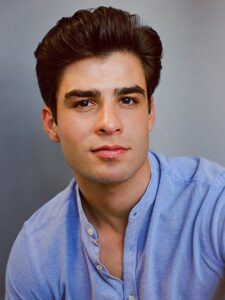 RAPID FIRE WITH COBY ORAM STARRING AS FRANKIE VALLI IN JERSEY BOYS
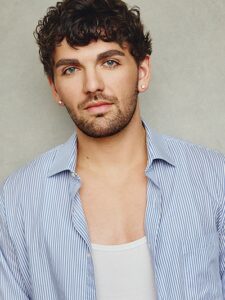 RAPID FIRE WITH PEYTON SCHOENHOFER STARRING AS BOB GAUDIO IN JERSEY BOYS
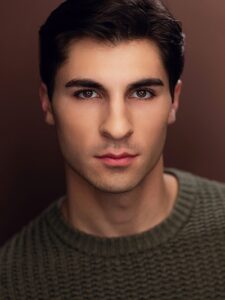 RAPID FIRE WITH HARRY SPERDUTO STARRING AS TOMMY DeVITO IN JERSEY BOYS
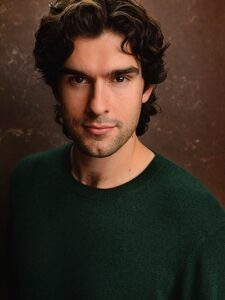 RAPID FIRE WITH OWEN McCREDIE STARRING AS NICK MASSI IN JERSEY BOYS
 JHPENTERTAINMENT:
 RAPID FIRE WITH WATER FOR ELEPHANTS‘
  RAPID FIRE WITH WATER FOR ELEPHANTS‘ ELLA HUESTIS
 RAPID FIRE WITH WATER FOR ELEPHANTS’
  RAPID FIRE WITH WATER FOR ELEPHANTS‘ CHRIS MARTH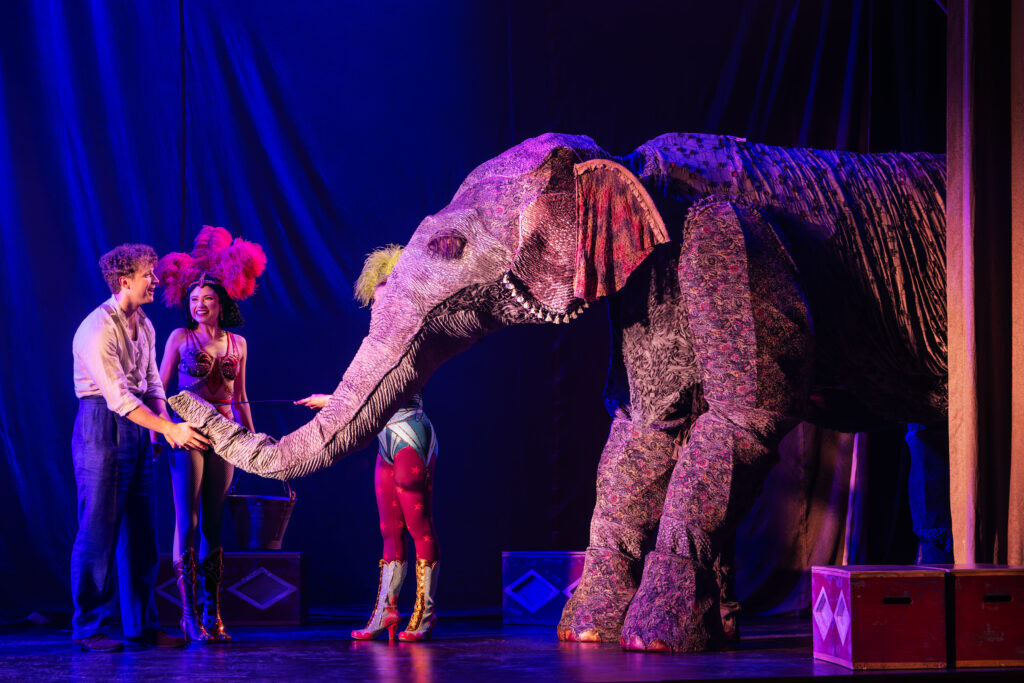
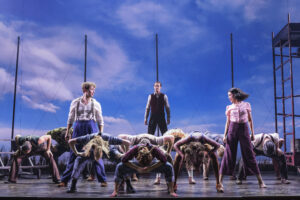
 At the center of the production is Zachary Keller as Jacob Jankowski, the grieving veterinary student who impulsively abandons his former life and jumps aboard the Benzini train. Keller anchors the production with a grounded sincerity and a soaring vocal performance that gives emotional weight to Jacob’s internal struggle between safety and risk, logic and passion. His voice carries a warm ache throughout the evening, particularly in moments when Jacob wrestles with the moral compromises surrounding the circus and his growing connection to Marlena. There are moments within Keller’s performance that the entire audience falls in love with his Jacob. Heck, there are moments his near-perfect pitch vocals fill the venue so melodically that you even wonder if he needs a mic. A true testament to his skills and those of the show’s sound designer Walter Trarbach and the entire technical team.
 Opposite Keller (and Tully), Helen Krushinski delivers a luminous performance as Marlena, the circus star trapped inside an increasingly dangerous marriage. Krushinski possesses the kind of voice that cuts cleanly through the orchestrations without ever losing emotional nuance. She brings both fragility and fierce determination to Marlena, avoiding cliché and instead presenting a woman desperately searching for dignity and freedom amid chaos. Like so many of her ensemble cast mates, Krushinski also demonstrates a bit of impressive arial skills, adding a literal and figurative extra layer to her performance.
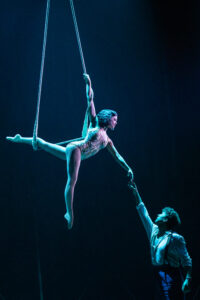 And yes — the aerial and acrobatic work is extraordinary. This production understands that circus artistry should not simply interrupt the narrative; it should become the narrative. Silks, balancing acts, lifts, and gravity-defying choreography emerge organically from the emotional life of the story. The transitions feel seamless rather than showy for the sake of applause. From the jump, as the circus ‘crew’ is setting up shop at their latest stop, even the pounding of the tent-stakes into the ground and the raising of the tent becomes a cadenced ballet of movement, acrobatics and mind-boggling balance and strength. This elegance of motion and bodily discipline becomes another character throughout.
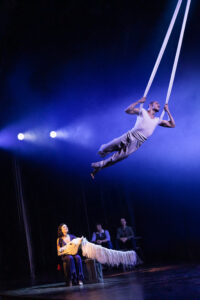 Particular praise belongs to Yves Artières, whose physical performance as Silver Star, Marlena’s beloved show horse, becomes one of the evening’s unexpected emotional centerpieces. Through movement alone, Artières creates personality, loyalty, exhaustion, and tenderness in a way that feels almost impossibly expressive. In a key scene when Silver Star reaches his untimely end, the visual of his spirit leaving his body, by way of Artières ascending silks hanging from the rafters above the stage, then dramatically unfurling the silks as he descends to return to the earth–simply breathtakingly beautiful. The puppetry/animal work throughout the production is remarkably inventive, but Silver Star’s presence lingers long after curtain call.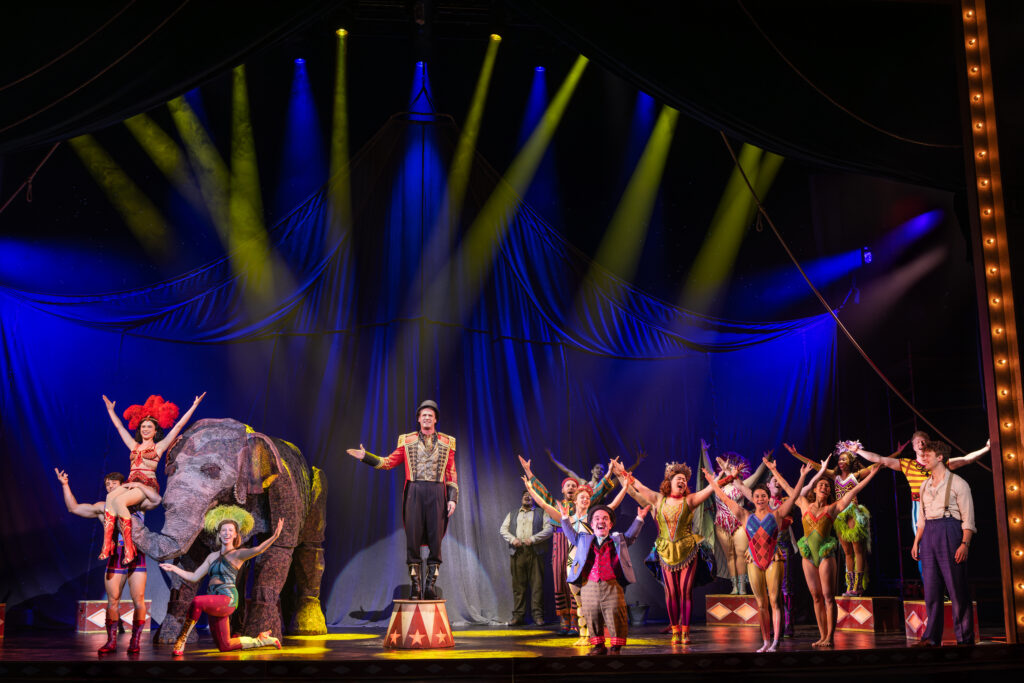
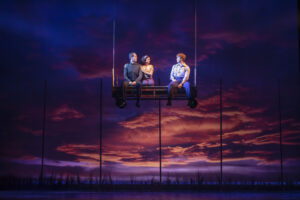 The lighting design deserves enormous credit for shaping the show’s emotional landscape. Warm ambers, smoky blues, and stark silhouettes constantly shift the atmosphere from romance to danger to wonder. Combined with a richly textured sound design that captures both the intimacy of whispered confessions and the thunder of circus chaos, the technical package immerses the audience completely without ever feeling excessive.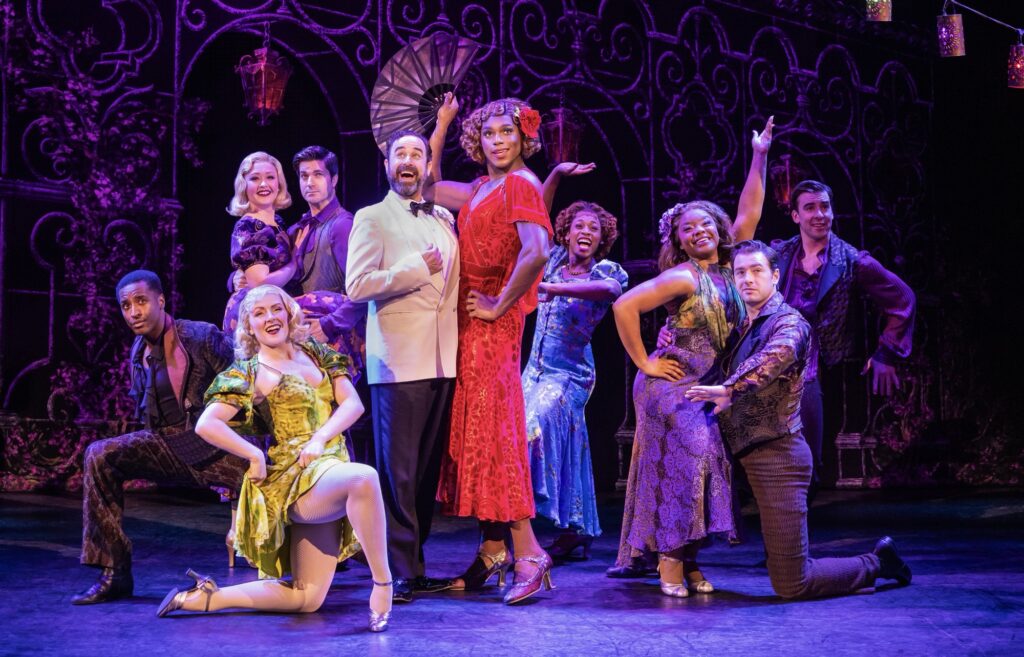
 One notable change is the role of Sweet Sue, bandleader of the all-girl band that serves as the perfect hiding in plain site destination for our two unintentional leading men, or should I say leading ladies? Little more than a brief appearance in the source material, Ruffin and Lopez wisely fleshed out Sweet Sue and as played by DeQuina Moore, we’re glad they did. Moore’s Sweet Sue doesn’t just open the show—she detonates it. Her “What Are You Thirsty For?” lands with the kind of electrifying force she herself described in our recent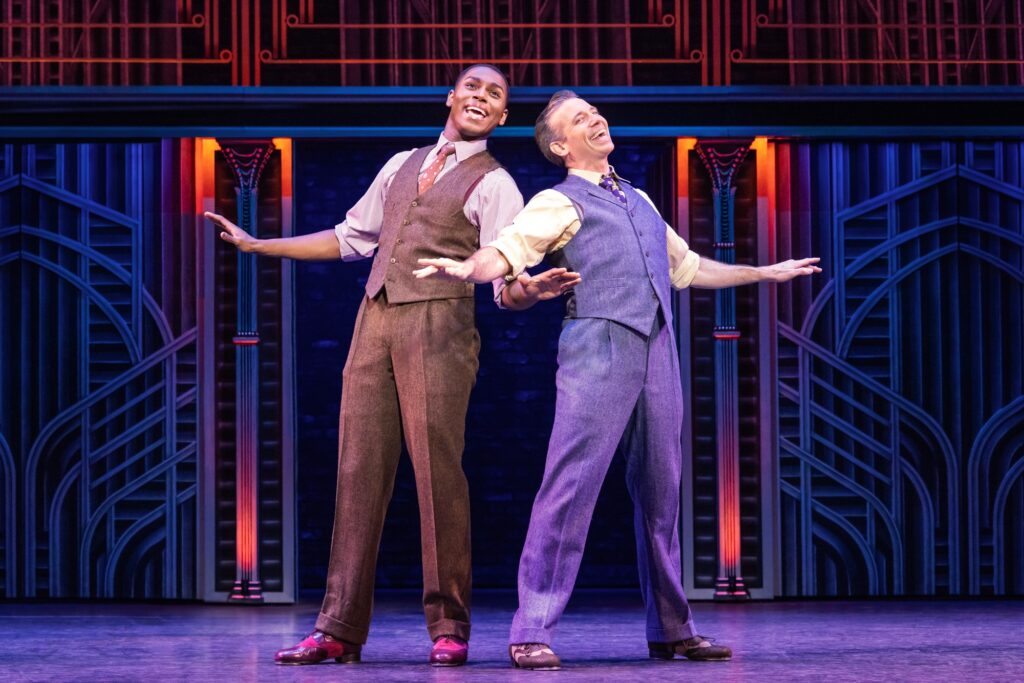
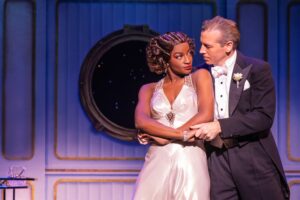 Leandra Ellis-Gaston’s Sugar Kane arguably comes with the steepest climb. Not because of the technical demands—though those are certainly present—but because Marilyn Monroe’s original Sugar remains so indelibly iconic. Wisely, the creators of the stage adaptation “understood the assignment,” sidestepping imitation entirely. By reimagining Sugar as a strong-willed, career-driven woman of color, the role becomes instantly unshackled from direct comparison—and Ellis-Gaston runs with it. With a speaking voice that lands somewhere between The Color Purple’s Squeak and legendary chanteuse Lena Horne, her Sugar is equal parts vulnerability and resolve. Sweet? Absolutely. But never simple.
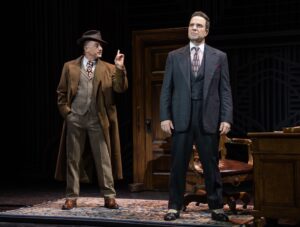 As G-man Mulligan, Matt Allen plays the essential “straight man” with surgical precision, anchoring the show’s more outlandish antics while quietly setting up some of its biggest payoffs. As he said in our recent Rapid Fire 20Q, that role is not only necessary but foundational in launching the show’s farcical momentum. And when he finally gets to dip into the madness—particularly in that delightfully ridiculous undercover sequence—it’s a payoff worth the wait.
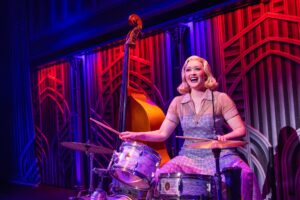 Minnie, Sweet Sue’s right-hand woman is revealed throughout as a bit of a sticky-fingered gal. One of the show’s running gags is her revelations of accidentally entering the wrong apartments thinking they were Sue’s and taking things that weren’t hers. To that end it makes perfect sense that Devon Hadsell’s Minnie is a scene-stealing delight, leaning fully into the character’s charming chaos and absconding with laughs each time she’s on the stage. There’s a lived-in sense of loyalty and mischief here, making Minnie far more than just comic relief. She’s an essential part of the heartbeat of the band. And that ever-present cigarette dangling from her ruby red lips, the kind of subtle sight gag that again perfectly pays homage to that 1930 prohibition-era Hollywood spirit. Side Note: When that Gregg Oppenheimer I Love Lucy play makes its way to Broadway, Hadsell has my vote for the Vivian Vance/Ethel Mertz role!
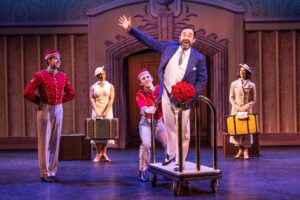 And then there’s Edward Juvier’s Osgood, who may just be the show’s most quietly radical reinvention. As he shared in our recent Rapid Fire 20Q, what drew him to the role was Osgood’s ability to lead with curiosity rather than judgment—and that ethos radiates throughout his performance. Where the film played him as the punchline, this version is in on the joke and, more importantly, in on the love. That shift—from caricature to fully realized romantic—becomes one of the production’s most meaningful evolutions.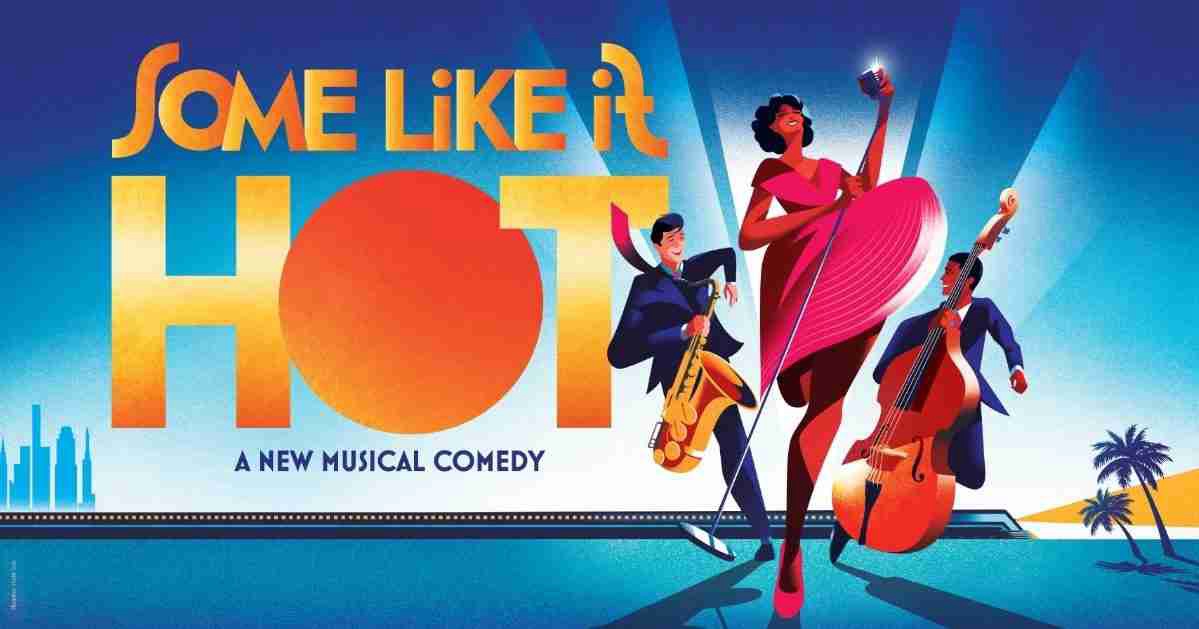




 Then there’s Doc. David Josefsberg’s take on the eccentric inventor is where the show truly locks into place. Wonderfully unhinged in the best way, his Doc balances manic comedy with genuine heart. His early numbers are the turning point where the audience collectively leans in and says, “Okay, I’m in.” Josefsberg doesn’t imitate—he reinvents, while still honoring what makes Doc such an iconic character.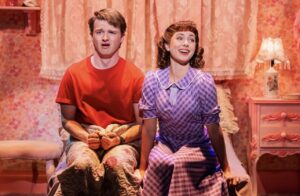
 And then there’s Cartreze Tucker as Goldie Wilson (and Marvin Berry), who nearly steals the entire show. From the moment he steps onstage, Tucker commands attention. His big number earns one of the largest audience responses of the night, and for good reason—his vocals are powerhouse-level, and his charisma is off the charts. It’s a star-making turn that injects an extra jolt of electricity into an already high-energy production.
 Visually, the production is stunning. The use of projections, layered with practical effects and good old-fashioned stage magic and some mind-blowing state-of-the-art new theatrical tricks, the effects become a character in its own right. Whether it’s the clock tower sequence or the time-travel effects, the technical execution is nothing short of jaw-dropping. It’s the kind of design work that reminds you how thrilling live theatre can be when all the elements are firing.
 Act Two does bring one of the more head-scratching moments in the show—a neon-soaked, new wave-inspired “21st Century” opening number featuring Doc and a troupe of backup dancers. It’s flashy and fun, but also feels a bit unnecessary and tonally out of sync with the rest of the piece. And on opening night in Nashville, it was followed by a rare hiccup: the hoverboard didn’t quite cooperate. Still, the moment was handled with total professionalism, and honestly, it was quickly forgiven given the sheer volume of technical wizardry the show gets right. Because when it works—and it mostly does—it really works.
 RAPID FIRE WITH BACK TO THE FUTURE’S MARTY MCFLY, LUCAS HALLAUER
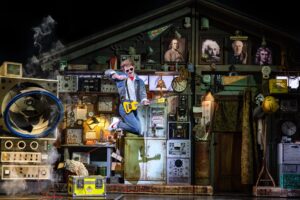 JHPENTERTAINMENT: Marty’s wardrobe—from the puffer vest to the sneakers, perfectly reimagined for the stage by scenic and costume designer Tim Hatley—is instantly recognizable. What’s it like to put on that iconic costume each night and step into such a visually legendary look?
 RAPID FIRE WITH BACK TO THE FUTURE’S LORRAINE BAINES, KATHRYN ADELINE
 RAPID FIRE WITH BACK TO THE FUTURE’S BIFF TANNEN, NATHANIEL HACKMANN
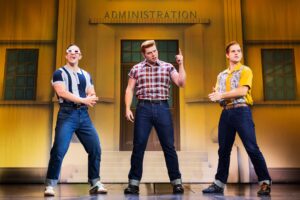 JHPENTERTAINMENT: After originating the role on Broadway, what lured you back to Hill Valley for year two of the National Tour?
 RAPID FIRE WITH BACK TO THE FUTURE’S DOC BROWN, DAVID JOSEFSBERG
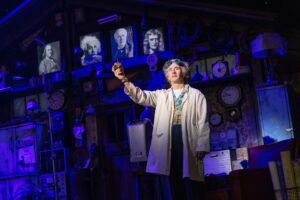 JHPENTERTAINMENT: Speaking of energy, one of the most entertaining elements of Back to the Future on stage is the theatrical magic courtesy the collaborative efforts of the show’s lighting designers Tim Lutkin & Hugh Vanstone, video designer Finn Ross, sound designer Gareth Owen and illusion designer Chris Fisher. Without giving away too much, what can you tell me about your favorite moment in the show where these elements all come together perfectly?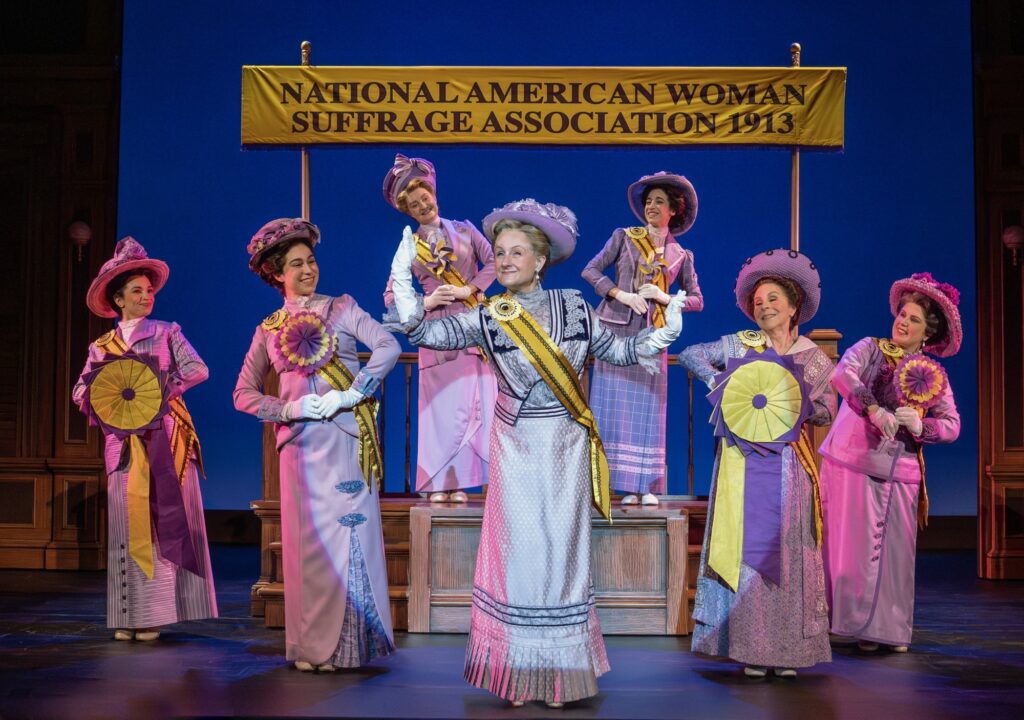
 RAPID FIRE WITH SUFFS‘ Carrie Chapman Catt, ACTRESS MARYA GRANDY
 RAPID FIRE WITH SUFFS‘ Mary Church Terrell, ACTRESS
  RAPID FIRE WITH SUFFS‘ Phyllis Terrell and Robin, ACTRESS VICTORIA PEKEL
 RAPID FIRE WITH SUFFS‘ Mollie Hay, ACTRESS TAMI DAHBURA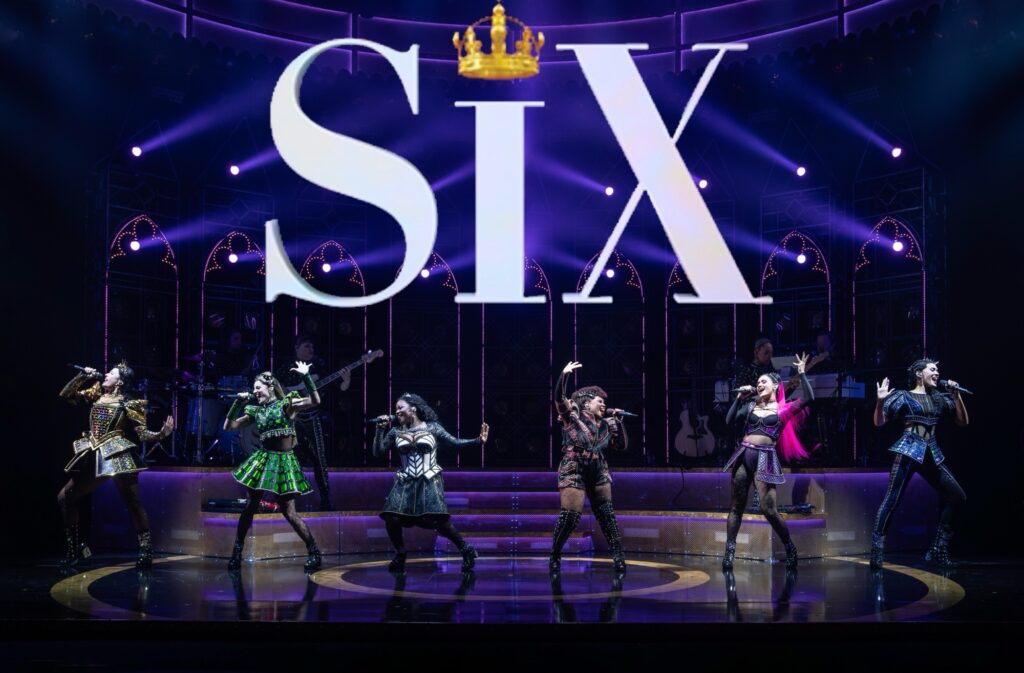
 RAPID FIRE WITH
  RAPID FIRE WITH
  RAPID FIRE WITH
  RAPID FIRE WITH