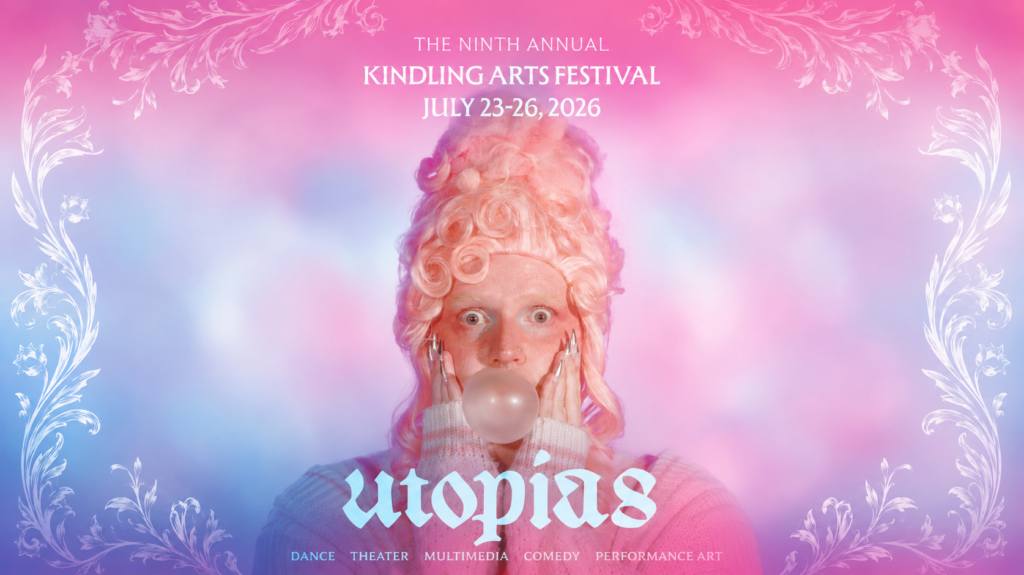
The Kindling Arts Festival: UTOPIAS kicked off Thursday evening and continues through Sunday, July 26, transforming venues across West Nashville into stages for world premiere theater, contemporary dance, opera, comedy, performance art and interactive experiences. Featuring 22 original performances and events created by more than 160 local artists, the festival has spent the past nine years building a reputation as one of Music City’s most exciting showcases for fearless creativity. If you missed opening night, don’t worry—there’s still plenty of time to experience one of Nashville’s most inventive celebrations of local artists.
Unlike festivals built around familiar titles, Kindling is all about discovery. It’s where audiences can experience brand-new musicals, see plays in development before they reach larger stages, witness immersive dance works and encounter performances that challenge expectations while celebrating the remarkable depth of Nashville’s artistic community.
This year’s theme, UTOPIAS, couldn’t be more fitting. In a recent press release Co-Founders and Co-Artistic Directors Daniel Jones and Jessika Malone explain the inspiration behind this year’s festival. “At a time when the arts are increasingly under attack through censorship, shrinking support, and political backlash, the act of imagining a better world is both radical and necessary.”
That spirit echoes throughout the weekend, with artists exploring hope, justice, belonging and the possibilities that emerge when creativity is allowed to flourish without limits. Jones and Malone continue by asking audiences, “What does it mean to create in the direction of a world that is not here yet? How might artists model new systems of belonging, justice, care, and joy?” Rather than offering easy answers, Kindling invites audiences to spend four days exploring those questions through storytelling, movement, music and shared experience.
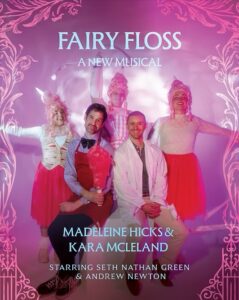 If you’re deciding what to catch over the remainder of the festival, the six productions highlighted as this year’s Must Sees provide an excellent place to start. Musical theater fans should make time for Fairy Floss: A New Musical, a charming new work by Madeline Hicks featuring music by Kara McLeland. Inspired by the invention of cotton candy, the production blends romance, whimsy and history into what promises to be one of the festival’s sweetest offerings.
Found Movement Group’s Tea transforms the familiar Southern ritual of gathering over tea into an intimate blend of dance and theater celebrating hospitality, family traditions and human connection.
Dance enthusiasts will also want to experience Objects in the Mirror, where PYDANCE choreographers Emma Morrison, Becca Hoback and Asia Pyron present original contemporary works exploring identity, memory and transformation through movement.
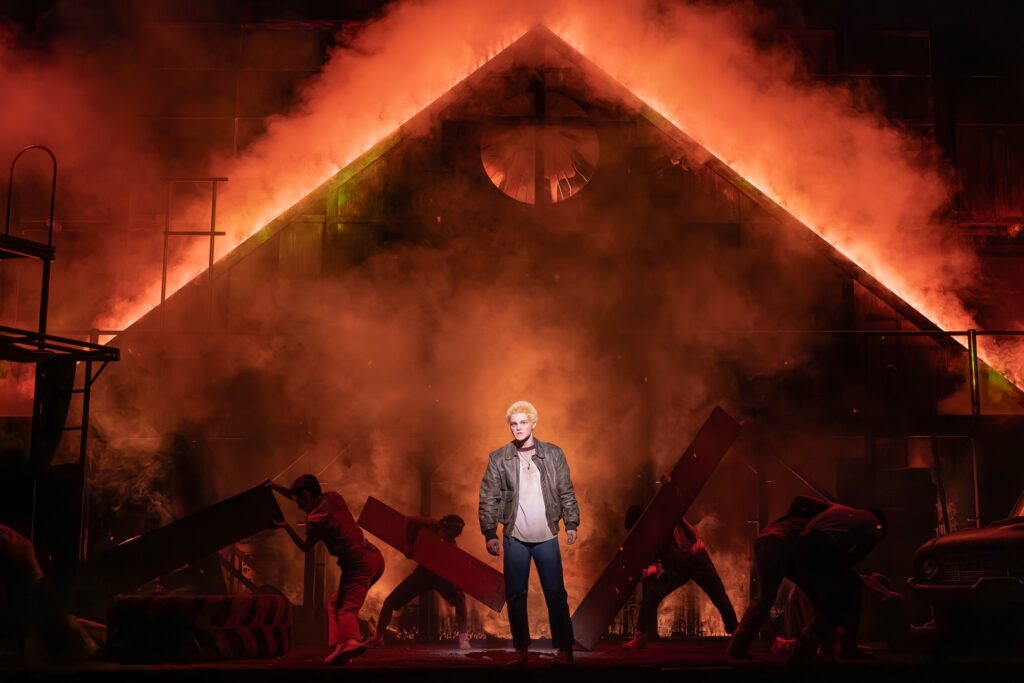
 Opera lovers shouldn’t miss Faith: A New Opera, composer Jeremy Smith’s ambitious new work combining Southern gospel traditions, Appalachian folk influences and classical opera in the story of a charismatic preacher whose growing influence comes at a cost.
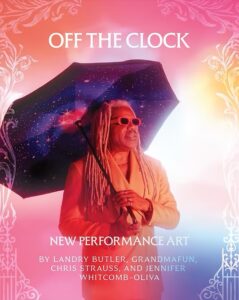
For audiences looking for something delightfully unconventional, Off the Clock once again showcases Kindling’s adventurous spirit through original performance art created by Landry Butler, Grandmafun, Chris Strauss and Jennifer Whitcomb-Oliva. Expect an evening filled with humor, experimentation and the unexpected.
Another annual festival favorite, New Play Platter, gives audiences a front-row seat to the creative process with excerpts from five new plays currently in development, offering an exciting glimpse at the future of Nashville theater.
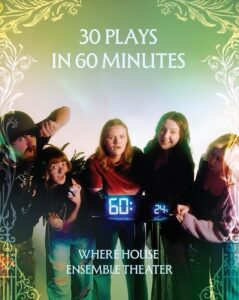 Of course, one of Kindling’s greatest strengths is the joy of discovering productions that may not have been on your radar before arriving. This year’s lineup also includes Common Ground, an evening of dance celebrating community and collaboration; Milk Makes Me Sick But My Body Needs It, Hannah Dorfman’s deeply personal exploration of womanhood and healing; 30 Plays in 60 Minutes, an energetic collection of miniature plays inspired by the festival’s UTOPIAS theme; and See You in Hell, an unforgettable mix of burlesque, drag, clowning and spoken word.
Other highlights include The Wreck of the Manifest Destiny, Late Stage Elisabeth, Kintsugi: Art of Scars, Ruined Causes, Faulty Premise, Chisme Fantasmagórico, The Queerest Comedy Show, Dance Studio Sharings, Embodied Creativity, Community Frolic, Writer’s Gym, the Free Nashville Poetry Library Reading, Unscripted: Festival Remix and Sunday’s Festival Wrap Party, making it nearly impossible to see everything in a single weekend. But you’ll have a blast trying.
That remarkable variety is exactly what has made Kindling such an important part of Nashville’s arts landscape. Every performance represents a different artistic voice, encouraging audiences to step outside their comfort zones and experience work they might never encounter in a traditional theater season.
The festival is equally committed to supporting artists behind the scenes. Kindling operates using a fee-free model that removes many of the financial barriers independent artists often face, covering essentials such as venue rentals, technical support and marketing so creators can focus on making their work.
As Jones and Malone share on the festival’s official site, “Kindling stands firm in our belief that artists must be free to speak truth, challenge existing systems, and create boldly without fear.” That philosophy has helped establish Kindling as one of Nashville’s most valuable incubators for original performance, giving emerging and established artists alike the opportunity to develop bold new work in front of adventurous audiences.
As one might expect, community support plays a vital role in keeping that mission alive. The organization invites patrons to become sustaining members through monthly giving, helping fund year-round artist development while ensuring future festivals remain accessible. Memberships begin at just $5 per month, with additional benefits available at higher levels, including festival discounts, exclusive events, limited-edition merchandise, VIP seating and behind-the-scenes rehearsal access.
With three days still remaining, there’s ample opportunity to dive into this year’s festival, whether you catch a single performance or spend the weekend hopping between venues. However you choose to experience it, Kindling offers something increasingly rare—the chance to witness artists taking genuine creative risks while inviting audiences to imagine what a better world might look like.
On the Kindling site, Jones and Malone close their letter with an invitation that perfectly captures the spirit of the weekend: “We invite you to explore all that Kindling Arts Festival 2026: UTOPIAS has to offer and to join us in imagining, creating, and moving toward a better world.” It’s an invitation well worth accepting.
Kindling Arts Festival: UTOPIAS continues through Sunday, July 26, at venues throughout West Nashville, including OZ Arts Nashville, Darkhorse Theater, The Curb Center at Vanderbilt University, Barbershop Theater, Spero Dei Church, Global Education Center, Back Bar at Verna and Richland Park. Festival passes, individual tickets and the complete performance schedule are available at KindlingArts.com. Be sure to check the online schedule before heading out, as performances take place throughout each day and evening at multiple locations and as word spreads, some of those festival favs are likely to sell out.
For the latest about Kindling Arts Festival and to get ahead of the game for next year’s mammoth 10th Anniversary celebration, find them online at KindlingArts.com and follow them on Facebook, Insta and YouTube.
As always, if you wanna follow JHPEntertainment to find out who I’m chatting with for my next Rapid Fire Q&A, or for my take on the latest local and national theatre, music, arts and more, visit JHPENTERTAINMENT.com or find us on Facebook, Insta, Threads and X. Till then #GoSeeTheShow!
 RAPID FIRE 20Q WITH HAMILTON‘s ELIZA, LILY SOTO
 RAPID FIRE WITH HAMILTON‘s ANGELICA, MARJA HARMON
 RAPID FIRE WITH HAMILTON PRINCIPAL STANDBY, CHIBUEZE IHUOMA
 RAPID FIRE WITH HAMILTON ASSISTANT SOUND ENGINEER, JOSHUA BOATMAN
 JHPENTERTAINMENT:
 JHPENTERTAINMENT:
 JHPENTERTAINMENT:
 JHPENTERTAINMENT:
 JHPENTERTAINMENT:
 JHPENTERTAINMENT:
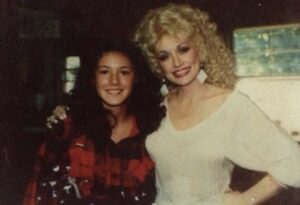
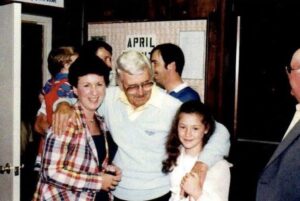 MANDY BARNETT: They were golden opportunities, and I’m grateful for every one of them.It was the first year Dollywood was open, and I was just a kid getting the chance to be around some incredible people. I got to work with Dolly and her family, perform with a live band, and learn things that you simply can’t learn anywhere else.I met Archie Campbell while opening a show that also featured Chet Atkins and Wilma Burgess. Afterward, Archie told me, “Come up anytime. You’re always welcome.” And he meant it. He gave a young singer the opportunity to come perform at his show whenever I wanted, with a real band and a real audience.Looking back, that was an extraordinary gift. Archie didn’t have to do that, but he did. Those experiences gave me confidence, stage time, and memories I’ll always treasure.
 JHPENTERTAINMENT:
 JHPENTERTAINMENT:
 JHPENTERTAINMENT: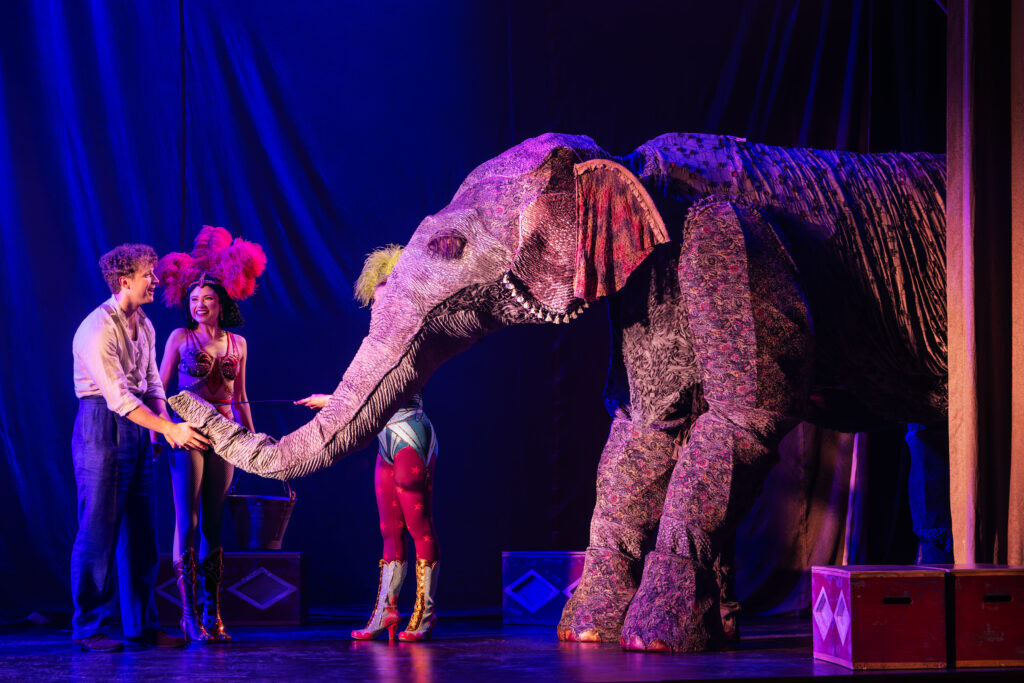
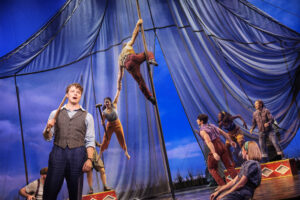 At the center of the production is Zachary Keller as Jacob Jankowski, the grieving veterinary student who impulsively abandons his former life and jumps aboard the Benzini train. Keller anchors the production with a grounded sincerity and a soaring vocal performance that gives emotional weight to Jacob’s internal struggle between safety and risk, logic and passion. His voice carries a warm ache throughout the evening, particularly in moments when Jacob wrestles with the moral compromises surrounding the circus and his growing connection to Marlena. There are moments within Keller’s performance that the entire audience falls in love with his Jacob. Heck, there are moments his near-perfect pitch vocals fill the venue so melodically that you even wonder if he needs a mic. A true testament to his skills and those of the show’s sound designer Walter Trarbach and the entire technical team.
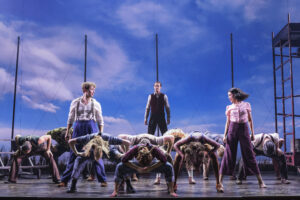 Opposite Keller (and Tully), Helen Krushinski delivers a luminous performance as Marlena, the circus star trapped inside an increasingly dangerous marriage. Krushinski possesses the kind of voice that cuts cleanly through the orchestrations without ever losing emotional nuance. She brings both fragility and fierce determination to Marlena, avoiding cliché and instead presenting a woman desperately searching for dignity and freedom amid chaos. Like so many of her ensemble cast mates, Krushinski also demonstrates a bit of impressive arial skills, adding a literal and figurative extra layer to her performance.
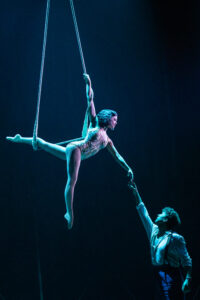 And yes — the aerial and acrobatic work is extraordinary. This production understands that circus artistry should not simply interrupt the narrative; it should become the narrative. Silks, balancing acts, lifts, and gravity-defying choreography emerge organically from the emotional life of the story. The transitions feel seamless rather than showy for the sake of applause. From the jump, as the circus ‘crew’ is setting up shop at their latest stop, even the pounding of the tent-stakes into the ground and the raising of the tent becomes a cadenced ballet of movement, acrobatics and mind-boggling balance and strength. This elegance of motion and bodily discipline becomes another character throughout.
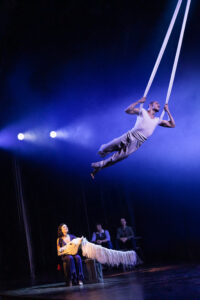 Particular praise belongs to Yves Artières, whose physical performance as Silver Star, Marlena’s beloved show horse, becomes one of the evening’s unexpected emotional centerpieces. Through movement alone, Artières creates personality, loyalty, exhaustion, and tenderness in a way that feels almost impossibly expressive. In a key scene when Silver Star reaches his untimely end, the visual of his spirit leaving his body, by way of Artières ascending silks hanging from the rafters above the stage, then dramatically unfurling the silks as he descends to return to the earth–simply breathtakingly beautiful. The puppetry/animal work throughout the production is remarkably inventive, but Silver Star’s presence lingers long after curtain call.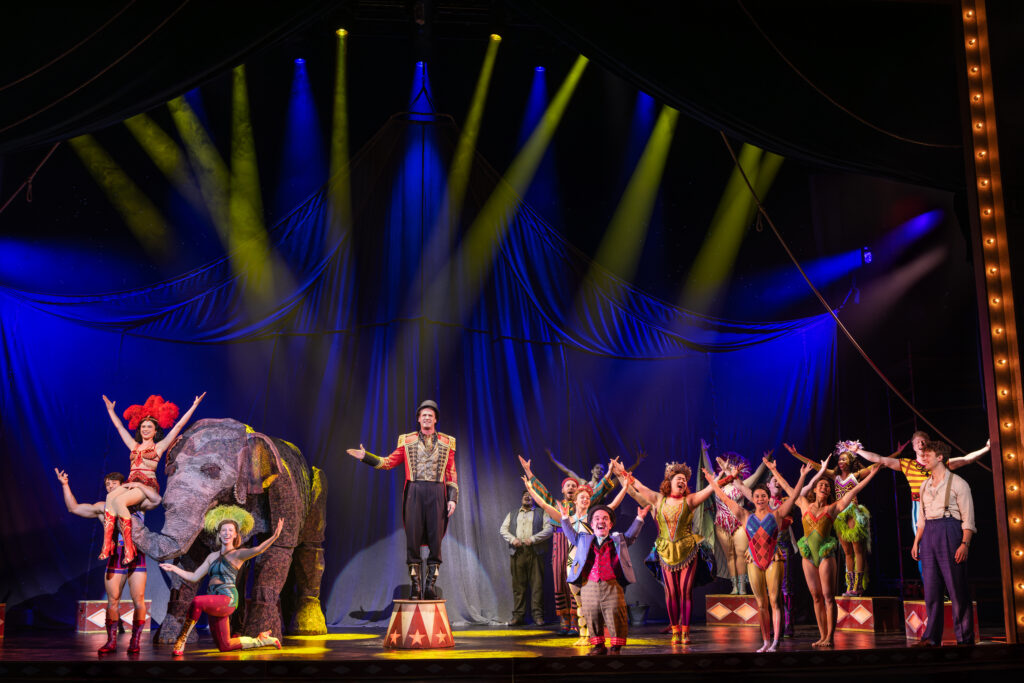
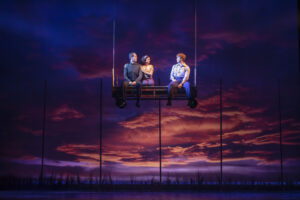 The lighting design deserves enormous credit for shaping the show’s emotional landscape. Warm ambers, smoky blues, and stark silhouettes constantly shift the atmosphere from romance to danger to wonder. Combined with a richly textured sound design that captures both the intimacy of whispered confessions and the thunder of circus chaos, the technical package immerses the audience completely without ever feeling excessive.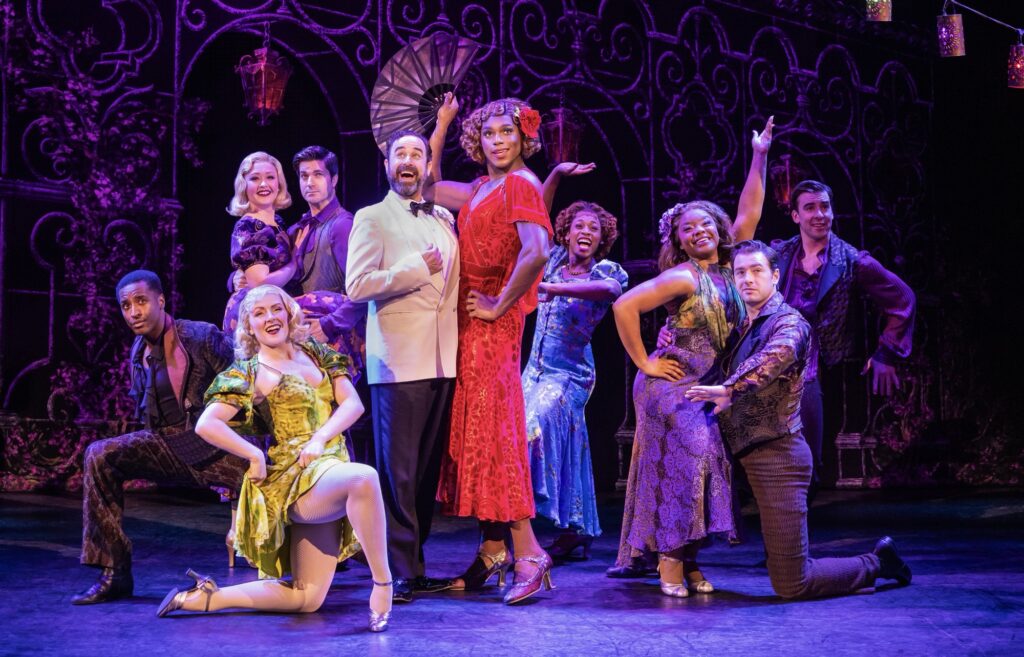
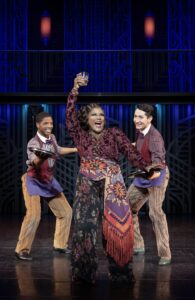 One notable change is the role of Sweet Sue, bandleader of the all-girl band that serves as the perfect hiding in plain site destination for our two unintentional leading men, or should I say leading ladies? Little more than a brief appearance in the source material, Ruffin and Lopez wisely fleshed out Sweet Sue and as played by DeQuina Moore, we’re glad they did. Moore’s Sweet Sue doesn’t just open the show—she detonates it. Her “What Are You Thirsty For?” lands with the kind of electrifying force she herself described in our recent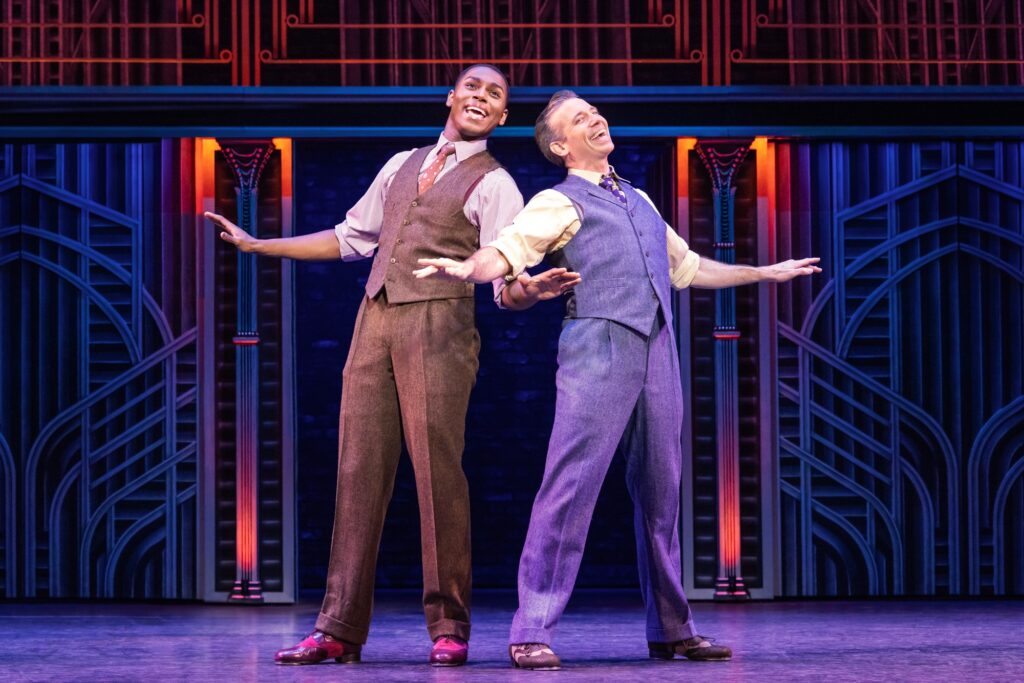
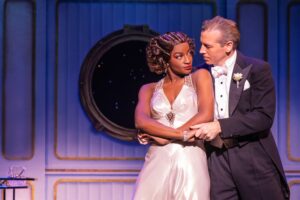 Leandra Ellis-Gaston’s Sugar Kane arguably comes with the steepest climb. Not because of the technical demands—though those are certainly present—but because Marilyn Monroe’s original Sugar remains so indelibly iconic. Wisely, the creators of the stage adaptation “understood the assignment,” sidestepping imitation entirely. By reimagining Sugar as a strong-willed, career-driven woman of color, the role becomes instantly unshackled from direct comparison—and Ellis-Gaston runs with it. With a speaking voice that lands somewhere between The Color Purple’s Squeak and legendary chanteuse Lena Horne, her Sugar is equal parts vulnerability and resolve. Sweet? Absolutely. But never simple.
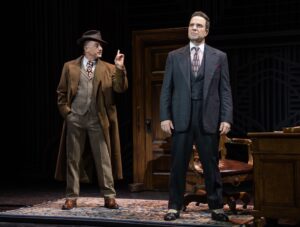 As G-man Mulligan, Matt Allen plays the essential “straight man” with surgical precision, anchoring the show’s more outlandish antics while quietly setting up some of its biggest payoffs. As he said in our recent Rapid Fire 20Q, that role is not only necessary but foundational in launching the show’s farcical momentum. And when he finally gets to dip into the madness—particularly in that delightfully ridiculous undercover sequence—it’s a payoff worth the wait.
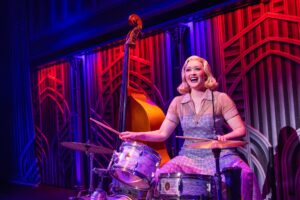 Minnie, Sweet Sue’s right-hand woman is revealed throughout as a bit of a sticky-fingered gal. One of the show’s running gags is her revelations of accidentally entering the wrong apartments thinking they were Sue’s and taking things that weren’t hers. To that end it makes perfect sense that Devon Hadsell’s Minnie is a scene-stealing delight, leaning fully into the character’s charming chaos and absconding with laughs each time she’s on the stage. There’s a lived-in sense of loyalty and mischief here, making Minnie far more than just comic relief. She’s an essential part of the heartbeat of the band. And that ever-present cigarette dangling from her ruby red lips, the kind of subtle sight gag that again perfectly pays homage to that 1930 prohibition-era Hollywood spirit. Side Note: When that Gregg Oppenheimer I Love Lucy play makes its way to Broadway, Hadsell has my vote for the Vivian Vance/Ethel Mertz role!
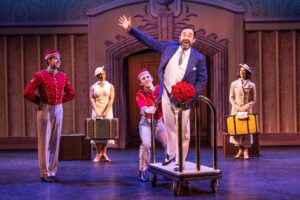 And then there’s Edward Juvier’s Osgood, who may just be the show’s most quietly radical reinvention. As he shared in our recent Rapid Fire 20Q, what drew him to the role was Osgood’s ability to lead with curiosity rather than judgment—and that ethos radiates throughout his performance. Where the film played him as the punchline, this version is in on the joke and, more importantly, in on the love. That shift—from caricature to fully realized romantic—becomes one of the production’s most meaningful evolutions.
 RAPID FIRE WITH TEV’s GERALD JOSEF
 RAPID FIRE WITH TEV’s J BOOTH
 RAPID FIRE WITH TEV’s WES BISHOP
 RAPID FIRE WITH TEV GUEST VOCALIST, JENNIFER McLANE
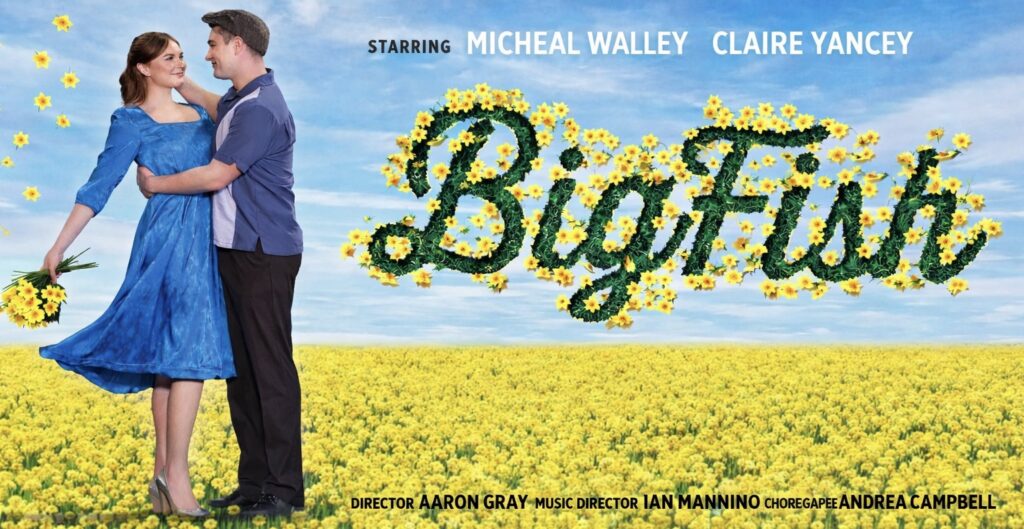
 RAPID FIRE WITH MICHAEL WALLEY, EDWARD BLOOM IN BIG FISH
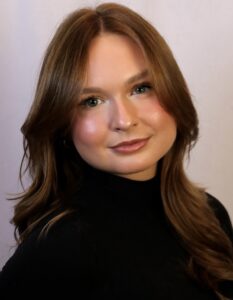 RAPID FIRE WITH CLAIRE YANCEY, SANDRA BLOOM IN BIG FISH
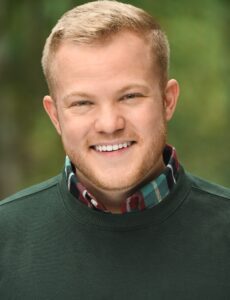 RAPID FIRE WITH JACOB HINNEN, WILL BLOOM IN BIG FISH
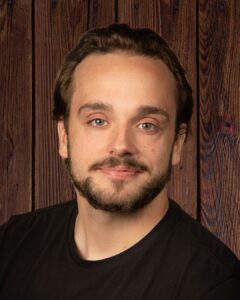 RAPID FIRE WITH AARON GRAY, DIRECTOR OF BIG FISH
 RAPID FIRE WITH
  RAPID FIRE WITH
  RAPID FIRE WITH
  RAPID FIRE WITH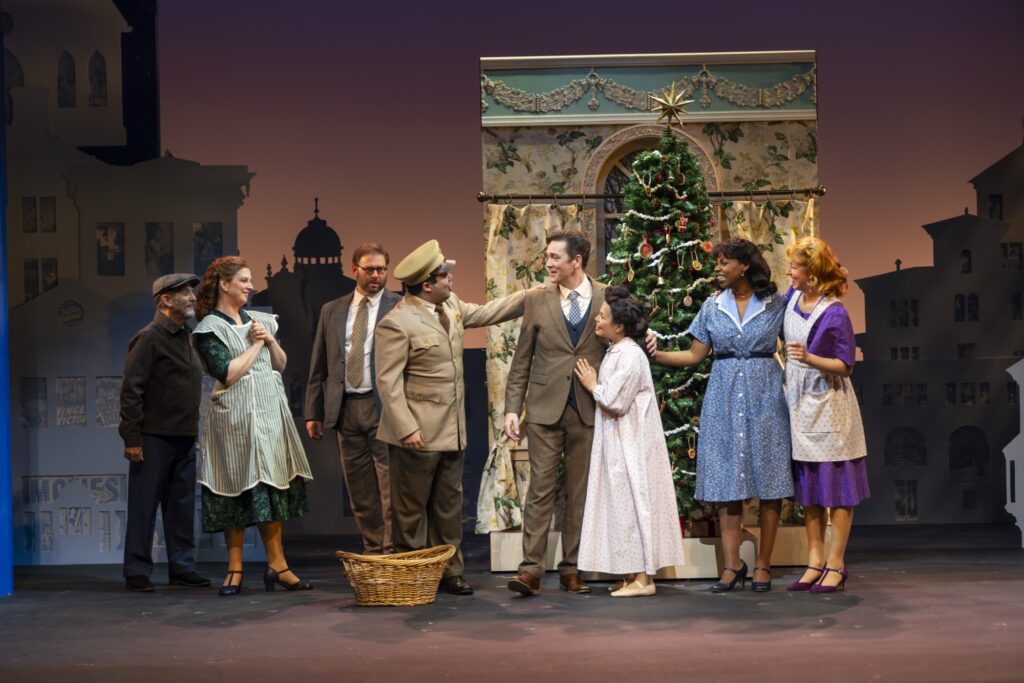
 At the center is Brian Charles Rooney, who’s made quite a name for himself, not only on the local level, but for his work in New York on Broadway, is well-known for his vocal prowess as a musical theatre powerhouse. Rooney captures the full breadth of George’s life journey—from mischievous boy to wide-eyed dreamer to the exhausted, cornered adult wondering where everything went wrong. Remarkably, he accomplishes this not through drastic physical transformation but through subtle, sharply observed choices: a shift in vocal pitch, a slight change in posture, the weight of responsibility settling into the shoulders. These gradations make his downward spiral heartbreaking and his redemption cathartic. As George Bailey, it’s his sincere believability as the multi-faceted depth he brings to the stage that holds the audience’s attention from that first appearance of a man defeated to the much-loved ringing of that angelic bell signifying all is well with the world. His performance as George Bailey is nothing short of revelatory. And YES…though this production is not a musical, the audiences is indeed treated to just a bit of Rooney’s pitch-perfect multi-octave voice for a quick little verse of Buffalo Gals, the beloved tune featured in the 1946 film classic.
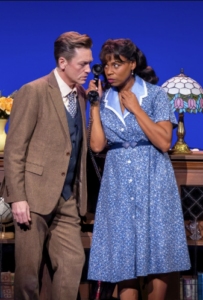 As Mary Hatch Bailey, Tamiko Robinson Steele radiates warmth, quiet confidence, and fierce devotion. Her Mary is not simply the supportive spouse—she’s the emotional compass of the story, grounding George even when he’s flailing hardest. Steele’s effortless sincerity elevates every scene she touches. From their scenes depicting George and Mary’s childhood friendship to their teenage flirtation, Steele’s sweet embodiment of Mary is palpable. The scene at the drugstore soda fountain when Mary leans over to George and whispers in his bad ear her devotion, I couldn’t help but have a little eye sweat. With Steele in the role, it’s no wonder George offers Mary the moon.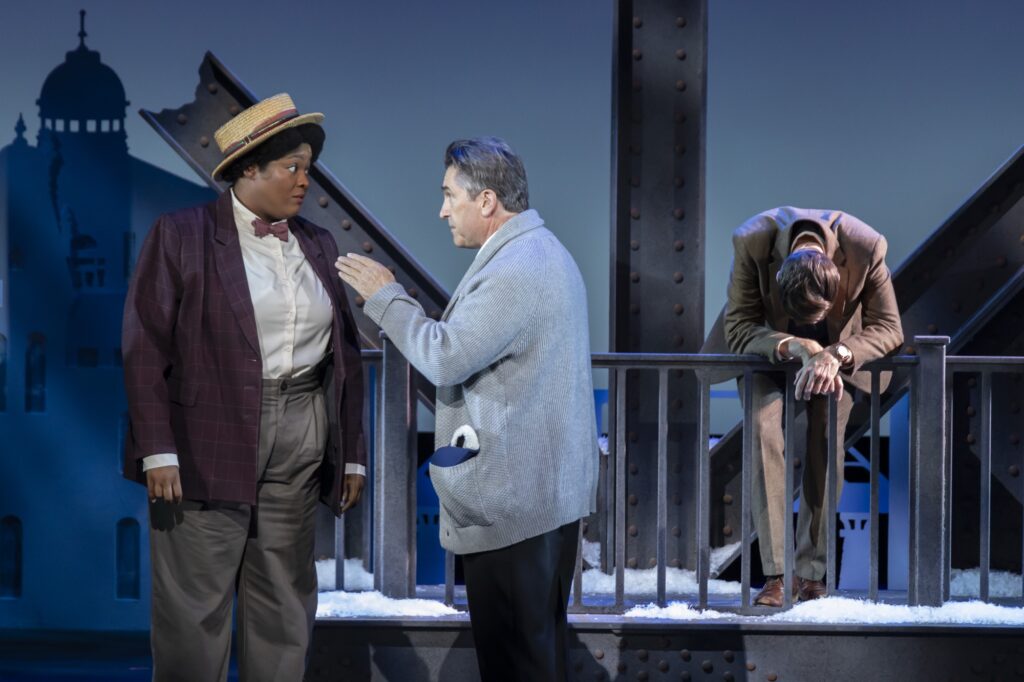
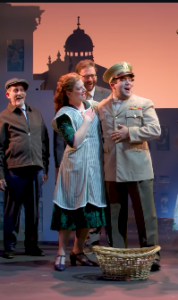
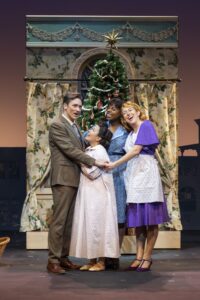 Among the remaining ensemble are Eric D. Pasto Crosby, who is first seen in a brief appearance as Mr. Bailey and a little more stage time as Nick the barkeep (question…did they really have Sports Bars called as such in the 1940s? It’s rhetorical. Sports Bars weren’t a thing until the 1960s, thus my only complaint about the set, for when Clarences shows George what life would have been like had he not been born, they visit the bar formerly owned by Martini, now emblazoned with a mirror-etched sign reading Nick’s Sports Bar). Aleia Eagleton and Darci Nalepa Elam appear throughout portraying various townspeople. Among their standout turns, Elam’s Ma Bailey is motherly perfection while her Tilley is flirty and fun. Then there’s the small in stature, but big in energetic presence of Eagleton as she is fabulously convincing and utterly enjoyable in the tiny, but pivotal role of Zuzu.