Before some folks get all bent out of shape, that headline is a nod to one of the most famous lines from Alice Walker’s emotional novel, The Color Purple, in which juke-joint singer Shug Avery says, “I think it pisses God off if you walk by the color purple in a field somewhere and don’t notice it. Thanks to Nashville Repertory Theatre’s moving presentation of the musical based on Walker’s novel, you can’t help but notice the brilliance and beauty of the work.
As I mentioned in my recent double-shot Rapid Fire 20Qs featuring Nashville Rep’s The Color Purple guest director Reggie Law and seven primary members of the cast, I’ve been a fan of the 1982 Pulitzer Prize-winning source material since first read it when I was in high school. The subsequent Spielberg-directed film adaptation, the Tony-winning 2005 Broadway musical and 2023’s musical film rejuvenating my love of the story time and time again. Directed by Law and featuring a truly star-filled cast headed by Carli Hardon, Nashville Repertory Theatre’s The Color Purple continues that legacy, reminding us all that there’s beauty in everything…and everyone, you just have to take the time to notice it.
When the curtain rose on Opening Night of Nashville Rep’s The Color Purple, I was immediately struck by the starkness of the set. Director Law, scenic director, Joonhee Park and lighting designer Dalton Hamilton obviously opted for a minimalist approach in that the set consists seemingly simply of a massive wall constructed of wooden beams spaced just far enough apart to allow light to filter in. I say seemly simple, because it’s ultimately effective, especially when a multitude of hues of light are used at various times to seamlessly convey emotion appropriate for each scene.
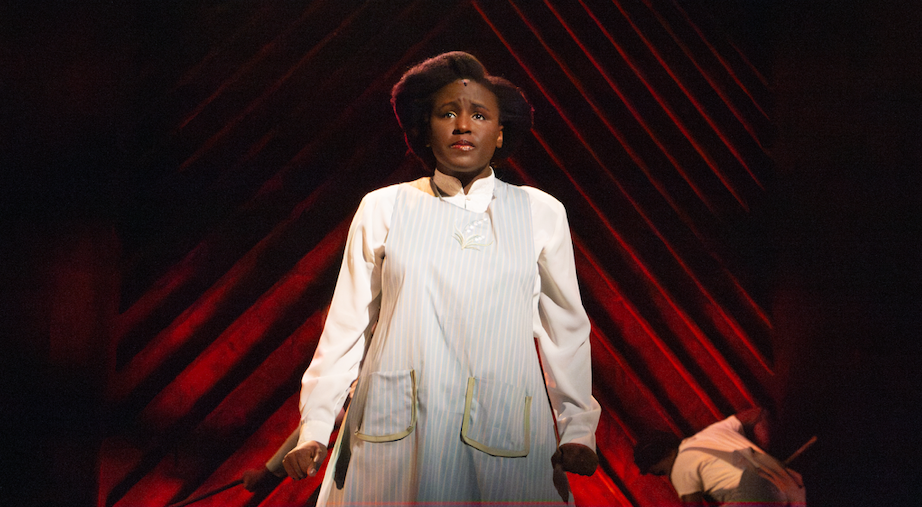
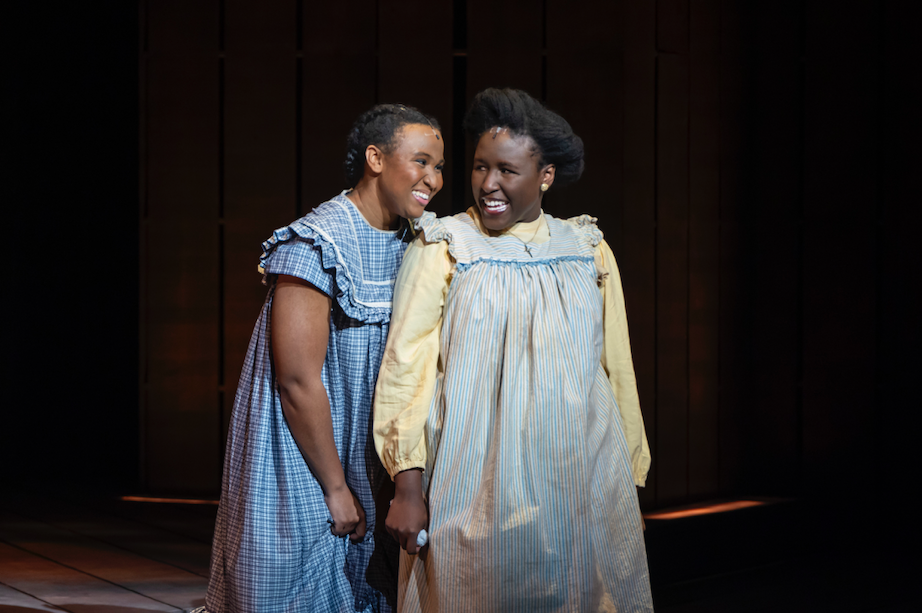
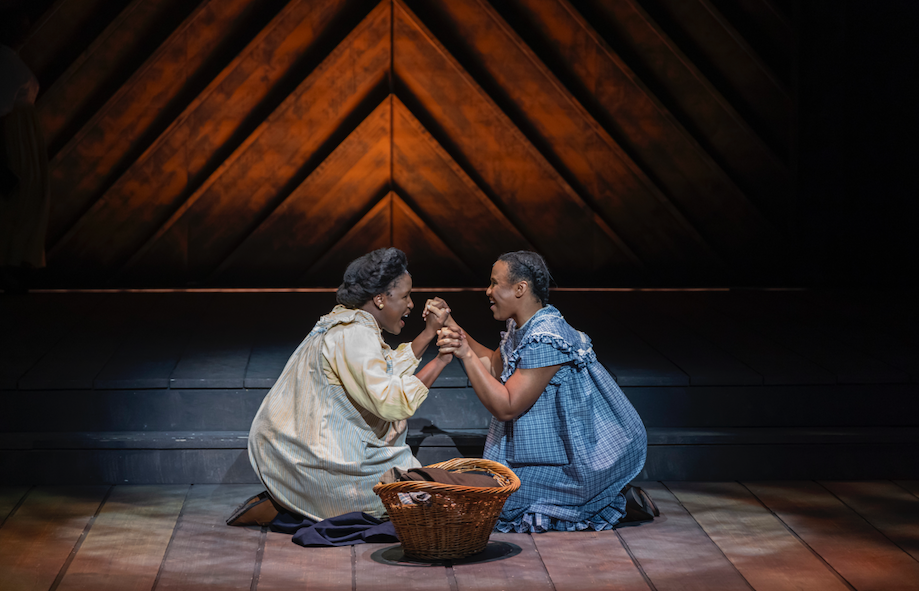
As Celie, the story’s downtrodden central character, Carli Hardon doesn’t waste any time drawing the audience in with her multifaceted portrayal. In fact, for the first time since seeing The Color Purple musical nearly twenty years ago, I actually heard this song. I mean I really heard it. Aided by Maya Riley, one of the Nashville theatre community’s brightest rising stars as Celie’s sister, Nettie. The duo of Celie and Nettie set the pace for the entire show with the elementary, but theme-establishing Huckleberry Pie. A quick singsongy nursery rhyme of a tune Huckleberry Pie gives the audience the first glimpse of the overall message of hope for better things to come with the simple lyric, “Sure ‘nuf sun gon’ shine, Gon’ be grown ladies of the marryin’ kind. Sure ‘nun moon gon rise, like a huckleberry pie in the middle of the sky.”
During this opening sequence I was immediately moved by these lyrics like never before. Here are two young Black girls dealing with unspeakable struggles, but who nevertheless keep focusing on the positive…the future. Yes, these themes from a novel written some forty years ago, about a time in history a century ago are still prevalent today and are key to why this story still resonates. And Yes, minutes in and my eyes were already sweating. I was also struck by both Hardon and Riley’s physicality in this scene. Both actress, though young in real life, completely transformed themselves by their movement, their speech patterns and expressions, into young girls, young sisters.
 Then comes the entire company for Mysterious Ways, a hymn of a song, set in the local church (effectively indicated as such by a singular light source casting the shape of a illuminated cross onto the wall behind the action) where the entire community sings of God watching over them no matter. Nia Safari Banks’ costumes are a highlight of this number, for if you’ve ever had the great fortune to attend a Black Church, you KNOW the way you present yourself before the Lord IN the Lord’s House is of utmost importance! Which leads me to the Church Ladies, Darlene, Doris and Jarene, a snooping, truth-tellin’ trio who pop up now and again throughout the show to fill the audience in on the latest happening. Lindsay Kay Pace, Yolanda Treece and Meggan Utech a divine trio indeed as the Church Ladies. Characters I know all too well, for you see, growing up, there were two ladies in the church my family attended who I lovingly referred to as my very own ‘Church Ladies’. They were always there to stick their noses in and offer advice, unsolicited though it may have been. I can’t be the only one who kind of wishes Pace, Treece and Utech would develop their own show around these three characters. Not only do they provide intel, but plenty of smiles as the absurdity of their insertion into every situation.
 Giving the Church Ladies something to talk about…enter Mister, as played by Elliott Winston Robinson. As Robinson alluded in my Rapid Fire 20Q, Mister is a chance for the every-smiling, always kind and friendly Robinson to play against type. Mister is just mean, and Robinson approaches the role with perfectly menacing aplomb. Those familiar with the story know that Mister initially has designs on the younger Nettie, but settles for Celie. Then vengefully vows to separate the two sisters forever. Physically torn apart, Nettie promises to write her sister every day. Law’s extraordinary acumen as a director is never more evident that in his choices during the scene when Mister tells Celie she is never to go near the mailbox. I won’t spoil it here, but y’all! I didn’t know I was gonna need to invest in Kleenex for this entire show.
The Color Purple is peppered throughout with memorable moments courtesy music and lyrics by Brenda Russell, Allie Willis and Stephen Bray and book by Marsha Norman. The aforementioned Church Ladies being a prime example. There’s another trio worth watching, as well. Ensemble members Justin Boyd, Jaylan Downes and Richard J. Harrison Jr. as field workers remind Celie that Mister is the boss during the pounding Big Dog number, Joi Ware’s choreography herein, a strong nod the the original Broadway presentation.
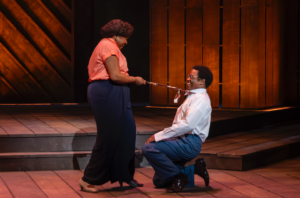 Speaking of memorable men, Gerold Oliver is just sooooo good as Harpo, Mister’s ne’er do well son. He get’s his moment to really shine alongside the men during Brown Betty, a song praising the beauty of Black women, Raven Buntyn’s Squeak, in particular. Speaking of Squeak, thank goodness Buntyn vocally pays homage to the character’s name by occasionally hitting a pitch so high that she actually squeaks when she talks, something the recent film adaptation opted not the do. I also loved the quick pop-in appearances by some of the female ensemble during this one, too. Oliver’s Harpo offers not only comedic levity from time to time, but also becomes the first man in the story to break the cycle of violence towards women.
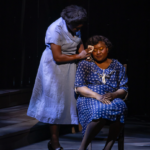 Of course Harpo has a bit of assistance in breaking that cycle in the form of his no-bullshit-taking wife, Sofia, played to the absolute hilt by the gloriously talented Shinnerie Jackson. It was everything I could do to remain in my seat at the end of her anthemic Hell No number. The thunderous applause that followed was evidence I was not alone in my appreciation of the number and Jackson’s performance. Cause here the thing, Jackson’s portrayal of Sofia hits all the notes, not just musically, but emotionally. When she’s strong and defiant, the audience feels that defiance and empowering presence. When Sofia is temporarily defeated, we feel that too. An exemplary performance all ‘round!
A little over midway through Act 1 and it’s time for another of my favorite musical moments, Shug Avery Comin’ to Town’ it’s an all-in for the entire company. Law’s direction, Ware’s choreography and the show’s musical director, Dion Treece, along with the entire company pull out all the stops for this one, creating the perfect buzz befitting the arrival of Tamica Nicole as Shug Avery, the singer who opens up a whole new world to Celie, and in the process teaches Celie that she’s worthy the happiness she longs for. To that end, Too Beautiful for Words is…just that! Nicole’s approach to Shug is stronger than any I’ve seen in other theatrical performances of the musical. Frequently portrayed a little too drunk, a little too messy, Nicole’s Shug has a strength that’s palpable. Her confidence in the role makes it all the more evident why Celie should fall under her spell, as we all do.
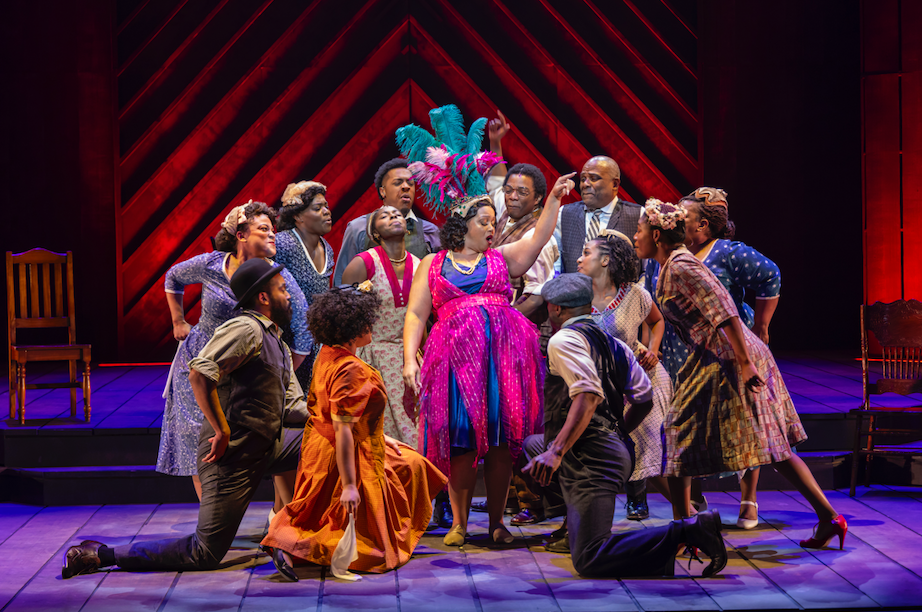
Nicole continues to command the spotlight with Push Da Button another all-in up-tempo number. If Mysterious Ways exemplifies the relationship the Black community has with God, Push Da Button provides the other end of the spectrum. With The Color Purple set in the South of the early-to-mid 1900s, Push Da Button serves to remind us that those who work hard deserve to play hard. It’s a sexy, rollicking good time. If only Shug’s wardrobe for the number matched the excitement. Yes, that is my one and only slight disappointment with the entire show. I was just hoping for a show-stopping BAM! of an outfit for this one number. But again, when the material and the performances bring it, a minor thing like a missed wardrobe opportunity is insignificant.
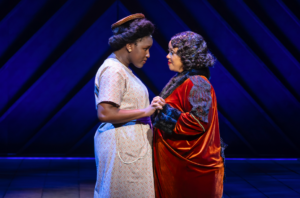 The chemistry between Nicole’s Shug and Hardon’s Celie is simply magical. You truly believe these two women have discovered a love and bond like never before.The progression of this relationship is perfidy paced and played out not doubt by way of the director’s precise instruction, but also these two actors’ understanding a care for the characters.
In the same way, when Nettie returns, there’s an overwhelming joy that radiates from the actors through the entire theatre when Riley’s Nettie returns near show’s end to reunite with Hardon’s Celie. Dressed in patterned African clothes, Nettie looks regal indeed. Again, I was struck by her mannerisms, posture and way of speaking, all extraordinarily representing the passage of time and aging of her character. Just another reminder of the top-notch theatrical experiences you can always count on Nashville Repertory Theatre to provide.
The heartache, troubles, triumphs, joy and love examined and presented throughout The Color Purple are the heartbeat of the piece. So do your spirit a favor and go see this masterful example of theatrical bliss while you can.
Nashville Rep’s The Color Purple continues at TPAC’s Polk Theatre through Sunday, April 14. CLICK HERE for tickets. In the meantime, check out Nashville Rep online and follow them on Facebook, X, YouTube and Instagram.
In case you missed my TWO Rapid Fire 20Q interviews with the director and cast, CLICK HERE…and HERE to check them out!
As always, if you wanna follow JHPEntertainment to find out who I’m chatting with for my next Rapid Fire Q&A, or for my take on the latest local and national theatre, music and movie offerings, find us at JHPEntertainment on Facebook, JHPEntertainment on Instagram and JHPEntertainment on Twitter. Got an event or show we should know about, drop us a line at the Contact tab. Till then, #GoSeeTheShow!
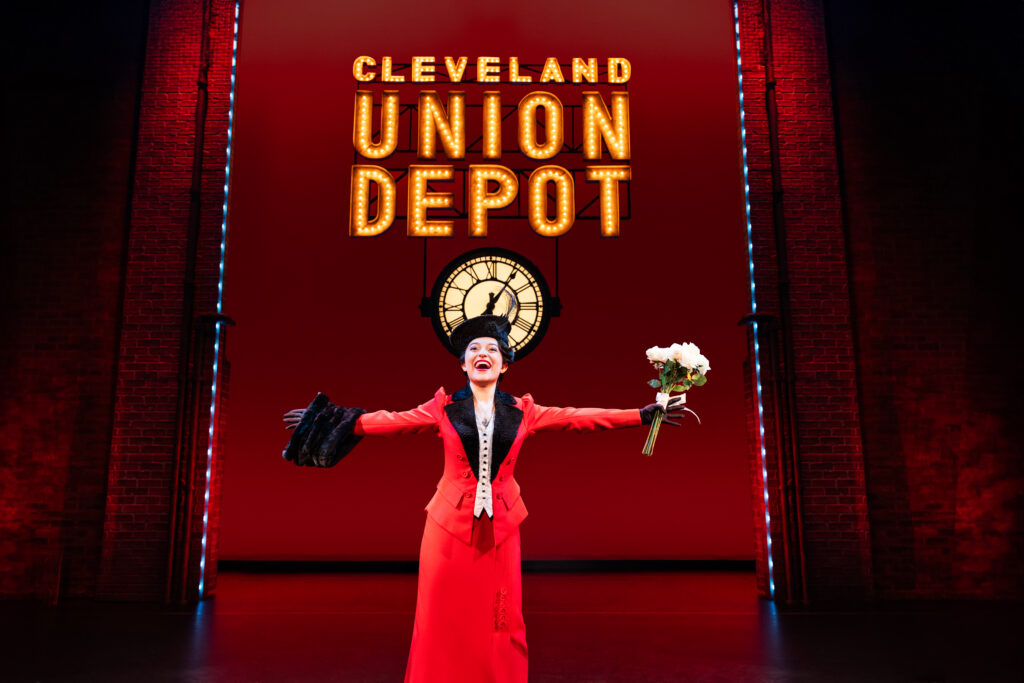
 From the moment Katerina McCrimmon takes the stage, she IS Fanny Brice. She’s got the period-authentic New York dialect, the exaggerated facial expressions, but most of all, she’s got the voice. Ok, so the voice might be more what audiences expect thanks to the aforementioned Streisand portrayal, but I’m here to tell you McCrimmon makes the character her own while carefully maneuvering through, and well beyond what could easily be brushed off as an impression. Throughout the show, including more familiar territory of musical moments like I’m the Greatest Star, Don’t Rain on My Parade and People, and my personal favorite, His Love Makes Me Beautiful, McCrimmon vocal range, strength and ability prove time and time again she’s the perfect powerhouse to introduce Fanny Brice to a whole new generation of musical theatre fans.
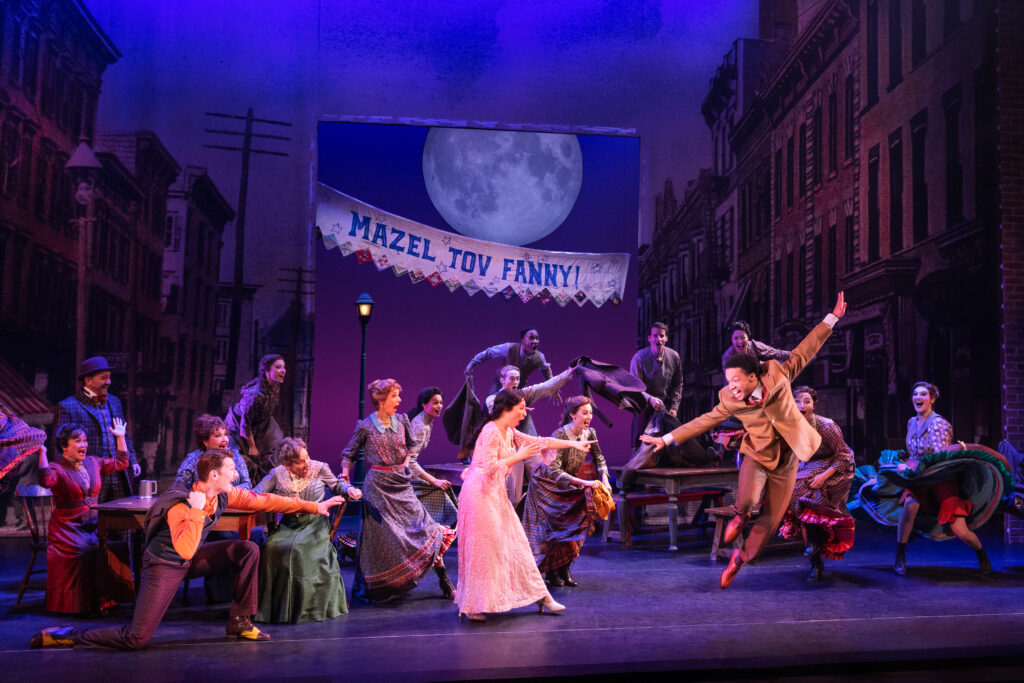
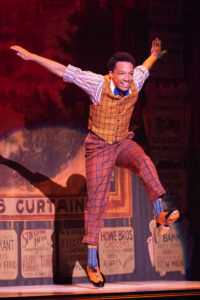 Izaiah Montague Harris plays the always in-step and dependable Eddie Ryan, a dancer/choreographer friend of Fanny’s who’s always there to help her with her career and pick up the pieces when Nicky is out of step. When I say Harris’ Eddie is in-step, I mean it. One of the best non-Fanny-centric moments of the show features Harris in a tap-tactic dance sequence. Which reminds me, kudos to the show’s costume designer, Susan Hilferty. Yes, all of Fanny’s period-perfect costumes are fabulous, but it was during Harris’ tap number that I notice a wonderfully clever costuming detail. Hiferty has sewn the occasional rhinestone throughout the pant legs of Harris costume, which catch the light of his fancy footwork and draw the eye throughout the dancer’s entire body, allowing those of us who picked up on this seemingly random detail the joy of watching the full mechanics, precision and skill of the dance.
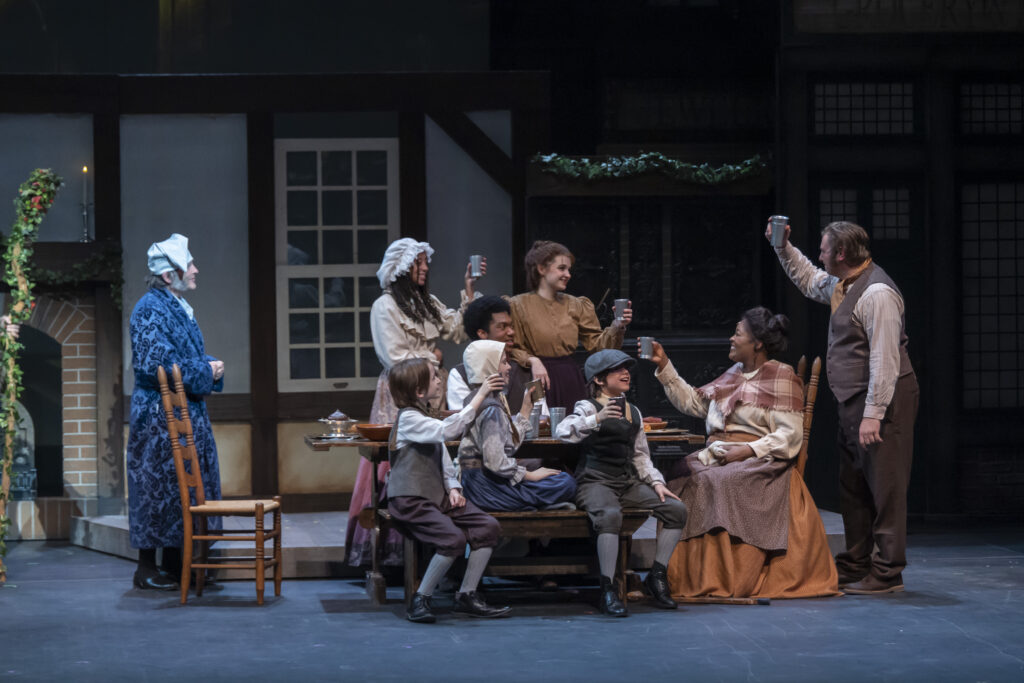
 Speaking of Scrooge, Matthew Carlton is simply brilliant in the role, and it’s a bit of a full-circle moment! His bio reveals his first foray into A Christmas Carol at The Rep came in 1990 when he was cast as Scrooge’s young nephew, Fred. Over the years, Carlton says he’s played a dozen or more characters in eleven different production. I’m here to tell you though, he better free up his winter calendar going forward because it’s official, Matthew Carlton now ranks among my favorites to have ever taken on the role. He’s in good company, too, considering Sir Michael Caine’s Scrooge from The Muppet Christmas Carol tops the list! What’s interesting about Carlton’s performance is, it’s all-encompassing. Yes, he can mean-mug with the best of them, but the scene that struck me most, and may or may not have made my eyes sweat takes place during a party when Scrooge is transported back in time by Kris Sidberry’s beautiful Ghost of Christmas Past. In the scene, Carlton’s Scrooge sees his beloved Belle (Ivory Bodnar) enjoying the merriment of a dance with fellow holiday revelers. Caught up in the moment, but forgetting that he’s only a shadow presence, Scrooge attempts to join in the fun, getting caught at one point in the center of a quartet of dancers. Of course unseen because he isn’t actually there in his present form, he’s ignored as the dancers continue moving about without him. Within just a few minutes as this scene plays out, Carlton, under the keen direction of Brewer, runs the gamut of emotion from excitement to regret and sadness. Being a self-confessed Scrooge myself, I was a puddle.
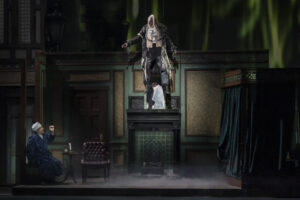 You know you’re a great actor when just a projection of your face can elicit an internal squee. That’s the exact reaction when another longtime Nashville favorite, Brian Webb Russell’s face appeared on Scrooge’s door as the “dead to begin with” Jacob Marley. In an early scene, when Marley visits Scrooge to warn him of the coming visitors, Russell’s Marley rattles his chains as he floats about the room. More fanciful than frightening, a joy to watch. He’s equally enjoyable when paired with Deb Meeks (making her Rep debut) as a rather boisterous party-goer who’s husband (Russell) is partaking of a few too many Christmas ‘spirits’ of his own. These two need to be paired together more!
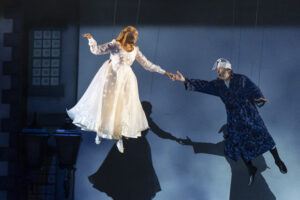 Can’t talk about A Christmas Carol without talking about the Spirits. Mentioned above, Kris Sidberry, making her Nashville Rep debut, is simply magical as Ghost of Christmas Past. Delightful, sweet and fun…all the things we think of most when we remember the past are personified in Sidberry’s performance. She doesn’t just shine in her performance, she sparkles. In part, thanks to Costumer Designer, Melissa Durmon’s literally and figuratively glowing gown!
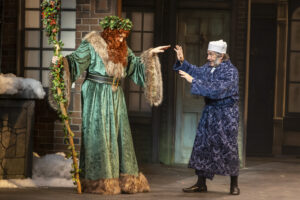 Brian Charles Rooney, seen last holiday season as Buddy the Elf in Nashville Rep’s Elf, is larger than life as Ghost of Christmas Present, and what a present his performance is. Towering above Carlton’s Scrooge (did I see light-up disco platforms under Rooney’s velvet robe?) Rooney’s Ghost of Christmas Present is cheeky, loud and bossy. Everything you could wish for in a ghost guide. Again, kudos to Durmon, and added kudos to her and her wig department team for transforming Rooney into an almost unrecognizable bacchanalian party god with flowing ginger locks and beard. Didn’t think I was into scruffy gingers, but you never know. As mentioned previously, Rooney is among those featured throughout the action as a caroler. I have it on good authority he had been dealing with a bit of laryngitis during the opening days of the show. All I know is, if that’s Rooney with laryngitis, belting out and hitting those unfathomable soprano-high notes, the rest of the run the audiences were in for a treat.
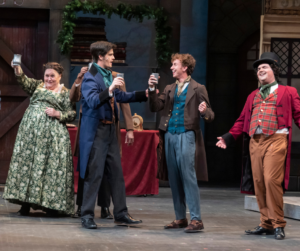 Round out the ghostly trio is Ben Friesen as Ghost of Christmas Future. Even though the show is about to enter its final week at the time of this review being posted, I’m a staunch believer that spoilers do just that…they spoil aspects of shows that are meant to surprise and entertain. To that end, Friesen’s Ghost of Christmas Future definitely delivers. Visually hauntingly brilliant and looming large, Friesen’s appearance is definitely a powerful one. Suffice it to say, his performances a Ghost of Christmas Future would no doubt make Jim Henson proud..and that’s as much of a spoiler as you’ll get from me. Not to fret though, he’s also featured throughout the show, most notably as Dick Wilkins, a friend and colleague of younger Scrooge.
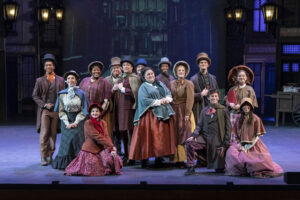 The entire cast is filled with great supporting performances. Mention should be made of Max Fleischhacker as Scrooge’s Nephew Fred, Ethan H. Jones as Mr. Blakeley, Abby Hopper as Alice Cratchit, Alex Hillaker as Henry Cratchit, David Long III as Peter Cratchit, Shelby Talbert as Martha Cratchit, Elle Wesley as Belinda Cratchit, Caroline Henry as Alice Cratchit and Emily Hooper and David Matthew Clark (on alternate nights) each sharing the role as Tiny Tim.
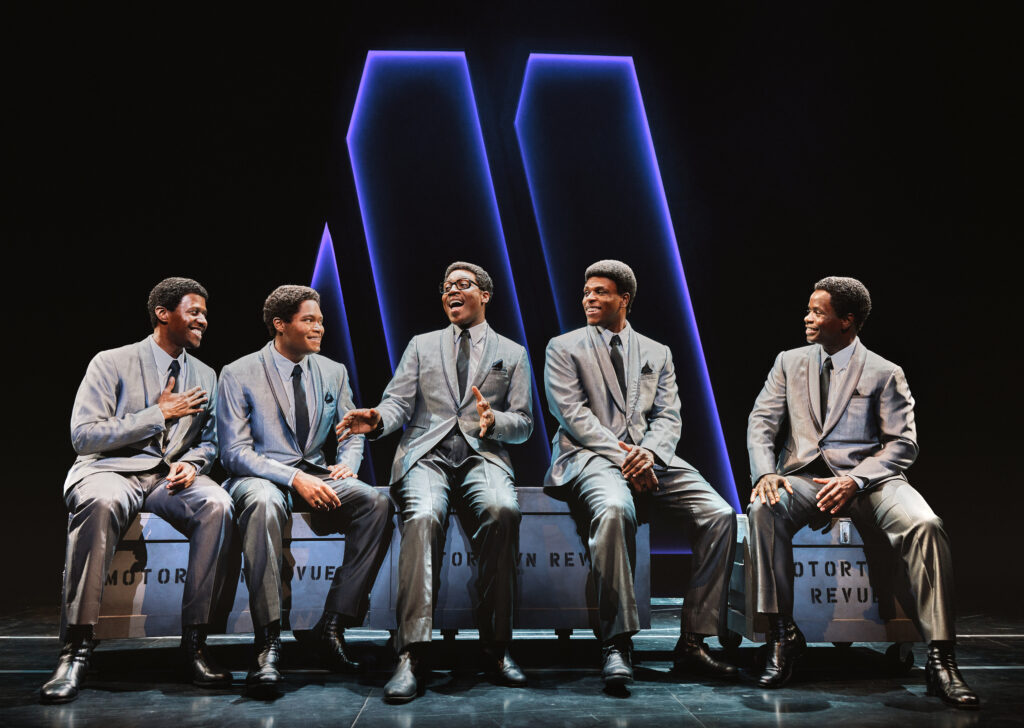
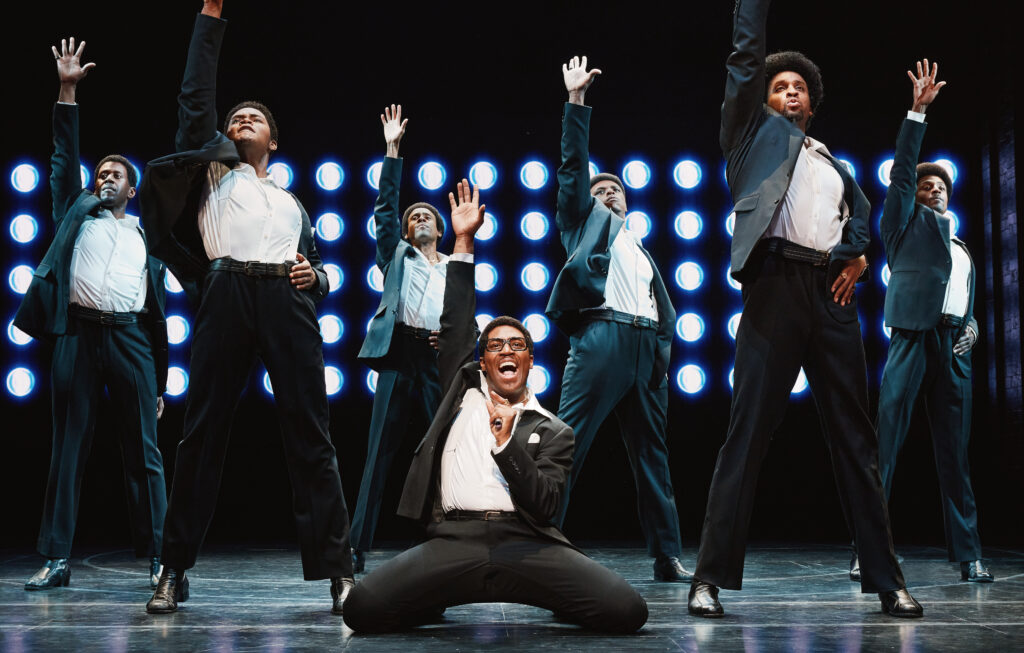
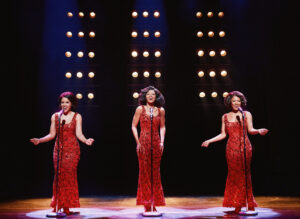 Featuring more than 30 tunes, most of them some of Motown’s biggest and best loved hits, Ain’t Too Proud ranks, in my opinion, as one of the best jukebox musicals. All too often, jukebox musicals struggle to find the balance between storytelling and tune placement. Not the case with Ain’t Too Proud. Dominique Morisseau, who wrote the book of the musical, not only based the storytelling elements on the book by The Temptations’ only surviving founding member, Otis Williams, but also wisely broadened the musical inclusions to incorporate not just The Temptations’ music, but also that of a few of their contemporaries like The Supremes, The Isley Brothers, The Five Satins and Tammi Terrell. By doing this, the narrative flows perfectly with each tune the ideal musical accompaniment to flesh out the story. Said story is presented by Michael Andreaus as Otis Williams, breaking the fourth wall to tell his tale directly to the audience.
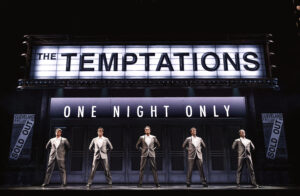 Among my personal favorite musical moments, of course the title track is simply magical. The Supremes medley is a fun added bonus, though opening night in Music City, the ladies’ mics seemed a bit low. At the top of this review, I noted that it was raining outside the theatre. Well, I’m here to tell you that during the emotional I Wish it Would Rain, a 1967 Top Ten for the group, it was ‘raining’ on my face as my eyes began to sweat. Powerful, indeed.
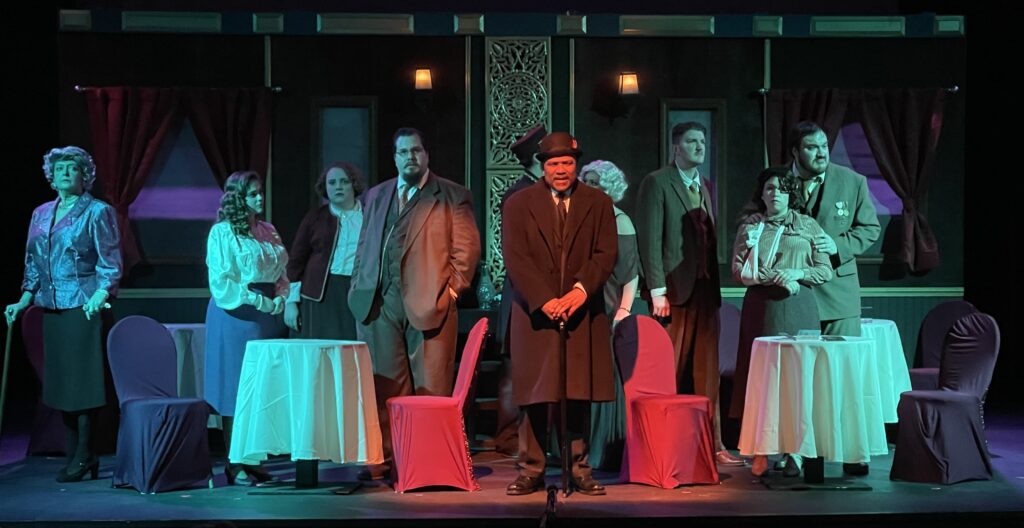
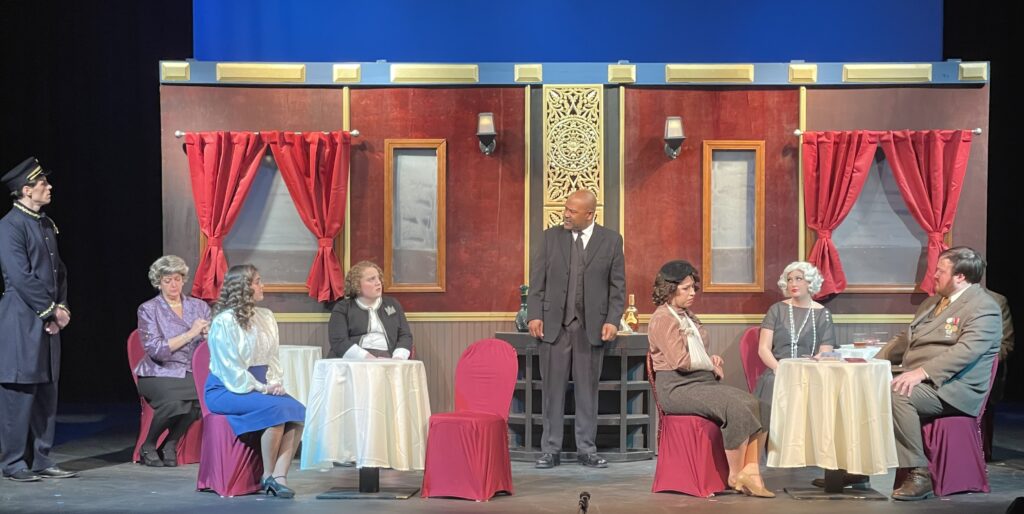
 Circle Players’ Agatha Christie’s Murder on the Orient Express pulls out of the station for two more mystery-filled rides Saturday, January 28 at 7:30pm and Sunday, January 29 at 3pm. All tickets are $27 (including fees).


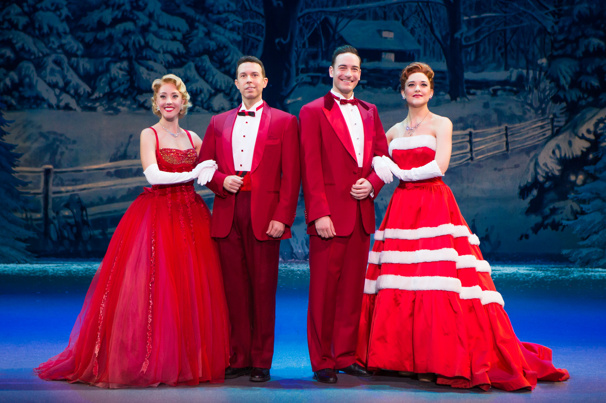
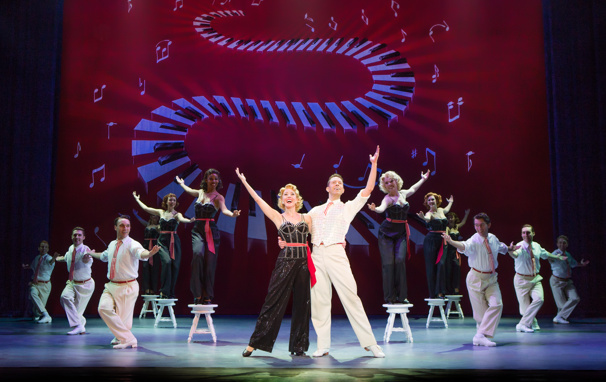
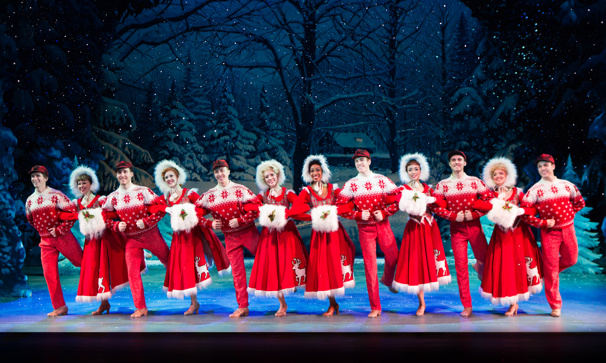
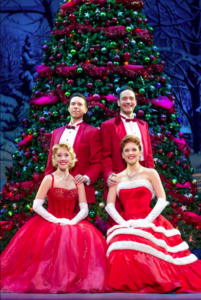 So, how do you replicate the on-screen chemistry of Crosby and Kaye playing ‘odd couple’ best pals, let alone Clooney and Ellen as squabbling sisters? The simple answer, you cast Sean Montgomery, Nashville’s own Jeremy Benton (back for his fifth time with the tour), Kerry Conte and Kelly Sheehan. Montgomery smoothy fills the Crosby bill while Benton eases into the goofiness of Kaye while elevating the role with some of the most impressive dance moves I’ve ever seen onstage. As for the ladies, Sheehan’s Judy might look more like Clooney than Vera-Ellen, but her dance moves rival those of her character’s creator. At times Conte’s singing voice is blissfully similar to that of Rosemary Clooney, but there’s also times, especially in her line delivery, that she possesses a more regal intonation reminiscent the equally talented chanteuse, Peggy Lee. Just another interesting fun fact…when the film was released, Clooney was under contract with Columbia Records and was therefore prohibited from appearing on the film’s official soundtrack record album release. Instead, Decca Records brought in Lee to record vocals for the vinyl. (I warned you it’s my favorite).
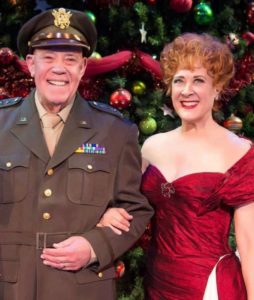
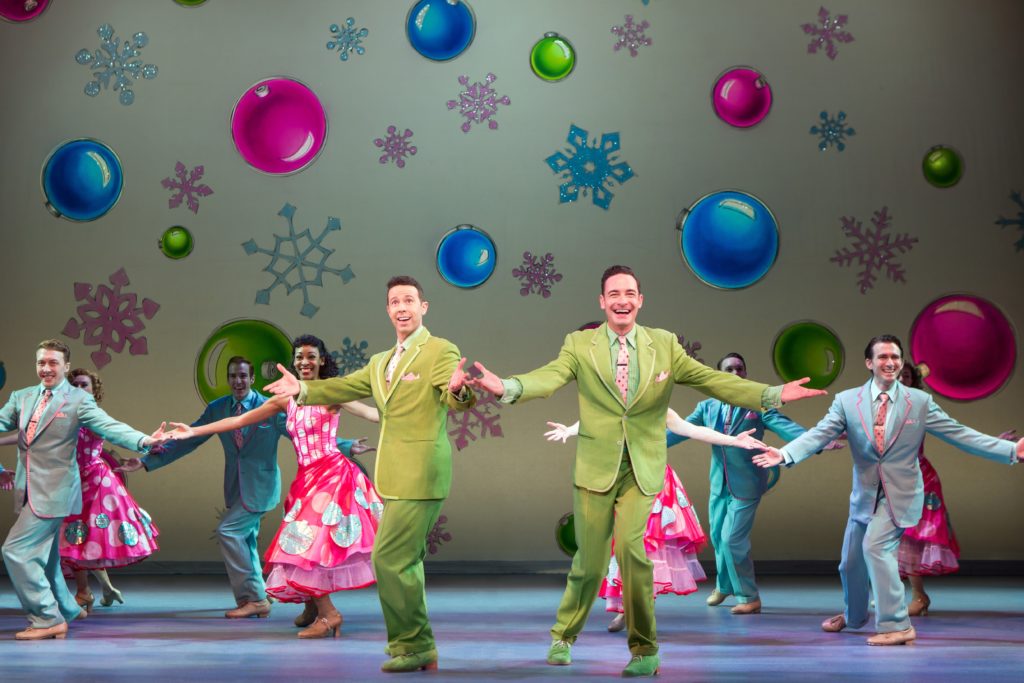
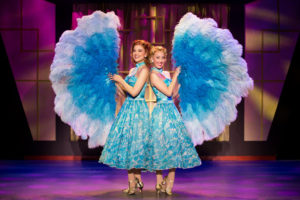
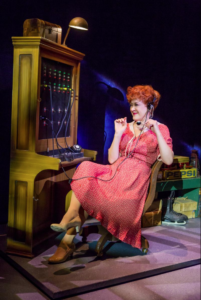 On the subject of gifts to the audience, enter Tony-winner Karen Ziembra as Martha Watson. Played by Mary Wickes in the film, Martha is The General’s right-hand-woman as she oversees the day to day running of the lodge and, at least for the holidays, helps him care for his visiting granddaughter, Susan (a role shared during the tour by Emma Grace Berardelli and Kayla Carter). Ziembra, like her film-version predecessor, lights up the stage and steals the spotlight with every snide remark, every double-take and every movement, but when she belts out the opening note of her sole solo Let Me Sing and I’m Happy…DAMN! That’s how you do it, folks. Not to be too outdone by a Tony-winner, later in the show, young Susan gets her chance at the tune, to audience-cheering results.