Having played TPAC in 2015 and again in 2019, Book of Mormon, Broadway’s riotous musical is returning to Music City for a third time! Created by South Park’s Trey Parker and Matt Stone (collaborating with Avenue Q co-creator Robert Lopez) the hit musical returns to Tennessee Performing Arts Center June 2 thru 7. Before the missionaries arrive, JHPEntertainment.com turns the spotlight on Elder McKinley, Nabulungi and The General as cast members Craig Franke, Charity Arianna and Shafiq Hicks take part in our latest Rapid Fire Q&A quick-hit conversation to chat about the outrageous comedy, life on the road, dream doorbell visits and what keeps this wildly irreverent musical connecting with audiences night after night.
RAPID FIRE Q&A WITH BOOK OF MORMON’s ELDER McKINLEY, NABULUNGI & THE GENERAL
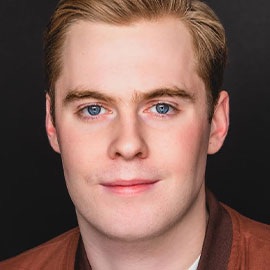 RAPID FIRE WITH BOOK OF MORMON’s ELDER McKINLEY, CRAIG FRANKE
JHPENTERTAINMENT: This is now your fourth year with the tour. What keeps you coming back to ring those doorbells?
CRAIG FRANKE: The travel keeps me coming back! It’s so fun to travel North America and see so many parts of the continent I may never have seen otherwise. It’s a privilege to feel like you’re in a hit Broadway musical touring to some of the most famous cities in the world.
JHPENTERTAINMENT: You originally joined the company in the ensemble while covering both Elder McKinley and Elder Price. What’s the evolution been like from understudying those tracks to now playing Elder McKinley full-time for nearly two years?
CRAIG FRANKE: It’s been nice to live in Elder McKinley full time. When I was an understudy it’s hard to really feel the rhythm of the character and show, and then you never know when you’ll get to do it again to try and improve and tinker. So it would be frustrating if I felt I had made a mistake and would have to wait two months to correct it. Conversely I really miss the rush of adrenaline when you go on for your understudy track. That’s always an exciting night.
JHPENTERTAINMENT: You’re still understudying Elder Price as well. Does keeping that role performance-ready while playing McKinley add an extra layer of adrenaline to tour life?
CRAIG FRANKE: Yes! It does. Keeping Price fresh, whether it’s for a put in, a rehearsal, or the once in a blue moon performance does add some spice and variety. It’s also fun watching all of the different Prices up close and personal. I think it’s inspiring to see another take, and you get to steal their best bits, while also evaluating your own haha.
JHPENTERTAINMENT: Book of Mormon walks this razor-thin line between shocking, ridiculous and oddly heartfelt — which feels very on-brand considering the minds behind South Park created it. What’s your favorite moment where you can practically feel the audience collectively realizing, “Oh wow…they really just said that”?
CRAIG FRANKE: Well, I think I’m offstage for the biggest, “Oh they’re going there,” Moment. But I’d say Price has some dreams where I am involved, and some of those moments can be really fun when you hear the audience react to who might appear in that dream, and what they might do romantically with some other characters…. just come see the show haha.
JHPENTERTAINMENT: Since your character spends plenty of time ringing doorbells…if you could knock on absolutely anyone’s front door — celebrity, historical figure, fictional character, whoever — just to see what happened, whose bell are you ringing?
CRAIG FRANKE: I’m boring, but I’m in theatre, so I’d love to ring Sondheim’s doorbell. He went to New York Military Academy as a boy, which is right down the street from where I went to Middle School, so I always felt maybe that would be something to talk about, my in with the big guy, who knows though. I’m also a sports fan, so I’d say Roger Federer or Dan Campbell to encourage him to help get the Lions their Super Bowl.
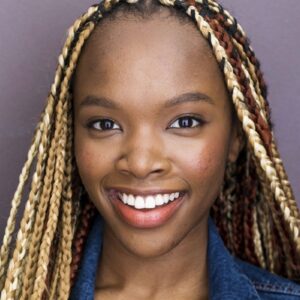 RAPID FIRE WITH BOOK OF MORMON’s NABULUNGI, CHARITY ARIANNA
JHPENTERTAINMENT: This is your first professional theatre gig, which honestly feels like getting tossed directly into the deep end considering the scale and popularity of Book of Mormon. Was joining this tour a little bit of a baptism by fire?
CHARITY ARIANNA: Before getting to play Nabalungi, I was hired as a swing; I didn’t feel intimidated by the of Book of Mormon and its popularity, I actually felt more pressure about learning to become a swing which is like an emergency cover for all of the female tracks. I felt fueled by my passion to be onstage, and I felt honored when they asked me to play Nabalungi full time. Most of my positive experience had to do with the love and support of my castmates and directors. So, you could say I used that “baptism by fire” to fuel me instead of intimidating me!
JHPENTERTAINMENT: As you mention, you initially joined the company as a swing covering the female tracks before stepping into Nabulungi full-time. What do you remember most about learning you’d officially be taking on Nabulungi full-time every night?
CHARITY ARIANNA: I got the offer for Naba while actually in the Motown Museum Tour in Detroit. Getting to learn about so many African American artists and their breakthroughs and then experiencing one of my own felt so full circle. What I remember most was being around the girls (in the cast) and them encouraging me and lifting me up, for that I am forever grateful.
JHPENTERTAINMENT: As Nabulungi, you share scenes with Jarius Miquel Cliett, who plays Ugandan village leader, Mafala, who also happens to be Nabulungi’s father. What’s been most rewarding about building that relationship onstage with Jarius?
CHARITY ARIANNA: The most rewarding thing about working with Jarius is knowing that we have built a relationship that will withstand past what you see onstage. He has always been so supportive and caring, and I love getting to work with him and learn from him in so many ways. Our synergy onstage mimics the true form of our bond offstage.
JHPENTERTAINMENT: As a singer-songwriter, coming to Music City has to hit a little differently. Any chance you’ll be sneaking off to explore Nashville’s recording studio scene while you’re here?
CHARITY ARIANNA: I’m so excited to come to Nashville! The best thing about tour is getting to explore each city, and so this specific city seems right up my ally. I have 2 songs out right now and one of my core memories is watching my music transform in the studio, and so I can’t wait to see what Nashville has to offer in that regard. I can’t wait to work on some more stuff in Nashville to keep the ball rolling!
JHPENTERTAINMENT: Between the outrageous humor, the eyebrow-raising jokes and the fact Book of Mormon came from the creators of South Park, does it surprise you that there are still some audience members who walk in not knowing what they’re about to experience? AND…What’s your favorite scene to perform in anticipation of the audience reaction?
CHARITY ARIANNA: It doesn’t surprise me that some people don’t know about what the Book of Mormon has to offer. Truth be told, when I first auditioned, I didn’t know anything about the musical. It’s unlike anything I have ever seen. My jaw was constantly on the floor. My experience of going in blind gives me some appreciation and an inside scoop about knowing exactly how the audience feels seeing it for the first time because my first time was only about 2 years ago. My absolute favorite scene to perform is in Act 2 with Cunningham! I don’t want to give too much away, you’ll have to watch it and find out, but It’s one of the few scenes we see my character really get to be herself and let go with Cunningham, plus any scene with Jake Aune is always my favorite!
 RAPID FIRE WITH BOOK OF MORMON’s GENERAL, SAFIQ HICKS
JHPENTERTAINMENT: Your one-year anniversary as Book of Mormon’s General is coming up next month. After spending all this time with The General, what have you learned from him — for better or worse?
SHAFIQ HICKS: I’ve learned stamina for sure. Coming up on a year in this role, definitely stands for something. I’ve also learned even the more not to judge my characters but to play them as honest as I know how.
JHPENTERTAINMENT: “Hasa Diga Eebowai” is just one example of Book of Mormon musical numbers where audiences seem simultaneously horrified and unable to stop laughing. What’s it like feeling the crowd react to these hilariously shocking earworms in real time?
SHAFIQ HICKS: I must say, that’s my favorite song of the show. For its hilarity yes, but the SONG itself is a bop. The beat is infectious. Even though I’m not in that number, I sometimes watch from the wings and watch as the audience reacts to the revelation in the song and how up until then they’ve been tapping along.
JHPENTERTAINMENT: Okay, I can’t chat with you and not ask about Saturday Night Live and your experience collaborating with Sam Smith, Aretha Franklin and others. What stands out most when you think back on that experience?
SHAFIQ HICKS: Being on SNL singing in a choir behind the one and only SAM SMITH…was a WILD experience…I just remember existing in the moment but also watching myself exist in the moment altogether. And with Ms. Aretha Franklin…I simply remember her bringing that infamous purse and fur coat, setting both on the piano…and rehearsal BEGAN. She was a tour de force vocalist, and an absolute blueprint for authenticity and soul.
JHPENTERTAINMENT: The General may not exactly be known for warm welcomes…but if you personally could go ring anybody’s doorbell just for the story it would create, who’s answering that door?
SHAFIQ HICKS: I’d pray it’d be a current or past Broadway composer for them to write a hit musical role for me, and cease this baritone erasure from the stages of Broadway and beyond. A certain Robert Lopez comes to mind *wink wink*.
The Book of Mormon returns to TPAC Tuesday, June 2 with shows continuing through Sunday, June 7. If this Rapid Fire Q&A is any indication, expect big laughs, wildly catchy songs, a few moments that may leave audiences clutching their pearls — yet, somehow, there’s a surprising amount of heart underneath all the chaos. CLICK HERE for tickets and more info. Not in Music City, but want to know more about Book of Mormon, CLICK HERE for tickets to upcoming tour stops including Miami, FL Erie, PA, Buffalo, NY, Willmington, NC and Chicago, IL and more as the tour continues. You can also follow the tour on Facebook, X, YouTube, TikTok and Instagram.
Following Book of Mormon, it’s the return of another audience favorite as Hamilton plays TPAC’s Jackson Hall June 17-28. While these two shows close out the current Broadway at TPAC season, there’s always something happening at Nashville’s beloved three-theatre venue. CLICK HERE for the full calendar of events. TPAC’s 2026/2027 Season is just around the corner with its official kickoff September 16-20 celebrated by the return of yet another fan favorite, Jersey Boys. You can also follow TPAC on Instagram, X, YouTube and Facebook.
As always, if you wanna follow JHPEntertainment to find out who I’m chatting with for my next Rapid Fire Q&A, or for my take on the latest local and national theatre, music and movie offerings, find us on Facebook, Instagram and X.

 RAPID FIRE WITH MERRILY WE ROLL ALONG‘s FRANKLIN SHEPHARD, GRAY MILLER
 RAPID FIRE WITH MERRILY WE ROLL ALONG‘s CHARLEY KRINGAS, ELIJAH WALLACE
 RAPID FIRE WITH MERRILY WE ROLL ALONG‘s MARY FLYNN, McKENZIE BRYAN
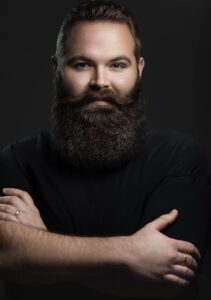 RAPID FIRE WITH MERRILY WE ROLL ALONG DIRECTOR JACOB WAID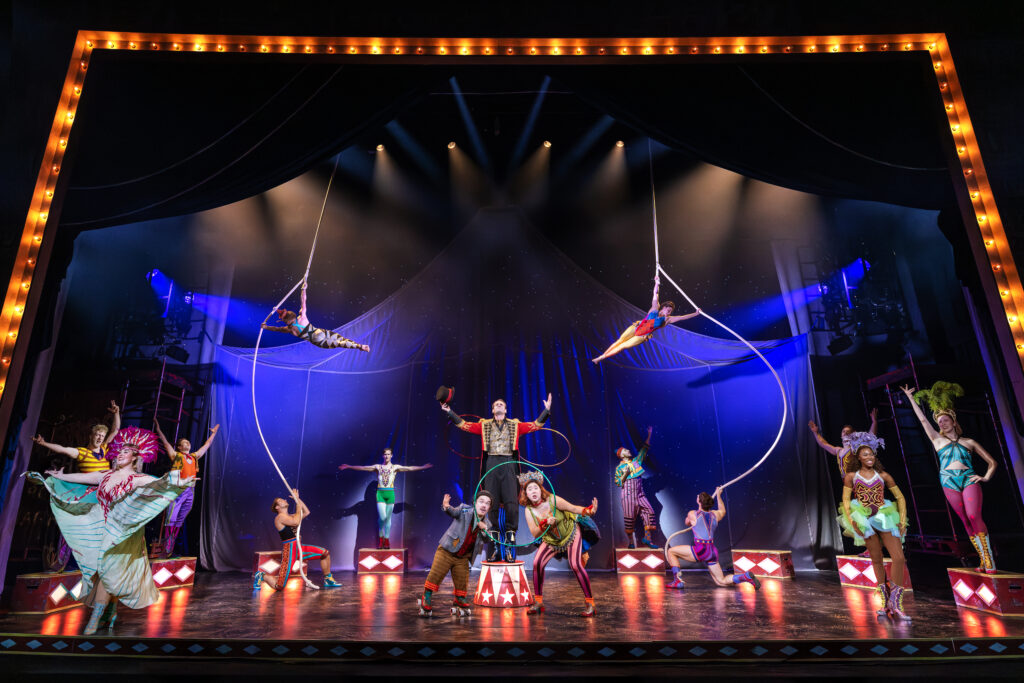
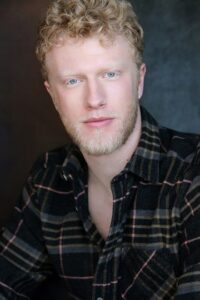 JHPENTERTAINMENT:
 RAPID FIRE WITH WATER FOR ELEPHANTS‘
  RAPID FIRE WITH WATER FOR ELEPHANTS‘ ELLA HUESTIS
 RAPID FIRE WITH WATER FOR ELEPHANTS’
  RAPID FIRE WITH WATER FOR ELEPHANTS‘ CHRIS MARTH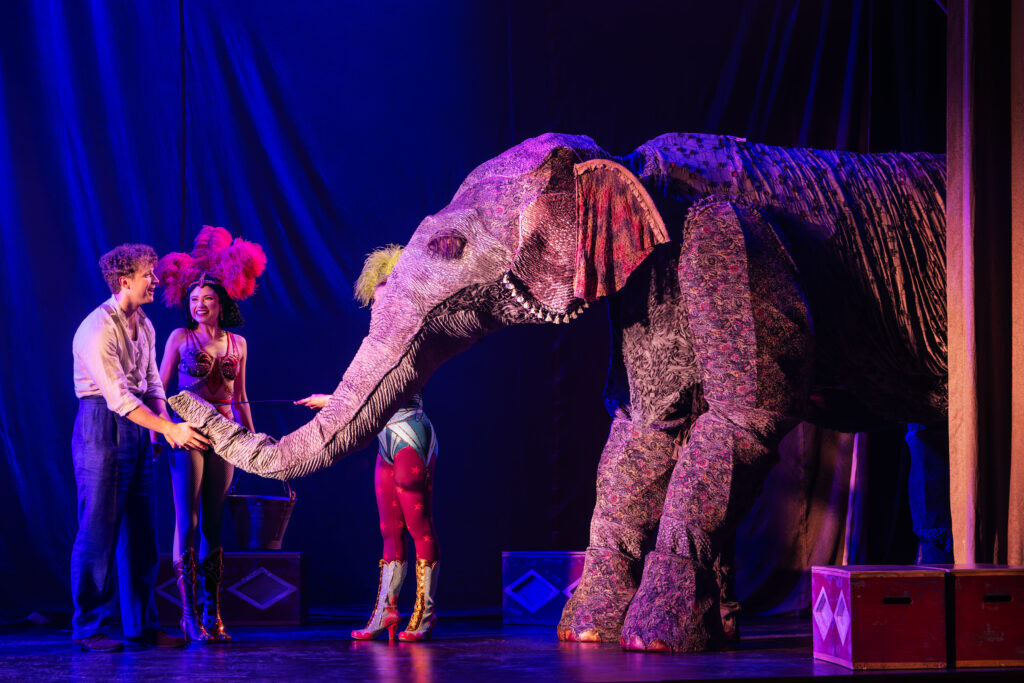
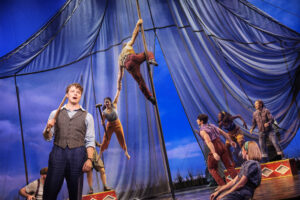 At the center of the production is Zachary Keller as Jacob Jankowski, the grieving veterinary student who impulsively abandons his former life and jumps aboard the Benzini train. Keller anchors the production with a grounded sincerity and a soaring vocal performance that gives emotional weight to Jacob’s internal struggle between safety and risk, logic and passion. His voice carries a warm ache throughout the evening, particularly in moments when Jacob wrestles with the moral compromises surrounding the circus and his growing connection to Marlena. There are moments within Keller’s performance that the entire audience falls in love with his Jacob. Heck, there are moments his near-perfect pitch vocals fill the venue so melodically that you even wonder if he needs a mic. A true testament to his skills and those of the show’s sound designer Walter Trarbach and the entire technical team.
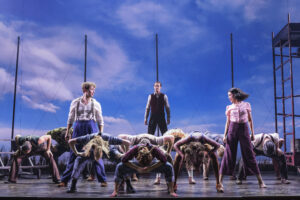 Opposite Keller (and Tully), Helen Krushinski delivers a luminous performance as Marlena, the circus star trapped inside an increasingly dangerous marriage. Krushinski possesses the kind of voice that cuts cleanly through the orchestrations without ever losing emotional nuance. She brings both fragility and fierce determination to Marlena, avoiding cliché and instead presenting a woman desperately searching for dignity and freedom amid chaos. Like so many of her ensemble cast mates, Krushinski also demonstrates a bit of impressive arial skills, adding a literal and figurative extra layer to her performance.
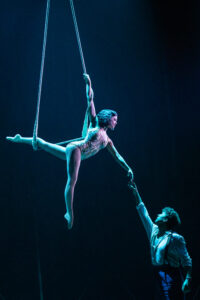 And yes — the aerial and acrobatic work is extraordinary. This production understands that circus artistry should not simply interrupt the narrative; it should become the narrative. Silks, balancing acts, lifts, and gravity-defying choreography emerge organically from the emotional life of the story. The transitions feel seamless rather than showy for the sake of applause. From the jump, as the circus ‘crew’ is setting up shop at their latest stop, even the pounding of the tent-stakes into the ground and the raising of the tent becomes a cadenced ballet of movement, acrobatics and mind-boggling balance and strength. This elegance of motion and bodily discipline becomes another character throughout.
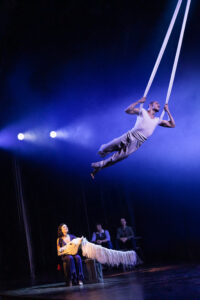 Particular praise belongs to Yves Artières, whose physical performance as Silver Star, Marlena’s beloved show horse, becomes one of the evening’s unexpected emotional centerpieces. Through movement alone, Artières creates personality, loyalty, exhaustion, and tenderness in a way that feels almost impossibly expressive. In a key scene when Silver Star reaches his untimely end, the visual of his spirit leaving his body, by way of Artières ascending silks hanging from the rafters above the stage, then dramatically unfurling the silks as he descends to return to the earth–simply breathtakingly beautiful. The puppetry/animal work throughout the production is remarkably inventive, but Silver Star’s presence lingers long after curtain call.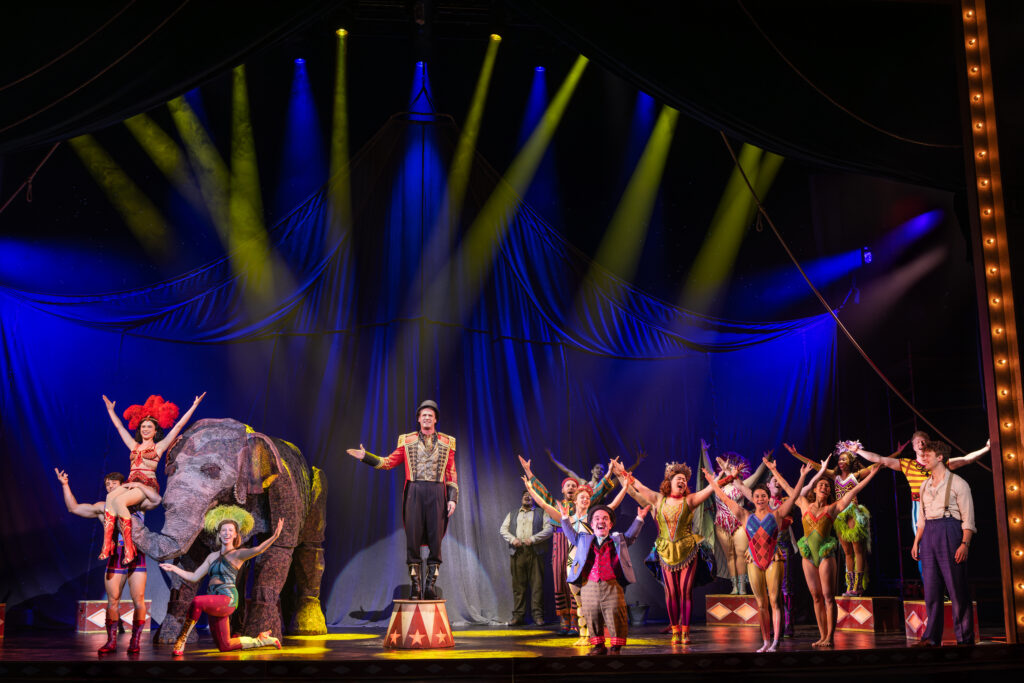
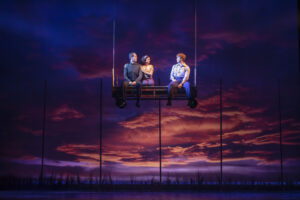 The lighting design deserves enormous credit for shaping the show’s emotional landscape. Warm ambers, smoky blues, and stark silhouettes constantly shift the atmosphere from romance to danger to wonder. Combined with a richly textured sound design that captures both the intimacy of whispered confessions and the thunder of circus chaos, the technical package immerses the audience completely without ever feeling excessive.
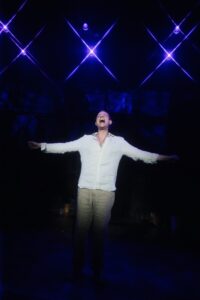
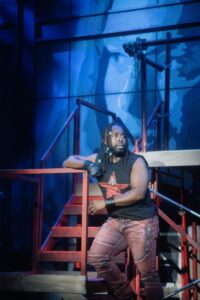 Opposite him, Grammy nominee Mykal Kilgore delivers a mesmerizing Judas. From the opening notes of “Heaven on Their Minds,” Kilgore refuses to portray Judas as a simple villain. Instead, his Judas feels conflicted, frightened, frustrated, and heartbreakingly human as he watches events spiral beyond anyone’s control. His powerhouse vocals soar effortlessly through the score, but it is the emotional vulnerability beneath the performance that lingers longest.
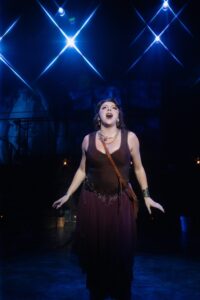 As Mary Magdalene, powerhouse vocalist Olivia Valli comes by her talents naturally. Granddaughter of The Four Season‘s founding member Fankie Valli, she’s a legacy entertainer. As Mary Magdalene, Valli brings warmth and aching sincerity to the role. Early on During “Everything’s Alright,” Valli’s calming presence provides a needed emotional balance amid the increasingly chaotic atmosphere surrounding Jesus. Soon after, her rendition of “I Don’t Know How to Love Him” avoids unnecessary theatrics in favor of emotional honesty, allowing the heartbreak within the song to quietly unfold. Under Cassidy’s direction, Valli explores the often-avoided attraction between Mary the woman and Jesus the man, once again offering yet another layer to the humanity of the piece.
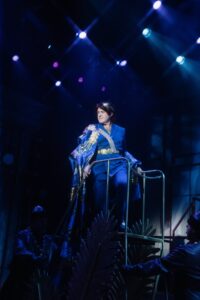 As Pontius Pilate, Geoffrey Davin offers one of the evening’s smartest tonal shifts . Presented as a gaudy, self-important joke of a man sporting an intentionally terrible hairpiece (kudos to the show’s wig designer Meredith Schieltz for just simply going for it), Davin leans fully into the absurdity of performative power. The portrayal initially earns plenty of laughs, but underneath the comedy lies another sharp reflection of the production’s larger themes—people desperate to appear more important than they truly are. His “Pilate’s Dream” balances nervous humor with growing dread, while sinisterly daunting presence during “Trial Before Pilate/39 Lashes” becomes genuinely unsettling.
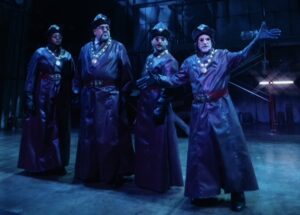 W. Scott Stewart’s thunderous bass vocals as Caiaphas roll in like a deep fog, brilliantly setting the stage for the dread and darkness to come. Robert Parker Jenkins‘ Annas perfectly snarky glances peering over those disturbingly small, dark glasses, brings an unspoken self-righteousness to his role as a high priest. As other members of Caiaphas’ doom squad, Garris Wimmer‘s sinister voice and Jennifer Whitcomb-Oliva‘s snide presence all come together perfectly to present a united and terrifying quartet who initiate the plot to end Jesus.
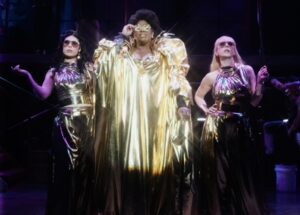 Then there’s the most intriguing of Whitcomb-Oliva’s multiple roles, her dazzlingly, gloriously commanding presence as King Herod. Landing somewhere firmly between Tina Turner’s Auntie Entity from Mad Max: Beyond the Thunderdome and Elton John’s Pinball Wizard from yet another rock opera, Tommy, Whitcomb-Oliva’s Herod is the true definition of the villainous character we know we’re not supposed to love, but we just can’t help ourselves. Combine the stage presence and spectacular wardrobe with Whitcomb-Oliva’s undeniable talents and you’ve got yourself a show-stopping performance and another of Studio Tenn‘s Jesus Christ Superstar‘s truly magical cast members. There is no role this mega-watt talented performer can’t handle and she proves it show after show after show.
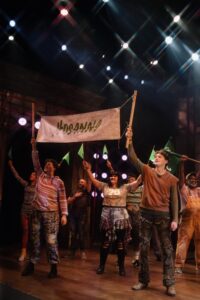 Other ensemble members like Bakari King, Garris Wimmer, Maya Antoinette Riley, Matthew Hayes Hunter, Savannah Stein, Lane Adam Williamson, Victoria Griffin, Emma Rose Williamson, Connor Adair, Nikki Berra, Christina Ledbetter and Patrick Jones each contribute to the overall energy, emotion and beauty of the piece. From the full ensemble Act 1 favorite, “What’s the Buzz’ to a shining, glittering all-in late-hour moment, the entire cast brings everything they’ve got, resulting in a feast for the eyes, the mind, the heart and soul.
 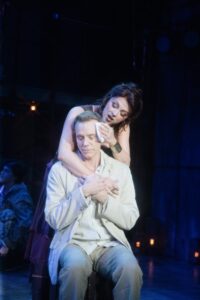 Likewise, Joi Ware’s choreography injects continuous movement and urgency into the production. There are moments where subtle Bob Fosse-inspired isolations seem to collide with flashes of Michael Jackson-inspired movement during larger ensemble sequences, creating choreography that feels simultaneously nostalgic and contemporary. Even those ensemble moments reinforce the power-in-numbers juxtaposed to the isolation of one theme found throughout the piece. Coupled with Cassidy’s direction, Ware’s choreography fills the stage with passionate movement, whether the entire company is on stage for a group number, or the action slows for a solitary moment from Pascal, Kilgore or Valli.