Alright, Y’all KNOW I’m obsessed with any and all things Dolly Parton, so when I heard that Nashville Repertory Theatre was presenting 9 to 5: the Musical, based on Dolly’s 1980 film and featuring songs written by Dolly, I knew I’d have to chat with some of the show’s stars for one of my Rapid Fire 20Q interview features. What follows are my conversations with Megan Murphy Chambers, Allyson A. Robinson, Mariah Parris and Geoffrey Davin.
—————
Rapid Fire 20Q with cast of Nashville Repertory Theatre’s 9 to 5: the Musical
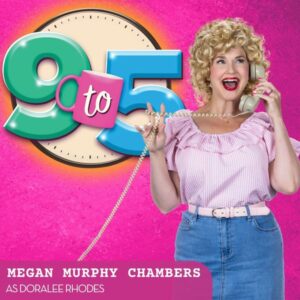 Rapid Fire with Megan Murphy Chambers, Doralee in 9 to 5
JHPENTERTAINMENT: You‘ve played Dolly’s Steel Magnolias role of Truvy on stage and now you’re appearing in Nashville Rep’s 9 to 5 as Doralee, another Dolly film role. Are there similarities between the two characters?
MEGAN MURPHY CHAMBERS: Definitely! Dolly herself radiates such tremendous sparkle, humor, and humanity, it’s nearly impossible to separate her from her more iconic characters. So not only was she beautifully suited for the roles and their accompanying words on the page, but she imbued them with such a unique style and appeal, you can’t help but find similarities. Being cast in these two parts has been such a joy and honor, particularly if it means that anyone draws even the smallest similarity between me and Ms Parton herself.
JHPENTERTAINMENT: Not only are you two-for-two with Dolly’s iconic roles, you’re also two-for-two with Beki Baker, who directed you in Steel Magnolias for Studio Tenn and is now directing Nashville Rep’s 9 to 5. What’s an aspect of Beki’s directorial style that you appreciate?
MEGAN MURPHY CHAMBERS: How many words am I allowed? 🙂 Beki is such a gift in the room – so enthusiastic, so prepared, so supportive, such an easy leader to follow. I love the way she comes in with a clear plan and lots of problems solved before we even encounter them, which leaves her designers and performers so much room to play and take big swings. Beki values the product AND the process, and every minute of it has been a delight and an inspiration!
JHPENTERTAINMENT: If you were to exact revenge on a chauvinistic boss, which of the tactics from 9 to 5 would you likely choose? Or have you thought up your own revenge scheme?
MEGAN MURPHY CHAMBERS: This is my favorite question ever, and I’d like to dedicate it to a former supervisor who shall remain nameless. It would be delightful to brand his ass, Doralee style, and that thought alone will keep me boosted up as we slog through the last of tech.
JHPENTERTAINMENT: I often use the phrase “Only in Nashville”. Earlier this week Nashville Rep posted an “Only in Nashville” type post when Dolly herself sent a video message to the cast and crew of 9 to 5. In the message she not only drops the possibility that she might attend a performance, but also mentions that Gregg Perry, who arranged and associate produced (an apparently provided the iconic opening typewriter sounds) for the original recording of 9 to 5 is part of this production’s orchestra, music directed by Randy Craft. How’s it been working with Randy on this show, and do you have a favorite musical moment?
MEGAN MURPHY CHAMBERS: I LOVE Randy, and the show is sounding absolutely incredible. I look forward to singing the end of Change It every night, and look forward to hearing Heart to Hart even more. But nothing gets my blood moving more than the end of the opening number, 9 to 5, when everyone is finally onstage and singing together. Iconic!!!
JHPENTERTAINMENT: As mentioned earlier…Truvy…CHECK! Doralee…CHECK! So, any plans or hopes of playing Miss Mona in Best Little Whorehouse in Texas? Until then, what’s next for you following 9 to 5?
MEGAN MURPHY CHAMBERS: I was literally just talking to someone about my Miss Mona dreams just the other day, so SIGN ME UP. In the meantime, I have a season lined up that I’m so eager to tackle – I’m heading to Nashville Children’s Theater next to play Mrs. Gloop in Charlie and the Chocolate Factory and Foofinella in The Gingerbread Kid, after which I’m heading south to play Sally Bowles in Cabaret at Studio Tenn!
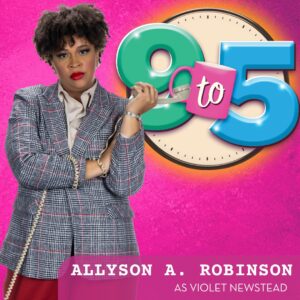 Rapid Fire with Allyson A. Robinson, Violet in 9 to 5
JHPENTERTAINMENT: If my research in preparing to chat with you proves correct, having a lifelong history of performing from an early age, you’re a Detroit native whose passion for the arts really took wing during recent years in Atlanta, is that right?
ALLYSON A. ROBINSON: It is! I was born and raised in church, which meant that I was doing all the plays and cantatas. My family is also full of musicians so it wasn’t hard to get into the same flow and onto the same path they’d been carving for years. But the full transition into performing didn’t come until high school, when it was brought to my attention that I could sing classical music and opera. So I stepped into that and it took off from there! Went to Kentucky State University for music and then attended the University of Kentucky for a few years. During my first year there, I discovered I had nodules and a month after that my dad passed away. So I was dealing with a lot of identity issues because singing was who I was, but my relationship with it was more for the benefits of being well known and praised, not for the passion of performing. So I stepped away from music for a decade. I became a teacher and taught here in the states and then in Abu Dhabi, and then once we returned back to the states, I became a set teacher for kids in TV/Movies. Watching all the actors and actresses perform on camera awakened something inside of me and I wanted to take advantage of that feeling. I started taking acting classes and book a few short films, got an agent, and then booked a role on a feature film as well! It felt so good to be back!
Then after moving to Nashville in July 2022, I started working at a tech company here in town, who happened to be putting on a Black History Month program. Randomly during lunch, a short clip of a voice recording of my singing started to play because I hit the wrong button. Erika, who was in charge of the program, happened to be sitting next to me. She looked at me and said “I didn’t know you could sing! You’ll sing for our program!” So I was volun-told. I called my friend Ron, who’s an amazing voice teacher and performer from graduate school and told him what happened. So we decided to start up some lessons to prepare for the program, and I discovered that my voice was in pretty good shape! After the program, I told him that I wanted to continue singing and finding opportunities in the area if I could.
JHPENTERTAINMENT: I understand 9 to 5 marks your Nashville Rep debut. How did landing the role of Violet Newstead come about?
ALLYSON A. ROBINSON: So after doing the program with my job, I realized that I wanted to keep this momentum going. I was loving where my voice was, I had fallen back in love with performing, and I didn’t want to lose it. So my friend and I started to research things happening in the area and came across Nashville Rep’s audition season. I was terrified because I hadn’t done this in over 10 years, but I was willing to just go in and get an audition under my belt, and have fun doing it. So we prepped my music and I already have some monologues from doing auditions. I went into the audition room with no expectations of booking anything. I just wanted to go in and say I did it after so long. Prove to myself that I could still do it after all this time.
A few weeks later, I received three emails for callbacks, one of them being Violet. My mind was BLOWN.
I took some time, looked through the music and the scenes and just had fun building this character. I was in this to have fun, not prove anything to anyone but myself. We had a dance call first, which I was freaking out about because I’m 34, a mom of twins, and had just started to build a workout routine. I didn’t feel as if I was in ANY shape to get up and dance. And add onto that of course, that I hadn’t done this in 10 years. BUT I made it through!
When we got to the scenes, I was excited to simply work with the others in the room. Nashville is full of so many talented artists and being new the scene, I was interested in meeting and experiencing their talents… and I was blown away. There are so many talented artists here in Nashville, and they’re triple threats! Dancers, singers, and actors, and some of them have even more in their toolbox than that!
When I made it through cuts, I was in complete shock. They had chosen only three people to move forward for my role, and my name was the last one they called.
When I left the auditions, I smiled. I cried. I had so much fun and in reality, I wasn’t expecting much…and then I was at work and my phone rang. Ms. Yolanda Treece from Nashville Rep asked if I was sitting down. When she let me know that they wanted to offer me the role of Violet, I jumped out of my seat and just cried. I’m crying typing this story out all over again! It was hands down, one of the best days of my life. It was such a beautiful surprise and I am forever grateful to Beki Baker for this opportunity,
JHPENTERTAINMENT: As Violet, you share a few scenes with one of Nashville theatre community’s rising young stars, Jalen Walker, who plays Violet’s son, Josh. A mother of twins in real life, has your maternal instinct benefitted your working relationship with Jalen?
ALLYSON A. ROBINSON: Oh absolutely! My maternal instincts kick in whenever there is someone under the age of 18 around. Honestly, it never really shuts off! But when I first met Jalen, he and I were excited because of how much we actually look alike! (Shoutout to Beki for her phenomenal casting). There have been times on set that he’s practiced skateboarding and my eyes are immediately latched onto him to make sure he doesn’t fall. When he comes to rehearsal from school, one of my first three questions is “How was school?”.
Being a former set teacher, it adds another layer of a protection and a care for any minor whose a performer. They are some of the most courageous artists because they have to balance school and being a performer, while also trying to have a social life and deal with raging hormones all at the same time. I admire him for the amazing work he’s doing with the show and outside of here. He’s definitely one to watch.
JHPENTERTAINMENT: If you hadn’t been cast as Violet, what other 9 to 5 role might you enjoy playing?
ALLYSON A. ROBINSON: Roz, hands down. Roz is a complex, but incredible character built to weave such an amazing element of joy and entertainment throughout the show and it’s such a breath of fresh air. But there’s no way I could replace the incomparable Evelyn O’Neal in our show as Roz. She is one of the most talented artists I’ve had the pleasure of meeting and working with. Her songs and scenes are consistently getting funnier and funnier. I can’t wait for the Nashville and beyond to experience her on stage in this show.
JHPENTERTAINMENT: I’m just gonna be honest, when I first saw the film version of 9 to 5 back in 1980 (yes, I’m that old) the themes of workplace inequality were lost on my teenage mind. Is there a scene in the stage musical or even a passing line of dialogue that addresses that theme that you hope audience pay particular attention to?
ALLYSON A. ROBINSON: The last scene of 9 to 5 is such a powerful scene. My character Violet takes the time to call out the inequalities in the workplace between those at the top who take all the credit and the “little guy” who does all the work that those at the top take the credit for. This scene reveals the realities of the workplace that we are still dealing with today in 2023. I believe it’s a moment that the audience can take in at the end as a revelation that things in our current world still need to change and adjust because the “little guy” is still being stepped on for other to make their way to the top. I hope that during this scene, audience members feel seen and affirmed in their own “9-5” journey and experience in the workplace and will empower them to speak up be out against injustices they and their co-workers experience on a day to day basis.
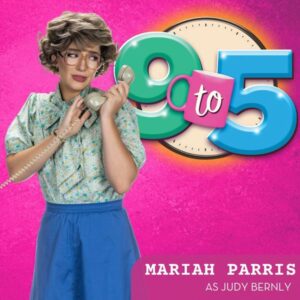 Rapid Fire with Mariah Parris, Judy in 9 to 5
JHPENTERTAINMENT: Before we get started, I just have to say how much I enjoyed you as Jen in Nashville Rep’s The Cake. How excited are you to get back at The Rep for 9 to 5?
MARIAH PARRIS: Thank you so much! That show was such a special experience. In fact, every time I’ve get the opportunity to work at The Rep I have an amazing time. It is not lost on me what a privilege it is to work here and I feel so lucky every time I get the call saying that I get to!
I was specifically excited to get the call for 9 to 5 because I have admired Beki Baker for years (over a decade at least?) and this is my first time getting to work with her as a director. She is an awesome human and an excellent leader.
JHPENTERTAINMENT: What is your favorite aspect of playing Judy Bernly?
MARIAH PARRIS: My favorite aspect of Judy Bernly is her courage. She really starts the show from such a broken place and surprises herself at so many points along the way that she is stronger and more capable than she ever realized. I think we can all relate to feeling scared and doing the scary thing anyway, and I really enjoy stepping into that energy.
JHPENTERTAINMENT: As Judy, you’re teamed with Megan Murphy Chambers and Allyson A Robinson. Describe your 9 to 5 cohorts using a single word each.
MARIAH PARRIS: Ooof this is hard. How to sum up such kaleidoscopic women? Allyson: Wisdom. Megan: Excellence.
JHPENTERTAINMENT: I’m totally an attention to details kind of guy, so…The show takes place in an office setting during the late 70s/early 80s. With a set designed by Gary Hoff and props from Lauren Yawn-Kell, is there something about the set or a particularly period-authentic prop that you’re just really into?
MARIAH PARRIS: Gary Hoff is a genius and every set he touches is magical. This is my first time working with Lauren and she has absolutely crushed it.
For me it’s the set color scheme: avocado, harvest gold, and….more avocado. My favorite props are probably all the made up accolades adorning Franklin Hart’s office bookshelf… they are hilarious.
JHPENTERTAINMENT: Long after the tap tap tap of the typewriter from the show’s title tune is just a distant memory, what do you hope audiences will remember about this production of 9 to 5?
MARIAH PARRIS: I hope this show inspires the audience to consider the dynamics in their own lives- be it home, workplace, or otherwise- and consider where people are perhaps being held back from their fullest potential because of outside forces keeping them down. I hope people consider how they can be less of a hindrance or more of a help to others finding their own ways to shine.
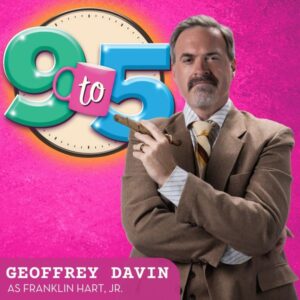 Rapid Fire with Geoff Davin, Mr. Hart in 9 to 5
JHPENTERTAINMENT: What can you tell me about Mr. Hart, as far as your perception of the character?
GEOFF DAVIN: Well, Mr. Hart has been a challenge. Of course you never want to villainize a villain when you’re playing the antagonist. Your goal is always to empathize with them and try to see how they’re right. But gosh, Mr. Hart makes it awfully hard. He’s just such a deliciously sleazy fellow. He always says the most terrible things with absolutely no concept of how terrible his comments are. And he’s his own greatest fan.
JHPENTERTAINMENT: Mr. Hart is the show’s villain. How much fun are you having playing the baddie opposite your three leading ladies?
GEOFF DAVIN: I’m having an absolute blast. I couldn’t have asked for a more gracious, talented, fun, and giving trio of power houses to play opposite of on stage.
JHPENTERTAINMENT: Even the chauvinistic Mr. Hart has his admirers. What is one aspect of Mr. Hart’s character that you see as possibly redeemable?
GEOFF DAVIN: Well Violet says that she’s never seen someone leap frog to the top as quickly as he has. So he’s certainly tenacious and wildly driven.
JHPENTERTAINMENT: With 9 to 5 being set in the late 70s/early 80s, I’m guessing Mr. Hart’s wardrobe, as envisioned by costumer Lori Gann-Smith, might consist primarily of leisure suits. They say all fashion is cyclical. Is it time for the return of the leisure suit, and do you think you could rock it off stage?
GEOFF DAVIN: I would 100% wear my opening suit it in real life.
JHPENTERTAINMENT: There’s long been talk of a 9 to 5 sequel, at least for the original film adaptation. If there were a sequel, where do you see Mr. Hart in the future?
GEOFF DAVIN: I think Mr. Hart stayed on the island. He now works for the Amazonians, harvesting coffee beans. They’ve even given him a little nickname. I’m not sure how to write it in their language. But it roughly translates to “skinny and sweet”.
—————
Nashville Repertory Theatre’s 9 to 5: the Musical plays TPAC’s Polk Theatre September 8 through 17 with Friday and Saturday evening performances at 7:30p.m. and Saturday and Sunday matinees at 2p.m. CLICK HERE for tickets or more information. Following 9 to 5, Nashville Repertory Theatre rings in the holidays with A Christmas Carol onstage at TPAC’s Polk Theatre from December 1-17. CLICK HERE for tickets or more information.
In the meantime, check out Nashville Rep online HERE and follow them on Facebook, Twitter, YouTube and Instagram.
As always, if you wanna follow JHPEntertainment to find out who I’m chatting with for my next Rapid Fire Q&A, or for my take on the latest local and national theatre, music and movie offerings, find us at JHPEntertainment on Facebook, JHPEntertainment on Instagram and JHPEntertainment on Twitter. Got an event or show we should know about, drop us a line at the Contact tab. Till then, #GoSeeTheShow!

 Rapid Fire with Billy Jenkins, Brother Boy in Theatre of Gadsden’s Sordid Lives
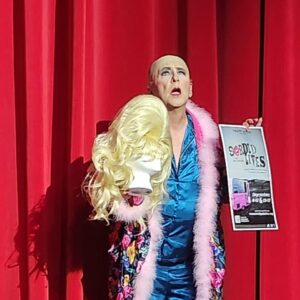 JHPENTERTAINMENT: Aside from a smile on their faces and side-splitting laughter, what theme, idea or thought do you hope audiences take away after seeing Theatre of Gadsden’s Sordid Lives?
 JHPENTERTAINMENT: I understand this is your first time doing a show with Theatre of Gadsden. How much fun are you having so far?
 Rapid Fire with Joy Tilley Perryman, Noleta Nethercott in Theatre of Gadsden’s Sordid Lives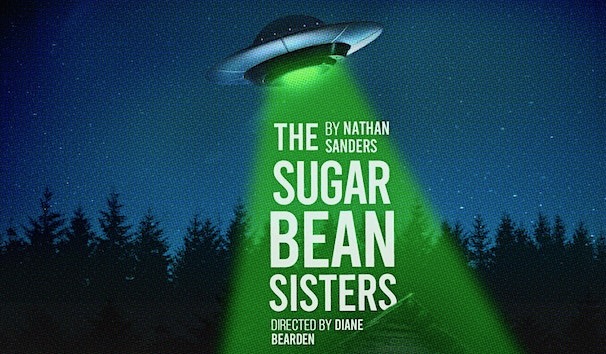
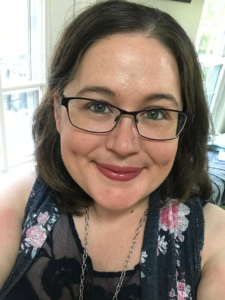 Rapid Fire Questions for Breonna Parker, The Sugar Bean Sisters’ Videllia
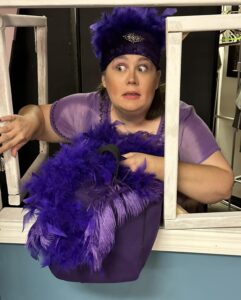 JHPENTERTAINMENT: Videllia has secrets. Are you good secret keeper or do you just need to tell somebody when you know some juicy tidbits?
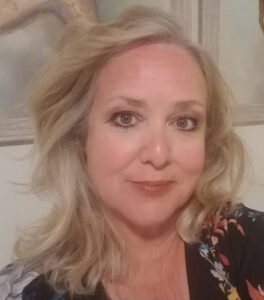 Rapid Fire Questions for Ann Street-Kavanagh, The Sugar Bean Sisters’ Faye Nettles
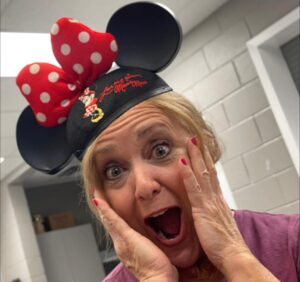 JHPENTERTAINMENT:
  Rapid Fire Questions for Abby Waddoups, The Sugar Bean Sisters’ Willie Mae Nettles
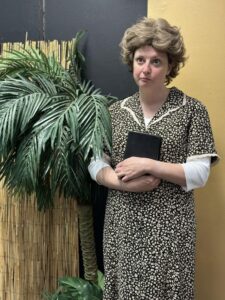 JHPENTERTAINMENT:
 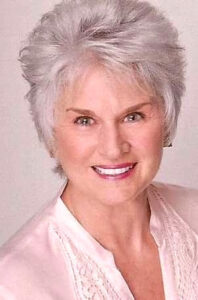 Rapid Fire Questions for Linda Speir, The Sugar Bean Sisters’ Reptile Woman
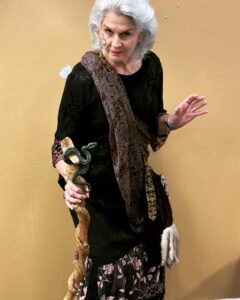 JHPENTERTAINMENT: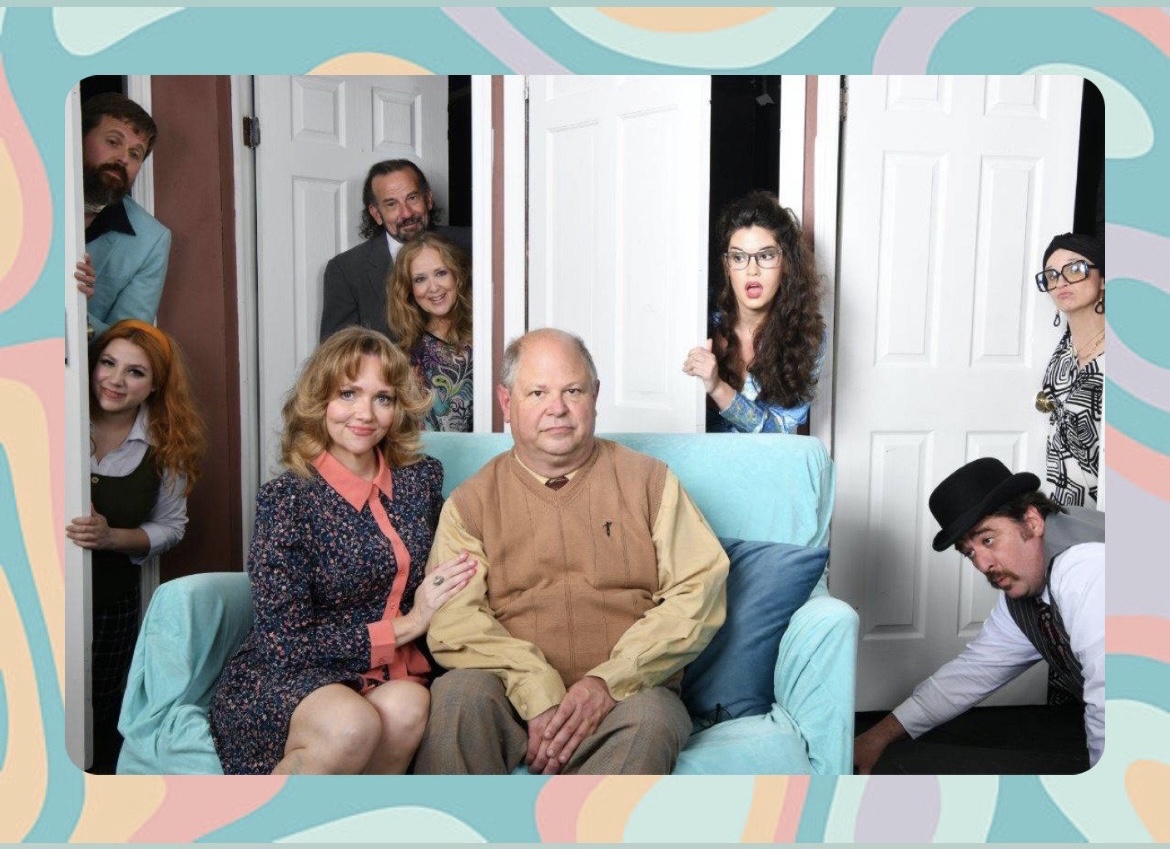
 RAPID FIRE WITH BETH HENDERSON, MOVE OVER MRS. MARKHAM’S MISS OLIVE HARRIET SMYTHE
 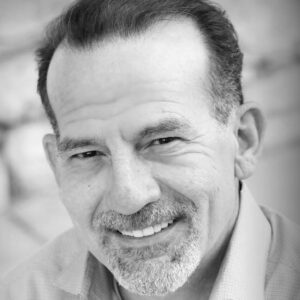 RAPID FIRE WITH CRAIG HARTLINE, MOVE OVER MRS. MARKHAM’S HENRY LODGE
 RAPID FIRE WITH LINDSEY PATRICK-WRIGHT, MOVE OVER MRS. MARKHAM’S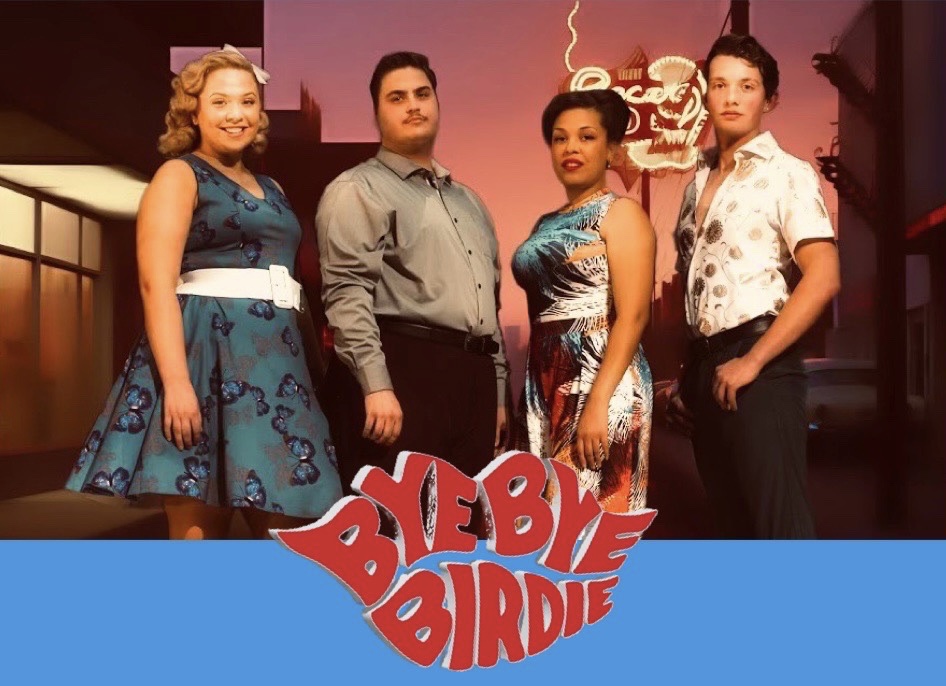
 RAPID FIRE WITH CAROLINE MONROE, KIM McAFEE IN BYE BYE BIRDIE
 RAPID FIRE WITH BAILEY DAUGHERTY, CONRAD BIRDIE IN BYE BYE BIRDIE
 RAPID FIRE WITH
 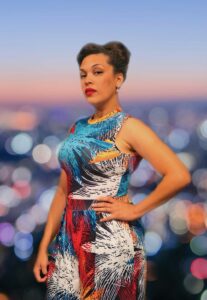 RAPID FIRE WITH LESLIE ROBERTS, ROSIE ALVAREZ IN BYE BYE BIRDIE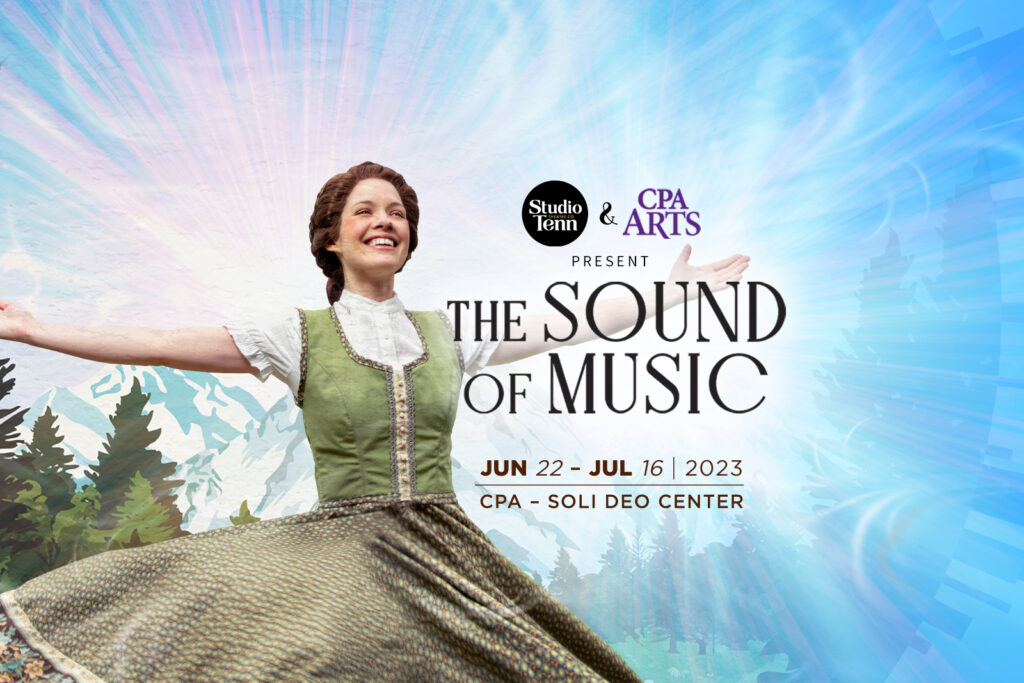
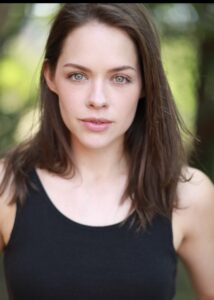 RAPID FIRE Q&A WITH LAURIE VELDHEER, MARIA IN THE SOUND OF MUSIC
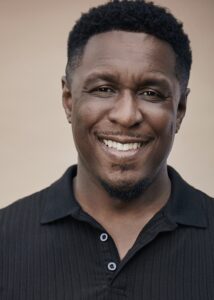 RAPID FIRE Q&A WITH JOHN-MARK McGAHA, CAPTAIN von TRAPP IN THE SOUND OF MUSIC
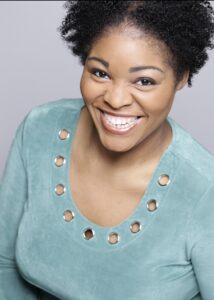 RAPID FIRE Q&A WITH JENNIFER WHITCOMB-OLIVA, SISTER BERTHE IN THE SOUND OF MUSIC
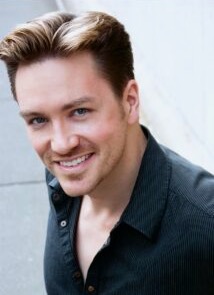 RAPID FIRE Q&A WITH BRIAN CHARLES ROONEY, MAX DETWEILER IN THE SOUND OF MUSIC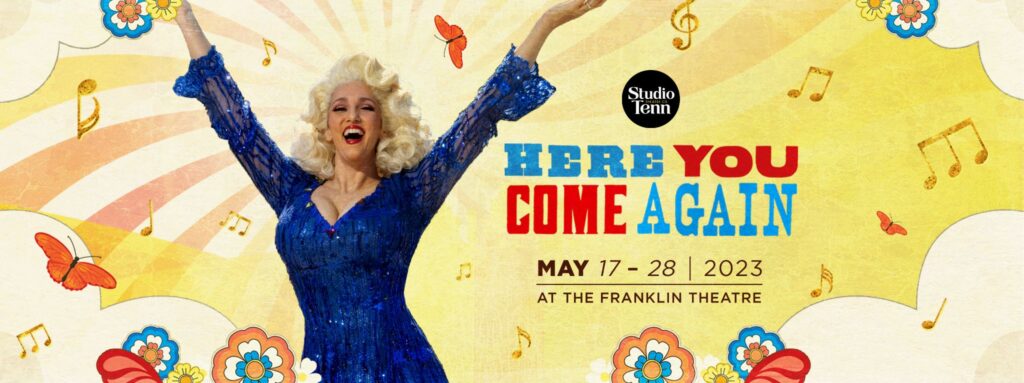
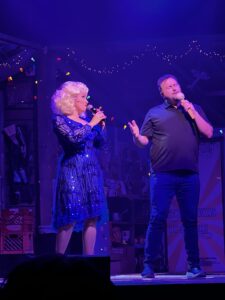 Further isolating Kevin, his parents are never seen in the play, and only his Mom’s voice is heard from off-stage from time to time. As the play begins, the audience gets their first glimpse at the show’s only set, the attic. Brilliantly created by Scenic Designer Anna Louizos with assistance from D. Craig M Napoliello, with lighting by Alessandra Docherty and assistant Isabella Gill-Gomez, the attic is easily recognized as both the family’s preferred storage area for seasonal decoration and Kevin’s former childhood playroom/teenage hangout. With pop culture relics from the far-distance 1980s, the attic set design is cleverly littered with things like a discarded GameBoy, an old Chineses Checkers boardgames and what appeared to be a single right Nike Air. But it’s the shrine to everyone’s favorite Country Music Songbird, Dolly Parton that’s most impressive…and I must admit relatable. I mean, switch all the Dolly posters, magazine pictures and photographs covering the walls for, say The Bionic Woman’s Lindsay Wagner, and you’d have my childhood bedroom.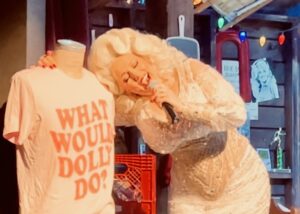
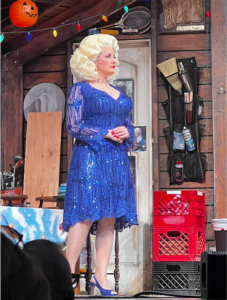 While most of the songs featured were written by Dolly, even the prolific singer/songwriter occasionally records tunes penned by others. Why’d You Come in Here Lookin Like That, Sing For the Common Man and the Dolly Parton/Kenny Rogers megahit, Islands in the Stream are all prefect placed and wonderfully sung. Interestingly, Islands, written by the Bee Gees, is followed by a funny, but very un-Dolly bit of snark courtesy Vilanch’s script.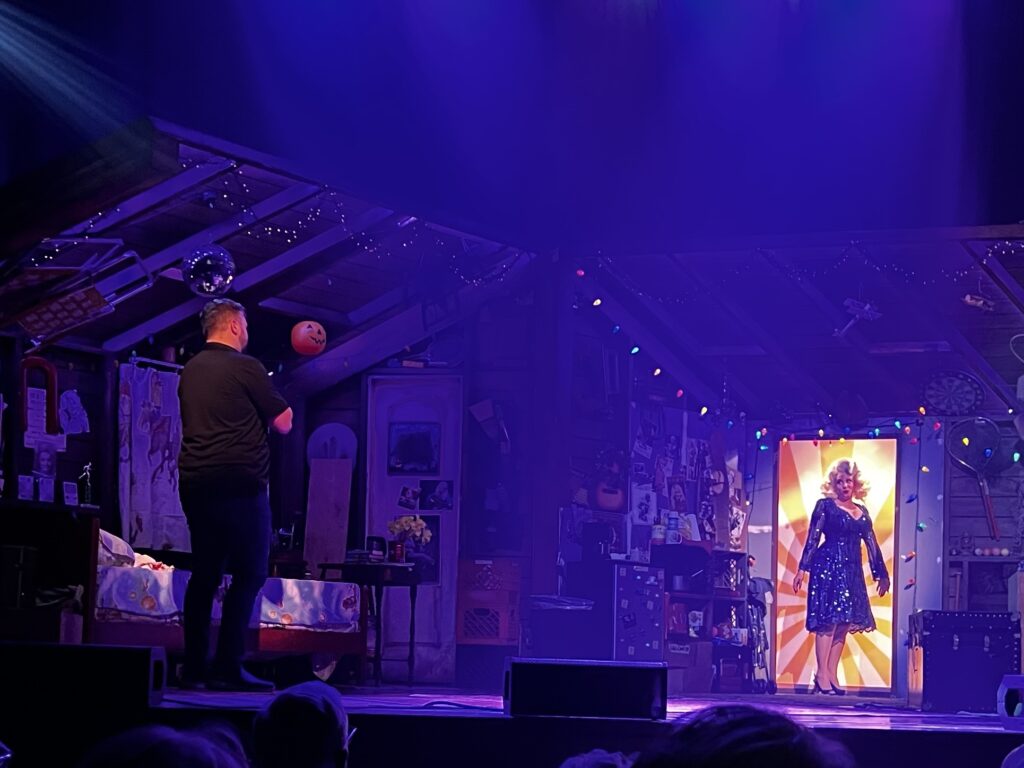
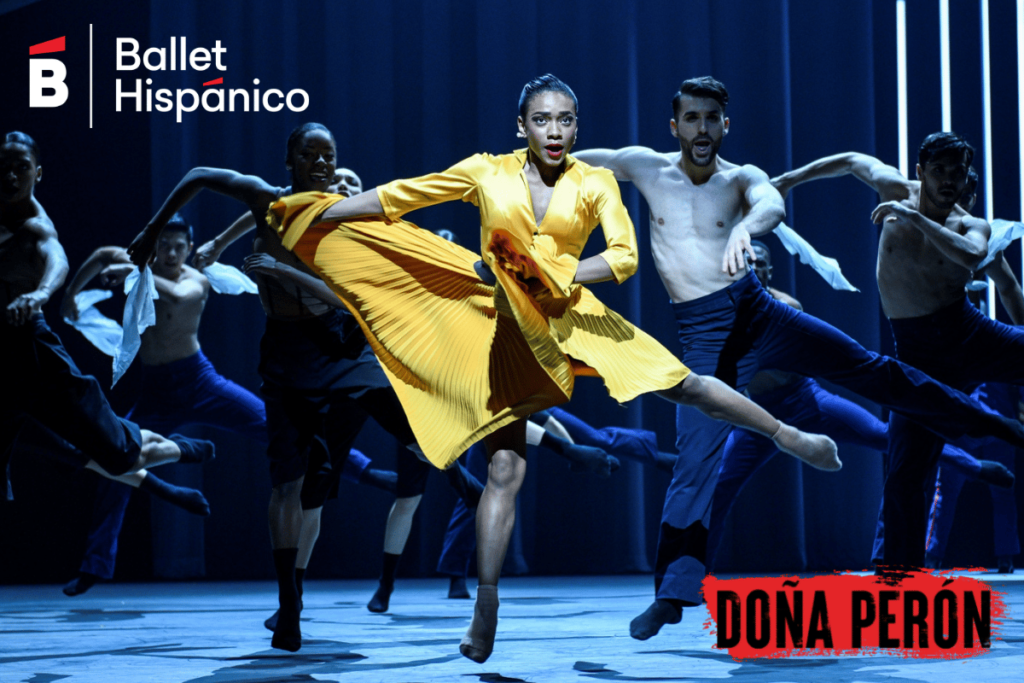
 RAPID FIRE Q&A WITH AMANDA DEL VALLE, EVITA in BALLET HISPÁNICO’s DOÑA PERÓN
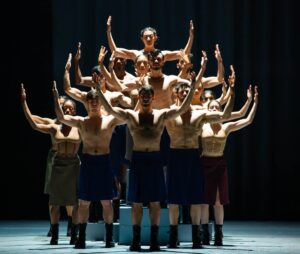 JHPENTERTAINMENT: Speaking of the creative team behind Doña Perón, costumer Mark Eric has created dozens of costumes for the show. Exactly how many costume changes do you have, and what are your favorite costumes among them?
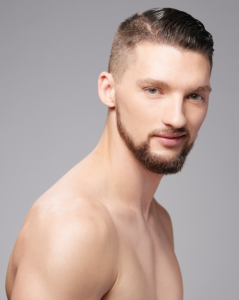 RAPID FIRE Q&A WITH CHRIS BLOOM, JUAN PERÓN in BALLET HISPÁNICO’s DOÑA PERÓN
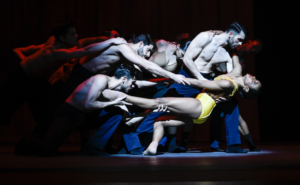 JHPENTERTAINMENT: For those who do get the chance to see Ballet Hispánico’s Doña Perón, whether via the PBS special, or live as the tour continues, what do you hope audiences take from the experience?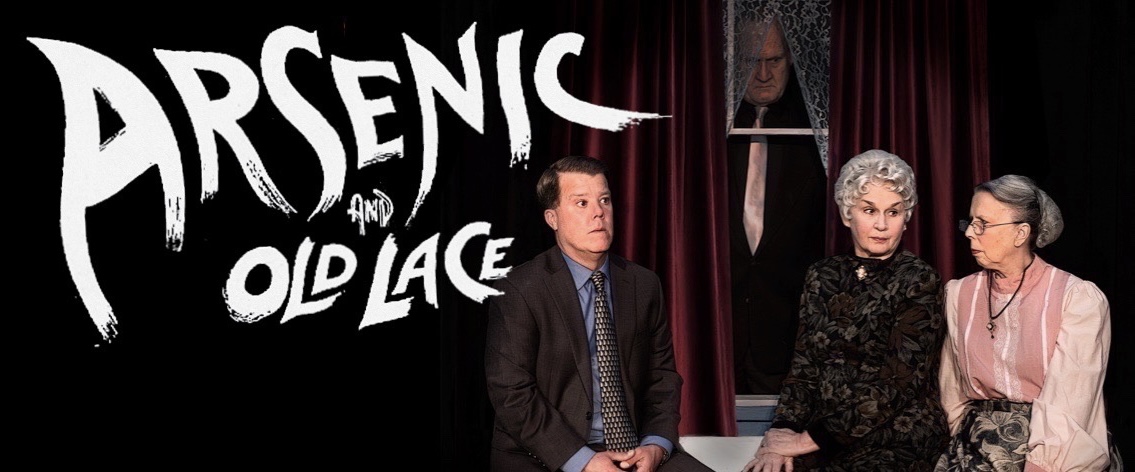
 RAPID FIRE WITH MATT SMITH, ARSENIC AND OLD LACE’s MORTIMER BREWSTER
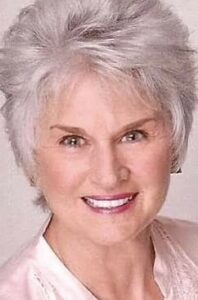 RAPID FIRE WITH LINDA SPEIR, ARSENIC AND OLD LACE’s ABBY BREWSTER
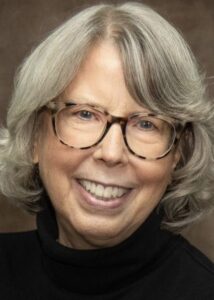 RAPID FIRE WITH ADELE AKIN, ARSENIC AND OLD LACE’s MARTHA BREWSTER
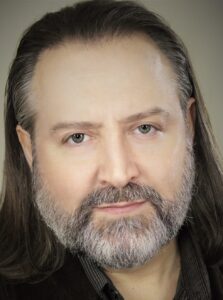 RAPID FIRE WITH BRAD MORGAN, ARSENIC AND OLD LACE’s TEDDY BREWSTER
 RAPID FIRE WITH THE CURIOUS INCIDENT’s NAT MCINTYRE
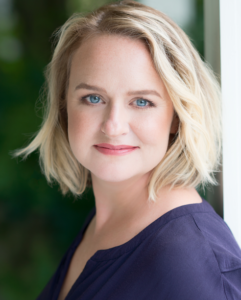 RAPID FIRE WITH THE CURIOUS INCIDENT’s LAUREN BERST
 RAPID FIRE WITH THE CURIOUS INCIDENT’s ERIC D. PASTO-CROSBY
 RAPID FIRE WITH THE CURIOUS INCIDENT’s JR ROBLE