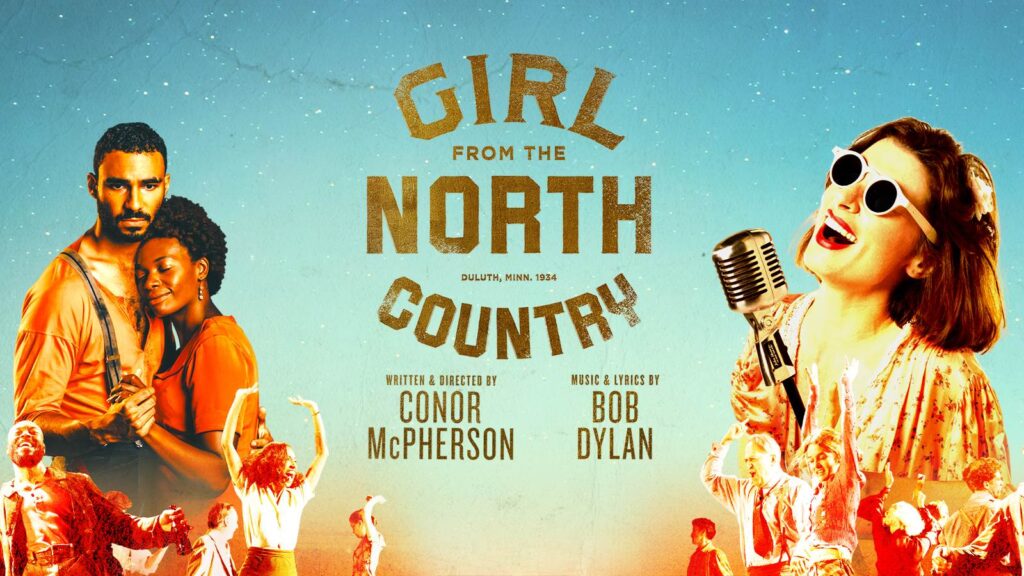
Girl From The North Country, written by Conor McPherson, and featuring nearly two dozen tunes penned by legendary singer/songwriter, Bob Dylan is a musical that takes place in midwest Duluth, Minnesota during the fall of 1934. While the show features Dylan’s music and is set in the musician’s hometown, it’s not a jukebox musical and certainly not a bio-musical. Instead, the plot introduces audiences to the Laine family, proprietors of a local boarding house that, like the rest of the country, has fallen on hard times. Among those taking up residence with the Laine family are a Preacher and a Boxer, played in the National Tour of Girl From The North Country by Jeremy Webb and Matt Manuel, respectively. As the tour cast and crew prepared for the show’s debut Nashville dates at TPAC’s Jackson Hall January 20-February 4, I recently had the chance to pose a few questions to Manuel and Webb for the latest installment of my recurring interview feature, Rapid Fire Q&A. What follows are those conversations.
——————————
 RAPID FIRE Q&A WITH GIRL FROM THE NORTH COUNTRY’s MATT MANUEL
JHPENTERTAINMENT: Girl From The North Country takes place in Depression Era Duluth, Minnesota in the fall of 1934 and centers ‘round the inhabitants and visitors of a run-down guest house. The national tour kicked off at The Orpheum (a theatre Dylan one owned), not terribly far from Duluth, which also happens to be Dylan’s birthplace. Was it surreal to open the tour in this way?
MATT MANUEL: It was VERY surreal to open the tour up this way. I can’t think of a better way to have opened up this tour. The audiences really didn’t disappoint. They were with us in every show. From the moment we opened our mouths to sing the first song, to the moment we took our bows. If anything, I feel a bit spoiled by that experience!
JHPENTERTAINMENT: In Girl From The North Country, you play Joe Scott, an ex-con/boxer. What more can you tell me about Joe?
MATT MANUEL: Joe was actually always a boxer! He had a promising boxing career until his wrongful arrest which caused him to lose everything. By the time you meet him in the boarding house, you see a man who is determined to rebuild his life. He stays to himself. He is incredibly respectful, but definitely not someone whose bad side you should ever end up on as audience members will see. There is also no coincidence that the softer side of Joe comes out in the presence of Marianne.
JHPENTERTAINMENT: When Joe shows up at the house, he’s traveling with a seemingly unlikely companion, the Reverend Marlowe, played by Jeremy Webb, who I’ll be chatting with as the second part of this Rapid Fire Q&A. What’s Jeremy like as a scene partner?
MATT MANUEL: Jeremy is one of the best humans in this business! On and off stage, we have a very close relationship. I can ask him advice or guidance on anything, and he will make time to sit with me. On stage, we have so much fun together playing off of each others acting choices. He is ever present and always ready for the curveballs we like to throw at each other. Offstage, we look out for each other and are very protective of each other, and when we hop on stage, we enjoy our very tennis-esc scenes where we volley our lines and physical choices back and forth to try and throw the other off. I could not have prayed to God for a better scene partner than the one I have been given in Jeremy Adonis Webb. Also, that is not his middle name. I just made it up!
JHPENTERTAINMENT: While doing a little digging prior to our conversation, I discovered you and I share a degree of separation….American Idol! I was an assistant to the coordinating producer during the first two seasons back in the day, while you were a contestant in 2013. Stick with me here…How did trying out for Idol prepare you for auditioning and landing later gigs like Broadway’s Ain’t Too Proud and your experience on tour with Motown the Musical?
MATT MANUEL: Wow! That is a cool degree of separation!!! American Idol actually helped me with my camera awareness as well as my mindfulness as a performer. There is so much more to being a performer than singing. A fun fact is I booked all three of those things in my hometown of Detroit at open calls. Playing David Ruffin in Ain’t Too Proud really made me put those things into practice. I had to learn how to be comfortable commanding a space and being front and center.
JHPENTERTAINMENT: Speaking of your previous experiences, the upcoming Nashville leg of Girl from the North Country won’t be the first time you’ve appeared onstage in Music City. You were one of the stand-out performances just two short years ago as Dustin, in the premiere presentation of May We All, which had it’s National debut at TPAC. What was your favorite aspect of that experience? AND…now that you’re familiar with Nashville, are there any things you’ll insist your fellow cast mates check out while in Music City?
MATT MANUEL: My favorite aspect of doing May We All was truly making friends. We had such a great cast! We enjoyed building that world together through our story telling and to this day, our group text thread is still active. Now that I am going back, I will definitely be getting some hot chicken and I encourage my cast mates to do the same! I may take a trip up to carter vintage and play some guitar as well!
 RAPID FIRE Q&A WITH GIRL FROM THE NORTH COUNTRY’s JEREMY WEBB
JHPENTERTAINMENT: In researching to chat with you, I read one review of a previous production of Girl From The North Country that describes the character you play, the Reverend Marlowe as “non-practicing’. That made me laugh. Is that a fair assessment of the character’s current religious conviction? AND…what more chan you tell me about the Reverend?
JEREMY WEBB: Thank you so much for having me and for asking to do this interview about Girl From The North Country by Conor McPherson and Bob Dylan. I love your question about the character I play, The Reverend James Marlowe and the assessment suggested above! I like to think about James as a person who is doing what he must do in order to survive. We are in 1934, it’s the height of The Depression and there is no social safety net. James has had a tough life and selling Bibles is a transactional means to an end. And as I see him, he also has an authentic connection to the mystic and to spirituality. And while I agree that he is maybe not the most devout man of the cloth you have ever met, we have to remember the dire and strained circumstances of the play.
JHPENTERTAINMENT: Girl From The North Country, at least in story and character, seems to be getting a bit of comparison Thornton Wilder’s Our Town…how do you describe the play yourself?
JEREMY WEBB: It’s the week before Thanksgiving at a boarding house in Duluth, Minnesota and a group of restless Americans gather by necessity and circumstance to share community, food, warmth and shelter. No one wants to be there, but everyone has a strong need that connects them to the boarding house. What transpires is a tale of love, jealousy, graft, mysticism and at its core, a perfect miracle.
JHPENTERTAINMENT: I have a confession to make…generally speaking, I’m not exactly a huge Dylan fan. I KNOW…I KNOW…but, Will I be after seeing Girl From The North Country?
JEREMY WEBB: Of course you will! He is America’s troubadour! His lyrics won him a Nobel Prize IN LITERATURE! What a treat to get to experience Dylan’s remarkable gift for storytelling and his gut-punch lyrics in a fresh setting and sung by this astonishing company. Especially with these Tony Award-winning orchestrations and arrangements sung by Broadway’s Best! Wait until Matt Manuel sing his heart out and watch him act his face off! It is as if Dylan (who is all about reinvention anyway) has been reborn through this material.
JHPENTERTAINMENT: If you could adopt one aspect of the Reverend’s personality and character into your own life, what would it be and why?
JEREMY WEBB: James’ badass hairstyle is key for me. I started out as a young actor in Drama School as very method-oriented and have become much more “outside in” as I have progressed through the many roles I have played in my career. When I settled into James’ badass hairstyle, something clicked for me. There is something telling and unique about the person who never feels the need to run a comb through his hair (we all know one!). So if I had to say, I’d say James’ badass hairstyle. It’s freeing! Less combs! More tangles!
JHPENTERTAINMENT: I frequently like to end these chat with this…what do you hope audiences take away with them after having seen Girl From The North Country?
JEREMY WEBB: I know that this musical provokes conversation. On the way home from the theatre and the next morning as well. Don’t try to “get” it all: there is a lot coming at you from this boarding house… sit with us for 2 + hours and feel Dylan stir your soul. And then go away having one of those juicy conversations with your seat mate or family member that only a brilliant piece of theatre can inspire!
Thanks for the great questions.
See you at the theatre!
——————————
Indeed they will see me there, as I look forward to attending Opening Night of Girl From The North Country’s Nashville dates. Girl From the North Country plays TPAC’s Jackson Hall Tuesday, January 30 through Sunday, February 4 with evening performances Tuesday-Sunday and additional matinees both Saturday and Sunday afternoon. CLICK HERE for tickets or more information.
Can’t make it to Nashville for these dates? Catch the show as the National Tour continues with upcoming stops in Greenville, Chicago, Philadelphia, Boston, Tampa and more. Be sure and check out Girl From The North Country’s Official Site at North Country Tour, or follow them on Facebook, X, Instagram and YouTube.
Following Girl From the North Country , TPAC‘s HCA/TriStar Broadway at TPAC season continues with TINA-the Tina Turner Musical, February 13-18. CLICK HERE for tickets or more information. Be sure to check out TPAC online and on socials by clicking any of the following: TPAC.org, TPAC on Instagram, TPAC on Facebook, TPAC on Twitter and TPAC on YouTube.
As always, if you wanna follow JHPEntertainment to find out who I’m chatting with for my next Rapid Fire Q&A, or for my take on the latest local and national theatre, music and movie offerings, find us at JHPEntertainment on Facebook, JHPEntertainment on Instagram and JHPEntertainment on Twitter.
Got an event or show we should know about, drop us a line at the Contact tab. Till then, #GoSeeTheShow!
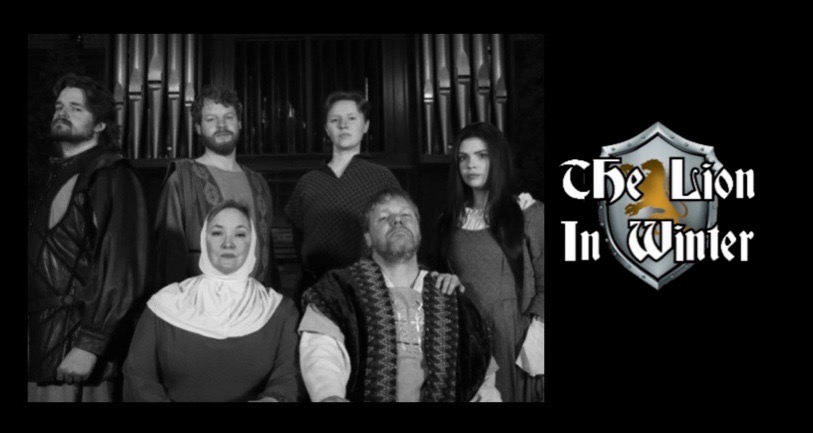
 RAPID FIRE WITH THE LION IN WINTER DIRECTOR, CLAY HILLWIG
 RAPID FIRE WITH JACK E. CHAMBERS, HENRY II IN THE LION IN WINTER
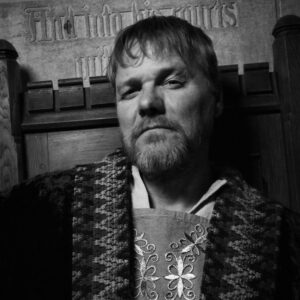 JHPENTERTAINMENT: As the central patriarch, you share the stage with Kay Ayers as Eleanor, Henry’s Queen, as well as Elizabeth Burrow, Henry’s rumored mistress. What’s been it been like sharing the stage with each of these actresses?
 RAPID FIRE WITH KAY AYERS, ELEANOR IN THE LION IN WINTER
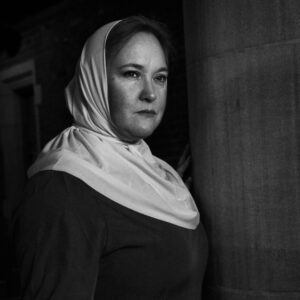 JHPENTERTAINMENT: While you’ve shared the stage with Clay Hillwig in the past, this marks the first time he’s directed you in a show. During the rehearsal process, what is it about Clay’s directorial style that you admire most?
 RAPID FIRE WITH ELIZABETH BURROW, AlAIS IN THE LION IN WINTER
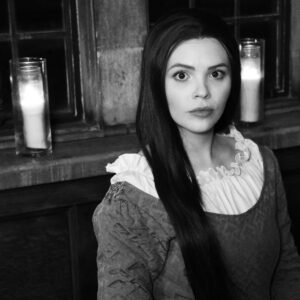 JHPENTERTAINMENT: In addition to your on-stage role, you’ve also been part of the technical crew for The Lion in Winter, as scenic painter. What can you tell me about the set?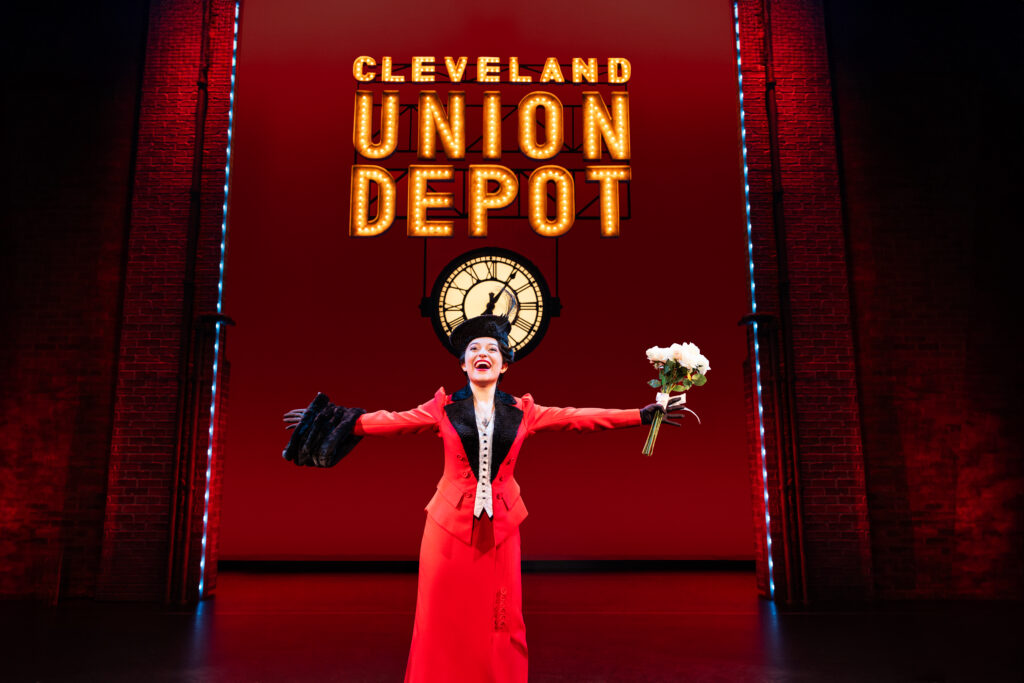
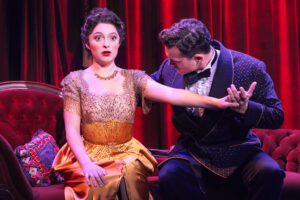 From the moment Katerina McCrimmon takes the stage, she IS Fanny Brice. She’s got the period-authentic New York dialect, the exaggerated facial expressions, but most of all, she’s got the voice. Ok, so the voice might be more what audiences expect thanks to the aforementioned Streisand portrayal, but I’m here to tell you McCrimmon makes the character her own while carefully maneuvering through, and well beyond what could easily be brushed off as an impression. Throughout the show, including more familiar territory of musical moments like I’m the Greatest Star, Don’t Rain on My Parade and People, and my personal favorite, His Love Makes Me Beautiful, McCrimmon vocal range, strength and ability prove time and time again she’s the perfect powerhouse to introduce Fanny Brice to a whole new generation of musical theatre fans.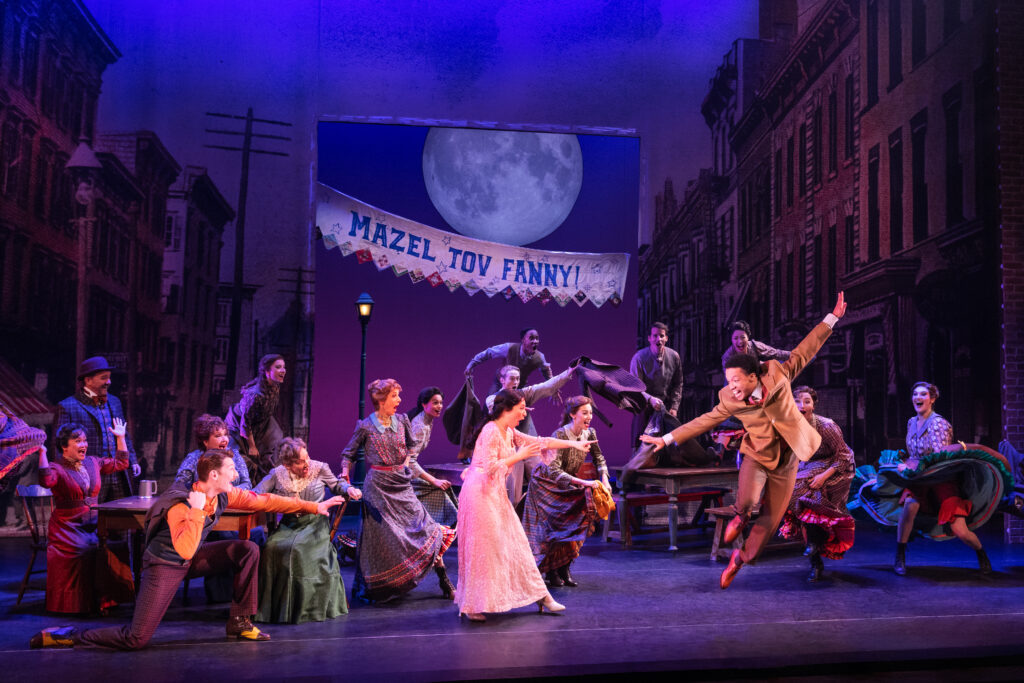
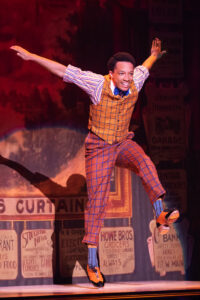 Izaiah Montague Harris plays the always in-step and dependable Eddie Ryan, a dancer/choreographer friend of Fanny’s who’s always there to help her with her career and pick up the pieces when Nicky is out of step. When I say Harris’ Eddie is in-step, I mean it. One of the best non-Fanny-centric moments of the show features Harris in a tap-tactic dance sequence. Which reminds me, kudos to the show’s costume designer, Susan Hilferty. Yes, all of Fanny’s period-perfect costumes are fabulous, but it was during Harris’ tap number that I notice a wonderfully clever costuming detail. Hiferty has sewn the occasional rhinestone throughout the pant legs of Harris costume, which catch the light of his fancy footwork and draw the eye throughout the dancer’s entire body, allowing those of us who picked up on this seemingly random detail the joy of watching the full mechanics, precision and skill of the dance.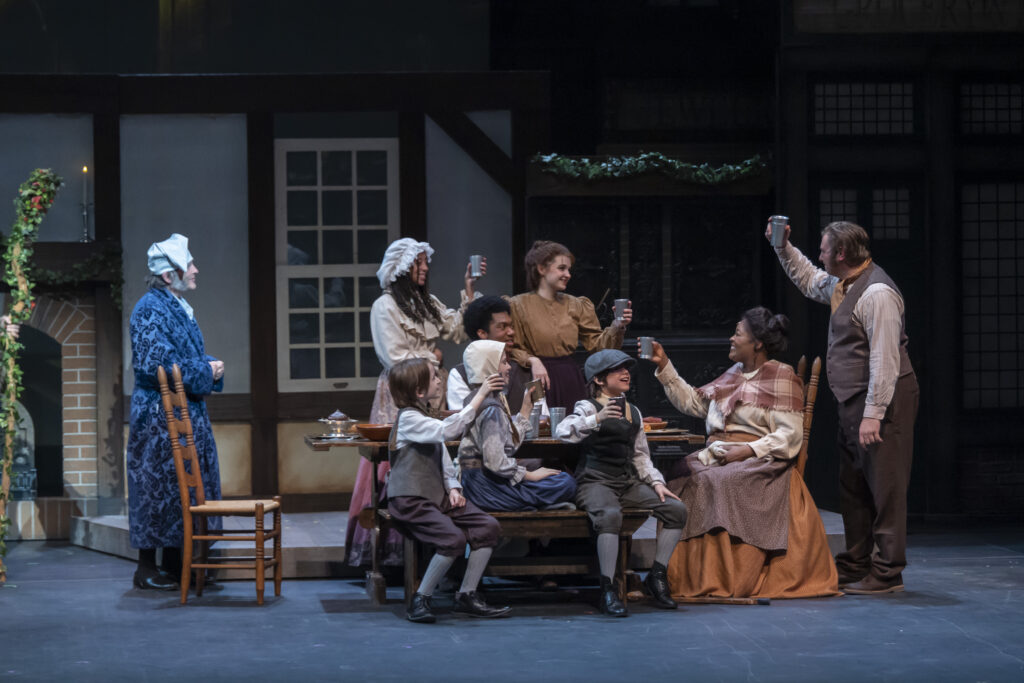
 Speaking of Scrooge, Matthew Carlton is simply brilliant in the role, and it’s a bit of a full-circle moment! His bio reveals his first foray into A Christmas Carol at The Rep came in 1990 when he was cast as Scrooge’s young nephew, Fred. Over the years, Carlton says he’s played a dozen or more characters in eleven different production. I’m here to tell you though, he better free up his winter calendar going forward because it’s official, Matthew Carlton now ranks among my favorites to have ever taken on the role. He’s in good company, too, considering Sir Michael Caine’s Scrooge from The Muppet Christmas Carol tops the list! What’s interesting about Carlton’s performance is, it’s all-encompassing. Yes, he can mean-mug with the best of them, but the scene that struck me most, and may or may not have made my eyes sweat takes place during a party when Scrooge is transported back in time by Kris Sidberry’s beautiful Ghost of Christmas Past. In the scene, Carlton’s Scrooge sees his beloved Belle (Ivory Bodnar) enjoying the merriment of a dance with fellow holiday revelers. Caught up in the moment, but forgetting that he’s only a shadow presence, Scrooge attempts to join in the fun, getting caught at one point in the center of a quartet of dancers. Of course unseen because he isn’t actually there in his present form, he’s ignored as the dancers continue moving about without him. Within just a few minutes as this scene plays out, Carlton, under the keen direction of Brewer, runs the gamut of emotion from excitement to regret and sadness. Being a self-confessed Scrooge myself, I was a puddle.
 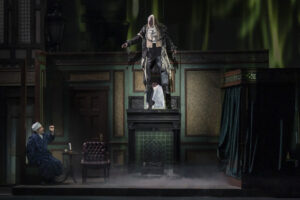 You know you’re a great actor when just a projection of your face can elicit an internal squee. That’s the exact reaction when another longtime Nashville favorite, Brian Webb Russell’s face appeared on Scrooge’s door as the “dead to begin with” Jacob Marley. In an early scene, when Marley visits Scrooge to warn him of the coming visitors, Russell’s Marley rattles his chains as he floats about the room. More fanciful than frightening, a joy to watch. He’s equally enjoyable when paired with Deb Meeks (making her Rep debut) as a rather boisterous party-goer who’s husband (Russell) is partaking of a few too many Christmas ‘spirits’ of his own. These two need to be paired together more!
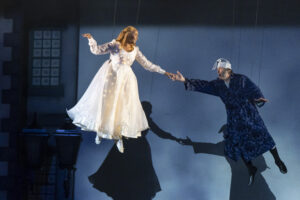 Can’t talk about A Christmas Carol without talking about the Spirits. Mentioned above, Kris Sidberry, making her Nashville Rep debut, is simply magical as Ghost of Christmas Past. Delightful, sweet and fun…all the things we think of most when we remember the past are personified in Sidberry’s performance. She doesn’t just shine in her performance, she sparkles. In part, thanks to Costumer Designer, Melissa Durmon’s literally and figuratively glowing gown!
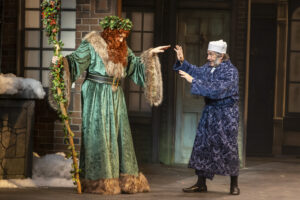 Brian Charles Rooney, seen last holiday season as Buddy the Elf in Nashville Rep’s Elf, is larger than life as Ghost of Christmas Present, and what a present his performance is. Towering above Carlton’s Scrooge (did I see light-up disco platforms under Rooney’s velvet robe?) Rooney’s Ghost of Christmas Present is cheeky, loud and bossy. Everything you could wish for in a ghost guide. Again, kudos to Durmon, and added kudos to her and her wig department team for transforming Rooney into an almost unrecognizable bacchanalian party god with flowing ginger locks and beard. Didn’t think I was into scruffy gingers, but you never know. As mentioned previously, Rooney is among those featured throughout the action as a caroler. I have it on good authority he had been dealing with a bit of laryngitis during the opening days of the show. All I know is, if that’s Rooney with laryngitis, belting out and hitting those unfathomable soprano-high notes, the rest of the run the audiences were in for a treat.
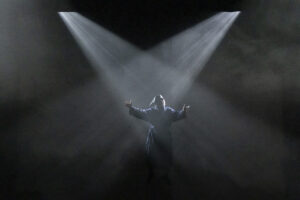
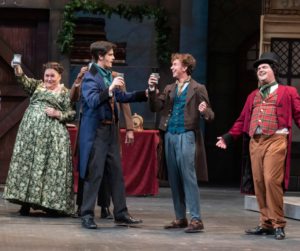 Round out the ghostly trio is Ben Friesen as Ghost of Christmas Future. Even though the show is about to enter its final week at the time of this review being posted, I’m a staunch believer that spoilers do just that…they spoil aspects of shows that are meant to surprise and entertain. To that end, Friesen’s Ghost of Christmas Future definitely delivers. Visually hauntingly brilliant and looming large, Friesen’s appearance is definitely a powerful one. Suffice it to say, his performances a Ghost of Christmas Future would no doubt make Jim Henson proud..and that’s as much of a spoiler as you’ll get from me. Not to fret though, he’s also featured throughout the show, most notably as Dick Wilkins, a friend and colleague of younger Scrooge.
 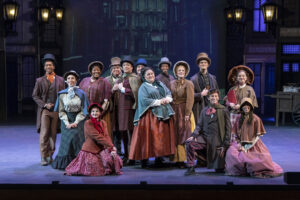 The entire cast is filled with great supporting performances. Mention should be made of Max Fleischhacker as Scrooge’s Nephew Fred, Ethan H. Jones as Mr. Blakeley, Abby Hopper as Alice Cratchit, Alex Hillaker as Henry Cratchit, David Long III as Peter Cratchit, Shelby Talbert as Martha Cratchit, Elle Wesley as Belinda Cratchit, Caroline Henry as Alice Cratchit and Emily Hooper and David Matthew Clark (on alternate nights) each sharing the role as Tiny Tim.
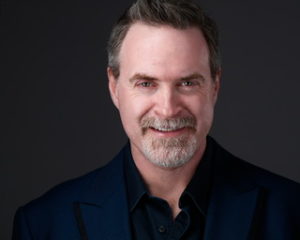 RAPID FIRE Q&A WITH IT’s A WONDERFUL LIFE’s GEOFF DAVIN
 RAPID FIRE Q&A WITH IT’s A WONDERFUL LIFE’s MARIAH PARRIS
 RAPID FIRE Q&A WITH IT’s A WONDERFUL LIFE’s CALEB SHORE
 RAPID FIRE Q&A WITH IT’s A WONDERFUL LIFE’s GEROLD OLIVER

 RAPID FIRE Q&A WITH A CHRISTMAS CAROL DIRECTOR MICAH-SHANE BREWER
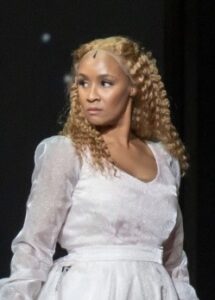 RAPID FIRE Q&A WITH A CHRISTMAS CAROL’s GHOST OF CHRISTMAS PAST, KRIS SIDBERRY
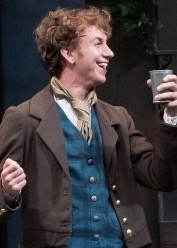 RAPID FIRE Q&A WITH A CHRISTMAS CAROL’s GHOST OF CHRISTMAS FUTURE, BEN FRIESEN
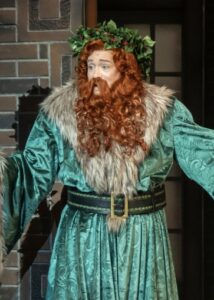 RAPID FIRE Q&A WITH A CHRISTMAS CAROL’s GHOST OF CHRISTMAS PRESENT, BRIAN CHARLES ROONEY
 RAPID FIRE Q&A WITH A TUNA CHRISTMAS DIRECTOR, MEMORY STRONG-SMITH
 RAPID FIRE Q&A WITH A TUNA CHRISTMAS STAGE MANAGER/SET DESIGNER/GRUMPY ELF, ERIC CRAWFORD
 RAPID FIRE Q&A WITH A TUNA CHRISTMAS STAR, MATTHEW N. SMITH
 RAPID FIRE Q&A WITH A TUNA CHRISTMAS STAR, DANIEL VINCENT
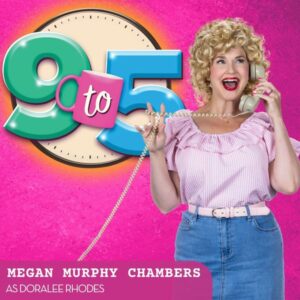 Rapid Fire with Megan Murphy Chambers, Doralee in 9 to 5
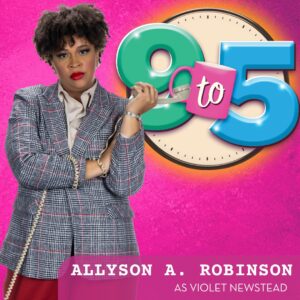 Rapid Fire with Allyson A. Robinson, Violet in 9 to 5
 Rapid Fire with Mariah Parris, Judy in 9 to 5
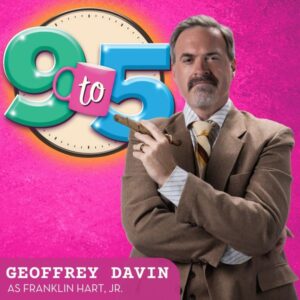 Rapid Fire with Geoff Davin, Mr. Hart in 9 to 5
 Rapid Fire with Billy Jenkins, Brother Boy in Theatre of Gadsden’s Sordid Lives
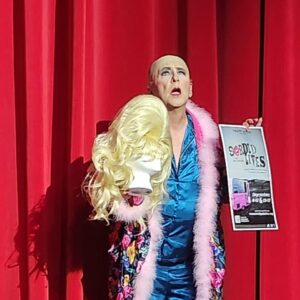 JHPENTERTAINMENT: Aside from a smile on their faces and side-splitting laughter, what theme, idea or thought do you hope audiences take away after seeing Theatre of Gadsden’s Sordid Lives?
 JHPENTERTAINMENT: I understand this is your first time doing a show with Theatre of Gadsden. How much fun are you having so far?
 Rapid Fire with Joy Tilley Perryman, Noleta Nethercott in Theatre of Gadsden’s Sordid Lives
 Rapid Fire Questions for Breonna Parker, The Sugar Bean Sisters’ Videllia
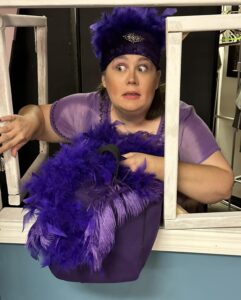 JHPENTERTAINMENT: Videllia has secrets. Are you good secret keeper or do you just need to tell somebody when you know some juicy tidbits?
 Rapid Fire Questions for Ann Street-Kavanagh, The Sugar Bean Sisters’ Faye Nettles
 JHPENTERTAINMENT:
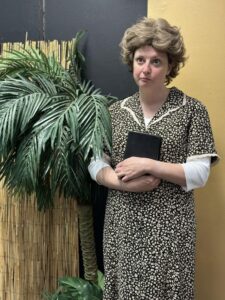
  Rapid Fire Questions for Abby Waddoups, The Sugar Bean Sisters’ Willie Mae Nettles
 JHPENTERTAINMENT:
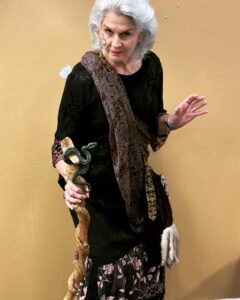
  Rapid Fire Questions for Linda Speir, The Sugar Bean Sisters’ Reptile Woman
 JHPENTERTAINMENT: