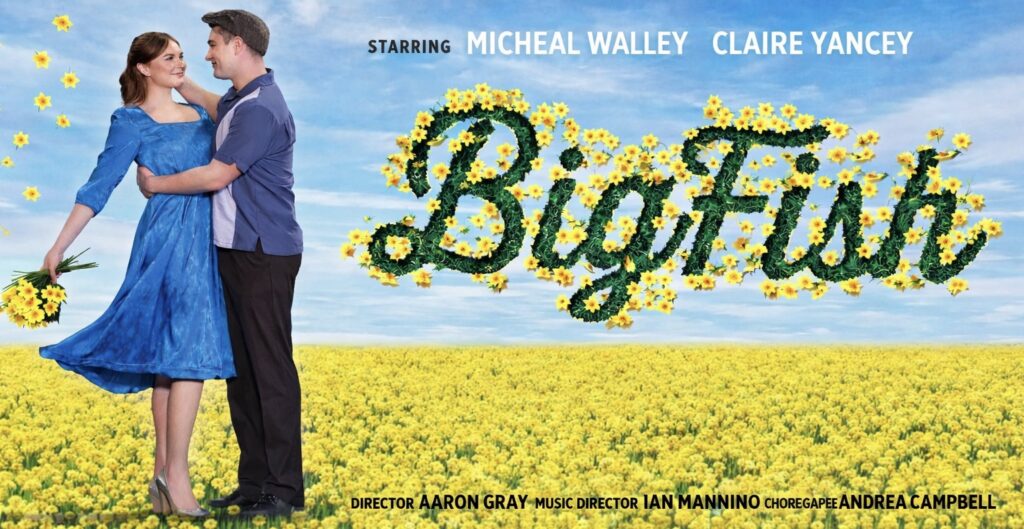
Few musicals capture the space between truth and imagination quite like BIG FISH, the 2014 Drama Desk–nominated musical by Andrew Lippa with a book by John August. Based on Daniel Wallace’s novel Big Fish: A Novel of Mythic Proportions and the 2003 film written by John August and directed by Tim Burton, the story explores the myths we create, the legacies we leave behind, and the love that binds families together.
Now swimming onto the stage at The Keeton beginning Friday, February 6, Big Fish blends soaring music, theatrical spectacle, and deeply human storytelling as it follows Edward Bloom — a man whose life is told through towering tales — and his son Will, who must learn how to listen beyond facts to understand the heart of his father’s stories. JHPENTERTAINMENT sat down with the artists bringing this mythic journey to life for a Rapid Fire 20Q conversation about imagination, family, and the power of storytelling.
RAPID FIRE 20Q WITH CAST AND DIRECTOR OF THE KEETON’s BIG FISH
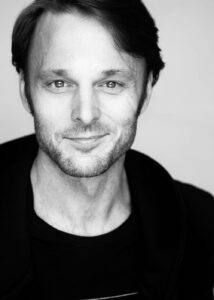
 RAPID FIRE WITH MICHAEL WALLEY, EDWARD BLOOM IN BIG FISH
JHPENTERTAINMENT: Edward Bloom is a man of myth, magic, and tall tales—what excited you most about stepping into his larger-than-life shoes?
MICHEAL WALLEY: The music of BIG FISH is absolutely gorgeous. This past fall, I was driving when Fight the Dragons came on the SiriusXM Broadway channel, and it completely stopped me in my tracks. I already knew BIG FISH was in The Keeton’s season, and I made plans to audition immediately. I’d describe myself as more of an “actor who sings” than a traditional vocalist, and Edward’s music stretches across haunting ballads, twangy pop, and everything in between. Bringing his character to life through that musical range has been both thrilling and demanding. Truthfully, I feel like I’ve been training for a marathon. My hope is that through every note, Edward’s larger-than-life heart and spirit come through loud and clear.
JHPENTERTAINMENT: A quick perusal of your theatre credits reveals your previous Keeton roles as Singin’ in the Rain’s Cosmo Brown and White Christmas’ Phil Davis share the common thread of being the comic foil to those show’s leading men—what sets Edward apart from roles you’ve played before?
MICHEAL WALLEY: At the end of our run of Singin’ in the Rain, my good friend Matthew Roberts, who played Don Lockwood, said something like, “I think you need the chance to play a leading man with some substance.” While I absolutely loved playing comic sidekicks like Phil and Cosmo (and I’d happily play either role again! Hint hint to any theatre company who needs a comic-dancer-goofball), Edward’s journey is overflowing with depth and meaning. I still get the chance to make ’em laugh, but this time I also get to take The Keeton audience on a much deeper emotional journey. Truly, I’ve never played a character anything like Edward.
JHPENTERTAINMENT: Edward’s stories often say more about love than facts. What do you think Edward is really trying to pass on?
MICHEAL WALLEY: Without giving too much away, a character near the end of the show realizes that Edward’s tall tales were always meant to inspire. I grew up in a small town in Mississippi, much like Edward’s Alabama hometown, and I always had this sense that there was something bigger out there. I wasn’t satisfied unless I was chasing it, and even now, in my 30s, that feeling hasn’t gone away. Edward is the same because he’s always chasing the next big dream, and his stories become a way to invite others into that sense of possibility. Facts may fade (and we live in 2026, does anyone really care about facts?), but inspiration is what lasts.
JHPENTERTAINMENT: As a writer, puppeteer, and voiceover artist, how have your many creative hats informed your approach to this role?
MICHEAL WALLEY: This role has flexed creative muscles I didn’t even know I had. I get to play Edward at multiple stages of his life, moving from wide-eyed teenage heartthrob to cranky old man. Jumping between different voices, physicality, and energy levels is something all my creative side-quests have really prepared me for. It also helped me better understand what John August was trying to convey. Edward evolves throughout his life, but his spirit stays consistent even as his body and circumstances change.
JHPENTERTAINMENT: If Edward Bloom were telling your life story, what detail would he absolutely exaggerate?
MICHEAL WALLEY: First of all, I’m 100% positive Edward would describe me as six-foot tall, wildly muscular, rich enough to buy a tall-and-skinny in 12 South, and effortlessly hitting every high note in Andrew Lippa’s score. But for real, I like to think he’d tell the story of a small-town Mississippi boy who loved theatre, set it aside during college and early adulthood to focus on what mattered, and then realized in his late 20s that his dreams and passions really mattered too. He’d talk about Micheal jumping into the Nashville theatre scene, making meaningful art, building lasting relationships, and getting to tell stories that truly matter, like Edward Bloom’s.
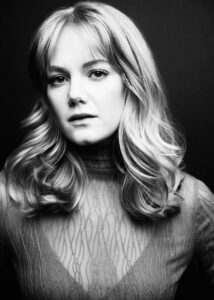
 RAPID FIRE WITH CLAIRE YANCEY, SANDRA BLOOM IN BIG FISH
JHPENTERTAINMENT: This marks your Keeton debut—what made Big Fish the perfect first dive into this community?
CLAIRE YANCEY: The Keeton has been such a positive space from day one. Even at auditions, I felt immediately welcomed and comfortable, and it was clear how much heart and dedication everyone brings to make this not only a great production but a great experience for everyone involved. I feel deeply connected to this cast and genuinely look forward to coming to the Keeton for every rehearsal. This community has welcomed me with open arms, and I could not have asked for a better first show at this theatre.
JHPENTERTAINMENT: With a background in classical piano and voice, how does Lippa’s score speak to you as a musician?
CLAIRE YANCEY: As a musician, learning Lippa’s score has been one of my favorite parts of this process. There is something really special about working through the more intricate and challenging moments of the music together as a cast and watching it all click. Hearing songs you have listened to countless times come to life in the room with the people around you is incredibly satisfying. I love the rich harmonies and the wide range of musical styles throughout the show, which makes the score both exciting and deeply rewarding to perform.
JHPENTERTAINMENT: What’s one moment in the show where you feel Sandra’s heart most clearly?
CLAIRE YANCEY: This may feel like an obvious answer, but it is definitely during I Don’t Need a Roof. This is the moment where Sandra is seen most clearly and vulnerably. Throughout the show, she works hard to be strong for Edward and their family, often hiding how deeply his illness is affecting her.
JHPENTERTAINMENT: Sandra’s love story spans a lifetime—what do you find most beautiful about her journey?
CLAIRE YANCEY: From the very first moment they see each other, there is something magical about the way Sandra and Edward recognize something special in one another. Throughout the show, you can see that their relationship never loses its youthful spirit, even as the magic and adventure settle into the reality of growing old together. They remain deeply in love, still carrying that sense of playfulness and joy with each other.
JHPENTERTAINMENT: Sandra is the emotional anchor of Edward’s wild imagination. How do you ground her while still letting the magic exist?
CLAIRE YANCEY: I think Sandra is grounded because she is fully present and deeply attentive to the people she loves. She allows Edward, with his wild imagination, and Will, who is more grounded, to be fully themselves. Sandra has a beautiful ability to meet people exactly where they are and offer them steady love and support. While she still carries that same sense of wonder and adventure that connects her to Edward, she is also able to see the world clearly and hold space for both perspectives.
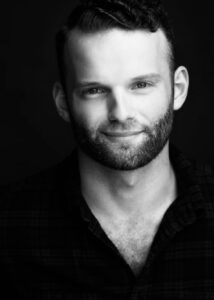
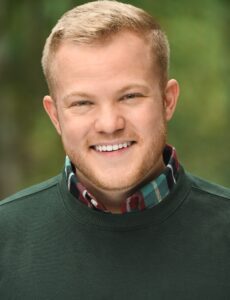 RAPID FIRE WITH JACOB HINNEN, WILL BLOOM IN BIG FISH
JHPENTERTAINMENT: Will Bloom is caught between frustration and wonder—what’s been the biggest challenge in telling his story?
JACOB HINNEN: The biggest challenge has been living in the tension between frustration and hope, especially as Will wrestles with what it means to be a father himself. He’s demanding truth from Edward, but underneath that is a deep need to understand the man behind the stories before he becomes a father himself. That tension drives every interaction. Hope is always present, but it’s tested, stretched, and reshaped as Will tries to reconcile who his father is with who he needs to be.
JHPENTERTAINMENT: You’ve played romantic leads and comedic roles—how does Will stretch you differently as a performer?
JACOB HINNEN: Playing Will stretches me differently because his confidence is paired with constant questioning. Unlike roles where the character’s path is clear or emotions are outwardly expressed, Will is always wrestling with what it means to be a son and a future father. I’ve had to channel that drive, balancing certainty with curiosity, so the audience can feel both his boldness and the weight of his internal journey.
JHPENTERTAINMENT: The father–son relationship is the emotional spine of BIG FISH. What has portraying Will taught you about listening?
JACOB HINNEN: Will has taught me that listening isn’t just about extracting answers and simply responding; it’s about recognizing intention. Edward is telling the truth in his own way, and Will has to learn that fatherhood isn’t always taught through facts, but through meaning. Playing this role has reminded me that listening sometimes means setting aside your expectations long enough to hear what someone is really trying to convey.
JHPENTERTAINMENT: This performance is dedicated to your dad. How does that personal connection shape the way you step onstage each night?
JACOB HINNEN: My dad always believed in me, even when we didn’t fully understand each other. I carry his presence with me onstage, feeling the push and pull of tension, hope, and love in every moment. It’s shaped how I tell this story: a story of love conquering death, of listening to understand rather than listening to simply respond, and of never giving up hope. Every night, stepping into Will’s shoes feels like honoring him while exploring what it truly means to be a son and eventually, a father.
JHPENTERTAINMENT: If Will could rewrite one of Edward’s stories, which moment would he finally see differently?
JACOB HINNEN: Will wouldn’t change the events themselves; he’d change the way he sees them. He’d recognize that Edward’s stories weren’t just embellishments, but expressions of love, courage, adventure and guidance. They were a father’s way of teaching him how to live fully, love boldly, and carry hope even in uncertainty.
 RAPID FIRE WITH AARON GRAY, DIRECTOR OF BIG FISH
JHPENTERTAINMENT: What was the very first image or moment from BIG FISH that made you say, “I have to direct this show”?
BIG FISH opens at The Keeton on Friday, February 6 and continues through Sunday, February 22. Thursday performances are show only with Doors at 6:30pm and Show at 7pm. Friday & Saturday Doors at 5:45pm/Dinner at 6pm and Show at 7pm. Sunday matinee Doors at 12:45pm/Meal at 1pm and Show at 2pm. Show Only Tickets: $30.00 (Thursday performances), Adult Dinner and Show: $40.00, Child Dinner and Show: $35.00. CLICK HERE for tickets.
Following BIG FISH, The Keeton will present The Play That Goes Wrong with performances April 10-26. So you don’t miss out on upcoming shows at The Keeton Dinner Theatre, follow them on Facebook, X and Instagram.
Interested in coverage for your latest entertaining endeavor? Click the contact page and drop me a note. You can also follow JHP Entertainment on Instagram and Facebook. In the meantime, #GoSeeTheShow!
 RAPID FIRE WITH
  RAPID FIRE WITH
  RAPID FIRE WITH
  RAPID FIRE WITH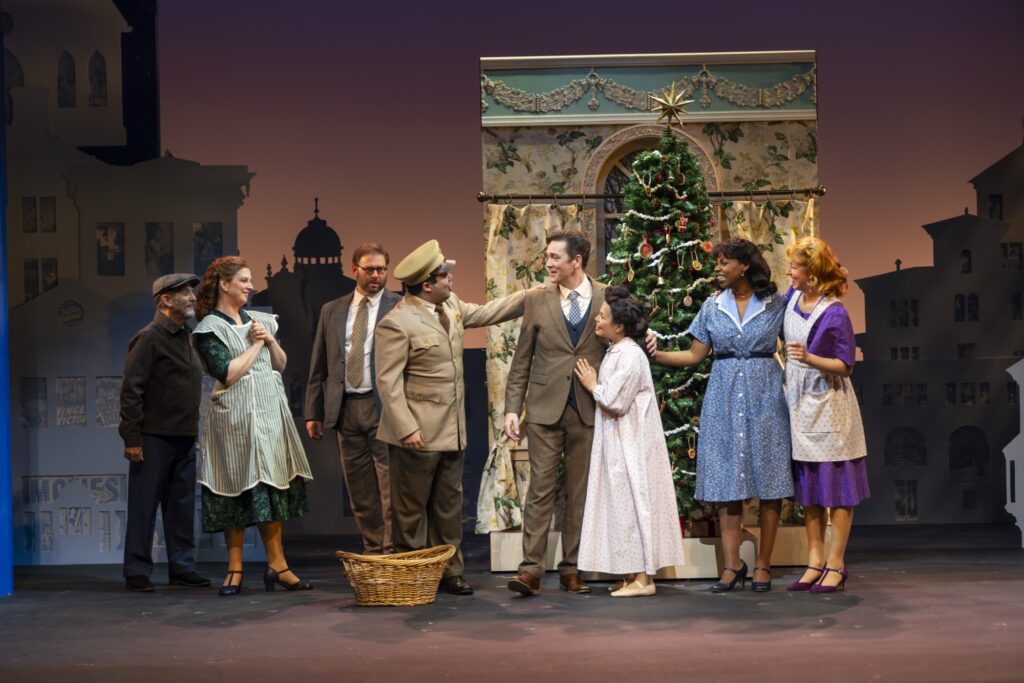
 At the center is Brian Charles Rooney, who’s made quite a name for himself, not only on the local level, but for his work in New York on Broadway, is well-known for his vocal prowess as a musical theatre powerhouse. Rooney captures the full breadth of George’s life journey—from mischievous boy to wide-eyed dreamer to the exhausted, cornered adult wondering where everything went wrong. Remarkably, he accomplishes this not through drastic physical transformation but through subtle, sharply observed choices: a shift in vocal pitch, a slight change in posture, the weight of responsibility settling into the shoulders. These gradations make his downward spiral heartbreaking and his redemption cathartic. As George Bailey, it’s his sincere believability as the multi-faceted depth he brings to the stage that holds the audience’s attention from that first appearance of a man defeated to the much-loved ringing of that angelic bell signifying all is well with the world. His performance as George Bailey is nothing short of revelatory. And YES…though this production is not a musical, the audiences is indeed treated to just a bit of Rooney’s pitch-perfect multi-octave voice for a quick little verse of Buffalo Gals, the beloved tune featured in the 1946 film classic.
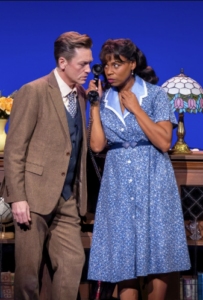 As Mary Hatch Bailey, Tamiko Robinson Steele radiates warmth, quiet confidence, and fierce devotion. Her Mary is not simply the supportive spouse—she’s the emotional compass of the story, grounding George even when he’s flailing hardest. Steele’s effortless sincerity elevates every scene she touches. From their scenes depicting George and Mary’s childhood friendship to their teenage flirtation, Steele’s sweet embodiment of Mary is palpable. The scene at the drugstore soda fountain when Mary leans over to George and whispers in his bad ear her devotion, I couldn’t help but have a little eye sweat. With Steele in the role, it’s no wonder George offers Mary the moon.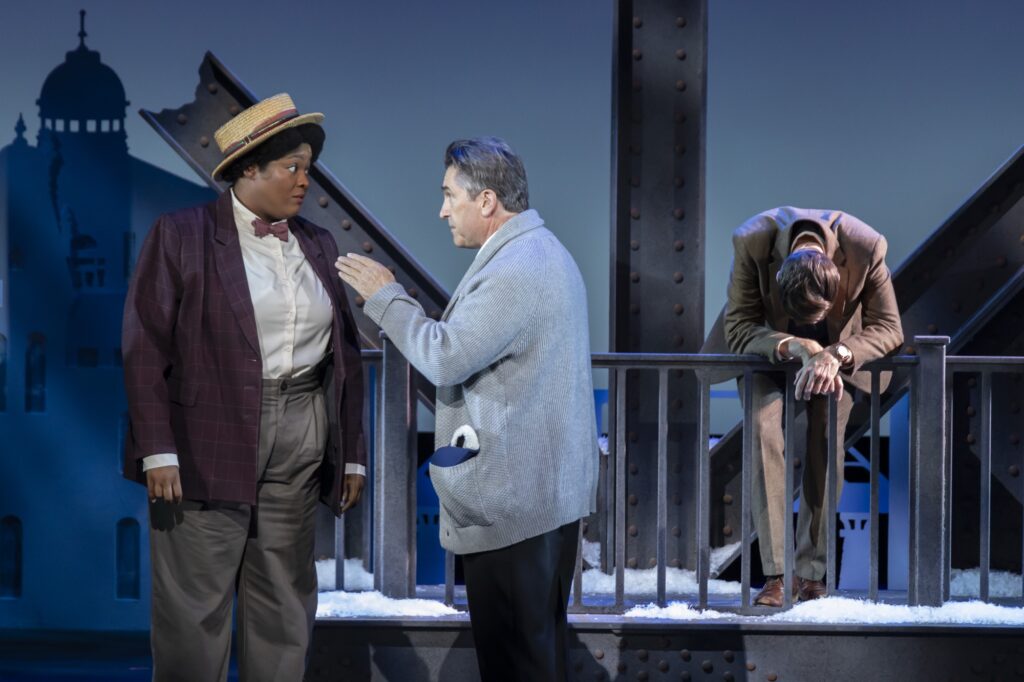
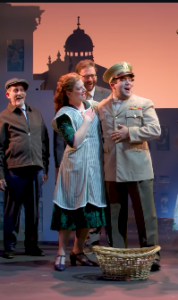
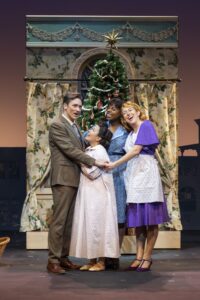 Among the remaining ensemble are Eric D. Pasto Crosby, who is first seen in a brief appearance as Mr. Bailey and a little more stage time as Nick the barkeep (question…did they really have Sports Bars called as such in the 1940s? It’s rhetorical. Sports Bars weren’t a thing until the 1960s, thus my only complaint about the set, for when Clarences shows George what life would have been like had he not been born, they visit the bar formerly owned by Martini, now emblazoned with a mirror-etched sign reading Nick’s Sports Bar). Aleia Eagleton and Darci Nalepa Elam appear throughout portraying various townspeople. Among their standout turns, Elam’s Ma Bailey is motherly perfection while her Tilley is flirty and fun. Then there’s the small in stature, but big in energetic presence of Eagleton as she is fabulously convincing and utterly enjoyable in the tiny, but pivotal role of Zuzu.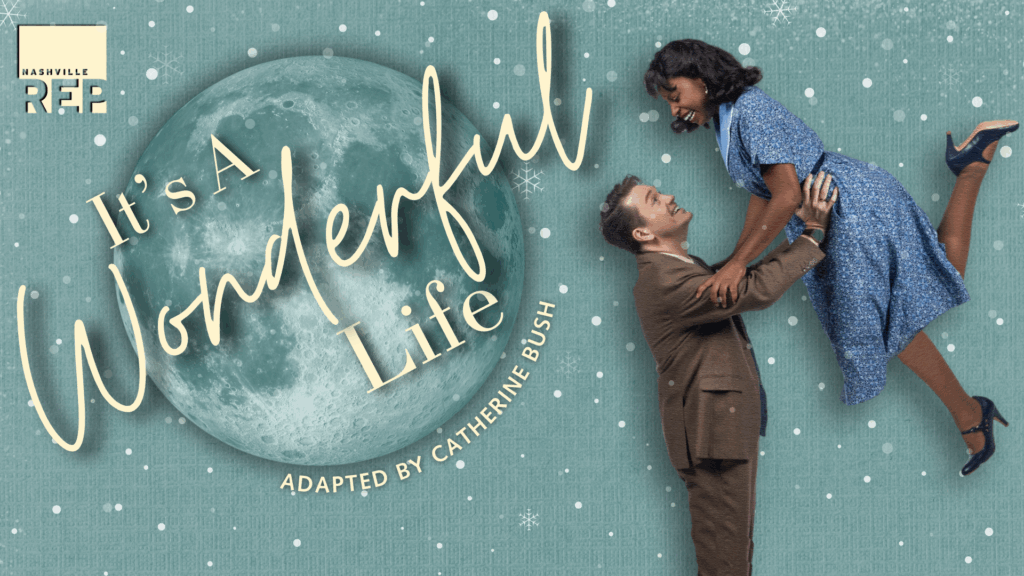
 RAPID FIRE WITH BRIAN CHARLES ROONEY, GEORGE BAILEY IN NASHVILLE REP’s IT’S A WONDERFUL LIFE
 RAPID FIRE WITH TAMIKO ROBINSON STEELE, MARY HATCH BAILEY IN IT’S A WONDERFUL LIFE
 RAPID FIRE WITH JENNIFER WHITCOMB-OLIVA, CLARENCE & OTHERS IN IT’S A WONDERFUL LIFE
 RAPID FIRE WITH EVE PETTY, VIOLET IN IT’S A WONDERFUL LIFE
 RAPID FIRE WITH IT’S A WONDERFUL LIFE DIRECTOR, ALICIA LARK FUSS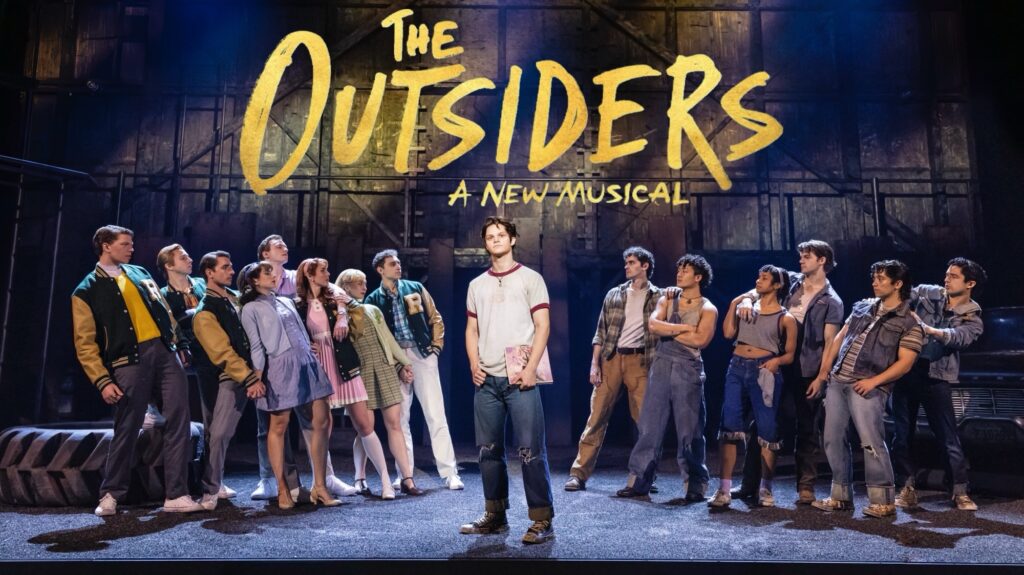
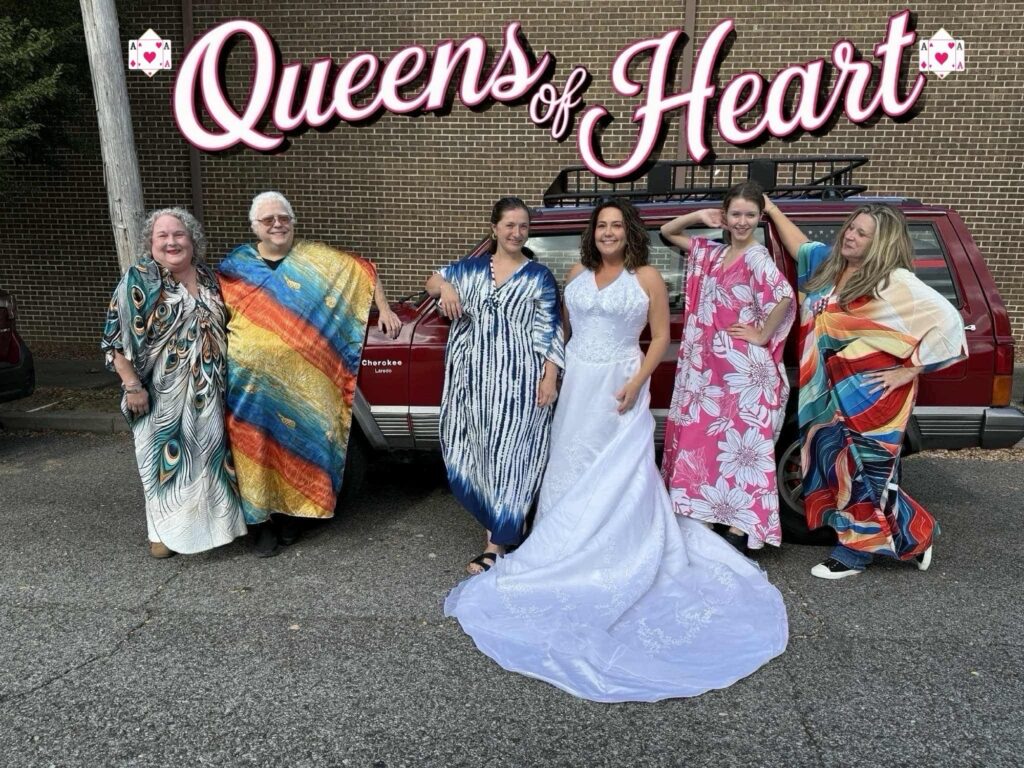
 RAPID FIRE WITH QUEENS OF HEART’s DORIS, KATHLEEN JENSEN
 RAPID FIRE WITH QUEENS OF HEART’s ALICE, KATIE CAMPBELL
 RAPID FIRE WITH QUEENS OF HEART’s EMILY, COURTNEY LINAM
 RAPID FIRE WITH QUEENS OF HEART’s ROSE, JOY TILLEY PERRYMAN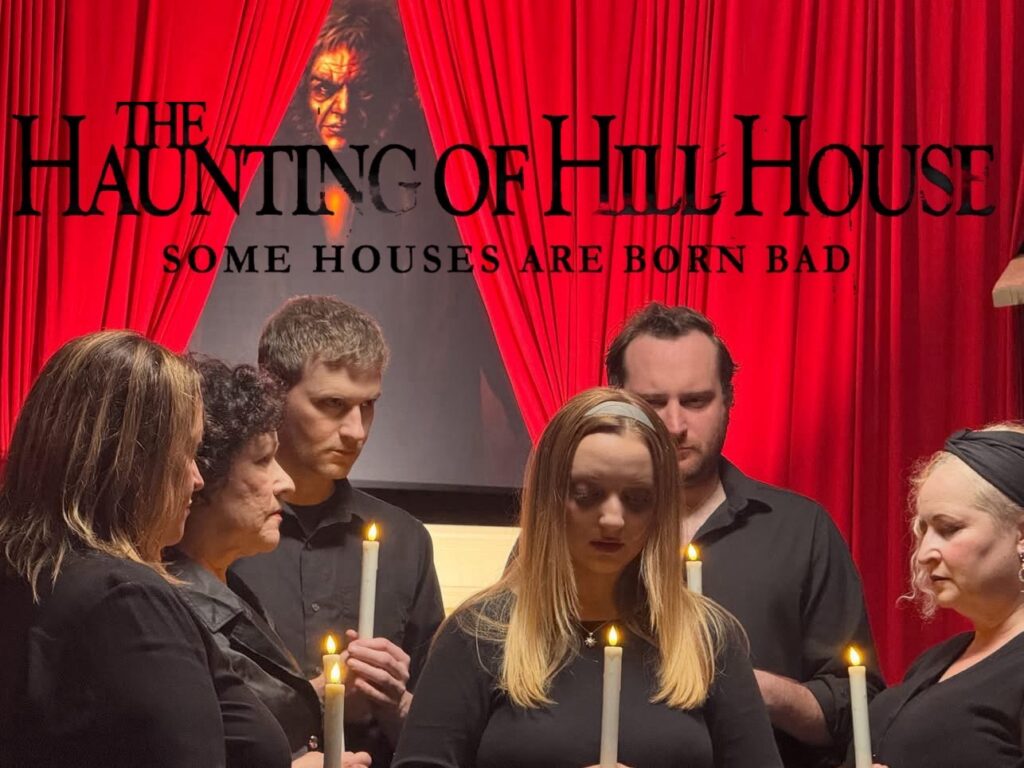
 Rapid Fire with Lucy Turner, Eleanor Vance in The Haunting of Hill House
 Rapid Fire with Andrea Coleman, Mrs. Montague in The Haunting of Hill House
 Rapid Fire with James David West, Dr. Montague in The Haunting of Hill House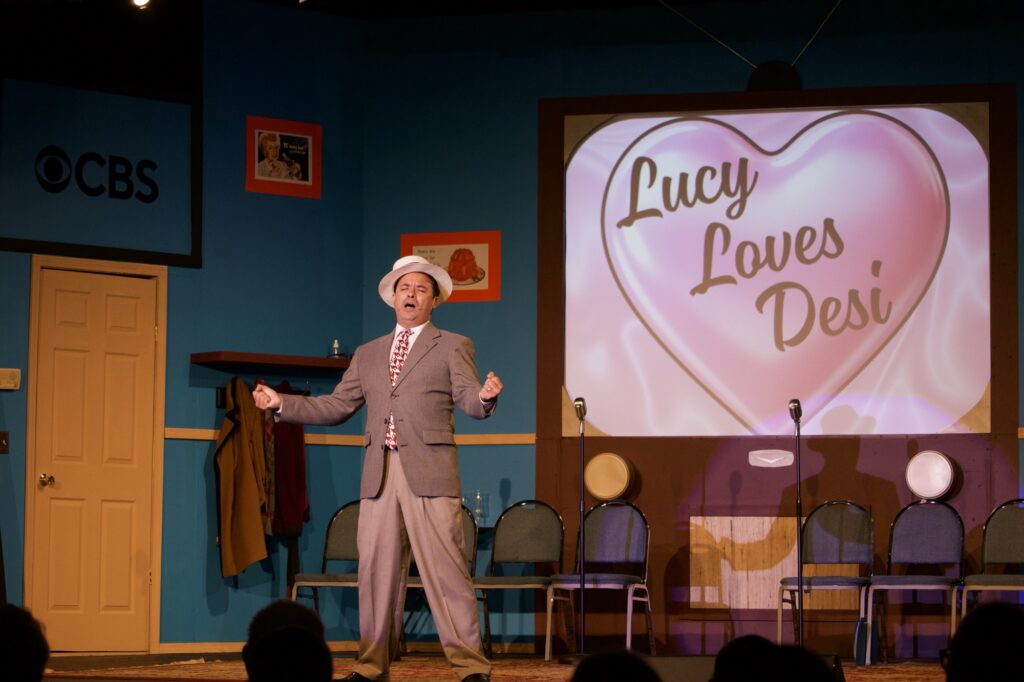
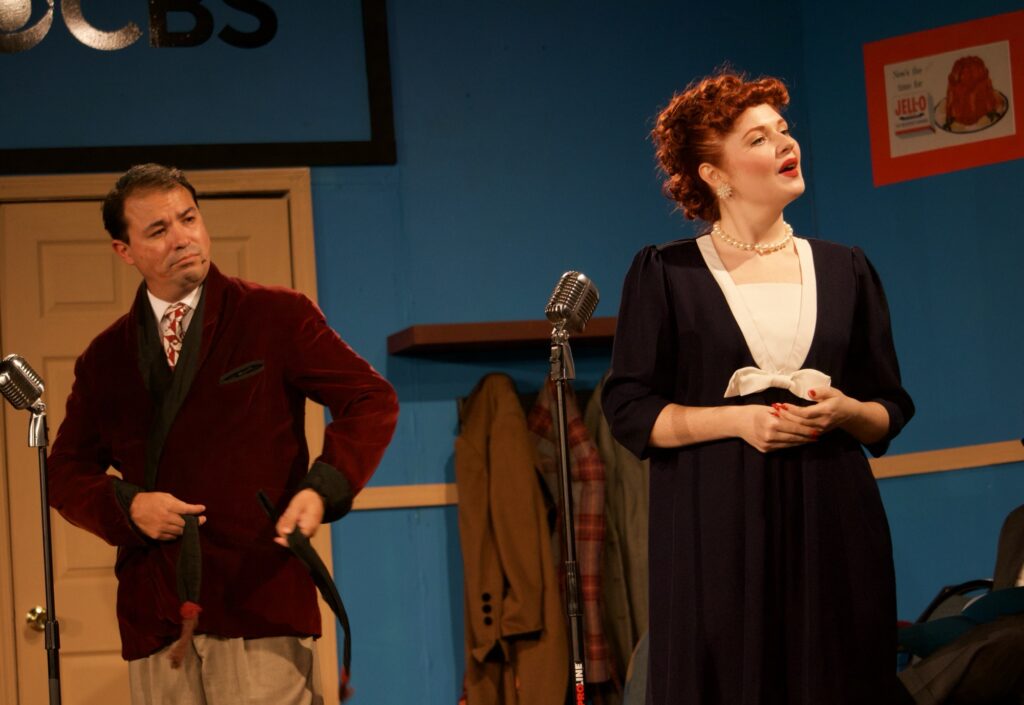
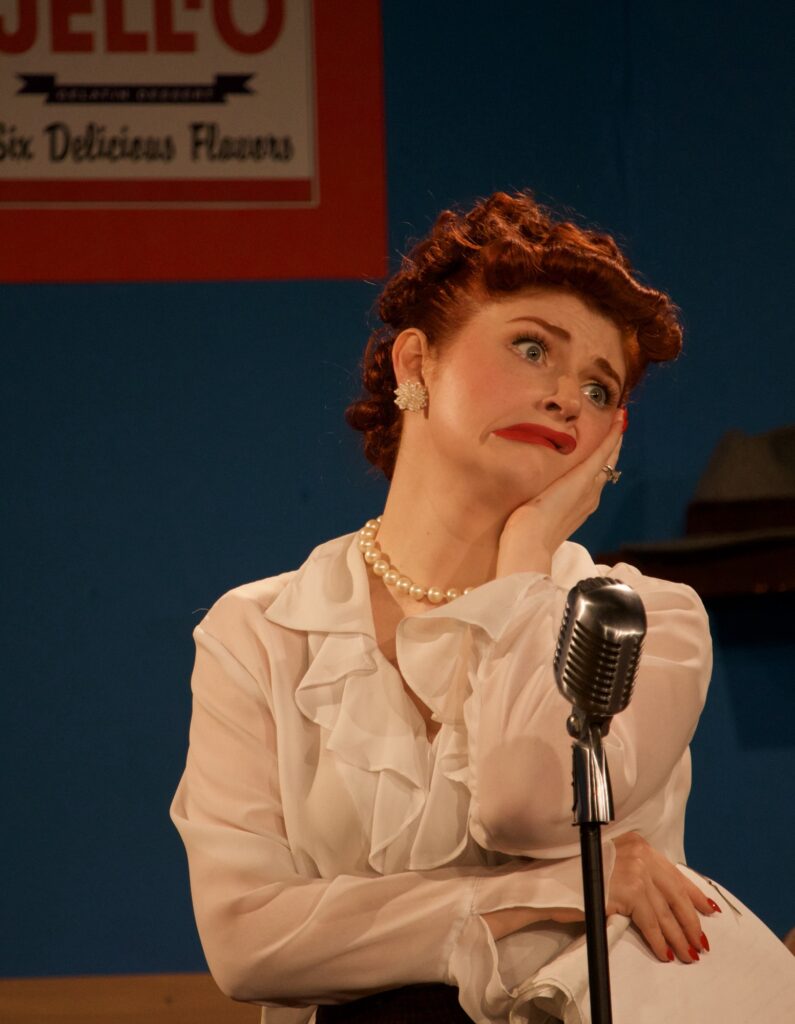 While none of the cast truly look like their real-life counterparts, it’s not an impersonator show in Las Vegas, after all, Grace Gaddy’s Lucille Ball is, when all is said and done, a loving tribute to the iconic comedian. From her expressive eyes and impeccable comic timing to the way she embodies Lucy’s signature blend of glamour and goofiness, Gaddy gives a performance that’s joyously alive. Her physicality and facial expressions elicit hearty laughter while paying true homage to one of television’s greatest icons. My only hesitation in a giving Gaddy’s Lucilly Ball a full five star review rests on the fact that Gaddy’s choice of voice isn’t quite there. Yes, Lucille Ball’s real-life voice was quite different from her quicker, higher-pitched Lucy Ricardo voice, but Gaddy, try as she may, never quite hits the mark vocally. Of course the average Keeton audience member will easily overlook this because of Gaddy’s otherwise full-force embodiment of the iconic comedic actress. It should be noted that Gaddy’s Lucy is at her best not only when recreating a few classic I Love Lucy moments–her lip-smacking, face-pulling expressions during a quick look at Vitameatavegamin is indeed near-perfection–but also during scenes that show the rarer more vulnerable moment of the woman behind the legendary laughs.
 Even though he plays the man upon whose book this play is based, Michael Welch has the benefit of playing someone most people have never seen and whose physical appearance isn’t as easily recognized as the four stars of the groundbreaking sitcom. That anonymity works to Welch’s advantage as he simply shines as Jess Oppenheimer, serving as the grounding force amid the behind-the-scenes chaos. His balance of humor and sincerity keeps the story engaging and human. His scenes between Gaddy’s Lucy and Rainwater’s Desi truly exemplify Oppenheimer’s role as both close friend and trusted collaborator in the creating of one of the world’s most beloved sitcoms.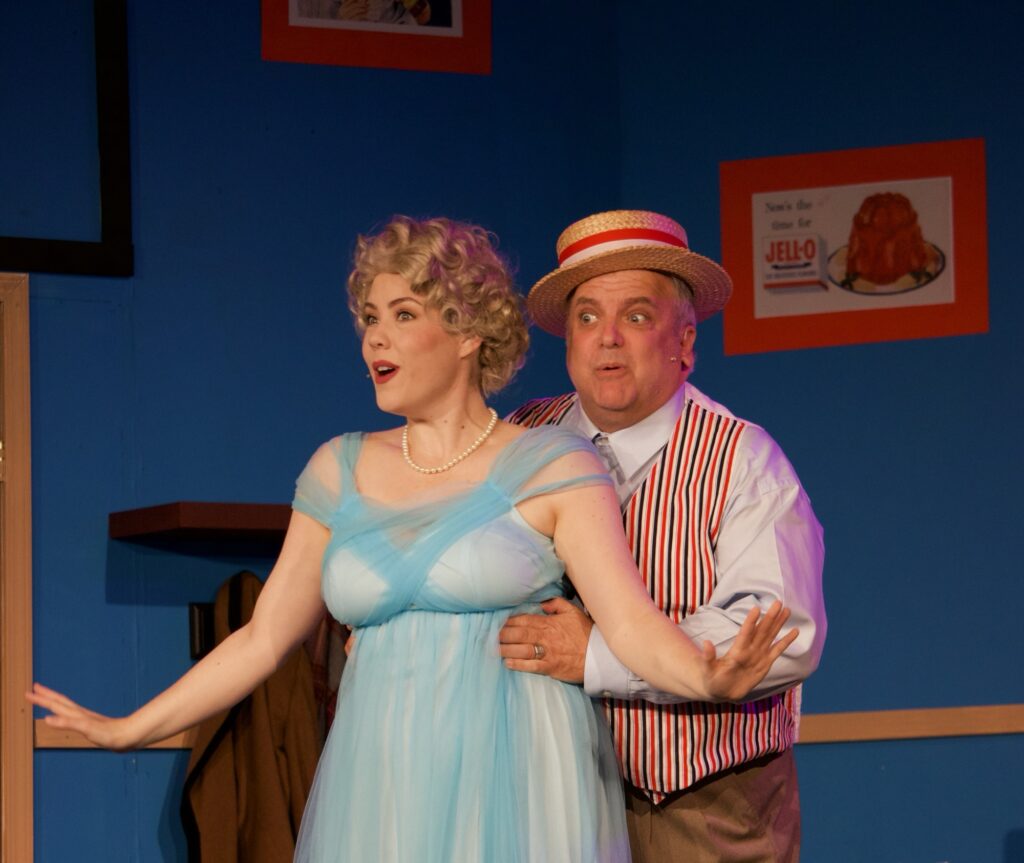
 Musically, this expanded version of the show delights with nostalgic selections that evoke memories of classic I Love Lucy episodes, including I’ll See You in C-U-B-A, Friendship, California Here I Come, and the beloved I Love Lucy theme song, complete with a bit of a did you know who wrote it spoiler and Rainwater and Gaddy singing the rarely heard lyrics. Enhancing the musical score throughout, frequent Keeton musical director Roger Hutson’s piano recordings add a lighthearted, era-appropriate touch, while Steve Love’s sound design, Brooke Sanders’ lighting, wig design by Alison Gaddy (loosen up those wigs so they look more natural and like the real-life ladies they’re styled after) and Denese René Evans’ costumes work in harmony to transport the audience straight to midcentury Hollywood. Evans’ costumes throughout are quite fun and seemingly period authentic, I do wish that Lucille’s Emmy dress was accurate, through…again, I’m just being an overzealous Lucy fan.
 In spite of my above-reference initial hesitations and a strangely tepid Opening Night audience (Note: it’s ok to laugh out loud and to applaud after a particularly entertaining scene) and what could probably be chalked up to first night jitters from the cast resulting in the majority of Act 1’s delivery being a tad flat with several lines coming across as monotone with not real inflection and somewhat memorized, rather than convincingly felt and delivered with punch, those initial hesitations faded once the cast found their groove.
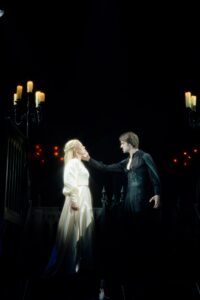 Jay Sullivan is chilling as Count Dracula. He doesn’t simply linger
 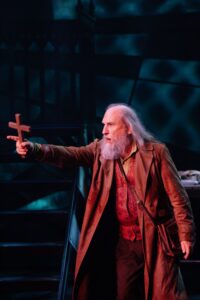 Opposite him, Sullivan’s performances is beautifully balanced by Brian Webb Russell who gives a gravely controlled performance as Abram Van Helsing, anchoring the heroic opposition with clarity of intent and moral weight. Russell’s Van Helsing offers the perfect amount of sharp intellect and righteous urgency. His verbal sparring with Sullivan’s Dracula are electric—two forces circling each other in a battle of will and belief.
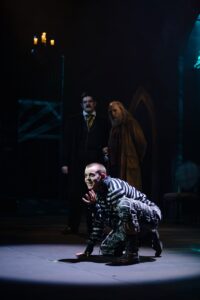 The trio of Lane Adam Williamson’s Renfield, DéYonté Jenkins’ Norbert Briggs and Catherine Gray’s Margaret Sullivan are tasked with carrying a bit of dark humor that helps temper the heavy suspense.
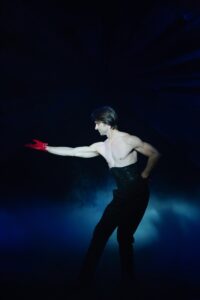 Then there’s Logan’s costumes. Every costume a work of art. The female cast members regal and radiant in finery fitting the period of the action. Van Helsing’s leather wardrobe, perfectly fitting for battle. Renfield’s asylum attire tattered and torn, but with a hit of glamour by way of some blinged-out blood spots. But it’s Dracula’s wardrobe that is truly glamorous and entrancing. From his first appearance bare-chested, but corseted in black to a black jacket accented with blood-red beaded erratic epaulets when he returns from a mysterious night right. (Gotta love that this particular look gets no mention within the context of the play, but is a jarring visual clue to the most astute audience member). The beauty of that costume not without merit, my personal favorite is yet another black jacket and pants combination. The jacket, from one side appears nothing special as the hem hits just below the actor’s waist, but from front view, its asymmetrical as the other side is more the length of a morning coat. Perhaps another visual clue of the duality of the wearer? Just when you think Logan’s used up his bag of costume tricks, in the final scene Dracula appears the most sparkly transfixing figure yet, but I’ll let you experience that on your own.
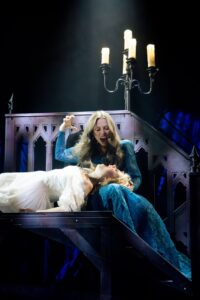 What impresses most about this DRACULA is how it leans into its horror while refusing sentimentality. McNulty’s choice to portray Dracula as predator (not tortured romantic) is honored here. That clarity gives other elements room to breathe: the trauma of Lucy’s affliction, Mina’s struggle with memory and agency, Van Helsing’s moral burden, Seward’s scientific disbelief challenged by the impossible.