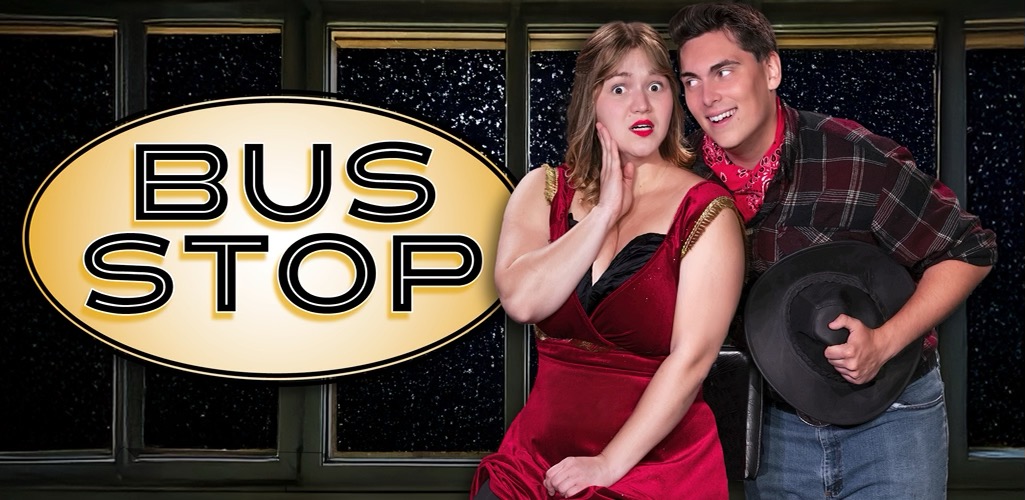
Before checking out The Keeton’s presentation of William Inge’s 1955 play, Bus Stop (on stage at The Keeton Dinner Theatre/108 Donelson Pike, Nashville, TN 37214 thru Sunday, October 27), I revisited the now-famous 1956 film adaptation starring Marilyn Monroe, as well as the early-80s HBO teleplay featuring Superman’s Lois Lane, actress Margo Kidder to refamiliarize myself with the piece. I was immediately struck with how different the play version is from the film. I also couldn’t help but notice some of the action of the play seems a bit dated, so I was curious how Erin Grace Bailey, who’s directing the show for The Keeton would approach the material.
The play takes place in the mid-1950s in Kansas on a wintery night where we find a quartet of travelers and their bus driver unexpectedly snowed in at Grace’s Diner, a little roadside eatery that also serves as a regular stop of passing busses routes. The bus driver, a jovial fellow with a strictly ‘passing through’ relationship with the diner owner, brings his passengers into the diner for shelter from the storm. The passengers include a mouthy young cowboy, his longtime friend and right-hand-man, a nightclub singer and an alcoholic, womanizing professor. The diner is operated by a middle-aged woman and her teenage waitress. Rounding out the cast of characters is the local sheriff, who frequents the diner most days.
As the play began, my mid-century-loving heart warmed at the sight of the set designed by Kevin Driver, The Keeton’s resident technical director. Driver has outdone himself with Grace’s Diner. On occasion, The Keeton sets are a bit rudimentary and one-dimensional, but not this time. From the lunch counter and barstools to the wood-burning stove and period-appropriate wall phone and soda pop signs…perfection. Heck, there’s a magazine rack boasting cover images of some of the 1950s biggest names, including Elizabeth Taylor, Jackie Gleason, Lucille Ball and Desi Arnaz (you know I loved that). There’s even a clever wink to the aforementioned Monroe on the cover of Life Magazine…all recreated by The Keeton’s go-to graphic designer, Danny Proctor.
Gotta acknowledge the incidental music played before the show and during intermission. I’m almost certain I heard a little Doris Day and Ella Fitzgerald among the period-perfect tunes. Speaking of, if you’re looking for a recreation of Marilyn Monroe’s infamous interpretation of That Old Black Magic, sad to say, you’re out of luck. For some reason, the show’s nightclub singer performs Stars Fell on Alabama instead. I disappointment for yours truly, for That Old Black Magic is even what the playwright mentions in the original script and in every production of Bus Stop that I’ve seen through the years, it’s always a memorable moment in the show.
Nonetheless, when the action starts, the audience meets Jena Salb as Grace Hoylard, the diner owner and Hazely Sanderson as Elma Duckworth, her high school-aged waitress. Salb’s Grace, like the set, is right out of the 50s, all cigarettes and sass. The kind of role actresses like Mary Wickes or Ann Southern played. OK, so Salb’s Grace isn’t all sass..the show contains scenes that show kinder side of Grace, in particular with her interactions and caring for young Elma. As for Elma, Sanderson’s portrayal is sweet, curious and a bit naive. A recent high school graduate herself, this role marks Sanderson’s first post-high school production. Mark my words, Nashville, keep an eye on this talented young woman.
Cherie as played by Fiona Barrett’s, presents the character as a self-described chanteuse who’s been kidnapped by a brutish, but childish cowboy. Cherie’s entrance is worth the wait, after all, she’s taking on the role that Marilyn made famous, right? Comparisons stop right there. Yes, the actress is wearing a platinum blonde wig in an effort to evoke memories of Marilyn, but Barrett, as directed by Bailey, quickly lets the audience know that she’s making Cherie her own. Where Marilyn employed her usual breathy baby talk as Cherie, Barrett is unapologetically loud. She’s funny when the script calls for it, but also equally real and emotional at times, and makes no secret of her initial disdain for the cowboy. Now if they could just set the body makeup so the actress’s tatted and makeup-covered arms didn’t smear concealer all over her lilac dress, I could have focused more on her performance. But at least they attempted to cover her ink, which is more than was done at The Keeton’s recent Footloose run. I’d never seen so many high school kids with tats, but I digress.
About that dress, though…Kudos to the show’s costumer, Donna Driver, who also happens to be The Keeton’s Managing Administrator. Cherie’s lilac dress and floral coat, not to mention her later literal and figural red hot chanteuse costume, and other aspects of the show’s wardrobe, are indeed spot on. I loved the bold choice of Virgil’s western shirt and Bo’s fringe jacket, and the diner uniforms. It’s the attention to details like this that can easily make or break the believability of a period piece and Driver’s eye for detail is evident herein.
Following a brief, but notable role as one of the hoodlum friends in The Keeton’s recent Footloose, Josh Mertz shines as the 21-year-old rodeo rider, Bo Decker. Presenting Bo as a spoiled-rotten brat of a man child, his tantrums almost become a bit too much, but thankfully, the director has reigned him in just enough. He’s another younger actor that I’m sure we’ll be seeing more of.
Rich Moses as local sheriff, Will Masters is just about as good as it gets. His rough and tumble attitude when dealing with Bo’s outrageousness, nicely balanced with a bit of Will’s more tender side when consoling Cherie. Strength and compassion, Moses’ Will possesses both. When we chatted last week for my Rapid Fire 20Q, I mentioned that Claude Akins had played the role of Will in the 1982 teleplay and funnily enough, Moses admitted he’d been though of Akins’ Sheriff Lobo from the BJ and the Bear sitcom…and it showed.
Dean Bratton, a relative newcomer to the Nashville theatre scene, is enjoyable as Virgil, Bo’s friend and frequent voice of reason. If Jiminey Cricket were a looming presence of a man, he’d be Bratton’s Virgil. He too gets a tender moment with Cherie, as well as a much-deserved what’s what chat with Bo, allowing Bratton to showcase a bit of range as a performer.
Mick Grayson, who’s had a very busy few months, having recently appeared in local productions of Sordid Lives, An Ideal Husband and Aunt Sally’s Wild Ride, while undeniably charming and likable, is unfortunately miscast as Dr, Gerald Lyman. Not even the old high school drama department trick of spraying a little grey in his hair can convince the audience he’s the thrice married lothario he’s portraying. Nonetheless, Grayson steps up as much as he can and delivers an enjoyable drunken reenactment of Shakespeare’s Romeo and Juliet’s balcony scene alongside Dr. Lyman’s latest attraction, Sanderson’s Elma.
Rounding out the cast is Eric Crawford as Carl, the bus driver. Crawford’s Carl is hilarious. His flirtations with Salb’s Grace, including some “did they really just say that?” lines that must have shocked some mid-50s audiences back in the day, bring a light-hearted tone.
When I interviewed the cast before the show opened last week, I noted that Bus Stop is a slice of life play. More accurately, it’s a slice of nostalgia play. Are there plot elements that today’s audience might find cringe-worthy as the kids of 2020 might have said? Yes. After all, the set up for the entire show is Cherie runs off the bus as soon as it stops, with suitcase in hand, in hopes of escaping Bo, who forcibly carried her onto the bus and told her he was taking her to Wyoming to marry him…and this after just one night together. On that subject, I love that the playwright, even back in 1955, allowed Cherie to own her sex and sexuality. When it’s revealed that Cherie has had numerous suitors, while Bo’s actions could be attributed to the fact that Cherie was his first, there’s a sweet line in the show to the effect that Cherie’s experiences balance out Bo’s lack thereof.
Rest assured director Bailey successfully maneuvers the story—occasional antiquated ideals et al—thanks to her talented cast, presenting Inge’s Bus Stop as a look back at theatre when show’s depended on heart, not special effects. All in all, The Keeton’s Bus Stop is definitely a worth a visit.
The Keeton’s Bus Stop continues through October 27. Dinner and Show tickets are $40 for Adults and $35 for Children. Show Only tickets are $30. For evening performances, doors open at 5:45p.m. with dinner served at 6p.m. and the show beginning at 7:30p.m. Shows with a Thursday show only performance open doors at 6:30p.m. with show at 7p.m. Sunday matinee hours are as follows: doors at 12:45p.m./lunch at 1p.m. and show at 2p.m. CLICK HERE to purchase tickets. As always, The Keeton coordinates their dinner menu to compliment the show. For Bus Stop, the pre-show meal will consist of a Dinner Salad, Country Fried Steak with Pepper Gravy served with sides of Mashed Potatoes, Green Beans and Roll with Cookies and Cream Pie for dessert.
Next up at The Keeton is A Christmas Story: The Musical, with performances December 5-22. WATCH THIS LINK for tickets or more information soon.
To keep up with the latest from The Keeton Dinner Theatre, follow them on Facebook, Twitter and Instagram.
Interested in coverage for your latest entertaining endeavor? Click the contact page and drop me a note. You can also follow JHP Entertainment on Instagram and Facebook. In the meantime, #GoSeeTheShow!
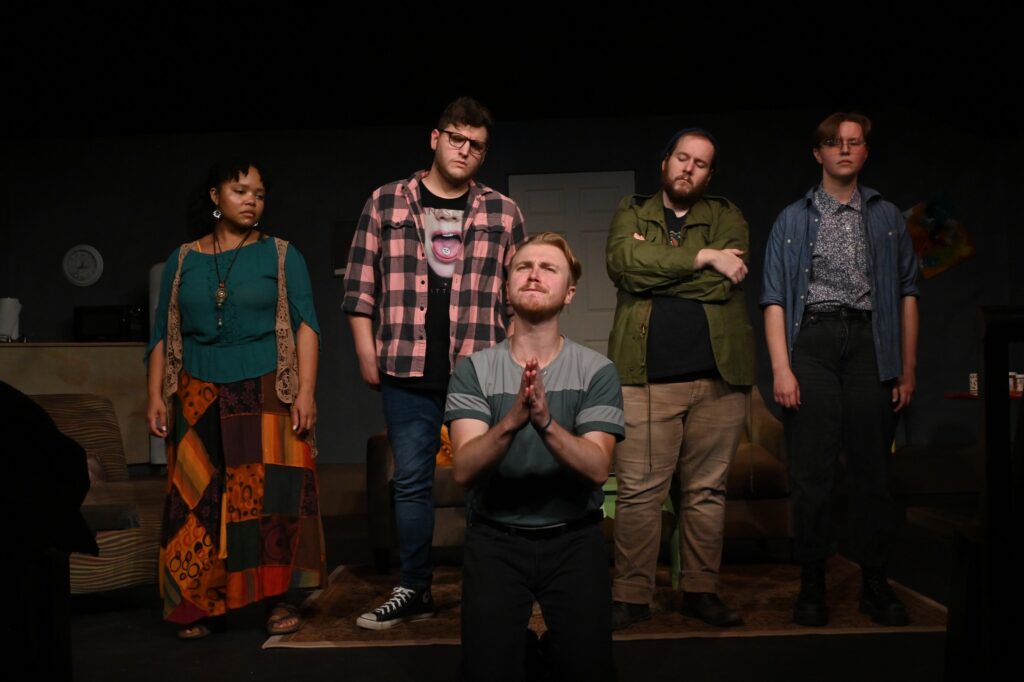
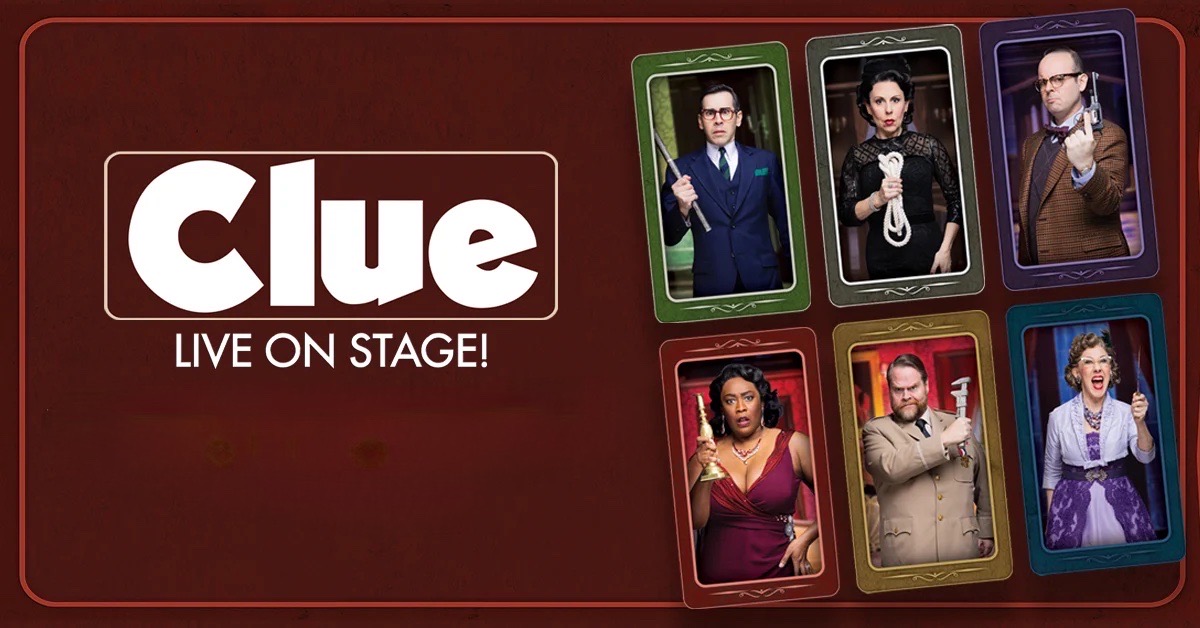
 Where character portrayal is concerned, Clue could be considered a bit of a theatrical anomaly. Typically actors stepping into roles made famous by others are charged with making the character their own, but Clue, a true farce, almost demands that the company present the characters pretty much as those who portrayed the roles in the film had done. That’s not to discredit the actors in any way, but to thank them for brilliantly recreating moments and actions of the film to glorious life live on stage.
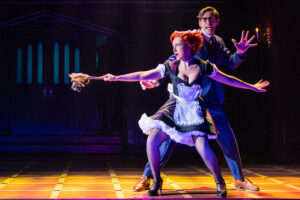 John Shartzer’s Mr. Green (the Michael McKean role in the film) is the scene stealer of the show. With precise comedic timing, hilariously deadpan reactions and borderline acrobatic slapstick movement, Shartzer is suspect Number 1 is so many ways.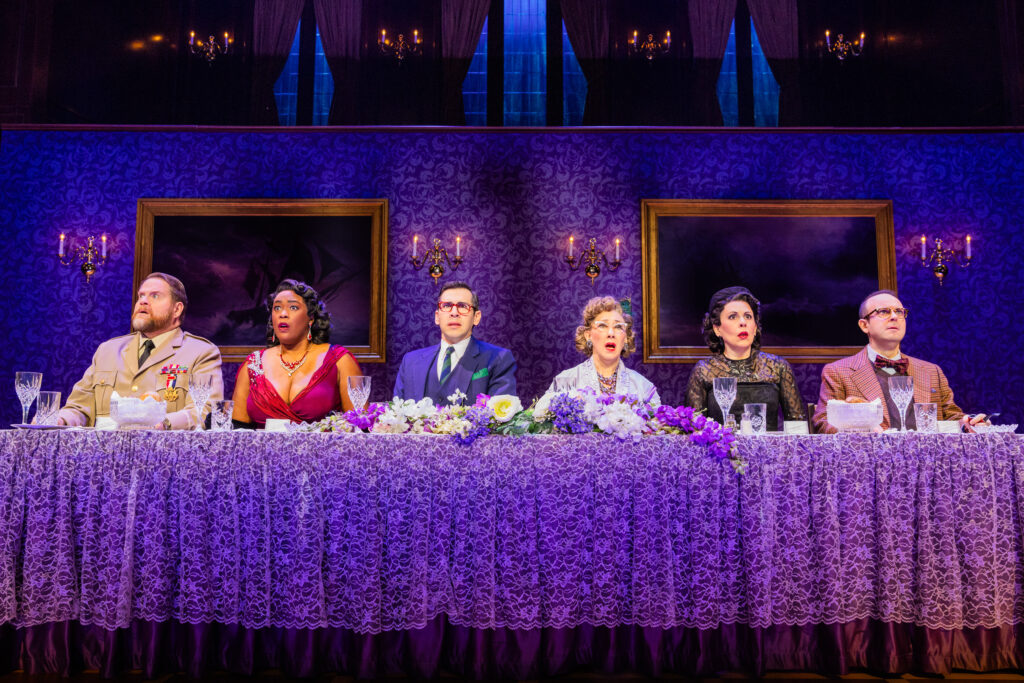
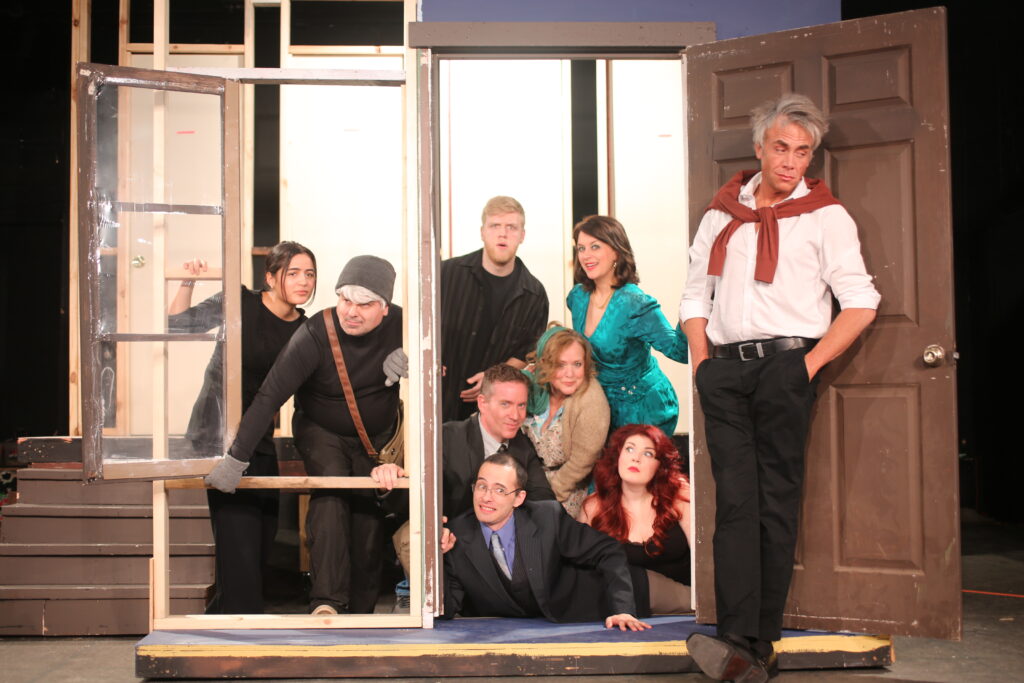
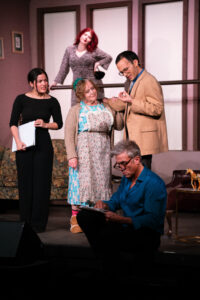 For The Keeton’s presentation, co-directors Maguire and Gray have enlisted a great mix of newcomers and seasoned performers including
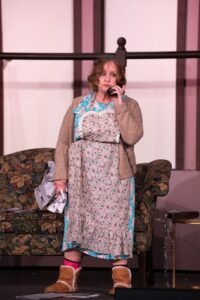 Now, back to the show…From the character’s initial entrance, Lloyd offers the first broken fourth wall as he stops the action on stage when one of the actors misses a prop cue. Carmichael’s Lloyd bellows from the audience and the fun begins. The actress Lloyd chastises for missing her cue is none other than Ann Street-Kavanagh, as middle-aged actress Dotty Otley, who’s playing the housekeeper in the show-within-a show. Street-Kavanagh is perfect for the role of Dotty as she’s never better than when she’s playing it a bit confused and daft. Like Lloyd, Dotty is also embroiled in a love triangle. All Dotty’s Nothing On character wants to do is put her feet up and enjoy the the telly. Oh, and did I mention she enjoys a snack of sardines? Worth noting, since a plate of the fishy snacks result in much of the show’s hilarity when left about, or taken off, cluing the other visitors in Nothing On that they’re not alone in the house.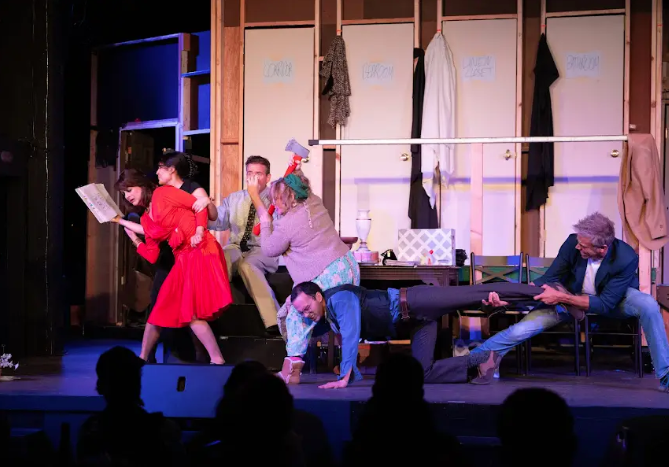
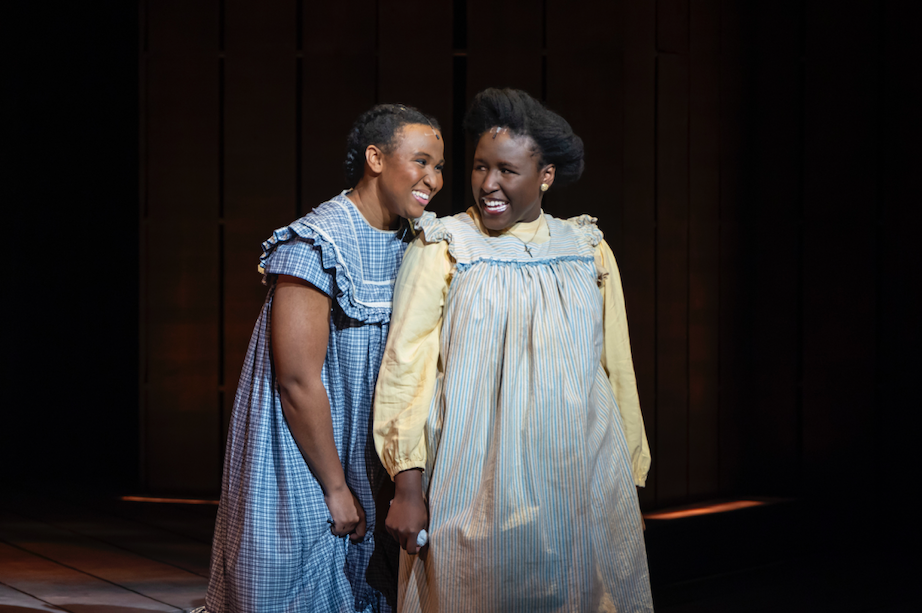
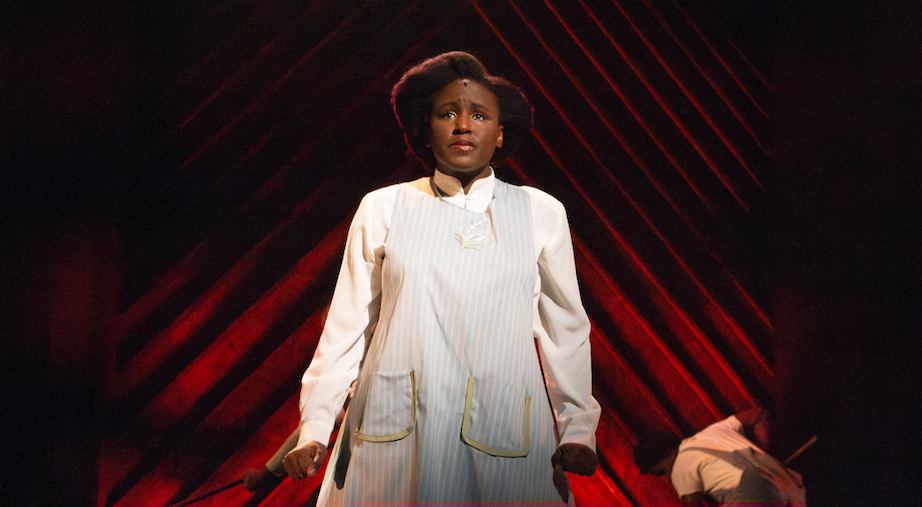
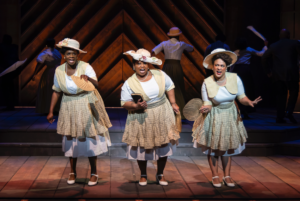 Then comes the entire company for Mysterious Ways, a hymn of a song, set in the local church (effectively indicated as such by a singular light source casting the shape of a illuminated cross onto the wall behind the action) where the entire community sings of God watching over them no matter. Nia Safari Banks’ costumes are a highlight of this number, for if you’ve ever had the great fortune to attend a Black Church, you KNOW the way you present yourself before the Lord IN the Lord’s House is of utmost importance! Which leads me to the Church Ladies, Darlene, Doris and Jarene, a snooping, truth-tellin’ trio who pop up now and again throughout the show to fill the audience in on the latest happening. Lindsay Kay Pace, Yolanda Treece and Meggan Utech a divine trio indeed as the Church Ladies. Characters I know all too well, for you see, growing up, there were two ladies in the church my family attended who I lovingly referred to as my very own ‘Church Ladies’. They were always there to stick their noses in and offer advice, unsolicited though it may have been. I can’t be the only one who kind of wishes Pace, Treece and Utech would develop their own show around these three characters. Not only do they provide intel, but plenty of smiles as the absurdity of their insertion into every situation.
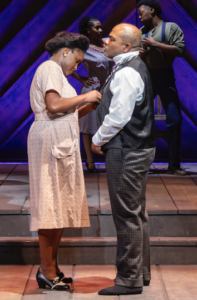 Giving the Church Ladies something to talk about…enter Mister, as played by Elliott Winston Robinson. As Robinson alluded in my
 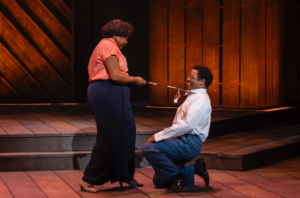 Speaking of memorable men, Gerold Oliver is just sooooo good as Harpo, Mister’s ne’er do well son. He get’s his moment to really shine alongside the men during Brown Betty, a song praising the beauty of Black women, Raven Buntyn’s Squeak, in particular. Speaking of Squeak, thank goodness Buntyn vocally pays homage to the character’s name by occasionally hitting a pitch so high that she actually squeaks when she talks, something the recent film adaptation opted not the do. I also loved the quick pop-in appearances by some of the female ensemble during this one, too. Oliver’s Harpo offers not only comedic levity from time to time, but also becomes the first man in the story to break the cycle of violence towards women.
 Of course Harpo has a bit of assistance in breaking that cycle in the form of his no-bullshit-taking wife, Sofia, played to the absolute hilt by the gloriously talented Shinnerie Jackson. It was everything I could do to remain in my seat at the end of her anthemic Hell No number. The thunderous applause that followed was evidence I was not alone in my appreciation of the number and Jackson’s performance. Cause here the thing, Jackson’s portrayal of Sofia hits all the notes, not just musically, but emotionally. When she’s strong and defiant, the audience feels that defiance and empowering presence. When Sofia is temporarily defeated, we feel that too. An exemplary performance all ‘round!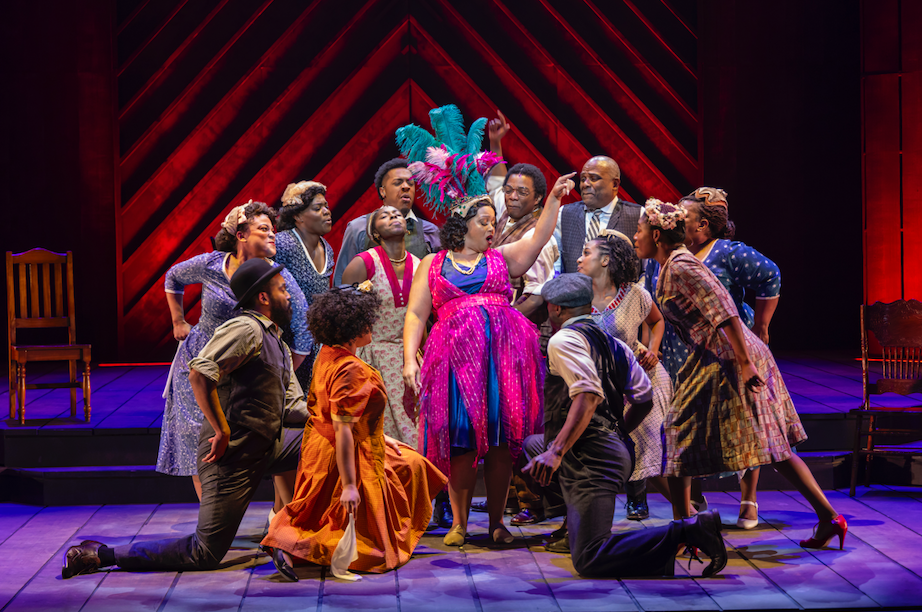
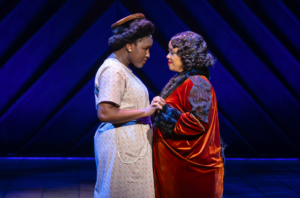 The chemistry between Nicole’s Shug and Hardon’s Celie is simply magical. You truly believe these two women have discovered a love and bond like never before.The progression of this relationship is perfidy paced and played out not doubt by way of the director’s precise instruction, but also these two actors’ understanding a care for the characters.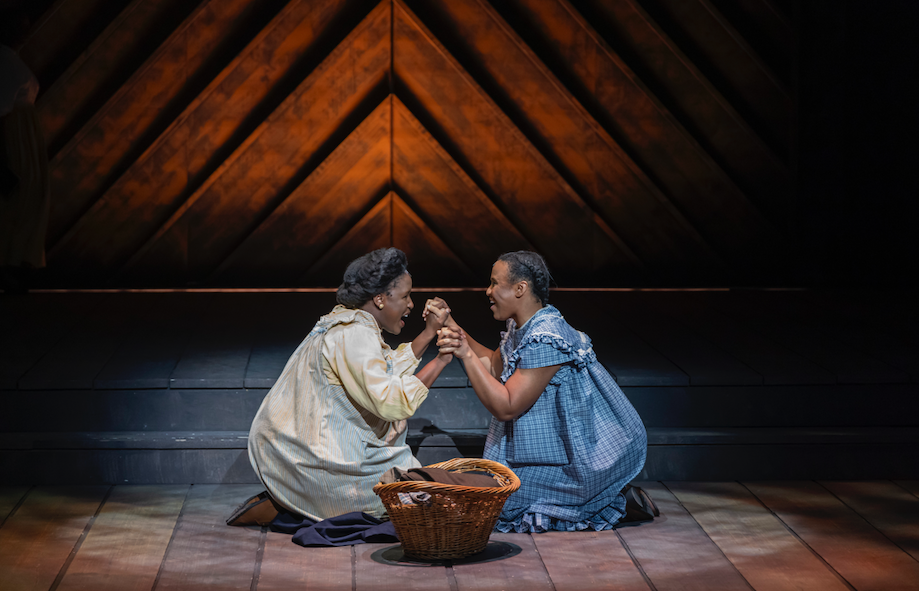
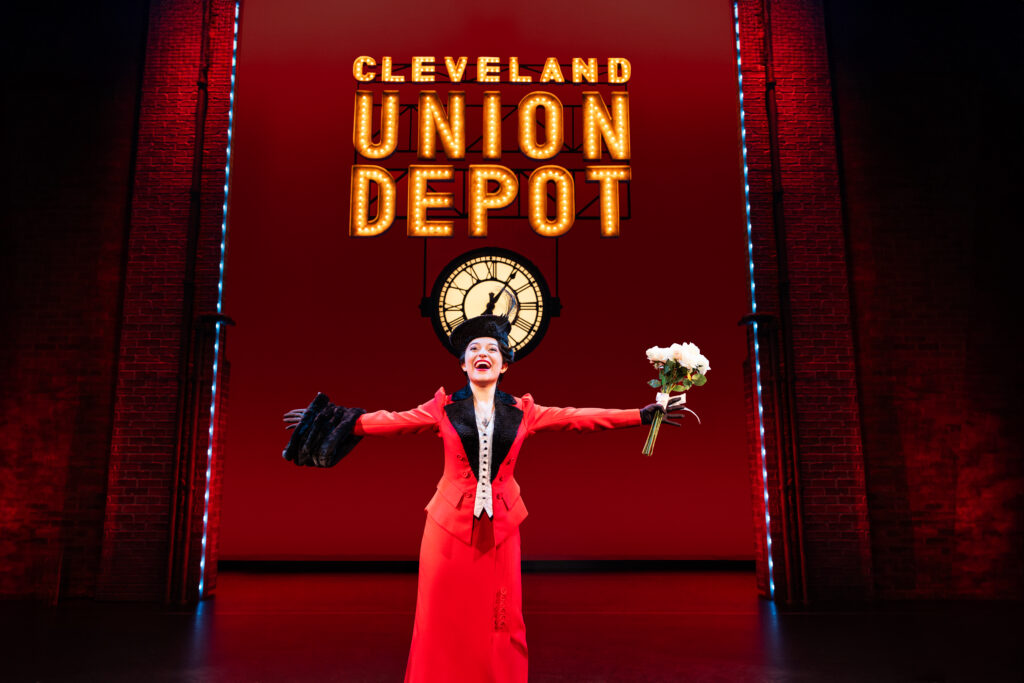
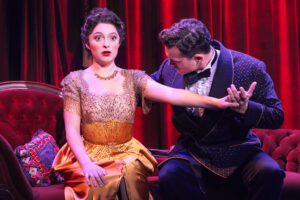 From the moment Katerina McCrimmon takes the stage, she IS Fanny Brice. She’s got the period-authentic New York dialect, the exaggerated facial expressions, but most of all, she’s got the voice. Ok, so the voice might be more what audiences expect thanks to the aforementioned Streisand portrayal, but I’m here to tell you McCrimmon makes the character her own while carefully maneuvering through, and well beyond what could easily be brushed off as an impression. Throughout the show, including more familiar territory of musical moments like I’m the Greatest Star, Don’t Rain on My Parade and People, and my personal favorite, His Love Makes Me Beautiful, McCrimmon vocal range, strength and ability prove time and time again she’s the perfect powerhouse to introduce Fanny Brice to a whole new generation of musical theatre fans.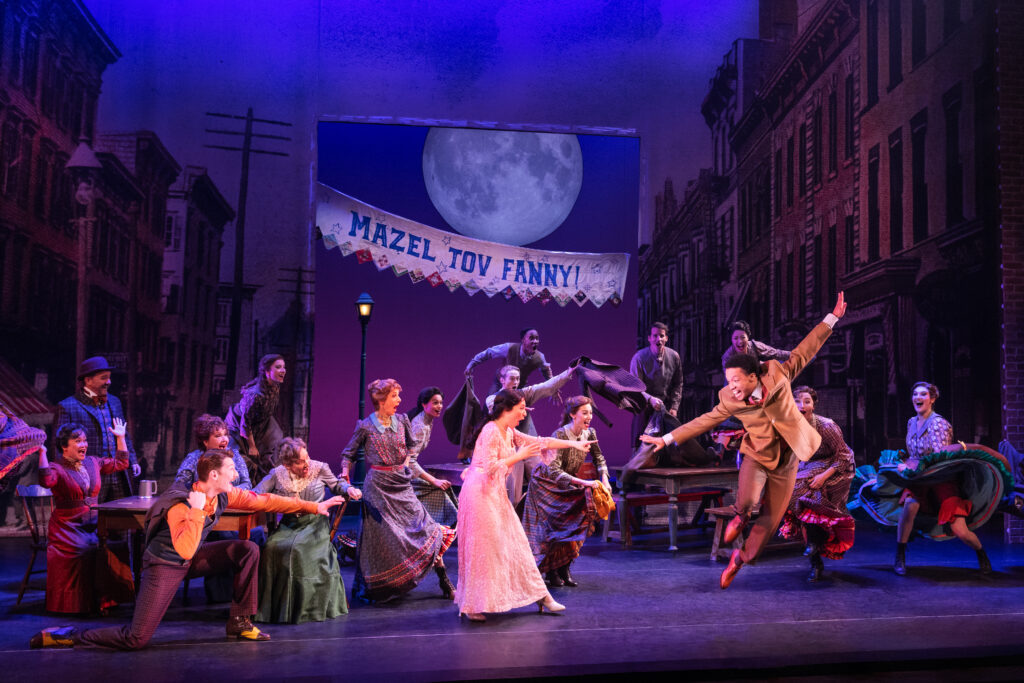
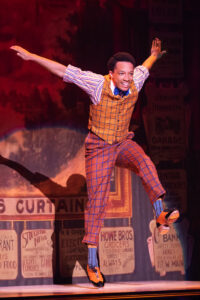 Izaiah Montague Harris plays the always in-step and dependable Eddie Ryan, a dancer/choreographer friend of Fanny’s who’s always there to help her with her career and pick up the pieces when Nicky is out of step. When I say Harris’ Eddie is in-step, I mean it. One of the best non-Fanny-centric moments of the show features Harris in a tap-tactic dance sequence. Which reminds me, kudos to the show’s costume designer, Susan Hilferty. Yes, all of Fanny’s period-perfect costumes are fabulous, but it was during Harris’ tap number that I notice a wonderfully clever costuming detail. Hiferty has sewn the occasional rhinestone throughout the pant legs of Harris costume, which catch the light of his fancy footwork and draw the eye throughout the dancer’s entire body, allowing those of us who picked up on this seemingly random detail the joy of watching the full mechanics, precision and skill of the dance.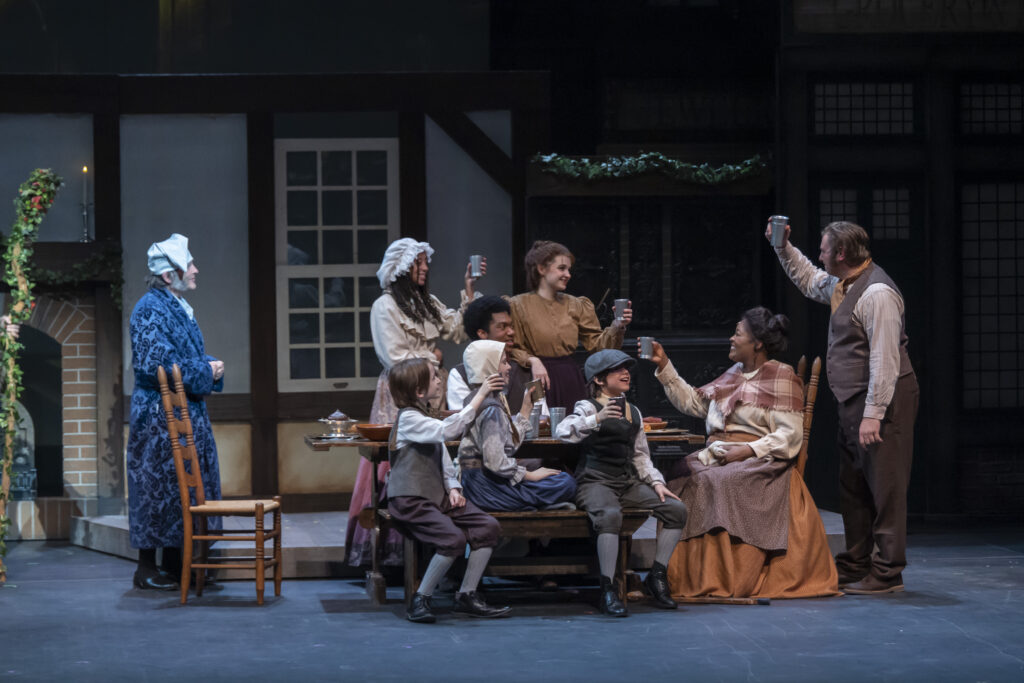
 Speaking of Scrooge, Matthew Carlton is simply brilliant in the role, and it’s a bit of a full-circle moment! His bio reveals his first foray into A Christmas Carol at The Rep came in 1990 when he was cast as Scrooge’s young nephew, Fred. Over the years, Carlton says he’s played a dozen or more characters in eleven different production. I’m here to tell you though, he better free up his winter calendar going forward because it’s official, Matthew Carlton now ranks among my favorites to have ever taken on the role. He’s in good company, too, considering Sir Michael Caine’s Scrooge from The Muppet Christmas Carol tops the list! What’s interesting about Carlton’s performance is, it’s all-encompassing. Yes, he can mean-mug with the best of them, but the scene that struck me most, and may or may not have made my eyes sweat takes place during a party when Scrooge is transported back in time by Kris Sidberry’s beautiful Ghost of Christmas Past. In the scene, Carlton’s Scrooge sees his beloved Belle (Ivory Bodnar) enjoying the merriment of a dance with fellow holiday revelers. Caught up in the moment, but forgetting that he’s only a shadow presence, Scrooge attempts to join in the fun, getting caught at one point in the center of a quartet of dancers. Of course unseen because he isn’t actually there in his present form, he’s ignored as the dancers continue moving about without him. Within just a few minutes as this scene plays out, Carlton, under the keen direction of Brewer, runs the gamut of emotion from excitement to regret and sadness. Being a self-confessed Scrooge myself, I was a puddle.
 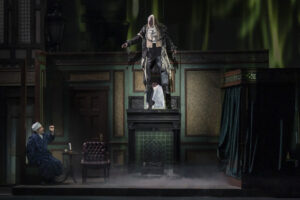 You know you’re a great actor when just a projection of your face can elicit an internal squee. That’s the exact reaction when another longtime Nashville favorite, Brian Webb Russell’s face appeared on Scrooge’s door as the “dead to begin with” Jacob Marley. In an early scene, when Marley visits Scrooge to warn him of the coming visitors, Russell’s Marley rattles his chains as he floats about the room. More fanciful than frightening, a joy to watch. He’s equally enjoyable when paired with Deb Meeks (making her Rep debut) as a rather boisterous party-goer who’s husband (Russell) is partaking of a few too many Christmas ‘spirits’ of his own. These two need to be paired together more!
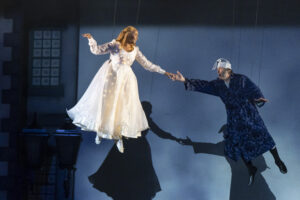 Can’t talk about A Christmas Carol without talking about the Spirits. Mentioned above, Kris Sidberry, making her Nashville Rep debut, is simply magical as Ghost of Christmas Past. Delightful, sweet and fun…all the things we think of most when we remember the past are personified in Sidberry’s performance. She doesn’t just shine in her performance, she sparkles. In part, thanks to Costumer Designer, Melissa Durmon’s literally and figuratively glowing gown!
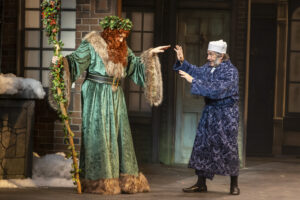 Brian Charles Rooney, seen last holiday season as Buddy the Elf in Nashville Rep’s Elf, is larger than life as Ghost of Christmas Present, and what a present his performance is. Towering above Carlton’s Scrooge (did I see light-up disco platforms under Rooney’s velvet robe?) Rooney’s Ghost of Christmas Present is cheeky, loud and bossy. Everything you could wish for in a ghost guide. Again, kudos to Durmon, and added kudos to her and her wig department team for transforming Rooney into an almost unrecognizable bacchanalian party god with flowing ginger locks and beard. Didn’t think I was into scruffy gingers, but you never know. As mentioned previously, Rooney is among those featured throughout the action as a caroler. I have it on good authority he had been dealing with a bit of laryngitis during the opening days of the show. All I know is, if that’s Rooney with laryngitis, belting out and hitting those unfathomable soprano-high notes, the rest of the run the audiences were in for a treat.
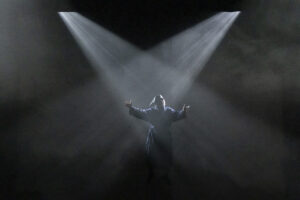
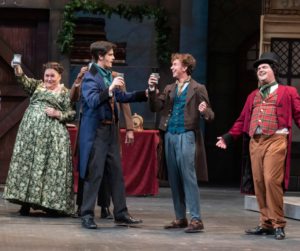 Round out the ghostly trio is Ben Friesen as Ghost of Christmas Future. Even though the show is about to enter its final week at the time of this review being posted, I’m a staunch believer that spoilers do just that…they spoil aspects of shows that are meant to surprise and entertain. To that end, Friesen’s Ghost of Christmas Future definitely delivers. Visually hauntingly brilliant and looming large, Friesen’s appearance is definitely a powerful one. Suffice it to say, his performances a Ghost of Christmas Future would no doubt make Jim Henson proud..and that’s as much of a spoiler as you’ll get from me. Not to fret though, he’s also featured throughout the show, most notably as Dick Wilkins, a friend and colleague of younger Scrooge.
 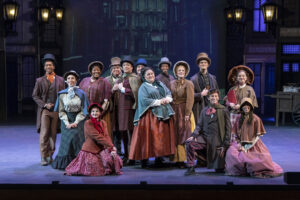 The entire cast is filled with great supporting performances. Mention should be made of Max Fleischhacker as Scrooge’s Nephew Fred, Ethan H. Jones as Mr. Blakeley, Abby Hopper as Alice Cratchit, Alex Hillaker as Henry Cratchit, David Long III as Peter Cratchit, Shelby Talbert as Martha Cratchit, Elle Wesley as Belinda Cratchit, Caroline Henry as Alice Cratchit and Emily Hooper and David Matthew Clark (on alternate nights) each sharing the role as Tiny Tim.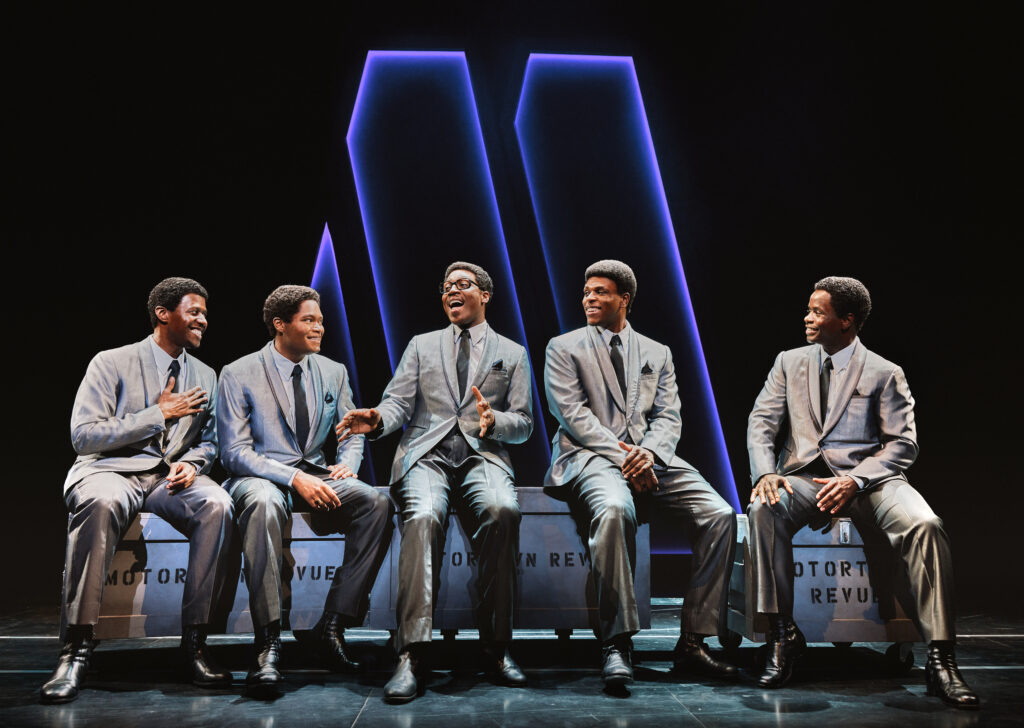
 Featuring more than 30 tunes, most of them some of Motown’s biggest and best loved hits, Ain’t Too Proud ranks, in my opinion, as one of the best jukebox musicals. All too often, jukebox musicals struggle to find the balance between storytelling and tune placement. Not the case with Ain’t Too Proud. Dominique Morisseau, who wrote the book of the musical, not only based the storytelling elements on the book by The Temptations’ only surviving founding member, Otis Williams, but also wisely broadened the musical inclusions to incorporate not just The Temptations’ music, but also that of a few of their contemporaries like The Supremes, The Isley Brothers, The Five Satins and Tammi Terrell. By doing this, the narrative flows perfectly with each tune the ideal musical accompaniment to flesh out the story. Said story is presented by Michael Andreaus as Otis Williams, breaking the fourth wall to tell his tale directly to the audience.
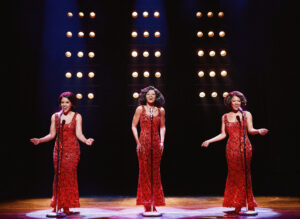
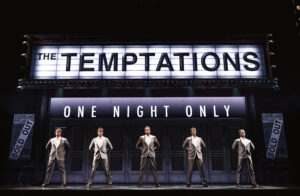 Among my personal favorite musical moments, of course the title track is simply magical. The Supremes medley is a fun added bonus, though opening night in Music City, the ladies’ mics seemed a bit low. At the top of this review, I noted that it was raining outside the theatre. Well, I’m here to tell you that during the emotional I Wish it Would Rain, a 1967 Top Ten for the group, it was ‘raining’ on my face as my eyes began to sweat. Powerful, indeed.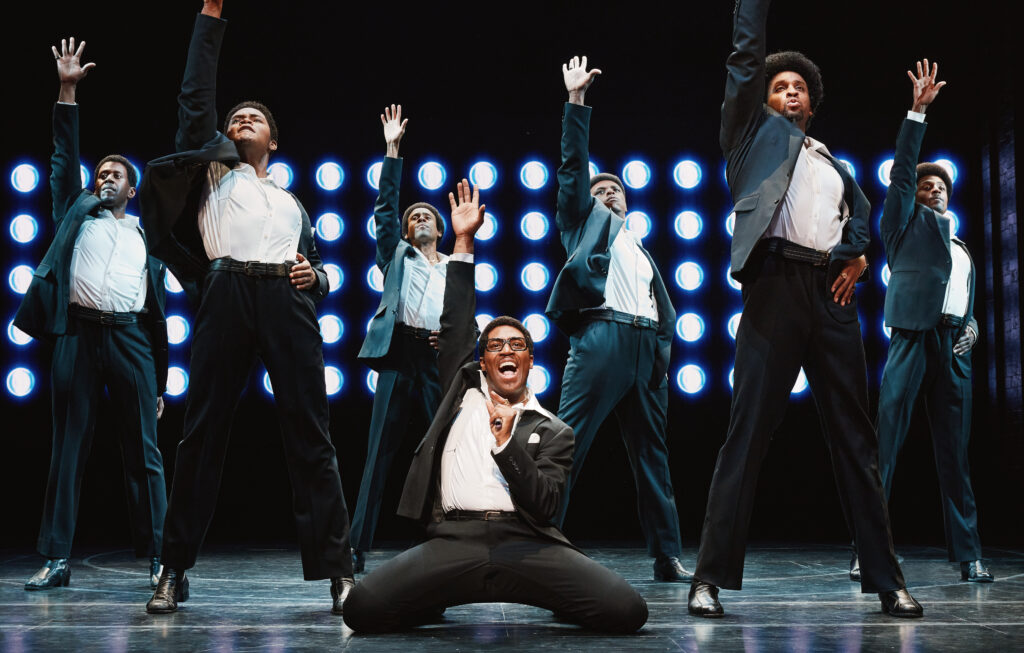
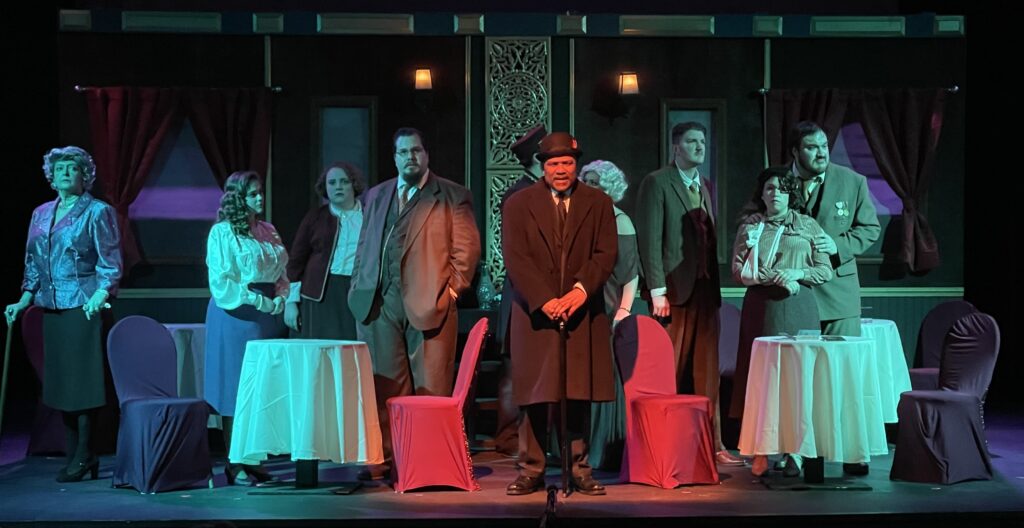
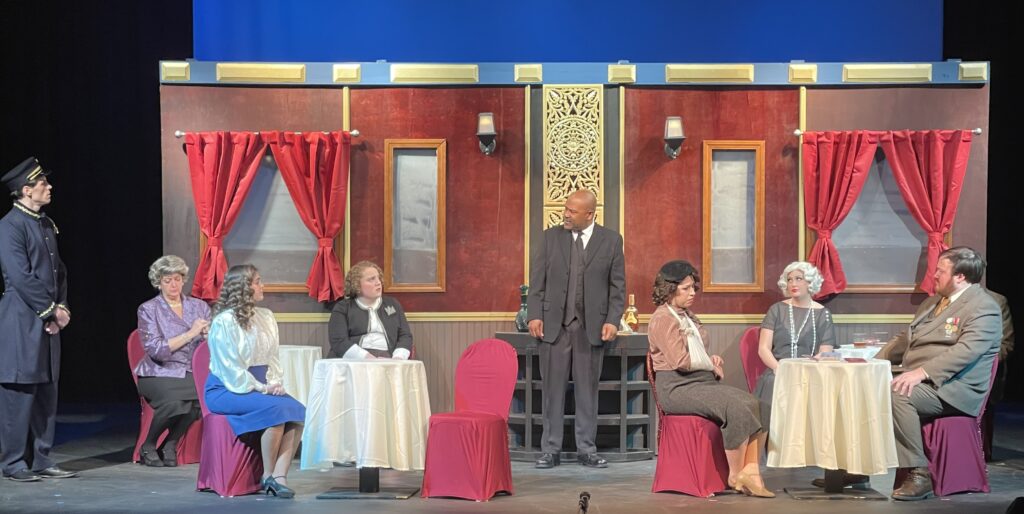
 Circle Players’ Agatha Christie’s Murder on the Orient Express pulls out of the station for two more mystery-filled rides Saturday, January 28 at 7:30pm and Sunday, January 29 at 3pm. All tickets are $27 (including fees).