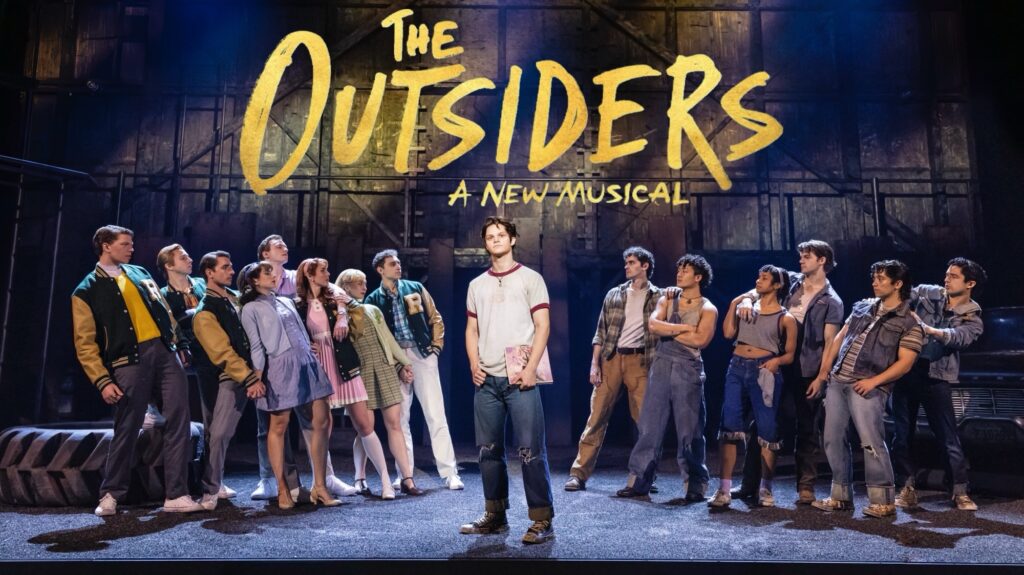
From the moment the house lights dimmed in TPAC’s Jackson Hall on October 14, the national touring production of the Tony-winning Best Musical, THE OUTSIDERS made it abundantly clear: this is much more than nostalgia, more than adaptation — it is an emotional lightning strike. If Opening Night of the show’s six night Nashville tour-stop in Music City is any indication, the show promises to bring Tulsa’s Greasers and Socs to life with gritty heart, physical daring, and a musical pulse that lingered long after the final bow.
Based on S.E. Hinton’s seminal 1967 novel and a more than noticeable nod to the beloved 1983 Francis Ford Coppola directed film, that starred a who’s who of Hollywood up-and-comers including C. Thomas Howell, Matt Dillon, Tom Cruise, Diane Lane, Ralph Macchio, Patrick Swayze, Rob Lowe & Emilio Estevez, THE OUTSIDERS is a coming-of-age tale rooted in class divides, brotherhood, trauma, and the fragility of youth. The touring production, carrying the same Tony-winning creative team behind the Broadway show—director Danya Taymor, choreography by Rick & Jeff Kuperman, design courtesy the design collective AMP featuring Tatiana Kahvegian—hooks into the source material while carving out a new theatrical identity.
As is always the case, whether the story unfolds on the pages of the original book, or the aforementioned star-packed 80s now-classic cinema, the heart of THE OUTSIDERS always lies rests on the young shoulders of Ponyboy, Johnny, and Dallas — and in this magnificent tour cast, they are delivered with conviction.
Ponyboy Curtis (played by Nashville’s own Nolan White) is an earnest center. His vulnerability is palpable: you feel his longing, his anger, his fear. The softer, more introspective moments become small victories of clarity. When Ponyboy admiringly watches Paul Newman on the movie screen, dreaming of escaping his current us-vs-them small-town life, he’s instantly relatable to anyone who grew up unsure of what the future holds for them. When he recites Robert Frost’s Nothing Gold Can Stay, there’s not a dry eye in the house. Such emotion from such a young man is breathtaking. Later, when confronting what it means to “stay gold”, White again proves talent beyond his years. As I watched his performance on Opening Night of the Nashville dates, I marveled as the depth of his performance.
 Johnny Cade (Bonale Fambrini) brings quiet intensity. His internal fragility — the sense that one more blow could break him — is juxtaposed with flashes of courage, especially in the church escape and later in his struggle to be seen. The camaraderie between Fambrini and White as Johnny Cade and Ponyboy Curtis is so believable, you just know these two young actors are forging a lifelong bond as friends on and off-stage.
Dallas Winston as portrayed by Tyler Jordan Wesley is swagger and sorrow intertwined. When the script calls for it, he roars like a lion, conversely, when necessary, he retreats far into himself, caught between angry rebellion and fracturing grief. In the inevitable climactic moments (surly by now we’ve all read the book or seen the movie), his breakdown feels earned — not sensational, but visceral, and sadly necessary.
The supporting ensemble (Sodapop, Two-Bit, Cherry, Bob and the rest of the Greasers and the Socs) feels fully realized. Corbin Drew Ross’s Sodapop Curtis, a standout, has infectious warmth, and yes, there’s no denying he looks the part, too. When he takes off his shirt early on in the show, I’m pretty sure I heard audible gasps as he revealed his sleek physique. I even asked my date for the evening (a dancer, herself) if she knew if he was a dancer or not. I also gotta mention Ross’s speaking voice. Meek and unassuming, I swear he’s having fun with the audience seeing if we think he sounds like Charlie Hunnam’s soft-spoken version of Ed Gein, but I digress.
As Cherry, Emmy Hearn soars, especially in moments where she bridges the divide between Socs and Greasers. A Cherry’s Socs steady, Bob, Mark Doyle paints the perfect high school bully and personification of thorn in Ponyboy’s life. Travis Roy Rogers’ Darrel Curtis, the eldest of the Curtis boys, finds a perfect balance between forced adulthood as the unplanned patriarch of the family, while simultaneously exhibiting his own self-doubt and unrealized dreams. Jaydon Nget’s Two-Bit brings a subtle but studied undertone to the wisecracking youth.
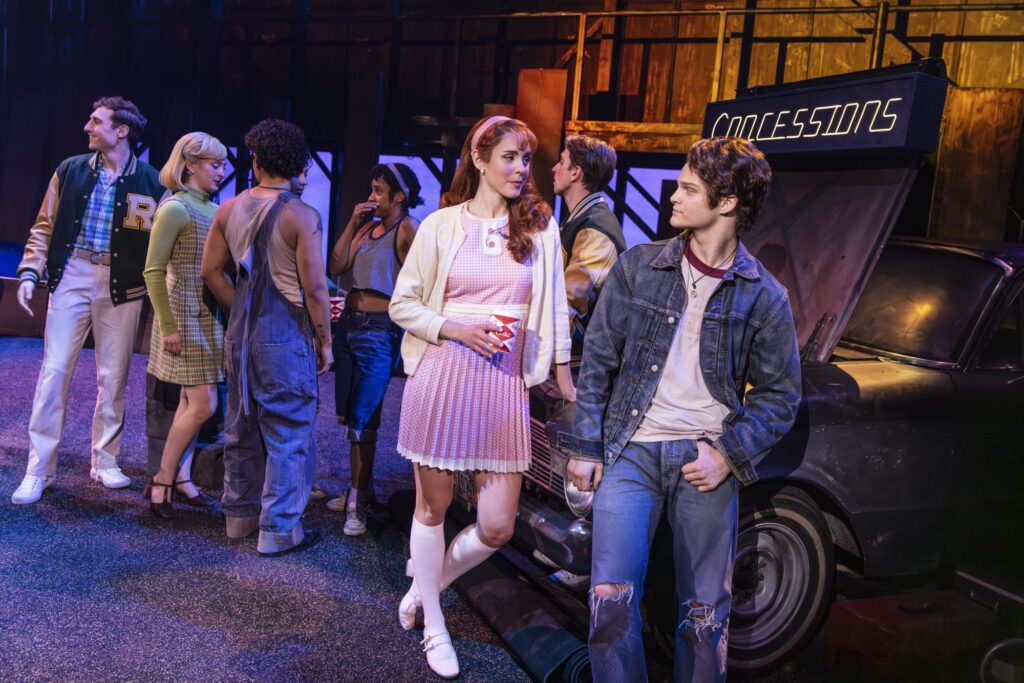
The structure propels you forward. With rapid scene changes, interwoven monologues and dreamlike transitions, it is never dull. The minimal scaffolding, projections, and shifting platforms keep the world lean yet alive. A perfect metaphor for the young cast themselves, lean, strong, always moving forward and alive. Interestingly, even before checking the Playbill and seeing that Kahvegian is credited as having created the scenography, I whispered to my date for the evening that I was coining a new term setography, because even when wood planks, tires, and various other elements of the minimal set were moved between scenes, they were done so-by the cast, no less- with such precisions and grace that the we at once unnoticeable, yet seamlessly part of the overall choreography of the piece
 Coining another term, the fightography, especially in the pivotal confrontation between the Greasers and the Socs, is now the most beautiful movement I’ve ever seen on the stage. That honor, previously held by the quick/sharp jazz movement of the fight between West Side Story’s Sharks and Jets, no fully belongs to THE OUTSIDERS’ Greasers and Socs. Magnificently aided by Brian MacDevitt’s impactful lighting design, Cody Spencer’s chillingly vibrant sound design, Jeremy Chernick and Tillis Meeh’s mood-intensifying special effects design, the aforementioned AMP featuring Tatiana Kahvegian’s Tony-nominated scenography, and choreography by Rick and Jeff Kuperman, the fight choreography — punches, tumbles, and heart-pounding tension the show is choreographed to haunt, with no detail unattended. Slow-mo momentary freezes, punctuated by lighting cues, thunderous sound and an on-stage downpour, create a scene like none ever witnessed. A hauntingly perfect moment that’s likely forever etched into memory.
 With a score by Jonathan Clay and Zach Chance, known collectively as folks duo Jamestown Revival, and Justin Levine, who also wrote the book of the musical, the score of THE OUTSIDERS fully embraces the rural small-town setting. Heck, the first number set the tone and time with the aptly named Tulsa ’67. THE OUTSIDERS score isn’t one that you’re likely to be humming after the show’s over. But, in the moment-while watching the story of young people trying to figure out who they are in their world as they struggle with inherent class division, sadness and expectations-realized or dreamed-the musical numbers perfectly propel the story, the emotion and the hopefulness of the characters. Fans of the novel might know that Ponyboy is reading Gone With the Wind. For the musical adaptation, Margaret Mitchell’s classic has been replace, dare I say, more fittingly, with Charles Dickens’ Great Expectations. To that end, Great Expectations, an impressive all-in musical number midway through Act 1, as lead by White’s Ponyboy, becomes a pivotal point as the audience fully realizes how trapped our antihero feels. Act 2’s Soda’s Letter, performed by Sodapop (Ross), Darrel (Rogers) and Ponyboy (White), in its raw, revealing, secure-in-their-masculity brotherhood realness, proves a tender audience favorite. Dallas (Wesley) and the company’s Little Brother, the perfect eleventh hour soulful and soul-gripping emotional melody. Of course you can’t have a THE OUTSIDERS musical without paying tuneful homage to the phrase “Stay Gold”. That said, the show’s final number, Stay Gold featuring White’s Ponyboy and Fambrini’s Johnny lyrically recounts the action of the story, reiterated Johnny’s wish for his friend and just like the precious metal referenced in the phrase, reflects brightly the beauty of friendship.
THE OUTSIDERS National Tour continues at TPAC’s Jackson Hall with a Friday evening performance, matinee and evening performances Saturday and Sunday. CLICK HERE to tickets and showtime details.
Having officially kicked off the National Tour in Tulsa (appropriately enough) just last month, following its Music City dates, THE OUTSIDERS tour continues with a four-city Texas tour in Austin, San Antonio, Dallas and Houston, then it’s on to Atlanta, GA, Durham, NC, Greensboro, NC, Orlando, FL, Tampa, FL, St Louis, MO and more through September of 2026. CLICK HERE for specific dates and the full tour schedule. Of course THE OUTSIDERS is still enjoying a hugely successful Broadway run at the Bernard B. Jacobs Theatre, so if you’re in New York, CLICK HERE. To keep up with the latest from THE OUTSIDERS, follow them on Insta, Facebook, Threads and YouTube.
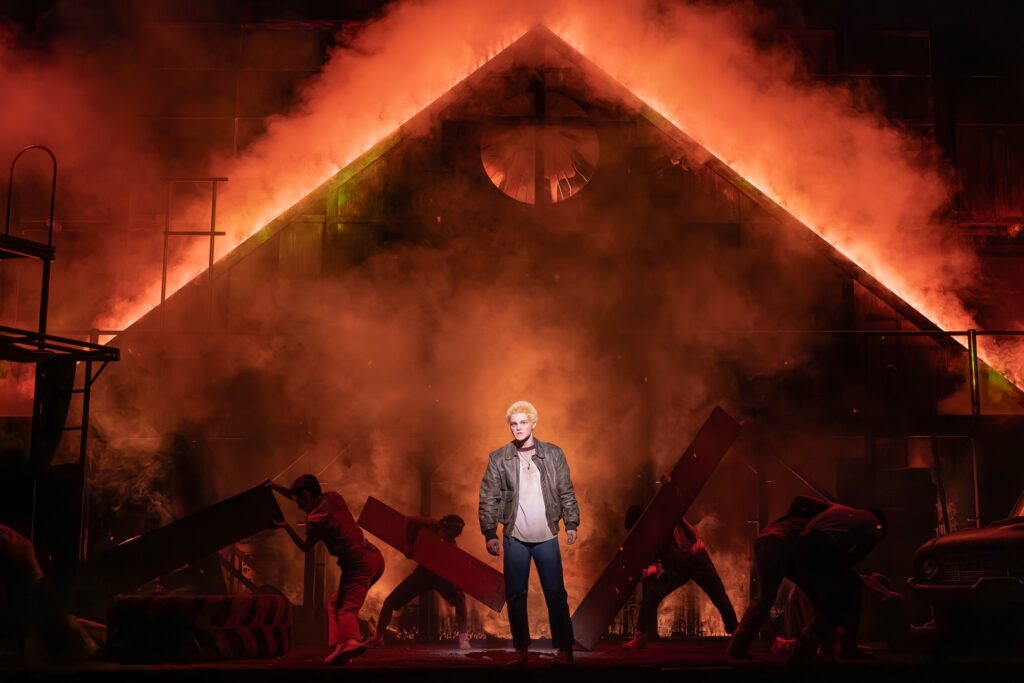
Following THE OUTSIDERS, TPAC’s Broadway Season continues with the return of a favorite, Disney’s BEAUTY AND THE BEAST with an extended run November 4-16. CLICK HERE for tickets and showtimes. You can also follow TPAC on Insta, X, YouTube and Facebook.
As always, if you wanna follow JHPEntertainment to find out who we’re chatting with for my next Rapid Fire Q&A, or for our take on the latest local and national theatre, music and movie offerings, find us on Facebook, Insta and Twitter.
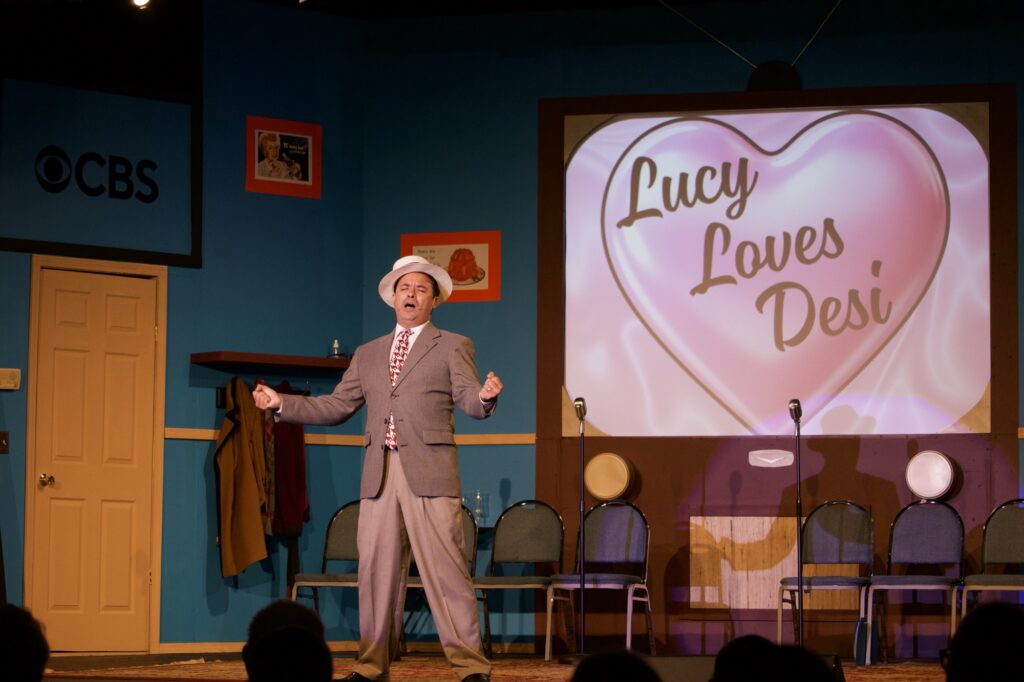
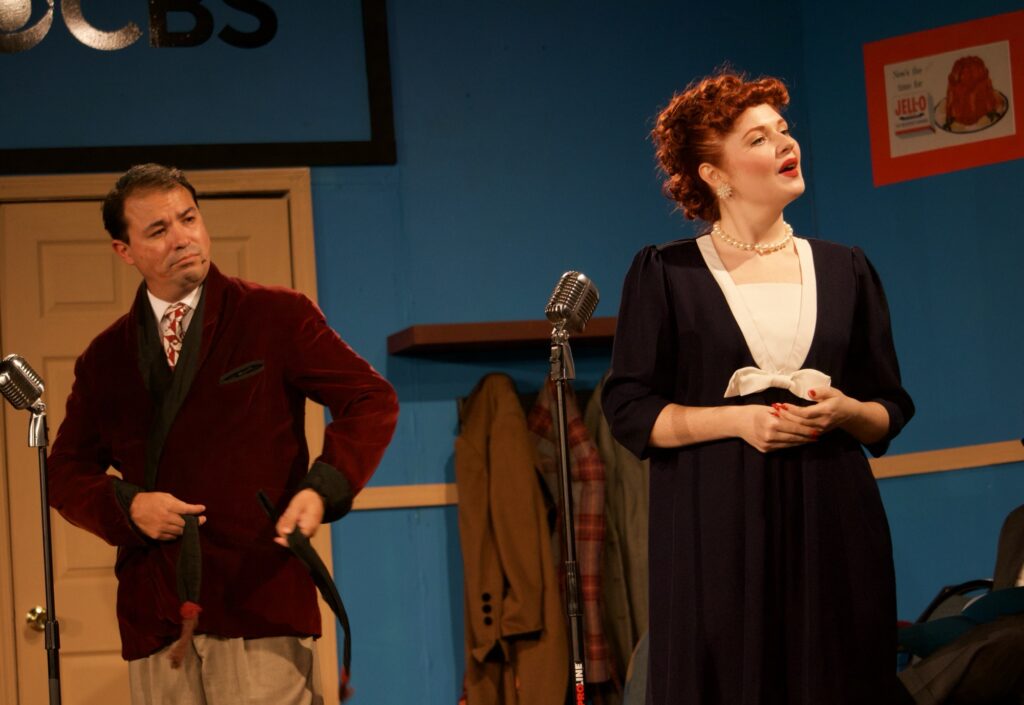
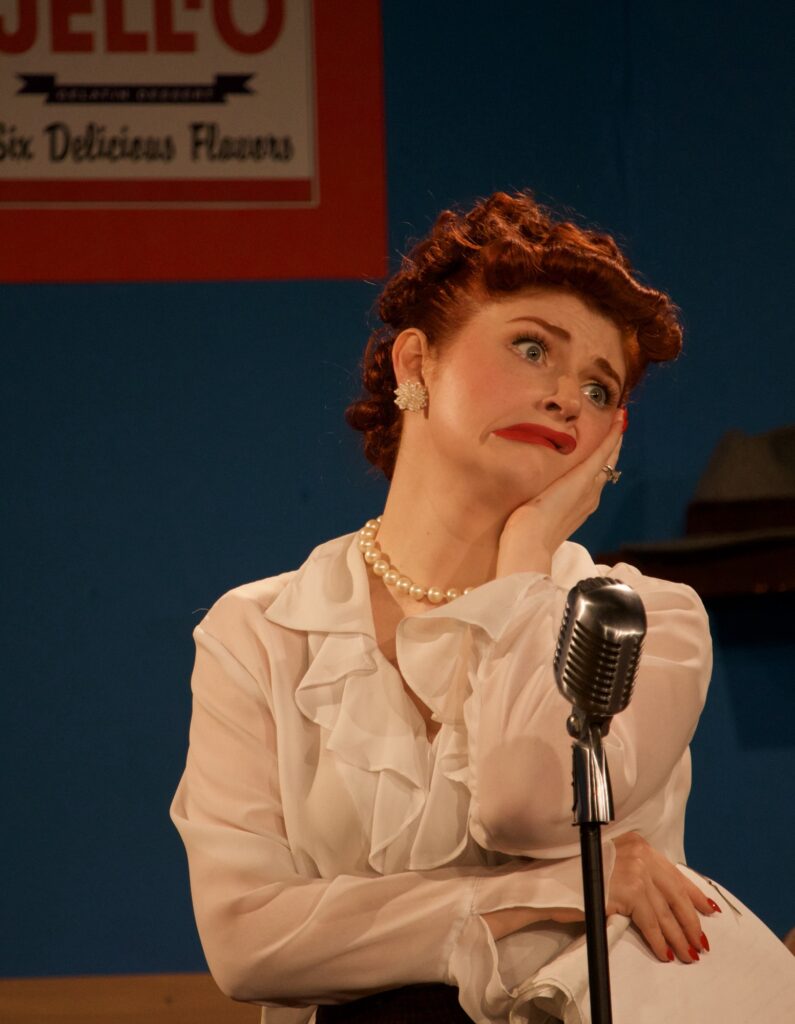 While none of the cast truly look like their real-life counterparts, it’s not an impersonator show in Las Vegas, after all, Grace Gaddy’s Lucille Ball is, when all is said and done, a loving tribute to the iconic comedian. From her expressive eyes and impeccable comic timing to the way she embodies Lucy’s signature blend of glamour and goofiness, Gaddy gives a performance that’s joyously alive. Her physicality and facial expressions elicit hearty laughter while paying true homage to one of television’s greatest icons. My only hesitation in a giving Gaddy’s Lucilly Ball a full five star review rests on the fact that Gaddy’s choice of voice isn’t quite there. Yes, Lucille Ball’s real-life voice was quite different from her quicker, higher-pitched Lucy Ricardo voice, but Gaddy, try as she may, never quite hits the mark vocally. Of course the average Keeton audience member will easily overlook this because of Gaddy’s otherwise full-force embodiment of the iconic comedic actress. It should be noted that Gaddy’s Lucy is at her best not only when recreating a few classic I Love Lucy moments–her lip-smacking, face-pulling expressions during a quick look at Vitameatavegamin is indeed near-perfection–but also during scenes that show the rarer more vulnerable moment of the woman behind the legendary laughs.
 Even though he plays the man upon whose book this play is based, Michael Welch has the benefit of playing someone most people have never seen and whose physical appearance isn’t as easily recognized as the four stars of the groundbreaking sitcom. That anonymity works to Welch’s advantage as he simply shines as Jess Oppenheimer, serving as the grounding force amid the behind-the-scenes chaos. His balance of humor and sincerity keeps the story engaging and human. His scenes between Gaddy’s Lucy and Rainwater’s Desi truly exemplify Oppenheimer’s role as both close friend and trusted collaborator in the creating of one of the world’s most beloved sitcoms.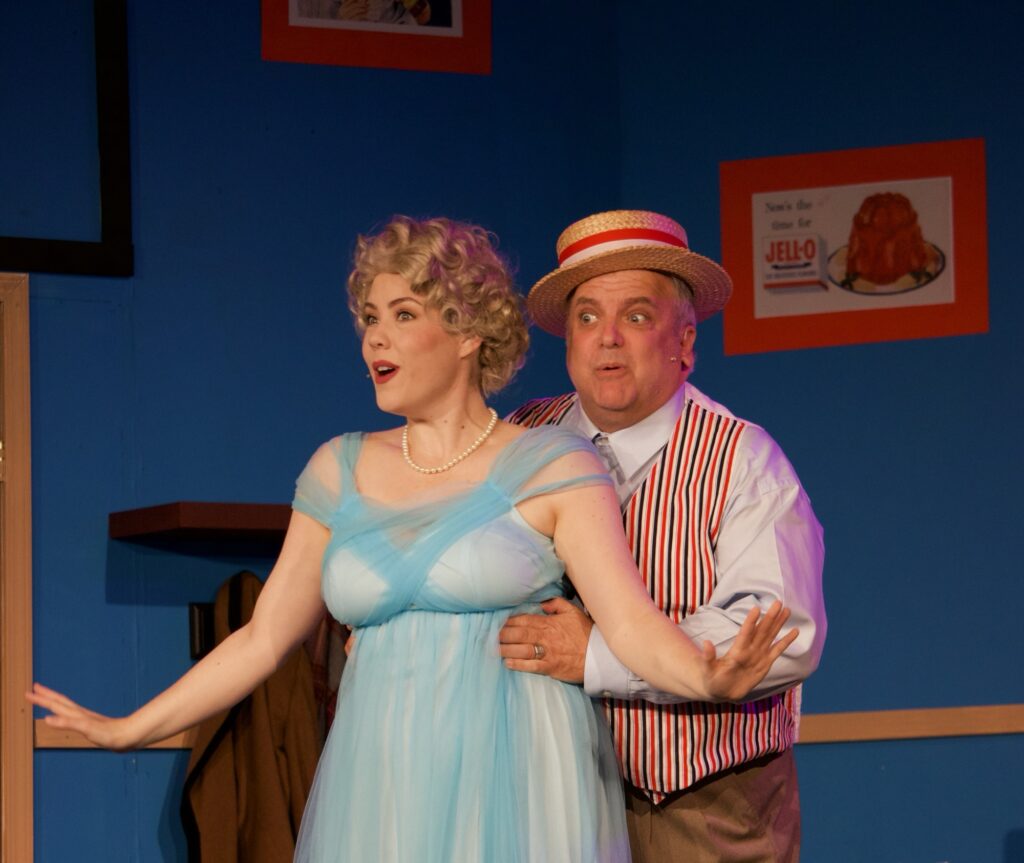
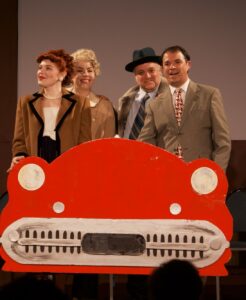 Musically, this expanded version of the show delights with nostalgic selections that evoke memories of classic I Love Lucy episodes, including I’ll See You in C-U-B-A, Friendship, California Here I Come, and the beloved I Love Lucy theme song, complete with a bit of a did you know who wrote it spoiler and Rainwater and Gaddy singing the rarely heard lyrics. Enhancing the musical score throughout, frequent Keeton musical director Roger Hutson’s piano recordings add a lighthearted, era-appropriate touch, while Steve Love’s sound design, Brooke Sanders’ lighting, wig design by Alison Gaddy (loosen up those wigs so they look more natural and like the real-life ladies they’re styled after) and Denese René Evans’ costumes work in harmony to transport the audience straight to midcentury Hollywood. Evans’ costumes throughout are quite fun and seemingly period authentic, I do wish that Lucille’s Emmy dress was accurate, through…again, I’m just being an overzealous Lucy fan.
 In spite of my above-reference initial hesitations and a strangely tepid Opening Night audience (Note: it’s ok to laugh out loud and to applaud after a particularly entertaining scene) and what could probably be chalked up to first night jitters from the cast resulting in the majority of Act 1’s delivery being a tad flat with several lines coming across as monotone with not real inflection and somewhat memorized, rather than convincingly felt and delivered with punch, those initial hesitations faded once the cast found their groove.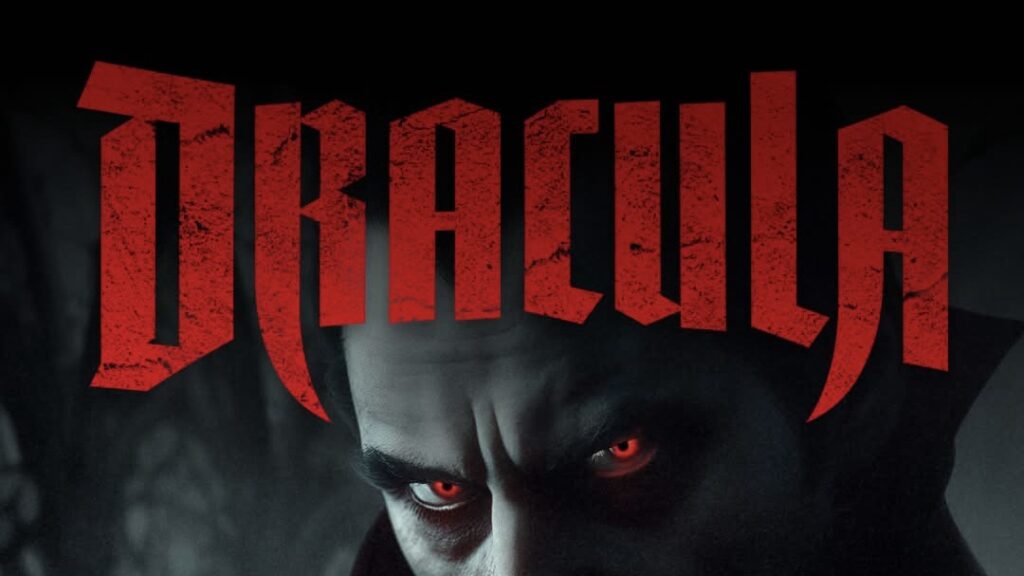
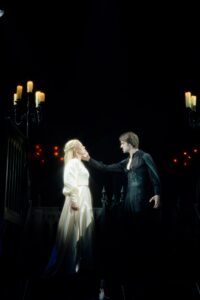 Jay Sullivan is chilling as Count Dracula. He doesn’t simply linger
 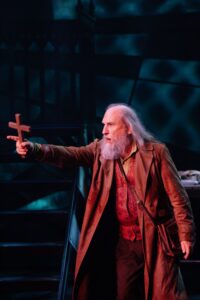 Opposite him, Sullivan’s performances is beautifully balanced by Brian Webb Russell who gives a gravely controlled performance as Abram Van Helsing, anchoring the heroic opposition with clarity of intent and moral weight. Russell’s Van Helsing offers the perfect amount of sharp intellect and righteous urgency. His verbal sparring with Sullivan’s Dracula are electric—two forces circling each other in a battle of will and belief.
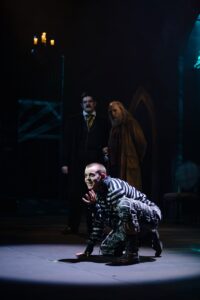 The trio of Lane Adam Williamson’s Renfield, DéYonté Jenkins’ Norbert Briggs and Catherine Gray’s Margaret Sullivan are tasked with carrying a bit of dark humor that helps temper the heavy suspense.
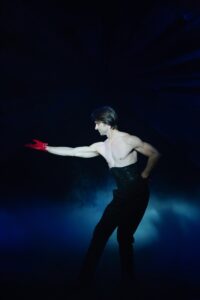 Then there’s Logan’s costumes. Every costume a work of art. The female cast members regal and radiant in finery fitting the period of the action. Van Helsing’s leather wardrobe, perfectly fitting for battle. Renfield’s asylum attire tattered and torn, but with a hit of glamour by way of some blinged-out blood spots. But it’s Dracula’s wardrobe that is truly glamorous and entrancing. From his first appearance bare-chested, but corseted in black to a black jacket accented with blood-red beaded erratic epaulets when he returns from a mysterious night right. (Gotta love that this particular look gets no mention within the context of the play, but is a jarring visual clue to the most astute audience member). The beauty of that costume not without merit, my personal favorite is yet another black jacket and pants combination. The jacket, from one side appears nothing special as the hem hits just below the actor’s waist, but from front view, its asymmetrical as the other side is more the length of a morning coat. Perhaps another visual clue of the duality of the wearer? Just when you think Logan’s used up his bag of costume tricks, in the final scene Dracula appears the most sparkly transfixing figure yet, but I’ll let you experience that on your own.
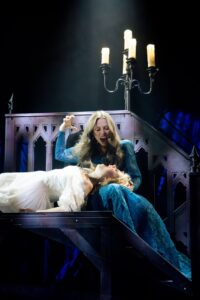 What impresses most about this DRACULA is how it leans into its horror while refusing sentimentality. McNulty’s choice to portray Dracula as predator (not tortured romantic) is honored here. That clarity gives other elements room to breathe: the trauma of Lucy’s affliction, Mina’s struggle with memory and agency, Van Helsing’s moral burden, Seward’s scientific disbelief challenged by the impossible.
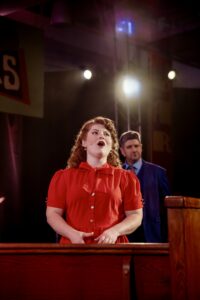 At the center of the action is Philip David Black as the suave, gambling man Sky Masterson. Black brings the expected effortless charisma mixed with the perfect blend of uncertainty that only unforseen love can cause. His Luck Be A Lady is smooth and sweet, showcasing his ability to walk the line between rogue and romantic with ease. His chemistry with Rebekah Howell’s Sarah Brown is electric, especially in the Havana sequence where sparks (and drinks) fly. Howell, ever the vocal powerhouse, lends depth and sincerity to the morally upright mission worker. Her rendition of If I Were a Bell, a charm-filled Act 1 highlight.
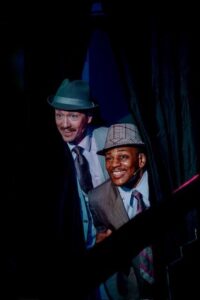 It comes as no surprise that Brian Charles Rooney’s Nicely-Nicely Johnson is a true showstopper. With impeccable comic timing and a dynamite voice–gotta love that sopranista range–Rooney brings down the house in the rollicking Sit Down, You’re Rockin’ the Boat—arguably the night’s most rousing number. He’s well matched by Jahi Emaud’s Benny Southstreet, whose swagger and harmony work are equally sharp. If you’re reading this, Studio Tenn, I’ve got your Wallace and Davis cast for your upcoming holiday production of White Christmas right here with these two!
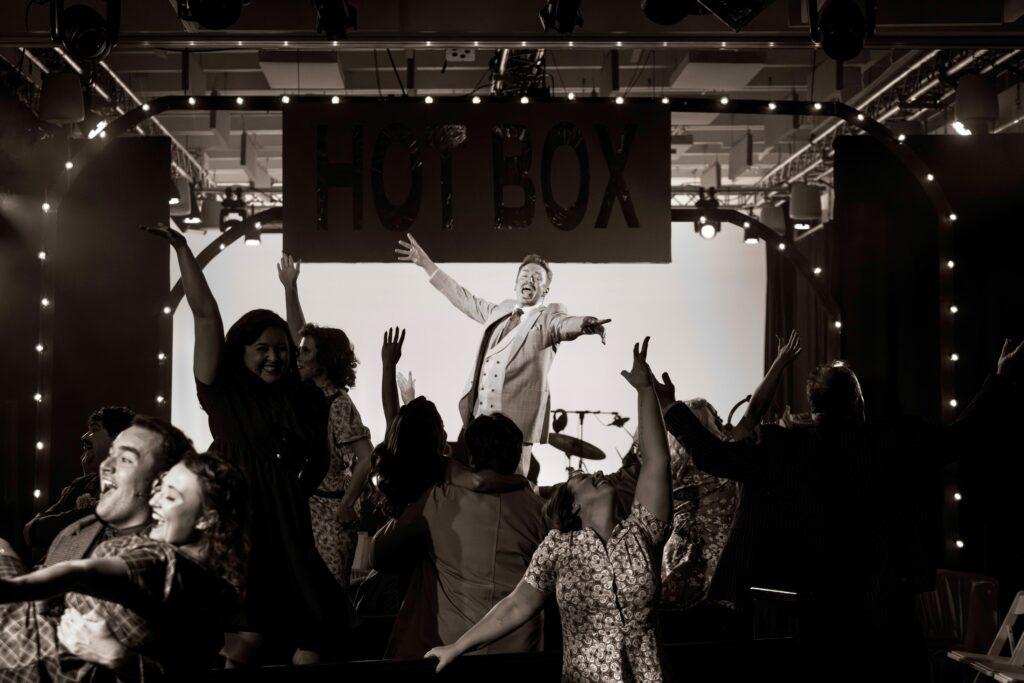
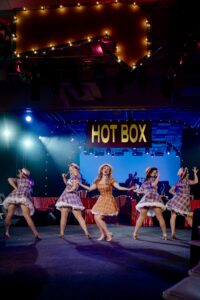 The Hot Box numbers are just plain fun, led with style and precision by Kelsey Brodeur (also serving as dance captain), alongside the effervescent Madison Crosby, Emily Stephens, and Allie Spengler. Their ensemble work perfectly sizzles thanks to playful choreography courtesy Allison Little, who keeps the movement crisp and era-appropriate while still leaving room for individual character. With Stein’s Adelaide, the Hot Box Girls’ performance of A Bushel and a Peck (one of my personal favorite Doris Day tunes, recorded the year the Broadway musical debuted) wonderfully presents the flitatious innocence of such numbers from that era.
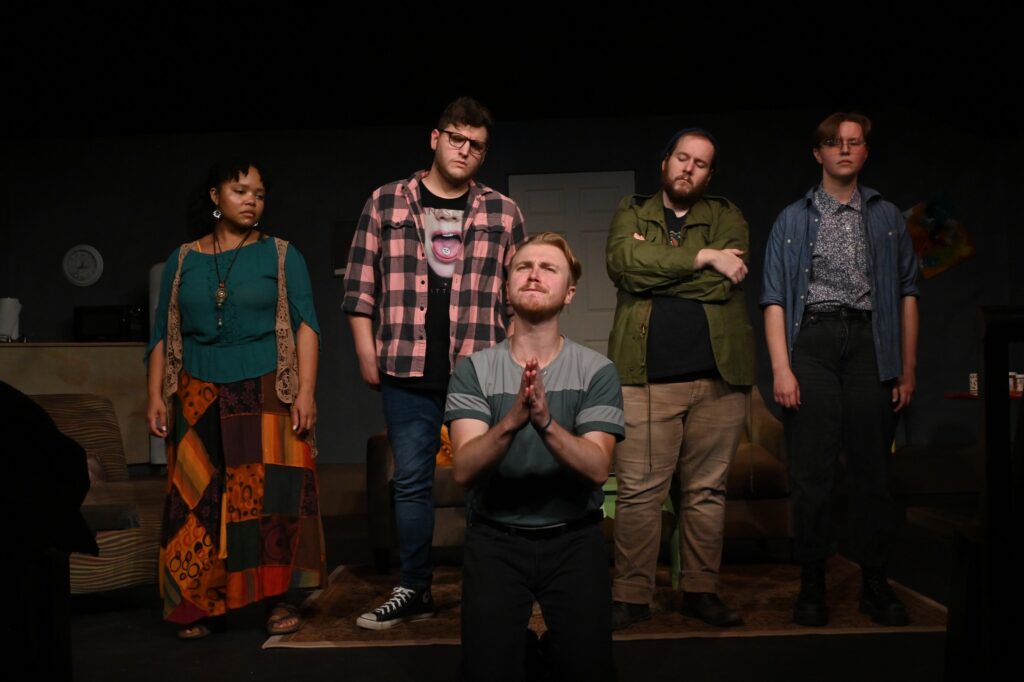
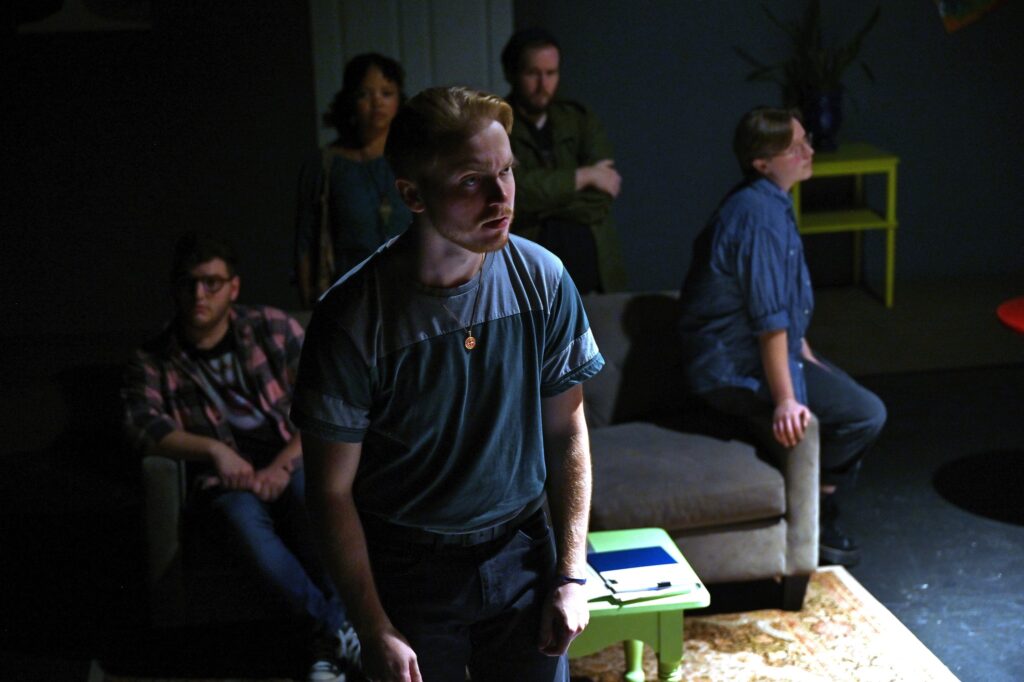
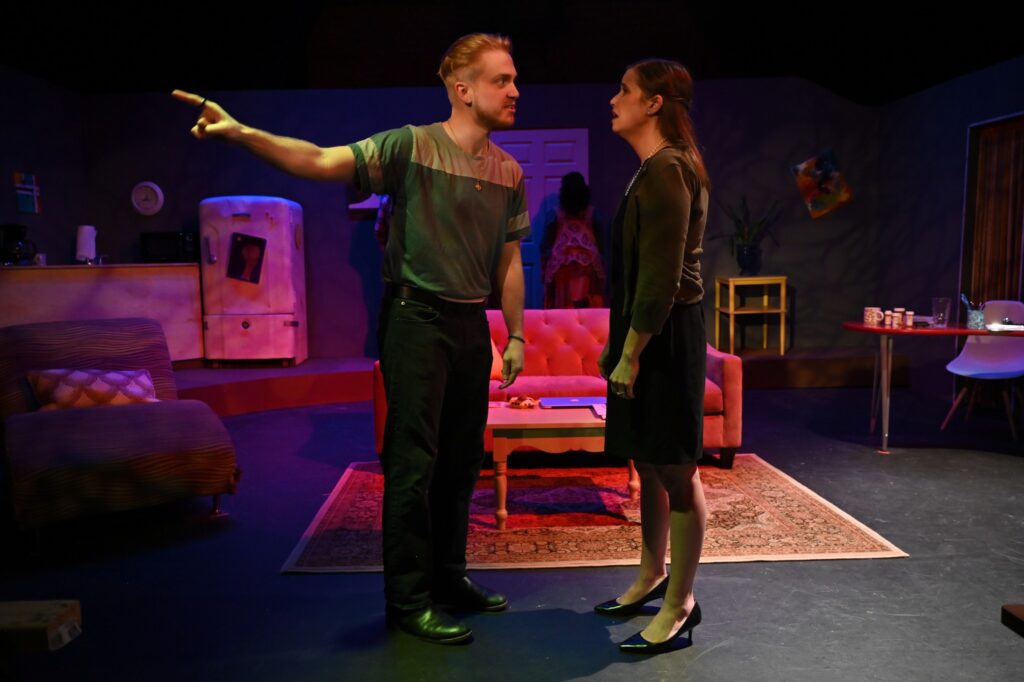
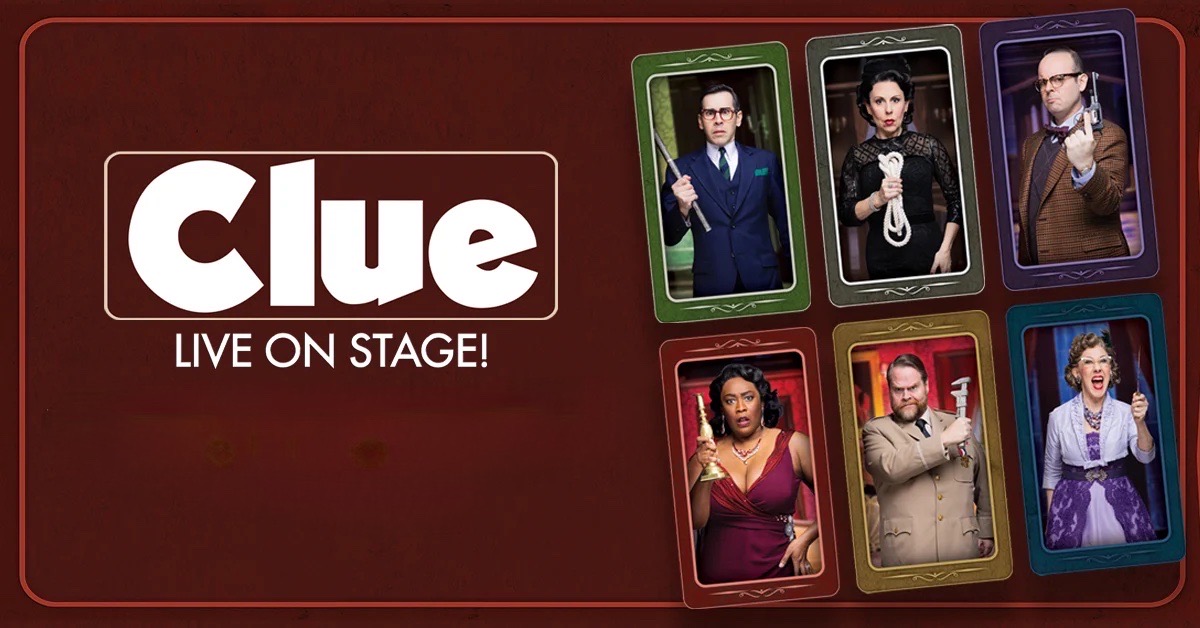
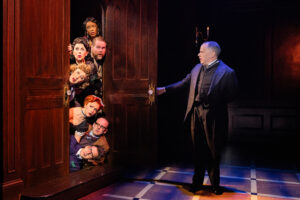 Where character portrayal is concerned, Clue could be considered a bit of a theatrical anomaly. Typically actors stepping into roles made famous by others are charged with making the character their own, but Clue, a true farce, almost demands that the company present the characters pretty much as those who portrayed the roles in the film had done. That’s not to discredit the actors in any way, but to thank them for brilliantly recreating moments and actions of the film to glorious life live on stage.
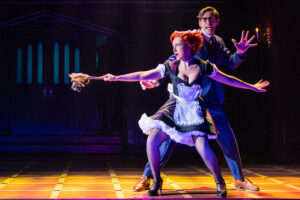 John Shartzer’s Mr. Green (the Michael McKean role in the film) is the scene stealer of the show. With precise comedic timing, hilariously deadpan reactions and borderline acrobatic slapstick movement, Shartzer is suspect Number 1 is so many ways.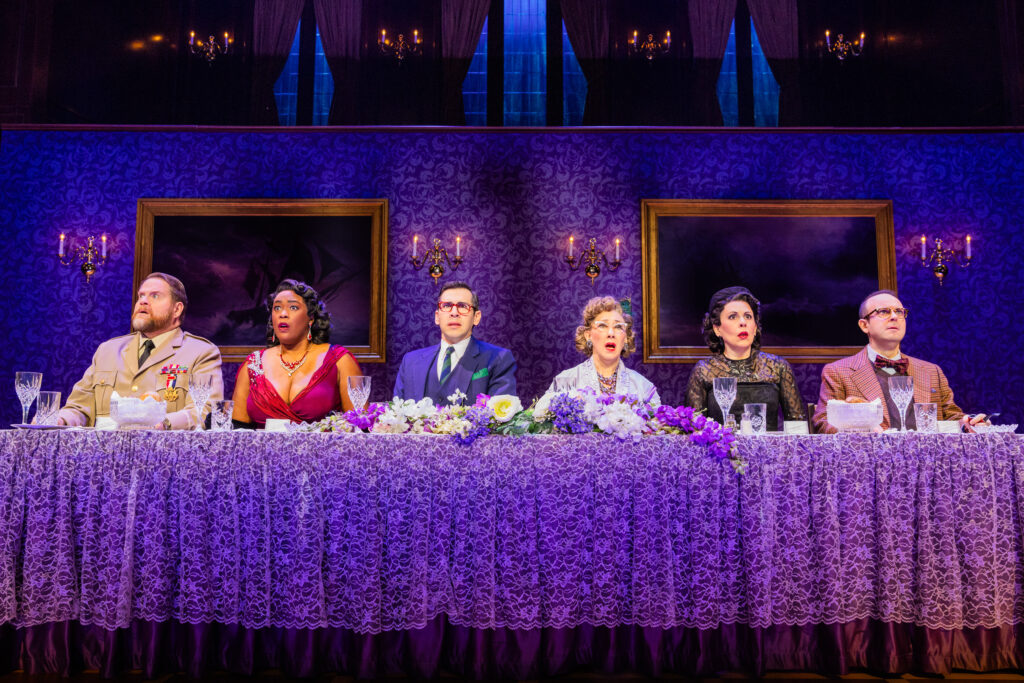
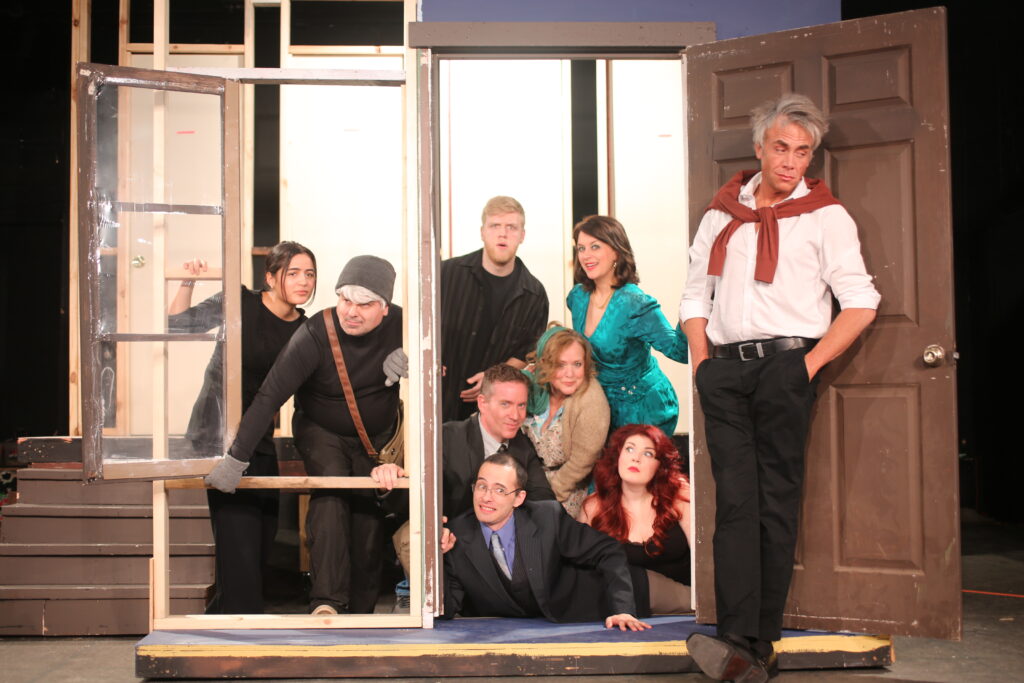
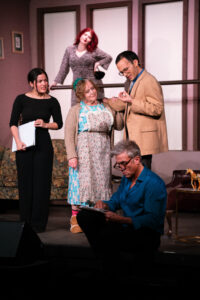 For The Keeton’s presentation, co-directors Maguire and Gray have enlisted a great mix of newcomers and seasoned performers including
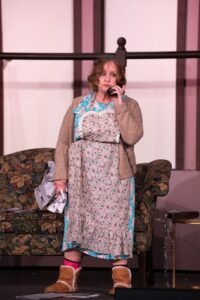 Now, back to the show…From the character’s initial entrance, Lloyd offers the first broken fourth wall as he stops the action on stage when one of the actors misses a prop cue. Carmichael’s Lloyd bellows from the audience and the fun begins. The actress Lloyd chastises for missing her cue is none other than Ann Street-Kavanagh, as middle-aged actress Dotty Otley, who’s playing the housekeeper in the show-within-a show. Street-Kavanagh is perfect for the role of Dotty as she’s never better than when she’s playing it a bit confused and daft. Like Lloyd, Dotty is also embroiled in a love triangle. All Dotty’s Nothing On character wants to do is put her feet up and enjoy the the telly. Oh, and did I mention she enjoys a snack of sardines? Worth noting, since a plate of the fishy snacks result in much of the show’s hilarity when left about, or taken off, cluing the other visitors in Nothing On that they’re not alone in the house.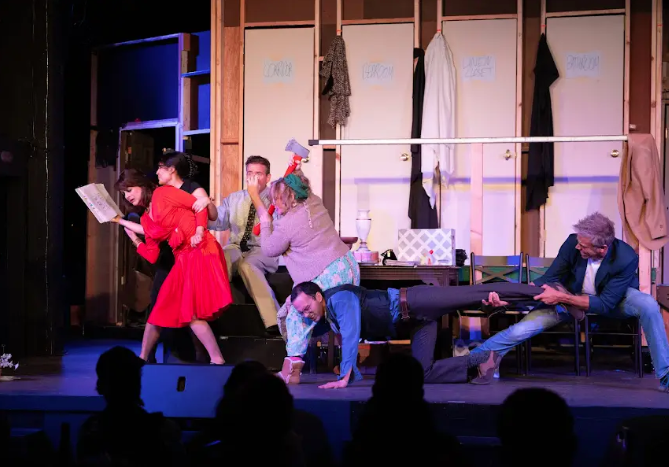
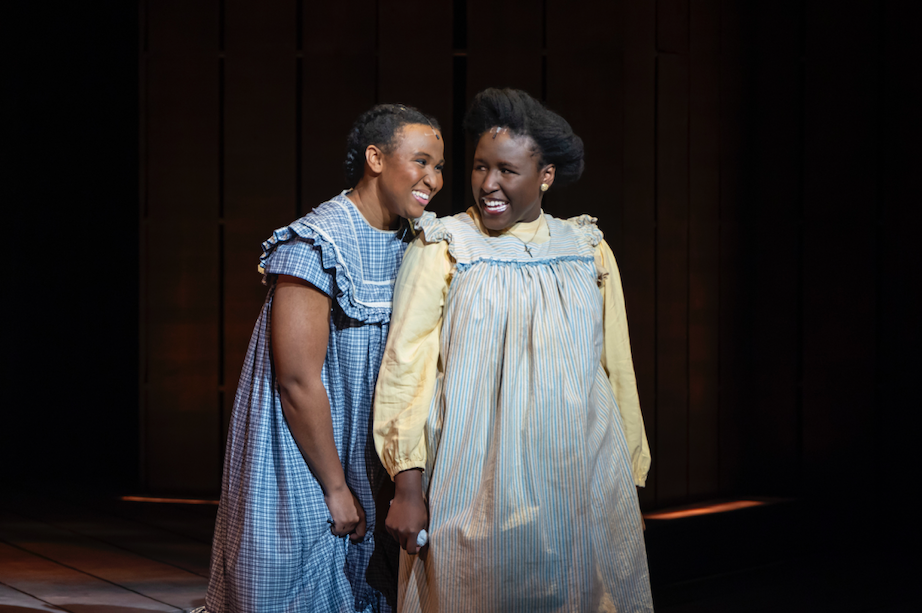
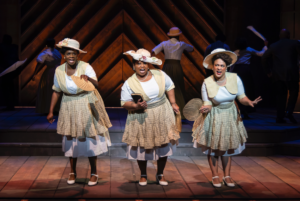 Then comes the entire company for Mysterious Ways, a hymn of a song, set in the local church (effectively indicated as such by a singular light source casting the shape of a illuminated cross onto the wall behind the action) where the entire community sings of God watching over them no matter. Nia Safari Banks’ costumes are a highlight of this number, for if you’ve ever had the great fortune to attend a Black Church, you KNOW the way you present yourself before the Lord IN the Lord’s House is of utmost importance! Which leads me to the Church Ladies, Darlene, Doris and Jarene, a snooping, truth-tellin’ trio who pop up now and again throughout the show to fill the audience in on the latest happening. Lindsay Kay Pace, Yolanda Treece and Meggan Utech a divine trio indeed as the Church Ladies. Characters I know all too well, for you see, growing up, there were two ladies in the church my family attended who I lovingly referred to as my very own ‘Church Ladies’. They were always there to stick their noses in and offer advice, unsolicited though it may have been. I can’t be the only one who kind of wishes Pace, Treece and Utech would develop their own show around these three characters. Not only do they provide intel, but plenty of smiles as the absurdity of their insertion into every situation.
 Giving the Church Ladies something to talk about…enter Mister, as played by Elliott Winston Robinson. As Robinson alluded in my
  Speaking of memorable men, Gerold Oliver is just sooooo good as Harpo, Mister’s ne’er do well son. He get’s his moment to really shine alongside the men during Brown Betty, a song praising the beauty of Black women, Raven Buntyn’s Squeak, in particular. Speaking of Squeak, thank goodness Buntyn vocally pays homage to the character’s name by occasionally hitting a pitch so high that she actually squeaks when she talks, something the recent film adaptation opted not the do. I also loved the quick pop-in appearances by some of the female ensemble during this one, too. Oliver’s Harpo offers not only comedic levity from time to time, but also becomes the first man in the story to break the cycle of violence towards women.
 Of course Harpo has a bit of assistance in breaking that cycle in the form of his no-bullshit-taking wife, Sofia, played to the absolute hilt by the gloriously talented Shinnerie Jackson. It was everything I could do to remain in my seat at the end of her anthemic Hell No number. The thunderous applause that followed was evidence I was not alone in my appreciation of the number and Jackson’s performance. Cause here the thing, Jackson’s portrayal of Sofia hits all the notes, not just musically, but emotionally. When she’s strong and defiant, the audience feels that defiance and empowering presence. When Sofia is temporarily defeated, we feel that too. An exemplary performance all ‘round!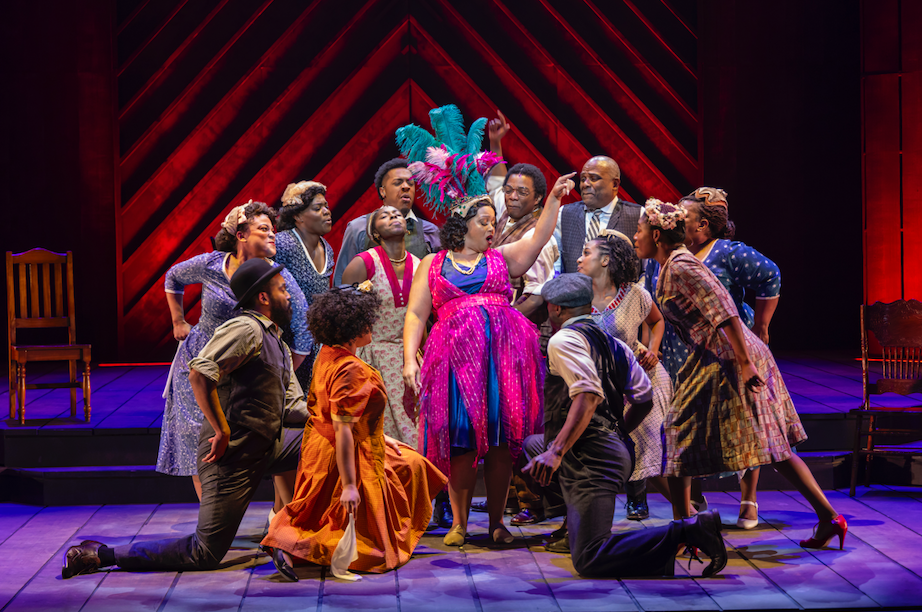
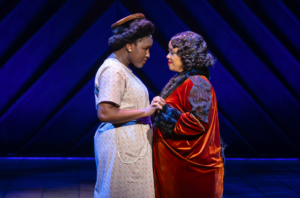 The chemistry between Nicole’s Shug and Hardon’s Celie is simply magical. You truly believe these two women have discovered a love and bond like never before.The progression of this relationship is perfidy paced and played out not doubt by way of the director’s precise instruction, but also these two actors’ understanding a care for the characters.