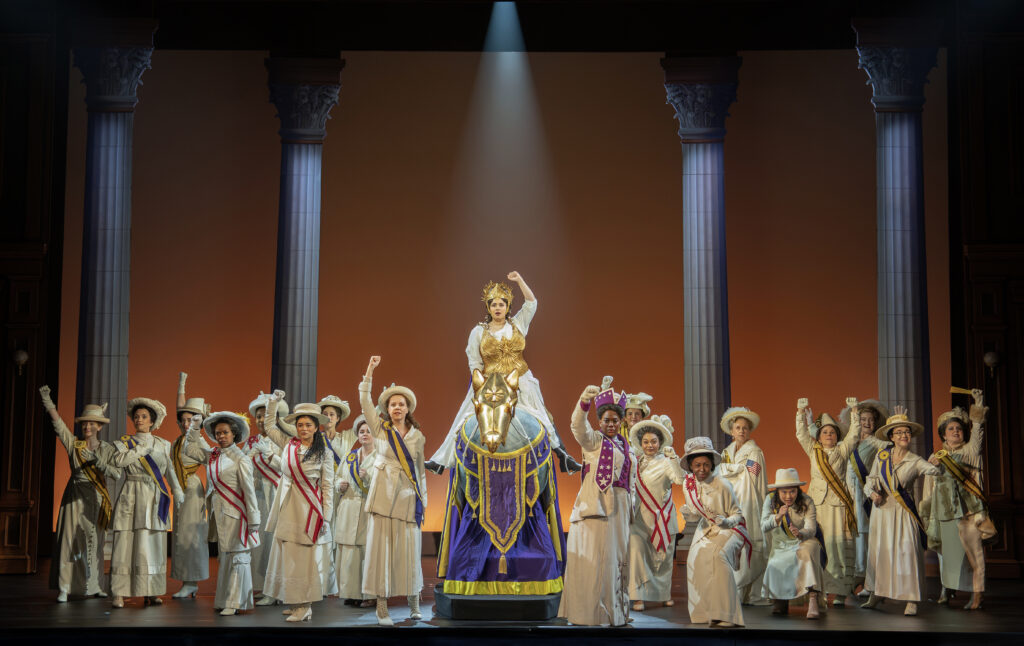
There are opening nights… and then there are opening nights that feel cosmically aligned with history. On March 3, 2026, the national tour of Suffs unfurled its banners at TPAC’s Jackson Hall in Nashville—and not just on any date. Music City’s first performance landed on the 113th anniversary of the 1913 Women’s March organized by young activist Alice Paul, when more than 5,000 women paraded down Pennsylvania Avenue demanding the right to vote, led by the indomitable Inez Milholland astride a white horse. History echoed loudly inside Jackson Hall that night.
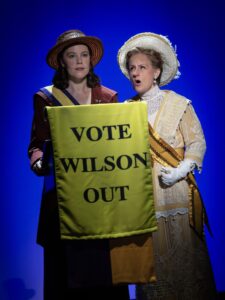 From the opening strains of the period-perfect ragtime-syncopated “Let Mother Vote,” maternally led by Mary Grandy‘s Carrie Chapman Catt and backed by a vocally powerful ensemble, Suffs makes it clear: this isn’t a museum piece. It’s a movement. The storytelling feels urgent, strong, and emotionally immediate—never preachy, always human.
At the center stands Maya Keleher as Alice Paul—focused, flinty, and fiercely principled. Her “Finish the Fight” functions as both rallying cry and mission statement, delivered with unwavering conviction. Later, in “Insane,” Keleher reveals the psychological toll of imprisonment with a performance that is raw without losing control. Opposite her, Grandy’s Carrie Chapman Catt brings seasoned authority and strategic patience to the aforementioned “Let Mother Vote.” Their Act II duet, “She and I,” beautifully captures the tension—and eventual respect—between two women fighting for the same goal through different methods. Grandy’s “This Girl” adds reflective depth, grounding the generational divide in lived experience.
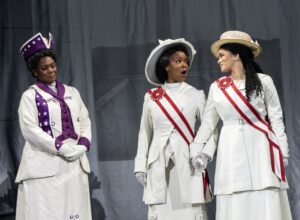 As Ida B. Wells, Danyel Fulton commands attention with moral clarity, emotional precision and powerhouse vocals to rival a certain recent Broadway Gypsy. “Wait My Turn” simmers with justified frustration, and when she returns in “I Was Here,” alongside Mary Church Terrell (Trisha Jeffrey) and Phyllis Terrell (Victoria Pekel), the moment lands as a declaration of presence that resonates well beyond the period setting. Speaking of Fulton’s co-stars, Jeffrey brings elegance and resolve to Mary Church Terrell, particularly in “Hold It Together,” serving as an emotional anchor amid political fractures. Meanwhile, Pekel’s Phyllis as well as a later turn as Robin, reinforce the vitality of youthful exuberance necessary for any movement to continue into the next generation. Whenever any of these three talented performers are on stage, the audience is mesmerized and treated to stunning vocals.
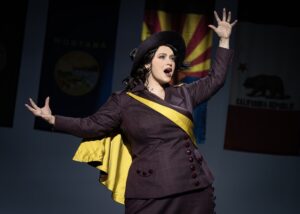 Monica Tulia Ramirez’s Inez Milholland radiates charisma in “The March (We Demand Equality),” which she leads alongside Fulton’s Ida and the ensemble in one of the production’s most visually arresting sequences. Act I’s “Show Them Who You Are” showcases Ramirez’s sass while Act II’s reprise flips the script to haunting results. Milholland’s personal life and sacrifices poignantly reveal the true dedication these powerful, but often unsung heroes of the moment possessed.
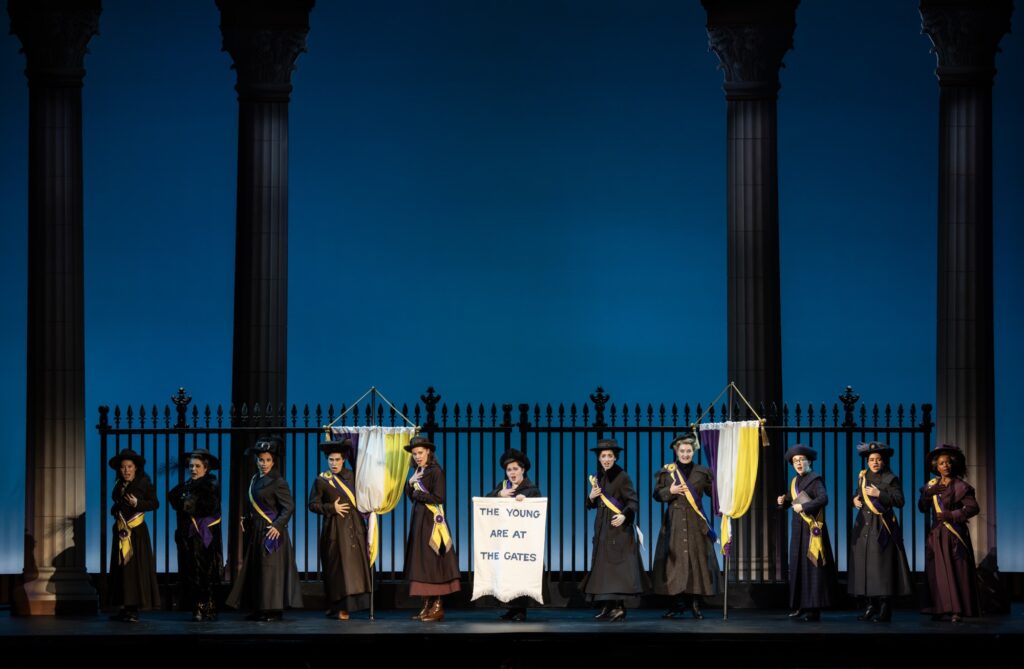
As Lucy Burns, Gwynne Wood delivers a blazing “Lucy’s Song,” electrifying the audience with defiance, while Livvy Marcus injects Doris Stevens with sharp wit, youthful urgency and to borrow a descriptive of Mary Tyler Moore’s Mary Richards…spunk, particularly in “The Young Are at the Gates,” which propels Act II forward with fire.
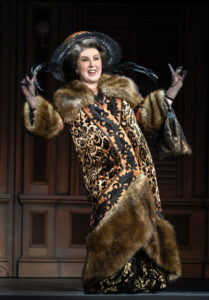 Laura Stracko‘s Alva Belmont is boisterously brilliant. Gotta love a socialist socialite. Act I’s “Alva Belmont” introduces the character in a big way. With another period-nod, “Alva Belmont” is presented as a toe-tappin’ Tin Pan Alley-style ditty complete with playful, yet pointed lyrics: “I divorced my husband for philandering. Now I’ve got his millions for philanthropy.” Flawlessly introducing the character. Interestingly, while not really relevant to the plot, I discovered while researching to interview some of the cast that the real Alva Belmont, a native of Alabama, has ties-by-association to Tennessee. Her maternal grandfather, Robert Desha was a U.S. House of Representatives for the state of Tennessee. In the years before her political activism, she was first married to William Kissam Vanderbilt, the grandson of Commodore Cornelius Vanderbilt (for whom Nashville’s Vanderbilt University was named).
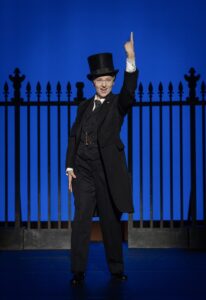 As President Woodrow Wilson, Jenny Ashman offers a sharply drawn portrayal. “Ladies” drips with calculated condescension (and sadly echoes a little too closely our current administration’s views on the arguably stronger sex, but I digress). Later in the show, Ashman’s Wilson attemps to placate with “Let Mother Vote (reprise)”, which lands with pointed irony. On Opening Night in Nashville, Ariana Burks stepped into the role of President Wilson’s Third Assistant Secretary of State Dudley Malone, a role usually played by Brandi Portert. Covering the role, Burks shines in “Respectfully Yours, Dudley Malone,” blending romantic sincerity with political awakening. Her chemistry with Marcus’ Doris in “If We Were Married” and its reprise adds warmth and texture to the broader narrative. Just one of a handful of relationships, while not at the center of the narrative, a wonderful aside. Other notable personal relationships alluded to within Suffs include sorority sisters Ida B. Wells and Mary Church Terrell, friends Alice Paul and Lucy Burns and longtime partners Carrie Chapman Catt and Mollie Hay.
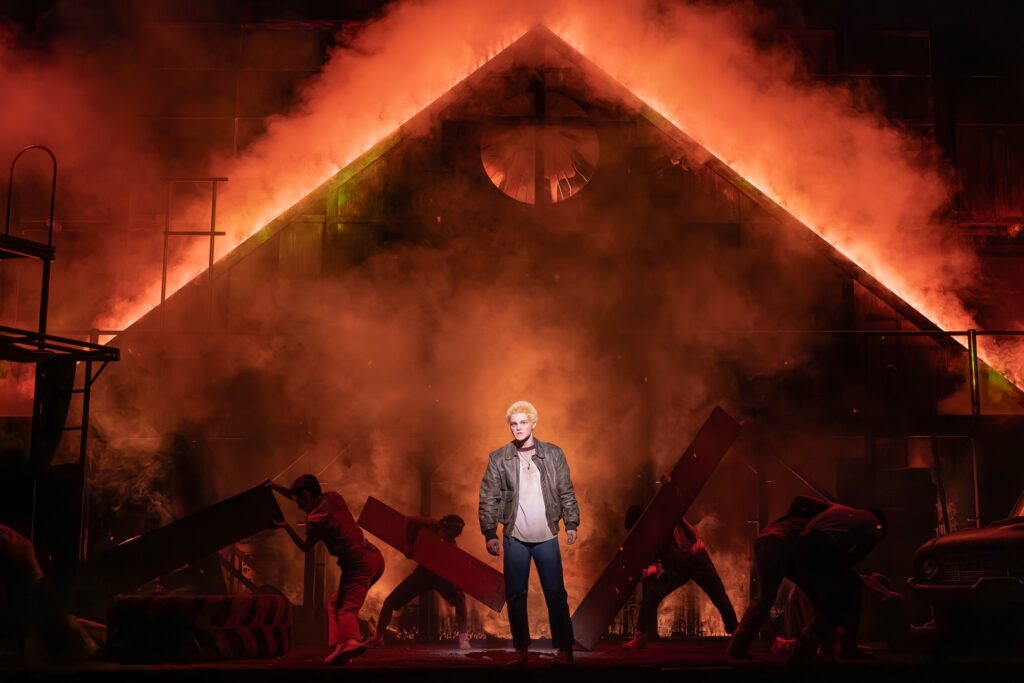
The ensemble numbers—“Find a Way,” “The Convention Part 1 & 2,” “The Campaign,” and “August 26th, 1920”—surge with collective momentum, creating stage pictures that feel both intimate and epic. Act I builds to the layered and emotionally charged “How Long?,” leaving the audience suspended in uncertainty before intermission. Act II escalates quickly with the explosive “Fire & Tea,” a collision of ideology and impatience that crackles with tension. Side Note: I love that during my Rapid Fire 20Q, Marya Grandy noted that the effigy to Woodrow Wilson seen in “Fire & Tea” is made of kitchen utensils! Giving me a little insider info that I’m happy to pass along to my readers.
Across the board, the vocals are exceptional. Touring companies frequently fall victim to the occasional technical issue inherent in the logistics of setting up in a new venue each week—but not Suffs thanks to Jason Crystal‘s sound design and the impeccable vocals skills of the entire cast. From the first notes of “Let Mother Vote” to the powerful final bars of “Keep Marching,” the vocals—both individual and united—were crisp, clear, and strong. Harmonies were tight. Lyrics were fully intelligible. Not a single mic felt unbalanced, and the orchestra never overpowered the storytelling. The sound mixing and design were remarkably polished for an opening night in a new city, allowing the emotional weight of each lyric to land cleanly and confidently. Considering even though I was there to review the show, yet relegated to the back of the theatre in seats Ida B. Wells herself would reject, the sound throughout the show was simply perfect. Every lyric, every note delivered and received with precision and clarity.
Visually, the touring production is both strong and fluid. Based on Riccardo Hernandez‘ Broadway scenic designs, Christine Peters has adapted ever-moving walls and platforms, unfurling drapes and banners suggesting both protest staging and democracy under construction, while seamless transitions allow rallies, jail cells, convention halls, and the Tennessee State House to materialize with cinematic efficiency. Hair and wig design by Charles G. LaPointe and Paul Tazwell‘s period-authentic costuming clearly delineates factions, with the crisp whites of the National Woman’s Party glowing under strategic lighting in “The March (We Demand Equality).” Lap Chi Chu‘s lighting design proves especially effective in “Insane,” where stark isolation heightens emotional impact. Add to that choreographer Mayte Natalio‘s movement choices from the opening number and throughout the show…what I’ve dubbed marchography. It’s succinct and effective without being too rigid, further conveying the forward-momentum and motivation of the cause. On the lighter side, there’s a segment about halfway through the show that takes place at a bar when Natalio’s genius draws the eye to a couple patrons in the background who raise their beers and clink their drinks in rhythm to the song being performed that caused me to make a mental note: drinkography. The absolute attention to everything from period references in wardrobe and music styles to sets, lighting and movement throughout Suffs, a multitude of reasons this show is so enjoyable.
Earlier, I made reference to Tennessee’s connection to the subject matter. While “Down at the State House” sets the stage, it’s “A Letter From Harry’s Mother”, featuring Laura Stracko, Jenna Lee Rosen and Maya Keheler, that transforms the evening into something deeply local for those of us from The Volunteer State. As mentioned in my recent Rapid Fire 20Q with members of the cast, this moment recounts Tennessee’s pivotal role in ratifying the 19th Amendment, when, in August 1920, Tennessee became the 36th and final state needed for ratification.
When Stracko’s Phoebe, Rosen’s Harry, and Keheler’s Alice bring that story to life onstage, it hits differently in Tennessee. The reaction inside Jackson Hall was immediate and thunderous—very possibly the most sustained applause the company has received on tour during that particular sequence. It wasn’t simply appreciation. It was pride. It was recognition. It was a state seeing itself in the story of progress. Something, sadly we as a state are lacking these days. (An aside: Dubbed in the press of the day as “War of the Roses,” saw pro-suffrage lawmakers wearing yellow roses while opponents donned red. So naturally, yours truly donned a yellow lapel flower while attending Music City’s Opening Night.)
By the time “Keep Marching” swelled in the finale, led by Alice and the full ensemble, it no longer felt like the end of a performance. It felt like a charge forward. After all, as Suffs reiterates time and time again, progress is not inevitable. It is organized. On opening night at TPAC, Nashville didn’t just witness history. It gratefully recognized its role in it.
———-
Created by Shaina Taub, this thrilling and emotionally charged musical shines a spotlight on the brilliant, passionate, and often divided women who fought tirelessly for the right to vote. Beyond the accolades lies a story that feels especially resonant here in Tennessee — the final battleground that secured ratification of the 19th Amendment. More than a century after Tennessee cast the deciding vote, Suffs reminds us that history is not just something we inherit — it’s something we shape. And sometimes, it only takes one voice to tip the balance.
The national tour plays TPAC’s Jackson Hall March 3–8 with the following performances: Tuesday, March 3 – Friday, March 6 with 7:30pm curtain, Saturday, March 7 – 2:00pm & 7:30pm, Sunday, March 8 – 1:00pm* & 6:30pm.
*Sunday’s 1pm performance includes ASL interpretation, Open Captioning, Audio Description, and Large Print and Braille programs.
To purchase tickets to Suffs at TPAC, CLICK HERE. Following Suffs, Broadway at TPAC‘s 2025-2026 Season continues with another Music City debut as Back to the Future takes to the stage March 17-22. CLICK HERE for tickets or more info. Follow TPAC on Facebook, Instagram, YouTube & TikTok.
Not in Nashville? Catch Suffs in a city near you as the National Tour continues with stops in Charlotte, Boston, Dayton, Minneapolis, Detriot and more through summer of 2026. CLICK HERE for upcoming tour stops. Keep up with all things Suffs via the show’s socials on Facebook, Insta, X , TikTok and YouTube.
In case you missed it, CLICK HERE to read my Rapid Fire 20Q with members of the Suffs cast. As always, if you wanna follow JHPEntertainment to find out who I’m chatting with for my next Rapid Fire Q&A, or for my take on the latest local and national theatre, music and movie offerings, visit JHPENTERTAINMENT.com or find us on Facebook, Insta and Twitter. In the meantime… #GoSeeTheShow!
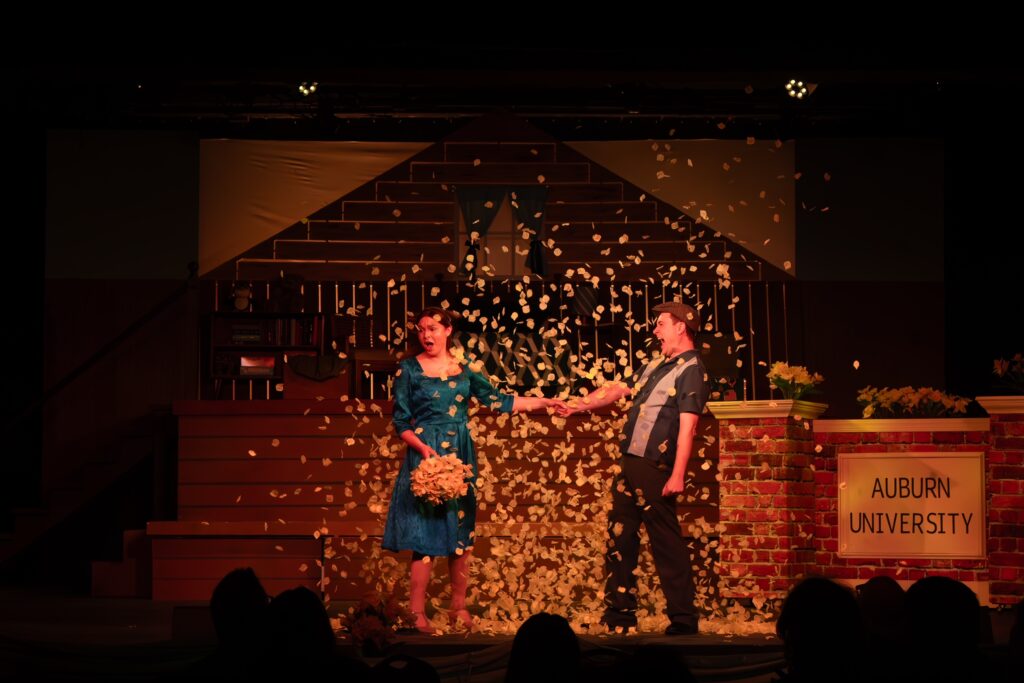
 s Edward Bloom, Micheal Walley bursts onto the stage with charisma and conviction. From his first entrance, his speech pattern and delivery lands near Mark Twain’s distinctive Southern storytelling drawl — deliberate, charming, measured — and for some reason put me in mind of French Stewart’s Harry Solomon from “Third Rock from the Sun”, quick with an unexpected sarcastic bite. The blend gives Edward both homespun authenticity and razor-edged comedic timing, a balance that keeps the character from drifting into caricature. The subtle but effective vocal change between younger Edward to his more frail self in later years is quite interesting to take in.
 Choreographer Andrea Campbell, working in clear collaboration with director Aaron Gray, makes masterful use of The Keeton’s intimate stage. With a cast of twenty, filling the space without overwhelming it is no small feat, yet the production never once feels crowded. Instead, it feels alive. From kick lines to tap and everything in between, the variety of choreography reflects the musical’s tonal shifts while showcasing the ensemble’s versatility. One can only imagine the rigor of rehearsals required to master such range within spatial constraints, and the ensemble rises to the challenge with precision and enthusiasm. Director Gray deserves equal praise for staging that maximizes every inch of the performance area, creating dynamic stage pictures that feel expansive, an appropriate nod to the story’s 2003 cinematic retelling courtesy Tim Burton‘s film adaptation, despite the venue’s modest footprint.
 Jacob Hinnen as Edward’s adult son, delivers a fully believable, emotionally grounded portrayal of Will Bloom. Hinnen never pushes for sympathy; instead, he allows Will’s frustration and skepticism to emerge organically. The result is authenticity. As Will prepares to become a father himself, the shift in perspective is subtle yet powerful. You believe him — every step of the way.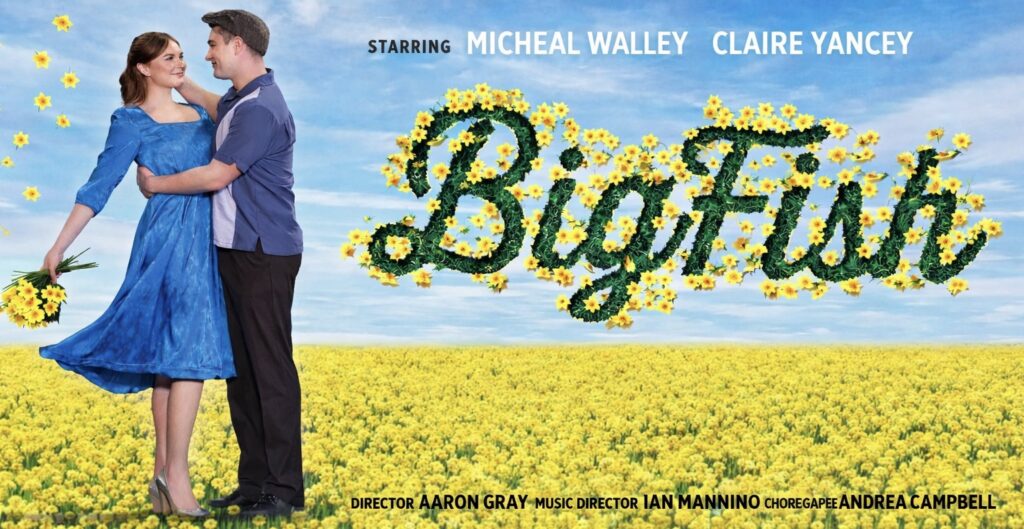
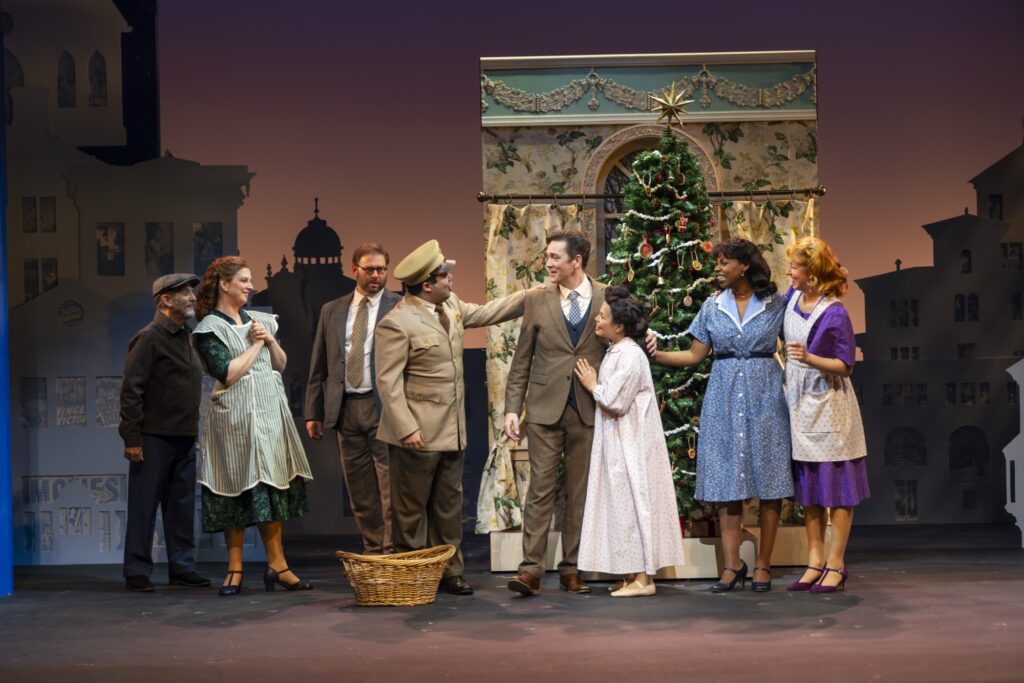
 At the center is Brian Charles Rooney, who’s made quite a name for himself, not only on the local level, but for his work in New York on Broadway, is well-known for his vocal prowess as a musical theatre powerhouse. Rooney captures the full breadth of George’s life journey—from mischievous boy to wide-eyed dreamer to the exhausted, cornered adult wondering where everything went wrong. Remarkably, he accomplishes this not through drastic physical transformation but through subtle, sharply observed choices: a shift in vocal pitch, a slight change in posture, the weight of responsibility settling into the shoulders. These gradations make his downward spiral heartbreaking and his redemption cathartic. As George Bailey, it’s his sincere believability as the multi-faceted depth he brings to the stage that holds the audience’s attention from that first appearance of a man defeated to the much-loved ringing of that angelic bell signifying all is well with the world. His performance as George Bailey is nothing short of revelatory. And YES…though this production is not a musical, the audiences is indeed treated to just a bit of Rooney’s pitch-perfect multi-octave voice for a quick little verse of Buffalo Gals, the beloved tune featured in the 1946 film classic.
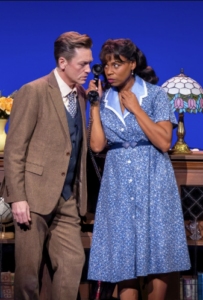 As Mary Hatch Bailey, Tamiko Robinson Steele radiates warmth, quiet confidence, and fierce devotion. Her Mary is not simply the supportive spouse—she’s the emotional compass of the story, grounding George even when he’s flailing hardest. Steele’s effortless sincerity elevates every scene she touches. From their scenes depicting George and Mary’s childhood friendship to their teenage flirtation, Steele’s sweet embodiment of Mary is palpable. The scene at the drugstore soda fountain when Mary leans over to George and whispers in his bad ear her devotion, I couldn’t help but have a little eye sweat. With Steele in the role, it’s no wonder George offers Mary the moon.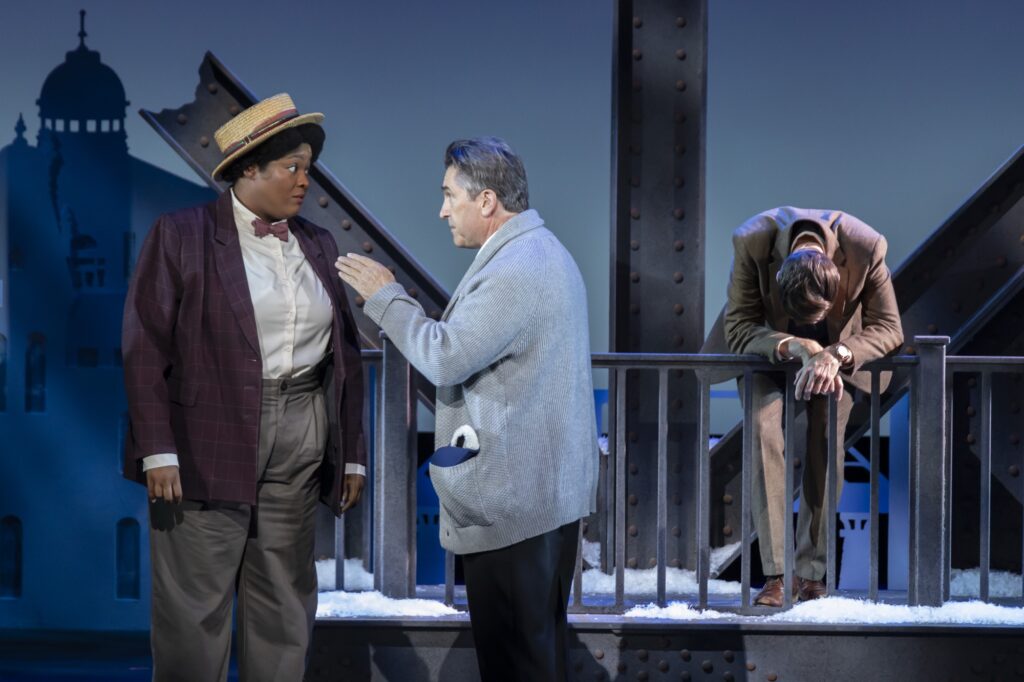
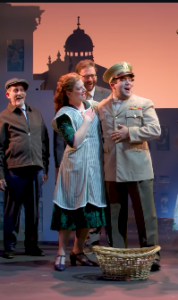
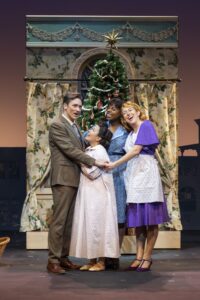 Among the remaining ensemble are Eric D. Pasto Crosby, who is first seen in a brief appearance as Mr. Bailey and a little more stage time as Nick the barkeep (question…did they really have Sports Bars called as such in the 1940s? It’s rhetorical. Sports Bars weren’t a thing until the 1960s, thus my only complaint about the set, for when Clarences shows George what life would have been like had he not been born, they visit the bar formerly owned by Martini, now emblazoned with a mirror-etched sign reading Nick’s Sports Bar). Aleia Eagleton and Darci Nalepa Elam appear throughout portraying various townspeople. Among their standout turns, Elam’s Ma Bailey is motherly perfection while her Tilley is flirty and fun. Then there’s the small in stature, but big in energetic presence of Eagleton as she is fabulously convincing and utterly enjoyable in the tiny, but pivotal role of Zuzu.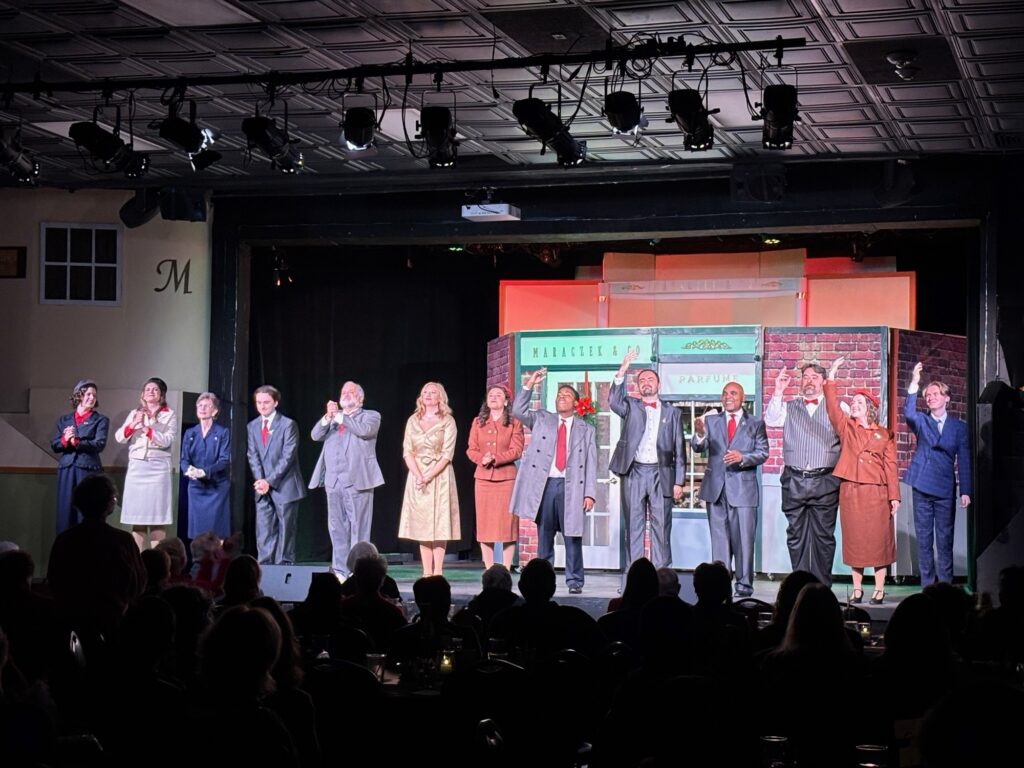
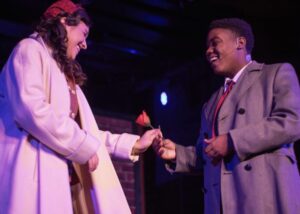 While Jimmy Stewart’s Alfred from 1940’s The Shop Around the Corner presented the male counterpart of the story as a bit of a prickly nay-sayer, the musical adaptation’s male lead Georg Now, played in The Keeton’s She Loves Me by Jayden Murphy,
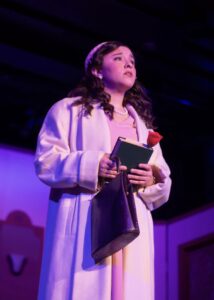 As Amalia Balash, Jiana Kevilus is radiant—sharp-tongued in the workplace to comedic delight when pitted again Georg one moment and achingly vulnerable when speaking (or singing) of her unidentified letter-writing love the next. Her interpretation honors Amalia’s insecurities, especially those revealed in Will He Like Me?, while infusing her with modern emotional clarity. As anticipated, Kevilus’ Vanilla Ice Cream—approached as a pivotal moment where Amalia subconsciously begins to realize Georg’s true identity—bubbles with joy, confusion, and discovery. It is one of the highlights of the evening: vocally agile and acted with specificity. In an admirable way, Kevilus’ performance of the song put me in mind of Olivia Newton-John’s Hopelessly Devoted Grease moment.
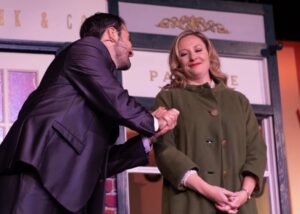 Kimberly Wolff, who seems to have become a full-fledge member of the Keeton company of frequently seen actors, is a standout as Ilona Ritter. Wolff gives the role the perfect blend of glamour, vulnerability, no-nonsense practicality and emotional intelligence. Her work in the number I Resolve is especially effective—Ilona’s attempt at independence is tinged with hope, frustration, and surprising strength.
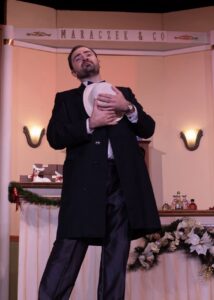 Her scenes with Tommy Anglim’s Kodaly are super-charged with electrically playful tension. Anglim’s Kodaly is smooth, sly, and charming in all the most infuriating ways. During their shared musical numbers—particularly Ilona, Anglim’s Kodaly delivers a somewhat bawdy, yet perfectly comedically timed riotous performance. Anglim’s delightfully narcissistic Kodaly and Wolff’s tough-but-tender Ilona feel like they walked straight out of a Golden Age film.
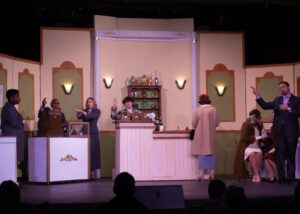 Once again, The Keeton’s in-house scenic designer, Kevin Driver delivers a triumph and his She Loves Me set should be one of the most-talked-about elements of the production. Inspired by the 2016 Tony-winning Broadway revival’s transformative shop design, Driver creates an only slightly scaled-down Maraczek’s Parfumerie that feels timeless, elegant, and tactile. The mobile units shift the space effortlessly, inviting the audience directly into the warmth of the 1930s Budapest shop.
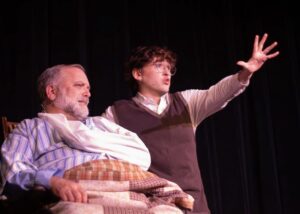 The supporting roles are filled with memorable performances. Brian Best, last seen as William Frawley in The Keeton’s Lucy Loves Desi, lends Mr. Maraczek gravitas and returns Best to the typical bravado roles for which he’s come to be known. His solo of Act 1’s Days Gone By and its Act 2 reprise are unexpectedly hauntingly touching. Sipos, a role often
 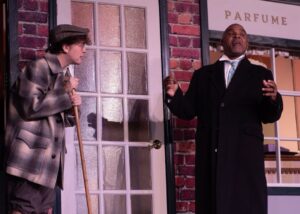 played as gentle and understated, in the hands of Victor Davis, creates a charmer with soulful presence and hilarious comedic timing. Making his Keeton debut, Samuel Boggs brings youthful earnestness to Arpad, his Try Me full of plucky determination. Boggs’ performances should be remembered as he’s definitely poised to be one to watch with a sure-fire future in Nashville’s theatre community.
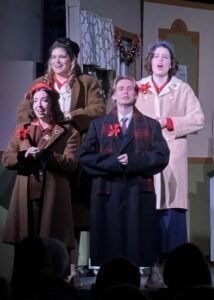 As for the rest of the cast, Brenda Brannon (always a personal favorite) is snooty perfection as the sever in the upscale restaurant where our two fated lovers attempt their first face-to-face, Rich Moses, and the ensemble—Chloe Beehm, Hazen Lawson, Kathleen McClanahan, and Amanda Noss—bring humor, color, and a bit of extra fun to each moment they touch. Again, particularly enjoyable is the restaurant scene, from the physical comedy to flirtation abounding.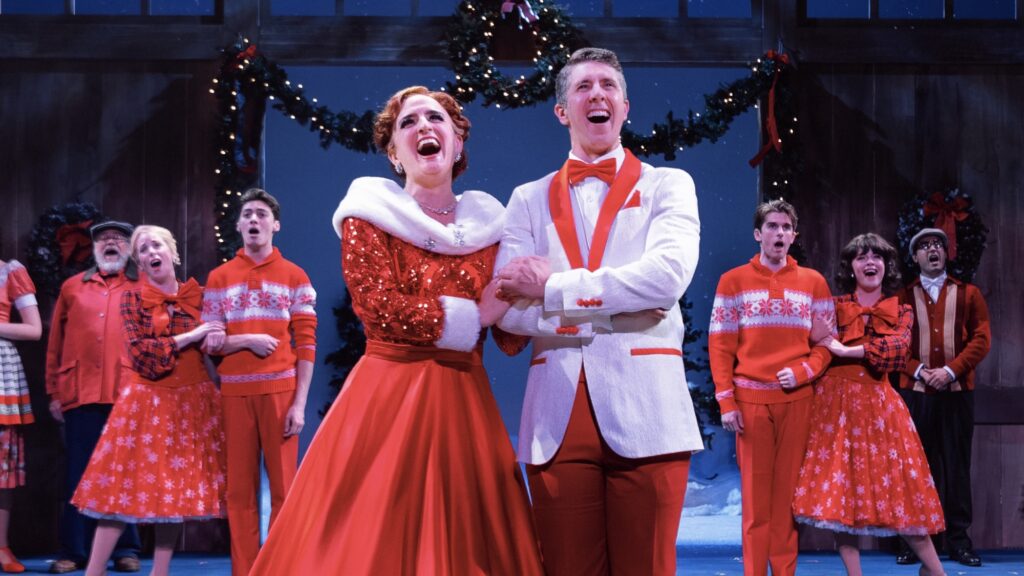
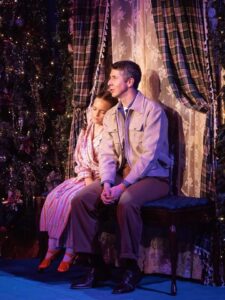 Ben Laxton, as the steady, dry-witted Bob Wallace, anchors the show with clean vocals and a grounded charm that never attempts to mimic Bing Crosby, but instead finds a sincerity and warmth all his own. His rendition of Count Your Blessings Instead of Sheep lands with a quiet power—simple, heartfelt, and beautifully sung.
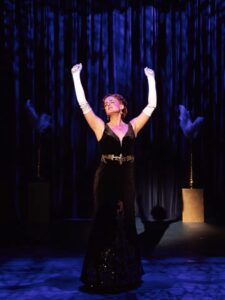 Laxton pairs especially well with Lisa Karlin’s Betty Haynes, whose rich, velvety alto brings a classic, old-Hollywood elegance to every number she touches. Her Love, You Didn’t Do Right By Me—a personal favorite moment of mine—was delivered with haunting restraint, channeling Rosemary Clooney without imitation and earning one of the night’s strongest responses.
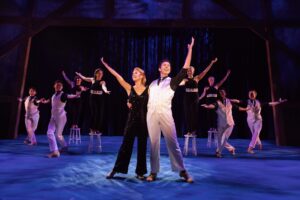 On the other side of the romantic coin, Jeremy Benton and Elizabeth McGuire ignite the stage as Phil Davis and Judy Haynes. Benton, not stranger to area theatre audiences, was last seen in Nashville as Bert in Nashville Rep‘s 2022 production of Mary Poppins, is also no stranger to the role, having performed in the National Tour of White Christmas and incredible 7 seasons. Speaking of previous connections to the show, Benton’s on-stage love interest McGuire, who’s making her Studio Tenn debut in the show, has previously appeared in two regional productions of White Christmas. Not only do they match the flirtatious comedic energy required of the roles, they also jointly co-choreographed the production—an ambitious undertaking given the show’s dance vocabulary is steeped in the iconic work of Randy Skinner. The result? Pure joy. Their The Best Things Happen While You’re Dancing is dreamlike and precise, but it’s the Act II taptastic extravaganza I Love a Piano that stops the show cold…or should I say Hot! Benton’s dancerly ease and McGuire’s crisp, buoyant tapping create the kind of musical-theatre electricity audiences hope for in December. They honor Skinner’s lineage while injecting fresh life into every step.
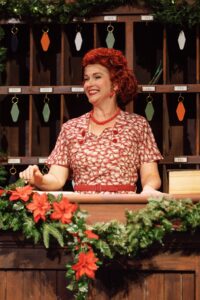 In comedic and heartwarming supporting turns, Megan Murphy Chambers (Martha) once again proves she can steal an act with one number. Her Let Me Sing and I’m Happy blends powerhouse vocals with effortless comedic bite—she lands every quip, every side-eye, and every belted high note with the precision of a seasoned pro. Belting lyrics like “if my song can start you laughin’/can start you cryin'”with humor and heart, rest assured MMC can and does! Chambers is a jewel in the crown of area theatre folk. She’s an entertainer’s entertainer. Equally at ease whether tasked with comedy or sincerity. Her scenes with Curtis Denham‘s General Waverly check all the marks perfectly hitting the highs of broad comedy and the more subtle genuine moments between two longtime friends. Speaking of, Curtis Denham brings a grounded gravitas to General Waverly, avoiding caricature and instead offering a touching
 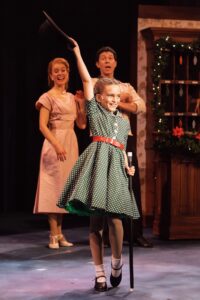 portrait of a leader rediscovering purpose. Rounding out the primary cast is young Frankie Lou Lauderdale, who simply charms instantly as Susan (Preslee Siebert also plays Susan at some performances). Lauderdale delivers the pint-sized earnestness gives the storyline its heart. I’ve always found it interesting that in the original film, Susan is General Waverly’s adult granddaughter, but for the stage adaptation, Susan is presented as a young girl. I does indeed add a more family-oriented dynamic and Lauderdale’s Susan provides the right amount of youthful sweetness combined with moxie, as proven in her cheer-inducing ambitious rendition of Let Me Sing and I’m Happy.
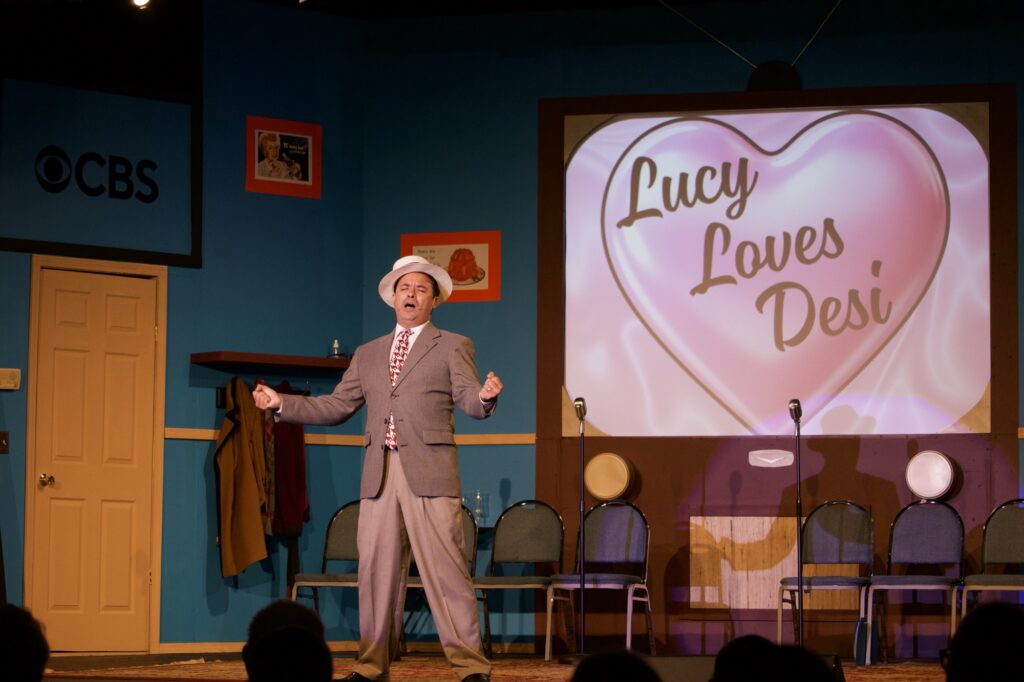
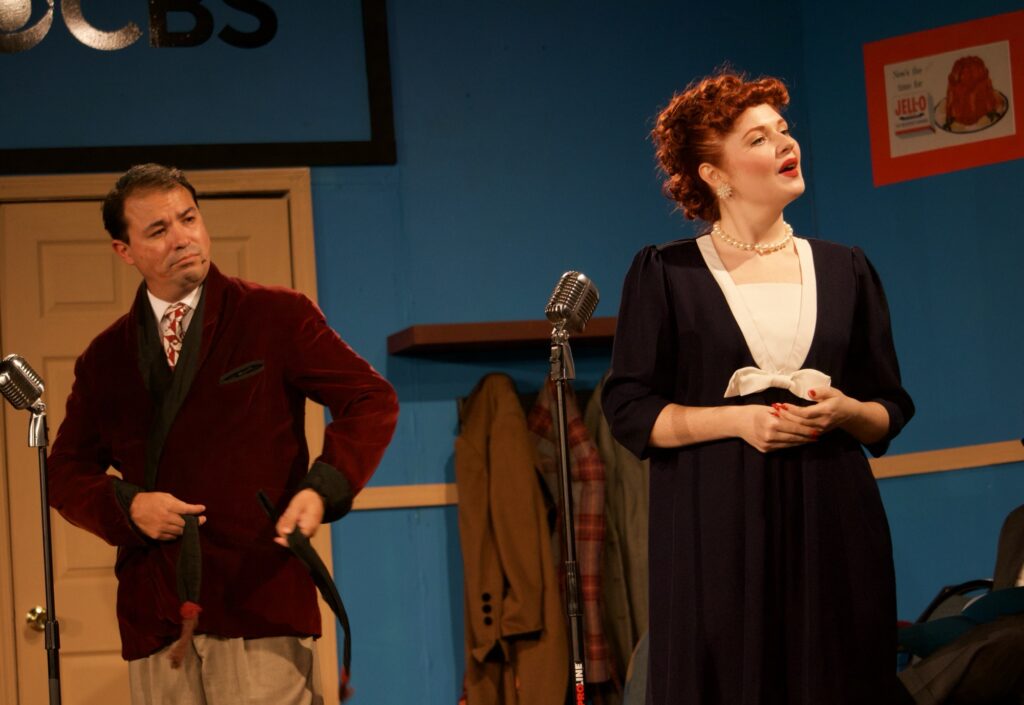
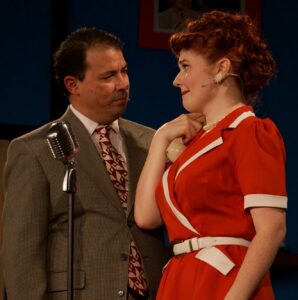
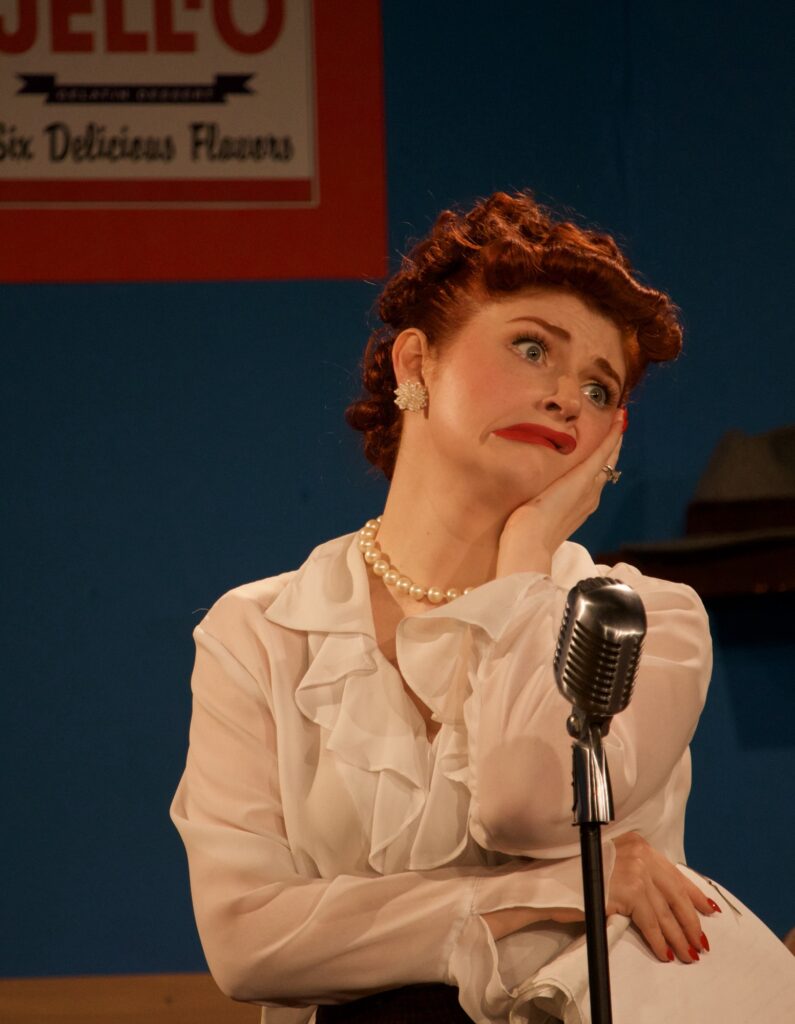 While none of the cast truly look like their real-life counterparts, it’s not an impersonator show in Las Vegas, after all, Grace Gaddy’s Lucille Ball is, when all is said and done, a loving tribute to the iconic comedian. From her expressive eyes and impeccable comic timing to the way she embodies Lucy’s signature blend of glamour and goofiness, Gaddy gives a performance that’s joyously alive. Her physicality and facial expressions elicit hearty laughter while paying true homage to one of television’s greatest icons. My only hesitation in a giving Gaddy’s Lucilly Ball a full five star review rests on the fact that Gaddy’s choice of voice isn’t quite there. Yes, Lucille Ball’s real-life voice was quite different from her quicker, higher-pitched Lucy Ricardo voice, but Gaddy, try as she may, never quite hits the mark vocally. Of course the average Keeton audience member will easily overlook this because of Gaddy’s otherwise full-force embodiment of the iconic comedic actress. It should be noted that Gaddy’s Lucy is at her best not only when recreating a few classic I Love Lucy moments–her lip-smacking, face-pulling expressions during a quick look at Vitameatavegamin is indeed near-perfection–but also during scenes that show the rarer more vulnerable moment of the woman behind the legendary laughs.
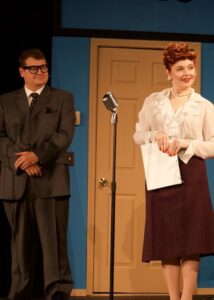 Even though he plays the man upon whose book this play is based, Michael Welch has the benefit of playing someone most people have never seen and whose physical appearance isn’t as easily recognized as the four stars of the groundbreaking sitcom. That anonymity works to Welch’s advantage as he simply shines as Jess Oppenheimer, serving as the grounding force amid the behind-the-scenes chaos. His balance of humor and sincerity keeps the story engaging and human. His scenes between Gaddy’s Lucy and Rainwater’s Desi truly exemplify Oppenheimer’s role as both close friend and trusted collaborator in the creating of one of the world’s most beloved sitcoms.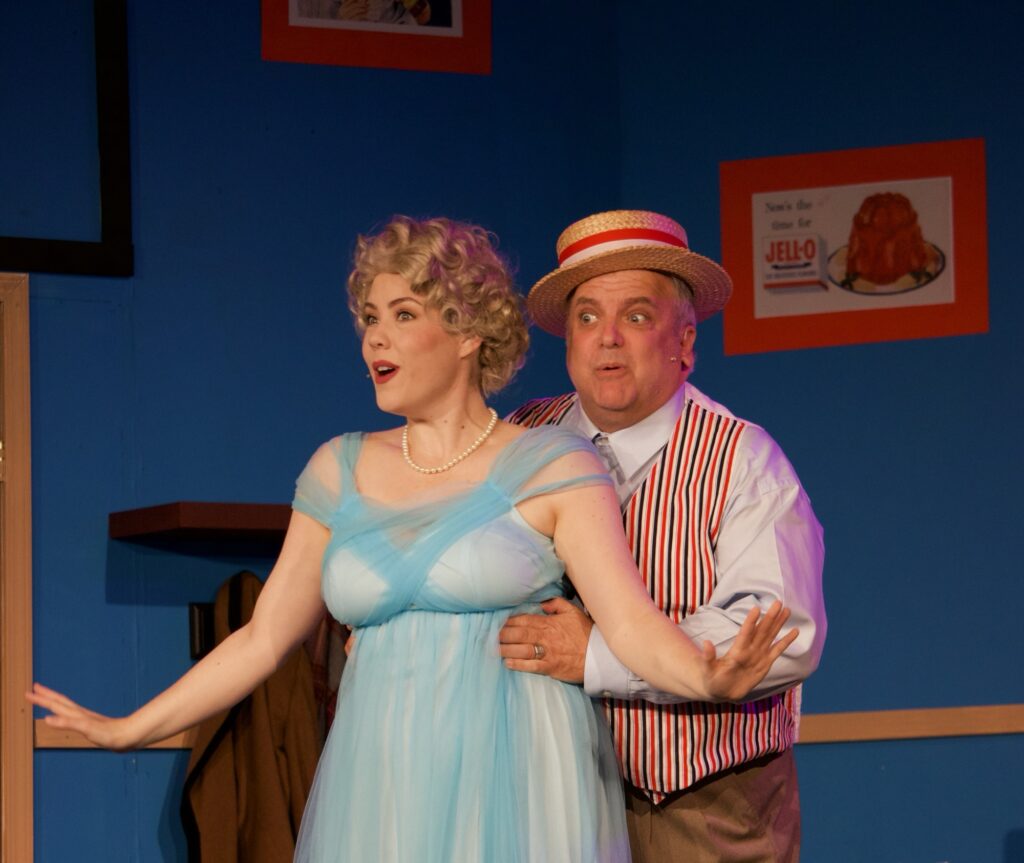
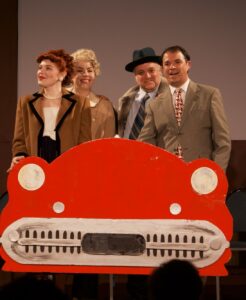 Musically, this expanded version of the show delights with nostalgic selections that evoke memories of classic I Love Lucy episodes, including I’ll See You in C-U-B-A, Friendship, California Here I Come, and the beloved I Love Lucy theme song, complete with a bit of a did you know who wrote it spoiler and Rainwater and Gaddy singing the rarely heard lyrics. Enhancing the musical score throughout, frequent Keeton musical director Roger Hutson’s piano recordings add a lighthearted, era-appropriate touch, while Steve Love’s sound design, Brooke Sanders’ lighting, wig design by Alison Gaddy (loosen up those wigs so they look more natural and like the real-life ladies they’re styled after) and Denese René Evans’ costumes work in harmony to transport the audience straight to midcentury Hollywood. Evans’ costumes throughout are quite fun and seemingly period authentic, I do wish that Lucille’s Emmy dress was accurate, through…again, I’m just being an overzealous Lucy fan.
 In spite of my above-reference initial hesitations and a strangely tepid Opening Night audience (Note: it’s ok to laugh out loud and to applaud after a particularly entertaining scene) and what could probably be chalked up to first night jitters from the cast resulting in the majority of Act 1’s delivery being a tad flat with several lines coming across as monotone with not real inflection and somewhat memorized, rather than convincingly felt and delivered with punch, those initial hesitations faded once the cast found their groove.
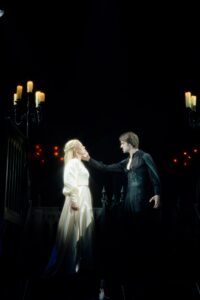 Jay Sullivan is chilling as Count Dracula. He doesn’t simply linger
 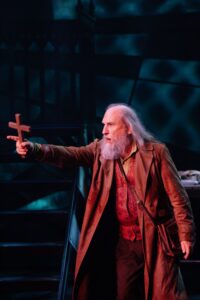 Opposite him, Sullivan’s performances is beautifully balanced by Brian Webb Russell who gives a gravely controlled performance as Abram Van Helsing, anchoring the heroic opposition with clarity of intent and moral weight. Russell’s Van Helsing offers the perfect amount of sharp intellect and righteous urgency. His verbal sparring with Sullivan’s Dracula are electric—two forces circling each other in a battle of will and belief.
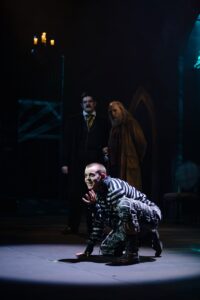 The trio of Lane Adam Williamson’s Renfield, DéYonté Jenkins’ Norbert Briggs and Catherine Gray’s Margaret Sullivan are tasked with carrying a bit of dark humor that helps temper the heavy suspense.
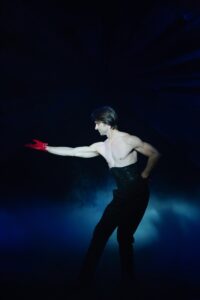 Then there’s Logan’s costumes. Every costume a work of art. The female cast members regal and radiant in finery fitting the period of the action. Van Helsing’s leather wardrobe, perfectly fitting for battle. Renfield’s asylum attire tattered and torn, but with a hit of glamour by way of some blinged-out blood spots. But it’s Dracula’s wardrobe that is truly glamorous and entrancing. From his first appearance bare-chested, but corseted in black to a black jacket accented with blood-red beaded erratic epaulets when he returns from a mysterious night right. (Gotta love that this particular look gets no mention within the context of the play, but is a jarring visual clue to the most astute audience member). The beauty of that costume not without merit, my personal favorite is yet another black jacket and pants combination. The jacket, from one side appears nothing special as the hem hits just below the actor’s waist, but from front view, its asymmetrical as the other side is more the length of a morning coat. Perhaps another visual clue of the duality of the wearer? Just when you think Logan’s used up his bag of costume tricks, in the final scene Dracula appears the most sparkly transfixing figure yet, but I’ll let you experience that on your own.
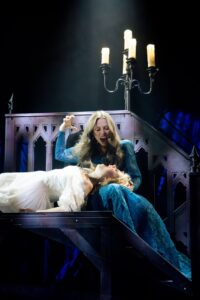 What impresses most about this DRACULA is how it leans into its horror while refusing sentimentality. McNulty’s choice to portray Dracula as predator (not tortured romantic) is honored here. That clarity gives other elements room to breathe: the trauma of Lucy’s affliction, Mina’s struggle with memory and agency, Van Helsing’s moral burden, Seward’s scientific disbelief challenged by the impossible.
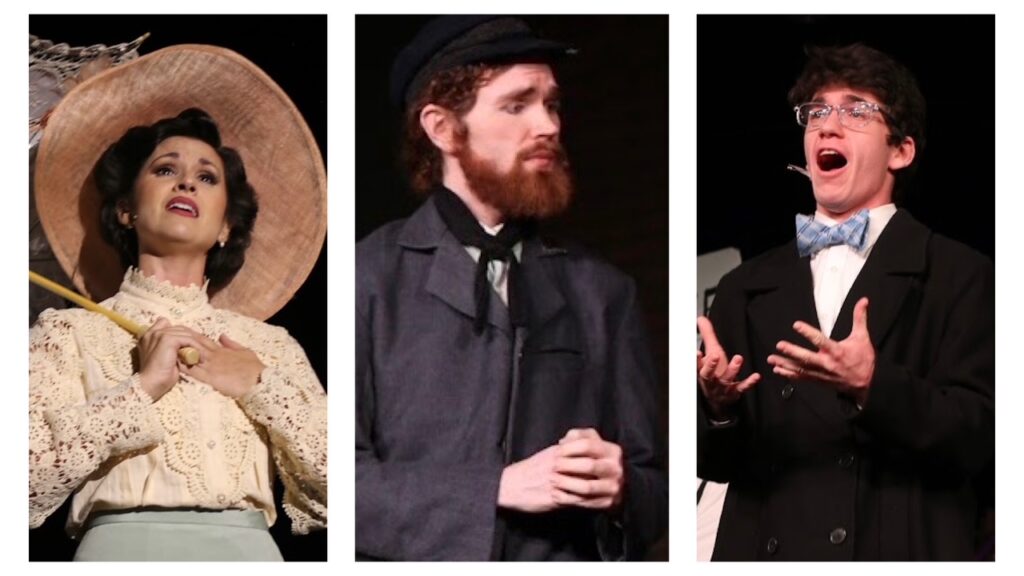
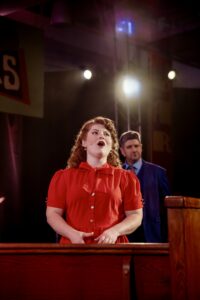 At the center of the action is Philip David Black as the suave, gambling man Sky Masterson. Black brings the expected effortless charisma mixed with the perfect blend of uncertainty that only unforseen love can cause. His Luck Be A Lady is smooth and sweet, showcasing his ability to walk the line between rogue and romantic with ease. His chemistry with Rebekah Howell’s Sarah Brown is electric, especially in the Havana sequence where sparks (and drinks) fly. Howell, ever the vocal powerhouse, lends depth and sincerity to the morally upright mission worker. Her rendition of If I Were a Bell, a charm-filled Act 1 highlight.
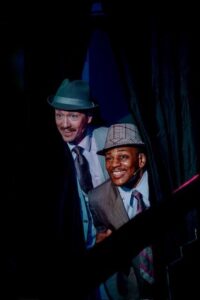 It comes as no surprise that Brian Charles Rooney’s Nicely-Nicely Johnson is a true showstopper. With impeccable comic timing and a dynamite voice–gotta love that sopranista range–Rooney brings down the house in the rollicking Sit Down, You’re Rockin’ the Boat—arguably the night’s most rousing number. He’s well matched by Jahi Emaud’s Benny Southstreet, whose swagger and harmony work are equally sharp. If you’re reading this, Studio Tenn, I’ve got your Wallace and Davis cast for your upcoming holiday production of White Christmas right here with these two!
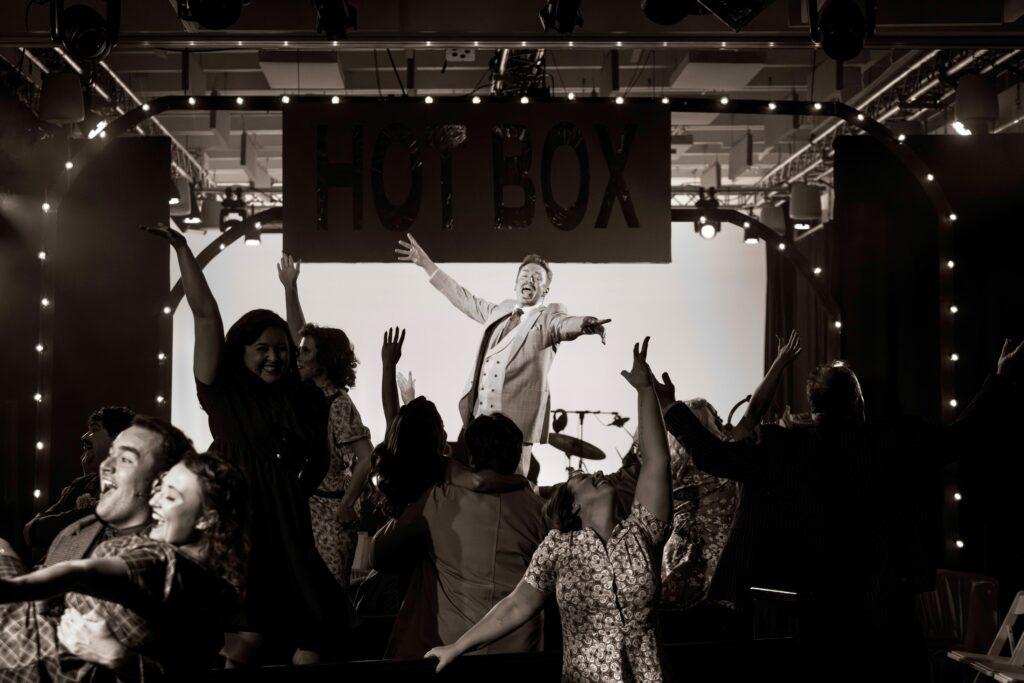
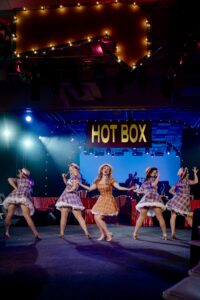 The Hot Box numbers are just plain fun, led with style and precision by Kelsey Brodeur (also serving as dance captain), alongside the effervescent Madison Crosby, Emily Stephens, and Allie Spengler. Their ensemble work perfectly sizzles thanks to playful choreography courtesy Allison Little, who keeps the movement crisp and era-appropriate while still leaving room for individual character. With Stein’s Adelaide, the Hot Box Girls’ performance of A Bushel and a Peck (one of my personal favorite Doris Day tunes, recorded the year the Broadway musical debuted) wonderfully presents the flitatious innocence of such numbers from that era.