When you think about it, 2011 doesn’t seem like such a long time ago. After all, how different could the world be in just eight years, right? Oh, wait…In that time, we’ve gone from our first black president to, well, the current administration. Some would also argue that we’ve gone from a society of speaking our minds to holding out tongues for fear of upsetting someone’s sensitivities. While kindness and forethought are indeed a good thing, I’m frequently of the opinion that it’s ok to laugh, as long as you’re laughing with, and not completely laughing at. Thankfully, The Book of Mormon—on stage in Nashville at TPAC’s Jackson Hall thru Sunday, March 17—seems to agree as it is just as bawdy, offensive, riotous and, yes, thought-provoking as when it debuted on Broadway some eight years ago.
Nine-time Tony-award winning musical, The Book of Mormon comes courtesy the genius, if not slightly twisted minds of South Park creators Trey Parker and Matt Stone and Robert Lopez (Avenue Q). The Book of Mormon (for those who’ve must have been hiding under golden plates buried on a hill in Manchester, New York) is the tale of a group of young Latter Day Saints missionaries assigned to a small village in Africa plagued by AIDS and a drug lord with a name I can’t bring myself to put into print.
Often described as ungodly, profane, crude…it is certainly all of those things, but at its core, The Book of Mormon is a story about friendship, growth and belief. Belief in the unknown (and let’s face it, the unproven), belief in the good of your fellow man, and most importantly, belief in yourself…all set to bawdily lyrical tunes and some fabulous choreography.
Earlier this week, as I attended media night and enjoyed the show for a third time—having had the great fortune of seeing it during both of its previous tours through Music City, I was finally able to find a balance between the oft shocking humor and the sweeter aspects noted above. Part of this newfound enjoyment came courtesy the chanced proximity to the slightly inebriated, but undeniably enthusiastic foursome who hadn’t yet bore witness to the glory that is The Book of Mormon, who just so happened to be seated next to me. Their exclamations of “Oh My God!” and “I can’t believe they just said that” reminded me of the first time I saw The Book of Mormon, or for that matter, the South Park movie. Both times, I thought to myself, “If the world ends right now, you’re going straight to hell right alongside everyone in this theatre.” Remember, I told you it’s THAT ballsy.
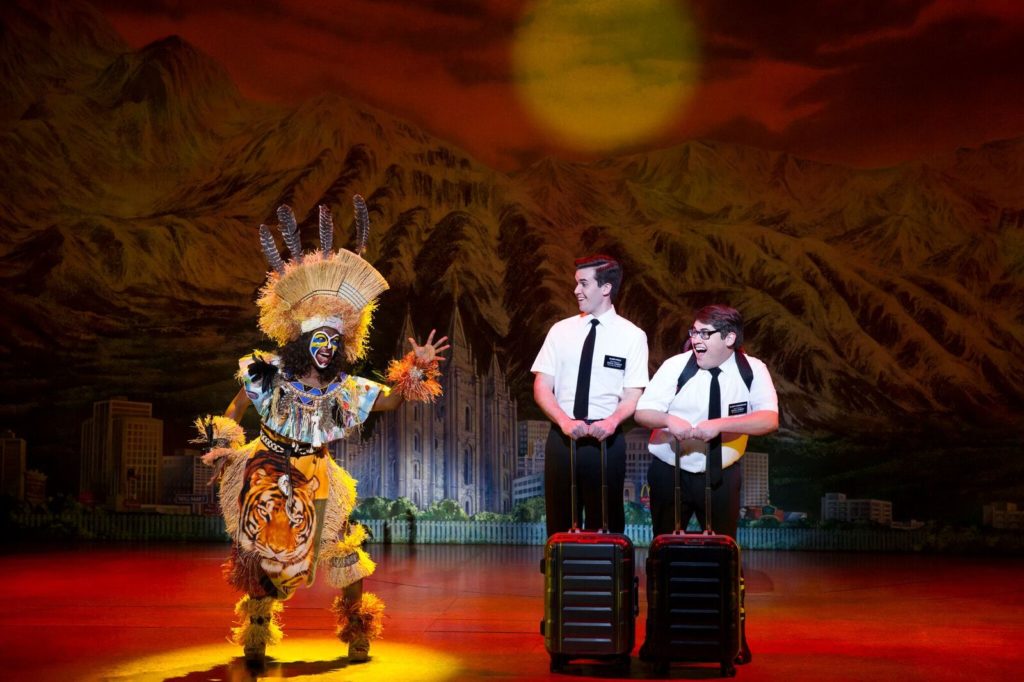
While the show is exactly the same, save a few updated references to Nikki Minaj and Neil Patrick Harris, this time around, something different clicked for me. The Book of Mormon is the All in the Family of this generation. For those old enough to remember, when Archie Bunker ruled the television airwaves, audiences were shocked week after week at what came out of the bigoted New York character’s mouth, courtesy the remarkable acting of Carroll O’Connor and the show’s creator, Norman Lear, but it was that mirror to society that somehow magically educated the masses through humor. If you’ll let it, The Book of Mormon does the exact same thing.
While the show—nor the wildly inappropriate humor—hasn’t changed, the cast has, allowing even the most jaded BOM fans like myself yet another chance to see it for the first time, as the current cast simultaneously embody the expected aspects of their respective characters, while breathing new life into them with their own talent and presence.
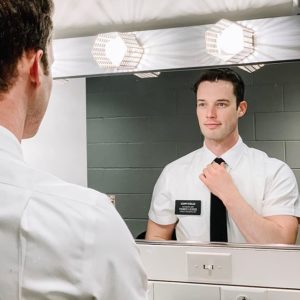
This time around, Elder Price is being played by Liam Tobin, who originally joined the tour a year ago understudying the lead. Nashville audiences might remember Tobin from his stint as Gerry Goffin in Beautiful: The Carole King Musical, which played TPAC two seasons ago. As Elder Price, Tobin brings the charm and wholesomeness. HIs boy-next-door looks matched only by his Broadway-belting vocal skills. Tobin’s enigmatic presence, even when the character’s faith and friendship is tested, shines through. You gotta love a missionary who dreams of being assigned to Orlando who instead ends up in the wilds of Africa.
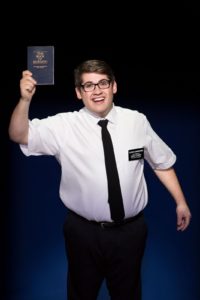
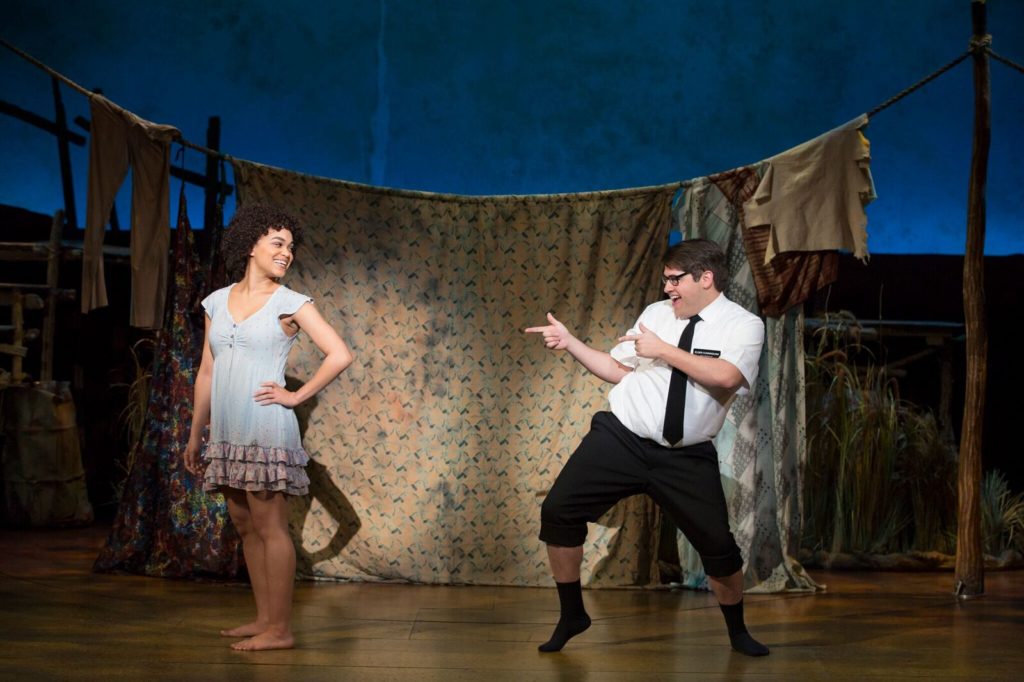
Mandated by the Church of Jesus Christ of Latter Day Saints, of course Elder Price has a companion. Enter Elder Cunningham, blissfully, nerdily, enthusiastically played by Conner Peirson. Peirson’s comedic timing and knock-em-outta-the-park vocal skills harken images of a young Jack Black. Among his finer moments, Peirson as a relationship developed with Kayla Pecchioni’s Nabulugi, a young African villager who’s name is bastardized throughout to hilarious result.
Other notable members of the cast include Ron Bohmer (who, if you check out my Rapid Fire 20 Q, you’ll see also has ties to Nashville), as Elder Price’s Dad, as well as Mormon founding father, Joseph Smith. Every member of the cast, from Monica L. Patton’s brief but unforgettable turn as Mrs. Brown and Corey Jones as The General to the entire ensemble bring energy, talent and humor coming forth so seamlessly that it keeps the show moving so quickly that you barely have time to recover from one uproarious moment to the next.
While there’s always been resistance to The Book of Mormon and those who’s cast it out as vile and unredeemable, let’s not forget…Broadway has always had a history of pushing buttons while opening eyes. From Shakespeare’s violent Titus Andronicus to the nudity and free-love of Hair, and in more recent years, the heart wrenching truths of Angels in America, theatre has frequently shocked to inform, to entertain and educate. BOM is just one of the latest to brilliantly do all of the above.
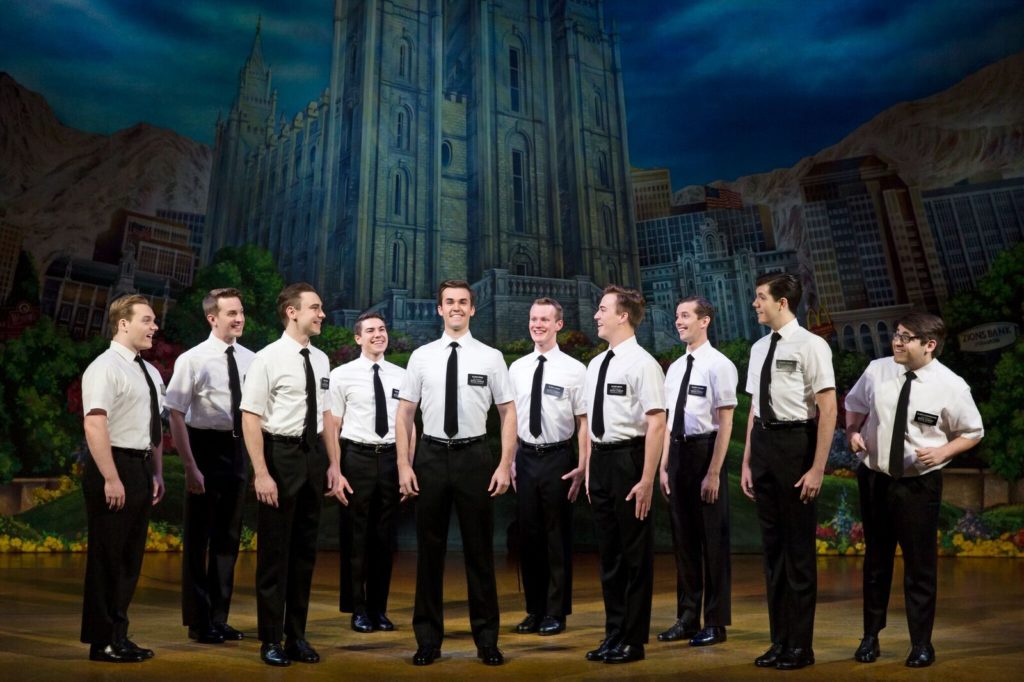
The best part…it does all this while presenting all the elements of a traditional theatre. While the laughs are often nervous with embarrassment, they’re genuine guttural guffaws. Then there’s the musical numbers. From the start, the appropriately titled Hello, arguably the show’s most well-known number, performed by our two leads and the ensemble of Mormon missionaries, starts things off on a hilariously high note. (This seems as good a time to mention a brief aside. When I chatted with Tobin recently for the latest of my recurring Rapid Fire 20 Q interview segments, I asked if actual Mormon missionaries still showed up outside the theatres handing out the real Book of Mormon. He confirmed and noted that it was more unusual if they didn’t. Much to my delight, as I got out of my car in front of TPAC earlier this week, there were indeed two mormon missionaries, dressed in black slacks, with short-sleeve white dress shirts, black ties and name plates above their left pocket handing out their religious materials. As I passed by I made eye contact with the Elder closest to me and said a quick “Hi”. To my amusement, rather that the expected “Hello”, he smiled and kindly replied, “Howdy”…well, we ARE in Nashville after all.)
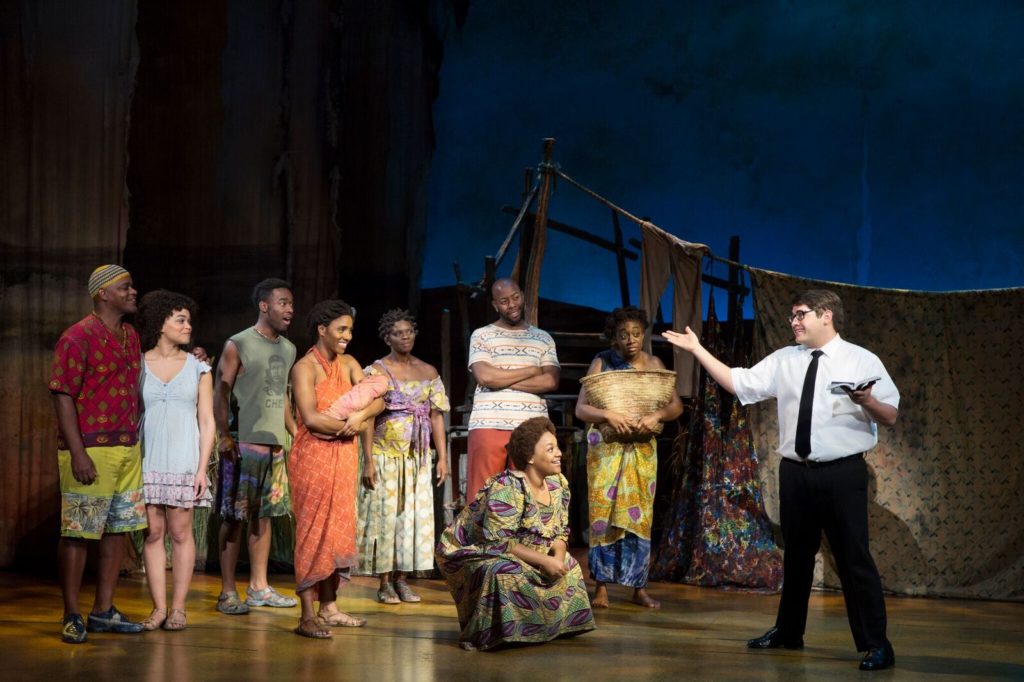
Back to the show, in addition to the show’s opening Hello, The Book of Mormon is packed with by the book…the Broadway book that is…showtunes, musical numbers and some fabulous choreography. You and Me (But Mostly Me) checks off the comical duet box, Hasa Diga Eebowai, the OMG, they’re actually singing a song about this? shock value box. Then there’s Turn it Off, the show’s tap-tactic all-in mid-Act 1 wowser.
Among Act 2’s most memorable….Spooky Mormon Hell Dream, pretty much self-explanatory, complete with prerequisite effects and puppetry, not to mention nods to pop culture evils such as Hitler, Dammer and even Jonnie Cochran. I Believe follows and is the show’s unlikely anthemic entry showcasing once again Tobin’s leading man vocals and charisma. Not to be outdone, Peirson and Pechioni shine during Baptise Me, a song about Elder Cunningham baptizing Nabulungi with so much sexual innuendo you just might need a cold shower afterwards. Midway through Act 2, I Am Africa is yet another showstopper with the entire company of missionaries embracing their newfound, albeit totally appropriated, heritage. Simply, awkwardly, hilariously brilliant.
The Book of Mormon continues its Nashville tour dates at TPAC’s Jackson Hall through Sunday, March 17 with Friday and Saturday evening performances at 8 p.m., matinee performances on Saturday at 2p.m. and Sunday at 1 p.m. with a final evening performance Sunday at 6:30p.m. Tickets range in price from $45 to $115. CLICK HERE for tickets.
Just last week, TPAC announced a special ticket lottery for all Nashville performances. For each performance, a limited number of tickets will be available for only $25. To enter the ticket lottery, patrons must arrive at the box office (just inside TPAC street level entrance under the marquee at Deaderick and 6th Ave) two and a half hours before showtime of the performance they hope to attend. Upon arrival at the box office, patrons will write their name and the number of tickets (one or two tickets per entrant). Two hours before curtain, a limited number of names will be drawn for tickets in the first two rows of the Orchestra, thus allowing the winning lottery participants to purchase those tickets at the special $25 price!
Following the Nashville dates, The Book of Mormon continues across the country with stops from Grand Rapids to Salt Lake City through August. For tickets or more information about the tour, CLICK HERE. You can also follow the tour on Facebook, Twitter and Instagram.
Next up at TPAC, as their Broadway series continues is the national tour of Anastasia, on stage at Jackson Hall, March 19-24 CLICK HERE for tickets or more information. You can also discover all the latest from TPAC by checking them out online or on Facebook, Instagram and Twitter.
As always, if you are interested in coverage for your latest entertaining endeavor, simply click the contact page and drop me a note. You can also follow JHP Entertainment on Instagram and Facebook.



 JHP: Tell me about Belle?
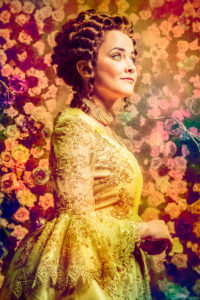 JHP: Studio Tenn has quite the reputation for creating gorgeous costumes for their shows. While aspects of Belle’s looks tend to follow the now-iconic and recognizable blue peasant girl and gold ballgown wardrobe pieces, something tells me Blake Danford, who’s costuming the show, has put his own spin on things. What’s your favorite Belle look in the show?
 JHP: You’re playing Gaston. What’s the best party of being such an over-the-top narcissistic character?
 JHP: Tell me about Madame De La Grande Bouche.
 JHP: What do we need to know about Lumiere?
 JHP: Who is The Beast to you?
 JHP: Some Studio Tenn audiences might remember you best for your appearances in the company’s popular Legacy series or the performance-heavy Christmas specials. Those are pretty straight-forward music performances, rather than theatrical characters with a bit of dialogue and character development. How much fun are you having stepping into a character like The Beast?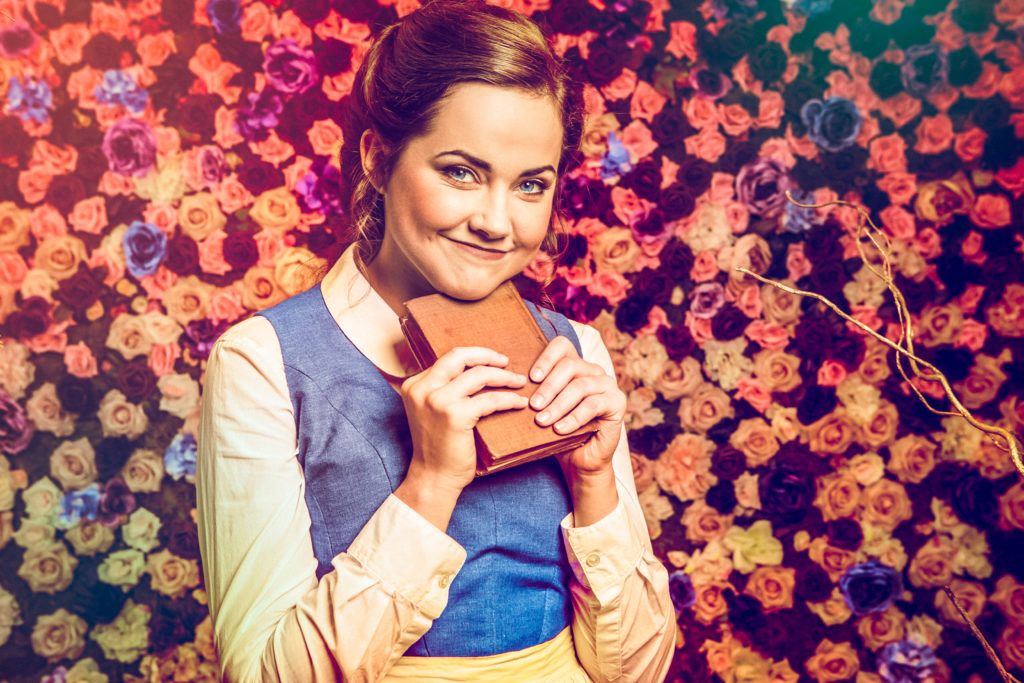
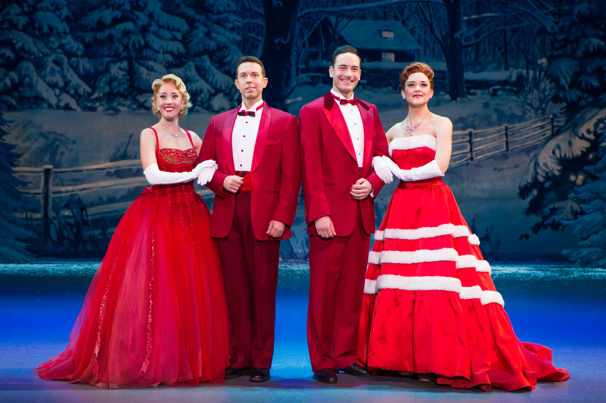
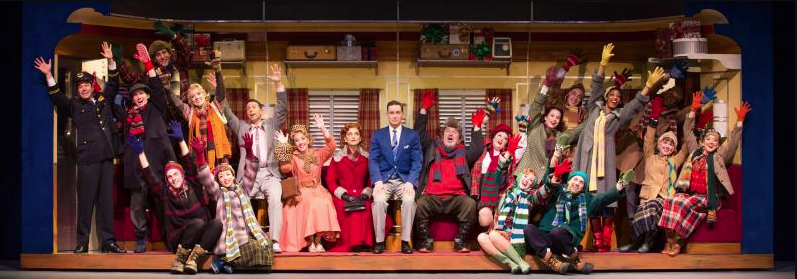
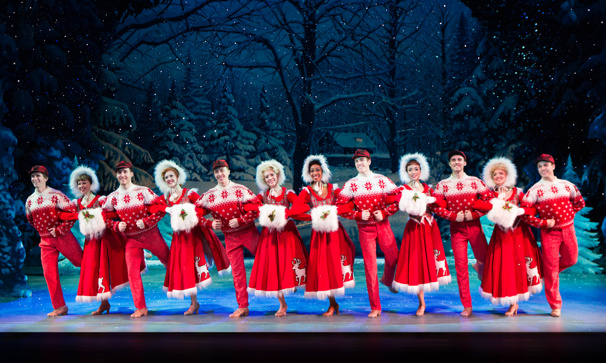
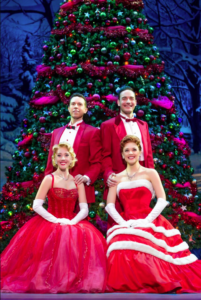 So, how do you replicate the on-screen chemistry of Crosby and Kaye playing ‘odd couple’ best pals, let alone Clooney and Ellen as squabbling sisters? The simple answer, you cast Sean Montgomery, Nashville’s own Jeremy Benton (back for his fifth time with the tour), Kerry Conte and Kelly Sheehan. Montgomery smoothy fills the Crosby bill while Benton eases into the goofiness of Kaye while elevating the role with some of the most impressive dance moves I’ve ever seen onstage. As for the ladies, Sheehan’s Judy might look more like Clooney than Vera-Ellen, but her dance moves rival those of her character’s creator. At times Conte’s singing voice is blissfully similar to that of Rosemary Clooney, but there’s also times, especially in her line delivery, that she possesses a more regal intonation reminiscent the equally talented chanteuse, Peggy Lee. Just another interesting fun fact…when the film was released, Clooney was under contract with Columbia Records and was therefore prohibited from appearing on the film’s official soundtrack record album release. Instead, Decca Records brought in Lee to record vocals for the vinyl. (I warned you it’s my favorite).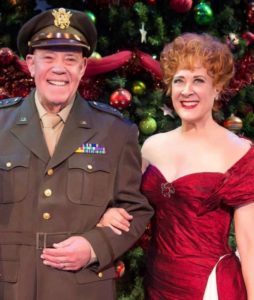
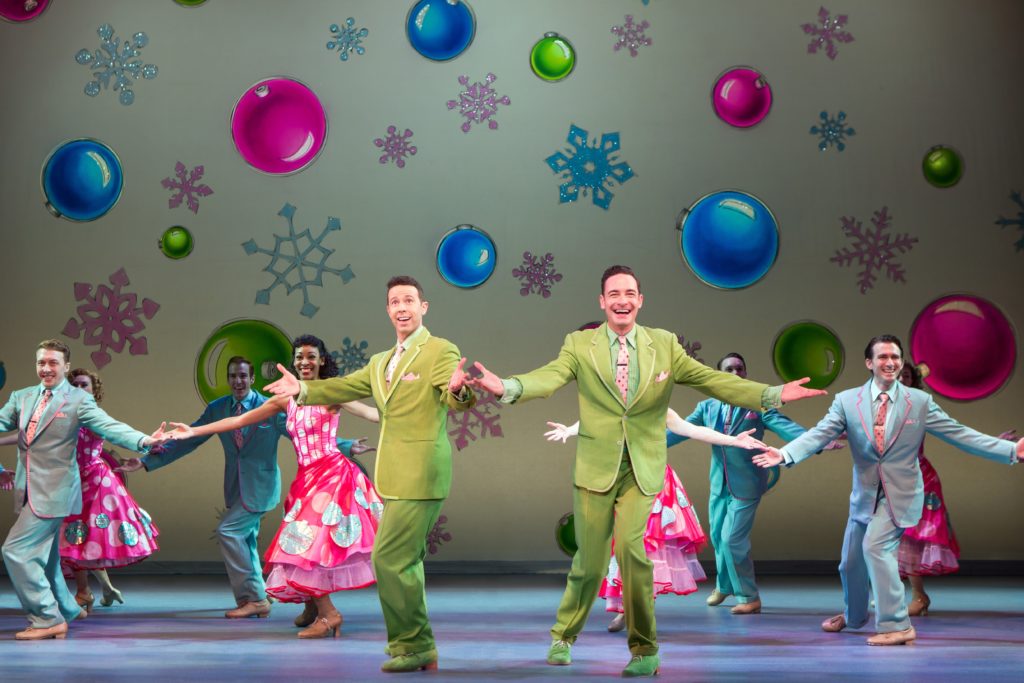
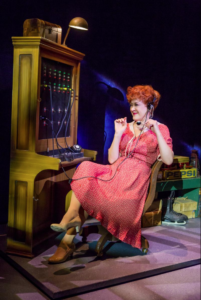 On the subject of gifts to the audience, enter Tony-winner Karen Ziembra as Martha Watson. Played by Mary Wickes in the film, Martha is The General’s right-hand-woman as she oversees the day to day running of the lodge and, at least for the holidays, helps him care for his visiting granddaughter, Susan (a role shared during the tour by Emma Grace Berardelli and Kayla Carter). Ziembra, like her film-version predecessor, lights up the stage and steals the spotlight with every snide remark, every double-take and every movement, but when she belts out the opening note of her sole solo Let Me Sing and I’m Happy…DAMN! That’s how you do it, folks. Not to be too outdone by a Tony-winner, later in the show, young Susan gets her chance at the tune, to audience-cheering results.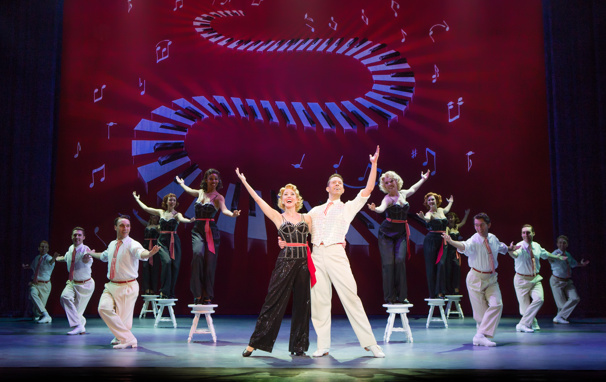
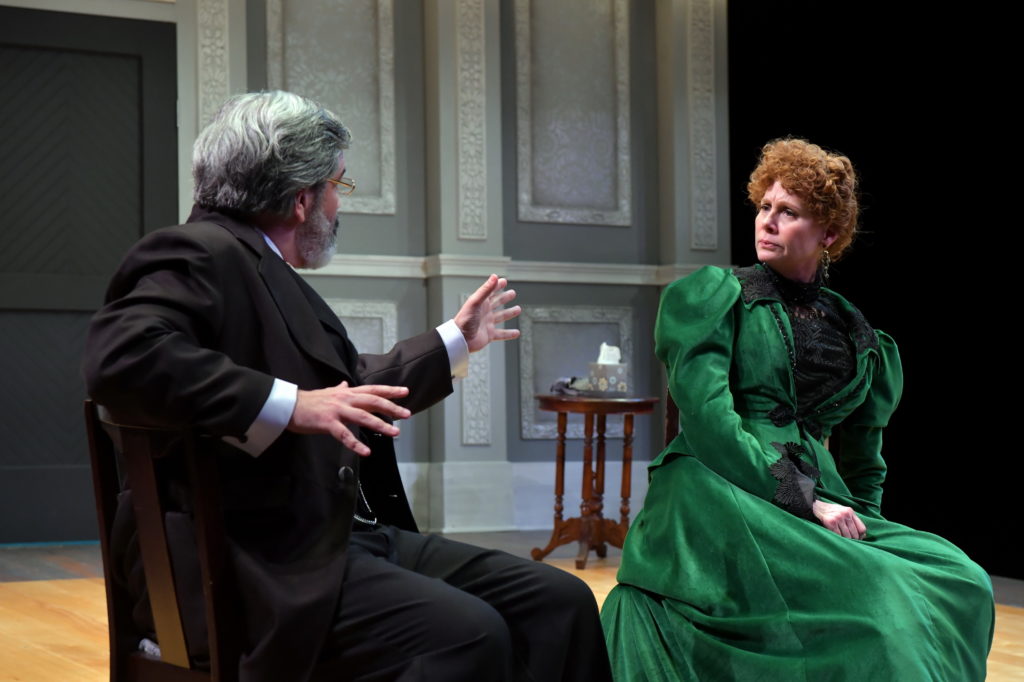
 JHP: From a director’s standpoint, what attracted you to A Doll’s House, Part 2?
 JHP: In the fifteen years that has passed between the story depicted in Henrik Ibsen’s original and Lucas Hnath’s A Doll’s House, Part 2, has A) Nora changed, or B) simply cultivated characteristics that were already present?
 JHP: What can you tell me about Torvald?
 JHP: You play Emmy, one of Nora and Torvald’s three children she abandoned as depicted in the final scene of Henrik Ibsen’s original. Part 2 picks up fifteen years later. In finding your voice for Emmy, did you imagine certain mother/daughter circumstances that she missed that might have molded her current fiber?
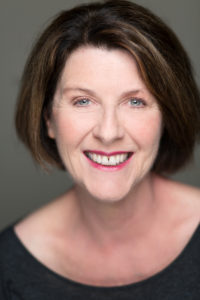 JHP: What does the audience need to know about Anne Marie?