There are shows that entertain—and then there are shows that hit you square in the chest and dare you to sit with it. Jagged Little Pill , on stage at New Bern Civic Theatre May 8-23, is both. As NBCT (414 Pollock Street, New Bern, NC) prepares to launch the North Carolina regional premiere of the musical tale of a perfectly imperfect family set to the tunes of Alanis Morissette, we caught up with cast members Lee Chaix McDonough, Shalia Fuentes-Matthews, Anna Marshburn and director Bradley Moore for our signature Rapid Fire 20Q. From emotional deep dives to behind-the-scenes revelations, they’re telling it like it is… no sugarcoating, no holding back, so brace yourself and get ready to swallow it down.
—–
RAPID FIRE 20Q WITH CAST AND DIRECTOR OF NBCT’s JAGGED LITTLE PILL
 RAPID FIRE WITH JAGGED LITTLE PILL‘s MARY JANE, LEE CHAIX MCDONOUGH
JHPENTERTAINMENT: Mary Jane is the center of a “perfect” family that is anything but. Who is she to you when the illusion drops?
LEE CHAIX MCDONOUGH: Mary Jane spends much of the show trying to be the perfect version of what others want from her, but every now and then, the mask slips. We see this for the first time during the song “Smiling,” where she acknowledges her desperate attempts to keep it together all while her life falls apart around her. I have a great deal of compassion for MJ, and though I wouldn’t describe her as a particularly likeable character, I do think she serves as a mirror, reflecting back the parts of ourselves we don’t want to see. I can certainly relate to the pressure of trying to do it all – and do it all perfectly – while being terrified of failing and being humiliated.
JHPENTERTAINMENT: This role carries some of the show’s most emotionally demanding material. How do you prepare to go there—and then leave it there?
LEE CHAIX MCDONOUGH: This is one area where my training and experience as a mental health therapist is a huge asset, because I had to learn how to create a safe container for intense emotional experiences, and that required me to develop strong boundaries. I wasn’t great at that when I was a novice therapist, and I learned the hard way that I couldn’t take my clients’ trauma home with me or I’d burn out. I think the same is true for actors – if you don’t treat the stage as a container, and if you carry your character’s pain with you at all times, you’re going to be miserable.
Journaling, meditation, and moving my body (walking and yoga in particular) help me process my thoughts and feelings, which then allows me to draw on my own personal experiences to inform Mary Jane’s inner world and emotional life. I also take a few moments right before each show to ground myself and welcome my character in, and then when the show is done, I say a silent “thank you” and let her go.
JHPENTERTAINMENT: What moment in Mary Jane’s arc challenges you most as a performer?
LEE CHAIX MCDONOUGH: My most challenging moment comes in Act Two, when Mary Jane has a fleeting but powerful conversation with Bella, a young woman dealing with the aftermath of her sexual assault. This interaction with Bella forces MJ to come to terms with her own demons, and she’s not emotionally or psychologically prepared for that. As an actor, my job is to convey MJ’s pain, despair, and regret, and while I’m grateful for Diablo Cody’s extraordinary dialogue, what I’m not saying is just as important. That’s when I really have to rely on my physical presence (body language, facial expressions, posture, etc.) and on the energy I bring to the scene.
JHPENTERTAINMENT: It’s no secret your director is a tad obsessed with this show and the original source material. Did anything in rehearsal reshape your understanding of who Mary Jane really is?
LEE CHAIX MCDONOUGH: Bradley and I share that in common – I literally wore out my cassette tape of Jagged Little Pill just driving to and from high school!
There’s a song on the album called “Forgiven” that Mary Jane sings in the show, and that song (in conjunction with “Smiling”) helped me understand both what drives her and what she’s running from. MJ longs to be loved for who she is, but she doesn’t believe she’s worthy of the very acceptance she craves. Her deepest fear is that she is uniquely and irreversibly flawed, and therefore irredeemable in the eyes of her family, her community, and ultimately, God. Everything she does is a bid for acceptance, and nothing seems to work… until she finally realizes the secret is that she has to first love herself unconditionally. Once she gives herself the love and approval she always craved from others, she needs it less from others, and then receives it even more from them. Isn’t it ironic, don’t you think? 😉
JHPENTERTAINMENT: Using only one word for each: Mary Jane at the start of the show… vs. Mary Jane at the end?
LEE CHAIX MCDONOUGH: Start: Drowning. End: Grounded.
 RAPID FIRE WITH JAGGED LITTLE PILL‘s FRANKIE, SHALIA FUENTES-MATTHEWS
JHPENTERTAINMENT: Frankie lives in a world full of pressure and collision. What does she represent to you inside this story?
SHALIA FUENTES-MATTHEWS: For me, Frankie represents the frustration of being misunderstood, especially as a black girl in white-dominated spaces. Whether the misunderstandings are intentional or not, they happen and sometimes leave me frustrated. I relate to a lot of things that get said to or about Frankie in the show that I experienced in my teens, and even now as a young adult.
JHPENTERTAINMENT: You’re performing iconic Alanis Morissette material in a brand-new narrative frame. What’s that like emotionally and vocally?
SHALIA FUENTES-MATTHEWS: Vocally it’s so freeing. Alanis is known for her raw and powerful voice, and that’s exactly how I feel – raw, vulnerable, and powerful. One song in particular, “That I Would Be Good” makes me emotional every time I sing it. The lyrics hit so deep as I relate to Frankie’s worries and fears in that song.
JHPENTERTAINMENT: This show doesn’t exactly tiptoe through trauma. When taking on such demanding material, what helps you reset after maneuvering Frankie’s journey?
SHALIA FUENTES-MATTHEWS: It doesn’t tiptoe for sure. It’s right in your face. Sometimes it can be hard because of how much I’ve experienced what Frankie goes through, but the support I have from the cast and crew makes resetting afterwards easier. Taking a breath and winding down with activities and people I enjoy helps.
JHPENTERTAINMENT: What has this production revealed to you about Frankie that surprised you early on?
SHALIA FUENTES-MATTHEWS: I love that no matter the hardships, Frankie stays true to herself and what she believes in.
JHPENTERTAINMENT: If you could adapt an aspect of Frankie’s personality in your own life, what would it be?
SHALIA FUENTES-MATTHEWS: How impulsive Frankie is. She is unafraid to say what’s on her mind and make choices without regrets, although that gets her in trouble. I am always thinking about how the choices I make will affect people – a little too much sometimes.
 RAPID FIRE WITH JAGGED LITTLE PILL‘s JO, ANNA MARSHBURN
JHPENTERTAINMENT: Jo often feels like the character saying the thing everyone else is avoiding. Who is she to you in this world?
ANNA MARSHBURN: To me, Jo is a reality check personified in this world. Jo is the friend who will do anything for the people they care about, but refuses to sugarcoat difficult conversations for others’ comfort. Jo’s honesty in every interaction is purposeful and necessary for her and for those she interacts with. She feels intensely and connects with her true emotions in ways other characters may struggle with throughout their journeys in the show. Jo has learned early on that, for her voice to be heard, she must demand it. She is deeply observant of others and deeply caring, even if she may seem nonchalant through her use of humor and sarcasm.
JHPENTERTAINMENT: What part of Jo’s journey feels the most uncomfortably real in today’s world?
ANNA MARSHBURN: Jo does not fit the societal mold of the community around her, which has caused hurt that extends into every area of Jo’s life. She seems to accept her role as an outsider in the community and has learned to compartmentalize her pain and use humor to cope in everyday life. Still, there is a part of her that so badly wants to be accepted and seen for who she is, regardless of how that may not meet the status quo. There is an underlying dissonance between her shameless authenticity and her desire to find someone who will love her wholly. I honestly think that we witness a grieving process in Jo’s journey related to her want for acceptance and unconditional love that is extremely uncomfortable, but authentic to today’s world. Through her journey, Jo understands that, at the end of the day, she is the only person who will have her back 100% of the time through life’s difficulties. That truth is difficult to grapple with, especially at such a young age.
JHPENTERTAINMENT: Alanis Morissette has always been a truth-teller through music—does Jo feel like a continuation of that voice?
ANNA MARSHBURN: Absolutely. There’s something about Jo’s authentic and unfiltered personality that I think really channels the rawness of Alanis Morissette’s lyricism. Jo is not afraid to say what is on her mind in the slightest, and if she does choose to hold back, there is a reason for it. She is vulnerable in a way that refuses to be swept under the rug or misconstrued, as Alanis does in her music, and I find that particularly powerful.
JHPENTERTAINMENT: What’s been your biggest discovery once Jo moved from page to stage?
ANNA MARSHBURN: My biggest discovery has been the sheer depth behind Jo’s humor and personality. Jo can definitely come across as brash and even a bit careless. Beneath that, though, is a ton of emotion–hurt, confusion, and longing to be understood. I realized very quickly that the confidence Jo portrays is really a form of protection. Jo has a slight hypervigilance in every situation. Although it is heavily veiled, I think Jo is almost always seeking reassurance in her relationships. There’s a silent cautiousness that is there, like she is waiting for the shoe to drop. Gaining a deeper understanding of Jo, behind her hard exterior, has really transformed how I approach her.
JHPENTERTAINMENT: Jo isn’t exactly built for staying quiet. What’s one moment where she surprised you in rehearsal or performance?
ANNA MARSHBURN: Actually, Jo surprised me most in her emotional maturity. One moment comes to mind in particular, where she could have very understandably become emotionally reactive toward someone who wrongs her, but instead chooses to walk away from the situation. I think this moment shows just how deeply Jo cares for the people in her life, enough to withhold her emotions and spare those she cares for, and further proves that every statement she makes is said with purpose.
 RAPID FIRE WITH JAGGED LITTLE PILL DIRECTOR, BRADLEY MOORE
JHPENTERTAINMENT: Having known you for several years now, I oughta know you just might be the biggest Alanis Morissette and Jagged Little Pill fan around. How excited are you to be directing the regional premiere for New Been Civic Theatre?
BRADLEY MOORE: I mean, we have known each other since 1948, so, you got me! Ha. I’m not sure there are words big enough to capture what this opportunity means or the connection I feel to this show and this music. Jagged Little Pill has been my favorite album since the moment it came out, and over the past few years I’ve been lucky enough to see Alanis live a handful of times. Somewhere along the way, especially after the musical was born, I stopped hearing her songs as just songs. Now, they live in my brain as theatre.
I remember watching her in Charlotte in 2024 and, without even trying, I was already directing the show in my head. That’s when I knew: this wasn’t just a dream project, it was the dream project. Saying it’s been at the top of my directing bucket list from day one doesn’t even begin to cover it.
The rights happened to become available on my very first day as Executive Director at New Bern Civic Theatre. I think you can guess what the very first thing I did was.
JHPENTERTAINMENT: Alanis Morissette and Diablo Cody made it clear this is not a traditional jukebox musical. So, what are we calling this genre in polite rehearsal room conversation?
BRADLEY MOORE: Jukebox musicals tend to get a bad rap! The truth is, some of them are genuinely extraordinary. Having directed a couple myself—Mamma Mia! and American Idiot—I can say firsthand that they are absolutely not all created equal. There was a stretch when Broadway felt oversaturated with bio-jukebox musicals, and audiences started to blur them all together. But this piece is something entirely different.
From the beginning, Alanis Morissette had no interest in telling her own life story onstage. Instead, she set out to build an original, contemporary narrative where her songs function as emotional punctuation, amplifying the story rather than dictating it. Bringing in Academy Award winner Diablo Cody—who also earned a Tony for her work on Jagged Little Pill—was the turning point. Her voice and perspective gave the show its depth and authenticity.
What makes this musical so compelling is how seamlessly the music lives within the world of the play. Not a single song feels forced or out of place; they all land exactly where they should. That said, it’s a deceptively challenging piece from every angle, but insanely beautiful when it all comes together.
JHPENTERTAINMENT: This show doesn’t ease into its subject matter—in true form it swallows it down as the title tune says, like a jagged little pill. How are you guiding your cast through that level of emotional intensity for this production’s run?
BRADLEY MOORE: It’s a lot! I remember when the show was first performed pre-Broadway in Massachusetts, some critics noted that every character seemed to be going through so much. But honestly—aren’t we all? That’s exactly what makes this piece feel so urgent and so necessary.
Yes, it’s filled with so much humor and heart, but it also takes on addiction, racism, sexual assault, identity, religion—all the complicated, messy realities of everyday life. And it doesn’t shy away from any of it; it meets those truths head-on.
Our cast understands the weight and responsibility of telling this story. They’ve approached it with incredible respect and honesty, navigating the emotional depth of the piece with a level of professionalism that’s been truly remarkable.
JHPENTERTAINMENT: Doing a little social media deep-dive in preparation of our chat, I ran across more than a few of your posts about JLP. In particular, your favorite tune, “Not the Doctor”. I saw an older post where you noted that the musical uses the song in an unexpected way. Did that or any other Alanis songs hit differently for you once you were tasked with fully staging them in context rather than just listening to the Broadway cast recording or having seen it on stage on Broadway and the tour?
BRADLEY MOORE: I definitely think the songs reveal so many more layers in this context. Most are presented exactly as they were originally written, which is part of what makes them land so truthfully within the story. “Not the Doctor,” which opens Act Two, undergoes the most lyrical adaptation of any song in the show—but even with those changes, its original intention remains completely intact.
At its heart, it’s still about setting firm personal boundaries: refusing to be someone’s emotional crutch, resisting the pull to play savior or parent in a relationship, and choosing independence and authenticity instead. It’s a powerful reminder that you can care about someone deeply without taking on the responsibility of fixing them. And man, sometimes we all need to heed that advice.
JHPENTERTAINMENT: What do you hope audiences leave thinking about—after the dust settles and they’ve emotionally regrouped in the parking lot?
BRADLEY MOORE: Like any piece of theatre, our hope is simple: that the audience feels something—whatever that may be. This show offers so many points of connection that ten people could walk out with ten completely different takeaways, and all of them would be valid.
We’re not trying to present a polished, perfect picture—we’re aiming for something honest. And if even one person leaves the theatre feeling a little less alone or more seen because of what they experienced on that stage, then we’ve done something that truly matters.
—–
From raw vulnerability to razor-sharp honesty, Jagged Little Pill isn’t just a night at the theatre—it’s an experience. And if this Rapid Fire 20Q is any indication, New Bern Civic Theatre’s cast and creative team are ready to deliver something that cuts deep, heals a little, and lingers long after the final note. Jagged Little Pill will take to the stage at NBCT (414 Pollock Street, New Bern, NC 28560) with performances Fridays-Sundays May 8-23, with Friday and Saturday evening shows at 7:30pm and Sunday matinees at 2pm. There will also be a special sing-a-long performance on Thursday, May 21 at 7:30pm. Tickets range in price from $19 to $29 (Thursday, May 21 tickets are only $10). CLICK HERE to purchase tickets, or call the box office at 252-633-0567.
For information about Jagged Little Pill and more, visit NBCT or follow them on Facebook, Instagram and TikTok.
If you want to follow JHPEntertainment to find out who I’m chatting with for my next Rapid Fire 20Q, or for my take on the latest local and national theatre, music, movies and more, find us on Facebook, Instagram and Twitter. Got an event or show we should know about? Drop us a line via the contact tab. Until then, #GoSeeTheShow!
 Leading this beautifully doomed endeavor is Joshua Mertz as Chris, the director/star/producer/everything-else of the show-within-the-show. Mertz plays Chris with just the right mix of puffed-up authority and slow-burn panic. As The Inspector within the mystery, watching him try to maintain control as things unravel faster than a cheap sweater is half the fun—and when he finally snaps, it’s worth the wait. Mertz, in his sixth show at The Keeton is proving himself to be a valuable asset the the company.
 Aaron Gray’s Robert is the kind of community theatre actor who clearly believes he’s performing in Masterpiece Theatre, even as the world collapses around him. The fact that Gray is in or involved with nearly every Keeton production somehow added a if you know you know aspect to his role as Robert. As Thomas Collymoore, his dead-serious commitment in the face of utter nonsense makes every moment land harder, especially as the physical comedy ramps up and refuses to let him off easy. Kudos to his library scene. While the Keeton stage area does limit the intensity of the prospect of the second floor of the set completely collapsing, Gray’s physicality while keeping himself and all the props around his from falling away as the floor beneath him gives way, is gasping, belly-laughing joy to behold.
 Keeton newcomer, Connor Boggs is tasked with the key role of Max. Initially cast in another role, Boggs stepped into the role of Max after the original actor had to drop out of the show. As Max and his mystery counterpart, Cecil, he figures out very early on that subtlety is overrated. Within the supposed seriousness of the murder mystery, for Cecil, once he gets a taste of audience laughter, it’s game over. He milks every moment for all it’s worth, turning even the smallest slip into a full-blown bit. That said, dressed in wardrobe that can only be described as a technicolor travesty—yes, the character is typically a bit of a dandy, but not quite so…flamboyant. Usually played as an overly confident community theatre actor with at least an initial modicum of subtlety, Bogg’s Cecil starts at 100mph and never slows down doing everything short of cartwheels from his stage entrance right on through to the final curtain. Under the direction of Bailey, Bogg’s Cecil is amped up and definitely played for laughs so much so that it runs the risk on a SNL skit that just doesn’t know when to
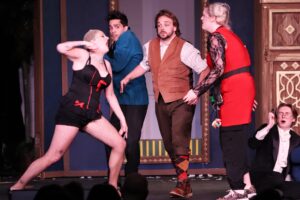 demanding physical comedy without ever dropping character. In one scene in particular, she’s pulled and flopped around by her cast mates as if her joins are made of bendy straws. Her physicality is slapstick at its best.
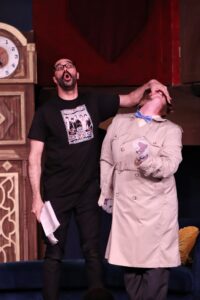 Wanderson Rezende’s Trevor Watson, stationed at the tech booth, proves that sometimes less is more. His distracted, couldn’t-care-less approach to running the show results in some of the night’s most perfectly timed “mistakes,” and when he’s finally dragged into the action, it’s awkward brilliance. And yes, Denese Rene’ Evans (the show’s costumer) I did indeed appreciate that Trevor is sporting a Duran Duran t-shirt!
 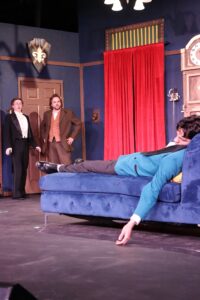 name, by the way), tasked with playing a corpse who…isn’t exactly great at the whole “lying still” thing. Fonville’s physical comedy—mistimed reactions, missed cues, and all—adds an extra layer of delightful absurdity to a role that could just be…well, dead.
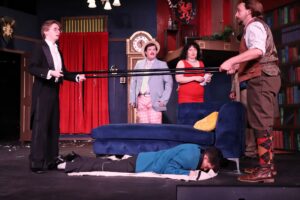 Bottom line, if you like your theatre polished, pristine, and predictable…this ain’t it. But if you’re in the mood to laugh until your face hurts while watching a cast absolutely commit to the bit—even as the set tries to take them out—The Play That Goes Wrong at The Keeton is exactly the kind of beautifully disastrous night out you’re looking for. Just don’t expect anything to go right, because…Where’s the fun in that?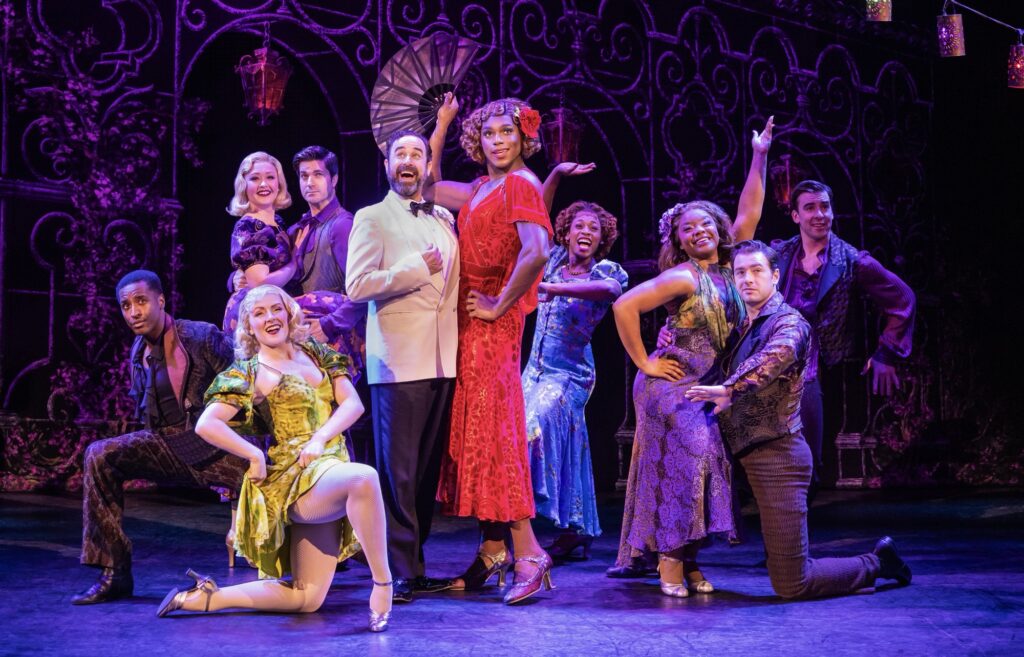
 One notable change is the role of Sweet Sue, bandleader of the all-girl band that serves as the perfect hiding in plain site destination for our two unintentional leading men, or should I say leading ladies? Little more than a brief appearance in the source material, Ruffin and Lopez wisely fleshed out Sweet Sue and as played by DeQuina Moore, we’re glad they did. Moore’s Sweet Sue doesn’t just open the show—she detonates it. Her “What Are You Thirsty For?” lands with the kind of electrifying force she herself described in our recent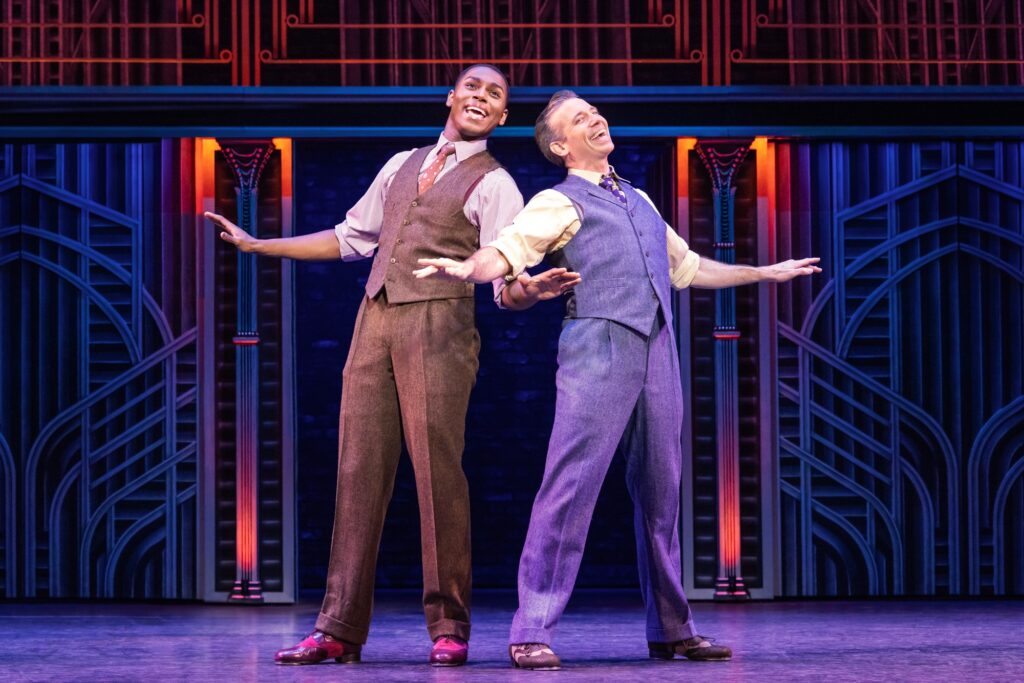
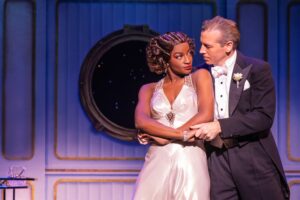 Leandra Ellis-Gaston’s Sugar Kane arguably comes with the steepest climb. Not because of the technical demands—though those are certainly present—but because Marilyn Monroe’s original Sugar remains so indelibly iconic. Wisely, the creators of the stage adaptation “understood the assignment,” sidestepping imitation entirely. By reimagining Sugar as a strong-willed, career-driven woman of color, the role becomes instantly unshackled from direct comparison—and Ellis-Gaston runs with it. With a speaking voice that lands somewhere between The Color Purple’s Squeak and legendary chanteuse Lena Horne, her Sugar is equal parts vulnerability and resolve. Sweet? Absolutely. But never simple.
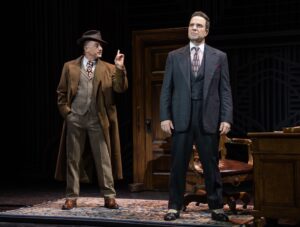 As G-man Mulligan, Matt Allen plays the essential “straight man” with surgical precision, anchoring the show’s more outlandish antics while quietly setting up some of its biggest payoffs. As he said in our recent Rapid Fire 20Q, that role is not only necessary but foundational in launching the show’s farcical momentum. And when he finally gets to dip into the madness—particularly in that delightfully ridiculous undercover sequence—it’s a payoff worth the wait.
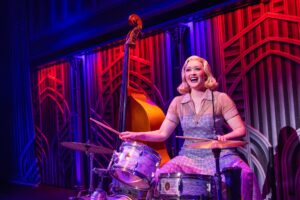 Minnie, Sweet Sue’s right-hand woman is revealed throughout as a bit of a sticky-fingered gal. One of the show’s running gags is her revelations of accidentally entering the wrong apartments thinking they were Sue’s and taking things that weren’t hers. To that end it makes perfect sense that Devon Hadsell’s Minnie is a scene-stealing delight, leaning fully into the character’s charming chaos and absconding with laughs each time she’s on the stage. There’s a lived-in sense of loyalty and mischief here, making Minnie far more than just comic relief. She’s an essential part of the heartbeat of the band. And that ever-present cigarette dangling from her ruby red lips, the kind of subtle sight gag that again perfectly pays homage to that 1930 prohibition-era Hollywood spirit. Side Note: When that Gregg Oppenheimer I Love Lucy play makes its way to Broadway, Hadsell has my vote for the Vivian Vance/Ethel Mertz role!
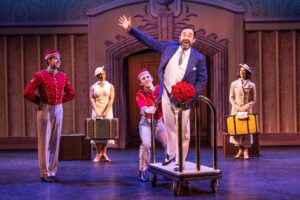 And then there’s Edward Juvier’s Osgood, who may just be the show’s most quietly radical reinvention. As he shared in our recent Rapid Fire 20Q, what drew him to the role was Osgood’s ability to lead with curiosity rather than judgment—and that ethos radiates throughout his performance. Where the film played him as the punchline, this version is in on the joke and, more importantly, in on the love. That shift—from caricature to fully realized romantic—becomes one of the production’s most meaningful evolutions.






 RAPID FIRE WITH SISTER ACT‘s DELORIS VAN CARTIER, MEGGAN UTECH
 RAPID FIRE WITH SISTER ACT‘s MOTHER SUPERIOR, MEGAN MURPHY CHAMBERS
 RAPID FIRE WITH SISTER ACT‘s SISTER MARY ROBERT, SHELBY TALBERT
 RAPID FIRE WITH SISTER ACT DIRECTOR, JASON SPELBRING
 RAPID FIRE 20Q WITH OFF BROADWAY: THAT’s SO HIGH SCHOOL‘s ELLE MCLEMORE


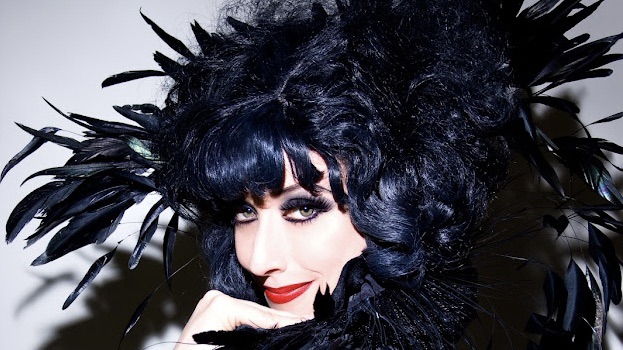
 RAPID FIRE Q&A WITH MEOW MEOW; AT OZ ARTS NASHVILLE APRIL 11
 MEOW MEOW: SO many. I have to love all of them or I can’t sing them ! I love Patty Griffin’s poetry in her songs – one of my favourites that is like a prayer
 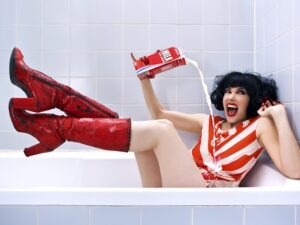 JHP ENTERTAINMENT: Looking back on the 2007 High Line Festival, curated by David Bowie—where you took your place among fellow featured artists Arcade Fire, Laurie Anderson, Ricky Gervaiis, The Legendary Stardust Cowboy and more—sounds almost surreal—How did you feel in that moment?
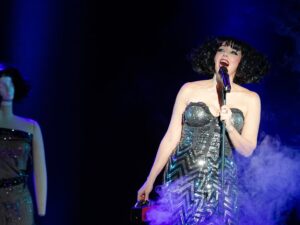 JHP ENTERTAINMENT: On the subject of unpredictability—How do you handle it when an audience “volunteer” just isn’t matching the vibe?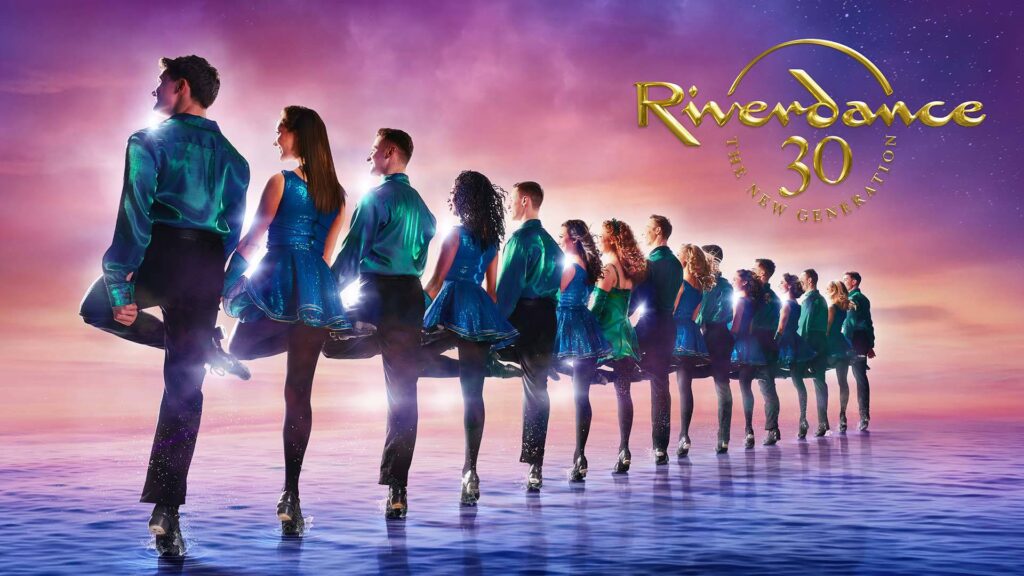
 RAPID FIRE WITH RIVERDANCE 30: THE NEW GENERATION‘s KIERAN BRYANT
 JHPENTERTAINMENT: Having officially made your lead debut in 2022—what shifted for you, mentally or physically, stepping into that level of responsibility?
 RAPID FIRE WITH RIVERDANCE 30: THE NEW GENERATION‘s WILL BRYANT
 JHPENTERTAINMENT: Hitting the Principal role and performing at Radio City Music Hall is no small milestone—did that moment live up to the ideals you put on it?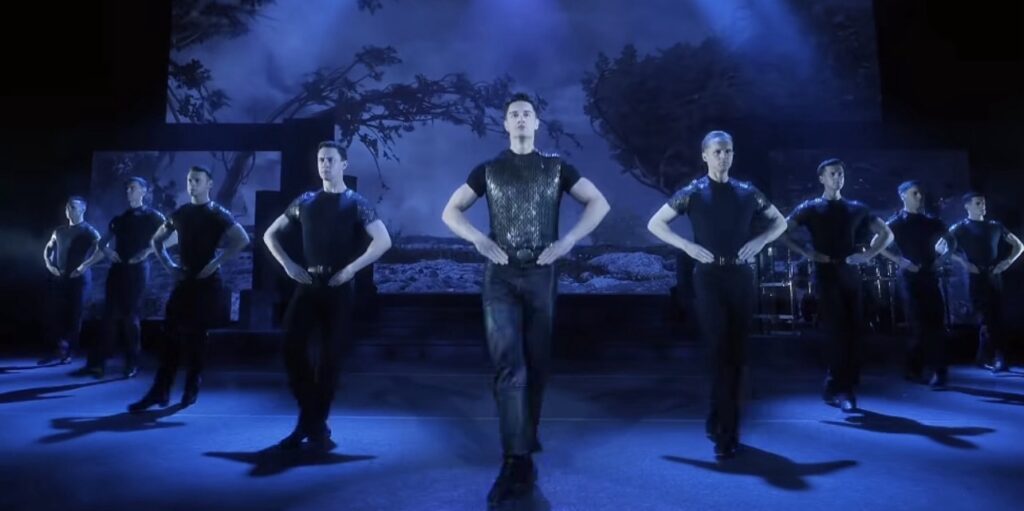
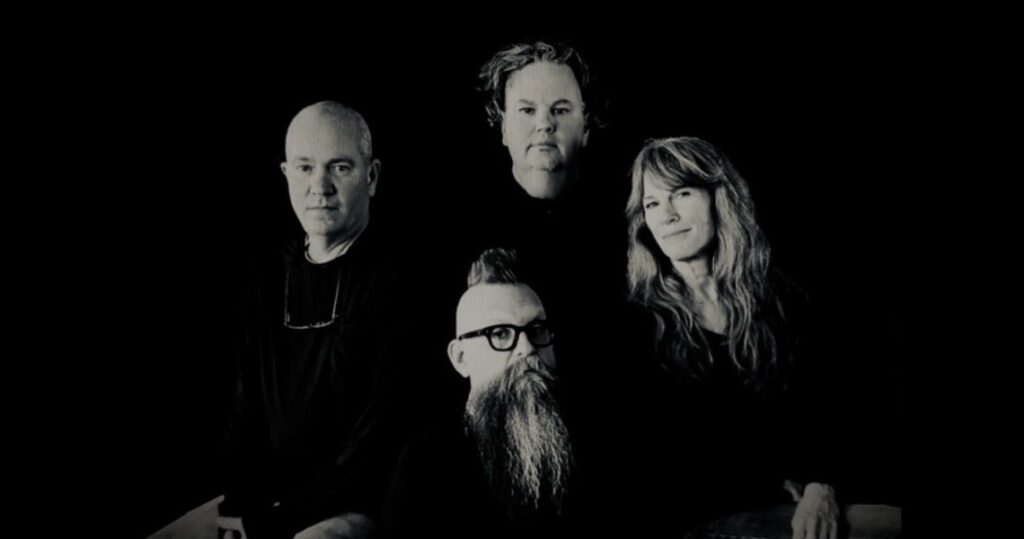
 RAPID FIRE WITH TEV’s GERALD JOSEF
 RAPID FIRE WITH TEV’s J BOOTH
 RAPID FIRE WITH TEV’s WES BISHOP
 RAPID FIRE WITH TEV GUEST VOCALIST, JENNIFER McLANE

 Then there’s Doc. David Josefsberg’s take on the eccentric inventor is where the show truly locks into place. Wonderfully unhinged in the best way, his Doc balances manic comedy with genuine heart. His early numbers are the turning point where the audience collectively leans in and says, “Okay, I’m in.” Josefsberg doesn’t imitate—he reinvents, while still honoring what makes Doc such an iconic character.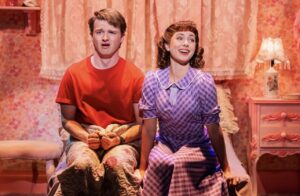
 And then there’s Cartreze Tucker as Goldie Wilson (and Marvin Berry), who nearly steals the entire show. From the moment he steps onstage, Tucker commands attention. His big number earns one of the largest audience responses of the night, and for good reason—his vocals are powerhouse-level, and his charisma is off the charts. It’s a star-making turn that injects an extra jolt of electricity into an already high-energy production.
 Visually, the production is stunning. The use of projections, layered with practical effects and good old-fashioned stage magic and some mind-blowing state-of-the-art new theatrical tricks, the effects become a character in its own right. Whether it’s the clock tower sequence or the time-travel effects, the technical execution is nothing short of jaw-dropping. It’s the kind of design work that reminds you how thrilling live theatre can be when all the elements are firing.
 Act Two does bring one of the more head-scratching moments in the show—a neon-soaked, new wave-inspired “21st Century” opening number featuring Doc and a troupe of backup dancers. It’s flashy and fun, but also feels a bit unnecessary and tonally out of sync with the rest of the piece. And on opening night in Nashville, it was followed by a rare hiccup: the hoverboard didn’t quite cooperate. Still, the moment was handled with total professionalism, and honestly, it was quickly forgiven given the sheer volume of technical wizardry the show gets right. Because when it works—and it mostly does—it really works.